Ian’s Bird of the Week – Displaying Superb Lyrebird

Superb Lyrebird #1

Superb Lyrebird #1

Newsletter: 1/21/2010

From the obscure last week (Yellow-legged Flyrobin (Flycatcher) to the iconic this week, a male Superb Lyrebird displaying in an Antarctic Beech forest last Monday in New England, northern NSW – what could be more appropriate after the recorder-playing course in Armidale?

The first photo (above) you can see the display posture of the lyrebird with the long tail feathers bent forwards over the head. The tail feathers are of three types. The two, large, outer left-most ones are called ‘lyrates’ and are about 60cm/24in long. The lyrates have club-shaped ends, are grey and rufous above and silvery and rufous below with a ladder pattern. The two innermost ones, to the right of the lyrates in the photo, are slender ‘guard-plumes’, while the remaining 12 lacy ‘filamentaries’ are blackish above and silvery or grey below (depending on the race).

Superb Lyrebird #2

Superb Lyrebird #2

In the display, the male first raises the tail feathers vertically and it is in this position that the eponymous lyre shape is assumed by the lyrates. The feathers are then brought forward over the head (second photo) and spread sideways to the fullest extent possible. In the third photo, the bird is facing the camera but the head and body are completely hidden – the ultimate masked ball costume. Lyrebirds are all-round performers – not content with just a gorgeous display, he sings vigorously and beautifully, vibrating the filamentaries to make them shimmer. Lyrebirds are famous mimics, historically of other birds in the forest, but nowadays of mechanical devices too. This one was mainly mimicking Crimson Rosellas. At the height of the display, he dances back and forward in time to a percussive phrase rendered as ‘tuggerah tuggerah tug’ by Pizzey and Knight.

Superb Lyrebird #3

Superb Lyrebird #3

There was a female present during the 25 minutes that I watched the display. The male seemed absorbed to the point of being in a trance, letting me approach with in a few metres. The female was warier and moved away eventually, and only then did the male appear to notice my presence and strode off into the forest. The whole scene was like an amazing ballet, the Antarctic Beech forest providing a mossy, enchanted set that reminded me of cloud forest in Ecuador and, during the display, a swamp wallaby went bouncing by, adding to the sense of unreality.

I’m back home in Bluewater now and can resume adding photos to the website.

Best wishes,

Ian

—

Ian Montgomery, Birdway Pty Ltd,

454 Forestry Road, Bluewater, Qld 4818

Phone: +61-7 4751 3115

Preferred Email: ian@birdway.com.au

Website: http://birdway.com.au


Lee’s Addition:

And God blessed them, saying, “Be fruitful and multiply, and fill the waters in the seas, and let birds multiply on the earth.” (Genesis 1:22 NKJV) (Displaying helps)

Do not curse the king, even in your thought; Do not curse the rich, even in your bedroom; For a bird of the air may carry your voice, And a bird in flight may tell the matter. (Ecclesiastes 10:20 NKJV) (Mimicry)

Thanks again, Ian, for showing this magnificent Lyrebird. This has been a favorite of mine since I did the Interesting Things – Lyre Bird, but since I love this YouTube video by – David Attenborough, I am going to re-post it here.


The Lyrebirds are in the Menuridae Family in the Passeriformes Order. There are two, the Superb Lyrebird (Menura novaehollandiae) and the Albert’s Lyrebird (Menura alberti).

“The Superb Lyrebird (Menura novaehollandiae) is a pheasant-sized songbird, approximately 100cm long, with brown upper body plumage, grayish-brown below, rounded wings and strong legs. It is the longest and third heaviest of all songbirds.

The polygamous male is the bearer of the most elegant of all tails. The tail has sixteen feathers, with the two outermost being lyre-shaped. Next within are two guard plumes and twelve long, lace-like feathers, known as filamentaries. Seven years is required for the tail to fully develop. During courtship display, the tail is fanned forward beyond his head to form a silvery white canopy.

One of the two lyrebirds in the family Menuridae, the other being the much rarer Albert’s Lyrebird, the Superb Lyrebird has a wide vocal range and extraordinary ability to accurately mimic sounds. The female lays a single egg and builds a domed nest above ground.

An Australian endemic, the Superb Lyrebird can be found in the forest of southeastern Australia, from southern Victoria to southeastern Queensland. The diet consists mainly of small animals found on forest floor or from rotting logs.


Albert's Lyrebird (Menura alberti) ©Peter Ellis

Albert's Lyrebird (Menura alberti) ©Peter Ellis

The Albert’s Lyrebird (Menura alberti) is a pheasant-sized songbird, approximately 90cm long, with brown upper body plumage and rich chestnut below. It is very similar with the Superb Lyrebird in its habits. This bird also mimics other species sounds.

The rarer of the two species of lyrebirds, the Albert’s Lyrebird lacks the elegant lyre-shaped tail feathers of the Superb Lyrebird. It also builds platforms by trampling down dense vegetation for courtship display instead of scratch up mounds. The diet consists mainly of insects found on forest floor and from rotting logs.

Named after Prince Albert, the Prince Consort of Queen Victoria of the United Kingdom, Albert’s Lyrebird is inhabiting and endemic to subtropical rainforests of Australia, in a small area on the state border between New South Wales and Queensland.
Birds of the Bible – Johannesburg, South Africa

Since I have written about the Birds of the Bible that our missionaries in Niami, Niger, WA and Paraiba, Brazil, it is now time to see what our missionary down in Johannesburg, SA might possible see.

Checking the internet for the birds in that area, I was able to get a list of sorts. Since all birds were created by the Lord, I decided to show more than just the named ones.

So God created the great sea creatures and every living creature that moves, with which the waters swarm, according to their kinds, and every winged bird according to its kind. And God saw that it was good. And God blessed them, saying, “Be fruitful and multiply and fill the waters in the seas, and let birds multiply on the earth.” And there was evening and there was morning, the fifth day. (Genesis 1:21-23 ESV)

So they have been multiplying and here are some of those in the Johannesburg area.

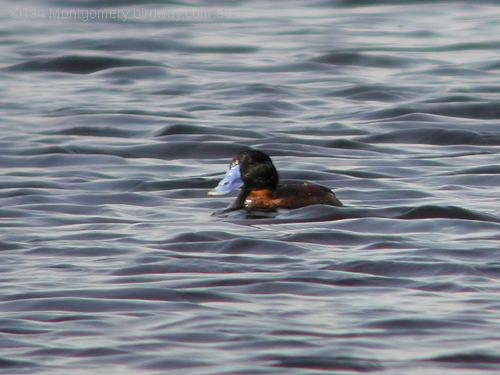
Maccoa Duck (Oxyura maccoa) by Ian

Maccoa Duck (Oxyura maccoa) by Ian

Con Joubert Bird Park
The Con Joubert Bird Park can be found on Desert Road in residential Randfontein and contains a permanent pan with a good bird hide. One can walk around the pan on the inside of the perimeter fence (1/2hr). Species to be seen include, Maccoa Duck, Black-necked Grebe, Little Grebe, Cape Shoveler, African Purple Swamphen, Red-knobbed Coot and Common Moorhen. Lesser Swamp-Warbler, African Reed-Warbler and African Reed-Warbler may be seen in the reedbeds and sometimes Ruff, Wood Sandpiper and Little Stint occur in summer.


Northern Farm (Diepsloot)
This nature reserve is one of Johannesburg’s best kept secrets, with over 300 recorded species.

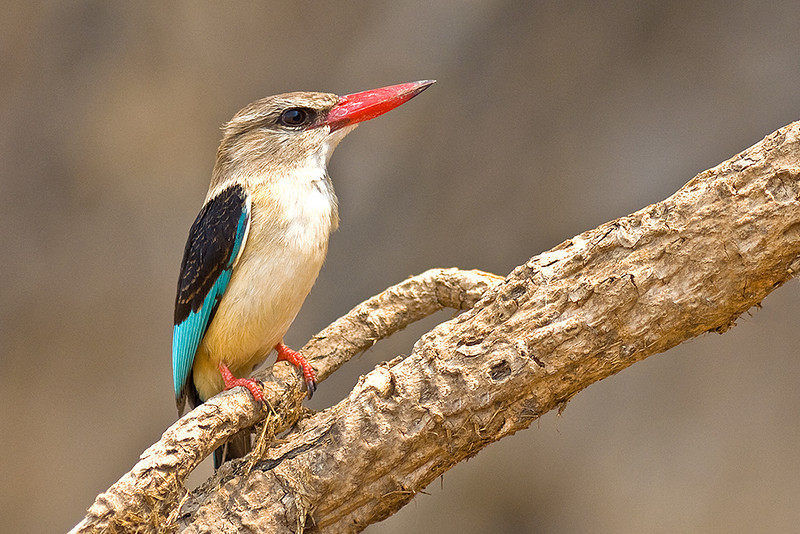
Brown-hooded Kingfisher (Halcyon albiventris) by Africaddict

Brown-hooded Kingfisher (Halcyon albiventris) by Africaddict

Yellow Wagtail, Goliath Heron, Little Bittern, Cape Longclaw, Red-capped Lark, African Fish-Eagle, African Goshawk, Osprey, African Purple Swamphen, Green-backed Heron, African Black Duck, Black-winged Pratincole and African Spoonbill. African Snipe, Red-chested Flufftail, Bar-throated Apalis, Lesser Striped Swallow, Black Crake, Chestnut-backed Sparrowlark, Maccoa Duck, Cape Shoveler and Southern Pochard are found as well. There are several other species that are hard to find in urban Johannesburg like the Orange-breasted Waxbill. Giant Kingfisher, Pied Kingfisher, Malachite Kingfisher and Brown-hooded Kingfisher are also resident in the reserve. The summer migrants also include Sedge Warbler, Great Reed-Warbler, African Reed-Warbler, Amur Falcon and Steppe Buzzard. White Stork are also seen over wintering in the reserve too.


Korsman Bird Sanctuary

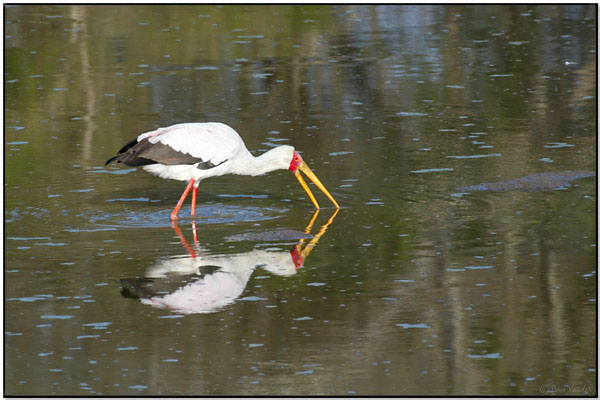
Yellow-billed Stork (Mycteria ibis) by Daves BirdingPix

Yellow-billed Stork (Mycteria ibis) by Daves BirdingPix

This sanctuary is often prolific with a variety of waterfowl. The hides are no longer accessible, but good views are available from “The Drive”, a 2km circular road which surrounds the pan. A spotting scope is recommended, as the area is fenced. Notable visitors are Black Heron, Greater Flamingo, Lesser Flamingo and Great Crested Grebe. There are several active heronries with Goliath Heron, African Spoonbill, Black-headed Heron, Grey Heron, Great Egret, Reed Cormorant and Little Bittern. The reedbeds and their edges should be actively searched for African Purple Swamphen, Black Crake, African Rail, Little Bittern and roosting Black-crowned Night-Heron. The open stretches of the pan almost always have Spur-winged Goose, Red-billed Teal, and numbers of Egyptian Goose and Yellow-billed Duck. A central island supports a colony of White-breasted Cormorant. The shore edges often hide Glossy Ibis, Hadeda Ibis and African Sacred Ibis. Black-winged Stilt and Pied Avocet are regulars and during the wader migration there are sometimes irregular visits from Wood Sandpiper, Common Sandpiper and Eurasian Curlew sandpiper. Spotted Thick-knee hide in the surrounding grasslands.


Florence Bloom bird Sanctuary
Florence Bloom Bird Sanctuary is found within Delta Park, with the entrance at the intersection of Road No.3 and Road No.5 in Victory Park. Species to be seen on the dam include African Black Duck, Little Grebe, Red-knobbed Coot and Common Moorhen. The surrounding reeds and trees is host to Willow Warbler, Great Reed-Warbler, Little Rush-Warbler and Tawny-flanked Prinia. Little Sparrowhawk, European Bee-eater, Red-throated Wryneck and African Palm-Swift have also been spotted.


Krugersdorp Game Reserve
The habitat is mainly grassveld with small dams and reedbeds at the northern-most end. The vast areas of open grassland in the reserve provide the visitor the opportunity to observe many of the grassland species of Gauteng. A densely wooded valley runs through the reserve and includes a selection of bushveld birds. Approximately 200 species have been recorded. There is a good network of roads and walking is not permitted, so one has to bird from the car.

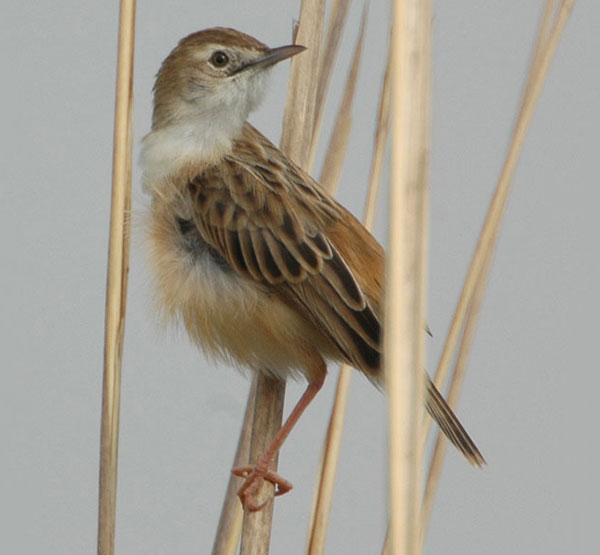
Zitting Cisticola (Cisticola juncidis) by Nikhil

Zitting Cisticola (Cisticola juncidis) by Nikhil

Birding
1) Grassveld areas include most of the reserve and the following species may occur; Wing-snapping Cisticola, Cloud Cisticola, Desert Cisticola, and Zitting Cisticola, Rufous-naped Lark, Ant-eating Chat and African Pipit. Several pairs of Southern Black Korhaan can be seen while the more secretive Kurrichane Buttonquail also occur. In summer Montagu’s Harrier have been recorded quartering over the grasslands.
2) The reedbeds house Southern Red Bishop, White-winged Widowbird, Red-collared Widowbird and Cape Grassbird.
3) The dam usually has Black-headed Heron, Cattle Egret, Glossy Ibis and African Sacred Ibis around it, with Yellow-billed Duck, White-faced Duck, Red-knobbed Coot and Egyptian Goose.
4) An exiting new feature is a large walk through aviary which boasts a wide variety of species. The aviary is built into an old quarry and provides natural vegetation for the birds.


Rondebult Bird Sanctuary, Germiston (Too numerous to list.)

Hamerkop (Scopus umbretta) by Africaddict

Hamerkop (Scopus umbretta) by Africaddict

Walter Sisulu National Botanical Garden
The Walter Sisulu National Botanical Garden is an outstanding birding locality close to the urban centre of Johannesburg. The relatively small area, virtually surrounded by urban development, is managed by the National Botanical Institute (NBI) and includes a diverse array of habitat types which ranges from steep cliffs surrounding a magnificent waterfall to open scrubland and riverine woodland. Several short walks run through the garden and the surrounding natural areas. The JCI Geological Trail has recently been developed and gives visitors the opportunity to not only walk along the Roodekrans Ridge and in the Nature Reserve portion of the garden, but also to learn something about the fascinating geology of the area. Guided tours can be arranged for groups. Information brochures, a map and a bird list are available at the gate or NBI office. A morning’s birding in the garden during summer can easily produce a list of 70 species. A total of 230 species have been recorded in the garden.
Birding
1) The Verreauxs’ Eagle is an icon of the area and attract visitors from all over. Generations of Verreauxs’ Eagle have bred on the steep cliff face next to the waterfall for many years. This is definitely one of the best sites in the country to view these masters of the african skies.

These pictures were taken by John Kormendy on trips to Johannesburg and Cape Town. Fantastic shots.
http://chandra.as.utexas.edu/~kormendy/southafricabirds.html


Ian’s Bird of the Week – Yellow-legged Flyrobin/Flycatcher

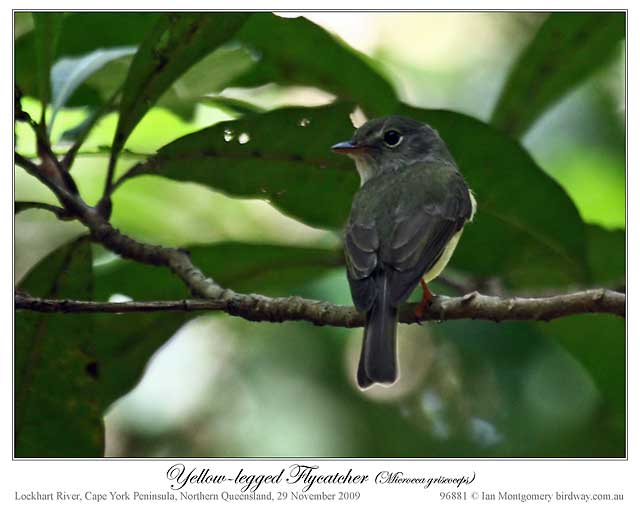
Yellow-legged Flyrobin (Microeca griseoceps) by Ian

Yellow-legged Flyrobin (Microeca griseoceps) by Ian

I haven’t had proper internet access for a week, so please forgive me for another late BoW. I’ve been sequestered away in a girls’ boarding school in Armidale on the tablelands of northern New South Wales attending a recorder playing workshop. It was a wonderful experience but quite exhausting and I’ve discovered that you use the same brain cells for playing music as you do for composing text. I managed find some other brain cells to prepare these two photos several days ago – taking time off from practice – but my plan to skip lunch and search for an internet cafe never had much chance of success.

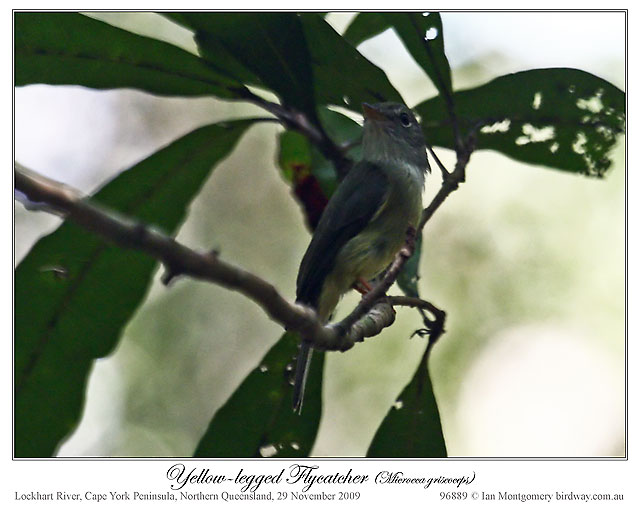
Yellow-legged Flyrobin (Microeca griseoceps) by Ian

Yellow-legged Flyrobin (Microeca griseoceps) by Ian

The Yellow-legged Flycatcher belongs in the obscure category. Unlike its close relative the Jacky-winter – widespread throughout Australia – it is found only in northern Cape York Peninsula and Papua New Guinea. It is a forest dweller, favouring the outer canopy and small (12cm/4in long) so it is easily overlooked. The bright chrome-yellow legs, however, contrast with its rather sombre plumage.

In recent years it has become better known as more birders visit Iron Range National Park near Lockhart River. My 1986 field guide (Slater) describes its status as ‘rare’ and its voice as ‘precise information required’, while my 2000 one (Morecombe) says it is ‘common’ and provides a detailed description of its call (variations on “wheeit”).

Like the Jacky-winter and the rather similar Lemon-bellied Flycatcher of northern Australia it is a member of the Petroicidae. the Australo-Papuan Robins and is not related to other flycatchers. To emphasize this distinction, the international name for the Yellow-legged and the Lemon-bellied is ‘Flyrobin’ (there are several species in PNG) but this name is having an uphill task in being accepted in Australia.

Now, I’m going to go Dangar Falls National Park near Armidale and have a relaxing day or two.
Best wishes,
Ian

Links:
Yellow-legged Flycatcher
Jacky-winter
Lemon-bellied Flycatcher
—
Ian Montgomery, Birdway Pty Ltd,
454 Forestry Road, Bluewater, Qld 4818
Phone: +61-7 4751 3115
Preferred Email: ian@birdway.com.au
Website: http://birdway.com.au


Lee’s Addition:

Petroicidae Family (Australasian Robins) are in a different Family from other Robins. The American Robin is now the only Robin in with the Thrushes & Allies which are in the (Turdidae) Family. The Clay-colored and White-throated Robins are now Thrushes.  The Muscicadpidae Family which has Robins is in with the Chats and Old World Flycatchers.

The Australasian Robins do not seem to migrate like many others from the other two families mentioned. The American Robin (thrush family) migrates because they are down here now this time of the year.

“Even the stork in the sky Knows her seasons; And the turtledove and the swift and the thrush Observe the time of their migration; But My people do not know The ordinance of the LORD. (Jeremiah 8:7 NASB)

Weary of Well Doing by Donna Watkins

While caring for her husband for 13 years, a friend also had the opportunity to care for her father in his last years. He passed on recently in her arms.

© 2007 Donna L. Watkins – Male Hooded Mergenser

Weary from the daily tasks, she finds her strength in prayer and meditation on God’s Word. But some days … well, you know how they are. You just get too weary of the well-doing to put your faith in gear.

Any caretaker role is hard. I often think it would be grand to have enough money to provide people with a good living to do the caretaking so the relative could focus only on the relationship and having fun. I often wish I were a millionaire to make life easier for many people, but then I wonder if I would be robbing them of some of their blessings and rewards. So much that we do not understand about life and living.

The rheumatoid arthritis gives me weary days but I remind myself to focus on the Isaiah 40:28-31 which I have memorized so I can close my eyes and glory in the wonder of who God is and then picture myself as strong and mighty as an eagle. Dipping down to the water and grabbing a fish like it was a leaf.

We must take as firm a grasp on the depth and breadth of God’s love for us and know He provides strength when we reach out and need it. Maybe we just don’t feel like we deserve it at the time. I find myself self-talking against the very faith that I am trying to garner from The Word. Too often I am too weary to think, but if I open myself to the Holy Spirit, He will lend me a hand to climb out.

Satan wants us to crawl into a big black hole, curse God and die! But we shall NOT! :-)

To read the rest of this very nice article – CLICK HERE

Birds of the Bible – Nests

Birds have been building nests since they were created and told to multiply and fill the earth. There are many verses (17 with “nest” and 4 with “nests”) telling about the nest in the Bible, and probably the one most know is either Matthew 8:20 or Luke 9:58:

And Jesus saith unto him, The foxes have holes, and the birds of the air have nests; but the Son of man hath not where to lay his head.

The other two verses with “nests” are Psalms 104:17
and Ezekiel 31:6 NKJV

Many of the verses about nests do not even apply to birds, one refers to a snake’s nest, but all of them have an application applied to them.
The aim here is not to go into all those verses, but to introduce the bird’s nest; where they are and how they are constructed through the slide presentation below. Later in other blogs, those applications will be emphasized.
*

This slideshow requires JavaScript.

*
The application I would like to make about these nests, is this; as you observe the nest, think about our homes. Some homes are huge, some are very tiny (hummingbirds), some are elaborate (weaver nests), some are so small with little square-footage (those on the ledge), some are only out in the open, etc. Notice that the birds have a task and that is to raise their young. They don’t seem to be complaining or whining because they want more. In other words, they are content. Are we?

Not that I speak in regard to need, for I have learned in whatever state I am, to be content: (Philippians 4:11 NKJV)
For we brought nothing into this world, and it is certain we can carry nothing out. And having food and clothing, with these we shall be content. (1 Timothy 6:7-8 NKJV)

Dan Has Updated His Site

Framed Purple Gallinule by Dan

Framed Purple Gallinule by Dan

Dan at work-Tricolored and Stork

Dan at work-Tricolored and Stork

My favorite photographer, Dan, has updated his website and I thought you might want to look at some of his photos. Both of us enjoy our birdwatching adventures, just from different angles. His is through his camera lens and his editing of them and mine is with different lenses. (Camera, Scope, Binoculars, or Eye Lens) Sure makes for a great retirement activity.

We are very thankful for our Creator creating the eye so that we can enjoy all the fantastic birds and critters He has created. The ear also, so we can enjoy their songs and sounds.

I will instruct thee and teach thee in the way which thou shalt go: I will guide thee with mine eye. (Psalms 32:8 KJV)

The hearing ear, and the seeing eye, the LORD hath made even both of them.
(Proverbs 20:12 KJV)

To visit Dan’sPix – Click Here

White Pelican at Lake Hollingsworth by Dan

White Pelican at Lake Hollingsworth by Dan

Interesting Things – After Their Kinds

SmileyCentral.com

And the earth brought forth grass, and herb yielding seed after his kind, and the tree yielding fruit, whose seed was in itself, after his kind: and God saw that it was good. (Genesis 1:12 KJV)
And God created great whales, and every living creature that moveth, which the waters brought forth abundantly, after their kind, and every winged fowl after his kind: and God saw that it was good. And God blessed them, saying, Be fruitful, and multiply, and fill the waters in the seas, and let fowl multiply in the earth. (Genesis 1:21-22 KJV)


“How wonderful! Your dog has just had puppies! But do you now have to sort through the litter and make sure there are no baby giraffes or kangaroos?

Painted Spurfowl (Galloperdix lunulata) by Nikhil Devasar

Painted Spurfowl (Galloperdix lunulata) by Nikhil Devasar

In God’s account of creation in Genesis 1, we repeatedly read that both plants and animals were created to reproduce “after their kind.” Genesis 1, in speaking about the creation of plants, repeats three times in just two verses that they are to reproduce “after their kind.” We see the same phrase repeated later in the chapter when animals are created. This is not just empty repetition. God is stressing a fundamental principle that all things reproduce “after their kind.” Mother dogs have puppies and mother cats have kittens. You can count on it.

Why does God stress this principle? Even before creation, God knew that humans would eventually sin and then seek to hide their responsibility by trying to explain things without a Creator. God knew that this idea of evolution would capture the faith of millions over the history of the world.

God stresses what our experience shows so that He might be harder for us to hide from. All things do reproduce after their kind. And despite evolutionists’ strong faith in evolution, they cannot offer one established scientific fact to explain how one kind of creature might eventually make a completely different kind!

Egyptian Goose (Alopochen aegyptiaca) by Daves BirdingPix

Egyptian Goose (Alopochen aegyptiaca) by Daves BirdingPix

Prayer: I thank You, Lord, that You have made it hard for men to deny You. Yet men still deny You, seeking explanations and excuses outside of Your Word. I know that I, too, can do this, for I am both saint and sinner. I ask that You would correct me when I seek outside of Your Word what is already so richly provided to me in Your Word. Amen.”

© 2010 Creation Moments • All Rights Reserved

Birds of the Bible – God’s Property

For every beast of the forest is Mine, And the cattle on a thousand hills. I know all the birds of the mountains, And the wild beasts of the field are Mine. “If I were hungry, I would not tell you; For the world is Mine, and all its fullness. (Psalms 50:10-12 NKJV)

Not only are all the birds and critters God’s, but He also provides for their needs as does He for ours. Psalm 104 is loaded with God’s provisions, but only Psalm 104:10-17 is quoted here.

He sends the springs into the valleys; They flow among the hills. They give drink to every beast of the field; The wild donkeys quench their thirst. By them the birds of the heavens have their home; They sing among the branches. He waters the hills from His upper chambers; The earth is satisfied with the fruit of Your works. He causes the grass to grow for the cattle, And vegetation for the service of man, That he may bring forth food from the earth, And wine that makes glad the heart of man, Oil to make his face shine, And bread which strengthens man’s heart. The trees of the LORD are full of sap, The cedars of Lebanon which He planted, Where the birds make their nests; The stork has her home in the fir trees. (Psalms 104:10-17 NKJV)

Thought you might enjoy viewing some of God’s birds from around the world.

The pictures below are only 150+, yet there at least 10,474 known named bird species currently.

*

This slideshow requires JavaScript.

*

Birdwatching at Circle B Bar Reserve – 12/23/09

White Pelicans in Flight - Circle B Bar by Dan

White Pelicans in Flight - Circle B Bar by Dan

And the swan, and the pelican, and the gier eagle, (Leviticus 11:18 KJV)

On December 23rd, Dan and I were birdwatching at Circle B Bar Reserve here in Polk County Florida, and what a day it was. They had just had the Christmas Bird Count a few days earlier and had counted over 7,000 American White Pelicans. See Birdwatching in Polk County – December 2009

I just got through putting together my first attempt of combining photos and video together. The videos and the photos will give you an idea of the many pelicans flying over.  They are not like Canadian Geese that squawk constantly, but were silent. What you heard was the whoosh of their wings as they flapped. Unfortunately, it didn’t come through in the video. (This is an updated video with sound of music instead of my mouth running as the 1st one was.)

I am never disappointed at the Circle B.

Here is another person’s video of the White Pelicans taken a few days later.

http://www.youtube.com/watch?v=a4e0SSGyHD0

Here is the list of birds I reported to eBird for that birdwatching day.

Number of species:     43
Black-bellied Whistling-Duck     50
Blue-winged Teal     2
Pied-billed Grebe     3
American White Pelican     2000
Double-crested Cormorant     50
Anhinga     45
American Bittern     1
Great Blue Heron     5
Great Egret     25
Snowy Egret     4
Little Blue Heron     1
Tricolored Heron     2
Cattle Egret     6
Green Heron     1
White Ibis     30
Glossy Ibis     30
White-faced Ibis     1
Roseate Spoonbill     15
Wood Stork     100
Black Vulture     50
Turkey Vulture     50
Osprey     4
Bald Eagle     1
Red-shouldered Hawk     1
Common Moorhen     20
American Coot     5
Sandhill Crane     1
Killdeer     6
Laughing Gull     40
Mourning Dove     1
Belted Kingfisher     3
Red-headed Woodpecker     1
Red-bellied Woodpecker     2
Pileated Woodpecker     2
Eastern Phoebe     3
Blue Jay     2
Fish Crow     10
House Wren     1
Blue-gray Gnatcatcher     10
Northern Mockingbird     3
Palm Warbler     5
Northern Cardinal     2
Boat-tailed Grackle     5

Ian’s Bird of the Week – Bar-breasted Honeyeater

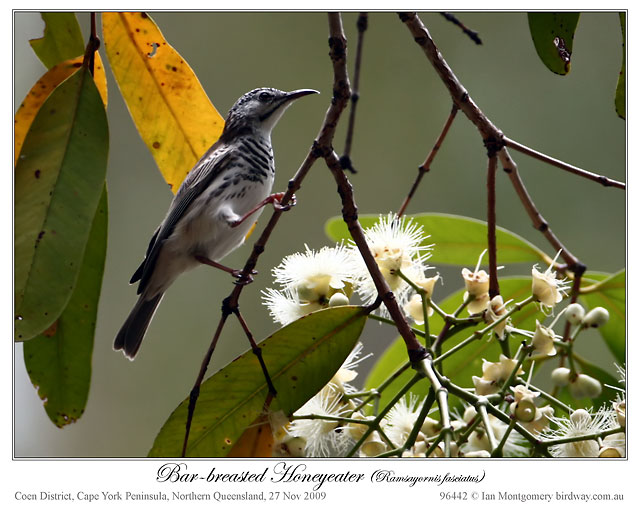
Bar-breasted Honeyeater (Ramsayornis fasciatus) ©Ian

Bar-breasted Honeyeater (Ramsayornis fasciatus) ©Ian

Newsletter 1/3/2010

This week we have an unusual-looking honeyeater from northern Australia, the Bar-breasted Honeyeater. It is the only Australian Honeyeater with strong barring – the only other barred one is it’s close relative the faintly-barred Brown-backed Honeyeater of northeastern Queensland and PNG.

Its range extends through coastal areas from the Kimberley in Western Australia to Rockhampton in Queensland. Though scarce in eastern Queensland, it is quite common in suitable habitats in the rest of northern Australia but, being an unobtrusive feeder on the blossoms of trees, it is easy to overlook. Like the Brown-backed, it prefers woodlands near water, typically paperbarks or eucalyptus and both species build quite bulky suspended nests of paperbark strips, usually over water. See the second photo of the Brown-backed Honeyeater here for an example: http://birdway.com.au/meliphagidae/brown_backed_honeyeater/index.htm.

Bar-breasted Honeyeater (Ramsayornis fasciatus) by Ian

Bar-breasted Honeyeater (Ramsayornis fasciatus) by Ian

Birds that feed on flowering trees are usually difficult to photograph as they often remain obscured by the foliage. I photographed the one in the first photo on Cape York by sitting in comfort on a folding chair in the shade of a flowering tree – it was a very hot day – and focussing the camera on a suitably exposed blossom until a honeyeater came along. In the second photo, in northeastern Western Australia, I climbed up a tree and sat on a large limb against the trunk and waited for the birds to come and feed near me.

Well another year is on us, so Happy New Year, specifically Happy twenty-ten! (Being pedantic, I’ve joined the campaign to boycott ‘two thousand and . . .’).
Ian
—
Ian Montgomery, Birdway Pty Ltd,
454 Forestry Road, Bluewater, Qld 4818
Phone: +61-7 4751 3115
Preferred Email: ian@birdway.com.au
Website: http://birdway.com.au
—


Lee’s Addition:

It is not good to eat much honey: so for men to search their own glory is not glory. (Proverbs 25:27 KJV)

Thanks again, Ian. I also like calling it twenty ten, but I also like “Oh, ten.” Anyway, on with the bird of the week.

Ian also did a bird of the week on the Rufous-banded Honeyeater.  Also see Meliphagidae – Honeyeaters for more information about the Honeyeaters. For a list of all the Honeyeaters – Click Here.

Birds in Hymns – My Refuge Is A God Of Love

To the chief Musician, A Psalm of David. In the LORD put I my trust: how say ye to my soul, Flee as a bird to your mountain? (Psalms 11:1 KJV)

Words: Isaac Watts, The Psalms of Da­vid, 1719.

Music: All­mäch­tig­er Gott, Jo­hann Crü­ger (1598-1662)

My Refuge is a God of Love


My refuge is the God of love;
Why do my foes insult and cry,
“Fly like a timorous, trembling dove,
To distant woods or mountains fly?” 

If government be all destroyed,
That firm foundation of our peace,
And violence make justice void,
Where shall the righteous seek redress?

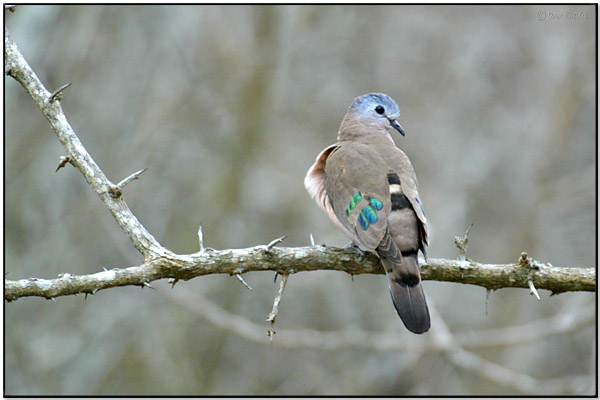
Emerald-spotted Wood Dove (Turtur chalcospilos) by Daves BirdingPix

Emerald-spotted Wood Dove (Turtur chalcospilos) by Daves BirdingPix

The Lord in Heav’n has fixed His throne,
His eye surveys the world below:
To Him all mortal things are known,
His eyelids search our spirits through.

If He afflicts His saints so far,
To prove their love and try their grace,
What may the bold transgressors fear?
His very soul abhors their ways.

On impious wretches He shall rain
Tempests of brimstone, fire and death;
Such as He kindled on the plain
Of Sodom, with His angry breath.

The righteous Lord loves righteous souls,
Whose thoughts and actions are sincere;
And with a gracious eye beholds
The men that His own image bear.

Most information from The Cyber Hymnal

See ~ Wordless Birds

More ~ Birds in Hymns

*