Christmas was only a few days away when this was posted, but this Gospel Presentation is appropriate year round. We just had our third “free shopping day” yesterday at our church, Faith Baptist Church in Winter Haven. This is the 3rd year this presentation has been given before the “free shopping” and meal begins. We, as a church, buy and collect new toys and games and provide a meal for those less fortunate.
This year there were 6 adults and 9 children who accepted the Lord Jesus Christ as their Savior. Praise the Lord!
Have you put your faith and trust in the Lord and accepted Him?
*
*
Jesus saith unto him, I am the way, the truth, and the life: no man cometh unto the Father, but by me. (John 14:6 KJV)
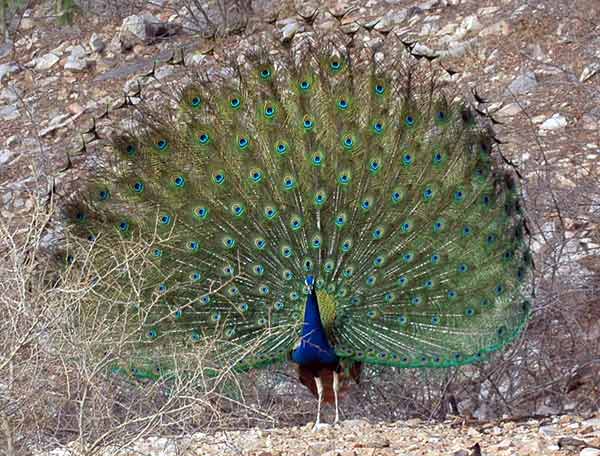
We wrote about Peacocks before in Birds of the Bible – Peacocks, dated April of 2008. This is about the Pied Peacock which is from the jungles of India and Sri Lanka. When Solomon sent for them to be delivered, they were brought by a joint navy of Hiram and the navy of Tharshish.
For the king had at sea a navy of Tharshish with the navy of Hiram: once in three years came the navy of Tharshish, bringing gold, and silver, ivory, and apes, and peacocks. (1 Kings 10:22 KJV) For the king’s ships went to Tarshish with the servants of Huram: every three years once came the ships of Tarshish bringing gold, and silver, ivory, and apes, and peacocks. (2 Chronicles 9:21 KJV)
I received a notice by “bellamoonnature” of a video he made of the Pied Peacock. Decided to share it and bring the peacock article a little more up to date. It is about a Pied Peacock. For more information on how that comes about see India Blue Pied. It is a mutation, but still it is a neat looking Peacock or Peafowl.
Here is his video:
I love the little immature male trying to practice his tail display. He has a way to go before his tail reaches the beauty of the mature male. This peacocks beautiful display goes right along with God’s question to Job.
Gavest thou the goodly wings unto the peacocks? or wings and feathers unto the ostrich? (Job 39:13 KJV)
Peacocks and Peafowls are part of the Phasianidae – Pheasants, Fowls & Allies Family which are in the Galliformes Order. There are three Genus in the Pheasants, Fowls & Allies Family that have what we refer to as “Peacocks.”
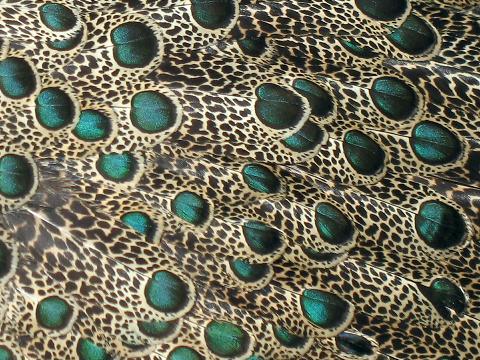
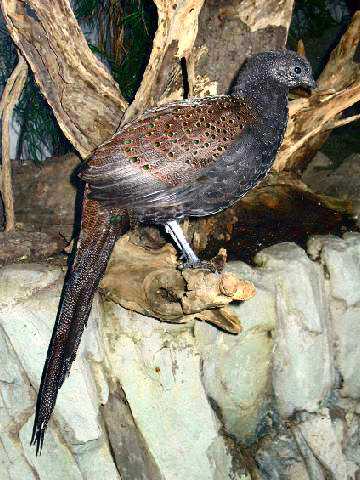
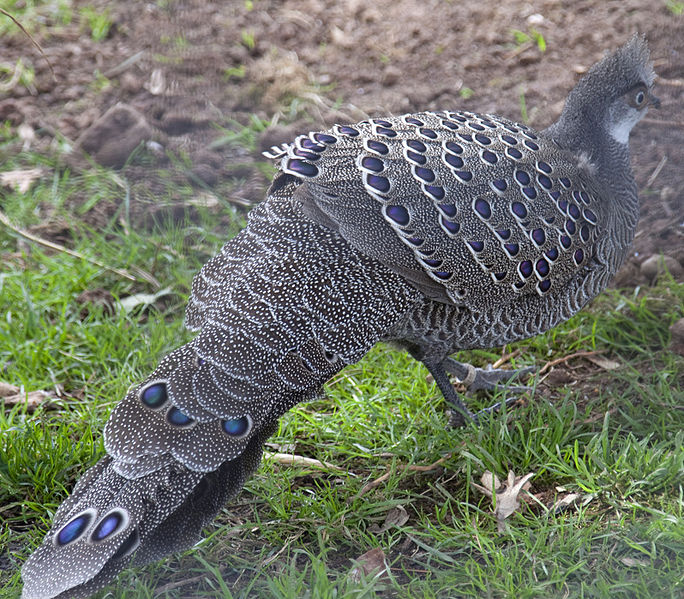
The Polyplectron genus is the peacock-pheasants. “The peacock-pheasants are a bird genus, Polyplectron, of the family Phasianidae, consisting of eight species. They are colored inconspicuously, relying on heavily on crypsis to avoid detection. When threatened, peacock-pheasants will alter their shapes utilising specialised plumage that when expanded reveals numerous iridescent orbs. The birds also vibrate their plume quills further accentuating their aposematism (Warning colourataton or signal). Peacock-pheasants exhibit well developed metatarsal spurs. Older individuals may have multiple spurs on each leg. These kicking thorns are used in self-defense.” (Wikipedia)
“Peafowl are two Asiatic species of flying birds in the genus Pavo of the pheasant family, Phasianidae, best known for the male’s extravagant eye-spotted tail, which it displays as part of courtship. The male is called a peacock, the female a peahen, and the offspring peachicks. The adult female peafowl is grey and/or brown. Peachicks can be between yellow and a tawny colour with darker brown patches. The male (peacock) Indian Peafowl has iridescent blue-green or green coloured plumage.
The peacock tail (“train”) is not the tail quill feathers but the highly elongated upper tail coverts. The “eyes” are best seen when the peacock fans its tail. Like a cupped hand behind the ear the erect tail-fan of the male helps direct sound to the ears. Both species have a crest atop the head.
The female (peahen) Indian Peafowl has a mixture of dull green, brown, and grey in her plumage. She lacks the long upper tail coverts of the male but has a crest. The female can also display her plumage to ward off female competition or signal danger to her young.
Green Peafowl (Pavo muticus) by Ian
A male Green Peafowl The Green Peafowl appears different from the Indian Peafowl. The male has green and gold plumage and has an erect crest. The wings are black with a sheen of blue. Unlike the Indian Peafowl, the Green Peahen is similar to the male, only having shorter upper tail coverts and less iridescence. It is difficult to tell a juvenile male from an adult female.
As with many birds, vibrant plumage colours are not primarily pigments, but optical interference Bragg reflections, based on regular, periodic nanostructures of the barbules (fiber-like components) of the feathers. Slight changes to the spacing result in different colours. Brown feathers are a mixture of red and blue: one colour is created by the periodic structure, and the other is a created by a Fabry–Pérot interference peak from reflections from the outer and inner boundaries. Such interference-based structural colour is important for the peacock’s iridescent hues that change and shimmer with viewing angle, since unlike pigments, interference effects depend on light angle. Colour mutations exist through selective breeding, such as the leucistic White Peafowl and the Black-Shouldered Peafowl.”(Wikipedia)
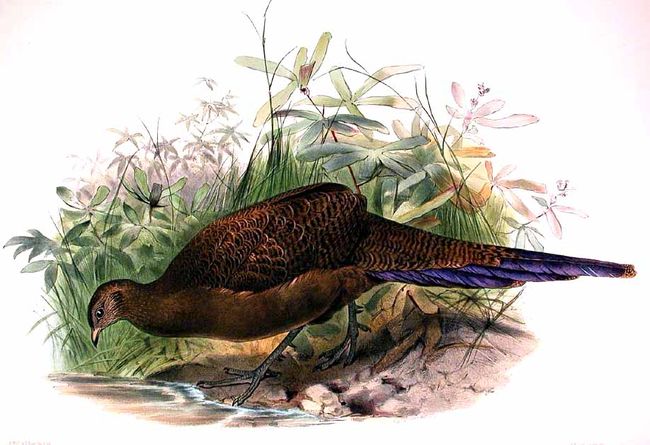
“The Congo Peafowl (Afropavo congensis) is a species of peafowl. It is the only member of the monotypic genus Afropavo. The male is a large bird of up to 70 cm (28 in) in length. Its feathers are deep blue with a metallic green and violet tinge. It has bare red neck skin, grey feet, and a black tail with fourteen feathers. Its head is adorned with vertical white elongated hair-like feathers on its crown. The female is generally a chestnut brown bird with a black abdomen, metallic green back, and a short chestnut brown crest. Both sexes resemble immature Asian Peafowl, with early stuffed birds being erroneously classified as such before they were officially discovered as a unique species. It inhabits and is endemic to lowland rainforests of Congo River Basin in the central part of the Democratic Republic of the Congo.
The diet consists mainly of fruits and invertebrates. The male has a similar display to other peacocks, fanning its tail in this case, while other peacocks fan their upper tail coverts. The male Congo Peafowl is monogamous, though information from the wild is needed. Very little is known about this species.” (Wikipedia)
Doth the hawk fly by thy wisdom, [and] stretch her wings toward the south? (Job 39:26)
When I Consider – “Designed for Flight” by Creation Moments
“Many textbooks tell young people today that birds are modified reptiles. Suppose, they say, that millions of years ago the scales on some reptiles began to fray along the edges. In time, they say, the frayed scales turned into feathers and birds were born.
Formed By Him
The elegance and beauty of the feather make this story hard to believe. Can sticking a feather on a lizard produce a peacock? The bird’s feather is only a small part of the complete flying system of the bird. Even with very careful planning and redesigning, a reptile doesn’t have what it takes.
A bird needs massive breast muscles for flight. In some birds, 30 percent of the body weight of the bird is breast muscle. By comparison, in humans, breast muscles are only about 1 percent of body weight. A bird also needs an extremely high metabolism and blood pressure to deliver the energy those muscles need for flight. Birds have a higher metabolism than any other creature; they also have the necessary high blood pressure. Finally, as is well known, birds need light skeletons. The man-o’-war has a wingspan of seven feet. But its entire skeleton weighs only a few ounces – less than its feathers!
Even the most clever rebuilding of a reptile cannot produce a bird. In fact, birds have very little in common with reptiles. The entire being of the bird, from body to brain, has been specially designed for flight by a Creator who clearly knows everything there is to know about flight.
Prayer:
Father in heaven, the beauty, grace and huge variety of birds You have created are some of the most beautiful creatures on earth. As I thank You for them, fill me with new wonder over the wonderful work of Your hands. Amen.
Notes:
Vandeman, George. 1991. “The miracle of flight.” Signs of the Times, May. p. 25.”
*
All things were made by him; and without him was not any thing made that was made. (John 1:3 KJV)
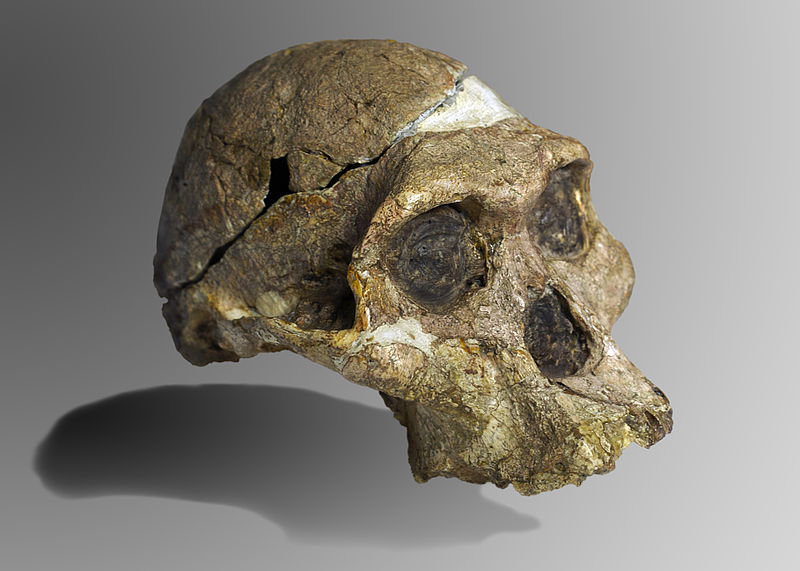
“Evolutionary ‘Game Changer’ Doesn’t Change” by Brian Thomas, M.S. is an interesting article that is in this month’s Acts and Facts.
It is typical of how hard the evolutionist want to believe in their theory of evolution. Now it is a “creature, called Australopithecus sediba, “could be a key link in the process of evolution that led to modern human beings.”1 One headline read, “Rethinking Human Origins: Fossils Reveal a New Ancestor on the Family Tree.”2 But none of these claims is true, and it’s relatively easy to understand why.”
They also have a daily devotional called – Days of Praise, which I use along with my Bible reading.
O Timothy, keep that which is committed to thy trust, avoiding profane and vain babblings, and oppositions of science falsely so called: (1 Timothy 6:20 KJV)
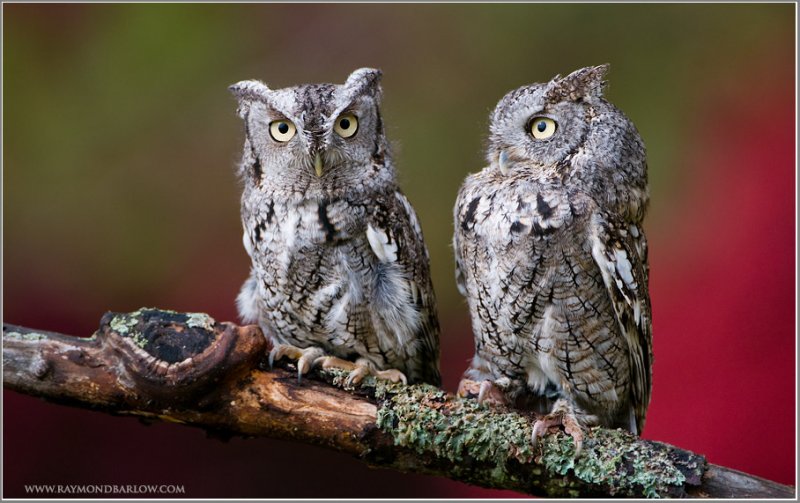
Eastern Screech Owl (Megascops asio) (captive) by Raymond Barlow
A Prayer of the afflicted, when he is overwhelmed, and poureth out his complaint before the LORD. Hear my prayer, O LORD, and let my cry come unto thee. Hide not thy face from me in the day when I am in trouble; incline thine ear unto me: in the day when I call answer me speedily. (Psalms 102:1-2 KJV)
Words by Isaac Watts (1674-1748), The Psalms of David, 1719.
Music: St. Matthew, William Croft (1678-1727), 1708
As a boy, Croft was a chorister at the Chapel Royal. From 1700-1712, he was organist at St. Anne, Soho, London. From 1704 on, he was, jointly with Jeremiah Clarke, organist of the Chapel Royal. In 1708 he became Master of the Children at Chapel Royal and organist at Westminster Abbey. In 1713 he received a Doctor of Music degree from Oxford University. In 1726, the Academy of Vocal Music (later the Academy of Ancient Music) was founded by 13 musicians, including Croft, Pepusch, Bononcini, and Geminiani.
Croft was composer to Queen Anne and was recognized as the foremost church musician of his time. Croft also wrote instrumental works (e.g., cembalo and sonatas for flute (recorder).
Because thou hast made the LORD, which is my refuge, even the most High, thy habitation; There shall no evil befall thee, neither shall any plague come nigh thy dwelling. (Psalms 91:9-10 KJV)
Words by Isaac Watts, (1674-1748) The Psalms of David, 1719.
Music: St. John’s Highlands, anonymous
He That Hath Made His Refuge God
He that hath made his refuge God
Shall find a most secure abode,
Shall walk all day beneath His shade,
And there at night shall rest his head.
Then will I say, My God, Thy power
Shall be my fortress and my tower;
I, that am formed of feeble dust,
Make Thine almighty arm my trust.
Thrice happy man! Thy Maker’s care
Shall keep thee from the fowler’s snare;
Satan, the fowler, who betrays
Unguarded souls a thousand ways.
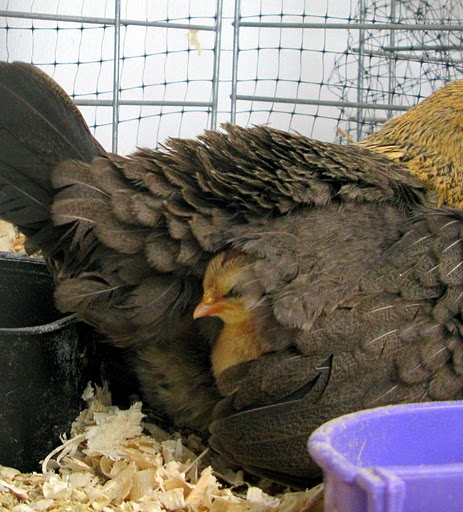
Just as a hen protects her brood From birds of prey that seek their blood, Under her feathers, so the Lord
Makes His own arm His people’s guard.
If burning beams of noon conspire
To dart a pestilential fire,
God is their life; His wings are spread
To shield them with a healthful shade.
If vapors with malignant breath
Rise thick, and scatter midnight death,
Israel is safe; the poisoned air
Grows pure, if Israel’s God be there.
What though a thousand at thy side,
At thy right hand ten thousand died,
Thy God His chosen people saves
Amongst the dead, amidst the graves.
So when He sent His angel down
To make His wrath in Egypt known,
And slew their sons, His careful eye
Passed all the doors of Jacob by.
But if the fire, or plague, or sword,
Receive commission from the Lord
To strike His saints among the rest,
Their very pains and deaths are blest.
The sword, the pestilence, or fire,
Shall but fulfill their best desire;
From sins and sorrows set them free,
And bring Thy children, Lord, to Thee.
Keep me as the apple of the eye, hide me under the shadow of thy wings, (Psalms 17:8 KJV)
Under His Wings - (Dove - photographer unknown)
Isaac Watts – (1674-1748)
Watts’ father was Nonconformist imprisoned twice for his religious views. Isaac learned Greek, Latin, and Hebrew under Mr. Pinhorn, Rector of All Saints, and headmaster of the Grammar School in Southampton. Isaac’s taste for verse showed itself in early childhood, and his promise caused a local doctor and other friends to offer him a university education, assuming he would be ordained in the Church of England. However, Isaac declined and instead entered a Nonconformist Academy at Stoke Newington in 1690, under the care of Thomas Rowe, pastor of the Independent congregation at Girdlers’ Hall; Isaac joined this congregation in 1693.
Watts left the Academy at age 20 and spent two years at home; it was during this period that he wrote the bulk of his Hymns and Spiritual Songs. They were sung from manuscripts in the Southampton Chapel, and published 1707-1709.
The next six years of his life were again spent at Stoke Newington, working as tutor to the son of eminent Puritan John Hartopp. The intense study of these years is reflected in the theological and philosophical material he subsequently published.
Watts preached his first sermon at age 24. In the next three years, he preached frequently, and in 1702 was ordained as pastor of the Independent congregation in Mark Lane. At that time he moved into the house of a Mr. Hollis in the Minories. His health began to fail the next year, and Samuel Price was appointed as his assistant in the ministry. In 1712, a fever shattered his constitution, and Price became co-pastor of the congregation, which had moved to a new chapel in Bury Street. It was at this time that Isaac became the guest of Sir Thomas Abney. He lived with Abney (and later Abney’s widow) the rest of his life, mainly at Theobalds in Hertfordshire, then for 13 years at Stoke Newington.
In 1728, the University of Edinburgh awarded Watts a Doctor of Divinity degree.
Of birds these are they which you must not eat, and which are to be avoided by you: The eagle, and the griffon, and the osprey. (Leviticus 11:13 DRB)
The unclean eat not: to wit, the eagle, and the grype, and the osprey, (Deuteronomy 14:12 DRB)
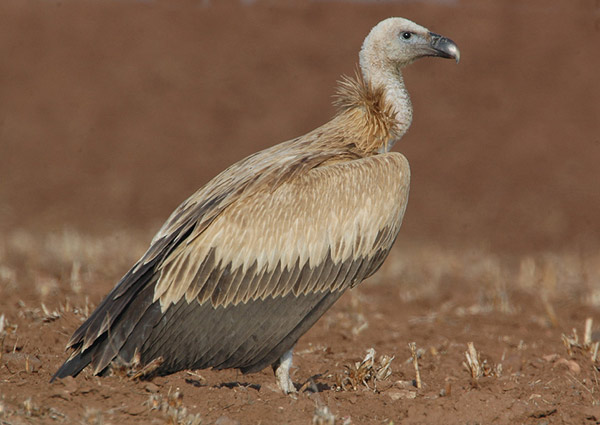
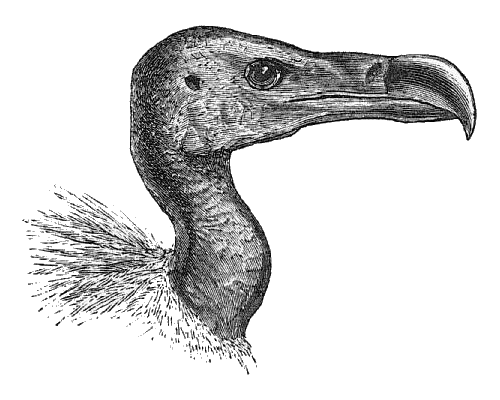
While looking through the list of clean and unclean birds in Leviticus 11 and Deuteronomy 14 to see if I could find a bird to write about, I found the two verses above in the DRB (1899 Douay-Rheims Bible). It is not a Bible I use other than comparing verses. Most of the other versions call it a vulture, ossifrage, gier-eagle, bearded or black vulture, buzzard and a few other things. The KJV calls it the ossifrage and the NKJV the vulture. What caught my eye was the grype. When I looked it up, the Griffon and the “gyps” genus were tied together. So, here is a little about the Griffon Vulture and the Gyps genus.
The Griffon Vulture (Gyps fulvus) is a large Old World vulture in the bird of prey family Accipitridae.
The Griffon Vulture is 93–110 cm (37–43 in) long with a 2.3–2.8 m (7.5–9.2 ft) wingspan. In the nominate race the males weigh 6.2 to 10.5 kg (14 to 23 lb) and females typically weigh 6.5 to 11.3 kg (14 to 25 lb), while in the Indian subspecies (G. f. fulvescens) the vultures average 7.1 kg (16 lb). Extreme adult weights have been reported from 4.5 to 15 kg (9.9 to 33 lb), the latter likely a weight attained in captivity. Hatched naked, it is a typical Old World vulture in appearance, with a very white head, very broad wings and short tail feathers. It has a white neck ruff and yellow bill. The buff body and wing coverts contrast with the dark flight feathers.
Griffon Vulture (Gyps fulvus) Dieren Park Amersfoort -adult and chick WikiC
Like other vultures, it is a scavenger, feeding mostly from carcasses of dead animals which it finds by soaring over open areas, often moving in flocks. It grunts and hisses at roosts or when feeding on carrion.
The maximum lifespan recorded for the Griffon Vulture is 41.4 years, for a specimen in captivity. It breeds on crags in mountains in southern Europe, north Africa, and Asia, laying one egg. Griffon Vultures may form loose colonies. The population is mostly resident.
White-backed Vulture (Gyps africanus) by Bob-Nan
There are 8 species in the Gyps genus. The Griffon being one of them. They are Old World vultures in the bird family Accipitridae, which also includes eagles, kites, buzzards and hawks.
These are the typical vultures, with bald head, broad wings and mainly dark plumage. They are large scavenging birds, feeding mostly from carcasses of dead animals. Old World vultures find carcasses exclusively by sight. Representatives of this group are found throughout warmer parts of the Old World.
The characteristic featherless head is because a feathered head would become spattered with blood and other fluids, and thus be difficult to keep clean.
Vultures are of course mentioned several times throughout Scripture:
There shall the great owl make her nest, and lay, and hatch, and gather under her shadow: there shall the vultures also be gathered, every one with her mate. (Isaiah 34:15 KJV)
There is a path which no fowl knoweth, and which the vulture’s eye hath not seen: (Job 28:7 KJV)
With all the preparations for Thanksgiving and having company here for the holiday, I am re-posting an article that I wrote for our church blog, The Fountain. We were asked to write about only one thing we are thankful for, so, myself and several other writers posted articles of Thanksgiving.
In view of the Thanksgiving season, I have asked our blog authors to write about one thing they are thankful for. Lee is up first.
Give thanks unto the LORD, call upon his name, make known his deeds among the people. (1 Chronicles 16:8 KJV)
One thing is all Stephen will let us be thankful for. So I won’t mention the other 9,000 things I am thankful for.
The Lord has given me an interest in our avian friends, the birds, and it has brought so many blessings from it. When observing them, their colors, behavior, the variety, and just the wonder of them, I can’t help but be THANKFUL!
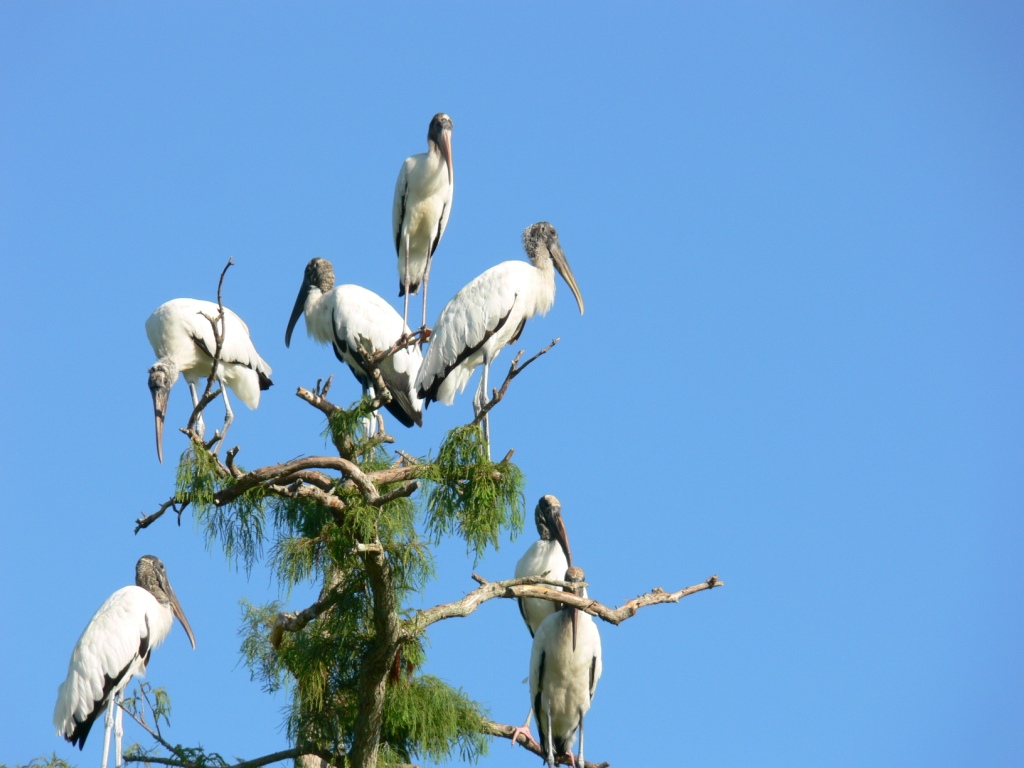
Woodstorks on top of tree at Circle B -7-22-11 by Lee
The Lord and I have a running conversation when birdwatching or looking for photos of birds for my blog. Here are some of my thought and talks with Him:
“Amazing! How did you think of so many different designs and colors?”
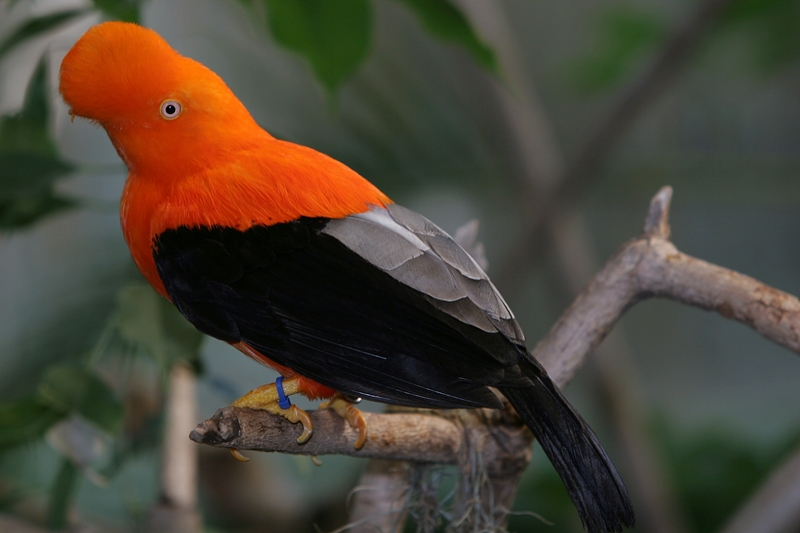
Andean Cock-of-the-rock (Rupicola peruvianus) by SanDiegoZoo
“(Chuckle) Lord you sure have a sense of humor on some of these birds!”
“Lord, you caused the donkey to talk, could you bring that bird out where I can see it.?” (Thankfully, it has worked several times. Thank You Lord.)
On and on the conversations go. I love the Lord and I am so thankful to Him for that interest and the love He has put in me for His Creation, especially the birds.
Giving thanks always for all things unto God and the Father in the name of our Lord Jesus Christ; (Ephesians 5:20 KJV)
Since this is my blog and it is Thanksgiving today, I can add more things I am thankful for. Of course the thing I am most thankful for is my salvation provided through the shed blood of Jesus Christ on the cross.
Caught Dan on the Boardwalk trying to find a bird
Next I am thankful for my husband, Dan, who is the other love of my life. I am thankful for the 48 years the Lord has allowed us to spend together. We are both thankful that we share our love for the Lord and enjoy being allowed to serve Him in various ways.
I am thankful for Faith Baptist Church, here in Winter Haven, FL and the others we have attended over the years. What a blessing it is to attend, listen to great preaching, singing, and have great friends. Serving the Lord here is great. As we lived in other places over the years, we have had great blessings and friends there also.
I am thankful for this blog and all of you who stop by and read the articles that are produced. I am very thankful for the writers like ajmithra, Ian Montgomery, Dottie Malcolm, Stephen Simpson, April Lorier and others who have contributed their talents. All the photographers and videographers who have allowed their photos and videos to be used.
Then our families and friends, who could not be thankful for them. On and on I could go for the many blessings in my life, but I will stop there for now. Just the 10, 466 birds in the world would put me past the 9,000 things I am thankful for.
Look around you today and count your many blessings. There are many.
Lord Bless your day and Happy Thanksgiving.
A Psalm of praise. Make a joyful noise unto the LORD, all ye lands. Serve the LORD with gladness: come before his presence with singing. Know ye that the LORD he is God: it is he that hath made us, and not we ourselves; we are his people, and the sheep of his pasture. Enter into his gates with thanksgiving, and into his courts with praise: be thankful unto him, and bless his name. For the LORD is good; his mercy is everlasting; and his truth endureth to all generations. (Psalms 100:1-5 KJV)
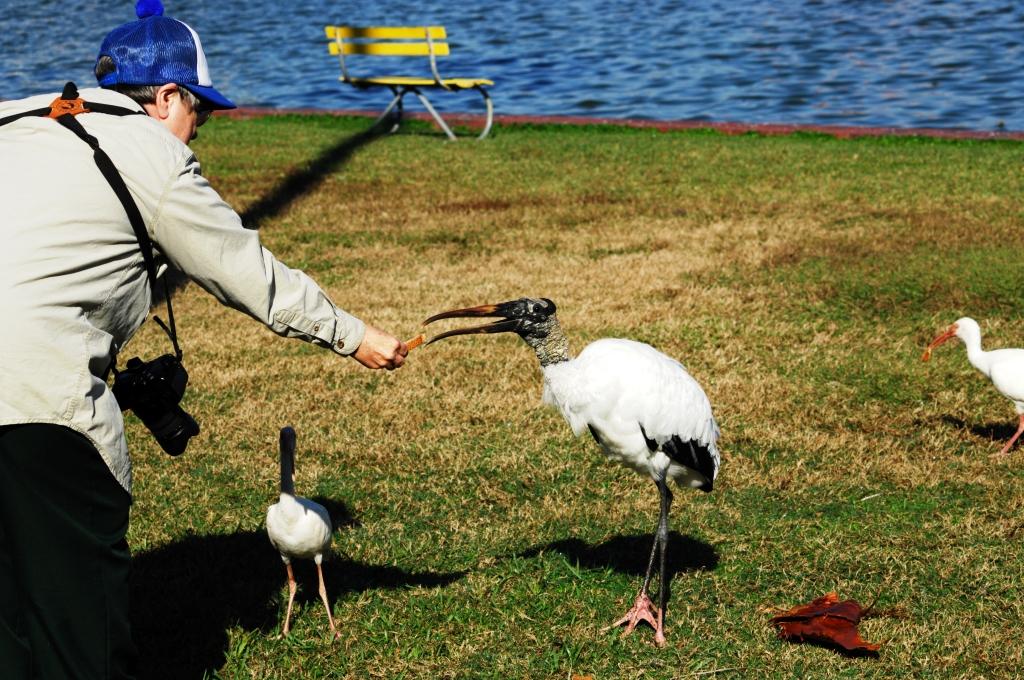
Lee feeding Wood Stork at Lake Morton by Dan Jan 2011
While watching the birds at my feeders and reflecting on what I had just read in my devotions, I started thinking about how the truths of God’s Word applies to the birds and to me. There are differences of course, but there are many similarities. Those are the ones this article is about.
To begin, we are both created. The Lord created the birds and He created humans. We both have bodies and spirits, but humans were given a soul and were created in His Image.
So God created great sea creatures and every living thing that moves, with which the waters abounded, according to their kind, and every winged bird according to its kind. And God saw that it was good. (Genesis 1:21 NKJV)
Then God said, “Let Us make man in Our image, according to Our likeness; let them have dominion over the fish of the sea, over the birds of the air, and over the cattle, over all the earth and over every creeping thing that creeps on the earth.” So God created man inHis own image; in the image of God He created him; male and female He created them. (Genesis 1:26-27 NKJV)
There is a difference between us:
All flesh is not the same flesh, but there is one kind of flesh of men, another flesh of animals, another of fish, and another of birds. (1 Corinthians 15:39 NKJV)
Bush Stone-curlew (Burhinus grallarius) with young by Ian
Then the Lord commanded them to be “Be fruitful and multiply, and fill.” Both were told to reproduce with the difference being that man was given dominion over the critters.
And God blessed them, saying, “Be fruitful and multiply, and fill the waters in the seas, and let birds multiply on the earth.” So the evening and the morning were the fifth day. …And God saw that it was good.(Genesis 1:22-23, 25 NKJV)
Then God blessed them, and God said to them, “Be fruitful and multiply; fill the earth and subdue it; have dominion over the fish of the sea, over the birds of the air, and over every living thing that moves on the earth.” (Genesis 1:28 NKJV)
Cedar Waxwing Eating by Steve Slayton
God gave both the birds and man (humans) every green herb to eat.
And God said, “See, I have given you every herb that yields seed which is on the face of all the earth, and every tree whose fruit yields seed; to you it shall be for food. Also, to every beast of the earth, to every bird of the air, and to everything that creeps on the earth, in which there is life, I have given every green herb for food“; and it was so. (Genesis 1:29-30 NKJV)
Swallow Tanager (Tersina viridis) by Dario Sanches
We were both created “very good.”
Then God saw everything that He had made, and indeed it was very good. So the evening and the morning were the sixth day. (Genesis 1:31 NKJV)
Then Adam and Eve disobeyed God and both the birds and myself were placed under a curse. Neither of us enjoy the fellowship and peace that was there in the Garden of Eden. My personal belief is that the animals and birds were very tame, that Adam could call or speak to them and they would come without hesitation. But now, they are afraid of us, and we (humans) need a Savior. (The Gospel Message)
And the fear of you and the dread of you shall be on every beast of the earth, on every bird of the air, on all that move on the earth, and on all the fish of the sea. They are given into your hand. (Genesis 9:2 NKJV)
We all belong to the Lord:
I know all the birds of the mountains, And the wild beasts of the field are Mine. “If I were hungry, I would not tell you; For the world is Mine, and all its fullness. (Psalms 50:11-12 NKJV)
Western Great Egret (Ardea alba) With Fish by AestheticPhotos
We and the birds are provided for:
“Therefore I say to you, do not worry about your life, what you will eat or what you will drink; nor about your body, what you will put on. Is not life more than food and the body more than clothing? Look at the birds of the air, for they neither sow nor reap nor gather into barns; yet your heavenly Father feeds them. Are you not of more value than they? (Matthew 6:25-26 NKJV)
God has given each kind of bird different beaks, feet, appetites, habitats, and places to dwell. The Lord has given those of us who have accepted Him as Savior different abilities, gifts, talents, places to live (like missionaries) and jobs to do. He has given both a variety that makes them and us very interesting to behold.
There are more things that could be mentioned, but for now, Praise the Lord that He cares about both the birds and us!
Gavest thou the goodly wings unto the peacocks? or wings and feathers unto the ostrich? Which leaveth her eggs in the earth, and warmeth them in dust, And forgetteth that the foot may crush them, or that the wild beast may break them. (Job 39:13-15 KJV)
The largest bird egg is from the Ostrich Sturthio camelus. The egg measures 15 – 20 cm long, 10 – 15 cm in diameter and weighs 1 – 1.78 kg.
Largest egg ~ Ostrich ~ measuring 17.8 by 14 cm (7 by 4.5 in)
Smallest egg laid relative to body weight ~ Ostrich egg ~ at 1.5%
An ostrich egg needs to be boiled for 2 hours to get a hard-boiled egg.
Can that which is unsavoury be eaten without salt? or is there any taste in the white of an egg? (Job 6:6 KJV)
Largest Egg – living ~ Ostrich
Largest Egg – ever ~ Elephant Bird Aepyornis maximus From Madagascar 39cm/15.4in long = 12 litres/2.6 gallons, 220 chicken eggs, egg weighed 27 pounds.
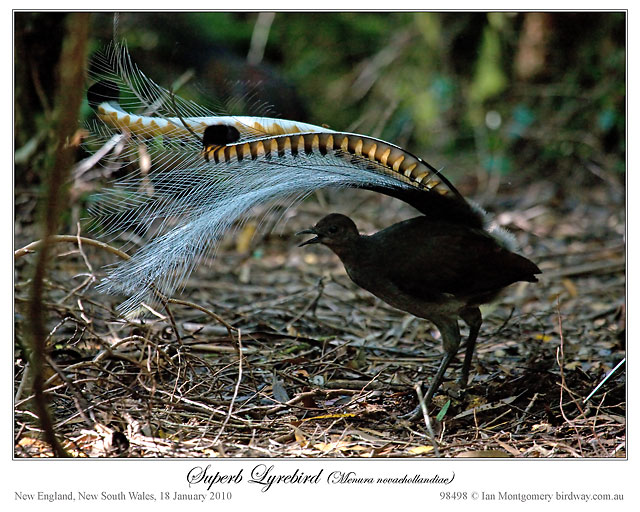
Superb Lyrebird (Menura novaehollandiae) by Ian
Largest egg laid by a passerine ~ 5 7 g (2 oz) by Australian Lyrebirds
Largest egg laid relative to body weight ~ Little Spotted Kiwi at 26%
Smallest known egg ~ the Vervain Hummingbird Mellisuga minima of Jamacia and nearby islets. The egg is barely the size of a pea and measures less than 10 mm in length and weighs 0.356 g.
You could put 4700 bee hummingbird eggs inside one ostrich egg. The Bee Hummingbird egg is the size of a small pea and weighs .02 ounces. World’s Smallest Bird
Smallest egg ~ West Indian Vervain Hummingbird ~ at 10 mm (0.39 in) in length and 0.375 g (0.0132 oz)
Smallest Egg – living ~ Vervain Hummingbird Mellisuga minima ~ the size of pea
Or if he shall ask an egg, will he offer him a scorpion? If ye then, being evil, know how to give good gifts unto your children: how much more shall your heavenly Father give the Holy Spirit to them that ask him? (Luke 11:12-13 KJV)
Shape
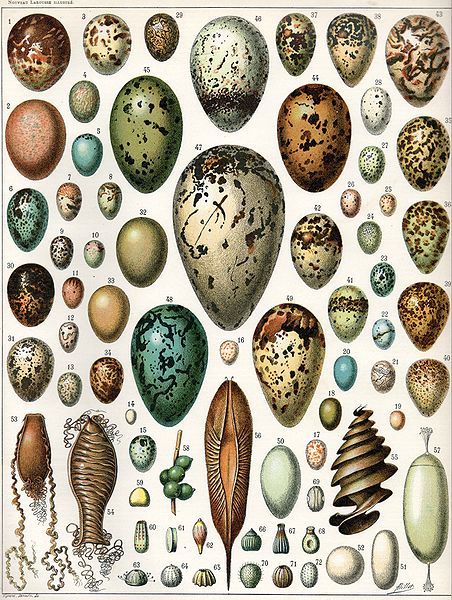
Different Eggs- Birds and Others – from Wikipedia
The majority of avian eggs match the shape of chicken eggs, but there are some exceptions.
Budgies, for instance, tend to lay very round eggs.
Fast-flying, stream-lined birds like swifts and swallows lay long, elliptical eggs.
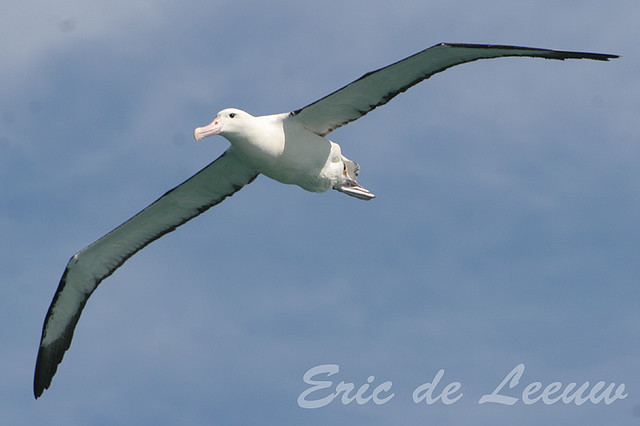
The Royal Albatross’ eggs take 79 days to hatch.
Precocial birds like chickens, ostriches, ducks, and seagulls hatch ready to move around. They come from eggs with bigger yolks than altricial birds like owls, woodpeckers, and most small songbirds that need a lot of care from parents in order to survive.
Longest interval between eggs laid ~ Maleo ~ at 1012 day intervals
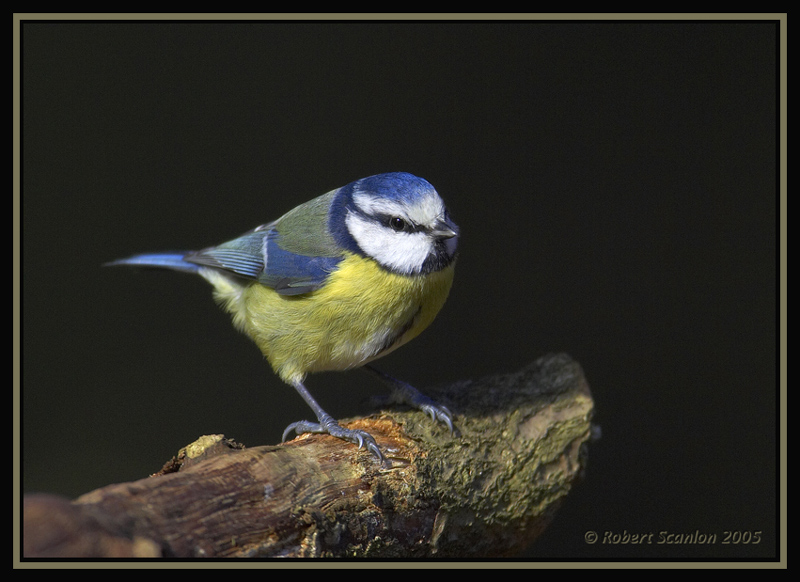
Eurasian Blue Tit (Cyanistes caeruleus) by Robert Scanlon by Robert Scanlon
Largest clutch laid by a nidicolous species ~ 19 eggs laid by a European Blue Tit
Largest clutch laid by a nidifugous species ~ 28 by a Bobwhite Quail
Largest average clutch size ~ 15-19 by a Gray Partridge
Smallest clutch size ~ 1 egg laid every 2 years by Albatrosses
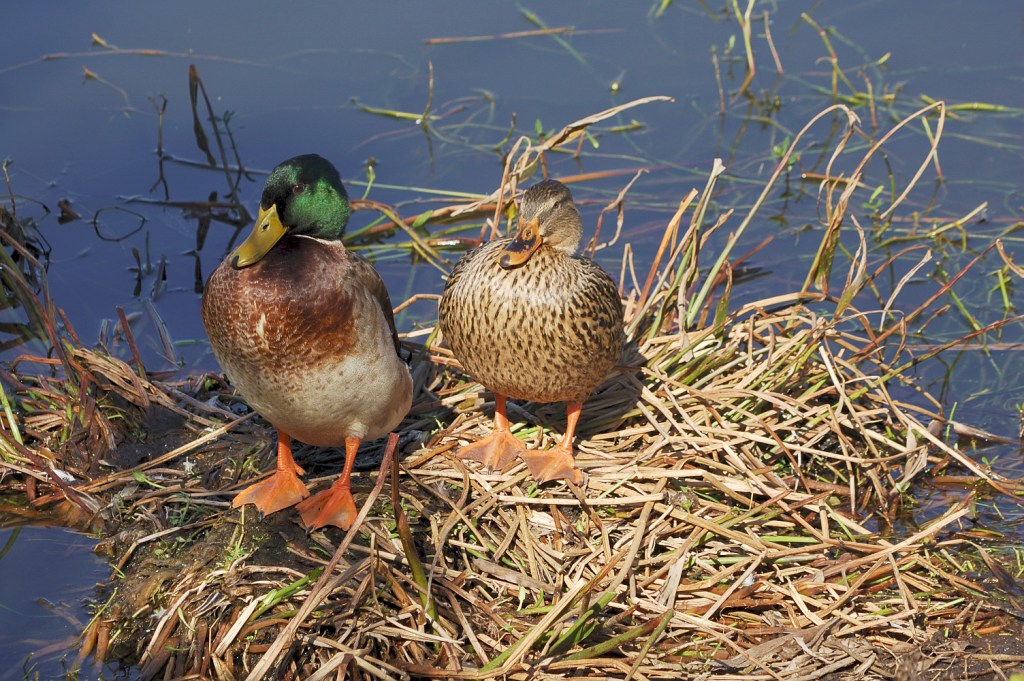
Mallard (Anas platyrhynchos) By Dan’sPix at Lake Hollingsworth
Greatest number of eggs laid consecutively ~ 146 by a Mallard
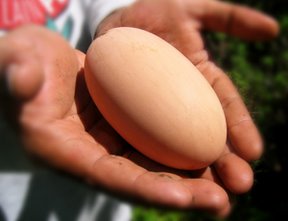
Most valuable bird ~ 8 billion domestic chickens ~ produce 562 billion eggs annually
Highest price paid for an egg ~ 1,000 British pounds for an egg of extinct Aepyornis maximus
And my hand hath found as a nest the riches of the people: and as one gathereth eggs that are left, have I gathered all the earth; and there was none that moved the wing, or opened the mouth, or peeped. (Isaiah 10:14 KJV)
Shell
Bird eggshells are diverse. For example:
Cormorant eggs are rough and chalky
Tinamou eggs are shiny
Duck eggs are oily and waterproof
Cassowary eggs are heavily pitted
Tiny pores in bird eggshells allow the embryo to breathe. The domestic hen’s egg has around 7500 pores.
The most yolks ever found in a single chicken’s egg is nine.
Largest individual nest ~ Mallee Fowl Australia Leipoa ocellata ~ builds a mound 5 m (16.5ft) high and 11 metres (36ft) wide. A mound this size means the bird moved 250 cubic metres of vegetation and 300 tons of soil.
Smallest nest ~
many seabirds do not make a nest at all, nest on ground or
in case of Fairy Tern on a branch of a tree
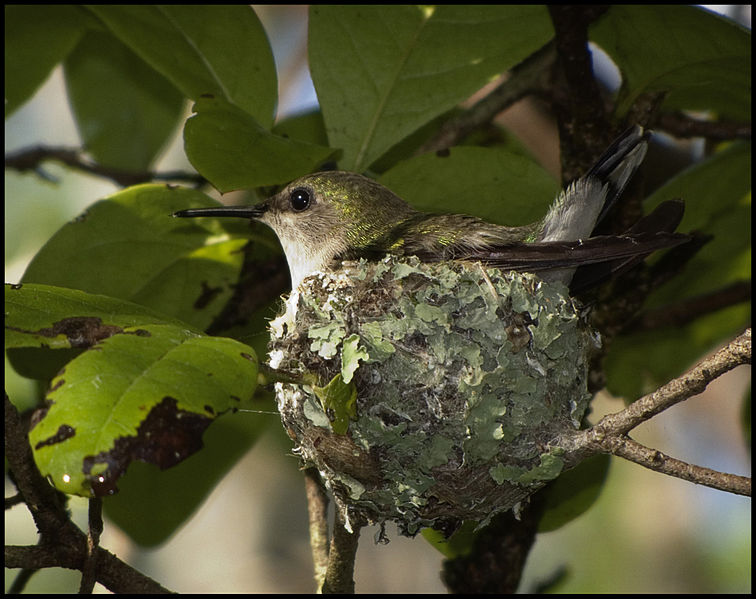
The prize goes to the Hummingbirds for their thimble sized (1cm squared) nests.
The largest nest was built by a pair of Bald Eagles Haliaeetus leucocephalus was 2.9 m wide and 6 m deep.
The Rhinoceros Auklet Cerorhinca monocerata which measures 35 cm and nests on islands in the North Pacific excavates a burrow of 2 – 3 m in length. Burrows up to 6 m are not uncommon and 8 m burrows have also been found.
The only species of parrot that builds a nest is the Quaker Parrot. The Quakers link their nests together to form structures akin to “bird condominiums”. These nests can reach weights greater than 200 lbs.
Largest recorded nesting bird colony: 136 million Passenger Pigeon nesting in an area in Wisconsin covering 1,942 sq km (750 sq mi)
Isn’t it amazing how the Lord created each bird’s egg to help it survive and for it to do His command to:
And God blessed them, saying, “Be fruitful and multiply, and fill the waters in the seas, and let birds multiply on the earth.” (Genesis 1:22 NKJV)
And I said unto him, Sir, thou knowest. And he said to me, These are they which came out of great tribulation, and have washed their robes, and made them white in the blood of the Lamb. (Revelation 7:14)
Come, ye children, hearken unto me: I will teach you the fear of the LORD. (Psalm 34:11 )
Evolutionary naturalism paints the picture of life as if it were a haphazard series of accidents that just barely resulted in a range of living things that just manage to survive. This fanciful picture destroys our sense of wonder over the sophisticated engineering designs in nature.
Consider the mystery of flight, for example. Some evolutionists suggest that perhaps birds are descended from lizards that fell out of trees a lot. Other evolutionists say that birds came from lizards who grew wings, not for flight but to chase down and catch insects. Yet, they have little to say about the fact that we humans have come by most of our sophisticated knowledge about flight from studying the birds.
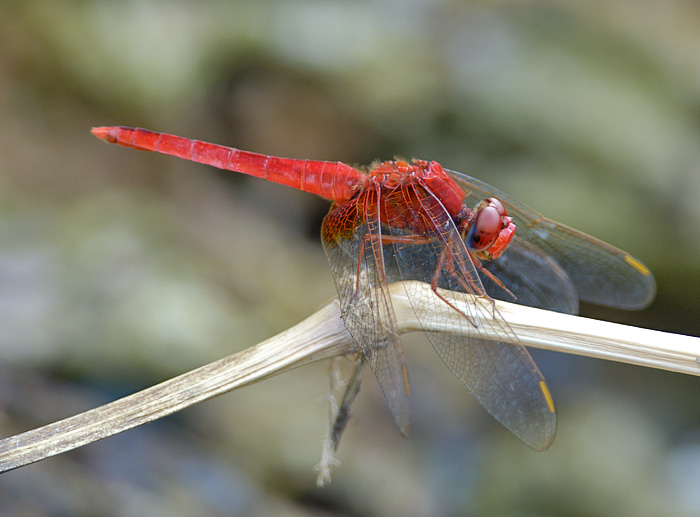
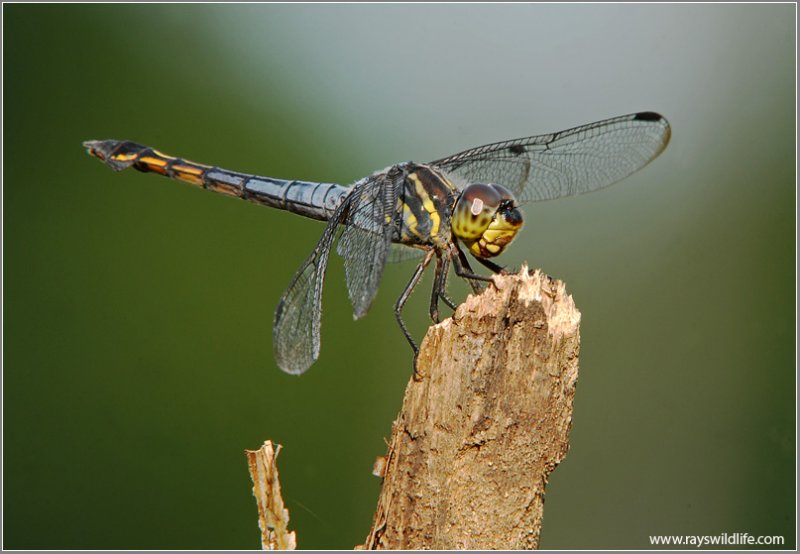
Then there is the problem, for the evolutionist, of how flight accidentally evolved so many times for so many creatures. Scientists studying the dragonfly are learning even more secrets of flight. Our best high-performance aircraft can barely lift themselves off the ground. However, the dragonfly can lift 15 times his own weight into the air. Scientists have learned that this is because the dragonfly’s wings are designed to create little whirlwinds over their top surfaces. These whirlwinds are the secret to creating incredible lifting power. Ways are now being planned to apply this secret to new aircraft designs.
The engineering excellence found in nature and from which we have learned so much even in this day of interplanetary probes is not witness to a mindless process of evolution, but to a wise and mindful Creator.
Prayer:
Father, it seems a shame that humans learned about flight from the dragonfly and fail to see a witness to You. Yet, I know that I don’t learn from You as I should, either. Forgive me for Jesus’ sake and make me a better learner. Amen.