When Jesus was taken to the temple for His dedication, Simeon met Mary and Joseph and told Mary:
And Simeon blessed them, and said unto Mary his mother, Behold, this child is set for the fall and rising again of many in Israel; and for a sign which shall be spoken against; (Yea, a sword shall pierce through thy own soul also,) that the thoughts of many hearts may be revealed. (Luke 2:34-35 KJV)
When Judas came to betray Christ in the garden, Peter took out his sword and cut of the right ear of one of them, but Jesus touched his ear and healed it.
And while he yet spake, lo, Judas, one of the twelve, came, and with him a great multitude with swords and staves, from the chief priests and elders of the people… And one of them smote the servant of the high priest, and cut off his right ear. And Jesus answered and said, Suffer ye thus far. And he touched his ear, and healed him. (Luke 22:47, 50-51 KJV)
Most know the facts about the death of Christ on the cross. It was prophesied before the Lord ever came to earth that He would die on the cross. Then:
When Jesus therefore had received the vinegar, he said, It is finished: and he bowed his head, and gave up the ghost. The Jews therefore, because it was the preparation, that the bodies should not remain upon the cross on the sabbath day, (for that sabbath day was an high day,) besought Pilate that their legs might be broken, and that they might be taken away. Then came the soldiers, and brake the legs of the first, and of the other which was crucified with him. But when they came to Jesus, and saw that he was dead already, they brake not his legs: But one of the soldiers with a spear pierced his side, and forthwith came there out blood and water. And he that saw it bare record, and his record is true: and he knoweth that he saith true, that ye might believe. For these things were done, that the scripture should be fulfilled, A bone of him shall not be broken. And again another scripture saith, They shall look on him whom they pierced. (John 19:30-37 KJV)
Throughout this week, the Scripture has been presented that tells of the events that were unfolding during the week of Christ’s sacrifice on the Cross. We have come to the “sword” and the fact that Christ’s side was “pierced,” as was Mary’s heart. Any mother’s heart would be pierced to see their son crucified, but Jesus was no ordinary son. She had the privilege of being His earthly mother, by way of the virgin birth, BUT, His Father was God, and He was, as the centurion stated:
Now when the centurion, and they that were with him, watching Jesus, saw the earthquake, and those things that were done, they feared greatly, saying, Truly this was the Son of God. (Matthew 27:54 KJV)
Sword-billed Hummingbird (Ensifera ensifera) by Robert Scanlon
If you have been following along this week, the “Palm” Birds, “Whip” Birds, and the “Thorn” Birds have been presented along with the events of Christ’s crucifixion. Now it is the “Sword” Birds and the “Piercer” Birds. A connection between the events and the names of the birds is being made to help us remember the Lord Jesus Christ. What love He has shown to us by laying down His life to purchase our salvation.
He created and loves the birds so, that when the little sparrow falls, He knows all about it. How much do you think He cares about me and you?
Are not two sparrows sold for a farthing? and one of them shall not fall on the ground without your Father. But the very hairs of your head are all numbered. Fear ye not therefore, ye are of more value than many sparrows. Whosoever therefore shall confess me before men, him will I confess also before my Father which is in heaven. But whosoever shall deny me before men, him will I also deny before my Father which is in heaven. (Matthew 10:29-33 KJV)
Birds with “Sword” in their name:
There is only one bird in the list used here that has “sword” in its name, the Sword-billed Hummingbird. We have done an article on it already in – Formed By Him – Sword-billed Hummingbird.
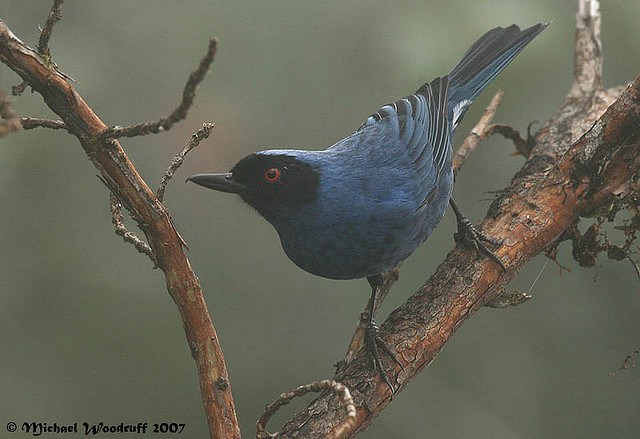
Masked Flowerpiercer (Diglossa cyanea) by Michael Woodruff
The Tanagers and Allies – Thraupidae has a Genus of Flowerpiercers, called Diglossa. The Lord has created another facinating bird. The Flowerpiercer’s common name refers to their habit of piercing the base of flowers to access nectar that otherwise would be out of reach. This is done with their highly created bills, although this is less obvious in the Bluish Flowerpiercer, which has an almost “normal” bill. Most flowerpiercers are restricted to highlands, especially the Andes, in South America, but two species occur in Central America.
Thorns are mentioned many times throughout the Bible and in the Gospels it is presented in several applications:
For every tree is known by his own fruit. For of thorns men do not gather figs, nor of a bramble bush gather they grapes. A good man out of the good treasure of his heart bringeth forth that which is good; and an evil man out of the evil treasure of his heart bringeth forth that which is evil: for of the abundance of the heart his mouth speaketh. (Luke 6:44-45 KJV)
Again thorns were mentioned in a parable in reference to the receiving of the Word of God:
And some fell among thorns; and the thorns sprang up with it, and choked it. And other fell on good ground, and sprang up, and bare fruit an hundredfold. And when he had said these things, he cried, He that hath ears to hear, let him hear. (Luke 8:7-8 KJV)
And that which fell among thorns are they, which, when they have heard, go forth, and are choked with cares and riches and pleasures of this life, and bring no fruit to perfection. (Luk 8:14 KJV)
The next references to thorns has to do with the “crown of thorns” they plaited or twisted together of thorny branches. If you think they just placed that crown of those thorns gently on His head, you are mistaken. With as much mockery and hatred they were showing to Christ, they would have crammed that crown on his head, thus, driving those spiked thorns as deep as they could.
And they clothed him with purple, and platted a crown of thorns, and put it about his head, And began to salute him, Hail, King of the Jews! And they smote him on the head with a reed, and did spit upon him, and bowing their knees worshipped him. And when they had mocked him, they took off the purple from him, and put his own clothes on him, and led him out to crucify him. (Mark 15:17-20 KJV)
Pilate therefore went forth again, and saith unto them, Behold, I bring him forth to you, that ye may know that I find no fault in him. Then came Jesus forth, wearing the crown of thorns, and the purple robe. And Pilate saith unto them, Behold the man!
(John 19:4-5 KJV)
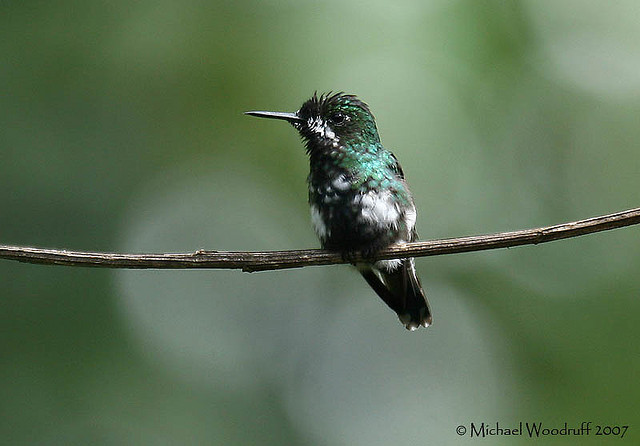
Green Thorntail (Discosura conversii) by Michael Woodruff
Today it is obvious that “thorns” are the theme of this blog. The last two days, the “Palm” Birds and the “Whip” Birds were written about and shown. When you see the “Thorn” Birds, maybe the “crown of thorns” will come to mind and you will praise the Lord for His death on the cross which paid for our salvation.
For then must he often have suffered since the foundation of the world: but now once in the end of the world hath he appeared to put away sin by the sacrifice of himself. And as it is appointed unto men once to die, but after this the judgment: So Christ was once offered to bear the sins of many; and unto them that look for him shall he appear the second time without sin unto salvation. (Hebrews 9:26-28 KJV)
There are three families that have birds with Thorn in their name. the Hummingbird family has either Thornbills or Thorntails. The Ovenbird family has actual Thornbirds and one Thorn-tailed Rayadito. One whole Genus of birds in the Australian Warbler family are called Thornbills. As you look at the bills of most of these birds observe how the shape resembles thorns. Their Creator, the Lord Jesus Christ, not only designed their bill to assist in their eating and habitat, He knew that one day that “thorns” would be driven into His head.
Eastern Whip-poor-will (Antrostomus vociferus) by Judd Paterson
When He had made a whip of cords, He drove them all out of the temple, with the sheep and the oxen, and poured out the changers’ money and overturned the tables. (John 2:15 NKJV)
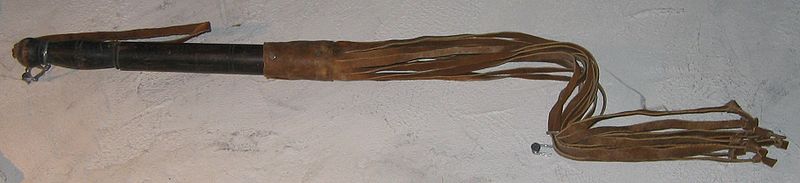
Whips have been used for many years. According to Wikipedia: The word whip describes two basic types of tools:-
A long stick-like device, usually slightly flexible, with a small bit of leather or cord, called a “popper” or a “cracker,” on the end. Depending on length and flexibility, this type is often called a riding whip, riding crop or “bat”. It is also sometimes called a “horsewhip” or “horse whip”.
The other type of whip is a long tapered flexible length of single-strand or plaited (braided) material (usually leather) with a stiff handle. Some whips of this type include the bullwhip and the stockwhip. Each design has many variations and lengths for different purposes, often with different names.
As well as these traditional whip types designed for use on animals, there are whip designs that had historic uses for inflicting pain on humans, such as the “cat o’ nine tails”, knout and others. These devices are used as flogging instruments, a means of control, corporal punishment or torture.
Yesterday’s Formed By Him – “Palm” Birds was about birds with “Palm” in their name and it was about Palm Sunday. Today’s Formed By Him is about birds with “Whip” in their name and helps us remember when they began to torture or scourge Christ with whips or by flogging Him.
Christ told His disciples, “Behold, we go up to Jerusalem; and the Son of man shall be betrayed unto the chief priests and unto the scribes, and they shall condemn him to death, And shall deliver him to the Gentiles to mock, and to scourge, and to crucify him: and the third day he shall rise again.” (Mat 20:18,19 KJV)
The different versions of God’s Word use various words to describe the torture. In verse 19, the word scourge is translated, whip(ped), scourge(d), or flogged. Matthew 27:26 and John 19:1 also use the same three translations of the word.
Then he let Barabbas go free: but after having Jesus whipped, he gave him up to be put to death on the cross. (Matthew 27:26 BBE)
Then Pilate took Jesus and flogged him. (John 19:1 ESV)
Then Pilate had Jesus taken away and whipped. The soldiers twisted some thorny branches into a crown, placed it on his head, and put a purple cape on him. (John 19:1-2 GW)
This week we are remembering the events that led up to the death of Jesus Christ, the Son of God, on the cross. As we think of this time, maybe seeing birds with names of things that happened will help us not forget the events as we see those birds in the future.
The death of Christ on the cross is the ultimate sacrifice that provides Salvation for our souls.
For I delivered unto you first of all that which I also received, how that Christ died for our sins according to the scriptures; And that he was buried, and that he rose again the third day according to the scriptures: (1 Corinthians 15:3-4 KJV)
Jesus saith unto him, I am the way, the truth, and the life: no man cometh unto the Father, but by me. (John 14:6 KJV)
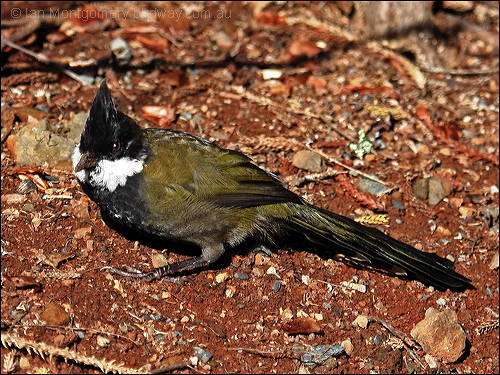
Eastern Whipbird (Psophodes olivaceus) by Ian
There are only two families that contain “Whip” Birds.
The Whip-poor-will or Whippoorwill is a medium-sized nightjar from North and Central America. The Whip-poor-will is commonly heard within its range, but less often seen because of its superior camouflage. It was recently divided into two species, the Eastern and Mexican. The Whip-poor-wills are in the Caprimulgidae – Nightjars Family.
The Eastern Whipbird (Psophodes olivaceus) is an insectivorous passerine bird native to the east coast of Australia, its whip-crack call a familiar sound in forests of eastern Australia. Two subspecies are recognized. Heard much more often than seen, it is a dark olive-green and black in color with a distinctive white cheek patch and crest. The male and female are similar in plumage. The Whipbirds are in the Whipbirds, Jewel-babblers, quail-thrushes – Psophodidae Family.
Yesterday was the traditionally known day of “Palm Sunday.” Many this week celebrate and remember the last week of the Lord Jesus Christ before His sacrifice on the cross for the sins of mankind. Thought it might be interesting to look at the birds that have “Palm” in their names.
In Leviticus the Bible tells of a celebration they had with palm leaves.
And ye shall take you on the first day the boughs of goodly trees, branches of palm trees, and the boughs of thick trees, and willows of the brook; and ye shall rejoice before the LORD your God seven days. (Leviticus 23:40 KJV)
From Gill’s Commentary, we learn – “branches of palm trees: which were very common in the land of Judea, and especially about Jericho; see John 12:13; the Targums of Jonathan and Jerusalem call them “lulabs”, which is the name the Jews give to the whole bundle they carried in their hands on this day:”
Palm trees, branches or leaves are mentioned in Exodus 15:17, Leviticus 23:40; Numbers 39:9; Deut. 34:3 – Jericho is called the city of palm trees; Judges 3:13 and 4:5; I Kings 6:29, 32, 35, 7:36; 2 Chronicles 3:5, 28:15, Nehemiah 8:15; Psalm 92:15; Song of Solomon 7:7, 8; Ezekial 40:16-37, 41:18-26; Joel 1:12; and in John 12:13.
The next day a great multitude that had come to the feast, when they heard that Jesus was coming to Jerusalem, took branches of palm trees and went out to meet Him, and cried out: “Hosanna! ‘BLESSED IS HE WHO COMES IN THE NAME OF THE LORD!’ The King of Israel!” Then Jesus, when He had found a young donkey, sat on it; as it is written: “FEAR NOT, DAUGHTER OF ZION; BEHOLD, YOUR KING IS COMING, SITTING ON A DONKEY’S COLT.”
(John 12:12-15 NKJV)
The people were excited and were strawing the road with the palm branches. They were celebrating what they thought was their King who would take them out of the control of their current rulers. By weeks end, they will have changed their “Hosanna!”s into “Crucify Him!”s.
I realize that the birds have been named by various people, beginning with Adam until the current namers. Many of the birds that have Palm in their names do associate with Palm trees in one aspect or another. Maybe the next time you observe the “Palm” birds that were “Formed By Him,” our Creator and Savior, you will remember the day He rode into Jerusalem on a “palm road” Maybe He gave these birds the desire to use the Palm Trees so that when we see them we will not forget the prophecies that were fulfilled that day.
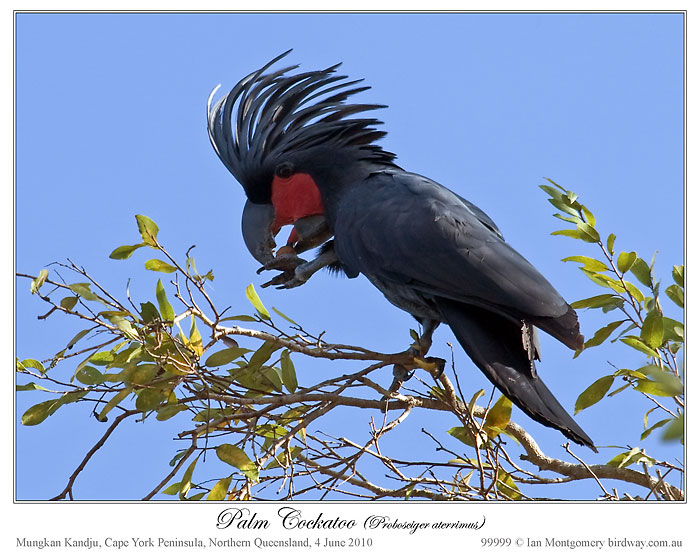
Palm Cockatoo (Probosciger aterrimus) by Ian
Birds with “Palm” in their name:
Palm-nut Vulture (Gypohierax angolensis)
“feeds mainly on the fruit of the oil-palm”
Palm Cockatoo (Probosciger aterrimus)
“they have been observed eating the seeds of the kanari and black bean trees, and the fruits of the nonda tree and Pandanus palms.”
Palm Lorikeet (Charmosyna palmarum)
“Its natural habitats are subtropical or tropical moist lowland forests, subtropical or tropical moist montanes, and plantations”
African Palm Swift (Cypsiurus parvus)
The down and feather nest is glued to the underside of a palm leaf with saliva, which is also used to secure the usually two eggs. This is a fast flying bird of open country, which is strongly associated with Oil Palms. (applies to other palm swifts)”
Antillean Palm Swift (Tachornis phoenicobia)
Asian Palm Swift (Cypsiurus balasiensis)
Neotropical Palm Swift (Tachornis squamata)
Pygmy Palm Swift (Tachornis furcata)
“observed them near mature cultivated palms, which represented nesting and roosting substrates”
Point-tailed Palmcreeper (Berlepschia rikeri)
“found in tropical and subtropical dry forests, mostly in palm groves”
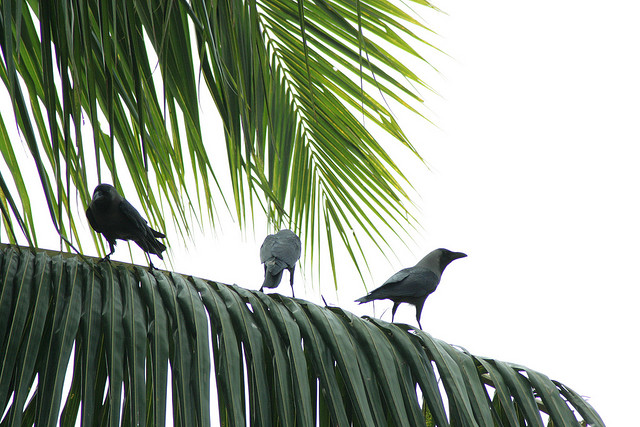
Cuban Palm Crow (Corvus minutus)
“Nests are located in stands of tall palms with breeding from April-July or possibly earlier”
Hispaniolan Palm Crow (Corvus palmarum)
“The nest is made of sticks and placed among tree branches or in a palm tree.”
Palmchat (Dulus dominicus)
Collared Palm Thrush (Cichladusa arquata)
“Dry palm savanna and moist palm shrubland.”
Rufous-tailed Palm Thrush (Cichladusa ruficauda)
Spotted Palm Thrush (Cichladusa guttata)
Golden Palm Weaver (Ploceus bojeri)
Palm Warbler (Dendroica palmarum)
Palm Tanager (Thraupis palmarum)
“seems to like habitat with palms on which it feeds”
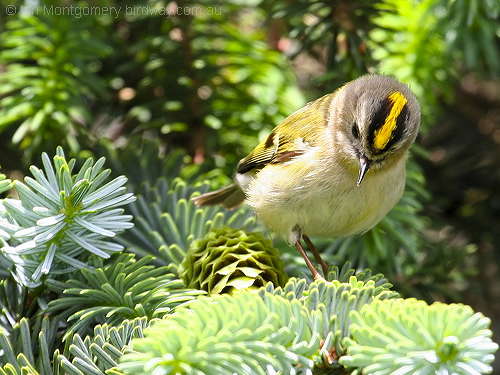
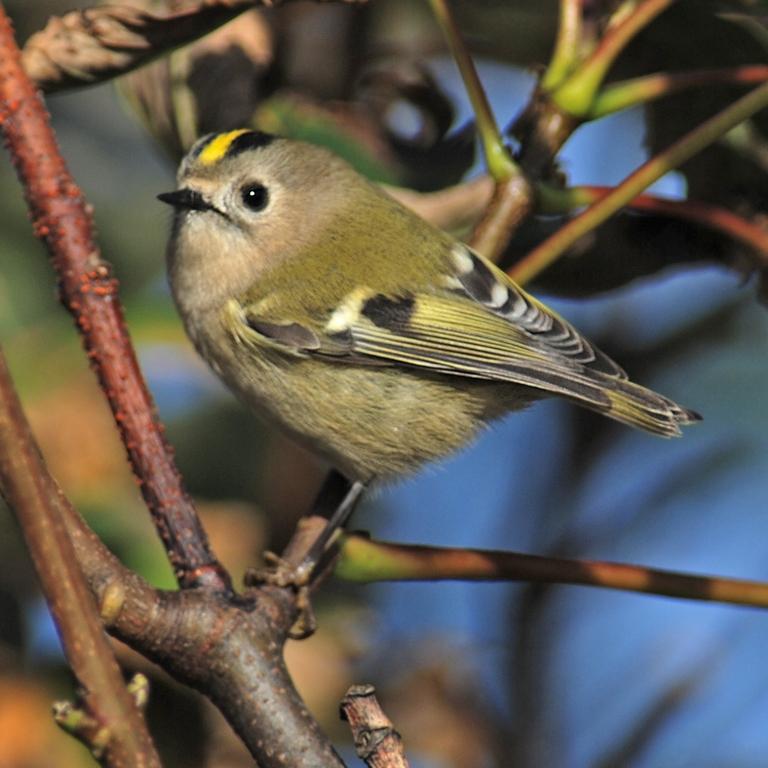
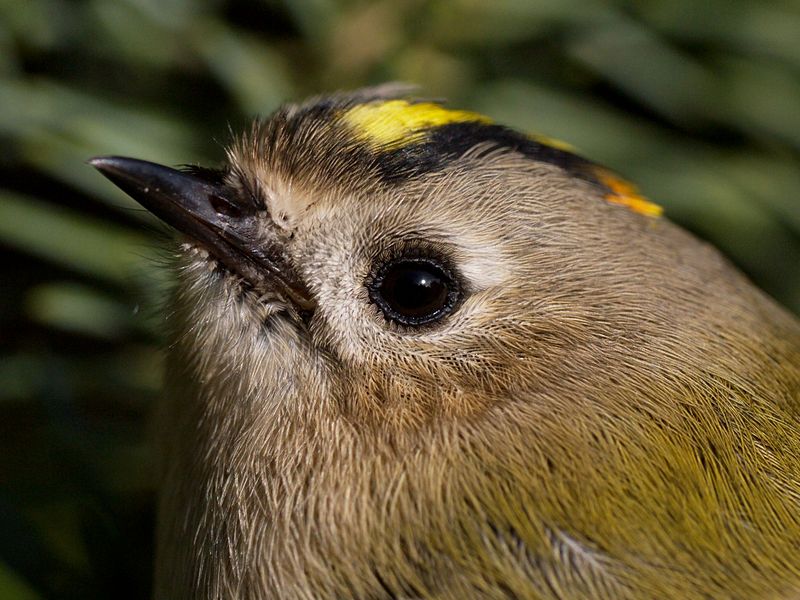
The Goldcrest, Regulus regulus, is a very small passerine bird in the kinglet family. Its colourful golden crest feathers gives rise to its English and scientific names, and possibly to it being called the “king of the birds” in European folklore. It has a plain face contrasting black irises and a bright head crest, orange and yellow in the male and yellow in the female, which is displayed during breeding.
God has created us in His own image and that is why He loves to call us as the Royal Priest..
The yellow crest is displayed during breeding season..
But, God calls us as His crown and we shall be a crown to our Jesus, our bridegroom, face to face…
“Thou shalt also be a crown of glory in the hand of the LORD, and a royal diadem in the hand of thy God.” Isaiah 62:3
The typical contact call of the Goldcrest is a thin, high-pitched zee given at intervals of 1–4 seconds, with all the notes at the same pitch. It sometimes has a more clipped ending, or is delivered more rapidly. The call is higher and less rough than that of the Firecrest. The song of the male Goldcrest is a very high, thin double note cedar, repeated 5–7 times and ending in a flourish, cedarcedar-cedar-cedar-cedar-stichi-see-pee. The entire song lasts 3–4 seconds and is repeated 5–7 times a minute. This song, often uttered while the male is foraging, can be heard in most months of the year. The song is a repetition of high thin notes, slightly higher-pitched than those of its relative. The songs of mainland Goldcrests vary only slightly across their range and consist of a single song type, but much more divergence has occurred the isolated Macaronesian populations.
Not only are there variations between islands and within an island, but individual males on the Azores can have up to three song types. The dialects on the Azores fall into two main groups, neither of which elicited a response from male European Goldcrests in playback experiments. There are also two main dialect groups on the Canary islands, a widespread group similar to the European version, and another which is restricted to the mountains of Tenerife. The song variations have been used to investigate the colonisation pattern of the Macaronesian islands by Goldcrests, and identified a previously unknown subspecies.
Though these birds have a thin high two note song, they still have different song dialects for different places and can be heard most of the year..
We may be from different places but still we have one song which we all are singing and would be singing over and over again..
That songs is , “ALLELUIA”
1) And after these things I heard a great voice of much people in heaven, saying, Alleluia; Salvation, and glory, and honour, and power, unto the Lord our God:
2) For true and righteous are his judgments: for he hath judged the great whore, which did corrupt the earth with her fornication, and hath avenged the blood of his servants at her hand.
3)And again they said, Alleluia. And her smoke rose up for ever and ever.
4) And the four and twenty elders and the four beasts fell down and worshipped God that sat on the throne, saying, Amen; Alleluia.
5) And a voice came out of the throne, saying, Praise our God, all ye his servants, and ye that fear him, both small and great.
6) And I heard as it were the voice of a great multitude, and as the voice of many waters, and as the voice of mighty thunderings, saying, Alleluia: for the Lord God omnipotent reigneth.” Revelations 19:1 – 6
The Goldcrest breeds in mature lowland and mountain coniferous woodlands, mainly up to 3,000 m (9,800 ft), and occasionally to 4,800 m (15,800 ft). It uses spruce, Larch, Scots Pine, Silver Fir and Mountain Pine. Though this bird is just about 4.5 to 7.0 grams in weight, it breeds so high…
If these small 8.5 to 9.5 cm long birds can fly that high, how far should we be able to fly?
We all want to fly like an Eagle, but are we willing to pay the price of waiting upon the Lord?
But they that wait upon the LORD shall renew their strength; they shall mount up with wings as eagles; they shall run, and not be weary; and they shall walk, and not faint. (Isaiah 40:31)
A study in the Baltic region showed that northern Goldcrests were more likely to migrate, and increased their body mass beforehand; non-migratory
southern birds did not increase their fat reserves. The travel speed of migrating Goldcrests increased for those leaving later in the autumn, and was greater for the northernmost populations. Migration was faster on routes that crossed the Baltic Sea than on coastal routes, the birds with the largest fat reserves travelled at the highest speeds. The ability to lay down fat is adversely affected in this tiny bird by poor health Goldcrests can fly 250–800 km (150–500 mi) in one day, although they keep at a lower level in heavy headwinds.
These birds seem to know how to tackle the heavy wind, by flying at a lower level..
Here is a secret these birds seem to teach us..
They seem to tell us that we need to fly at a lower level, to fly long and fast…
Believers find it so difficult to fly low, everyone wants to be seen high..
But, God’s expects us to be different…
And whosoever shall exalt himself shall be abased; and he that shall humble himself shall be exalted. (Mathew 23:12)
The Goldcrest is monogamous. The male sings during the breeding season, usually while foraging rather than from a perch. It has a display which involves bowing its head towards another bird and raising the coloured crest. A male Goldcrest will defend his territory against either species, sometimes including some Firecrest phrases in his song.
Goldcrest’s songs, helps in defending its territory from other species…
Our songs too has the power to defend us from all evil..
It is in our praises that our Lord loves to dwell…
Remember, our God is in spirit, so, where there is spirit there is liberty and our praise has the power to bring THE SPIRIT in our midst to liberate us..
So let’s sing and not let GOD dwell in heaven but amongst our praises..
But thou art holy, O thou that inhabitest the praises of Israel. (Psalm 22:3)
The Goldcrest’s nest is a well-insulated cup-shaped structure built in three layers. The nest’s outer layer is made from moss, small twigs, cobwebs and lichen, the cobwebs also being used to attach the nest to the thin branches that support it. The middle layer is moss, which is lined by an inner layer of feathers and hair. The nest is larger, shallower and less compact than that of the Firecrest, with an internal diameter of about 9.0 cm (3.5 in), and is constructed by both sexes, although the female does most of the work. Laying starts at the end of April into early May. The eggs are whitish with very indistinct buff, grey or brown markings at the broad end. The eggs are 14 × 10 mm (0.55 × 0.34 in) and weigh 0.8 g (0.028 oz), of which 5% is shell.
The clutch size in Europe is typically 9–11 eggs, but ranges from 6–13. The eggs are piled up in the nest and the female keeps the eggs warm with her brood patch and also by putting her warm legs into the middle of the pile between the eggs. Within a clutch the size of eggs increases gradually and the last laid egg may be 20% larger than the first egg. Second clutches, which are common, are laid usually while the first nest still has young. The male builds the second nest, then feeds the young in the first nest while the female is incubating in the second; when the first brood has fledged, he joins the female in feeding the second brood.
The female Goldcrest is not normally fed by her mate while incubating. She is a tight sitter, reluctant to leave the nest when disturbed, and has been recorded as continuing to attend the nest when it has been moved, or even when it is being held. The eggs are maintained at 36.5 °C (97.7 °F), the female regulating the temperature of the eggs by varying the time spent sitting. She leaves the nest more with increasing air temperature, and incubates more tightly when the light intensity is lower early and late in the day.
The female bird sits tight when the light intensity is lower…
When darkness surrounds, we need to be still and wait until THE LIGHT shines on us..
It also regulates the temperature of the eggs at 36.5 °C (97.7 °F)…
Is the intensity of the spiritual fire in us constant?
Or is God upset over us for having left our first love?
Nevertheless I have somewhat against thee, because thou hast left thy first love.: (Revelation 2: 4)
Let us walk as children of light before eternal darkness fall over…
Then spake Jesus again unto them, saying, I am the light of the world: he that followeth me shall not walk in darkness, but shall have the light of life. (John 8:12)
The female incubates the eggs for 16 to 19 days to hatching, and broods the chicks, which fledge in a further 17 to 22 days later. Both parents feed the chicks and fledged young, and in very hot weather, the female has been noted as taking drops of water to her chicks in her bill.
To carry water in its tiny bill to its tiny chick is incredible…
What a thoughtful mother this bird could be!
If this bird could be so incredible, how incredible its creator would be?
These birds carry water only to its chicks but, listen to what our God says…
For I will pour water upon him that is thirsty, and floods upon the dry ground: I will pour my spirit upon thy seed, and my blessing upon thine offspring: (Isaiah 44:3)
He also says,
And it shall come to pass afterward, that I will pour out my spirit upon all flesh; and your sons and your daughters shall prophesy, your old men shall dream dreams, your young men shall see visions. And also upon the servants and upon the handmaids in those days will I pour out my spirit (Joel 2:28)
The Goldcrest takes a wide variety of prey, especially spiders, caterpillars, bugs, springtails and flies. Larger prey such as oak bush crickets and tortrix moths may sometimes be taken. Goldcrests will occasionally feed on the ground amongst leaf-litter with tits. Non-animal food is rare, although Goldcrests have been seen drinking sap from broken birch twigs together with tits and nuthatches. Flying insects are taken in hovering flight but not nomally pursued; there is a record of a Goldcrest attacking a large dragonfly in flight, only to be dragged along by the insect before releasing it unharmed.
The devil may try to drag you, but it can never ever harm you, for you are carved in His palm ..
God doesn’t want to go blind for you are the apple of His eye…
No weapon that is formed against thee shall prosper; and every tongue that shall rise against thee in judgment thou shalt condemn. This is the heritage of the servants of the LORD, and their righteousness is of me, saith the LORD. (Isaiah 54:17)
But we need to pay a price to inherit this the promise..
Serve the Lord and He shall save you from every weapon and every tongue..
Several small passerine species survive freezing winter nights by inducing a lower metabolic rate and hypothermia, of a maximum of 10 °C (18 °F) below normal body temperature,in order to reduce energy consumption overnight. However, in freezing conditions, it may be that for very small birds, including the tiny Goldcrest, the energy economies of induced hypothermia may be insufficient to counterbalance the negative effects of hypothermia including the energy required to raise body temperature back to normal at dawn.
Observations of five well-fed birds suggest that they maintain normal body temperatures during cold nights by metabolising fat laid down during the day, and that they actually use behavioural thermoregulation strategies, such as collective roosting in dense foliage or snow holes to survive winter nights. Two birds roosting together reduce their heat loss by a quarter, and three birds by a third. During an 18 hour winter night, with temperatures as low as −25 °C (−13 °F) in the north of its range,
Goldcrests huddled together can each burn off fat equivalent to 20% of body weight to keep warm…
Did someone preach the word of God or give them a Bible to read?
How come they know that they can keep themselves warm by staying together?
Who taught them?
Does the church stay together to keep themselves on fire?
Again, if two lie together, then they have heat: but how can one be warm alone? And if one prevail against him, two shall withstand him; and a threefold cord is not quickly broken.” Ecclesiastes (4:11-12)
Aristotle (384 BC – 322 BC) and Pliny (23 AD – 79) both wrote about the legend of a contest amongst the birds to see who should be their king, the title to be awardedto the one that could fly highest. Initially, it looked as though the eagle would win easily, but as he began to tire, a small bird which had hidden under the eagle’s tail feathers, emerged to fly even higher and claimed the title.
This may sound like a folklore but there is point for us to remember..
God carries us like an Eagle in His wings….
Jesus said. “Verily, verily, I say unto you, He that believeth on me, the works that I do shall he do also; and greater works than these shall he do; because I go unto my Father.” (John 14:12)
God has called us to do greater things, come, let us hide under His wings…
All scripture is given by inspiration of God, and is profitable for doctrine, for reproof, for correction, for instruction in righteousness: (2Ti 3:16)
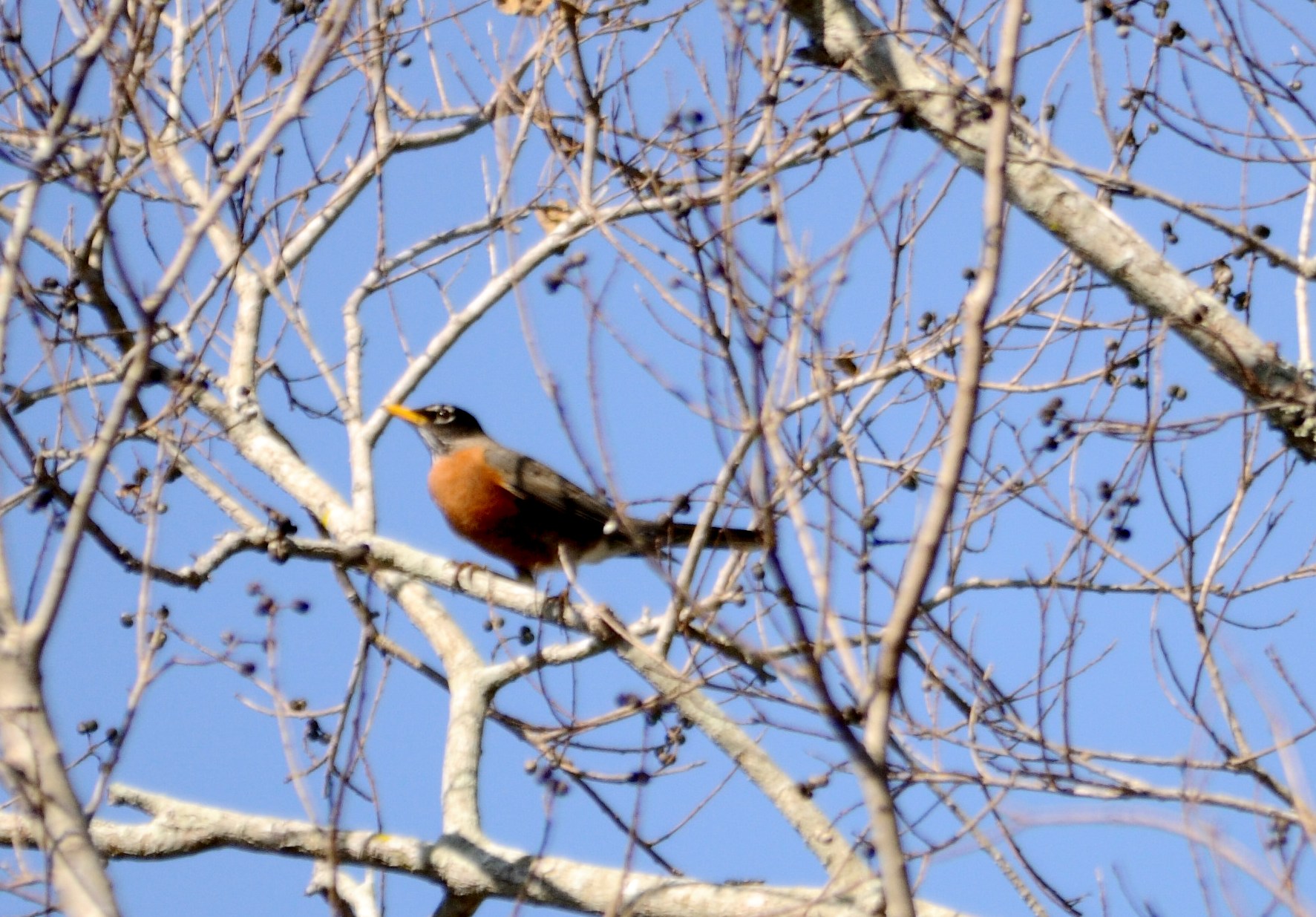
An American Robin, two Cardinals and a Mockingbird greeted us here in South Carolina. We also saw a Red-tailed Hawk circling over the campus of Bob Jones University (our Alma mater) and a Red-shouldered Hawk sitting in a tree. Spring is blooming out all around.
We came up here for the Bible Conference and have thoroughly enjoyed and received blessings from all five messages we were able to attend. We are now headed home and will arrive back in Florida soon.
Dr. Sam Horn, from Wisconsin, challenged us to “cast all our cares on the Lord” and to remember that, “we have a Father that knows our need.” His other message was to challenge us to “right living” through the “Divine enablement from God.”
Dr. David Innes, from California, taught on the “Greatness of God.” Two quotes I liked were; “All genuine ministry of life is the overflow of our walk with Christ.” and “God is uniquely Uncreated, Infinite, Triune, and Holy.” His second message was about the “Greatness of God’s Word.”
Dr. Bruce Compton, from Michigan, spoke on the “Relationship between a living faith and God’s Word.
It is good to sit under the ministry of Godly men who teach the Word of God in a concentrated time period, like a Bible Conference. Sometimes it is hard to get away to one, but it is worth the effort. Your soul will be refreshed and challenged.
It was also good to travel to a different state to try to get a glimpse of the birds that they have there. Didn’t see too many, but it was a very profitable trip. The Lord is always gracious.
This trip is why there has not been many articles from me lately. I will soon be back at the keyboard after I get the binoculars out to spot some more birds to write about.
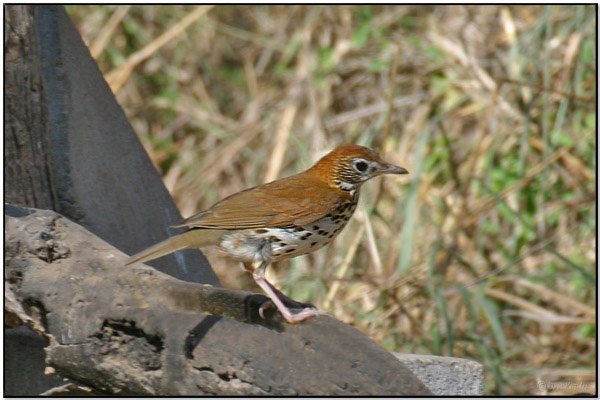
Wood Thrush (Hylocichla mustelina) by Daves BirdingPix
Storks, doves, swallows, and thrushes all know when it’s time to fly away for the winter and when to come back. But you, my people, don’t know what I demand. (Jeremiah 8:7 CEV)
I recently added the Birds of the Bible – Thrushes page. It now appears in the Sidebar and in the Birds of the Bible List. While comparing the Scripture on Jeremiah 8:7, I decided that the Thrushes deserved to be a Bird of the Bible on this blog. As you know, all birds are “Birds of the Bible,” because the Lord created them all. Mainly the ones named in particular have been given their own page. Since Jeremiah 8:7 is translated “thrush” in six Bible versions, it now has its own page.
So God created great sea creatures and every living thing that moves, with which the waters abounded, according to their kind, and every winged bird according to its kind. And God saw that it was good. (Genesis 1:21 NKJV)
Not all versions of the Bible list the Thrush in this verse, but because so many versions do, the Thrush is being added to the Birds of the Bible. The following versions and the verse are listed below:
(CEV) Storks, doves, swallows, and thrushes all know when it’s time to fly away for the winter and when to come back. But you, my people, don’t know what I demand.
(ERV) Even the birds in the sky know the right time to do things. The storks, doves, swifts, and thrushes know when it is time to fly to a new home. But my people don’t know what the LORD wants them to do.
(GNB) Even storks know when it is time to return; doves, swallows, and thrushes know when it is time to migrate. But, my people, you do not know the laws by which I rule you.
(LITV) Also the stork in the heavens knows her seasons, and the turtledove and the swallow and the thrush observe the time of their coming. But My people do not know the judgment of Jehovah.
(NAS77) “Even the stork in the sky Knows her seasons; And the turtledove and the swift and the thrush Observe the time of their migration; But My people do not know The ordinance of the LORD.
(NASB) “Even the stork in the sky Knows her seasons; And the turtledove and the swift and the thrush Observe the time of their migration; But My people do not know The ordinance of the LORD.
New Finch Species Shows Conservation, Not Macroevolution
by Brian Thomas, M.S. *
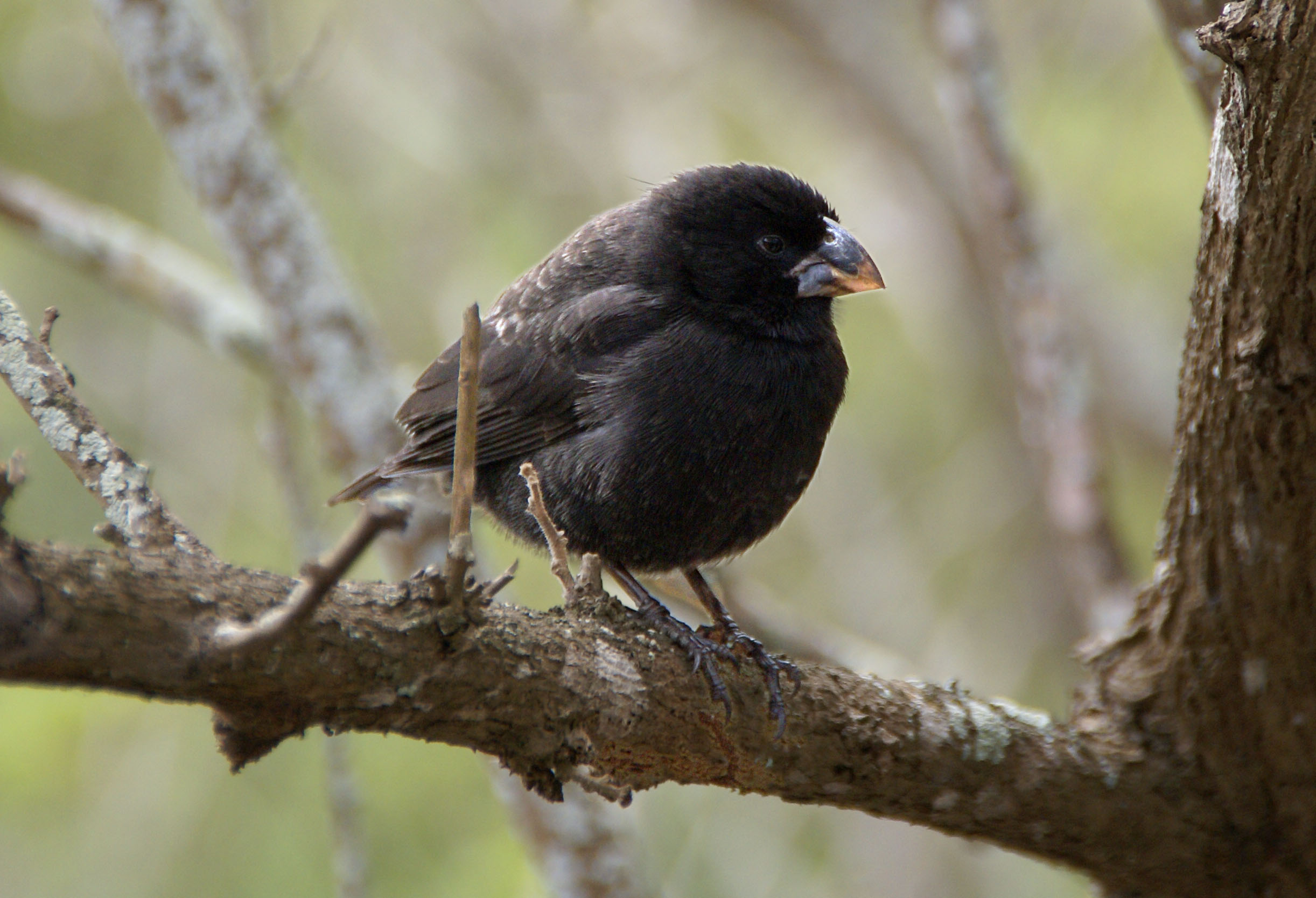
“Darwin’s finches” are a variety of small black birds that were observed and collected by British naturalist Charles Darwin during his famous voyage on the H.M.S. Beagle in the early 1800s. Years later, Darwin argued that subtle variations in their beak sizes supported his concept that all organisms share a common ancestor (a theory known as macroevolution). The finches, whose technical name is Geospiza, have since become classic evolutionary icons.
…..
In the fourth generation, “after a severe drought, the lineage was reduced to a single brother and sister, who bred with each other.”1 Their descendants have carried on the family traits. The Grants reported in a study on the birds published in Proceedings of the National Academy of Sciences that “our observations provide new insight into speciation and hence, into the origin of a new species.”2 But the details show that this new “species” is just a variation within the finch kind, and is therefore irrelevant to big-picture evolution.
Genus Geospiza contains six species, and these are usually distinguished by the songs that the males sing primarily to attract breeding partners. However, if a father bird dies while his chicks are young, and all they hear is the neighboring song of a different species, for example, young birds can learn the wrong songs. When these mature, they sing the song of, and breed with, the foster father’s species. Other scenarios result in crossbreeding between Geospiza species. ……”
Cedar Waxwing (Bombycilla cedrorum) by Daves BirdingPix
Do Migratory Birds Practice Preventative Medicine?
by Brian Thomas, M.S. *
“Before a long migration, certain birds shift from an insect diet to eating fruits such as berries. Researchers once thought that this added carbohydrate reserves as fuel for the journey. But a new study out of the University of Rhode Island suggests that the birds are interested in the fruits’ antioxidants, not their sugars.
Antioxidants are chemicals that are packed within richly colored fruit skins and are known to stabilize cellular processes. Based on research presented at the March 24th American Chemical Society meeting in San Francisco, it appears that the birds fill up on berry antioxidants for the medicinal benefits they provide to tissues that will undergo stress during the upcoming flight.
But this implies that birds use preventative medicine by instinct,….”
To read the rest of the article – CLICK HERE
Teaching them to observe all things whatsoever I have commanded you: and, lo, I am with you alway, even unto the end of the world. Amen. (Matthew 28:20 KJV)
Birds in Hymns – Get Close To Jesus
Words by Alice Larry Woodcock
Music by Alice Larry Woodcock
Get Close To Jesus
Whene’er your trials are too hard for you,
Burdens are heavy, and your friends seem few,
Go to your Savior, kneel to Him in prayer,
He’ll hear you, for He’s always there.
Refrain
Get close to Jesus, He’s your best friend; Get close to Jesus, He’ll comfort send; In times of trial, in times of fear, Get close to Jesus, He’s always near.
He is the friend above all others rare;
Even the sparrow is within His care;
Much more to you will He His love bestow
If to Him you will only go.
Refrain
Get close to Jesus, He’s your best friend; Get close to Jesus, He’ll comfort send; In times of trial, in times of fear, Get close to Jesus, He’s always near.
So for tomorrow and its needs ne’er fear;
Leave all to Him, have faith, be of good cheer;
Then go and help some others’ cross to bear,
And tell them of His wondrous care.
Refrain
Get close to Jesus, He’s your best friend; Get close to Jesus, He’ll comfort send; In times of trial, in times of fear, Get close to Jesus, He’s always near.
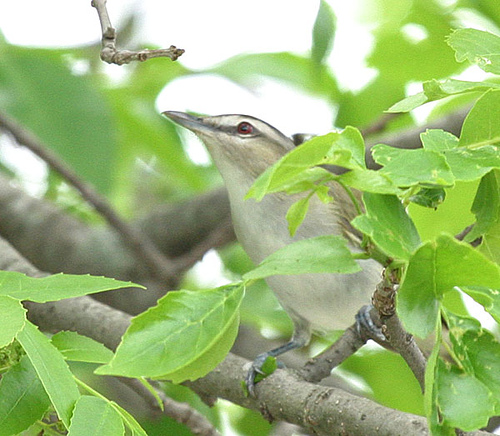
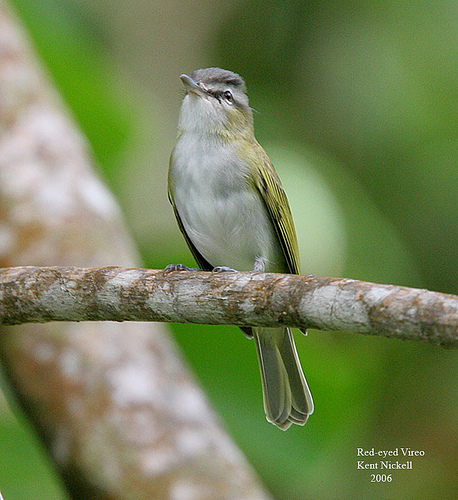
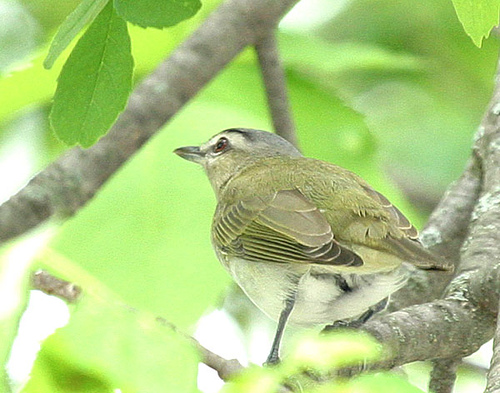
The Red-eyed Vireo – The Persistent Singer… ~ by a j mithra
The Red-eyed Vireo, Vireo olivaceus, is a small American songbird, 13–14 cm (5.1-5.5 in) in length. It is somewhat warbler-like but not closely related to the New World warblers (Parulidae).
The Red-eyed Vireo is a Neotropical migrant that makes its way from its home in Central and South America to the deciduous woodlands of North America to select a territory, win a mate and raise its young.
Throughout the eastern United States, Red-eyed Vireos are common in deciduous woodlands. However in Washington they are largely confined to stream and lakeside woodlands and cottonwood stands.
These small birds migrate long distances to win a mate and raise their younger ones..
Though they are birds, they still take so much effort to raise a family..
God has created us in His own image, its good, but, how much effort do we take to win a mate and raise a family?
Isaac was meditating when his father’s servant Eliezer was returning with a bride for Isaac as per Abraham’s instructions….
Now Isaac had come from Beer Lahai Roi, for he was living in the Negev.
He went out to the field one evening to meditate,and as he looked up, he saw camels approaching.
Rebekah also looked up and saw Isaac. She got down from her camel and asked the servant, “Who is that man in the field coming to meet us?”
“He is my master,” the servant answered. So she took her veil and covered herself.
Then the servant told Isaac all he had done. Isaac brought her into the tent of his mother Sarah, and he married Rebekah. So she became his wife, and he loved her; and Isaac was comforted after his mother’s death. (Genesis 24:62-66)
How many men meditate on the word of God before they get married?
Is it because of lack of meditation on the word that marriages are not successful these days?
Recent study shows that the rate of divorce is much more than marriages…
Is it because of we lack the fear of the Lord?
God holds marriage in high esteem that is the reason He calls Himself as the bridegroom and the church as His bride..
How much does the church honor the relationship of a husband and wife?
So the LORD God caused the man to fall into a deep sleep; and while he was sleeping, he took one of the man’s ribs[a] and then closed up the place with flesh.
Then the LORD God made a woman from the rib he had taken out of the man, and he brought her to the man.
The man said, “This is now bone of my bones and flesh of my flesh; she shall be called ‘woman,’ for she was taken out of man.”
That is why a man leaves his father and mother and is united to his wife, and they become one flesh. (Genesis 2:21-24)
Red-eyed vireo is difficult to see because it forages high in the canopy, picking food from the undersides of foliage, hopping or hovering in the leaves. It is an arboreal bird of the canopy, where it is very active although rather heavy in its movements, maintaining a horizontal posture.
Red-eyed Vireo (Vireo olivaceus) by Kent Nickell
This species migrates over long distances, and mostly at night. Red-eyed Vireo is relatively heavy when moving over short distances, but it can be very active too. Its flight is altogether performed in a gliding manner, and when it is engaged in pursuit of a rival or an enemy, it passes through the woods with remarkable swiftness. The small territory of this species consists of a cylinder extending from the forest canopy to the low understory.
Red-eyed Vireos can also be difficult to see because they forage high in the canopy, where they pick food from the undersides of foliage, hopping about or hovering in the leaves.
During courtship and nesting seasons, their prominent, repeated calls readily reveal their presence.
No one can see us when we hide under the shadow of its wings…
But they can hear us worship His holy name..
Well, do we really worship Him all the days of our lives?
The purpose of God creating us is not fulfilled unless we worship Him. After all, God created us to put us in satan’s place to worship Him and Him alone..
If we don’t worship now, the stones will…
And he answered and said unto them, I tell you that, if these should hold their peace, the stones would immediately cry out. (Luke 19:40)
Red-eyed Vireo (Vireo olivaceus) by Kent Nickell
These birds are important to maintaining the health of our forests. They consume large quantities of insects and caterpillars harmful to tree foliage. It is an effective predator on gypsy moths, fall webworms, tree hoppers, scale insects and others.
The way we live is important in maintaining the health of our fellow being…
These birds consume large quantities of harmful insects….
God expects our prayerful presence to consume the evil works of satan among our family and friends….
Job prayed for his friends amidst disaster and God blessed him double fold….
Do we pray for our friends like Job?
And the LORD turned the captivity of Job, when he prayed for his friends: also the LORD gave Job twice as much as he had before. (Job 42:10)
Red-eyed Vireos glean insects from tree foliage, favoring caterpillars and aphids and sometimes hovering while foraging. In some tropical regions, they are commonly seen to attend mixed-species feeding flocks, moving through the forest higher up in the trees than the bulk of such flocks.
They also eat berries, especially before migration, and in the winter quarters, where trees bearing popular fruit like Tamanqueiro (Alchornea glandulosa) or Gumbo-limbo (Bursera simaruba) will even attract them to parks and gardens. Fruit are typically not picked up from a hover, but the birds often quite acrobatically reach for them, even hanging upside down.
Although animal food makes up 85 percent of its summer diet, the Red-eyed Vireo may be completely frugivorous (fruit-eating) during the winter and late summer. In summer, Red-eyed Vireos feed mostly on adult insects and larvae, especially caterpillars.
During the courtship, male performs displays, flicking on its legs, with fluffy feathers and fan-shaped tail.
Red-eyed Vireo (Vireo olivaceus) by Kent Nickell
During incubation, the male sings faster, 50/60 phrases a minute. When it stops, female comes off the nest and it feeds her, or they feed together. They are monogamous. Which means, the female birds is willing to even starve and will not leave its nest until the male bird stops singing..
Do we wait to know God’s will in our lives or do we wait for God’s direction in our lives or do we set about doing what we wish to do?
God became a signpost on the cross of Calvary to show us where to go..
Are we willing to look up to the cross for direction?
Come, ye children, hearken unto me: I will teach you the fear of the LORD. (Psalm 34:11)
Red-eyed Vireo is highly territorial on breeding areas, and it’s very noisy. When it’s wintering in South America, it does not sing.
The breeding habitat is open wooded, deciduous and mixed deciduous forest areas across Canada and the eastern and northwestern United States.
These birds migrate to South America, where they spend the winter. The Latin American population occur in virtually any wooded habitat in their range. Most of these are residents, but the populations breeding in the far southern part of this species’ range (e.g. most of its range in Argentina, Uruguay, Paraguay and Bolivia) migrate north as far as Central America.
This vireo is one of the more frequent American passerine vagrants to western Europe, with more than one hundred records, mainly in Ireland and Great Britain.
In northern Ohio, it seems to return to breed at about the same time as one century ago; intriguingly, it might actually leave for winter quarters one or two weeks earlier at present than it did in the past..
Nest is built 1, 5 to 20 metres above the ground. Female builds the nest in five days, without assistance from the male. Nest is made of vine-bark strips, grass, needles and twigs. The outer parts are firmly attached to the twigs, the fibres being warped around them in various directions. The lining is beautifully disposed. It consists of fibrous roots, grasses, and sometimes the hair of grey squirrel and raccoon. It is covered on the outside with wasp’s nest paper, and spider webbing. It is a typical vireo nest, suspended by its rim from a horizontally forked twig, or the corner of a tree trunk, and two radiating branches.
Female lays 3 to 4 eggs. Incubation lasts about 11 to 14 days only by female. Both parents feed the young during 10 to 12 days when they are in the nest. Female and perhaps male, continue to feed them for up to two weeks after they leave the nest.
Most likely call to be heard is a nasal, querulous “tshay” or “chway”, although migrants are usually silent.
Persistent song, sung all day, a variable series of deliberate, short phrases.
During courtship and nesting seasons, their repeated calls reveal their presence.
Their persistent song is legendary. It is repeated as often as 40 times a minute, all through the day..
Red-eyed Vireos were once considered one of the three most abundant birds of the forests of Eastern North America.
Their persistent song is legendary. A single individual was once heard to sing 22,197 songs during a single day (Lawrence 1953).
How long and how much do we sing for the Lord?
David sang praises to the Lord at all times and that was the reason God loved him so much..
David sang new songs like these birds that may be another reason for the favours that he won from God..
If these 13 to 14 cm long birds can sing up to 22,197 songs in about ten hours which comes to roughly about 2200 songs per hour which in turn comes to about 37 songs per minute, how much we should sing?
O sing unto the LORD a new song: sing unto the LORD, all the earth (Psalm 96:1)
This verse was written for God’s own people, but, sadly this bird has taken the cue and we have chosen to shut our mouth rather than to shout to the King…
Come let us sing to win favour from THE KING…
Have a blessed day!
Your’s in YESHUA,
a j mithra please visit us at:
Crosstree
ajmithra21
Lee’s Addition:
Thanks, aj. I enjoyed putting the photos and sound in this one. They are in this area, but I have not seen one yet.
Also, when a j sent in his draft, he included a note to me that I thought was worth placing here. He has been adding great articles for a year now, so this is sort of a “mile-stone article” for him. From the e-mail:
“Hello Sister.Lee,
Its been a great learning experience and a great honor to serve the Lord though your website.. I am thrilled when I turned back and looked at how God has been so full of mercy and an inspiration which He gives us often through Birds.. Its been a year since you published my first article on 4th March 2010.. I just want to say a BIG THANK YOU for letting me be a part of this great site..
Thank you once again..
Regards and prayers to you and yours,
aj mithra”