Cowbird Mothers: Worse than Infidels?

Dr. James J. S. Johnson

But if any provide not for his own, and specially for those of his own house, he hath denied the faith, and is worse than an infidel. (1st Timothy 5:8)

There she was, that shameful sneak!  An unmotherly and irresponsible female Brown-headed Cowbird! 

Cowbird egg deposited into “foster home” nest
(National Audubon Society photo credit)

Why do I say “sneak”?  Because the female Brown-headed Cowbird is the most prominent example of a “brood parasite” in North America.  Cowbird mothers refuse to raise their own young; they use deceit to “dump” their kids on other mothers (and fathers) to raise. Shame on them! In fact, about half of America’s Lower 48 states are year-round residence range for these brood-parasitic icterids.

RANGE of Brown-headed Cowbird, with green = year-round resident (Wikipedia image credit)

In other words, the mother cowbirds sneakily deposit their eggs into the nests of other bird mothers – so that the involuntary “foster mothers” are left with the responsibility of raising the cowbird hatchlings.  The ornithologists at Cornell University describe the cowbird mother’s habits:

The Brown-headed Cowbird is North America’s most common “brood parasite.” A female cowbird makes no nest of her own, but instead lays her eggs in the nests of other bird species, who then raise the young cowbirds. …

Brown-headed Cowbird lay eggs in the nests of more than 220 species of birds. Recent genetic analyses have shown that most individual females specialize on one particular host species. …

Cowbird eggs hatch faster than other species eggs, giving cowbird nestlings a head start in getting food from the parents. Young cowbirds also develop at a faster pace than their nest mates, and they sometimes toss out eggs and young nestlings or smother them in the bottom of the nest.  [Quoting “Brown-headed Cowbird: overview”, posted on Cornell Lab’s AllAboutBirds.org website]

1 Cowbird egg inserted into a Phoebe nest
(Wikipedia photo credit)

In other words, unlike the noble stepparent, who intentionally and unselfishly accepts the child-rearing responsibility for a (typically ungrateful) child who was procreated by someone else, avian “foster parents” who raise undocumented alien offspring (of Brown-headed Cowbirds) do so unawares.

Finch nest with 5 finch eggs + 1 cowbird “home invader” hatchling
(Everyday Cinematic Birds / YouTube photo credit)

Of course, not all nest-managing birds are fooled by brood parasite birds — regarding Australia’s Superb Fairywren, who uses a parental “password” to vet her nestlings for legitimacy, see “Pushy Parasites and Parental Passwords“, posted at http://www.icr.org/article/pushy-parasites-parental-passwords .

Also, the statistical prospects for cowbird babies is unimpressive: out of about 40 eggs laid/abandoned per year, by cowbird mothers, only about 2 or 3 survive to adult maturity. [See Donald Stokes & Lillian Stokes, “Brown-headed Cowbird”, A GUIDE TO BIRD BEHAVIOR, Volume II (Boston, MA: Little, Brown, & Company), page 213.)

Earlier this month, enjoying fair weather, I went birdwatching with my son, in some suburban parks of Dayton (Ohio). 

COX ARBORETUM park in Dayton, Ohio
(TripAdvisor photo credit)

One of the best birdwatching venues is Cox Arboretum MetroPark, a 174-acre botanical preserve with many forested hiking trails [see https://en.wikipedia.org/wiki/Cox_Arboretum_and_Gardens_MetroPark ].

The above-noted birdwatching experience was enhanced by my son’s smart-phone’s usage of an “app” called MERLIN (Merlin Bird ID, by Cornell Lab: https://merlin.allaboutbirds.org  ) which identifies (by name) bird calls, plus provides a color photograph, when a bird’s calls are recognized by the app.  Most of the recognized birdsongs were from American Robins or various sparrows (e.g., Chipping Sparrow, English Sparrow, etc.), but more than once the songbird was a female Brown-headed Cowbird. 

Of course, male Brown-headed Cowbirds are easy to recognize, as shown below. 

Brown-headed Cowbird MALE
(Wikipedia photo credit)

However, female Brown-headed Cowbirds are much less conspicuous in plumage, because the soft-brown-hued females do not have shiny iridescent plumage that make males so easily recognizable. 

Brown-headed Cowbird FEMALE
(Wikipedia photo credit)

The Cornell Lab’s Merlin app also identifies birds visually – you just “zoom [in] until your bird fills the box” (on your smart-phone), then the Merlin app identifies the bird, plus it supplies some basic information about the bird that you are photographing on your smart-phone.  Nice! 

Brown-headed Cowbird: female (L) & male (R) Wikipedia photo credit

There’s even more features to the Merlin app – but this is enough to suggest its usage. In other words, the main point (of this blogpost) is simple enough:  get out there, and appreciate God’s Creatorship as you do some birding!

Bird Song Hero: Learning Game

Bird Song Hero: Learning Game is from Cornell Lab of Ornithology

“Oh give thanks to the LORD, call upon His name; Make known His deeds among the peoples. Sing to Him, sing praises to Him; Speak of all His wonders.” (1 Chronicles 16:8-9 NASB)

For the full challenge, including the Bird Song Hero Ultimate round and free bird song downloads, visit: http://biology.allaboutbirds.org/bird….

Thought you might enjoy this challenge.

Seagulls and Family Circus

Today’s Family Circus caught my attention and decided to see what could be found to go with it. This video from Cornell Lab of Ornithology tells about how the gulls signal each other over territory. If you ignore a few references to evolution, it is quite interesting.

https://youtu.be/zF8Jl2oBf5I&rel=0

“How can aggressive, predatory, and cannibalistic birds coexist in crowded breeding colonies? Explore the lives and territorial interactions of Herring and Great Black-backed gulls in a breeding colony on Maine’s Appledore Island.” [From the video page]

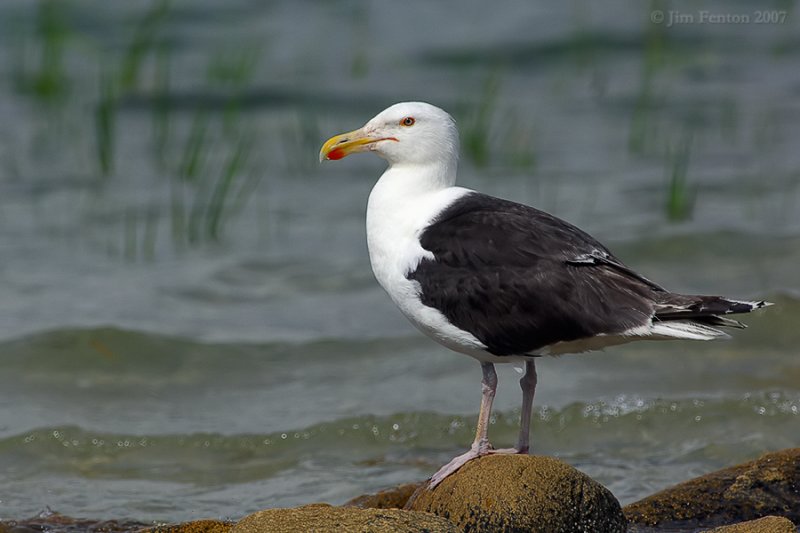
Great Black-backed Gull (Larus marinus) by J Fenton

Great Black-backed Gull (Larus marinus) by J Fenton

They seem to have quite a communication system. Reminds us of a few verses:

“But let your communication be, Yea, yea; Nay, nay: for whatsoever is more than these cometh of evil.” (Matthew 5:37 KJV)

“But above all things, my brethren, swear not, neither by heaven, neither by the earth, neither by any other oath: but let your yea be yea; and your nay, nay; lest ye fall into condemnation.” (James 5:12 KJV)


A few days ago, I posted this on the Bird of the Bible for Kids. Am in need of some feedback as to whether this might be a series. The McGuffey’s Readers were used in our schools to teach reading. There are quite a few good stories that mention birds. A few of those were posted.

My question: Would you look at them and possibly leave a comment? Yea or Nea.

I’m looking for “communications” on how to proceed. Thanks, Lee

Four Billion Birds Flying

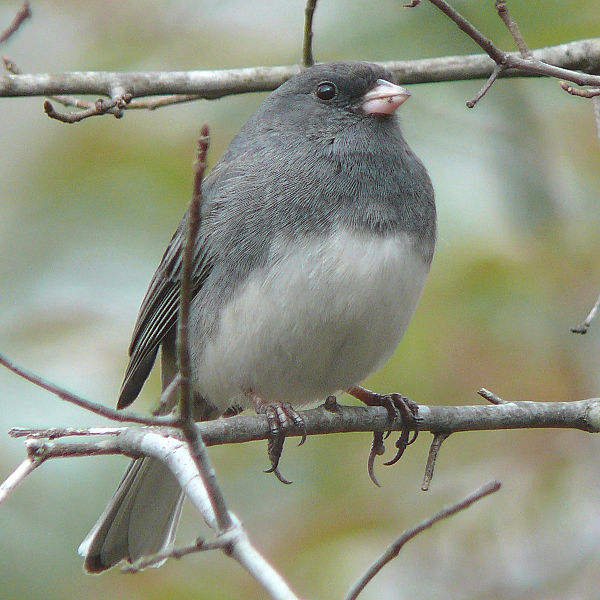
Dark-eyed Junco (Slate-colored) (Junco hyemalis hyemalis) female WikiC

“To everything there is a season, A time for every purpose under heaven:” (Ecclesiastes 3:1 NKJV)

Here are some interesting statements from an article on All About Birds. The research that Cornell Lab of Ornithology scientists are discovering with weather radar data is assisting the ornithologist. They are learning more about the 4 Billion birds that migrate during this time of the year.

“An average of 4 billion birds passed from Canada across the northern border of the U.S. in autumn, with 2.6 billion birds returning across the Canada–U.S. border in spring. Activity across the southern border was on an even grander scale: an average of 4.7 billion birds left the U.S. for Mexico and other points south each autumn, with 3.5 billion birds heading north across the U.S. southern border each spring.”

Summer Tanager (Piranga rubra) male by Kent Nickell

Summer Tanager (Piranga rubra) male by Kent Nickell

That is quite a few birds heading south, with fewer returning in the spring. It appears the birds that go further south have a better survival rate than the ones that winter here in the United States. 

” For birds crossing the U.S. northern border—which includes many short-distance migrants such as sparrows, Snow Buntings, and Dark-eyed Juncos that fly from Canada to spend winter in the Lower 48 states—the average rate of return was 64 percent. But for birds crossing the U.S. southern border—which includes more of the long-distance migrants such as warblers, tanagers, and orioles that travel to Central and South America, three to four times farther than the short-distance migrants—the average rate of return was 76 percent.”

Boat-tailed Grackle (Quiscalus major) at Lake Howard, Winter Haven, Florida By Dan'sPix

Boat-tailed Grackle (Quiscalus major) at Lake Howard, Winter Haven, Florida By Dan’sPix

My first thoughts were why are so many not surviving here in North America. Yet, those traveling further south, seem to fare better. I knew from previous articles I’ve read that many birds die from impact with tall buildings and glass windows. Here is what they had to say:

One explanation for the higher mortality among birds that overwinter in the U.S. may be a higher number of hazards. “All birds need to stay safe from predators, find enough food, and not get hit by a car,” says Ken Rosenberg, research coauthor and conservation scientist at the Cornell Lab. “Birds wintering in the U.S. may have more habitat disturbances and more buildings to crash into, and they might not be adapted for that.” 

They also discuss in this article the differences in different breeding strategy between short distant and long distant migrants.

“And He changes the times and the seasons;” (Daniel 2:21 NKJV)

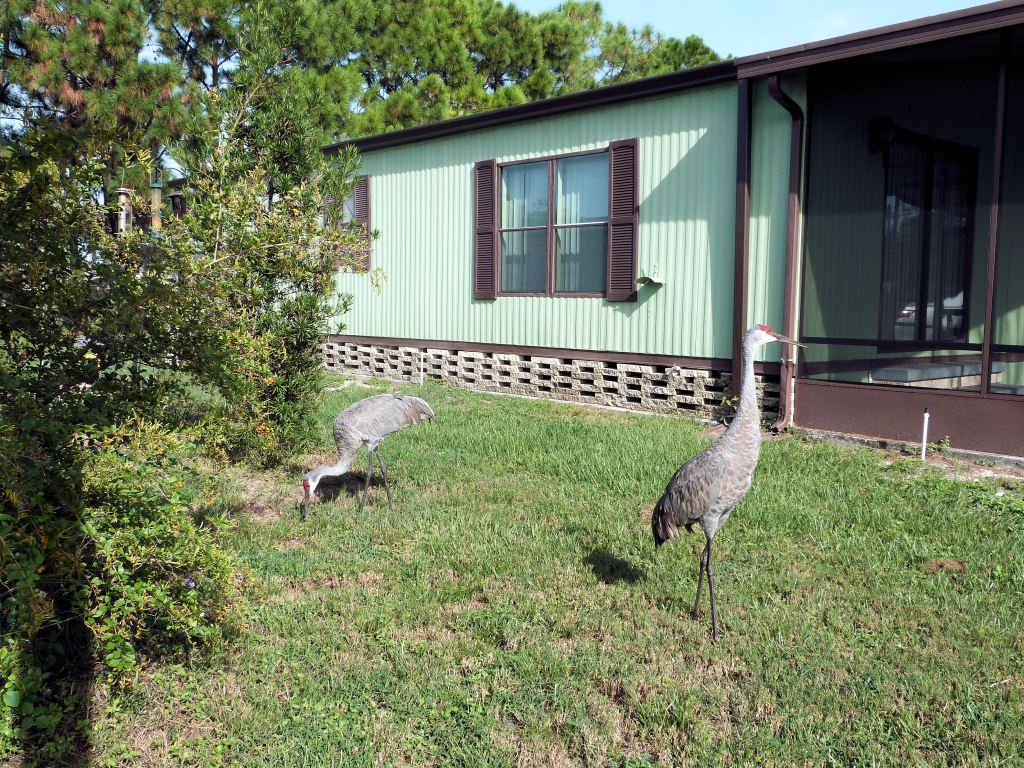
Sandhill Cranes in our side yard

Here in Florida, I have begun seeing more of the migrants that spend time near here. The Boat-tailed Grackles are invading my feeders already. I have also spotted more Bald Eagles, and the Heron, Egrets, and Sandhill Cranes seem to be more populous. Yeah, for the Winter Visitors!!


4 Billion Birds Will Fly Through American Airspace This Fall by Carley Eschiman, All About Birds, Sept 17,2018

Unbelievable Migrations from Creation Moments

Bird Migration Mistakes

Birds of the Bible – Migration September 2009

Interesting Things – Amazing Bird Migration


Live Cams from All About Birds

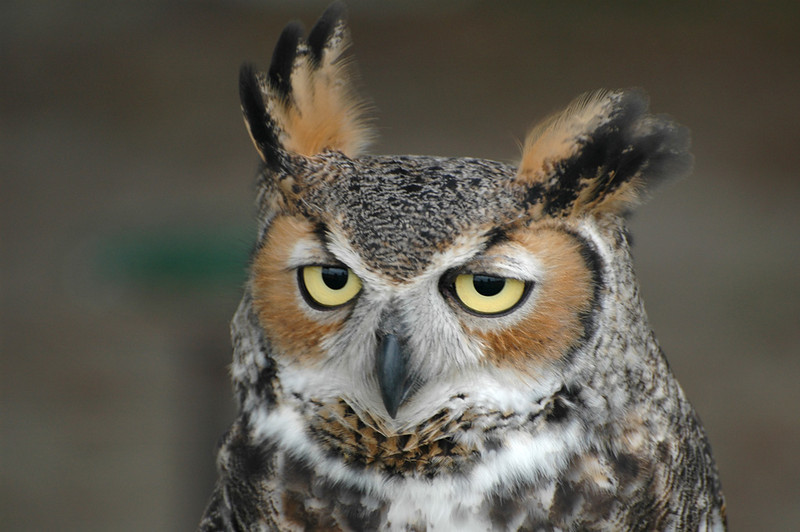
Great Horned Owl (Bubo virginianus) by Bob-Nan

Great Horned Owl (Bubo virginianus) by Bob-Nan

The little owl, and the great owl, and the swan, (Deuteronomy 14:16 KJV)

There shall the great owl make her nest, and lay, and hatch, and gather under her shadow: there shall the vultures also be gathered, every one with her mate. (Isaiah 34:15 KJV)

Are you aware of the Live Cameras that All About Birds are sharing? They are very interesting to watch. The latest that was shared with me is a Great Horned Owl nest Cam in Savannah, GA.

Take a look”

Here is a link that shows more about the Great Horned Owls there.

http://cams.allaboutbirds.org/channel/46/Great_Horned_Owls/

How about some Laysan Albatross nest in Hawaii?

Here is there link for the Albatross.

http://cams.allaboutbirds.org/channel/41/Laysan_Albatross/

Aren’t these amazing? It is alway great to watch the Lord’s amazing creations, but to get to see them at the nest or at feeders is neat with today’s technology.

If you would like to see all the current Cams from All About Birds click this link. Not all the camera are operating all the time, but this page will help you find the live one as the current time.

http://cams.allaboutbirds.org/all-cams/

*

Birds of the Bible – Owls

Strigidae – Owls

Diomedeidae – Albatrosses Family

*