Here is an interesting video from the Institute of Creation Research. Thought I’d share it.
*
*
Then God saw everything that He had made, and indeed it was very good. So the evening and the morning were the sixth day. (Genesis 1:31 NKJV)
Also an interesting article about the Origin of Dogs. Love those dogs as well as birds. Here’s an excerpt.
“On the Origin of Dogs
by Brian Thomas, M.S. *
Overall, there are more dogs than children in American and British households.1 Dogs have become a huge part of humans’ lives. How and when did they get here?
Chromosomes show that “the domestic dog, Canislupus familiaris, is a grey wolf.” Additional DNA studies provide “strong evidence” that all dog breeds descended from a wolf population that was domesticated in southern East Asia. Dogs, wolves, coyotes, and foxes can interbreed, so they represent the created dog kind. Over 230 dog breeds have been defined in the 4,300 or so years of post-Flood history.
In his 300 B.C. book Historiae Animalium, Aristotle listed the dog separately from the wolf and fox. But University of Otago archaeologist Helen Leach wrote that “systematic breeding only emerged within the past 300 years.”
Over 200 breeds were produced in only 300 years? That doesn’t fit with evolution’s theory of gradual change, in which new features are supposedly favored by natural selection over vast time periods. A recent experiment proved that dogs most likely changed in just a few generations through pre-designed genetic programming and intentional breeding……
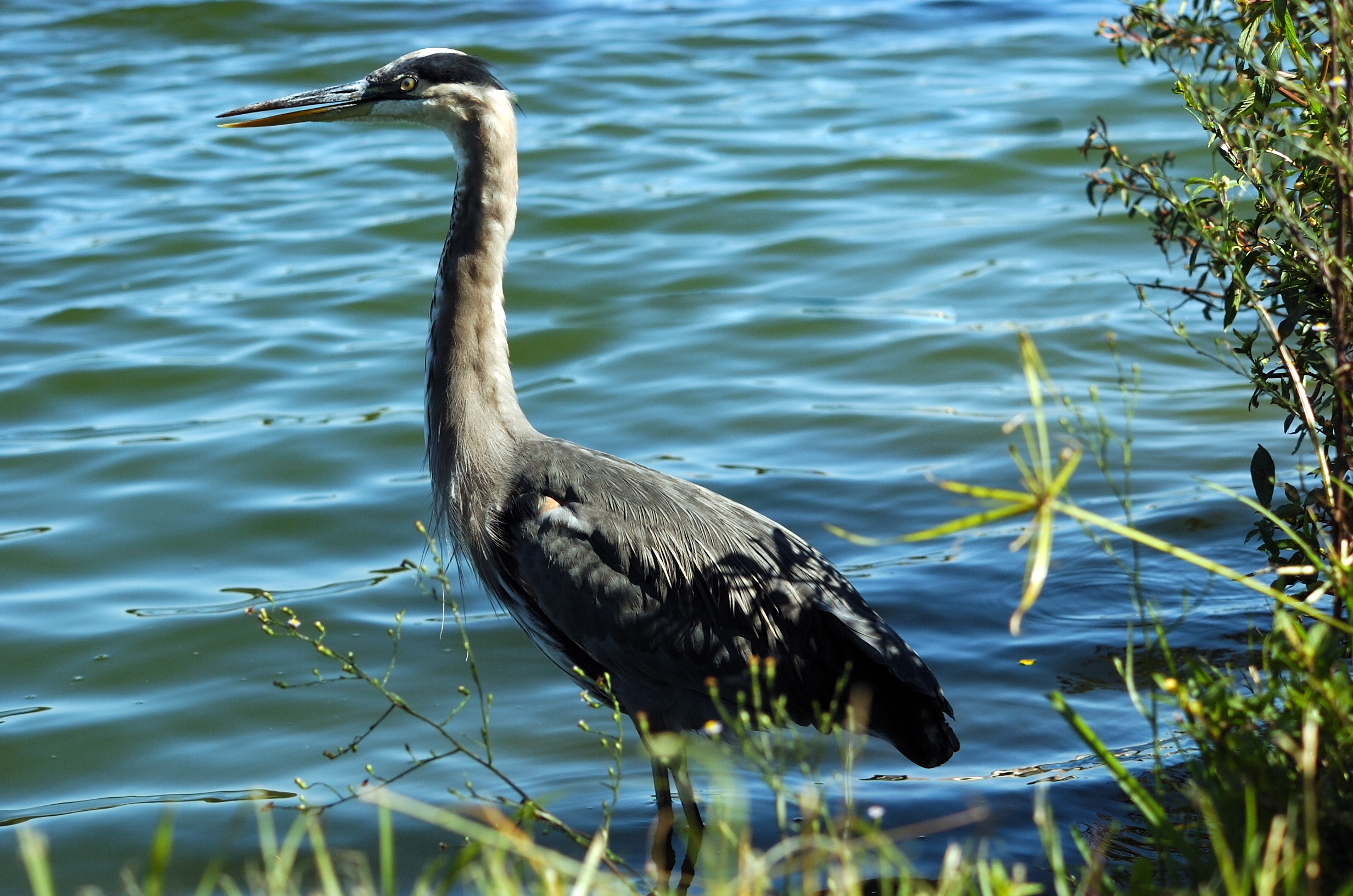
Great Blue Heron (Ardea herodias) by Dan at Lake Morton
Since I was a child there has been an awareness of God’s creation and great enjoyment in it. At the age of 11 or 12 years, I saved my allowance and bought a book on Birds of America. It was real special to see a Heron fly over the farm headed for a swampy area.
My grandparents lived a short walking distance from us, and I liked going to her house. Her kitchen always smelled of toast. Also special was looking out the south kitchen window to see the wrens flying in and out of their houses which hung at eye level.
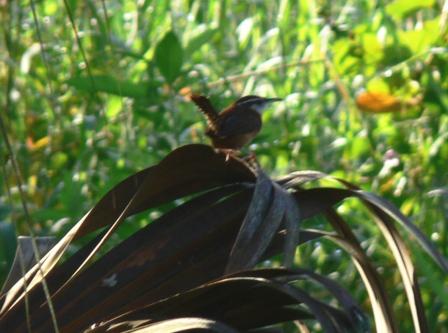
Carolina Wren (Thryothorus ludovicianus) by Lee at Circle B
I no longer live in the north, but in the south and am now a grandma. Birds, butterflies and gardens are still high on my list of favorite things. Even tho’ the seasonal changes are not as evident as in the north, still I look forward to my special feathered friends coming and going.
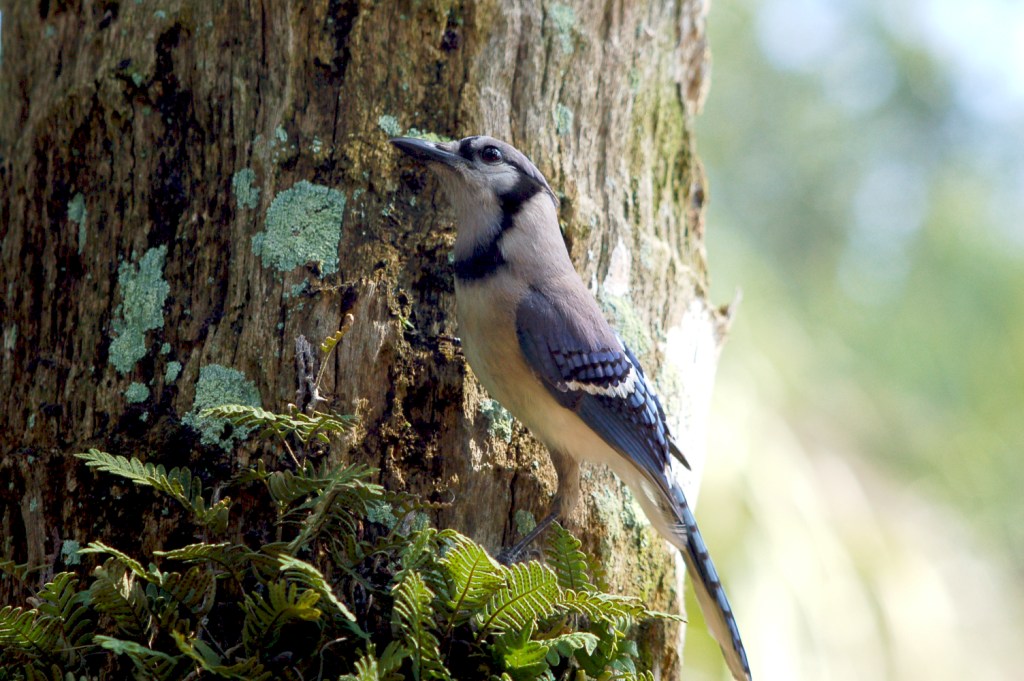
Blue Jay (Cyanocitta cristata) at Bok Tower By Dan’sPix
The Blue Jays are always present and they let me know before I see it, when the neighborhood Red-shouldered Hawk is around. They “Yell” enough to discourage even me if their frenzy of cries and wild flying were directed at me!
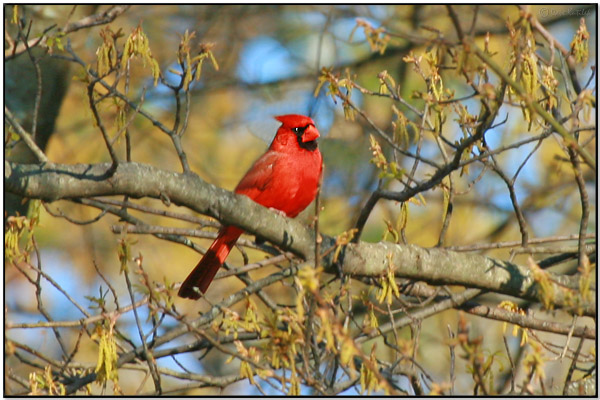
Northern Cardinal (Cardinalis cardinalis) by Daves BirdingPix
A pair of Cardinals come about the beginning of November, and I hear them before I see them. Also, in the winter months small chirpy birds can be heard which makes me look out the window for them. Today, I’m sitting on the patio swing having put out a cushion for myself and my sweet doggy companion, Ruby. When not claiming her seat, she stays busy with squirrel patrol.
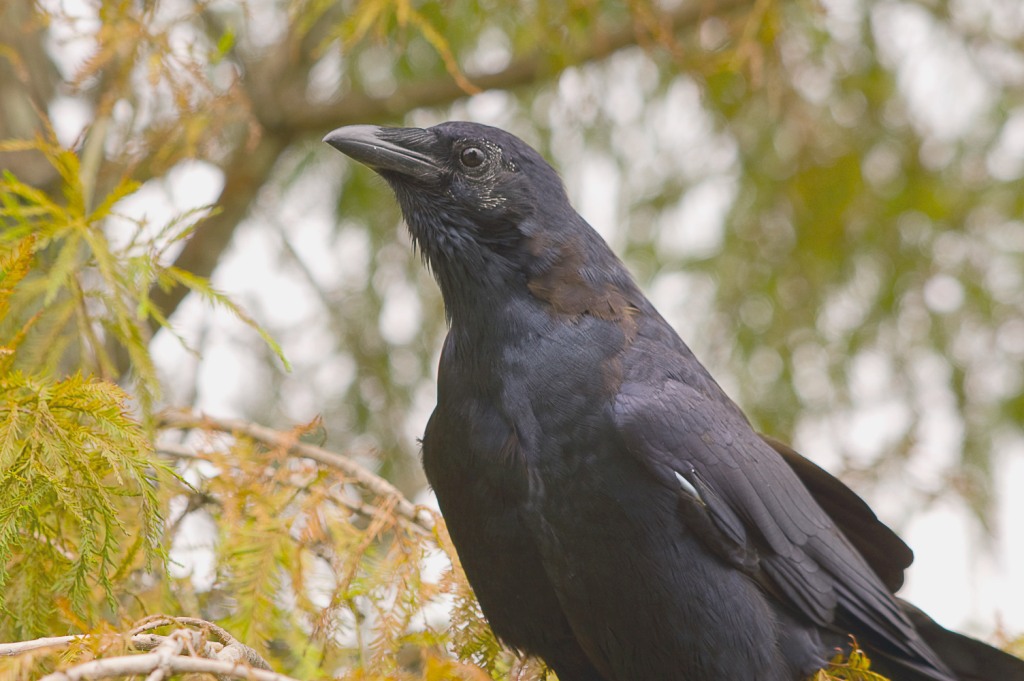
Fish Crow (Corvus ossifragus) at Lake Morton By Dan’sPix
While working on the coming Sunday School lesson, I heard them – Crows. Some people find them irritating, but not me. Looking up I see black flying bodies against a blue sky dotted with white-dumpling clouds.
White Pelicans in Flight – Circle B Bar
There are also the usual Vultures beautifully soaring overhead, and a single Pelican, and four unidentifiable ducks.
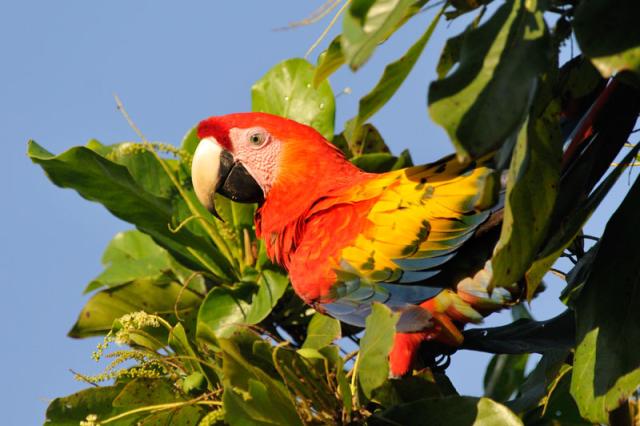
Scarlet Macaw (Ara macao) Reinier Munguia
I should also mention of the neighbors Macaw (very noisy) who only makes me smile when he talks or laughs. They also have chickens that are very pleasant to listen to.
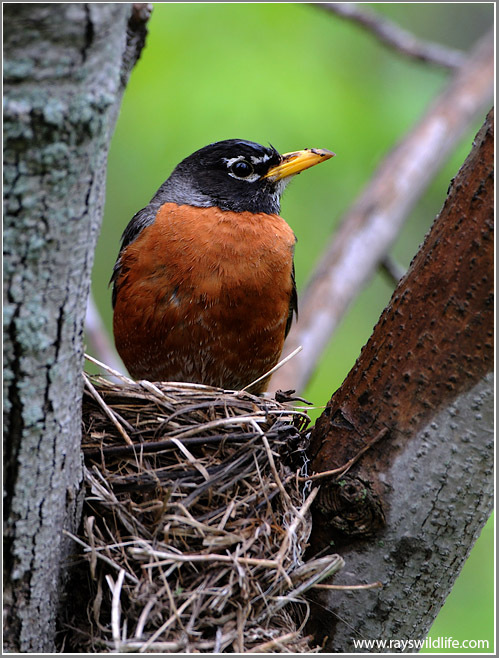
American Robin (Turdus migratorius) in nest by Ray
Admittedly the best will be if the Robins return. In the 5th grade our teacher had all of us draw a picture of a Robin. She then hung them around the room above the blackboards. Oh, Robins, please come back. Remember I promised not to mention your bad manners to anyone. I will gladly welcome you and you can be noisy, toss leaves, eat all the worms you want and anything else that suits you fancy.
Dot Malcolm, 12/30/11
Then God saw everything that He had made, and indeed it was very good. So the evening and the morning were the sixth day. (Genesis 1:31 NKJV)
Thanks, Dottie, for another interesting article. What a delight to read your love and awareness of birds. When the Robins come back, we will expect another article. You kept me busy finding photos for your many birds. Keep it up.
Dorothy is a charter member of our church, Faith Baptist, and a great friend.
And thorns shall come up in her palaces, nettles and brambles in the fortresses thereof: and it shall be an habitation of dragons, and a court for owls. (Isaiah 34:13 KJV)
Dan and I went over to the Lowry Park Zoo/Zoo Tampa in Tampa again today. I was wanting to check out my Christmas present of a new camera. Enjoying learning to use it and retaking a lot of photos of birds to compare the old ones with the new ones on this camera. (It is still a point-and-shoot, but it has an improved “program mode.” Dan is our good photographer.)
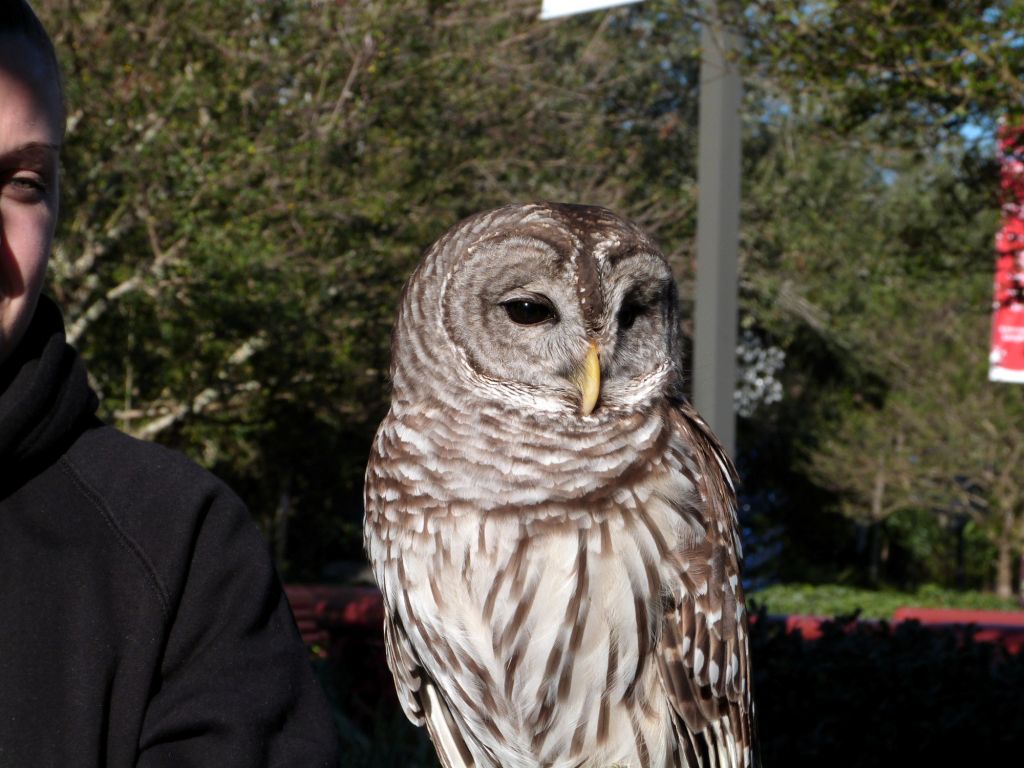
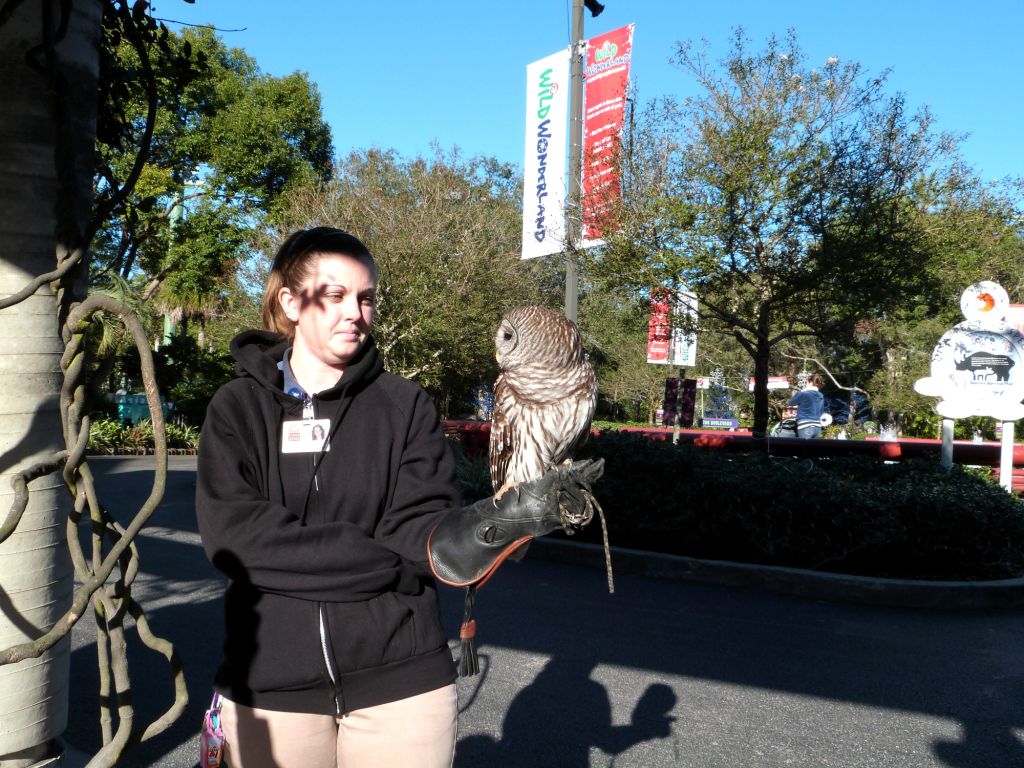
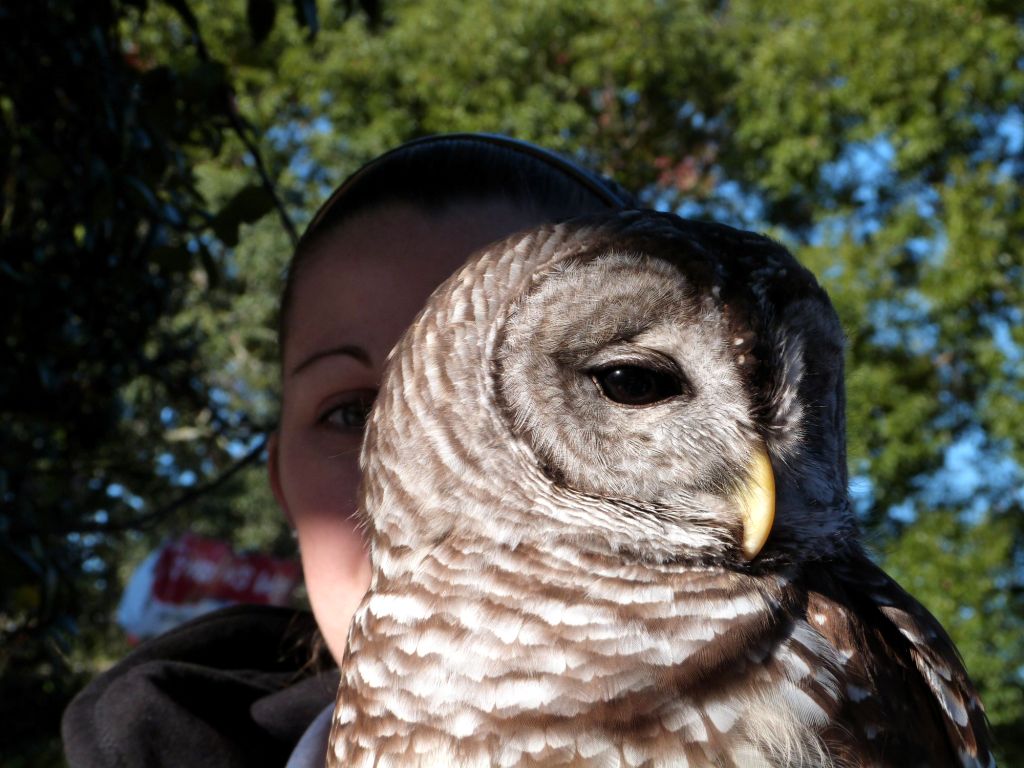
But when we entered the zoo, we were met by one of the zookeepers holding a beautiful Barred Owl. We had not encountered this Owl in our previous trips. While sharing some of the photos, I thought you might like to learn a little about them.
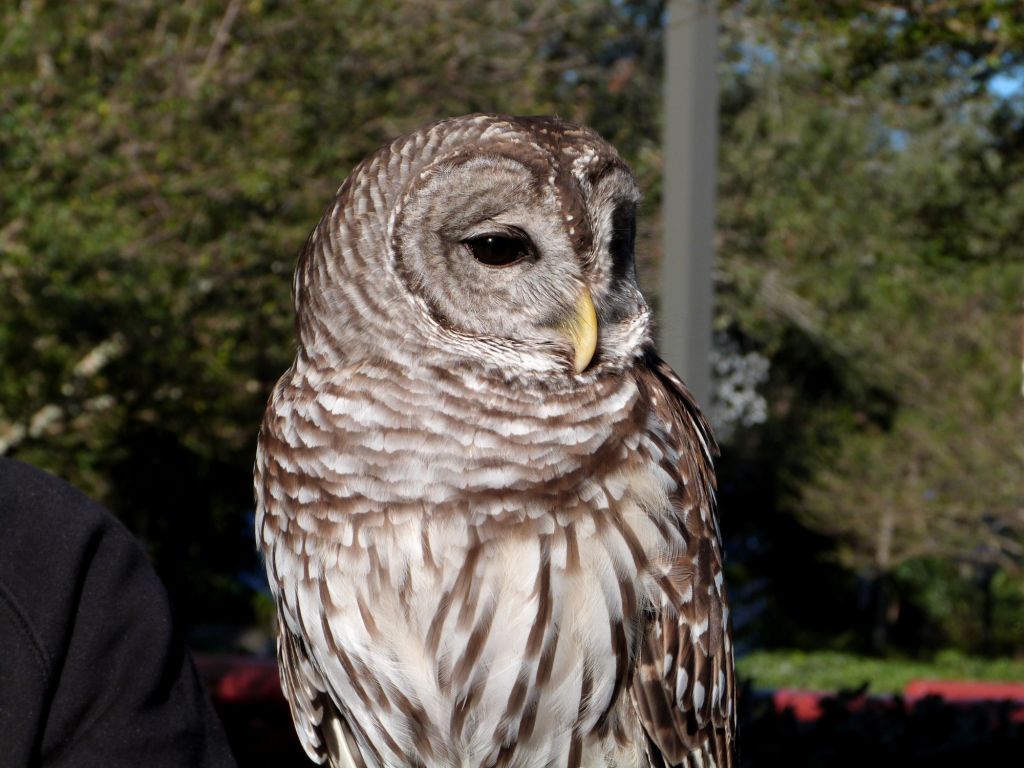
Face pale with dark concentric rings surrounding eye
Similar species:
The Spotted Owl is most similar, but can be separated with attention to its barred, not streaked, underpart coloration. Short-eared Owl is similar in size, but is not barred on the chest nor is as heavily streaked below, does not share the concentric rings in the facial disks, has yellow eyes and a dark bill, and is found in quite different habitat. Great Gray Owl is superficially similar, but much larger, gray rather than brown below, and has differently patterned underparts.”
Northern Barred Owl (Strix varia) LPZ by Lee
“The Barred Owl (Strix varia) is a large typical owl native to North America. It goes by many other names, including Eight Hooter, Rain Owl, Wood Owl, and Striped Owl, but is probably best known as the Hoot Owl based on its call.
The usual call is a series of eight accented hoots ending in oo-aw, with a downward pitch at the end. The most common mnemonic device for remembering the call is “Who cooks for you, who cooks for you all.” It is noisy in most seasons. When agitated, this species will make a buzzy, rasping hiss. While calls are most common at night, the birds do call during the day as well.” (Wikipedia)
(From xeno-canto.org)
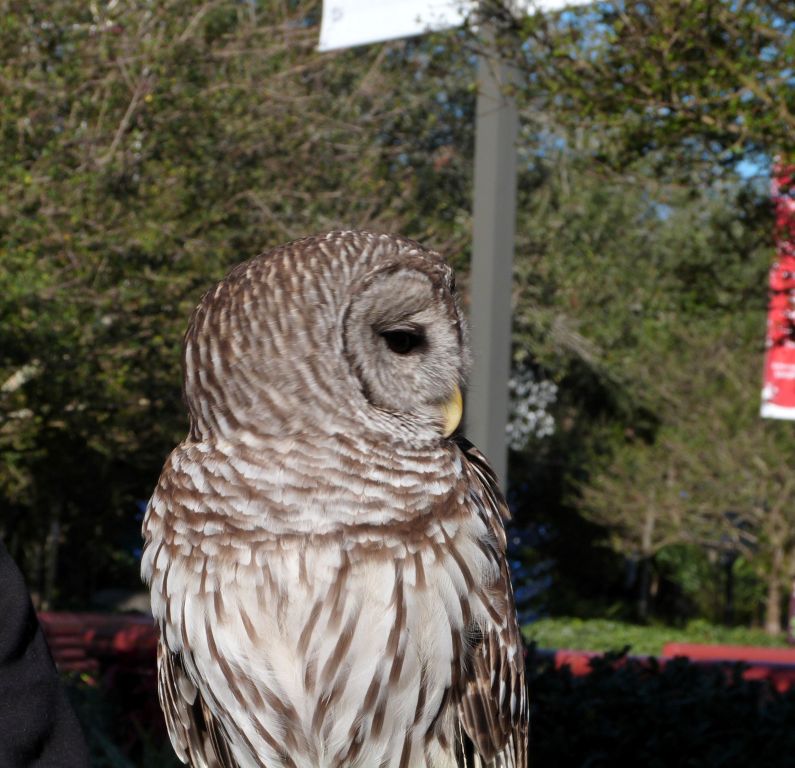
Northern Barred Owl (Strix varia) LPZoo by Lee
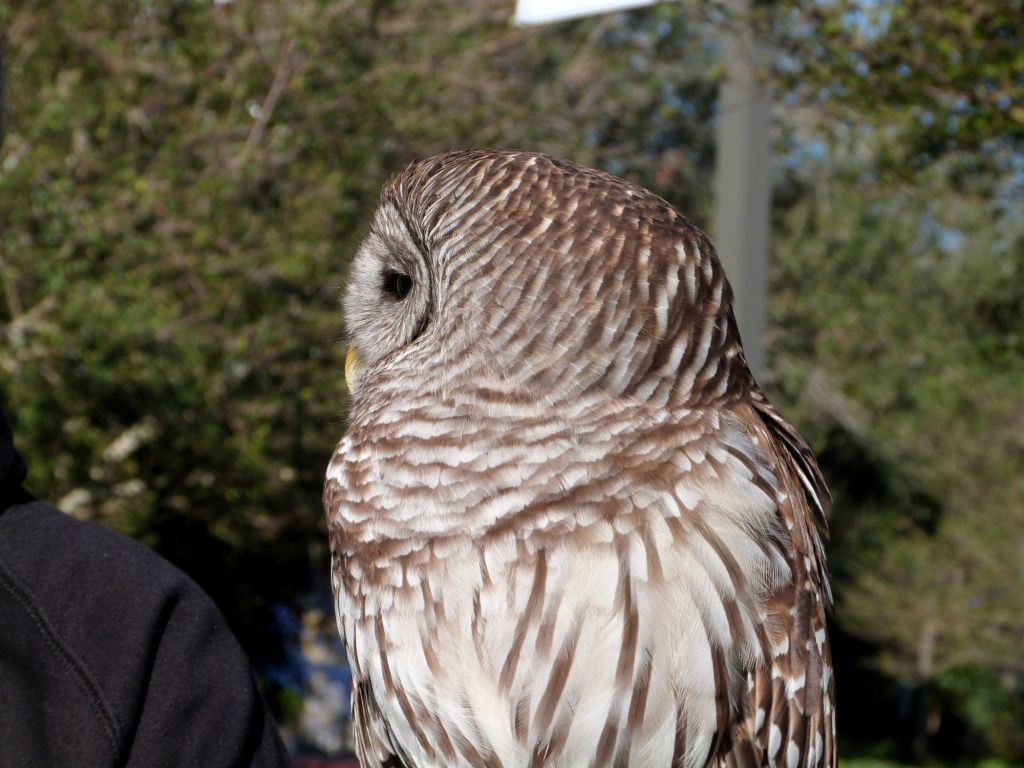
Looking the other way. No, they cannot turn their heads all the way around. Notice also that this owl does not have ear tufts like some owls.
Northern Barred Owl (Strix varia) LPZ by Lee – Side of head
“Breeding habitats are dense woods across Canada, the eastern United States, and south to Mexico;in recent years it has spread to the western United States. Recent studies show suburban neighborhoods can be ideal habitat for barred owls. Using transmitters, scientists found that populations increased faster in the suburban settings than in old growth forest. The main danger to owls in suburban settings is from cars. The increased offspring offset the death rate due to impacts from cars and disease.”
The Barred Owl’s nest is often in a tree cavity, often ones created by pileated woodpeckers; it may also take over an old nesting site made previously by a red-shouldered hawk, cooper’s hawk, crow, or squirrel. It is a permanent resident, but may wander after the nesting season. If a nest site has proved suitable in the past they will often reuse it as the birds are non-migratory. In the United States, eggs are laid from early-January in southern Florida to mid-April in northern Maine, and consist of 2 to 4 eggs per clutch. Eggs are brooded by the female with hatching taking place approximately 4 weeks later. Young owls fledge four to five weeks after hatching. These owls have few predators, but young, unwary owls may be taken by cats. The most significant predator of Barred Owls is the Great Horned Owl. The Barred Owl has been known to live up to 10 years in the wild and 23 years in captivity.” (Wikipedia)
Northern Barred Owl (Strix varia) LPZ by Lee
“Owl” is mentioned 8 times in the King James Bible and “Owls” is mentioned 6 times. So that makes our friend here a “Bird of the Bible” and of course a “Bird of the World.” Owls are another of the Lord’s great creations.
It was a great birdwatching day at the Zoo. Cool, but the sun was bright and no clouds. I had some other great finds today, but will save them for later.
Here is an interesting article from Answers in Genesis about how the universe obeys certain rules — “laws to which all things must adhere. These laws are precise, and many of them are mathematical in nature. Natural laws are hierarchical in nature; secondary laws of nature are based on primary laws of nature, which have to be just right in order for our universe to be possible. But, where did these laws come from, and why do they exist? If the universe were merely the accidental by-product of a big bang, then why should it obey orderly principles—or any principles at all for that matter? Such laws are consistent with biblical creation. Natural laws exist because the universe has a Creator God who is logical and has imposed order on His universe
In the beginning God created the heaven and the earth. (Genesis 1:1 KJV)
Dippers are small, stout, short-tailed, short-winged, strong-legged birds. The different species are generally dark brown (sometimes nearly black), or brown and white in colour, apart from the Rufous-throated Dipper which is brown with a reddish-brown throat patch. Sizes range from 14–22 cm in length and 40-90 g in weight, with males larger than females. Their short wings give them a distinctive whirring flight. They have a characteristic bobbing motion when perched beside the water, giving them their name.
Dippers are found in suitable freshwater habitats in the highlands of the Americas, Europe and Asia. In Africa they are only found in the Atlas Mountains of Morocco. They inhabit the banks of fast-moving upland rivers with cold, clear waters, though, outside the breeding season, they may visit lake shores and sea coasts.
The Lord created them unlike many water birds, dippers are generally similar in form to many terrestrial birds (for example they do not have webbed feet), but they were designed with some morphological and physiological adaptations to their aquatic habits. Their wings are relatively short but strongly muscled, enabling them to be used as flippers underwater. They have dense plumage with a large preen gland for waterproofing their feathers. Relatively long legs and sharp claws enable them to hold onto rocks in swift water. Their eyes have well-developed focus muscles that can change the curvature of the lens to enhance underwater vision. They have nasal flaps to prevent water entering their nostrils. Their blood has a high haemoglobin concentration, allowing a greater capacity to store oxygen than terrestrial birds, and allowing them to remain underwater for up to at least 30 seconds.
Let them praise the name of the LORD: for he commanded, and they were created. (Psalms 148:5 KJV)
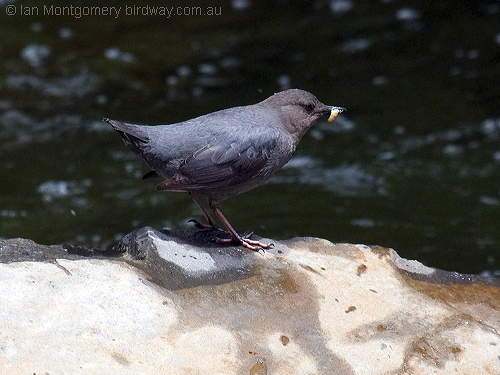
American Dipper (Cinclus mexicanus) by Ian
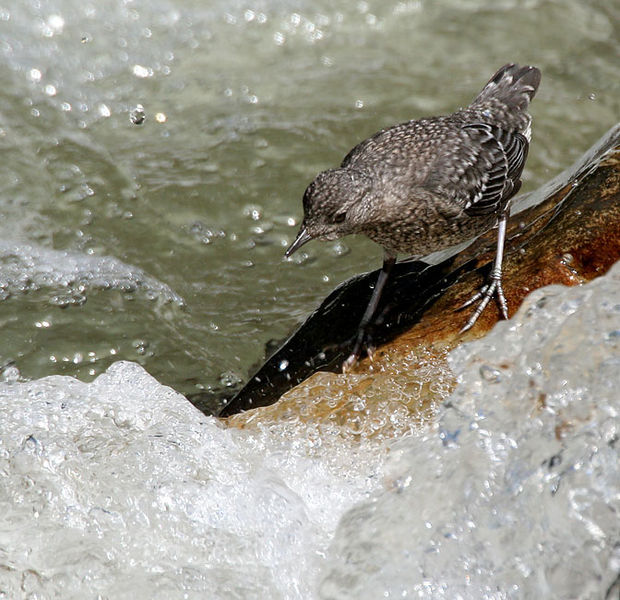
Dippers forage for small animal prey in and along the margins of fast-flowing freshwater streams and rivers. They perch on rocks and feed at the edge of the water, but they often also grip the rocks firmly and walk down them beneath the water until partly or wholly submerged. They then search underwater for prey between and beneath stones and debris; they can also swim with their wings. The two South American species swim and dive less often than the three northern ones.Their prey consists primarily of invertebrates such as the nymphs or larvae of mayflies, blackflies, stoneflies and caddisflies, as well as small fish and fish eggs. Molluscs and crustaceans are also consumed, especially in winter when insect larvae are less available.
There are five members of the Dipper – Cinclidae Family in the Passeriformes Order. They all are of the Cinclus genus. The Dippers are:
White-throated Dipper (Cinclus cinclus) – Widespread, also nw Africa
Brown Dipper (Cinclus pallasii) – Europe
American Dipper (Cinclus mexicanus) – w Canada to Panama
White-capped Dipper (Cinclus leucocephalus) – Colombia to Bolivia
Rufous-throated Dipper (Cinclus schulzii) – nw Argentina, se Bolivia
Several things have been dipped in blood in Scripture:
And they took Joseph’s coat, and killed a kid of the goats, and dipped the coat in the blood; (Genesis 37:31 KJV)
Hyssop was dipped in blood in Exodus 12:22 and put on doorposts; Lev. 4:6,16 and 9:9, 14:16 dipped finger in blood and sprinkled it while at the altar; dipped a bird in blood in Lev. 14:6 (See Birds of the Bible – Purifying Bird); then when Christ is seen in heaven, His vesture is dipped in blood.
And he was clothed with a vesture dipped in blood: and his name is called The Word of God. (Revelation 19:13 KJV)
The one time someone dipped himself in a river, was when Naaman, who had leprosy, finally believed enough to go dip seven times in the Jordan and was healed.
Then went he down, and dipped himself seven times in Jordan, according to the saying of the man of God: and his flesh came again like unto the flesh of a little child, and he was clean. (2 Kings 5:14 KJV)
Doth the hawk fly by thy wisdom, [and] stretch her wings toward the south? (Job 39:26)
When I Consider – “Designed for Flight” by Creation Moments
“Many textbooks tell young people today that birds are modified reptiles. Suppose, they say, that millions of years ago the scales on some reptiles began to fray along the edges. In time, they say, the frayed scales turned into feathers and birds were born.
Formed By Him
The elegance and beauty of the feather make this story hard to believe. Can sticking a feather on a lizard produce a peacock? The bird’s feather is only a small part of the complete flying system of the bird. Even with very careful planning and redesigning, a reptile doesn’t have what it takes.
A bird needs massive breast muscles for flight. In some birds, 30 percent of the body weight of the bird is breast muscle. By comparison, in humans, breast muscles are only about 1 percent of body weight. A bird also needs an extremely high metabolism and blood pressure to deliver the energy those muscles need for flight. Birds have a higher metabolism than any other creature; they also have the necessary high blood pressure. Finally, as is well known, birds need light skeletons. The man-o’-war has a wingspan of seven feet. But its entire skeleton weighs only a few ounces – less than its feathers!
Even the most clever rebuilding of a reptile cannot produce a bird. In fact, birds have very little in common with reptiles. The entire being of the bird, from body to brain, has been specially designed for flight by a Creator who clearly knows everything there is to know about flight.
Prayer:
Father in heaven, the beauty, grace and huge variety of birds You have created are some of the most beautiful creatures on earth. As I thank You for them, fill me with new wonder over the wonderful work of Your hands. Amen.
Notes:
Vandeman, George. 1991. “The miracle of flight.” Signs of the Times, May. p. 25.”
*
All things were made by him; and without him was not any thing made that was made. (John 1:3 KJV)
“Evolutionary ‘Game Changer’ Doesn’t Change” by Brian Thomas, M.S. is an interesting article that is in this month’s Acts and Facts.
It is typical of how hard the evolutionist want to believe in their theory of evolution. Now it is a “creature, called Australopithecus sediba, “could be a key link in the process of evolution that led to modern human beings.”1 One headline read, “Rethinking Human Origins: Fossils Reveal a New Ancestor on the Family Tree.”2 But none of these claims is true, and it’s relatively easy to understand why.”
They also have a daily devotional called – Days of Praise, which I use along with my Bible reading.
O Timothy, keep that which is committed to thy trust, avoiding profane and vain babblings, and oppositions of science falsely so called: (1 Timothy 6:20 KJV)
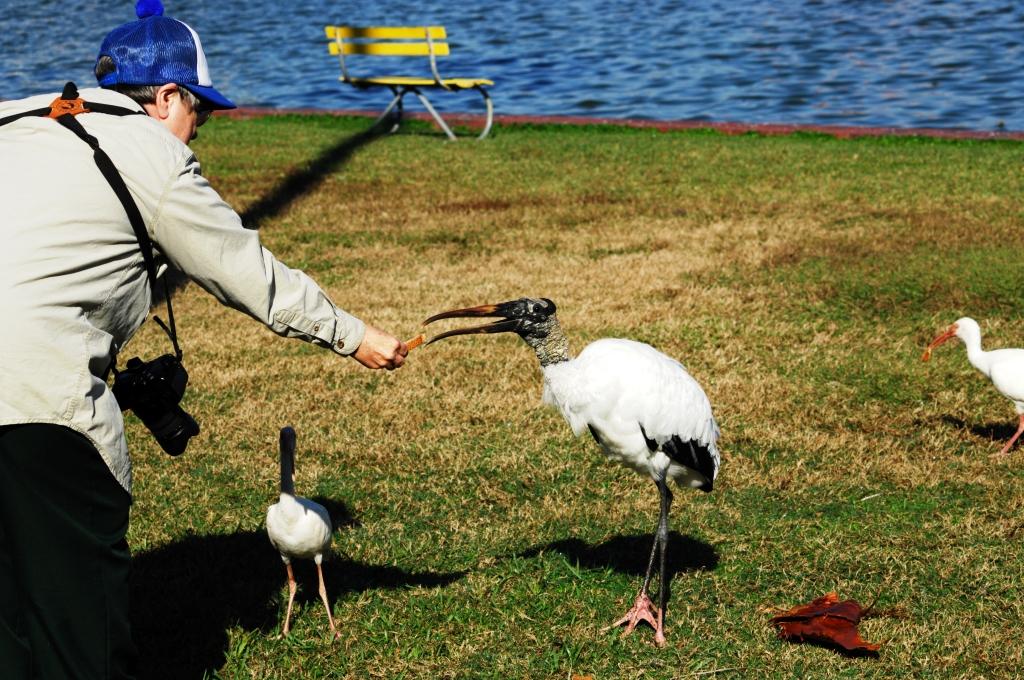
Lee feeding Wood Stork at Lake Morton by Dan Jan 2011
While watching the birds at my feeders and reflecting on what I had just read in my devotions, I started thinking about how the truths of God’s Word applies to the birds and to me. There are differences of course, but there are many similarities. Those are the ones this article is about.
To begin, we are both created. The Lord created the birds and He created humans. We both have bodies and spirits, but humans were given a soul and were created in His Image.
So God created great sea creatures and every living thing that moves, with which the waters abounded, according to their kind, and every winged bird according to its kind. And God saw that it was good. (Genesis 1:21 NKJV)
Then God said, “Let Us make man in Our image, according to Our likeness; let them have dominion over the fish of the sea, over the birds of the air, and over the cattle, over all the earth and over every creeping thing that creeps on the earth.” So God created man inHis own image; in the image of God He created him; male and female He created them. (Genesis 1:26-27 NKJV)
There is a difference between us:
All flesh is not the same flesh, but there is one kind of flesh of men, another flesh of animals, another of fish, and another of birds. (1 Corinthians 15:39 NKJV)
Bush Stone-curlew (Burhinus grallarius) with young by Ian
Then the Lord commanded them to be “Be fruitful and multiply, and fill.” Both were told to reproduce with the difference being that man was given dominion over the critters.
And God blessed them, saying, “Be fruitful and multiply, and fill the waters in the seas, and let birds multiply on the earth.” So the evening and the morning were the fifth day. …And God saw that it was good.(Genesis 1:22-23, 25 NKJV)
Then God blessed them, and God said to them, “Be fruitful and multiply; fill the earth and subdue it; have dominion over the fish of the sea, over the birds of the air, and over every living thing that moves on the earth.” (Genesis 1:28 NKJV)
Cedar Waxwing Eating by Steve Slayton
God gave both the birds and man (humans) every green herb to eat.
And God said, “See, I have given you every herb that yields seed which is on the face of all the earth, and every tree whose fruit yields seed; to you it shall be for food. Also, to every beast of the earth, to every bird of the air, and to everything that creeps on the earth, in which there is life, I have given every green herb for food“; and it was so. (Genesis 1:29-30 NKJV)
Swallow Tanager (Tersina viridis) by Dario Sanches
We were both created “very good.”
Then God saw everything that He had made, and indeed it was very good. So the evening and the morning were the sixth day. (Genesis 1:31 NKJV)
Then Adam and Eve disobeyed God and both the birds and myself were placed under a curse. Neither of us enjoy the fellowship and peace that was there in the Garden of Eden. My personal belief is that the animals and birds were very tame, that Adam could call or speak to them and they would come without hesitation. But now, they are afraid of us, and we (humans) need a Savior. (The Gospel Message)
And the fear of you and the dread of you shall be on every beast of the earth, on every bird of the air, on all that move on the earth, and on all the fish of the sea. They are given into your hand. (Genesis 9:2 NKJV)
We all belong to the Lord:
I know all the birds of the mountains, And the wild beasts of the field are Mine. “If I were hungry, I would not tell you; For the world is Mine, and all its fullness. (Psalms 50:11-12 NKJV)
Western Great Egret (Ardea alba) With Fish by AestheticPhotos
We and the birds are provided for:
“Therefore I say to you, do not worry about your life, what you will eat or what you will drink; nor about your body, what you will put on. Is not life more than food and the body more than clothing? Look at the birds of the air, for they neither sow nor reap nor gather into barns; yet your heavenly Father feeds them. Are you not of more value than they? (Matthew 6:25-26 NKJV)
God has given each kind of bird different beaks, feet, appetites, habitats, and places to dwell. The Lord has given those of us who have accepted Him as Savior different abilities, gifts, talents, places to live (like missionaries) and jobs to do. He has given both a variety that makes them and us very interesting to behold.
There are more things that could be mentioned, but for now, Praise the Lord that He cares about both the birds and us!
Come, ye children, hearken unto me: I will teach you the fear of the LORD. (Psalm 34:11 )
Evolutionary naturalism paints the picture of life as if it were a haphazard series of accidents that just barely resulted in a range of living things that just manage to survive. This fanciful picture destroys our sense of wonder over the sophisticated engineering designs in nature.
Consider the mystery of flight, for example. Some evolutionists suggest that perhaps birds are descended from lizards that fell out of trees a lot. Other evolutionists say that birds came from lizards who grew wings, not for flight but to chase down and catch insects. Yet, they have little to say about the fact that we humans have come by most of our sophisticated knowledge about flight from studying the birds.
Then there is the problem, for the evolutionist, of how flight accidentally evolved so many times for so many creatures. Scientists studying the dragonfly are learning even more secrets of flight. Our best high-performance aircraft can barely lift themselves off the ground. However, the dragonfly can lift 15 times his own weight into the air. Scientists have learned that this is because the dragonfly’s wings are designed to create little whirlwinds over their top surfaces. These whirlwinds are the secret to creating incredible lifting power. Ways are now being planned to apply this secret to new aircraft designs.
The engineering excellence found in nature and from which we have learned so much even in this day of interplanetary probes is not witness to a mindless process of evolution, but to a wise and mindful Creator.
Prayer:
Father, it seems a shame that humans learned about flight from the dragonfly and fail to see a witness to You. Yet, I know that I don’t learn from You as I should, either. Forgive me for Jesus’ sake and make me a better learner. Amen.
Out of the ground the LORD God formed every beast of the field and every bird of the sky, and brought them to the man to see what he would call them; and whatever the man called a living creature, that was its name. (Genesis 2:19 NASB)
While working on the new updates for the IOC 2.10 Version, I kept noticing the word “color” in the scientific names as I sorted and resorted the Excel spreadsheet. This is a third of the “color” articles. There are concolor, discolor, bicolor, tricolor, unicolor, quadricolor, quinticolor, multicolor, versicolor, nocticolor, coelicolor, decolor, fumicolor, niscolor, schisticolor, subunicolor, sitticolor.
In the subspecies (ssp.) there are a few additional “colors” that show up – arenicolor, caelicolor, caerebicolor, cervinicolor, deserticolor, ruficolor, terricolor. For now, let’s see what the subspecies “color” birds are. Most have just only one or two birds with that “color” name. Where a photo of the subspecies could not be found, the nominate bird is shown.
arenicolor = aren, sand + color
Bar-tailed Lark (Ammomanes cinctura arenicolor) by Keith Blomerley
The Bar-tailed Lark (Ammomanes cinctura) is a species of lark in the Alaudidae family. It is found in Afghanistan, Algeria, Cape Verde, Chad, Egypt, Iran, Iraq, Israel and Palestine, Italy, Jordan, Kuwait, Lebanon, Libya, Mali, Malta, Mauritania, Morocco, Niger, Oman, Pakistan, Saudi Arabia, Sudan, Syria, Tunisia,and Yemen. Its natural habitat is hot deserts.
I do not know Latin, nor what Scientific words mean, but I have a copy of the Latin Vulgate on my e-Sword Program. I decided to look up these words and see what I might find. While searching for “aren” I found the word “harenam” which translates to “sand.”
How precious also are thy thoughts unto me, O God! how great is the sum of them! If I should count them, they are more in number than the sand: when I awake, I am still with thee. (Psalms 139:17-18 KJV)
caelicolor = sky blue + color
“caeli” translates to “heaven” in most verses.
The heavens are thine, the earth also is thine: as for the world and the fulness thereof, thou hast founded them. (Psalms 89:11 KJV)
caerebicolor = caer (blue) + bicolor (Having two colors)
(Couldn’t figure this one out in Latin)
Blue Dacnis (Dacnis cayana, ssp caerebicolor)
Blue Dacnis (Dacnis cayana) by Dario Sanches
Velvet Flycatcher (Myiagra hebetior) also known as Dull or Lesser Shining Flycatcher
The Dull Flycatcher (Myiagra hebetior) is a species of bird in the Monarchidae family. It is endemic to Papua New Guinea. Its natural habitats are subtropical or tropical moist lowland forests and subtropical or tropical moist montanes.
cervinicolor = cervix (neck) + color
“cervi” translates to “neck” in most verses. (cervis = stiff-necked)
He who is often rebuked, and hardens his neck, Will suddenly be destroyed, and that without remedy. (Proverbs 29:1 NKJV)
Shining Flycatcher (Myiagra alecto) by Ian (closest to Velvet I could find)
Velvet Flycatcher (Myiagra hebetior cervinicolor)
deserticolor = desert + color
“deserti” translates to “desert” or “wilderness“.
Indian Scops Owl (Otus bakkamoena) pair by Nikhil Devasar
Indian Scops Owl (Otus bakkamoena deserticolor) – Video IBC
“A medium (smaller than the Collared) sized scops owl with large conspicuous ear-tufts. Sandy grey-brown, spotted and mottled dark brown and black. There is also a rufous phase. Underparts light grey-buff. Has a distinct nuchal collar and also a second collar on nape. Eyes are dark brown.” (Delhibird)
“The Common Miner (Geositta cunicularia) is a passerine bird of South America, belonging to the ovenbird family. It is a ground-dwelling bird which feeds on insects and seeds. It has about 9 different subspecies, some of which may be better treated as separate species.
It is 14 to 16 cm long with a fairly long, slightly downcurved bill. The plumage varies geographically but is basically brown above and pale below with a streaked breast, pale stripe over the eye, dark edge to the ear-coverts and pale rufous bar across the wing. The tail is dark with a buff base and variable amounts of buff on the outer feathers. The trilling song is often given in flight and also varies geographically.” (Wikipedia)
Chinese White-browed Rosefinch (Carpodacus dubius deserticolor) Video by Keith Blomerley
The Chinese White-browed Rosefinch (Carpodacus dubius) is a true finch species (family Fringillidae). It is one of the rosefinches that might belong in the genus Propasser.
It is found in China and Tibet. Its natural habitats are temperate forests and temperate shrubland.
ruficolor = rufilata (Latin), rufus, reddish + color
“rufi” translates to “red” or “Rufus“-a name.
In the first chariot were red horses; and in the second chariot black horses; (Zechariah 6:2 KJV)
in quadriga prima equi rufi et in quadriga secunda equi nigri (Zechariah 6:2 Vulgate)
“The Thekla Lark, Galerida theklae, breeds in Iberia, northern Africa, and sub-Saharan Africa from Senegal to Somalia. It is a sedentary species. This is a common bird of dry open country, often at some altitude. It nests on the ground, laying two to six eggs. Its food is weed seeds and insects, the latter especially in the breeding season.
This is a smallish lark, slightly smaller than Skylark. It has a long spiky erectile crest. It is greyer than Skylark, and lacks the white wing and tail edged of that species.” (Wikipedia)
terricolor = terr- (dry land) or (land, earth, ground) + color
“terr+” brought up “3,147 verses found, 3547 matches” (Needless to say, I did not check them all out.) “terra” translates as above, “earth”, “land”, “ground.”
In the beginning God created the heaven and the earth. (Genesis 1:1 KJV)
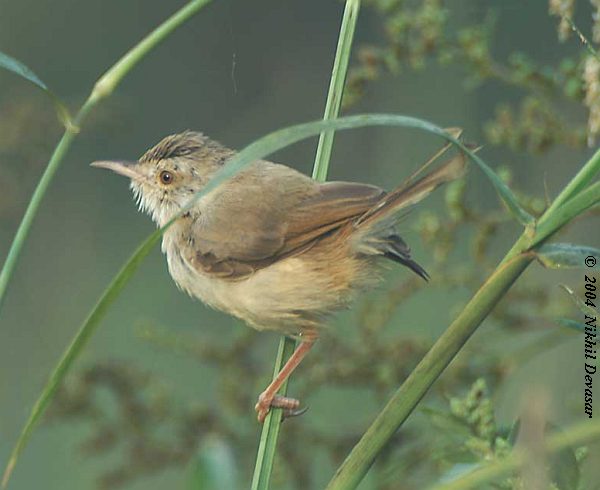
“The Plain Prinia, or the Plain, or White-browed, Wren-Warbler[2] (Prinia inornata) is a small warbler in the cisticola family. It is a resident breeder from Pakistan and India to south China and southeast Asia. It was formerly included in the Tawny-flanked Prinia, Prinia subflava (Gmelin, 1789), resident in Africa south of the Sahara. The two are now usually considered to be separate species.
This skulking passerine bird is typically found in wet lowland grassland, open woodland, scrub and sometimes gardens. The Plain Prinia builds its nest in a shrub or tall grass and lays 3-6 eggs.”
The White-browed Sparrow-Weaver (Plocepasser mahali; Afrikaans: Koringvoël) is a predominantly brown, sparrow-sized weaver found throughout central and northcentral southern Africa. It is found in groups of two to eleven individuals consisting of one breeding pair and nonreproductive individuals. P. m. terricolor is found towards the center of the White-Browed Sparrow-Weaver’s range, occurring predominantly in eastern Botswana.
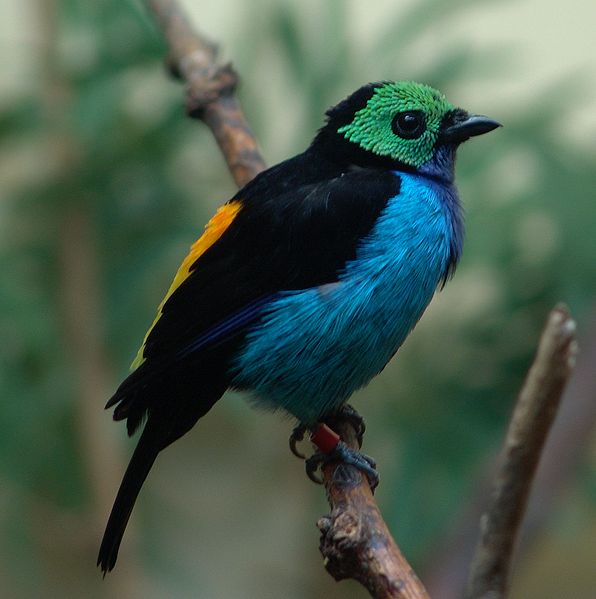
I trust that you were not bored, but enjoyed the Latin lesson thrown in. I am always curious as to how they come up with these Scientific Names. It was interesting to find out some of these meanings. In the mean time we have seen some birds that the Lord created that we probably have never seen before. I love that Paradise Tanager the most, but the others are great also.
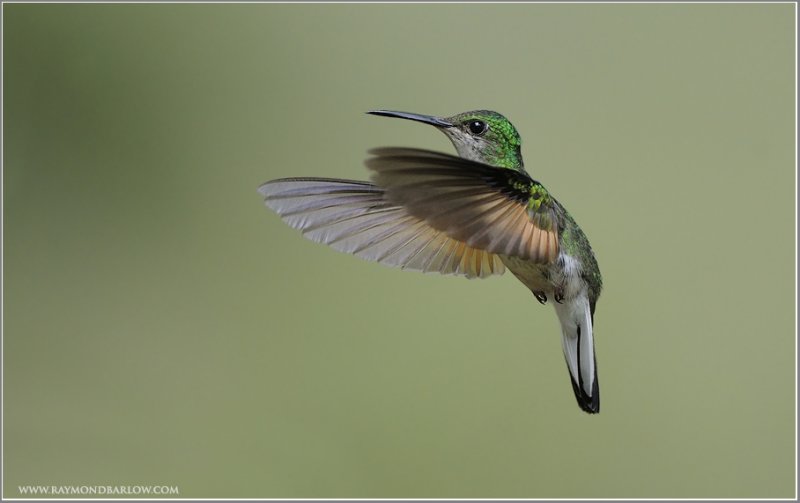
Stripe-tailed Hummingbird (Eupherusa eximia) Female by Raymond Barlow
The heavens declare the glory of God; and the firmament sheweth his handywork. (Psalms 19:1 KJV)
Words by Henry Ware Jr. (1794-1843), 1822
Music – Bethlehem by Gottfried W. Fink (1783-1846)
All Nature’s Works His Praise Declare
All nature’s works His praise declare, to whom they all belong;
There is a voice in every star, in every breeze a song.
Sweet music fills the world abroad with strains of love and power;
The stormy sea sings praise to God, the thunder and the shower.
To God the tribes of ocean cry, and birds upon the wing;
To God the powers that dwell on high their tuneful tribute bring.
Like them, let us the throne surround, with them loud chorus raise,
While instruments of loftier sound assist our feeble praise.
Great God, to Thee we consecrate our voices and our skill;
We bid the pealing organ wait to speak alone Thy will.
Lord, while the music round us floats may earth born passions die;
O grant its rich and swelling notes may lift our souls on high!
Praise ye the LORD. Praise ye the LORD from the heavens: praise him in the heights. (Psalms 148:1 KJV)
Henry Ware, Jr was born April 21, 1794 in Hingham, Massachusetts, Died on September 25, 1843 in Framingham, Massachusetts and was buried in Mount Auburn Cemetery, Cambridge, Massachusetts.
Son of a Unitarian minister, Ware attended Harvard and became an assistant teacher at Exeter Academy in New Hampshire. In 1815, the Boston Unitarian Association licensed him to preach, and in 1817, he was ordained and became pastor of the Second Church in Boston, Massachusetts. He was Professor of Pulpit Eloquence and Pastoral Care at the Harvard Divinity School, 1829-1842. He also edited the Christian Disciple (later renamed the Christian Examiner), and ran the Society for Religious Improvement at Harvard University (his father was on the faculty there, as well). A two volume Memoir and a four volume Works were published three years after his death. Ware wrote this hymn for a service dedicating a new organ (see the last stanza).
Gottfried W. Fink was born onMarch 8, 1783, Sulza on the Ilm, Thuringia and died on August 27, 1846, Leipzig, Germany.
Fink sang as a chorister at Naumburg, and studied theology at Leipzig (1804-8). He became a Professor of Music at Leipzig in 1842. He is remembered for his writings on music history and theory, and his collections of secular and religious songs.
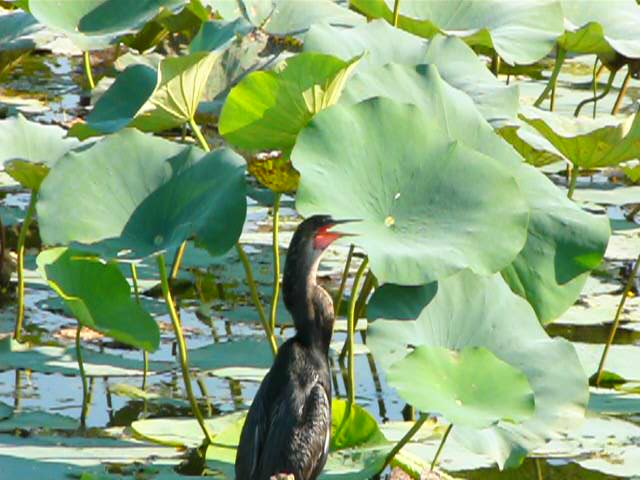
Anhinga (Anhinga anhinga) at Lake Hollingsworth by Lee
Birds were created with many fantastic abilities. Many like to compare those capabilities with human characteristics, but God has given unique and different ways to the many orders of animals, plants, birds, fish, humans, etc. There are somethings a bird cannot do, that we as humans can.
Formed By Him
Birds don’t sweat! There are no sweat glands located in birds. We can perspire though through the skin to help reduce their our heat. Our avian friends have core body temperatures that exceed most mammals for their size. Their body temperatures range from 104-111 degrees F (40-44 degrees C).
All flesh is not the same flesh, but there is one kind of flesh of men, another flesh of animals, another of fish, and another of birds. (1 Corinthians 15:39 NKJV)
Here is a video I recently took of an Osprey cooling off. We were at Lake Hollingsworth in Lakeland, FL.
“In warm weather, a bird gets rid of excess body heat through its respiratory (breathing) system, which collects warm, moist air from its internal overheated tissues and expels it through its lungs… In stepping up its breathing rate from ordinary breathing to panting, a bird increases the flow of air over the most surfaces of its mouth, pharynx, bronchi, and possibly its air sacs.” (Encyclopedia of North American Birds)
But now ask the beasts, and they will teach you; And the birds of the air, and they will tell you; (Job 12:7 NKJV)
The Lord created the animals and birds and then gave man dominion over them. That “dominion” includes learning about them so we can better understand all about their abilities, traits, behaviors, etc. This helps us protect them where possible and to appreciate the Creative Hand of the Lord. I sit back amazed at the omnipotence and omniscience of the Lord. When we observe the birds and learn about them, there is no way they “just happened.”
As for us? The same applies:
I will praise thee; for I am fearfully and wonderfully made: marvellous are thy works; and that my soul knoweth right well. (Psalms 139:14 KJV)













 Lee's Birdwatching Adventures Plus