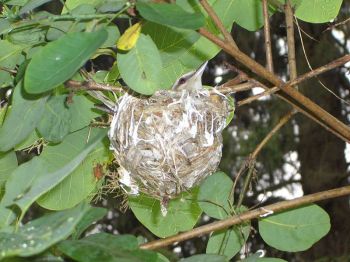
God’s World – by Charles Kingsley

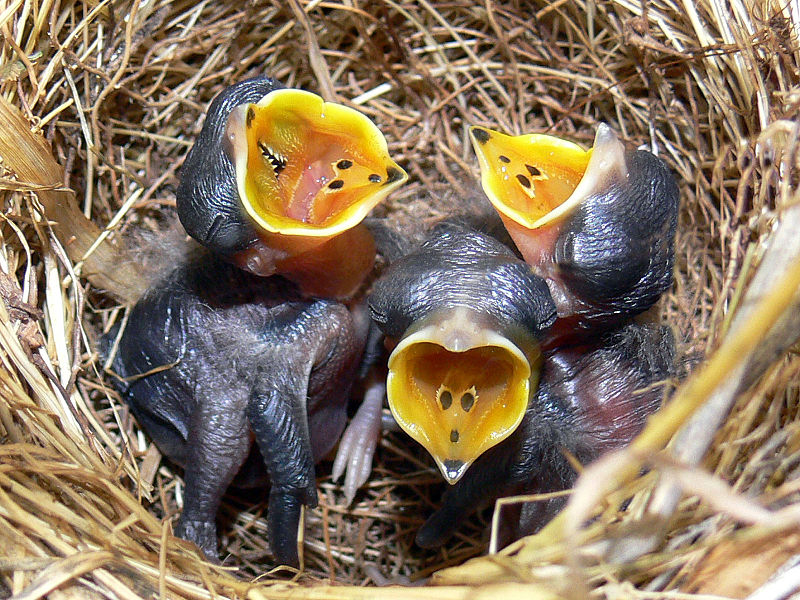
Red-eyed Vireo (Vireo olivaceus) ©WikiC in nest

Red-eyed Vireo (Vireo olivaceus) ©WikiC in nest

Twenty-Five Village Sermons, 1 – God’s World – By Charles Kingsley 
(Guest Writer from the Past)

O Lord, how manifold are Thy works! in wisdom hast Thou made them all: the earth is full of Thy riches. Psalm 104:24

When we read such psalms as the one from which this verse is taken, we cannot help, if we consider, feeling at once a great difference between them and any hymns or religious poetry which is commonly written or read in these days. The hymns which are most liked now, and the psalms which people most willingly choose out of the Bible, are those which speak, or seem to speak, about God’s dealings with people’s own souls, while such psalms as this are overlooked. People do not care really about psalms of this kind when they find them in the Bible, and they do not expect or wish nowadays any one to write poetry like them. For these psalms of which I speak praise and honour God, not for what He has done to our souls, but for what He has done and is doing in the world around us. This very 104th psalm, for instance, speaks entirely about things which we hardly care or even think proper to mention in church now. It speaks of this earth entirely, and the things on it. Of the light, the clouds, and wind–of hills and valleys, and the springs on the hill- sides–of wild beasts and birds–of grass and corn, and wine and oil–of the sun and moon, night and day–the great sea, the ships, and the fishes, and all the wonderful and nameless creatures which people the waters–the very birds’ nests in the high trees, and the rabbits burrowing among the rocks,–nothing on the earth but this psalm thinks it worth mentioning. And all this, which one would expect to find only in a book of natural history, is in the Bible, in one of the psalms, written to be sung in the temple at Jerusalem, before the throne of the living God and His glory which used to be seen in that temple,–inspired, as we all believe, by God’s Spirit,– God’s own word, in short: that is worth thinking of. Surely the man who wrote this must have thought very differently about this world, with its fields and woods, and beasts and birds, from what we think. Suppose, now, that we had been old Jews in the temple, standing before the holy house, and that we believed, as the Jews believed, that there was only one thin wall and one curtain of linen between us and the glory of the living God, that unspeakable brightness and majesty which no one could look at for fear of instant death, except the high-priest in fear and trembling once a- year–that inside that small holy house, He, God Almighty, appeared visibly–God who made heaven and earth. Suppose we had been there in the temple, and known all this, should we have liked to be singing about beasts and birds, with God Himself close to us? We should not have liked it–we should have been terrified, thinking perhaps about our own sinfulness, perhaps about that wonderful majesty which dwelt inside. We should have wished to say or sing something spiritual, as we call it; at all events, something very different from the 104th psalm about woods, and rivers, and dumb beasts. We do not like the thought of such a thing: it seems almost irreverent, almost impertinent to God to be talking of such things in His presence. Now does this shew us that we think about this earth, and the things in it, in a very different way from those old Jews? They thought it a fit and proper thing to talk about corn and wine and oil, and cattle and fishes, in the presence of Almighty God, and we do not think it fit and proper. We read this psalm when it comes in the Church-service as a matter of course, mainly because we do not believe that God is here among us. We should not be so ready to read it if we thought that Almighty God was so near us.
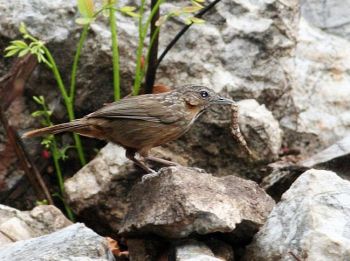
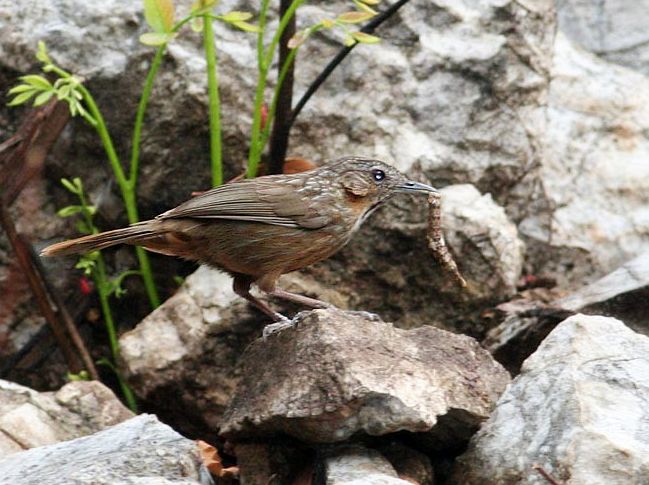
Limestone Wren-Babbler (Napothera crispifrons) by Peter Ericsson

Limestone Wren-Babbler (Napothera crispifrons) by Peter Ericsson

That is a great difference between us and the old Jews. Whether it shews that we are better or not than they were in the main, I cannot tell; perhaps some of them had such thoughts too, and said, ‘It is not respectful to God to talk about such commonplace earthly things in His presence;’ perhaps some of them thought themselves spiritual and pure-minded for looking down on this psalm, and on David for writing it. Very likely, for men have had such thoughts in all ages, and will have them. But the man who wrote this psalm had no such thoughts. He said himself, in this same psalm, that his words would please God. Nay, he is not speaking and preaching ABOUT God in this psalm, as I am now in my sermon, but he is doing more; he is speaking TO God–a much more solemn thing if you will think of it. He says, “O Lord my God, THOU art become exceeding glorious. Thou deckest Thyself with light as with a garment. All the beasts wait on Thee; when Thou givest them meat they gather it. Thou renewest the face of the earth.” When he turns and speaks of God as “He,” saying, “He appointed the moon,” and so on, he cannot help going back to God, and pouring out his wonder, and delight, and awe, to God Himself, as we would sooner speak TO any one we love and honour than merely speak ABOUT them. He cannot take his mind off God. And just at the last, when he does turn and speak to himself, it is to say, “Praise thou the Lord, O my soul, praise the Lord,” as if rebuking and stirring up himself for being too cold-hearted and slow, for not admiring and honouring enough the infinite wisdom, and power, and love, and glorious majesty of God, which to him shines out in every hedge-side bird and every blade of grass. Truly I said that man had a very different way of looking at God’s earth from what we have!
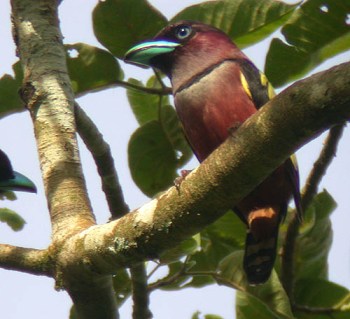
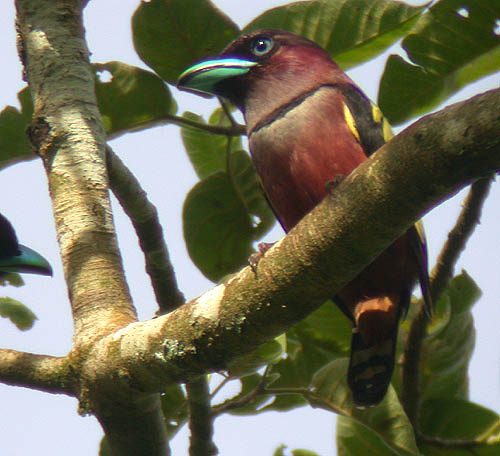
Banded Broadbill (Eurylaimus javanicus) by Peter Ericsson

Banded Broadbill (Eurylaimus javanicus) by Peter Ericsson

Now, in what did that difference lie? What was it? We need not look far to see. It was this,–David looked on the earth as God’s earth; we look on it as man’s earth, or nobody’s earth. We know that we are here, with trees and grass, and beasts and birds, round us. And we know that we did not put them here; and that, after we are dead and gone, they will go on just as they went on before we were born,–each tree, and flower, and animal, after its kind, but we know nothing more. The earth is here, and we on it; but who put it there, and why it is there, and why we are on it, instead of being anywhere else, few ever think. But to David the earth looked very different; it had quite another meaning; it spoke to him of God who made it. By seeing what this earth is like, he saw what God who made it is like: and we see no such thing. The earth?–we can eat the corn and cattle on it, we can earn money by farming it, and ploughing and digging it; and that is all most men know about it. But David knew something more–something which made him feel himself very weak, and yet very safe; very ignorant and stupid, and yet honoured with glorious knowledge from God,–something which made him feel that he belonged to this world, and must not forget it or neglect it, that this earth was his lesson-book–this earth was his work-field; and yet those same thoughts which shewed him how he was made for the land round him, and the land round him was made for him, shewed him also that he belonged to another world–a spirit- world; shewed him that when this world passed away, he should live for ever; shewed him that while he had a mortal body, he had an immortal soul too; shewed him that though his home and business were here on earth, yet that, for that very reason, his home and business were in heaven, with God who made the earth, with that blessed One of whom he said, “Thou, Lord, in the beginning hast laid the foundation of the earth, and the heavens are the work of thy hands. They shall perish, but Thou shalt endure; they all shall fade as a garment, and like a vesture shalt Thou change them, and they shall be changed; but Thou art the same, and THY years shall not fail. The children of Thy servants shall continue, and their seed shall stand fast in Thy sight.” “As a garment shalt Thou change them,”– ay, there was David’s secret! He saw that this earth and skies are God’s garment–the garment by which we see God; and that is what our forefathers saw too, and just what we have forgotten; but David had not forgotten it.

Look at this very 104th psalm again, how he refers every thing to God. We say, ‘The light shines:’ David says something more; he says, “Thou, O God, adornest Thyself with light as with a curtain.” Light is a picture of God. “God,” says St. John, “is light, and in Him is no darkness at all.” We say, ‘The clouds fly and the wind blows,’ as if they went of themselves; David says, “God makes the clouds His chariot, and walks upon the wings of the wind.” We talk of the rich airs of spring, of the flashing lightning of summer, as dead things; and men who call themselves wise say, that lightning is only matter,–‘We can grind the like of it out of glass and silk, and make lightning for ourselves in a small way;’ and so they can in a small way, and in a very small one: David does not deny that, but he puts us in mind of something in that lightning and those breezes which we cannot make. He says, God makes the winds His angels, and flaming fire his ministers; and St. Paul takes the same text, and turns it round to suit his purpose, when he is talking of the blessed angels, saying, ‘That text in the 104th Psalm means something more; it means that God makes His angels spirits, (that is winds) and His ministers a flaming fire.’ So shewing us that in those breezes there are living spirits, that God’s angels guide those thunder-clouds; that the roaring thunderclap is a shock in the air truly, but that it is something more–that it is the voice of God, which shakes the cedar-trees of Lebanon, and tears down the thick bushes, and makes the wild deer slip their young. So we read in the psalms in church; that is David’s account of the thunder. I take it for a true account; you may or not as you like. See again. Those springs in the hill- sides, how do they come there? ‘Rain-water soaking and flowing out,’ we say. True, but David says something more; he says, God sends the springs, and He sends them into the rivers too. You may say, ‘Why, water must run down-hill, what need of God?’ But suppose God had chosen that water should run UP-hill and not down, how would it have been then?–Very different, I think. No; He sends them; He sends all things. Wherever there is any thing useful, His Spirit has settled it. The help that is done on earth He doeth it all Himself.–Loving and merciful,–caring for the poor dumb beasts!–He sends the springs, and David says, “All the beasts of the field drink thereof.”
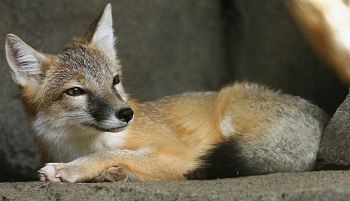
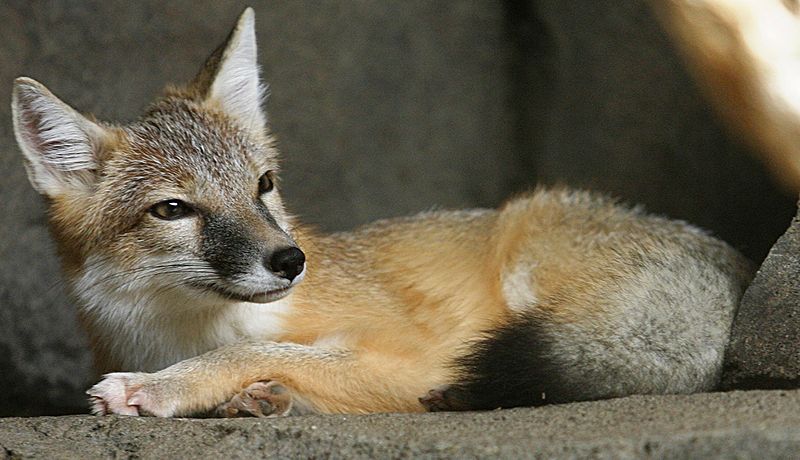
Swift Fox

Swift Fox ©WikiC

The wild animals in the night, He cares for them too,–He, the Almighty God. We hear the foxes bark by night, and we think the fox is hungry, and there it ends with us; but not with David: he says, “The lions roaring after their prey do seek their meat from God,”–God, who feedeth the young ravens who call upon Him. He is a God! “He did not make the world,” says a wise man, “and then let it spin round His finger,” as we wind up a watch, and then leave it to go of itself. No; “His mercy is over all His works.” Loving and merciful, the God of nature is the God of grace. The same love which chose us and our forefathers for His people while we were yet dead in trespasses and sins; the same only- begotten Son, who came down on earth to die for us poor wretches on the cross,–that same love, that same power, that same Word of God, who made heaven and earth, looks after the poor gnats in the winter time, that they may have a chance of coming out of the ground when the day stirs the little life in them, and dance in the sunbeam for a short hour of gay life, before they return to the dust whence they were made, to feed creatures nobler and more precious than themselves. That is all God’s doing, all the doing of Christ, the King of the earth. “They wait on Him,” says David. The beasts, and birds, and insects, the strange fish, and shells, and the nameless corals too, in the deep, deep sea, who build and build below the water for years and thousands of years, every little, tiny creature bringing his atom of lime to add to the great heap, till their heap stands out of the water and becomes dry land; and seeds float thither over the wide waste sea, and trees grow up, and birds are driven thither by storms; and men come by accident in stray ships, and build, and sow, and multiply, and raise churches, and worship the God of heaven, and Christ, the blessed One,–on that new land which the little coral worms have built up from the deep. Consider that. Who sent them there? Who contrived that those particular men should light on that new island at that especial time? Who guided thither those seeds–those birds? Who gave those insects that strange longing and power to build and build on continually?– Christ, by whom all things are made, to whom all power is given in heaven and earth; He and His Spirit, and none else. It is when HE opens His hand, they are filled with good. It is when HE takes away their breath, they die, and turn again to their dust. HE lets His breath, His spirit, go forth, and out of that dead dust grow plants and herbs afresh for man and beast, and He renews the face of the earth. For, says the wise man, “all things are God’s garment”– outward and visible signs of His unseen and unapproachable glory; and when they are worn out, He changes them, says the Psalmist, as a garment, and they shall be changed.

The old order changes, giving place to the new,
And God fulfils Himself in many ways.

But He is the same. He is there all the time. All things are His work. In all things we may see Him, if our souls have eyes. All things, be they what they may, which live and grow on this earth, or happen on land or in the sky, will tell us a tale of God,–shew forth some one feature, at least, of our blessed Saviour’s countenance and character,–either His foresight, or His wisdom, or His order, or His power, or His love, or His condescension, or His long-suffering, or His slow, sure vengeance on those who break His laws. It is all written there outside in the great green book, which God has given to labouring men, and which neither taxes nor tyrants can take from them. The man who is no scholar in letters may read of God as he follows the plough, for the earth he ploughs is his Father’s: there is God’s mark and seal on it,–His name, which though it is written on the dust, yet neither man nor fiend can wipe it out!
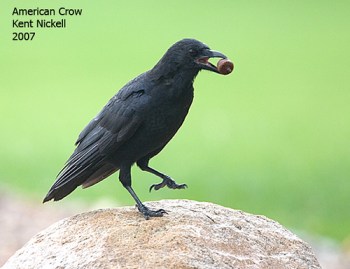
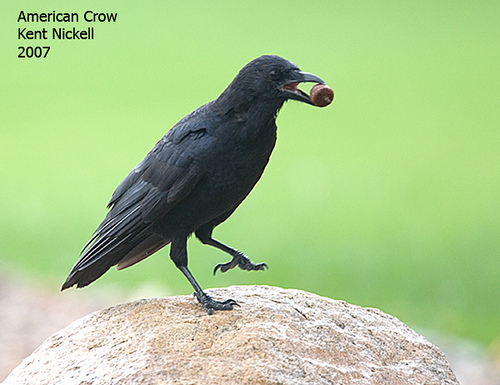
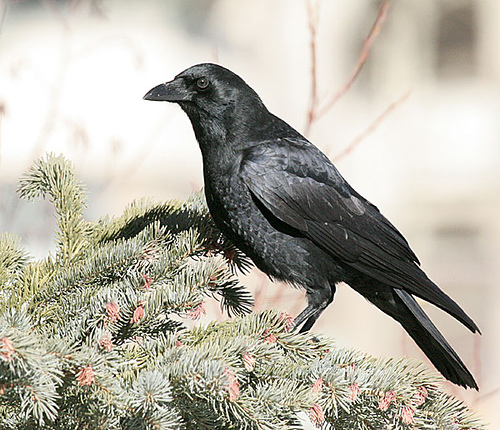
American Crow (Corvus brachyrhynchos) by Kent Nickell

American Crow (Corvus brachyrhynchos) by Kent Nickell

The poor, solitary, untaught boy, who keeps the sheep, or minds the birds, long lonely days, far from his mother and his playmates, may keep alive in him all purifying thoughts, if he will but open his eyes and look at the green earth around him.

Think now, my boys, when you are at your work, how all things may put you in mind of God, if you do but choose. The trees which shelter you from the wind, God planted them there for your sakes, in His love.–There is a lesson about God. The birds which you drive off the corn, who gave them the sense to keep together and profit by each other’s wit and keen eyesight? Who but God, who feeds the young birds when they call on Him?–There is another lesson about God. The sheep whom you follow, who ordered the warm wool to grow on them, from which your clothes are made? Who but the Spirit of God above, who clothes the grass of the field, the silly sheep, and who clothes you, too, and thinks of you when you don’t think of yourselves?–There is another lesson about God. The feeble lambs in spring, they ought to remind you surely of your blessed Saviour, the Lamb of God, who died for you upon the cruel cross, who was led as a lamb to the slaughter; and like a sheep that lies dumb and patient under the shearer’s hand, so he opened not his mouth. Are not these lambs, then, a lesson from God? And these are but one or two examples out of thousands and thousands. Oh, that I could make you, young and old, all feel these things! Oh, that I could make you see God in every thing, and every thing in God! Oh, that I could make you look on this earth, not as a mere dull, dreary prison, and workhouse for your mortal bodies, but as a living book, to speak to you at every time of the living God, Father, Son, and Holy Ghost! Sure I am that that would be a heavenly life for you,–sure I am that it would keep you from many a sin, and stir you up to many a holy thought and deed, if you could learn to find in every thing around you, however small or mean, the work of God’s hand, the likeness of God’s countenance, the shadow of God’s glory.

See  Charles Kingsley index.

Charles Kingsley – 1819 – 1875

Charles Kingsley was born in Holne (Devon), the son of a vicar. His brother, Henry Kingsley, also became a novelist. He spent his childhood in Clovelly, Devon and was educated at Magdalene College, Cambridge, before choosing to pursue a ministry in the church. From 1844, he was rector of Eversley in Hampshire, and in 1860, he was appointed Regius Professor of Modern History at the University of Cambridge.

Kingsley’s interest in history spilled over into his writings, which include The Heroes (1856), a children’s book about Greek mythology, and several historical novels, of which the best known are Hypatia (1853), Hereward the Wake (1865), and Westward Ho! (1855).

In 1872 Kingsley accepted the Presidency of the Birmingham and Midland Institute and became its 19th President.

Kingsley died in 1875 and was buried in St Mary’s Churchyard in Eversley.

*

Interesting Things – Tool-Using Animals

SmileyCentral.com

So God created man in his [own] image, in the image of God created he him; male and female created he them. (Genesis 1:27)

Evolution devalues humanity. It tries to find the most unflattering way to describe human beings to try to counter the Bible’s claim that they were created in God’s image.

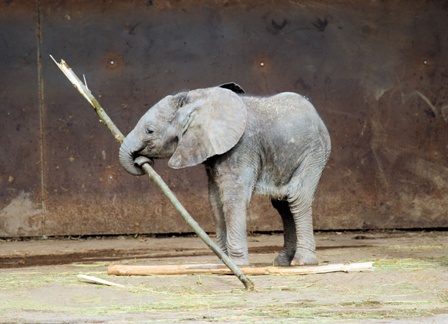
Baby Elephant with Tool ©©

Baby Elephant with Tool ©©

For generations, evolutionists said that the humans’ use of tools was all that made them different from animals. Creationists who objected, saying there was obviously more of a difference than that, were ignored as unscientific. It wasn’t so long ago that evolutionists scoffed at creationists who showed them that there are animals who use tools – and, therefore, the evolutionists’ definition was wrong.

Elephants often take sticks in their trunks to scratch their backs. Galapagos Woodpecker Finch (edited) use cactus spines, held in their beaks, to probe insects out of cracks in trees.

Chimpanzees even use sticks as levers to move heavy objects. They also make tools out of sticks by shaping them to the right size to poke into termite nests. The stick full of termites they pull out of the nest offers them a tasty snack. West African chimps actually use stones as hammers to crack nuts. So today, evolutionists recognize that some animals not only use tools, but also make them! Only now they claim that animals who use tools prove their theory. Which only goes to show that evolution is not science that can be disproved. It is a faith that will be believed even when the facts contradict it. The facts say that there is an unbridgeable difference between humans and animals.

Prayer:
Lord, I thank You for making animals. I ask that You would help all who are working to teach Christian young people that they are Your creations and not glorified animals. Show me my part in filling this need. Amen.
Notes:
“Tool-wielding beasts.” Science Digest, Aug. 1983. p. 107.

Lee’s Addition:

*

* More Interesting Things

*

Birdwatching at Lake Morton – October 21, 2011

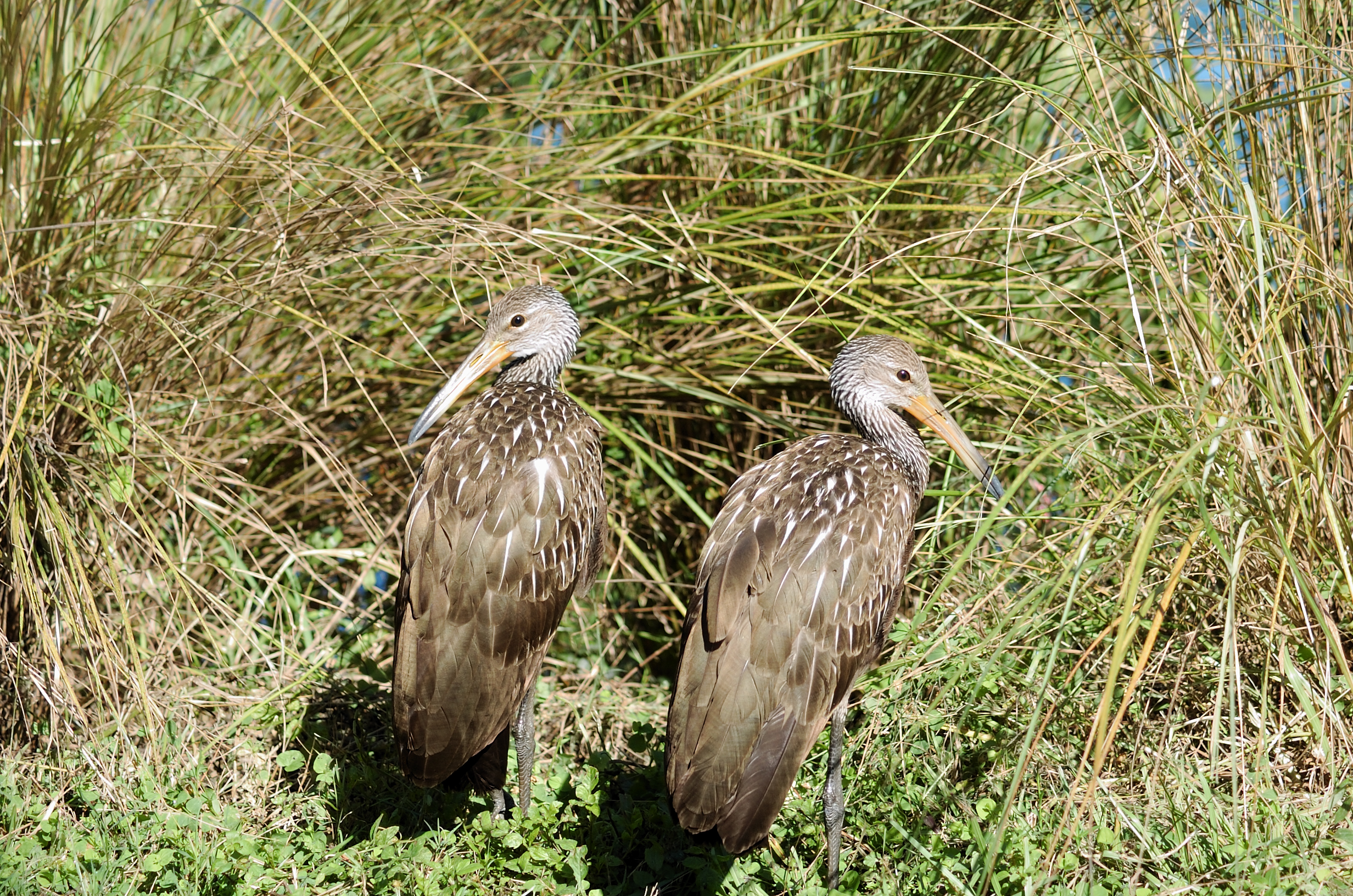
Limpkin (Aramus guarauna) Juveniles by Dan at Lake Morton

Limpkin (Aramus guarauna) by Dan at Lake Morton

Today Dan and I went by Lake Morton for just a short while. We were on our way to have lunch and do some shopping. It was a great day without a cloud in the sky. The temperature was a pleasant 63° (17.2º C).

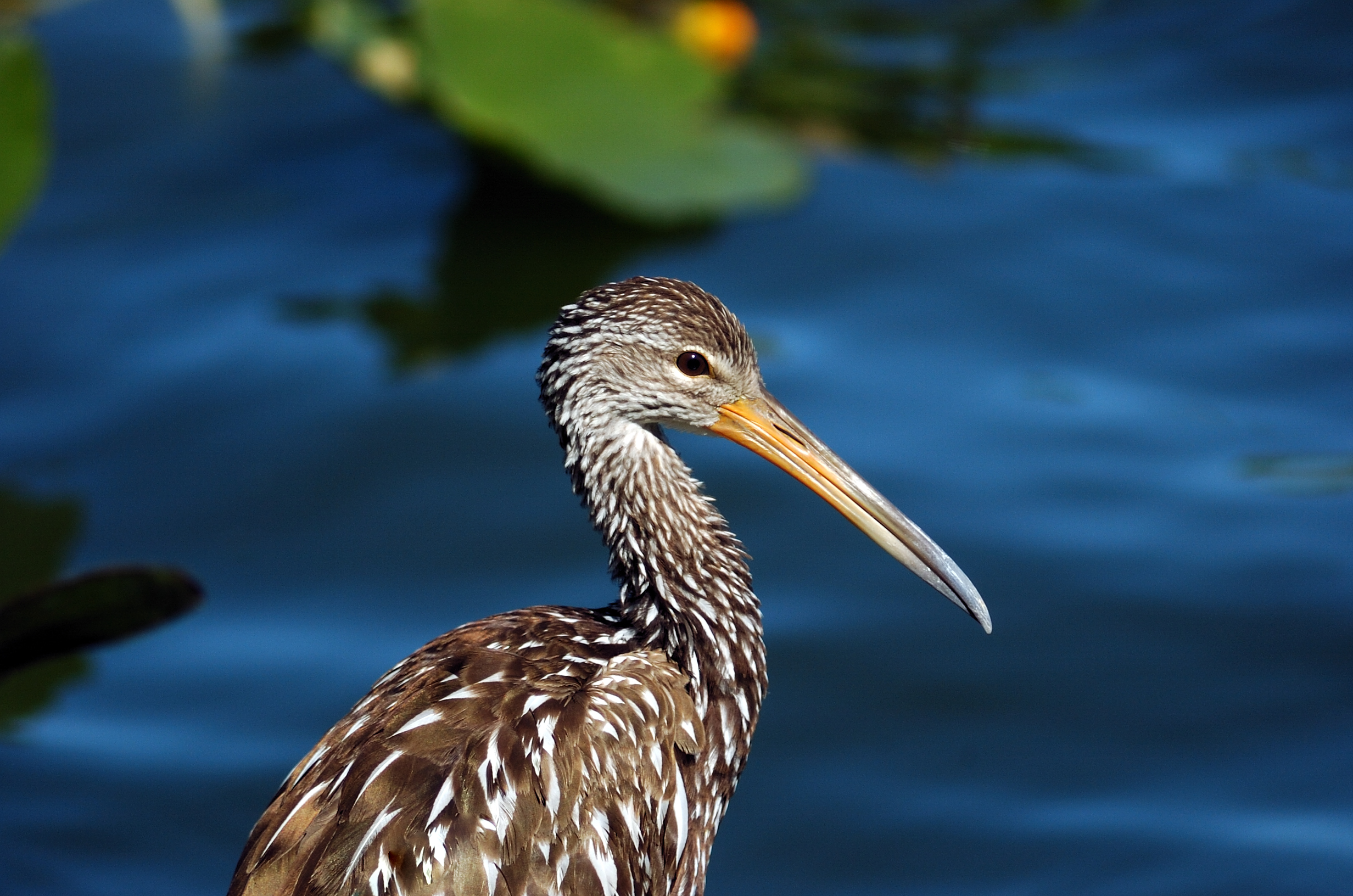
When we were last there, there were 5 young Limpkins and I want to see how they had grown. We spotted 4 of them sunning themselves. They have lost that fuzz on their heads and the spots are becoming quite distinguished. Dan took a great picture of one of them closeup.

Limpkin (Aramus guarauna) Juvenile by Dan at Lake Morton

Limpkin (Aramus guarauna) by Dan at Lake Morton

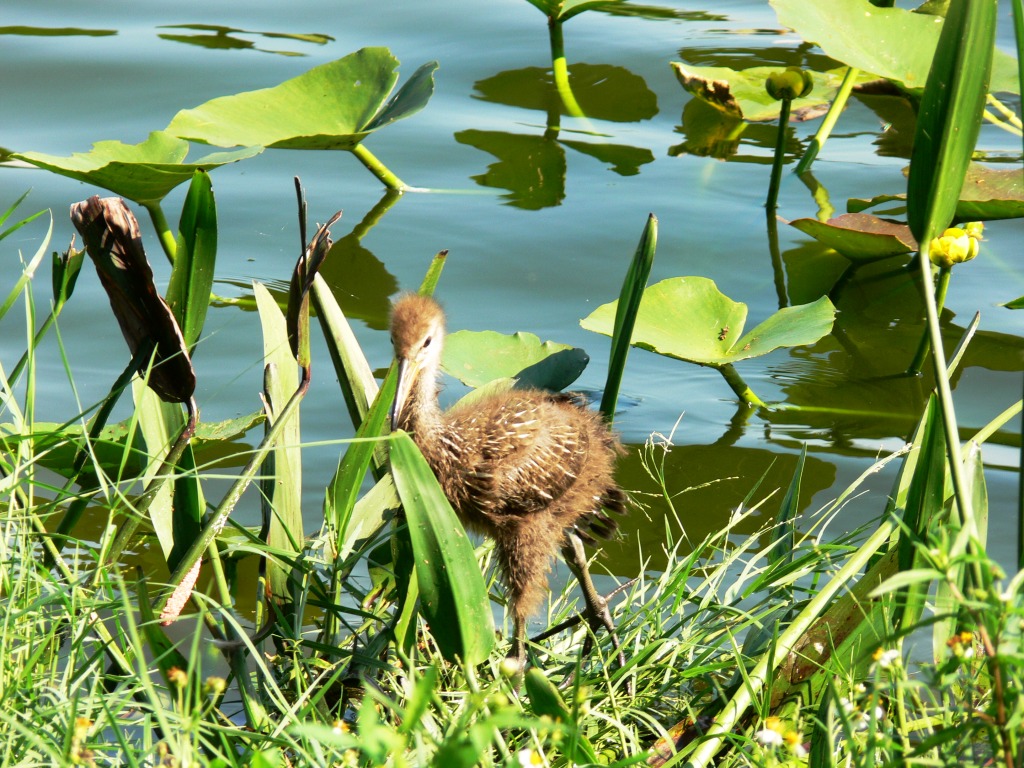
I can tell by their faces that they are still young. Here is a photo of one when it still had its fuzz.

Limpkin baby taken 9-12-11 by Lee

Limpkin (Aramus guarauna) baby taken 9-12-11 by Lee

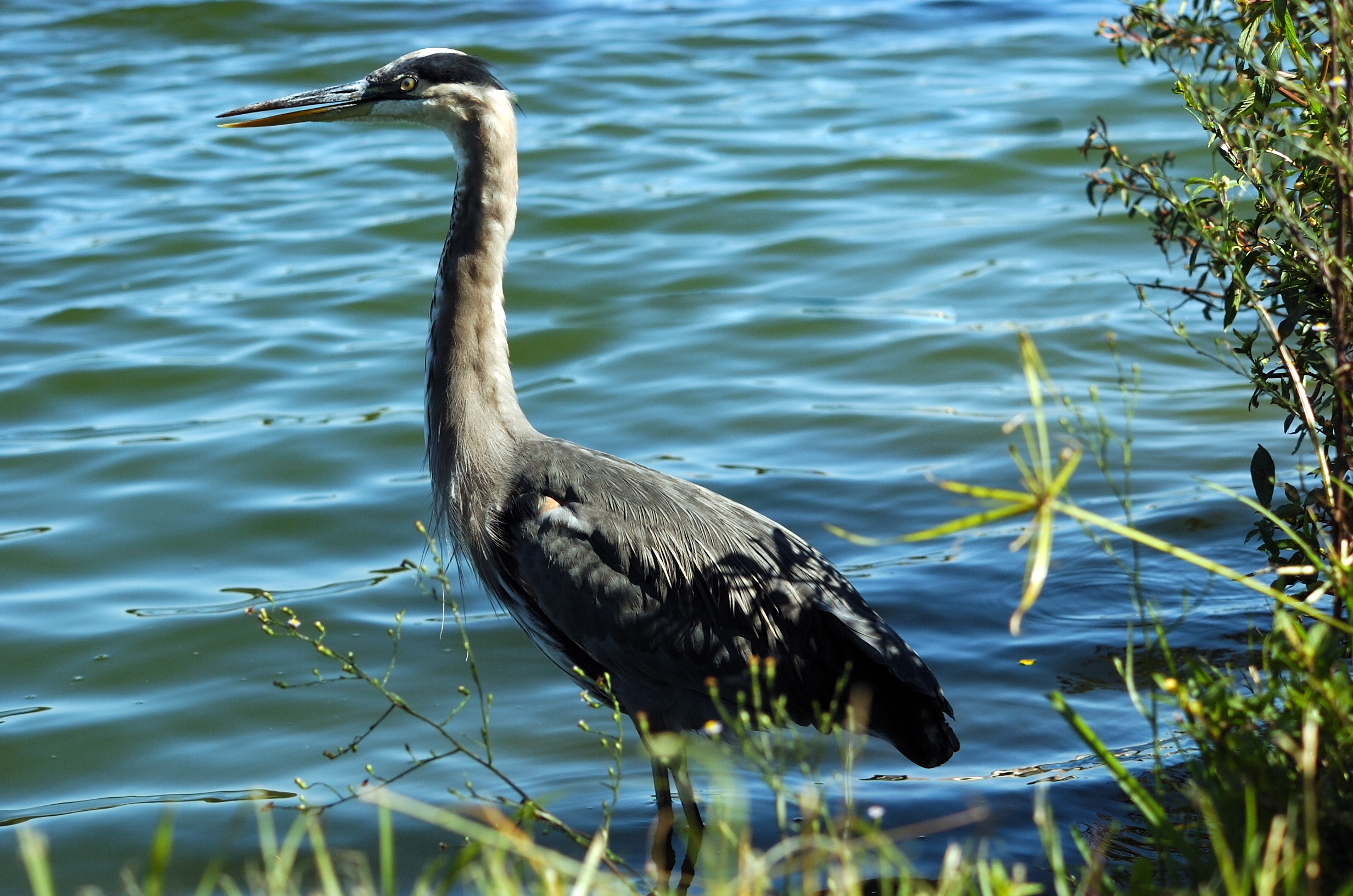
A Great Blue Heron decided to be friendly and came walking toward me while I was feeding some of the ducks. When I tossed him some food, he ate it and kept coming closer. I kept tossing it food and it kept coming closer. What a delight! If I were brave, I would have tried to hand feed him (or her). As I have said in other blogs, this is only one of two places we feed the birds in this area.

Great Blue Heron (Ardea herodias) by Dan at Lake Morton

Great Blue Heron (Ardea herodias) by Dan at Lake Morton

What did we see today? Besides the 4 Limpkin youngsters and the Great Blue Heron, we spotted Black and Turkey Vultures, a Great Egret, Anhingas, more Great Blue Herons and a Snowy Egret. Those were seen on the way to Lake Morton in Lakeland. At the lake we saw 15-20 Coots (they are back), 3 Wood Storks, 15-20 Mallards, 10 “Aflac” Ducks, Muscovy Ducks, a Great Egret, Laughing Gull, 7 Mute Swans, 2 Black Swans, Boat-tailed Grackle and 10 Ring-necked Ducks (they are back). Our winter visiting birds are finally returning.

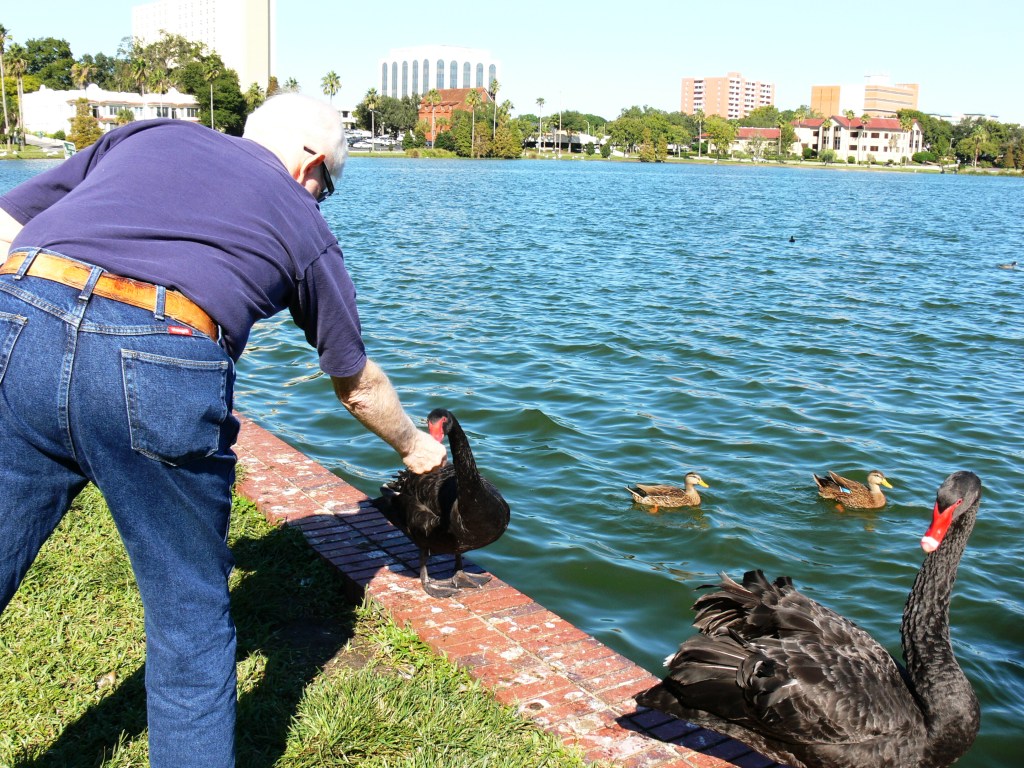
 Dan feeding a Black Swan at Lake Morton

Dan feeding a Black Swan at Lake Morton

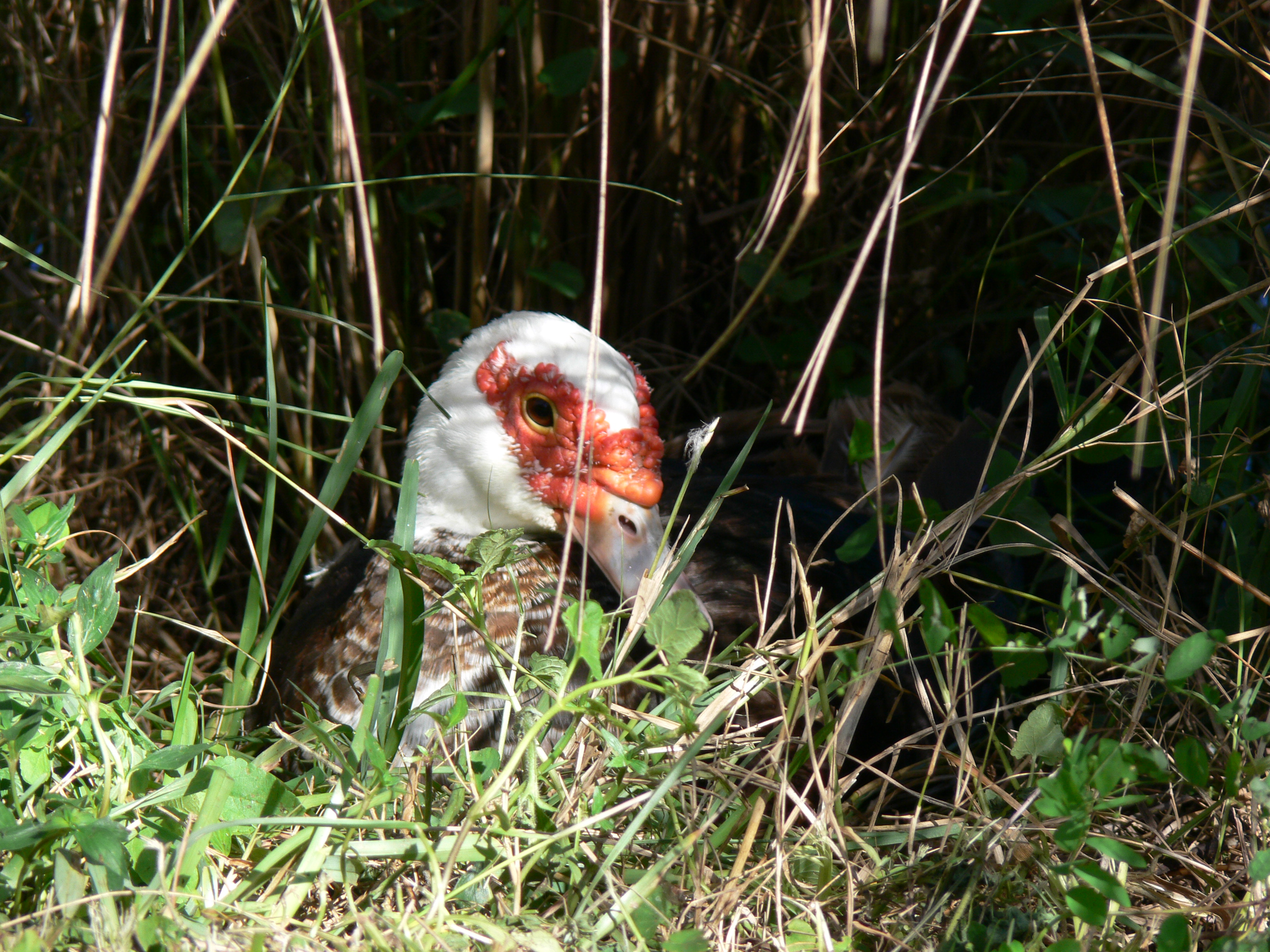
I caught Dan feeding one of the Black Swans. Then I found a Muscovy Duck sitting on a nest with the male standing guard in front. To me, they seem “not so pretty”, but the Lord created all the birds and I am sure His Eye is on the Muscovy as well as it is on the Sparrow.

Muscovy Duck (Cairina moschata)

Muscovy Duck on nest at Lake Morton by Lee

I know all the birds of the mountains, And the wild beasts of the field are Mine. (Psalms 50:11 NKJV)

What a perfect day for birding and even though we weren’t there long, the Lord let us see His Creation again, up close and enjoy them.

This was the LORD’s doing; It is marvelous in our eyes. This is the day the LORD has made; We will rejoice and be glad in it. (Psalms 118:23-24 NKJV)

*

Interesting Things – A Whale Problem

Interesting Things

Interesting Things – A Whale Problem

And God created great whales, and every living creature that moveth, which the waters brought forth abundantly, after their kind, and every winged fowl after his kind: and God saw that [it was] good.” (Genesis 1:21)

“According to evolution, life began in the sea. However, because the land was better for life, evolution developed land life from sea life. It was on land that mammals evolved, according to evolution. Here, though, evolution has painted itself into a corner. Or perhaps it is better to say that evolutionists have fallen into one of the traps set for them by the Creator. You see, the
largest creatures on Earth live in the sea – and they are mammals!

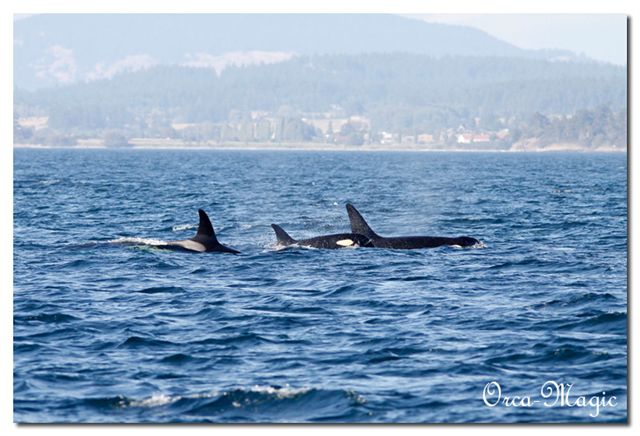
Humpback Whale ©©

Humpback Whale ©©

The great whales are mammals like many land animals. However, it is very clear that they never lived on land – nor do they resemble any land creature. Whales provide clear evidence that, contrary to evolution’s claims, not even all mammals are related to each other. And if mammals are so different that they cannot be related to each other through evolution, neither is it likely that bugs and trees and cows and humans could be related by evolution. As Genesis so clearly tells us, living things were originally made in distinct kinds, and they continue to reproduce after their kinds.

One wants to ask the evolutionist, if the drive to live on land was so great it moved sea creatures to become land creatures, why did some mammals go to all the trouble to move back into the sea? To say the least, whales offer Bible-believing Christians a great testimony to our Creator and a good argument against evolution. For evolutionists, mammals who live in the sea are a whale of a problem!”

Prayer:
Your majesty and power are truly seen to all in the magnificent whales You have created, Lord. I ask that we would be successful in preserving these great creatures who witness so grandly to You. Amen.
Notes:
Bartz, Paul A. 1984. “It takes more than this to make a whale transition.” Bible-Science Newsletter, Feb. p. 1.
From – Today’s Creation Moment’s – “A Whale of a Problem” ©Creation Moments 2011
Re-posted with permission.
*
To see more Interesting Things – Click Here
*
Birdwatching – Lakes Hollingsworth and Morton in September

Ladies feed the birds at Lake Hollingsworth

Ladies feed the birds at Lake Hollingsworth

Dan and I finally found a little time to go birdwatching, and since I was sore from a fall, decided to just go to Lake Hollingsworth and Lake Morton in Lakeland, Florida. Neither require a lot of walking, but we can always find something worth looking at. Both lakes had some great finds.

Lake Hollingsworth had the usually Mallards, White Ibises, Boat-tailed Grackles, Common Moorhens, “Aflac” Ducks being fed by a couple of ladies. We heard several Blue Jays, Red-bellied Woodpecker, and a Red-shouldered Hawk. A flock of about 50 Fish Crows made their noisy flight over and around for several minutes. We also saw a Great Egret, Osprey, Wood Storks, Great Blue Herons, Cormorant, Limpkin and a Purple Gallinule.

The best find was to watch an Anhinga trying to stay cool. I video taped the bird vibrating its throat. Birds do not have sweat glands, so this is one of the ways they cool down. It actually wasn’t too hot, 79°, but the humidity was at 85%. We all were warm. Below is some of that video.

And he cried and said, Father Abraham, have mercy on me, and send Lazarus, that he may dip the tip of his finger in water, and cool my tongue; for I am tormented in this flame. (Luke 16:24 KJV)

After that we drove about a mile north to Lake Morton. Again, the birds were gathered around a family feeding them. (These are the only two places we go locally where they feed wildlife.) This time the Mallards, White Ibises, and Boat-tailed Grackles were joined by 8 Wood Storks, Gulls, and Common Grackles. Also spotted were Mute Swans, a Black Swan, Wood Ducks, Red-bellied Woodpecker, some sort of Tern and a Snowy Egret showing off his yellow feet.

The prize here was finding a family of Limpkins. The mom, dad, and 5 juveniles were in the tall grass by the lake. Tried to get photos through the grass, but as you know, that can be a challenge. I turned my camera on to video and took the following:

All in all, the Lord provided a great day for birdwatching and let His creation of birds be seen. What would life be like without the neat things the Lord has provided to make our journey so enjoyable. All we have to do is look around us and observe.

*

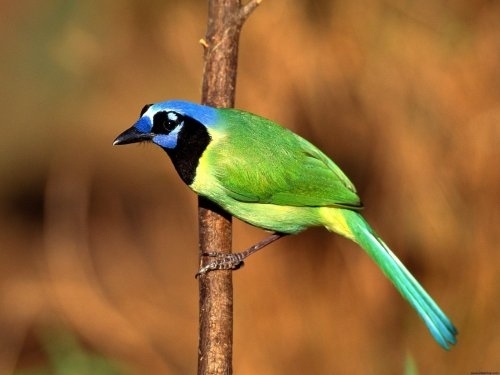
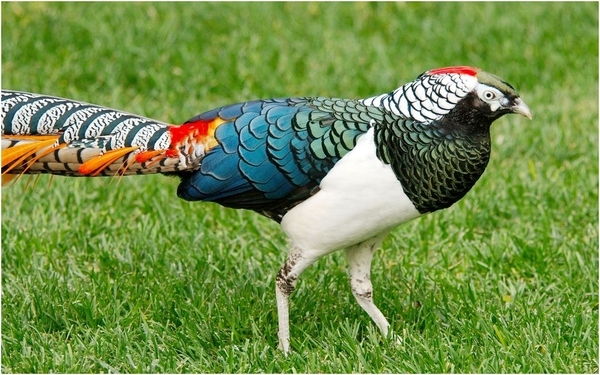
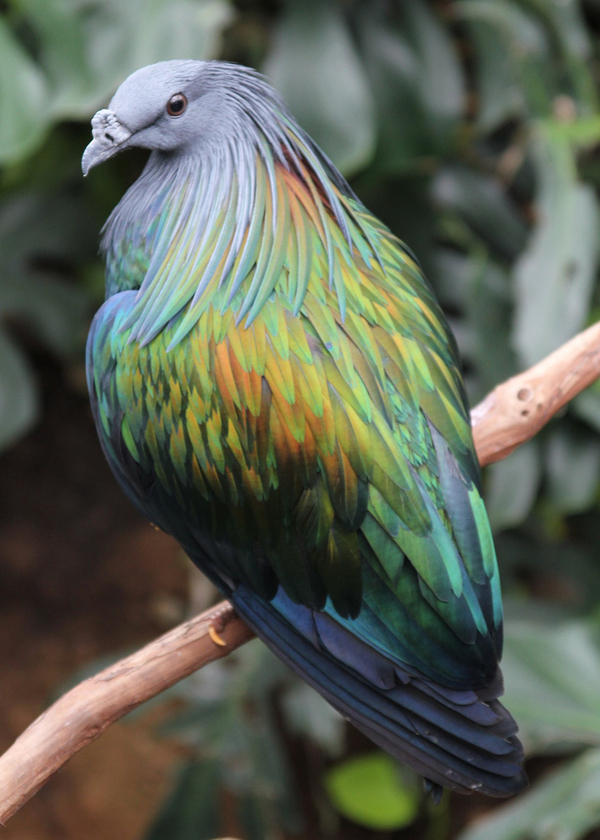
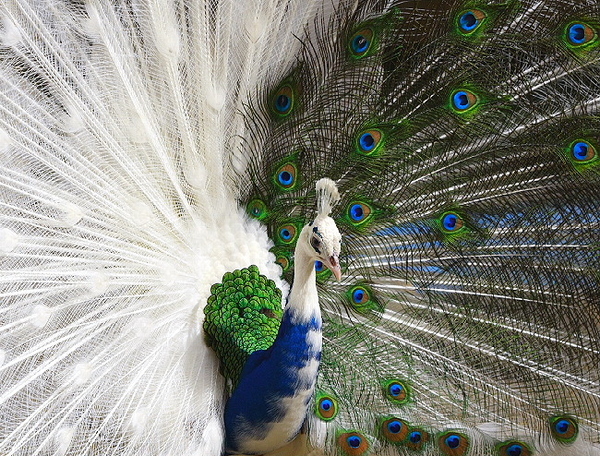
Some Very Unusual Birds

The following photos are from an e-mail I received. It has arrived many times from various friends. I don’t know who the photographers are and trust that they do not mind them being presented here.

What I do know is that these very unusual birds have a very Imaginative Creator. For His pleasure He created these kinds of birds and for our enjoyment also. The titles are from the e-mail and maybe #12 is some sort of Bird of Paradise or in that family (I think). Enjoy the photos and God’s Creative Hand at work.

Praise ye the LORD. I will praise the LORD with my whole heart, in the assembly of the upright, and in the congregation. The works of the LORD are great, sought out of all them that have pleasure therein. His work is honourable and glorious: and his righteousness endureth for ever. He hath made his wonderful works to be remembered: the LORD is gracious and full of compassion. (Psalms 111:1-4 KJV)

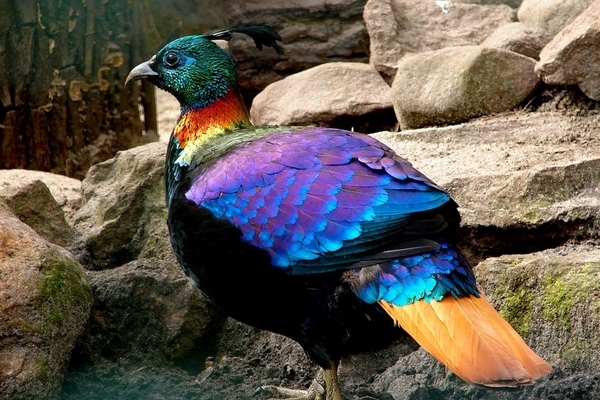
1. Himalayan Monal

1. Himalayan Monal

************

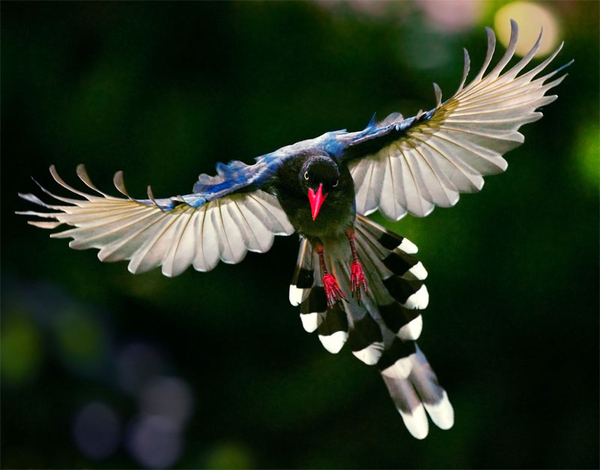
2. Formosan Magpie

2. Formosan Magpie

************

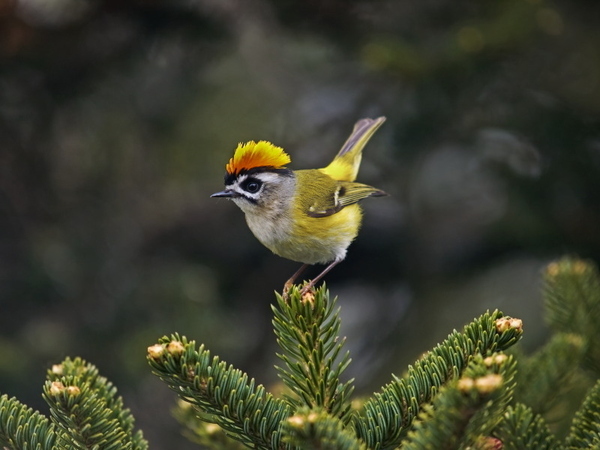
3. Flamecrest

3. Flamecrest

************

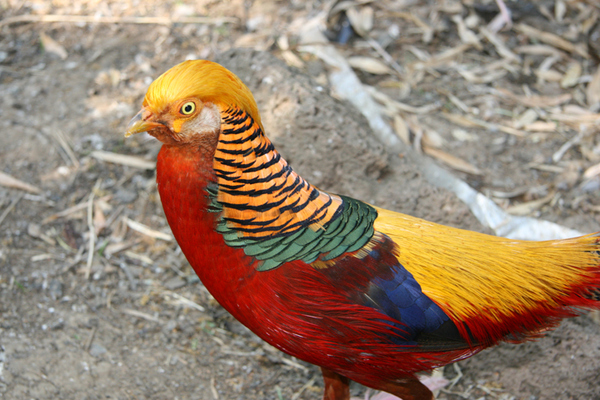
4. Golden Pheasant

4. Golden Pheasant

************

5. Green Jay

5. Green Jay

************

6. Kingfisher

6. Kingfisher

************

7. Lady Amherst's Pheasant

7. Lady Amherst's Pheasant

************

8. Bleeding Heart Pigeons

8. Bleeding Heart Pigeons

************

9. Nicobar Pigeon

9. Nicobar Pigeon

************

10. Quetzal

10. Quetzal

************

11. Winson's Bird Of Paradise

11. Winson's Bird Of Paradise

************

12. No Idea What Bird This Is, But It's Totally Rad

12. No Idea What Bird This Is, But It's Totally Rad

************

13. Peacock

13. Peacock

************

14. Sup, Polish Chicken

14. Sup, Polish Chicken

************

When I have time, I will update the names, if I can find them. My time is short and these names will have to suffice for now. If you know the exact names or who the photographers might be so they get proper credit, please leave a comment. Thanks, Lee
*

Birds of the Bible – Created Kinds

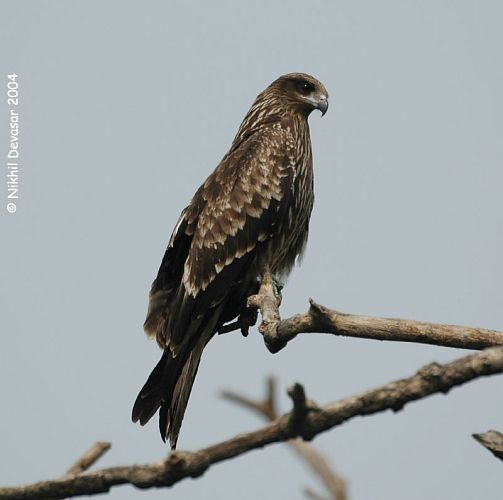
Black Kite (Milvus migrans) by Nikhil Devasar

Black Kite (Milvus migrans) by Nikhil Devasar

An interesting “News To Note” from Answers in Genesis reported on an article from BBC: “Species count put at 8.7 million” The following paragraphs are what prompted this blog.

Created kinds are organisms representing or descended from those originally created by God about 6,000 years ago. Organisms within a created kind generally interbreed and produce only more organisms of their own kind “within the limits of preprogrammed information, but with great variation.”15 Organisms that can interbreed are of the same created kind, since God designed organisms to reproduce “after their kind.” Due to loss of information and other factors, however, some organisms lose the ability to interbreed. Created kinds correspond roughly to the family level of the current classification taxons but may vary from order to genus level.
Although evolutionists imbue taxonomic classification with evolutionary implications—believing that the taxonomic groupings roughly depict common ancestry— taxonomy is really nothing more than a useful bookkeeping system to sort and group organisms according to their shared characteristics.

I know there is research going on by the Creationist to try to find out what were the original “kinds”, but I am just going to show the different passages in Scripture that talk about “kinds” and specifically those that refer to the “birds or fowls

The first mention of the “Kinds” is in Genesis, of course. We start of with Genesis 1:21:

And God created great whales, and every living creature that moveth, which the waters brought forth abundantly, after their kind, and every winged fowl after his kind: and God saw that it was good. (Genesis 1:21 KJV)

This  took place on the fifth day of creation. Believer’s Bible Commentary says this:
“1:20-23 The fifth day saw the waters stocked with fish and the earth stocked with bird-life and insects. The word translated birds means “flying ones” and includes bats and probably flying insects.”

The kinds are again mentioned when Noah was told to keep alive the birds after their kind during the global flood, they board in Genesis 7:14, and then again these kinds are mentioned as they come off the Ark.

Of the birds after their kind, of animals after their kind, and of every creeping thing of the earth after its kind, two of every kind will come to you to keep them alive. And you shall take for yourself of all food that is eaten, and you shall gather it to yourself; and it shall be food for you and for them.” Thus Noah did; according to all that God commanded him, so he did. (Genesis 6:20-22 NKJV)

they and every beast after its kind, all cattle after their kind, every creeping thing that creeps on the earth after its kind, and every bird after its kind, every bird of every sort. And they went into the ark to Noah, two by two, of all flesh in which is the breath of life. (Genesis 7:14-15 NKJV)

So Noah went out, and his sons and his wife and his sons’ wives with him. Every animal, every creeping thing, every bird, and whatever creeps on the earth, according to their families, went out of the ark. (Genesis 8:18-19 NKJV)

Most of the versions use “kind or families” and “birds or fowls.” As we continue through Scripture we arrive at the “eat or do not eat” list of birds in Leviticus 11 and Deuteronomy 14. Let’s see what is here:

Leviticus 11:14 has the Kite and Falcon after its kind (ACV) and these are in two different Orders and two different Families today:  Accipitriformes (order) – Accipitridae (family) and Falconiiformes (order) – Falconidae (family). Other versions have the Vulture which is in the Accipitriformes, but the Catharidae family. The Buzzard is mentioned in the GW version, but again, it is Accipitridae family. These are today’s divisions, but yet they are all placed next to each other and could have come from the same original kind. Leviticus 11:16 does the same with the terms for “kind”, but this time with the Hawk. It again is in the Accipitriformes (order) – Accipitridae (family).

The different versions use the terms; after its or his kind, likened to it, the like to it, of that sort, all types.

Chihuahuan Raven (Corvus cryptoleucus)Raven (Corvus corax) by Kent Nickell

Chihuahuan Raven (Corvus cryptoleucus)Raven (Corvus corax) by Kent Nickell

Levitcus 11:15 mentions the Raven after its kind. These are the Corvidae Family of birds which are in the Passeriformes (Songbirds) Order. This family includes the Crows, Jays, Treepies, etc., and the Ravens way down at the bottom of the list. (Which has nothing to do with importance)

Leviticus 11:19 does the same, but has the “Heron after his, her  or its kind” (depending on the version) Egrets, Herons, and Bitterns make up the Ardeidae Family of the Pelicaniformes Order.

The list in Deuteronomy 14:13-18, covers the same birds and basically says the same things.

There is one interesting reference in the DRB (1899 Douay-Rheims) in Leviticus 11:19 and Deut. 14:18. Look at the verse:

The heron, and the charadroin according to its kind, the houp also, and the bat. (Leviticus 11:19 DRB)
The bittern, and the charadrion, every one in their kind: the houp also and the bat. (Deuteronomy 14:18 DRB)

Northern Lapwing (Vanellus vanellus) by Nik

Northern Lapwing (Vanellus vanellus) by Nikhil Devasar

Some of the other versions mention the Lapwing and the Hoopoe, but not with “their kinds.” What caught my interest here is that there is an Order and a Family with a name similar to “charadrion.” The Charadriiformes Order has a Family called Charadriidae and guess what bird is in that family? The Lapwing! I loaded the Vulgate into my e-Sword, not because I know Latin, but all the birds are given a Common Name and a Scientific Name, which most times is Latin or similar. For instant the – Northern Lapwing (Vanellus vanellus) or a Black-headed Lapwing (Vanellus tectus). Here is Lev 11:19 and Deut 14:18:

erodionem et charadrion iuxta genus suum opupam quoque et vespertilionem
(Leviticus 11:19 Vulgate)
onocrotalum et charadrium singula in genere suo upupam quoque et vespertilionem (Deuteronomy 14:18 Vulgate)

I also see the word “genus” and “genere” which could refer to what we call today a genus or genera. (Told you I don’t know Latin.)

James is the only New Testament place where “every kind of” birds is again listed. In this reference all birds no matter what Family or Order are included. See Birds of the World.

For every kind of beasts, and of birds, and of serpents, and of things in the sea, is tamed, and hath been tamed of mankind: (James 3:7 KJV)

I know parts of this blog has been somewhat technical as far as the Taxonomy of birds, but the birds are mentioned in the Bible and I enjoy trying to find out about them. The Bible also says:

All scripture is given by inspiration of God, and is profitable for doctrine, for reproof, for correction, for instruction in righteousness: (2 Timothy 3:16 KJV)

Previous articles here include:
Birds of Bible – Foundation #2
Birds of Bible – Foundation #3
Birds of Bible – Foundation #5

*

Willow Flycatcher – The Solitary Singer

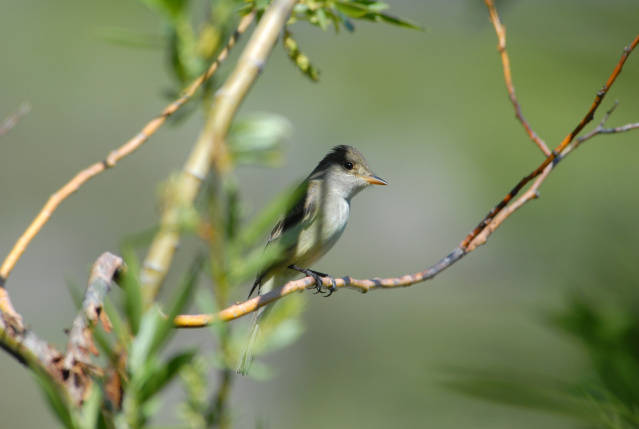
Willow Flycatcher (Empidonax traillii) ©USFWS

Willow Flycatcher (Empidonax traillii) ©USFWS

Willow Flycatcher songs are innate, not learned like those of most songbirds. Young Willow Flycatchers reared in captivity with Alder Flycatcher tutors sang typical Willow Flycatcher songs.

Daniel was put to test, But, he chose not to defile himself with the portion of king’s meat or the wine..

  • No matter where God places you, never try to be like others…
  • Though God has created each one of us In His image, there still isn’t anyone like you…
  • You are God’s unique creation…

Please read Daniel Chapter one…

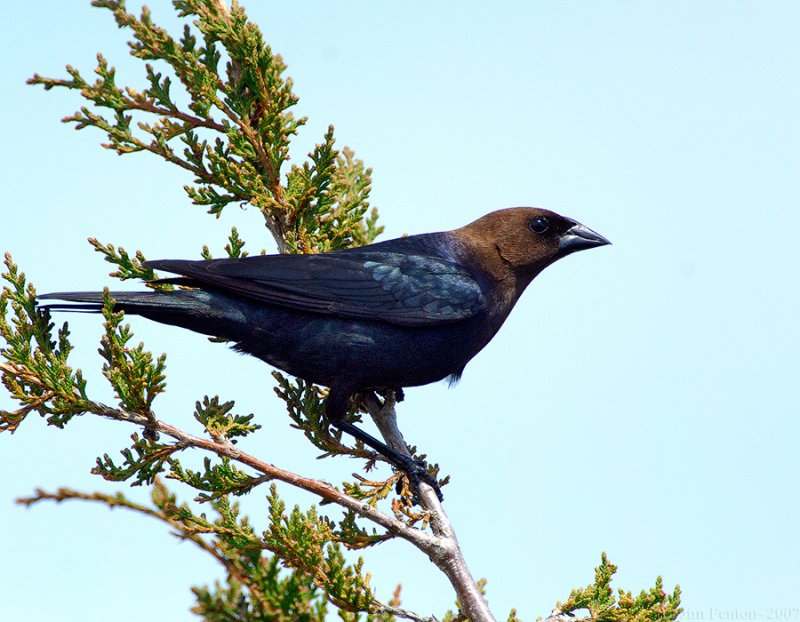
Brown-headed Cowbird (Molothrus ater) by J Fenton

Brown-headed Cowbird (Molothrus ater) by J Fenton

If a Brown-headed Cowbird lays its eggs in the nest of a Willow Flycatcher, the flycatcher may bury the Cowbird eggs in the nest lining, or even build a completely new nest over the top of the first one…

How do you respond when satan tries to hatch his ideas in your life?

  • Do you receive them or reject them like these birds?
  • Remember, his place is not beside you, but, under the sole of your feet…
  • Don’t let satan sit in your life..
  • Just bury him under your feet…
“And the God of peace shall bruise Satan under your feet shortly. The grace of our Lord Jesus Christ be with you. Amen.”Romans 16:20

Have a blessed day!

Your’s in YESHUA,
a j mithra

Creation Calls — Are You Listening?

Scintillant Hummingbird (Selasphorus scintilla) by Ian

Scintillant Hummingbird (Selasphorus scintilla) by Ian

Creation Calls — are you listening? Music by Brian Doerksen

*
Below is an interesting video sent to me by e-mail.
*

*

For the wrath of God is revealed from heaven against all ungodliness and unrighteousness of men, who hold the truth in unrighteousness; Because that which may be known of God is manifest in them; for God hath shewed it unto them. For the invisible things of him from the creation of the world are clearly seen, being understood by the things that are made, even his eternal power and Godhead; so that they are without excuse: (Romans 1:18-20 KJV)

In whom we have redemption through his blood, even the forgiveness of sins: Who is the image of the invisible God, the firstborn of every creature: For by him were all things created, that are in heaven, and that are in earth, visible and invisible, whether they be thrones, or dominions, or principalities, or powers: all things were created by him, and for him: And he is before all things, and by him all things consist. (Colossians 1:14-17 KJV)

*

Wordless Birds

*

Interesting Things – Grand Canyon and Squirrels

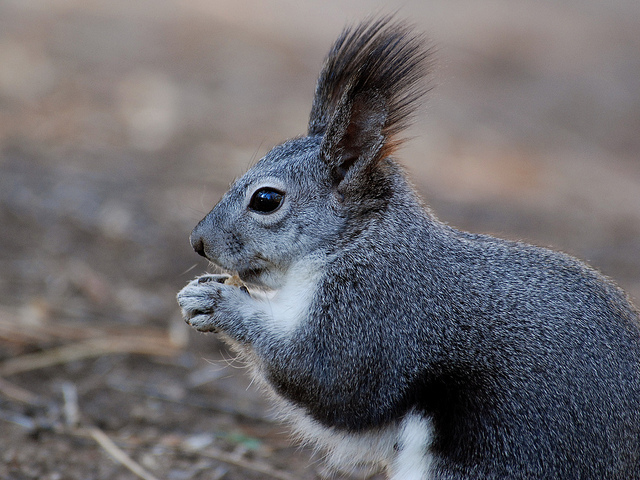
Abert's Squirrel (aka Tassel-eared) ©Bandelier Natl Momument

Abert’s Squirrel (aka Tassel-eared) ©Bandelier Natl Momument

 Thus saith the LORD, thy redeemer, and he that formed thee from the womb, I [am] the LORD that maketh all [things]; that stretcheth forth the heavens alone; that spreadeth abroad the earth by myself; (Isaiah 44:24)

From Creation Moment’s, “Squirrels Give Age of Grand Canyon”

SmileyCentral.com

Who would have thought that squirrels would tell us how old the Grand Canyon is? Yet, creation scientists tell us that the tassel-eared squirrel, who lives near the rim of the canyon in Arizona, has done just that.

Tassel-eared squirrels are found on both the north and south rims of the canyon. Scientists have assumed that the squirrels were there before the canyon was formed, supposedly millions of years ago. However, since the canyon has kept the two populations apart for so long, the differences between them should show what millions of years of evolution will do to squirrels.

Abert's Squirrel (aka Tassel-eared) ©jerryoldenettel

Abert’s Squirrel (aka Tassel-eared) ©jerryoldenettel

There are minor differences between the squirrels on the north rim and the south rim. But they’re not even enough to classify the squirrels as separate species. North rim squirrels have white tails and black bellies. Squirrels on the south rim have white bellies and dark tails. But many north rim squirrels have coloration like those on the south, and many on the south rim are colored like those on the north. Creation scientist Dr. John Meyer has carefully studied these squirrels. He has concluded that the squirrels on the north and south rim are actually one population that has a complete range of fur colors.

According to a law of evolution accepted by evolutionists, there should be a much larger difference between the north and south squirrels if the Grand Canyon is really millions of years old. The conclusion must be, then, that the Grand Canyon is quite young – only thousands of years old.

Prayer:
Heavenly Father, the story of human history as told in the Bible is confirmed all around us. I pray that You would call Your people and Your Church back to complete faithfulness to Your revealed Word. Amen.

Notes:
Meyer, J.R. 1985. “Origin of the Kaibab Squirrel

©Creation Moment’s, “Squirrels Give Age of Grand Canyon”, 2011

Lee’s Addition:

Abert's Squirrel With a Pinecone ©WikiC

Abert’s Squirrel With a Pinecone ©WikiC

(from Wikipedia) “Abert’s squirrel (or tassel-eared squirrel) (Sciurus aberti) is a tree squirrel in the genus Sciurus endemic to the Rocky Mountains from United States to Mexico, with concentrations found in Arizona, The Grand Canyon, New Mexico, and southwestern Colorado.

The Abert’s squirrel is closely associated with, and nearly confined to cool, dry interior ponderosa pine forests [4]. In Arizona, ponderosa pine forests are most extensive between 5,500 and 8,500 feet (1,676–2,590 m) elevation [8]. Abert’s squirrels occur in pure ponderosa pine stands or stands with associated Gambel oak (Quercus gambelii), true pinyon (P. edulis), junipers (Juniperus spp.), quaking aspen (Populus tremuloides), and Douglas-fir (Pseudotsuga menziesii)[4]. Findley and others [9] mention that Abert’s squirrels are common in mixed conifer canyons in New Mexico.

Abert’s squirrels are 18-22.8 in (46–58 cm) long with a tail of 7-10 in (19–25 cm). The most noticeable characteristic would be their hair ear tufts, which extend up from each ear 2–3 cm. This gives this species a striking similarity to the Eurasian Red Squirrel, aside from its differing dark fur coloration. They typically have a gray coat with a white underbelly and a very noticeable rusty/reddish colored strip down their back.”

More:
Interesting Things – Click Here
Plus Items – Click Here

*

Formed By Him – Bird Eggs

Iceland Gull (Larus glaucoides) chick-egg nest ©USFWS

Iceland Gull (Larus glaucoides) chick-egg nest ©USFWS

So God created great sea creatures and every living thing that moves, with which the waters abounded, according to their kind, and every winged bird according to its kind. And God saw that it was good. And God blessed them, saying, “Be fruitful and multiply, and fill the waters in the seas, and let birds multiply on the earth.” So the evening and the morning were the fifth day. (Genesis 1:21-23 NKJV)

On the fifth day of creation when God Created the birds, they were told/commanded “let birds multiply on the earth.” The birds then started obeying that command. When their numbers were reduced to seven pairs of each living avian species, to be saved from the flood in the ark, they were again commanded to be fruitful and multiply when they left the ark. Look at the numerous avian population we have today.

Bring out with you every living thing of all flesh that is with you: birds and cattle and every creeping thing that creeps on the earth, so that they may abound on the earth, and be fruitful and multiply on the earth. (Genesis 8:17 NKJV)

The Lord in His wisdom gave the birds the ability to produce their young by laying eggs and then having the young “hatch.” There are many aspects of this, but the way the egg is produced is our focus today.

Fairy Prion (Pachyptila turtur) ©WikiC with egg

Fairy Prion (Pachyptila turtur) ©WikiC with egg

Reading around the “evolution” of the article (see below) “Eggs and Their Evolution” in the Birder’s Handbook, I came across these interesting facts.

“Bird eggs are virtually self-contained life-support systems. All they require for the embryo to develop properly are warmth and oxygen. Oxygen diffuses into the egg through microscopic holes formed by the imperfect packing of the calcium carbonate crystals that compose the eggshell. There are not many of these pores—for example, they make up only about 0.02 percent of the surface of a duck egg. Carbon dioxide and water vapor diffuse outward through the same pores. Birds can lay their eggs in even drier environments than reptiles, because when the fatty yolk is broken down to provide energy for the developing embryo, water is produced as a by-product.” That is fantastic!

Here is an interesting link about the development of a chicken in the egg. Chickscope Click through the different days to see the development.

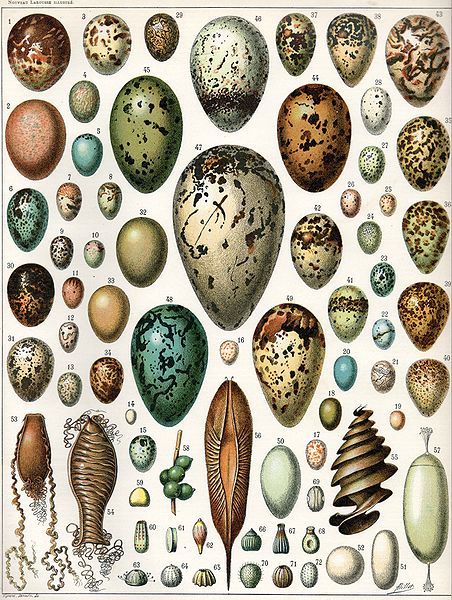
Different Eggs- Birds and Others - from Wikipedia

Different Eggs- Birds and Others – from Wikipedia

Also eggs come in a “wide variety of sizes, shapes, colors, and textures” as you can see in the chart above.

From Creation Moments, “BIRDS EGG EVOLUTION

For she [the ostrich] leaves her eggs on the ground, and warms them in the dust; she forgets that a foot may crush them, or that a wild beast may break them. (Job 39:14 15)

The creation is literally filled with millions of what those who believe in evolution call “happy coincidences.” But when you encounter millions of instances of what appears to be thoughtful design, the obvious conclusion is that there is a Designer. Take the example of bird eggs.

The shape of the egg makes it strong. This strength comes in handy in a busy nest. Mom and dad are coming and going, and they turn the eggs periodically during incubation. But all eggs are not equally egg shaped, and there is a pattern to their shapes. Birds like robins that build a nice, dish shaped nest tend to lay eggs that are more round in shape. Screech owls, which lay their eggs at the bottom of a hole in a tree, also have round shaped eggs. Birds, like the killdeer, barely build any kind of nest and lay eggs on the ground where almost round eggs could roll away. For this reason, birds such as a Kildeer lay much more sharply pointed eggs which are designed to pivot on their small end. Likewise, eggs that are laid where predators are not likely to see them are usually pale or solid in color, but eggs laid out in the open are camouflaged. Moreover, baby birds that hatch in protected nests like the bluebird, tend to be naked, blind and helpless. But the unprotected killdeer hatchlings are ready to leave the nest within minutes of hatching.

All coincidences? It seems more scientific to say that here we have a few of the many fingerprints of our wise Creator!
Prayer:
“I praise You, Father, for how Your glory is reflected in the creation. Amen.”
Notes: Jim Williams, Bird basics: egg size, color and shape, Star Tribune, July 29, 1999, p.8″

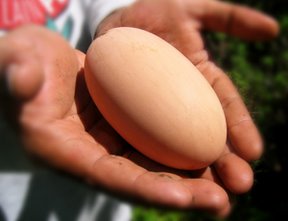
Maleo (Macrocephalon maleo) egg©©Wong Dermayu

Maleo (Macrocephalon maleo) egg©©Wong Dermayu

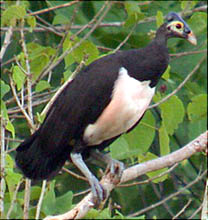
Maleo (Macrocephalon maleo) ©NowPublic

Maleo (Macrocephalon maleo) ©©Wong Dermayu (Megapode)

Here are some more interesting facts about bird eggs from the Birder’s Handbook:

“The proportion of yolk differs between altricial and precocial birds. The former, which hatch so undeveloped that they require significant parental care and thus need less stored energy, generally have eggs that contain about 25 percent yolk. Precocial birds, which can walk and feed themselves shortly after hatching, have eggs with about 40 percent yolk (67 percent in megapodes, inhabitants of Australia and Pacific islands which upon hatching are virtually ready to fly). Interestingly, in spite of this difference, and although bird eggs range in weight from about one hundredth of an ounce (small hummingbird) to three and a half pounds (ostrich), all bird eggs lose water amounting to about 15 percent of their original weight during incubation. This careful control is probably a result of the necessity to keep the water content of the developing chick’s tissues constant even though metabolic water is continually being produced.”

Australian Pipit (Anthus australis) ©WikiC

Australian Pipit (Anthus australis) altricial ©WikiC

Birds lay their eggs proportionate to their size, but not what you would think. A wren may lay an egg that weighs about 13% of its weight, while an ostrich egg may only be 2% of its weight. “the parents must “invest” more in the egg to give the chick the energy and materials required for more advanced development within the confines of the shell.”

The book ask this question: “Why have birds not “advanced” beyond egg laying and started to bear their young alive like mammals?” Here is what The Bible says about that.

Let them praise the name of the LORD, For He commanded and they were created. (Psalms 148:5 NKJV)
Lift up your eyes on high, And see who has created these things, Who brings out their host by number; He calls them all by name, By the greatness of His might And the strength of His power; Not one is missing. Why do you say, O Jacob, And speak, O Israel: “My way is hidden from the LORD, And my just claim is passed over by my God”? Have you not known? Have you not heard? The everlasting God, the LORD, The Creator of the ends of the earth, Neither faints nor is weary. His understanding is unsearchable. (Isaiah 40:26-28 NKJV)
That they may see and know, And consider and understand together, That the hand of the LORD has done this, And the Holy One of Israel has created it. (Isaiah 41:20 NKJV)

The Lord created them, just the way, in His Wisdom, that they were to be. He looked on His handiwork and called it, Very Good!

Creation was corrupted because of the curse of sin that all are under.

For the creation was subjected to futility, not willingly, but because of Him who subjected it in hope; because the creation itself also will be delivered from the bondage of corruption into the glorious liberty of the children of God. For we know that the whole creation groans and labors with birth pangs together until now. (Romans 8:20-22 NKJV)

(“Reading around the “evolution” is my term for reading the article and looking at the facts and evidence, but from a Christian perspective. We all are observing the same birds and eggs, but some look at it from a theory of evolution and I look at them from believing that God in His Wisdom designed them to be the way they are.

Here is an example: “The other major group of reptile descendants, the birds, not only have continued the reptilian tradition, but have evolved eggs of an improved design in a wide variety of sizes, shapes, colors, and textures.” [from the Birder’s Handbook]

Here is my “reading around evolution”: Birds have eggs, designed through creation, in a wide variety of sizes, shapes, colors, and textures. Even simpler, just looking at the facts: Birds have eggs in a wide variety of sizes, shapes, colors, and textures )

Gospel Message

*

Created to Fly

Steppe Eagle (Aquila nipalensis) by Peter Ericsson

Steppe Eagle (Aquila nipalensis) by Peter Ericsson

But ask now the beasts, and they shall teach thee; and the fowls of the air, and they shall tell thee:…Who knoweth not in all these that the hand of the Lord hath wrought this? (Job 12:7, 9)

Here are some excerpts from the Fit for Flight article by Brian Thomas, at the Institute for Creation Research. It is in the August Acts and Facts. To see the whole article, Click Here.

“Birds, for example, were clearly designed for flight and were not formed by any purposeless natural process. The ancient book of Job stated as much: Job 12:7, 9 – above)

  • Some of the required parts for flying birds are visible from the outside, such as wings and an aerodynamic body shape. Other characteristics are less obvious, but equally important.
  • Anything that flies must have a specific power-to-weight ratio.
  • A bird’s center of mass is toward the front, in between its wings.
  • A small but crucial feature on many birds is the alula feather.
  • There are many more specific, required features, like retractable landing gear and horizontal stabilizers, not to mention damage repair mechanisms.”
“And this does not even take into account the beauty of bird flight, bird songs, or their various colorful feathers, which constitute art that demands an Artist who can blend high flights of imagination with the most intricate engineering quality.Surely the great Creator deserves credit for His fantastic handiwork!”

Please check out the article, “Fit for Flight” and also check out the other Acts and Facts articles.

*