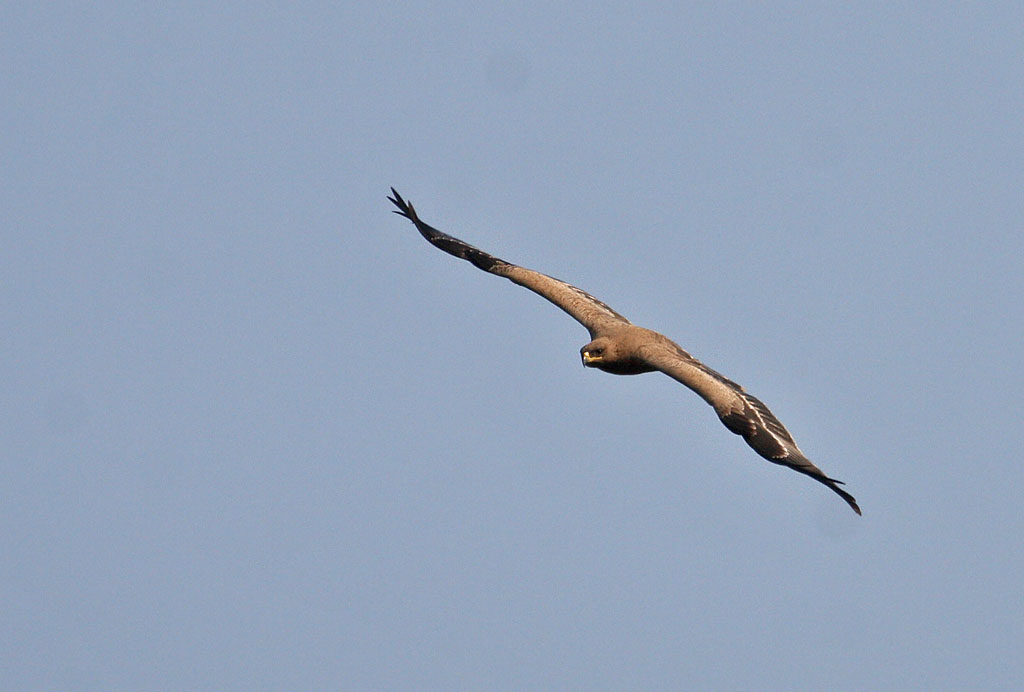
Steppe Eagle (Aquila nipalensis) by Peter Ericsson
But ask now the beasts, and they shall teach thee; and the fowls of the air, and they shall tell thee:…Who knoweth not in all these that the hand of the Lord hath wrought this? (Job 12:7, 9)
Here are some excerpts from the Fit for Flight article by Brian Thomas, at the Institute for Creation Research. It is in the August Acts and Facts. To see the whole article, Click Here.
“Birds, for example, were clearly designed for flight and were not formed by any purposeless natural process. The ancient book of Job stated as much: Job 12:7, 9 – above)
Some of the required parts for flying birds are visible from the outside, such as wings and an aerodynamic body shape. Other characteristics are less obvious, but equally important.
Anything that flies must have a specific power-to-weight ratio.
A bird’s center of mass is toward the front, in between its wings.
A small but crucial feature on many birds is the alula feather.
There are many more specific, required features, like retractable landing gear and horizontal stabilizers, not to mention damage repair mechanisms.”
“And this does not even take into account the beauty of bird flight, bird songs, or their various colorful feathers, which constitute art that demands an Artist who can blend high flights of imagination with the most intricate engineering quality.Surely the great Creator deserves credit for His fantastic handiwork!”
Then on that day David delivered first this psalm to thank the LORD into the hand of Asaph and his brethren. (1 Chronicles 16:7 KJV)
Writer – David
Musicians –
And he appointed certain of the Levites to minister before the ark of the LORD, and to record, and to thank and praise the LORD God of Israel: Asaph the chief, and next to him Zechariah, Jeiel, and Shemiramoth, and Jehiel, and Mattithiah, and Eliab, and Benaiah, and Obededom: and Jeiel with psalteries and with harps; but Asaph made a sound with cymbals; Benaiah also and Jahaziel the priests with trumpets continually before the ark of the covenant of God. (1 Chronicles 16:4-6 KJV)
Tune – No idea
This psalm, written by David, was given to the singers under Asaph to thank and praise the Lord for all His Wondrous Works. Birds are not mentioned in the hymn or song, but these references to creation merit this song being included here in the Birds in Hymns:
make known his deeds among the people
talk ye of all his wondrous works
Remember his marvellous works that he hath done
his wonders
Sing unto the LORD, all the earth
Declare his glory among the heathen
his marvellous works among all nations
Give unto the LORD the glory due unto his name
let the fields rejoice, and all that is therein
Then shall the trees of the wood sing out at the presence of the LORD
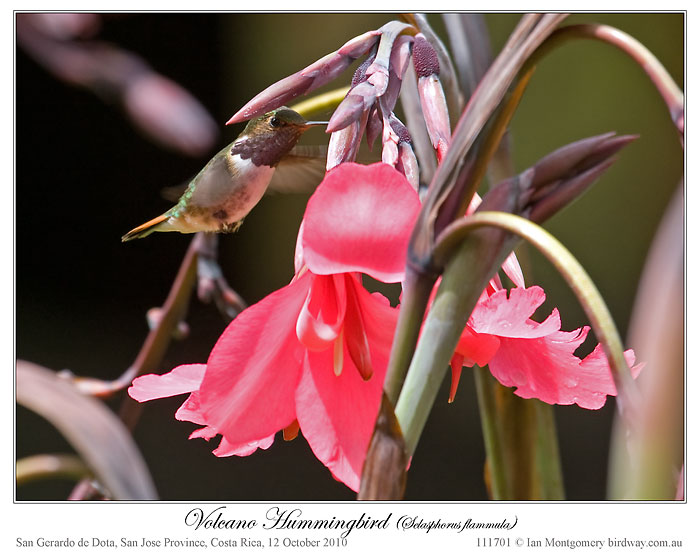
Volcano Hummingbird (Selasphorus flammula) by Ian
1 Chronicles 16:8-36 (KJV)
Give thanks unto the LORD, call upon his name, make known his deeds among the people.
Sing unto him, sing psalms unto him, talk ye of all his wondrous works.
Glory ye in his holy name: let the heart of them rejoice that seek the LORD.
Seek the LORD and his strength, seek his face continually. Remember his marvellous works that he hath done, his wonders, and the judgments of his mouth;
O ye seed of Israel his servant, ye children of Jacob, his chosen ones.
He is the LORD our God; his judgments are in all the earth.
Be ye mindful always of his covenant; the word which he commanded to a thousand generations;
Even of the covenant which he made with Abraham, and of his oath unto Isaac;
And hath confirmed the same to Jacob for a law, and to Israel for an everlasting covenant,
Saying, Unto thee will I give the land of Canaan, the lot of your inheritance;
When ye were but few, even a few, and strangers in it.
And when they went from nation to nation, and from one kingdom to another people;
He suffered no man to do them wrong: yea, he reproved kings for their sakes,
Saying, Touch not mine anointed, and do my prophets no harm. Sing unto the LORD, all the earth; shew forth from day to day his salvation. Declare his glory among the heathen; his marvellous works among all nations.
For great is the LORD, and greatly to be praised: he also is to be feared above all gods.
For all the gods of the people are idols: but the LORD made the heavens.
Glory and honour are in his presence; strength and gladness are in his place.
Give unto the LORD, ye kindreds of the people, give unto the LORD glory and strength. Give unto the LORD the glory due unto his name: bring an offering, and come before him: worship the LORD in the beauty of holiness.
Fear before him, all the earth: the world also shall be stable, that it be not moved.
Let the heavens be glad, and let the earth rejoice: and let men say among the nations, The LORD reigneth.
Let the sea roar, and the fulness thereof: let the fields rejoice, and all that is therein. Then shall the trees of the wood sing out at the presence of the LORD, because he cometh to judge the earth.
O give thanks unto the LORD; for he is good; for his mercy endureth for ever.
And say ye, Save us, O God of our salvation, and gather us together, and deliver us from the heathen, that we may give thanks to thy holy name, and glory in thy praise.
Blessed be the LORD God of Israel for ever and ever. And all the people said, Amen, and praised the LORD.
(1 Chronicles 16:8-36 KJV)
American Yellow Warbler (Dendroica aestiva) singing by J Fenton
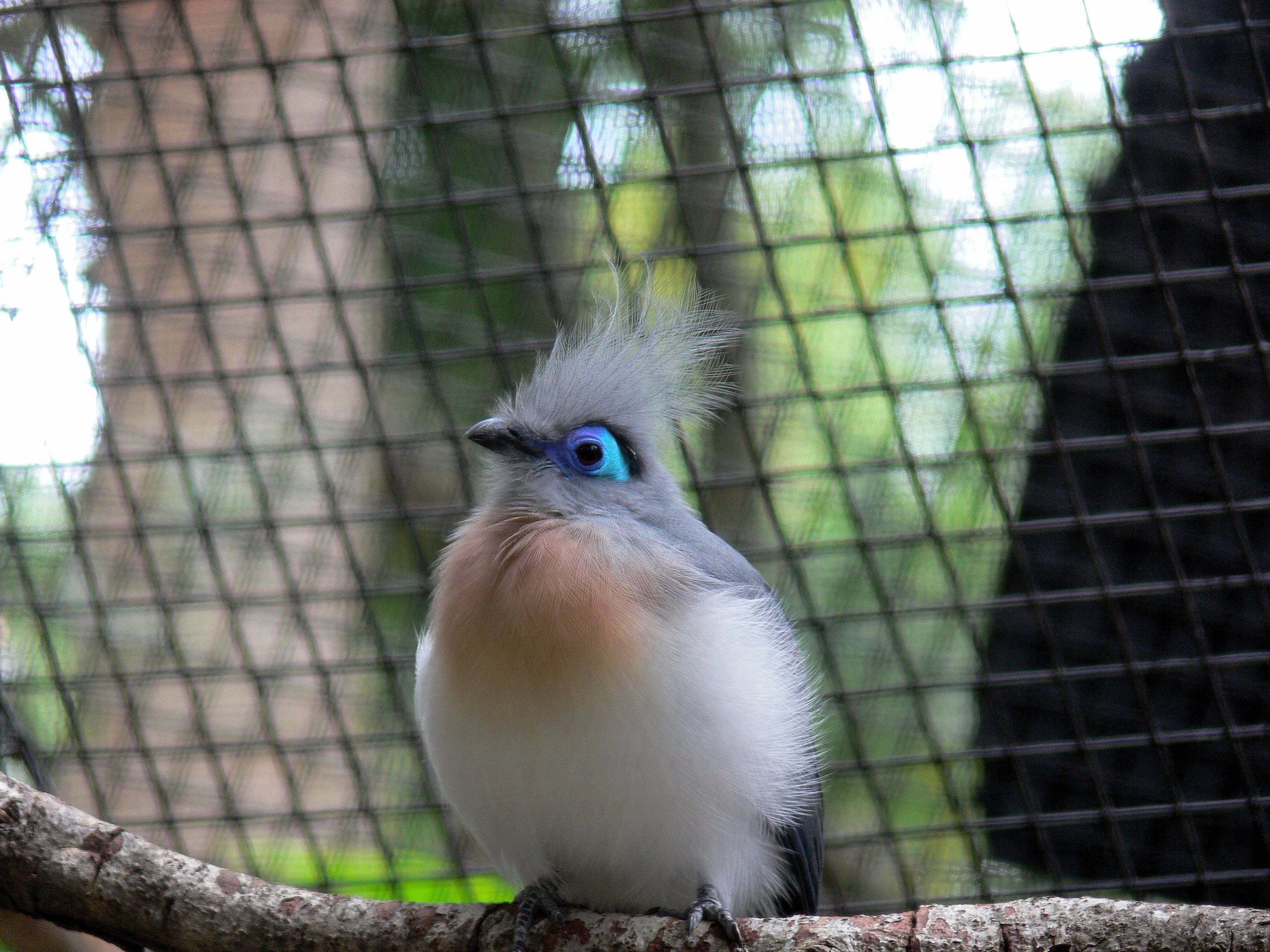
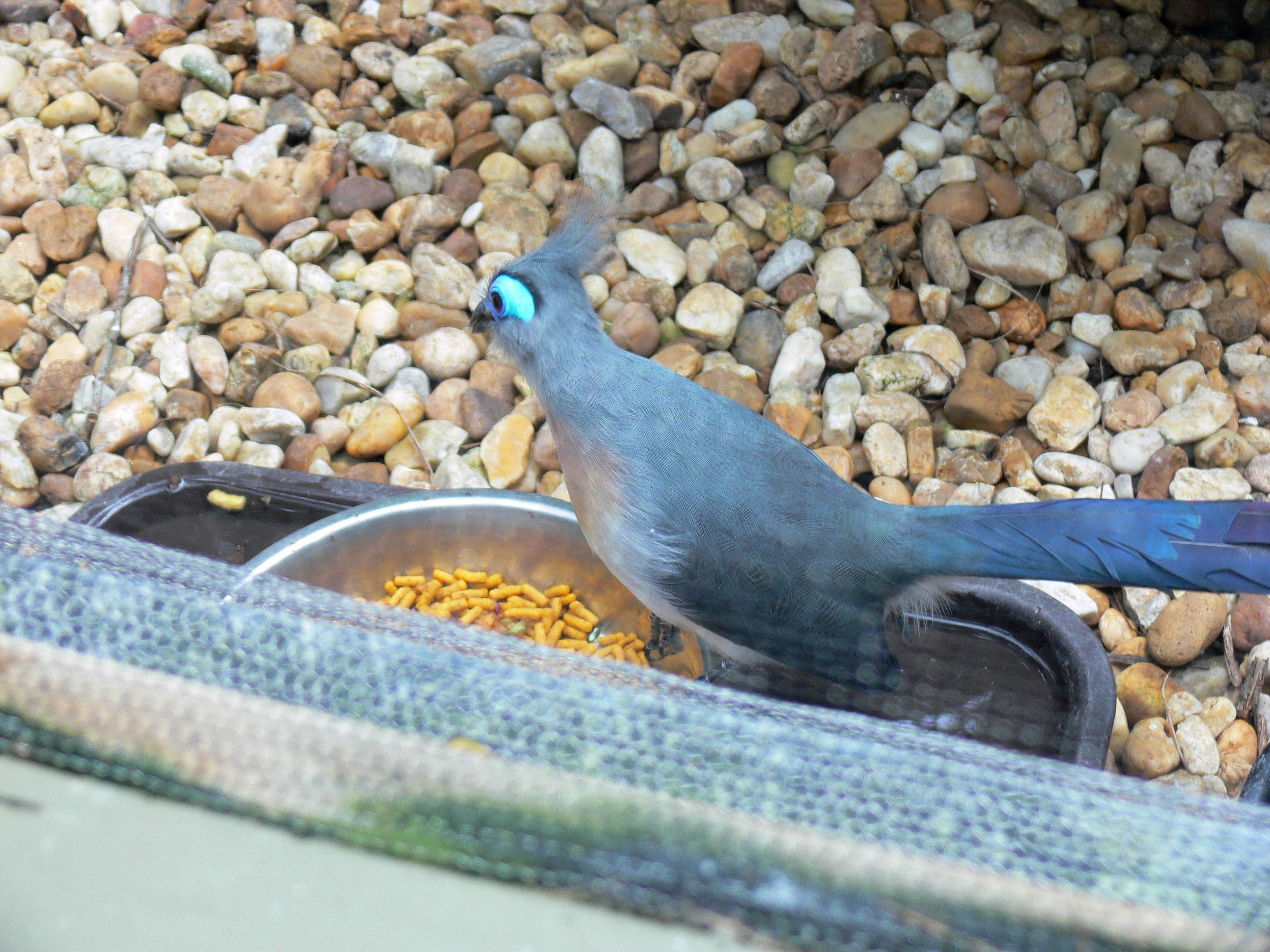
Dan and I stopped by the Lowry Park Zoo on the Fourth of July for a few minutes. We only had a few minutes and with a yearly pass, it made it easy to “duck-in” for a visit. The Aviary is just inside the gate, so we visited there as usual. I have been trying to get a decent photo of the Crested Coua. It is difficult because they are kept behind fine wire that gives me a fit trying to shoot through it. You would not want to know how many great photos of wire that have been deleted. Not only did I get a fair photo, but they were the most active I have seen them. They are beautiful birds and I love the way the Lord created them and especially their eyes. The eyes remind me of:
For the eyes of the Lord are over the righteous, and his ears are open unto their prayers: but the face of the Lord is against them that do evil. (1 Peter 3:12 KJV)
To open their eyes, and to turn them from darkness to light, and from the power of Satan unto God, that they may receive forgiveness of sins, and inheritance among them which are sanctified by faith that is in me. (Acts 26:18 KJV)
The Crested Coua, Coua cristata, is a medium-sized, approximately 17.3 in/44cm long, greenish-grey coua with grey crest, blue bare orbital skin, rufous breast, brown iris, black bill and legs, white belly and long white-tipped purplish-blue tail feathers.
Crested Coua (Coua cristata) Pair by Lee LPZ
The Crested Coua is distributed and endemic to forests, savanna and brushland of Madagascar. Widespread and a common species throughout its large habitat range. It is found from sea-level to altitude of 2,950 ft/900 metres. They feature brightly colored bare skin around the eyes. Some resemble Coucals in their habit of clambering through plant tangles while foraging, while the arboreal species move between tree canopies with gliding flight. Four species occur(red) in rainforests while the remaining six are found in the dry forests of western and southern Madagascar.The diet consists mainly of various insects, fruits, berries, seeds, snails and chameleons.
They were created with large feet, with a reversible third toe like all cuckoos. The female usually lays two white eggs in nest made from twigs. Couas build their own nests and lay white eggs. The Crested coua is notable for the highly unusual markings that chicks display on their inner beaks, video of which can be seen on the Zoo’s YouTube channel. Coua Chick Mouth Markings. Cuckoos are know for placing their eggs in other bird species’ nests. It appears that this Coua chick may even imitate the mouth markings of the host chicks. The Lord commanded the birds to multiply and fill the earth. It appears, some even in the cuckoo family, are taking this to the limit.
And God blessed them, saying, “Be fruitful and multiply and fill the waters in the seas, and let birds multiply on the earth. (Genesis 1:22 ESV)
Couas’ calls are short series of evenly spaced notes, which are sometimes answered by other individuals.
Other Coua are the Verreaux’s, Blue, Red-capped, Red-fronted, Coquerel’s, Running, Giant, and Red-breasted Couas. They are members of the Cuculidaes, which is called the Cuckoo Family. The cuckoo family, in addition also includes the roadrunners, koels, malkohas, couas, coucals and anis.
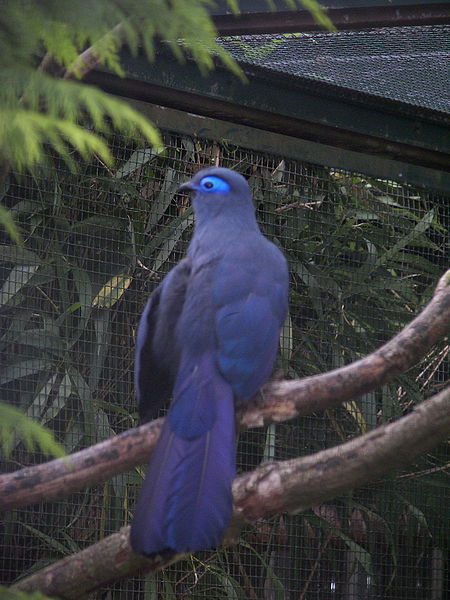
Blue Coua (Coua caerulea) by WikiC
The Blue Coua is a deep blue with a bare blue oval around the eye and beak. It averages a size of 18.9-19.7 inches long and weighs approximately 8.2 ounces. The Blue Coua’s diet consists of insects, varied fruits, and small reptiles. Blue Coua’s can be found in the NorthWest and East areas of Madagascar. Specifically in the sub-tropical to tropical moist lowland, mangroe forest, and moist montane ares. It is a species of cokoo birds. In spanish it is known as the Cua Azul. The bird only lays one egg in a nest hidden in trees and bushes.
Giant Coua (Coua gigas) WikiC
One of the most important distinguishing features of the Cuculidae family are the feet, which are zygodactyl, meaning that the two inner toes pointed forward and the two outer backward. There are two basic body forms, arboreal species (like the Common Cuckoo) which are slender and have short tarsi, and terrestrial species (like the roadrunners) which are more heavy set and have long tarsi. Almost all species have long tails which are used for steering in terrestrial species and as a rudder during flight in the arboreal species. The wing shape also varies with lifestyle, with the more migratory species like the Black-billed Cuckoo possessing long narrow wings capable of strong direct flight, and the more terrestrial and sedentary cuckoos like the coucals and malkohas having shorter rounded wings and a more laboured gliding flight.
What an amazing Creator that has provided such a diverse and interesting creation that we can enjoy watching and learning about. We will never run out of things to observe and be delighted about enjoying His many feathered wonders.
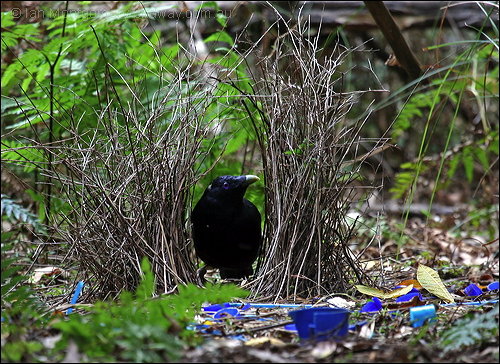
Satin Bowerbird (Ptilonorhynchus violaceus) in bower by Ian
An interesting article from News to Note – Sept 18, 2010 issue talks about the Bowerbird and it’s ability to use special optical effects. The article is discussing Physorg.com’s information on the elaborate bowers the bird makes.
“Bowerbird males are well known for making elaborate constructions, lavished with decorative objects, to impress and attract their mates. Now, researchers reporting online on September 9 in Current Biology have identified a completely new dimension to these showy structures in great bowerbirds. The birds create a staged scene, only visible from the point of view of their female audience, by placing pebbles, bones, and shells around their courts in a very special way that can make objects (or a bowerbird male) appear larger or smaller than they really are.” (Physorg.com)
The scientist are trying to figure out about this aesthetically appealing ability. They noticed that the bird places articles from smaller to larger as the bower is approached. When they rearranged the articles, the Bowerbird changed them back. He is trying to give an allusion they think.
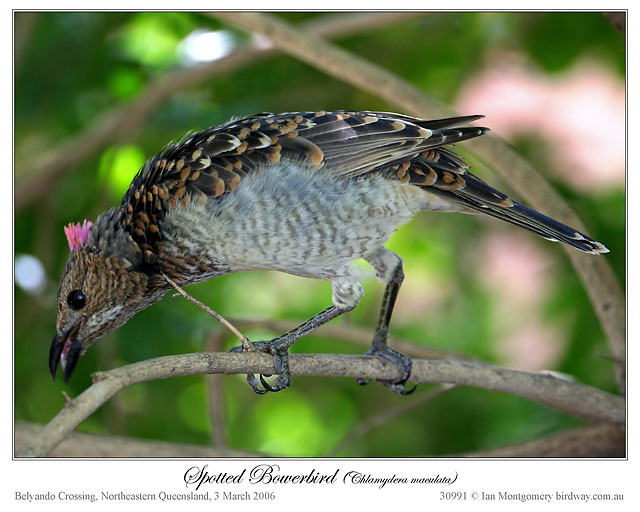
Spotted Bowerbird (Chlamydera maculata) by Ian
News to Note concludes with this:
“Evolutionists often seek to find natural explanations for distinct human aspects like aesthetics, moral consciousness, and self-consciousness. The bowerbirds’ apparent art appreciation seems to allow the most genetically fit to survive according to biologist Gerry Borgia of the University of Maryland. But do male bowerbirds intellectually conceive the idea of the optical illusion, and do female bowerbirds intentionally judge the design as artistic?
Rather than an intellectual intention towards art, the great bowerbird instinctively builds remarkable structures, and the female instinctively responds to the optical effect, as programmed by the Creator. Only man, created in the image of God, has a true aesthetic sense. When appreciating the beauty and design of creatures like the bowerbird, the wise aesthetic judge praises the Creator of both art and beauty.”
The two articles are interesting and of course, the one from Answers in Genesis, News to Note – Sept 18, 2010, issue gives the creationist view of this.
From another article:
” the male bower bird, an accomplished avian architect that has long fascinated scientists with its remarkably complex courting behavior. Instead of using just showy plumes or a romantic melody to attract a mate, the pigeon-sized bower bird constructs an elaborate structure — a bower — on the forest floor from twigs, leaves, and moss. It then decorates the bower with colorful baubles, from feathers and pebbles to berries and shells.”
“The bowers aren’t nests for raising kids; they are bachelor pads designed to attract and seduce one or more mates. When a female arrives to inspect the bower, the male struts and sings. He hopes to convince her to enter the bower, where mating takes place….they are of special interest to scientists seeking to understand how such complex traits evolve and function.”
Golden Bowerbird (Prionodura newtoniana) at bower by Ian
“Each builds its own shape of bower and prefers a different decorating scheme. A few, for instance, surround their bowers with carefully planted lawns of moss. Others have been known to steal shiny coins, spoons, bits of aluminum foil — even a glass eye — in an effort to create the perfect romantic mood. Some, like the iridescent blue Satin bower bird, the star of Bower Bird Blues, even “paint” the walls of their structures with chewed berries or charcoal. For the male Satin, which builds a U-shaped bower from parallel walls of twigs, the favored color is blue. To decorate its “avenue,” as scientists call it, he collects blue feathers, berries, shells, and flowers. While some of these decorations are found in the forest, others are stolen from the bowers of other males; young males, in particular, are prone to this petty thievery. However obtained, the precious knickknacks are then scattered around the bower. The male then waits, passing time by constantly fine-tuning his structure and rearranging the decorations. (from Nature)
And God blessed them, saying, “Be fruitful and multiply, and fill the waters in the seas, and let birds multiply on the earth.” (Genesis 1:22 NKJV)
That verse answers it for me. God created them with that “complex trait.”
Information about the Bowerbird:
They are in the Ptilonorhynchidae – Bowerbirds Family of the Passeriformes Order. There are 21 species in the family in 9 different genus. There are 3 Catbirds and an Piopio included in the family.
Bowerbirds and catbirds make up the bird family Ptilonorhynchidae. These are medium-sized passerines, ranging from the Golden Bowerbird (22 cm and 70 grams) to the Great Bowerbird (40 cm and 230 grams). Their diet consists mainly of fruit but may also include insects (fed to young), flowers, nectar and leaves in some species.
The bowerbirds have an Austro-Papuan distribution, with ten species endemic to New Guinea, eight endemic to Australia and two found in both. Although their distribution is centered around the tropical regions of New Guinea and northern Australia, some species extend into central, western and southeastern Australia. They occupy a range of different habitats, including rainforest, eucalyptus and acacia forest, and shrublands.
Bowerbirds are most known for their unique courtship behaviour, where males build a structure and decorate it with sticks and brightly coloured objects in an attempt to attract a mate.
The catbirds are monogamous and raise chicks with their mate, but all other bowerbirds are polygymous, with the female building the nest and raising the young alone. These latter species are commonly sexually dimorphic, with the female being more drab in color. Female bowerbirds build a nest by laying soft materials, such as leaves, ferns, and vine tendrils, on top of a loose foundation of sticks. They lay one or two eggs, which hatch after 19 to 24 days, depending on the species.
The most notable characteristic of bowerbirds is their extraordinarily complex courtship and mating behaviour, where males build a bower to attract mates. There are two main types of bowers. One clade of bowerbirds build so-called maypole bowers that are constructed by placing sticks around a sapling; in some species these bowers have a hut-like roof. The other major bowerbuilding clade builds an avenue type bower made of two walls of vertically placed sticks. In and around the bower the male places a variety of brightly colored objects he has collected. These objects — usually different among each species — may include hundreds of shells, leaves, flowers, feathers, stones, berries, and even discarded plastic items, coins, nails, rifle shells, or pieces of glass. The males spend hours arranging this collection. Bowers within a species share a general form but do show significant variation, and the collection of objects reflects the biases of males of each species and its ability to procure items from the habitat, often stealing them from neighboring bowers. Several studies of different species have shown that colors of decorations males use on their bowers match the preferences of females.
In addition, many species of bowerbird are superb vocal mimics. Macgregor’s Bowerbird, for example, has been observed imitating pigs, waterfalls, and human chatter. Satin bowerbirds commonly mimic other local species as part of their courtship display. (Wikipedia)
(Information from various Internet sources.)
________
Articles here on the Blog about Bowerbirds:
Black-headed Heron (Ardea melanocephala) by Lee Lowry Pk Zoo
Based on:
All things were made by him; and without him was not any thing made that was made. (John 1:3 KJV)
Words by ~ Josiah Conder (1789-1855), in The Congregational Hymn Book, 1836.
Music ~ “Dix” ~by~ Conrad Kocher, Stimmen aus dem Reiche Gottes, 1838
O Give Thanks To Him Who Made
O give thanks to Him Who made
Morning light and evening shade;
Source and Giver of all good,
Nightly sleep and daily food;
Quickener of our wearied powers,
Guard of our unconscious hours.
O give thanks to nature’s King,
Who made every breathing thing;
His, our warm and sentient frame,
His, the mind’s immortal flame.
O how close the ties that bind
Spirits to the Eternal Mind!
O give thanks with heart and lip,
For we are His workmanship;
And all creatures are His care: Not a bird that cleaves the air
Falls unnoticed; but who can
Speak the Father’s love to man?
O give thanks to Him Who came
In a mortal, suffering frame—
Temple of the Deity—
Came for rebel man to die;
In the path Himself hath trod
Leading back His saints to God.
Come and see the works of God; He is awesome in His doing toward the sons of men. (Psa 66:5)
Formed By Him
“It is common for world travelers to learn at least a few words of other languages as they visit different cultures and meet different people. Not only is the marsh warbler a champion world traveler, he is also a champion linguist.
The Marsh Warbler is a small brown bird that spends only two months out of the year in its central European breeding grounds. It spends most of the year in Zambia. The warbler travels to its winter grounds in Africa on a route that takes it through the Middle East and the Arabian Peninsula, across the Red Sea and into northeast Africa. Despite the distance warblers travel, they frequently return to the same bushes year after year.
The new generation of warblers is still quite young when they begin their 4,500-mile trip to Africa. These young warblers learn not only the calls of the various birds in Africa but also the calls of birds along the way. Warblers have been heard to imitate more than 210 species. One warbler once imitated 76 different species in 35 minutes. The following year, when the warblers return to Europe, the offer realistic mimics of other birds for only the first three or four days before they return to their own calls. This means that at the right time of year, walking through the English or German countryside, you might hear very convincing sounds from the African countryside.
The Marsh Warbler is a special tribute to our Creator’s inventive creativty as it celebrates in song the marvelous variety He fashioned in the bird kingdom.
Prayer: Dear Lord, as the Marsh Warbler praises You in its special way for the wonderful variety You have created in the bird kingdom, help me praise You for Your forgiveness in a special way before the world. Amen.”
From “Feathered Language Master“, Letting God Create Your Day, Vol. 2, p.118 Copyright from Creation Moments, 2011.
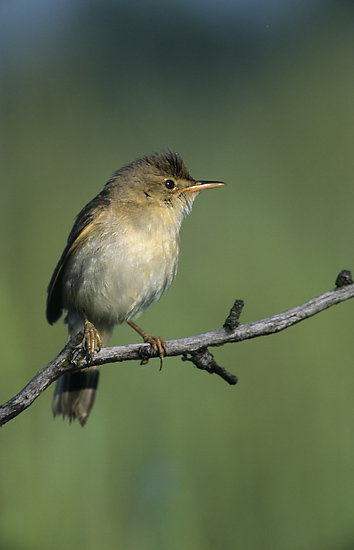
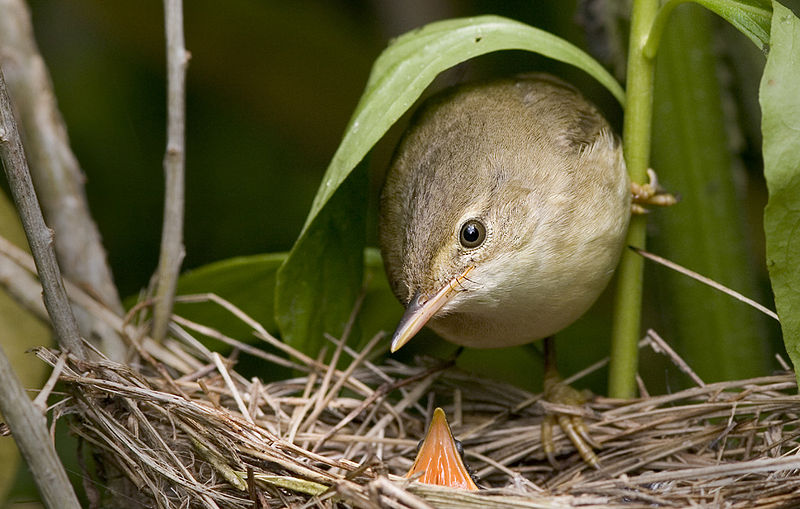
Marsh Warbler (Acrocephalus palustris) WikiC
The Marsh Warbler, Acrocephalus palustris, is an Old World warbler currently classified in the family Acrocephalidae. It breeds in temperate Europe and western Asia and winters mainly in south east Africa. It is notable for incorporating striking imitations of a wide variety of other birds into its song.
The Marsh Warbler breeds in a variety of mostly damp habitats, but in Africa winters mainly in dry, well-vegetated areas. It is common over much of its breeding range and expanding its distribution in some areas. However in Britain it is now virtually extinct as a breeding bird. This insectivorous warbler can be easily confused with several close relatives, but the imitative song of the male is highly distinctive. The male’s distinctive song is useful for identification, as no other member of the genus mimics other birds to any significant extent. The Marsh Warbler also tends to avoid the stands of pure reed which are the Reed Warblers’ favoured habitat.
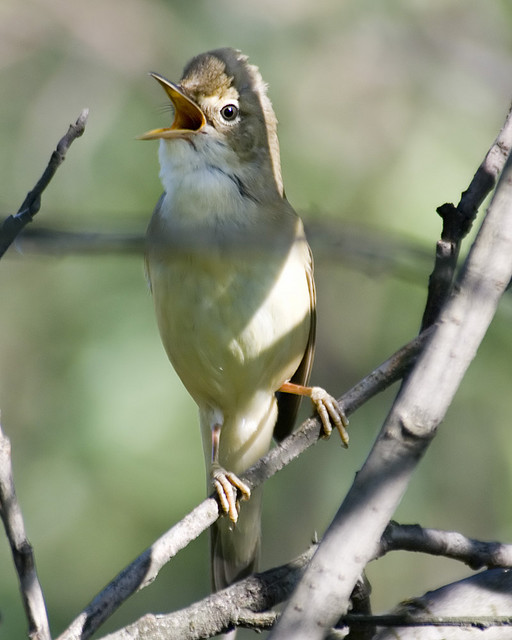
Marsh Warbler (Acrocephalus palustris) WikiC
Song
The Marsh Warbler is best known for the highly imitative song uttered by males, and very occasionally by females. Each male Marsh Warbler incorporates imitations of a wide range of other birds into its song. Other passerines are most commonly imitated, but the calls of other kinds of bird such as waders, hornbills and pigeons have been noted too. On average, each male bird incorporates imitations of 75 other species into its song, with rather more African than northern species mimicked. All learning seems to take place in the summer the bird is hatched in Europe or Asia, and in its first winter in Africa. The calls of birds heard in subsequent years are not added to the warbler’s repertoire. Females may utter a simple, non-imitative song, and a range of other calls are also known. (Wikipedia)
Songs of a Marsh Warbler by Stuart Fisher – xeno-canto.org
What an interesting little bird that the Lord has formed through His creation. What a fantastic Creator and Saviour we have who cares so much for Marsh Warbler and for us.
All things were made through Him, and without Him nothing was made that was made. (John 1:3)
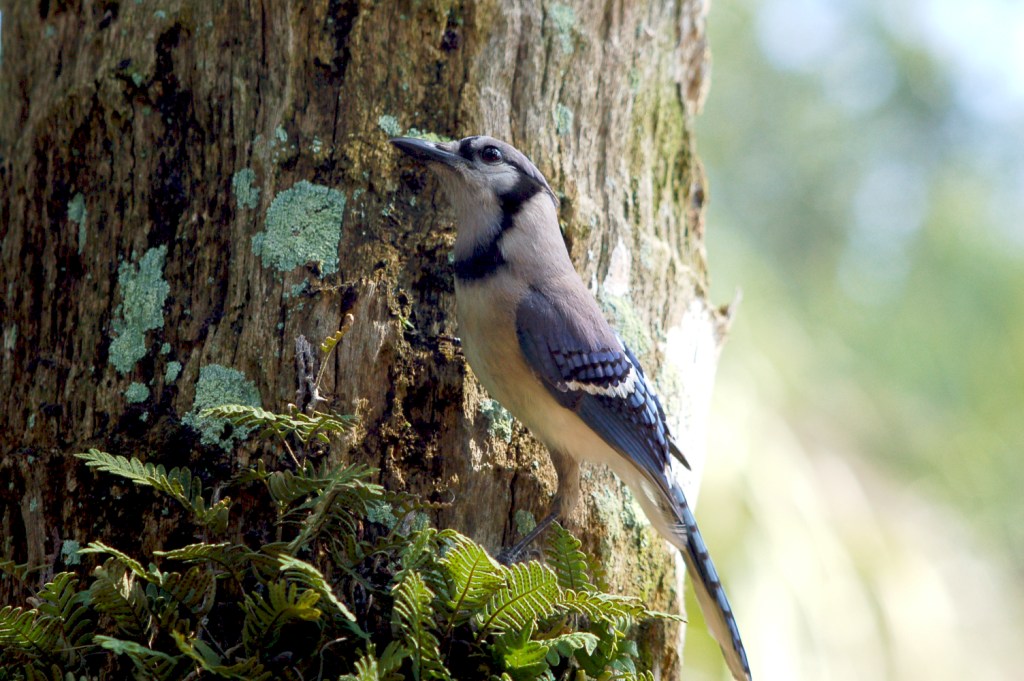
Blue Jay (Cyanocitta cristata) at Bok Tower By Dan’sPix
Observations from an Outsider
I am an outsider. I do not consider myself to be an avid birdwatcher. I am an ignorant birdwatcher. I like to look at birds, but most of the time, I have absolutely no idea what I’m looking at. My ability to identify birds does not extend much past Blue Jays and Bald Eagles.
That being said, I have learned much from Lee. Through her writing, my understanding of birds has grown and deepened. She has broadened my ‘birding skills.’ I have come to better appreciate the wide variety of birds that God has created.
When Lee asked me to write an article for this blog, I was stumped. What can I contribute to a birdwatching blog? I finally decided to write to people like me – outsiders. So, if you are like me – an ignorant birdwatcher – then this post is for you.
Mallard Mom and Baby at Lake Hollingsworth
Here are some observations from the outside.
Be Still and know that I am God (Psalm 46:10)
You and I need to Stop, Look, and Listen more. We need to slow down and pay more attention. It is so easy to go through life and totally miss the ‘birds.’ It is so easy to race from one activity to the next. Let us take time to stop, close our eyes, and simply listen to the birds. Let us take time to stand still and observe the rich diversity of birds all around us.
You and I need to recognize that it is all about God. God needs to be recognized more. Every bird we see should direct our thoughts to God. When you see a dove, think of the peace of God. When you watch a Bald Eagle soar through the sky, think of the majesty and grandeur of God. When you see a mother duck shelter and protect her babies, think of God how He shelters and protects His children. Fortunately, we have Lee’s blog as a great resource to help us recognize God.
You and I need to admit that God is not boring. As we begin to recognize God more, we must admit that He is not dry or stale. His creativity is infinite. Which one of us could have dreamed up ‘sword-billed hummingbirds’ or ‘birds that drink seawater’ or ‘kakapos?’ Imagine, if the God of the universe put this much creativity into the birds of the air, how much more creativity must He have put into you and me. We are of far more value to Him than the birds. We bear His image. God not only exquisitely designed the birds; He also designed each one of us. Our God is not boring! He is infinitely interesting!
Look at the birds of the air: they neither sow nor reap nor gather into barns, and yet your heavenly Father feeds them. Are you not of more value than they? (Matthew 6:26 ESV)
Sword-billed Hummingbird (Ensifera ensifera) by Robert Scanlon
Lee’s Addition:
This blog owes very much to Stephen, our Assistant to the Pastor. When I was trying to find an outlet for my desire to use my Birds of the Bible lessons, it was Stephen who suggested that I write an article each Friday on our church blog. I said yes, but not knowing exactly what a “blog” was, I started one of my own, to learn how to lay out the articles for the “Fountain.” What you are reading, has been from that small beginning. Praise the Lord for letting Stephen make that suggestion.
Great Argus (Argusianus argus argus) (Great Malay Argus Pheasant) by Lee at LPZ
Dan and I were able check out the birds again at the Lowry Park Zoo in Tampa, FL last Friday. We went to a few of the aviaries we haven’t been in for awhile. We went to the Sulawesi Aviary and saw the Magpie Goose, Masked Lapwing, Great Malay Argus Pheasant , Victorian Crowned Pigeon (SSP), Mandarin Duck, Sulawesi Tarictic (Temminck’s) Hornbill, Demoiselle Crane, Great Malay Argus, Javan Pond Heron and the (Green-naped) Pheasant Pigeon, with the Bar-headed Goose just outside.
Sulawesi Hornbill (Penelopides exarhatus) by Lee LPZ
From there we stopped by Lorikeet Landing to see many Lorikeets being feed by visitors. There the Green-naped, Swainson’s, Weber’s and Rainbow Lorikeets carry on with lots of noisy calls (all of these are subspecies of the Rainbow).
Lorikeet being feed by youngster at Lowry Pk Zoo
They also have Dusky Lory, Violet-crested Turaco, and Green-winged Teals.
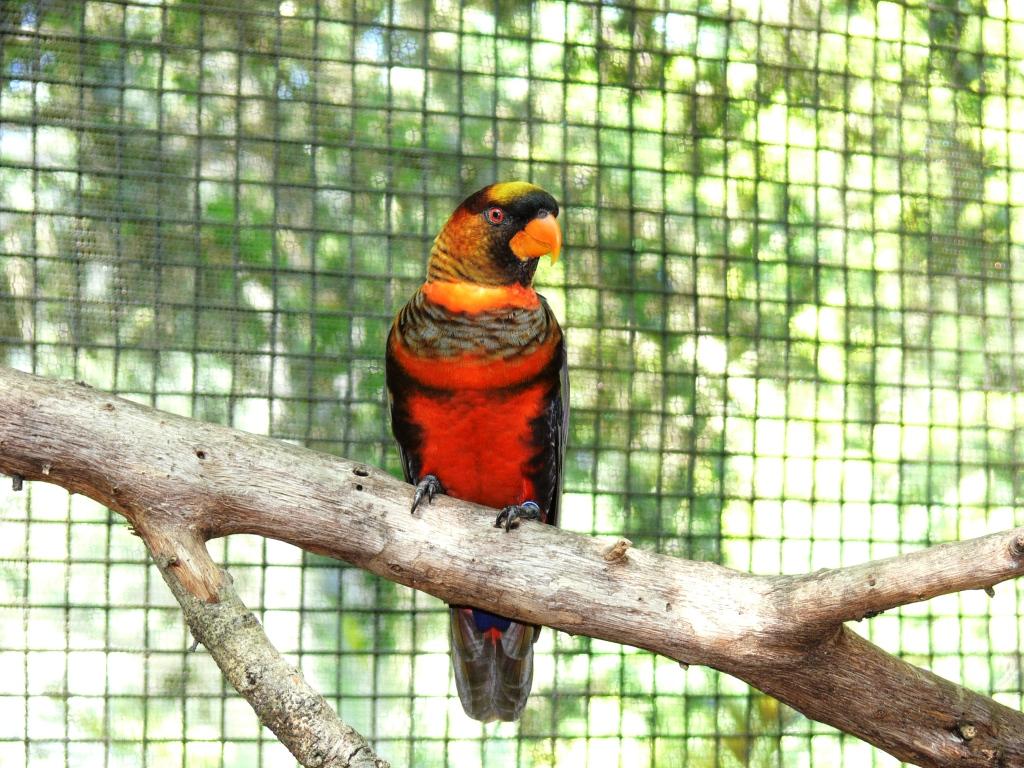
Dusky Lory (Pseudeos fuscata) by Lee at LPZoo
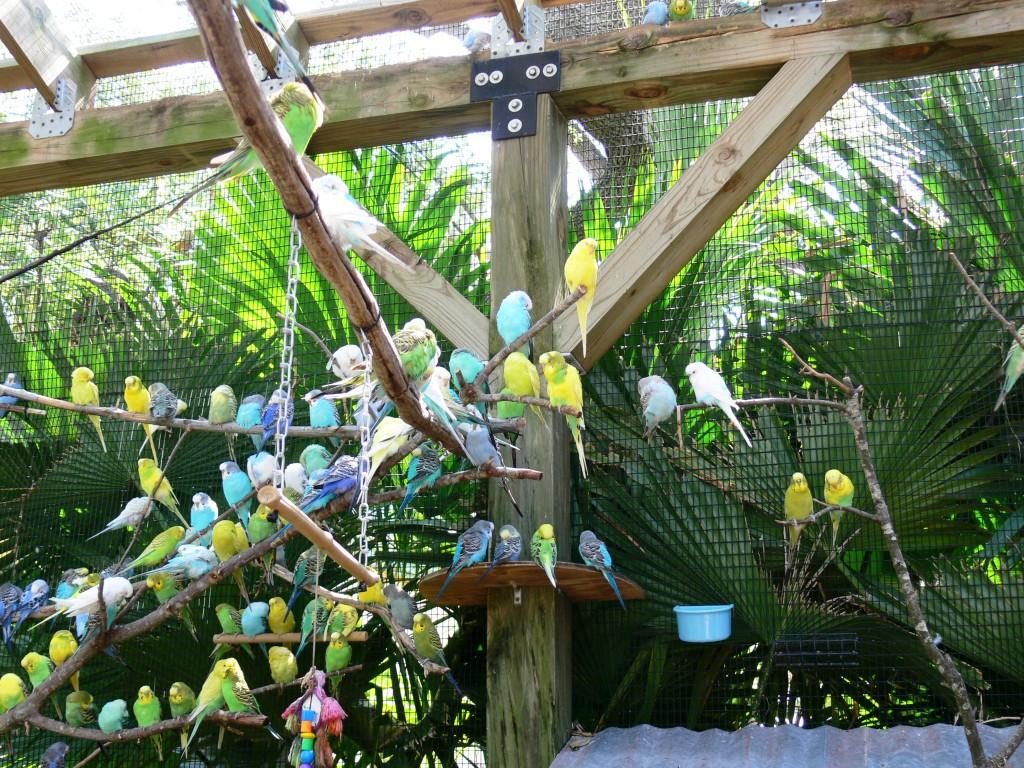
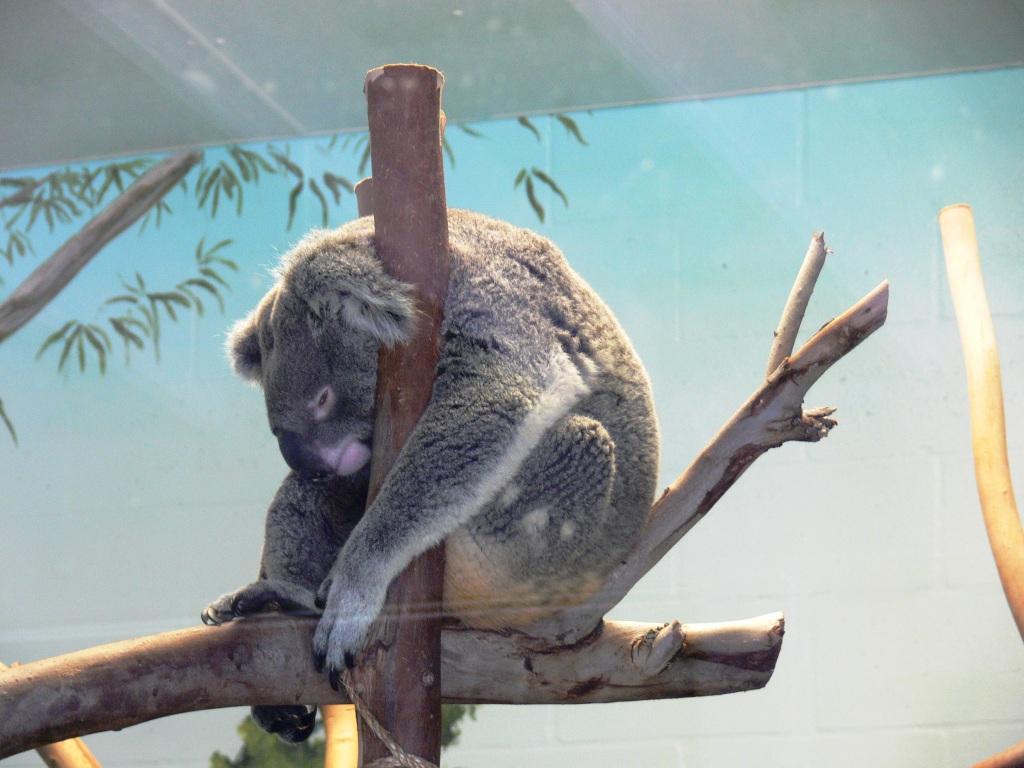
The Wallaroo Station (Australian) greets you with the Palm Cockatoo, Silky, Australorp and Buff Orphington Chickens. Then just inside you can view the sleepy Koala (whoops, that not a bird, but it was in a tree) and the Emu. The Malayan Flying Fox exhibit had those bats, plus the Magpie Goose, Rosy Starlings, Long-billed Corella (new for me), and Red-tailed Black Cockatoo. The Bali Myna was busy singing and showing off for its mate and then we entered the Budgerigar Aviary. Wow! They were everywhere.
Budgerigar (Melopsittacus undulatus) by Lee LPZ
We saw more, but will save that for another article. It was enjoyable as usual as we watched the Lord’s Creative Hand through these fantastic birds.
The works of the LORD are great, sought out of all them that have pleasure therein. His work is honourable and glorious: and his righteousness endureth for ever. (Psalms 111:2-3 KJV)
Red-necked Tanager (Tangara cyanocephala) by Dario Sanches
Be glad in the LORD, and rejoice, ye righteous: and shout for joy, all ye that are upright in heart. (Psalms 32:11 KJV)
Seems like it has been forever that I have been reworking all the Family pages of the Birds of the World. The 233 pages were given a complete work-over. When they release the major 3.0 Version sometime this year, these pages should only take minor changes. (I trust) All the indexes and pages are also up to date.
It took a lot of persistence and praise to the Lord for helping me to keep “plugging away.” This verse helps describe my happiness of “finishing the job.”
Make a joyful noise unto the LORD, all the earth: make a loud noise, and rejoice, and sing praise. (Psalms 98:4 KJV)
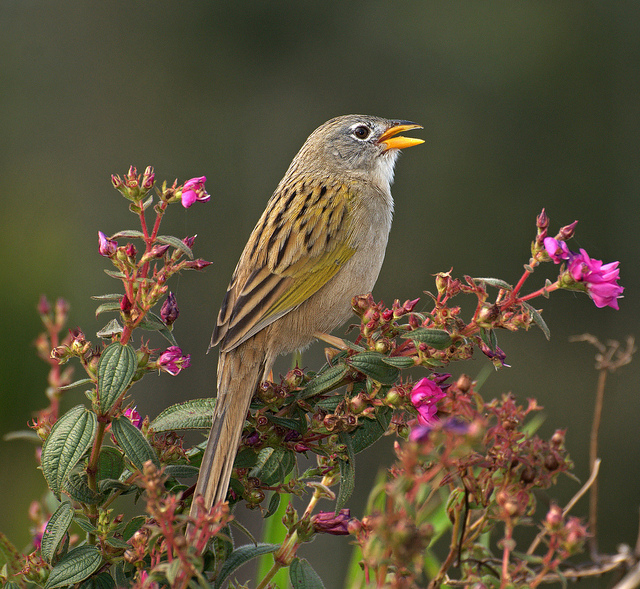
In the mean time, I have been adding some new photos as the pages were being updated. This morning I just added many pictures to the Thraupidae – Tanagers and Allies Family. Recently Dario Sanches gave permission to use his photos. He has some really neat ones of Tanagers, and they have been linked to the lists. Thanks, Dario.
Wedge-tailed Grass Finch (Emberizoides herbicola) by Dario Sanches
Because of all the Subspecies being added to the list of birds, you may find it helpful when viewing a list to use the “Find” on your browser. Some families have only one member, but a few have 300-400 species listed.
Dan asked me recently why I am taking all this effort to even have the Birds of the World pages in the first place, when they are already on the internet. Was I not wasting my time that could be spent on doing other things on this blog. I have to admit, that the thought had crossed my mind. But, as I work on these pages, I am exposed to birds that I would never see or even know of. When I work on finding photos for them, I just sit back in awe of the Lord’s creative hand in each and every one of these feathered friends. Some are pretty, some are dull, some look funny, and all so well designed, from the tip of the tail to the tip of their beaks. Just seeing how He, the Creator, colored them is beyond description.
And, many of my readers first arrive here at the blog while searching for a specific bird of the world. Those pages are the entry point for many to come here. I trust they enjoy what they find and may they find more than they expected and will linger and look at other pages, which many do. Thanks for reading this yourself. Glad you are visiting, no matter which page brought you here.
Thou art worthy, O Lord, to receive glory and honour and power: for thou hast created all things, and for thy pleasure they are and were created. (Revelation 4:11 KJV)
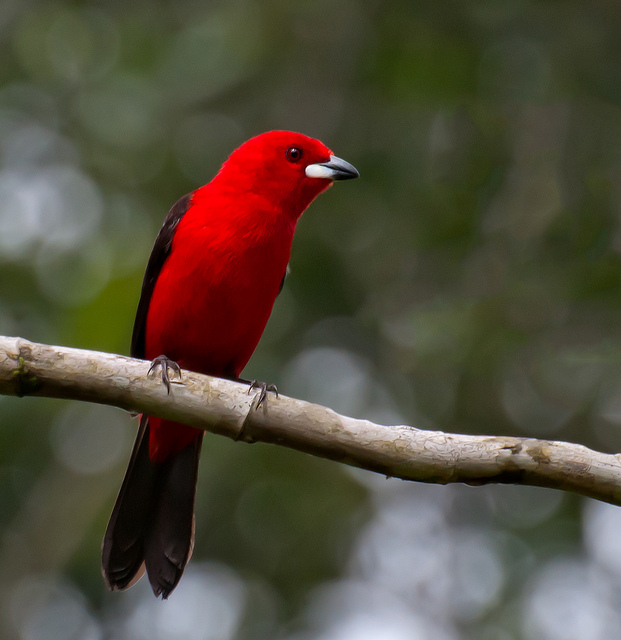
I will leave you with one more of Dario’s fantastic photos, this one of the Brazilian Tanager.
Brazilian Tanager (Ramphocelus bresilius) by Dario Sanches
P. S. I am still looking for photographers and videographers who would be willing to let their photos be posted here. See our list of Photographers in the sidebar and visit their sites for fantastic photos of birds plus whatever else interests them.
(Thought you might enjoy reading this interesting fact from the Lord’s Creative Hand. What love He shows to us and to the world of critters and nature. Omnipotence and omniscience is definitely seen all around us, if we but look and give the credit to Whom it is do.)
For we are his workmanship, created in Christ Jesus unto good works, which God hath before ordained that we should walk in them. (Ephesians 2:10)
“It’s a warm day on the Amazon River. A small fish swims near the surface, looking among the natural floating river debris for some food. As he looks among the occasional leaf or twig in the water, he sees no danger. At the same time, one of the floating “leaves” is waiting for the little fish to move just a bit closer. Then, without warning, the floating “leaf” comes to life, grabs the fish and eats it!
What the little fish thought was simply another floating leaf was actually another fish. The Amazonian leaf fish is carefully designed not only to look like a leaf, but to act like one as well. It has a flat body, very much like a leaf. A black line runs the length of its body, giving the appearance of the midrib of a leaf. A fleshy growth in its lower jaw looks like a leaf stem.
Beyond looking like a leaf, the leaf fish also acts like a leaf. It lies still in the water, drifting with the current. To hide its identity further, it draws its fins close to its body, removing any last hint that it is indeed a hungry fish looking for lunch.
The leaf fish combines deceptive coloring, appearance and behavior into one design so that it, too, can make its living. In this, the leaf fish shows that the Creator makes nothing without also designing a special purpose for that creature. According to the Bible, the same can be said even more emphatically for each human being He has made. Your Creator has a special purpose for you, too, and it begins with His plan of salvation for you through His Son, Jesus Christ.
Prayer:
Dear Father in heaven, through the instruction of Your Word, help me to better learn how to define who and what I am more completely in the knowledge of Your forgiving love to me in Jesus Christ. Amen.”
Notes:
Hanson, Jeanne K., and Deane Morrison. 1990. “The wonderful weird of flora and fauna.” Star Tribune First Sunday, Dec. 2. p. 17.
Lee’s Addition:
“Leaffishes are small freshwater fishes of the Polycentridae family, from South America.
They usually have large heads, cryptic colors and very large protractile mouths. Those features, along with their peculiar movements help them to catch fairly large prey for the size of their bodies, including small fish, aquatic insects and other invertebrates. Their odd leaf-like appearance make them interesting fishes for aquarium hobbyists. That is likely because of their unique lifestyle, hanging around in the upper story of the tank imitating the leaves that commonly fall in temperate rivers were it typically lives. They are extremely agile hunters, capable of consuming prey within a quarter of a second (0.2 seconds) making them one of the worlds fastest fish.” (Wikipedia)
“Asian leaffishes are small freshwater fishes of the Nandidae family, from Southern Asia. There are only four genera in this group. These fish usually have small heads, coloration that appears to resemble leaves and very large protractile mouths. Those features, along with their peculiar movements (seemingly intended to resemble a leaf innocently moving through the water) help them to catch fairly large prey compared to their body size, including small fish, aquatic insects and other invertebrates. They tend to stay in one place and wait for prey–they are “lie-in-wait-predators.” (Wikipedia with editing)
Here is an interesting video about the leaffish from VinLWJ
And to every beast of the earth, and to every fowl of the air, and to every thing that creepeth upon the earth, wherein there is life, I have given every green herb for meat: and it was so. (Genesis 1:30 KJV)
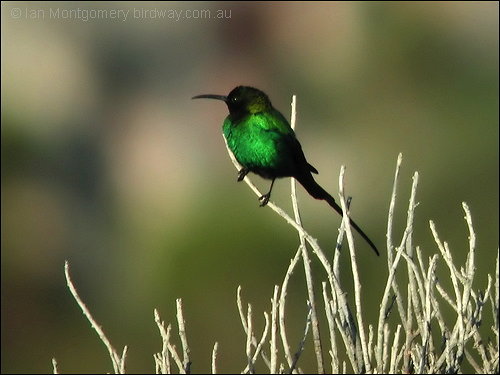
God has created an amazing bird, the Malachite Sunbird, and a beautiful flower, Babiana Ringens or “Rat’s Tail,” that both need one another to help meet their needs. The bird wants the nectar the flower produces and the flower needs to pollinate and is helped by the birds feathers. To help the two, the flower was created with a perch for the “long-tailed” bird to perch on while drinking nectar.
“Babiana ringens has a bright red floral display situated close to ground level . Its red colour , long corolla tubes and copious nectar supply make it attractive to sunbirds, which seem to be the primary pollinators of this plant. A strange, fleshy, twig-like structure projects above the plant giving it the common name of “rotstert ” or “rat’s tail.” The sole function of this twig-structure is that it provides a perching platform for sunbirds, which presumably “feel more comfortable” pollinating the plant from this vantage point than from the ground (Anderson et al. 2005). Having this perch increases outcrossing rates and positions birds correctly for efficient pollen transfer (Anderson et al. 2005). Anderson et al. (2005) also showed that male sunbirds were more particular about the presence or absence of a perch which they ascribed to territoriality or perhaps because using a perch is less likely to damage the long tail sported only by males than if they used the ground. This is arguably the most specialized bird perch in the world.” (To see whole article – Click Here)
Praise the LORD from the earth, ye dragons, and all deeps … Beasts, and all cattle; creeping things, and flying fowl… (Psalm 148:7, 10)
Could a plant devise a special growth for itself so that it becomes inviting to its only pollinator? If evolution was true, how could such a plant survive until it could learn enough about its pollinator, and about genetics, to evolve a special growth just for that pollinator.
Those sound like silly questions, but if evolution is true, they must be answered, and answered scientifically. A South African plant called the “Rat’s Tail” grows a seemingly purposeless spear that extends near its flowers. Theorizing that the spear might be a bird-perch for a pollinator, scientists closely watched some of the plants in the wild. They learned that the only bird that seems interested in pollinating the plant is a bird called the “Malachite Sunbird.” The scientists then removed the spikes from some of the plants. The result was that male sunbirds were far less likely to visit and pollinate those plants. As a result, perchless-plants only produced half as many seeds as plants with perches. Researchers pointed out that this arrangement makes sense because male sunbirds have long tails that can be damaged by ground landings.
However, if we conclude that the Rat’s Tails were created for the sunbirds, and the sunbirds for the Rat’s Tails, we don’t have to find natural explanations for such silly questions. This is simply another of God’s clever designs.
Prayer:
Lord, Your caring hand is all around us. I thank You especially for caring for me by forgiving my sins. Amen.
Notes:
Science News, 6/4/05, p. 365, “Built-in bird perch spreads the pollen.”
___
The breeding male Malachite Sunbird, which has very long central tail feathers, is 25cm long, and the shorter-tailed female 15 cm. The adult male is metallic green when breeding, with blackish-green wings with small yellow pectoral patches. In non-breeding (eclipse) plumage, the male’s upperparts are brown apart from the green wings and tail, the latter retaining the elongated feathers. The underparts in eclipse plumage are yellow, flecked with green.
The female has brown upperparts and dull yellow underparts with some indistinct streaking on the breast. Her tail is square-ended. The juvenile resembles the female.
This species, like most sunbirds, feed mainly on nectar, although they will also take insects, especially when feeding young. This sunbird may hunt in a similar manner to a flycatcher, hawking for insect prey from a perch. Most sunbird species can take nectar by hovering like a hummingbird, but usually perch to feed most of the time. As a fairly large sunbird, the Malachite Sunbird is no exception. They have long thin down-curved bills and brush-tipped tubular tongues, both adaptations to nectar feeding.
Oh, the depth of the riches both of the wisdom and knowledge of God! How unsearchable are His judgments and unfathomable His ways! (Romans 11:33 NASB)
Hornbills that Understand Monkey
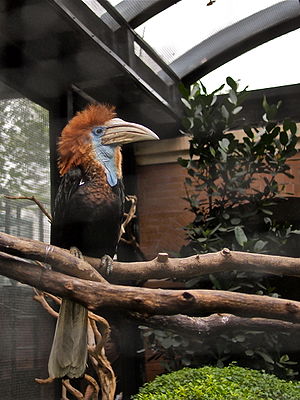
The Yellow-casqued Hornbill (Ceratogymna elata) is found in the primeval rain forest of coastal regions of West Africa, for example in Côte d’Ivoire.
Yellow-casqued Hornbills are one of the largest birds of the forest, with adults weighing up to 2 kg. They live mainly in the forest canopy, feeding on the ground only rarely. They live in small family groups containing at least one adult male and female, with one or two immature birds, though they sometimes gather in larger flocks to exploit a major food supply such as an ant or termite nest.
“The birds are occasionally preyed upon by Crowned Eagles, and they respond to the presence of an eagle (sometimes indicated by its characteristic shriek) by mobbing, i.e. approaching it and emitting calls. Since the eagles depend on surprise to make a catch, this frequently causes them to leave the area.” (Wikipedia edited)
“With the exception of basic messages such as aggression, communication between two entirely different species has seldom been observed among animals in the wild. We know that many animals among the same species give each other specific warnings about an impending danger.” One example is “researchers have found that a downy woodpecker responds to alarm calls from chickadees.” “However, scientists have never noted one species recognizing the specific warning given by a second species.
Diana monkeys on the Ivory Coast of Africa face two primary threats, leopards and crowned eagles. When one of these threats appears, the spotter gives a very specific bark-like call depending on the type of threat. Of course, the monkeys need to respond differently to each threat whether it comes from the leopard below or the eagle above. So it helps them to know what they are facing. On the other hand, a bird named the yellow hornbill is threatened only by the crowned eagles. Researchers noted that these birds ignored the monkeys’ warning about the leopards. But when the monkeys signaled danger from the eagle, the bird took defensive measures. Researchers confirmed their observations using tape recorded monkey calls. The researchers were amazed that these birds understood the monkey warnings in an intelligent manner.”
Such intelligence comes from the Creator, Who has given the gift of such intelligence to His creatures in a way that provides for their survival. This shows His loving care for His creation.
















 Lee's Birdwatching Adventures Plus