(Updated 12/3/09) Today I am opening up a section to be used for references. It will be used for storing some study references to use in the study of God’s Wondrous Creation. Whether it is for creation, critters or birds, I trust you will find them beneficial. One difference is that the Bird pages have pictures of the birds and in time, my desire is to add more photos to other critters and things that God has created.
I have only taken selective topics because of time and space usages. As time permits, more topics will be added. I will post some links to the full-blown versions of them. All of these are in the public domain and may be copied freely.
If a Bible reference is green, place your mouse over the verse and it will show the verse(s). I am starting with the Bird pages first. This is a work in progress.
Lord Bless you as you study His Word and about His magnificent creation.
Study to shew thyself approved unto God, a workman that needeth not to be ashamed, rightly dividing the word of truth. (2 Timothy 2:15)
All scripture is given by inspiration of God, and is profitable for doctrine, for reproof, for correction, for instruction in righteousness: (2 Timothy 3:16)
Oh, the depth of the riches both of the wisdom and knowledge of God! How unsearchable are His judgments and His ways past finding out! (Romans 11:33 NKJV)
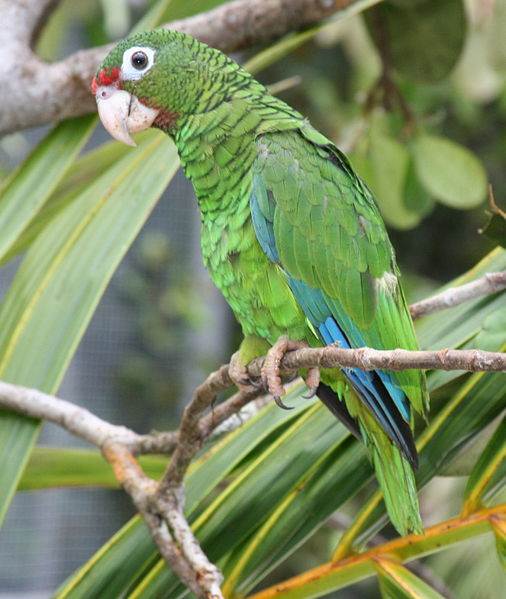
Puerto Rican Parrot
Last week the “Birds of the Bible – For His Pleasure” that I wrote was about the Lord’s Handiwork with the colors and markings of the Birds. This time, how the Lord designed their bill or beak will be considered.
It is truly amazing to observe the birds around us. They come in all kinds of sizes, shapes and colors. Have you really noticed their bills or beaks. God has designed them with various shaped bills, different length, and uses for them. Depending on what niche they fill, they have just the perfect bill for that food that they need to partake of. Some times the food that they consume is not available and they either adapt to what is available, they move on to find that food, or they become endangered or extinct. Let’s look at some of the variety of bills and the birds attached to them.
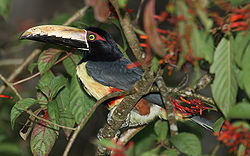
Collared Aracari
Toucan – “The colorful, giant bill, which in some large species measure more than half the length of the body, is the hallmark of toucans. Despite its size it is very light, being composed of bone struts with little solid material between them. The bill has forward-facing serrations resembling teeth,” which is used for eating fruit. “It does aid in their feeding behavior (as they sit in one spot and reach for all fruit in range, thereby reducing energy expenditure)…Also, the beak allows the bird to reach deep into treeholes to access food unavailable to other birds, and also to depredate suspended nests built by smaller birds.”
Hummingbird with beak in flower
Hummingbirds – Their thin long bills are used for collecting nectar and to protect their split tongues.
Egrets and Herons – They have long pointed bills that can be used to spear the fish they catch. They also catch them by a quick closing of the beak.
Woodpeckers – Their beaks are use to peck and tear off the bark of trees to catch bugs hidden there.
Pelican – They have a big beak with a pouch that they can hold the fish they catch.
Gnatcatcher – A very fine and small beak helps them catch gnat and other tiny insects.
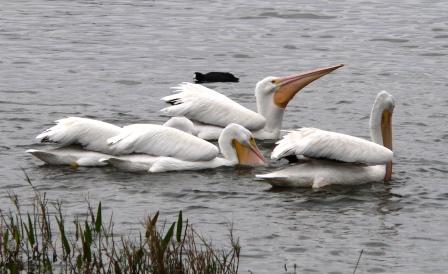
American White Pelicans at Lake Hollingsworth
Sparrows and similiar – They have a cone shape bill that allows them to crack open seeds.
Parrots – Have even a bigger cone like beak that can open larger seeds and nuts.
Spoonbills – Have what looks like a spoon for a bill. They use it to swing back and forth in the water and have a very sensitive touch that will snap the paddles together when something gets in between them. Video
Bird Beaks from Wikipedia
The list goes on and on and you will find in each case, that the bill and the bird match-up shows the infinite wisdom of our God and the Lord Jesus Christ, the Creator of them all.
As Christians, we also each have some niche that the Lord wants us to fill. He has given us the talents, abilities, gifts, etc. to do that task or ministry. Our problem sometimes is the will to do His Will with what He has provided for us. Again, let us learn from watching the birds and how they use what was designed for them.
But now ask the beasts, and they will teach you; And the birds of the air, and they will tell you; (Job 12:7 NKJV)
The ox knows its owner And the donkey its master’s crib; But Israel does not know, My people do not consider. (Isaiah 1:3 NKJV)
Here is an interesting article, “Animals Can Tell Right From Wrong.” This was in the Telegraph.co.uk and is by Richard Gray. “Animals possess a sense of morality that allows them to tell the difference between right and wrong,…”
The scientist have been studying animal behavior and are finding that a variety of species are “governed by moral codes of conduct in the same way as humans.” They thought that only humans could have “complex emotions and have a sense of morality.”
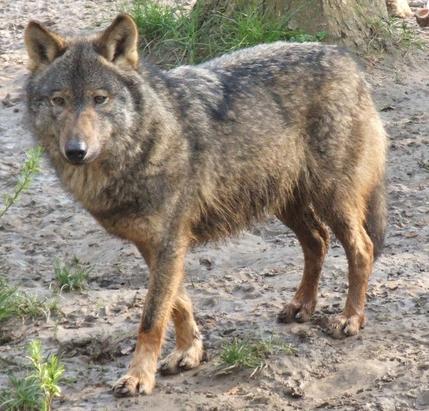
Wolf from Wikipedia
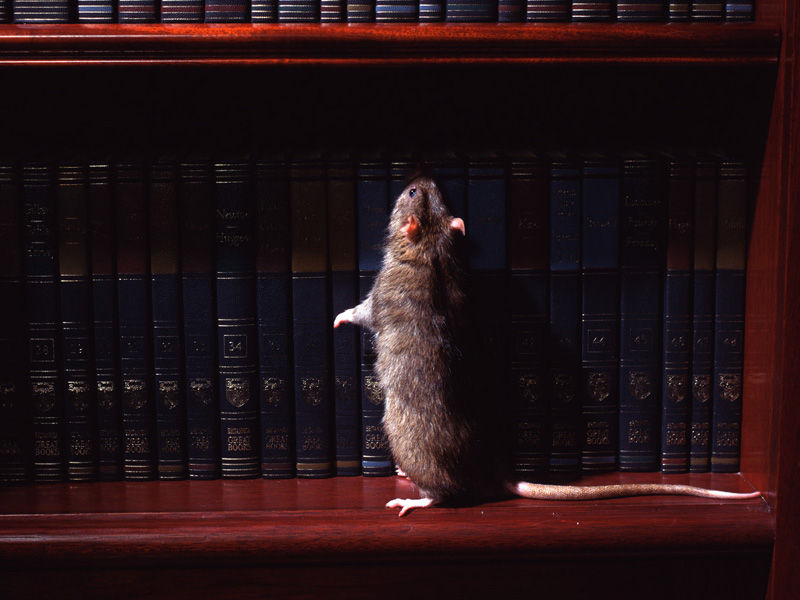
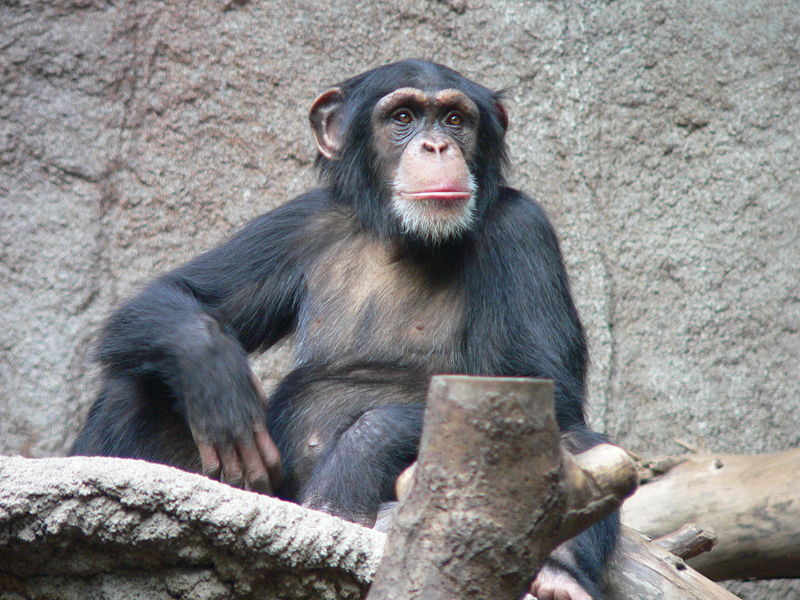
What they are finding out is that various animals have a built-in (instinct) for fairness, can feel empathy, and help other animals that are having difficulties, have a social responsibility, and moral codes – depending on the species. They go on to give examples from wolves (have strict rules), coyotes (a sense of fairness), elephants (help another when it’s sick and sadness if it dies), Diana monkeys (doing a task for another), chimpanzees (sense of justice and treating an ill one less agressively), rodents (not causing another pain), bats (sharing and teaching) and whales (“empathy and understanding the feelings of others”).
They concluded with this remark, “This finding has suggested that complex emotional judgements such as empathy may have evolved considerably earlier in history than previously thought and could be widespread in the animal kingdom.”
Chimpanzee
As you know, I believe that God created animals with instincts that He put there. The verses above reminds us that we can learn from the animals and birds. Many today, as Israel did then, do not know nor do they consider things that even the critters know. Again, we have the evidence of how these animals behave, but it depends on whether you believe in God or not, as to how you interpret these findings.
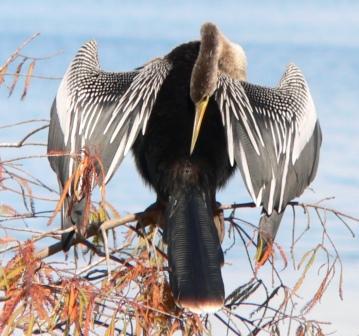
The Anhinga (Anhinga anhinga) is a interesting bird to watch here in Florida. They are very easy to spot with their outstretched wings. It is harder to spot them when they are in the water and swimming with only their heads stuck out. This is where the nickname, “Snake Bird,” comes from. We were watching them the other day when we visited Lake Hollingsworth and it reminded me of some verses.
1. The Anhinga must be tired after all that diving and is quite water-logged (heavy-laden) and needs to rest while its wings dry out. The Anhinga does not have an oil gland like most birds and must dry its feathers before it can get airborne again. The Lord designed it this way so that it can dive deep to catch fish, which is about 99% of its prey. If the feathers are oily, the bird has a tendancy to pop back up to the surface.
“Come to Me, all who are weary and heavy-laden, and I will give you rest. Take My yoke upon you and learn from Me, for I am gentle and humble in heart, and YOU WILL FIND REST FOR YOUR SOULS.” (Matthew 11:28-29 NASB)
Anhinga Dryed at Lake Hollingsworth
For us, we can come to the Lord when things are “getting us down” and He will give us rest. When we pray and ask the Lord to help us and we leave the burden with Him, our souls are refreshed and we feel rested.
2. When the Anhinga first comes out of the water, they look all black and you do not see the white in its feathers. As the feathers dry, the color lightens up, and eventually the white shows up.
“Come now, and let us reason together, saith the LORD: though your sins be as scarlet, they shall be as white as snow; though they be red like crimson, they shall be as wool.” (Isaiah 1:18 KJV)
The Wordless Book song that Child Evangelism uses:
My heart was black with sin,
Until the Savior came in.
His Precious Blood I know,
Will wash me whiter than snow.
And in God’s Word I’m told
I’ll walk the streets of gold.
I’ll read my Bible and pray,
And Grow in Him every day!
Thou art worthy, O Lord, to receive glory and honor and power: for thou hast created all things, and for thy pleasure they are and were created. (Revelation 4:11)
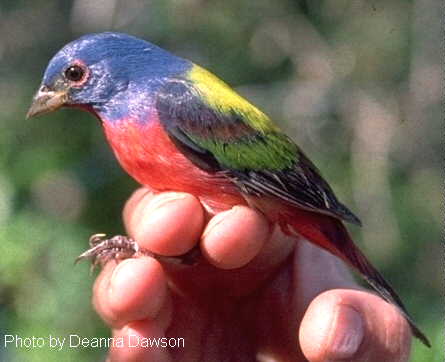
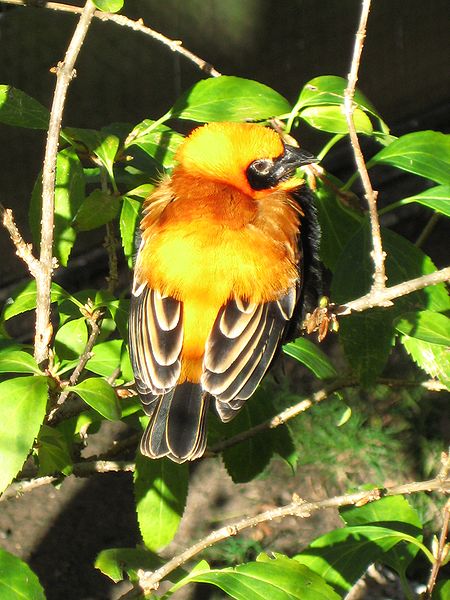
The Lord has created some fantastically beautiful birds amongst His Creation. This blog is just to show you some of those birds. As you watch the photos, realize that they are under a curse, (“For we know that the whole creation groaneth and travaileth in pain together until now.” Romans 8:22) and yet they are so neat. What must the first birds have been like when they were created? The Lord must have the neatest Paint Brush!
These photos were chosen to show colors and markings. In another blog, I’ll feature another of God’s Creative Handiwork.
While looking for some more photos for the Birds of the Bible pages I am updating, I again came to “Fotobirder” at Smugbug by Steve Slayton. Steve is the brother-in-law of a very good friend of mine in South Carolina. He has been busy adding lots of new photos. Steve is one of the photographers who has given his permission to use his photos. Thanks, Steve. [update: His site is now removed.]
Steve is a Christian and loves to put a Scripture verse with most of his photos. He gives credit to the Creator for what He has created.
Anna’s Hummingbird – The earth is the LORD’s, and everything in it, the world and all who live in it. PSALM 24 verse 1
(16) For I am not ashamed of the gospel of Christ: for it is the power of God unto salvation to every one that believeth; to the Jew first, and also to the Greek. (17) For therein is the righteousness of God revealed from faith to faith: as it is written. The just shall live by faith. (18) For the wrath of God is revealed from heaven against all ungodliness and unrighteousness of men, who hold the truth in unrighteousness; (19) Because that which may be known of God is manifest in them; for God hath showed it unto them. (20) For the invisible things of him from the creation of the world are clearly seen, being understood by the things that are made, even his eternal power and Godhead; so that they are without excuse: (21) Because that, when they knew God, they glorified him not as God, neither were thankful; but became vain in their imaginations, and their foolish heart was darkened. (22) Professing themselves to be wise, they became fools, (23) And changed the glory of the incorruptible God into an image made like to corruptible man, and to birds, and fourfooted beasts, and creeping things. (24) Wherefore God also gave them up to uncleanness through the lusts of their own hearts, to dishonor their own bodies between themselves: (25) Who changed the truth of God into a lie, and worshiped and served the creature more than the Creator, who is blessed forever. Amen. (Romans 1:16-25)
I know that the above quotation is long, but it is needed to show the problem of making idols in the image of birds and other things. Here on this blog, we discuss the birds and how the Lord has created each of them, how His glory and honor is to be praised for His great intelligence (omniscience) and power (omnipotence), etc. What we don’t do is worship these birds. Over the centuries, man has taken his eyes off of God, and put it on things, such as birds. Then, he has used wood and other materials to make idols of them. Next come the worship of that idol. “Idolatry is a term used by the monotheistic religions in reference to the worship of physical objects (idols) and, more generally, to most any religious practices which involves the worship of anything other than God. Forms of worship encompassed under the term idolatry include prostrating before an idol, offering prayers to idols, and offering librations or animal sacrifices to idols.” (from Creation Wiki) Here are some of the ways that man has denied God this way:
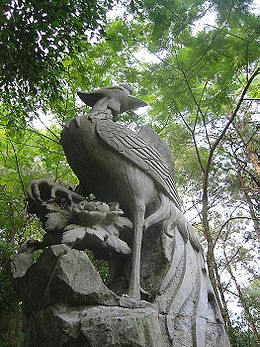
Chinese Phoenix – Fenghuang
Fenghuang: “Fenghuang is said to be made up of the beak of a rooster, the face of a swallow, the forehead of a fowl, the neck of a snake, the breast of a goose, the back of a tortoise, the hindquarters of a stag and the tail of a fish. Today, however, it is often described as a composite of many birds including the head of a golden pheasant, the body of a mandarin duck, the tail of a peacock, the legs of a crane, the mouth of a parrot, and the wings of a swallow. Its body symbolizes the six celestial bodies. The head is the sky, the eyes are the sun, the back is the moon, the wings are the wind, the feet are the earth, and the tail are the planets.”
Griffin: “The Griffin (griffon or gryphon is a legendary creature with the body of a lion and the head and often wings of an eagle. As the lion was traditionally considered the king of the beasts and the eagle was the king of the birds, the griffin was thought to be an especially powerful and majestic creature. Griffins are normally known for guarding treasure. In antiquity it was a symbol of divine power and a guardian of the divine.”
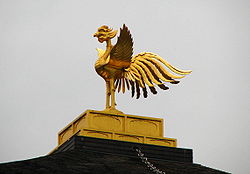
Phoenix on top of Kinkaku-ji temple in Japan
Phoenix: “The bird was also said to regenerate when hurt or wounded by a foe, thus being immortal and invincible — it is also said that it can heal a person with a tear from its eyes and make them temporarily immune to death. The phoenix is a symbol of fire and divinity.” “Originally, the phoenix was identified by the Egyptians as a stork or heron-like bird called a “benu”, known from the Book of the Dead and other Egyptian texts as one of the sacred symbols of worship at Heliopolis, closely associated with the rising sun and the Egyptian sun-god Ra.”
These are just a few of the Bird Idols around the world. As stated earlier, we love doing articles about the fantastic birds God has created, but please, don’t take your eyes off of the Creator. He created them for His pleasure and ours, not to be worshiped.
Thou shalt have no other gods before me. Thou shalt not make unto thee any graven image, or any likeness of any thing that is in heaven above, or that is in the earth beneath, or that is in the water under the earth: Thou shalt not bow down thyself to them, nor serve them: for I the LORD thy God am a jealous God, (Exodus 20:3-5a)
Interesting article to read: The Folly of Idolatry by Kyle Campbell Most quotes are from Wikipedia.
And God said, Let the earth bring forth the living creature after his kind, cattle, and creeping thing, and beast of the earth after his kind: and it was so. And God made the beast of the earth after his kind, and cattle after their kind, and every thing that creepeth upon the earth after his kind: and God saw that it was good. And God said, Let us make man in our image, after our likeness: and let them have dominion over the fish of the sea, and over the fowl of the air, and over the cattle, and over all the earth, and over every creeping thing that creepeth upon the earth. So God created man in his own image, in the image of God created he him; male and female created he them. (Genesis 1:24-27)
Creation Moments Responds to the Latest “Missing Link” in Human Evolution
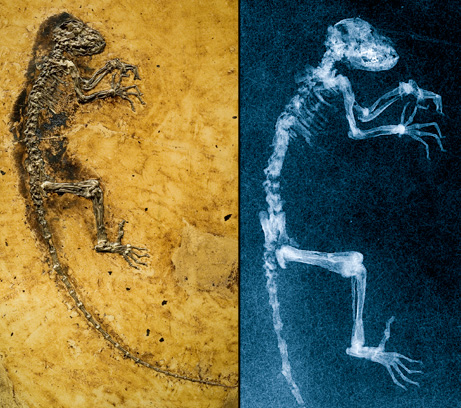
"Ida" the "Missing Link"
Thought you might enjoy reading the lastest newsletter from Creation Moments about “Ida”, the new “missing link.” I had seen this on TV just recently and figured someone would question it.
“It is now May and Creation Moments has been wondering when – during this Darwin’s bicentenary year – some startling new fossil discovery would be announced confirming Darwin’s Theory. Well, the announcement is a bit late – Darwin’s birthday was February 12. And, to put it mildly, the discovery is not at all spectacular.
It’s a skeleton of a lemur monkey a mere 21 inches long, but half of that is the tail. It is claimed to be 47 million years old, and it was found in two parts by an amateur fossil hunter in Germany in 1983…..”
To read the rest of the article from Creation Moments Click Here
Weaver bird name for the Ploceidae, a family of Old World seed-eating birds closely resembling finches (hence the alternate name weaver finch). It includes a number of so-called goldfinches and waxbill finches that are actually weaver birds, rather than true finches of the family Fringillidae. The weavers are named for the highly complex woven nests built by many species, though others build only crude nests, and the parasitic widow weavers build no nests at all. Most weavers are sedentary, noisy, gregarious, and polygynous, with elaborate courtship rituals. Most weavers use grasses for the weaving of the nests which have an entry at the bottom.
The weaver group is divided into the buffalo, sparrow, typical, and widow weavers.
Sparrow-weavers – Of the 35 sparrow weavers the best known, and in fact one of the most widely distributed and familiar small birds in the world, is the English sparrow native to Europe, W Asia, and N Africa. It is the most successful town and city dweller among birds, and has followed European civilization wherever it has gone; it was introduced to North America in 1852. As common in Asia is the Eurasian tree sparrow (also introduced in the United States), a nuisance in rice fields and sold in great quantities for food. These birds build untidy domed nests with side entrances. Most specialized of the sparrow weavers is the White-browed Sparrow-weaver Chestnet-crowned Sparrow-weaver Chestnut-backed Sparrow-weaver Donaldson-Smith’s Sparrow-weaver
Social-weaver of Africa, famous for its apartment-house nest, in which 100 to 300 pairs have separate flask-shaped chambers entered by tubes at the bottom. They build these structures, which may be 10 ft (3 m) high and 15 ft (4.5 m) across, high in a sturdy tree, beginning with a roof of straw thatch. Of the 100 or more African and Asian typical weavers, the small quelea, only 5 in. (12.7 cm) long, sometimes causes huge crop losses in Africa by feeding on grain in flocks numbering as many as one million birds. Grey-headed Social-weaver Black-capped Social-weaver
Widow-weavers – The African widow weavers (named for the long, drooping black tail plumes of the breeding male), or whydahs, are notable for their selective parasitic nesting habits; they lay their eggs in the nests of waxbills, and their eggs are white, as are those of the waxbill, rather than spotted, as are those of all other weavers.
Many of the weaver family are kept as cage birds, especially the colorful waxbills (e.g., the Java sparrow, mannikin, munia, grenadier, cutthroat, and cordon-bleu, locust, parrot, Gouldian, and fire finches). Weaver birds are classified in the phylum Chordata , subphylum Vertebrata, class Aves, order Passeriformes.
Which doeth great things and unsearchable; marvelous things without number: (Job 5:9)
Evidence From Biology
“The largest known cooperative community of mammals spend their summers together inside Bracken Cave near San Antonio, Texas. During the day 20 million Mexican free-tailed bats raise their 20 million pups, while each night they gulp down an estimated 150 tons of insects! The bats winter in Mexico and mate in the spring. Then, for a reason unknown to scientists, only the females fly to Texas.
During their migration, the bats fly at 40 miles per hour at an altitude of eight to ten thousand feet. Once settled in at Bracken Cave, they become pregnant from the sperm of male bats which they have carried on the journey with them! Four month later each has a single pup. Although the cave’s one-room nursery has 20 million noisy pups, a mother bat released anywhere within the cave can find her own baby in as little as twelve seconds.
How marvelous is our God who created such wonders!”
From April 21 in “A Closer Look at the Evidence,” Kleiss – “Letting God Create Your Day,” Vol. 3, p.91
And they shall go into the holes of the rocks, and into the caves of the earth, for fear of the LORD, and for the glory of his majesty, when he ariseth to shake terribly the earth. In that day a man shall cast his idols of silver, and his idols of gold, which they made each one for himself to worship, to the moles and to the bats; To go into the clefts of the rocks, and into the tops of the ragged rocks, for fear of the LORD, and for the glory of his majesty, when he ariseth to shake terribly the earth.
(Isaiah 2:19-21 KJV)