God’s World – by Charles Kingsley

Red-eyed Vireo (Vireo olivaceus) ©WikiC in nest

Red-eyed Vireo (Vireo olivaceus) ©WikiC in nest

Twenty-Five Village Sermons, 1 – God’s World – By Charles Kingsley 
(Guest Writer from the Past)

O Lord, how manifold are Thy works! in wisdom hast Thou made them all: the earth is full of Thy riches. Psalm 104:24

When we read such psalms as the one from which this verse is taken, we cannot help, if we consider, feeling at once a great difference between them and any hymns or religious poetry which is commonly written or read in these days. The hymns which are most liked now, and the psalms which people most willingly choose out of the Bible, are those which speak, or seem to speak, about God’s dealings with people’s own souls, while such psalms as this are overlooked. People do not care really about psalms of this kind when they find them in the Bible, and they do not expect or wish nowadays any one to write poetry like them. For these psalms of which I speak praise and honour God, not for what He has done to our souls, but for what He has done and is doing in the world around us. This very 104th psalm, for instance, speaks entirely about things which we hardly care or even think proper to mention in church now. It speaks of this earth entirely, and the things on it. Of the light, the clouds, and wind–of hills and valleys, and the springs on the hill- sides–of wild beasts and birds–of grass and corn, and wine and oil–of the sun and moon, night and day–the great sea, the ships, and the fishes, and all the wonderful and nameless creatures which people the waters–the very birds’ nests in the high trees, and the rabbits burrowing among the rocks,–nothing on the earth but this psalm thinks it worth mentioning. And all this, which one would expect to find only in a book of natural history, is in the Bible, in one of the psalms, written to be sung in the temple at Jerusalem, before the throne of the living God and His glory which used to be seen in that temple,–inspired, as we all believe, by God’s Spirit,– God’s own word, in short: that is worth thinking of. Surely the man who wrote this must have thought very differently about this world, with its fields and woods, and beasts and birds, from what we think. Suppose, now, that we had been old Jews in the temple, standing before the holy house, and that we believed, as the Jews believed, that there was only one thin wall and one curtain of linen between us and the glory of the living God, that unspeakable brightness and majesty which no one could look at for fear of instant death, except the high-priest in fear and trembling once a- year–that inside that small holy house, He, God Almighty, appeared visibly–God who made heaven and earth. Suppose we had been there in the temple, and known all this, should we have liked to be singing about beasts and birds, with God Himself close to us? We should not have liked it–we should have been terrified, thinking perhaps about our own sinfulness, perhaps about that wonderful majesty which dwelt inside. We should have wished to say or sing something spiritual, as we call it; at all events, something very different from the 104th psalm about woods, and rivers, and dumb beasts. We do not like the thought of such a thing: it seems almost irreverent, almost impertinent to God to be talking of such things in His presence. Now does this shew us that we think about this earth, and the things in it, in a very different way from those old Jews? They thought it a fit and proper thing to talk about corn and wine and oil, and cattle and fishes, in the presence of Almighty God, and we do not think it fit and proper. We read this psalm when it comes in the Church-service as a matter of course, mainly because we do not believe that God is here among us. We should not be so ready to read it if we thought that Almighty God was so near us.
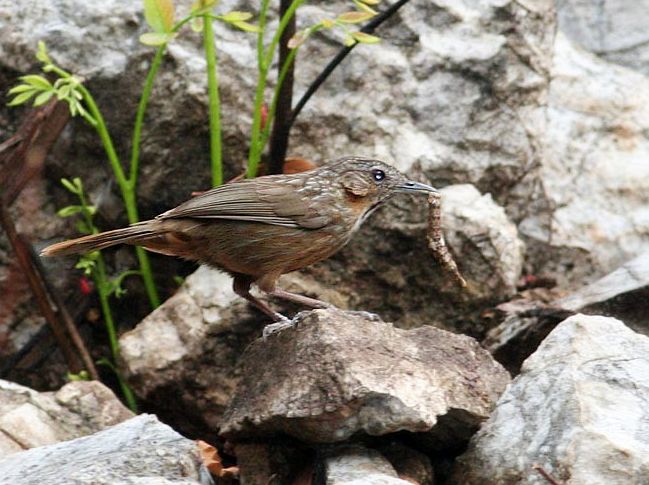
Limestone Wren-Babbler (Napothera crispifrons) by Peter Ericsson

Limestone Wren-Babbler (Napothera crispifrons) by Peter Ericsson

That is a great difference between us and the old Jews. Whether it shews that we are better or not than they were in the main, I cannot tell; perhaps some of them had such thoughts too, and said, ‘It is not respectful to God to talk about such commonplace earthly things in His presence;’ perhaps some of them thought themselves spiritual and pure-minded for looking down on this psalm, and on David for writing it. Very likely, for men have had such thoughts in all ages, and will have them. But the man who wrote this psalm had no such thoughts. He said himself, in this same psalm, that his words would please God. Nay, he is not speaking and preaching ABOUT God in this psalm, as I am now in my sermon, but he is doing more; he is speaking TO God–a much more solemn thing if you will think of it. He says, “O Lord my God, THOU art become exceeding glorious. Thou deckest Thyself with light as with a garment. All the beasts wait on Thee; when Thou givest them meat they gather it. Thou renewest the face of the earth.” When he turns and speaks of God as “He,” saying, “He appointed the moon,” and so on, he cannot help going back to God, and pouring out his wonder, and delight, and awe, to God Himself, as we would sooner speak TO any one we love and honour than merely speak ABOUT them. He cannot take his mind off God. And just at the last, when he does turn and speak to himself, it is to say, “Praise thou the Lord, O my soul, praise the Lord,” as if rebuking and stirring up himself for being too cold-hearted and slow, for not admiring and honouring enough the infinite wisdom, and power, and love, and glorious majesty of God, which to him shines out in every hedge-side bird and every blade of grass. Truly I said that man had a very different way of looking at God’s earth from what we have!
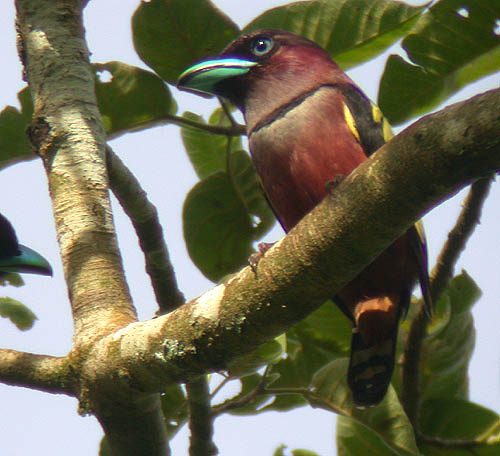
Banded Broadbill (Eurylaimus javanicus) by Peter Ericsson

Banded Broadbill (Eurylaimus javanicus) by Peter Ericsson

Now, in what did that difference lie? What was it? We need not look far to see. It was this,–David looked on the earth as God’s earth; we look on it as man’s earth, or nobody’s earth. We know that we are here, with trees and grass, and beasts and birds, round us. And we know that we did not put them here; and that, after we are dead and gone, they will go on just as they went on before we were born,–each tree, and flower, and animal, after its kind, but we know nothing more. The earth is here, and we on it; but who put it there, and why it is there, and why we are on it, instead of being anywhere else, few ever think. But to David the earth looked very different; it had quite another meaning; it spoke to him of God who made it. By seeing what this earth is like, he saw what God who made it is like: and we see no such thing. The earth?–we can eat the corn and cattle on it, we can earn money by farming it, and ploughing and digging it; and that is all most men know about it. But David knew something more–something which made him feel himself very weak, and yet very safe; very ignorant and stupid, and yet honoured with glorious knowledge from God,–something which made him feel that he belonged to this world, and must not forget it or neglect it, that this earth was his lesson-book–this earth was his work-field; and yet those same thoughts which shewed him how he was made for the land round him, and the land round him was made for him, shewed him also that he belonged to another world–a spirit- world; shewed him that when this world passed away, he should live for ever; shewed him that while he had a mortal body, he had an immortal soul too; shewed him that though his home and business were here on earth, yet that, for that very reason, his home and business were in heaven, with God who made the earth, with that blessed One of whom he said, “Thou, Lord, in the beginning hast laid the foundation of the earth, and the heavens are the work of thy hands. They shall perish, but Thou shalt endure; they all shall fade as a garment, and like a vesture shalt Thou change them, and they shall be changed; but Thou art the same, and THY years shall not fail. The children of Thy servants shall continue, and their seed shall stand fast in Thy sight.” “As a garment shalt Thou change them,”– ay, there was David’s secret! He saw that this earth and skies are God’s garment–the garment by which we see God; and that is what our forefathers saw too, and just what we have forgotten; but David had not forgotten it.

Look at this very 104th psalm again, how he refers every thing to God. We say, ‘The light shines:’ David says something more; he says, “Thou, O God, adornest Thyself with light as with a curtain.” Light is a picture of God. “God,” says St. John, “is light, and in Him is no darkness at all.” We say, ‘The clouds fly and the wind blows,’ as if they went of themselves; David says, “God makes the clouds His chariot, and walks upon the wings of the wind.” We talk of the rich airs of spring, of the flashing lightning of summer, as dead things; and men who call themselves wise say, that lightning is only matter,–‘We can grind the like of it out of glass and silk, and make lightning for ourselves in a small way;’ and so they can in a small way, and in a very small one: David does not deny that, but he puts us in mind of something in that lightning and those breezes which we cannot make. He says, God makes the winds His angels, and flaming fire his ministers; and St. Paul takes the same text, and turns it round to suit his purpose, when he is talking of the blessed angels, saying, ‘That text in the 104th Psalm means something more; it means that God makes His angels spirits, (that is winds) and His ministers a flaming fire.’ So shewing us that in those breezes there are living spirits, that God’s angels guide those thunder-clouds; that the roaring thunderclap is a shock in the air truly, but that it is something more–that it is the voice of God, which shakes the cedar-trees of Lebanon, and tears down the thick bushes, and makes the wild deer slip their young. So we read in the psalms in church; that is David’s account of the thunder. I take it for a true account; you may or not as you like. See again. Those springs in the hill- sides, how do they come there? ‘Rain-water soaking and flowing out,’ we say. True, but David says something more; he says, God sends the springs, and He sends them into the rivers too. You may say, ‘Why, water must run down-hill, what need of God?’ But suppose God had chosen that water should run UP-hill and not down, how would it have been then?–Very different, I think. No; He sends them; He sends all things. Wherever there is any thing useful, His Spirit has settled it. The help that is done on earth He doeth it all Himself.–Loving and merciful,–caring for the poor dumb beasts!–He sends the springs, and David says, “All the beasts of the field drink thereof.”

Swift Fox

Swift Fox ©WikiC

The wild animals in the night, He cares for them too,–He, the Almighty God. We hear the foxes bark by night, and we think the fox is hungry, and there it ends with us; but not with David: he says, “The lions roaring after their prey do seek their meat from God,”–God, who feedeth the young ravens who call upon Him. He is a God! “He did not make the world,” says a wise man, “and then let it spin round His finger,” as we wind up a watch, and then leave it to go of itself. No; “His mercy is over all His works.” Loving and merciful, the God of nature is the God of grace. The same love which chose us and our forefathers for His people while we were yet dead in trespasses and sins; the same only- begotten Son, who came down on earth to die for us poor wretches on the cross,–that same love, that same power, that same Word of God, who made heaven and earth, looks after the poor gnats in the winter time, that they may have a chance of coming out of the ground when the day stirs the little life in them, and dance in the sunbeam for a short hour of gay life, before they return to the dust whence they were made, to feed creatures nobler and more precious than themselves. That is all God’s doing, all the doing of Christ, the King of the earth. “They wait on Him,” says David. The beasts, and birds, and insects, the strange fish, and shells, and the nameless corals too, in the deep, deep sea, who build and build below the water for years and thousands of years, every little, tiny creature bringing his atom of lime to add to the great heap, till their heap stands out of the water and becomes dry land; and seeds float thither over the wide waste sea, and trees grow up, and birds are driven thither by storms; and men come by accident in stray ships, and build, and sow, and multiply, and raise churches, and worship the God of heaven, and Christ, the blessed One,–on that new land which the little coral worms have built up from the deep. Consider that. Who sent them there? Who contrived that those particular men should light on that new island at that especial time? Who guided thither those seeds–those birds? Who gave those insects that strange longing and power to build and build on continually?– Christ, by whom all things are made, to whom all power is given in heaven and earth; He and His Spirit, and none else. It is when HE opens His hand, they are filled with good. It is when HE takes away their breath, they die, and turn again to their dust. HE lets His breath, His spirit, go forth, and out of that dead dust grow plants and herbs afresh for man and beast, and He renews the face of the earth. For, says the wise man, “all things are God’s garment”– outward and visible signs of His unseen and unapproachable glory; and when they are worn out, He changes them, says the Psalmist, as a garment, and they shall be changed.

The old order changes, giving place to the new,
And God fulfils Himself in many ways.

But He is the same. He is there all the time. All things are His work. In all things we may see Him, if our souls have eyes. All things, be they what they may, which live and grow on this earth, or happen on land or in the sky, will tell us a tale of God,–shew forth some one feature, at least, of our blessed Saviour’s countenance and character,–either His foresight, or His wisdom, or His order, or His power, or His love, or His condescension, or His long-suffering, or His slow, sure vengeance on those who break His laws. It is all written there outside in the great green book, which God has given to labouring men, and which neither taxes nor tyrants can take from them. The man who is no scholar in letters may read of God as he follows the plough, for the earth he ploughs is his Father’s: there is God’s mark and seal on it,–His name, which though it is written on the dust, yet neither man nor fiend can wipe it out!
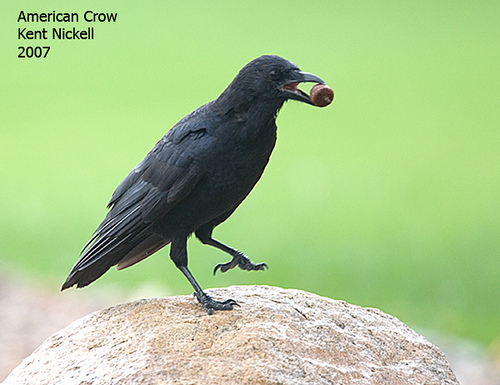
American Crow (Corvus brachyrhynchos) by Kent Nickell

American Crow (Corvus brachyrhynchos) by Kent Nickell

The poor, solitary, untaught boy, who keeps the sheep, or minds the birds, long lonely days, far from his mother and his playmates, may keep alive in him all purifying thoughts, if he will but open his eyes and look at the green earth around him.

Think now, my boys, when you are at your work, how all things may put you in mind of God, if you do but choose. The trees which shelter you from the wind, God planted them there for your sakes, in His love.–There is a lesson about God. The birds which you drive off the corn, who gave them the sense to keep together and profit by each other’s wit and keen eyesight? Who but God, who feeds the young birds when they call on Him?–There is another lesson about God. The sheep whom you follow, who ordered the warm wool to grow on them, from which your clothes are made? Who but the Spirit of God above, who clothes the grass of the field, the silly sheep, and who clothes you, too, and thinks of you when you don’t think of yourselves?–There is another lesson about God. The feeble lambs in spring, they ought to remind you surely of your blessed Saviour, the Lamb of God, who died for you upon the cruel cross, who was led as a lamb to the slaughter; and like a sheep that lies dumb and patient under the shearer’s hand, so he opened not his mouth. Are not these lambs, then, a lesson from God? And these are but one or two examples out of thousands and thousands. Oh, that I could make you, young and old, all feel these things! Oh, that I could make you see God in every thing, and every thing in God! Oh, that I could make you look on this earth, not as a mere dull, dreary prison, and workhouse for your mortal bodies, but as a living book, to speak to you at every time of the living God, Father, Son, and Holy Ghost! Sure I am that that would be a heavenly life for you,–sure I am that it would keep you from many a sin, and stir you up to many a holy thought and deed, if you could learn to find in every thing around you, however small or mean, the work of God’s hand, the likeness of God’s countenance, the shadow of God’s glory.

See  Charles Kingsley index.

Charles Kingsley – 1819 – 1875

Charles Kingsley was born in Holne (Devon), the son of a vicar. His brother, Henry Kingsley, also became a novelist. He spent his childhood in Clovelly, Devon and was educated at Magdalene College, Cambridge, before choosing to pursue a ministry in the church. From 1844, he was rector of Eversley in Hampshire, and in 1860, he was appointed Regius Professor of Modern History at the University of Cambridge.

Kingsley’s interest in history spilled over into his writings, which include The Heroes (1856), a children’s book about Greek mythology, and several historical novels, of which the best known are Hypatia (1853), Hereward the Wake (1865), and Westward Ho! (1855).

In 1872 Kingsley accepted the Presidency of the Birmingham and Midland Institute and became its 19th President.

Kingsley died in 1875 and was buried in St Mary’s Churchyard in Eversley.

*

Weights Become Wings – Mrs. Charles E. Cowman

Bald Eagle (Haliaeetus leucocephalus) Flying by Aesthetic Photos

Bald Eagle (Haliaeetus leucocephalus) Flying by Aesthetic Photos

Weights Become Wings – By Mrs. Charles E. Cowman
(Guest Writer from the Past)

They shall mount up with wings as eagles” (Isa.40:31)

There is a fable about the way the birds got their wings at the beginning. They were first made without wings. Then God made the wings and put them down before the wingless birds and said to them, “Come, take up these burdens and bear them.”

The birds had lovely plumage and sweet voices; they could sing, and their feathers gleamed in the sunshine, but they could not soar in the air. They hesitated at first when bidden to take up the burdens that lay at their feet, but soon they obeyed, and taking up the wings in their beaks, laid them on their shoulders to carry them.

For a little while the load seemed heavy and hard to bear, but presently, as they went on carrying the burdens, folding them over their hearts, the wings grew fast to their little bodies, and soon they discovered how to use them, and were lifted by them up into the air–the weights became wings.

It is a parable. We are the wingless birds, and our duties and tasks are the pinions God has made to lift us up and carry us heavenward. We look at our burdens and heavy loads, and shrink from them; but as we lift them and bind them about our hearts, they become wings, and on them we rise and soar toward God.

There is no burden which, if we lift it cheerfully and bear it with love in our hearts, will not become a blessing to us. God means our tasks to be our helpers; to refuse to bend our shoulders to receive a load, is to decline a new opportunity for growth. –J. R. Miller

Blessed is any weight, however overwhelming, which God has been so good as to fasten with His own hand upon our shoulders. F. W. Faber

See: Mrs. Charles E. Cowman index.

Guest Writer from the Past (In the Public Domain)

Lettie Cowman
1870 – 1960

Lettie Cowman was a Wesleyan missionary to Japan who, with her husband Charles E. Cowman, co-founded the Oriental Missionary Society in 1901 for church planting in most of the world outside North America.

Her books are devotionals she compiled from sermons, readings, writings, and poetry that she had encountered.

*

Observations from an Outsider ~ by Stephen Simpson

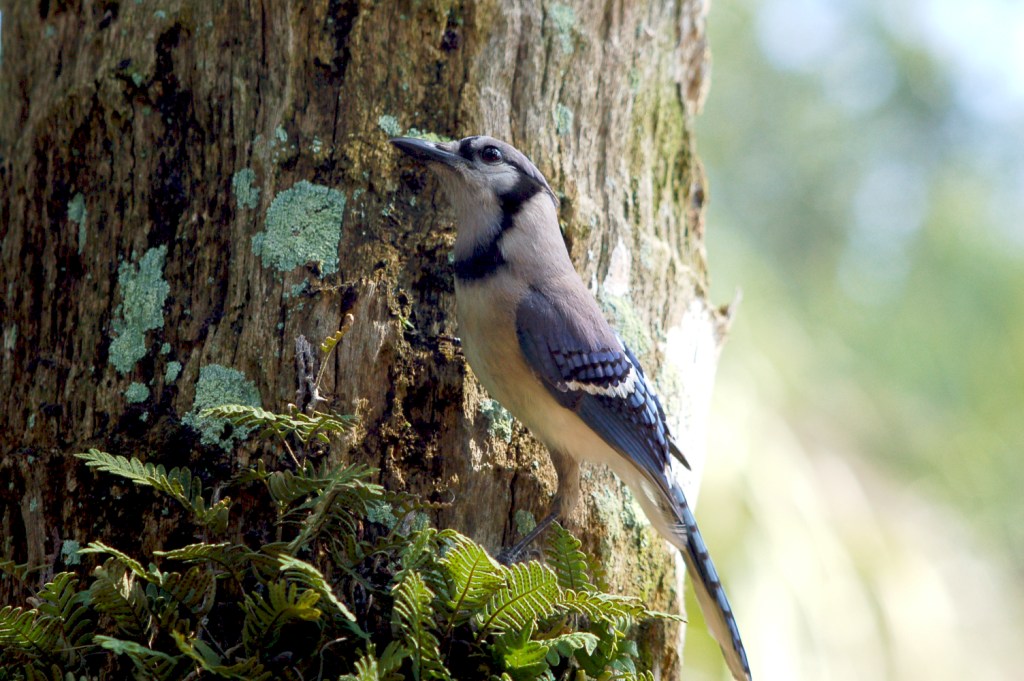
Blue Jay (Cyanocitta cristata) at Bok Tower By Dan'sPix

Blue Jay (Cyanocitta cristata) at Bok Tower By Dan’sPix

Observations from an Outsider

I am an outsider.  I do not consider myself to be an avid birdwatcher.  I am an ignorant birdwatcher.  I like to look at birds, but most of the time, I have absolutely no idea what I’m looking at.  My ability to identify birds does not extend much past Blue Jays and Bald Eagles.

That being said, I have learned much from Lee.  Through her writing, my understanding of birds has grown and deepened.  She has broadened my ‘birding skills.’  I have come to better appreciate the wide variety of birds that God has created.

When Lee asked me to write an article for this blog, I was stumped.  What can I contribute to a birdwatching blog?  I finally decided to write to people like me – outsiders.  So, if you are like me – an ignorant birdwatcher – then this post is for you.

Mallard Mom and Baby at Lake Hollingsworth

Here are some observations from the outside.

Be Still and know that I am God (Psalm 46:10)

  1. You and I need to Stop, Look, and Listen more.  We need to slow down and pay more attention.  It is so easy to go through life and totally miss the ‘birds.’  It is so easy to race from one activity to the next.  Let us take time to stop, close our eyes, and simply listen to the birds.  Let us take time to stand still and observe the rich diversity of birds all around us.
  2. You and I need to recognize that it is all about God.  God needs to be recognized more.  Every bird we see should direct our thoughts to God.  When you see a dove, think of the peace of God.  When you watch a Bald Eagle soar through the sky, think of the majesty and grandeur of God.  When you see a mother duck shelter and protect her babies, think of God how He shelters and protects His children.  Fortunately, we have Lee’s blog as a great resource to help us recognize God.
  3. You and I need to admit that God is not boring.  As we begin to recognize God more, we must admit that He is not dry or stale.  His creativity is infinite.  Which one of us could have dreamed up ‘sword-billed hummingbirds’ or ‘birds that drink seawater’ or ‘kakapos?’  Imagine, if the God of the universe put this much creativity into the birds of the air, how much more creativity must He have put into you and me.  We are of far more value to Him than the birds.  We bear His image.  God not only exquisitely designed the birds; He also designed each one of us.  Our God is not boring!  He is infinitely interesting!
Look at the birds of the air: they neither sow nor reap nor gather into barns, and yet your heavenly Father feeds them. Are you not of more value than they? (Matthew 6:26 ESV)
Sword-billed Hummingbird (Ensifera ensifera) by Robert Scanlon

Sword-billed Hummingbird (Ensifera ensifera) by Robert Scanlon


Lee’s Addition:

This blog owes very much to Stephen, our Assistant to the Pastor. When I was trying to find an outlet for my desire to use my Birds of the Bible lessons, it was Stephen who suggested that I write an article each Friday on our church blog. I said yes, but not knowing exactly what a “blog” was, I started one of my own, to learn how to lay out the articles for the “Fountain.” What you are reading, has been from that small beginning. Praise the Lord for letting Stephen make that suggestion.

Here are links to the first two articles on the Fountain in February 2008:
Birds of the Bible – Introduction and The Birds of the Bible ~ Eagles

*

Return Of The Robins – by Dorothy (Dot) Belle Malcolm

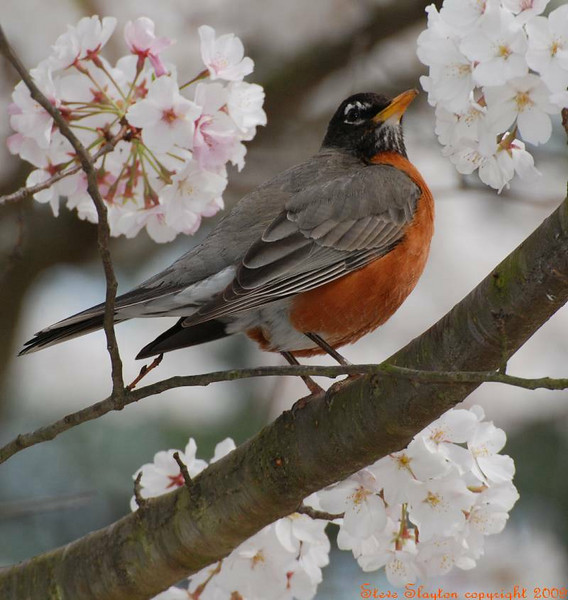
American Robin (Turdus migratorius) by S Slayton

American Robin (Turdus migratorius) by S Slayton

Return Of The Robins by Dorothy (Dot) Belle Malcolm – on February 27, 2011

On the way to church I thought I saw them; however, they flew so fast back and forth I wasn’t sure. The next day I was sure! The Robins had returned. Only a few were in my trees. At first I was disappointed, but at least I could hear lots of them in my neighborhood. I sent them many invitations in my thoughts as I worked in the yard, but they did not come.

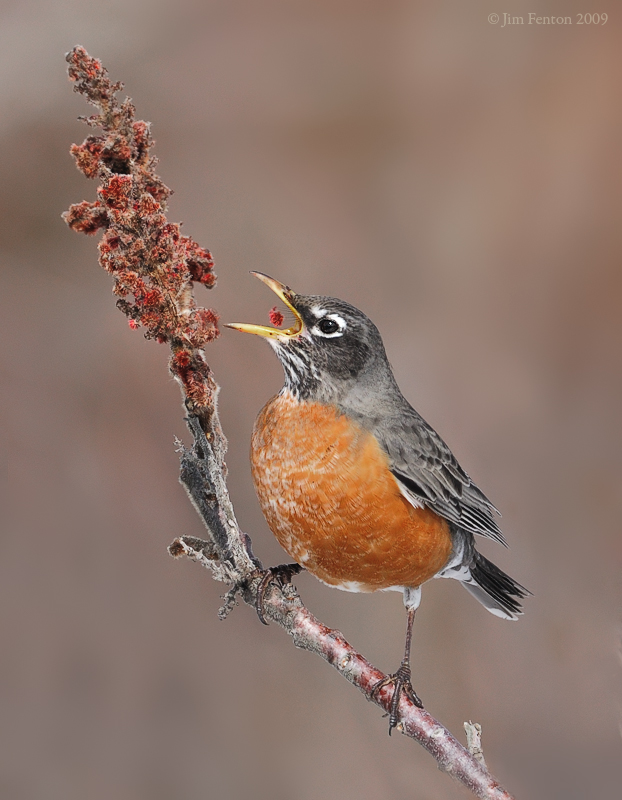
Robin Eating by Jim Fenton

Robin Eating by Jim Fenton

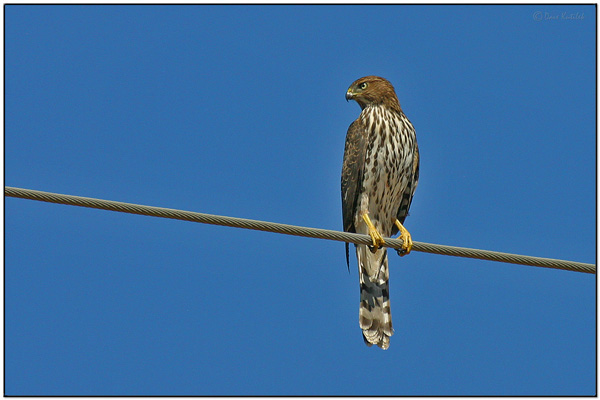
As I worked, I began to hear very high sweet sounds coming from some medium sized black birds. How thankful I was for their “music.” Then it ceased and I realized why when I saw the shadow of the Cooper’s Hawk come across the yard. He frequents our area almost daily, and I now realize why I have fewer birds come to my feeders. He is a beautiful specimen but my heart does not welcome him.

 Cooper's Hawk (Accipiter cooperii) by Daves BirdingPix

Cooper’s Hawk (Accipiter cooperii) by Daves BirdingPix

Well I promised last year I would not speak again of the Robin’s bad manners, so this year I shall not fault them for a lack of a good showing. They had a very good reason. I shall remain satisfied they were around and be thankful for that.

By Dorothy Belle Malcolm

See her article from last year – When The Robins Came


Lee’s Addition:

Even the stork in the sky Knows her seasons; And the turtledove and the swift and the thrush Observe the time of their migration; But My people do not know The ordinance of the LORD. (Jeremiah 8:7 NASB)

Listen to the – American Robin’s song -from xeno-canto.com

The American Robin (Turdus migratorius) is a member of the Thrush – Turdidae Family. As Dorothy (“Dottie” to me) knows, they only pass through on their migration journey. This time of the year, they are on their way north.

“The American Robin is widely distributed throughout North America, wintering south of Canada from Florida to central Mexico and along the Pacific Coast. The American Robin is active mostly during the day, and on its winter grounds it assembles in large flocks at night to roost in trees in secluded swamps or dense vegetation. The flocks break up during the day when the birds feed on fruits and berries in smaller groups. During the summer, the American Robin defends a breeding territory and is less social. It is the state bird of Connecticut, Michigan, and Wisconsin.” (Wikipedia)
*

Today’s Birds of the Bible

Updated at 8:10 pm

They are all finished. Hope you enjoy reading them.

********

Today, instead of doing my regular Birds of the Bible article, I am going to try to finish the Scripture Alphabet of Animals series. I have all the birds finished and am working hard to finish the rest of the animals today. All throughout the day, new articles will be posted as they are completed. I will be updating the index to the article (below) as I finish each one.

I trust you have enjoyed reading them as much as I have as the articles are being “modernized.” Harriet N Cook was a very good writer and trust she would have approved of the way that they are being handled here.

Lee

When The Robins Came – by Dorothy (Dot) Belle Malcolm

When The Robins Came – by Dorothy (Dot) Belle Malcolm

Robin Eating by Jim Fenton

Robin Eating by Jim Fenton

They came one day – loudly – uninvited – wildly flying thru the branches of the neighbor’s camphor tree, and were scattered over the ground as if it were a race to see who could eat the most. But primarily they were in the tree.

For days their noisy, frantic activity continued, usually in the mornings. Then when it seemed they had moved on to somewhere else, I saw they were back again.

Only this time in a tree near where I was cleaning up from the effects of winter’s cold. And they were oh so loud and gave no heed to me. I felt they were having much fun. They delighted in flicking decaying leaves around in search of wormy treasures.

In their colors of black and orange and yellow bills, they appeared fresh, strong, and each feather perfect. In their foraging, they would skitter, bob, stop still, stand proudly, with heads held up. They looked like strong healthy sentinels.

What joy seemed to be theirs, scattering leaves over the stone pathways. At first, I blamed the squirrels for the mess, but soon realized that was a wrong assumption. When they left, and I observed the mess, I thought they had not been taught good manners. After all they were visitors – shouldn’t they have cleaned up after themselves?

When I saw no more for a few days, I was sorry to have thought badly of their manners. After all, did I not greatly enjoy their antics? For you see, I had much to savor until they hopefully return next Spring.

Imagine how let down I felt by their supposed absence. I recalled their wild flights, beautiful fresh colors, proud looks and flicking up of the leaves. Oh how happy I was in a few days to be rewarded by the sight of a lone robin and hear it’s voice. Was it left behind I wondered – why did it appear to be alone? No, no, not at all, for in a couple days a goodly group appeared. I knew they were not here to stay though. When they return next year they will have an open invitation to my yard, trees, leaves, and all the rest. Let them be loud, wild, and messy. I shall not speak of bad manners again.

You will show me the path of life; In Your presence is fullness of joy; At Your right hand are pleasures forevermore. (Psalms 16:11 NKJV)
Look at the birds of the air: they neither sow nor reap nor gather into barns, and yet your heavenly Father feeds them. Are you not of more value than they? (Matthew 6:26 ESV)

Dorothy, Dottie as we know her at church, is a friend who likes to garden and provide for the needs of birds. When she told me of this true story, I had asked her if I could produce it here. Thanks, Dottie, I hope the readers enjoy it as much as I do and look forward to more observations of yours to share.

See her – Return of the Robins

*

Thousands of Eyes, But No Brain?

This is a copy of a neat article by April Lorier – “Thousands of Eyes, But No Brain?

April Lorier Perspective

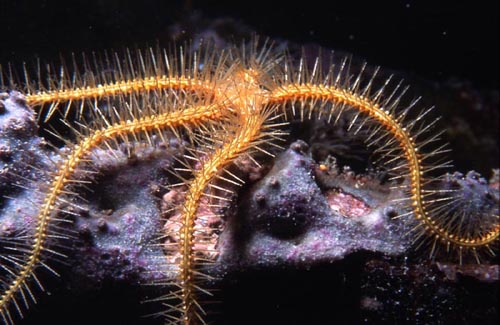
Brittlestar from Wikipedia

Brittlestar from Wikipedia

We generally associate eyes with our brain because they are two closely working parts of our nervous system. Our brain is necessary to interpret what our eyes see. However, the brittlestar, a relative of the starfish, has thousands of eyes and no brain.

The brittlestar’s body is covered with a pliable crystalline material. Inserted in this material are literally thousands of perfectly shaped lenses that collect light. Each of these lenses is about half the diameter of a human hair.

Researchers commented that these lenses are much finer than anything we can engineer. Studies show that all of these lenses work together to act as one giant eye. They seem to work rather like the compound eye of the fly. The lenses focus incoming light on photoreceptors.

Brittlestar ©Rachel Graham

Brittlestar ©Rachel Graham

Researchers believe that this arrangement allows the brittlestar to form a rough image of its surroundings and tell what time of day it is. If the light becomes too bright, the brittlestar can darken its skin, in effect, putting on sunglasses. Even more amazing is that the brittlestar does all of this, despite the fact that it doesn’t have a brain! As one researcher put it, “This is very clever engineering.”

The wonders that have come from God’s creative hand can lead even evolutionists to use the language of creation. Yet, God’s greatest wonder is His plan for our salvation.

2010 Christian Nature

“Better is the sight of the eyes than the wandering of the desire…” Ecclesiastes 6:9a —

References: Discover, 11/01, p. 16.

Used with permission of April Lorier.

See more of April’s articles.

*

Master Builder’s Master Builders… by AJ Mitra

Master Builder’s Master Builders…

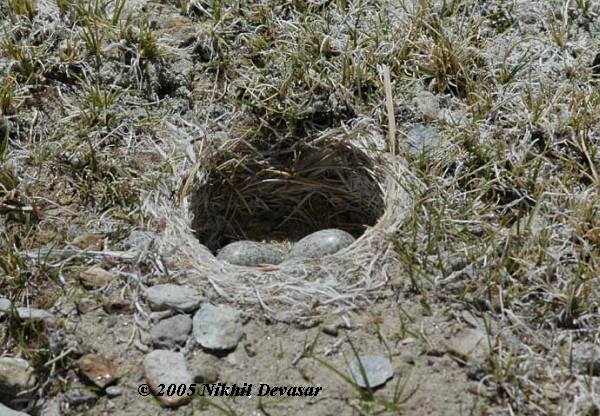
Horned Lark (Eremophila alpestris) Nest w/eggs by Nikhil Devasar

Birds are capable of grand engineering feats.
But are they engineers?
Not in the way you might think.
Just as birds know how to fly,
they know how to build a nest without instructions
or apprenticeship. It’s a matter of instinct.

Birds craft their nests without consciously thinking about it.
How then did some species of birds develop
such well-engineered, elaborate nests?

Horned Larks nests showed a significant northern bias
In orientation angle and were 49% shaded in the early afternoon,
the hottest part of the day.
A northern nest orientation ensures maximal shading
By the grass tuft to the south,
May protect nests from cool evening winds,
And provides increased daytime ventilation of the nest
through exposure to prevailing winds.
In addition, shade may also help conceal nests from predators.

From where did these birds learn to choose the location to build their nests?
Have we ever thought about the direction in which we need to have
the front door of our house?
Is our choice based on location or direction of the house?

When JESUS becomes our direction, HE gives the best location..

I am the door: by me if any man enter in, he shall be saved, and shall go in and out, and find pasture. (John 10:9)

Pectoral Sandpipers nest on the arctic tundra, often near water. The nest is lined with grass, moss and lichens.
They do not use lining materials according to local availability.
Instead, relative use was correlated with a material’s insulative quality when wet and they therefore use lining materials
appropriate to minimizing heat loss
given their damp breeding environment.

And he shall be like a tree planted by the rivers of water, that bringeth forth his fruit in his season; his leaf also shall not wither; and whatsoever he doeth shall prosper. (Psalm 1:3)

Blue Tit (Parus caeruleus) by Robert Scanlon

Blue Tit (Parus caeruleus) by Robert Scanlon

Female Blue Tits gather lavender, yarrow, curry, mint
and other scented plants for their nests shortly after laying eggs,
and continue to do so until the chicks leave home.
They are real botanists and do a great job exploiting their environment to protect their chicks..
The birds make a pot-pourri of 10 aromatic plants from the 250 species in their habitat.
Many of the chemicals in these plants ward off bacteria, viruses, parasites, fungi and insects.

Our nest is covered by the blood of JESUS and no harm shall enter…

And the blood shall be to you for a token upon the houses where ye are: and when I see the blood, I will pass over you, and the plague shall not be upon you to destroy you, when I smite the land of Egypt. (Exodus 12:13)

Common Waxbill (Estrilda astrild) by Daves BirdingPix

Common Waxbill (Estrilda astrild) by Daves BirdingPix

Common Waxbills are small African finches
select carnivore scat as a material to include in, on,
and around their nests to reduce predation risk…

A South American Ovenbird may take months
to fashion one nest from clay or mud mixed
with bits of straw, hair, and fibers.
The tropical sun bakes the walls brick-hard.

Bald Eagles, which use sticks, some two inches thick
and several feet long,
to make nests sturdy enough to support a human adult.
Chimney Swift using saliva as glue to help support its nest.

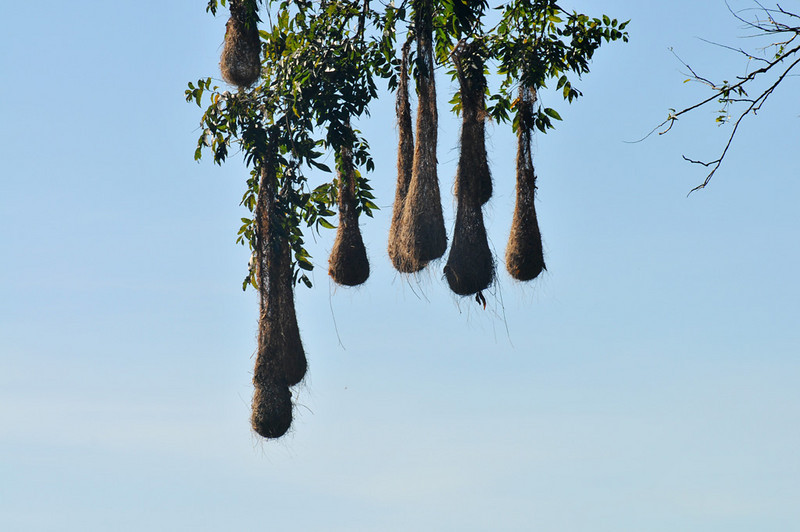
Crested Oropendola (Psarocolius decumanus) nests by Bob-Nan

Crested Oropendola (Psarocolius decumanus) nests by Bob-Nan

Baya Weaver nests in colonies of up to 20-30 pairs, usually in trees near freshwater and open ground. Their nests hang from a branch and look like an upside-down flask. A long tube leads to a side entrance, making it difficult even for snakes to enter the nest.
Nests are made entirely out of strips of grass that the birds collect by cutting
a notch in some tall grass, then stripping off a 30-60 cm long piece. A newly-made nest is green with fresh grass and turns brown as the grass dries. A bird may make up to 500 trips to complete a nest.

GOD has given us a home and a family with a purpose….
Most of us are trying hard to be like others and to live like others…
HE loves us as we are, so, let us live the way HE wants us to live…

Sparrows never try to live like Eagles. Do they?
If we are a sparrow, so be it and if we are an Eagle, so be it..
After all, a sparrow cannot live like Eagle and an Eagle cannot live like a Sparrow…

I will make a man more precious than fine gold; even a man than the golden wedge of Ophir. (Isaiah 13:12)

Bird nests vary from a simple accumulation of materials on the ground
to elaborate refuges in or on secluded & elevated substrates.
Nest construction and placement are correlated with flight ability.
Some birds create a simple depression in the ground to harbor their incubating eggs.

The progression of nest complexity moves from cryptic ground nests
to simple elevated nests..
Birds which constructs elevated nests in a bush or tree
or on a cliff or rock ledge tend to be better fliers than simple ground nesters.

You maybe wondering why GOD has placed you as a ground nester
while you desire to be an elevated nester…
You may be wondering why you have not got a place you feel that you deserve…
May be GOD feels that you would get hurt if you are an elevated nester..
Or maybe HE feels that you are not best equipped to be in a higher place…

Humble yourselves therefore under the mighty hand of God, that he may exalt you in due time: (1Peter 5:6)

GOD had HIS nest in heaven and because HE loved us so much,
HE stirred up HIS nest and wandered without a nest to be crucified for our sins…
So that HE may nest in us…

HE needs a nest, that is why HE is knocking at the door of your heart….
Do you have a place for HIM to nest?
Please note that HE is building an eternal nest for us live with HIM forever and ever.

Behold, I stand at the door, and knock: if any man hear my voice, and open the door, I will come in to him, and will sup with him, and he with me. (Revelation 3:20)

Your’s in YESHUA,

A. J. Mithra

Please visit us at: Crosstree

Ovenbirds – Ground Singers by A J Mithra

Ovenbirds – Ground Singers

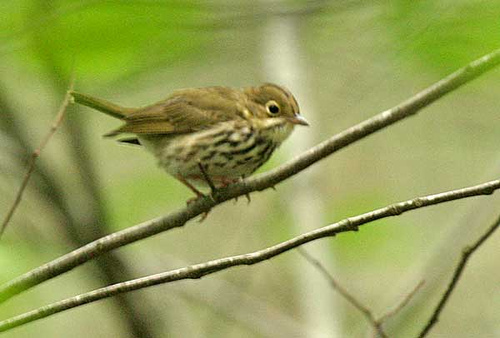
Ovenbird (Seiurus aurocapillus) by Kent Nickell

Ovenbird (Seiurus aurocapillus) by Kent Nickell

Using bird songs to find the population of birds,
according to the team conducting the study of a
more accurate estimate of bird population numbers
is reached when using this technique.
The bird song used in the study that employed
this latest technique is the Ovenbird, a small warbler found in North America.
Researchers gathered their data by recording the bird’s chirping.
Four microphones were used to record the birdsong
and the team combined the sound information and then
employed a computational method in which to convert
the recordings to give a more accurate estimate of the density
of the birds in certain areas..

If the same method is used in church, i am sure,
researchers would be fooled, cos,
we have more of silent churches than of singing churches..
But, Bible says,

O clap your hands, all ye people; shout unto God with the voice of triumph. (Psalm 41:1)

Most of us fail to understand that GOD loves our noise and not our voice..

JESUS did ground level ministry…
HE asked Zachaeus to come down from the tree
before offering to go with him to his house…

People feel proud to sing in the choir seated high above the ground..
Jonah praised from the whale’s belly and GOD delivered him.. (Jonah chapter 2)
Nebuchadnezzar praised from his lowly place
and GOD delivered him.. (Daniel chapter 4)
Don’t we need to learn to sing praises even from a lowly place
like these Oven birds?
Let us learn to sing not only from the ground
but also sing when we are aground…

A small, inconspicuous bird of the forest floor,
the Ovenbird is one of the most characteristic birds of the eastern forests.
Its loud song, “teacher, teacher, teacher,” rings through the summer forest,
but the bird itself is hard to see
Neighboring male Ovenbirds sing together.
When one male starts singing, the second will join in immediately after.
They pause, and then sing one after the other again, for up to 40 songs.
The second joins in so quickly that they may sound from a distance
as if only one bird is singing.
Ovenbirds rarely overlap the song of their neighbors…

Joshua and his men were silent for six days in unison
And they shouted together in unison…
Their oneness brought them victory…
Your silence at the presence of the LORD is worship you know?
Paul and Silas sang in unison and their praise shook the prison and broke their chains…
We have been singing in church for ages but still nothing of this sort
has happened..Why?
Is it because, we still overlap our neighbors’ song?
Is it because, we still haven’t learned to sing together as one like these birds?

For it is written, As I live, saith the Lord, every knee shall bow to me, and every tongue shall confess to God. (Romans 14:11)

Have a blessed day!
Yours in YESHUA,

A. J. Mithra

Please visit us at: Crosstree


Ovenbirds in the Parulidae – New World Warblers Family of the Passeriformes Order

Video of an Ovenbird by Robert Schaefer (IBC)

Stork – The Kind Mother – by A. J. Mithra

Stork – The Kind Mother

Asian Openbill (Anastomus oscitans) on nest by Nikhil

Asian Openbill (Anastomus oscitans) on nest by Nikhil

The Hebrew word for stork
Is equivalent to “KIND MOTHER”,
and the care of storks for their young,
in their highly visible nests,
made the stork a widespread emblem
of parental care.

The image of a stork carrying an infant
wrapped in a sling held in its beak
is common in popular culture
and again a symbol of parental care…

As the chicks eat lots of food,
the parents find and eat the food.
Then they come back to the nest
and spit up the food for the chicks to eat..

We are so privileged, for,
JESUS gave HIMSELF
as THE LIVING BREAD
and as THE LIVING WATER,
so that we may have life eternal…
Father and mother may forsake,
but, JESUS will never leave us
nor forsake us..

It was widely noted in ancient natural history,
that the stork would prefer to be consumed
with the nest in a fire,
rather than fly and abandon it.
Such is its commitment towards its family..

White Stork (Ciconia ciconia) by Ian

White Stork (Ciconia ciconia) by Ian

How committed are we to JESUS?
We say that JESUS is our nest,
I mean SHELTER,
but, how many of us would still
have the courage to walk into the fire
like those three young men?
Do we have the courage to face
persecution like Stephen?
Or will run away from JESUS
and sit in the enemy’s camp like Peter?
When JESUS becomes our NEST,
HE shall give us our ETERNAL REST…

And my hand hath found as a nest the riches of the people: and as one gathereth eggs that are left, have I gathered all the earth; and there was none that moved the wing, or opened the mouth, or peeped. (Isaiah 10:14 KJV)

Have a blessed day!

Yours in YESHUA,
A. J. Mithra at Crosstree

Click to see more of A. J.’s articles


See the Stork page (a Bird of the Bible)

Storks are in the Ciconiidae Family of the Ciconiiformes Order

*

Emu – The Model Father by A. J. Mithra

Emu – The Model Father

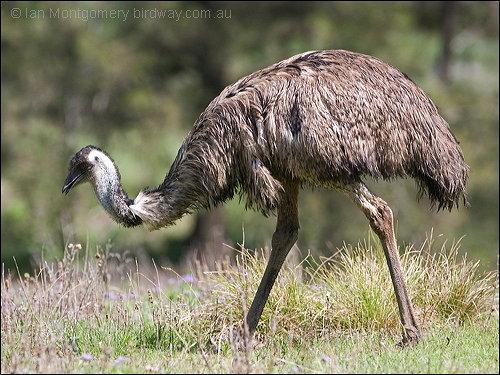
Emu (Dromaiusnovaehollandiae) by Ian

Emu (Dromaiusnovaehollandiae) by Ian

Mr. Emu is the most loving and caring
of all fathers of the bird community..
He not only builds the nest
in a semi-sheltered hollow
on the ground from bark,
grass, sticks and leaves
all by himself, but also incubates
the eggs alone and takes care of the chicks
all by himself..

JESUS neither sleeps nor slumbers
just to take care of all our needs..

During incubation,
he does not eat, drink or defecate,
but stands only to turn the eggs,
which he does about 10 times a day.
He will lose a third of his weight
during the eight week incubation period
and will survive only on stored body-fat
and on the morning dew,
that he can reach from the nest..

If these birds can survive
on morning dew,
we too are still surviving cos of
THE KING’S favor,which is like the morning dew…

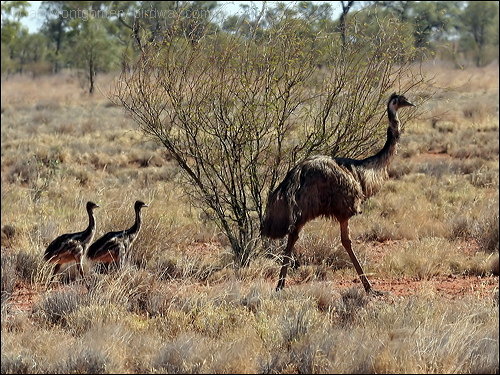
Emu (Dromaiusnovaehollandiae) with chicks by Ian

Emu (Dromaiusnovaehollandiae) with chicks by Ian

Mr. Emu stays with the growing chicks
for up to 18 months,
defending them and teaching them how to find food.

JESUS is our shield and our defense,
we are the apple of HIS eyes..
HE is with us all the days of our lives..
Once as Mr. Emu starts brooding,

Mrs. Emu mates with other males,
but that’s still okay with Mr. Emu.
He’s really very kind because
as many as half the chicks in the brood
he incubates are fathered by others.
Incubation takes 56 days….

Surely. no one would like to be an Emu,
cos, we want our mate to be faithful…
How faithful are we to JESUS, our bride-groom,
who we also call as our Eternal father?
Are we with HIM all the days of our lives?
Are we loyal to HIM?
Just think….

The king`s wrath is as the roaring of a lion; But his favor is as dew upon the grass. (Proverbs 19:12 KJV)

Have a blessed day!

Yours in YESHUA,

A. J. Mithra

To see more of A. J.’s articles – Click Here


Emus are in the Dromaiidae – Emu Family which is one of the Casuariiformes Order


Is the Bride Ready? – A. J. Mithra

Is the Bride Ready? – A. J. Mithra

Migration the most amazing
natural phenomena on earth..
The longest migrations
of all are those of birds.

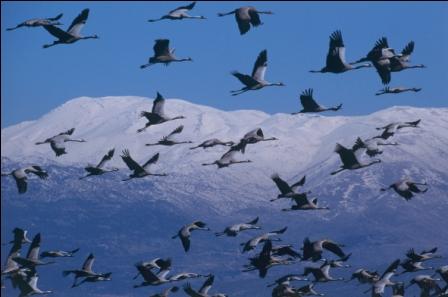
Crane Migration over Israel

Crane Migration over Israel

Israel, which is located
right at the junction
of three continents,
is crossed by migrating birds
of 300 different species,
on a scale unparalleled
anywhere in the world…

Studies over the past decade
shows that about
500 million birds cross
Israel’s narrow airspace
twice every year
in the course of their migrations…
Between one to two million raptors
migrate through Eilat,
in Israel each spring.

Is this large scale
migration and breeding in Israel,
a trial run for the feast
which GOD has planned
for these birds
when JESUS returns
as THE KING?

The Birds are
preparing themselves
for the biggest
marriage feast ever…

The BRIDE-GROOM is on HIS way,
Is the bride ready?

And thou, son of man, thus saith the Lord Jehovah: Speak unto the birds of every sort, and to every beast of the field, Assemble yourselves, and come; gather yourselves on every side to my sacrifice that I do sacrifice for you, even a great sacrifice upon the mountains of Israel, that ye may eat flesh and drink blood. (Ezekiel 39:17)

Your’s in YESHUA,
A. J. Mithra at Crosstree

Updated 5/29/10: Changed name from Migration over Israel to present. I missed aj’s updated changes – (corrected by editor).

Click to see more of A. J.’s articles


Palestine-Israel: A Crossroad for Bird Migration