Sunday Inspiration – Anseriformes I ~ Screamer and Magpie Goose

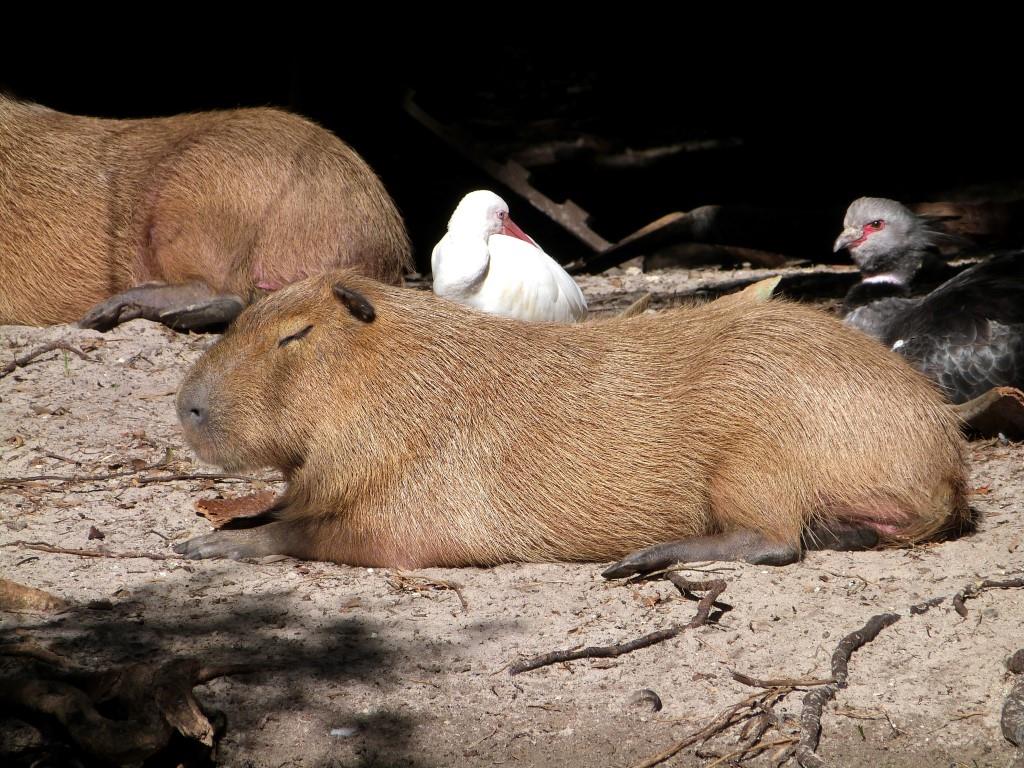
ANS-Anhm Southern Screamer (chauna torquata)with a Capybara by Lee at Palm Beach Zoo

Southern Screamer with a Capybara by Lee at Palm Beach Zoo

“Constantly, night and day, he was screaming among the tombs and in the mountains, and gashing himself with stones. Seeing Jesus from a distance, he ran up and bowed down before Him;” (Mark 5:5-6 NASB)

Our next Order, the Anseriformes has three families. The Anhimidae – Screamers Family has only three members; the Horned, Northern and Southern Screamers. The Anseranatidae – Magpie Goose Family is even smaller. The Magpie Goose is the only member. The third family is huge with 173 species. That is the Anatidae Family which has Ducks, Geese, Swans and other water birds. Today, we will just do the first two families. Dan and I have seen the Southern Screamer at several zoos. Also, this audio, by zeno-canto of s Southern Screamer screaming.

“The screamers are a small clade of birds (Anhimidae). For a long time, they were thought to be most closely related to the Galliformes because of similar bills, but they are instead more closely related to ducks (family Anatidae), most closely to the magpie goose (which some DNA evidence suggests are closer to screamers than to ducks). The clade is exceptional within the living birds in lacking uncinate processes of ribs. The screamers are represented by three species, the horned screamer (Anhima cornuta), the southern screamer or crested screamer (Chauna torquata) and the northern screamer or black-necked screamer (Chauna chavaria). The birds’ skin has a layer about a quarter of an inch thick that is filled with small bubbles of air, which produce a crackling sound when pressed.” (Wikipedia with editing)
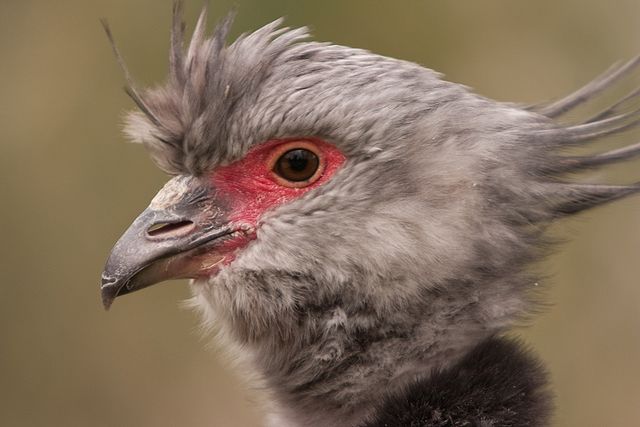
Southern Screamer (Chauna torquata) Closeup of head ©WikiC

Southern Screamer (Chauna torquata) Closeup of head ©WikiC

The three species occur only in South America, ranging from Colombia to northern Argentina. They are large, bulky birds, with a small downy head, long legs and large feet which are only partially webbed. They have large spurs on their wings which are used in fights over mates and territorial disputes; these can break off in the breast of other screamers, and are regularly renewed. Unlike ducks they have a partial molt, and are able to fly throughout the year. They live in open areas and marshes with some grass and feed on water plants. One species, the southern screamer, is considered a pest as it raids crops and competes with farm birds. (Wikipedia)

Horned Screamer (Anhima cornuta) ©©Flickr WMCarlos

Horned Screamer (Anhima cornuta) ©©Flickr WMCarlos

The Horned Screamer is a massive 84–95 cm (33–37.5 in) long, 3.5 kg (7.7 lb) bird, with a small chicken-like bill. The upperparts, head and breast are black, with white speckles on the crown, throat and wing coverts. There is a long spiny structure projecting forward from the crown. This structure is unique among birds and is not derived from a feather but is a cornified structure that is loosely attached to the skull and grows continuously while often breaking at its tip. This gives this species its name. The belly and under wing coverts are white. It has two sharp spurs on its wings, and feet which are only partially webbed.

The horned screamer’s call, as its name suggests, is a very loud U-WHO or honking YOIK-YOK.

The horned screamer is found in lowlands from Colombia, Venezuela, Brazil, Bolivia, Peru, Ecuador, Suriname, French Guiana, and Guyana. It is now extinct in Trinidad and Tobago. Despite having declined locally, it remains widespread and is fairly common overall. Its range in Brazil appears to have expanded in recent years.

It lives in well-vegetated marshes and feeds on water plants. Its nest is a large pile of floating vegetation anchored in shallow water. Three olive-brown eggs are laid, and the young, like those of most Anseriformes, can run as soon as they are hatched.

ANS-Anhm Northern Screamer (Chauna chavaria) ©WikiC

Northern Screamer (Chauna chavaria) ©WikiC

The Northern Screamer (Chauna chavaria), also known as the black-necked screamer, is a large species of bird in the small family Anhimidae, the screamers. It is a resident breeder in northern Colombia, in Chocó, Antioquia, Córdoba, Sucre, Bolívar, Magdalena, Santander, and Cesar Departments and northwestern Venezuela, in Zulia, Mérida, and Trujillo States. On average, they are 88.9 cm (35 in) long and weigh about 3.9 kg (8.6 lb).
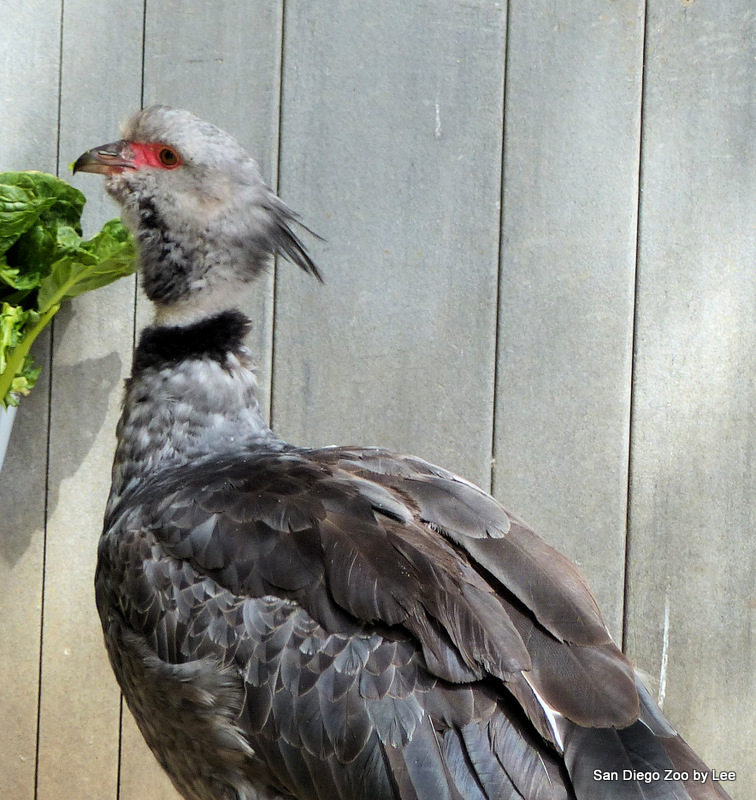
Southern Screamer (Chauna torquata) San Diego Zoo by Lee

Southern Screamer (Chauna torquata) San Diego Zoo by Lee

The southern screamer averages 81–95 cm (32–37 in) long and weighs 3–5 kg (6.6–11.0 lb).[3] They are the heaviest, although not necessarily the longest, of the three screamers.[4] The wingspan is around 170 cm (67 in).[5] Among standard measurements, the wing chord measures 54 cm (21 in), the tail 23.2 cm (9.1 in), the culmen 4.5 cm (1.8 in) and the long tarsus 11 cm (4.3 in).[6] It lives in tropical and sub-tropical swamps, estuaries and watersides.

The southern screamer is a good swimmer, having partially webbed feet, but prefers to move on the ground. The bony spurs on its wings are used for protection against rival screamers and other enemies. Although it is non-migratory, it is an excellent flier. It lives in large flocks, feeding on the ground in grasslands and cultivated fields until nesting season, when birds pair off.

Magpie Goose (Anseranas semipalmata) by Ian

Magpie Goose (Anseranas semipalmata) by Ian

The Magpie Goose (Anseranas semipalmata) is a waterbird species found in coastal northern Australia and savannah in southern New Guinea. It is a unique member of the order Anseriformes, and arranged in a family and genus distinct from all other living waterfowl. The magpie goose is a resident breeder in northern Australia and in southern New Guinea. The species was once also widespread in southern Australia, but disappeared from there largely due to the drainage of the wetlands where the birds once bred.

Magpie geese are unmistakable birds with their black and white plumage and yellowish legs. The feet are only partially webbed, and the magpie goose feeds on vegetable matter in the water, as well as on land. Males are larger than females. Unlike true geese, their molt is gradual, so no flightless period results. Their voice is a loud honking.  [I also think that top-knot would make it distinguishable] (All information Wikipedia with editing)

This slideshow requires JavaScript.

*
“And many of the people believed on him, and said, When Christ cometh, will he do more miracles than these which this man hath done?” (John 7:31 KJV)

“Jesus Wrought A Miracle of Love” ~ Solo by Paul Ebright

*

More Sunday Inspirations

Ansiformes – Waterfowl

Anhimidae – Screamers Family

Anseranatidae – Magpie Goose Family

Gospel Message

*

Lee’s Six Word Saturday – 10/15/16

***

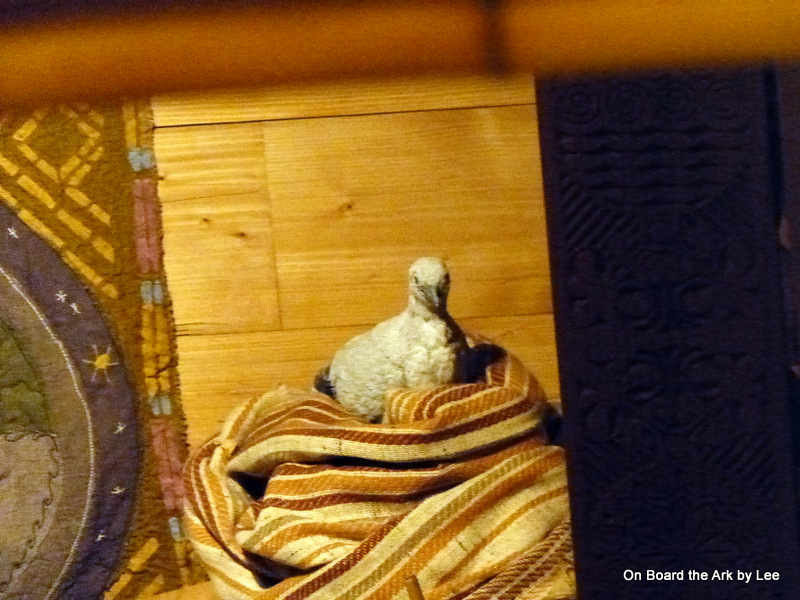
Dove resting on board the Ark

BUT THE DOVE FOUND NO REST

***


But the dove found no rest for the sole of her foot, and she returned unto him into the ark, for the waters were on the face of the whole earth: then he put forth his hand, and took her, and pulled her in unto him into the ark.” (Genesis 8:9 KJV)

Dove resting on board the Ark Encounter by Lee

*

More Daily Devotionals

*

Ian’s Bird of the Week – Masked Booby

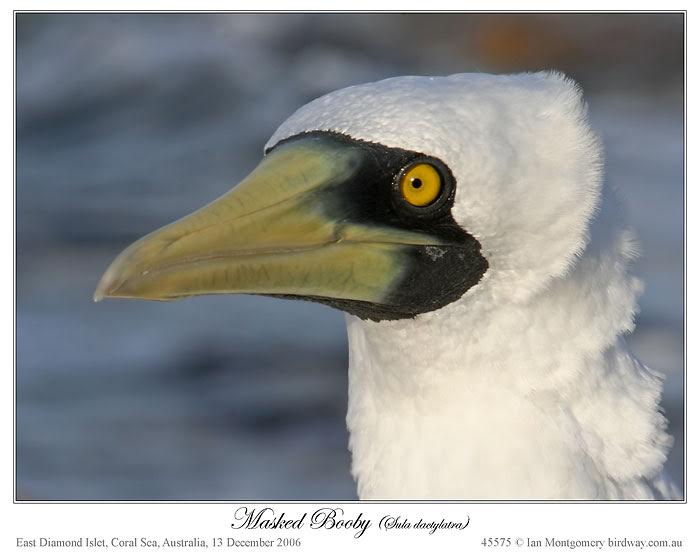
Masked Booby (Sula dactylatra) by Ian

Ian’s Bird of the Week ~ by Ian Montgomery

Newsletter – 10/14/16

Masked Booby was bird of the week in May 2011, but here it is again to acknowledge the recent use of one of my photos in an Australian, or more specifically, Norfolk Island, stamp.

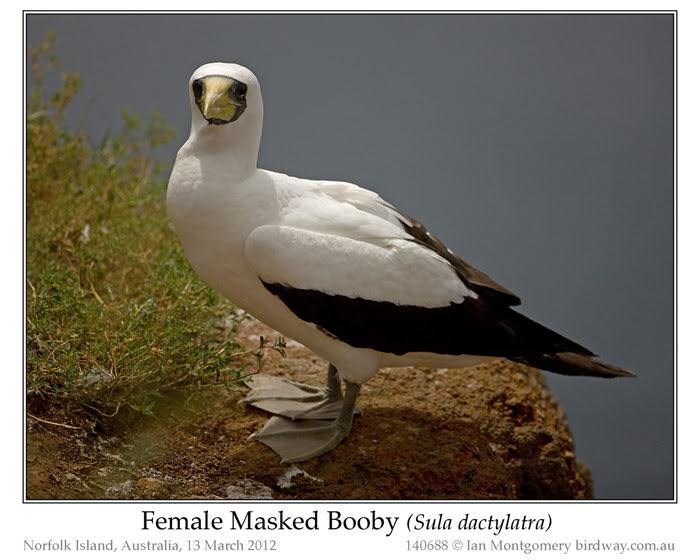
Here is the original photo taken on Philip Island just off Norfolk Island in 2012. The differences between the sexes in Masked Boobies are subtle, with the main difference being in the colour of the bill: yellower in males than in females which have a bluish tint to the bill.

Masked Booby (Sula dactylatra) by Ian

Here is another male Booby from the 2011 bird of the week, taken on an island in the Coral Sea east of Townsville. Note the difference in the colour of the eye. Masked Boobies generally have yellow irises, but those breeding on Norfolk Island, Lord Howe Island and Kermadec Island (off New Zealand) have dark brown irises and are sufficiently different in other less obvious respects to be treated as a separate race, sometimes known as the Tasman Booby (Sula dactylatra tasmani).

Masked Booby (Sula dactylatra) by Ian

The next photo shows an adult female Masked Booby on Norfolk Island itself. Here you can see another difference characteristic of the tasmani subspecies: the legs and feet are khaki (those of the race personata found in the Coral Sea, off Western Australia and elsewhere across the Pacific have dark, almost black legs and feet.

Masked Booby (Sula dactylatra) Female by Ian

Here is a juvenile at the same site on Norfolk Island as the female bird. The juveniles are somewhat similar in appearance to adult Brown Boobies and the best distinguishing field mark is the complete white collar of the juvenile Masked Booby. In Brown Boobies the brown of the head and neck is contiguous with the brown of the back and, in front, extends as far down as level with the wings and is sharply demarcated from the white breast.

Masked Booby (Sula dactylatra) Juvenile by Ian

Here is another photo of a juvenile Masked Booby, this time in flight and at Lord Howe Island, the other Australian breeding colony of the Tasman subspecies. The white collar is clear visible in flight too, as is the extensive amount of white on the breast.

Masked Booby (Sula dactylatra) Juvenile by Ian

Masked Boobies breed on isolated islands throughout the tropics and sub-tropics. As well as occurring across the Pacific, they breed in the eastern and western Indian Ocean, the Red Sea and in the western and central Atlantic. The adults normally stay close to the breeding colonies, though young birds and some adults do range farther afield. So, they do occur occasional along the coast of mainland Australia.

The largest colony is found on an uninhabited coral cay called Clipperton Island or Ile de al Passion – it’s a French territory – off the coast of Mexico, with a population of perhaps 100,000 birds.

It was visited in 1958 by an American ornithologist called Kenneth Stager who was shocked to find that feral pigs had reduced the population of Masked Boobies to a mere 150 birds. Being an old-fashioned ornithologist, he had a gun with him to collect specimens so he singlehandedly shot all of the pigs, 58 in number, restoring the cay to to its pre-human state.

Other animals to benefit were the local red crabs and other nesting seabirds. It has the second largest colony of Brown Boobies and one of the relatively few colonies of the eastern Pacific Nazca Booby, very similar in appearance to the Masked, but better known on the Galapagos island and Isla de al Plata off the coast of Ecuador.

Ian Montgomery – Birdway – Photos


Lee’s Addition:

It has been well over a month since Ian produced one of his articles for us to enjoy. I wrote to Ian to see if he was okay, and here is part of his response. I trust he doesn’t mind, but this will help us think about and pray for his recovery.

“I did have problems with the second cataract operation as an interruption to the blood supply to the retina caused some loss of sight to the central part of the field of view – cloudiness, blurriness and lack of colour vision. Naturally that was a bit of a shock and for a while it made me reluctant to do anything which made me more conscious of it, particularly photography and working with images on the computer.

Anyway, the eye is gradually improving, though whether it will recover completely over the next six months or so is uncertain. Your email prompted me to stop vacillating about the bird of the week and get me into action, so thank you for that.”

More Ian’s Bird of the Week articles
Ian’s Bird of the Week – Long-tailed and White-winged Trillers – previous one
Gideon
*

Lee’s Five Word Friday – 10/14/16

***

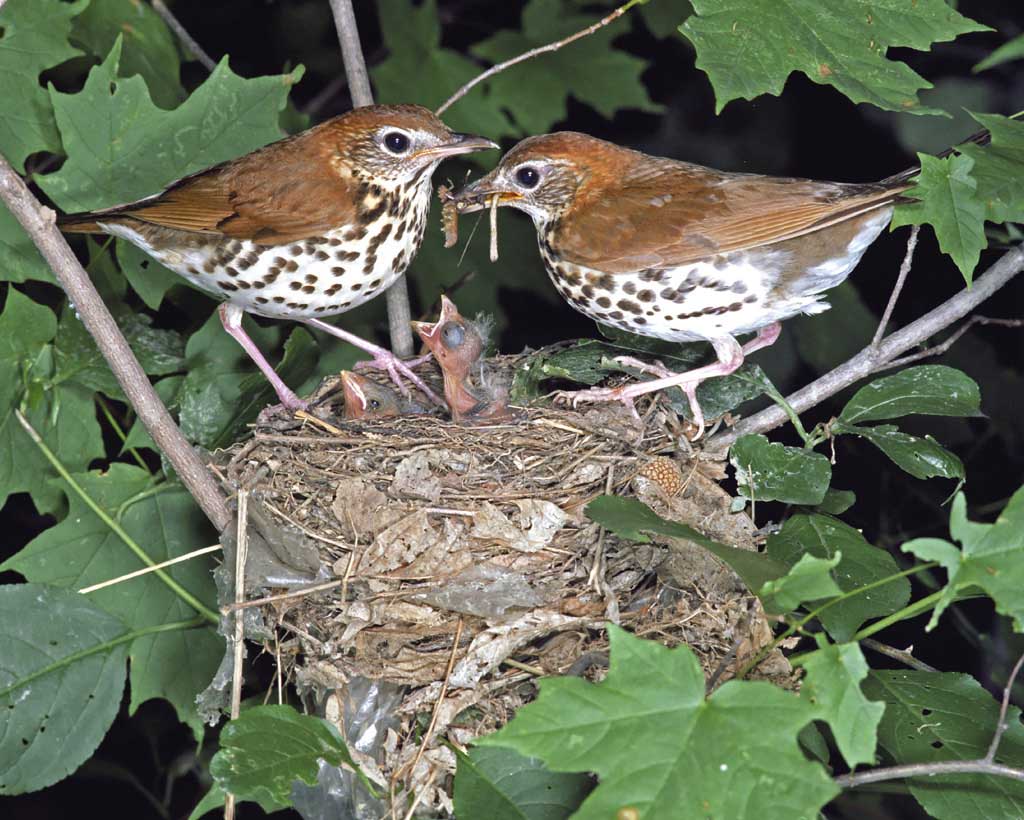
Wood Thrush. nest ©Audubon Society

THESE WAIT ALL UPON THEE;

***


These wait all upon Thee; that Thou mayest give them their meat in due season.” (Psalm 104:27)

Wood Thrush. Nest ©Audubon Society

*

More Daily Devotionals

*
Birdwatching On Board The Ark Encounter – The Provisions I

The Door of the Ark by Lee

The Door of the Ark by Lee

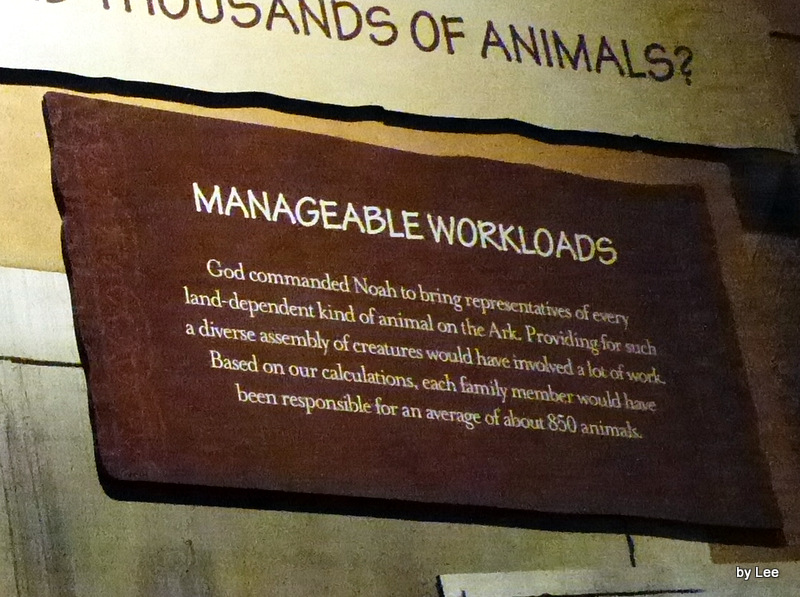
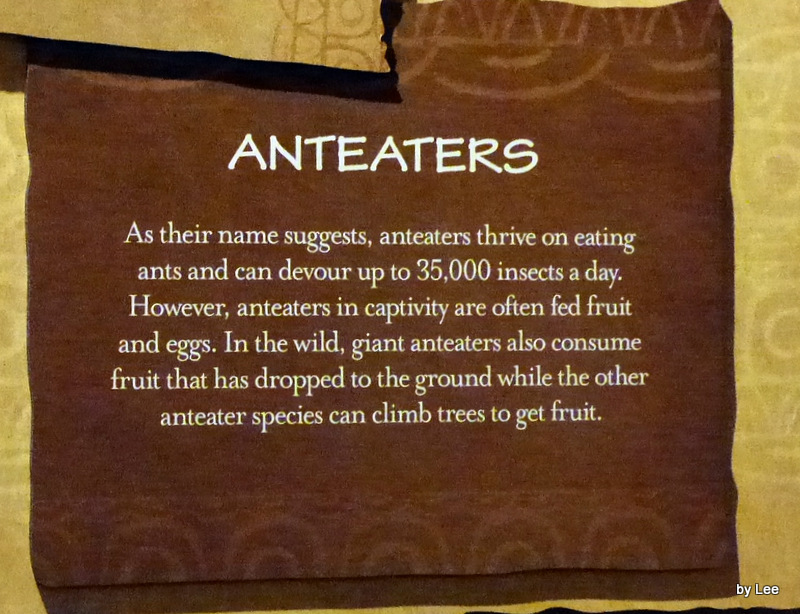
This is the third article in the Birdwatching On Board the Ark Encounter. Below are links to the other articles. This time I would like to share some of the ways they showed how critters and birds were provided with provisions to sustain them. [All the bolding is added emphasis by me.]

In Genesis 6, the God was instructing Noah about building an Ark with all the directions or instructions. Then He informs Adam that his family and the critters are to be onboard also. They were to “keep them alive.”

Genesis 6:18-22 KJV
(18) “But with thee will I establish my covenant; and thou shalt come into the ark, thou, and thy sons, and thy wife, and thy sons’ wives with thee.
(19) And of every living thing of all flesh, two of every sort shalt thou bring into the ark, to keep them alive with thee; they shall be male and female.
(20) Of fowls after their kind, and of cattle after their kind, of every creeping thing of the earth after his kind, two of every sort shall come unto thee, to keep them alive.
(21) And take thou unto thee of all food that is eaten, and thou shalt gather it to thee; and it shall be for food for thee, and for them.
(22) Thus did Noah; according to all that God commanded him, so did he.”

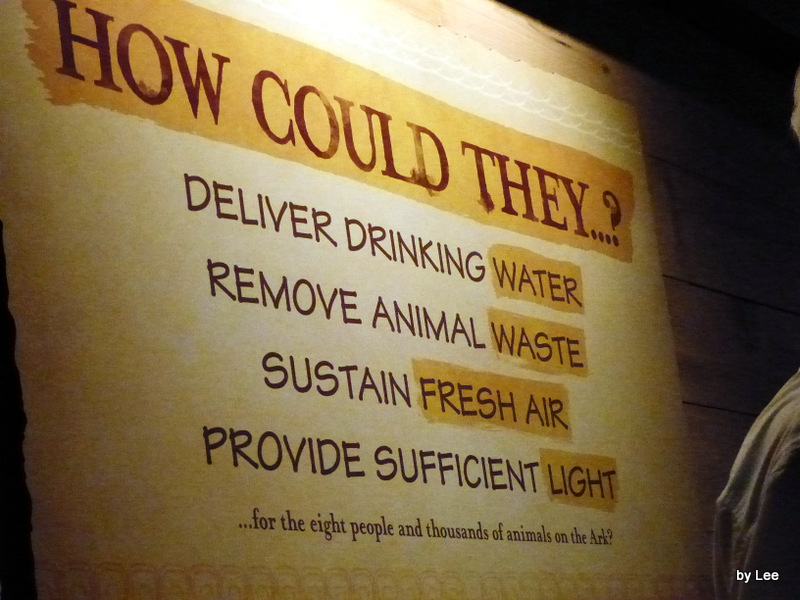
How Could They...?

How Could They…?

That is a huge undertaking. How would they do that? On the Ark Encounter, it was interesting to see how they visualized this part of their commission to keep the critters alive, especially the birds. That is what this is concentrated on. Also, that same command was given again in:

Of fowls also of the air by sevens, the male and the female; to keep seed alive upon the face of all the earth. (Genesis 7:3 KJV)

They Went In the Ark

They Went In the Ark

They went in:

“In the six hundredth year of Noah’s life, in the second month, the seventeenth day of the month, the same day were all the fountains of the great deep broken up, and the windows of heaven were opened.” (Genesis 7:11 KJV)

And came out:

“And it came to pass in the six hundredth and first year, in the first month, the first day of the month, the waters were dried up from off the earth: and Noah removed the covering of the ark, and looked, and, behold, the face of the ground was dry. And in the second month, on the seven and twentieth day of the month, was the earth dried. And God spake unto Noah, saying, Go forth of the ark, thou, and thy wife, and thy sons, and thy sons’ wives with thee. Bring forth with thee every living thing that is with thee, of all flesh, both of fowl, and of cattle, and of every creeping thing that creepeth upon the earth; that they may breed abundantly in the earth, and be fruitful, and multiply upon the earth.” (Genesis 8:13-17 KJV)

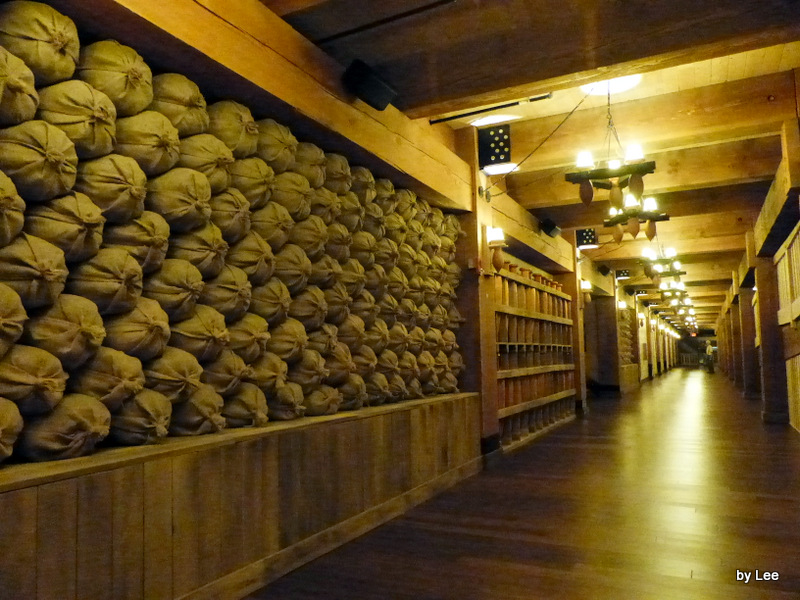
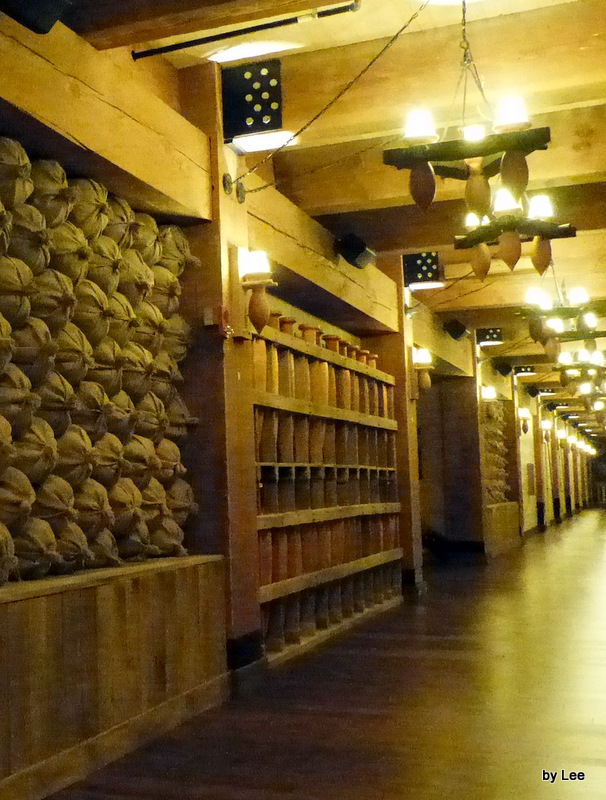
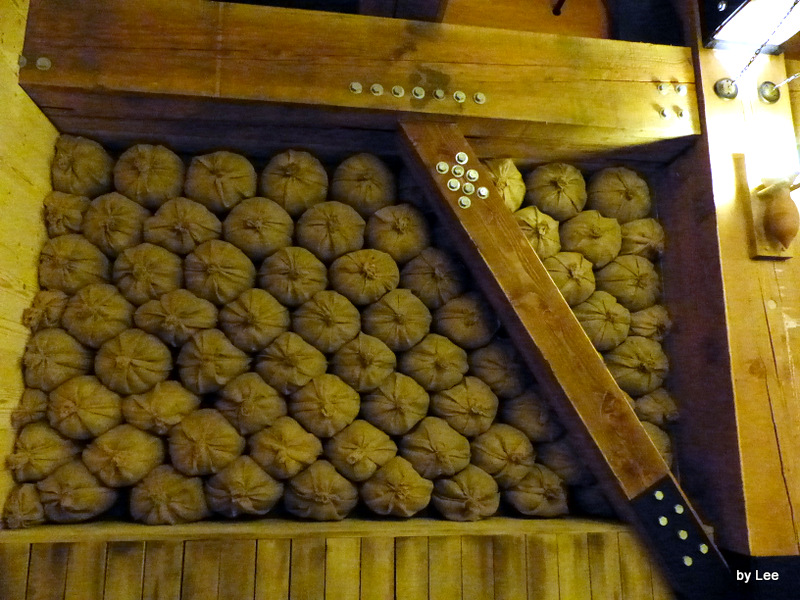
Now if we do the math, Adam, his family, and the critters were in the ark at least one year and 10 days. That is a lot of provisions to have on board! So, let’s see how the Ark Encounter stored their provisions and provided for all on board.

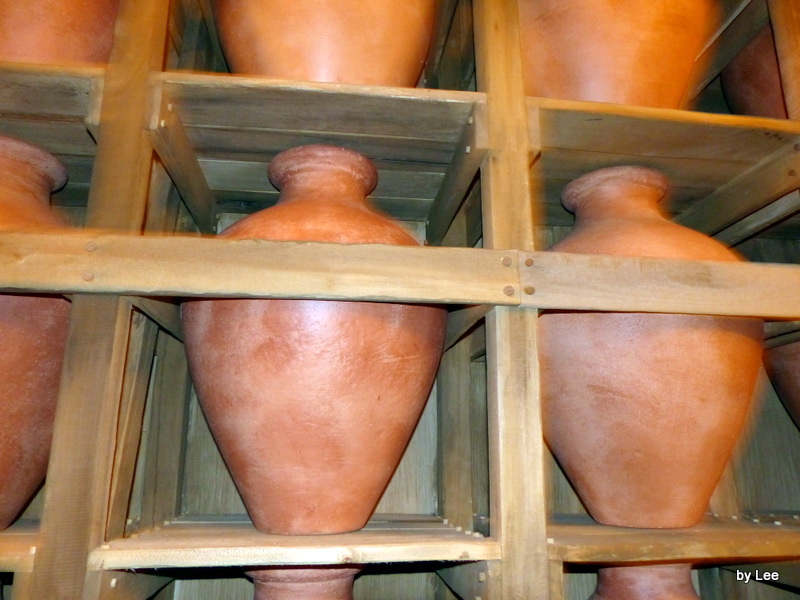
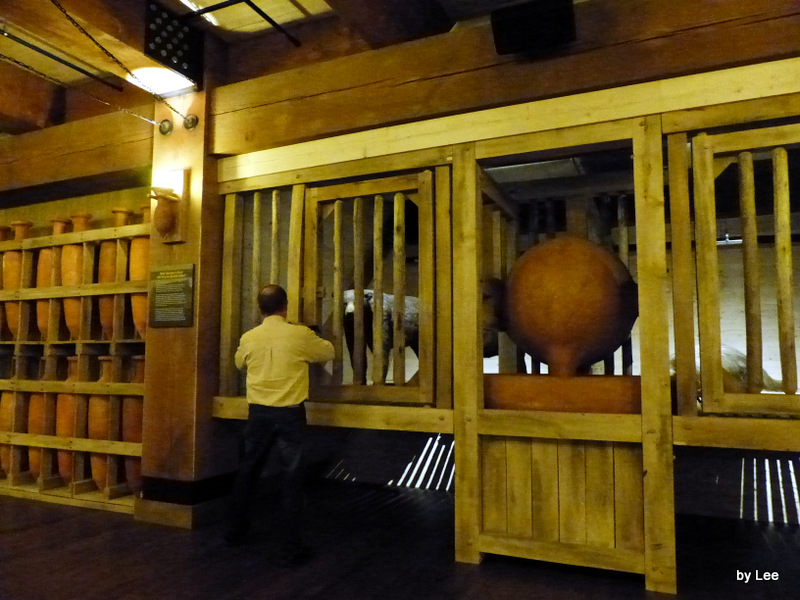
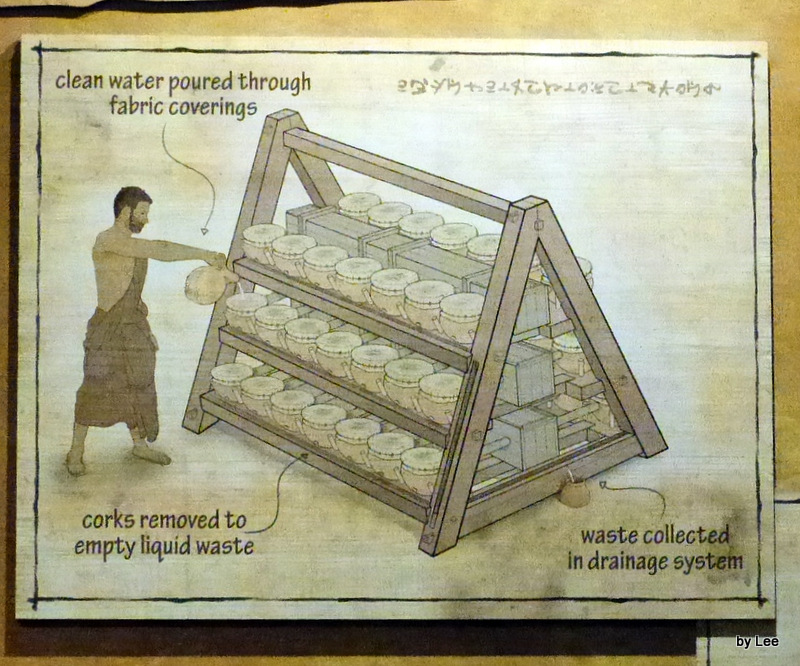
Here are some of the ways thy stored water and grain:

Now that they have provisions stored, the next photos are food preparations for the humans, I suspect:

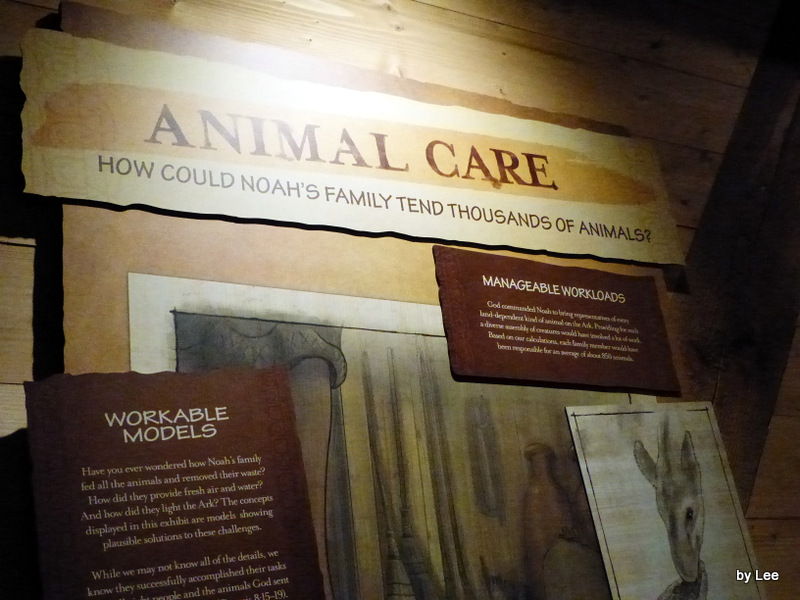
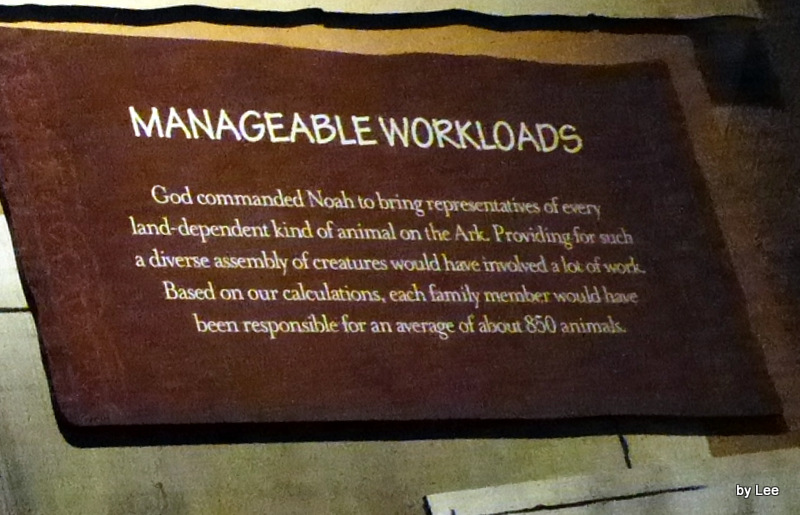
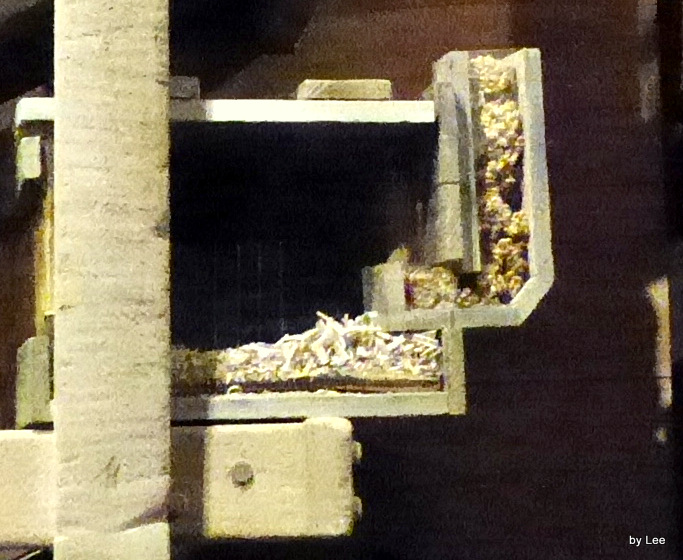
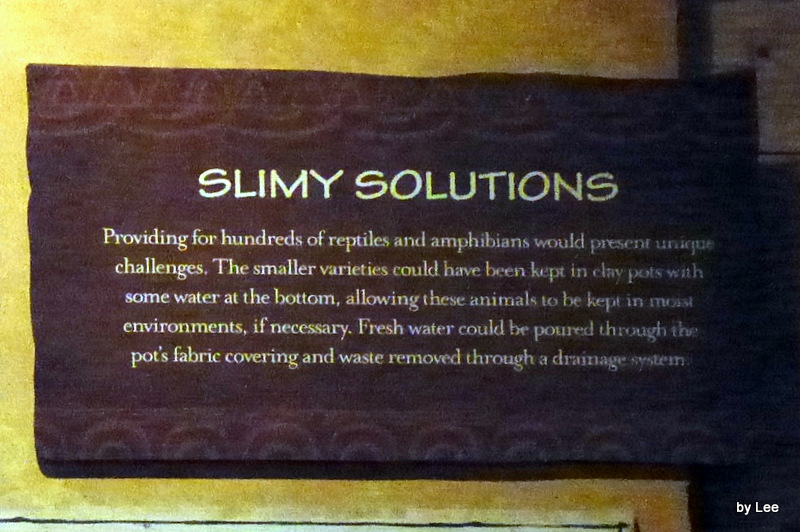
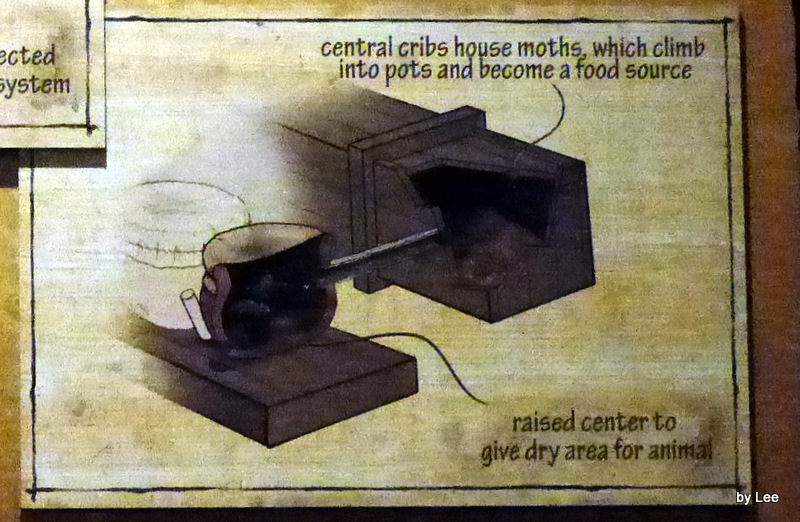
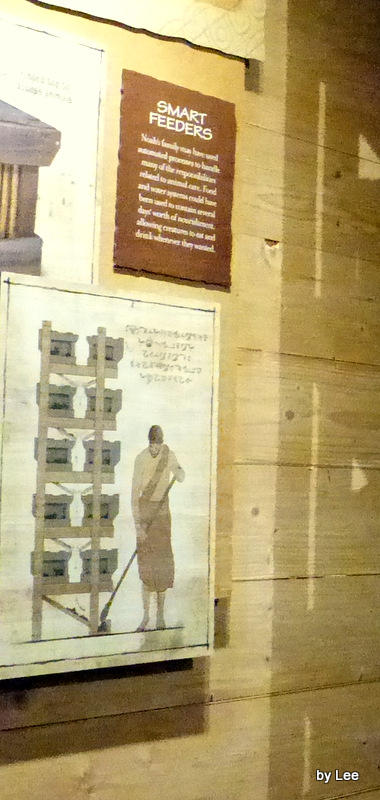
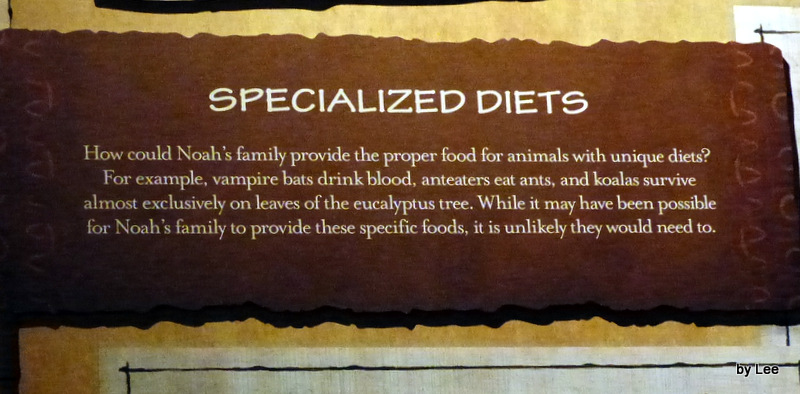
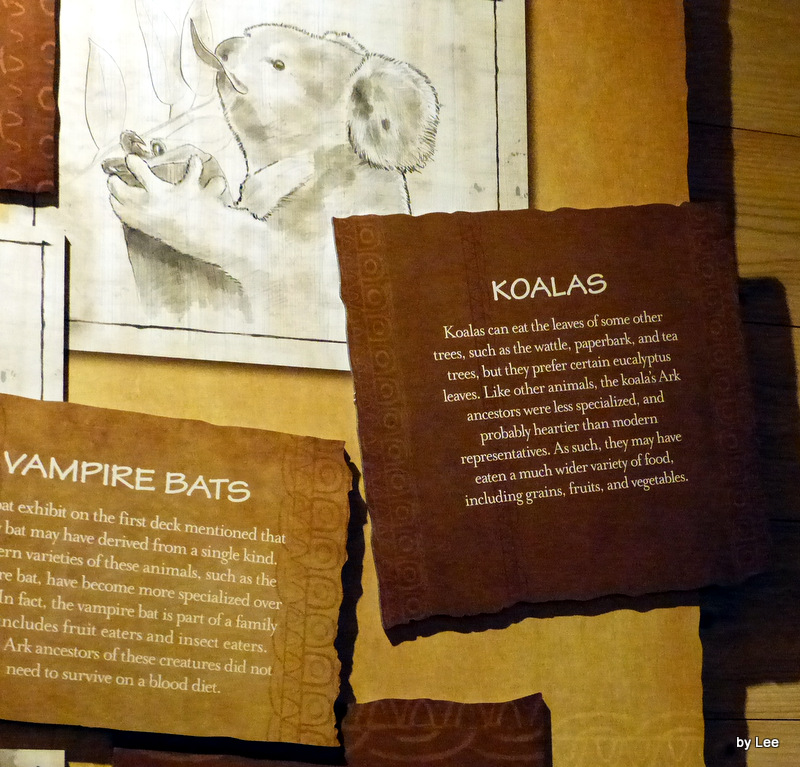
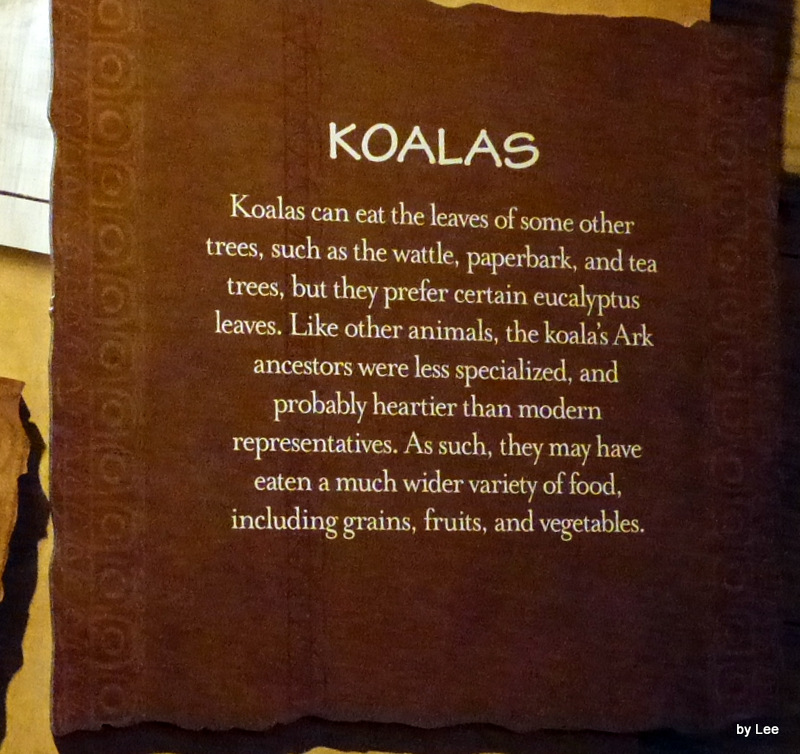
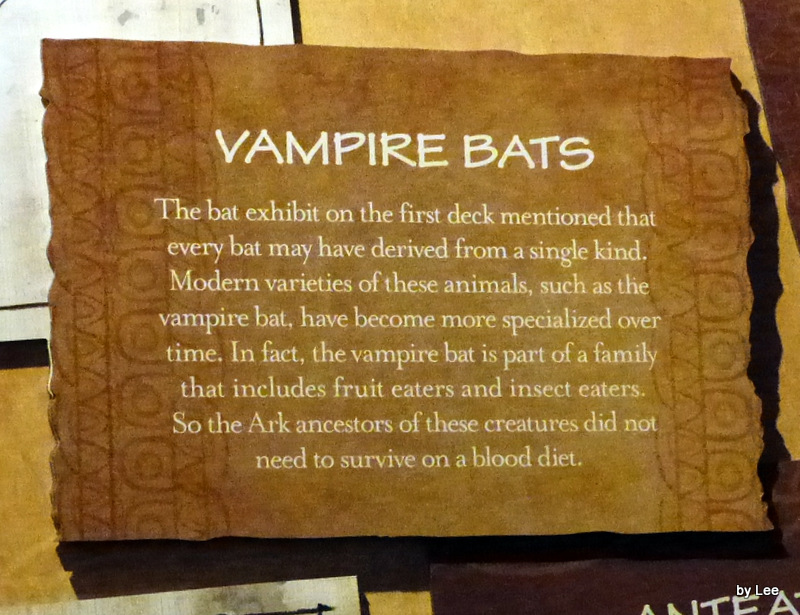
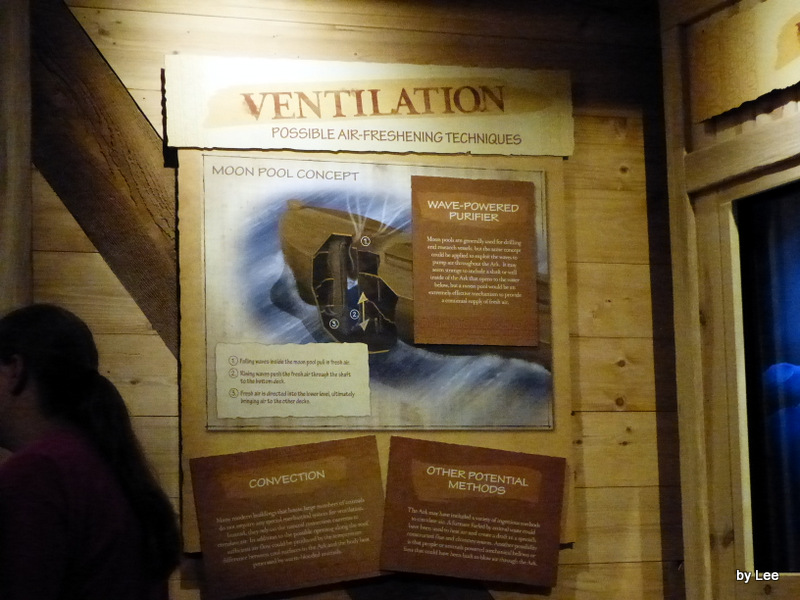
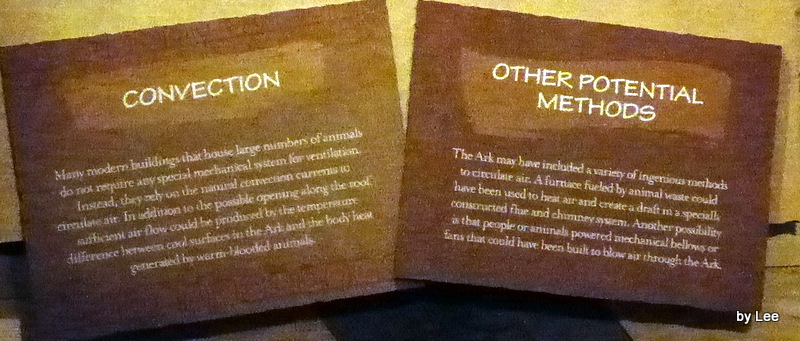
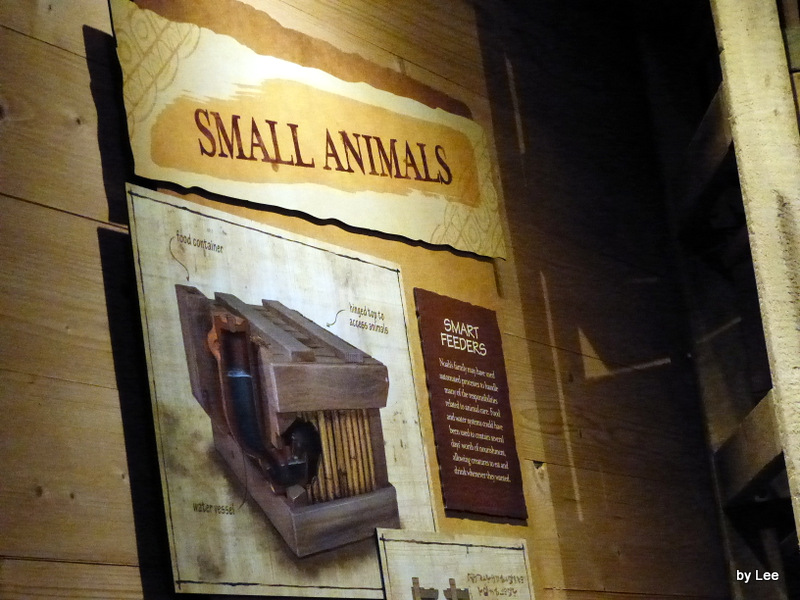
In the first articles of the series, you were shown the birds and their cages, but now, they have to be fed. Here are some of the photos from the Ark Encounter suggesting how some of this could have taken place. [Please forgive the photos, they were shot in low light, after all the Ark didn’t have modern lights and fluorescent lighting like today.] I tried to get as many close-ups of the signs as I could. Reading their signs is how the different operations are explained.

As I have been putting this together, it appears we will need a part II. Stay tuned!

*

See Also:

Birdwatching On Board the Ark Encounter – The Doves
Birdwatching On Board the Ark Encounter – More Birds
Avian Kinds on the Ark – Introduction
Avian Kinds on the Ark – What Is A Kind?
Avian Kinds on the Ark – Birds Embarking

*

Lee’s Four Word Thursday – 10/13/16

***

Gathering of Parrots ©I.Ytimg

THEY GATHER THEMSELVES TOGETHER

***


“The sun ariseth, they gather themselves together, and lay them down in their dens.” (Psalm 104:22)

Gathering of Parrots ©I.Ytimg

*

More Daily Devotionals

*

Lee’s Three Word Wednesday – 10/12/16

***

Birds at Night - ©BirdFeeders.com

IT IS NIGHT

***


“Thou makest darkness, and it is night wherein all the beasts of the forest do creep forth.” (Psalm 104:20)

Birds at Night – ©BirdFeeders.com

*

More Daily Devotionals

*

Lee’s Two Word Tuesday – 10/11/16

***

Stork At Their Nest ©Science Photo Library

THE STORK

***


“Where the birds make their nests: as for the stork, the fir trees are her house.” (Psalm 104:17)

Storks At Their Nest ©Science Photo Library

*

More Daily Devotionals

*

Bird of the Bible – Stork

*

Lee’s One Word Monday – 10/10/16

***

Marvelous Spatuletail (Loddigesia mirabilis) ©©Dubi Shapiro

MARVELOUS

***


“This is the LORD’S doing; it is marvellous in our eyes. ” (Psalms 118:23 KJV)

Marvelous Spatuletail (Loddigesia mirabilis) ©©Dubi Shapiro

*

More Daily Devotionals

*

Lee’s Seven Word Sunday – 10/9/16

***

Birds Singing from BeliefNet

FOWLS OF THE HEAVEN HAVE THEIR HABITATION


***


“By them shall the fowls of the heaven have their habitation, which sing among the branches.” (Psalms 104:12 KJV)

Birds Singing from BeliefNet

*

More Daily Devotionals

*

Sunday Inspiration – Ostrich, Rhea, Cassowary, Emu & Kiwi

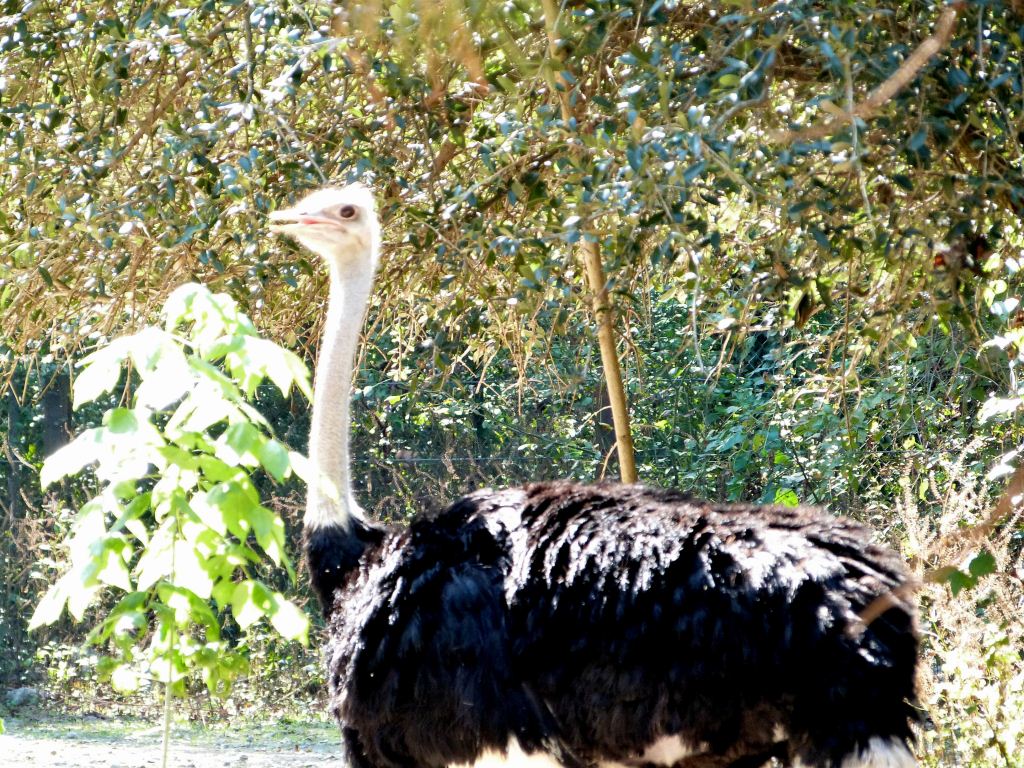
Common Ostrich (Struthio camelus) at Riverbanks Zoo SC by Lee

Common Ostrich (Struthio camelus) at Riverbanks Zoo SC by Lee

“Gavest thou the goodly wings unto the peacocks? or wings and feathers unto the ostrich? Which leaveth her eggs in the earth, and warmeth them in dust, And forgetteth that the foot may crush them, or that the wild beast may break them. She is hardened against her young ones, as though they were not hers: her labor is in vain without fear; Because God hath deprived her of wisdom, neither hath he imparted to her understanding. What time she lifteth up herself on high, she scorneth the horse and his rider.” (Job 39:13-18)

Today we have thirteen (13) birds that are in four (4) Orders with a total of five (5) families. As mentioned before, these will be much easier than the LARGE Passeriformes Order that took months to view. Our Orders are the Struthioniformes, with one (1) family, Struthionidae that has two (2) Ostritches; the Rheiformes has one (1) family, Rheidae, with two (2) Rheas; and then the Casuariiformes Order has two (2) families, Casuariidae with three (3) Cassowaries and the Dromiidae family with a solo Emu; Apterygiformes Order with the Apterygidae family with five (5) Kiwis.

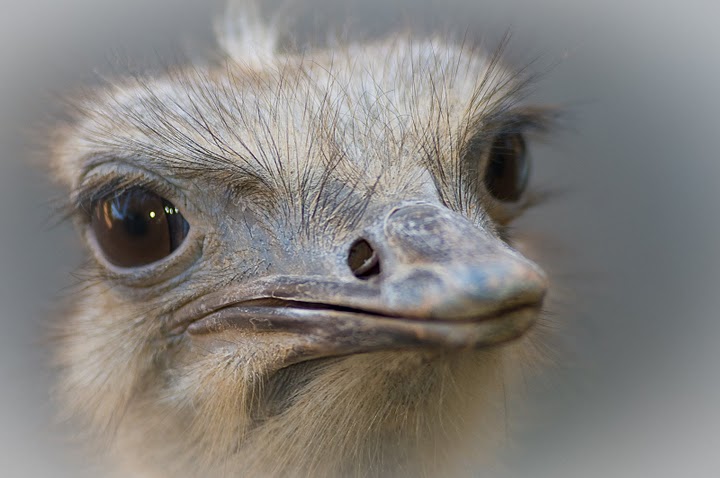
Common Ostrich (Struthio camelus) Closeup by WikiC

Common Ostrich (Struthio camelus) Closeup by ©WikiC

Struthioniformes, with one (1) family, Struthionidae that has two (2) Ostritches – “Ostriches are large, non-flying birds that live in Africa. Besides in their natural environment, ostriches are often breed as farm animals because some people like to eat their meat, eggs or to wear fashion products made of their skin. Although they are killed for commercial purposes, they are not endangered. There are around 2 million ostriches that can be found around the globe.” (SoftSchools)

Greater Rhea (Rhea americana) by ©Wayne Deeker

Greater Rhea (Rhea americana) by ©Wayne Deeker

Rheiformes has one (1) family, Rheidae, with two (2) Rheas – “Rhea is a member of the group of flightless birds. This is the largest bird in the South America. There are two species of rhea: Greater or American Rhea and Lesser or Darwin’s Rhea. They differ in size and in type of habitat they inhabit. Rhea can be found in open grasslands, pampas and woodlands of Argentina, Uruguay, Bolivia, Paraguay, Chile, Peru and Brazil. Rhea is also kept on farms because of its meat, eggs and skin. Number of rhea in the wild is decreased due to habitat loss, but they are still not listed as endangered species.” (SoftSchools with editing)

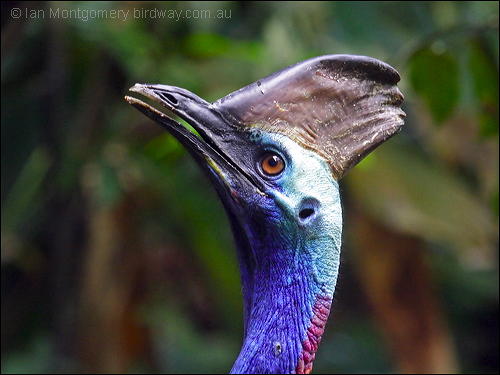
Southern Cassowary (Casuarius casuarius) by Ian

Southern Cassowary (Casuarius casuarius) by Ian

Casuariiformes Order has two (2) families, Casuariidae with three (3) Cassowaries – “The bird order Casuariiformes has four surviving members: the three species of cassowary, and the only remaining species of emu. The emus are classified in the family Dromaiidae, while the cassowaries are all located within the Casuariidae family. All four members of the order are very large flightless birds native to Australia-New Guinea.” (Wikipedia)

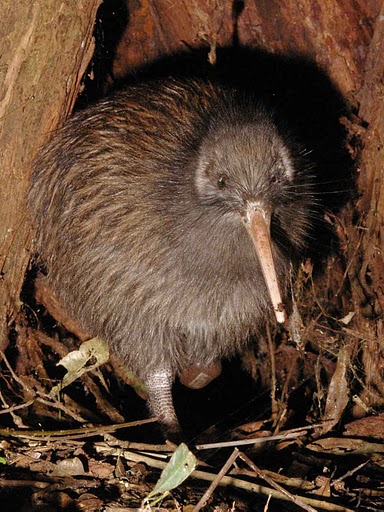
North Island Brown Kiwi (Apteryx mantelli) by Derek©WikiC

North Island Brown Kiwi (Apteryx mantelli) by Derek©WikiC

Apterygiformes Order with the Apterygidae family with five (5) Kiwis – “Kiwi (pronounced /kiːwiː/) or kiwis are flightless birds native to New Zealand, in the genus Apteryx and family Apterygidae. At around the size of a domestic chicken, kiwi are by far the smallest living ratites (which also consist of ostriches, emus, rheas, and cassowaries), and lay the largest egg in relation to their body size of any species of bird in the world. DNA sequence comparisons have yielded the surprising conclusion that kiwi are much more closely related to the extinct Malagasy elephant birds than to the moa with which they shared New Zealand. There are five recognized species. All species have been negatively affected by historic deforestation but currently the remaining large areas of their forest habitat are well protected in reserves and national parks. At present, the greatest threat to their survival is predation by invasive mammalian predators.

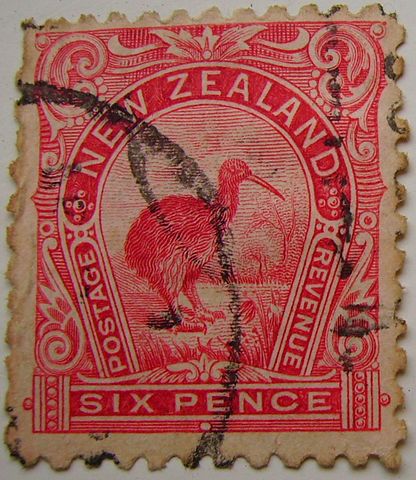
Kiwi is the nickname used internationally for people from New Zealand,[1] as well as being a relatively common self-reference. The name derives from the kiwi, a flightless bird, which is native to, and the national symbol of, New Zealand. Unlike many demographic labels, its usage is not considered offensive; it is generally viewed as a symbol of pride and endearment for the people of New Zealand..” (Wikipedia with editing)

New Zealand Stamp with Kiwi ©WikiC

New Zealand Stamp with Kiwi ©WikiC


This slideshow requires JavaScript.


*

“And we have seen and do testify that the Father sent the Son to be the Saviour of the world. Whosoever shall confess that Jesus is the Son of God, God dwelleth in him, and he in God.”
(1 John 4:14-15 KJV)

“Hosanna, Messiah Has Come” ~ Choir and Solo by Lisa Brock

*
More Sunday Inspirations

Birds of the Bible – Ostrich

Sharing The Gospel

*

Lee’s Six Word Saturday – 10/8/16

***

HE MAKETH THE STORM A CALM

***


He maketh the storm a calm, so that the waves thereof are still.” (Psalms 107:29 KJV)

Flocks Settling at the Shore by Lee

Praise the Lord, Hurricane Matthew is departing our area and the seas are calming back down. Thanks for all the prayers. Our Haitian and Bahamian friends need much prayer as they try to rebuild their lives.

*

More Daily Devotionals

*