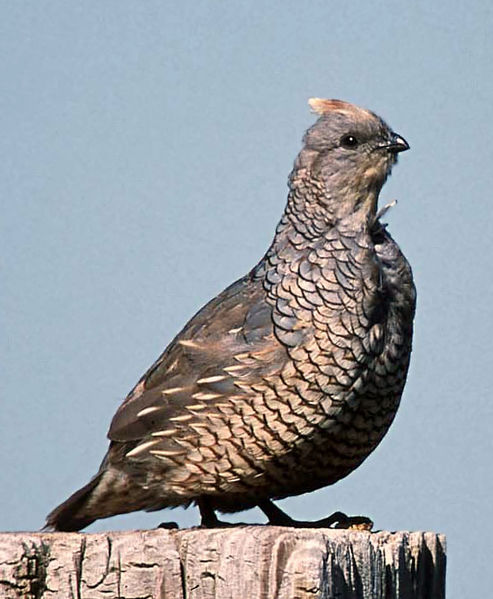
The Scaled Quail – The Cover Seeker

Scaled Quail (Callipepla squamata) ©WikiC

Scaled Quail (Callipepla squamata) ©WikiC

The Scaled Quail – The Cover Seeker ~ by ajmithra

The Scaled Quail (Callipepla squamata), also commonly called Blue Quail or Cottontop, is a species of the New World quail family. It is a bluish gray bird found in the arid regions of the Southwestern United States
to Central Mexico.

These birds seek for four different covers. They are as follows :

Feeding cover: Scaled Quail use grass clumps and shrubs for cover while feeding. In one study they were frequently seen crossing 82 to 165 feet (25–50 m) of bare ground. When disturbed, Scaled Quail hid in snakeweed (Gutierrezia spp.) or in grass clumps. In June and July foraging occurs on open grasslands which are not used at other times.

We have Jesus, our Good Shepherd, who makes us lie down beside still waters. But, times are fast approaching where the church may be stopped from feeding on the word of God and the church may have to hide during the times of tribulation..

Behold, the days come, saith the Lord GOD, that I will send a famine in the land, not a famine of bread, nor a thirst for water, but of hearing the words of the LORD. Amos 8:11
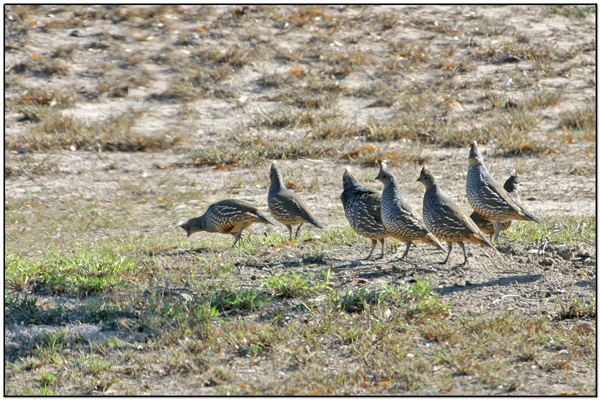
Scaled Quail (Callipepla squamata) by DavesBirdingPix

Scaled Quail (Callipepla squamata) by DavesBirdingPix

Loafing cover: Scaled Quail coveys occupy loafing or resting cover after early morning feeding periods. Scaled Quail occupy desert grassland or desert scrub with a minimum of one loafing covert per approximately 70 acres (28 ha). In northwestern Texas, loafing coverts were characterized by:

  1. overhead woody cover,
  2. lateral screening cover,
  3. a central area with bare soil, and
  4. one or more paths through the lateral cover.

Covert heights ranged from 1.6 to 5.9 feet (0.5–1.8 m) and 2.6 to 6.9 feet (0.8–2.1 m) in diameter. Cholla formed all or part of the overhead cover of 85% of coverts, even though they were dominant
at only 12% of the study locations. In areas where Scaled Quail occur without cholla, woody species such as wolfberry (Lycium spp.) and mesquite are important for overhead cover.

In Oklahoma pinyon-juniper habitats, Scaled Quail use the shade of tree cholla (Cylindropuntia imbricata) and human-made structures. In Arizona, Scaled Quail occupied wolfberry and mesquite 1.7 to 5 feet (0.5–1.5 m) tall for loafing cover. This overhead cover provides midday shade, but is open at the base to allow easy escape from predators. In Oklahoma, winter home ranges always contained skunkbush sumac, tree cholla, or human-made structures providing overhead cover.

The highlight during the migration of millions of Israelites across the wilderness for forty years is the overhead cover that God gave them in the form of Pillar of clouds during the day and Pillar of fire during the night. Our God is the same yesterday, today and forever. There is protection for everyone for all seasons..

And there shall be a tabernacle for a shadow in the daytime from the heat, and for a place of refuge, and for a covert from storm and from rain. Isaiah 4:6
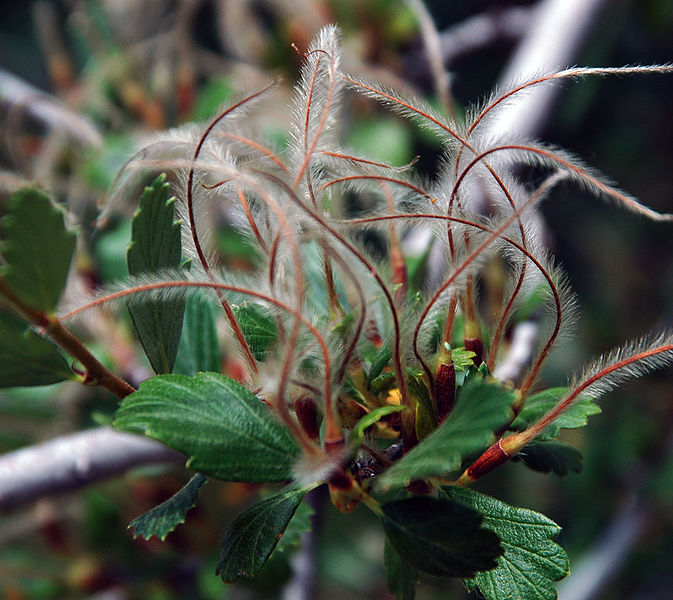
Mountain-Mahogany (Cercocarpus montanus) Cover for Scaled Quail ©WikiC

Mountain-Mahogany (Cercocarpus montanus) Cover for Scaled Quail ©WikiC

Night-roosting cover: Scaled Quail roosts were observed in yucca (Yucca angustifolia), tree cholla, and true mountain-mahogany (Cercocarpus montanus) – yucca-fragrant sumac (Rhus aromatica) vegetation types. The height of vegetation used for night roosts was less than 1.6 feet (0.5 m).

No matter wherever you are and whatever situation you are in, just remember what king David said..,

If I ascend up into heaven, thou art there: if I make my bed in hell, behold, thou art there. If I take the wings of the morning, and dwell in the uttermost parts of the sea; Even there shall thy hand lead me, and thy right hand shall hold me. Psalm 139: 8-10

Even during the darkest hour, as we stumble, confused and seeking direction, His protection and direction never seizes. He not only keeps His eyes on us, but also keeps us as the apple of His eyes. His light shall shine upon us to direct our path.

If I say, Surely the darkness shall cover me; even the night shall be light about me. Yea, the darkness hideth not from thee; but the night shineth as the day: the darkness and the light are both alike to thee.” Psalm 139:11-12
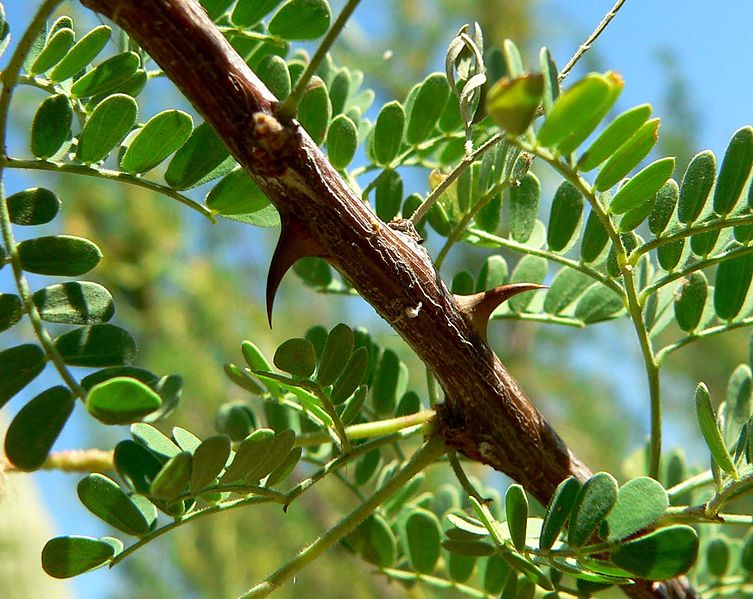
Catclaw Acacia (Acacia greggii) Cover for Scaled Quail ©WikiC

Catclaw Acacia (Acacia greggii) Cover for Scaled Quail ©WikiC

Nesting cover: In March or April winter coveys spread out into areas with less cover. This use of areas with less cover coincides with a seasonal decrease in the number of raptors in the same area.

Scaled Quail nests are constructed under tufts of grasses, and are sheltered by sagebrush (Artemisia spp.), creosotebush (Larrea tridentata), mesquite, catclaw acacia (Acacia greggii), cactus, or yucca; under
dead Russian-thistle (Salsola kali), mixed forbs, or soapweed yucca; or sheltered in old machinery or other human-made debris.

In Oklahoma, 66% of nests were in one of four situations:

  1. dead Russian-thistle,
  2. machinery and junk,
  3. mixed forbs, and
  4. soapweed yucca.

In New Mexico, ordination of breeding birds and vegetative microhabitats indicated that Scaled Quail were associated with increased levels of patchiness and increased cover of mesquite and cactus.

Birds build nests in different places, sometimes in the most unusual place. But still, the chicks prefer the protection under the wings of its parents.

Where do we seek for protection?

As an eagle stirreth up her nest, fluttereth over her young, spreadeth abroad her wings, taketh them, beareth them on her wings: Deuteronomy 32:11

He shall cover thee with his feathers, and under his wings shalt thou trust: his truth shall be thy shield and buckler. Psalm 91:4

The most secure cover for our lives does not come from our million dollars life insurance policies but from assurance that God has gave us through His bloodshed, suffering and death on the cross of Calvary.

Is your Life insured in Christ?

Have a blessed day!

Yours in YESHUA,
a j mithra

Please visit us at:

*

Check out his articles here at  A J Mithra and his Nuggets Pluss

*

Bluebird Fathers – Protective and Teachers

Bluebird Fathers – Protective and Teachers ~ From Creation Moments (Re-post)

Eastern Bluebird (Sialia sialis) by S Slayton

Eastern Bluebird (Sialia sialis) by S Slayton

PROTECTIVE, TEACHING FATHERS

And, ye fathers, provoke not your children to wrath: but bring them up in the nurture and admonition of the Lord.  (Ephesians 6:4)

The first scientific studies that showed essential differences between males and females were not well received by some. Many Christians have resisted the teachings that men and women are by nature the same. Christians have traditionally understood the Bible to teach that males and females each have essential, honorable, but different roles to play.

Unfortunately, many Christians have been unsure how to describe those roles. As we study the scriptural portrayal of the family, especially in Ephesians chapter 5, a picture begins to emerge. All the scriptural examples of motherhood and fatherhood can be distilled into one basic idea. What we call a healthy maternal instinct and a healthy desire on the part of the male to protect and prevent danger are only two sides of the same coin.

An example of what this means was recently discovered in bluebirds. Scientists have found that bluebird fathers offer their nestling daughters twice as much food as their sons. Of course, the sons are never allowed to go hungry. Scientists were puzzled by this until someone suggested that by doing this, father bluebird was teaching his daughters, by example, how to select a mate. Female bluebirds are very fussy about selecting a mate. One of the most important things they look for in a mate is the ability to provide plenty of food for the next generation.

In an age of declining parenting skills, it’s good to be reminded that our Creator has given human parents instruction in His Word.

Prayer:
Dear Father, I thank You that You are a perfect Father. Fill Christian parents among us with love and patience. Most of all, fill them with the instruction of Your Word so that they may teach their children about You in both word and deed. In Jesus’ Name. Amen.

Notes:
K.A. Facklemann. 1992. “Bluebird Fathers Favor Pink Over Blue.” Science News, Jan. 4, p. 7.

*

The Robins Come To The Rescue

THE ROBINS COME TO THE RESCUE


Saving the Little Birds from Danger.

Saving the Little Birds from Danger.


The honeysuckles were beginning to bud. Already the humming-birds were hovering near and had built a nest right in the heart of the vine. This vine was in a nice old-fashioned garden, but near by there was a vacant lot which was very swampy.

“You know the garden by the vacant lot?” began daddy.

“Yes,” replied both children, “are you going to tell us a story about that garden?”

“I am going to tell you,” said daddy, “about the mother humming-bird whose little ones were attacked by a cruel snake when they were rescued by the brave robins.

“The snake had come over from the vacant field and had crawled up the honeysuckle vine as the mother humming-bird had gone off for some food. Some robins hovering near had seen the awful snake. They had cried out in terror and had flown over to the nest.

“The mother humming-bird heard the cries and hurried back, but the robins had frightened off the snake. The snake was not a very large one, and really he had been frightened by all the noise the robins had made, and when he saw so many birds flying toward him he got away very quickly.

“The mother humming-bird got back just as the snake was leaving the nest.

“She couldn’t thank the robins enough for flying to the rescue and saving her beloved little ones, but the robins didn’t want any thanks. They were thankful, too, that the dear little birds had been saved, for birds are very loyal to one another and will risk any danger to save each other.”

“I am so glad,” said Evelyn, “that the little humming-birds were saved, for I love to see them having such a good time in the honeysuckle vines, and the more there are of them the nicer it makes the summer seem.”

“It was brave of the robins to come to the rescue, though, wasn’t it, daddy?”

“Indeed it was,” said daddy; “but almost all animals and birds will do anything they can to help one another, and they seem to forget that there is such a thing as being afraid if they see any creature in danger or distress.

“After the mother humming-bird had recovered from the awful fright, and after the little ones had shown that they were perfectly well and strong, with no ill effects from their fright, the mother humming-bird invited the robins to partake of the delicious meal she had succeeded in getting before the cries came from the robins.”

Daddys Bedtime Story Images (34)

“THE MOTHER HUMMING-BIRD HURRIED BACK.”


Lee’s Addition:

Then shalt thou walk in thy way safely, and thy foot shall not stumble. (Pro 3:23)

Did the Robin brag about what they did? No. Was the Humming-bird thankful? Yes. Were they friends, yes. What can we learn from this story?

We should be willing to watch out for our friends and we should not forget to appreciate and thank those who do things for us. Also, the Lord said that He knows about the birds (Sparrows) and cares about them and us. The Lord cares more about you than the birds.

Are not five sparrows sold for two farthings, and not one of them is forgotten before God? But even the very hairs of your head are all numbered. Fear not therefore: ye are of more value than many sparrows. (Luk 12:6-7)

*

Another Bird Tales

From

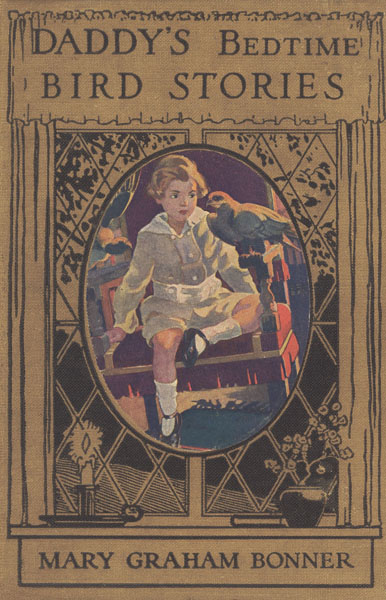
Daddy’s Bedtime Bird Stories – Gutenberg ebooks

By

Mary Graham Bonner

With four illustrations in color by
Florence Choate and Elizabeth Curtis

Daddys Bedtime Story Images


These stories first appeared in the American Press Association Service and the Western Newspaper Union.


Many of the sketches in this volume are the work of Rebecca McCann, creator of the “Cheerful Cherub,” etc.

Daddy's Bedtime Bird Stories by Mary Graham Bonner - 1917

*
Daddy’s Bedtime Bird Stories by Mary Graham Bonner – 1917

*

Links:

Painted Bunting (Passerina ciris) ©©Flickr


  Bird Tales


  Daddy’s Bedtime Bird Stories


Spanish Sparrow (Passer Hispaniolensis) female ©WikiC


  Wordless Birds


*

American Robin (Turdus migratorius) eating by Jim Fenton


  Turdidae – Thrushes Family


*

Birds and Hurricanes

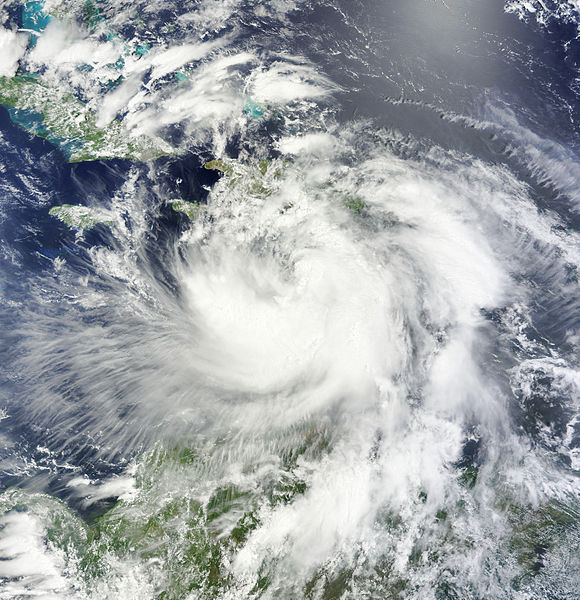
Isaac Aug 24, 2012 - Satellite

Isaac Aug 24, 2012 – Satellite

We here in central Florida are keeping an eye to the south of us as Tropical Storm Isaac marches up this way. They are predicting it to become a hurricane before it gets in this area. We expect rain, but not a direct hit. But! As I told Dan, “until the storm parks at the end of its journey, anything goes.” Do we worry, no, not as Christians. Do we prepare? Yes.

I just filled the feeders extra full for the birds to get a nice meal before they hunker down for what ever passes our way. Where will they go? What will they do? Those are some interesting questions. Let’s see what has been written about that.

How Birds Stay Safe During Hurricanes, “Where Do Birds Go During Hurricanes?” is an interesting article from Birding.com. They tell about the “a sharp drop in barometric pressure” that warns the birds of coming storms. God has given them senses and instincts to prepare.

If they don’t have babies or nest, they are likely to fly to safer regions. Larger birds can stay ahead of the storm. Others have to fly hard, or land and take cover. When the Lord created the birds, He gave them a locking mechanism on their legs and feet. When they perch, their feet sort of lock and that keeps them from falling off while sleeping or from being blown away. Of course, a 80 mph wind or more will get to a point that even they can’t hold on. They also have the chance the tree could be toppled. They also mention that shorebirds tend to go inland.

What Happens To Birds When Hurricanes Hit? from eNature.com says, “Numbers are hard to come by, but it’s clear that many birds are killed outright by hurricanes. This is especially true of seabirds, which have nowhere in which to seek shelter from these storms. Beaches may be littered with seabird carcasses following major storm events. Most Atlantic hurricanes occur in late summer and early fall—and fall storms coincide with bird migration and may disrupt migration patterns severely.” So, the outcome is not always good. One thing we do know from Scripture:

Are not five sparrows sold for two farthings, and not one of them is forgotten before God? But even the very hairs of your head are all numbered. Fear not therefore: ye are of more value than many sparrows. (Luke 12:6-7 KJV)

Are not two sparrows sold for a farthing? and one of them shall not fall on the ground without your Father. But the very hairs of your head are all numbered. Fear ye not therefore, ye are of more value than many sparrows. (Matthew 10:29-31 KJV)

The Lord know all about the deaths, but when they were created, they were given abilities, like above, to protect themselves as best they can.

So God created the great sea creatures and every living creature that moves, with which the waters swarm, according to their kinds, and every winged bird according to its kind. And God saw that it was good. And God blessed them, saying, “Be fruitful and multiply and fill the waters in the seas, and let birds multiply on the earth.” And there was evening and there was morning, the fifth day. (Genesis 1:21-23 ESV)

He has blessed them and told them to reproduce. Would He let them all be wiped out? I don’t think so. Yes, a few will fall.

Hurricane Charley damage at Captiva, Trees stripped.

Hurricane Charley damage at Captiva, Trees stripped.

After the storm, the birds have problems especially if the fruits and vegetables are destroyed. Also, trees, which provide shelter and places for nest might be in short supply. For those of who feed birds, after the storm, if you still have any feeders, they need to be filled up. Also, clean water needs to be provided.

One plus from a storm is that the Life List of birdwatchers could be increased. Many times birds are blown out of their area or off course. This provides a chance to see birds not normally seen. Seabirds can get caught up in the Eye of the storm and carried inland. Thus giving birdwatchers rare treats to see birds.

You can read those and other articles about the birds in a storm on the internet. I am no expert, nor do I claim to be. What I do know is that God loves them, maybe not with the same love He has for us, but He Cares. If He Cares for them, you can rest assured, we are more valuable in His Sight. He will help us humans as we go through the Hurricanes also.

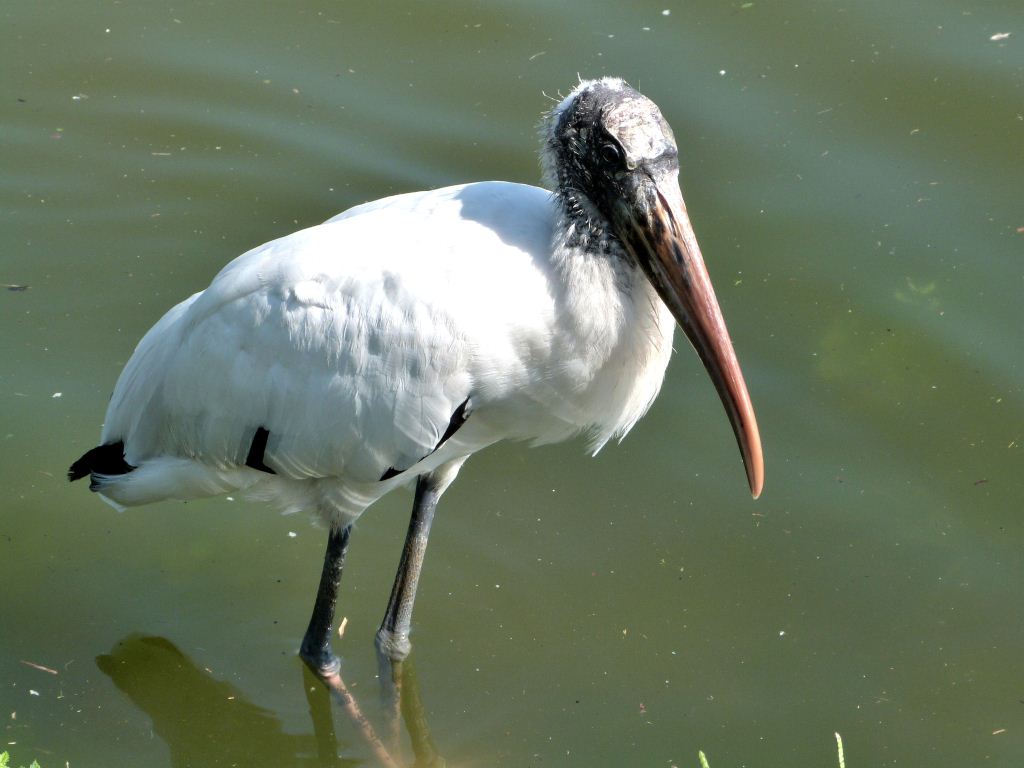
Wood Stork - Lake Morton 6-28-12 by Lee (105)

Wood Stork – Lake Morton 6-28-12 by Lee (105)

Links:

How Birds Stay Safe During Hurricanes

What Happens To Birds When Hurricanes Hit?

Birds Versus Hurricanes – Here

What Happens to Birds in Hurricanes

Seven Things to Know About How Hurricanes Affect Wildlife – NWF

How Do Hurricanes Affect Birds – Audubon

Signs That Animals Show Before a Natural Disaster

Signs That Animals Show Before a Natural Disaster – eHow

Even the birds in the sky know the right time to do things. The storks, doves, swifts, and thrushes know when it is time to fly to a new home. But my people don’t know what the LORD wants them to do. (Jeremiah 8:7 ERV)

*

Birds Vol 1 #6 – June and The Birds and Farmers

Eastern Bluebird (Sialia sialis) by S Slayton

Eastern Bluebird (Sialia sialis) by S Slayton

Birds Illustrated by Color Photography – Revisited

Vol 1. June, 1897 No. 6

*

JUNE.

Frank-hearted hostess of the field and wood,
Gipsy, whose roof is every spreading tree,
June is the pearl of our New England year,
Still a surprisal, though expected long,
Her coming startles. Long she lies in wait,
Makes many a feint, peeps forth, draws coyly back,
Then, from some southern ambush in the sky,
With one great gush of blossoms storms the world.
A week ago the Sparrow was divine;
The Bluebird, shifting his light load of song
From post to post along the cheerless fence,
Was as a rhymer ere the poet came;
But now, O rapture! sunshine winged and voiced,
Pipe blown through by the warm, wild breath of the West,
Shepherding his soft droves of fleecy cloud,
Gladness of woods, skies, waters, all in one,
The Bobolink has come, and, like the soul
Of the sweet season vocal in a bird,
Gurgles in ecstasy we know not what
Save June! Dear June! Now God be praised for June.
—Lowell.

BIRDS AND FARMERS.

From the Forest and Stream.

imgt

HE advocates of protection for our small birds present two sets of reasons for preventing their killing; the one sentimental, and the other economic.
The sentimental reasons are the ones most often urged; they are also of a kind to appeal with especial force to those whose responsibility for the destruction of the birds is greatest. The women and girls, for whose adornment birds’ plumage is chiefly used, think little and know less about the services which birds perform for agriculture, and indeed it may be doubted whether the sight of a bunch of feathers or a stuffed bird’s skin suggests to them any thought of the life that those feathers once represented. But when the wearers are reminded that there was such a life; that it was cheery and beautiful, and that it was cut short merely that their apparel might be adorned, they are quick to recognize that bird destruction involves a wrong, and are ready to do their part toward ending it by refusing to wear plumage.

The small boy who pursues little birds from the standpoint of the hunter in quest of his game, feels only the ardor of pursuit. His whole mind is concentrated on that and the hunter’s selfishness, the desire of possession, fills his heart. Ignorance and thoughtlessness destroy the birds.

Every one knows in a general way that birds render most valuable service to the farmer, but although these services have long been recognized in the laws standing on the statute books of the various states, it is only within a few years that any systematic investigations have been undertaken to determine just what such services are, to measure them with some approach to accuracy, to weigh in the case of each species the good and the evil done, and so to strike a balance in favor of the bird or against it. The inquiries carried on by the Agricultural Department on a large scale and those made by various local experiment stations and by individual observers have given results which are very striking and which can no longer be ignored.

It is a difficult matter for any one to balance the good things that he reads and believes about any animal against the bad things that he actually sees. The man who witnesses the theft of his cherries by robin or catbird, or the killing of a quail by a marsh hawk, feels that here he has ocular proof of harm done by the birds, while as to the insects or the field mice destroyed, and the crops saved, he has only the testimony of some unknown and distant witness. It is only natural that the observer should trust the evidence of his senses, and yet his eyes tell him only a small part of the truth, and that small part a misleading one.

It is certain that without the services of these feathered laborers, whose work is unseen, though it lasts from daylight till dark through every day in the year, agriculture in this country would come to an immediate standstill, and if in the brief season of fruit each one of these workers levies on the farmer the tribute of a few berries, the price is surely a small one to pay for the great good done. Superficial persons imagine that the birds are here only during the summer, but this is a great mistake. It is true that in warm weather, when insect life is most abundant, birds are also most abundant. They wage an effective and unceasing war against the adult insects and their larvae, and check their active depredations; but in winter the birds carry on a campaign which is hardly less important in its results.


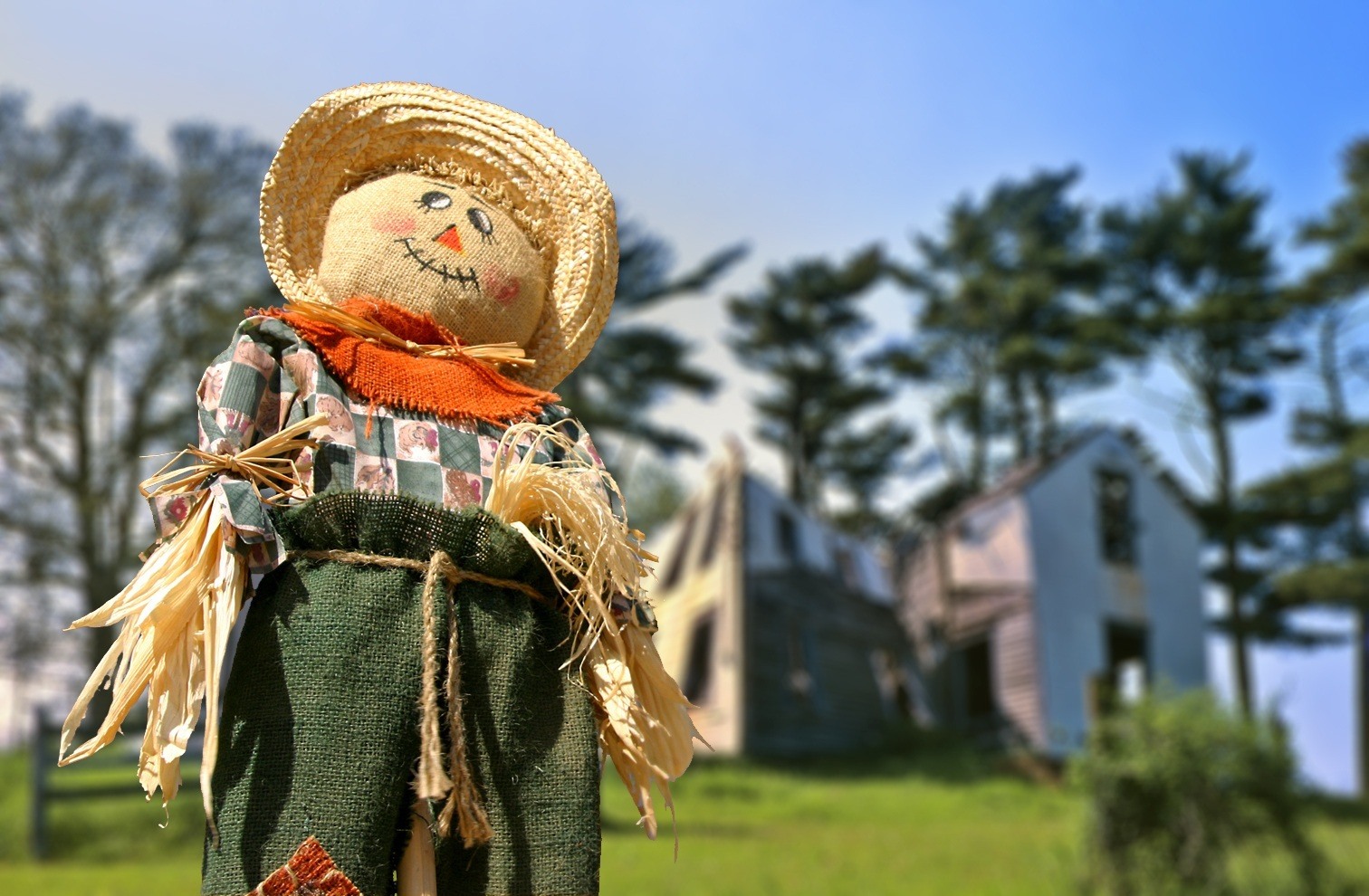
Scarecrow ©©

Scarecrow ©©

Lee’s Addition:

In 1897 it appears that ladies using feathers for hats, boys shooting birds and farmers using various practices were all responsible for the decline of many farmland birds. Fast-forward to today and farmers are still faced with decisions that affect bird welfare. I have placed some links at the end that show some of the present day challenges.

The California Rice farmers are making some strides to help migratory birds. “The hundreds of vast, flooded rice paddies that cover miles of interior northern California may seem like an unlikely safe haven for shorebirds, but changes occurring in the state’s rice country may help improve the outlook for dozens of species in decline in recent decades. So far, more than 165 rice farmers have signed up for an incentive program that will build a system of islands and other habitat improvements in their paddies, and provide birds like the avocet a place to rest, feed and breed throughout the year.”

“Most of the coffee sold in America today is literally killing the songbirds we love – and destroying a sustainable method of farming that supports rural communities in Latin America and keeps farm workers and their children away from toxic chemicals.” This is from the Birds and Beans web page which is trying to get coffee raised in a way that spares birds.

Another controversy today is the Wind Turbines to generate electricity. The debate is on as to whether there are excessive amounts of bird kill being caused by these. See some of the articles below.

England and the E.U. is not immune either. They have done much to cause the loss of birds by their practices. See The birds and the weeds: A farm conservation love story – UK, and Bird populations dropping in EU tied to farming policies

I am not really on either side of the issue as I have not studied it in depth. I know man has to live, but so does the wild life. So, where is the balance? I am sure I lean toward the birds being preserved because I enjoy watching them. Man was given dominion over the animals, but that does not mean that the birds are not to be preserved also. There is a balance there that needs to be met.

Then God blessed them, and God said to them, “Be fruitful and multiply; fill the earth and subdue it; have dominion over the fish of the sea, over the birds of the air, and over every living thing that moves on the earth. (Genesis 1:28 NKJV)

So God blessed Noah and his sons, and said to them: “Be fruitful and multiply, and fill the earth. And the fear of you and the dread of you shall be on every beast of the earth, on every bird of the air, on all that move on the earth, and on all the fish of the sea. They are given into your hand. Every moving thing that lives shall be food for you. I have given you all things, even as the green herbs. (Genesis 9:1-3 NKJV)

*

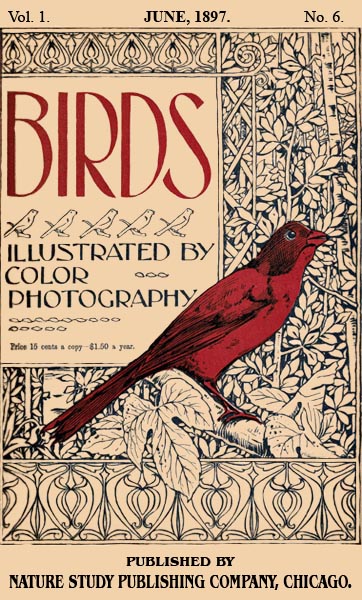
Birds Illustrated by Color Photograhy Vol 1 June, 1897 No 6 - Cover

Birds Illustrated by Color Photograhy Vol 1 June, 1897 No 6 – Cover

Birds Illustrated by Color Photography – Revisited – Introduction

The above article is the first article in the monthly serial that was started in January 1897 “designed to promote Knowledge of Bird-Live.” These include Color Photography, as they call them, today they are drawings. There are at least three Volumes that have been digitized by Project Gutenberg.

To see the whole series of – Birds Illustrated by Color Photography – Revisited

*

(Information from Wikipedia and other internet sources)

Next Article – The Scarlet Tanager

Previous Article – The Snowy Owl

Wordless Birds

Links:

The birds and the weeds: A farm conservation love story – UK
Bird populations dropping in EU tied to farming policies
Birds and Beans
Are Windmills Killing Ducks?

*

Birds Vol 1 #6 – The Snowy Owl

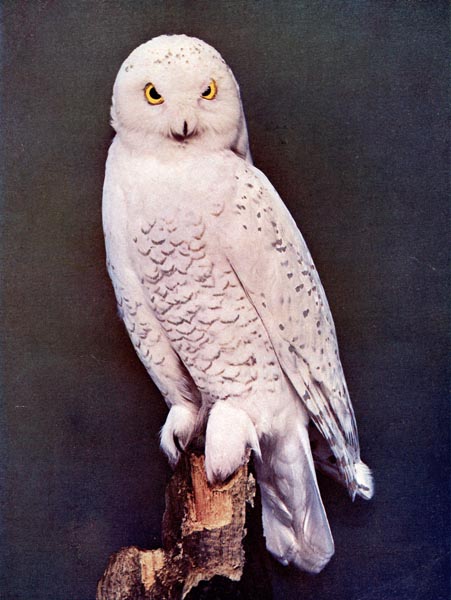
Snowy Owl for Birds Illustrated by Color Photography, 1897

Snowy Owl for Birds Illustrated by Color Photography, 1897

Birds Illustrated by Color Photography – Revisited

Vol 1. June, 1897 No. 6

*

THE SNOWY OWL.

F for Birds Illustrated by Color Photography

EW of all the groups of birds have such decided markings, such characteristic distinctions, as the Owl. There is a singular resemblance between the face of an Owl and that of a cat, which is the more notable, as both of these creatures have much the same habits, live on the same prey, and are evidently representatives of the same idea in their different classes. The Owl, in fact, is a winged cat, just as the cat is a furred owl.

The Snowy Owl is one of the handsomest of this group, not so much on account of its size, which is considerable, as by reason of the beautiful white mantle which it wears, and the large orange eyeballs that shine with the lustre of a topaz set among the snowy plumage.

It is a native of the north of Europe and America, but is also found in the more northern parts of England, being seen, though rather a scarce bird, in the Shetland and Orkney Islands, where it builds its nest and rears its young. One will be more likely to find this owl near the shore, along the line of salt marshes and woody stubble, than further inland. The marshes do not freeze so easily or deep as the iron bound uplands, and field-mice are more plentiful in them. It is so fleet of wing that if its appetite is whetted, it can follow and capture a Snow Bunting or a Junco in its most rapid flight.

Like the Hawk Owl, it is a day-flying bird, and is a terrible foe to the smaller mammalia, and to various birds. Mr. Yarrell in his “History of the British Birds,” states that one wounded on the Isle of Balta disgorged a young rabbit whole, and that a young Sandpiper, with its plumage entire, was found in the stomach of another.

In proportion to its size the Snowy Owl is a mighty hunter, having been detected chasing the American hare, and carrying off wounded Grouse before the sportsman could secure his prey. It is also a good fisherman, posting itself on some convenient spot overhanging the water, and securing its finny prey with a lightning-like grasp of the claw as it passes beneath the white clad fisher. Sometimes it will sail over the surface of a stream, and snatch the fish as they rise for food. It is also a great lover of lemmings, and in the destruction of these quadruped pests does infinite service to the agriculturist.

The large round eyes of this owl are very beautiful. Even by daylight they are remarkable for their gem-like sheen, but in the evening they are even more attractive, glowing like balls of living fire.

From sheer fatigue these birds often seek a temporary resting place on passing ships. A solitary owl, after a long journey, settled on the rigging of a ship one night. A sailor who was ordered aloft, terrified by the two glowing eyes that suddenly opened upon his own, descended hurriedly to the deck, declaring to the crew that he had seen “Davy Jones a-sitting up there on the main yard.”


THE SNOWY OWL.

What do you think of this bird with his round, puffy head? You of course know it is an Owl. I want you to know him as the Snowy Owl.

Don’t you think his face is some like that of your cat? This fellow is not full grown, but only a child. If he were full grown he would be pure white. The dark color you see is only the tips of the feathers. You can’t see his beak very well for the soft feathers almost cover it.

His large soft eyes look very pretty out of the white feathers. What color would you call them? Most owls are quiet during the day and very busy all night. The Snowy Owl is not so quiet day times. He flies about considerably and gets most of his food in daylight.

A hunter who was resting under a tree, on the bank of a river, tells this of him:

“A Snowy Owl was perched on the branch of a dead tree that had fallen into the river. He sat there looking into the water and blinking his large eyes.

Suddenly he reached out and before I could see how he did it, a fish was in his claws.”

This certainly shows that he can see well in the day time. He can see best, however, in the twilight, in cloudy weather or moonlight. That is the way with your cat.

The wing feathers of the owl are different from those of most birds. They are as soft as down. This is why you cannot hear him when he flies. Owls while perching are almost always found in quiet places where they will not be disturbed.

Did you ever hear the voice of an owl in the night? If you never have, you cannot imagine how dreary it sounds. He surely is “The Bird of the Night.”


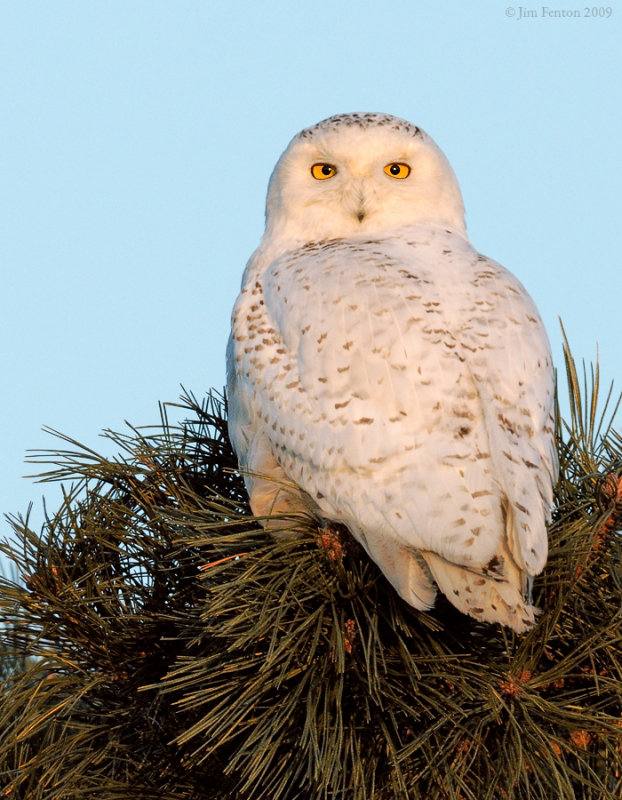
Snowy Owl (Bubo scandiacus) by J Fenton

Snowy Owl (Bubo scandiacus) by J Fenton

Lee’s Addition:

The Owl is mentioned 8 times in the NKJV of the Bible and it qualifies as a Bird of the Bible. These verses are from the “unclean” list:

the white owl, the jackdaw, and the carrion vulture; (Leviticus 11:18 NKJV)

the little owl, the screech owl, the white owl, (Deuteronomy 14:16 NKJV)

The Snowy Owl is in the Strigidae – Owls Family which currently has 211 species. There are two families that make up the Strigiformes Order, the Owls and the Barn Owls – Tytonidae Family.

Because Snowy Owls live in cold weather often, they have feathers that cover most of their legs and feet. The Lord has provided extra protection for them this way. A lack of pigment leaves extra space in the feathers to help keep them warm and also is the reason they are so white. Also being white helps protect them from being seen so well in snow. Another interesting thing is that they hunt in the daytime more than regular owls. When you live way up north by the Arctic Circle, the sun never sets for periods of time. An owl could get might hungry waiting for darkness to go hunting.

*

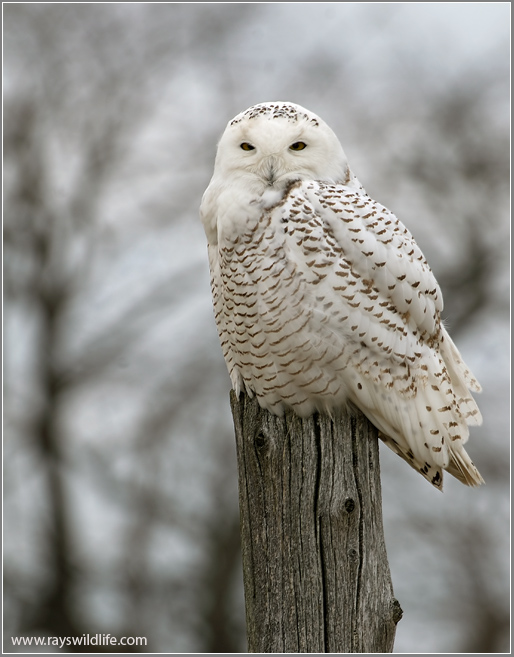
Snowy Owl (Bubo scandiacus) by Raymond Barlow

Snowy Owl (Bubo scandiacus) by Raymond Barlow

*

From xeno-canto the call of a pair of Snowy Owls

The Snowy Owl is a large owl and is the official bird of Quebec. It goes by several names, such as, the Arctic OwlGreat White OwlIcelandic Snow Owl, or Harfang.

Snowy Owl (Bubo scandiacus) Leggings ©WikiC

Snowy Owl (Bubo scandiacus) Leggings ©WikiC

*

“Most of the owls’ hunting is done in the “sit and wait” style; prey may be captured on the ground, in the air or fish may be snatched off the surface of bodies of water using their sharp talons. Each bird must capture roughly 7 to 12 mice per day to meet its food requirement and can eat more than 1,600 lemmings per year.
Snowy Owls, like many other birds, swallow their small prey whole. Strong stomach juices digest the flesh, while the indigestible bones, teeth, fur, and feathers are compacted into oval pellets that the bird regurgitates 18 to 24 hours after feeding. Regurgitation often takes place at regular perches, where dozens of pellets may be found. Biologists frequently examine these pellets to determine the quantity and types of prey the birds have eaten. When large prey are eaten in small pieces, pellets will not be produced.

Though Snowy Owls have few predators, the adults are very watchful and are equipped to defend against any kind of threat towards them or their offspring. During the nesting season, the owls regularly defend their nests against arctic foxes, corvids and swift-flying jaegers; as well as dogs, gray wolves and avian predators. Males defend the nest by standing guard nearby while the female incubates the eggs and broods the young. Both sexes attack approaching predators, dive-bombing them and engaging in distraction displays to draw the predator away from a nest.” (Wikipedia)

*

Birds Illustrated by Color Photograhy Vol 1 June, 1897 No 6 - Cover

Birds Illustrated by Color Photograhy Vol 1 June, 1897 No 6 – Cover

Birds Illustrated by Color Photography – Revisited – Introduction

The above article is the first article in the monthly serial that was started in January 1897 “designed to promote Knowledge of Bird-Live.” These include Color Photography, as they call them, today they are drawings. There are at least three Volumes that have been digitized by Project Gutenberg.

To see the whole series of – Birds Illustrated by Color Photography – Revisited

*

(Information from Wikipedia and other internet sources)

Next Article –June, Birds And Farmers

Previous Article – The Baltimore Oriole

ABC’s Of The Gospel

Links:

*

Birds Versus Hurricanes

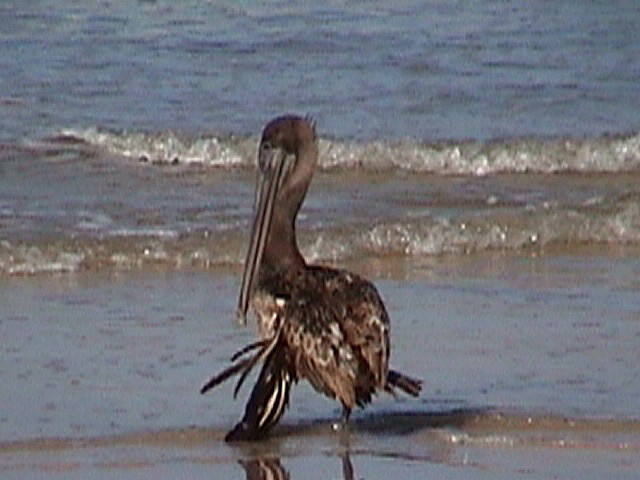
Brown Pelican with broken wing from a hurricane CC

Brown Pelican with broken wing from a hurricane ©©

Here is a link to a very interesting blog from eNature about hurricanes and birds. With Hurricane Irene coming along the coast many will be wondering about the welfare of the birds.

What Happens To Birds When Hurricanes Hit? | Blog | eNature.

While searching for other articles about birds in the storm or hurricane, I found this YouTube produced by Pastor Mark L Johnson of Liberty Hill Baptist Church. It has a great message.

Also, remember:

…Be merciful to me, O God, be merciful to me, for in you my soul takes refuge; in the shadow of your wings I will take refuge, till the storms of destruction pass by. (Psalms 57:1 ESV)
Consider the ravens: for they neither sow nor reap; which neither have storehouse nor barn; and God feedeth them: how much more are ye better than the fowls?
(Luke 12:24 KJV)

Birds in Hymns – His Eye Is On The Sparrow

Why should I feel discouraged, why should the shadows come,
Why should my heart be lonely, and long for heaven and home,
When Jesus is my portion? My constant friend is He:
His eye is on the sparrow, and I know He watches me;
His eye is on the sparrow, and I know He watches me.

For the whole hymn – Click Here

Other articles about this include:

How Birds Stay Safe During Hurricanes by Birding.com

The Secret Relationship Between Birds and Hurricanes by NPR

Where do birds go in a hurricane?

Hurricane Birds

*

Birds of the Bible – Hovering Birds

White-tailed Tropicbird (Phaethon lepturus) by Ian

White-tailed Tropicbird (Phaethon lepturus) by Ian

Like birds hovering, so the LORD of hosts will protect Jerusalem;  he will protect and deliver it;he will spare and rescue it.” (Isaiah 31:5 ESV)

While searching for “bird” verses, I came across this verse and remembered the many birds that I have seen hovering. Go to the shore and feed Gulls and you will see them “hover over you” while they wait for another morsel to be tossed up to them. Many of the birds of prey (hawks, falcons, osprey, eagles, etc.) will “hover” while trying to catch a pray. Of course Hummingbirds will “hover” in front of flowers while sipping the nectar. We watched a Kingfisher “hover” out at Circle B, one of our favorite birding spots. Birds “hover” over their nest to protect their young. Genesis 1:2 is the only other verse using ‘hovering”, “moving”, or “fluttering.”

Using the “Compare” mode of e-Sword, here are some of the translations of this phrase:

As birds flying…he shall rescue and shall protect
As birds hovering…he will protect and deliver it, he will pass over and preserve it.
Just as birds fly over their nest to protect it…will defend Jerusalem. He will save her. He will “pass over” and save Jerusalem.
Like birds with outstretched wings…he will be a cover and salvation for it, going over it he will keep it from danger.
will protect like a mother bird circling over her nest
Like birds hovering overhead…he will shield and deliver it; and he will pass over and bring it to safety.

As you can see from these and the others not shown, this hovering or flying about is used in the protective mode, protecting their nest and their young. And of course, this verse is referring to the LORD of host defending and protecting Jerusalem. Hebrew H5774 עוּף – ‛ûph, pronounced “oof” is used for flying or hovering. “A primitive root; to cover (with wings or obscurity); hence (as denominative from H5775) to fly;…”

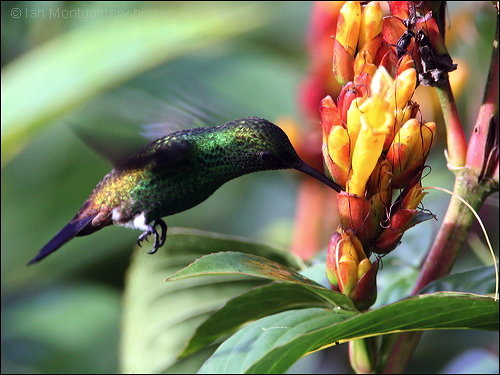
Copper-rumped Hummingbird (Amazilia tobaci) by Ian

Copper-rumped Hummingbird (Amazilia tobaci) by Ian

Here are what a few of the commentaries say about this passage. The bolding is mine.

BBC – 31:4-9 “God is like a lion which a multitude of shepherds (Assyria) tries to frighten away. Or, to change the figure, He is like a flock of birds, hovering over Jerusalem; He is ready to defend and deliver the city. When Israel turns back to the Lord, it will throw away its idols. The Assyrians will perish by a direct intervention of the Lord. The destruction of Sennacherib did not exhaust the meaning of these verses, so the prophecy has a future fulfillment as well, that is, in the Tribulation.”

MHCC – Isaiah 31:1-5 “God will oppose the help sought from workers of iniquity. Sinners may be convicted of folly by plain and self-evident truths, which they cannot deny, but will not believe. There is no escaping the judgments of God; and evil pursues sinners. The Lord of hosts will come down to fight for Mount Zion. The Lion of the tribe of Judah will appear for the defence of his church. And as birds hovering over their young ones to protect them, with such compassion and affection will the Lord of hosts defend Jerusalem. He will so defend it, as to secure its safety.”

Black-headed Ibis (Threskiornis melanocephalus) w chicks by Nikhil Devasar

Black-headed Ibis (Threskiornis melanocephalus) w chicks by Nikhil Devasar

Barnes – Isaiah 31:5 “As birds flying – This is another comparison indicating substantially the same thing as the former, that Yahweh would protect Jerusalem. The idea here is, that He would do it in the same manner as birds defend their young by hovering over them, securing them under their wings, and leaping forward, if they are suddenly attacked, to defend them. Our Saviour has used a similar figure to indicate his readiness to have defended and saved the same city Mat_23:27, and it is possible that he may have had this passage in his eye. The phrase ‘birds flying,’ may denote the “rapidity” with which birds fly to defend their young, and hence, the rapidity with which God would come to defend Jerusalem; or it may refer to the fact that birds, when their young are attacked, fly, or flutter around them to defend them; they will not leave them.
And passing over – פסוח pâsoach. Lowth renders this, ‘Leaping forward.’ This word, which is usually applied in some of its forms to the Passover Exo_12:13, Exo_12:23, Exo_12:27; Num_9:4; Jos_5:11; 2Ch_30:18, properly means, as a verb, “to pass over,” and hence, to preserve or spare. The idea in the passage is, that Yahweh would protect Jerusalem, as a bird defends its young.”

Bald Eagle (Haliaeetus leucocephalus) by Aesthetic Photos

Gill – Isaiah 31:5 “As birds flying, so will the Lord of hosts defend Jerusalem,…. As the preceding metaphor expresses the mighty power of God, this his tenderness and affection, as well as his speed and swiftness in the deliverance of his people. As birds in the air, at a distance, especially the eagle, have their eye upon their nests, and their young ones in them, and when in danger fly to their assistance, and hover over them, and about them, to keep off those that would hurt them, or carry them away; so the Lord, on high, sees his people when in distress, and hastens to help them, and does surround, protect, and defend them: thus the Lord did, when Sennacherib with his army besieged Jerusalem; who boasted, with respect to other nations, that he had “found as a nest the riches of the people”, and that “there was none that moved the wing against him”, Isa_10:14 to which it is thought the allusion is here:”

But God, who is rich in mercy, for his great love wherewith he loved us, Even when we were dead in sins, hath quickened us together with Christ, (by grace ye are saved;) And hath raised us up together, and made us sit together in heavenly places in Christ Jesus: That in the ages to come he might shew the exceeding riches of his grace in his kindness toward us through Christ Jesus. For by grace are ye saved through faith; and that not of yourselves: it is the gift of God: Not of works, lest any man should boast. For we are his workmanship, created in Christ Jesus unto good works, which God hath before ordained that we should walk in them. (Ephesians 2:4-10 KJV)

Birds In Hymns – Flee As A Bird

Birds In Hymns – Flee As A Bird ~ by Mary S. Shindler

A Psalm of David. In the LORD I put my trust; How can you say to my soul, “Flee as a bird to your mountain”? (Psalms 11:1 NKJV)

Words & Music ~ by Mary S. Shindler, 1842

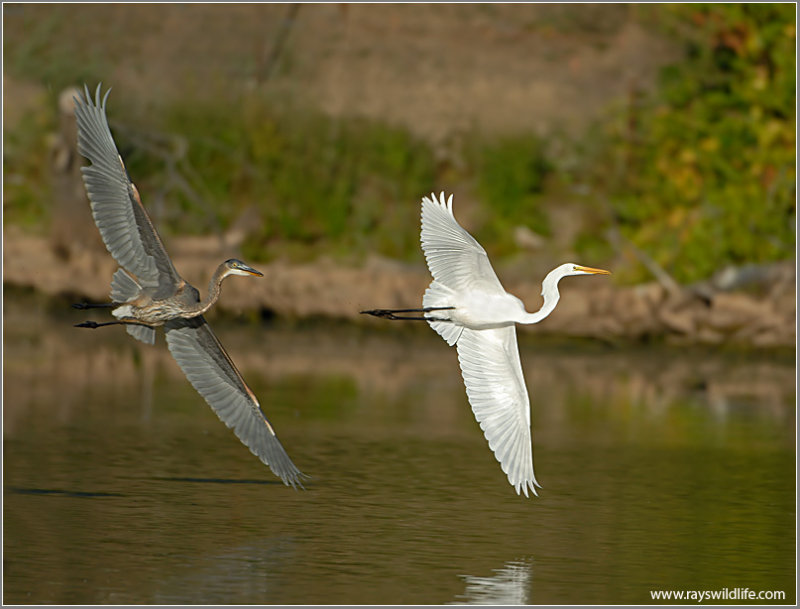
Great Blue Heron (Ardea herodias) chasing Western Great Egret (Ardea alba) by Ray

Great Blue Heron (Ardea herodias) chasing Western Great Egret (Ardea alba) by Ray

Flee As A Bird


Flee as a bird to your mountain, thou who art weary of sin;
Go to the clear flowing fountain where you may wash and be clean.
Haste, then, th’Avenger is near thee; call, and the Savior will hear thee;
He on His bosom will bear thee; O thou who art weary of sin,
O thou who art weary of sin.

He will protect thee forever, wipe every falling tear;
He will forsake thee, O never, sheltered so tenderly there.
Haste, then, the hours are flying, spend not the moments in sighing,
Cease from your sorrow and crying: The Savior will wipe every tear,
The Savior will wipe every tear.

*************

He will swallow up death forever, And the Lord GOD will wipe away tears from all faces; The rebuke of His people He will take away from all the earth; For the LORD has spoken. (Isaiah 25:8 NKJV)

for the Lamb who is in the midst of the throne will shepherd them and lead them to living fountains of waters. And God will wipe away every tear from their eyes.” (Revelation 7:17 NKJV)

And God will wipe away every tear from their eyes; there shall be no more death, nor sorrow, nor crying. There shall be no more pain, for the former things have passed away. (Revelation 21:4 NKJV)

Most information from The Cyber Hymnal

See ~ Wordless Birds

More ~ Birds in Hymns

*