A blog I enjoy following by Alois Absenger from Germany, had a gorgeous Woodpecker photo a few day ago. It is titled, Buntspecht. When I asked Alois what was the name of the woodpecker, he answered that it was a “Buntspecht”. With a chuckle, I decided to find out the English name of this beautiful avian wonder.
Searching the internet, this video was discovered and needs to be shared.
What is so amazing, is the way the Great Spotted Woodpecker [Buntspecht] supports himself with his tail. Our Creator never ceases to provide beneficial support for us and His Creation.
“The works of the LORD are great, sought out of all them that have pleasure therein.” (Psalms 111:2 KJV)
“And I will bring the blind by a way that they knew not; I will lead them in paths that they have not known: I will make darkness light before them, and crooked things straight. These things will I do unto them, and not forsake them.” (Isaiah 42:16 KJV)
Pied-Billed Grebe at Lake Hollingsworth, Lakeland, FL by Dan
“The works of the LORD are great, sought out of all them that have pleasure therein.” (Psalms 111:2 KJV)
Our inspirations today come from the Podicipedidae Family, which is the only family in the Podicipediformes Order. All 23 species are called a Grebe. [This is a switch from many families.] Within the family there six genera: Tachybaptus (6), Podilymbus (2), Rollandia (2), Poliocephalus (2), Podiceps (9) and the Aechmophorus (2). Of these species, three have become extinct; the Alaotra Grebe, Atitlan Grebe, and the Colombian Grebe. “Grebes are a widely distributed order of freshwater diving birds, some of which visit the sea when migrating and in winter.”
As I start this article, we have only seen about three or four of these family members. The most popular in this area is the Pied-billed Grebe (Podilymbus podiceps). All About Birds had these two “Cool Facts“:
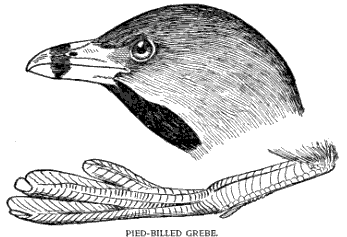
“The Latin genus name for “grebe” means “feet at the buttocks”—an apt descriptor for these birds, whose feet are indeed located near their rear ends. This body plan, a common feature of many diving birds, helps grebes propel themselves through water. Lobed (not webbed) toes further assist with swimming. Pied-billed Grebes pay for their aquatic prowess on land, where they walk awkwardly.
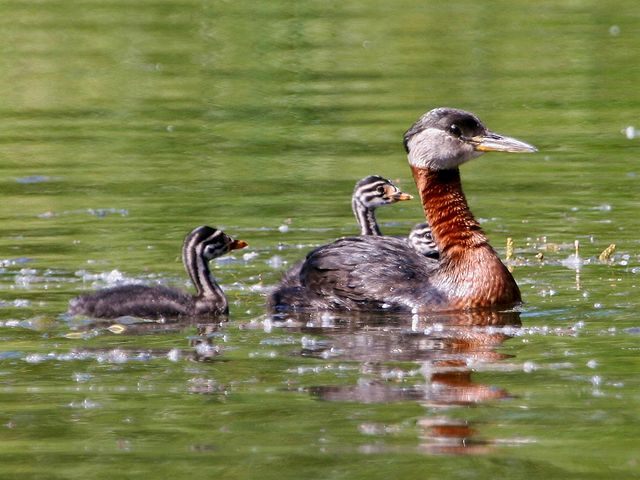
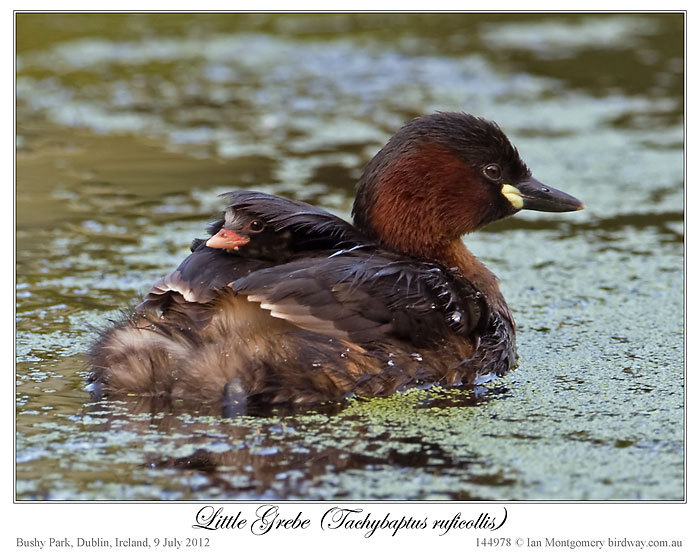
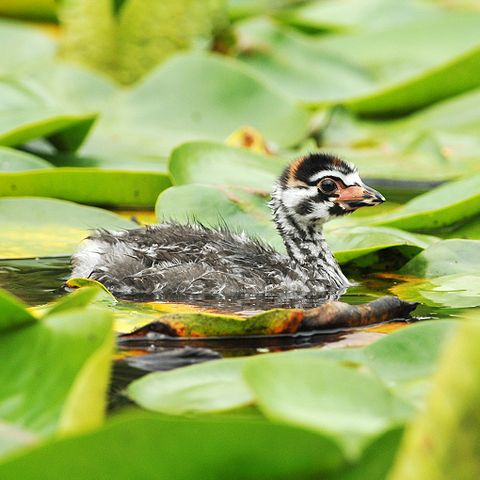
Pied-billed Grebe [and other Grebe] chicks typically leave the nest the first day after hatching and spend much of their first week riding around on a parent’s back. They usually spend most of their first 3 weeks on or near the nest platform.”
Little Grebe (Tachybaptus ruficollis) by Ian 4
Grebes are small to medium-large in size, have lobed toes, and are excellent swimmers and divers. Although they can run for a short distance, they are prone to falling over, since they have their feet placed far back on the body. Bills vary from short and thick to long and pointed, depending on the diet, which ranges from fish to freshwater insects and crustaceans. The feet are always large, with broad lobes on the toes and small webs connecting the front three toes. The hind toe also has a small lobe. Recent experimental work has shown that these lobes work like the hydrofoil blades of a propeller.
Pied-billed Grebe
Grebes have narrow wings, and some species are reluctant to fly; indeed, two South American species are completely flightless. They respond to danger by diving rather than flying, and are in any case much less wary than ducks. Extant species range in size from the least grebe, at 120 grams (4.3 oz) and 23.5 cm (9.3 inches), to the great grebe, at 1.7 kg (3.8 lbs) and 71 cm (28 inches).
The North American and Eurasian species are all, of necessity, migratory over much or all of their ranges, and those species that winter at sea are also seen regularly in flight. Even the small freshwater pied-billed grebe of North America has occurred as a transatlantic vagrant to Europe on more than 30 occasions.
Tachybaptus is a genus of small members of the grebe family birds. The genus name is from Ancient Greek takhus “fast” and bapto “to sink under”. It has representatives over much of the world, including the tropics.
is a genus of birds in the Podicipedidae family, containing the extinct Atitlán grebe (Podilymbus gigas) and the pied-billed grebe (Podilymbus podiceps).The genus name is derived from Latin Podilymbus, a contraction of podicipes (“feet at the buttocks”, from podici-, “rump-” + pes, “foot”)—the origin of the name of the grebe order—and Ancient Greek kolymbos, “diver”.
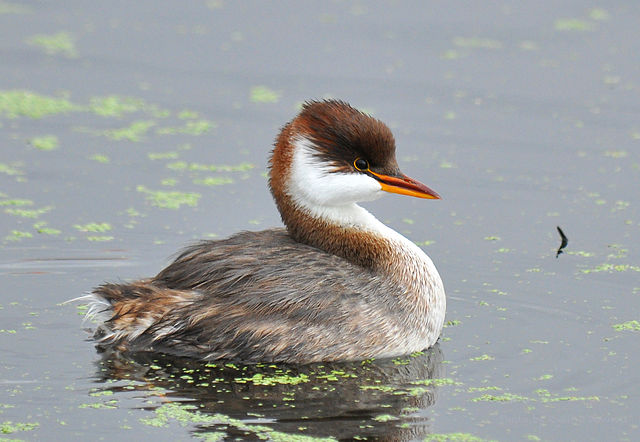
Rollandia is a small genus of birds in the grebe family. Its two members are found in South America. They are: White-tufted Grebe (Rollandia rolland) and Titicaca Grebe (Rollandia microptera).
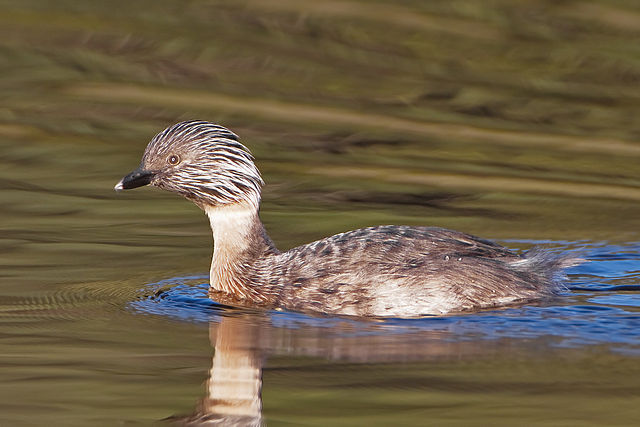
Poliocephalus is a small genus of birds in the grebe family. Its two members are found in Australia and New Zealand. They are: Hoary-headed Grebe (Poliocephalus poliocephalus) and New Zealand Grebe (Poliocephalus rufopectus).
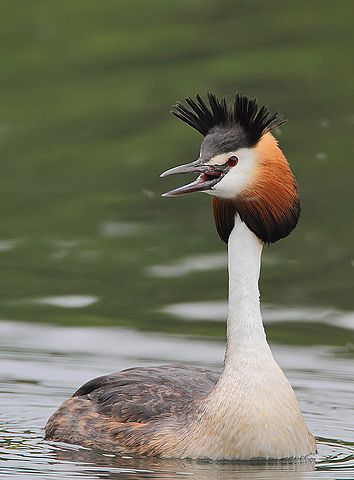
Podiceps is a genus of birds in the grebe family. The genus name comes from Latin podicis, “vent” and pes, “foot”, and is a reference to the placement of a grebe’s legs towards the rear of its body.It has representatives breeding in Europe, Asia, North, and South America. Most northern hemisphere species migrate in winter to the coast or warmer climates.
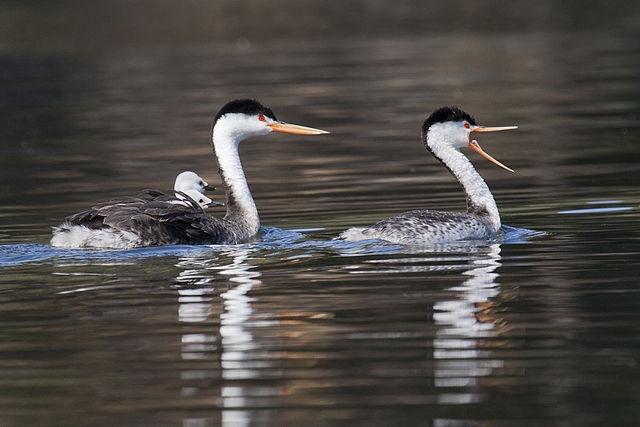
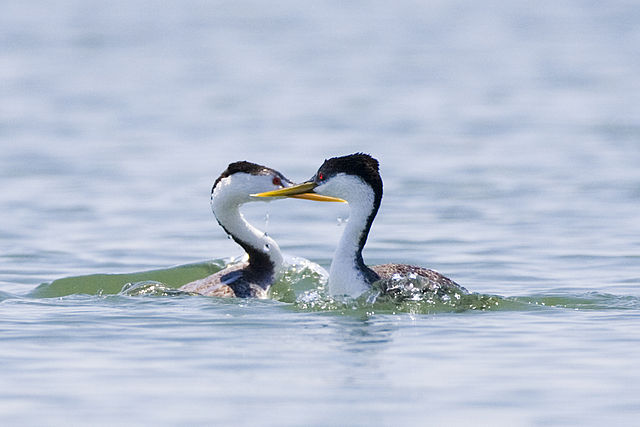
Aechmophorus is a genus of birds in the grebe family. It has two living representatives breeding in western North America; the Western Grebe (Aechmophorus occidentalis) and Clark’s Grebe (Aechmophorus clarkii).
The western grebe has a straight bill with a dull green-yellow color as opposed to the Clark’s grebe, which has a slightly upturned, bright orange-yellow bill. In both species the male has a longer and deeper bill than that of the female, making it a distinguishing feature. All species of grebes display the pattern of lobed feet. A tough skin surrounds each toe separately, providing more surface area for effective swimming. This form increases the power of propulsion per stroke and reduces drag when the bird is recovering.
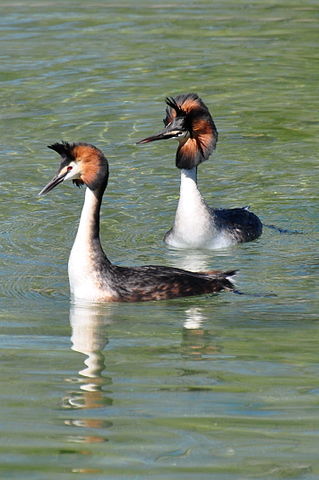
Western and Clark’s grebes take part in a courtship display known as mate feeding. This occurs regularly between a mated pair during the period prior to hatching of nestlings. In both species mate feeding appears to peak shortly before egg laying and involves the male providing large quantities of food to the begging female. Pairs will also engage in a spectacular display, by rearing up and “rushing” across the surface of the water side by side, making a loud pattering sound with their feet.
This slideshow requires JavaScript.
“He hath made his wonderful works to be remembered: the LORD is gracious and full of compassion.” (Psalms 111:4 KJV)
“He shall send from heaven, and save me from the reproach of him that would swallow me up. Selah. God shall send forth his mercy and his truth.” (Psalms 57:3 KJV)






 Lee's Birdwatching Adventures Plus