***

UNDER THE SHADOW
***
“How excellent is thy lovingkindness, O God! therefore the children of men put their trust under the shadow of thy wings.” (Psalms 36:7 KJV)
Mallard (Anas platyrhynchos) With young ©CountryTraveler
*
*
“How excellent is thy lovingkindness, O God! therefore the children of men put their trust under the shadow of thy wings.” (Psalms 36:7 KJV)
Mallard (Anas platyrhynchos) With young ©CountryTraveler
*
*

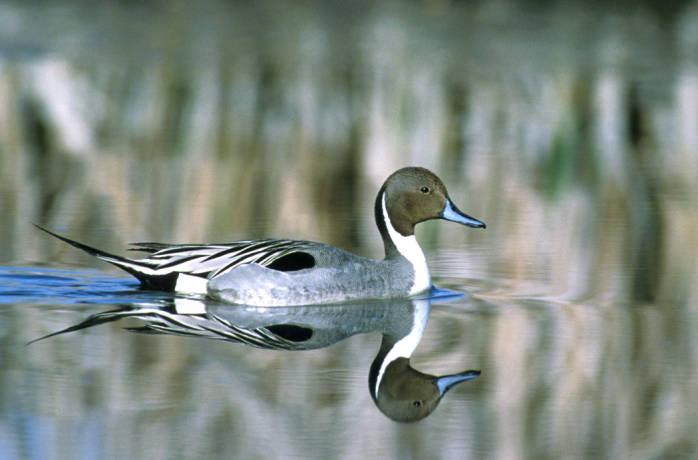
“For whosoever shall keep the whole law, and yet offend in one point, he is guilty of all.” (James 2:10 KJV)
Northern Pintail (Anas acuta) ©USFWS
*
*
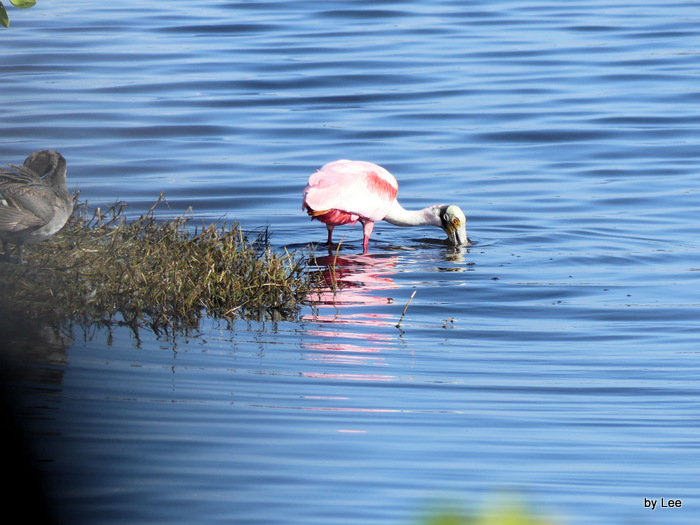
“And ye shall seek me, and find me, when ye shall search for me with all your heart.” (Jeremiah 29:13 KJV)
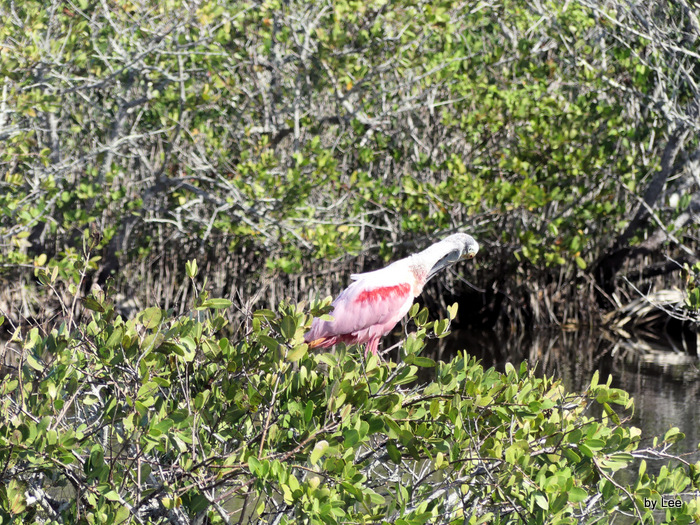
Roseate Spoonbill at Merritt Island Black Point Drive by Lee
*
*
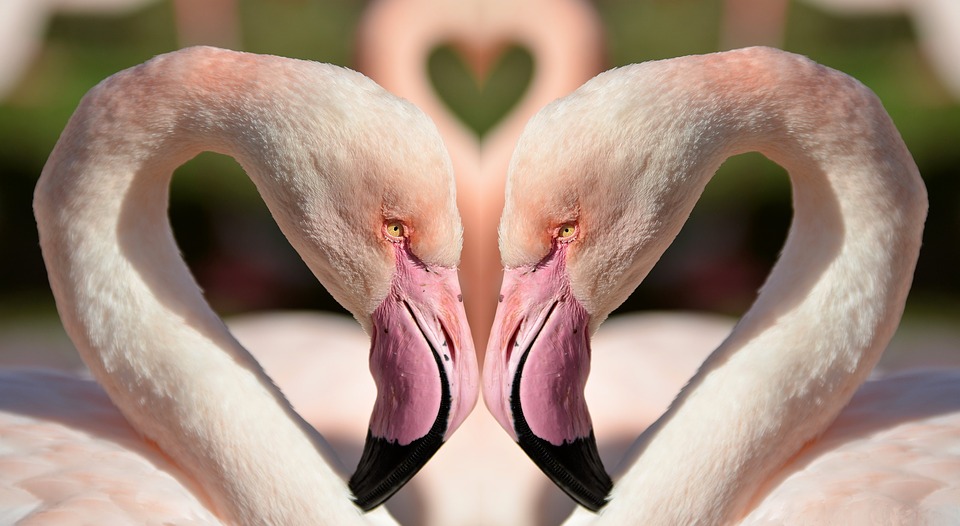
“For this is the message that ye heard from the beginning, that we should love one another.” (1 John 3:11 KJV)
Flamingos In Love ©Pixabay
*
*
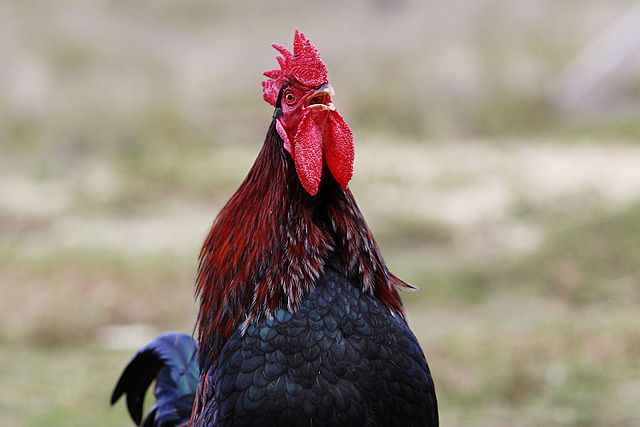
“Jesus said unto him, Verily I say unto thee, That this night, before the cock crow, thou shalt deny me thrice.” (Matthew 26:34 KJV)
“The Galliformes Order is the next order taxonomically. “The Galliformes are an order of heavy-bodied ground-feeding birds that includes turkey, grouse, chicken, New World quail and Old World quail, ptarmigan, partridge, pheasant, junglefowl and the Cracidae. The name derives from “gallus”, Latin for “cock” or “rooster”. Common names are gamefowl or gamebirds, landfowl, gallinaceous birds, or galliforms. “Wildfowl” or just “fowl” are also often used for the Galliformes, but usually these terms also refer to waterfowl (Anseriformes), [which we just finished] and occasionally to other commonly hunted birds. This group has about 299 species, one or more of which are found in essentially every part of the world’s continents (except for the innermost deserts and perpetual ice). They are rarer on islands, and in contrast to the closely related waterfowl, are essentially absent from oceanic islands—unless introduced there by humans. Several species have been domesticated during their long and extensive relationships with humans.”
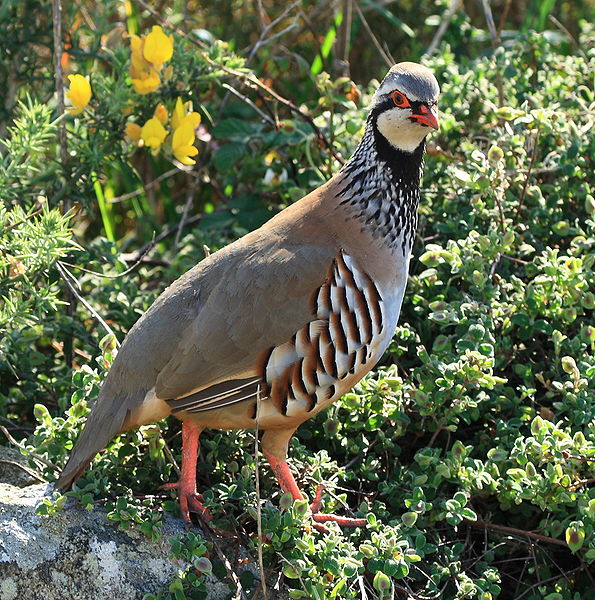
Red-legged Partridge (Alectoris rufa) ©WikiC
“As the partridge sitteth on eggs, and hatcheth them not; so he that getteth riches, and not by right, shall leave them in the midst of his days, and at his end shall be a fool.” (Jeremiah 17:11 KJV)
“This order contains five families: Phasianidae (including chicken, quail, partridges, pheasants, turkeys, peafowl and grouse), Odontophoridae (New World quails), Numididae (guineafowl), Cracidae (including chachalacas and curassows), and Megapodiidae (incubator birds like mallee fowl and brush-turkeys). They are important as seed dispersers and predators in the ecosystems they inhabit, and are often reared as game birds by humans for their meat and eggs and for recreational hunting. Many gallinaceous species are skilled runners and escape predators by running rather than flying. Males of most species are more colorful than the females. Males often have elaborate courtship behaviors that include strutting, fluffing of tail or head feathers, and vocal sounds. They are mainly nonmigratory.” (Wikipedia with editing)

Peacock at Magnolia Plantation by Dan
“Gavest thou the goodly wings unto the peacocks? or wings and feathers unto the ostrich?” (Job 39:13)
Here are a few birds from each of the five families:
“The people asked, and he brought quails, and satisfied them with the bread of heaven.” (Psalms 105:40 KJV)
“You are Worthy” ~ Faith Baptist Orchestra
Many of these birds are mentioned in the Bible, so they are also listed in our Birds of the Bible articles. Over the following Sunday, these families will be presented in smaller articles with the slideshows as in the previous articles.
Birds of the Bible – Chicken, Hens, and Roosters
Birds of the Bible – Partridge
Birds of the Bible – Peacocks
Birds of the Bible – Quail
Galliformes Order found here:
Megapodiidae – Megapodes
Cracidae – Chachalacas, Curassows and Guans
Numididae – Guineafowl
Odontophoridae – New World Quail
Phasianidae – Pheasants and allies
*

Great Egret Relaxing at Black Point Dr.
“This is my rest for ever: here will I dwell; for I have desired it.” (Psalms 132:14 KJV)
Dan and I took a short break and drove to the east coast of Florida and spent two nights. On Tuesday, we drove through Merritt Island’s Black Point Drive. I was reading their page and it says, “The 7-mile, one-way drive follows a dike road around several shallow marsh impoundments and through pine flatwoods. This provides an excellent place to see waterfowl (in season), wading birds, shorebirds and raptors. Alligators, river otters, bobcats, various species of snakes, and other wildlife may be visible as well. A self-guiding brochure (available near the drive entrance) will provide information on things to look for. Driving time is approximately 40 minutes.” [emphasis mine] That 40 minutes is for those who are just viewing birds. Those of us who are birdwatchers and photographers have hardly gone halfway in 40 minutes.
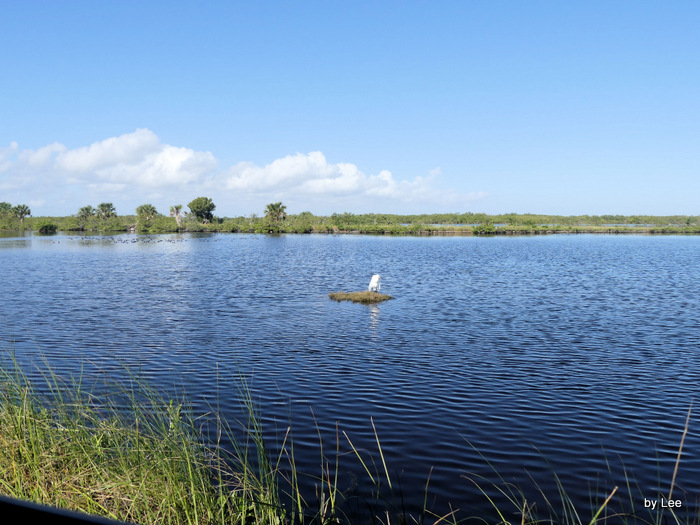
We enjoyed seeing many of the wintering birds this time. Last time we visited, the ponds were almost dried up and so had the birdwatching. Much better this trip.
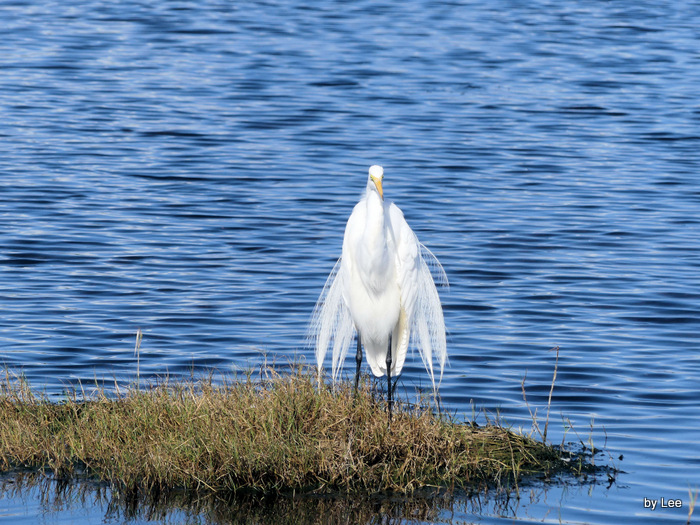
Zoomed in on Great White Egret
As those of you know who have been following this blog, that I am dealing with a back issue and will probably need surgery in a month or so. The benefit of visiting this place and Viera Wetlands, which we did on Wednesday, is that I can watch and take pictures from the car, or just step outside. That is what I did, so some of the shots may not be the best. I appreciate those of you who have been praying about my back. My MRI isn’t scheduled until the 26th of Jan. [insurance issue] At any rate, I trust that my adventure will encourage those of you who have health issues, to go ahead and figure out a way to still enjoy the Lord’s blessings in nature.
This Snowy Egret was trying to shuffle up a fish – Enlarge video to see the shuffling better:
“And he saith unto them, Follow me, and I will make you fishers of men.” (Matthew 4:19 KJV)
Most of the views are quite distant, but I always enjoy the challenge of trying to zoom in an catch some of these critters. Surprising, even at these distances, you can ID the birds.
Here are some of the photos that I took. Dan doesn’t have his ready yet.
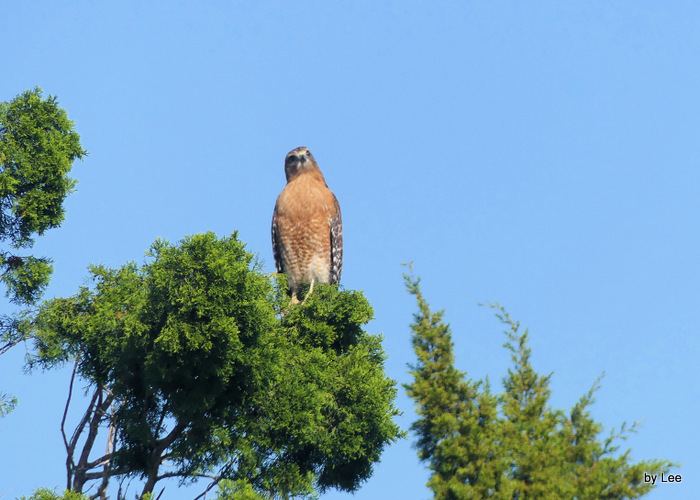
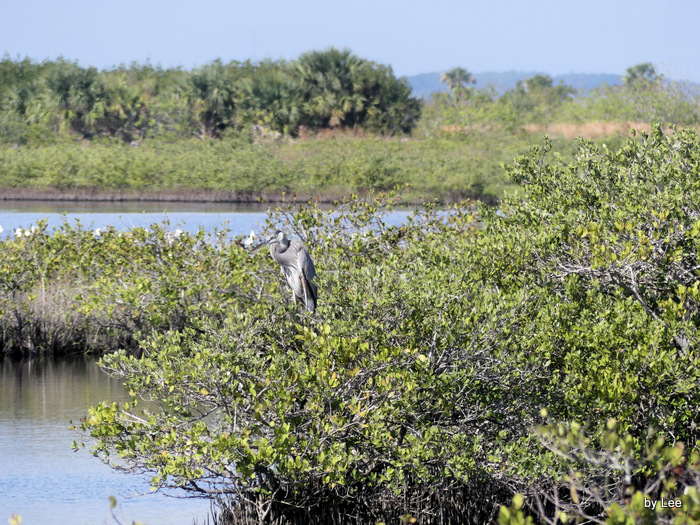
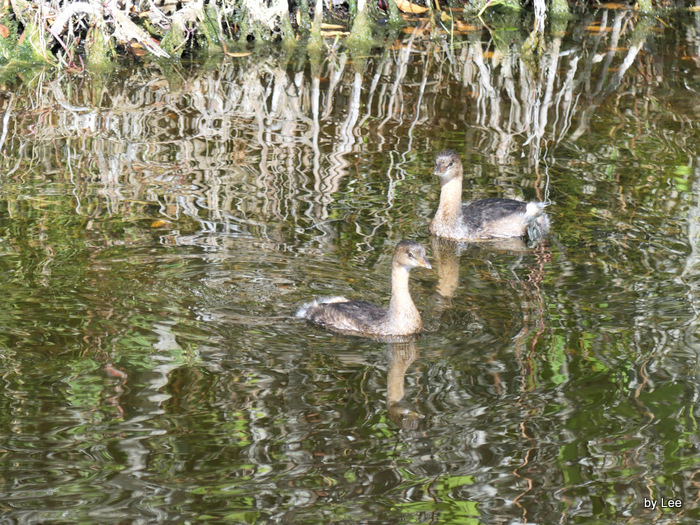


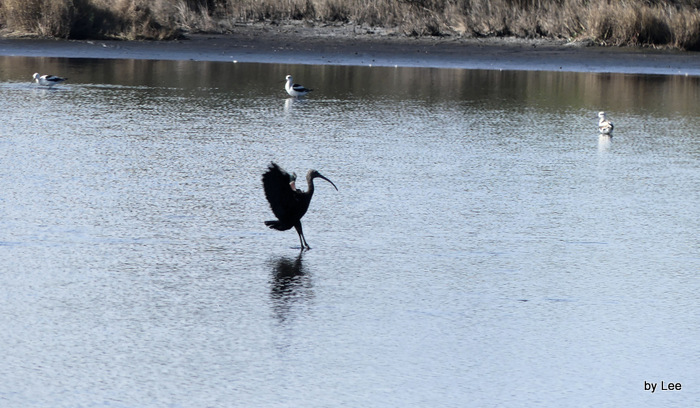
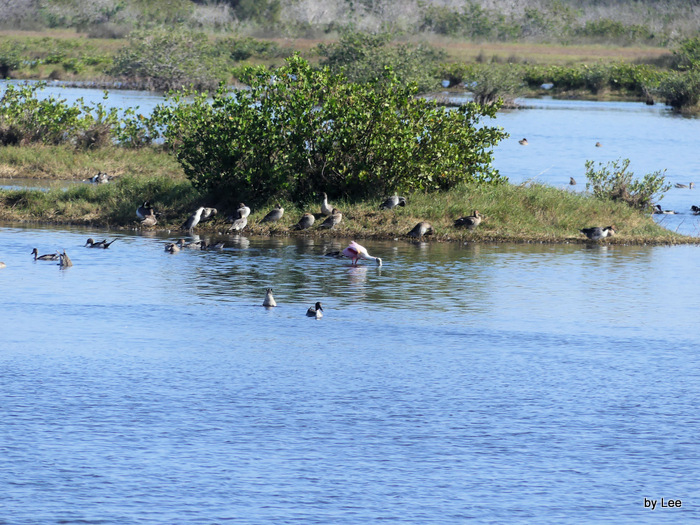
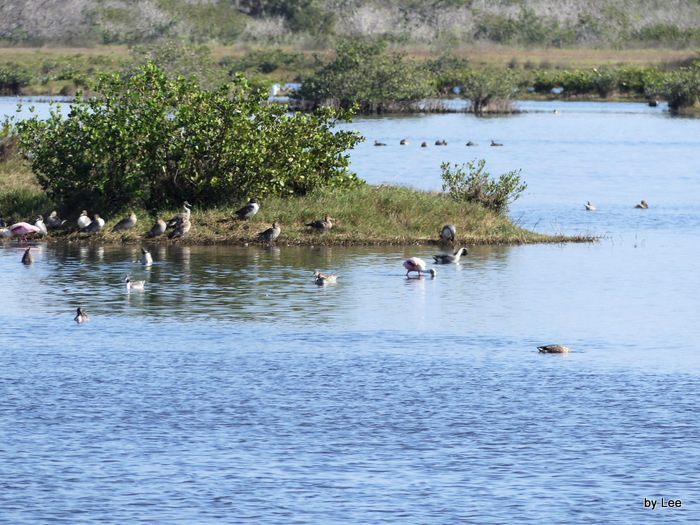


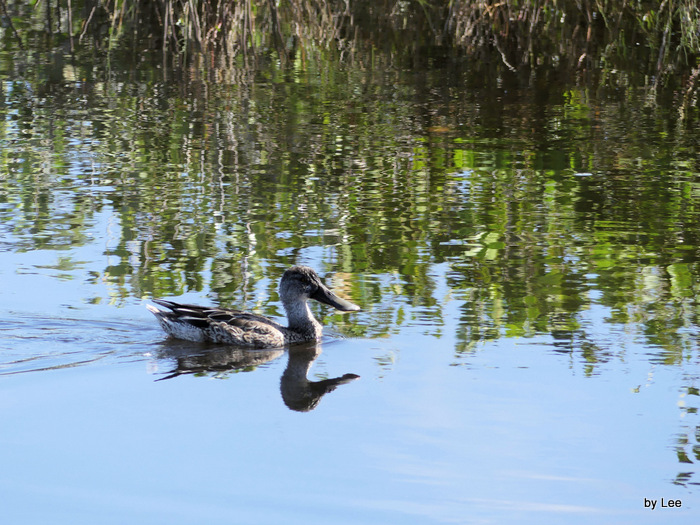

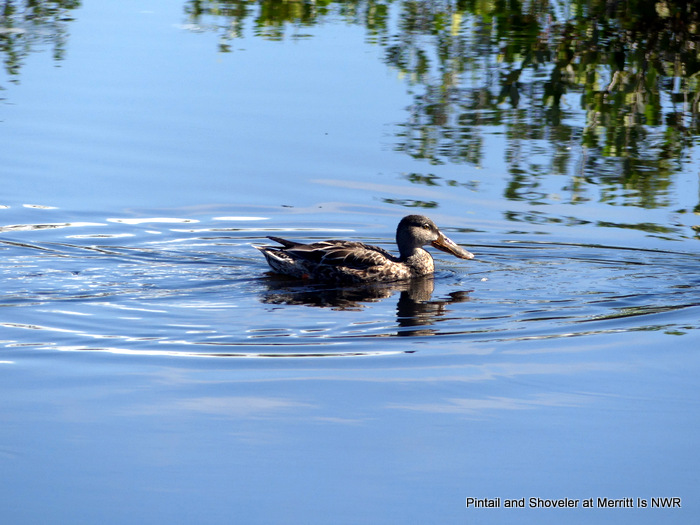


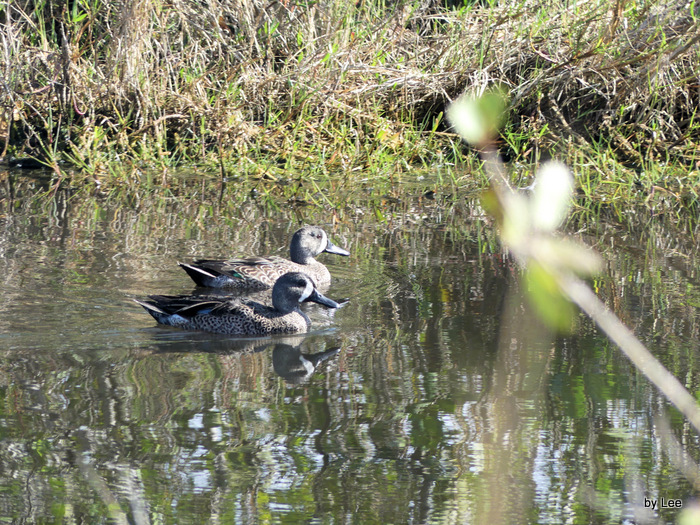



I will have more of our trip later.
*
Previous trips to Merritt Island:

“There is a path which no fowl knoweth, and which the vulture’s eye hath not seen:” (Job 28:7 KJV)
King Vulture Brevard Zoo by Lee
*
Accipitridae – Family (Kites, Hawks & Eagles)
*
Dr. James J. S. Johnson

Great is the Lord, and greatly to be praised; and His greatness is unsearchable. One generation shall praise Thy works to another, and shall declare Thy mighty acts. I will speak of the glorious honor of Thy majesty, and of Thy wondrous works. (Psalm 145:3-5)
Hiking up and down forest trails, while birdwatching at a wildlife refuge, can be an opportunity to praise God’s works to another generation – if the adventure is used to explain God’s mighty deeds to a grandchild. And the grandparent-grandchild outing need not be a “big deal”, by worldly standards, in order for it to become a treasured time that counts for eternity (Matthew 6:19-21). Of course, God’s works include the birds He made.
The Hebrew text of Psalm 145:4 (translated “One generation shall praise Thy works to another, and shall declare Thy mighty acts”) can be translated as “Generation, unto generation, shall intensively extol Thy works and shall explain Thy mighty doings”. Part of grandparenting, therefore, involves praising God’s works to another generation, as well as explaining God’s mighty deeds. Since “His greatness is unsearchable”, there are countless opportunities for applying this mandate to wildlife-viewing recreation activities.
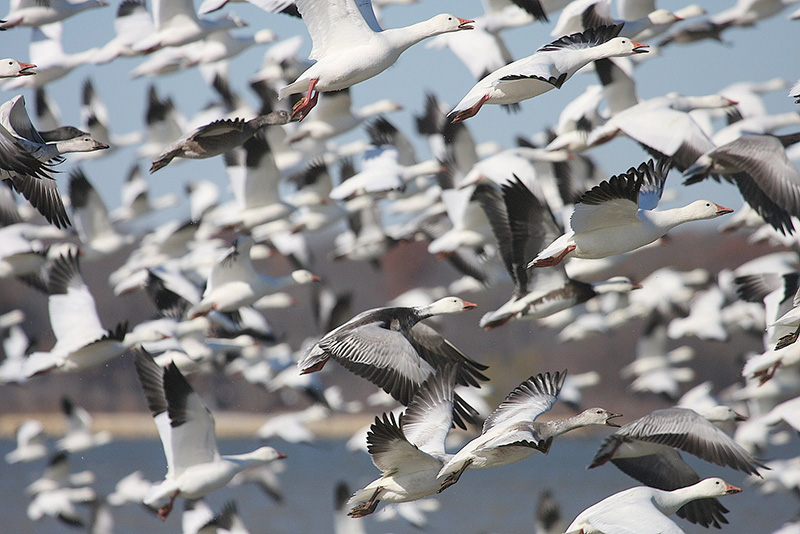
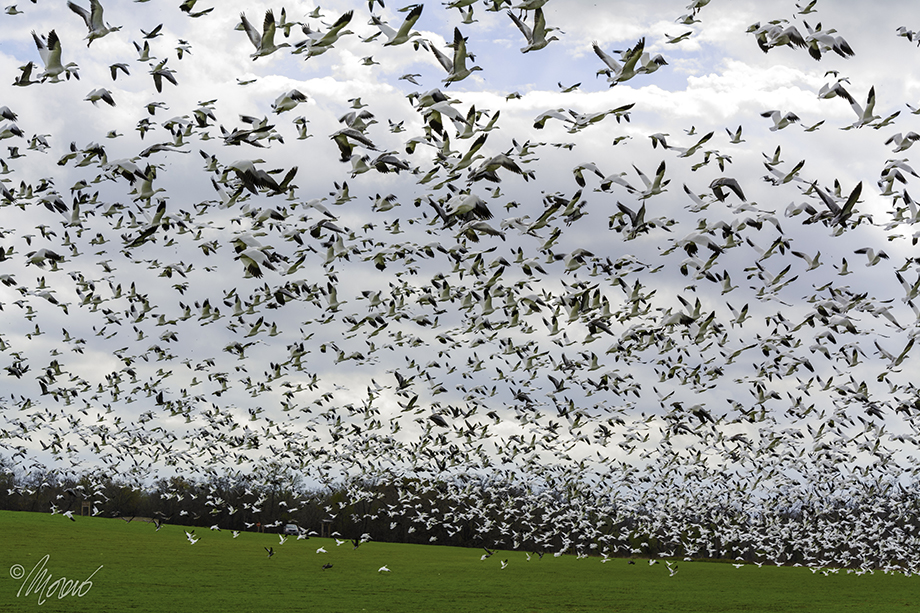
Imagine seeing an open prairie field — or a freshwater lake — covered by what looks like (from a distance) a blanket of unmelted snow – only to recognize that the “blanket” of white is actually a huge flock of migratory Snow Geese – totaling almost 4,000 in one flock, spread over two adjacent fields!

Gregarious flock of Snow Geese at Hagerman NWR (Photo credit: Trent)
Of course, a winter stopover haven that hosts literally thousands of Snow Goose migrants, unsurprisingly, hosts many other birds, providing (for the observant birdwatcher) a mix of other “winter Texans”, migratory transients, and year-round residents — such as American Pipit, Northern Pintail, American Coot, Mallard, Great Blue Heron, Northern Shoveler, Ring-billed Gull, Eastern Bluebird, Hermit Thrush, Northern Mockingbird, Northern Cardinal, Lesser Scaup, Turkey Vulture, sparrows, sandpipers, hawks, and more.
All of those, about a week ago, I saw at Hagerman National Wildlife Refuge (“Hagerman N.W.R.”) in Grayson County, Texas, a few miles west of Sherman. Specifically, on a Wednesday (12-21-AD2016), when local schools were closed for Christmas holiday (i.e., what secularists call “winter break”), an adventure of birding and hiking was undertaken, there, by Trent (one of my grandsons) and me, after we both fueled ourselves with a generous array of Buffalo hot wings (at the WINGSTOP restaurant in nearby Sherman).
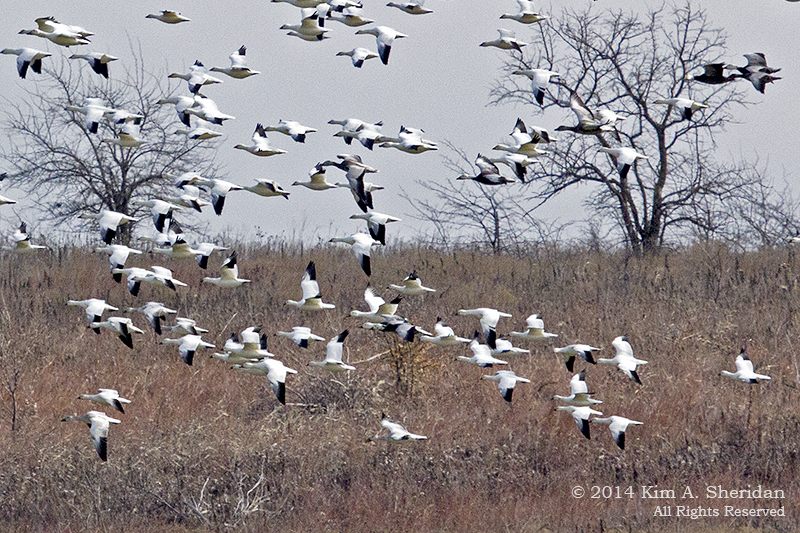
The Hagerman N.W.R. acreage (more than 11,000 acres!) is located just south of the Big Mineral Arm of Lake Texoma, the large “lake” (which is actually a lacustrine reservoir formed by the U.S. Army Corps of Engineers’ Denison Dam, built on the Red River) that separates southern Oklahoma from north Texas. [To learn more about Hagerman N.W.R., (website provided by the U.S. Fish & Wildlife Service ), and Hagerman National Wildlife Refuge web article provided by Wikipedia.]
Of those birds viewed, amidst several lengthy treks along the wooded hiking trails, a few are noted below: Snow Goose, Northern Pintail, and Northern Shoveler.
1. SNOW GOOSE
Due to how God programmed Snow Goose bioengineering, no air traffic control team is needed — even though in-flight traffic occurs with lots of motion in very close quarters!
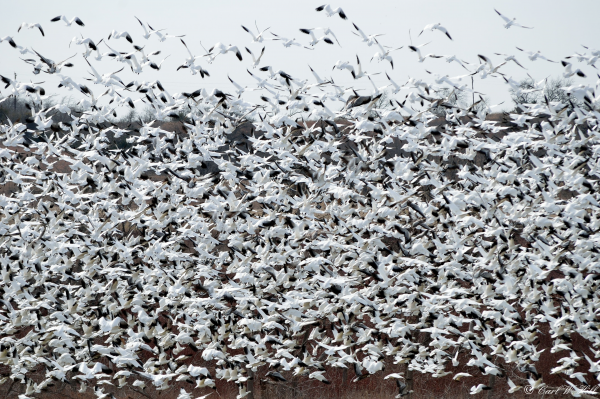
SNOW GOOSE (Anser caerulescens)
The Snow Goose is the almost-all-white “winter Texan” goose that dominated the fields of Hagerman N.W.R. when Trent and I visited that forest-blended-with-grassland earlier this month. (In biome ecology terms, this refuge is located in a pond-pocked hilly region that transitions the Piney Woods forestland of East Texas with the prairie grasslands of Oklahoma.)
Highly gregarious throughout the year, breeding in closely-packed colonies on the Arctic tundra. … Has well-defined migration routes to and from winter quarters. Arrival in winter quarters [such as arrival in Texas] varies with each population, some having quite long stop-overs en route, whereas others move quickly onwards; generally, however, northward spring migration is slower than the autumn one. Winter flocks often attain tens of thousands in coastal farmland [yet, in the case of Hagerman N.W.R., which is inland, the total winter flock is now about 4,000]. Roosts on water, swimming freely, but feeds by grazing, usually pulling out plants by roots, rather than by grazing off tops. Mixes freely with other geese [e.g., Ross’s Goose] on winter grounds, although main portions of flocks keep separate. Even on breeding grounds, other Arctic geese may nest in fairly close proximity and occasional wild hybrids have been recorded with such species as Ross’s [Geese], White-fronted [Geese], and Canada Geese. … On winter grounds resort to cultivation [e.g., Hagerman N.W.R., which is agricultural land, interspersed with deciduous forests and sprinkled here and there with traditional Texas-style “horsehead pump” oil wells], fields of sprouting corn, pasture and stubble fields in lowland coastal zones are favoured.
[Quoting Steve Madge, Waterfowl: An Identification Guide to the Ducks, Geese and Swans of the World (Houghton Mifflin, 1988), page 143 – see also plate 6 illustration by Hilary Burn, page 36.]
2. NORTHERN PINTAIL
What a graceful duck! Watch it glide quietly through pond-water. What dabbler dignity!
NORTHERN PINTAIL (Anas acuta)
The most plentiful duck that we saw, when we visited various parts (but not all) of Hagerman N.W.R., was the Northern Pintail, another migratory “winter Texan”.
Abundant, esp. in [American] West. Widespread on shallow freshwater wetlands, often in large flocks; also salt marshes, grainfields in winter. Wary; flight fast, agile. Slender neck, rounded [dark, almost black] head, blue-gray bill, gray legs. Male has long, pointed tail [hence the name “pintail”]; brown head with white line on neck extending from breast; green speculum [i.e., colorful patch of plumage on the outer wing secondary feathers]. Female mottled brown; bronze speculum with white rear border. Juv[enile] and eclipse male like female.
[Quoting Jack L. Griggs, American Bird Conservancy’s Field Guide to All the Birds of North America (HarperCollins, 1997), page 33. Other than the thousands of Snow Geese, the most common bird we saw, when we visited Hagerman N.W.R., was the Northern Pintail. Many of these ducks were congregating in the ponded areas near “horsehead” oil pump sites.
3. NORTHERN SHOVELER
Notice how the pair’s coloring is like a Mallard pair, but not those large spatula-like bills!

NORTHERN SHOVELER (Anas clypeata)
Perhaps my favorite duck, of those I’ve seen at Hagerman N.W.R., is the Northern Shoveler. The male shoveler has an iridescent green head (like a Mallard), rusty sides (like a Ruddy Duck), a white breast, and a shovel-like (or spoon-like) bill. These ducks feed mostly “by filtering tiny aquatic insects and plants from the water’s surface with its bill”. [Quoting Stan Tekiela, BIRDS OF TEXAS FIELD GUIDE (Adventure Publications, 2004), page 332-333. A well-named dabbler, this duck’s bill is unlikely to be confused with any other duck. The marshy wetlands at Hagerman provide an ideal winter home for the Shoveler.
Usually found in pairs or small parties, but large concentrations form at migration stop-over waters. Indirectly mixes with other dabbling ducks, but generally keeps apart in discrete gatherings. … Feeds by dabbling [i.e., bobbing upside-down underwater] and sifting in shallow water, swinging bill from side to side over surface [straining wee crustaceans and seeds, as if its bill was a colander!], often immersing head and neck and sometimes up-ending; feeds chiefly while swimming, but also while wading. Loafing birds gather on banks and shores close to feeding waters. Swims buoyantly, with rear end high and fore parts low, the heavy bill often touching surface of water. Walks awkwardly. Flight fast and agile, rising suddenly from surface with whirring wings. Most populations highly migratory, arriving on breeding grounds from mid March onwards and departing again in August. … Favours shallow freshwater lakes [and ponds] and marshes with areas of open water, emergent and fringe vegetation and muddy margins.
[Quoting Steve Madge, Waterfowl: An Identification Guide to the Ducks, Geese and Swans of the World (Houghton Mifflin, 1988), page 236 – see also plate 33 illustration by Hilary Burn, page 91.] For more photographs of the Northern Shoveler, see “’D’ is for Duck, Dabblers and Divers: ‘D’ Birds, Part 1.
What an enjoyable day!
All in all, it was a good day to trek some birdwatching trails — good for physical exercise, good for intellectual adventure, and good for spiritual appreciation for our great Creator-God, the almighty and majestic Provider of every form of life that lives, whether big or small. Each minute of a nature hike is a “teachable moment” (Deuteronomy 6:6-7), for those with eyes to see.
And, as part of good preparation for the outing, it was good to start the day’s recreational activities with a more-than-we-could-eat feast of WINGSTOP Buffalo hot wings, seasoned fries, and iced tea. (Of course, we took home what we didn’t then eat, plus we took home some good memories and Trent’s photographs.)
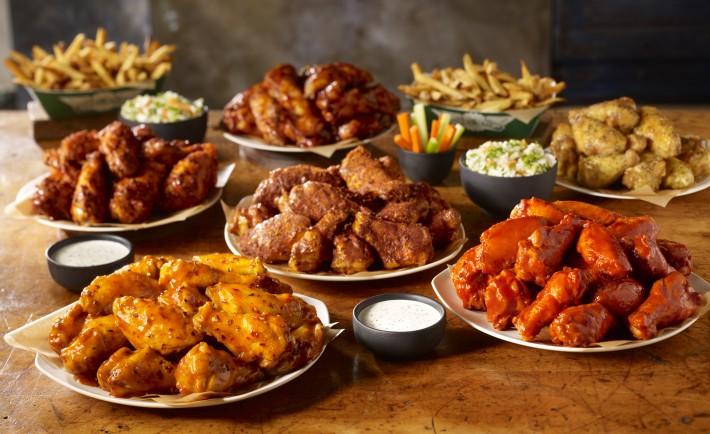
PHOTO CREDITS:
Snow Goose flock in flight by Kim A. Sheridan:
Snow Goose flock in flight (close-up) by Pottsboro Chamber of Commerce:
Gregarious flock of Snow Geese at Hagerman NWR by Trent (grandson)
Snow Geese at Hagerman NWR winter stopover by Kim A. Sheridan:
Migratory Snow Geese at Hagerman NWR by LakeTexoma.com:
Northern Shoveler (male & female) by Pinterest.com:
Gregarious Snow Geese in Flight at Hagerman NWR by Moreno:
Wing Stop (Singapore) photo: Snapytrend
Great is the Lord, and greatly to be praised; and His greatness is unsearchable. One generation shall praise Thy works to another, and shall declare [i.e., explain] Thy mighty acts. I will speak of the glorious honor of Thy majesty, and of Thy wondrous works. (Psalm 145:3-5)
*
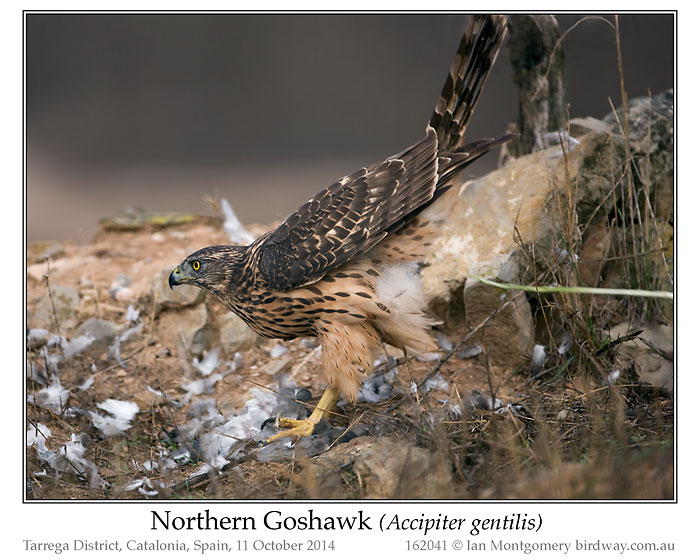
“And when the birds of prey swooped down upon the carcasses, Abram drove them away.” (Genesis 15:11 AMP)
Northern Goshawk (Accipiter gentilis) by Ian
*
Accipitridae – Family (Kites, Hawks & Eagles)
*
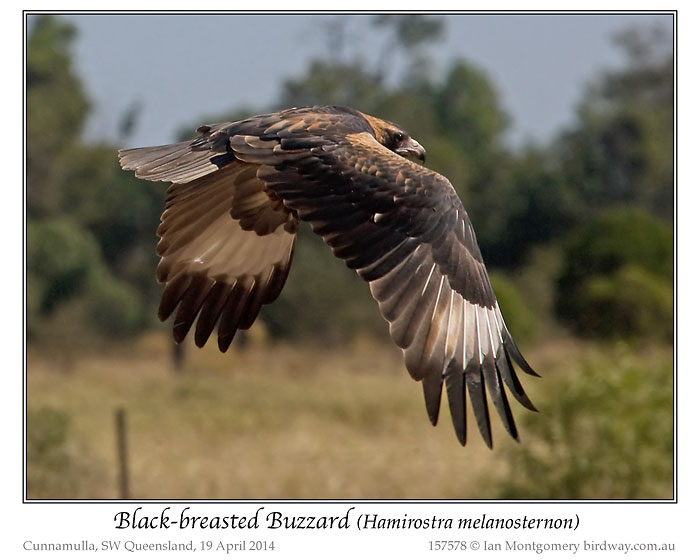
“Calling a ravenous bird from the east, the man that executeth my counsel from a far country: yea, I have spoken it, I will also bring it to pass; I have purposed it, I will also do it.” (Isaiah 46:11 KJV)
Black-breasted Buzzard (Hamirostra melanosternon) by Ian
*
Accipitridae – Family (Kites, Hawks & Eagles)
*
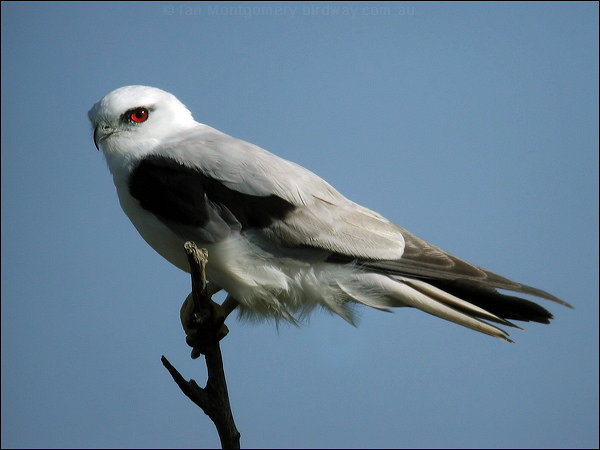
“And the vulture, and the kite after his kind;” (Leviticus 11:14 KJV)
Black-shouldered Kite (Elanus axillaris) by Ian
*
Accipitridae – Family (Kites, Hawks & Eagles)
*

“Doth the eagle mount up at thy command, and make her nest on high?” (Job 39:27 KJV)
Bald Eagle Brings Nesting Material by Aesthetic Photos
*
Accipitridae – Family (Kites, Hawks & Eagles)
*