Creation Moments – Bird that Lies and Steals

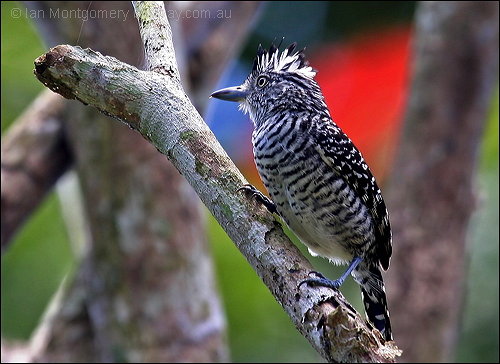
Barred Antshrike (Thamnophilus doliatus) by Ian

Barred Antshrike (Thamnophilus doliatus) by Ian

The Bird that Lies and Steals from Creation Moments©2013

If we confess our sins, he is faithful and just to forgive us [our] sins, and to cleanse us from all unrighteousness. (1 John 1:9 )

Many species of birds live in communities that are quite complex and even resemble human communities.

In the Amazon rainforests of Peru, 20 or more mixed species of birds will flock together in the lower levels of the rainforest canopy. Each flock has a leader and organizer – the bluish-slate ant-shrike. Each morning the ant-shrike will assemble its flock with loud calls.

This strange arrangement has a very good purpose. The ant-shrike watches over the flock like a mother watches her children. When a bird-eating hawk appears overhead, the ant-shrike shrieks a warning so that members of the flock can take cover. But as often as half the time, the ant-shrike sounds the alarm when there is no hawk. The ant-shrike sounds the alarm to distract members of the flock when he sees that they have discovered some choice insects. In this way, the ant-shrike gets up to 85 percent of its food by sounding the false hawk alarm. Nevertheless, the rest of the flock put up with his lying and thieving because of his value as a hawk watcher.

Lying and stealing are, of course, wrong for human beings. And our Creator will hold us each personally responsible for our thoughts and actions. But His Son, Jesus Christ, took our sins upon Himself so that all who believe in Him as their Lord and Savior will stand before Him cleansed of all their sins. Our Creator has promised this!

Prayer:
I thank You, Lord, that You have taken my sin upon Yourself. Help my trust to always rest in what You have done for me and not in what I think I can do to better myself before the heavenly Father. Amen.
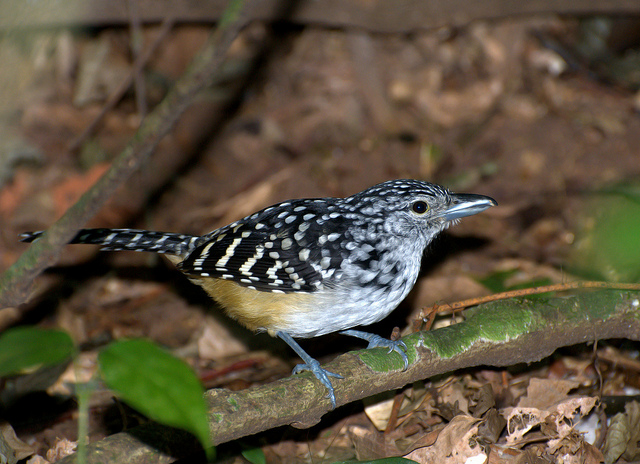

Spot-backed Antshrike (Hypoedaleus guttatus) by Dario Sanches

Spot-backed Antshrike (Hypoedaleus guttatus) by Dario Sanches

Lee’s Addition:

A very good lesson from our Antshrike and Creation Moments. Antshrikes belong to the Thamnophilidae – Antbirds Family. The antbird family contains over 200 species, variously called antwrens, antvireos, antbirds and antshrikes. The names refer to the relative sizes of the birds rather than any particular resemblance to the true wrens, vireos or shrikes.

The antbirds are a large family, Thamnophilidae, of passerine birds found across subtropical and tropical Central and South America, from Mexico to Argentina. There are more than 200 species, known variously as antshrikes, antwrens, antvireos, fire-eyes, bare-eyes and bushbirds. They are related to the antthrushes and antpittas (family Formicariidae), the tapaculos, the gnateaters and the ovenbirds. Despite some species’ common names, this family is not closely related to the wrens, vireos or shrikes.

Antbirds are generally small birds with rounded wings and strong legs. They have mostly sombre grey, white, brown and rufous plumage, which is sexually dimorphic in pattern and colouring. Some species communicate warnings to rivals by exposing white feather patches on their backs or shoulders. Most have heavy bills, which in many species are hooked at the tip.

Most species live in forests, although a few are found in other habitats. Insects and other arthropods form the most important part of their diet, although small vertebrates are occasionally taken. Most species feed in the understory and midstory of the forest, although a few feed in the canopy and a few on the ground. Many join mixed-species feeding flocks, and a few species are core members. To various degrees, around eighteen species specialise in following columns of army ants to eat the small invertebrates flushed by the ants, and many others may feed in this way opportunistically.

Silvery-cheeked Antshrike (Sakesphorus cristatus) by AGrosset

Silvery-cheeked Antshrike (Sakesphorus cristatus) by AGrosset

Antbirds are monogamous, mate for life, and defend territories. They usually lay two eggs in a nest that is either suspended from branches or supported on a branch, stump, or mound on the ground. Both parents share the tasks of incubation and of brooding and feeding the nestlings. After fledging, each parent cares exclusively for one chick.

The antbirds are a group of small to medium-sized passerines that range in size from the large Giant Antshrike to the tiny Pygmy Antwren. In general terms, “antshrikes” are relatively large-bodied birds, “antvireos” are medium-sized and chunky, while “antwrens” include most smaller species; “antbird” genera can vary greatly in size. Members of this family have short rounded wings that provide good manoeuvrability when flying in dense undergrowth. The legs are large and strong, particularly in species that are obligate ant-followers. These species are well adapted to gripping vertical stems and saplings, which are more common than horizontal branches in the undergrowth, and thus the ability to grip them is an advantage for birds following swarms of army ants. The claws of these antbirds are longer than those of species that do not follow ants, and the soles of some species have projections that are tough and gripping when the foot is clenched. Tarsus length in antbirds is related to foraging strategy. Longer tarsi typically occur in genera such as the Thamnophilus antshrikes that forage by perch-gleaning (sitting and leaning forward to snatch insects from the branch), whereas shorter tarsi typically occur in those that catch prey on the wing, such as the Thamnomanes antshrikes.

Most antbirds have proportionately large, heavy bills. Several genera of antshrike have a strongly hooked tip to the bill, and all antbirds have a notch or ‘tooth’ at the tip of the bill which helps in holding and crushing insect prey. The two genera of bushbirds have upturned chisel-like bills. (Wikipedia with editing)

Barred Antshrike – Duet Song by Jeremy Minns (xeno-canto)

Barred Antshrike – Call by Jeremy Minns (xeno-canto)

*

See:

Creation Moments

Thamnophilidae – Antbirds Family

Antbirds – Wikipedia

*
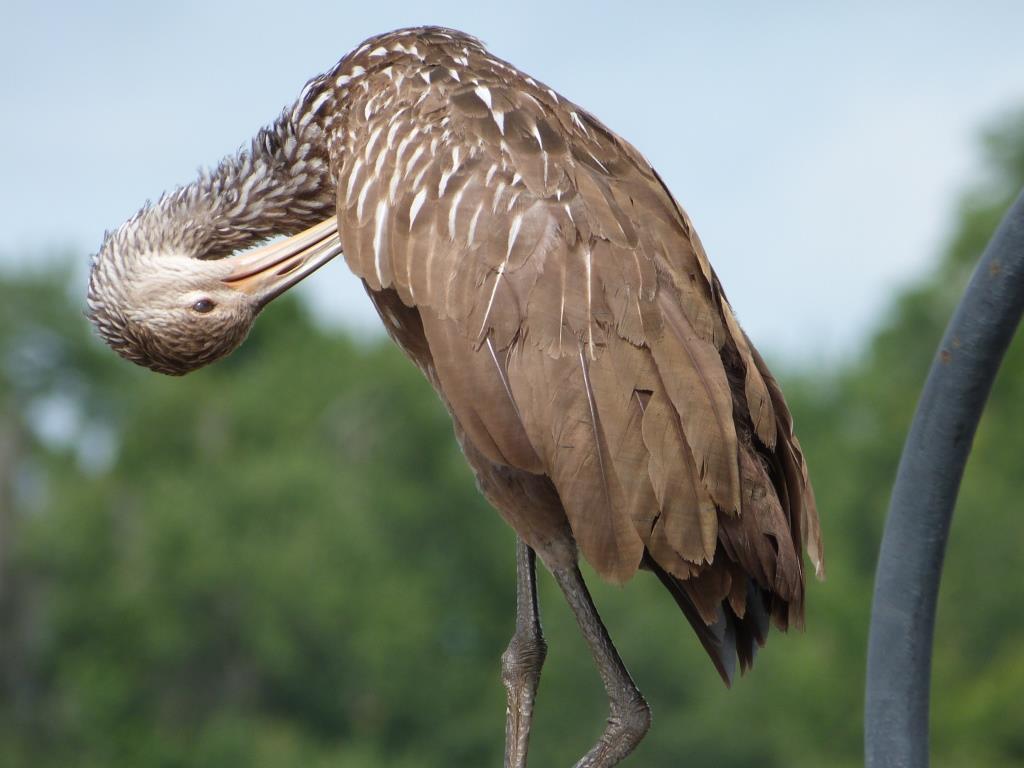
Birdwatching at Circle B Reserve – June 8

Limpkin (Aramus guarauna) Preening at Circle B

Limpkin (Aramus guarauna) Preening at Circle B

We took about an hour and a half to check out Circle B Bar Reserve again today. It was partly cloudy and around 81 degrees when we arrived. We managed to see or hear 31 species. Not bad. We had all that rain from Tropical Storm Andrea and thought maybe it would help bring in some birds. It was still pretty dry out there, but the weeds and growth sure had enjoyed all that rain we had.

Since most of our winter birds have left, we were happy with what we saw. Some of the delights and surprises were catching a video of a Carolina Wren singing right in front of us as we got out of the car. Was surprised to see 25 White Pelicans this time of the year. They went by in 3 squadrons.

By them the birds of the heavens have their home; They sing among the branches. (Psalms 104:12 NKJV)

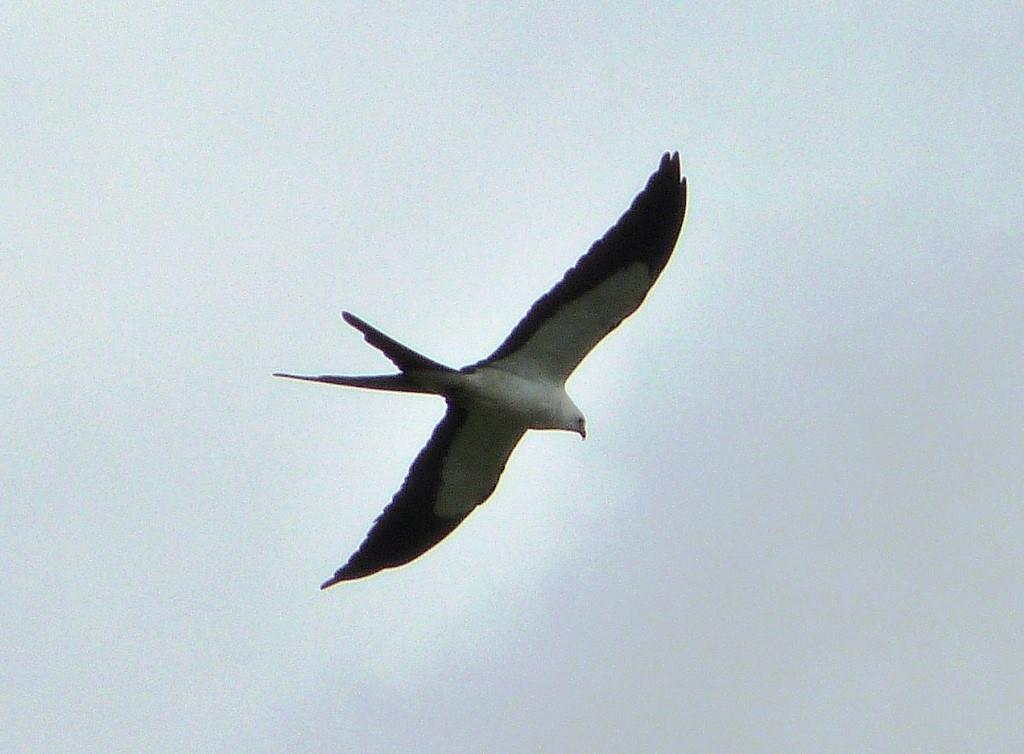
Also, finally got a photo of the Tufted Titmouse that I have heard out there but never was able to get a glimpse of. Heading back to the car, a Swallow-tailed Kite flew over. All in all it was great. Now? It has been raining for the last 5 or 6 hours. Good thing we were there early.

Swallow-tailed Kite (Elanoides forficatus) at Circle B

Swallow-tailed Kite (Elanoides forficatus) at Circle B

Species Count
Wood Stork 4
Anhinga 1
American White Pelican 25
Great Blue Heron 2
Great Egret 3
Snowy Egret 1
Tricolored Heron 2
Cattle Egret 10
White Ibis 2
Glossy Ibis 4
Black Vulture 20
Turkey Vulture 5
Osprey 1
Swallow-tailed Kite 1
Bald Eagle 1
Red-shouldered Hawk 2
Common Gallinule 5
Limpkin 2
Sandhill Crane 2
Mourning Dove 2
Red-bellied Woodpecker 2
Downy Woodpecker 2
Hairy Woodpecker 1
Pileated Woodpecker 2
Blue Jay 3
Fish Crow 2
Tufted Titmouse 2
Carolina Wren 1
Northern Cardinal 4
Red-winged Blackbird 15
Boat-tailed Grackle 20

Update on the eye situation – I got the “All is well” for the 6-months checkup on my retina surgery and now I am scheduled June 19th to see the Eye Doctor who will do the cataract surgery. I am praying that it will be done by the end of the month. It was quite blurry out birding today.

I was using my camera as my eyes. I could tell there was something on a tree, but had no clear idea of what it was until viewed through the viewfinder and with my camera zoomed in. Hey! You do what you have to do to be able to enjoy birdwatching. And I did. The Lord let me see all of these neat birds today.

See:

Birdwatching Trips – Circle B

Wordless Birds

*

Green Heron Fishing With Bread

You have got to watch this Green Heron fishing with bread. The video speaks for itself.

Look at the birds of the air, for they neither sow nor reap nor gather into barns; yet your heavenly Father feeds them. Are you not of more value than they? (Matthew 6:26 NKJV)

*

*

Ardeidae- Herons, Bitterns

Birds of the Bible – Herons

Bible Birds – Herons

*

Birdwatching Adventure – May 2013

Sunrise at Patrick AFB by Lee

Sunrise at Patrick AFB by Lee

And they rose up early in the morning, and the sun shone upon the water, … (2 Kings 3:22a KJV)

We just got back from a spontaneous three day trip down to the Palm Beach Zoo, (Palm Beach, FL) and up to the Viera Wetlands (Viera, FL) and then back home yesterday. As we rode along and since I haven’t been driving because of my eye situation, I kept a list of the birds along the way. The list below was the ones I reported to e-Bird. This includes the birds that were at the Zoo, but not captives. Our loop took us down US 27 and then back up I-95, through Orlando and back across I-4 to Winter Haven. Not a bad list. The ones in bold were special finds. In fact, the Northern Rough-winged Swallow and Bank Swallow were added to my life list. I am now at 245 on their list. The list was kept for each county we went through. (It gave me something to do while riding.)

Black-bellied Whistling-Duck
Muscovy Duck (Domestic type)
Indian Peafowl (Domestic type)
Wood Stork
Magnificent Frigatebird
Double-crested Cormorant
Anhinga
Brown Pelican
Least Bittern
Great Blue Heron
Great Egret
Little Blue Heron
Tricolored Heron
Cattle Egret
Black-crowned Night-Heron
White Ibis
Glossy Ibis
White-faced Ibis
Black Vulture
Turkey Vulture
Osprey
Swallow-tailed Kite
Bald Eagle
Red-shouldered Hawk
Common Gallinule
American Coot
Sandhill Crane
Ruddy Turnstone
Sanderling
Rock Pigeon
Eurasian Collared-Dove
Mourning Dove
Belted Kingfisher
Red-bellied Woodpecker
Crested Caracara
American Crow
Fish Crow
Northern Rough-winged Swallow
Bank Swallow
Northern Mockingbird
European Starling
Northern Cardinal
Red-winged Blackbird
Common Grackle
Boat-tailed Grackle
House Sparrow

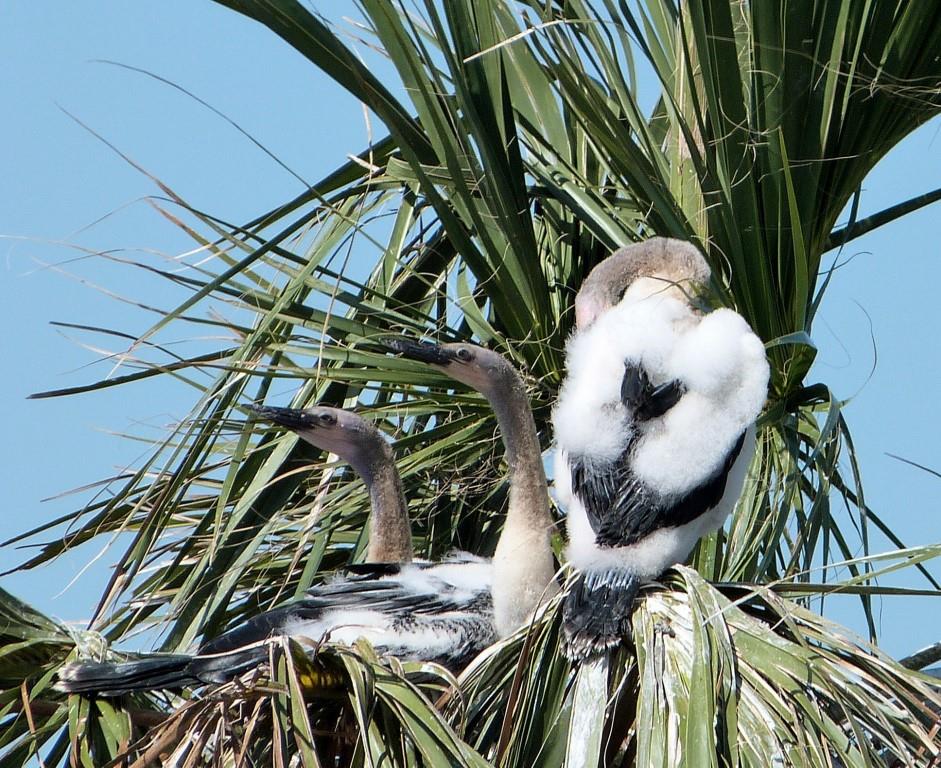
Anhinga (Anhinga anhinga) Immatures at Viera Wetland by Lee

Anhinga (Anhinga anhinga) Immatures at Viera Wetland by Lee

The Viera Wetlands count is included with those above, but is the individual count just for Viera. That actually was a birdwatching destination and e-Bird likes it counted separately. It is one of our favorites over on the east side of Florida. Unfortunately, it has apparently been dry over there, plus most of the Winter Birds have gone back north. So, the birding wasn’t as plentiful as normal. Here is the list of the birds we saw.  We stopped there in the afternoon on Wednesday and then visited it again Thursday before heading home. We saw 23 species altogether .

Species Name 15-May 16-May
Black-bellied Whistling-Duck 2
Anhinga 9 6
Brown Pelican 2
Least Bittern 1
Great Blue Heron 8 6
Great Egret 10 14
Little Blue Heron 1 1
Tricolored Heron 1 1
Cattle Egret 11 15
White Ibis 7 7
Glossy Ibis 2 7
White-faced Ibis 1
Turkey Vulture 1 15
Osprey 2
Common Gallinule 5 13
American Coot 8 4
Belted Kingfisher 1
Red-bellied Woodpecker 2
Crested Caracara 1
Fish Crow 1 2
Red-winged Blackbird 10 12
Common Grackle 3
Boat-tailed Grackle 18 22

*

Northern Crested Caracara (Caracara cheriway) at Viera Wetlands by Lee

Northern Crested Caracara (Caracara cheriway) at Viera Wetlands by Lee

The Crested Caracara was the best find. We had taken our photos and had stopped at the exit to put our cameras away. Dan had his in the trunk and mine was bagged when I look up and there he was right by us on the ground. Needless to say, we scrambled to get the camera back out, hoping we wouldn’t scare it off. As you can see, we got the photos of him.

I will save the Palm Beach Zoo birds and photos until another post. I took over 700, so it might take a day or two.

Great Blue Heron (Ardea herodias) Watching young nearby by Lee at Viera Wetlands

Great Blue Heron (Ardea herodias) Watching young nearby at Viera Wetlands

Here is what is being watched so closely:

Great Blue Heron (Ardea herodias) Young by Lee at Viera Wetlands

Great Blue Heron (Ardea herodias) Young at Viera Wetlands

See:

Viera Wetlands

e-Bird Home Page

Wordless Birds

*

The Rock Ptarmigan – The Crown

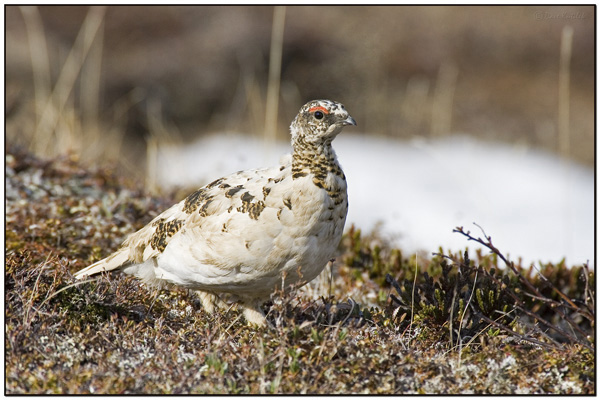
Rock Ptarmigan (Lagopus muta) by Daves BirdingPix

Rock Ptarmigan (Lagopus muta) by Daves BirdingPix

The Rock Ptarmigan – The Crown ~ by a j mithra

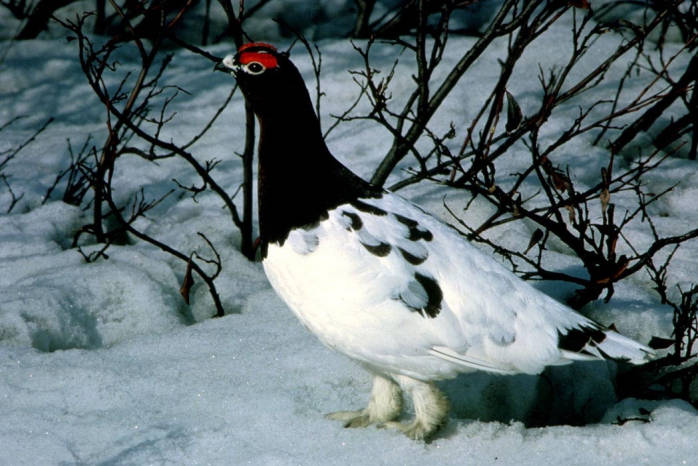
The Rock Ptarmigan is seasonally camouflaged; its feathers moult from white in winter to brown in spring or summer. The breeding male has greyish upper parts with white wings and under parts. In winter, its plumage becomes completely white except for the black tail. It can be distinguished from the winter Willow Ptarmigan (Willow Ptarmigan in North America) by habitat—the Rock Ptarmigan prefers higher elevations and more barren habitat; it is also smaller with a more delicate bill.

Willow Ptarmigan (Lagopus lagopus) ©USFWS

Willow Ptarmigan (Lagopus lagopus) ©USFWS

A bird that is smaller and with more delicate bill prefers higher elevation…

Interesting isn’t it?

It is when we become smaller, subdued and humble that God takes us to higher elevation.

He brought me up also out of a horrible pit, out of the miry clay, and set my feet upon a rock, and established my goings. (Psalm 40:2)

The higher elevation maybe more barren and it may have delicate bills but still this bird prefers higher elevation…

Most of us judge ourselves by what we have, failing to understand that in our weakness

“And he said unto me, My grace is sufficient for thee: for my strength is made perfect in weakness. Most gladly therefore will I rather glory in my infirmities, that the power of Christ may rest upon me.” (2 Corinthians 12:9)

His strength is complete and that is the reason He chooses the weak.
So that His name shall be glorified

  • Not in strength but in weakness’
  • Not in abundance but in want..
  • Not through the wise but through the fools.

But God has chosen the foolish things of the world to confound the wise; and God has chosen the weak things of the world to confound the things which are mighty; (1 Corinthians 1:27)

Rock Ptarmigan (Lagopus Muta) in winter plumage ©WikiC

Rock Ptarmigan (Lagopus Muta) in winter plumage ©WikiC

The small population living on Franz Josef Land in the Russian High Arctic, overwinter during the polar night, and survives by feeding on rich vegetation on and underneath high cliffs where seabird colonies are located in summer. The Rock Ptarmigan feeds primarily on birch and willow buds and catkins when available. It will also eat various seeds, leaves, flowers and berries of other plant species. Insects are eaten by the developing young.

Apart from the comb, the male Rock Ptarmigan has no ornaments or displays that are typical for grouses in temperate regions. Studies on other grouses have shown that much variation in comb size and colour exists
between the species, and that the comb is used in courtship display and aggressive interactions between males.

This reminds us of how the colorful garment of Jesus was stripped, torn into twelve pieces and shared among the soldiers right under the cross, even as the Rock was grieving in pain for our sins..

Jesus did not have any ornaments or displays on the cross except the crown of thorns.

He bore not the crown of thorns but bore the brunt of mockery to give us the crown of eternal life isn’t it?

And after twisting together a crown of thorns, they put it on His head, and a reed in His right hand; and they knelt down before Him and mocked Him, saying, “Hail, King of the Jews!” (Matthew 27:29)

Rock Ptarmigan (Lagopus Muta) ©Wiki

Rock Ptarmigan (Lagopus Muta) ©Wiki

Many studies have shown that there is a strong correlation between the comb size and the level of testosterone in males; one report from 1981 showed that the amount of testosterone is correlated to aggressiveness against other males. The male’s comb has been the focus of studies regarding sexual selection. Studies of a population of male Rock Ptarmigans in Scarpa Lake, Nunavut, have shown that during the first year, mating success among males was influenced by comb size and condition, and bigamous males had larger combs than monogamous males. The correlation to size disappeared after the first year, but the correlation to comb
condition remained.

This is consistent with another study of the same population of L. muta that showed that mating success overall is correlated to comb condition. Exceptions were first-time breeders, in which the size of the comb influenced mating success. The mating success is correlated to comb condition..

There is a strong correlation between the life we live for Christ and the crown that God has kept for us.

  • We need to receive a crown not just to show off but to live eternally with the King..
  • Our King wore a crown of thorns so that His Queen, the Church shall wear the Crown of Life and reign with Him forever and ever.

What kind of a crown would God give us?

Here are a those five crowns that God had kept for us..

God has got an “IMPERISHABLE CROWN” for those who run a faithful, unselfish race, crucifying all their earthly desires and focusing on just the cross.

Did Jesus asked us to carry our cross for this?

Know ye not that they which run in a race run all, but one receiveth the prize? So run, that ye may obtain. And every man that striveth for the mastery is temperate in all things. Now they do it to obtain a corruptible crown; but we an incorruptible. (1 Corinthians 9:24-25)

“THE CROWN OF JOY” is there for those who bring souls into His kingdom. Working towards standing as a living testimony for others to follow Christ through our selfless Christ-like lifestyle…

Are we working selflessly to bring souls to His kingdom?

For what is our hope, or joy, or crown of rejoicing? Are not even ye in the presence of our Lord Jesus Christ at his coming? For ye are our glory and joy. (1 Thessalonians 2:19-20)

Here is another crown that awaits us, that is the “THE CROWN OF RIGHTEOUSNESS”

Are you waiting anxiously for the Lord? In that case you will surely receive this crown, when Jesus, the King returns.

  • How are we waiting?
  • Patiently?
  • Diligently?
  • Anxiously?

Henceforth there is laid up for me a crown of righteousness, which the Lord, the righteous judge, shall give me at that day: and not to me only, but unto all them also that love his appearing. (2 Timothy 4:8)

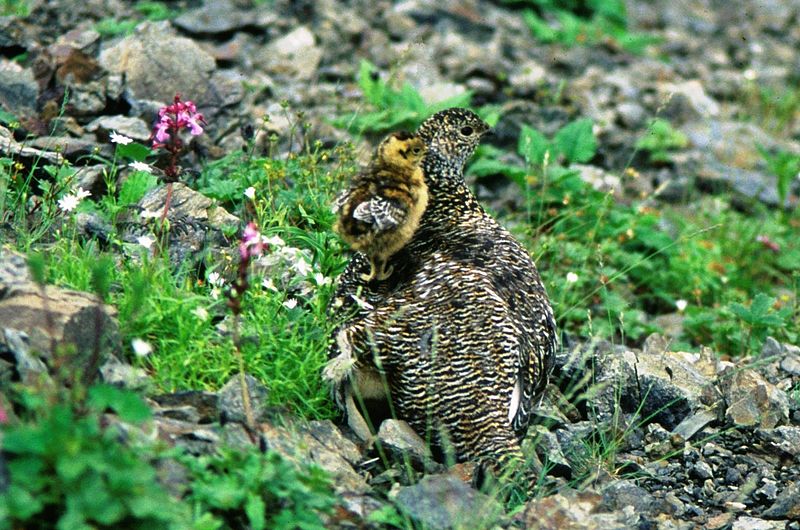
Rock Ptarmigan (Lagopus Muta) ©WikiC mother and chick

Rock Ptarmigan (Lagopus Muta) ©WikiC mother and chick

There is another crown for us, “THE CROWN OF LIFE”.

It is for those who endure temptations, trials, pain and agony for the sake of the Lord.

  • People around you may live a life of luxury and abundance.
  • But we are called to overcome earthly desires.
  • Do we deserve this crown?

Blessed is the man that endureth temptation: for when he is tried, he shall receive the crown of life, which the Lord hath promised to them that love him. (James 1:12)

This crown, “THR CROWN OF GLORY” has a long price tag.

Pay and receive. Here is the bill..

The elders which are among you I exhort, who am also an elder, and a witness of the sufferings of Christ, and also a partaker of the glory that shall be revealed:
Feed the flock of God which is among you, taking the oversight thereof, not by constraint, but willingly; not for filthy lucre, but of a ready mind;
Neither as being lords over God’s heritage, but being examples to the flock.
And when the chief Shepherd shall appear, ye shall receive a crown of glory that fadeth not away. (1 Peter 5:1-4)

Now, it’s time for us to switch on our search lights to see what kind of crown do we deserve..

Have a blessed day!
Yours in YESHUA,
a j mithra

Please visit us at:
CrossTree

ajmithra21

The Scaled Quail – The Cover Seeker

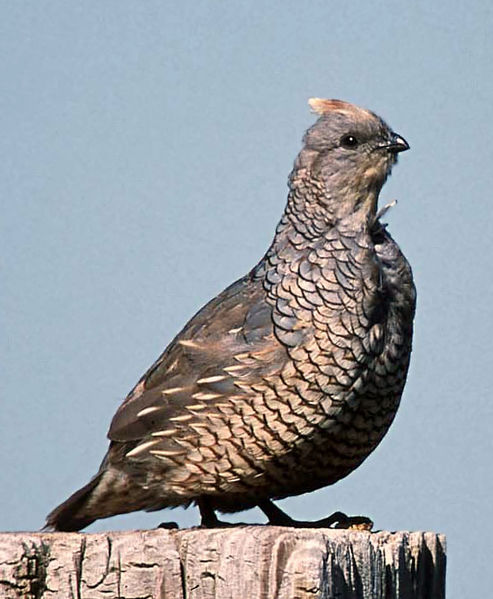
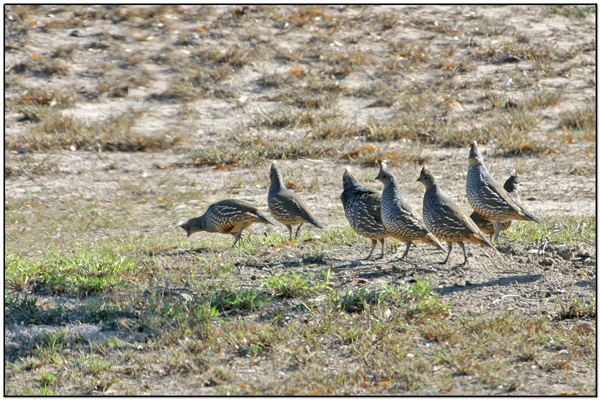
Scaled Quail (Callipepla squamata) ©WikiC

Scaled Quail (Callipepla squamata) ©WikiC

The Scaled Quail – The Cover Seeker ~ by ajmithra

The Scaled Quail (Callipepla squamata), also commonly called Blue Quail or Cottontop, is a species of the New World quail family. It is a bluish gray bird found in the arid regions of the Southwestern United States
to Central Mexico.

These birds seek for four different covers. They are as follows :

Feeding cover: Scaled Quail use grass clumps and shrubs for cover while feeding. In one study they were frequently seen crossing 82 to 165 feet (25–50 m) of bare ground. When disturbed, Scaled Quail hid in snakeweed (Gutierrezia spp.) or in grass clumps. In June and July foraging occurs on open grasslands which are not used at other times.

We have Jesus, our Good Shepherd, who makes us lie down beside still waters. But, times are fast approaching where the church may be stopped from feeding on the word of God and the church may have to hide during the times of tribulation..

Behold, the days come, saith the Lord GOD, that I will send a famine in the land, not a famine of bread, nor a thirst for water, but of hearing the words of the LORD. Amos 8:11

Scaled Quail (Callipepla squamata) by DavesBirdingPix

Scaled Quail (Callipepla squamata) by DavesBirdingPix

Loafing cover: Scaled Quail coveys occupy loafing or resting cover after early morning feeding periods. Scaled Quail occupy desert grassland or desert scrub with a minimum of one loafing covert per approximately 70 acres (28 ha). In northwestern Texas, loafing coverts were characterized by:

  1. overhead woody cover,
  2. lateral screening cover,
  3. a central area with bare soil, and
  4. one or more paths through the lateral cover.

Covert heights ranged from 1.6 to 5.9 feet (0.5–1.8 m) and 2.6 to 6.9 feet (0.8–2.1 m) in diameter. Cholla formed all or part of the overhead cover of 85% of coverts, even though they were dominant
at only 12% of the study locations. In areas where Scaled Quail occur without cholla, woody species such as wolfberry (Lycium spp.) and mesquite are important for overhead cover.

In Oklahoma pinyon-juniper habitats, Scaled Quail use the shade of tree cholla (Cylindropuntia imbricata) and human-made structures. In Arizona, Scaled Quail occupied wolfberry and mesquite 1.7 to 5 feet (0.5–1.5 m) tall for loafing cover. This overhead cover provides midday shade, but is open at the base to allow easy escape from predators. In Oklahoma, winter home ranges always contained skunkbush sumac, tree cholla, or human-made structures providing overhead cover.

The highlight during the migration of millions of Israelites across the wilderness for forty years is the overhead cover that God gave them in the form of Pillar of clouds during the day and Pillar of fire during the night. Our God is the same yesterday, today and forever. There is protection for everyone for all seasons..

And there shall be a tabernacle for a shadow in the daytime from the heat, and for a place of refuge, and for a covert from storm and from rain. Isaiah 4:6

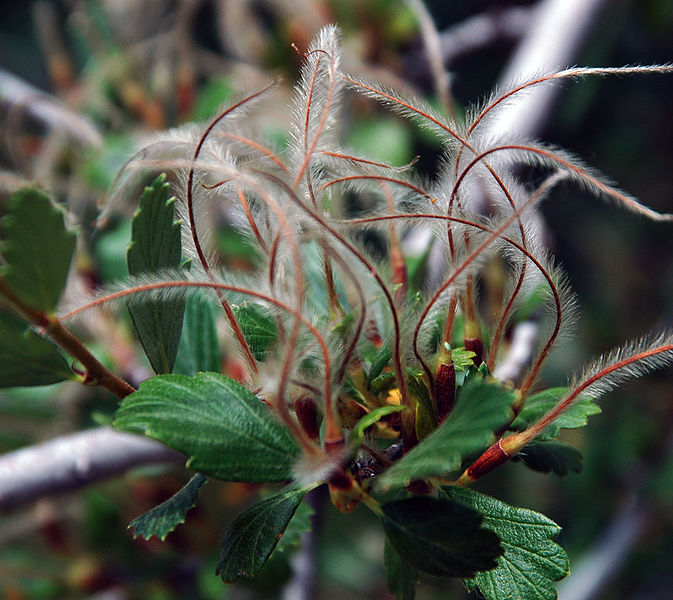
Mountain-Mahogany (Cercocarpus montanus) Cover for Scaled Quail ©WikiC

Mountain-Mahogany (Cercocarpus montanus) Cover for Scaled Quail ©WikiC

Night-roosting cover: Scaled Quail roosts were observed in yucca (Yucca angustifolia), tree cholla, and true mountain-mahogany (Cercocarpus montanus) – yucca-fragrant sumac (Rhus aromatica) vegetation types. The height of vegetation used for night roosts was less than 1.6 feet (0.5 m).

No matter wherever you are and whatever situation you are in, just remember what king David said..,

If I ascend up into heaven, thou art there: if I make my bed in hell, behold, thou art there. If I take the wings of the morning, and dwell in the uttermost parts of the sea; Even there shall thy hand lead me, and thy right hand shall hold me. Psalm 139: 8-10

Even during the darkest hour, as we stumble, confused and seeking direction, His protection and direction never seizes. He not only keeps His eyes on us, but also keeps us as the apple of His eyes. His light shall shine upon us to direct our path.

If I say, Surely the darkness shall cover me; even the night shall be light about me. Yea, the darkness hideth not from thee; but the night shineth as the day: the darkness and the light are both alike to thee.” Psalm 139:11-12

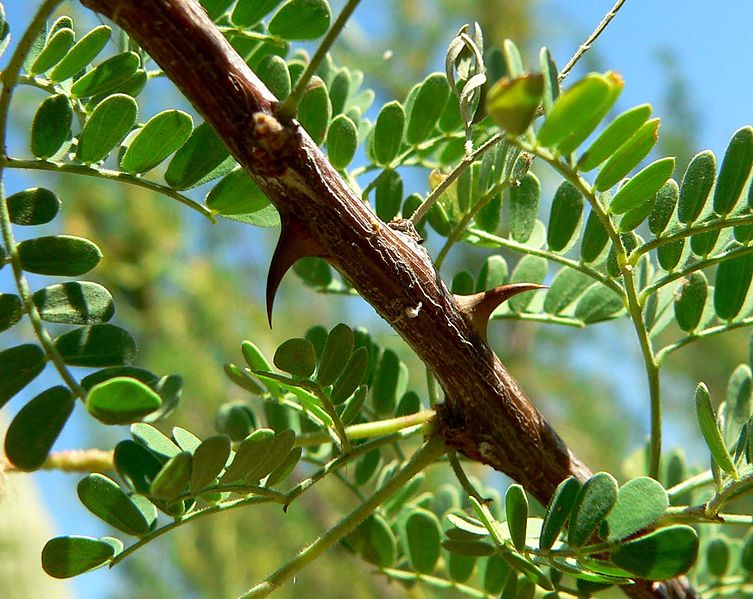
Catclaw Acacia (Acacia greggii) Cover for Scaled Quail ©WikiC

Catclaw Acacia (Acacia greggii) Cover for Scaled Quail ©WikiC

Nesting cover: In March or April winter coveys spread out into areas with less cover. This use of areas with less cover coincides with a seasonal decrease in the number of raptors in the same area.

Scaled Quail nests are constructed under tufts of grasses, and are sheltered by sagebrush (Artemisia spp.), creosotebush (Larrea tridentata), mesquite, catclaw acacia (Acacia greggii), cactus, or yucca; under
dead Russian-thistle (Salsola kali), mixed forbs, or soapweed yucca; or sheltered in old machinery or other human-made debris.

In Oklahoma, 66% of nests were in one of four situations:

  1. dead Russian-thistle,
  2. machinery and junk,
  3. mixed forbs, and
  4. soapweed yucca.

In New Mexico, ordination of breeding birds and vegetative microhabitats indicated that Scaled Quail were associated with increased levels of patchiness and increased cover of mesquite and cactus.

Birds build nests in different places, sometimes in the most unusual place. But still, the chicks prefer the protection under the wings of its parents.

Where do we seek for protection?

As an eagle stirreth up her nest, fluttereth over her young, spreadeth abroad her wings, taketh them, beareth them on her wings: Deuteronomy 32:11

He shall cover thee with his feathers, and under his wings shalt thou trust: his truth shall be thy shield and buckler. Psalm 91:4

The most secure cover for our lives does not come from our million dollars life insurance policies but from assurance that God has gave us through His bloodshed, suffering and death on the cross of Calvary.

Is your Life insured in Christ?

Have a blessed day!

Yours in YESHUA,
a j mithra

Please visit us at:

*

Check out his articles here at  A J Mithra and his Nuggets Pluss

*