Island Scrub Jays – The Ultimate Home-makers

Island Scrub Jays – The Ultimate Home-makers – by a j mithra

Island Scrub Jay (Aphelocoma insularis) ©WikiC

Island Scrub Jay (Aphelocoma insularis) ©WikiC


Island Scrub Jays are monogamous and may stay with a mate for their entire lives. Unlike some Aphelocoma species, the Island Scrub Jay is not a cooperative breeder, meaning that pairs do not rely on other related jays to help them raise their young…

Divorce has become the order of the day…
Spouses getting separated for flimsy reason, sometimes for no reason has become a fashion..
Even churches encourage divorce..
But,through these birds, GOD shows us that HE has created every spouse to mate for life..

It hath been said, Whosoever shall put away his wife, let him give her a writing of divorcement: But I say unto you, That whosoever shall put away his wife, saving for the cause of fornication, causeth her to commit adultery: and whosoever shall marry her that is divorced committeth adultery. (Mathew 5:31,32)

And most importantly Kids are gifts from GOD..
HE trusts is us that we would take care of these gifts and that is the reason HE has given us kids..
How well do we take care of them?
Or do we rely on some one else to raise them for us?

For if a man know not how to rule his own house, how shall he take care of the church of God? (1Timothy 3:5)

Both the male and the female help build nests three to 25 feet high in trees and shrubs. They use small oak branches that they break off trees and they never use sticks that fall to the ground These branches form the cup of the nest, which the parents line with grass and small roots…

We need to provide a home filled with love and care for our kids and not a house of luxury…

Females lay 3 to 5 eggs in a nest that they incubate for about 20 days. While the female sits on the eggs, the male spends his time hunting and defending the nest from snakes, hawks, foxes, and other Island Scrub Jays.

The male is also responsible for bringing the female food so she can be with the eggs as long as possible each day.

Husbands, love your wives, even as Christ also loved the church, and gave himself for it; (Ephesians 5:25)

Observations suggest that the more time parents spend near their nest, the higher their chances of defending their young ones against nest predators….

Now a days parents spend more time in their offices than with their kids..
The excuse is that they are working hard to give a comfortable future..
But, we parents cannot protect our children if we don’t spend time with them..
How can we claim that GOD has created us in HIS own image when we fail to protect our kids the way HE protects us?
It is time for us to learn from these Island Scrub Jay

s about how to spend time with our children so as to defend them from predators…

Do we have that learning spirit?

Your’s in YESHUA,
a j mithra

Please visit us at: Crosstree


Island Scrub Jays are in the Corvidae Family which has Crows, Jays, Magpies, Treepies, Rooks and Ravens in it. They are in the Passeriformes Order.

*

Birds of the Bible – The Bat?

And the stork, the heron after her kind, and the lapwing, and the bat. All fowls that creep, going upon all four, shall be an abomination unto you. (Leviticus 11:19-20 KJV) and
And the stork, and the heron after her kind, and the lapwing, and the bat. (Deuteronomy 14:18 KJV)
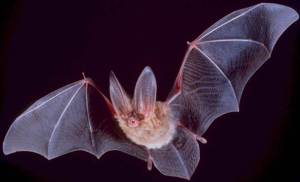
Townsends Big-eared Bat from Wikipedia

These verses show up at the end of the list of “unclean birds.” I have heard people say or write that since the Bat is not a bird, that make the Scriptures incorrect and not true. Let’s look at this a little closer. For one thing, the following verses go on to mention “fowls that go upon all fours” and other critters that are not birds. “Fowl” in the Bible refers to being covered with wings and that includes birds, bats, insects, and others that fly.

Here is what some of the commentators say about these verses.

Gill – “and the bat; a little bird which flies in the night, Aben Ezra says; Kimchi (s) describes it a mouse with wings, which flies in the night, and we sometimes call it the “flitter mouse”; it is a creature between a fowl and a beast; and, as Aristotle says (t), it partakes of both, and is of neither; and it is the only fowl, as Pliny (u) observes, that has teeth and teats, that brings forth animals, and nourishes them with milk. It is a creature so very disagreeable, that one would think almost there was no need of a law to forbid the eating of it; and yet it is said by some to be eatable, and to be eaten, as Strabo (w) affirms, yea, to be delicious food. It is asserted (x), that there is a sort of them in the east, larger than ordinary, and is salted and eaten–that there are bats in China as large as pullets, and are as delicate eating.”
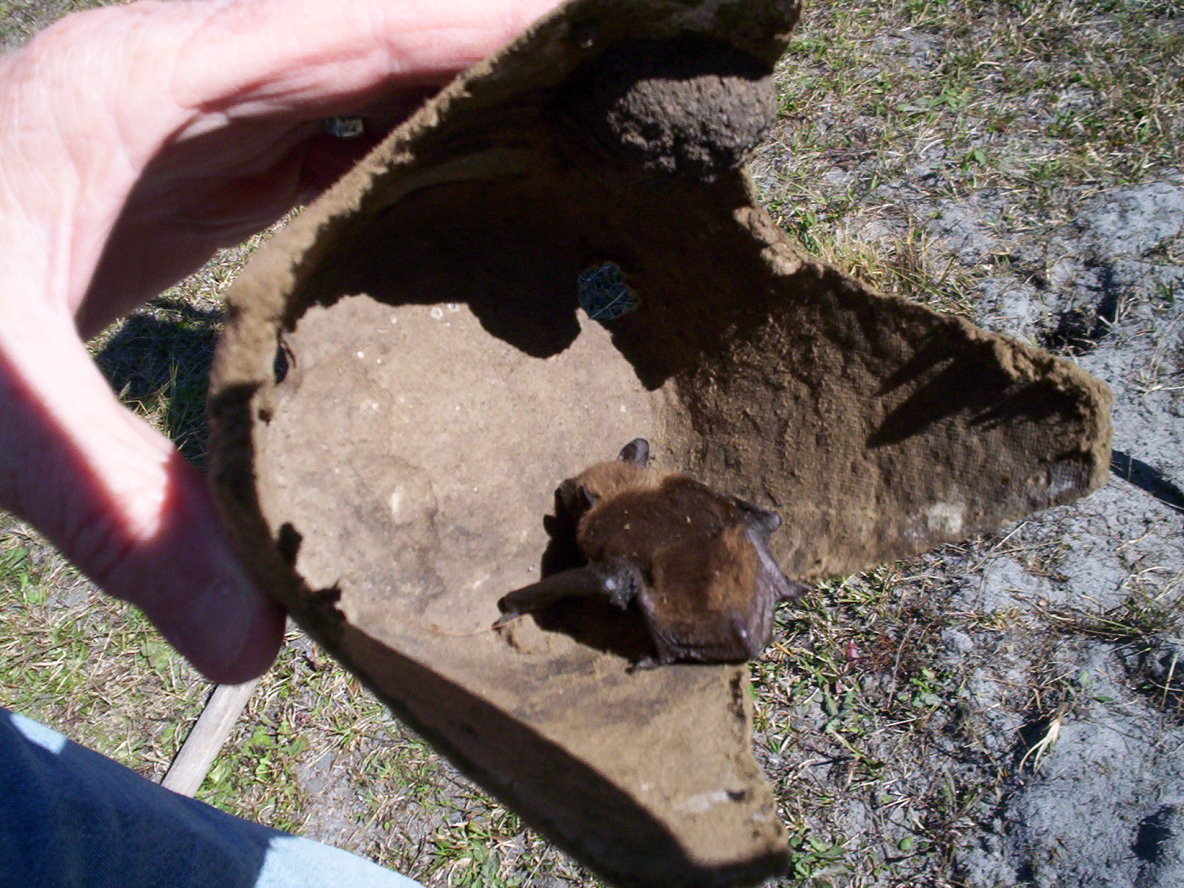
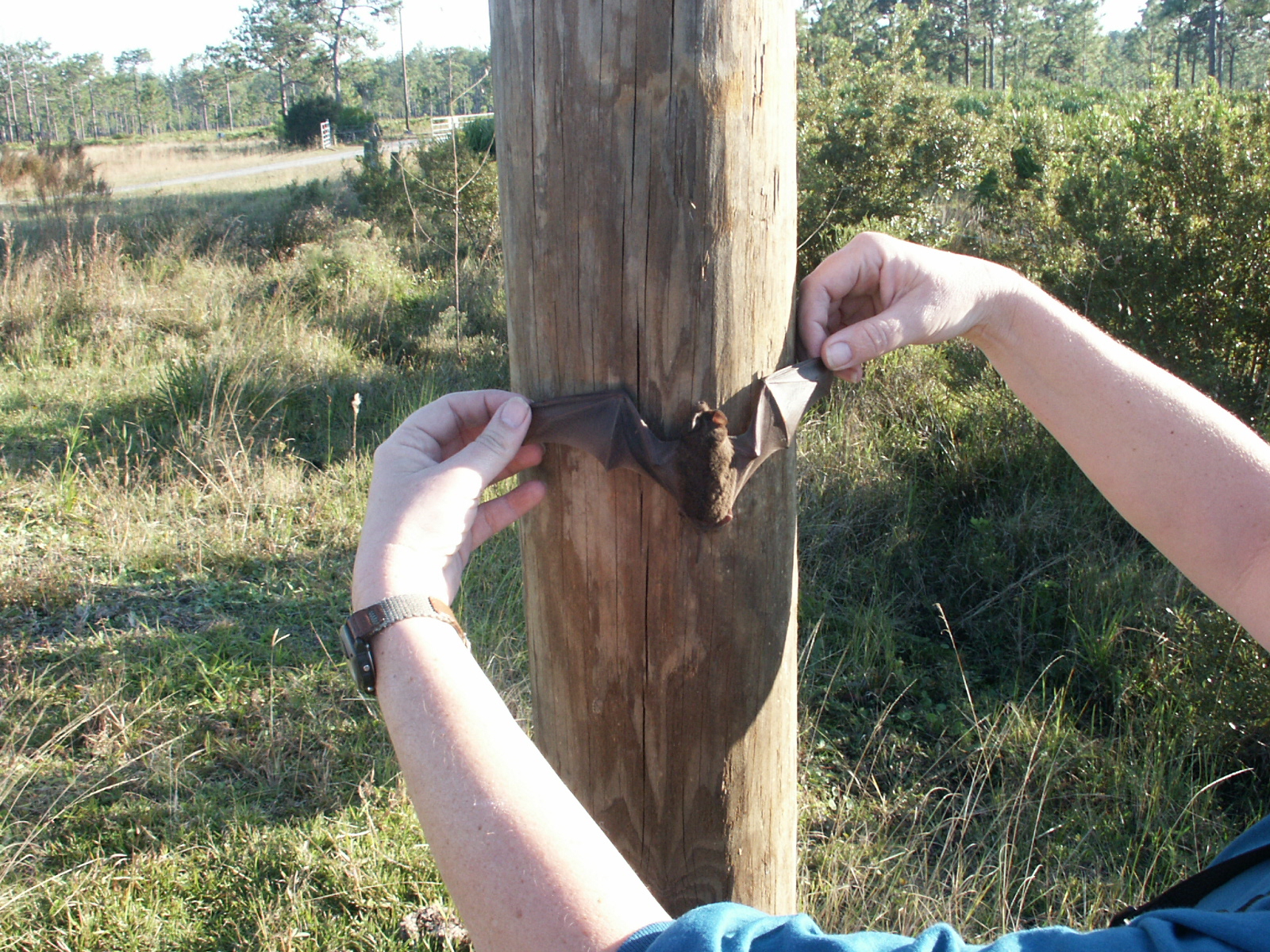
Dan holding a bat at Avon Park AF Range

Clarke – “The bat – עטלף  atalleph, so called, according to Parkhurst, from עט  at, to fly, and עלף  alaph, darkness or obscurity, because it flies about in the dusk of the evening, and in the night: so the Septuagint νυκτερις, from νυξ, the night; and the Vulgate vespertilio, from vesper, the evening. This being a sort of monster partaking of the nature of both a bird and beast, it might well be classed among unclean animals, or animals the use of which in food should be avoided.” “Lev 11:20  All fowls that creep – Such as the bat, already mentioned, which has claws attached to its leathern wings, and which serve in place of feet to crawl by, the feet and legs not being distinct; but this may also include all the different kinds of insects, with the exceptions in the following verse.”
JFB – “the bat — the great or Ternat bat, known in the East, noted for its voracity and filthiness.” Lev 11:20  All fowls that creep, etc. — By “fowls” here are to be understood all creatures with wings and “going upon all fours,” not a restriction to animals which have exactly four feet, because many “creeping things” have more than that number. The prohibition is regarded generally as extending to insects, reptiles, and worms.”

Here are some interesting facts about the bat (not a bird) from Wikipedia:

1) Bats are flying mammals in the order Chiroptera (pronounced /kaɪˈrɒptərə/). The forelimbs of bats are webbed and developed as wings, making them the only mammals naturally capable of true and sustained flight. By contrast, other mammals said to fly, such as flying squirrels, gliding possums and colugos, glide rather than fly, and only for short distances. Bats do not flap their entire forelimbs, as birds do, but instead flap their spread out digits, which are very long and covered with a thin membrane or patagium. Chiroptera comes from two Greek words, cheir (χείρ) “hand” and pteron (πτερόν) “wing.”
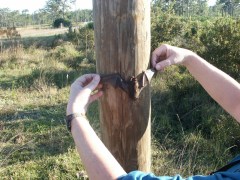
Fruit Bat at Avon Park AF Range

2) There are about 1,100 bat species worldwide. About seventy percent of bats are insectivores. Most of the rest are frugivores, or fruit eaters. A few species feed from animals other than insects. Bats are present throughout most of the world and perform vital ecological roles such as pollinating flowers and dispersing fruit seeds. Many tropical plants depend entirely on bats for the distribution of their seeds.
3) Bats range in size from Kitti’s Hog-nosed Bat measuring 29–33 mm (1.14–1.30 in) in length and 2 g (0.07 oz) in mass,[4] to the Giant Golden-crowned Flying-fox, which has a wing span of 1.5 m (4 ft 11 in) and weighs approximately 1.2 kg (3 lb).
4) Bat echolocation is a perceptual system where ultrasonic sounds are emitted specifically to produce echoes. By comparing the outgoing pulse with the returning echoes the brain and auditory nervous system can produce detailed images of the bat’s surroundings. This allows bats to detect, localize and even classify their prey in complete darkness. At 130 decibels in intensity, bat calls are some of the most intense airborne animal sounds.
5) The finger bones of bats are much more flexible than those of other mammals. One reason is that the cartilage in their fingers lacks calcium and other minerals nearer the tips, increasing their ability to bend without splintering. The cross-section of the finger bone is also flattened compared to the circular cross section that human finger bones have, and is very flexible. The skin on their wing membranes has more elasticity and so can stretch much more than other mammals. The wings of bats are much thinner than those of birds, so bats can manoeuvre more quickly and more accurately than birds. It is also delicate, ripping easily. However the tissue of the bat’s membrane is able to regrow, such that small tears can heal quickly.
6) The teeth of microbats resemble insectivorans. They are very sharp to bite through the hardened armor of insects or the skin of fruit.
7) Mammals have one-way valves in veins to prevent the blood from flowing backwards, but bats also have one-way valves in arteries.
8) One species of bat has the longest tongue of any mammal relative to its body size. This is beneficial to them in terms of pollination and feeding their long narrow tongues can reach deep into the long cup shape of some flowers. When their tongue retracts, it coils up inside their rib cage.

God has graciously created the Bat to fulfill its role in doing His will. He has given it exactly what it needs. To some, it may seem a contradiction, but to those of us who believe in creation, there is no conflict.

Below is something we read recently from Comments on Here and Hereafter by Bob Jones, Sr., p. 79-80.

“The animals and fowls decided to have a battle, so the story goes. The animals lined up one one side and the fowls on the other. In the crowd was a little bat. The animals came upon the bat, and he dropped his wings, showed his teeth and said, ‘I am an animal.’ the fowls came upon the bat. He stretched his wings and said, ‘I am a fowl.’ I have known people like the bat. Whatever crowd they are in, that is what they are. They are like the chameleon. They are colored by their surroundings. God’s people, instead of being affected by their surroundings, should affect their surroundings. A good, consecrated Christian who will be faithful to his trust will have some influence upon his environment.”
The Thirsty Sandgrouse…

The Thirsty Sandgrouse… – by a j mithra

Chestnut-belliedSandgrouse (Pterocles exustus) by Nikhil Devasar

Chestnut-belliedSandgrouse (Pterocles exustus) by Nikhil Devasar

The Sandgrouse are a unique set of birds found only in Africa and Eurasia. The relationship of these birds to other groups has been one of the most hotly debated issues over a period of centuries.

They are primarily ground-feeding birds of deserts, scrub, and grasslands, recalling small long-winged grouse — indeed, one of the most desert-loving of all species.

Its beautifully patterned underparts provide fine camouflage amongst its pink & white rocky habitat.

But sandgrouse share several attributes of pigeons, including their long wings and the practice of making long flights daily between breeding or feeding grounds, and pools of water at which they drink.

A sandgrouse could be described as the busiest eater in the bird world. It needs to find several seeds every second to get enough food to survive. To sustain these sorts of feeding rates, it exploits areas with superabundant seed banks. The grouse peck up each seed individually, and look like little sewing machines when feeding. Each bird will consume between 5,000 and 80,000 seeds a day. Some seeds are so small that it takes 5,000 to make up just one gram.

Now the parable is this: The seed is the word of God. (Luke8:11)

Painted Sandgrouse (Pterocles indicus) by Nikhil Devasar

Painted Sandgrouse (Pterocles indicus) by Nikhil Devasar

How many seeds did we eat today? A full crop (up to 24ml volume) of this small bird could hold between 3 000 and 40 000 seeds, depending on seed size. How much are we filled with the word of GOD?

These birds are the busiest eaters of the Avian world…
We too are so busy that we hastily read a chapter from the Bible before we leave home…
Some of us are even more busy that we don’t find time to read the Bible at all …
We do you know the meaning of the word BUSY?
B (being) U (under) S (satan’s) Y (yoke)
Are you BUSY (Being under satan’s yoke)?

Or

BUSY (Being under Savior’s yoke)?
JESUS said, “For my yoke is easy, and my burden is light.” (Mathew 11:30)

One special feature of sandgrouse is their long flights to water holes in desert and semi-desert country where not only do they drink, but during breeding they wet their belly feathers to carry water to the chicks. The male’s belly feathers are specially adapted to hold up to 15-20 ml of water. The nests may be over 25 miles distant, and it may take several trips, but adults carry enough water back to their chicks so that they survive.. (Video of a Pin-tailed Sandgrouse soaking its belly feathers)

By far the best way to see sandgrouse is to await their arrival at waterholes. The flocking behavior helps them avoid predation because not only are individuals in a flock more difficult for a predator to catch, but because some members can always be on the lookout for danger while others drink. The Burchell’s Sandgrouse (Pterocles burchelli) in the Kalahari desert has been known to fly over 100 miles each day to water…

Are you thirsty?
You are so privileged, that you don’t have to move even one step for water…
Just call JESUS, the Living Water, HE will not only quench your thirst but, let the Living Water flow from you…

For I will pour water upon him that is thirsty, and floods upon the dry ground: I will pour my spirit upon thy seed, and my blessing upon thine offspring: (Isaiah 44:3)

He that believeth on me, as the scripture hath said, out of his belly shall flow rivers of living water. (John 7:38)

Have an overflowing day!

Your’s in YESHUA,
a j mithra

Please visit us at: Crosstree

Dodo Bird – Not A Failure

Dodo (Raphus cucullatus) Extinct by Wikipedia

Dodo (Raphus cucullatus) Extinct by Wikipedia

The dodo (Raphus cucullatus) was a flightless bird endemic to the Indian Ocean island of Mauritius. Related to pigeons and doves, it stood about a meter (3 feet) tall, weighing about 20 kilograms (44 lb), living on fruit, and nesting on the ground.

The dodo has been extinct since the mid-to-late 17th century.[1] It is commonly used as the archetype of an extinct species because its extinction occurred during recorded human history and was directly attributable to human activity.

The dodo bird … an example of survival of the fittest

*

When The Robins Came – by Dorothy (Dot) Belle Malcolm

When The Robins Came – by Dorothy (Dot) Belle Malcolm

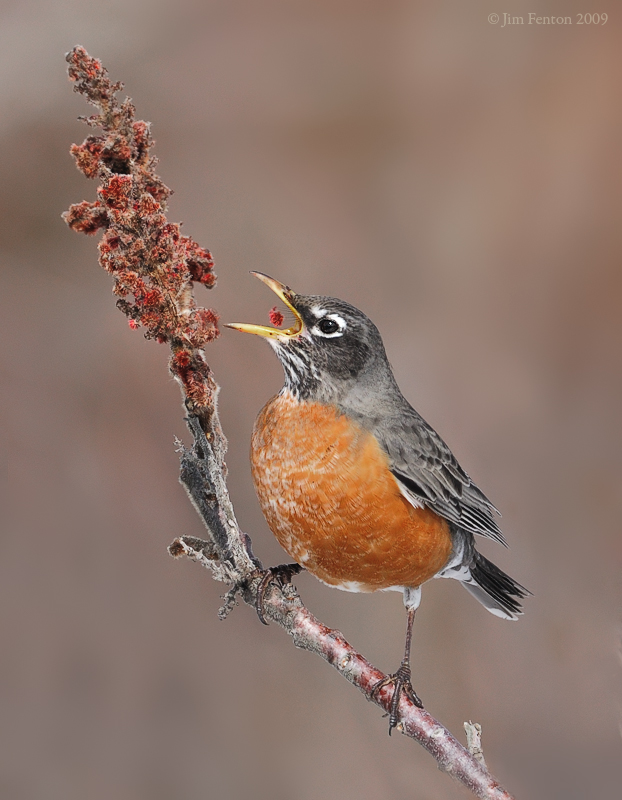
Robin Eating by Jim Fenton

Robin Eating by Jim Fenton

They came one day – loudly – uninvited – wildly flying thru the branches of the neighbor’s camphor tree, and were scattered over the ground as if it were a race to see who could eat the most. But primarily they were in the tree.

For days their noisy, frantic activity continued, usually in the mornings. Then when it seemed they had moved on to somewhere else, I saw they were back again.

Only this time in a tree near where I was cleaning up from the effects of winter’s cold. And they were oh so loud and gave no heed to me. I felt they were having much fun. They delighted in flicking decaying leaves around in search of wormy treasures.

In their colors of black and orange and yellow bills, they appeared fresh, strong, and each feather perfect. In their foraging, they would skitter, bob, stop still, stand proudly, with heads held up. They looked like strong healthy sentinels.

What joy seemed to be theirs, scattering leaves over the stone pathways. At first, I blamed the squirrels for the mess, but soon realized that was a wrong assumption. When they left, and I observed the mess, I thought they had not been taught good manners. After all they were visitors – shouldn’t they have cleaned up after themselves?

When I saw no more for a few days, I was sorry to have thought badly of their manners. After all, did I not greatly enjoy their antics? For you see, I had much to savor until they hopefully return next Spring.

Imagine how let down I felt by their supposed absence. I recalled their wild flights, beautiful fresh colors, proud looks and flicking up of the leaves. Oh how happy I was in a few days to be rewarded by the sight of a lone robin and hear it’s voice. Was it left behind I wondered – why did it appear to be alone? No, no, not at all, for in a couple days a goodly group appeared. I knew they were not here to stay though. When they return next year they will have an open invitation to my yard, trees, leaves, and all the rest. Let them be loud, wild, and messy. I shall not speak of bad manners again.

You will show me the path of life; In Your presence is fullness of joy; At Your right hand are pleasures forevermore. (Psalms 16:11 NKJV)
Look at the birds of the air: they neither sow nor reap nor gather into barns, and yet your heavenly Father feeds them. Are you not of more value than they? (Matthew 6:26 ESV)

Dorothy, Dottie as we know her at church, is a friend who likes to garden and provide for the needs of birds. When she told me of this true story, I had asked her if I could produce it here. Thanks, Dottie, I hope the readers enjoy it as much as I do and look forward to more observations of yours to share.

See her – Return of the Robins

*

Fusion Unplugged by Boat-tailed Grackles

Boat-tailed Grackle (Quiscalus major) by Dan'sPix

Fusion Unplugged by Boat-tailed Grackles by a j mithra

Well I see a j mithra has been busy again. He has produced another YouTube with the birds. This time he has used the Boat-tailed Grackles. Hope you enjoy watching it.

*

Birds of the Bible – Hair Like Eagles’ Feathers

That very hour the word was fulfilled concerning Nebuchadnezzar; he was driven from men and ate grass like oxen; his body was wet with the dew of heaven till his hair had grown like eagles’ feathers and his nails like birds’ claws. (Daniel 4:33 NKJV)

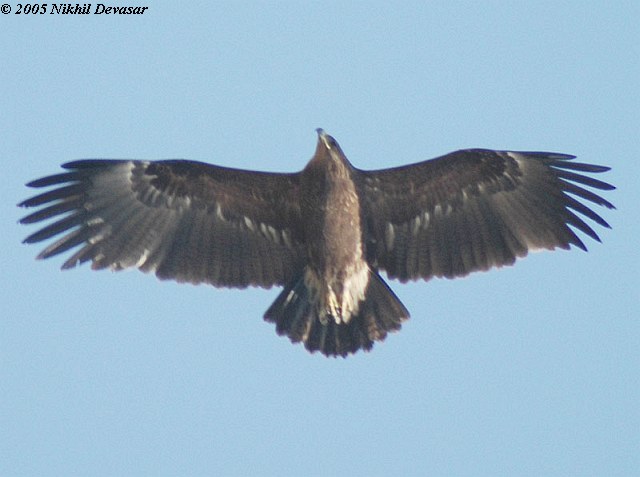
Greater Spotted Eagle (Aquila clanga) by Nikhil

Greater Spotted Eagle (Aquila clanga) by Nikhil

I have wanted to include this verse in a Birds of the Bible article, but just never got to it. Last night our pastor mentioned this verse again in his message and I decided to use it for this weeks blog. Plus, Dan is teaching the Book of Daniel in our Sunday School class.

Many times the birds mentioned in the Bible are listed as “clean or unclean” or as an “object lesson” to teach some truth. This time the mention of Eagle feathers and birds’ claws are used as a description of a man’s appearance and there is a lesson to be learned here.

So, who was this man? It is actually a very important king, King Nebuchadnezzar of Babylon. The information about the King is found throughout the book of Daniel. To make the story short, the king had a dream and wanted an interpretation of that dream. Not only did he want his dreams interpreted, but he wanted the interpreter to tell him what the dream was about. The wise men and others told the king that was impossible, so the king commanded to kill them. Daniel prayed to God that He would reveal the dream and it’s interpretation to him so he could tell it to the King. God answered that prayer and Daniel was able to reveal it to King Nebuchadnezzar.

Long nails like a bird's claws

Long nails like a bird’s claws

King Nebuchadnezzar was the first world ruler and God had given the king great power. Later on, the king’s pride takes over and he thinks he has made this kingdom and does not give God the credit. He even has a great statue made of himself and demands that all fall down and worship him.

Back to making this short. In Daniel chapter 4 the king has another dream and Daniel (Belteshazzar) prays for revelation and again interprets the dream. Daniel 4:9 to 4:18 tells the dream. (Birds are mentions several times in it.) Then Daniel interprets the dream in Daniel 4:19-33. Basically, the Most High is going to let the king learn humility and get rid of the pride that he has.

The king spoke, saying, “Is not this great Babylon, that I have built for a royal dwelling by my mighty power and for the honor of my majesty? (Daniel 4:30 NKJV)

For seven years will his kingdom be departed from him. He will be out in the field, “eating grass like oxen” and “until you know that the Most High rules in the kingdom of men, and gives it to whomever He chooses.” It is during this time that his hair will grow like “eagles’ feathers and his nails like birds’ claws.”

Did King Nebuchadnezzar learn his lesson?

And at the end of the time I, Nebuchadnezzar, lifted my eyes to heaven, and my understanding returned to me; and I blessed the Most High and praised and honored Him who lives forever: For His dominion is an everlasting dominion, And His kingdom is from generation to generation. All the inhabitants of the earth are reputed as nothing; He does according to His will in the army of heaven And among the inhabitants of the earth. No one can restrain His hand Or say to Him, “What have You done?” At the same time my reason returned to me, and for the glory of my kingdom, my honor and splendor returned to me. My counselors and nobles resorted to me, I was restored to my kingdom, and excellent majesty was added to me. Now I, Nebuchadnezzar, praise and extol and honor the King of heaven, all of whose works are truth, and His ways justice. And those who walk in pride He is able to put down. (Daniel 4:34-37 NKJV)

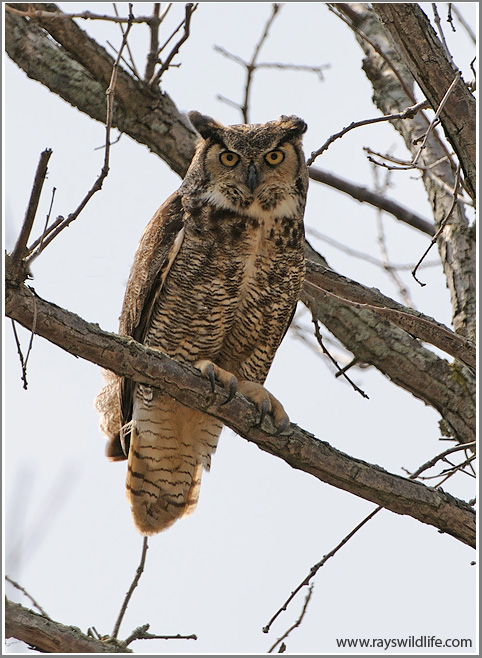
I Don’t Show Off – The Great Horned Owl

I Don’t Show Off – The Great Horned Owl – by a j mithra

Great Horned Owl (Bubo virginianus) by Ray

Great Horned Owl (Bubo virginianus) by Ray

Great Horned owls can fly silently because the ends of their flight feathers don’t have barbules, those tiny hooks that most all other bird feathers have. When birds fly, the rubbing barbules is what makes the noise…

If GOD has not created these owls to fly silent, it would’ve turned into a prey instead of being a predator..

It doesn’t show-off its presence..

Please read through Isaiah chapter 39, you will see how King Hezekiah showed every treasure he had to the king of Babylon and how it brought curse over his family…

Talents and treasures from GOD
are not to show off but to glorify HIM…

On the faces of Great Horned owls and most other owls there are very short feather in a rounded pattern that form a facial disk. This facial dish acts like a satellite dish, receiving sounds and funneling them to the ears, which are hidden beneath feathers on the sides of the skull…

Its one ear is slightly higher and positioned at a slightly different angle on the head
than the other, it is able to use a kind of “sound triangulation” process to judge the location of its prey with amazing accuracy…

These owls can hear even the slightest movement of its prey within leaves or undergrowth or even in snow…
Such is its hearing ability..

Most of us tend to grumble about prayers unanswered..
We say that GOD doesn’t talk to us..
What sort of prayer time do we have?
Do we take time to be silent in HIS presence?

If these birds didn’t maintain silence, they may have to starve to death..

Most of us are spiritually starved cos, we go with a shopping list to the presence of GOD, instead of taking orders from the LORD..

Unless we learn to be still, we will never know our LORD..

Be still, and know that I am God: I will be exalted among the heathen, I will be exalted in the earth. (Psalm 46:10)

Note: Thank you, Ms Val, for the inspiration.. I’ve learnt loads from your article about THE GREAT HORNED OWL.. May GOD richly bless you in all that you do for HIS glory..

Have a blessed day!

Your’s in YESHUA,
a j mithra

Please visit us at: Crosstree

*

Snowflake and the Eye

Snowflake and the Eye by Ian Juby

Ian Juby has made another “Rant.”  This one is about evolutionist’s claim about how the eye is poorly designed and that there is no intelligent designer that made it. He does these spoofs because of some of the unintelligent remarks made by evolutionists.

He, like those of us here, believe that we have a very Intelligent Designer called the Creator. We believe the Lord Jesus is this creator. The birds we write about sure enjoy their Intelligently Designed eyes.

and to make all see what is the fellowship of the mystery, which from the beginning of the ages has been hidden in God who created all things through Jesus Christ; (Ephesians 3:9 NKJV)

Below is his “rant” and we have many of Ian Juby’s videos in the Complete Creation by Ian Juby in our Plus Section under the Creation Topics

Reminiscing in South Florida

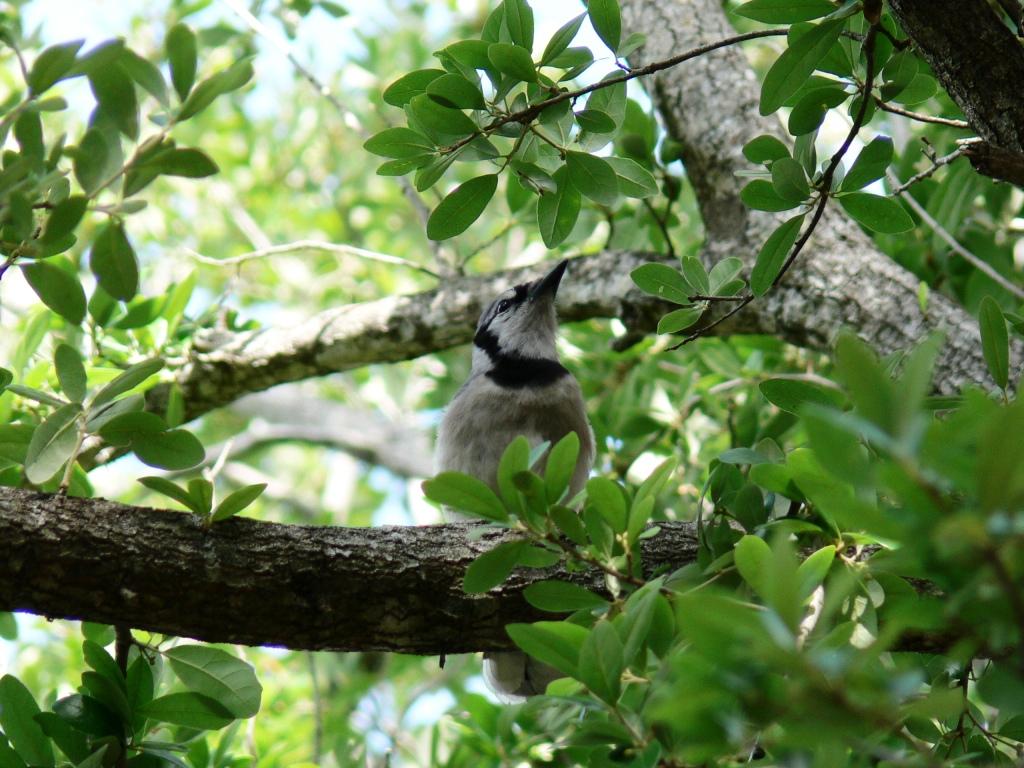
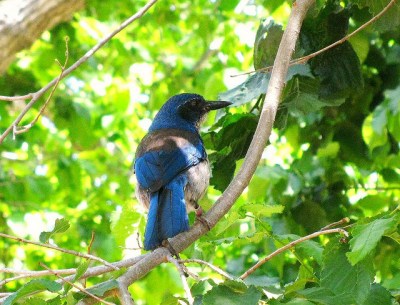
Blue Jay in tree at Hampton Pines

Blue Jay in tree at Hampton Pines

Reminiscing can be fun. We went to Miami this week to visit our friend after his surgery, but also took time to visit our old stomping grounds in the Fort Lauderdale area. We lived in Tamarac for 18 years, so had things to see and do.

We always enjoyed going to the beach to feed the Sea Gulls. Well, when we got to Lauderdale-by-the-Sea, there was not one gull in sight. We only saw Pigeons, a Boat-tailed Grackle and 2 Eurasian Collarded Doves. While driving, a 4 bird squadron of Brown Pelicans flew over. So much for the beach this time of the year.

Hampton Pines Pk Sign

Hampton Pines Pk Sign

We then drove to the Hampton Pines Park in North Lauderdale. “It is a 32 acre natural woodland park containing native bald cypress and slash pines.” (It took a beating from Hurricane Wilma and many trees were blown down. This was according to a very nice grounds keeper we were talking with.) That is where I first became a real birdwatcher. There was a lady naturalist there who taught about the birds. We became friends (can’t remember her name now and the office was closed) and she sort of took me “under her wing.” I learned to have “soft eyes” (not stare at a certain spot, but softly watching the trees to catch movement), to listen for the birds (birding by ear), watch for evidences that a bird has been there (like droppings of fish bones and other things), and many other tips. Like many of our readers, I saw birds, but never really became aware of them until she revealed those and many other tips. I am sure she was the beginning of great hobby for me. I am thankful for the Lord bringing her into my life, for her and to Hampton Pines Park for having hired her.

Hampton Pines

Hampton Pines

While we were there we recorded only these birds: 7 Blue Jays carrying on with their alarm calls, Mourning Doves, Red-bellied Woodpeckers, Great Egret, Mockingbird, and 2 male Cardinals. We were only there about 20 minutes. Also saw 2 squirrels, which we fed before we saw the sign not to feed them. We also saw 2 lizards (I guess), one was about 18 inches and the other darker one was about 12 inches.

Since our house we lived in was only about a mile or so away, we went by it and took a few pictures of it and the pond across the street. There was a female Boat-tailed Grackle sitting at the top a bush (much taller than when we sold in 1995) in the yard. Used to have lots of feeders in the backyard. As my birding skills improved, I recorded many birds in our yard, around and in that pond.

Yes, it was fun to reminisce about when I learned to bird watch and to see the old homestead.

I remember the days of old; I meditate on all Your works; I muse on the work of Your hands. (Psalms 143:5 NKJV)

*

This slideshow requires JavaScript.

*

Best Local Playgrounds: Hampton Pines Park

City of North Lauderdale – Parks and Recreation

*

Birds of the Bible – Uniquely Created – Tools

Many birds have built in “tools” such as the way their beaks are designed or their feet, or wings, etc. Some use things as tools as shown below in the articles and the video.

How Nature Works: White-winged Crossbill Feeding Technique from CornellLab of Ornithology. (Last statement gives credit to evolution, but we believe they were uniquely created with this ability by the Lord.)

Rooks Reveal Remarkable Tool Use It appears that Rooks (Crow related) have been given intelligence by their Creator to figure out how to use things as tools.

Also, New Caledonian Crows themselves are able to use tools.

The list goes on and on of the uniquely created ways birds use their built in or external “tools.” “The Tool-Using Bird” (Vulture) and “Animals That Make and Use Tools” by Creation Moments.

What kind of tools (gifts) has the Lord given you to use. Are you using them in the way that He intended for you to use them.

Having then gifts differing according to the grace that is given to us, let us use them: if prophecy, let us prophesy in proportion to our faith; (Romans 12:6 NKJV)

As each one has received a gift, minister it to one another, as good stewards of the manifold grace of God. (1 Peter 4:10 NKJV)

Interesting Articles and Videos:
Adaptation and ecology: the marvelous fit of organisms to their environment” by Dr. Gary Parker

Woodpecker Finch using a stick as a tool. YouTube by firpeace

Animals Using Tools YouTube by ronesh (Bird Fishing)

*

Long-wattled Umbrellabird – The Dawn Dancer..

Long-wattled Umbrellabird – The Dawn Dancer..  – by a j mithra

The Long-wattled Umbrellabird (Cephalopterus penduliger) is large bird that got its name because of its head feathers, which resemble an Elvis Presley hair-do that can be opened like an umbrella surrounding the bird’s head in all directions.

The first half of the name comes from another strange characteristic, the long wattle that hangs from the neck of the bird. This is a fleshy appendage covered in feathers that looks like a long, black tie and it is used for males during their exotic sexual courtship.

Long-wattled Umbrellabird (Cephalopterus penduliger) by Wikipedia

Long-wattled Umbrellabird (Cephalopterus penduliger) by Wikipedia

It is a large, charismatic, midnight-black bird, with a maximum wingspan of about two feet. Males have long crest feathers that, depending on their mood, they can retract like slicked-back pompadours (cool, relaxed) or expand to completely cover their heads (amorous, aroused). With his crest retracted, a male looks like Elvis on a bad hair day; with it expanded, he looks like Liberace on steroids…

During the August-to-February mating season, groups of between five and fifteen males gather every morning and afternoon at special sites called leks, each of which typically covers about 4.5 acres were most males stake out their own territories within a lek.

Beginning in the predawn darkness, the males sit on their favored perches and bellow their moo calls out into the forest around them. Ecuadorians call the bird the pajaro toro, meaning bull-bird, because the male’s song resembles nothing so much as a lost bovine mooing in the forest. The calls travel more than half a mile, to attract females. These males begin their calls at predawn darkness..

Have we ever realized that Jesus loves to talk to us in the predawn darkness?

The Manna would melt and that is the reason Manna collecting became a predawn exercise for the Israelites…
JESUS, the Word is our heavenly Manna…

How many of us have the habit of reading the Word of God as our predawn exercise? Just imagine, if our Bible had melted just like Manna after daybreak, most of us by now, would’ve starved to death isn’t it?

And they gathered it (Manna) every morning, every man according to his eating: and when the sun waxed hot, it melted. (Exodus 16:21)

As the day breaks, they begin to extend and retract their crests. They ruffle the feathers on their wattles and bob them up and down. They spread their wings out in a vulture-like pose and make a strange gurgling sound. They briskly beat their wings against their bodies. Sometimes they pull small branches off their perching trees and beat them against the limbs or trunk.

They spend hours each morning and afternoon in such elaborate displays, often nearly falling off their branches from the exertion. After they mate, the female is all by herself as she flies back to her home area in the forest, sometimes a few miles away and proceeds with the business of nesting.

These birds practice their mating ritual so hard for hours, that they even fall off their branches due to exertion..

JESUS is the copyright owner of the greatest and the most awesome mating ritual ever found on the face of the earth displayed at the Cross of Calvary..

It was not the nails which held Him to the cross but, it was the love that HE had for you and me that held HIM…

But God commendeth his love toward us, in that, while we were yet sinners, Christ died for us. (Romans 5:8)

These birds are endangered due to habitat loss, and their extinction would not only mean the loss of a very interesting-looking animal, but also a disruption for the forest dynamics. This is because Umbrellabirds are one of the few birds large enough to disperse big seeds that are typical of mature forests.

The long-wattled umbrellabird (Cephalopterus penduliger) lays claim to the title of best-dressed dinner guest at fruit-bearing Chapil palm trees..

The mating behavior of umbrellabirds might have important consequences for chapils and other plants whose fruits they disperse…

It takes an hour for these birds to digest the Chapil Palm fruits. So, the males, bring a high proportion of the seeds they eat back to their lek sites. That is where they spend most of their time. But, the females disperse the seeds after they fly back to their home areas, which maybe miles away from the lek…

JESUS, the bride sows HIS seed in the Church…
But, like these birds, it is the duty of the Church-the bride to spread the seeds among their home areas, their family and friends…
We call ourselves as the bride, but, do we carry the seed home to spread it in our home area? Or just leave back the seed in church every Sunday before we get back home?

For he that soweth to his flesh shall of the flesh reap corruption; but he that soweth to the Spirit shall of the Spirit reap life everlasting. (Galatians 6:8)

Your’s in YESHUA,
a j mithra

Please visit us at: Crosstree

The Umbrellabird is part of the Cotingidae – Cotingas Family of the Passeriformes Order