Matthew Chapter A Day – 6

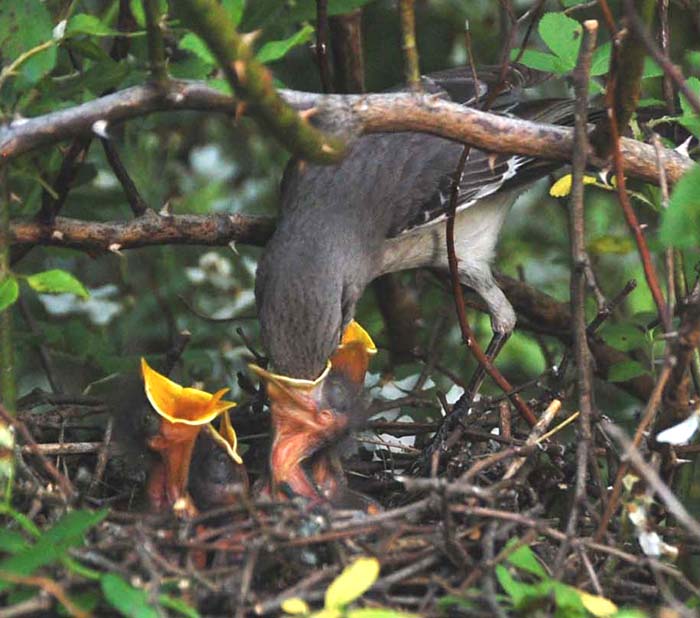
Mockingbird Feeding Young ©Americanfacts

Beginning of Matthew, in case you missed the first post. Matthew Chapter A Day – 1

Matthew Chapter 6 – Audio [Once started, go back to post to follow verses as he reads.]

Matthew 6:1-34 KJV

Giving to the Needy
(1)  Take heed that ye do not your alms before men, to be seen of them: otherwise ye have no reward of your Father which is in heaven.
(2)  Therefore when thou doest thine alms, do not sound a trumpet before thee, as the hypocrites do in the synagogues and in the streets, that they may have glory of men. Verily I say unto you, They have their reward.
(3)  But when thou doest alms, let not thy left hand know what thy right hand doeth:
(4)  That thine alms may be in secret: and thy Father which seeth in secret himself shall reward thee openly.
The Lord’s Prayer
(5)  And when thou prayest, thou shalt not be as the hypocrites are: for they love to pray standing in the synagogues and in the corners of the streets, that they may be seen of men. Verily I say unto you, They have their reward.
(6)  But thou, when thou prayest, enter into thy closet, and when thou hast shut thy door, pray to thy Father which is in secret; and thy Father which seeth in secret shall reward thee openly.
(7)  But when ye pray, use not vain repetitions, as the heathen do: for they think that they shall be heard for their much speaking.
(8)  Be not ye therefore like unto them: for your Father knoweth what things ye have need of, before ye ask him.
(9)  After this manner therefore pray ye: Our Father which art in heaven, Hallowed be thy name.
(10)  Thy kingdom come. Thy will be done in earth, as it is in heaven.
(11)  Give us this day our daily bread.
(12)  And forgive us our debts, as we forgive our debtors.
(13)  And lead us not into temptation, but deliver us from evil: For thine is the kingdom, and the power, and the glory, for ever. Amen.
(14)  For if ye forgive men their trespasses, your heavenly Father will also forgive you:
(15)  But if ye forgive not men their trespasses, neither will your Father forgive your trespasses.
Fasting
(16)  Moreover when ye fast, be not, as the hypocrites, of a sad countenance: for they disfigure their faces, that they may appear unto men to fast. Verily I say unto you, They have their reward.
(17)  But thou, when thou fastest, anoint thine head, and wash thy face;
(18)  That thou appear not unto men to fast, but unto thy Father which is in secret: and thy Father, which seeth in secret, shall reward thee openly.

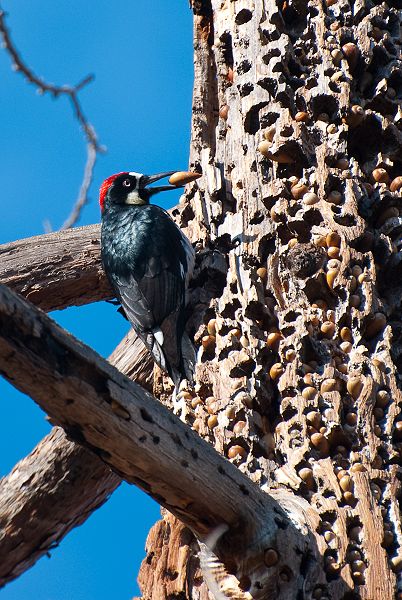
Acorn Woodpecker (Melanerpes formicivorus) with Hoard or Grainary WikiC

Lay Up Treasures in Heaven
(19)  Lay not up for yourselves treasures upon earth, where moth and rust doth corrupt, and where thieves break through and steal:
(20)  But lay up for yourselves treasures in heaven, where neither moth nor rust doth corrupt, and where thieves do not break through nor steal:
(21)  For where your treasure is, there will your heart be also.
(22)  The light of the body is the eye: if therefore thine eye be single, thy whole body shall be full of light.
(23)  But if thine eye be evil, thy whole body shall be full of darkness. If therefore the light that is in thee be darkness, how great is that darkness!
(24)  No man can serve two masters: for either he will hate the one, and love the other; or else he will hold to the one, and despise the other. Ye cannot serve God and mammon.
Do Not Be Anxious
(25)  Therefore I say unto you, Take no thought for your life, what ye shall eat, or what ye shall drink; nor yet for your body, what ye shall put on. Is not the life more than meat, and the body than raiment?
(26)  Behold the fowls of the air: for they sow not, neither do they reap, nor gather into barns; yet your heavenly Father feedeth them. Are ye not much better than they?
(27)  Which of you by taking thought can add one cubit unto his stature?
(28)  And why take ye thought for raiment? Consider the lilies of the field, how they grow; they toil not, neither do they spin:
(29)  And yet I say unto you, That even Solomon in all his glory was not arrayed like one of these.
(30)  Wherefore, if God so clothe the grass of the field, which to day is, and to morrow is cast into the oven, shall he not much more clothe you, O ye of little faith?
(31)  Therefore take no thought, saying, What shall we eat? or, What shall we drink? or, Wherewithal shall we be clothed?
(32)  (For after all these things do the Gentiles seek:) for your heavenly Father knoweth that ye have need of all these things.
(33)  But seek ye first the kingdom of God, and his righteousness; and all these things shall be added unto you.
(34)  Take therefore no thought for the morrow: for the morrow shall take thought for the things of itself. Sufficient unto the day is the evil thereof.

Good News

Scripture: e-Sword
Photos:
Mockingbird Feeding Young ©Americanfacts
Acorn Woodpecker (Melanerpes formicivorus) with Hoard or Grainary WikiC

Hvitkinngås, a Coldwater Coast Colonist

Hvitkinngås, a Coldwater Coast Colonist 

Dr. James J. S. Johnson

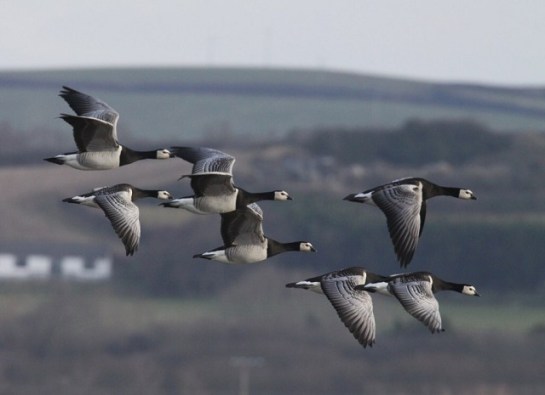
BarnacleGoose-flock-in-flight.BirdGuides

BARNACLE GOOSE flock in flight (credit: BirdGuides)

And pray ye that your flight be not in the winter.  (Mark 13:18)

The above-quoted Scripture refers to the “flight” of human refugees, during a time of future world crisis.  However, for migratory birds, long-distance flights are not deemed a “crisis” because they are an ordinary twice-yearly lifestyle  —  winging from breeding grounds (as summer fades into autumn) to wherever it overwinters, usually with stopover breaks along the way, then vice versa (during spring).

For the  BARNACLE GOOSE (called Hvitkinngås in Norwegian, literally “white-cheek goose”), however, the breeding grounds are fairly frigid, with that anatid dwelling mostly in four populations:  (1) east Greenland breeders, who overwinter mostly along the western coasts of the British Isles, especially in the Hebrides (e.g., Islay) and western Ireland; (2) Svalbard’s breeders, who overwinter in and near the Irish Sea’s Solway Firth, that separates England and Scotland, not far from the Isle of man; (3) Russian breeders, some summering at or near Novaya Zemlya, or its neighboring Siberian coastland, who overwinter in the Netherlands or nearby Germany; and (4) an unusual not-so-migratory eastern colony, which appear to have abandoned the Russian population, and are now resettled (and mostly residing year-round!) in and near islands and coastlands of the Baltic Sea, including coastal Estonia, Finland, and Sweden (although some of these “transplants” may overwinter in and around Netherlands).

One of Norway’s most extreme territories is the arctic archipelago of Svalbard, the largest island of which is Spitsbergen.  Svalbard hosts one of the world’s three most-northern breeding populations of migrating Barnacle Goose (Norwegian: Hvitkinngås, meaning “white-cheek goose”) colonies.   Imagine the goslings hatched there each year!

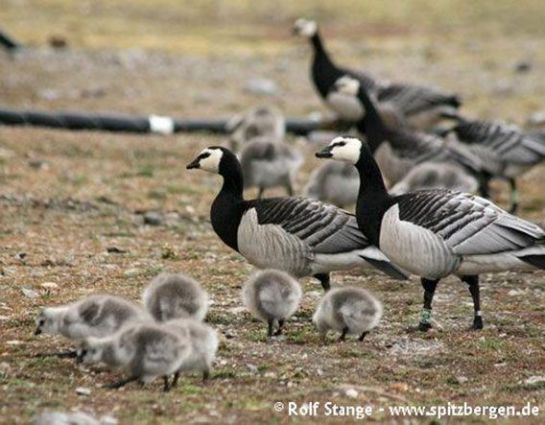
BarnacleGoose-Svalbard.RolfStange

Barnacle Goose group (credit: http://www.-spitzbergen-svalbard.com / Rolf Stange)

According to the Norwegian Polar Institute:

“The barnacle goose (Branta leucopsis) is a medium sized, black and white goose …  occu[ring] in three separate populations that breed [first] in northeast Greenland, [second] in Svalbard[,] and [third] in northwest Russia and the Baltic region … [with those] from Greenland winter[ing] in Ireland and in the western parts of Scotland, [while] the Svalbard birds spend the winter in the Solway Firth between England and Scotland” and the Russian population “winters along the western coasts of Germany and the Netherlands”.

[Quoting from “Barnacle Goose (Branta leucopsis)”, http://www.npolar.no/en/species/barnacle-geese.html  .]

Also according to the Norwegian Polar Institute, the Svalbard-breeding population looks just like the other white-cheeked geese: “The Svalbard barnacle goose is indistinguishable morphologically from birds in the other populations, but is geographically isolated. In Svalbard, the barnacle goose breeds on the western coast of Spitsbergen and within Tusenøyane south of Edgeøya” – while “most barnacle geese breed in colonies on small islands, but some pairs also breed on cliffs on Spitsbergen.”

But as weather warms after winter, and daylight hours stretch (vs. night darkness), the northward migration repeats; breeding occurs in the arctic north:

“The spring migration starts in April or early May, when the geese leave Solway Firth and head for Helgeland on the western coast of mainland Norway. In the second half of May they move on to the southern part of Spitsbergen before reaching the nesting areas toward the end of May.  In late August or early September the autumn migration starts. Bjørnøya is an important stop-over site where the birds can spend up to three weeks waiting for favourable winds to initiate migration to the wintering grounds in northern Britain. Some birds probably migrate directly from Spitsbergen to the Solway Firth.”

[Quoting “Barnacle Goose (Branta leucopsis)”,  http://www.npolar.no/en/species/barnacle-geese.html .]

As a previous blogpost indicates, this “new” eastern (Baltic coastlands) population may be the result of Novaya Zemlya breeders who wisely abandoned that Russian archipelago due to the USSR’s hydrogen bomb [“Ivan”, the Russian Царь-бомба, i.e., “Tsar Bomb”] testing there.

[See “What’s Good for the Goose … May be Relocating (to Another Summer Home)”, posted at https://leesbird.com/2017/07/10/whats-good-for-the-goose-may-be-relocating-to-another-summer-home/ . ]

BarnacleGoose-rangemap.WikipediaCommons

Barnacle Goose range map (Wikipedia Commons)

And now for a quick limerick poem about this white-cheeked goose’s migrations.

Hvitkinngås, Migrating Over Cold Oceans and Seas 

Barnacle Geese are God’s creation,

Mobilized marvels of migration;

Far, far north they’ll do their breeding,

Thereafter they’ll be southward speeding,

For winter months of warm vacation.

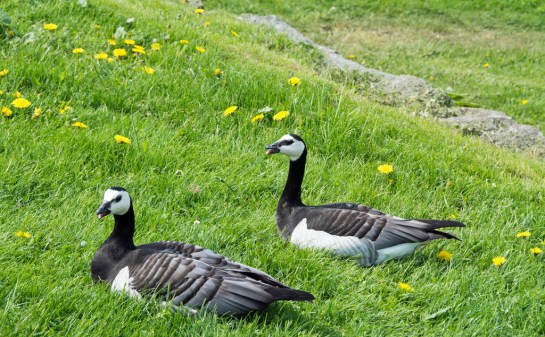
BarnacleGoose-pair.Helsinki-KaivopuistoPark

Barnacle Goose pair, in Kaivopuisto, Helsinki, Finland (Juha Matti / Picssr)


Ian’s Bird of the Moment – Red-browed Pardalote

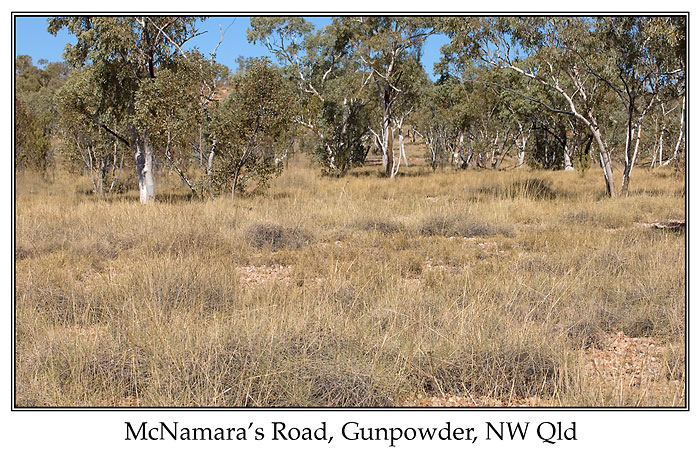
McNamara’s Road, Gunpowder, NW Queensland

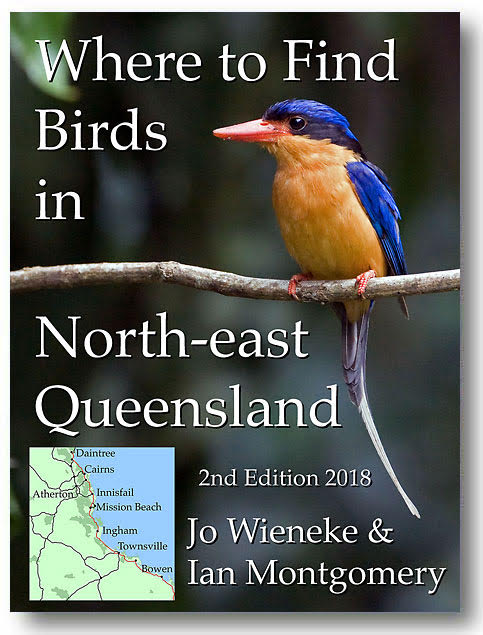
A long time, as usual these days, since the last Bird of the Moment, but I haven’t been entirely idle in the meantime. I’ve been busy both revising the ebook, Where to Find Birds in North-east Queensland, and compiling a second volume of birds of the week/moment covering 2010 until the present. More about those in a minute, but here is the Red-browed Pardalote, a species I wanted to photograph for Where to Find Birds in North-east Queensland and which I mentioned in the previous two Birds of the Moment, the Masked Finch and the Black-breasted Buzzard.

I finally tracked it down at McNamara’s Road between Mt Isa and Camooweal with the help of my Mt Isa birding pal Rex Whitehead and another Mt Isa birder Karen who took me to a couple of spots on this road where they had found the Pardalote shortly before. McNamara’s Road, about 68km from Mt Isa on the Barkly Highway going towards Camooweal is a famous site for the Carpentarian Grasswren though I have spent many hours there on a number of occasions, including this one, without finding any.

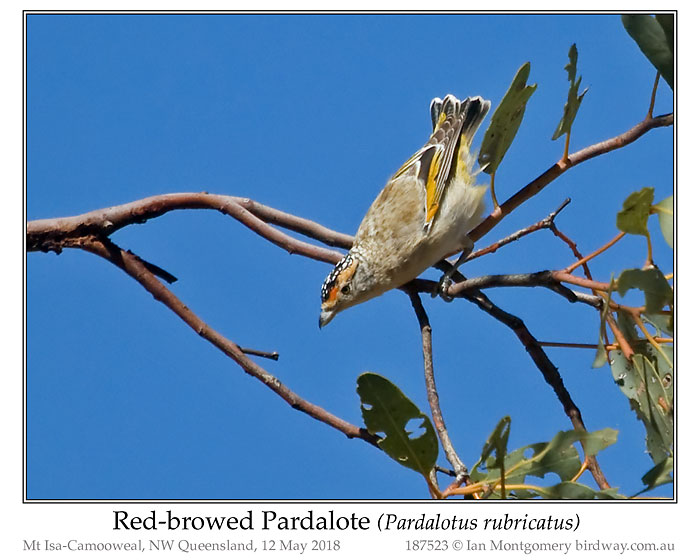
Red-browed Pardalote (Pardalotus rubricatus) by Ian

We had more success with the Red-browed Pardalote helped by the fact that the dominant tree here the Snappy Gum doesn’t get very tall so when you hear the characteristic call of the bird, a mellow rising, accelerating piping of five or six notes, you know that they aren’t too far above the ground.

Red-browed Pardalote (Pardalotus rubricatus) by Ian

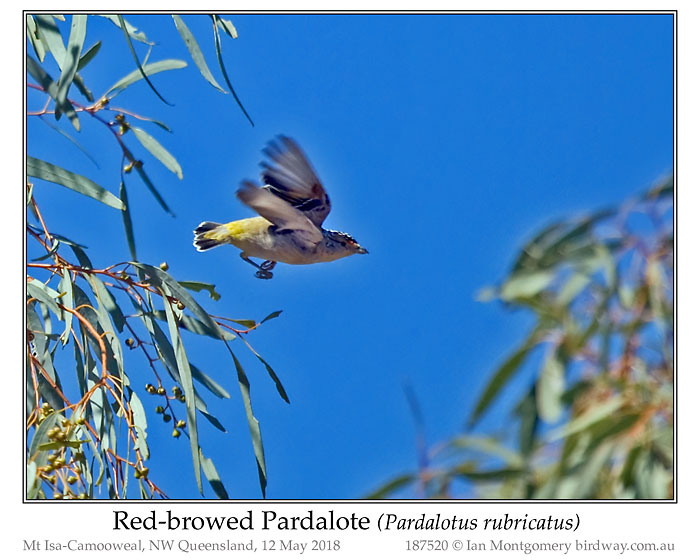
It has, for a Pardalote, a large, rather chunky bill, second photo, and the white spots on the black cap distinguish it from the local race of the Striated Pardalote (uropygialis). It has distinctive mustard-coloured wing bars and in flight, third photo, shows a yellowish-green rump.

Red-browed Pardalote (Pardalotus rubricatus) by Ian

Back to ebooks. The second edition of Where to Find Birds in North-east Queensland has gone through a number of iterations and refinements since I first put it up on the website in August of this year, and the latest version went up yesterday both in epub and pdf formats.

Where to Find Birds in NE Qld –

This is a free update to owners of the first edition but to access it you need a Dropbox link to the folder. If you bought it since January 2017, you should receive a separate email with a link to the folder. If you don’t receive this email, perhaps because your email address has changed, let me know: mailto:ian@birdway.com.au.

If you purchased it prior to January 2017, you would have done so through Apple, Google or Kobo and I won’t have your email address. So write to me and I’ll send you the link: mailto:ian@birdway.com.au.

Greetings, Ian


Lee’s Addition:

“So God created great sea creatures and every living thing that moves, with which the waters abounded, according to their kind, and every winged bird according to its kind. And God saw that it was good.” (Genesis 1:21 NKJV)

Ian’s Birds of the Moment always come as a surprise. When he was doing them weekly, they were part of the scheduled post here. So, now that he surprises us, and thankfully he does, we will just double them up with what else has posted that day.

Always glad to see what amazing beauties from our Creator he finds. This Red-browed Pardalote is a beauty, at least in my eyes. I love his cap. Reminds me of a pirates bandana. :)

Matthew Chapter A Day – 3

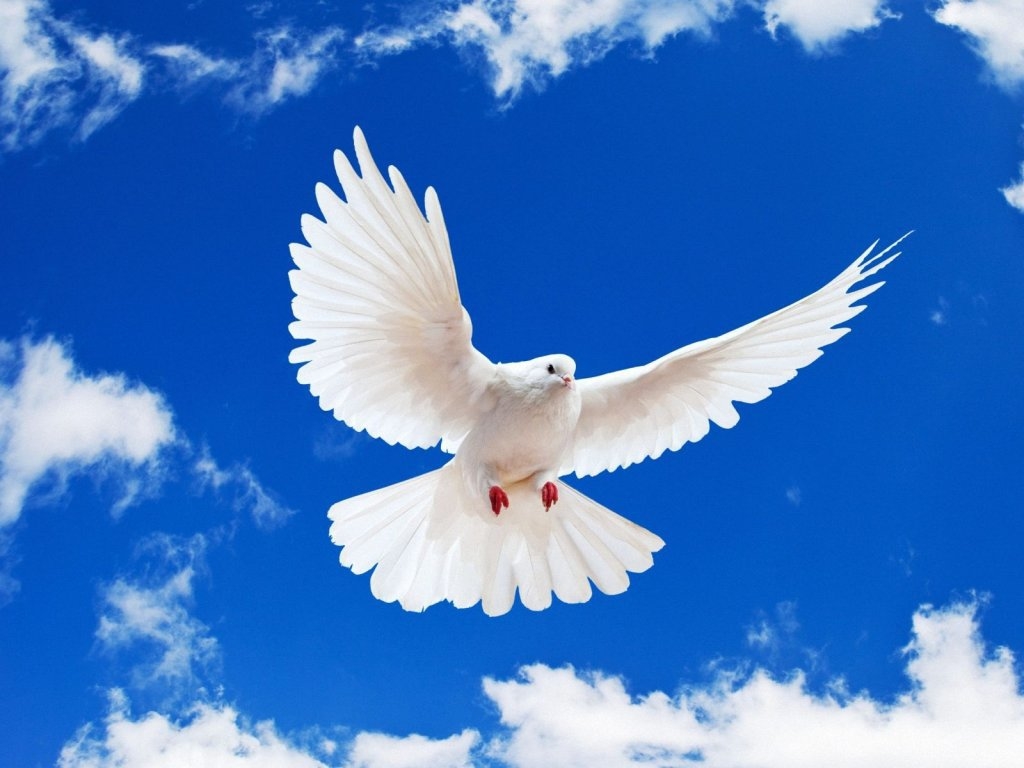
DOVE (credit: Fanpop Wallpaper)

Beginning of Matthew, in case you missed the first post. Matthew Chapter A Day – 1

Matthew Chapter 3 – Audio [Once started, go back to post to follow verses as he reads.]

Matthew 3:1-17 KJV

John the Baptist Prepares the Way
(1)  In those days came John the Baptist, preaching in the wilderness of Judaea,
(2)  And saying, Repent ye: for the kingdom of heaven is at hand.
(3)  For this is he that was spoken of by the prophet Esaias, saying, The voice of one crying in the wilderness, Prepare ye the way of the Lord, make his paths straight.
(4)  And the same John had his raiment of camel’s hair, and a leathern girdle about his loins; and his meat was locusts and wild honey.
(5)  Then went out to him Jerusalem, and all Judaea, and all the region round about Jordan,
(6)  And were baptized of him in Jordan, confessing their sins.
(7)  But when he saw many of the Pharisees and Sadducees come to his baptism, he said unto them, O generation of vipers, who hath warned you to flee from the wrath to come?
(8)  Bring forth therefore fruits meet for repentance:
(9)  And think not to say within yourselves, We have Abraham to our father: for I say unto you, that God is able of these stones to raise up children unto Abraham.
(10)  And now also the axe is laid unto the root of the trees: therefore every tree which bringeth not forth good fruit is hewn down, and cast into the fire.
(11)  I indeed baptize you with water unto repentance: but he that cometh after me is mightier than I, whose shoes I am not worthy to bear: he shall baptize you with the Holy Ghost, and with fire:
(12)  Whose fan is in his hand, and he will throughly purge his floor, and gather his wheat into the garner; but he will burn up the chaff with unquenchable fire.


The Baptism of Jesus
(13)  Then cometh Jesus from Galilee to Jordan unto John, to be baptized of him.
(14)  But John forbad him, saying, I have need to be baptized of thee, and comest thou to me?
(15)  And Jesus answering said unto him, Suffer it to be so now: for thus it becometh us to fulfil all righteousness. Then he suffered him.
(16)  And Jesus, when he was baptized, went up straightway out of the water: and, lo, the heavens were opened unto him, and he saw the Spirit of God descending like a dove, and lighting upon him:
(17)  And lo a voice from heaven, saying, This is my beloved Son, in whom I am well pleased.

Good News

Bald – Golden – Steller’s Sea – Eagles Compared

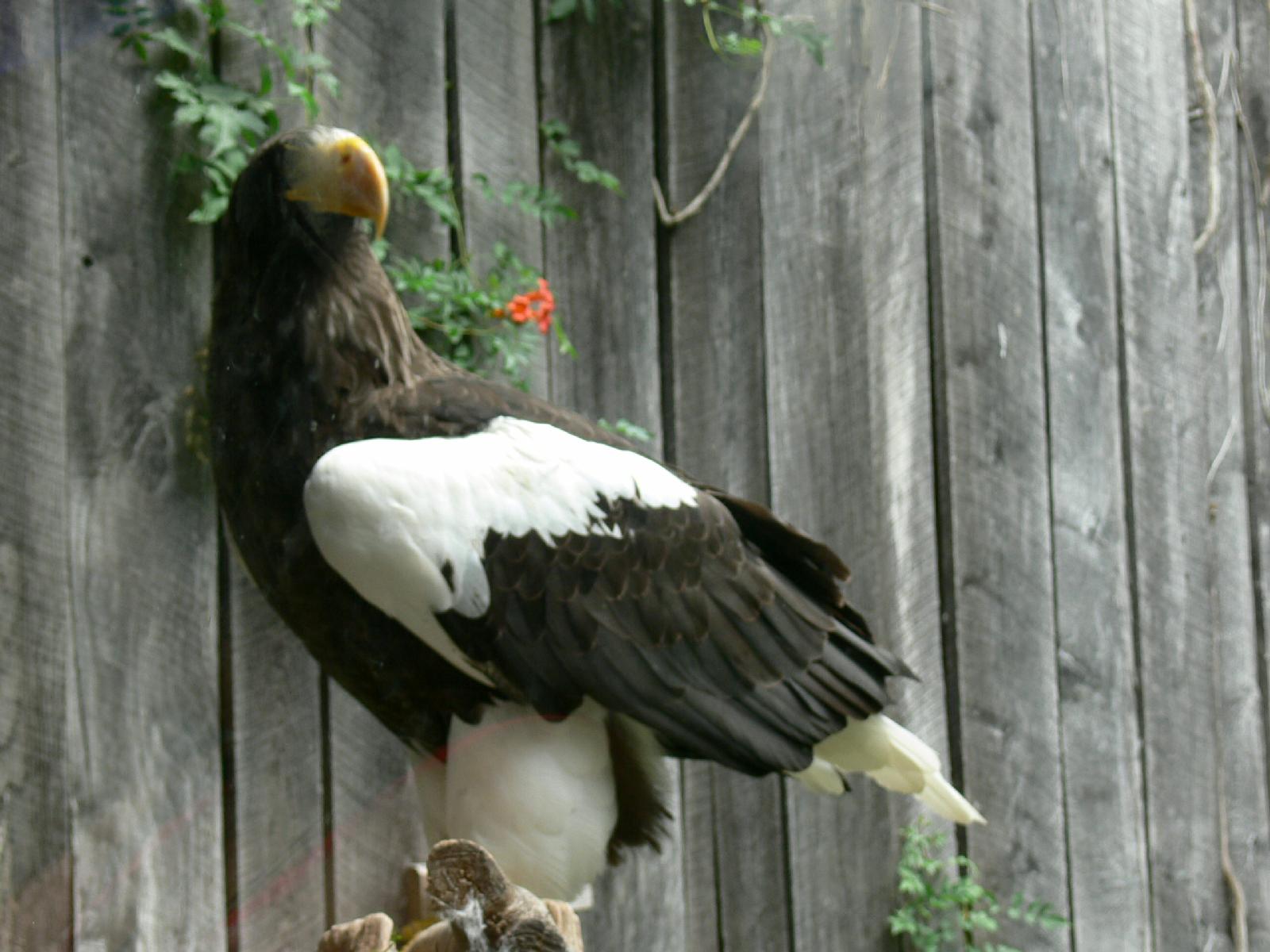
Steller’s Sea Eagle (Haliaeetus pelagicus) next to Bald Eagle by Lee at National Aviary

“Wilt thou set thine eyes upon that which is not? for riches certainly make themselves wings; they fly away as an eagle toward heaven.” (Proverbs 23:5 KJV)

The last post mentioned the Golden Eagle and the Sea Eagle. We were privileged to have seen the Bald Eagle [almost daily here in Polk Country this time of the year.], the Golden Eagle, and the Steller’s Sea Eagle. Just thought you might like a size comparison. The above photo was taken at the National Aviary in Pittsburgh, PA. The two exhibits were side by side and I was overwhelmed at the size of the Steller’s Sea Eagle on the right, and the Bald Eagle on the left. I backed up so I could get them both. What a difference!

Bald Eagle (Haliaeetus leucocephalus) by Lee at National Aviary

Bald Eagle (Haliaeetus leucocephalus) by Lee at National Aviary

The Bald Eagle has a body length of 70–102 cm (28–40 in). Typical wingspan is between 1.8 and 2.3 m (5.9 and 7.5 ft) and mass is normally between 3 and 6.3 kg (6.6 and 13.9 lb).[5] Females are about 25% larger than males, averaging 5.6 kg (12 lb), and against the males’ average weight of 4.1 kg (9.0 lb)

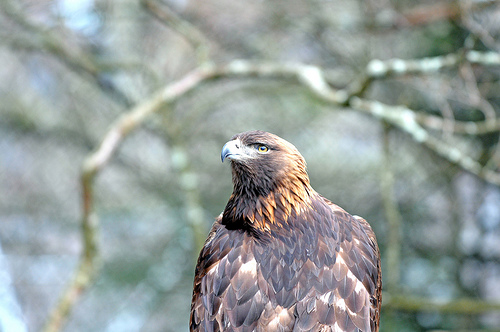
Golden Eagle (Aquila chrysaetos) Flying ©WikiC

The Golden Eagle is a very large raptor, 66 to 102 centimetres (26 to 40 in) in length. Its wings are broad and the wingspan is 1.8 to 2.34 metres (5 ft 11 in to 7 ft 8 in). Golden eagles’ wingspan is the fifth largest among living eagle species. Females are larger than males, with a bigger difference in larger subspecies. Females of the large Himalayan golden eagles are about 37% heavier than males and have nearly 9% longer wings, whereas in the smaller Japanese golden eagles, females are only 26% heavier with around 6% longer wings.[2][8] In the largest subspecies (A. c. daphanea), males and females weigh typically 4.05 kilograms (8.9 lb) and 6.35 kg (14.0 lb), respectively. In the smallest subspecies, A. c. japonica, males weigh 2.5 kg (5.5 lb) and females 3.25 kg (7.2 lb).[2] In the species overall, males average around 3.6 kg (7.9 lb) and females around 5.1 kg (11 lb). The maximum size of golden eagles debated. Large subspecies are the heaviest representatives of the Aquila genus and this species is on average the seventh-heaviest living eagle species. The golden eagle is the second heaviest breeding eagle in North America, Europe and Africa and the fourth heaviest in Asia. For some time, the largest known mass authenticated for a wild female was the specimen from the A. c. chrysaetos subspecies which weighed around 6.7 kg (15 lb) and spanned 2.55 m (8 ft 4 in) across the wings.[10] American golden eagles are typically somewhat smaller than the large Eurasian species,

Steller’s Sea Eagle (Haliaeetus pelagicus) by Lee at National Aviary

Steller’s Sea Eagle (Haliaeetus pelagicus) Feet by Lee at National Aviary

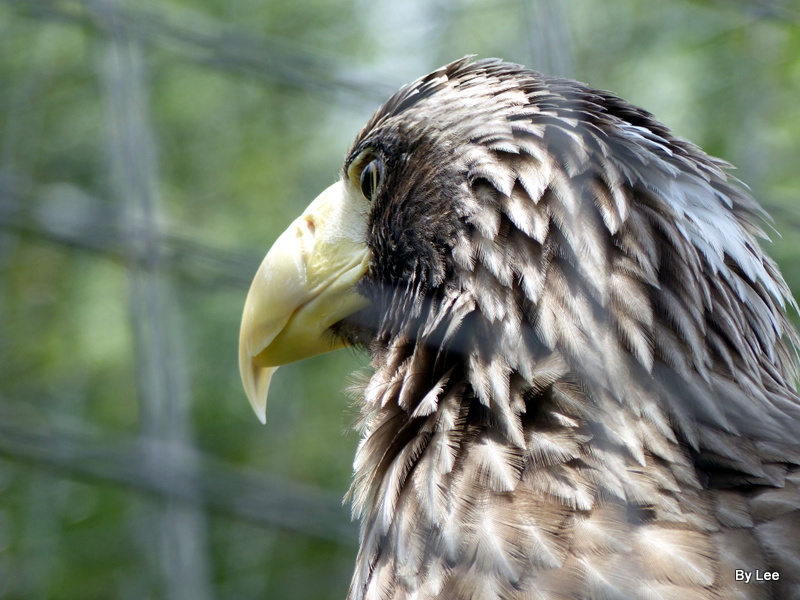
Steller’s sea eagle is the largest bird in the genus Haliaeetus and is one of the largest raptors overall. Females vary in weight from 6,195 to 9,500 g (13.658 to 20.944 lb), while males being rather lighter with a weight range of 4,900 to 6,800 g (10.8 to 15.0 lb). The average weight is variable, possibly due to seasonal variation in food access or general condition of eagles, but has been reported as high as a mean mass of 7,757 g (17.101 lb) to a median estimate weight of 6,250 g (13.78 lb)… [Above from Wikipedia, with editing.]

Steller’s Sea-eagle at San Diego Zoo 2015 by Lee

*

Golden Eagles in Scotland – YouTube

Birds of the Bible – Eagles

Standing Firm

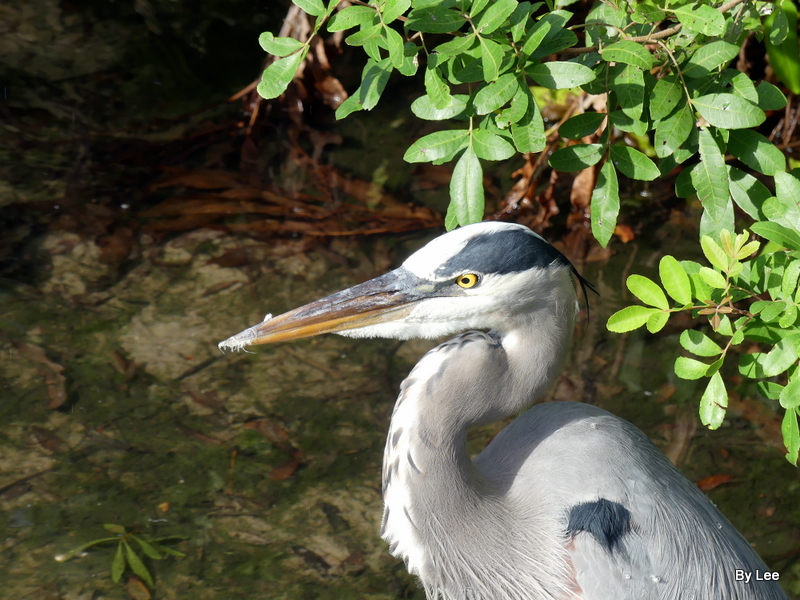
Great Blue Heron standing in the water at Brevard Zoo

While at the Brevard Zoo last week, I was able to watch a wild Great Blue Heron standing in the river there. His feet, provided by our gracious Creator, caught my attention.

Great Blue Heron’s Feet – [wild] Brevard Zoo

This brings to mind several verses that has to do with “standing firm.”

“So then, brethren, stand firm and hold to the traditions which you were taught, whether by word of mouth or by letter from us.” (2 Thessalonians 2:15 NASB)

“Put on the full armor of God, so that you will be able to stand firm against the schemes of the devil.” (Ephesians 6:11 NASB)

Over the years, I have been fascinated with the feet of birds. Especially the larger birds that have more height or weight to support in water, land, or on Lilly pads.

Black-bellied Whistling Duck (Dendrocygna autumnalis) Feet by Lee at PB Zoo

Black-bellied Whistling Duck Feet by Lee at PB Zoo

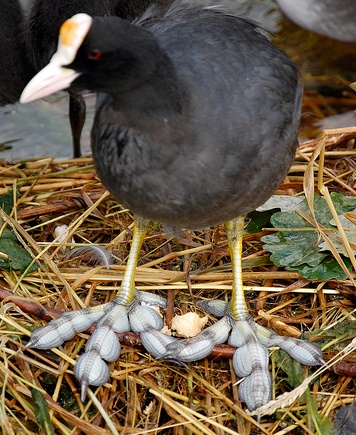
Giant Coot (Fulica gigantea) Loped Feet ©©Flickr

Giant Coot (Fulica gigantea) Loped Feet ©©Flickr

“So then, brethren, stand firm and hold to the traditions which you were taught, whether by word of mouth or by letter from us.” (2 Thessalonians 2:15 NASB)

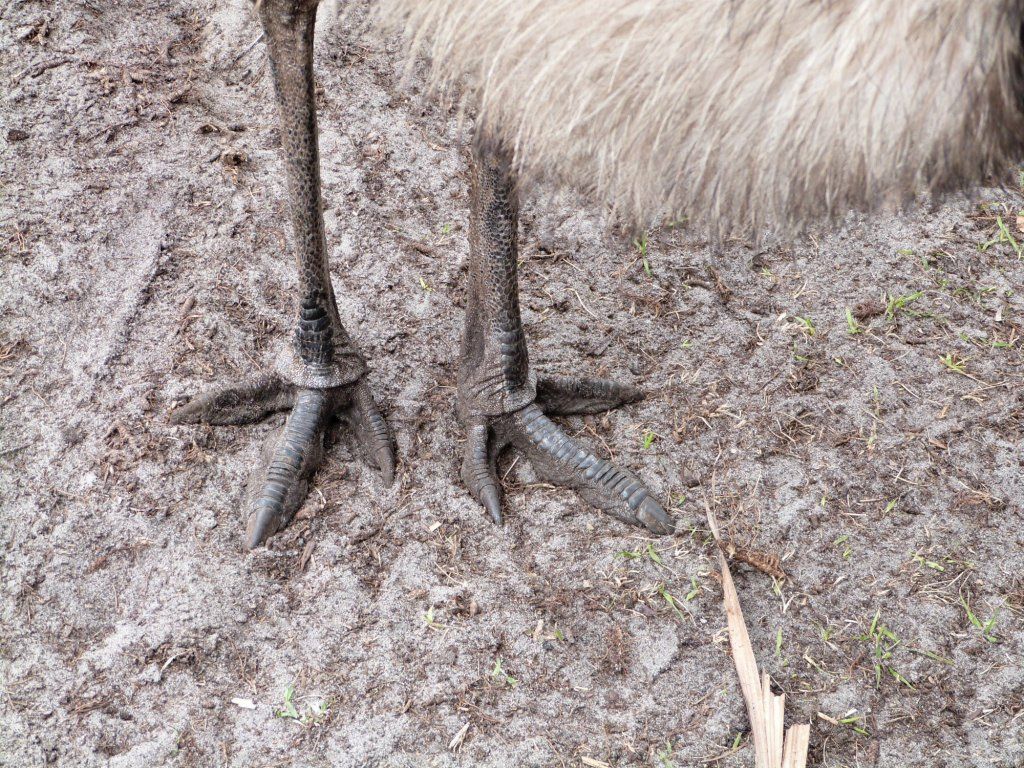
Emu (Dromaius novaehollandiae) Brevard Zoo by Lee

Emu (Dromaius novaehollandiae) Feet Brevard Zoo by Lee

African Finfoot with puffy feet ©WikiC

African Finfoot with puffy feet ©WikiC

“Therefore, take up the full armor of God, so that you will be able to resist in the evil day, and having done everything, to stand firm. Stand firm therefore, HAVING GIRDED YOUR LOINS WITH TRUTH, and HAVING PUT ON THE BREASTPLATE OF RIGHTEOUSNESS, and having shod YOUR FEET WITH THE PREPARATION OF THE GOSPEL OF PEACE;” (Ephesians 6:13-15 NASB)

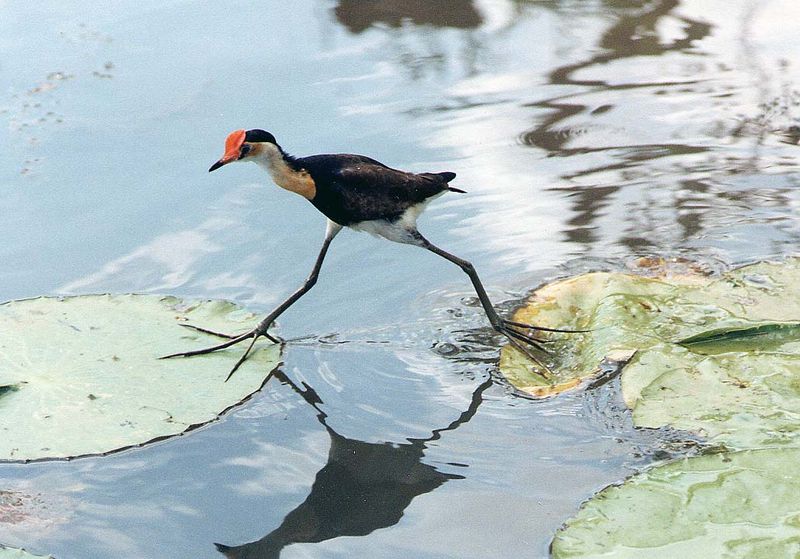
Comb-crested Jacana (Irediparra gallinacea) by Wiki

Comb-crested Jacana (Irediparra gallinacea) ©Wiki on Pads

“for now we really live, if you stand firm in the Lord.” (1 Thessalonians 3:8 NASB)

All of these birds were given feet that are meant to meet their needs. The Lord has given us the “Armour of God,” Traditions/teachings of Godly preachers and teachers, preparations, etc. Then He tells us to Stand Firm, because He has provided just the right training for us, just as He has provided just the right feet for the bird’s situations.

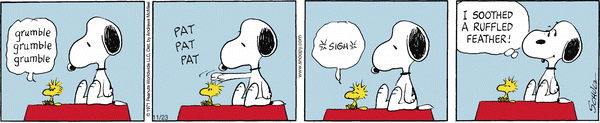
Smoothing A Ruffled Feather

Copyright Peanuts/Distributed by Universal Uclick for UFS

Snoopy has provided another service for Woodstock

I always enjoy the reactions between these two. But, OH! the ruffled feathers that we have seen on birds. Maybe they should stop by Snoopy for some help.

“Everyone helped his neighbor, And said to his brother, “Be of good courage!” (Isaiah 41:6 NKJV)


Give Thanks – Sparrows

House Sparrows watching Parrot show at National Aviary by Lee

House Sparrows at National Aviary by Lee

“Oh, that men would give thanks to the LORD for His goodness, And for His wonderful works to the children of men!” (Psalms 107:8 NKJV)

Give Thanks – Crane

Black Crowned Crane (Balearica pavonina pavonina) (West African) Brevard Zoo by Lee

“Praise the LORD! Oh, give thanks to the LORD, for He is good! For His mercy endures forever.” (Psalms 106:1 NKJV)

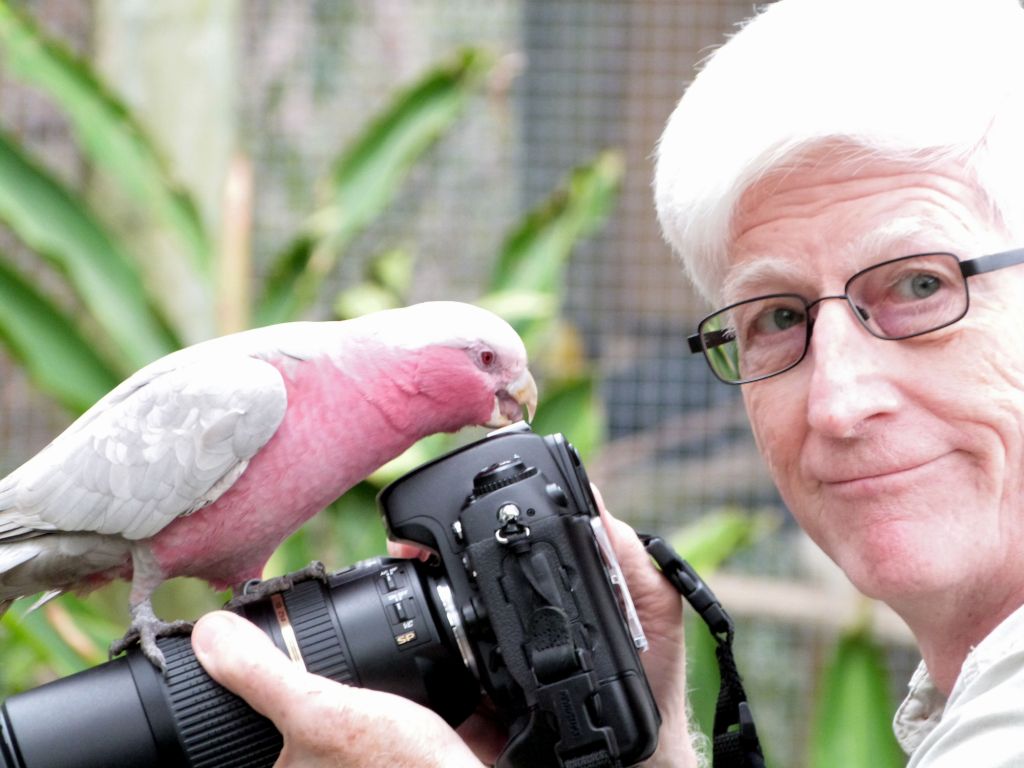
Give Thanks – Galah and Dan

Galah (Eolophus roseicapilla) and Dan

Galah (Eolophus roseicapilla) and Dan at Brevard Zoo by Lee

“… It is good to give thanks to the LORD, And to sing praises to Your name, O Most High;” (Psalms 92:1 NKJV)

Give Thanks – Egret

Snowy Egret – Gatorland 4-2-15 by Lee

“And whatever you do in word or deed, do all in the name of the Lord Jesus, giving thanks to God the Father through Him.” (Colossians 3:17 NKJV)