***

I FLEE UNTO THEE TO HIDE ME
***
“Deliver me, O LORD, from mine enemies: I flee unto thee to hide me. (Psalms 143:9 KJV)
Owl in Drain ©©
*
*
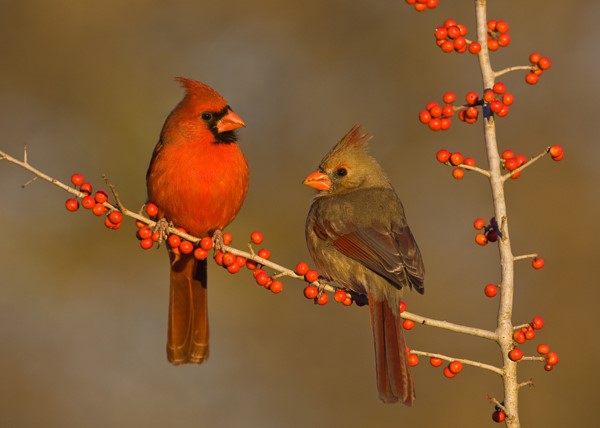
Northern Cardinal M-F ©BackyardBirdLover
Wherefore art thou red in thine apparel, and thy garments like him that treadeth in the winefat? (Isaiah 63:2 KJV)
Today, you are being introduced to the Cardinalidae Family, which is the last family, in taxonomy order, of the Passeriformes Order. Since February 1, 2016, we began the journey with the first four families in More Amazing Birds. Now we have arrived at the last of the 131 families of this order. I trust you have enjoyed the journey through these many Sundays. Hopefully you have been blessed by the great variety of Avian Wonders from our Lord, their Creator. The Passeriformes Order contains well over half of all the birds in the world; around 6,000 plus of the 10,659 species on the latest update. (6.3)
The Cardinalidae – Cardinals, Grosbeaks and allies has 69 species in the family. Because of that number, this family will be presented in two segments. Growing up in Indiana, the Northern Cardinal was a favorite of most of us. It is the “State Bird” of Indiana along with six other states. [Illinois, Kentucky, North Carolina, Ohio, Virginia, West Virginia] The family members are found in North and South America. The South America Cardinals of the genus Paroaria are placed in another family, the Thraupidae (previously placed in Emberizidae). Even though the family name is Cardinalidae, there are only two “cardinals” among the members.
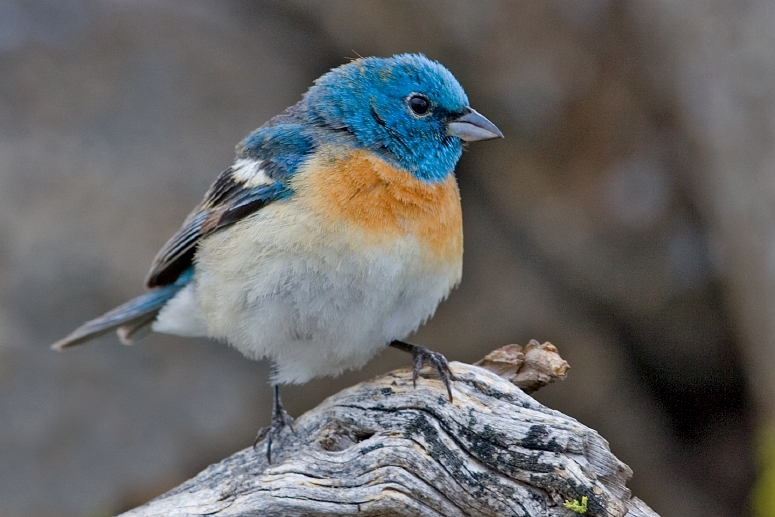
Lazuli Bunting (Passerina amoena) ©WikiC
Also known as cardinal-grosbeaks and cardinal-buntings, this family’s members “are robust, seed-eating birds with strong bills. The family ranges in size from the 12-cm (4.7-in), 11.5-g (0.40-oz) and up orange-breasted bunting to the 25-cm (9.8-in), 85-g (2.99-oz) black-headed saltator. They are typically associated with open woodland. The sexes usually have distinctive appearances. The northern cardinal type species was named by colonists for the male’s red crest, reminiscent of a Catholic cardinal’s biretta.
The ‘North American buntings’ are known as such to distinguish them from buntings. The name ‘cardinal-grosbeak’ can also apply to this family as a whole.”(Wikipedia)
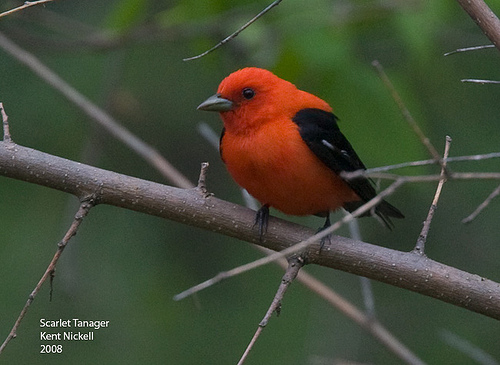
Scarlet Tanager (Piranga olivacea) by Kent Nickell
The family starts off with 11 Tanagers in the Piranga genus, which used to be in with the tanagers, but were relocated here recently. “They are essentially red, orange or yellow all over, except the tail and wings and in some species also the back. Such extensive lipochrome coloration (except on the belly) is very rare in true tanagers, but is widespread among the Cardinalidae in the Piranga genus.
These songbirds are found high in tree canopies, and are not very gregarious in their breeding areas. Piranga species pick insects from leaves, or sometimes in flight. They will also take some fruit. Several species are migratory, breeding in North America and wintering in the tropics.”
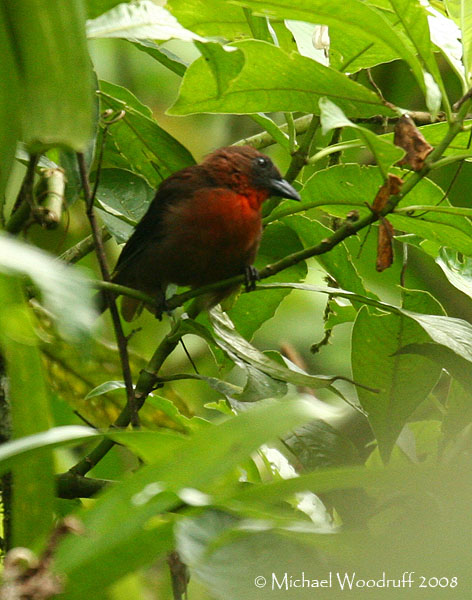
Red-throated Ant Tanager (Habia fuscicauda) by Michael Woodruff
Next are the Ant Tanagers in the Habia genus. “These are long-tailed and strong billed birds. The males have a red crest and plumage containing red, brown or sooty hues. Females may resemble the males or be largely yellowish or brown in colour.” Following these are four more tanagers in the Chlorothraupis genus. These are the last of the tanagers that were moved to this family.
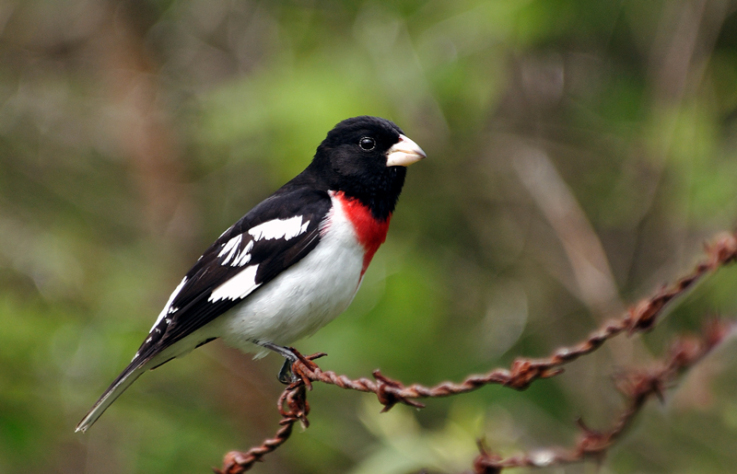
Rose-breasted Grosbeak (Pheucticus ludovicianus) by Rob Fry
The next genus, Pheucitcus has six Grosbeaks. Typical of the genus, they lay two to five pale bluish to greenish eggs with heavy brown and gray speckling. The cup nest is built at medium height in a bush or small tree.” (Wikipedia)

Red-breasted Chat (Granatellus venustus) ©WikiC
There are three Chats in the Granatellus genus; Red-breasted Chat, Grey-throated Chat, and the Rose-breasted Chat. They range from North America through Central America into northern South America. Their natural habitat is subtropical or tropical dry forests.

Pyrrhuloxia (Cardinalis sinuatus) ©Flickr Don Faulkner
We will finish this first half of the family with three of my favorites, the Cardinalis genus. Our Northern and Vermilion Cardinals and the Pyrrholixia (which I saw for the first time last year) are hard to miss with their bright set of feathers the Lord provided for them. These range across North America and into northern South America.
“He answered and said unto them, When it is evening, ye say, It will be fair weather: for the sky is red.” (Matthew 16:2 KJV)
“Come now, and let us reason together, saith the LORD: though your sins be as scarlet, they shall be as white as snow; though they be red like crimson, they shall be as wool.” (Isaiah 1:18 KJV)
“Written in Red” – Faith Baptist Choir and Orchestra
For God so loved the world, that he gave his only begotten Son, that whosoever believeth in him should not perish, but have everlasting life. For God sent not his Son into the world to condemn the world; but that the world through him might be saved. He that believeth on him is not condemned: but he that believeth not is condemned already, because he hath not believed in the name of the only begotten Son of God. And this is the condemnation, that light is come into the world, and men loved darkness rather than light, because their deeds were evil. (John 3:16-19 KJV)
*
Sunday Inspiration – More Amazing Birds
Cardinalidae – Cardinals, Grosbeaks and allies
*
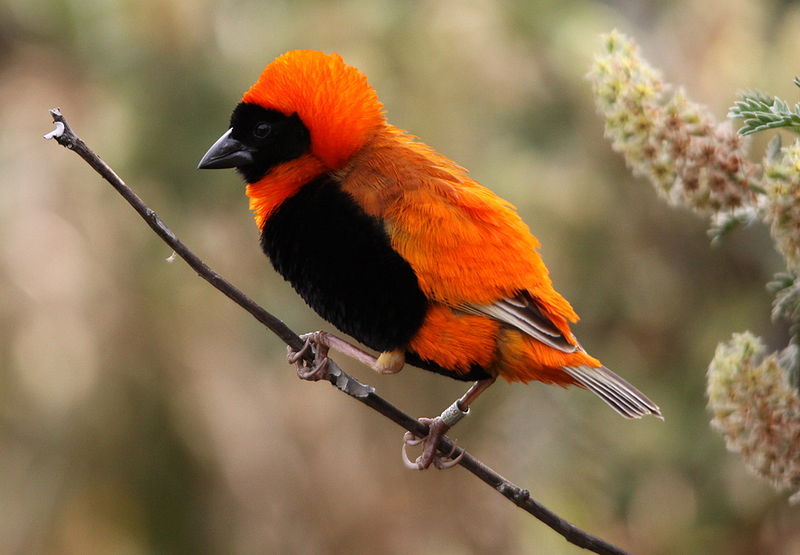
“For ye were as sheep going astray; but are now returned unto the Shepherd and Bishop of your souls.” (1 Peter 2:25 KJV)
Southern Red Bishop (Euplectes orix) ©WikiC
*
*
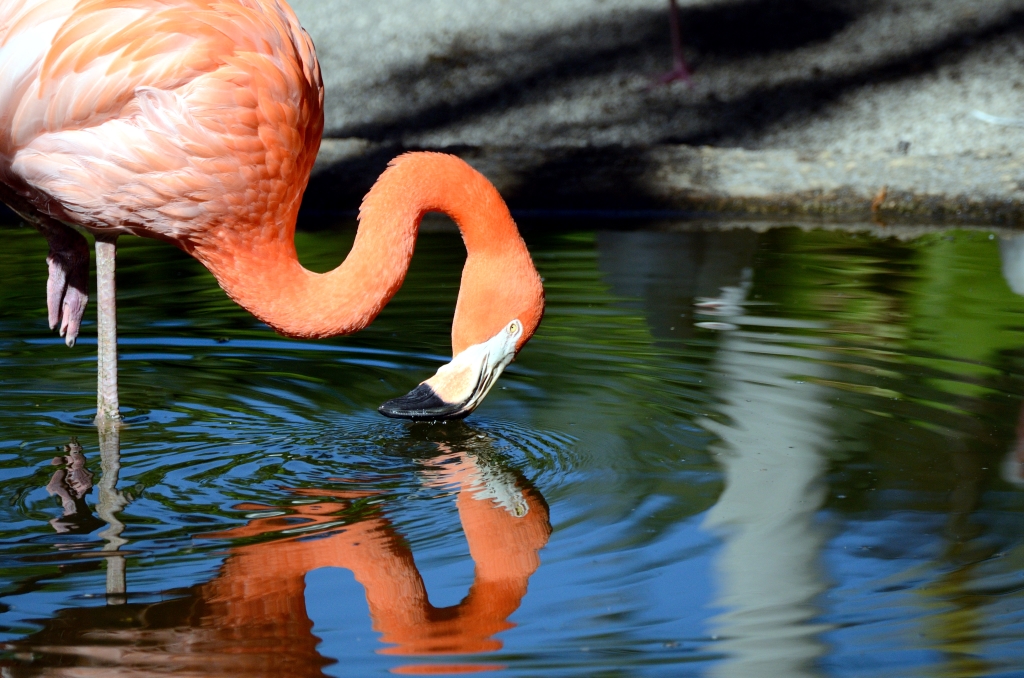
“O LORD, thou art my God; I will exalt thee, I will praise thy name; for thou hast done wonderful things; thy counsels of old are faithfulness and truth.” (Isaiah 25:1 KJV)
Flamingo by Dan at Flamingo Gardens, FL
*
*
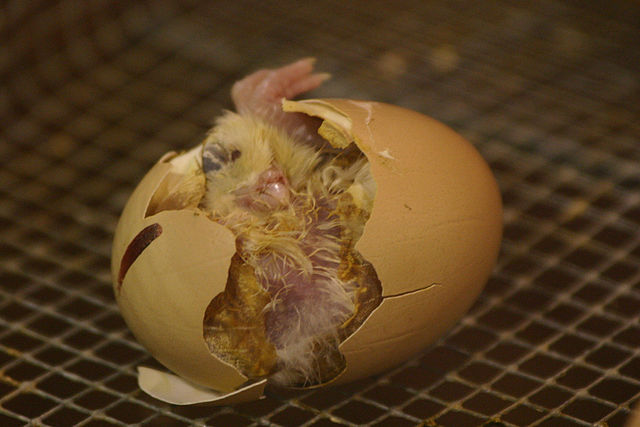
Chicken Hatching © WikiC
“And God blessed them, saying, Be fruitful, and multiply, and fill the waters in the seas, and let fowl multiply in the earth.” (Genesis 1:22)
 Which came first – the chicken or the egg? Well, I’m happy to report that this age-old dilemma has finally been solved. It was the chicken that came first – something that creationists have known all along. After all, the Bible tells us that God created every winged fowl and gave them the ability to reproduce after their kind.
Though atheistic evolutionists don’t look for answers in the Bible, they have now come to the same conclusion as those of us who do take the Bible seriously. According to a news item in the U.K.’s DailyMail, “Researchers found that the formation of egg shells relies on a protein found only in a chicken’s ovaries. Therefore, an egg can exist only if it has been inside a chicken.”
The article adds that the OC-17 protein acts as a catalyst to speed up the development of the shell. This hard shell is essential to house the yolk and its protective fluids while the chick develops inside.
Professor John Harding, an evolutionist from Sheffield University’s Department of Engineering Materials, predictably left God out of the picture when he said, “Nature has found innovative solutions that work for all kinds of problems in materials science and technology – we can learn a lot from them.”
Professor Harding, the only reason why we find innovative solutions in nature for all kinds of problems is because nature itself reflects the creative genius of its Creator!
Prayer:
Heavenly Father, I pray that You will remind me of today’s Creation Moment whenever the conversation I’m having turns to the question of which came first – the chicken or the egg? In Jesus’ Name. Amen.
Notes:
“They’ve cracked it at last! The chicken DID come before the egg,” DailyMail, 7/14/10.
Creation Moments ©2014 (Used With Permission)
Lee’s Addition:
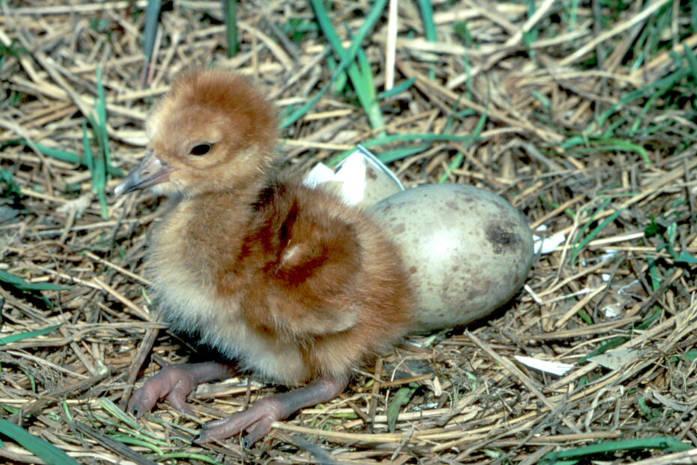
Sandhill Crane (Grus canadensis) Chick and Egg ©USFWS
This was today’s Creation Moment article. Oh, my! Took the scientist long enough to figure out the truth.
Because that which may be known of God is manifest in them; for God hath shewed it unto them. For the invisible things of him from the creation of the world are clearly seen, being understood by the things that are made, even his eternal power and Godhead; so that they are without excuse: Because that, when they knew God, they glorified him not as God, neither were thankful; but became vain in their imaginations, and their foolish heart was darkened. Professing themselves to be wise, they became fools, (Romans 1:19-22 KJV)

“There is a path which no fowl knoweth, and which the vulture’s eye hath not seen:” (Job 28:7 KJV)
King Vulture at the Brevard Zoo by Lee
*
*
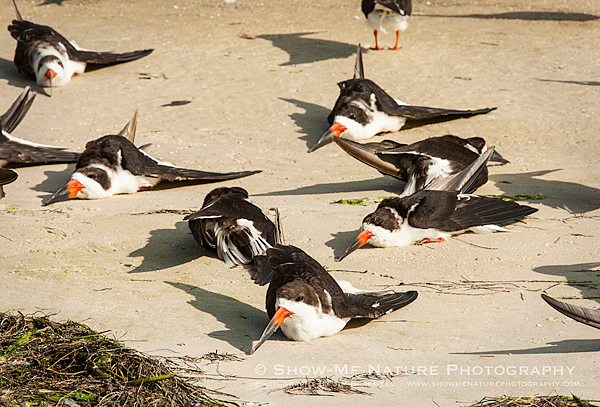
“The king answered and said, I know of certainty that ye would gain the time, because ye see the thing is gone from me.” (Daniel 2:8 KJV)
Black Skimmer (Rynchops niger) ©ShowMeNaturePhoto – Jim Braswell
*
*
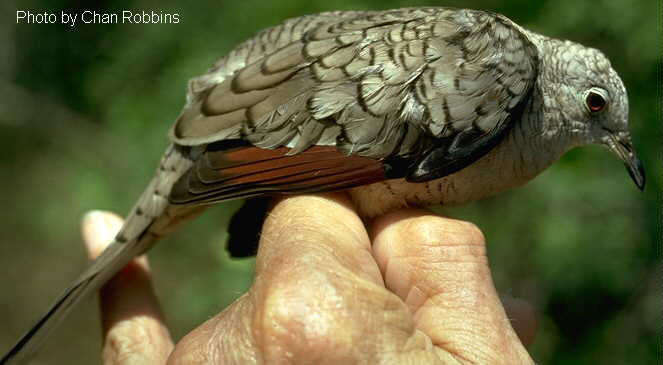
Inca Dove ©WikiC
“But the dove found no rest for the sole of her foot, and she returned unto him into the ark, for the waters were on the face of the whole earth: then he put forth his hand, and took her, and pulled her in unto him into the ark. (Genesis 8:9 KJV)
Inca Dove ©WikiC Chan Robbins
*
*
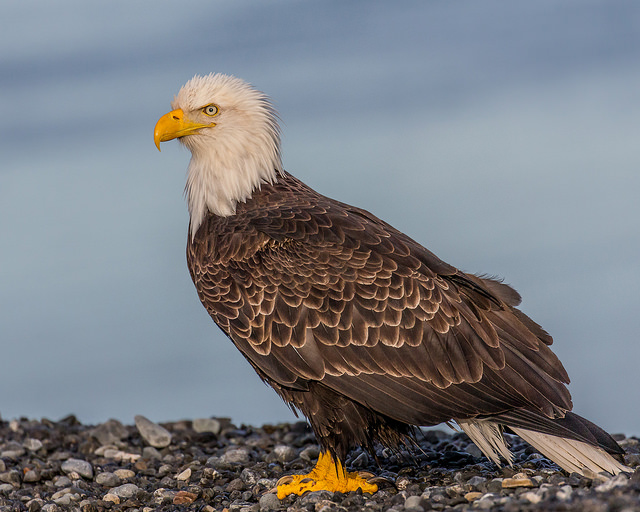
“And my people shall dwell in a peaceable habitation, and in sure dwellings, and in quiet resting places;” (Isaiah 32:18 KJV)
Bald Eagle Resting ©Flickr Andy Morffew
*
*
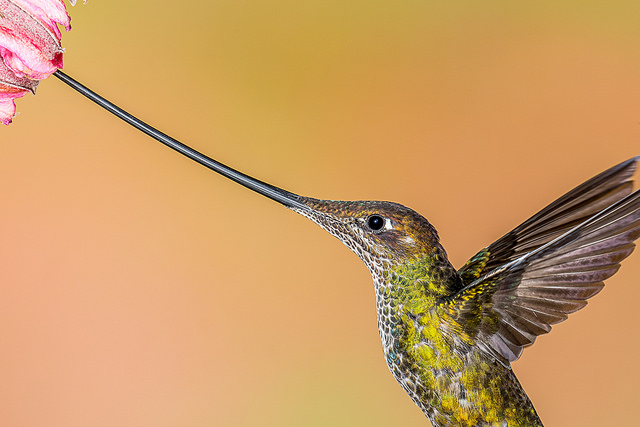
“(Yea, a sword shall pierce through thy own soul also,) that the thoughts of many hearts may be revealed.” (Luke 2:35 KJV)
Sword-billed Hummingbird (Ensifera ensifera) ©Flickr Andy Morffew
*
*
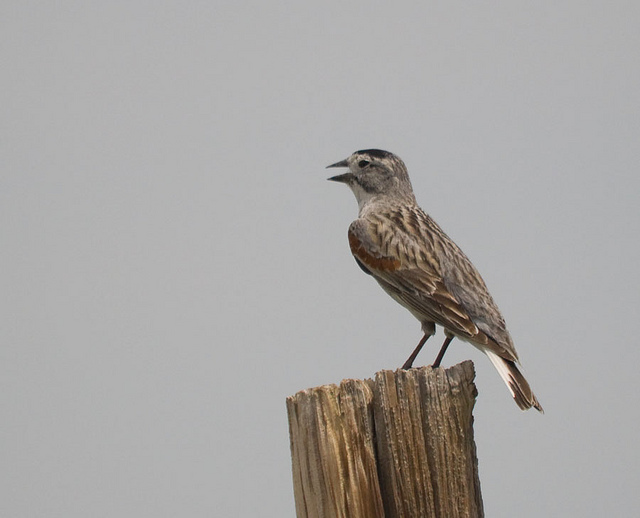
McCown’s Longspur (Rhynchophanes mccownii) ©Flickr oldbilluk
“Therefore whosoever heareth these sayings of mine, and doeth them, I will liken him unto a wise man, which built his house upon a rock:” (Matthew 7:24)
After the many postings for the Thraupidae Family, nine to be exact, this week’s family only has six species. This is the next to last avian family in the Passeriformes Order. Since there are so few, more information will be given. [Added a video of a small kid’s choir to accompany the slideshow.]
McCown’s Longspur (Rhynchophanes mccownii) is a small ground-feeding bird from the family Calcariidae, which also contains the longspurs and snow buntings. McCown’s was named after Captain John P. McCown, an American army officer.
This longspur has a large cone-shaped bill, a streaked back, a rust-coloured shoulder and a white tail with a dark tip. In breeding plumage, the male has a white throat and underparts, a grey face and nape and a black crown. Other birds have pale underparts, a dark crown and may have some black on the breast. The male’s song is a clear warble. The call is a dry rattle.
In winter, they migrate in flocks to prairies and open fields in the southern United States and northern Mexico. They prefer areas with sparser vegetation than those chosen by the Chestnut-collared Longspur. These birds forage on the ground, gathering in flocks outside of the nesting season. They sometimes make short flights in pursuit of flying insects. They mainly eat seeds, also eating insects in summer. Young birds are mainly fed insects. This bird breeds in dry short grass prairies in central Canada, (the Canadian Prairies), and the north central United States. The female lays 3 or 4 eggs in a grass cup nest in a shallow scrape on the ground. The male sings and flies up to defend his territory. Both parents feed the young birds.
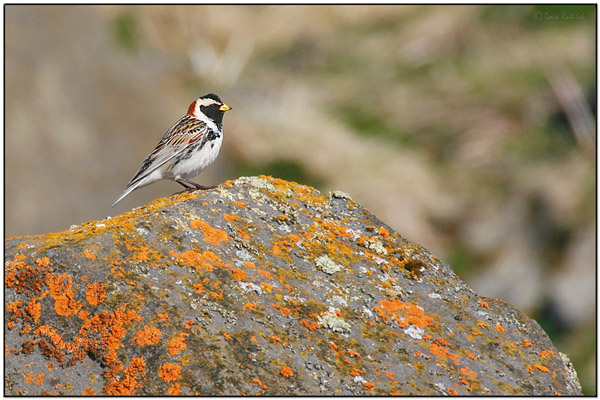
Lapland Longspur (Calcarius lapponicus) by Daves BirdingPix
Lapland Longspur (Calcarius lapponicus) is a robust bird, with a thick yellow seed-eater’s bill. The summer male has a black head and throat, white eyestripe, chestnut nape, white underparts, and a heavily streaked black-grey back. Other plumages have a plainer orange-brown head, a browner back and chestnut nape and wing panels.
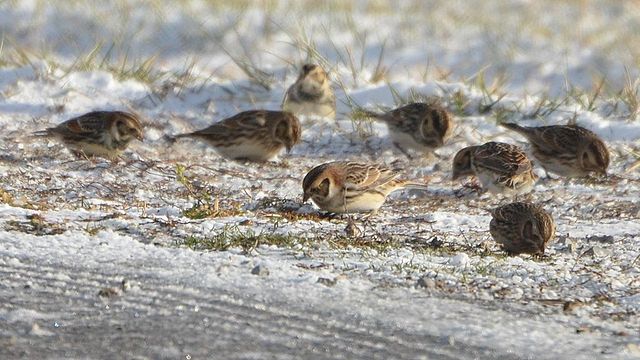
Lapland Longspur (Calcarius lapponicus) ©WikiC
It breeds across Arctic Europe and Asia and in Canada and the northernmost United States. It is migratory, wintering in the Russian steppes, the southern United States, Northern Scandinavian arctic areas and down to coastal Southern Sweden, Denmark and Great Britain. This is the only Eurasian species of the longspur buntings.
The bird is often seen close to the tree line, and likes to feed in mixed-species flocks in winter. They pick them on the ground, rarely feeding directly on plants. Its natural food consists of insects when feeding young, and otherwise seeds. The nest is on the ground. 2–4 eggs are laid. During the breeding season, the birds migrate to the north, where their diet switches to arthropods. Nestlings are only fed arthropods, which also constitute the diet of the parents at that time of the year (June to July). The birds often catch insects in mid-air, but do forage through vegetation when conditions prevent the insects from flying. Longspurs can consume between 3000 and 10,000 prey items (insects or seeds) per day, depending on their energy needs.
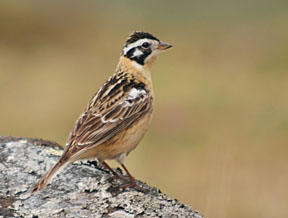
Smith’s Longspur (Calcarius pictus) USFWS
Smith’s Longspur (Calcarius pictus) have short cone-shaped bills, streaked backs, and dark tails with white outer retrices. In breeding state plumage (mostly formed by worn basic plumage), the male has a pumpkin-orange throat, nape, and underparts contrasting with an intricate black-and-white face pattern. The white lesser coverts are quite pronounced on a male in spring and early summer. Females and immatures have lightly streaked buffy underparts, dark crowns, brown wings with less obvious white lesser coverts, and a light-colored face. The tail is identical at all ages. Audubon named this bird after his friend Gideon B. Smith.
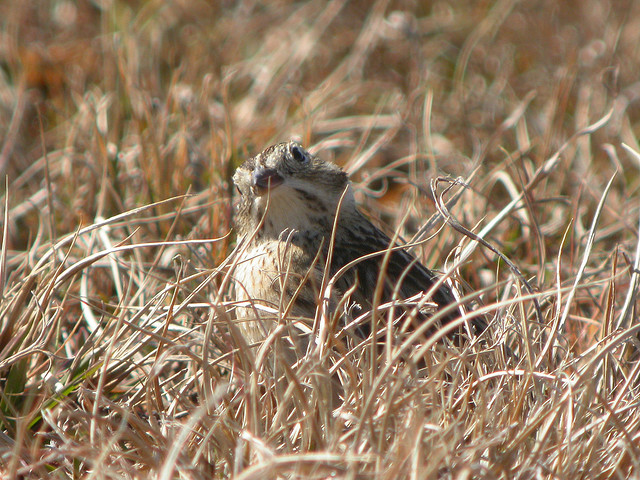
Smith’s Longspur (Calcarius pictus) cc rgibbo3
This bird breeds in open grassy areas near the tree line in northern Canada and Alaska. The female lays three to five eggs in a grass cup nest on the ground. These birds nest in small colonies; males do not defend territory. In winter, they congregate in open fields, including airports, in the south-central United States.
Migration is elliptical, with northbound birds staging in Illinois in the spring and southbound birds flying over the Great Plains in the fall. These birds forage on the ground, gathering in flocks outside of the nesting season. They mainly eat seeds, also eating insects in summer. Young birds are mainly fed insects.
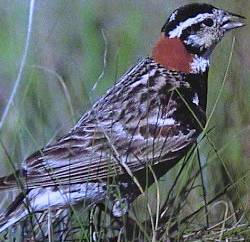
Chestnut-collared Longspur (Calcarius ornatus) WikiC
Chestnut-collared Longspur (Calcarius ornatus) is a small ground-feeding bird that has a short conical bill, a streaked back and a white tail with a dark tip. In breeding plumage, the male has black underparts, a chestnut nape, a yellow throat and a black crown. Other birds have light brown underparts, a dark crown, brown wings and may have some chestnut on the nape.
This bird breeds in short and mixed grass prairies in central Canada and the north central United States. The female lays 4 or 5 eggs in a grass cup nest in a shallow scrape on the ground. The male sings and flies up to defend his territory. Both parents feed the young birds. In winter, they migrate in flocks to prairies and open fields in the southern United States and Mexico and they forage on the ground, gathering in flocks in winter. They mainly eat seeds, also eating insects in summer. Young birds are mainly fed insects.
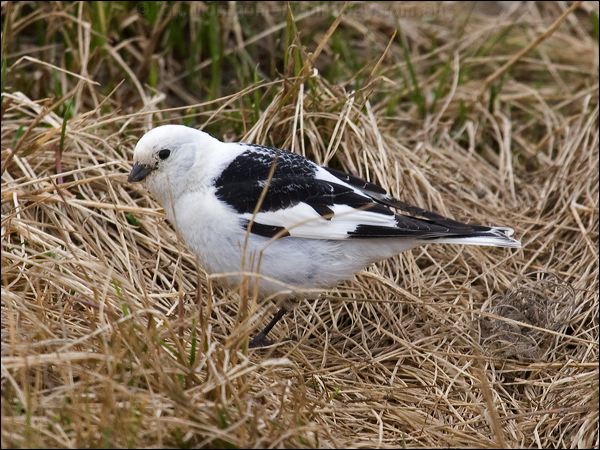
Snow Bunting (Plectrophenax nivalis) by Ian
Snow Bunting (Plectrophenax nivalis) is sometimes colloquially called a snowflake, is apasserine bird in the Calcariidae family It is an Arctic specialist, with a circumpolar Arctic breeding range throughout the northern hemisphere. There are small isolated populations on a few high mountain tops south of the Arctic region, including the Cairngorms in central Scotland and the Saint Elias Mountains on the southern Alaska-Yukon border, and also Cape Breton Highlands. The snow bunting is the most northerly recorded passerine in the world.
They are a medium size, ground-dwelling species that walks, runs and could potentially jump if needed. It is fairly large and long-winged for a bunting. The bill is yellow with a black tip, and is all black in summer for males. The plumage is white in the underparts and the wings and back have black and white on them. The female and male have a different plumage. During the mating season: the male is completely black and white with black tips in the wings, while the female will have the same coloration than the male in the wings but will have a red-brownish color in her back. During the winter season they will both have a rufous coloration in the back. In the spring, the buntings will not go through a molt as other passerines birds do, instead the breeding coloration comes with the wearing and abrasion of the feathers. Unlike most passerines, it has feathered tarsi, an adaptation to its harsh environment. No other passerine can winter as far north as this species apart from the common raven.
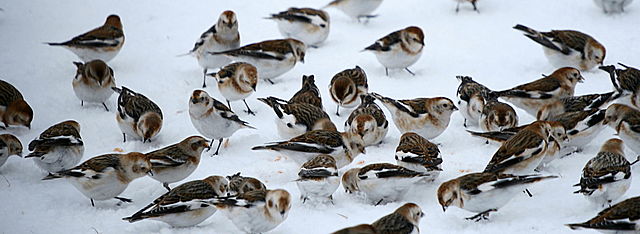
Snow Bunting (Plectrophenax nivalis) Flock ©WikiC
The snow buntings migrate to the Arctic to reproduce and they are the first migrant species that arrives to these territories. They must gain at least 30% of body mass before migration. The males will arrive first at the beginning of April, when temperature could reach -30 degrees Celsius. This early migration could be explained by the fact that this species is highly territorial and the quality of the nesting area is crucial to their reproductive success. Females will arrive four to six weeks later, when the snow starts to melt.
The range of the family is extensive. Of the six species within the family, the snow bunting and Lapland longspur are found both in both North America and Eurasia; the other four species are found only in North America. The snow bunting breeds in northern latitudes in an extensive breeding range which consists of northern Alaska and Canada, the western and southern coasts of Greenland, and northern Scandinavia and Russia. The snow bunting winters throughout southern Canada and the northern United States in North America, and its Eurasian range includes the northern United Kingdom and a large band extending from Germany west through Poland and Ukraine to Mongolia and China.[9][10] Additionally, the snow bunting has been recorded as a vagrant to Algeria and Morocco in North Africa, the Balkans, Greece and Turkey, and Malta. The Lapland longspur’s range is similar to that of the snow bunting, breeding in northern Canada, Scandinavia, and Siberia, and coastal Alaska and Greenland and wintering in the northern United States and Canada, and in a band between approximately 45° and 55° latitude across Russia, Kazakhstan, China, and Mongolia to the Sea of Japan.

McKay’s Bunting (Plectrophenax hyperboreus) ©USFWS
McKay’s bunting (Plectrophenax hyperboreus) is most closely related to the snow bunting (P. nivalis). Hybrids between the two species have been observed, leading some authorities to treat McKay’s as a subspecies of snow bunting. As the Plectrophenax buntings are nested within the Calcarius clade, their closest relatives are the longspurs. McKay’s bunting breeds on two islands in the Bering Sea, St. Matthew and Hall islands, and winters on the western coast of the U.S. state of Alaska. The name honors the American naturalist Charles McKay.
This species closely resembles Snow Bunting in all plumages, but is whiter overall. The breeding plumage of the male is almost purely white, with only small areas of black on the wingtips and tail. The breeding female has a streaked back. Non-breeding birds also have warm brown patches on cheeks, crown, and the sides of the neck. McKay’s bunting is larger on average than the snow bunting. It is 18 cm (7.1 in) long and weighs from 38 to 62 g (1.3 to 2.2 oz), with an average of 54.5 g (1.92 oz). It nests on shingle beaches in hollow drift logs and rock crevices. Winters on coastal marshes, shingle beaches, and agricultural fields. Feeding habits are thought to be similar to snow bunting, which in winter consumes seeds from weeds and grasses, and in summer has a mixed diet of seeds, buds, and insects. (Information taken from Wikipedia with editing.)
“He is like a man which built an house, and digged deep, and laid the foundation on a rock: and when the flood arose, the stream beat vehemently upon that house, and could not shake it: for it was founded upon a rock. But he that heareth, and doeth not, is like a man that without a foundation built an house upon the earth; against which the stream did beat vehemently, and immediately it fell; and the ruin of that house was great.” (Luke 6:48-49)
“House on A Rock” ~ by the Summer Kid’s Choir (They are not very loud, so I decided to let you watch them)
A small choir to go with this small family.
Calcariidae – Longspurs, Snow Buntings
*

“Then let our countenances be looked upon before thee, and the countenance of the children that eat of the portion of the king’s meat: and as thou seest, deal with thy servants.” (Daniel 1:13 KJV)
*
*
 Lee's Birdwatching Adventures Plus