***
THAT I MAY OPEN
MY MOUTH BOLDLY
***
“And for me, that utterance may be given unto me, that I may open my mouth boldly, to make known the mystery of the gospel,” (Ephesians 6:19 KJV)
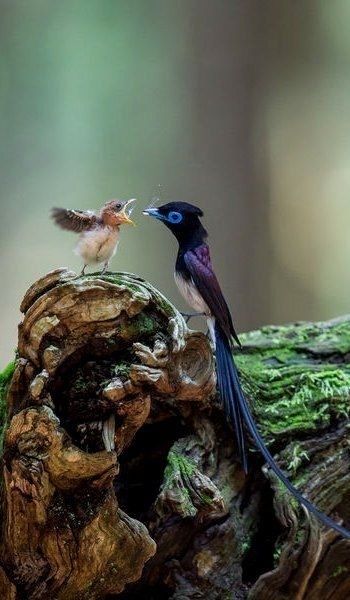
Bird of Paradise with baby From Pinterest
*
*
“And for me, that utterance may be given unto me, that I may open my mouth boldly, to make known the mystery of the gospel,” (Ephesians 6:19 KJV)
Bird of Paradise with baby From Pinterest
*
*
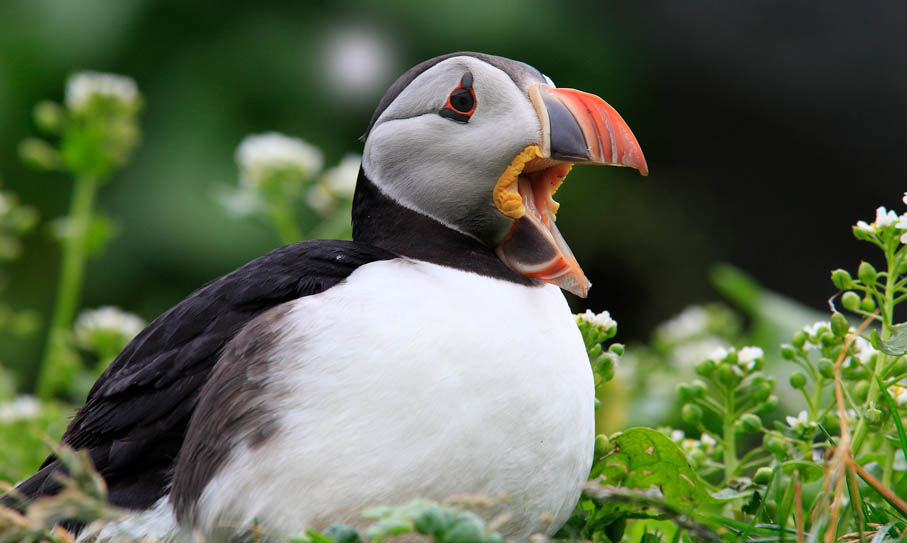
“For which I am an ambassador in bonds: that therein I may speak boldly, as I ought to speak.” (Ephesians 6:20 KJV)
Atlantic Puffin with open mouth ©Lunde
*
*
Dr. James J. S. Johnson
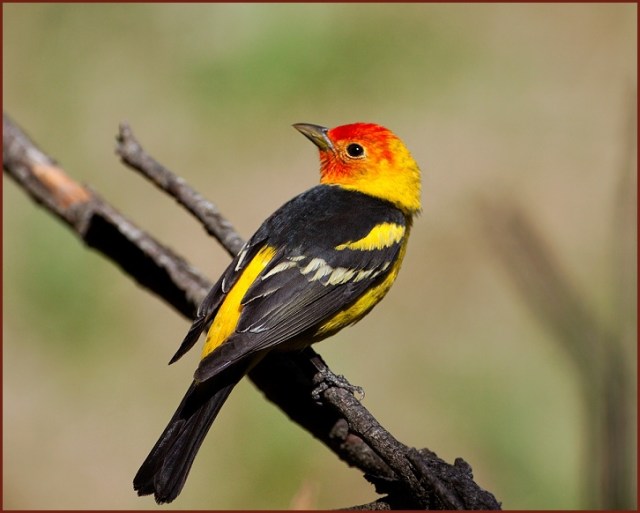
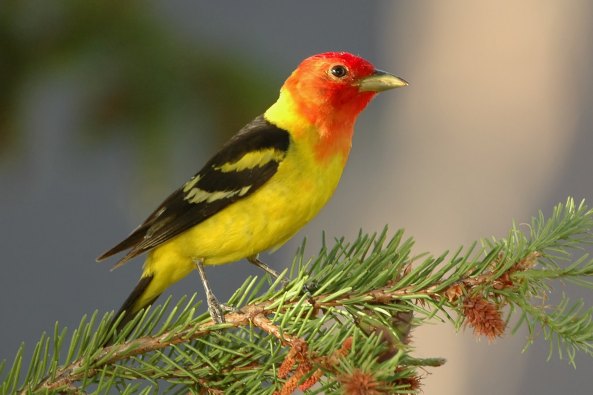
Although not as spectacularly colorful as the Painted Bunting of central and south Texas, the Western Tanager is certainly an eye-catching bird of montane forests, with showy colorfulness, especially the red-and-yellow-black-and-white male. And like other birds, they are “precious in His (i.e., the Lord’s) sight”, although not as precious as the human race, of which the children’s song (“Jesus Loves the Little Children”) observes:
Jesus loves the little children
All the children of the world:
Red and yellow, black and white;
They are precious in His sight!
Jesus loves the little children of the world!
[Quoting lyrics written roughly a century ago, by C. Herbert Woolston, a Chicago pastor; actually those well-known lyrics were the refrain to a larger song that began with “Jesus calls the children dear”.]
So what about this red-and-yellow-black-and-white passerine of America’s Great West?
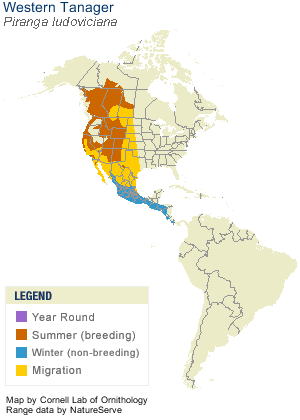
This tanager breeds and summers mostly in the coniferous forests of Rocky Mountain states and westward — New Mexico, Colorado, Wyoming, Montana, Idaho, Utah, Arizona, Oregon, Washington, western Canada, plus slivers of territory in northern California and in western Texas. [See also Roger Tory Peterson’s A FIELD GUIDE TO WESTERN BIRDS, 3rd edition (Houghton Mifflin, 1990), showing a narrower range map M368.]
And the Western Tanager is truly a colorful denizen of the higher elevations.
The only U.S. tanager [since the Flame-colored Tanager is supposed to stay within Mexico, its “normal” range] with strong wing bars. Male: Yellow, with a black back, wings, and tail, two wing bars, and a red head. The red disappears in autumn and winter. Female: Yellowish below; dull olive above, with white and yellow wing bars. Resembles female orioles … but the tail and sides of the face are darker, and the bill is less sharply pointed.
[Quoting Peterson’s WESTERN BIRDS (cited above), from page 314.]
Mixed colors in avian plumage are beautiful to the eye, yet rainbows also are chromatically spectacular.

RAINBOW in the clouds / Readers Digest photograph
But what good are rainbows, besides being beautiful to behold? The foundational importance of the rainbow is a message from God Himself: to remind us of a specific promise that God made to Noah, and to Noah’ family (and thus to the entire human race on this side of the worldwide Flood), and even to the air-breathing animals who survived the Flood as disembarked Arklings (and thus also to all of their direct-descendants):
And you, be ye fruitful, and multiply; bring forth abundantly in the earth, and multiply therein. And God spake unto Noah, and to his sons with him, saying, And I, behold, I establish My covenant with you, and with your seed after you; And with every living creature that is with you, of the fowl, of the cattle, and of every beast of the earth with you; from all that go out of the Ark, to every beast of the earth. And I will establish My covenant with you, neither shall all flesh be cut off any more by the waters of a flood; neither shall there anymore be a flood to destroy the earth. And God said, This is the token of the covenant which I make between Me and you and every living creature that is with you, for perpetual generations: I do set My rainbow in the cloud, and it shall be for a token of a covenant between Me and the earth. And it shall come to pass, when I bring a cloud over the earth, that the rainbow shall be seen in the cloud: And I will remember My covenant, which is between Me and you and every living creature of all flesh; and the waters shall no more become a flood to destroy all flesh. And the rainbow shall be in the cloud; and I will look upon it, that I may remember the everlasting covenant between God and every living creature of all flesh that is upon the earth. And God said unto Noah, This is the token of the covenant, which I have established between Me and all flesh that is upon the earth. (GENESIS 9:7-17)
That’s the true symbolism of the rainbow — a holy promise given to Noah, a holy “preacher of righteousness” who lived both before and after the global Flood.
Interestingly, it appears that before the “fountains of the great deep” (see Genesis 7:11 — discussed at http://www.icr.org/books/defenders/196 ) broke up, making today’s volcanoes look puny by comparison, it is unlikely that rainbows were meteorologically plausible – see http://www.sound-doctrine.net/FAQ-RainBeforeFlood.html — buttressed by http://content.usatoday.com/communities/sciencefair/post/2011/07/volcanoes-may-cause-more-rain-than-realized/1#.WU12_1GQyV4 . (But that discussion must await another time and/or place.)
Obviously, any attempt to steal and transmogrify the message of the rainbow — by those losers who foment vitriolic hate speech against God (and against His laws, and against His servants) — is an illegitimate and irrational blasphemy against God Himself (WHo owns and operates all rainbows), as well as an attempted fraud on His creation.
Meanwhile, many generations after Noah, another saint (i.e., another human believer whose sins are forgiven in Christ), Joseph, was given a “coat of diverse colors” (see Genesis 37:3 & 37:23 & 37:32). Joseph, of course, foreshadowed the Lord Jesus in many aspects of Joseph’s life (e.g., forsaken by his brothers, mistreated, delivered to Gentiles, falsely accused, suffering for the crime of others, not recognized by his brothers, eventually reconciling with his brothers due to his choice to forgive them, as he rescued whole populations of people who would otherwise have perished, etc.).
And, much later in Scripture, in the Apocalypse (i.e., the Revelation of the Lord Jesus Christ, given to John the Evangelist), we see the rainbow again, gloriously reminding us of future activities in world history, as God continues to operate as humanity’s) Judge (Revelation 4:3 & 10:1).
So, let your rainbow colors fly – and don’t let an enemy of God steal God’s colors on your watch! The day will one day arrive, God knows when, climaxing spiritual conflicts throughout human history, when it will be proven beyond genuine dispute that THE RAINBOW BELONGS TO GOD, because He said so – He called it “My covenant”, so it is His property.

ARK ENCOUNTER (Answers in Genesis) with rainbow lighting
So it’s a good idea to display God’s rainbow, as Answers in Genesis has recently done, in a setting that commemorated Noah’s Ark. And it is also a good idea – when watching a male Western Tanager perching on a tree-branch, or flitting about somewhere in an evergreen forest of the Rockies (during summer), to remember that timeless and wonderful truth that Pastor Woolston worded as lyrics:
Jesus loves the little children
All the children of the world:
Red and yellow, black and white;
They are precious in His sight!
Jesus loves the little children of the world!

“And what I say unto you I say unto all, Watch.” (Mark 13:37 KJV)
Great Blue Heron Watching young nearby by Lee at Viera Wetlands
*
*
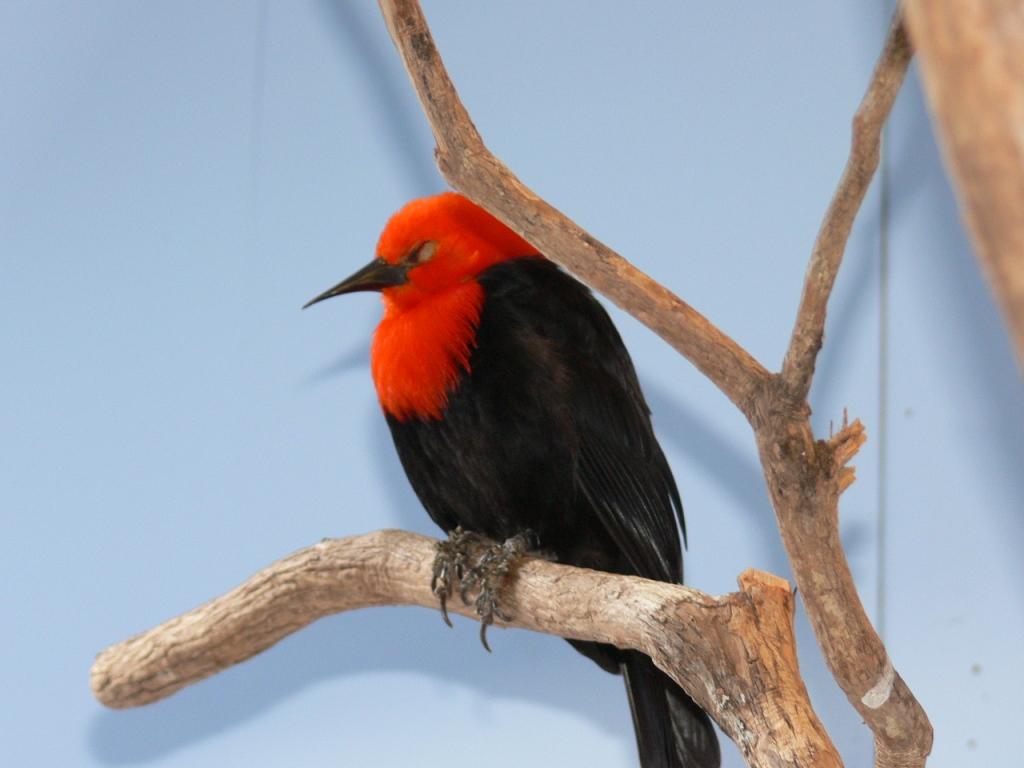
“Lest coming suddenly he find you sleeping.” (Mark 13:36 KJV)
Scarlet-headed Blackbird asleep by Lee at National Aviary
*
*

“Take ye heed, watch and pray: for ye know not when the time is.” (Mark 13:33 KJV)
Paradise Riflebird-Australia-Birdway (Ian)
*
*
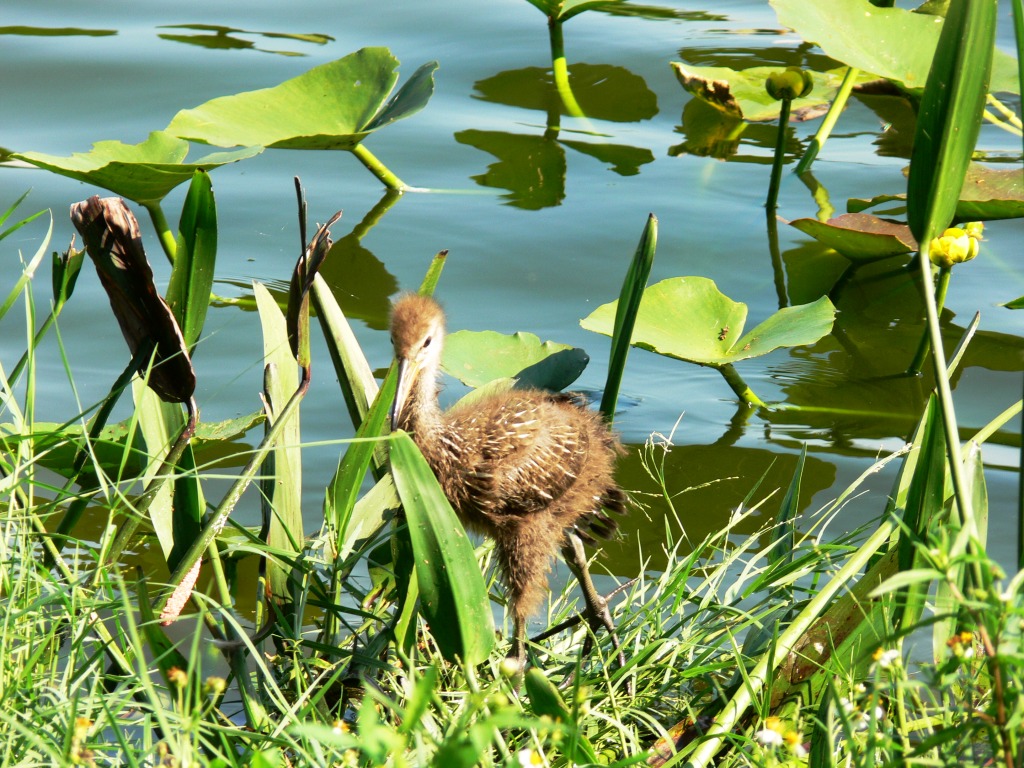
“I have been young, and now am old; yet have I not seen the righteous forsaken, nor his seed begging bread.” (Psalms 37:25 KJV)
Limpkin (Aramus guarauna pictus) baby taken 9-12-11 by Lee
*
*

“God, who at sundry times and in divers manners spake in time past unto the fathers by the prophets,” (Hebrews 1:1 KJV)
Fan-tailed Raven (Corvus rhipidurus) ©WikiC
Elijah the Prophet was fed by Ravens
*
*
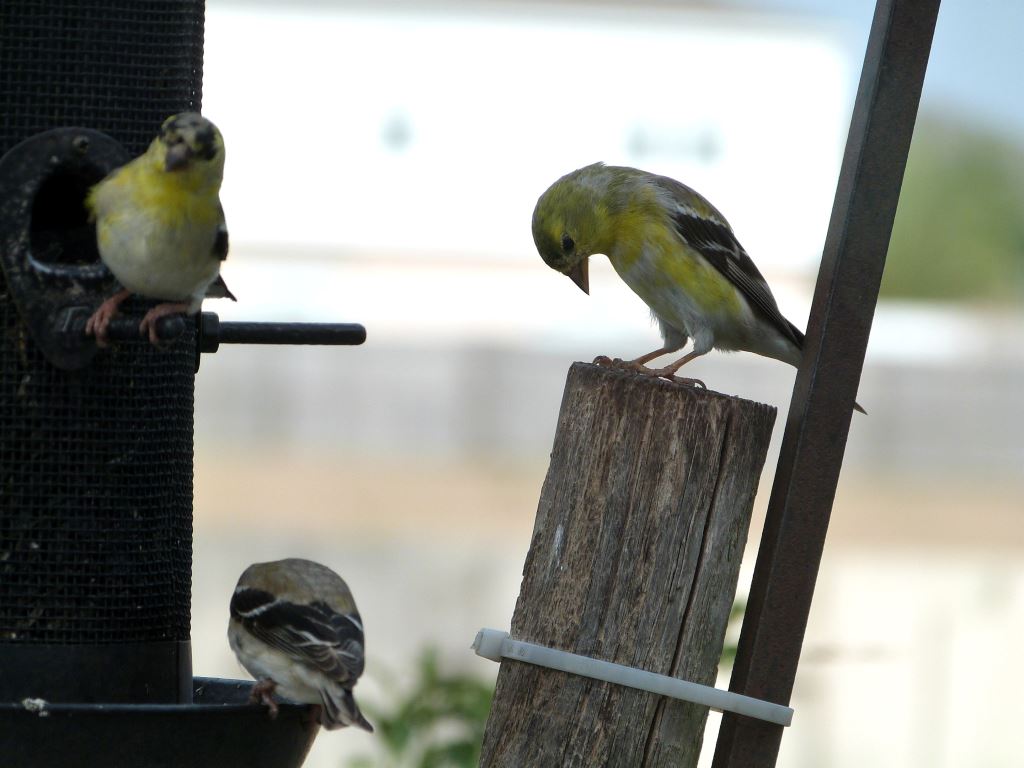
“Cease not to give thanks for you, making mention of you in my prayers;” (Ephesians 1:16 KJV)
Goldfinch Praying for a turn at the feeder.
Thanks again for all of you who have been praying for me as I recover from my back surgery. I do give thanks to the Lord for you.
*
*
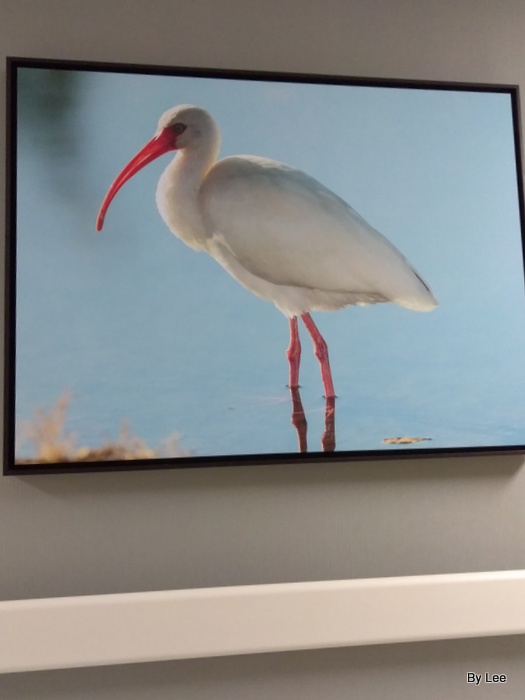
“Not that I speak in respect of want: for I have learned, in whatsoever state I am, therewith to be content.
(Philippians 4:11 KJV)
White Ibis Photo outside my room at Sea Pines Rehab Hospital
(Photos were 3′ x 4′ on the walls)
*
*
Palaces Are Known For Both Tattletales And Wagtails
Dr. James J. S. Johnson
Curse not the king, no not in thy thought; and curse not the rich in thy bedchamber: for a bird of the air shall carry the voice, and that which hath wings shall tell the matter. (Ecclesiastes 10:20)
Royal palaces are known to attract (and to house) some of God’s winged wonders, and Catherine’s Palace — one of the imperial Russian palaces — is no exception. (And not all palace-dwelling birds there are tattle-tales, although some are wagtails!)

Catherine’s Palace is a royal mansion – a “summer palace” — in Pushkin (a/k/a Tsarskoye Selo), about 19 miles south of St. Petersburg (f/k/a Leningrad), Russia, which my wife and I visited on July 9th of AD2006. The imposingly-humongous-yet-flourishingly-ornate, embellishment-heavy, exquisitely dignified architecture is classified as Rococo (i.e., late Baroque), and a ton of wealth is built into its many construction details and decorative displays. The palace was originally commissioned by Empress Catherine I (AD1717) but was extravagantly modified (during AD1752-AD1756) at the direction of Empress Elizabeth Petrovna, Catherine’s daughter (who was 1 of Catherine’s 2 children who survived to adulthood, the other 10 dying young), and afterwards by Emperor Alexander I, Catherine’s grandson. Before German invaders destroyed the palace’s interior, during World War II, Russian archivists had documented the interior of the palace; those records were used (after the war) to repair and restore some, but not all, of this historic and opulent mansion.
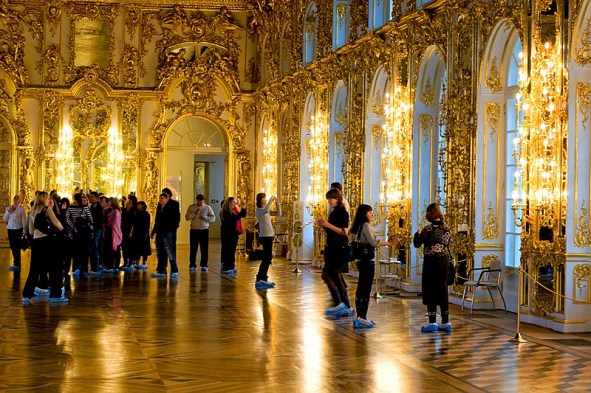
Yet one of the most magnificent treasures, of Catherine’s Palace, survives to this very day — hidden in plain view — skipping merrily in the yards and fields adjacent to Catherine’s Palace: the WHITE WAGTAIL.

The White Wagtail (Motacilla alba), a mostly grey bird (of a grey tone similar to that of many mockingbirds) with a black head (and bib) that contrasts with white “eye-mask” plumage, plus blue and white striping on its wings and tail-feathers. This small black-white-and-grey passerine, cousin to the pipits, is named for its most famous behavior: wagging its tail.
Slim black and white bird with a long, constantly wagging tail. Frequently seen beside water but equally in fields, farmyards, parks, [recreational] playing fields, roadsides, rooftops. The [subspecies variety called the] Pied Wagtail (race yarrellii) is resident [of the] British Isles, although a very few nest on adjacent continental coasts. Nominate White (race albus) nests throughout Europe [from the Iberian Peninsula to the Ural Mountains, including the Baltic Sea coastlands including Russia’s St. Petersburg – but only summering in the northern half of Europe], and is scarce but regular passage migrant to Britain (March-May / August / October).
[Quoting Chris Knightley, Steve Madge, & Dave Nurney, POCKET GUIDE TO THE BIRDS OF BRITAIN AND NORTH-WEST EUROPE (London & New Haven, Yale Univ. Press, 1998), page 201. See also, accord, Lars Jonsson, BIRDS OF EUROPE, WITH NORTH AFRICA AND THE MIDDLE EAST (Princeton University Press, 1993), page 372-373.]

For me, the Wagtail’s characteristic tail-wagging reminds me of a happy pet dog, such as a French Poodle or Labrador Retriever. Every child should have happy memories of a happy dog’s companionship – I’m thankful that my childhood memories include such happy times. Wagtails themselves enjoy their own version of companionship; they are monogamous, sharing nest duties (e.g., constructing the nest together, taking turns to incubate their unhatched eggs, and taking turns feeding the hatchlings), and they defend their own family’s territory.

What do wagtails eat? A mix of adult and larval insects (e.g., flies, midges, cranflies, mayflies, caterpillars, moths, dragonflies, beetles, aquatic insect larvae), spiders, earthworms, tiny fish fry (as it wades in shallow water), a few seeds, and sometimes small snails.
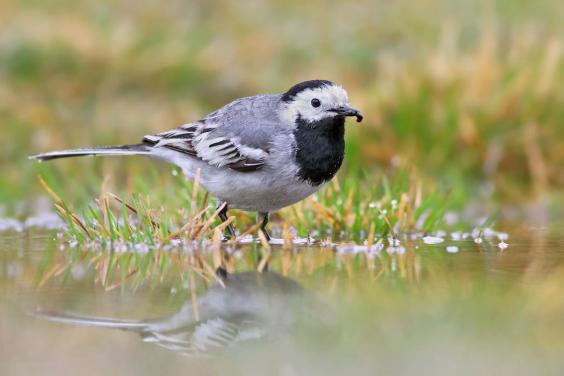
The White Wagtail also bobs his head while walking, somewhat like how city-dwelling pigeons do.
Walks or runs [sometimes making quick dashes] with nodding head, sudden lunges and flycatching leaps. In flight, can be picked out at distance by long tail and conspicuously dipping action, with distinct bursts of wingbeats. Flight call characteristic: a loud tchiz-ick; also utters an emphatic tsu-weeI. Lively, twittering song. In winter, forms large roosts in reedbeds, towns, etc.
[Quoting Chris Knightley, Steve Madge, & Dave Nurney, POCKET GUIDE TO THE BIRDS OF BRITAIN AND NORTH-WEST EUROPE (London & New Haven, Yale Univ. Press, 1998), page 201.]
So, if you ever get to visit Catherine’s Palace, in Pushkin (outside of St. Petersburg), Russia, as we did on July 9th of AD2006, do enjoy all the golden glitter and ivory opulence — but don’t forget to also keep an eye open for a bird wagging its tail, maybe foraging on the manicured lawns nearby, or hunting near other less glamorous buildings — you might see an avian treasure, the White Wagtail! ><> JJSJ profjjsj@aol.com


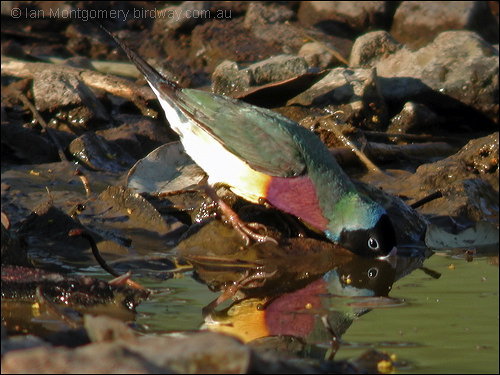
“If thine enemy be hungry, give him bread to eat; and if he be thirsty, give him water to drink:” (Proverbs 25:21 KJV)
Gouldian Finch (Erythrura gouldiae) by Ian
*
*
 Lee's Birdwatching Adventures Plus