***
GIVE EAR TO ME
***
“”Hear my words, you wise men; Give ear to me, you who have knowledge.” (Job 34:2 NKJV)
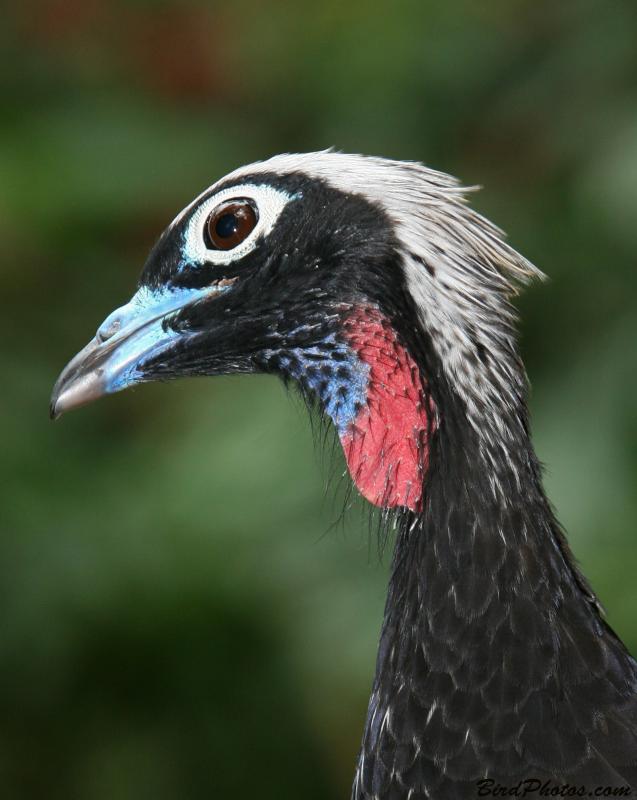
Black-fronted Piping Guan (Pipile jacutinga) ©BirdPhotos.com
*
*
“”Hear my words, you wise men; Give ear to me, you who have knowledge.” (Job 34:2 NKJV)
Black-fronted Piping Guan (Pipile jacutinga) ©BirdPhotos.com
*
*
“If a bird’s nest happens to be before you along the way, in any tree or on the ground, with young ones or eggs, with the mother sitting on the young or on the eggs, you shall not take the mother with the young;” (Deuteronomy 22:6 NKJV)
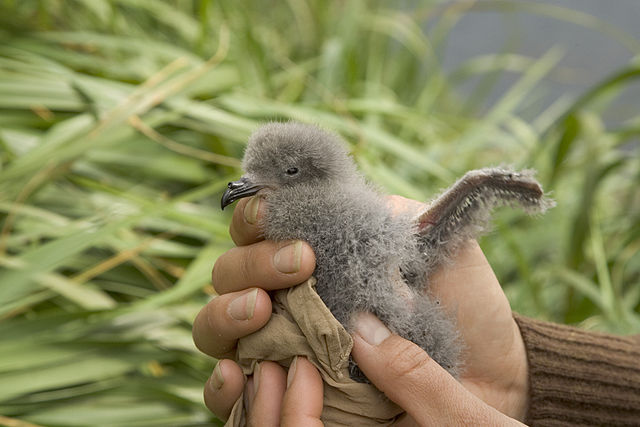
Fork-tailed Storm Petrel (Oceanodroma furcata) Chick ©WikiC
*
*

“and not for that nation only, but also that He would gather together in one the children of God who were scattered abroad.” (John 11:52 NKJV)
Black Storm Petrel (Oceanodroma melania) ©WikiC
*
*
“You have made him to have dominion over the works of Your hands; You have put all things under his feet,” (Psalms 8:6 NKJV)
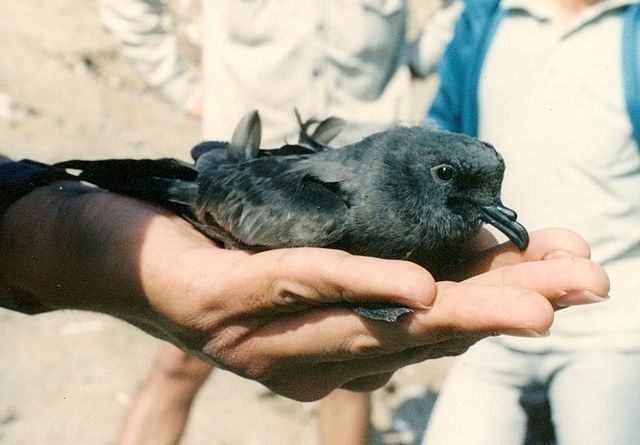
Markham’s Storm Petrel (Oceanodroma markhami) ©WikiC
*
*
“But each one is tempted when he is drawn away by his own desires and enticed.” (James 1:14 NKJV)
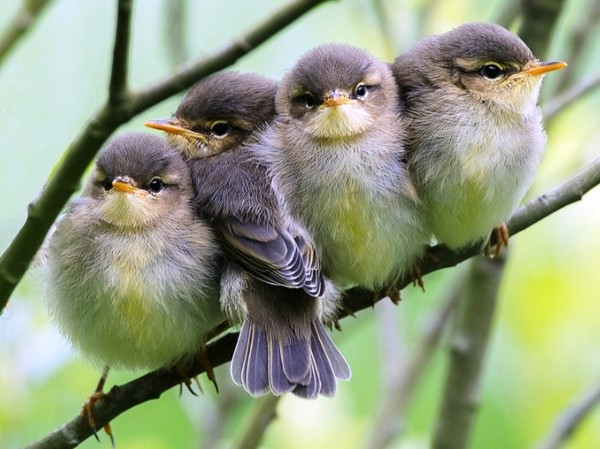
From Pinterest by Henji
*
*
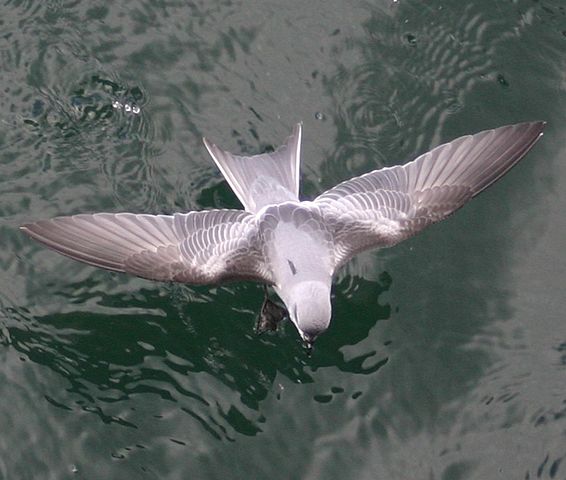
Fork-tailed Storm Petrel (Oceanodroma furcata) ©WikiC
“And God called the dry land Earth; and the gathering together of the waters called he Seas: and God saw that it was good.” (Genesis 1:10 KJV)
The Northern Storm Petrels make up the Hydrobatidae Family. The eighteen (18) species in the family are from two Genera; the Hydrobates (1) and the Oceanodroma (17). They are found in the northern hemisphere although some species around the equator dip into the south.
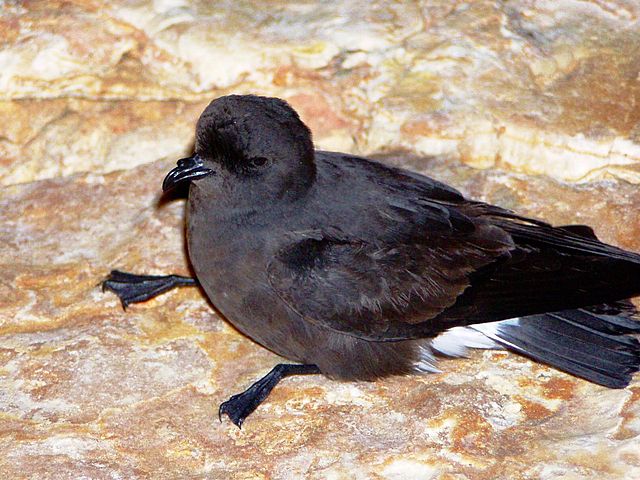
European Storm petrels cannot walk on land, and shuffle on their tarsi.
The European storm petrel, British storm petrel or just storm petrel (Hydrobates pelagicus) is a seabird in the northern storm petrel family, Hydrobatidae. It is the only member of the genus Hydrobates. The small, square-tailed bird is entirely black except for a broad white rump and a white band on the underwings, and it has a fluttering, bat-like flight. The large majority of the population breeds on islands off the coasts of Europe, with the greatest numbers in the Faroe Islands, United Kingdom, Ireland, and Iceland. The Mediterranean population is a separate subspecies, but is inseparable at sea from its Atlantic relatives; its strongholds are Filfla Island (Malta), Sicily and the Balearic Islands.
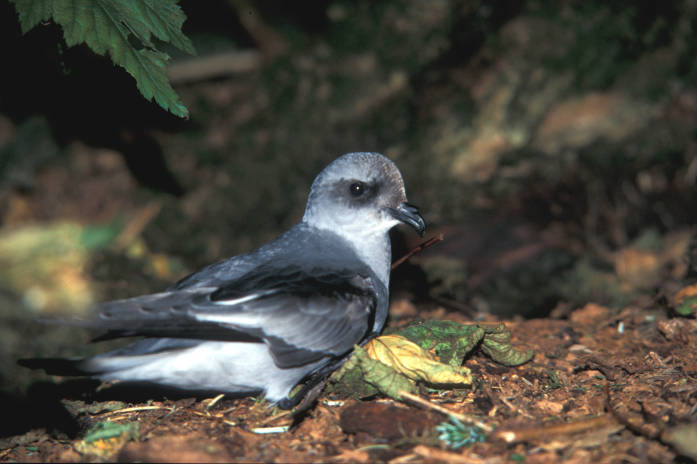
Fork-tailed Storm Petrel (Oceanodroma furcata) ©USFWS
Oceanodroma is a genus of storm petrels. The genus name is from Ancient Greek okeanos, “ocean” and dromos, “runner”.
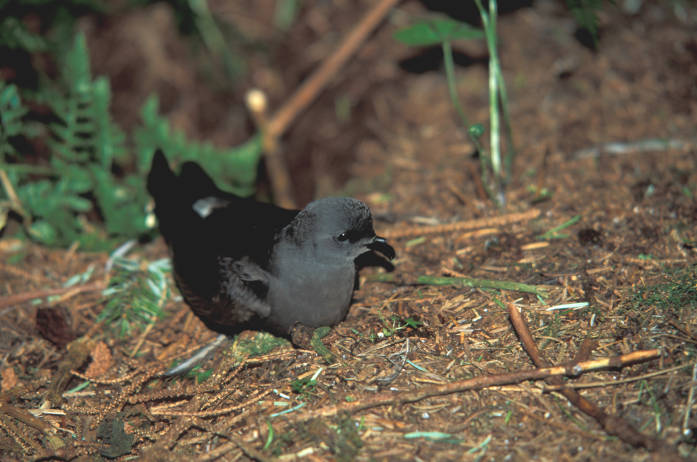
Leach’s Storm Petrel (Oceanodroma leucorhoa) ©USFWS
The Leach’s petrel, known in some rural areas as Carrie chicks, is a small bird at 18–21 cm in length with a 43–48 cm wingspan. Like many other storm petrels, it has all-dark plumage and usually a white rump. However, dark-rumped individuals exist on the west coast of North America; they are very rare north of southern California, but the percentage increases suddenly on the United States-Mexico border where 90-100% of breeding birds are dark-rumped.

Wedge-rumped Storm Petrel (Oceanodroma tethys) ©WikiC
The wedge-rumped storm petrel (Oceanodroma tethys) is a storm petrel. It breeds in the Galápagos Islands and on the coast of Peru.
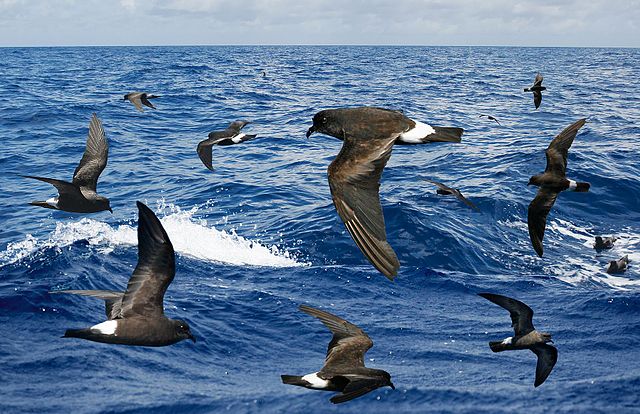
Band-rumped Storm Petrel (Oceanodroma castro) ©Crossley ID Guide Eastern Birds
The band-rumped storm petrel spends the non-breeding period at sea. Individuals feed by picking up prey items (invertebrates, small vertebrates and sometimes carrion) from the water surface. The band-rumped storm petrel is strictly nocturnal at its breeding sites to avoid predation by gulls and diurnal raptors such as peregrines, and will even avoid coming to land on clear moonlit nights. Like most petrels, its walking ability is limited to a short shuffle from/to the burrow.

Cape Verde Storm Petrel (Oceanodroma jabejabe) ©Taenos
The Cape Verde storm petrel (Oceanodroma jabejabe) is an oceangoing bird found in the Atlantic Ocean, especially around the islands of Cape Verde. It was at one time considered to be a subspecies of the band-rumped storm petrel, but is now considered to be a separate species by the British Birding Association, the Dutch Birding Association and other authorities. They breed much of year but most nest in the winter.
Because of being at sea so much of the time, photos and information are not readily available. Hence, the short slideshow today.
The birds of the air, And the fish of the sea That pass through the paths of the seas. O LORD, our Lord, How excellent is Your name in all the earth!
(Psalms 8:8-9 NKJV)
“Bless The Lord Oh My Soul” ~ By Sean Fielder
*
More Sunday Inspirations
Hydrobatidae – Storm Petrels Family
Gideon
*

“looking carefully lest anyone fall short of the grace of God; lest any root of bitterness springing up cause trouble, and by this many become defiled;” (Hebrews 12:15 NKJV)
Grey-backed Storm Petrel (Garrodia nereis) ©WikiC
*
*
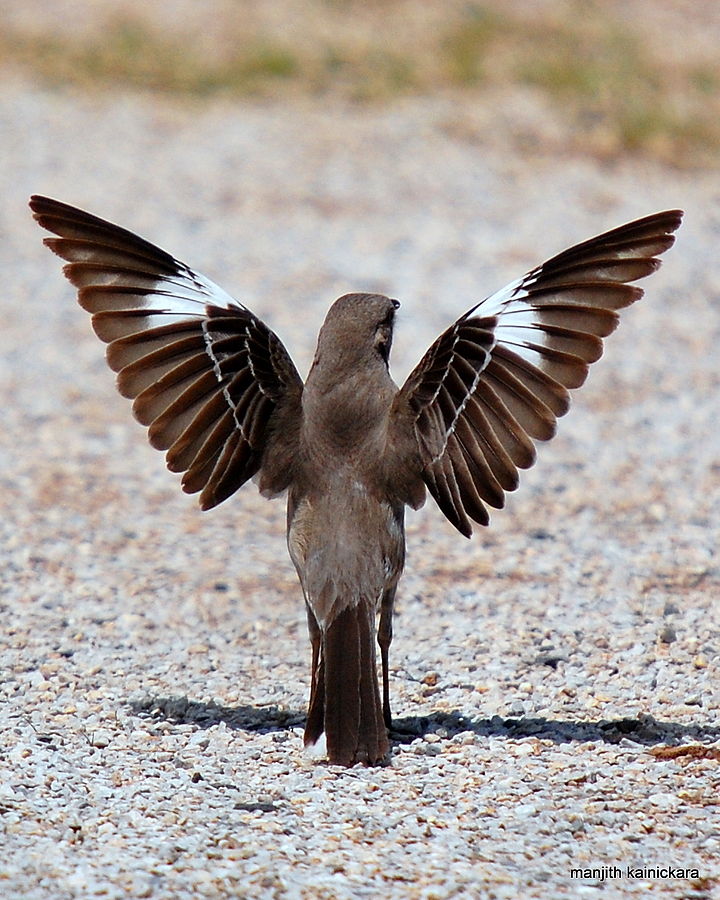
“You have given a banner to those who fear You, That it may be displayed because of the truth. Selah” (Psalms 60:4 NKJV)
Northern Mockingbird (Mimus polyglottos) Displaying ©WikiC
*
*
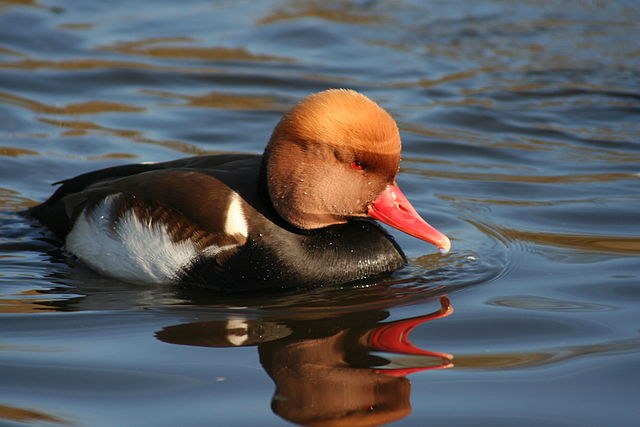
“Now these things, brethren, I have figuratively transferred to myself and Apollos for your sakes, that you may learn in us not to think beyond what is written, that none of you may be puffed up on behalf of one against the other.” (1 Corinthians 4:6 NKJV)
Red-crested Pochard (Netta rufina) Male ©WikiC
*
*
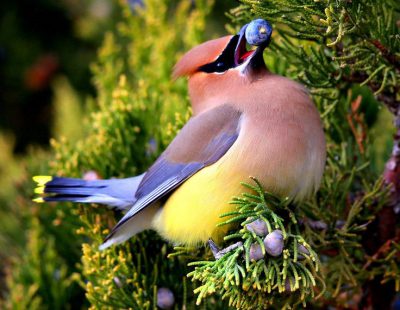
Cedar-Waxwing-with-redcedar-seed-cone. ©GaryBrady
Cedar Waxwings: Winter Texans Snack on Bugs and Berries
Dr. James J. S. Johnson
But he himself [i.e., Elijah] went a day’s journey into the wilderness, and came and sat down under a juniper tree; and he requested for himself that he might die; and said, It is enough; now, O Lord, take away my life, for I am not better than my fathers. And as he lay and slept under a juniper tree, behold, then an angel touched him, and said unto him, Arise and eat. And he looked, and, behold, there was a cake baked on the coals, and a cruse of water at his head. And he did eat and drink, and laid himself down again. (1st Kings 19:4-6)
The above Scripture reports how the persecuted prophet Elijah, a fugitive fleeing Queen Jezebel, was miraculously fed a hot meal, by an angel, under a juniper tree. But the bird featured herein — CEDAR WAXWING (see feature photo by Gary Brady, above) — would need no miracle or angel to find food at a juniper tree, because the Cedar Waxwing’s diet is famous for including “juniper berries”, a nickname given to the evergreen redcedar tree’s seed cones (that are signified by the Cedar Waxwing’s name).

Cedar Waxwing with redcedar seed cone (a/k/a “juniper berry”)
Fair Use credit: Missouri Dep’t of Conservation photo
Cedar Waxwings are insectivorous – they often resemble flycatchers as they pursue and capture their aerial insect prey; in fact, insects are their main diet when berries are unavailable. However, Cedar Waxwings thrive on seeds, including redcedar cones (nicknamed “juniper berries”), which are berry-like female seed cones. (Each seed cone, technically called a megastrobilus, is bluish-purple within a waxy-whitish envelope, appearing somewhat like blueberries if seen in its wax coating.) Cedar Waxwings also enjoy eating available fruits (e.g., apples) and a variety of perennial plant berries, especially during winter, when insects are mostly unavailable. [See, accord, Thomas Alerstam, BIRD MIGRATION (Cambridge University Press, 1993), pages 167, 182, 195, 203.] 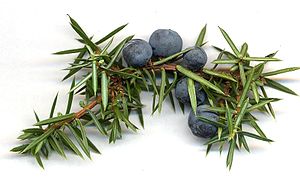
Juniper “berries” with evergreen needle-leaves (Wikipedia photo)
Cedar Waxwings are very social passerines – they are even known to share berries, passing them from one bird to another (form beak to beak) in a line, so that each waxwing gets its share of the berries. [See Robert Rice, “The Moveable Feaster: Cedar Waxwing”, Smithsonian’s National Zoo & Conservation Biology Institute (May 1st 1997), posted at https://nationalzoo.si.edu/migratory-birds/news/moveable-feaster .] As gregarious birds, Cedar Waxwings travel—and stopover—in compact flocks. This “caravan”-style migration is noted in the following birdwatching limerick of mine (which commemorates my observations of them, perching as a group, on April 1st (of AD2017):
CEDAR WAXWINGS, PASSING THROUGH, STOP OVER IN DOUBLE OAK
Humankind, earthbound, lacks wings;
Unlike us, though, Cedar Waxwings,
Like migratory troops,
Stopping over in groups –
Passing through, Cedar Waxwings.
[See also, comment on seeing waxwing stopover, https://leesbird.com/2016/04/04/lees-one-word-monday-4416/#comment-762787 — posted 4-1-AD2017.]
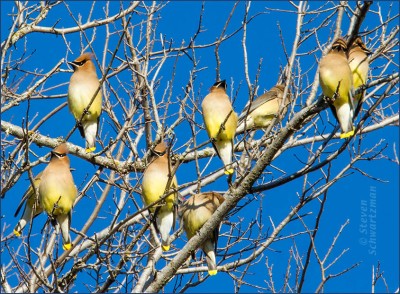
Flock of perching “winter Texan” Cedar Waxwings (Steven Schwartzman photo)
Cedar Waxwings (Bombycilla cedrorum) are well-known crested migrants of North America (and to the Caribbean, and even as far south as Panama), yet their larger “cousins” — Bohemian Waxwings (Bombycilla garrula) — live and migrate within both North America and Europe. [See Thomas Alerstam, BIRD MIGRATION (Cambridge University Press, 1993), pages 164, 316, 337.]
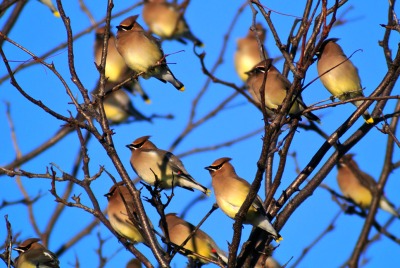
Cedar Waxwings perching in Wisconsin (Mike McDowell photo)
Cedar Waxwings themselves are widespread migrants, migrating phenologically with seasonal weather cycles. Roger Tory Peterson summarizes the Cedar Waxwing’s broad migratory range (in North America and the Caribbean) as follows:
Where found: Se. Alaska, cent. Canada south to n. California, w. Oklahoma, and Georgia. Winters from s. Canada to Panama, West Indies. Texas: Winters (Oct.-June) throughout. Habitat: Various; semi-open, wooded, towns, etc.
[Quoting Roger Tory Peterson, BIRDS OF TEXAS: A FIELD GUIDE TO THE BIRDS OF TEXAS AND ADJACENT STATES (Houghton Mifflin / Peterson Field Guides, 1988), page 191.] Yet think about the marvels of migration – it’s easier to pronounce the word than it is to successfully accomplish the aerial journey! For starters, what kind of weather is right for migration?
Which factors govern the migrants’ choice of migration weather?
Three such factors can be considered to be of great importance: the living conditions in the area the birds are leaving, the living conditions in the area for which they are heading, and the flying conditions during the migration itself.
If the birds’ choice of migration weather were mainly an adaptation [i.e., providentially prepared-for response] to the conditions in the area they are leaving, then in the first place cold, frost, snow and formation of ice, [i.e.] weather factors which make their living conditions considerably worse, ought to trigger emigration. Similar weather in the destination area, if it could be foreseen by the birds, naturally ought to have the effect of deterring migration [i.e., immigration to the new location].
Where the flying conditions during the migration are concerned, two factors are of the greatest importance to the birds: they should carry out the flight as economically as possible from an energy [consumption] point of view[,] and they should avoid weather which may lead to [navigational] orientation problems. The first factor is provided for if the birds choose tail winds, and the second if they avoid flying in rain, fog and dense cloud[s]. That precisely those points, tail winds and avoiding of areas of rain, usually are key factors for intensive migration has been confirmed. We can therefore draw the conclusion that the migrants’ reactions to weather, those reactions that determine the variation in migration intensity from day to day, in general (but not always, see below) are an adaptation [i.e., providentially prepared-for response] to good flying conditions in the area they start from or finish in.
Occasions arise, however, when birds are driven [by instinct or something else] to migrate by degenerated living conditions or are held back by poor prospects in the area of their destination [yet only if it can be assumed that, somehow, they already know that their destination is ill-equipped to host their arrival upon immigration]. They are then forced to waive [i.e., risk] the need for energy savings and safety during the flight itself.
[Quoting Thomas Alerstam, BIRD MIGRATION (Cambridge University Press, 1993), page 316.]
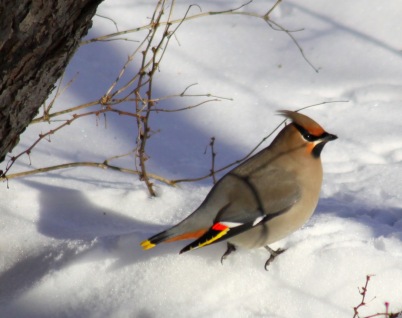
Cedar Waxwing in the snow (Fair Use/Public Domain: photo by anonymous retiree)
In fact, waxwings are resilient, able to tough out winter weather when they must.
Some birds attempt to overwinter in northern regions so long as it is [relatively] mild and they can find food. When the cold, the frost and the snow step in with full force, however, they have no alternative but to leave on winter migration. This can be observed at Falsterbo [in Skåne, Sweden], for example, during periods of severe winter weather: crows, finches, larks, starlings, gulls, ducks and geese leave southern Sweden and head out over the sea in a southwesterly direction towards milder regions.
Sometimes the [migratory] passage goes on in blizzard conditions, as for example on the December morning with whirling snow, less than 50 m visibility and wind strengths of over 15 m/s [i.e., > 30 mph] when Gunnar Roos logged emigration at Falsterbo of Fieldfare, Starling, Skylark, [Bohemian] Waxwing and Common Gull.
[Quoting Thomas Alerstam, BIRD MIGRATION (Cambridge University Press, 1993), page 316.]

Cedar Waxwings sharing food (Fair Use credit; Wild for Wildlife photo)
So there you have it: Cedar Waxwings, on the move, migrating huge distances twice a year, alternating between summer and winter ranges. Mealtimes involve a mix of snapping up fruits fallen to the ground, or happily eating (and sometimes sharing) seeds and berries while perching en banc in tree branches, or snatching “fast food” insects on the wing. Lots of air miles for this crested traveler — migrating with its group (and taking group “rest stops” along the way), and casually sharing the “wealth” and enjoying one another’s company, gregariously illustrating the airborne and passerine equivalents of Amos 3:3. ><> JJSJ
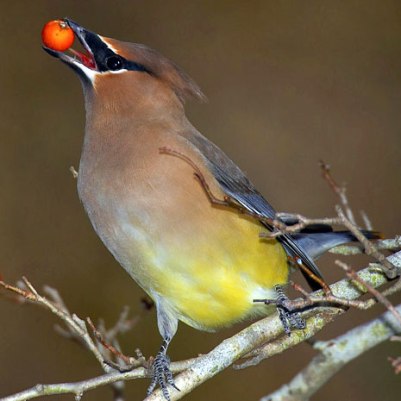
Cedar Waxwing with berry (Smithsonian Nat’l Zoo photo)
“For from you sounded out the word of the Lord not only in Macedonia and Achaia, but also in every place your faith to God-ward is spread abroad; so that we need not to speak any thing.” (1 Thessalonians 1:8 KJV)
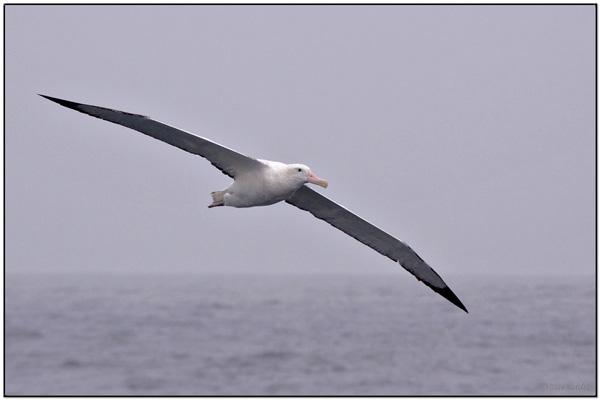
Wandering Albatross – Drake Passage
*
*

“For man also knoweth not his time: as the fishes that are taken in an evil net, and as the birds that are caught in the snare; so are the sons of men snared in an evil time, when it falleth suddenly upon them.” (Ecclesiastes 9:12 KJV)
Tristram’s Storm Petrel (Oceanodroma tristrami) ©©Flickr
*
*
 Lee's Birdwatching Adventures Plus