Count It All Joy!

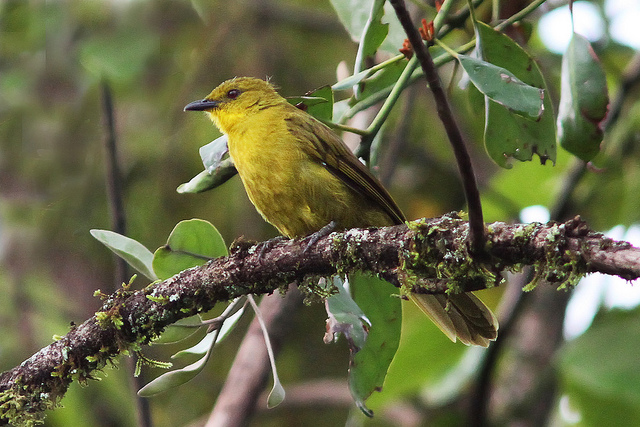
Joyful Greenbul (Chlorocichla laetissima) Flickr Dave Curtis

Our pastor had another encouraging message for our Wednesday night service. One day we will be able to attend a regular prayer meeting again, but, thankfully, our church is using YouTube and other means of keeping the Lord’s Word before us. This week was no exception.

“My brethren, count it all joy when you fall into various trials, knowing that the testing of your faith produces patience. But let patience have its perfect work, that you may be perfect and complete, lacking nothing. If any of you lacks wisdom, let him ask of God, who gives to all liberally and without reproach, and it will be given to him. But let him ask in faith, with no doubting, for he who doubts is like a wave of the sea driven and tossed by the wind.” (James 1:2-6 NKJV)


I trust you will enjoy Pastor Osborne’s message.

Wordless Birds


Chicken, Magpie, and Easter Greetings

*

“Christ is risen! He is risen indeed!” For centuries, Christians have used this greeting to celebrate Resurrection Day, better known as Easter.1 Ironically, there are two birds that can remind us of the historicity and importance of Christ’s rising from the dead, three days after His death and burial.

CHICKENS

Amazingly, the Lord Jesus once compared His own willingness and ability to care and protect humans to that of a chicken—specifically, a mother hen—who uses her own body to protectively care for her own hatchling baby chicks.2 How good it is to belong to the Lord Jesus Christ forever! When He offers to take us in and protect us, we should be eager and grateful to accept His care and security.

But we more closely associate a male chicken (rooster) with the arrest, trials, torture, and sacrificial death of Jesus Christ.

Readers might have already guessed that male chickens are associated with Christ’s death, burial, and resurrection because of the rooster who crowed after Peter ignominiously denied the Lord Jesus, thrice, in fulfillment of Christ’s prophecy.3 In fact, this incident is so important that it is reported by all four gospel writers.3

For example, Mark reports this disappointing failure of Peter, involving the tattletale fowl, a sad chapter in the life of the usually bold apostle: Peter’s triple failure to stand up for Christ, as predicted by Christ Himself. This display of Peter’s imperfect courage and loyalty (even though his inward belief never failed) is linked to the twice-crowing of a rooster.

A second time the rooster crowed. Then Peter called to mind the word that Jesus had said to him, “Before the rooster crows twice, you will deny Me three times.” And when he thought about it, he wept.4

What a sad note to end with! Except, as proven three days later, that wasn’t really the end.5

MAGPIES

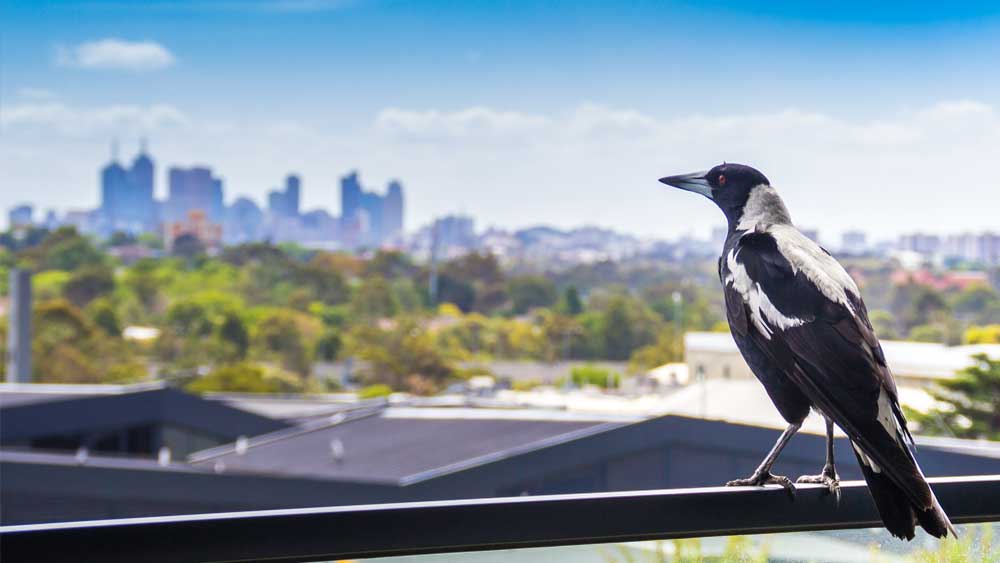
Most people are unlikely to guess that magpies—such as the Australian magpie (Cracticus tibicen6)—can be associated with Christ’s death, burial, and resurrection. How so?

The most famous variety of this “butcherbird,” formerly called the “piping shrike” or “white-backed crow shrike,” is now called the white-backed magpie (Cracticus tibicen telonocua). But many call it the Australian magpie because it appears on the official state flag of South Australia.

Whatever you want to call it, it is famous for its flute-like call, entertaining with a complex repertoire of vocalizations. The black-and-white opportunist has habituated to human-dominated habitats, such as the agricultural fields of farms, gardens, and even wooded parklands.6

The Australian magpie is not timid. It will defend its territory against raptors trespassing therein, such as brown goshawks. The Australian magpie is not a picky eater. Its diet includes both plants and animals. Its preferred diet, however, is dominated by a variety of larval and adult invertebrates, such as insects (like ants, moths, beetles, bees, wasps, cockroaches) and arachnids (like spiders and stinger-wielding scorpions!), as well as earthworms and millipedes. The Australian magpie is also known to eat some small vertebrates, such as mice, skinks, frogs, and toads.6

Some compare the problem-solving resourcefulness and the brash cockiness of this bird to the national reputation displayed by many Aussie ex-patriots.

The Australian magpie is quite a clever problem-solver. It has been observed breaking off the stingers of bees and wasps before swallowing such dangerous bugs!7

By now you’ve likely guessed why this bird reminds us of Resurrection Day—the Australian magpie’s power to neutralize a dangerous stinger.

But insect or arachnid stingers are nothing compared to the powerful sting of death. Yet, Christ’s bodily resurrection on the third day defeated death’s “stinger.”

For this corruptible must put on incorruption, and this mortal must put on immortality. So when this corruptible has put on incorruption, and this mortal has put on immortality, then shall be brought to pass the saying that is written: “Death is swallowed up in victory.” “O Death, where is your sting? O Hades, where is your victory?” The sting of death is sin, and the strength of sin is the law. But thanks be to God, who gives us the victory through our Lord Jesus Christ.8

Hallelujah! Christ is risen! He is risen indeed!

References
1. Morris, H. M. 2006. Christ Is RisenDays of Praise. Posted on ICR.org April 16, 2006, accessed April 7, 2020.
2. Matthew 23:37; Luke 13:34. Cansdale, G. S. 1976. All the Animals of the Bible Lands. Grand Rapids, MI: Zondervan Publishing House, 163-165.
3. Matthew 26:34, 26:74-75; Mark 14:30, 14:68-72; Luke 22:34, 22:60-61; John 13:38, 18:27.
4. Mark 14:72.
5. Matthew 12:39-40; 1 Corinthians 15:1-4Romans 10:9Psalm 16:9-10.
6. Taxonomists have also labeled the Australian Magpie as the Australian Magpie Gymnorhina tibicen (meaning “trumpeting bare-nose”). Regarding the physical and behavioral traits of the Australian Magpie, see Veltman, C. J., and R. E. Hickson. 1989. Predation by Australian Magpies (Gymnorhina tibicen) on Pasture Invertebrates: Are Non-territorial Birds Less Successful? Australian Journal of Ecology. 14(3): 319-326; Cake, M., A. Black, L. Joseph. 2018. The Generic Taxonomy of the Australian Magpie and Australo-Papuan Butcherbirds Is Not All Black and White. Bulletin of the British Ornithologists’ Club. 138(4): 346-359; Brown, E. D., and C. J. Veltman. 1987. Ethnogram of the Australian Magpie (Gymnorhina tibicen) in Comparison to Other Cracticidae and Corvus Species. Ethology (International Journal of Behavioural Biology). 76(4): 309-333. This author also appreciatively thanks Fiona Smith, M.C.Ed.—ICR SOBA graduate and Australian creation science educator/author—for her help with research and perspectives on Australian magpies.
7. Dr. Amy L. Adams notes: “Magpies will walk along the ground searching for food by overturning debris or probing their bills into the dirt. They eat insects, larvae and other invertebrates. Magpies are known to remove the stingers of wasps and bees before eating them.” Adams, A. 2016. Gymnorhina tibicen Australian MagpieMuseums Victoria Collections. Posted on collections.museumvictoria.com, accessed April 7, 2020.
8. 1 Corinthians 15:53-57, quoting Messianic prophecy in Hosea 13:14.

*Dr. Johnson is Associate Professor of Apologetics and Chief Academic Officer at the Institute for Creation Research.


James J. S. Johnson Articles Here

Article at I.C.R. https://www.icr.org/article/chicken-magpie-and-easter-greetings/
He Is Not Here!

“He is not here; for He is risen, as He said. Come, see the place where the Lord lay.” (Matthew 28:6 NKJV)

Like many of you, we watched our Easter Services via YouTube, or you may have watched by however your church chose to keep your members encouraged through watching/meeting for this Easter. This “Social Distancing,” is keeping us from our normal services, handshakes, and hugs from our friends. I miss my many friends.

Our pastor had a great message for today, and thought I would share it with you. Faith Baptist Church of Winter Haven has a YouTube site with all the services and additions we are not able to attend in person. I am thankful for these and want to share two of them here. This first one is the Easter Service today with our pastor.

This next one is the “Pastor Jerry’s Musings” He is one of our associate pastors. Enjoy!

He is Risen! He Has Risen Indeed!

The Gospel Message

Easter Sunrise Gathering

“Praise the Lord from the earth, wild animals and all cattle, small creatures and flying birds, Let them praise the name of the Lord, for His name alone is exalted.” Psalms 148

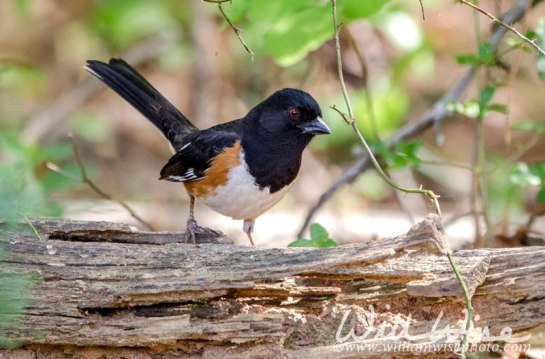
Tow-weeee!” Before the worship team even plucked its first note, an Eastern Towhee had already begun the Easter Sunrise worship service. It was 2017 and our first sunrise service on a wooded patch of land our church bought for a future building site.

An Eastern Towhee on Easter Sunday; Clarke County, Georgia. April, 2017. ©www.williamwisephoto.com.

Later that afternoon, I wrote, “We gathered for a peaceful sunrise service in the woods this morning at 6:30 AM. During the short sermon, the birds also gathered and provided a musical background. The morning serenade of birds under the tall Loblolly Pine Trees is a perfect setting to worship Jesus Christ the risen Creator. This was our church’s first outdoor sunrise service… and hopefully not the last.

But this solemn Easter we are unable to gather with our brothers and sisters to celebrate resurrection day. Feelings of deep sorrow surface within many, and anger even boils in some. There may even be those that defy the virus and isolation orders to unwisely gather in large groups for communion.

But as they say, “the show must go on!” So this year, we will continue the traditions: my wife, two daughters and I will “gather online” with church family during our live-streaming church service. And I will also rise before down to hear the gathering of the birds as they sing their morning worship songs to the Risen Savior in my own backyard sunrise service. For was it not He that said…

God that made the world and all things therein, seeing that he is Lord of heaven and earth, dwelleth not in temples made with hands…” Acts 17:24

Happy Easter! Jesus has risen!

-William Wise


P.S. Normally I put my short bio right here. But instead I want to once again thank Lee for giving me the opportunity to be a guest author on her website, http://www.leesbird.com. It has been an honor to be brought on board and given the trust to post content. Let us all take a minute in the comment section below to wish Lee and her husband good health and a Happy Easter, and to thank her for bringing us delightful Christian Bird Blogs for so many years. Thank you Lee!

Bird’s Eye View

“For as the heavens are higher than the earth, so are my ways higher than your ways, and my thoughts than your thoughts.” Isaiah 55:9

Have you ever desired to fly like a bird or soar like an eagle? To see entire, sweeping landscapes and distant horizons all from one vantage point? Who wouldn’t! We imagine having the outstretched wings and keen eyes of the hawk; an image that personifies true freedom; a freedom other land-bound creatures covet.

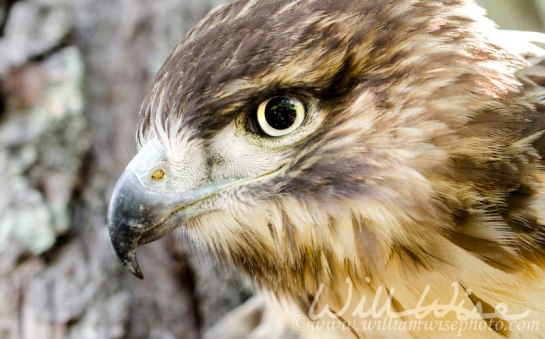
Red Tailed Hawk profile; Walton County, Georgia. August 1, 2017. ©www.williamwisephoto.com.

If able to fly, we’d have that proverbial “Birds’ Eye View” on the world… and that appeals to us! A drone photographer wrote, “One of the great advantages a drone offers is that it can get where we cannot…All of a sudden we can be transmuted into a bird and cross frontiers to reach our goal.” A soaring bird has a much greater field of view than us earthbound pedestrians. The bird’s eye view sees beyond the immediate moment.

And the “bird’s eye view” speaks of something even beyond birds; it speaks of an omniscient God with a much higher vantage point than ours… outside of time and space, in fact. A recent evangelist to my congregation spoke, “God has a bird’s eye view of our lives. He knows where He is trying to take us. He knows what lies ahead.” From His perspective, God’s view sees more than the moment we are struggling in.

Bird’s Eye View — Close up photo of Great Blue Heron. December 18, 2018. Walton County, Georgia. ©www.williamwisephoto.com.

From His vantage point, God sees well beyond this time of crisis. And a view from higher up will change your outlook on our current trials and past failures. Instead of stopping us, we see these rough patches as teaching moments along the road to help us move forward. The evangelist concluded, “This is just a small portion of your life. But use it to move on.”

So even if you’ll never learn to fly, you have the ability to know a God who knows all the road ahead of you! You’ll find peace in sharing His view that this too shall pass.


Hi, I’m wildlife photographer and nature writer William Wise. I was saved under a campus ministry while studying wildlife biology at the University of Georgia. My love of the outdoors quickly turned into a love for the Creator and His works. I’m currently an animal shelter director and live in Athens, Georgia with my wife and two teenage daughters, who are all also actively involved in ministry. Creation Speaks is my teaching ministry that glorifies our Creator and teaches the truth of creation. William Wise Nature Notes is my wildlife and birding photo blog documenting the beauty, design and wonder of God’s creation.  — “What a wildly wonderful world, God! You made it all, with Wisdom at Your side, made earth overflow with your wonderful creations.” Psalms 104, The Message.

Garden Longing

“And Lot lifted up his eyes, and beheld all the plain of Jordan, that it was well watered every where… even as the garden of the Lord” Genesis 13:10

All winter, we long for spring and the day we can get back to dressing and keeping our backyard gardens. We feel a strong inward desire to rejuvenate our backyard bird sanctuaries for the return of our beloved hummingbirds and other avian friends. But why is there such an affinity within us for gardens?

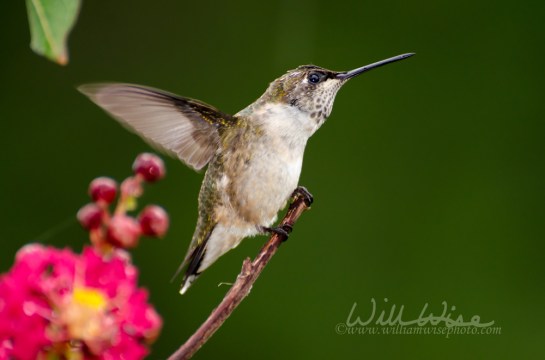
Ruby-throated Hummingbird in my backyard garden; Clarke County, Georgia. July, 2014. ©www.williamwisephoto.com.

In the Old Testament book of Genesis, the nomads Abraham and his nephew decide to split up and settle down. In making his choice of a new homeland, Lot looks towards the plains of Jordan and sees a fertile land “like the garden of the Lord” (Genesis 13:10). That same internal “garden longing” in his heart was triggered and leads Lot east.

I believe our love of gardens stems from a longing to return to Eden, that perfect state of beauty and fellowship with our Creator that man enjoyed in the beginning; where man walked with God “in the garden in the cool of the day”. When Adam’s eyes were opened, his first sight was a garden with “every tree that is pleasant to the sight, and good for food; the tree of life also in the midst of the garden.” Our love of gardens stems from a desire to return to Eden, to return to a place that place of paradise that was lost through sin.

Even though we see disease, decay and corruption in this world today, one day we will return to paradise. As the story of this present age comes to its final chapter, a new book will be written. One where we will see a new heaven and a new earth brought forth (Isaiah 65:17, 2 Peter 3:13, Revelation 21:1). Until then, let us enjoy our backyard gardens as a small piece of Eden; as a reminder of the blessed and perfect garden in world yet to come. As you till your soil with your hands, remember in your heart that one day, “thou shalt be with me in paradise.”

“He that hath an ear, let him hear what the Spirit saith unto the churches; To him that overcometh will I give to eat of the tree of life, which is in the midst of the paradise of God.” Revelation 2:7


Hi, I’m wildlife photographer and nature writer William Wise. I was saved under a campus ministry while studying wildlife biology at the University of Georgia. My love of the outdoors quickly turned into a love for the Creator and His works. I’m currently an animal shelter director and live in Athens, Georgia with my wife and two teenage daughters, who are all also actively involved in ministry. Creation Speaks is my teaching ministry that glorifies our Creator and teaches the truth of creation. William Wise Nature Notes is my wildlife and birding photo blog documenting the beauty, design and wonder of God’s creation.  — “What a wildly wonderful world, God! You made it all, with Wisdom at Your side, made earth overflow with your wonderful creations.” Psalms 104, The Message.

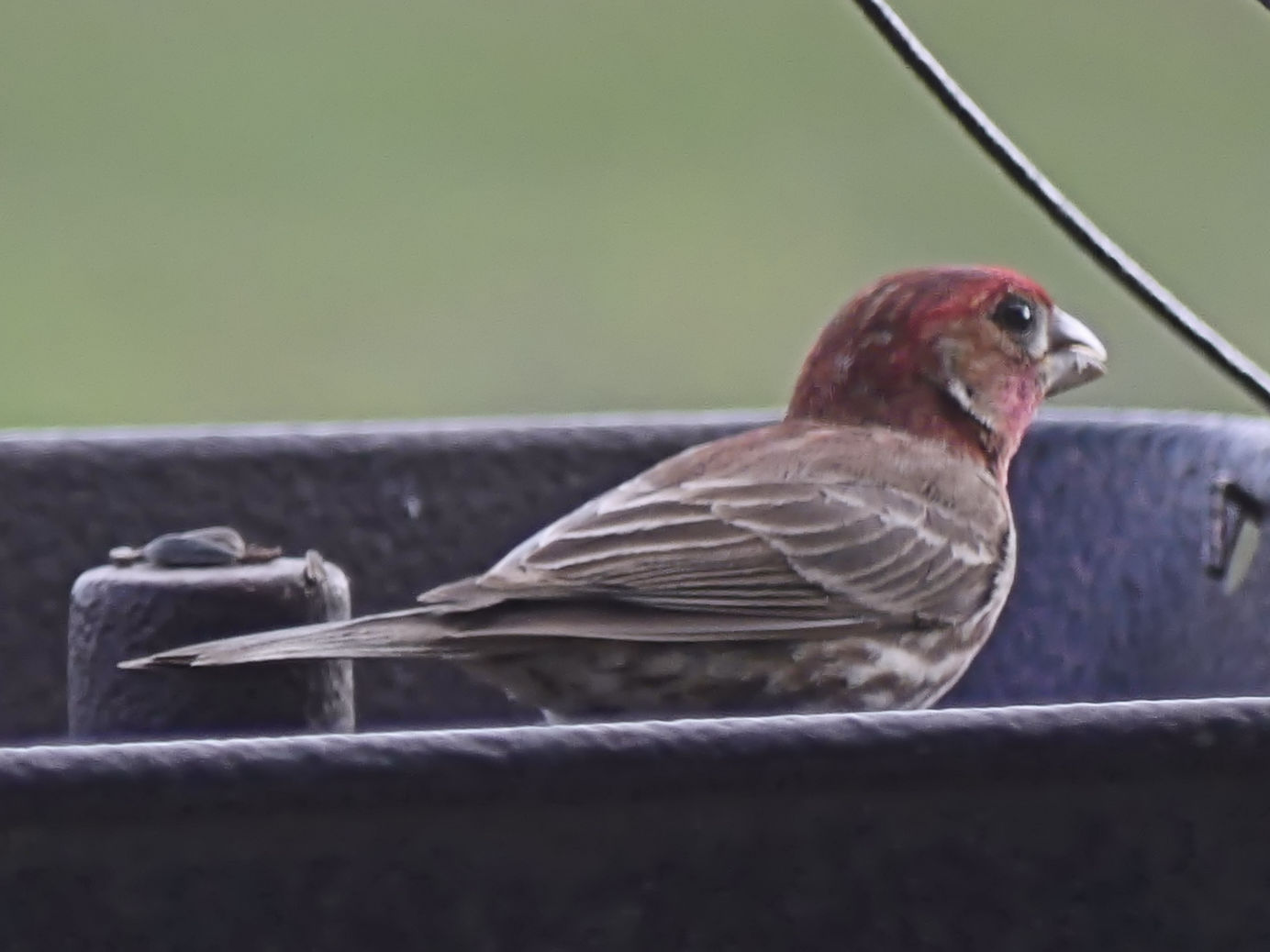
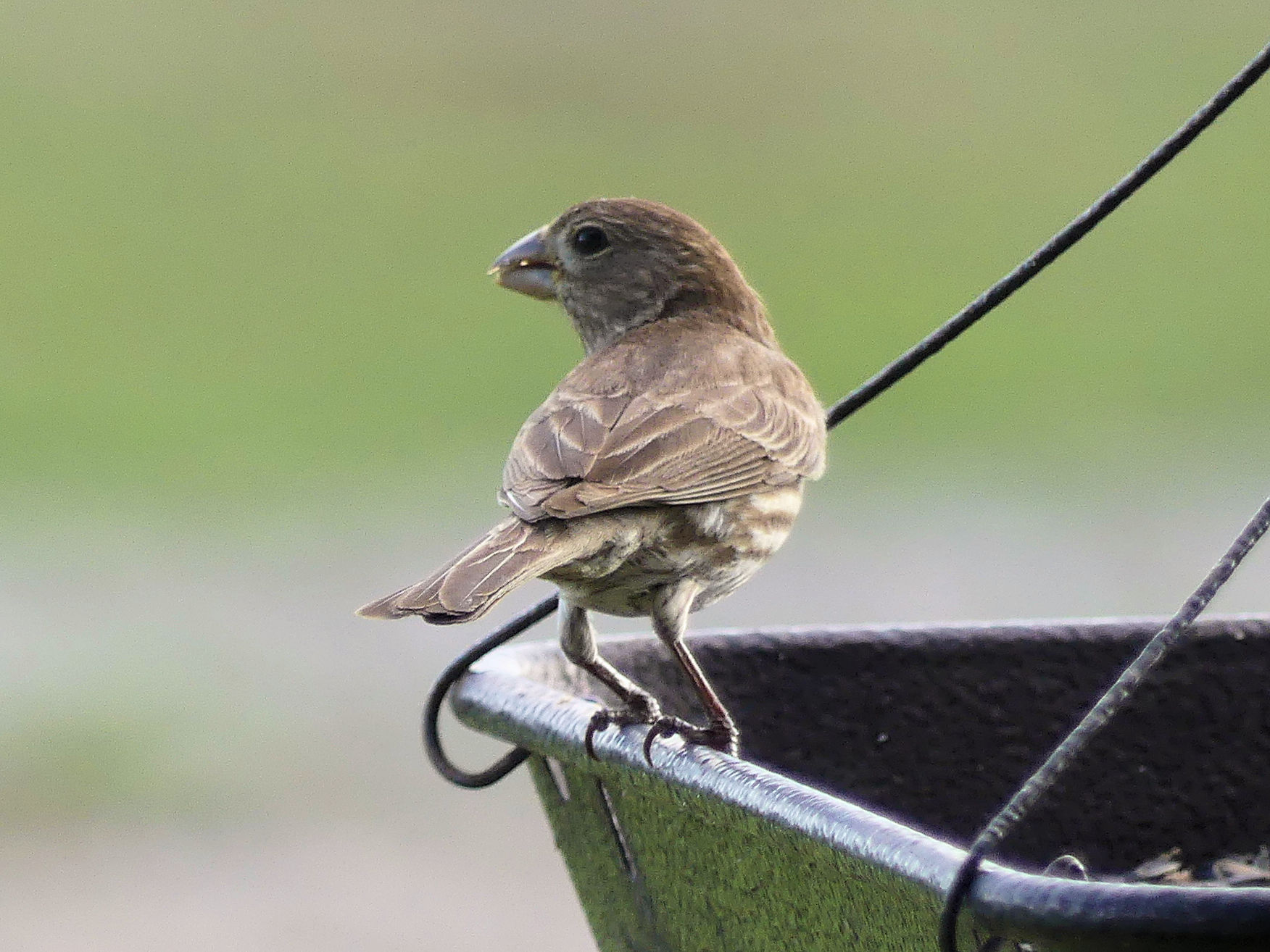
Today’s Visitor To The Feeder – House Finch

Male House Finch 3-28-20 by Lee

Well, as we all stay home and keep our distances, what is there to do? Like many of you, it seems that the chores around the house seem to take up more time. Cooking, especially seems more time consuming. An occasional meal out, saves time, but, that isn’t happening. At least around here.

We have pretty well stayed close to home. Drive through McDonald’s was a treat.

Thankfully, the birds have not changed their behavior and keep stopping by for free handouts. Today’s visitors were a pair of House Finches. They just started stopping by recently.

Female House Finch 3-28-20 by Lee

“You shall take with you seven each of every clean animal, a male and his female; two each of animals that are unclean, a male and his female; also seven each of birds of the air, male and female, to keep the species alive on the face of all the earth.” (Genesis 7:2-3 NKJV)

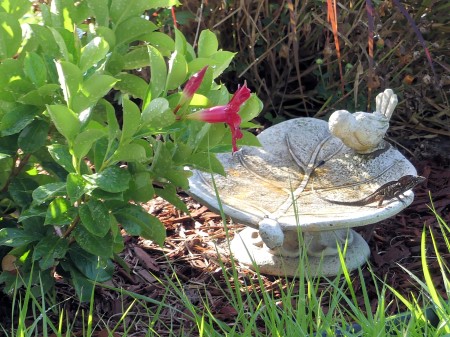
I also had a “baby dinosaur” stop by. Actually, it is some sort of chameleon or lizard. I have no idea.

Baby Dinosaur - Chamilian or Lizard by Lee 3-28-20

Baby Dinosaur – Chameleon or Lizard by Lee 3-28-20

Baby Dinosaur - Chamilian or Lizard by Lee 3-28-20

Baby Dinosaur – Chameleon or Lizard by Lee 3-28-20

There have be a few other stopping by and giving us something to do. Stay Tuned!


Ian’s Bird of the Whatever – Bare-faced Curassow

The Irregular Bird, formerly Bird of the Moment, formerly Bird of the Week, #600: Bare-faced Curassow
[This is how Ian titled his email. He is celebrating his 600 article. That is quite a milestone. Congratulations, Ian, Keep them coming. They are always so interesting.]
Bird number 600 after 18 years is a bit of a landmark, so here is something suitably celebratory: the best dressed award for the South American trip: the Bare-faced Curassow. They also win the worst named award as I have to think every time I write it so I don’t say ‘assed’ but that’s probably a reflection on me, not the species.
The most beautiful bird award went to the Hyacinth Macaw#592; the most interesting went to the Sunbittern#591; the most spectacular went to the Andean Condor#593; the most beautiful mammal award went predictably to the Jaguar which also featured briefly in #592; the most unusual mammal to the Armadillo;  the least elegant went to the Collared Peccary; the most amusing and ugliest went to the Capybara, and the most delightful to the Giant Otter; the most beautiful lizard went to the Green Iguana; and the most beautiful snake went to the Yellow Anaconda.
If you can think of any categories I’ve left out let me know and I’ll see what I can do in the next Irregular Bird. A former colleague of mine, the world expert on the different pelagic behaviour of right- and left-footed thongs/jandals/flipflops recently called it Bird of the Undefined Time, which I like very much and set me thinking, but I’m going to settle on The Irregular Bird.
bare_faced_curassow_203516_pp.jpg
The Curassows also won the best hairstyle award so I’ll deal with that first. The male’s is all black, quite original in a dapper and restrained sort of way, very suitable for evening dress/tuxedo. The female couldn’t resist a two-tone look, also restrained and very dignified. I think the black curly tip on a white base is gorgeous and the little black fringe/bang is the perfect finishing touch. Both have the suitably haughty look of famous models and you might be surprised to find that this male is married to this female: it could be an interesting household with two prima donnas, even before any kids come along.
bare_faced_curassow_203186_pp.jpg
Here’s the male in his dinner jacket/tuxedo on the way to the Rio Claro masked ball. He’s wearing a special yellow face mask which doesn’t cover his eyes. It’s partially for epidemiological reasons but fame is important to him and he wants everyone to recognised him and know that he too was invited to this special event. Very suave and practising his red carpet walk, but he doesn’t really need to as he naturally has the sort of elegant, pouty walk that is widely admired by on the cat-walk.
bare_faced_curassow_202985_pp.jpg
The female is wearing a tan-coloured silk ball gown with a brownish black cape and train. Both of these are hand embroidered with stripes consisting of thousands of large pearls and diamonds. Consequently they’re rather heavy and she hopes she doesn’t trip or fall on the way and is secretly looking forward to discarding them with a flourish in front of the cameras of the paparazzi. She’s walking past the resort swimming pool on the way to the ballroom. Those of you familiar with Australian flora will recognised the trunk of the tree and the leaves on the ground as belonging to a rare species of Eucaplyptus specially imported at great expense from a boutique nursery in Humpty Doo, 40km from Darwin in the Northern Territory, a small town better known by ordinary folk for its barramundi (an over-rated freshwater fish with a wonderful name). The climate there is similar to that in the Pantanal, hot and dry for much of the year with a very wet wet season.
bare_faced_curassow_203196_pp.jpg
Masked balls can lead to unexpected results and this mother Curassow is paying the price. She sadly remembers the party times well, don’t we all, but is quite fond of her two chicks. She’s pleased to have both a daughter (centre foreground) and a son, trying to hide under mother’s skirts in the background on the left. He is already sporting a yellow face mask like his dad, is developing a precocious crest and wearing a black waistcoat, unbuttoned to show off his tan. Curassows are vegans naturally, and these ones are looking for the seeds of some super-food they’ve been told about. They also visit salt-licks as they believe that it’s makes their plumage very lustrous. It also leads to high blood pressure but they are young and don’t worry about such matters.
bare_faced_curassow_202135_pp.jpg
Bare-faced Curassows range through central Brazil, eastern Bolivia, most of Paraguay and northern Argentina. Like the rest of us they are regarded as Vulnerable, suffering from hunting by left-wing elements, and are extinct in Rio de Janeiro as they found the Carnival much too vulgar and moved to the provinces particularly the Pantanal in Mato Grosso, a well-known retreat for the rich and famous.
Like all news now whether official or on social media, subject this article to the scrutiny of your b*llsh*t meter.
Stay safe, practise acceptance (very difficult I know) and keep cheerful,
Ian
PS Here is the only prize winner that hasn’t yet made it to the website. I must rectify that today. They’re king of the Iguanas, very large to 2 metres long, perfect for social distancing, with a noble heritage having been described by Carl Linnaeus in 1758 during the reign of Louis XV and when the United States were still British colonies. Like Louis XIV and Bare-faced Curassows, they’re into extravagant balls. This one is lounging on a freshwater beach on a sunny day near the fashionable resort of Porto Jofre in the Southern Pantanal, improving its green tan.
green_iguana_205307-pp.jpg


Ian Montgomery,
454 Forestry Road, Bluewater, Qld 4818
Phone: 0411 602 737 +61-411 602 737
Preferred Email: ian@birdway.com.au

Recorder Society http://www.nqrs.org.au

Lee’s Addition:

See my comments above, plus we have posted quite a few of those 600 articles here. Ian gave me permission years ago to use these newsletters. Thank, Ian. And for the great photos of birds you have shared with us.
“Bring out with you every living thing of all flesh that is with you: birds and cattle and every creeping thing that creeps on the earth, so that they may abound on the earth, and be fruitful and multiply on the earth.” (Genesis 8:17 NKJV)
“I know all the birds of the mountains, And the wild beasts of the field are Mine.” (Psalms 50:11 NKJV)

Ian’s Bird of the Week, Moment, Whenever

Ian Montgomery Offers Free eBooks During Pandemic

Diary of a Bird Photographer, Vol 2 by Ian Montgomery

Just received an email from Ian Montgomery, Ian’s Bird of the Week, who is offering free downloads of his three eBooks. This is only being offered for a short time.

Here is his email:

Given the strange times we live in now, I’m thinking of all the other people isolated at home and looking for things to do. I’ve decided to make all my eBooks free for the time being.
Two of these are Diary of a Bird Photographer, Volumes 1 and 2, which are compilations of the Bird of the Week/Moment from #1 to #341, and #342 to #585, respectively, i.e. from 2002 to 2009 and 2010 to 2018.
The third is guide Where to Find Birds in North-east Queensland. This is a guide to the more than 400 species of birds that occur in this region and the 200 or so locations in which to look for them, and there are about 700 bird photos, and 200 of locations.
All the books is comprehensively indexed so you can jump around all over the place. If your stuck at home, and even if you’re not, you can take a virtual bird tour of NE Queensland at zero cost in Where to Find Birds in North-east Queensland – much better than having to worry about to getting home after your trip. Maybe you could use it to teach your kids about the joys of bird watching.
Given the current pandemic, Ian has decided to give his ebooks free to anyone interested in nature. If you already now about ebook formats such as pdfs, epub and mobi, then go straight to the Birdway Store on the Payhip website where I’ve made the books available for download.
If you’re a bit vague about ebook formats, go first to the Quick Guide to eBooks, check it out to see which one is best or you and then got to the Birdway Store on the Payhip website which you can do from that page.
None of the books is copyright protected, so you can distribute them as you wish.
birdway_store_on_payhip_400_free.jpg
Happy reading and happy virtual travelling,
Stay safe,
Ian


Ian Montgomery,
454 Forestry Road, Bluewater, Qld 4818
Phone: 0411 602 737 +61-411 602 737
Preferred Email: ian@birdway.com.au

Recorder Society http://www.nqrs.org.au

Lee’s Addition:

I followed his links and was able to download all three ebooks.
Thanks, Ian, for giving us something to do while we are staying close/in our homes.
“Who has put wisdom in the mind? Or who has given understanding to the heart?” (Job 38:36 NKJV)

Could it be that God is in Control???

Zechariah 1:11 (The Message) They reported their findings to the Angel of God in the birch grove: “We have looked over the whole earth and all is well. Everything’s under control.”

Spring Progressing Despite Coronavirus Concerns

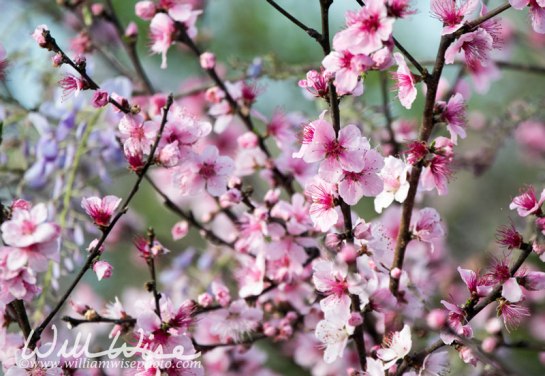
Cherry Blossom; Walton County, Georgia. March 20, 2020. (c)www.williamwisephoto.com

While Homo sapiens are self-isolating in coronavirus crisis mode, the rest of species on this planet seem to be boldly moving ahead with the vernal equinox as scheduled. As I briefly, and timidly, left the confines of my sterile bunker this morning for a short walk, I was outraged to see so many critters blatantly ignoring the shelter-in-place mandates!

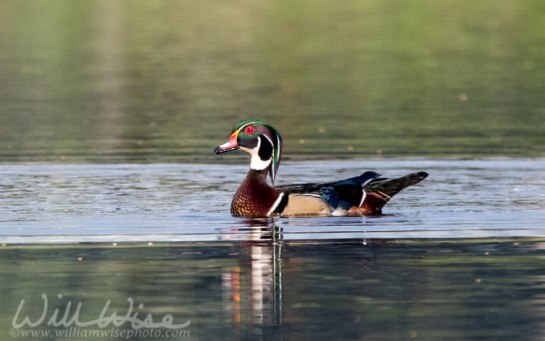
Wood Duck; Walton County, Georgia. March 20, 2020. (c)www.williamwisephoto.com

In less than an hour I counted 27 different bird species and three turtles breaking curfew… more than 50 individuals! Even the normally reclusive Wood Ducks had the audacity to come into plain view on the open pond.

It would almost appear that the God of creation has everything under control, although we humans feel like things are out of control. Is that even possible?

Psalm 11:1 In the LORD put I my trust: how say ye to my soul, Flee as a bird to your mountain?

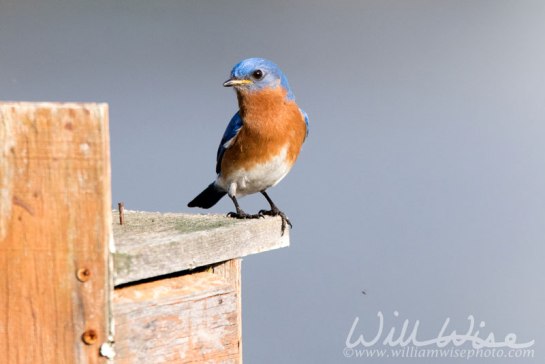
Eastern Bluebird; Walton County, Georgia. March 20, 2020. (c)www.williamwisephoto.com

I hope you enjoyed this light-hearted commentary on the current events, and are comforted by the photos of God’s beautiful creation that exists right outside our back doors! Even if you can’t go far, get out and enjoy our Creator’s works right in your little plot of land.


Hi, I’m wildlife photographer and nature writer William Wise. I was saved under a campus ministry while studying wildlife biology at the University of Georgia. My love of the outdoors quickly turned into a love for the Creator and His works. I’m currently an animal shelter director and live in Athens, Georgia with my wife and two teenage daughters, who are all also actively involved in ministry. Creation Speaks is my teaching ministry that glorifies our Creator and teaches the truth of creation. William Wise Nature Notes is my wildlife and birding photo blog documenting the beauty, design and wonder of God’s creation.  — “What a wildly wonderful world, God! You made it all, with Wisdom at Your side, made earth overflow with your wonderful creations.” Psalms 104, The Message.

Bird of the Moment – Red-legged Seriema

Of the birds that we wanted to see in Brazil, this one, the Red-legged Seriema proved the most difficult. Like the Greater Rhea (#598), this is mainly a bird of dry, grassy habitats such as the Cerrado rather than the flood-prone Pantanal. So we hoped to find it at our last lodge, Piuval Lodge in the northern end of the Pantanal just south of Poconé. Even there, we resorted to the help of a local guide, attached to the Lodge, who found one within five minutes of departing from the Lodge. This was the only one we saw, despite further trips through the reserve there.
red_legged_seriema_206336_pp.jpg
Seriemas are unusual birds. There are only two remaining species, this one and the Black-legged Seriema (Chunga burmeisteri) South American, remnants apparently of a much larger clan known from a few fossils. The Red-legged has quite a wide range through Brazil south of the Amazon basin, Paraguay, eastern Bolivia, eastern Uruguay and north-eastern Argentina. The range of the Black-legged partially overlaps that of the Red-legged but maiinly farther west, still east of the Andes, from southern Bolivia through western Paraguay to central northern Argentina. Despite their remnant status, both are reasonably common in suitable open habitat and classified as of ‘Least Concern’.
red_legged_seriema_206348_pp.jpg
The Red-legged is the larger species, with a length of 75-90cm and weighing 1.5-2.3kg. Both are mainly terrestrial, though they are capable of short bursts of flight, and will often perch in bushes and small trees, where they build their nests. Both species are predatory, feeding on small reptiles such as snakes and lizards, and large insects, but will also feed on seeds. Both are very vocal and join in the morning chorus, though we had listened in vain for the distinctive song of the Red-legged. This is a ‘calm series of nasal, well-separated, and accentuated “hah-hah” notes, lilting up and then down again’, according to Ber van Perlo in his Birds of Brazil, though the recording in his app sounds like a very distressed and lonely puppy, and ‘calm’ is not an adjective I’d have chosen.
hackett_fig_4.jpg
Naturally, as you’ve guessed by now, one of the reasons I was keen to see and photograph it was to fill a taxonomic hole in the species on the Birdway website. Until the advent of DNA analysis, the correct placement of the Seriemas was put in the too-hard basket, which in those days for land birds was in its own family, Cariamidae, in the Crane order, Gruiformes. Cranes were known to be of an ancient lineage, so Gruiformes was a bit of a taxonomic dumping ground for such problem groups, ‘GRU’ in the diagram above. That all changed in 2008 with this landmark DNA study by Hackett et al. which revolutionised the understanding of the relationships among major groups of birds.
Perhaps most strikingly, the Parrots were shown to be a sister clade to the Passerines, or perching birds, and the Falcons and Caracaras were separated from the other diurnal predators, such as Hawks, Eagles and Vultures. I’ve highlighted the relevant relationships in the diagram above. Interestingly the Seriemas were an early offshoot of the group that gave rise to the Falcons, Parrots and Passerines. Other studies since have supported these findings and the Seriemas have been elevated to their own order the Cariamiformes. The Passerine order contains half of all extant bird species, 5,000 or so out of 10,000, so the Seriemas have great status in the overall scheme of things with an order to themselves.
secretarybird_janelle_morano.jpg
I couldn’t help to see a certain resemblance to Bustards in size, form and habit, but perhaps the Secretarybird of Africa is the closest analogue. I’ve seen this species in pre-digital days in Zimbabwe but I haven’t photographed it, so I’ve taken the liberty of including this splendid photo by Janelle Morano which is published in the Cornell online Birds of the World and the related Macaulay Library: Secretarybird.
If you return to the Hackett diagram you’ll see that the Secretarybird is a relative of the hawks and eagles: it is the sole member of one family – Sagitariidae – of the four that make up the order Accipitriformes, the others being the Cathartidae (new world vultures) the Pandionidae (ospreys) and Accipitridae (all the other hawks and eagles). Given the similarities and the relationships to different groups of diurnal predators, the Seriemas and Secretarybird would seem to be a very elegant example of convergent evolution.
So far, I’ve resisted the temptation of mentioning IT, the current crisis. I will however say that I wasn’t intending to be prophetic when I said that the New Year had got off to a bumpy start with the Australian bushfires, and later that the taxonomic puzzle of the Ratites was Gaia’s revenge on Homo not so sapiens. Maybe Gaia has turned to self-defence in the way she knows best. I’m largely isolating at home, given the warnings to older people, so I hope to do more work on the website and have more birds of the moment.
Greetings and stay safe,
Ian


Ian Montgomery,
454 Forestry Road, Bluewater, Qld 4818
Phone: 0411 602 737 +61-411 602 737
Preferred Email: ian@birdway.com.au

Recorder Society http://www.nqrs.org.au

Lee’s Addition:

Ian has shared one of the birds we have seen at the Lowry Park Zoo many times. Always enjoy seeing them.
And, Ian like many of us around the world, is sticking close to home. Maybe it will be a good time to clean up some of our photos, and write about them, just as he is doing.
Stay tuned!
“I know all the birds of the mountains, And the wild beasts of the field are Mine.” (Psalms 50:11 NKJV)

Halting the Plague

And Aaron took as Moses commanded, and ran into the midst of the congregation; and, behold, the plague was begun among the people: and he put on incense, and made an atonement for the people. And he stood between the dead and the living; and the plague was stayed.” Numbers 16:46-50

Turkey Vulture; Clarke County, Georgia. June 2015. ©www.williamwisephoto.com.

What was that created for?

God created all things, and He created all things with a purpose.  One critter with a disgusting duty is the vulture. Our roads are often littered with the poor critters that didn’t make it across alive. Standing around these piles are a macabre host of ominous black Vultures.

It is no doubt for this disgusting habit that God pronounced, “These, moreover, you shall detest among the birds; they are abhorrent, not to be eaten: the eagle and the vulture and the buzzard”. (Leviticus 11:13)  I’m sure none would argue with God and substitute a Turkey Vulture for a Thanksgiving Turkey!

Although vultures carry the reputation of being nasty, disease and death spreading creatures, the opposite is true. Vultures help decrease the spread of disease. Without vultures, animal corpses would litter the landscape, contaminate the water supplies and disease could spread without check. Vultures are known as “dead-end hosts” and do not further spread diseases.

Halting the Plague

From this practical disease-reducing design, the vulture speaks a valuable lesson. We are seeing a virus affect the entire planet. But there is a plague far worse than Coronavirus; a plague that has killed, and will kill, every living person. The plague is called sin! With the entrance of sin, Satan has hijacked God’s perfect creation and not only mutated viruses to cause things like Coronavirus, but leads our lives, spiritually and physically, down a road of decay and death.

In the book of Numbers, because of the sin of rebellion, a plague began to spread among the people (please, I am not saying Coronavirus is God-unleashed plague). To end the plague, God told Aaron to light a censor and bring the smoking incense (representing prayer) between the diseased and the living. Aaron’s quick, unquestioning acceptance of his job stopped the spread from the corpses to the people. “And he stood between the dead and the living; and the plague was stayed.”

Black Vulture. Clarke County, Georgia. January, 2018. ©www.williamwisephoto.com.

A Pandemic of Revival

2 Corinthians 5:5 Now it is God who has made us for this very purpose…

We Christians are called to halt the plague of sin. Like Aaron with his flaming censer, we are to place ourselves in front of the tide of advancing sin and decay; to “stand between the living and the dead” and preach the cleansing Gospel of Jesus Christ. This Coronavirus outbreak is an opportunity to share with those in fear about the comfort through salvation. Let this virus pandemic become a pandemic of Revival! Be wise and take precautions, but let us serve those in need during this time and evangelize as we never have before! And even if confined at home, continue to pray in earnest.

We can halt the plague of sin by simple obedience to the will of God. But will God find us, like the vultures, ready and willing to “do the dirty work” which He has assigned us? If a vulture can stick his face in a putrid carcass without complaint, can we not be willing to do the will of God? If Jesus can silently accept the cross shouldn’t we accept any job which always works to the good in our lives? We can halt the plague of sin and death when we accept and carry out our God-assigned job descriptions.


Hi, I’m wildlife photographer and nature writer William Wise. I was saved under a campus ministry while studying wildlife biology at the University of Georgia. My love of the outdoors quickly turned into a love for the Creator and His works. I’m currently an animal shelter director and live in Athens, Georgia with my wife and two teenage daughters, who are all also actively involved in ministry. Creation Speaks is my teaching ministry that glorifies our Creator and teaches the truth of creation. William Wise Nature Notes is my wildlife and birding photo blog documenting the beauty, design and wonder of God’s creation. I am also a guest author at Lee’s Birdwatching Adventures and The Creation Club. — “What a wildly wonderful world, God! You made it all, with Wisdom at Your side, made earth overflow with your wonderful creations.” Psalms 104, The Message.