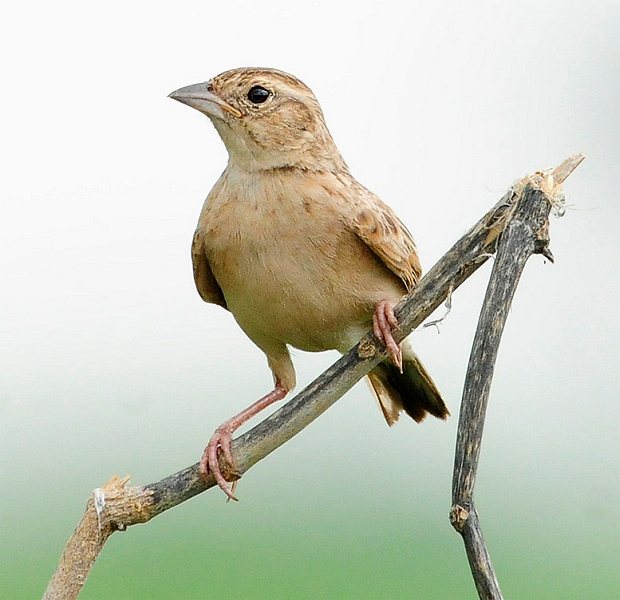
Singing Bush Lark (Mirafra cantillans) by Nikhil Devassar
The Lark family has 97 members which are busy doing what the Lord commanded them to when they left the Ark:
Then God spoke to Noah, saying, “Go out of the ark, you and your wife, and your sons and your sons’ wives with you. Bring out with you every living thing of all flesh that is with you: birds and cattle and every creeping thing that creeps on the earth, so that they may abound on the earth, and be fruitful and multiply on the earth.” So Noah went out, and his sons and his wife and his sons’ wives with him. Every animal, every creeping thing, every bird, and whatever creeps on the earth, according to their families, went out of the ark.(Genesis 8:15-19 NKJV)
Larks are passerine birds of the family Alaudidae. All species occur in the Old World, and in northern and eastern Australia. Only one, the Horned Lark, is native to North America. Habitats vary widely, but many species live in dry regions.
They have more elaborate calls than most birds, and often extravagant songs given in display flight (Kikkawa 2003). These melodious sounds (to human ears), combined with a willingness to expand into anthropogenic habitats — as long as these are not too intensively managed — have ensured larks a prominent place in literature and music, especially the Eurasian Skylark in northern Europe and the Crested Lark and Calandra Lark in southern Europe.
Personally, these Larks look very similar to Sparrows, which are very common.
Are not two sparrows sold for a copper coin? And not one of them falls to the ground apart from your Father’s will. (Matthew 10:29 NKJV)
Larks, commonly consumed with bones intact, have historically been considered wholesome, delicate, and light game. Yet. Traditionally larks are kept as pets in China. In Beijing, larks are taught to mimic the voice of other songbirds and animals. It is an old-fashioned habit of the Beijingers to teach their larks 13 kinds of sounds in a strict order (called “the 13 songs of a lark”, Chinese: 百灵十三套). The larks that can sing the full 13 sounds in the correct order are highly valued. (Info from Wikipedia)
This slideshow requires JavaScript.
“His Eye Is On The Sparrow ” – by Kathy Lisby, Faith Baptist Church
* Sunday Inspirations
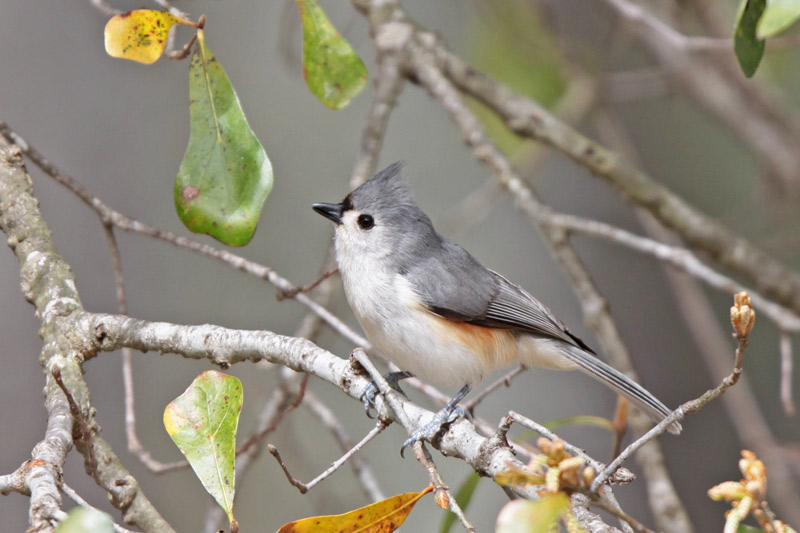
Tufted Titmouse (Baeolophus bicolor) by Margaret Sloan
The little birds have places for themselves, where they may put their young, even your altars, O Lord of armies, my King and my God. (Psalms 84:3 BBE)
This week we come to two families of avian wonders that are next to one another in taxonomic order. The families are the Paridae – Tits, Chickadees with 61 species and the Remizidae – Penduline Tits with 11 more cuties.
The tits, chickadees, and titmice constitute the Paridae, a large family of small passerine birds which occur in the Northern Hemisphere and Africa. Most were formerly classified in the genus Parus.
These birds are called either “chickadees” (derived from their distinctive “chick-a dee dee dee” alarm call) or “titmice” in North America, and just “tits” in the rest of the English-speaking world. The name titmouse is recorded from the 14th century, composed of the Old English name for the bird, mase (Proto-Germanic *maison, German Meise), and tit, denoting something small. The spelling (formerly titmose) was influenced by mouse in the 16th century. Emigrants to New Zealand presumably identified some of the superficially similar birds of the genus Petroica of the family Petroicidae, the Australian robins, as members of the tit family, giving them the title tomtit, although, in fact, they are not related.
These birds are mainly small, stocky, woodland species with short, stout bills. Some have crests. They are adaptable birds, with a mixed diet including seeds and insects. Many species live around human habitation and come readily to bird feeders for nuts or seed, and learn to take other foods.
The Penduline Tits constitute a family of small passerine birds, related to the true tits. All but the Verdin and Fire-capped Tit make elaborate bag nests hanging from trees (whence “penduline”, hanging), usually over water; inclusion of the fire-capped tit in this family is disputed by some authorities.
Verdin (Auriparus flaviceps) by D
The Verdin was one of the Life Birds seen on our vacation this year. Didn’t want to stay put to have its photo taken. Then again, most of the titmice act that way. (Is it titmouses or titmice? :) )
This slideshow requires JavaScript.
Little is much when God is in it, and these little birds are great creations from their Creator.
So God created great sea creatures and every living thing that moves, with which the waters abounded, according to their kind, and every winged bird according to its kind. And God saw that it was good. (Genesis 1:21 NKJV)
“Just a Little Talk With Jesus Makes It Right” ~ Vegter Quartet (together for Vi’s 90th Birthday)
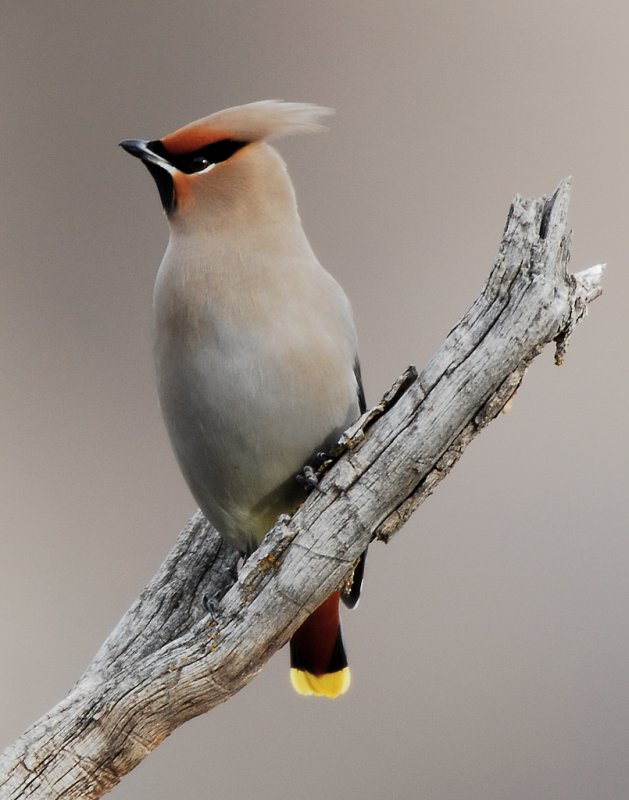
Waxwings are characterised by soft silky plumage. (Bombycilla, the genus name, is Vieillot’s attempt at Latin for “silktail”, translating the German name Seidenschwänze.) They have unique red tips to some of the wing feathers where the shafts extend beyond the barbs; in the Bohemian and cedar waxwings, these tips look like sealing wax, and give the group its common name
Long-tailed Silky-flycatcher (Ptilogonys caudatus) by Michael Woodruff
The silky-flycatchers are a small family, They were formerly lumped with waxwings and hypocolius in the family Bombycillidae, The family is named for their silky plumage and their aerial flycatching techniques, although they are unrelated to the Old World flycatchers (Muscicapidae) and the tyrant flycatchers (Tyrannidae).
They occur mainly in Central America from Panama to Mexico. They are related to waxwings, and like that group have soft silky plumage, usually gray or pale yellow in color. All species, with the exception of the black-and-yellow phainoptila, have small crests.
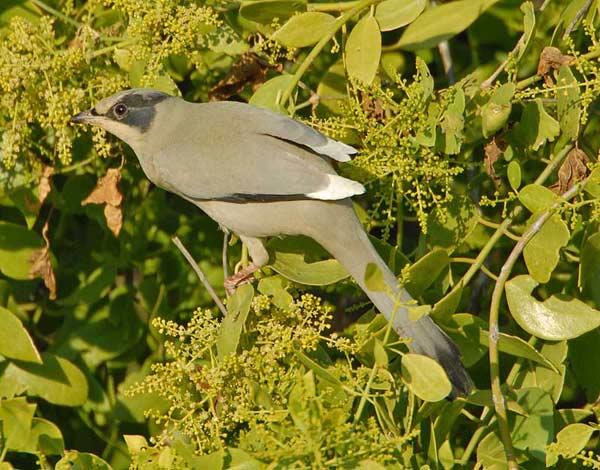
Grey Hypocolius (Hypocolius ampelinus) by Nikhil Devasar
The Grey Hypocolius or simply Hypocolius (Hypocolius ampelinus) is a small passerine bird species. It is the sole member of the genus Hypocolius and it is placed in a family of its own, the Hypocoliidae. This slender and long tailed bird is found in the dry semi-desert region of northern Africa, Arabia, Afghanistan, Pakistan, and western India. They fly in flocks and forage mainly on fruits, migrating south in winter.
The Palmchat (Dulus dominicus) is a small, long-tailed passerine bird, the only species in the genus Dulus and the family Dulidae. It is thought to be related to the waxwings, family Bombycillidae, and is sometimes classified with that group. The name reflects its strong association with palms for feeding, roosting and nesting. The Palmchat is the national bird of the Dominican Republic.
Kauai Oo (Moho braccatus) WikiC
Mohoidae is a family of Hawaiian species of recently extinct, nectarivorous songbirds in the genera Moho (ʻŌʻōs) and Chaetoptila (Kioea). These now extinct birds form their own family, representing the only complete extinction of an entire avian family in modern times, when the disputed family Turnagridae is disregarded for being invalid.
The Hylocitrea (Hylocitrea bonensis), also known as the yellow-flanked whistler or olive-flanked whistler, is a species of bird that is endemic to montane forests on the Indonesian island of Sulawesi. Has traditionally been considered a member of the family Pachycephalidae, but recent genetic evidence suggests it should be placed in a monotypic subfamily of the family Bombycillidae, or even its own family, Hylocitreidae.
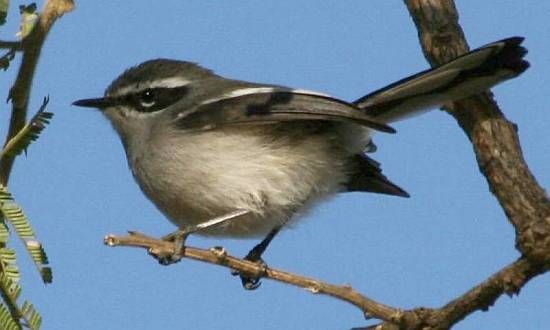
Stenostiridae, or the fairy flycatchers, are a family of small passerine birds proposed as a result of recent discoveries in molecular systematics. They are commonly referred to as stenostirid warblers. This new clade is named after the fairy flycatcher, a distinct species placed formerly in the Old World flycatchers. This is united with the “sylvioid flycatchers”: the genus Elminia (formerly placed in the Monarchinae) and the closely allied former Old World flycatcher genus Culicicapa, as well as one species formerly believed to be an aberrant fantail.
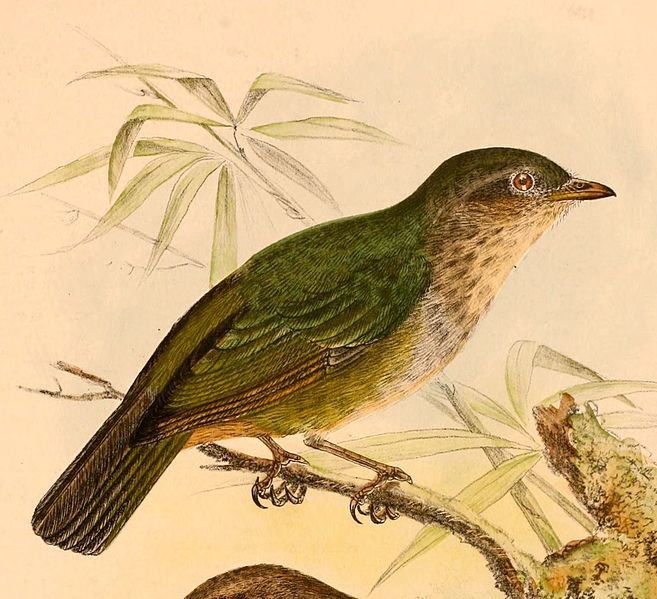
Nicator is a genus of songbird endemic to Africa. The genus contains three medium sized passerine birds. The name of the genus is derived from nikator, Greek for conqueror. Within the genus, the western and eastern nicators are considered to form a superspecies and are sometimes treated as the same species. The nicators occupy a wide range of forest and woodland habitats.
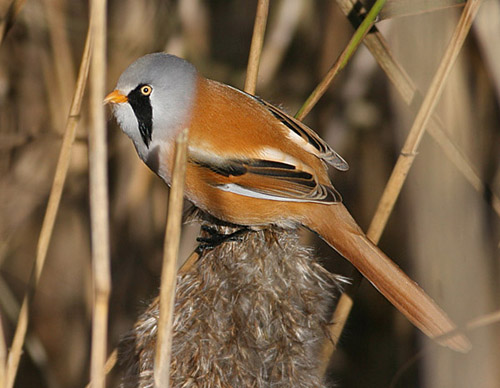
Bearded Reedling (Panurus biarmicus biarmicus) by Peter Ericsson male
The bearded reedling (Panurus biarmicus) is a small, reed-bed passerine bird. It is frequently known as the bearded tit, due to some similarities to the long-tailed tit, or the bearded parrotbill. The bearded reedling was placed with the parrotbills in the family Paradoxornithidae, after they were removed from the true tits in the family Paridae. However, according to more recent research, it is actually a unique songbird – no other living species seems to be particularly closely related to it. Thus, it seems that the monotypic family Panuridae must again be recognized. The bearded reedling is a species of temperate Europe and Asia.
(All data from Wikipedia)
This slideshow requires JavaScript.
Nay, in all these things we are more than conquerors through him that loved us. For I am persuaded, that neither death, nor life, nor angels, nor principalities, nor powers, nor things present, nor things to come, Nor height, nor depth, nor any other creature, shall be able to separate us from the love of God, which is in Christ Jesus our Lord. (Romans 8:37-39 KJV)
Listen to Megan Fee (Violin) and Jill Foster (Piano) as they play and watch the Lord’s beautiful avian creations.
“Oh The Deep, Deep, Love of Jesus” ~ Megan and Jill during communion.
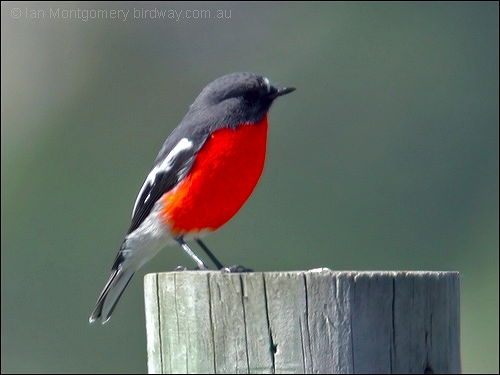
The Robins are all endemic to Australasia: New Guinea, Australia, New Zealand and numerous Pacific Islands as far east as Samoa. For want of an accurate common name, the family is often called the Australasian robins. There are 46 members presently. They are not related to our American Robin.
Flame Robin by Ian
Most species have a compact build with a large, rounded head, a short, straight bill, and rounded wingtips. They occupy a wide range of wooded habitats, from subalpine to tropical rainforest, and mangrove swamps to semi-arid scrubland. All are primarily insectivorous, although a few supplement their diet with seeds. Hunting is mostly by perch and pounce, a favoured tactic being to cling sideways onto a treetrunk and scan the ground below without moving.
They have long-term pair-bonds and small family groups. Most members practice cooperative breeding, with all family members helping defend a territory and feed nestlings. Nests are cup-shaped, usually constructed by the female, and often placed in a vertical fork of a tree or shrub. Many species are expert at adding moss, bark or lichen to the outside of the nest as camouflage, making it very difficult to spot, even when it is in a seemingly prominent location.
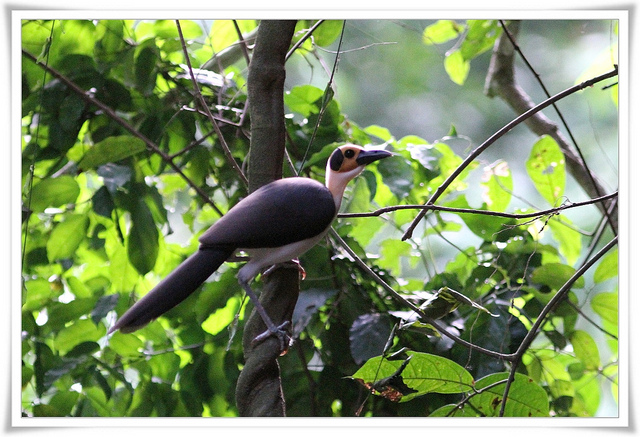
White-necked Rockfowl (Picathartes gymnocephalus) cc Ross@Texas
The White-necked and Grey-necked Rockfowls are the only members of the Picatharitidae family. They are also called “bald crows’ and are found in the rain-forests of tropical west and central Africa. They have unfeathered heads, and feed on insects and invertebrates picked from damp rocky areas. Both species are totally non-migratory, being dependent on a specialised rocky jungle habitat.
They are large (33–38 centimetres (13–15 in) long) passerines with crow-like black bills, long neck, tail and legs. They weigh between 200–250 grams (7.1–8.8 oz). The strong feet and grey legs are adapted to terrestrial movement, and the family progresses through the forest with long bounds on the ground. The wings are long but are seldom used for long flights. Rockfowl are generalized feeders, taking a wide range of invertebrate prey.
He is the Rock, His work is perfect; For all His ways are justice, A God of truth and without injustice; Righteous and upright is He. (Deuteronomy 32:4 NKJV)
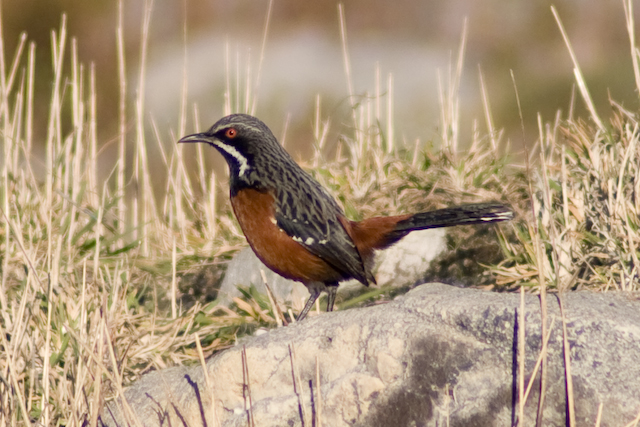
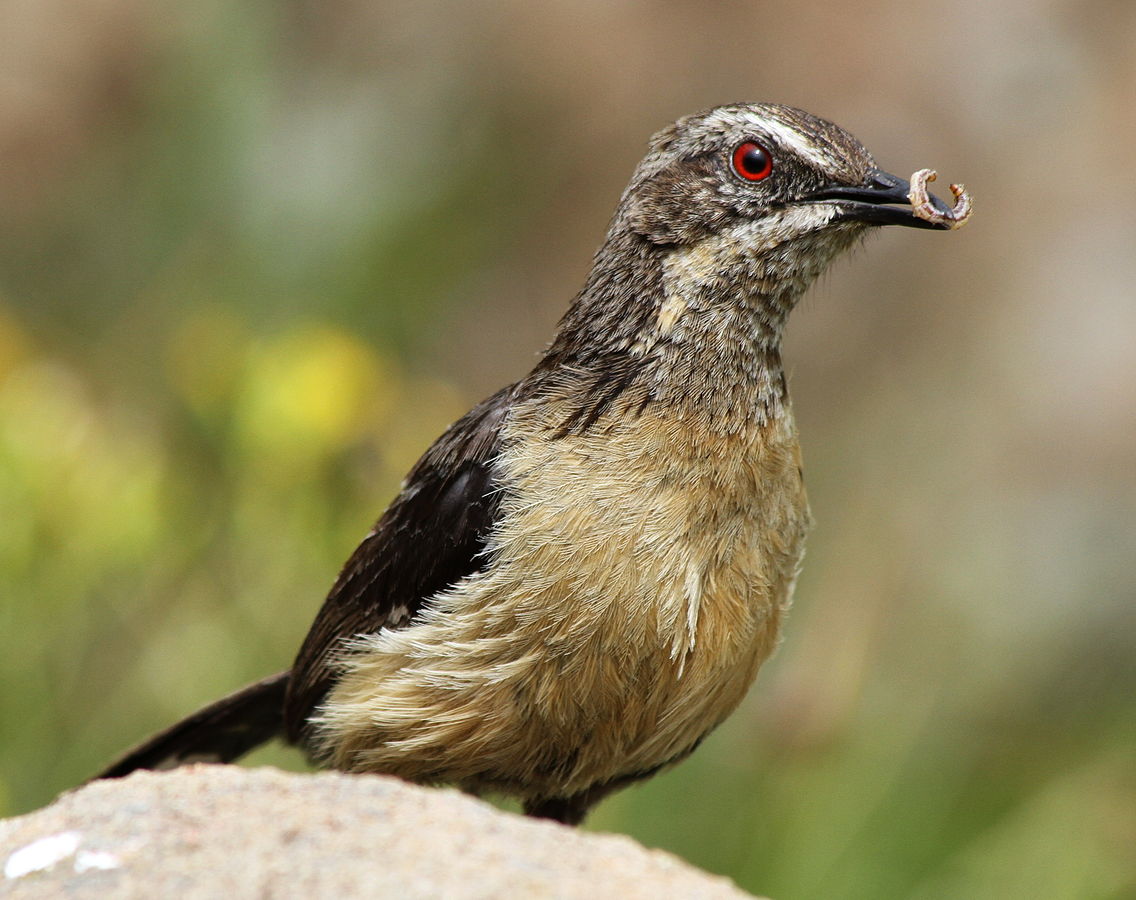
The Rockjumpers are medium-sized insectivorous or omnivorous birds in the genus Chaetops, which constitutes the entire family Chaetopidae. The two species, the Cape Rockjumper,, and the Drakensberg Rockjumper, are endemic residents of southern Africa. The Cape Rockjumper is a resident of the West Cape and SW East Cape, and the Orange-breasted (or Drakensberg) Rockjumper is distributed in the Lesotho highlands and areas surrounding this in South Africa. These are birds with mostly brown and red plumage. Both with long, white tipped black tails, black throats, broad white submoustachial lines, rufous or orange bellies and rumps and grey and black patterned backs and wings.[The iris is red and the bills and legs are black. Their wings are very small and they do not fly very often. They spend most of their lives running and jumping among rocks and grasses while hunting insects.
Rail-babbler (Eupetes macrocerus) by Peter Ericsson
The Rail-babbler or Malaysian Rail-babbler (Eupetes macrocerus) is a strange, rail-like, brown and pied inhabitant of the floor of primary forest in the Malay Peninsula and Sumatra (the nominate subspecies macrocerus), as well as Borneo (ssp. borneensis), distantly related to African crow-like birds. Its population has greatly decreased, however, it is locally still common in logged forest or on hill-forest on slopes. The species is poorly known and rarely seen, in no small part due to its shyness.
Each will be like a hiding place from the wind, a shelter from the storm, like streams of water in a dry place, like the shade of a great rock in a weary land. (Isaiah 32:2 ESV)
Therefore if any man be in Christ, he is a new creature: old things are passed away; behold, all things are become new. (2 Corinthians 5:17 KJV)
After taking a break from the Song Birds, passerines, last week, we will continue presenting these lovely and interesting birds. So far, we have seen 54 families of the 125. Lord willing over the following weeks, the rest of them will be shown.
The families shown this week are some more of the Lord’s most interesting and colorful creations. Their beauty and variations are amazing.
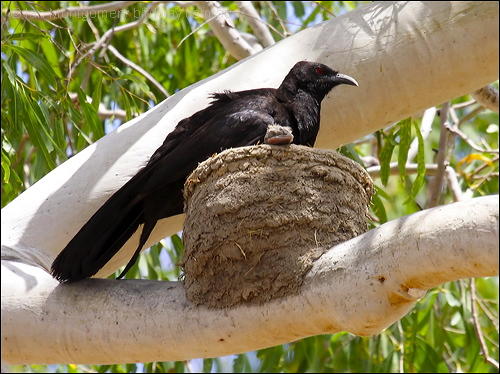
The Australian Mudnesters are an ambitious family. As the family name implies, they construct their nest with mud, yet, they have different names. There are only two, the White-winged Chough and the Apostlebird.
White-winged Chough (Corcorax melanoramphos) in mud nest by Ian
Next are the two birds from the Melamampittas. The Lesser and Greater Melampitta.
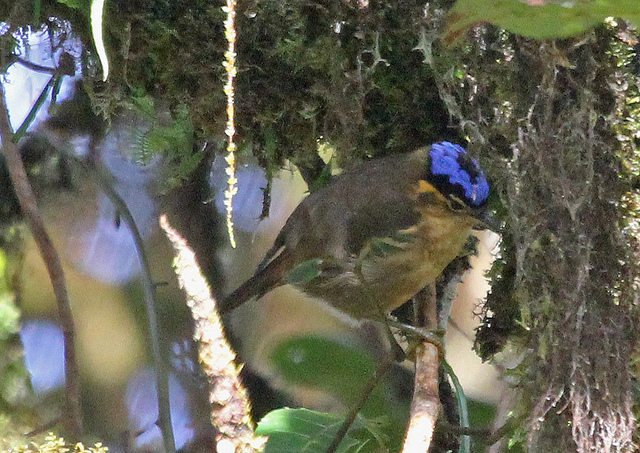
The Blue-capped Ifrita is the only member of the Ifritidae – Ifrita family. is a small insectivorous bird endemic to the rainforests of New Guinea. It measures up to 6.5 in/16.5 cm long and has yellowish brown plumage with a blue and black crown. The male has a white streak behind its eye, while the female’s is a dull yellow. It creeps on trunks and branches in search of insects.
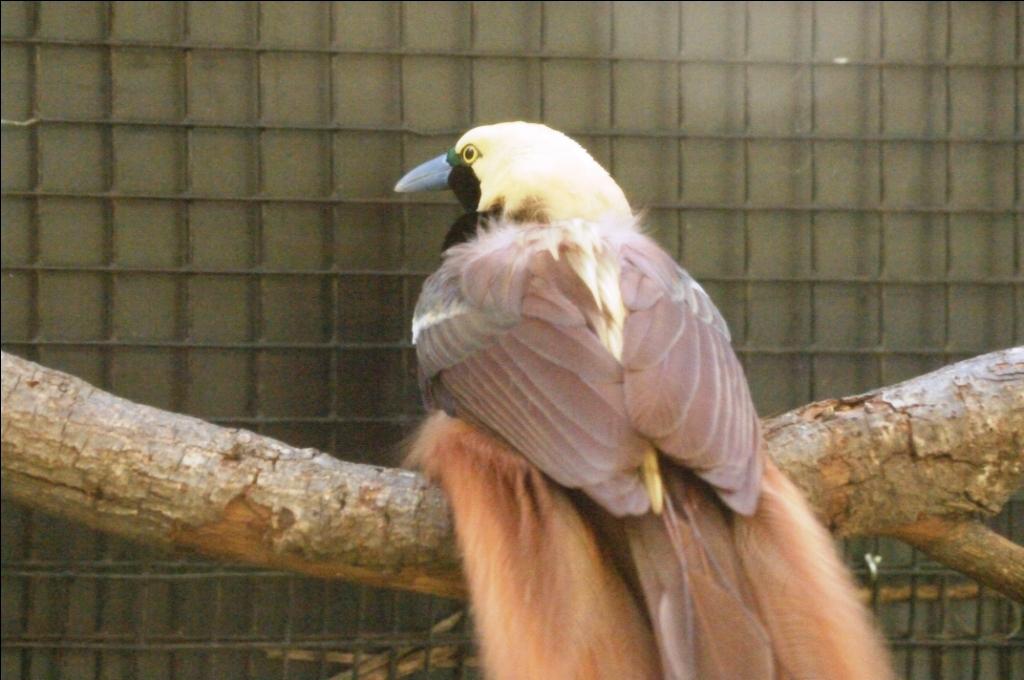
Raggiana Bird-of-paradise (Paradisaea raggiana) by Dan
The Birds-of-paradise family has quite a reputation. The males put on quite a show while showing off for the female’s attention. The Paradisaeidae Family has 41 species. “The majority of species are found in New Guinea and its satellites, with a few in the Maluku Islands and eastern Australia. The members of this family are perhaps best known for the plumage of the males.” (Wikipedia) Not all the members are called Birds-of-paradise. There are Sicklebills, Parotias, Astrapia, Manucodes and a Paradise-crow also.
Because of their plumage/feathers several of their members are becoming endangered. We have seen them in zoos because of their protection and breeding programs.
And have put on the new man, which is renewed in knowledge after the image of him that created him: (Colossians 3:10 KJV)
This slideshow requires JavaScript.
“I Heard The Voice of Jesus” ~ By Sean Fielder from Faith (His pet African Grey was in the room.)
The LORD is my chosen portion and my cup; you hold my lot. The lines have fallen for me in pleasant places; indeed, I have a beautiful inheritance. (Psalms 16:5-6 ESV)
Here in the United States, yesterday was celebrated as “Independence Day” or more commonly called the “Forth Of July.” The Lord has blessed the country through the years because the people chose to look to the Lord, the Creator, for guidance. Today is another story, but that is not the point of this article.
We really should be celebrating “Dependence Day” to thank the Lord God for giving us the privilege to be born and/or live here.
So then it depends not on human will or exertion, but on God, who has mercy. (Romans 9:16 ESV)
We are thankful for this country and while the Orchestra plays the “Military Medley” enjoy some of the sights of the Land of the Home and the Brave. These are just photos from some of our recent trips that make me appreciate our country. Many are military, but also museums, scenery from our great land of the free and nostalgia things from the past.
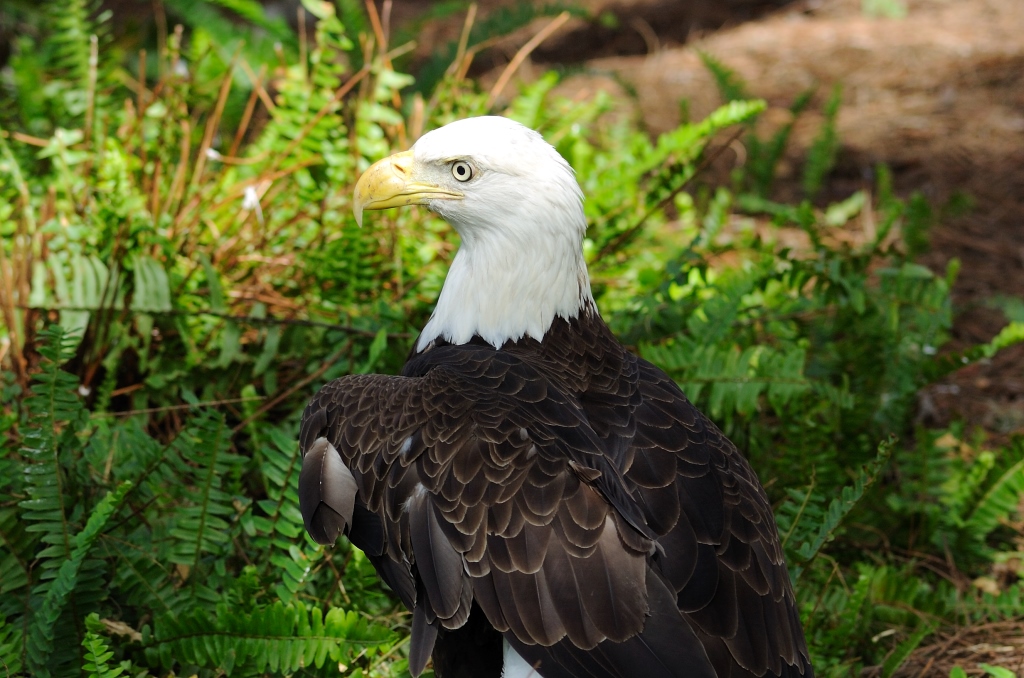
P.S. Other than the Eagles, I gave the birds a rest. :)
And He made from one [common origin, one source, one blood] all nations of men to settle on the face of the earth, having definitely determined [their] allotted periods of time and the fixed boundaries of their habitation (their settlements, lands, and abodes), So that they should seek God, in the hope that they might feel after Him and find Him, although He is not far from each one of us. For in Him we live and move and have our being; (Acts 17:26-28a AMP)
Florida Scrub Jay (Aphelocoma coerulescens) by Dan
The Corvidae Family has 143 species, of which many are known to people around the world. A member of this family, the Raven is a well recognized Bird of the Bible. On our recent vacation, in Arizona we were able to see a wild Common Raven and a Stellar’s Jay for the first time. Was able to add these to my Life List of Birds on eBird.
American Crow (Corvus brachyrhynchos) Wild SD Zoo Day by Lee
Steller’s Jay (Cyanocitta stelleri) by Lee at Desert Museum AZ
The Corvidae Family not only has Crows, Ravens, and Jays, but the family also hosts; the Choughs, Treepies, Magpies, Bushcrow, Nutcrackers, Jackdaws, and the Rook.
“They are considered the most intelligent of the birds, and among the most intelligent of all animals, having demonstrated self-awareness in mirror tests (European magpies) and tool-making ability (crows, rooks)—skills until recently regarded as solely the province of humans and a few other higher mammals. Their total brain-to-body mass ratio is equal to that of great apes and cetaceans, and only slightly lower than in humans.
They are medium to large in size, with strong feet and bills, rictal bristles, and a single moult each year (most passerines moult twice). Corvids are found worldwide except for the tip of South America and the polar ice caps. The majority of the species are found in tropical South and Central America, southern Asia and Eurasia, with fewer than 10 species each in Africa and Australasia, and Australia.” (Wikipedia)
Could this intelligent family of created birds from the Creator’s Hand be the reason the Raven was chosen by Noah?
And it came to pass at the end of forty days, that Noah opened the window of the ark which he had made: And he sent forth a raven, which went forth to and fro, until the waters were dried up from off the earth. (Genesis 8:6-7 KJV)
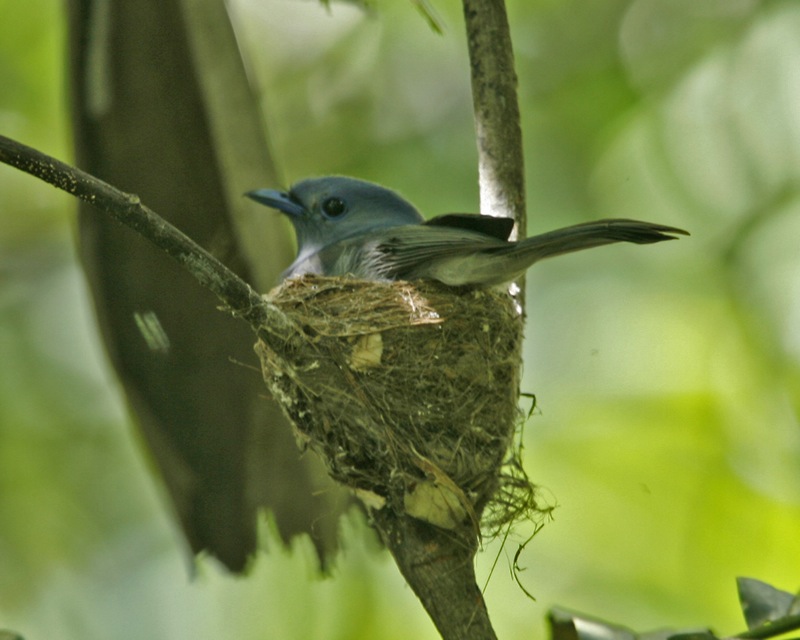
This Sunday we introduce you to the Monarchidae – Monarchs Family. This family of Passerines (songbirds) has 99 members that inhabit forest or woodland across sub-Saharan Africa, south-east Asia, Australasia and a number of Pacific islands. Only a few species migrate. Many species decorate their cup-shaped nests with lichen. Monarchids are small insectivorous songbirds with long tails.
The family is about equally divided between Monarchs and Flycatchers with a few other birds sprinkled in. Those other birds are Elepaio, Shrikebill, Magpie-lark and Torrent-lark. There are not many photos available to use, but if you click the different links on the Monarchidae – Monarchs Family page, you will taken to other sites to view those birds.
The monarch flycatchers are generally monogamous, with the pair bonds ranging from just a single season (as in the African paradise flycatcher) to life (the Elepaio). Only three species are known to engage in cooperative breeding; but many species are as yet unstudied. They are generally territorial, defending territories that are around 2 ha in size, but a few species may cluster their nesting sites closely together. The nests are in turn often aggressively defended by monarch flycatchers. In all species the nest is an open cup on a branch, fork or twig. In some species the nests can be highly conspicuous.
This slideshow requires JavaScript.
Looking unto Jesus the author and finisher of our faith; who for the joy that was set before him endured the cross, despising the shame, and is set down at the right hand of the throne of God. (Hebrews 12:2 KJV)
“He’s Looking on You” ~ by Dr. Richard Gregory
Jesus more than qualifies to be The Monarch and is Rightfully sitting on the Throne of God. There He is “looking on us.”
A monarch is the sovereign head of state in a monarchy. A monarch may exercise the most and highest authority in the state or others may wield that power on behalf of the monarch. Typically a monarch either personally inherits the lawful right to exercise the state’s sovereign rights (often referred to as the throne or the crown) or is selected by an established process from a family or cohort eligible to provide the nation’s monarch. (Wikipedia)
Thou shalt fan them, and the wind shall carry them away, and the whirlwind shall scatter them: and thou shalt rejoice in the LORD, and shalt glory in the Holy One of Israel. (Isaiah 41:16 KJV)
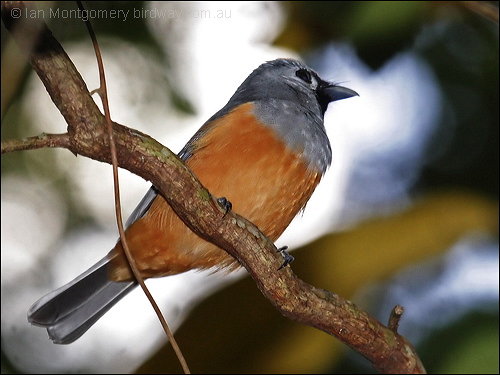
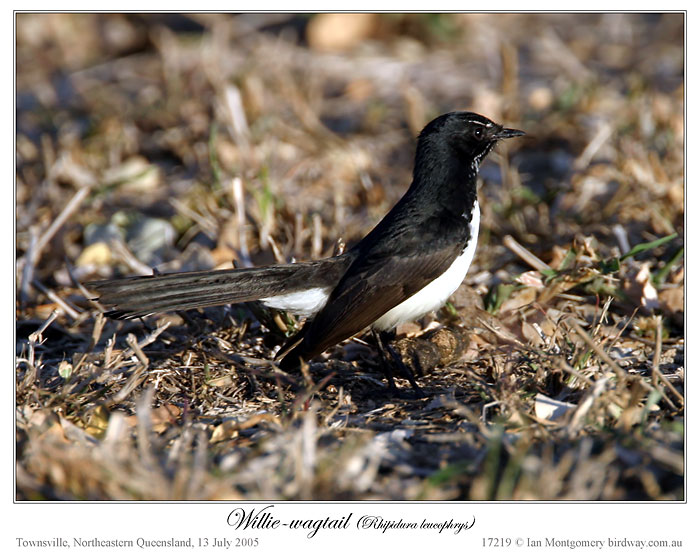
This week’s Inspiration comes from the Rhipiduridae – Fantails Family. You can see by Ian Montgomery’s photo above where their name came from. This family of birds has 50 species. All but three are Fantails. The other three are the Willie Wagtail, Silktail, and the Pygmy Drongo.
Fantails are small insectivorous birds of Australasia, Southeast Asia and the Indian subcontinent belonging to the genus Rhipidura in the family Rhipiduridae. Most of the species are about 15 to 18 cm long, specialist aerial feeders, and named as “fantails”, but the Australian willie wagtail, is a little larger, and though still an expert hunter of insects on the wing, concentrates equally on terrestrial prey.
Willie Wagtail (Rhipidura leucophrys) on Wallaby by Ian
The willie (or willy) wagtail (Rhipidura leucophrys) is a passerine bird native to Australia, New Guinea, the Solomon Islands, the Bismarck Archipelago, and Eastern Indonesia. It is a common and familiar bird throughout much of its range, living in most habitats apart from thick forest. Measuring 19–21.5 cm (71⁄2–81⁄2 in) in length, the willie wagtail is contrastingly coloured with almost entirely black upperparts and white underparts; the male and female have similar plumage.
The silktail (Lamprolia victoriae) is a species of bird endemic to Fiji. It is the only member of the genus Lamprolia. This beautiful bird looks superficially like a diminutive bird of paradise but it is actually closely related to the fantails.
The pygmy drongo or Papuan drongo (Chaetorhynchus papuensis) is a species of bird endemic to the island of New Guinea. It is the only species in the genus Chaetorhynchus. The species was long placed within the drongo family Dicruridae, but it differs from others in that family in having twelve rectrices instead of ten. Molecular analysis also supports moving the species out from the drongo family, instead placing it as a sister species to the Silktail of Fiji, and both those species in the fantail family Rhipiduridae. Some authorities reference the bird as the pygmy drongo-fantail. (Information from Wikipedia)
This slideshow requires JavaScript.
For which cause I remind you to fan into flame the gift of God which is in you through the laying on of my hands. (2 Timothy 1:6 LITV)
Today we have the Figbirds, Orioles and Drongo which reside in two more Passerine families. The Pitohuis are included and are members in the Oriolidae – Figbirds, Orioles Family.
Whoso keepeth the fig tree shall eat the fruit thereof: so he that waiteth on his master shall be honoured. (Proverbs 27:18 KJV)
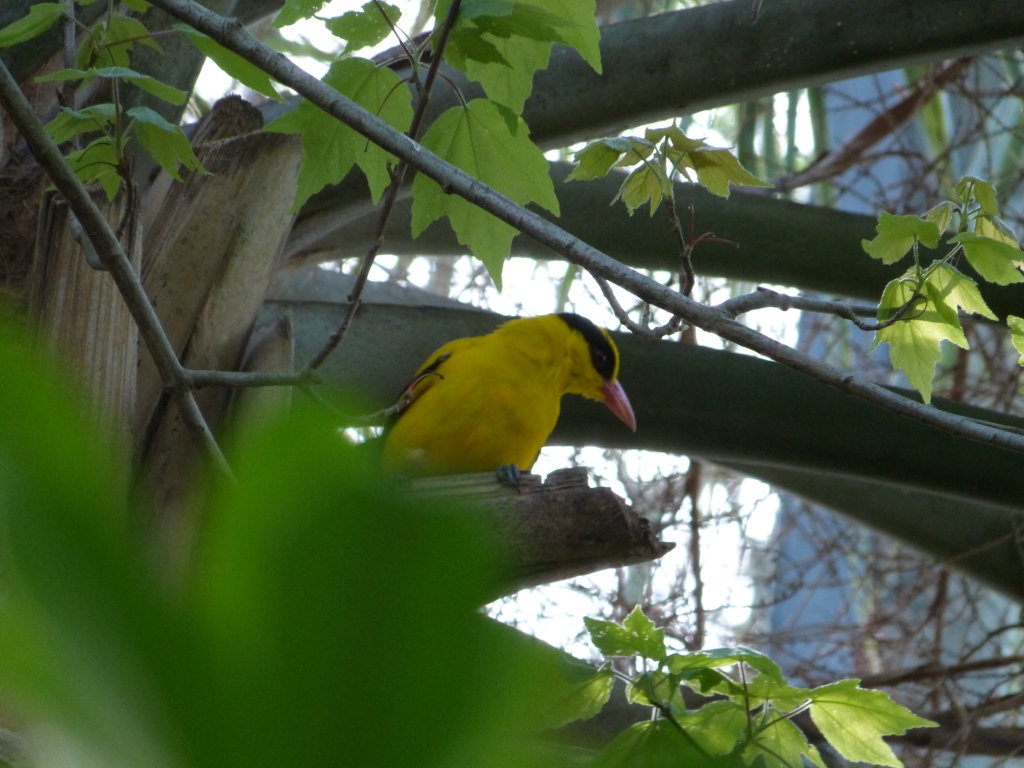
Black-naped Oriole Lowry Park Zoo by Lee
The Old World Orioles (Oriolidae – Figbirds, Orioles) are an Old World family of passerine birds that has 38 members. The orioles and figbirds are medium-sized passerines, around 20–30 cm in length, with the females only slightly smaller than the males. The beak is slightly curved and hooked, and, except in the figbirds, as long again as the head. The plumage of most species is bright and showy, although the females often have duller plumage than the males do. The plumage of many Australasian orioles mimics that of friarbirds (a genus of large honeyeaters), probably to reduce aggression against the smaller orioles. The family is distributed across Africa, Europe, Asia, and Australia. The few temperate nesting species are migratory, and some tropical species also show seasonal movements. Orioles are arboreal and tend to feed in the canopy.
The Dicruridae – Drongos has 25 species. These insectivorous birds are usually found in open forests or bush. Most are black or dark grey in colour, sometimes with metallic tints. They have long forked tails; some Asian species have elaborate tail decorations. They have short legs and sit very upright whilst perched, like a shrike. They flycatch or take prey from the ground. Some drongos, especially the greater racket-tailed drongo, are noted for their ability to mimic other birds and even mammals.
Two to four eggs are laid in a nest high in a tree. Despite their small size, they are aggressive and fearless, and will attack much larger species if their nest or young are threatened.
The word drongo is used in Australia as a mild form of insult tantamount to the term “idiot”. This usage derives from an Australian racehorse of the same name (apparently after the spangled drongo, Dicrurus bracteatus) in the 1920s that never won despite many starts. (Info from Wikipedia)
This slideshow requires JavaScript.
Jesus answered and said unto them, Verily I say unto you, If ye have faith, and doubt not, ye shall not only do this which is done to the fig tree, but also if ye shall say unto this mountain, Be thou removed, and be thou cast into the sea; it shall be done. And all things, whatsoever ye shall ask in prayer, believing, ye shall receive. (Matthew 21:21-22 KJV)
Listen to The Hyssongs play and sing as you watch these two beautifully created families of birds:
Look at the birds of the air, for they neither sow nor reap nor gather into barns; yet your heavenly Father feeds them. Are you not of more value than they? (Matthew 6:26 NKJV)
Shrikes are passerine birds of the family Laniidae. The family is composed of thirty-three species in three genera. The family name, and that of the largest genus, Lanius, is derived from the Latin word for “butcher”, and some shrikes are also known as “butcher birds” because of their feeding habits. They are fairly closely related to the bush-shrike family Malaconotidae.
Most shrike species have a Eurasian and African distribution, with just two breeding in North America (the loggerhead and great grey shrikes). There are no members of this family in South America or Australia, although one species reaches New Guinea. The shrikes vary in the extent of their ranges, with some species like the great grey shrike ranging across the northern hemisphere to the Newton’s fiscal which is restricted to the island of São Tomé. They inhabit open habitats, especially steppe and savannah. A few species of shrike are forest dwellers, seldom occurring in open habitats. Some species breed in northern latitudes during the summer, then migrate to warmer climes for the winter.
Shrikes are medium-sized birds, up to 50 cm (20 in) in length, with grey, brown, or black and white plumage. Their beaks are hooked, like that of a bird of prey, reflecting their predatory nature, and their calls are strident.
Shrikes are known for their habit of catching insects and small vertebrates and impaling their bodies on thorns, the spikes on barbed-wire fences or any available sharp point. This helps them to tear the flesh into smaller, more conveniently sized fragments, and serves as a cache so that the shrike can return to the uneaten portions at a later time.
Yellow-throated Vireo (Vireo flavifrons) by Anthony 747
By them the birds of the heavens have their home; They sing among the branches. (Psalms 104:12 NKJV)
The vireos make up a family, Vireonidae, of small to medium-sized passerine birds (mostly) restricted to the New World. They are typically dull-plumaged and greenish in color, the smaller species resembling wood warblers apart from their heavier bills. They range in size from the Chocó vireo, dwarf vireo and lesser greenlet, all at around 10 centimeters and 8 grams, to the peppershrikes and shrike-vireos at up to 17 centimeters and 40 grams.
Most species are found in Middle America and northern South America. Thirteen species of true vireos occur farther north, in the United States, Bermuda and Canada; of these all but Hutton’s vireo are migratory. Members of the family seldom fly long distances except in migration (Salaman & Barlow 2003). They inhabit forest environments, with different species preferring forest canopies, undergrowth, or mangrove swamps.
Males of most species are persistent singers. Songs are usually rather simple, monotonous in some species of the Caribbean littoral and islands, and most elaborate and pleasant to human ears in the Chocó vireo and the peppershrikes. (Info from Wikipedia)
*
This slideshow requires JavaScript.
And God Almighty bless thee, and make thee fruitful, and multiply thee, that thou mayest be a multitude of people; (Genesis 28:3 KJV)
And Jacob said unto Joseph, God Almighty appeared unto me at Luz in the land of Canaan, and blessed me, (Genesis 48:3 KJV)
Saying, We give thee thanks, O Lord God Almighty, which art, and wast, and art to come; because thou hast taken to thee thy great power, and hast reigned. (Revelation 11:17 KJV)
And they sing the song of Moses the servant of God, and the song of the Lamb, saying, Great and marvellous are thy works, Lord God Almighty; just and true are thy ways, thou King of saints. (Revelation 15:3 KJV)
Listen to Nell Reese play as you watch these two beautifully created families of birds:
But whoso keepeth his word, in him verily is the love of God perfected: hereby know we that we are in him. (1 John 2:5 KJV)
For this is the love of God, that we keep his commandments: and his commandments are not grievous. (1 John 5:3 KJV)
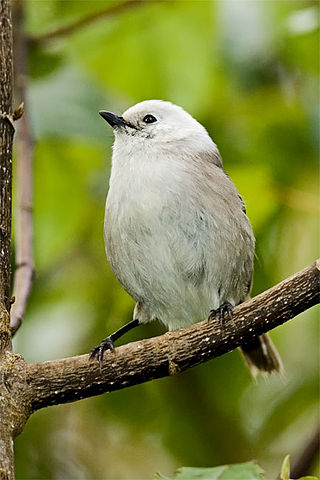
Mohoua is a small genus of three bird species endemic to New Zealand. Their taxonomic placement has presented problems: They have typically been placed in the Pachycephalidae family (whistlers), but in 2013 it was established that they are best placed in their own family, Mohouidae.
All three species display some degree of sexual dimorphism in terms of size, with the males being the larger of the two sexes. Mohoua are gregarious and usually forage in groups . They also forage in mixed species flocks at times, frequently forming the nucleus of such flocks. Social organization and behavior is well documented for all three Mohoua species; cooperative breeding has been observed in all three species and is common in the Whitehead and Yellowhead. The three species of this genus are the sole hosts for the Long-tailed Cuckoo which acts as a brood parasite upon them, pushing their eggs out of the nest and laying a single one of its own in their place so that they take no part in incubation of their eggs or in raising their young.
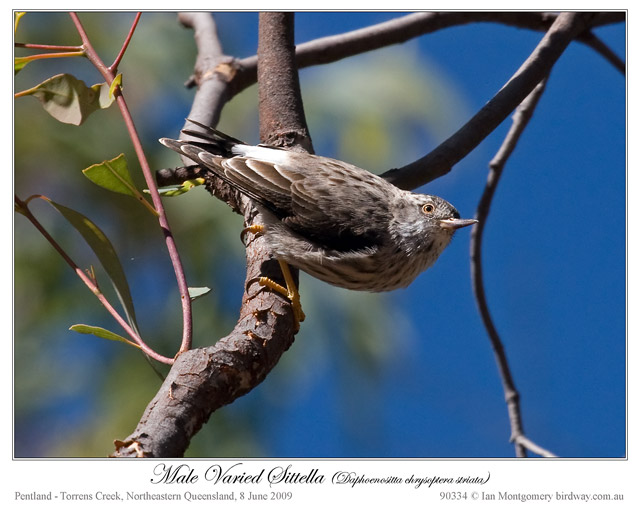
Varied Sittella (Daphoenositta chrysoptera) Male by Ian
The three Sittellas are in the Neosittidae family. are small passerines which resemble nuthatches in appearance.[1] The wings are long and broad, and when spread have clearly fingered tips. The family has a generally weak flight, which may explain their inability to colonize suitable habitat on islands like Tasmania. The legs are short but they have long toes, but in spite of their lifestyle they show little adaptation towards climbing. They have short tails and are between 10–14 cm in length and 8–20 g in weight, with the black sittella tending to be slightly larger and heavier. The bill is dagger shaped in the case of the black sittella and slightly upturned in the varied sittella. The plumage of the black sittella is mostly black with a red face; that of the varied sittella is more complex, with the numerous subspecies having many variations on the theme. The calls of sittellas are generally simple and uncomplicated. The sittellas are social and generally restless birds of scrub, forests and woodlands. In Australia they generally avoid only the dense rainforest, whereas in New Guinea this is the only habitat they inhabit, avoiding only lowland forest.
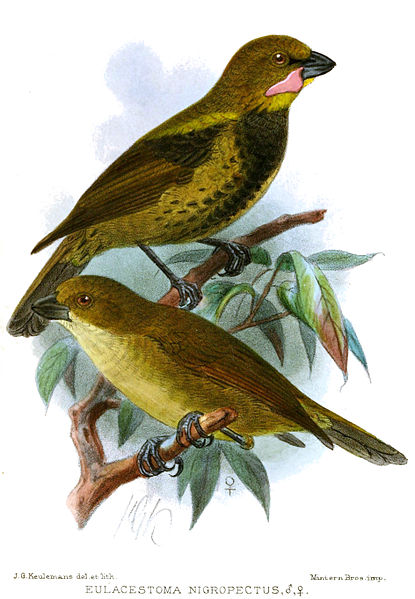
The Wattled Ploughbill is a small, approximately 14 cm long, olive-brown songbird with a strong, thick, wedge-shaped black bill, used to plough into dead tree branches, bark and twigs in search for its insects diet. The sexes are different. The male has black underparts, black wings and a large circular pink wattle on the cheek. The female has olive-green plumage and pale olive below. Only the adult male has wattles.
The only member of the monotypic genus Eulacestoma and family Eulacestomidae, the wattled ploughbill is distributed and endemic to central mountain ranges of New Guinea. The diet consists mainly of insects.
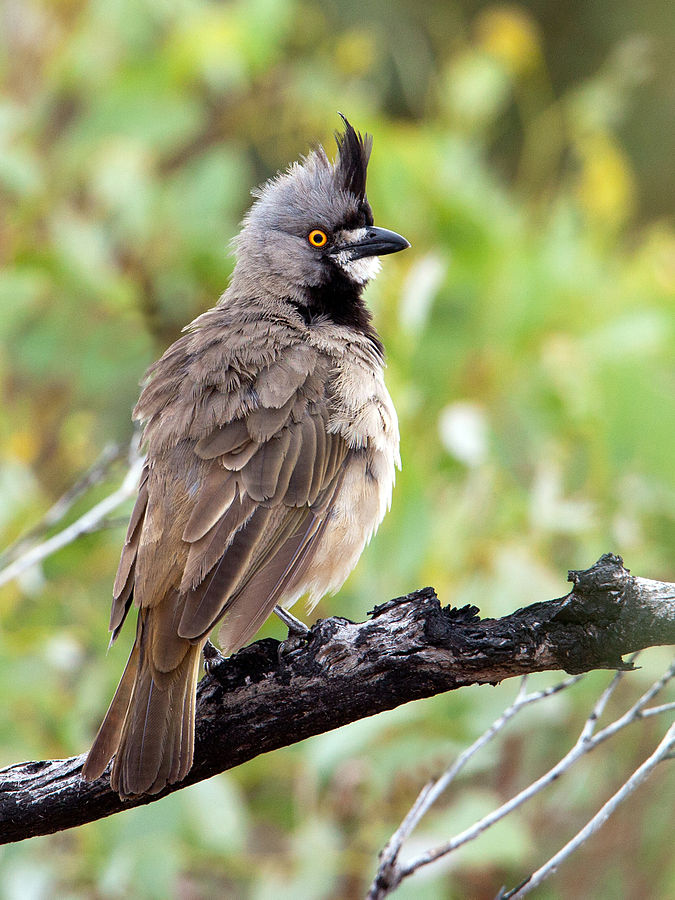
Oreoicidae is a newly recognized family of small insectivorous songbirds, formerly placed in the Old World warbler “wastebin” family. It contains 3 species, all in different genera. Rufous-naped Whistler, Crested Pitohui and Crested Bellbird.
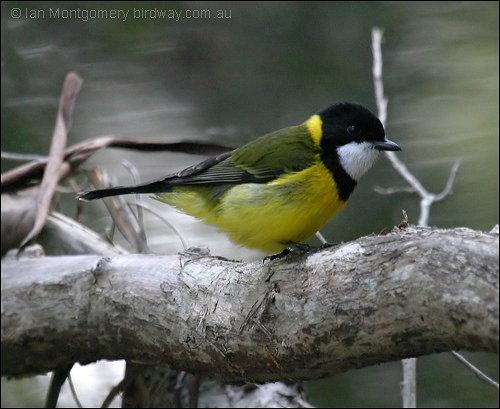
Australian Golden Whistler (Pachycephala pectoralis) by Ian
The Whistler family has 56 species. The family Pachycephalidae, collectively the whistlers, includes the whistlers, shrikethrushes, shriketits, pitohuis and crested bellbird, and is part of the ancient Australo-Papuan radiation of songbirds. Its members range from small to medium in size, and occupy most of Australasia. Australia and New Guinea are the centre of their diversity, and in the case of the whistlers, the South Pacific islands as far as Tonga and Samoa and parts of Asia as far as India. The exact delimitation of boundaries of the family are uncertain.
This slideshow requires JavaScript.
For I am persuaded, that neither death, nor life, nor angels, nor principalities, nor powers, nor things present, nor things to come, Nor height, nor depth, nor any other creature, shall be able to separate us from the love of God, which is in Christ Jesus our Lord. (Romans 8:38-39 KJV)
He that loveth not knoweth not God; for God is love. In this was manifested the love of God toward us, because that God sent his only begotten Son into the world, that we might live through him. Herein is love, not that we loved God, but that he loved us, and sent his Son to be the propitiation for our sins. (1 John 4:8-10 KJV)
Listen to Dr. Richard Gregory sing as you watch these five beautifully created families of birds:












 Lee's Birdwatching Adventures Plus