Scripture Alphabet of Animals: The Scorpion

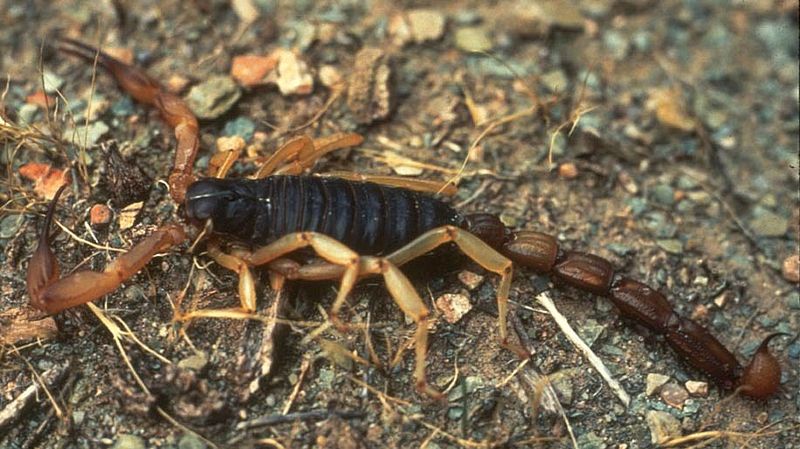
Bark Scorpion©WikiC

Scripture Alphabet of Animals: The Scorpion

By Harriet N. Cook (1814-1843)

This frightful creature is several times mentioned in the Bible. It is the largest among insects, and more dangerous than any of them. It is sometimes found in Europe, and is there about four inches long; but those of hot countries are sometimes more than a foot in length.

The scorpion is very easily made angry, and then its sting is terrible; it very often causes death, but not always. In Revelation, 9:5, 6, we read,

And their torment was as the torment of a scorpion when he striketh a man; and in those days shall men seek death and shall not find it: and shall desire to die, and death shall flee from them.
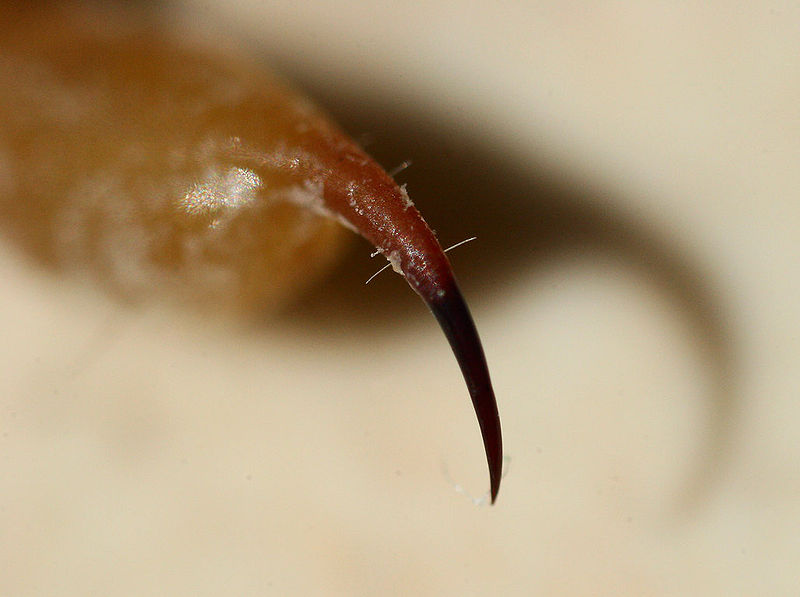
Barb of an AZ Bark Scorpion©Wikipedia

Barb of an AZ Bark Scorpion©Wikipedia

This shows that the pain caused by their sting is very great. When a person has been stung by a scorpion, the part around the wound swells and becomes very painful, the hands and feet become cold, the skin is pale, and there is a feeling as though there were needles in every part of it. This pain often increases and rages until the person dies in great suffering.

It is well for man that scorpions destroy each other as readily as they do animals of a different kind. It is said that a hundred were once put together under a glass, where they immediately began to attack and kill each other; so that in a few days only fourteen were left alive. I have heard that if a circle of alcohol or spirit of any sort, is set on fire, and a scorpion placed within it so that he cannot get out on any side, he will sting himself so as to cause his death. I am not certain that this is true, and it would be a very cruel thing to try it even upon so dangerous an animal as the scorpion.

It seems that this creature was sometimes seen in the wilderness through which the children of Israel passed. When they had nearly reached the end of their journey, Moses reminded them to praise God for having kept them safely in so many dangers, while passing through

that great and terrible wilderness, wherein were fiery serpents, and scorpions and drought; where there was no water.

Our Savior asks,

If a son shall ask of his father an egg, will he give him a scorpion?
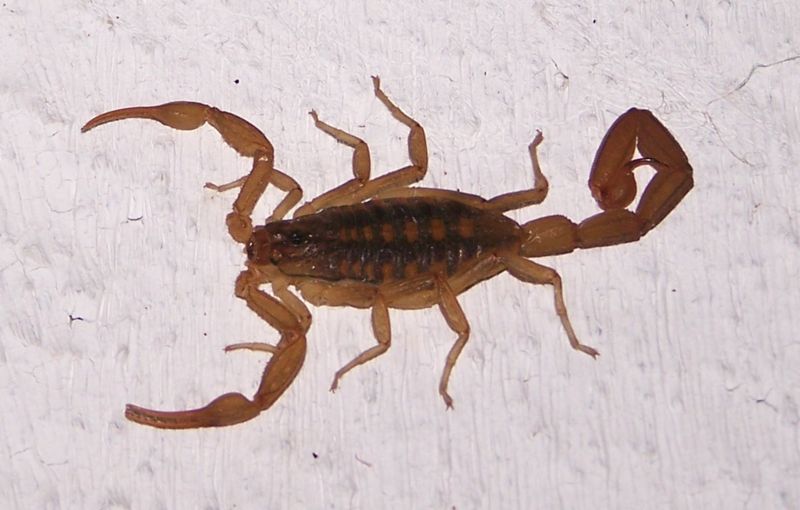
Scorpion - (Centruroides vittatus)©WikiC

Scorpion – (Centruroides vittatus)©WikiC

The scorpions in that country are about as large as an egg, and when rolled up look a little like one. Yet no father would be so wicked as to give one to his child instead of the egg which he needed for food.

Christ once said to his disciples, when they were going out to preach and to heal the diseases of the people,

Behold I give you power to tread on serpents and scorpions, and nothing shall by any means hurt you.

This was a very wonderful power; and whoever should see one of those disciples tread on the terrible scorpion without being hurt, would know that Christ was surely with him to take care of him.

___
See:

Harriet Newell Cook – Scripture Alphabet of Animals

Nave’s Topical Bible – Scorpion

Torrey’s Topical Textbook – Scorpion

(Photos ©WikiC)

*
Scripture Alphabet of Animals: The Roe or Gazelle

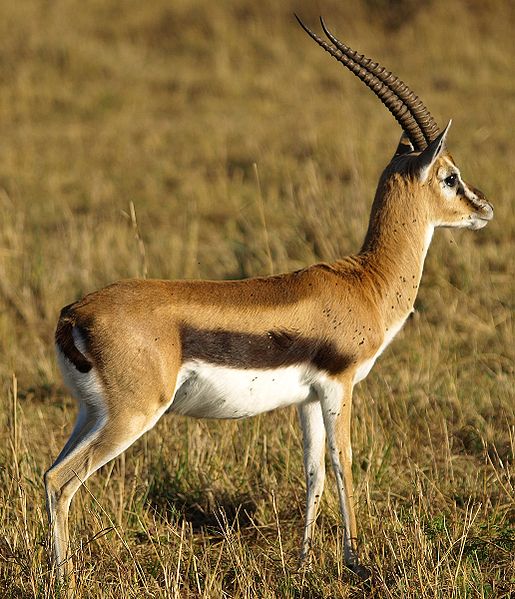
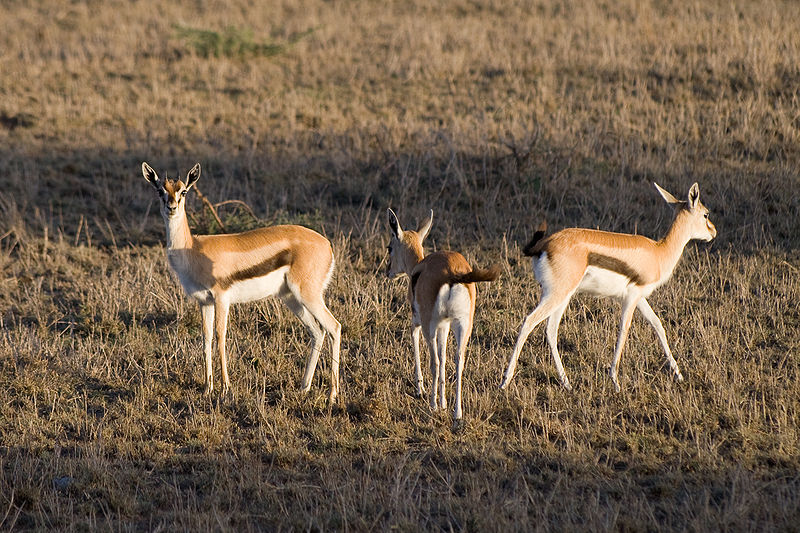
Thomson's Gazelles©WikiC

Scripture Alphabet of Animals: The Roe or Gazelle

By Harriet N. Cook (1814-1843)

The roe belongs to the class of antelopes-animals very much resembling the deer; they are equally innocent and beautiful, and are often mentioned together in the Bible. The form of the antelope is, if possible, still more graceful than that of the deer, and its limbs still more delicate; but the principal difference between them is in the horns. Those of the deer grow from the bone of the forehead, and are at first small; but they are renewed every spring-the old horns falling off, and being succeeded by larger ones which grow in their place. They are at first covered with a soft, downy substance, called “the velvet;” but this soon comes off in fragments, leaving the horn white and smooth. The antelope never sheds its horns.

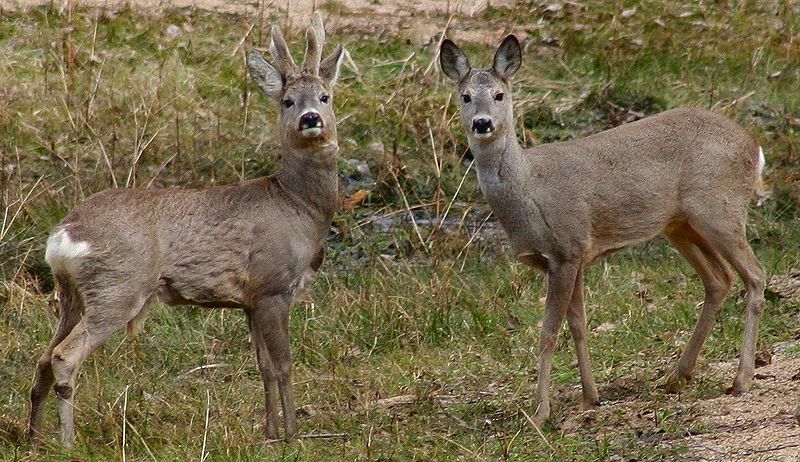
Roe Deer (Capreolus capreolus)©WikiC

Roe Deer (Capreolus capreolus)©WikiC

The roe or gazelle is the smallest animal of the antelope kind; it is only about two feet in height, and not more than half the size of the fallow-deer. Its eyes are remarkably soft and expressive; so that the people of those countries sometimes say of a beautiful woman,

She has the eyes of a gazelle.

Like the hart and hind, it is noted for its swiftness: so we read, in 1st Chronicles, 12 : 8, of men who were

as swift as the roes upon the mountains.

In 2d Samuel, 2 : 18, it is said,

And Asahel was as light of foot as a wild roe;

and in the Song of Solomon,

The voice of my beloved ! behold he cometh leaping upon the mountains, skipping upon the hills: my beloved is like a roe or a young hart.

The gazelle is often pursued in the chase; so Solomon says,

Deliver thyself as a roe from the hand of the hunter.

Thomson's Gazelle at Masai Mara, Kenya©WikiC

Thomson’s Gazelle at Masai Mara, Kenya©WikiC

They go in very large companies, sometimes as many as two or three thousand; and they are still found in great numbers on the hills of Judea, the land where our Savior lived and died.

“The wild gazelle o’er Judah’s hills
‘Exulting, still may bound,
“And drink from all the living rills
“That gush on holy ground.”
___
See:

Harriet Newell Cook – Scripture Alphabet of Animals

Nave’s Topical Bible – Roe

Torrey’s Topical Textbook – Roe

(Photos ©WikiC)

*

Scripture Alphabet of Animals: The Raven

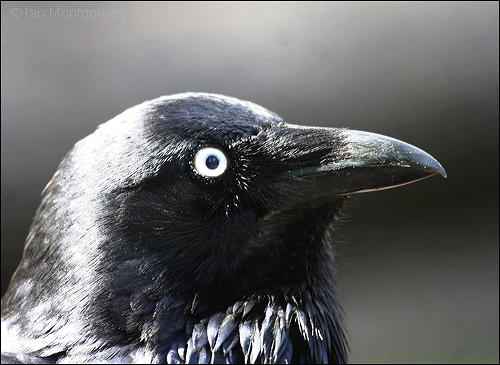
Australian Raven (Corvus coronoides) by Ian

Australian Raven (Corvus coronoides) by Ian

Scripture Alphabet of Animals: The Raven

By Harriet N. Cook (1814-1843)

The raven has always been very well known to man, and is mentioned almost at the beginning of the Bible. You remember that this was the first bird that Noah sent out of the ark to see whether the waters had begun to dry up; and that it did not go back to him again. I suppose it was very glad to be at liberty after it had been shut up more than a year; and as it lives upon the flesh of other animals, it probably found food enough from the bodies of those that had been drowned.

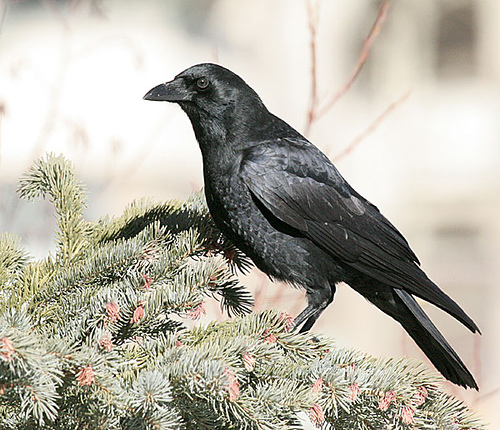
Chihuahuan Raven (Corvus cryptoleucus)Raven (Corvus corax) by Kent Nickell

Chihuahuan Raven (Corvus cryptoleucus) Raven (Corvus corax) by Kent Nickell

It is a large bird, considerably larger than the crow; and its feathers are very black, very glossy, and very beautiful. People in ancient times seem to have liked a black color, and were especially pleased with black hair; so we read in the Song of Solomon, where one who is beautiful is described, “His locks are bushy, and black as a raven.”

It is said that the raven always attacks the eye of an animal first; seeming to prefer that to every other part. This may explain one of the verses in Proverbs,

The eye that mocketh at his father, and despiseth to obey his mother, the ravens of the valley shall pick it out, and the young eagles shall eat it.

It has been the custom, in many countries, to hang those who have been guilty of great crimes on a tree or on a gallows in the open air; and there to leave the body for the birds to peck at and devour if they chose. I suppose this verse means that stubborn and disobedient children, or those who are not kind and respectful to their parents, must expect to come to some sad end; and they very often do so.

I have heard that the raven drives out its young ones very early from the nest, almost before they are able to seek their food. This may explain a verse in the Psalms,

The Lord giveth to the beast his food, and to the young ravens which cry;

and another in Job,

Who provideth for the raven his food ? when his young ones cry unto God, wandering for lack of meat.

Our Savior speaks of this bird in the 12th chapter of Luke, “Consider the ravens; for they neither sow nor reap; they have neither store-house nor barn; and God feedeth them.” He was speaking to his disciples, and it was as much as to say,

If God takes care of the ravens, he will certainly take care of you; so you need not be anxious or afraid.

Brown-necked Raven of Israel

Brown-necked Raven, Israel ©WikiC

Have you read in the Bible how a good prophet’s life was once saved by ravens? The people who were living then were very wicked, and would have been glad to kill the prophet Elijah; so God told him to go into the wilderness and live there alone by the side of a small brook. Elijah went to the brook, and there was water enough for him to drink, of course, but no food to keep him from starving. You may be sure that God did not forget his servant; but you would hardly believe, if it was not in the Bible, that he would send the ravens to carry food to him. Yet so it was:

the ravens brought him bread and flesh in the morning, and bread and flesh in the evening; and he drank of the brook.

It is supposed that he was fed in this way for as much as a year. It was a long time to stay there by himself; but I do not think he was lonely or afraid, for he loved God, and felt sure that He was always near him, even in the wilderness.

(Blog formatted by Lee)

See:

Harriet Newell Cook -Scripture Alphabet of Animals

Birds of the Bible

Ravens

Corvidae Family – Crows, Jays, Ravens

Nave’s Topical Bible – Raven

Torrey’s Topical Textbook – Raven

*

Scripture Alphabet of Animals: The Quail

King Quail (Excalfactoria chinensis) Asian Blue by Kent Nickell

King Quail (Excalfactoria chinensis) by Kent Nickell

Scripture Alphabet of Animals: The Quail

By Harriet N. Cook (1814-1843)
The quail is about the size of a pigeon. It is called a bird of passage, because it does not always live in the same place, but spends the winter in one country, and in the spring flies away to another. In their journies, they fly together in very large flocks, as you have perhaps seen wild geese or pigeons do. A great many spend the summer north of the Black Sea, and when autumn comes they fly away to spend the winter in some warmer place, farther south. They usually start early some fine evening in August, when there is a north wind to help them on, and fly perhaps a hundred and fifty miles before morning. The people on the opposite shore of the Black Sea know about what time to look for them, and catch a great many of them for food.

Californian Quail by Ian

Californian Quail by Ian

God sometimes sent quails to the children of Israel when they were in the wilderness. Once they complained because they had no meat to eat, pretty soon after God had saved them from the hand of Pharaoh; and then he brought a great many quails into their camp, so that they had as many as they wanted for food. At another time, when they were on their journey, these ungrateful people complained again, and wished they were back in Egypt, where they could have “fish, and melons, and cucumbers,” as they said. Then God saw fit to send them quails again, though he was very much displeased with their wickedness; so much so that he sent a dreadful sickness among them, of which many died. The Bible says,

And there went forth a wind from the Lord, and brought quails from the sea, and let them fall by the camp, as it were a day’s journey on this side, and a day’s journey on the other side, round about the camp, and as it were two cubits high upon the face of the earth. And the people stood up all that day, and all that night, and all the next day, and they gathered the quails; he that gathered least, gathered ten homers; and they spread them all abroad for themselves round about the camp.

Painted Buttonquail (Turnix varius) by Ian

Painted Buttonquail (Turnix varius) by Ian

The number of these quails was very wonderful. They covered the ground all around the camp, and as far every way as a person could go in a “day’s journey,” by which they meant twenty miles or more. And they not only covered all that ground, but were piled upon each other, to the height of more than a yard. The people gathered great quantities of them; probably they intended to dry a part, which is still a custom in those hot and sandy countries. “He that gathered least,” we read, “gathered ten homers.” A homer was about eight bushels, or as much as an ass could carry at a load; and ten homers, of course, was about eighty bushels. You see how eager the people were to get them, for they could not even sleep at night through fear that they should not have as many as they wanted; so they stood up to gather them “all that day, and all that night, and all the next day.”

These things are several times spoken of in other parts of the Bible, especially in the 78th Psalm. It is there said,

He rained flesh upon them as dust, and feathered fowls like as the sand of the sea. And he let it fall in the midst of the camp, round about their habitations. So they did eat, and were well filled, for he gave them their own desire; but while the meat was yet in their mouths, the wrath of God came upon them.

Perhaps it was not wrong for the children of Israel to ask for meat to eat, but God was displeased with them for their complaining spirit notwithstanding all his goodness; and although he gave them what they asked, it proved to be only a curse to them. This may teach us to be grateful for the thousand blessings that God has given us, and when we ask any thing from him, to be willing that he should deny us if he sees best.

(Blog formatted by Lee)

See:

Harriet Newell Cook -Scripture Alphabet of Animals

Birds of the Bible

Quail

Odontophoridae Family – New World Quail

Phasianidae Family – Pheasants, Fowl & Allies

Turnicidae – Buttonquail

Nave’s Topical Bible – Quail

*

Scripture Alphabet of Animals: The Peacock

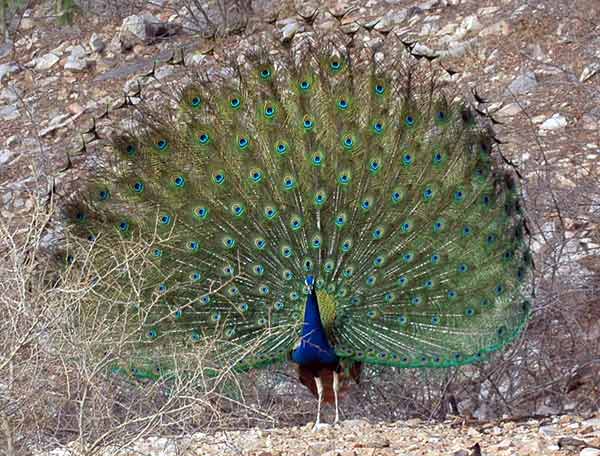
Indian Peafowl (Pavocristatus) by Nikhil Devasar

Indian Peafowl (Pavocristatus) by Nikhil Devasar

Scripture Alphabet of Animals: The Peacock

By Harriet N. Cook (1814-1843)

The peacock is first mentioned in the Bible in the time of Solomon. He used to send his vessels to distant countries, and they came back once in three years,

bringing gold, and silver, and ivory, and apes, and peacocks

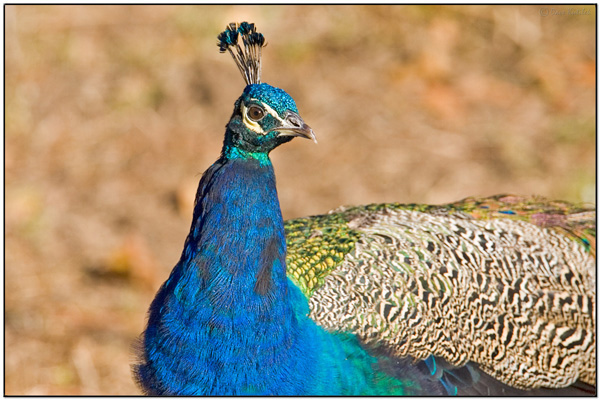
Indian Peafowl (Pavo cristatus) by Daves Birding Pix in Backyard

Indian Peafowl (Pavo cristatus) by Daves Birding Pix in Backyard

Solomon was the richest among all the kings that the Bible tells us about. When he first became king God spoke to him in a dream, and told him to ask for any thing he wished. If God should speak so to you, what would you ask for?

Solomon did not pray that God would make him rich, or that he would give him health, or let him live a great many years on the earth; but he said,

I am a little child, I know not how to go out or come in. Give therefore thy servant an understanding heart

Then God was pleased with what he asked, and besides giving him great wisdom, he gave him also riches and honor. He had forty thousand horses, and silver and gold in abundance. All the vessels used in his house were of gold, because silver was not good enough; it was “as stones” for plenty, and was “nothing accounted of in the days of Solomon.” In the second chapter of Ecclesiastes, Solomon himself speaks of his riches, and after telling us of some of his treasures, he says:

Whatsoever my eyes desired I kept not from them; I withheld not my heart from any joy.” Perhaps you think he must have been perfectly happy, if any man in this world ever was; but what does he say?

Green Peafowl (Pavo muticus) by Ian

Green Peafowl (Pavo muticus) by Ian

All is vanity and vexation of spirit.” This does not sound much like being contented. No, dear child, these are not the things that make us happy; nothing but the true love of God in the heart can do this.

There are many peacocks in India, and large flocks of them are sometimes seen around the temples; they also live among the bushes near the banks of rivers. They sometimes rest on high trees, but always make their nests on the ground, under the shrubs.

There was once a foolish and wicked emperor who cared little for any thing excepting “what he should eat, and what he should drink, and wherewithal he should be clothed.” He took great pride in telling how much his dinners cost, and how much trouble it gave people to prepare them. One of the dishes that pleased him, because it cost money enough, and time and trouble enough, was made up of the tongues of flamingoes, (a kind of bird,) and the brains of peacocks-do you envy such a king as that?

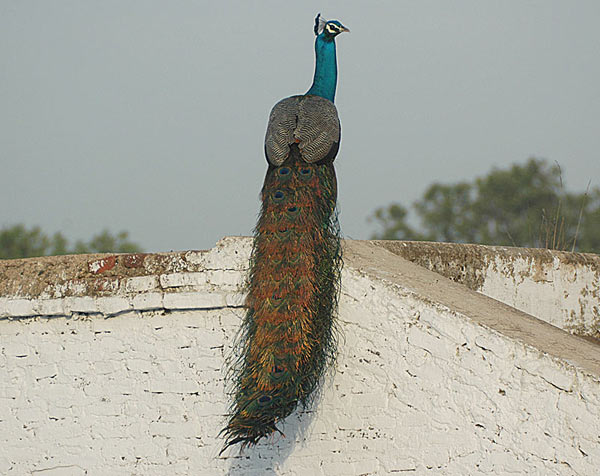
Indian Peafowl (Pavo cristatus) by Nikhil Devasar

Indian Peafowl (Pavo cristatus) by Nikhil Devasar

The peacock is a very splendid bird; its colors are most rich and beautiful. The feathers of the tail are often more than a yard long, and when they are spread out in the sunlight, like a great fan, nothing can be more elegant. Yet with all its beauty I do not believe you could ever love a peacock, as you love a lamb or a dove. It seems selfish and vain, and there is nothing lovely about it-its voice is very harsh and disagreeable. There are some people who, like the peacock, are called handsome or beautiful, but whose hearts are not pure and lovely in the sight of God. “Beauty,” in itself, “is vain;” but “the ornament of a meek and quiet spirit is in the sight of God of great price.”

(Blog formatted by Lee)

See:

Harriet Newell Cook -Scripture Alphabet of Animals

Birds of the Bible

Peacocks

Phasianidae Family – Pheasants, Fowl & Allies

Nave’s Topical Bible – Peacock

*

Scripture Alphabet of Animals: The Ostrich

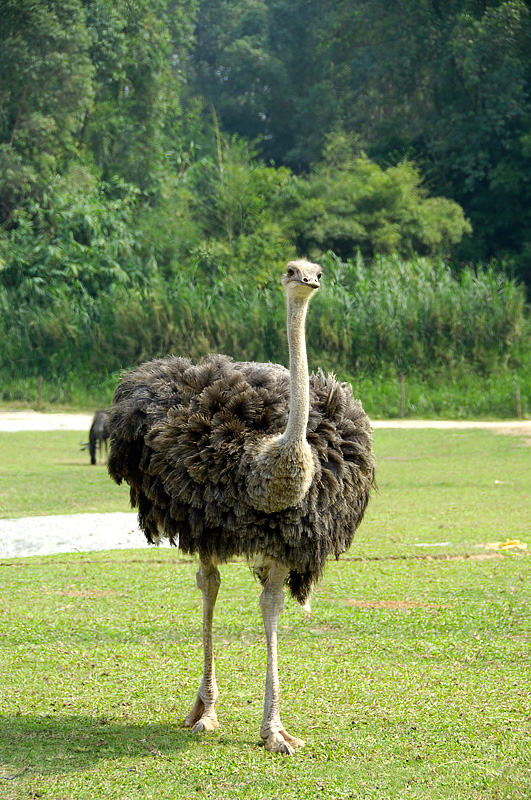
Common Ostrich (Struthio camelus) by Bob-Nan

Common Ostrich (Struthio camelus) by Bob-Nan

Scripture Alphabet of Animals: The Ostrich

By Harriet N. Cook (1814-1843)

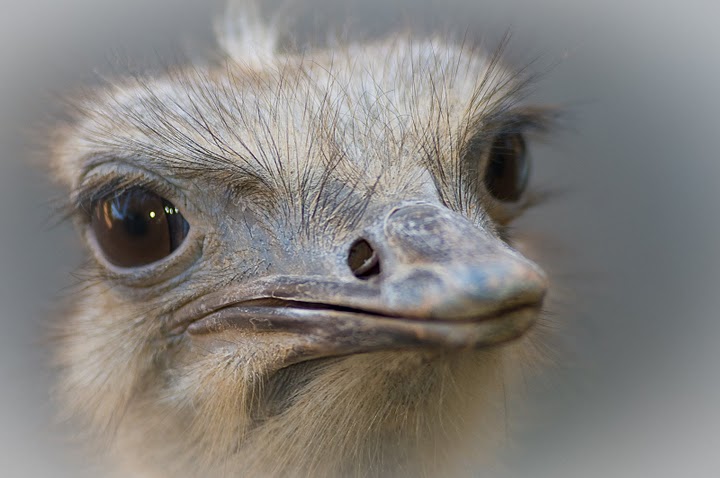
The ostrich is sometimes called the “camel-bird,” because it is so very large, because it can go a long time without water, and because it lives in desert and sandy places, as the camel does. It is often taller than the tallest man you ever saw, and it neck alone is more than a yard in length.

Somali Ostrich (Struthio molybdophanes) by P Kwong

Somali Ostrich (Struthio molybdophanes) by P Kwong

Each of the wings is a yard long when the feathers are spread out; but although the wings are so large, the bird cannot fly at all. One reason of this is, because it is so very heavy, and another is that its wings are not of the right sort for flying. They are made of what we call ostrich-plumes, and if you have ever noticed these beautiful feathers, you will remember that they are very different from others that you have seen. If you take a quill from the wing of a goose, you will find that the parts of the feather lie close together, so that you cannot very easily separate them; but in an ostrich plume they are all loose and open, and would not support the bird at all in flying. The feathers are generally either white or black. There are none under the wings, or on the sides of the body, and only a few small ones on the lower part of the neck. The upper part of the neck, as well as the head, is covered with hair.

Its feet are curious, and different from those of most birds. They are somewhat like the foot of the camel, having a soft pad or cushion underneath, and only two toes. The largest toe is about seven inches long, and has a broad claw at the end; the other is about four inches long, and has no claw.

Although this bird cannot fly, it can run faster than the swiftest horse. If it would keep on in a straight line no animal could overtake it; but it is sometimes so foolish as to run around in a circle, and then, after a long chase, it may perhaps be caught. A traveller speaking of the ostrich, says,

She sets off at a hard gallop; but she afterwards spreads her wings as if to catch the wind, and goes so rapidly that she seems not to touch the ground

This explains what is meant by the verse,

When she lifteth up herself on high she scorneth the horse and his rider.

Common Ostrich (Struthio camelus) Closeup by WikiC

Common Ostrich (Struthio camelus) Closeup by WikiC

The ostrich has but little to eat in the desert places where it lives: only some coarse grass, or rough, thorny plants, with a kind of snail which is sometimes found upon them; and perhaps it sometimes eats lizards and serpents.

The voice of the ostrich is very mournful, especially when heard at night in a lonely desert. It is said to be like the crying of a hoarse child. It is on this account that the prophet Micah says,

I will make a mourning like the ostrich.

In the 39th chapter of Job we read,

Gavest thou wings and feathers unto the ostrich ? which leaveth her eggs in the earth, and warmeth them in the dust, and forgetteth that the foot may crush them, or that the wild beast may break them. She is hardened against her young ones as though they were not hers

See how well this agrees with the accounts given by travellers. They say that the ostrich is frightened by the least noise, and runs away from her nest, leaving the eggs or young ones without any protection; and very often she does not return for a long time, perhaps not until the young birds have died of hunger. The eggs are cream-colored, and large enough to hold about a quart of water. The shell is very hard, and as smooth as ivory. It is often made into a drinking-cup, with a rim of gold or silver.

(Blog formatted by Lee)

See:

Bible Birds – Ostrich

Harriet Newell Cook -Scripture Alphabet of Animals

Birds of the Bible

Birds of the Bible – Ostrich

Struhionidae – Ostriches

Nave’s Topical Bible – Ostriches

Torrey’s Topical Textbook – Ostrich

*

Scripture Alphabet of Animals: The Night-Hawk

Common Nighthawk by Neal Addy

Common Nighthawk by Neal Addy

Scripture Alphabet of Animals: The Night-Hawk

By Harriet N. Cook (1814-1843)
I believe this is the only animal of any kind mentioned in the Bible, the name of which begins with N. It is named in the 11th chapter of Leviticus, among other birds, such as the owl, the cuckoo and the raven, which the children of Israel were not allowed to eat.

And the owl, and the night hawk, and the cuckow, and the hawk after his kind, (Leviticus 11:16 KJV)

Whip-poor-will (Caprimulgus vociferus) by ©Judd Paterson

Whip-poor-will (Caprimulgus vociferus) by ©Judd Paterson

It is somewhat like the owl in its shape, and in its large, full, round eyes. It flies at evening, and hides itself during the day from the bright light of the sun. It likes to live in lonely, dark woods, and when it comes out at twilight to get the insects that it lives upon, you could hardly hear the sound of its wings, it flies so very gently. It has a very wide, gaping mouth, which helps it to seize upon moths and flies, and its mouth is bordered with a row of stiff bristles, so that the insects may not escape again after they have been caught.

The night-hawk belongs to the same family with the whip-poor-will; and, like that bird, it places its eggs on the ground in the shade of some thicket, with only a layer of withered leaves under them instead of making a nest.

(Blog formatted by Lee)

See:

Harriet Newell Cook -Scripture Alphabet of Animals

Birds of the Bible

Nighthawks and Nightjars

Caprimulgidae Family – Nightjars

Nave’s Topical Bible – Night hawk

*

Scripture Alphabet of Animals: The Mole

European Mole ©WikiC

Scripture Alphabet of Animals: The Mole

By Harriet N. Cook (1814-1843)

I remember but two places in the Bible where this animal is mentioned. One is in Leviticus, where it is named among the unclean animals which the Israelites were forbidden to eat; and the other is this verse in the second chapter of Isaiah:

In that day a man shall cast his idols of silver, and his idols of gold, which they made each one for himself to worship, to the moles and to the bats.

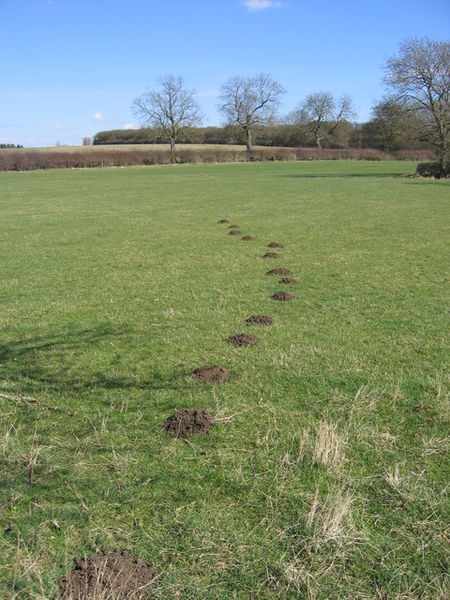
Molehills ©WikiC

Molehills ©WikiC

Have you read about the first missionaries who went to the Sandwich Islands? And do you remember that although the people had always been worshippers of idols, they had cast them all away just before the missionaries came? That was a very wonderful thing to happen; and it seems as though God was making these poor people ready to hear about the Savior, when the missionaries should come. Well, this verse in Isaiah declares that the same thing will happen by and by over the whole earth. You know that there are now millions and millions of poor heathen who worship nothing but images of gold, or brass, or stone; but the day is coming when not an idol shall be seen, and no being shall be worshipped but the true God. The mole lives under ground, and the bat in gloomy, dark caves where nobody thinks of going; so when it is said that the idols shall be

Cast to the moles and to the bats,

it means that they shall be thrown away in dark and neglected places, just as we throw away old shoes, or any thing that we care nothing about. Will you try to remember this verse about the idols? Perhaps you may live to see the near approach of that day.

Star-nosed Mole (Condylura)©US NPS

Star-nosed Mole (Condylura)©US NPS

The mole is a very curious animal in its appearance and in its manner of living. It is almost always under ground, and we should think that the little creature could not be very happy; but its skin is as smooth and handsome as that of any animal, and it seems very well contented with its dark home. God made it to live there, and he has given it just such a body at it needs. It is covered with fine, short, silky hair, almost like soft velvet, so that the earth does not stick to it; and its legs are very short, so as not to be in the way. If its legs were long it could not get through the ground very well, you know. Its eyes are very small, because it does not need to see much, and they are almost buried too under its soft fur, which keeps out all the dust and dirt. The opening of the ear is covered in the same way, so that nothing can hurt it.

Its fore-paws are made broad like a shovel, and are very strong; each one, too, has five short fingers with which the earth can be removed. The nose is sharp and bony, and this helps the mole to work its way through the earth. They throw up the earth when they make their houses under ground, and in this way mole-hills are made. They like to work at morning and evening, and also after a shower, when the earth is damp and soft, and easily moved.

The mole is larger than a mouse, but not as large as a rat. It eats insects and worms, and sometimes the roots of plants.

___
See:

Harriet Newell Cook – Scripture Alphabet of Animals

Nave’s Topical Bible – Mole

(Photos ©WikiC)

*

Scripture Alphabet of Animals: The Locust

Desert Locust (Schistocerca gregaria)©WikiC

Scripture Alphabet of Animals: The Locust

By Harriet N. Cook (1814-1843)

The locust is called an insect, as well as the ant and the bee, but instead of being harmless, as they usually are, it does a great deal of injury. It is also much larger than they; for it is generally three inches long, and sometimes as much as four or five. The plague of the locusts was the eighth that God sent upon the Egyptians, because they would not let the children of Israel go, as he commanded; and it was a very terrible one indeed. The Bible says,

They covered the face of the whole earth, so that the land was darkened; and they did eat every herb of the land, and all the fruit of the trees which the hail had left; and there remained not any green thing in the trees, or in the herbs of the field through all the land of Egypt.

This is the way they often do in those countries, though perhaps it is not common for so many to come at once.

Locusts feeding ©WikiC

Locusts feeding ©WikiC

They fly in companies of thousands together, and so close that they look like a great black cloud. When they alight on the ground they all come down in a body, and immediately begin to devour the grass and grain; they also eat the leaves of the trees, and every green thing they can find. The people dread them more than they do the most terrible fire or storm; because though they are so small, they destroy all the food, and leave the people ready to starve. When the inhabitants see them coming over their fields, they try to drive them away by making loud noises or by kindling fires; but this does little good.

It is said that a great army of locusts came over the northern part of Africa about a hundred years before the birth of Christ. They consumed every blade of grass wherever they alighted; also the roots, and bark, and even the hard wood of the trees. After they had thus eaten up every thing, a strong wind arose, and after tossing them about awhile, it blew them over the sea, and great numbers of them were drowned. Then the waves threw them back upon the land, all along the sea-coast, and their dead bodies made the air so unwholesome that a frightful pestilence commenced, and great numbers of men and animals died.

Many travellers have seen these great clouds of locusts, and describe them in their books. One says that he saw a company consisting of so many that they were an hour in passing over the place where he was. They seemed to extend a mile in length and half a mile in width. When he first noticed them, they looked like a black cloud rising in the east; and when they came over head, they shut out the light of the sun, and made a noise with their wings like the rushing of a water-fall. Another swarm is mentioned which took four hours to pass over one spot; and they made the sky so dark that one person could not see another at twenty steps off.

You can now understand two or three passages from the Bible which I will mention. David says in the 23d verse of the 109th Psalm,

I am tossed up and down as the locust;

that is, as the clouds of locusts are tossed about by the wind. In the first chapters of Joel God threatens to send the locust among the people, because of their wickedness; and he says of them,

Before their faces the people shall be much pained; all faces shall gather blackness. They (the locusts,) shall run like mighty men; they shall climb the wall like men of war. They shall run to and fro in the city; they shall run upon the wall; they shall climb up upon the houses; they shall enter in at the windows like a thief.

An English clergyman who visited countries where the locusts are found, a few years ago, says that these verses describe them exactly as he has himself seen them.

Locust - Insect food stall ©WikiC

Locust and other Insects food stall ©WikiC

Locusts are sometimes used for food. The Arabs boil them with salt, and then add a little oil or butter; sometimes they toast them by the fire before eating them. A traveller speaks of seeing the Arab women employed in filling bags with locusts, which were to be used for food. You know it is said in the New Testament that John the Baptist

did eat locusts and wild honey,

but it is not quite certain that this insect was meant; perhaps it was the fruit of the locust-tree that he ate.

___


See:

Harriet Newell Cook – Scripture Alphabet of Animals

Nave’s Topical Bible – Locust

Torrey’s Topical Textbook – Locust

(Photos ©WikiC)

*

Scripture Alphabet of Animals: The Horse

Horse - Galloping Bashkir curly©WikiC

Scripture Alphabet of Animals: The Horse

By Harriet N. Cook (1814-1843)

There is a fine description of a war-horse in the book of Job-a book which some think to be the oldest in the world. It is in the thirty-ninth chapter.

Hast thou given the horse strength? Hast thou clothed his neck with thunder? Canst thou make him afraid as a grasshopper? The glory of his nostrils is terrible. He paweth in the valley, and rejoiceth in his strength; he goeth on to meet the armed men. He mocketh at fear, and is not affrighted; neither turneth he back from the sword. The quiver rattleth against him; the glittering spear and the shield. He swalloweth the ground with fierceness and rage: neither believeth he that it is the sound of the trumpet. He saith among the trumpets, Ha, ha; and he smelleth the battle afar off, the thunder of the captains and the shouting.

Horse -Zarcohm Roman nose

Horse -Zarcohm Roman nose ©WikiC

In the fifth chapter of Judges you will find this verse.

Then were the horse-hoofs broken by the means of the prancings, the prancings of their mighty ones.

And it seems likely from this, that it was not the custom to shoe horses in those days, so that their hoofs were more easily broken.

They had horses in Egypt in very ancient times, as you will find if you read the first part of the book of Exodus. You will see there how the children of Israel escaped from Egypt, after they had been kept in hard bondage a great many years; and how when they had gone only a short distance, the wicked king Pharaoh went after them to try to get them back. There was a great company of the Israelites, men, women and children; they had nothing to ride on, and had their flocks and herds with them, so that they could not go very fast. They took the course which God directed, and it brought them to the Red Sea, where there were neither boats nor bridges for them to go over.

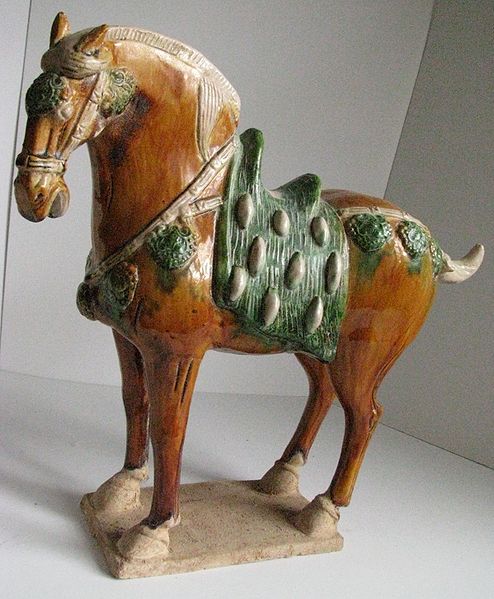
Horse- Ferghana War Horse©WikiC

Ferghana War Horse©WikiC

Just then they heard that Pharaoh and his army were coming after them. Some came in chariots of war, and of these there were six hundred drawn by horses; and a great many more came on horseback. Now what could these people do? If they went on, they would be drowned; and if they went back, or stayed where they were, they would fall into the hands of the Egyptians. God told them not to be afraid, for he would take care of them; so he divided the waters of the sea, and made a dry road for them to go through, while the water stood up like a wall on each side of them. Then the Egyptians followed on, and God let the waters flow down upon them, so that they were all drowned. Think what a sight it must have been, when the chariots, and horses, and men, were all surrounded by that great, mighty water, and then sunk down one after another, so that they could be seen no more. The children of Israel sang a psalm of praise after God had saved them in this wonderful manner, and these words are a part of it:

Sing ye to the Lord, for he hath triumphed gloriously; the horse and his rider hath he thrown into the sea.

In one of the last chapters in the Old Testament you will find these words,

In that day shall there be upon the bells of the horses, HOLINESS UNTO THE LORD.

This speaks of a time which has not yet come, but for which christians are looking, when this world will not be wicked as it now is; but when every thing, even the bells of the horses, shall be holy unto the Lord.

___
See:

Harriet Newell Cook – Scripture Alphabet of Animals

Nave’s Topical Bible – Horse

Torrey’s Topical Textbook – Horse

(Photos ©WikiC)

*

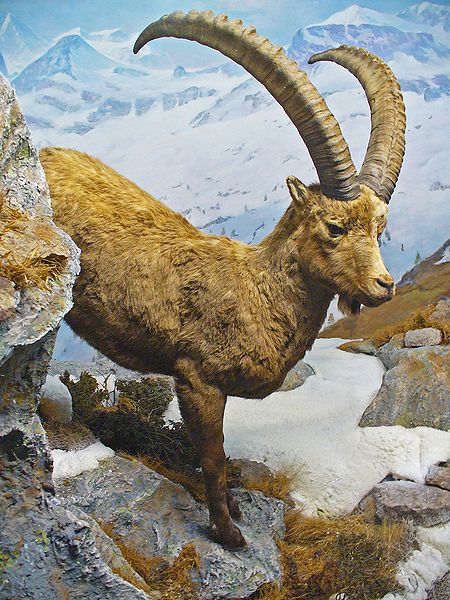
Scripture Alphabet of Animals: The Ibex or the Wild Goat

Wild Goat - Ibex and young ©WikiC

Scripture Alphabet of Animals: The Ibex or the Wild Goat

By Harriet N. Cook (1814-1843)

The Ibex is a kind of goat, but different from the one described at page 33. It is sometimes called the Rock Goat, or Wild Goat; and the last is the name given it in the Bible. It resembles the common goat, but is larger, and its horns are much longer; they are sometimes considerably more than a yard in length, beautifully curved, and surrounded by many curious rings or ridges.

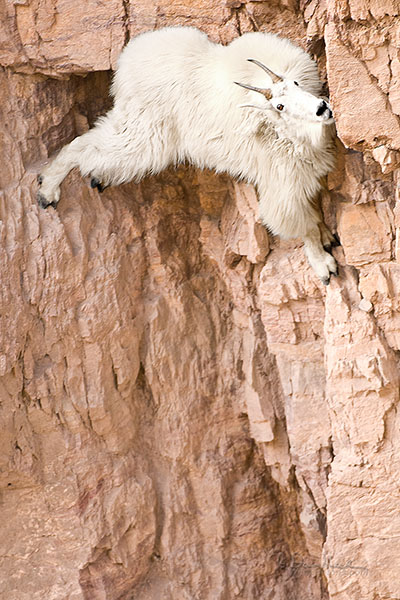
Wild Goats - Hang on ©wildphotons

Wild Goats – Hang on ©wildphotons

It lives in places where you would think no animal could get without falling and breaking its neck; you would be frightened to see it sometimes, when it climbs up rough and narrow places, or jumps from one great rock to another. But God has given it just such a kind of foot as it needs; it has a small hoof, something like those of a sheep, excepting that it is hollow underneath, and has a sort of ridge around it by which the animal can cling to the rock, and so keep from slipping. I never heard of such a thing as one of them sliding off the rocks, unless it was pursued by the hunters. Two goats once met on a high narrow path, where there was just room for one to walk. There was a high rock rising close to their shoulders on one side, and on the other was a place so steep that it would have made you dizzy to look down. They could not go back without danger of falling, and they could not pass each other; what do you think they could do, but stay there and starve? It seemed for a little while as if they were considering about it; at last one bent his knees and laid down, and the other walked safely over his back.

The ibex feeds during the night in the highest woods that grow on the mountains; but as soon as the sun rises it begins to climb, eating the grass or whatever it finds, till it has got up where it is too high for trees to grow. They go in small companies of eight or ten, and lie down in sunny places among the rocks while the sun is hot; but about three or four o’clock in the afternoon they begin to go down again towards the woods. They can climb up rather more easily than they can get down, because their fore legs are shorter than the others.

See how the ibex or wild goat is spoken of in the Bible. In the one hundred and fourth Psalm you may find the words, “The high hills are a refuge for the wild goats;” and another place where the animal is mentioned is in the twenty-fourth chapter of first Samuel:

Saul took three thousand chosen men out of all Israel, and went to seek David and his men upon the rocks of the wild goats.

Wild Goat - Capra ibex ©Wiki

Wild Goat – Capra ibex ©Wiki

I should like to have you read with me the whole history of Saul and David in the Bible, so that we might talk about it, for it is very interesting; but now I can only write down what this one verse means. David had been made king over Israel by the command of God; but Saul, who was a very wicked man, was determined to kill him. So David was obliged to fly for his life, with only a few faithful friends; and month after month he hid himself in one place and another, so that Saul might not find him. At last he came to a wild, gloomy place, where nobody lived, near the Dead Sea: it was rocky, and there were many wild goats there. He thought he was safe now; but Saul heard where he was and came after him.

One night Saul and his men went into a large dark cave among the mountains, and behold David and his friends were already there; but they were hidden, so that Saul did not know it. David’s men wanted very much to kill Saul, now that he was in their power, but David would not allow them. He only cut off a small piece from the robe that Saul wore, and he was sorry afterwards that he had done even as much as this He did not hurt Saul in the least, but allowed him to go safely out of the cave, though he might have killed him as easily as not. Was not this returning good for evil?

___
See:

Harriet Newell Cook – Scripture Alphabet of Animals

Nave’s Topical Bible – Goat

Torrey’s Topical Textbook – Goat

(Photos ©WikiC)

*

Scripture Alphabet of Animals: The Jerboa or Mouse

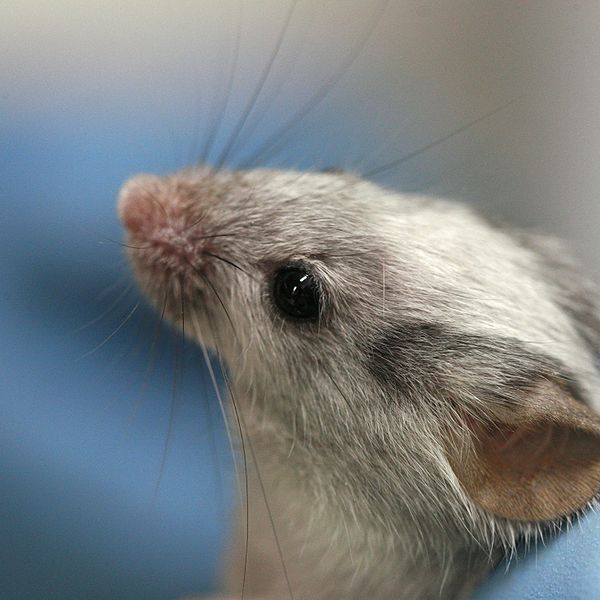
Mouse - ©WikiC

Scripture Alphabet of Animals: The Jerboa or Mouse

By Harriet N. Cook (1814-1843)

You will not find the name of the Jerboa in the Bible; but it is supposed to be the same animal that is called a mouse in the 17th verse of the 66th chapter of Isaiah,

They that sanctify themselves, and purify themselves in the gardens, eating swine’s flesh, and the abomination, and the mouse, shall be consumed together, saith the Lord;

and also in Leviticus, where God is telling the children of Israel what animals they may be allowed to eat, and also what they must not taste. He says,

These also shall be unclean to you among the creeping things that creep upon the earth; the weasel, and the mouse, and the tortoise after his kind.

Whether the Jerboa is the same animal or not, the Israelites must have been well acquainted with it, for it is found in great numbers in Syria and Egypt, and other countries mentioned in the Bible. They like to live where the soil is sandy, and make their burrows, or holes to live in, in the sides of sand-hills. These burrows are often several yards long, and the part where they sleep is made soft with grass.

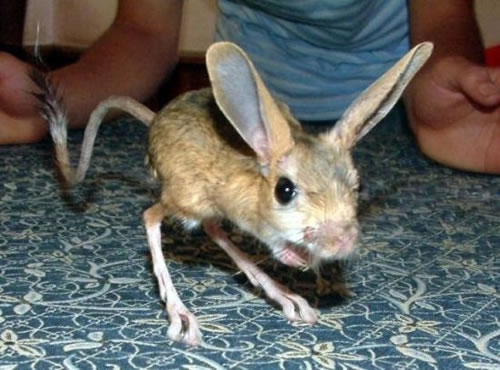
The Jerboa is about as large as a rat, and its color is a tawny yellow, something like that of dried lemon-peel. Its fur is very smooth and soft; its eyes are full and round, and its head is much like that of a young rabbit. When it eats, it sits and hold its food in its fore-paws, very much as a squirrel does.

Mouse - Four-toes-jerboa

Mouse – Four-toes-jerboa

There is a very great and curious difference in the length of its legs; those in front being so short that you would hardly notice them, and those behind very long. It bounds along over the ground very rapidly; so that the greyhound, which is one of the swiftest of dogs, is often unable to overtake it. It seems, when you first look at it, to use only its hind legs in jumping, but his is not so. When it is about to take a leap, it raises its body upon the toes of its hind feet, keeping the balance by the help of its long tail. It springs and comes down on its short fore legs, but does it so very quickly that you can hardly see how it is done, and the animal seems to be upright all the time.

They appear to be very fond of each other’s company, and great numbers are usually found together. They sleep during the day, but like the hare and rabbit, go out of their burrows to eat and to play as soon as it begins to be dark.

___
See:

Harriet Newell Cook – Scripture Alphabet of Animals

Nave’s Topical Bible – Mouse

(Photos ©WikiC)

*