Ian’s Bird of the Week – Scarlet Robin

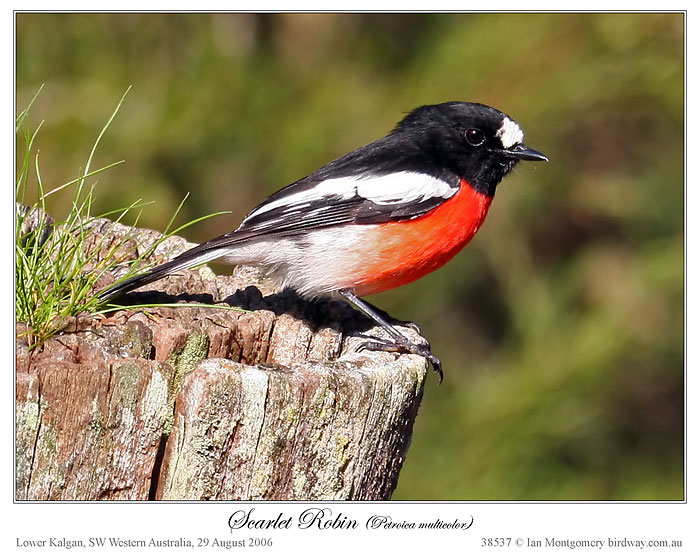
Scarlet Robin (Petroica boodang) by Ian

Scarlet Robin (Petroica boodang) by Ian

Ian’s Bird of the Week – Scarlet Robin ~ by Ian Montgomery

Newsletter and holiday wish – 12-24-10

Christmas and New Year is a time for tradition not (egregious) originality so here, without apology, is a Scarlet Robin to wish you season’s greeting. Okay, it’s not the classical European Robin – which featured as Bird of the Week on Christmas 2005 – but perhaps the closest we can get to in Australia. In fact, as a member of the Australo-Papuan Robins – the Petroicidae – rather than the Old World Flycatchers – the Muscicapidae – it’s not even closely related, but I don’t think science is very important when it comes to symbolism.

Anyway, whatever your creed or beliefs, I wish you a safe and peaceful holiday season and a fulfilling and happy 2011.

I also offer you an apology. I’ve just noticed that I sent an email, intended for the committee members of Birds Australia North Queenland, to the bird of the week list on the 14 December. I’m sorry if I mystified you but fortunately the email contained nothing controversial!

Links:
Australo-Papuan Robins
Old World Flycatchers
Eurasian Robin

Best wishes,
Ian


Ian Montgomery, Birdway Pty Ltd,
454 Forestry Road, Bluewater, Qld 4818
Phone: +61-7 4751 3115
Preferred Email: ian@birdway.com.au
Website: http://birdway.com.au


Lee’s Addition:

Merry Christmas and Happy New Year to you also, Ian. Trust you enjoy the holidays and that in 2011 you find lots of more neat birds to introduce us to in your Bird of the Week articles. Always enjoy reading about your birdwatching adventures where ever you roam. You do seem to get around quite a bit.

My son, do not forget my teaching, but let your heart keep my commandments, for length of days and years of life and peace they will add to you. (Proverbs 3:1-2 ESV)

What a neat little bird. The Scarlet Robin is in the Petroicidae Family as Ian said and that family is in the Passeriformes Order.

See all of Ian’s Birds of the Week.

*

They’re Back – White Pelicans

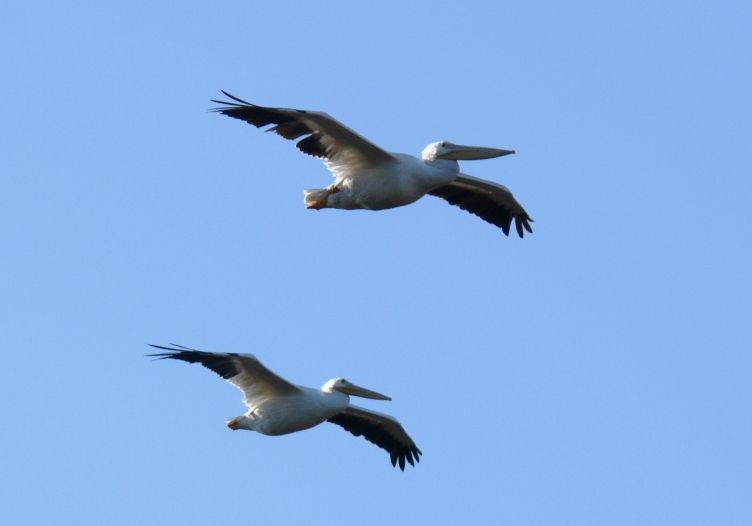
American White Pelican (Pelecanus erythrorhynchos) by Lee

White Pelicans on the Wing at Circle B Bar Reserve

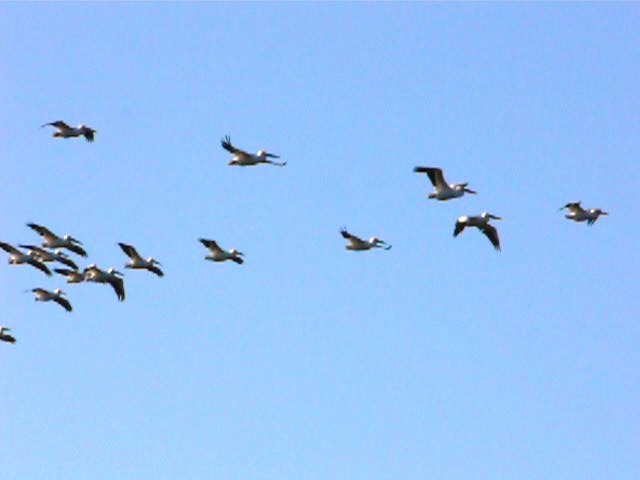
Yesterday morning, while looking out the door at church, I noticed a flock of birds flying toward the west. They were heading in the Circle B Bar Reserve direction. One squadron after another went by and it dawned on me that it was most likely the White Pelicans. I watched them for over 15 minutes and they just kept coming.

American White Pelican (Pelecanus erythrorhynchos) by Lee

American White Pelican (Pelecanus erythrorhynchos) by Lee

I am like a pelican of the wilderness: I am like an owl of the desert. (Psalms 102:6 KJV)

So, today, Dec. 21, 2010, we went to the Circle B to see if they really were the White Pelicans. Last year there were around 7,000 of them that spent part of their winter here with us in Florida. See – Birdwatching at Circle B Bar Reserve – 12/23/09 in which I made a video of the numerous Pelicans that we saw then. Yep! They are back! I am sure more than 1000 of them flew over my head today as they prepared to land about a half mile from my location.

Wood Stork (Mycteria americana) by Lee

Woodstork Tree at Circle B by Lee

Where the birds make their nests: as for the stork, the fir trees are her house. (Psalms 104:17 KJV)

I took lots of photos of them and some more video, but won’t bore you with them. We have had two hard freezes in the last few weeks that has killed or severely damaged much of the vegetation out at the Circle B. That and a lack of rain makes the place look quite drab right now. Many areas where we photograph and watch birds were sparse on numbers. Still had a great birdwatching adventure today even if it was about 40 degrees when we got there.

Wilson's Snipe at Circle B by Lee

Wilson's Snipe at Circle B

Some of the highlights were the White Pelicans, of course, but also finding a Wilson’s Snipe right beside the road and not spooking while being photographed by several people, “Wood Stork trees” (trees lined with the storks), watching a Snowy Egret working the water with its feet in search of breakfast, getting close to the Black-bellied Whistling Ducks and finding a White-eyed Vireo.

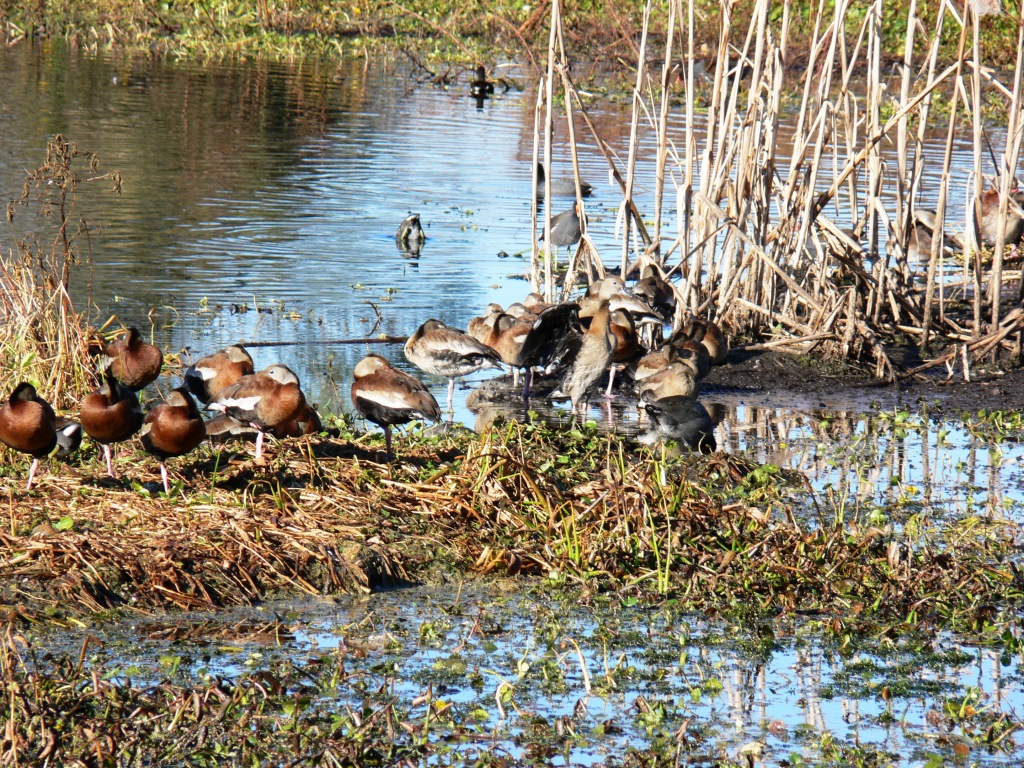
Black-bellied Whistling Duck (Dendrocygna autumnalis) by Lee

Black-bellied Whistling Duck (Dendrocygna autumnalis) by Lee

Here is a list of the 36 species of birds that we spotted today: (in order they were spotted)

Great Blue Heron 2

Morning Doves 7

Red-bellied Woodpecker 4

Blue Jay 1

American White Pelicans 1,000+

Wood Storks 100+

Eastern Kingbird

Sandhill Cranes 21

Tufted Titmouse 1

Northern Cardinal – female

Boat-tailed Grackles 15+

Wilson’s Snipe 1

Killdeer 15+

White Ibises 20+

Glossy Ibises 10+

Little Blue Heron adults and immature (white)

American Coots 100’s

Anhingas 10

Mockingbird 3

Red-shouldered Hawk 2

Tricolored Heron 1

Black-bellied Whistling Ducks 75+

Common Moorhen (or Gallinule) 20+

Blue-winged Teal 10

Mottled Duck 4

Pied-billed Grebe 2

Green Heron 1

House Wren 1

Blue-grey Gnatcatchers 5

White-eyed Vireo 1 (new catch for me)

Osprey 5

Turkey Vultures 10+

Pileated Woodpecker 1

Cattle Egret 3

Pine Warbler 1 Yellow

Myrtle Warbler 1

Here is the shorter video of the Snowy Egret stirring up breakfast. He catches something and then keeps trying for more.

Other birdwatching trips to the Circle B Bar Reserve

*

Bird Songs by God by Creation Moments

Bird Songs by God by Creation Moments was made into a video by BereanBeacon

By them the birds of the heavens have their home; They sing among the branches. (Psalms 104:12 NKJV)

BereanBeacon contacted me to obtain permission to use some of the photographers we have here. This video used some of the great photos from Ray (Raymond J. Barlow’s Wildlife Photography)

*

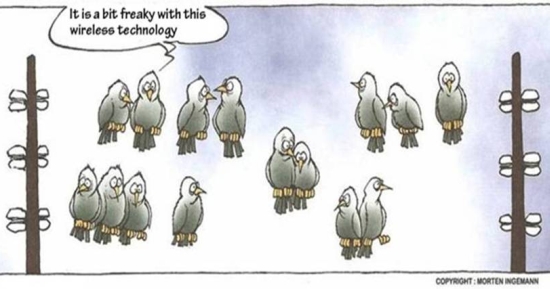
Wireless Birds

Neat cartoon I received today.

WirelessTechnology

WirelessTechnology

A man has joy by the answer of his mouth, And a word spoken in due season, how good it is! (Proverbs 15:23 NKJV)

My brethren, count it all joy when you fall into various trials, (James 1:2 NKJV)

Ian’s Bird of the Week – Spectacled Antpitta

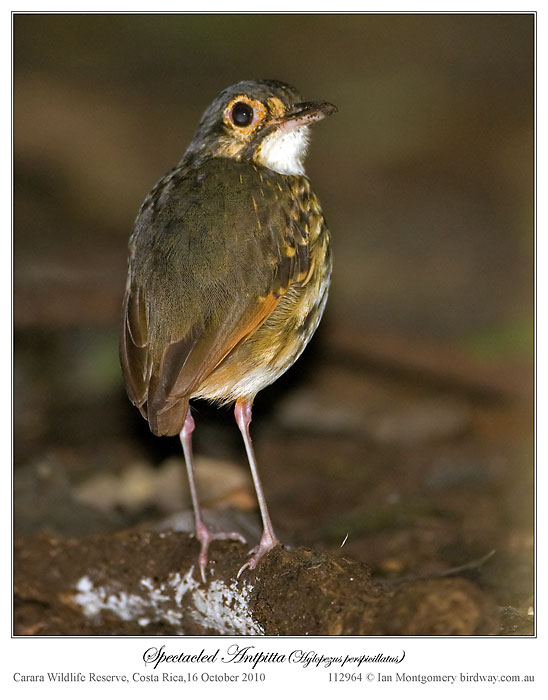
Streak-chested (Spectacled) Antpitta (Hylopezus perspicillatus) by Ian

Streak-chested (Spectacled) Antpitta (Hylopezus perspicillatus) by Ian

Ian’s Bird of the Week – Spectacled Antpitta ~ by Ian Montgomery

A friend of mine pointed out once that birds that stand upright and have short tails (long ones get in the way) look like little people and are consequently attractive. Penguins are the classic example, but there are plenty others, including the Pittas of Australia and Eurasia. Pittas don’t occur in the Americas but instead there are the unrelated but similar-looking Antpittas, members of the New World family Formicariidae, which occur from Mexico southwards.

Antpittas have similar habits to true Pittas and rummage around in leaf-litter in tropical and sub-tropical forest looking for invertebrate prey such as snails and worms. They are also easier to hear than see, so it was a pleasant surprise when we stumbled on this Spectacled Antpitta in Carara Wildlife Reserve in Costa Rica. It moved off through the undergrowth,but I struggled after it encumbered by a large lens and flash and managed to get a few photos of it peering suspiciously at me over its shoulder before disappearing. Incidentally, there are various groups of Central and South American birds, collectively called Antbirds, so named because some of them are found in association with army ants and feed on prey disturbed by the flow of ants across the landscape.

Streak-chested (Spectacled) Antpitta (Hylopezus perspicillatus) by Ian

Streak-chested (Spectacled) Antpitta (Hylopezus perspicillatus) by Ian

The Spectacled Antpitta ranges form Honduras in the north to Columbia in the south. There are about 50 species of Antpitta and there are photos of another species, the Moustached Antpitta, from Ecuador on the website. This is, I think, the last of the Costa Rican birds of the week as I’ve put most of the Costa Rican species on the website.

Recent additions to the website include the odd Yellow-thighed Finch – not a finch but a member of the Emberizidae – from Costa Rica and additional photos of a couple of terns from closer to home: the Little Tern and the Caspian Tern.

Links:
Other Antbirds:
True Pittas:

Last week, the link to the Black-necked Stilt mistakenly pointed to the American Avocet; it should have been: http://www.birdway.com.au/recurvirostridae/black_necked_stilt/source/black_necked_stilt_109873.htm . My apologies.

Best wishes,
Ian

Ian Montgomery, Birdway Pty Ltd,
454 Forestry Road, Bluewater, Qld 4818
Phone: +61-7 4751 3115
Preferred Email: ian@birdway.com.au
Website: http://birdway.com.au


Lee’s Addition:

Thanks Ian, for another great bird to find out about. Ian uses the Bird International list and we use the I.O.C.’s list of birds. The Spectacled Antpitta and the Streak-chested Antpitta are one in the same bird. That is where knowing the scientific name, “Hylopezus perspicillatus,” comes in handy. By either name, it does have a neat voice and below is a video link to one singing that I located.

The Antpittas are in the Grallariidae Family (IOC) of the Passeriformes Order.

Video of Streak-chested Antipitta singing by Dave Jackson

*

Coppersmith Barbet – The Fruit-giver

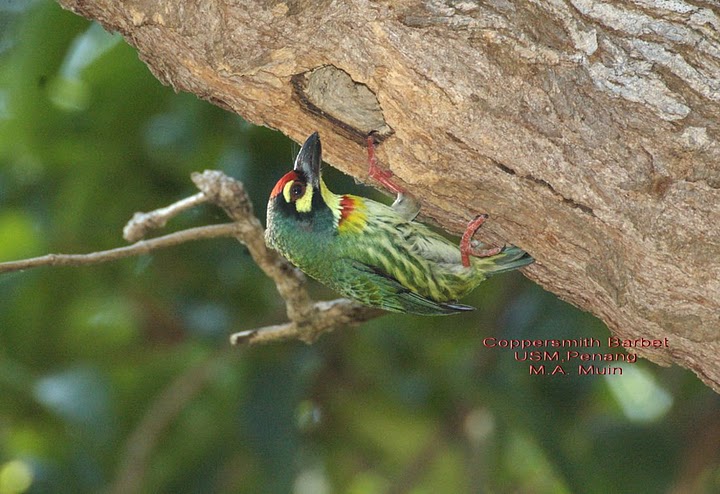
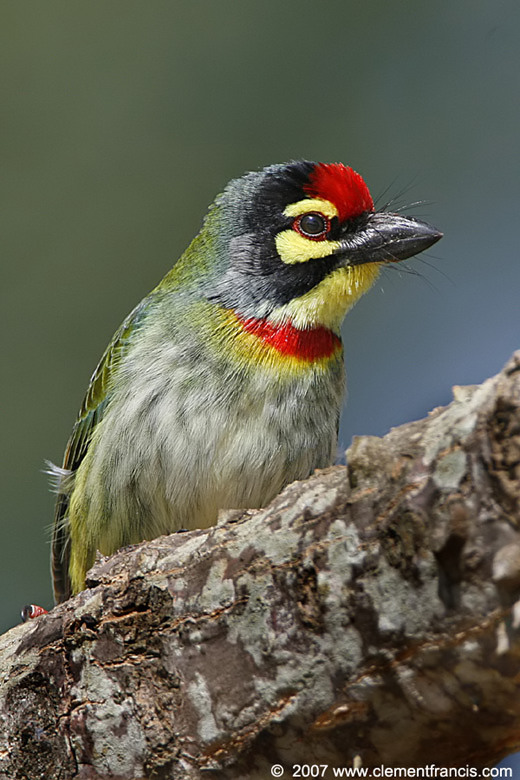
Coppersmith Barbet (Megalaima haemacephala) by MAMuin

Coppersmith Barbet (Megalaima haemacephala) by MAMuin

Coppersmith Barbet – The Fruit-giver ~ by a j mithra

The Coppersmith Barbet or Crimson-breasted Barbet or Coppersmith (Megalaima haemacephala) is a bird with crimson forehead and throat which is best known for its metronomic call that has been likened to a coppersmith striking metal with a hammer.

It is a resident found in South Asia and parts of Southeast Asia. Throughout their wide range they are found in gardens, groves and sparse woodland. Habitats with trees having dead wood suitable for excavation is said to be important but these birds nest and roost in cavities too. In the Palni Hills of southern India it is said to occur below 4000 feet. In the Himalayas it is found mainly in the valleys of the outer Himalayas up to 3000 feet. They are rare in the dry desert zones and the very wet forests.
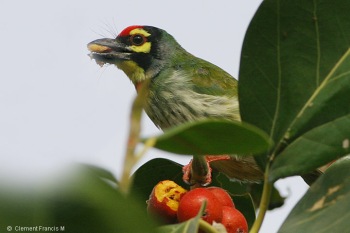
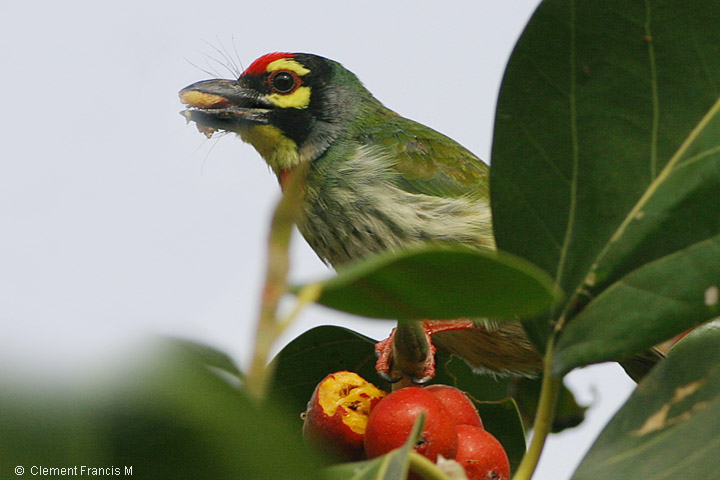
Coppersmith Barbet (Megalaima haemacephala) by Clement Francis

Coppersmith Barbet (Megalaima haemacephala) by Clement Francis

Keeps solitary, pairs, or small groups; larger parties occasionally on abundantly fruiting Ficus trees.

Fond of sunning themselves in the morning on bare top branches of tall trees, often flitting about to sit next to each other.

  • These birds are fond of sun and they never miss sitting in the sun every morning at an appointed time…
  • We know that His grace is new every morning….
  • But do we have an appointed time with the Sun of Righteousness each morning?

…..and those that seek me early shall find me.” Proverbs 8:17

The flight is straight, with rapid flaps. They compete with other cavity nesting birds and frugivores.

Megalaima asiatica have been noted to evict them from their nest holes, while Red-vented Bullbuls have been seen to indulge in Kleptoparasitism robbing the male of berries brought to the female at the nest.

  • The devil is out there to steal our fruit, to bring division between God and man…
  • Let us stand firm in prayer and praise to ward of the devil’s plan in our lives..
  • Prayer brings protection and praise brings the Protector Himself…

Take ye heed, watch and pray: for ye know not when the time is. Mark 13:33
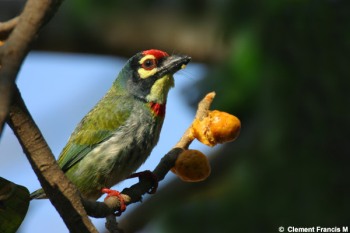
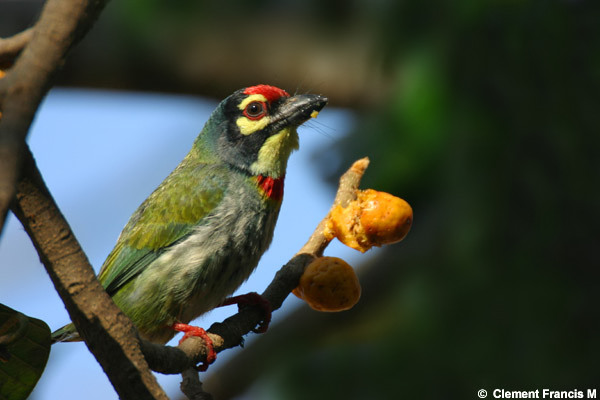
Coppersmith Barbet (Megalaima haemacephala) by Clement Francis

Coppersmith Barbet (Megalaima haemacephala) by Clement Francis

The nest holes are also used for roosting and some birds roost alone in cavities and these often roost during part of the day. Immatures will roost with the parents but often return to roost early so as not to be prevented by the parents from entering the roost cavity.

The younger ones often return early, so that their parents do not prevent them from entering their home..

Here is something for the younger generation to learn from these birds…

  • Returning home late has become a practice for the nex-gen…
  • They do not understand how worried their parents would be, if they don’t return early from school or college or even work for that matter…
  • They never seem to realize how dangerous it is to stay away late from home…

As a bird that wandereth from her nest, so is a man that wandereth from his place. Proverbs 27:8

Dinah went out all alone from her house to see the land but, what happened later, brought shame to her whole family… That story is told in Genesis chapter 34..

Most youngsters go late night outing with friends after work and some even after school or college without the knowledge of their parents..

  • It is during one of these outing that they get into drugs and fall into pre-marital sex and even commit murder..
  • Poor parents think, that their children are so innocent..
  • Parents too are to be held responsible…
  • How many parents spend quality time with their children…

Remember, children are a gift from God…

  • Are we handling those gifts with love and care..
  • They don’t need your money, all that they need is your loving care dear parents..
  • Most crime takes place in the dark, so let us protect our children from darkness and lead them to eternal life…
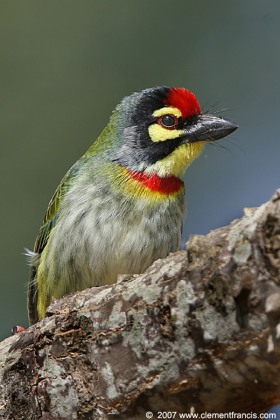
Coppersmith Barbet (Megalaima haemacephala) by Clement Francis

Coppersmith Barbet (Megalaima haemacephala) by Clement Francis

The Bible also says,

Thou makest darkness, and it is night: wherein all the beasts of the forest do creep forth. The young lions roar after their prey, and seek their meat from God. The sun ariseth, they gather themselves together, and lay them down in their dens. Man goeth forth unto his work and to his labour until the evening. Psalm 104:19-23

The call is a loud rather metallic tuk…tuk…tuk (or tunk), reminiscent of a copper sheet being beaten, giving the bird its name. Repeated monotonously for long periods, starting with a subdued tuk and building up to an even volume and tempo, the latter varying from 108 to 121 per minute and can continue with as many as 204 notes. They are silent and do not call in winter. The beak remains shut during each call – a patch of bare skin on both sides of the throat inflates and collapses with each tuk like a rubber bulb and the head is bobbed.

Prefers Banyan, Peepul, and other wild figs, various drupes and berries, and the occasional insect, caught in aerial sallies. Petals of flowers may also be included in their diet. They eat nearly 1.5 to nearly 3 times their body weight in berries each day.

Courtship involves singing, puffing of the throat, bobbing of the head, flicking of the tail, ritual feeding and allopreening. They breed through much of the year with local variation. The breeding season is mainly February to April in India and December to September in Sri Lanka.

Both sexes excavate the nest on the underside of a narrow horizontal branch. They may also roost inside the nest holes. Three or four eggs are laid and like in many hole nesting birds the incubation period is not well known but has been estimated to be about 2 weeks. Both sexes incubate. Often two broods are raised in quick succession.

During courtship the male bird offers a fruit and if the female receives it, they raise a family..

Imagine if the same rule is set for us, how many of us God would accept as His bride?

Therefore say I unto you, The kingdom of God shall be taken from you, and given to a nation bringing forth the fruits thereof. Mathew 21:43

Bring forth therefore fruits worthy of repentance, and begin not to say within yourselves, We have Abraham to our father: for I say unto you, That God is able of these stones to raise up children unto Abraham. Luke 3:8

Have a blessed day!

Your’s in YESHUA,
a j mithra

Please visit us at: Crosstree


Lee’s Addition:

The Coppersmith Barbet is in the Asian Barbets – Megalimidae Family of the Piciformes Order.

*
Birds in Hymns – Joy To The World

American Yellow Warbler (Dendroica aestiva) singing by J Fenton

American Yellow Warbler (Dendroica aestiva) singing by J Fenton

And the angel said unto them, Fear not: for, behold, I bring you good tidings of great joy, which shall be to all people. (Luke 2:10 KJV)

Joy To The World

Words by Isaac Watts, The Psalms of Da­vid, 1719.

Music: An­ti­och, ar­ranged by Low­ell Ma­son, 1792-1872 – The ci­ty of An­ti­och, Syr­ia, is where be­liev­ers were first called “Christ­ians” (Acts 11:26). Al­ter­nate tune:

Northern Parula (Parula americana) Reinier Munguia

Northern Parula (Parula americana) Reinier Munguia

“Joy to the World” is a popular Christmas carol.

The words are by English hymn writer Isaac Watts, based on Psalm 98 in the Bible. The song was first published in 1719 in Watts’ collection; The Psalms of David: Imitated in the language of the New Testament, and applied to the Christian state and worship. Watts wrote the words of “Joy to the World” as a hymn glorifying Christ’s triumphant return at the end of the age, rather than a Christmas song celebrating his first coming as a babe born in a stable. Only the second half of Watts’ lyrics are still used today.

The music was adapted and arranged to Watts’ lyrics by Lowell Mason in 1839 from an older melody which was then believed to have originated from Handel, not least because the theme of the refrain (And heaven and nature sing…) appears in the orchestra opening and accompaniment of the recitative Comfort Ye from Handel’s Messiah, and the first four notes match the beginning of the choruses Lift up your heads and Glory to God from the same oratorio. However, Handel did not compose the entire tune.”

As of the late 20th century, “Joy to the World” was the most-published Christmas hymn in North America.” (From Wikipedia)

Joy To The World

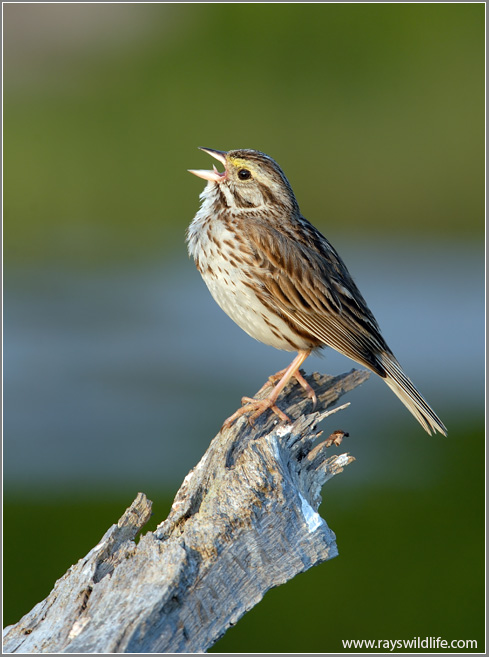
Savannah Sparrow singing by Ray

Savannah Sparrow singing by Ray

Joy to the world, the Lord is come!
Let earth receive her King;
Let every heart prepare Him room,
And Heaven and nature sing,
And Heaven, and Heaven, and nature sing.

Joy to the earth, the Savior reigns!
Let men their songs employ;
While fields and floods, rocks, hills and plains
Repeat the sounding joy,
Repeat, repeat, the sounding joy.

No more let sins and sorrows grow,
Nor thorns infest the ground;
He comes to make His blessings flow
Far as the curse is found,
Far as, far as, the curse is found.

He rules the world with truth and grace,
And makes the nations prove
The glories of His righteousness,
And wonders of His love,
And wonders, wonders, of His love.

Most information from The Cyber Hymnal

See ~ Wordless Birds

More ~ Birds in Hymns

*

In the Temple

Jesus in the Temple (e-mail source unknown)

Jesus in the Temple (e-mail source unknown)

Luke 2:40-52 KJV
(40) And the child grew, and waxed strong in spirit, filled with wisdom: and the grace of God was upon him.
(41) Now his parents went to Jerusalem every year at the feast of the passover.
(42) And when he was twelve years old, they went up to Jerusalem after the custom of the feast.
(43) And when they had fulfilled the days, as they returned, the child Jesus tarried behind in Jerusalem; and Joseph and his mother knew not of it.
(44) But they, supposing him to have been in the company, went a day’s journey; and they sought him among their kinsfolk and acquaintance.
(45) And when they found him not, they turned back again to Jerusalem, seeking him.
(46) And it came to pass, that after three days they found him in the temple, sitting in the midst of the doctors, both hearing them, and asking them questions.
(47) And all that heard him were astonished at his understanding and answers.
(48) And when they saw him, they were amazed: and his mother said unto him, Son, why hast thou thus dealt with us? behold, thy father and I have sought thee sorrowing.
(49) And he said unto them, How is it that ye sought me? wist ye not that I must be about my Father’s business?
(50) And they understood not the saying which he spake unto them.
(51) And he went down with them, and came to Nazareth, and was subject unto them: but his mother kept all these sayings in her heart.
(52) And Jesus increased in wisdom and stature, and in favour with God and man.

House Sparrow by Ray

House Sparrow by Ray

The Sparrows also like to make their homes in the tabernacle or temple.

…How amiable are thy tabernacles, O LORD of hosts! My soul longeth, yea, even fainteth for the courts of the LORD: my heart and my flesh crieth out for the living God. Yea, the sparrow hath found an house, and the swallow a nest for herself, where she may lay her young, even thine altars, O LORD of hosts, my King, and my God. Blessed are they that dwell in thy house: they will be still praising thee. Selah. (Psalms 84:1-4 KJV)

Simeon and Anna

Simeon with Christ (e-mail source unknown)

Simeon with Christ (e-mail source unknown)

Luke 2:25-39 KJV
(25) And, behold, there was a man in Jerusalem, whose name was Simeon; and the same man was just and devout, waiting for the consolation of Israel: and the Holy Ghost was upon him.
(26) And it was revealed unto him by the Holy Ghost, that he should not see death, before he had seen the Lord’s Christ.
(27) And he came by the Spirit into the temple: and when the parents brought in the child Jesus, to do for him after the custom of the law,
(28) Then took he him up in his arms, and blessed God, and said,
(29) Lord, now lettest thou thy servant depart in peace, according to thy word:
(30) For mine eyes have seen thy salvation,
(31) Which thou hast prepared before the face of all people;
(32) A light to lighten the Gentiles, and the glory of thy people Israel.
(33) And Joseph and his mother marvelled at those things which were spoken of him.
(34) And Simeon blessed them, and said unto Mary his mother, Behold, this child is set for the fall and rising again of many in Israel; and for a sign which shall be spoken against;
(35) (Yea, a sword shall pierce through thy own soul also,) that the thoughts of many hearts may be revealed.
(36) And there was one Anna, a prophetess, the daughter of Phanuel, of the tribe of Aser: she was of a great age, and had lived with an husband seven years from her virginity;
(37) And she was a widow of about fourscore and four years, which departed not from the temple, but served God with fastings and prayers night and day.
(38) And she coming in that instant gave thanks likewise unto the Lord, and spake of him to all them that looked for redemption in Jerusalem.
(39) And when they had performed all things according to the law of the Lord, they returned into Galilee, to their own city Nazareth.

Doves in Israel

Doves in Israel ©©

Turtle Doves Offered

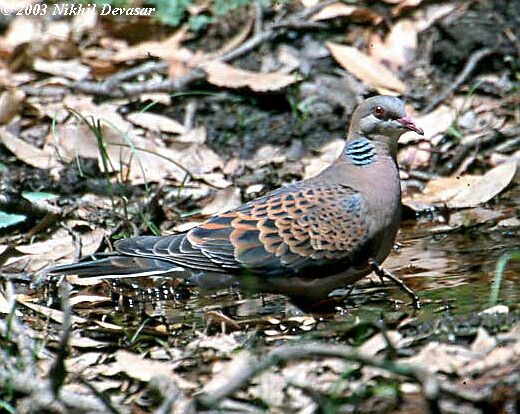
Oriental Turtle Dove (Streptopelia orientalis) by Nikhil Devasar

Oriental Turtle Dove (Streptopelia orientalis) by Nikhil Devasar

Luke 2:21-24 KJV
(21) And when eight days were accomplished for the circumcising of the child, his name was called JESUS, which was so named of the angel before he was conceived in the womb.
(22) And when the days of her purification according to the law of Moses were accomplished, they brought him to Jerusalem, to present him to the Lord;
(23) (As it is written in the law of the Lord, Every male that openeth the womb shall be called holy to the Lord;)
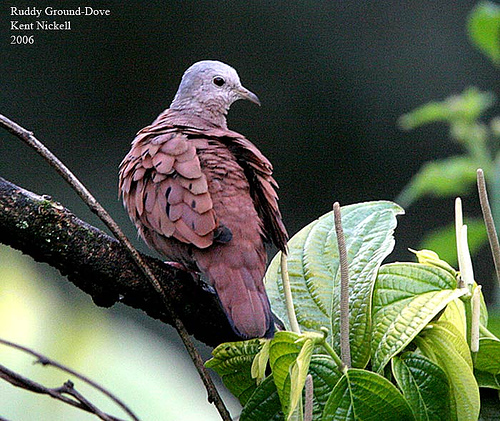
(24) And to offer a sacrifice according to that which is said in the law of the Lord, A pair of turtledoves, or two young pigeons.

Ruddy Pigeon (Patagionenas subvinacea) by Kent Nickell

Ruddy Pigeon (Patagionenas subvinacea) by Kent Nickell

Holiday Spirit from Dawn’s Bloggy Blog

My friend, Dawn, who writes the Dawn’s Bloggy Blog, posted this and thought you might enjoy it. We met a few years ago at the Birding Festival in Titusville, FL. They travel in a motorhome and she never seems to run out of interesting adventures.

These are Cedar Waxwings drinking. A sparrow and an American Robin also show up.

If thine enemy be hungry, give him bread to eat; and if he be thirsty, give him water to drink: (Pro 25:21)

Jesus answered and said unto her, Whosoever drinketh of this water shall thirst again: But whosoever drinketh of the water that I shall give him shall never thirst; but the water that I shall give him shall be in him a well of water springing up into everlasting life. (Joh 4:13-14)

To learn more about Waxwings see:

Cedar Waxwing – by A. J. Mithra
Ian’s Bird of the Week – Cedar Waxwing
Bombycillidae – Waxwings

*

Some Christmas Birds

Christmas White-eye (Zosterops natalis) by Ian

Christmas White-eye (Zosterops natalis) by Ian

Luke 2:15-20 KJV

(15) And it came to pass, as the angels were gone away from them into heaven, the shepherds said one to another, Let us now go even unto Bethlehem, and see this thing which is come to pass, which the Lord hath made known unto us.

(16) And they came with haste, and found Mary, and Joseph, and the babe lying in a manger.

(17) And when they had seen it, they made known abroad the saying which was told them concerning this child.

(18) And all they that heard it wondered at those things which were told them by the shepherds.

(19) But Mary kept all these things, and pondered them in her heart.

(20) And the shepherds returned, glorifying and praising God for all the things that they had heard and seen, as it was told unto them.

Flag of Christmas Island

Flag of Christmas Island©WikiC

While searching to find birds to write about with a Christmas theme, I came across the Territory of Christmas Island which belongs to Australia. It is in the Indian Ocean and only has a population of 1,403 residents who live in a number of “settlement areas” on the northern tip of the island.

*

Abbott's Booby (Papasula abbotti) by Ian

Abbott's Booby (Papasula abbotti) by Ian

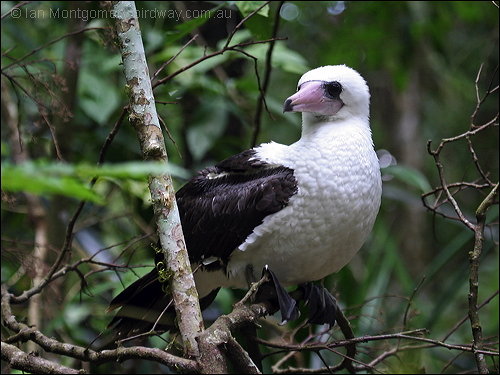
The island’s geographic isolation and history of minimal human disturbance has led to a high level of endemism (or state of being unique to a defined geographic location, such as an island, nation or other defined zone, or habitat type, and found only there) among its flora and fauna, which is of significant interest to scientists and naturalists. 63% of its 135 square kilometres (52 sq mi) is an Australian national park. There exist large areas of primary monsoonal forest.

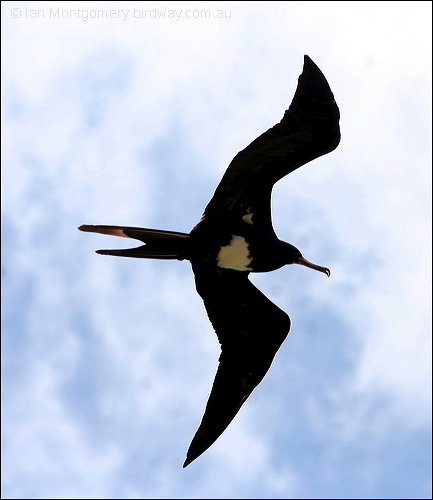
Christmas Frigatebird (Fregata andrewsi) by Ian

Christmas Frigatebird (Fregata andrewsi) by Ian

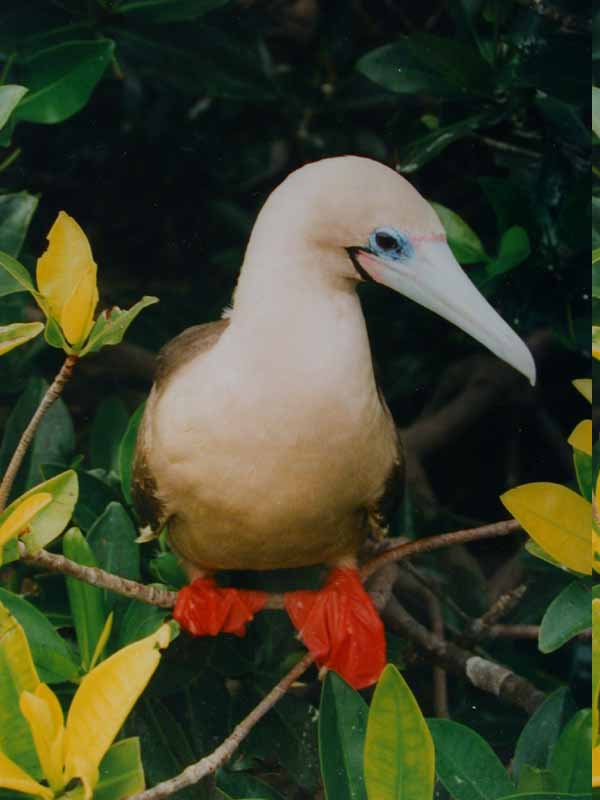
Christmas Island is a focal point for sea birds of various species. Eight species or subspecies of sea birds nest on the island. The most numerous is the Red-footed Booby that nests in colonies, in trees, on many parts of the shore terrace. The widespread Brown Booby nests on the ground near the edge of the seacliff and inland cliffs. Abbott’s Booby nests on tall emergent trees of the western, northern and southern plateau rainforest. The Christmas Island forest is the only nesting habitat of the Abbott’s Booby left in the world. The endemic Christmas Island Frigatebird (listed as endangered) has nesting areas on the north-eastern shore terraces and the more widespread Great Frigatebirds nest in semi-deciduous trees on the shore terrace with the greatest concentrations being in the North West and South Point areas. The Common Noddy and two species of bosuns or tropicbirds, with their brilliant gold or silver plumage and distinctive streamer tail feathers, also nest on the island.

Christmas Imperial Pigeon (Ducula whartoni) by Ian Montgomery

Christmas Imperial Pigeon (Ducula whartoni) by Ian Montgomery

Of the ten native land birds and shorebirds, seven are endemic species or subspecies. This includes the Christmas Island Thrush, and the Christmas Island Imperial Pigeon. Some 86 migrant bird species have been recorded as visitors to the Island.

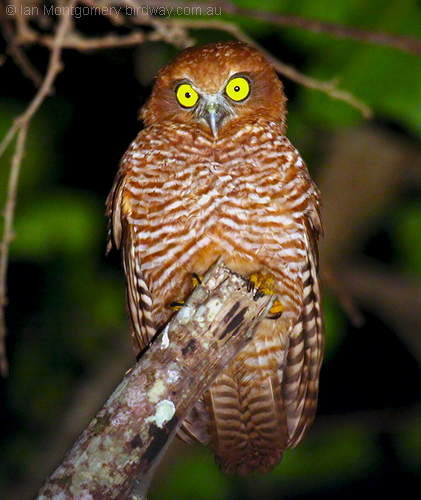
Christmas Boobook (Ninox natalis) by Ian

Christmas Boobook (Ninox natalis) by Ian

The list of birds from the I.O.C., which I use, lists five birds starting with Christmas. The Christmas Boobook (or Christmas Island Hawk-Owl), Christmas Frigatebird, Christmas Imperial Pigeon, Christmas Shearwater, and the Christmas White-eye.

Christmas Shearwater (Puffinus nativitatis) ©WikiC

Christmas Shearwater (Puffinus nativitatis) ©WikiC


Red-footed Booby (Sula sula) by Bob-Nan

Red-footed Booby (Sula sula) by Bob-Nan

*

*


Some information from Wikipedia and other internet sources.

See Also:

Christmas Island – Wikipedia

*