How A Flicker Feeds Her Young – The Woodpeckers

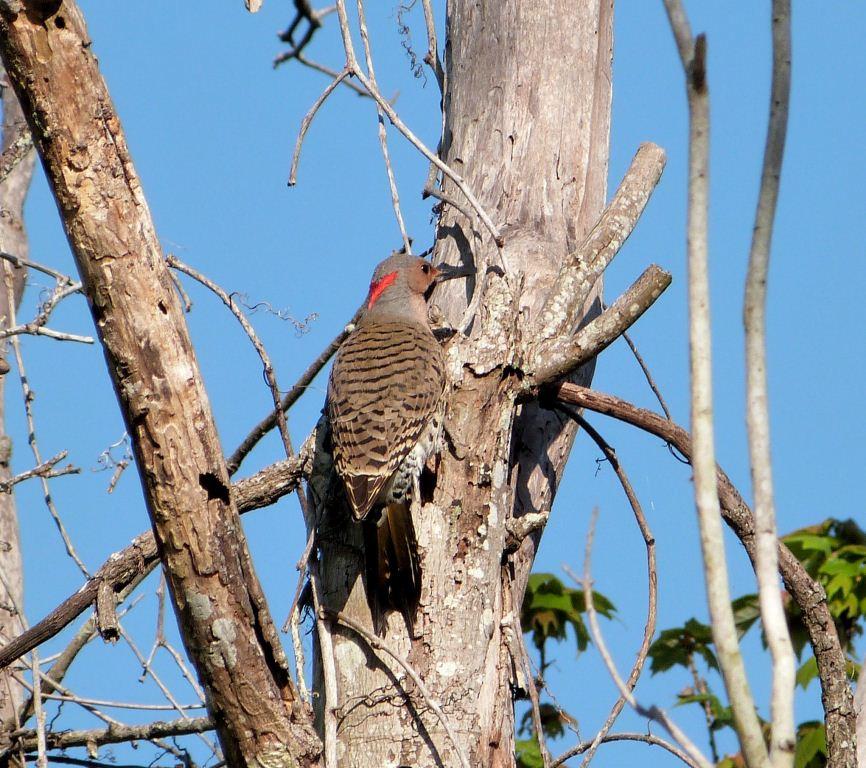
Northern Flicker cropped by Lee at S. Lk Howard Ntr Pk

Northern Flicker by Lee at S. Lk Howard Nature Pk

V

HOW A FLICKER FEEDS HER YOUNG

Based upon the observations of Mr. William Brewster.

As the house of the woodpecker has no windows and the old bird very nearly fills the doorway when she comes home, it is hard to find out just how she feeds her little ones. But one of our best naturalists has had the opportunity to observe it, and has told what he saw.

A flicker had built a nest in the trunk of a rather small dead tree which, after the eggs were hatched, was accidentally broken off just at the entrance hole. This left the whole cavity exposed to the weather; but it was too late to desert the nest, and impossible to remove the young birds to another nest.

When first visited, the five little birds were blind, naked, and helpless. They were motherless, too. Some one must have killed their pretty mother; for she never came to feed them, and the father was taking all the care of his little family. When disturbed the little birds hissed like snakes, as is the habit of the callow young of woodpeckers, chickadees, and other birds nesting habitually in holes in trees. When they were older and their eyes were open, they made a clatter much like the noise of a mowing-machine, and loud enough to be heard thirty yards away.

The father came at intervals of from twenty to sixty minutes to feed the little ones. He was very shy, and came so quietly that he would be first seen when he alighted close by with a low little laugh or a subdued but anxious call to the young. “Here I am again!” he laughed; or “Are you all right, children?” he called to them. “All right!” they would answer, clattering in concert like a two-horse mower.

As soon as they heard him scratching on the tree-trunk, up they would all clamber to the edge of the nest and hold out their gaping mouths to be fed. Each one was anxious to be fed first, because there never was enough to go round. There was always one that, like the little pig of the nursery tale, “got none.” When he came to the nest, the father would look around a moment, trying to choose the one he wanted to feed first. Did he always pick out the poor little one that had none the time before, I wonder?

After the old bird had made his choice, he would bend over the little bird and drive his long bill down the youngster’s throat as if to run it through him. Then the little bird would catch hold as tightly as he could and hang on while his father jerked him up and down for a second or a second and a half with great rapidity. What was he doing? He was pumping food from his own stomach into the little one’s. Many birds feed their young in this way. They do not hold the food in their own mouths, but swallow and perhaps partially digest it, so that it shall be fit for the tender little stomachs.

While the woodpecker was pumping in this manner his motions were much the same as when he drummed, but his tail twitched as rapidly as his head and his wings quivered. The motion seemed to shake his whole body.

In two weeks from the time when the little birds were blind, naked, helpless nestlings they became fully feathered and full grown, able to climb up to the top of the nest, from which they looked out with curiosity and interest. At any noise they would slip silently back. A day or two later they left the old nest and began their journeys.

No naturalist has been able to tell us whether other woodpeckers than the golden-winged flicker feed their young in this way; and little is known of the number of kinds of birds that use this method, but it is suspected that it is far more common than has ever been determined. If an old bird is seen to put her bill down a young one’s throat and keep it there even so short a time as a second, it is probable that she is feeding the little one by regurgitation, that is, by pumping up food from her own stomach. Any bird seen doing this should be carefully watched. It has long been known that the domestic pigeon does this, and the same has been observed a number of times of the ruby-throated hummingbird. A California lady has taken some remarkable photographs of the Anna’s hummingbird in the act, showing just how it is done.


Lee’s Addition:

And Jesus saith unto him, The foxes have holes, and the birds of the air have nests; but the Son of man hath not where to lay his head. (Matthew 8:20 KJV)

This is Chapter V from The Woodpeckers book. Our writer, Fannie Hardy Eckstorm, wrote this in 1901. There are 16 chapters, plus the Forward, which are about the Woodpecker Family here in America. All the chapters can be found on The Woodpeckers page. I added photos to help enhance the article. In 1901, photography was not like today.

Woodpeckers belong to the Picidae – Woodpeckers Family.

The Northern Flicker (Colaptes auratus) is a medium-sized member of the woodpecker family. It is native to most of North America, parts of Central America, Cuba, the Cayman Islands, and is one of the few woodpecker species that migrate. There are over 100 common names for the Northern Flicker. Among them are: Yellowhammer, clape, gaffer woodpecker, harry-wicket, heigh-ho, wake-up, walk-up, wick-up, yarrup, and gawker bird. Many of these names are attempts at imitating some of its calls.

Check out their sounds at Northern Flicker – All About Birds

Their breeding habitat consists of forested areas across North America and as far south as Central America. They are cavity nesters who typically nest in trees but they will also use posts and birdhouses if sized and situated appropriately. They prefer to excavate their own home although they will reuse and repair damaged or abandoned nests. Abandoned Flicker nests create habitat for other cavity nesters. Flickers are sometimes driven from nesting sites by another cavity nester, European starlings.

It takes about 1 to 2 weeks to build the nest which is built by both sexes of the mating pairs. The entrance hole is roughly 5 to 10 cm (2.0 to 3.9 in) wide.

A typical clutch consists of 6 to 8 eggs whose shells are pure white with a smooth surface and high gloss. The eggs are the second largest of the North American woodpecker species, exceeded only by the Pileated Woodpecker’s. Incubation is by both sexes for approximately 11 to 12 days. The young are fed by regurgitation and fledge about 25 to 28 days after hatching. (Wikipedia)

*

See:

Picidae – Woodpeckers Family

The Woodpeckers by Fannie Hardy Eckstorm

Wordless Birds

*

Other Flickers around the World:

  • Northern Flicker (Colaptes auratus) 
  • Gilded Flicker (Colaptes chrysoides) 
  • Fernandina’s Flicker (Colaptes fernandinae) 
  • Chilean Flicker (Colaptes pitius)
  • Andean Flicker (Colaptes rupicola)

Interesting link to a reader’s photos – Wonderful Woodpecker Family

*

Birds of the Bible – Bird-Nesting (Hastings)

American Robin (Turdus migratorius) with young in nest

American Robin (Turdus migratorius) with young in nest

If a bird’s nest should chance to be before you in the way, in any tree or on the ground, with young ones or eggs, and the mother bird is sitting on the young or on the eggs, you shall not take the mother bird with the young. You shall surely let the mother bird go, and take only the young, that it may be well with you and that you may prolong your days. (Deuteronomy 22:6-7 AMP)

Bird-Nesting

(Just found this interesting Commentary for Children – Children’s Great Texts of the Bible by James Hastings for my e-Sword.)

If a bird’s nest chance to be before thee in the way, in any tree or on the ground, with young ones or eggs, and the dam sitting upon the young, or upon the eggs, thou shalt not take the dam with the young: thou shalt in any wise let the dam go, but the young thou mayest take to thyself; that it may be well with thee, and that thou mayest prolong thy days.—Deu_22:6-7.

You think of the children of Israel, don’t you, as having lived far back in the dark ages? But here is one of the commandments which God gave to them—a little one about a bird’s nest—and the words of it make us feel that those wanderers were just big boys and girls with the same inclinations as we ourselves have today.

We learn from the words that the birds that flew about the Israelites as they journeyed were, in many cases, birds such as those we have now. The people must have been robbing their nests too, else we should not have had this verse at all. Naturally enough, in their wanderings they often came upon a nest by the wayside.

Northern Lapwing (Vanellus vanellus) by Nikhil Devasar

Northern Lapwing (Vanellus vanellus) by Nikhil Devasar

It may be that the Israelitish boys knew the little bird nests which are found in a hollow by the side of a marsh. Perhaps they thoughtlessly scattered the eggs, or perhaps Mr. Lapwing—artful little bird that he is!—lured them away from it with the wonderful antics with which he and his ancestors, generation after generation, have protected their nests. For Mr. Lapwing is the real defender of his nest. The mother bird is generally so frightened that she flies away. But when an enemy approaches the male lapwing practices the tricks his father taught him. Gradually moving farther and farther away from where the precious eggs are, he turns a number of somersaults, or he does other equally extraordinary things. The onlooker becomes so interested that the nest is forgotten.

Mourning Dove (Zenaida macroura) by Reinier Munguia

Mourning Dove (Zenaida macroura) by Reinier Munguia

You remember Noah’s clever scout bird, the dove? She, too, would be known to the Israelites. The dove has a very mournful note. No wonder! Her family has ancient legends of how large numbers of them used to be trapped and taken captive to Jerusalem and then killed. Sacrifice had no meaning to them. It was all a mystery, and they just mourned.

What made me think of the text this morning? Why, just the fact that it is May! And May is the great month for birds’ nests. It is the birds’ busy time.
In trees, in bushes, on house-tops, or on the ground, they have built their little homes. What wonderful architects many of them are. One bird has woven twigs together into a building like an old Gothic church; another has built his house in the shape of a bottle; while one we all love lives in a dear little house made of mud. They were very patient while they gathered their building materials; and when they selected a site for their nest, by some strange instinct they chose it as far out of the reach of boys and girls as possible. But in spite of all their wonderful wisdom, somehow—and I feel ashamed to say it—there are always boys ready to climb up and destroy the little houses on which so much thoughtful care has been bestowed.

Common Starling (Sturnus vulgaris) at Nest  by Anthony747

Common Starling (Sturnus vulgaris) at Nest by Anthony747

Now I am to give you three reasons why I want you not to disturb a bird’s nest while it’s being used.

1. Because it is cruel and cowardly.—What would you think if anyone were to break open the door of your home and run away with your bed? Think of your mother going out one day and coming home to find that someone had been there and stolen you away! Yet, how often does the poor mother bird come home to find all her children taken from her? If you rob a nest, it is a case of the strong taking advantage of the weak —a cowardly action under any circumstances—you know it is.

2. Because the birds have rights.—Any creature that suffers has rights. Theodore Parker, the great American preacher, when a lad, saw a turtle on a log, and, with stone in hand, he crept up and was about to throw it, when he heard a voice within which made him desist. He asked his mother about it. She told him that it was the protest of the doctrine of rights— the voice of God. Killing an animal for food or clothing is a part of life. But killing an animal for “fun” or “sport” is wrong.

3. Because we ought to love the birds, and love never willfully hurts what it loves. Love was Christ’s great commandment—love in little as well as in big things. God is great, yet He cares for the birds. “Are not two sparrows sold for a farthing? and one of them shall not fall on the ground without your Father.”
What has the song of birds’ not done for many a man and woman? It has cheered them, it has inspired them, it has given them new courage. It has even led them to God.

Savannah Sparrow Fifty Point-Canada by Ray Barlow

Savannah Sparrow Fifty Point-Canada by Ray Barlow

Here are some beautiful verses, by the poet George Macdonald, which tell what the song of a bird did for the heart of a man.

A brown bird sang on a blossomy tree,
Sang in the moonshine, merrily,
Three little songs, one, two, and three,
A song for his wife, for himself, and me.

He sang for his wife, sang low, sang high,
Filling the moonlight that filled the sky;
“Thee, thee, I love thee, heart alive!
Thee, thee, thee, and thy round eggs five!”

He sang to himself, “What shall I do
With this life that thrills me through and through!
Glad is so glad that it turns to ache!
Out with it, song, or my heart will break!”

He sang to me, “Man, do not fear
Though the moon goes down and the dark is near
Listen my song and rest thine eyes;
Let the moon go down that the sun may rise!”

I folded me up in the heart of his tune,
And fell asleep with the sinking moon;
I woke with the day’s first golden gleam,
And, lo, I had dreamed a precious dream!

*

By James Hastings’ Children’s Great Texts of the Bible

(I normally do a Birds of the Bible here and adapt it for the Birds of the Bible For Kids website. This time I am sharing one I posted on their site first.)

Birds of the Bible – Here

*

How The Woodpecker Makes A House – The Woodpeckers

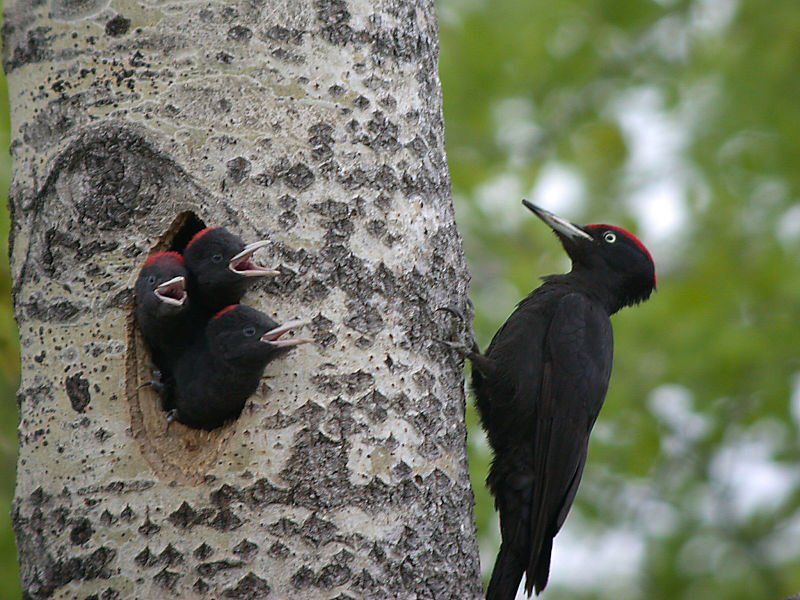
Black Woodpecker (Dryocopus martius) with Young ©WikiC

Black Woodpecker (Dryocopus martius) with Young ©WikiC

IV

HOW THE WOODPECKER MAKES A HOUSE

All woodpeckers make their houses in the wood of trees, either the trunk or one of the branches. Almost the only exceptions to this rule are those that live in the treeless countries of the West. In the torrid deserts of Arizona and the Southwest, some species are obliged to build in the thorny branches of giant cacti, which there grow to an enormous size. In the treeless plains to the northward, a few individuals, for lack of anything so suitable as the cactus, dig holes in clay banks, or even lay their eggs upon the surface of the prairie. In a country where chimney swallows nest in deserted houses, and sand martins burrow in the sides of wells, who wonders at the flicker’s thinking that the side of a haystack, the hollow of a wheel-hub, or the cavity under an old ploughshare, is an ideal home? But in wooded countries the woodpeckers habitually nest in trees. The only exceptions I know are a few flickers’ holes in old posts, and a few instances where flickers[21] have pecked through the weatherboarding of a house to nest in the space between the walls.

But because a bird nests in a hole in a tree, it is not necessarily a woodpecker. The sparrow-hawk, the house sparrow, the tree swallow, the bluebird, most species of wrens, and several of the smaller species of owls nest either in natural cavities in trees or in deserted woodpeckers’ holes. The chickadees, the crested titmice, and the nuthatches dig their own holes after the same pattern as the woodpecker’s. However, the large, round holes were all made by woodpeckers, and of those under two inches in diameter, our friend Downy made his full share. It is easy to tell who made the hole, for the different birds have different styles of housekeeping. The chickadees and nuthatches always build a soft little nest of grass, leaves, and feathers, while the woodpeckers lay their eggs on a bed of chips, and carry nothing in from outside.

Soon after they have mated in the spring, the woodpeckers begin to talk of housekeeping. First, a tree must be chosen. It may be sound or partly decayed, one of a clump or solitary; but it is usually dead or hollow-hearted, and at least partly surrounded by other trees. Sometimes a limb is chosen, sometimes an upright trunk, and the nest may be from two feet to one hundred feet from the ground, though most frequently it will be found not less than ten nor more than thirty feet up. However odd the location finally occupied, it is likely that it was not the first one selected. A woodpecker will dig half a dozen houses rather than occupy an undesirable tenement. It is very common to find their unfinished holes and the wider-mouthed, shallower pockets which they dig for winter quarters; for those that spend their winters in the cold North make a hole to live in nights and cold and stormy days.

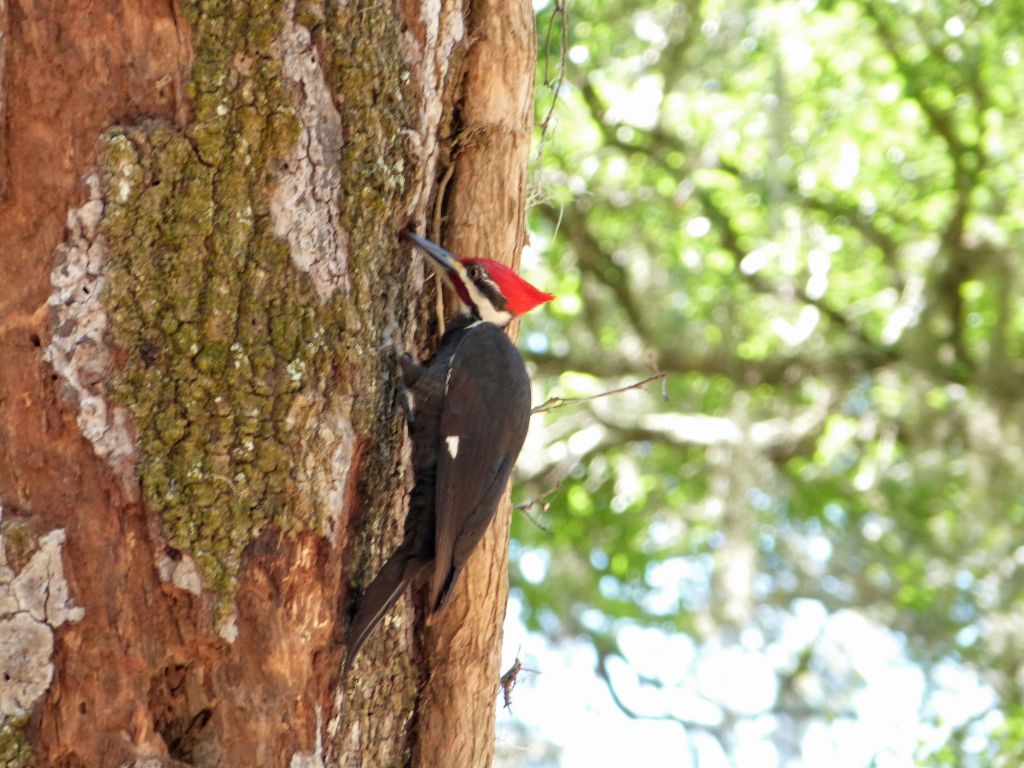
Pileated Woodpecker (Dryocopus pileatus) by Raymond Barlow

Pileated Woodpecker (Dryocopus pileatus) by Raymond Barlow

The first step in building is to strike out a circle in the bark as large as the doorway is to be; that is, from an inch and a half to three or four inches in diameter according to the size of the woodpecker. It is nearly always a perfect circle. Try, if you please, to draw freehand a circle of dots as accurate as that which the woodpecker strikes out hurriedly with his bill, and see whether it is easy to do as well as he does.

If the size and shape of the doorway suit him, the woodpecker scales off the bark inside his circle of holes and begins his hard work. He seems to take off his coat and work in his shirtsleeves, so vigorously does he labor as he clings with his stout toes, braced in position by his pointed tail. The chips fly out past him, or if they lie in the hole, he sweeps them out with his bill and pelts again at the same place. The pair take turns at the work. Who knows how long they work before resting? Do they take turns of equal length? Does one work more than the other? A pair of flickers will dig about two inches in a day, the hole being nearly two and a half inches in diameter. A week or more is consumed in digging the nest, which, among the flickers, is commonly from ten to eighteen inches deep. The hole usually runs in horizontally for a few inches and then curves down, ending in a chamber large enough to make a comfortable nest for the mother and her babies.

What a good time the little ones have in their hole! Rain and frost cannot chill them; no enemy but the red squirrel is likely to disturb them. There they lie in their warm, dark chamber, looking up at the ray of light that comes in the doorway, until at last they hear the scratching of their mother’s feet as she alights on the outside of the tree and clambers up to feed them. What a piping and calling they raise inside the hole, and how they all scramble up the walls of their chamber and thrust out their beaks to be fed, till the old tree looks as if it were blossoming with little woodpeckers’ hungry mouths!

Lee’s Addition:

Pileated Woodpecker, female at nest hole

Pileated Woodpecker, female at nest hole

The trees of the Lord are watered abundantly and are filled with sap, the cedars of Lebanon which He has planted, Where the birds make their nests; as for the stork, the fir trees are her house. (Psalms 104:16-17 AMP)

This is Chapter IV from The Woodpeckers book. Our writer, Fannie Hardy Eckstorm, wrote this in 1901. There are 16 chapters, plus the Forward, which are about the Woodpecker Family here in America. All the chapters can be found on The Woodpeckers page. I added photos to help enhance the article. In 1901, photography was not like today.

Woodpeckers belong to the Picidae – Woodpeckers Family.

If you have ever been in the woods and heard a Woodpecker or other member of their family working on their “house,” that sound helps locate them. The Pileated Woodpeckers especially sound like they are tearing the place apart. The Lord created this family to prefer having their home in the tree trunks and larger limbs. He has prepared them with beaks that can handle all the pounding they do and a cushioned forehead to protect their brains.  The video on the Woodpeckers page explains part of this.

See:

Picidae – Woodpeckers Family

The Woodpeckers by Fannie Hardy Eckstorm

Wordless Birds

*

Interesting link to a reader’s photos – Wonderful Woodpecker Family

*

Encouragement

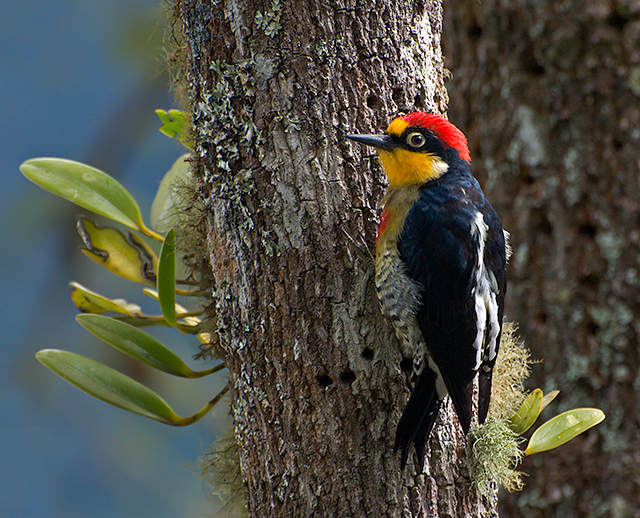
Yellow-fronted Woodpecker (Melanerpes flavifrons) by Dario Sanches

Yellow-fronted Woodpecker (Melanerpes flavifrons) by Dario Sanches

She (Wisdom) is a tree of life to those who lay hold on her; and happy (blessed, fortunate, to be envied) is everyone who holds her fast. The Lord by skillful and godly Wisdom has founded the earth; by understanding He has established the heavens. [Col. 1:16.] (Proverbs 3:18-19 AMP)

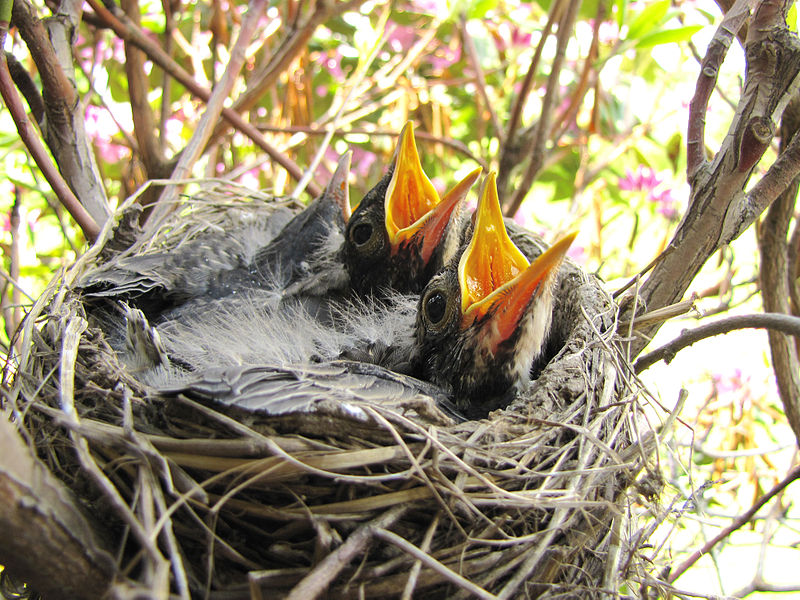
American Robin (Turdus migratorius) in nest ready to eat ©WikiC

American Robin (Turdus migratorius) in nest ready to eat ©WikiC

Be anxious for nothing, but in everything by prayer and supplication, with thanksgiving, let your requests be made known to God; and the peace of God, which surpasses all understanding, will guard your hearts and minds through Christ Jesus. (Philippians 4:6-7 NKJV)

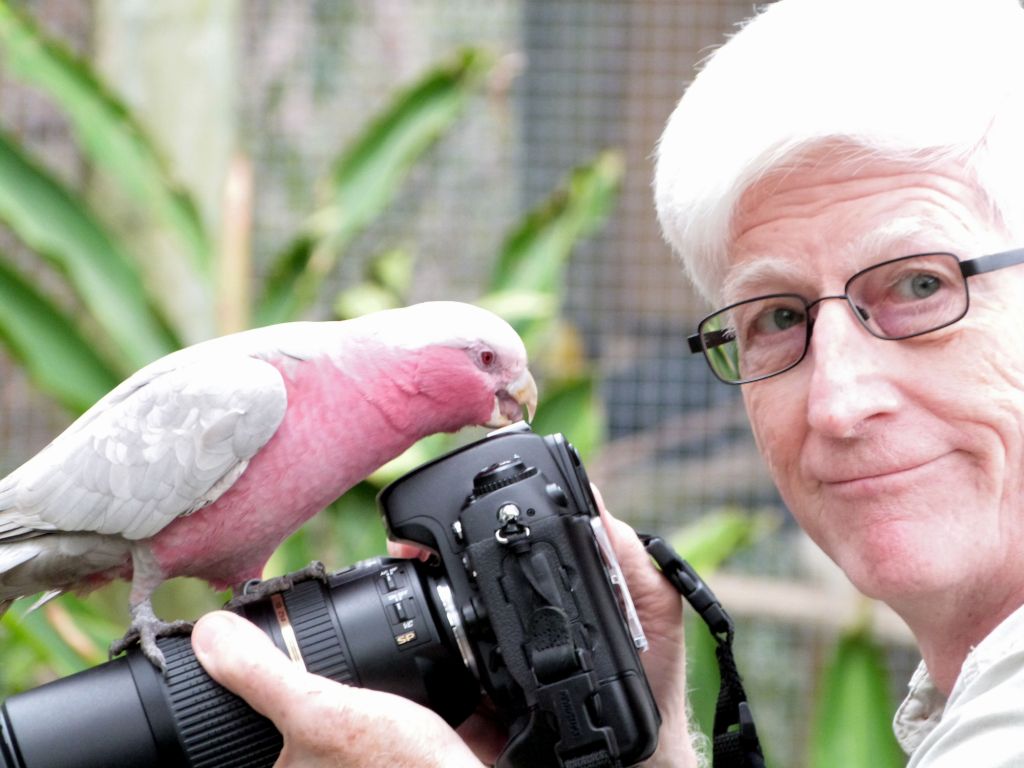
Galah (Eolophus roseicapilla) and Dan

Galah (Eolophus roseicapilla) and Dan

How blessed are the people who are so situated; How blessed are the people whose God is the LORD! (Psalms 144:15 NASB)

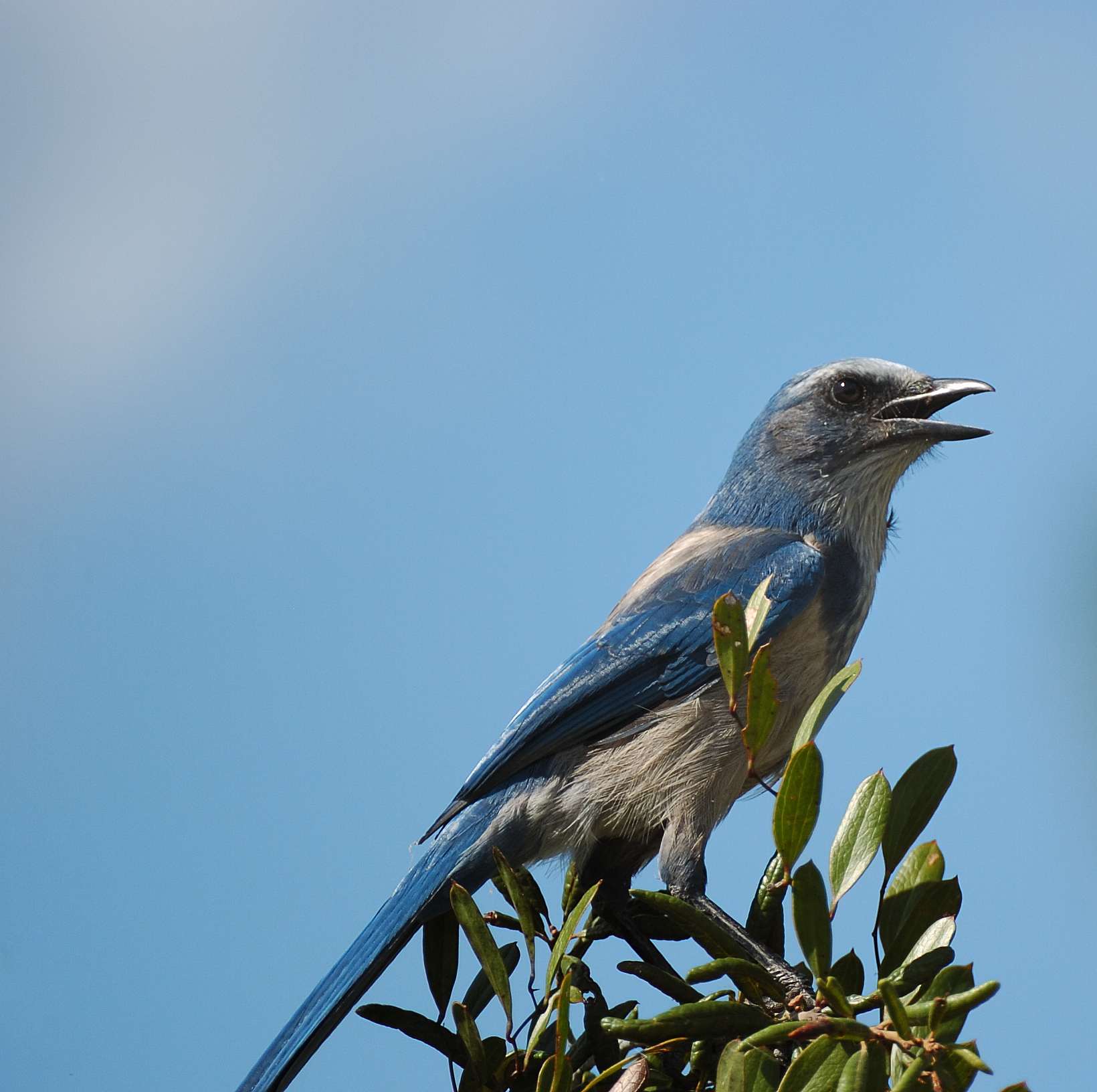
Florida Scrub Jay (Aphelocoma coerulescens) by Dan

Florida Scrub Jay (Aphelocoma coerulescens) by Dan

Praise the LORD, for the LORD is good; Sing praises to His name, for it is lovely. (Psalms 135:3 NASB)

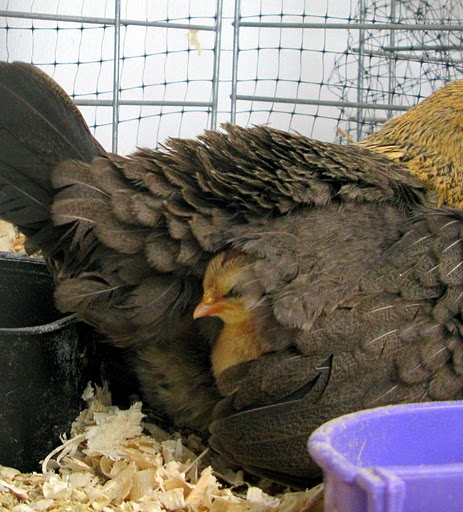
Baby Chick Peeping Out From Under His Mom's Wing - ©©

Baby Chick Peeping Out From Under His Mom’s Wing – ©©

How precious is Your steadfast love, O God! The children of men take refuge and put their trust under the shadow of Your wings. (Psalms 36:7 AMP)

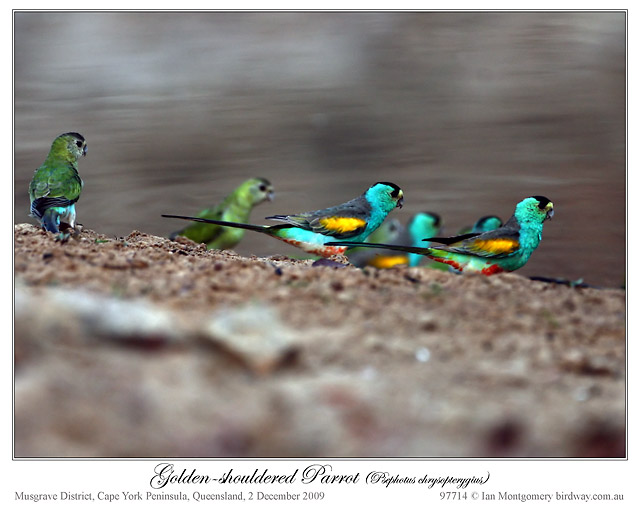
Golden-shouldered Parrot (Psephotus chrysopterygius) by Ian

Golden-shouldered Parrot (Psephotus chrysopterygius) by Ian

They are abundantly satisfied with the fullness of Your house, And You give them drink from the river of Your pleasures. (Psalms 36:8 NKJV)

*

Begging Pied-billed Grebe by MJSpringett

What an adorable photo that MJSpringett Wildlife Photography captured. Just had to share it, with permission.

Begging Pied-billed Grebe by MJSpringett Wildlife Photography

Begging Pied-billed Grebe by MJSpringett

Look at the birds of the air: they neither sow nor reap nor gather into barns, and yet your heavenly Father feeds them. Are you not of more value than they? (Matthew 6:26 ESV)

I alway enjoy seeing the Grebes swimming around and diving. Waiting for them to come up is always an adventure. You never know where to look. You watch an area and next thing you know, up they pop nowhere near where they dove.

As for a young one, like the photo, that is an site that has evaded us. It is “cute.”

The Pied-billed Grebe (Podilymbus podiceps) is a species of the grebe family of water birds. That is the Podicipedidae – Grebes FamilyThe Pied-billed Grebe is primarily found in ponds throughout the Americas. Other names of this grebe include American dabchick, dabchick, Carolina grebe, devil-diver, dive-dapper, dipper, pied-billed dabchick, thick-billed grebe, and other names.

Pied-billed Grebes are small, stocky, and short-necked. They are 12–15 in (31–38 centimeters) in length, with a wingspan of 18–24 in (45–62 cm) and weigh 8.9–20.0 oz (253–568 grams). They are mainly brown, with a darker crown and back. Their brown color serves as camouflage in the marshes they live in. They do not have white under their wings when flying, like other grebes. Their undertail is white and they have a short, blunt chicken-like bill that is a light grey color, which in summer is encircled by a broad black band (hence the name). In the summer, its throat is black. Juveniles have black and white stripes and look more like winter adults. This grebe does not have webbed feet. Its toes have lobes that come out of the side of each toe. These lobes allow for easy paddling. When flying, the feet appear behind the body due to the feet’s placement in the far back of the body.

Its call is unique, loud and sounds like a “whooping kuk-kuk-cow-cow-cow-cowp-cowp.” Its call is similar to the Yellow-billed Cuckoo.

Pied-billed Grebes rarely fly. They make a slow dive frequently, especially when in danger, diving to about 20 feet or less. They dive for about 30 seconds and may move to a more secluded area of the water, allowing only the head to be visible to watch the danger dissipate.

Pied-billed Grebes feed mainly on aquatic invertebrates, and also on small fish and amphibians (frogs, tadpoles). They dive to obtain food. Their bills allow them to crush crustaceans, like crawfish. They may also eat plants. They have been shown to eat their own feathers, like other grebes, to aid in digestion (prevent injury from small bones). They will also feed their feathers to their young. (Wikipedia with editing)

I have been young, and now am old, yet I have not seen the righteous forsaken or his children begging for bread. (Psalms 37:25 ESV)

This photo, even though the young one is not really begging, and the parent is only doing what it is supposed to do, reminds me of that promise.

See:

*

Nuggets Plus – Protection and Providence

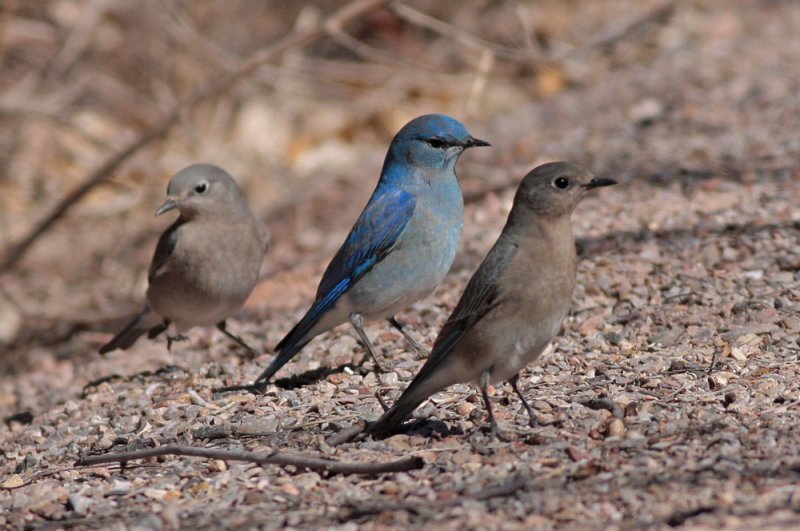
Mountain Bluebird (Sialia currucoides) for ajmithra's article

Mountain Bluebird (Sialia currucoides)

Nuggets Plus – Protection and Providence ~ by a j mithra

Nuggets Plus

Nuggets Plus

Male Mountain Blue Bird
not only brings food to feed
but also protects
while the female builds the nest!
God will not only feed
but also protect us
as we build His Kingdom!

No weapon that is formed against you shall prosper; and every tongue that shall rise against you in judgment you shall condemn. This is the heritage of the servants of the LORD, and their righteousness is of me, says the LORD. (Isaiah 54:17)

*

Regards,
Yours in YESHUA,
a j mithra

Please visit us at:


Mountain Bluebird (Sialia currucoides) by Margaret Sloan

Mountain Bluebird (Sialia currucoides) by Margaret Sloan

Lee’s Addition:

The Mountain Bluebird belongs to the Thrushes – Turdidae Family.
See:

*

How The Woodpecker Courts His Mate – The Woodpeckers

Downy Woodpecker (Picoides pubescens) Brevard Zoo by Dan

Downy Woodpecker (Picoides pubescens) Brevard Zoo by Dan

III

HOW THE WOODPECKER COURTS HIS MATE

Other birds woo their mates with songs, but the woodpecker has no voice for singing. He cannot pour out his soul in melody and tell his love his devotion in music. How do songless birds express their emotions? Some by grotesque actions and oglings, as the horned owl, and some by frantic dances, as the sharp-tailed grouse, woo and win their mates; but the amorous woodpecker, not excepting the flickers, which also woo by gestures, whacks a piece of seasoned timber, and rattles off interminable messages according to the signal code set down for woodpeckers’ love affairs. He is the only instrumental performer among the birds; for the ruffed grouse, though he drums, has no drum.

There is no cheerier spring sound, in our belated Northern season, than the quick, melodious rappings of the sapsucker from some dead ash limb high above the meadow. It is the best performance of its kind: he knows the capabilities of his instrument, and gets out of it all the music there is in it. Most if not all woodpeckers drum occasionally, but drumming is the special accomplishment of the sapsucker. He is easily first. In Maine, where they are abundant, they make the woods in springtime resound with their continual rapping.

Early in April, before the trees are green with leaf, or the willows have lost their silky plumpness, when the early round-leafed yellow violet is cuddling among the brown, dead leaves, I hear the yellow-bellied sapsucker along the borders of the trout stream that winds down between the mountains. The dead branch of an elm-tree is his favorite perch, and there, elevated high above all the lower growth, he sits rolling forth a flood of sound like the tremolo of a great organ. Now he plays staccato,—detached, clear notes; and now, accelerating his time, he dashes through a few bars of impetuous hammerings. The woods re-echo with it; the mountains give it faintly back. Beneath him the ruffed grouse paces back and forth on his favorite mossy log before he raises the palpitating whirr of his drumming. A chickadee digging in a rotten limb pauses to spit out a mouthful of punky wood and the brown Vanessa, edged with yellow, first butterfly of the season, flutters by on rustling wings. So spring arrives in Maine, ushered in by the reveille of the sapsucker.

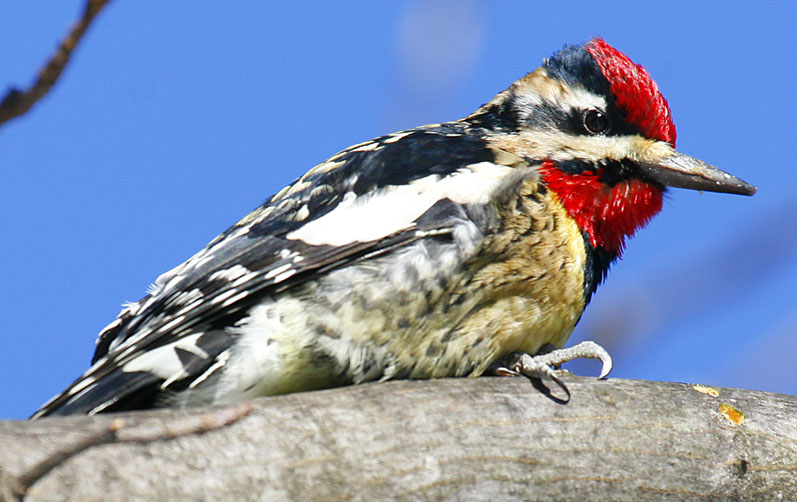
Yellow-bellied Sapsucker (Sphyrapicus varius) ©WikiC

Yellow-bellied Sapsucker (Sphyrapicus varius) ©WikiC

Yellow-bellied Sapsucker Drumming

So ambitious is the sapsucker of the excellence of his performance that no instrument but the best will satisfy him. He is always experimenting, and will change his anvil for another as soon as he discovers one of superior resonance. They say he tries the tin pails of the maple-sugar makers to see if these will not give him a clearer note; that he drums on tin roofs and waterspouts till he loosens the solder and they come tumbling down. But usually he finds nothing so near his liking as a hard-wood branch, dead and barkless, the drier, the harder, the thinner, the finer grained, so much the better for his uses.

Deficient as they are in voice, the woodpeckers do not lack a musical ear. Mr. Burroughs tells us that a downy woodpecker of his acquaintance used to change his key by tapping on a knot an inch or two from his usual drumming place, thereby obtaining a higher note. Alternating between the two places, he gave to his music the charm of greater variety. The woodpeckers very quickly discover the superior conductivity of metals. In parts of the country where woodpeckers are more abundant than good drumming trees, a tin roof proves an almost irresistible attraction. A lightning-rod will sometimes draw them farther than it would an electric bolt; and a telegraph pole, with its tinkling glasses and ringing wires, gives them great satisfaction. If men did not put their singing poles in such public places, their music would be much more popular with the woodpeckers; but even now the birds often venture on the dangerous pastime and hammer you out a concord of sweet sounds from the mellow wood-notes, the clear peal of the glass, and the ringing overtones of the wires.

Northern Flicker cropped by Lee at S. Lk Howard Ntr Pk

Northern Flicker by Lee (cropped)

Northern Flicker calling and drumming

The flicker often telegraphs his love by tapping either on a forest tree or on some loose board of a barn or outhouse; but he has other ways of courting his lady. On fine spring mornings, late in April, I have seen them on a horizontal bough, the lady sitting quietly while her lover tried to win her approval by strange antics. Quite often there are two males displaying their charms in open rivalry, but once I saw them when the field was clear.

If fine clothes made a gentleman, this brave wooer would have been first in all the land: for his golden wings and tail showed their glittering under side as he spread them; his scarlet headdress glowed like fire; his rump was radiantly white, not to speak of the jetty black of his other ornaments and the beautiful ground-colors of his body. He danced before his lady, showing her all these beauties, and perhaps boasting a little of his own good looks, though she was no less beautiful. He spread his wings and tail for her inspection; he bowed, to show his red crescent; he bridled, he stepped forward and back and sidewise with deep bows to his mistress, coaxing her with the mellowest and most enticing co-wee-tucks, which no doubt in his language meant “Oh, promise me,” laughing now and then his jovial wick-a-wick-a-wick-a-wick-a, either in glee or nervousness. It was all so very silly—and so very nice! I wonder how it all came out. Did she promise him? Or did she find a livelier suitor?


Lee’s Addition:

Pileated Woodpecker by Lee at Circle B

Pileated Woodpecker by Lee at Circle B

And God blessed them, saying, “Be fruitful and multiply and fill the waters in the seas, and let birds multiply on the earth.” (Genesis 1:22 ESV)

This is Chapter III from The Woodpeckers book. Our writer, Fannie Hardy Eckstorm, wrote this in 1901. There are 16 chapters, plus the Forward, which are about the Woodpecker Family here in America. All the chapters can be found on The Woodpeckers page. I added photos to help enhance the article. In 1901, photography was not like today.

Woodpeckers belong to the Picidae – Woodpeckers Family.

Members of Picidae are typically monogamous. A pair will work together to help build the nest, incubate the eggs and raise their altricial young. However, in most species the male does most of the nest excavation and takes the night shift while incubating the eggs. A nest will usually consist of 2–5 round white eggs. Since these birds are cavity nesters, their eggs do not need to be camouflaged and the white color helps the parents to see them in dim light. The eggs are incubated for about 11–14 days before the chicks are born. It takes about 18–30 days before the young are ready to leave the nest. (Wikipedia with editing)

See:

Picidae – Woodpeckers Family

The Woodpeckers by Fannie Hardy Eckstorm

Gospel Message

*

Ian’s Bird of the Week – Spotted Pardalote

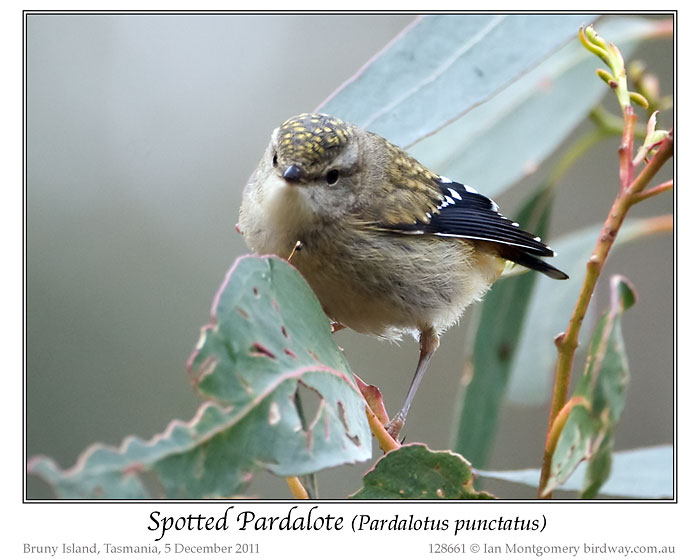
Spotted Pardalote (Pardalotus punctatus) by Ian

Ian’s Bird of the Week – Spotted Pardalote ~ by Ian Montgomery

Newsletter ~ 10/30/13

I mentioned a while ago that while preparing photos for the electronic version of the book Where to Find Birds in North-East Queensland by Jo Wieneke (http://www.nqbirds.com), I found that many bird species hadn’t yet had their moment of fame as bird of the week. Spotted Pardalote is one and a surprising omission as pardalotes – http://www.birdway.com.au/pardalotidae/index.htm – are among the most of beautiful small Australian birds. The first photo shows a male of the nominate red-rumped race.

At 8-10cm/3.2-4in in length, the Spotted Pardalote is one of the smallest and only the Weebill (8-9cm) is consistently smaller. Because of the square spots on the wing, it is also called the Diamondbird, risking dreadful puns about ‘gems’. The female is similar, but not so strongly marked and lacks the yellow throat, second photo. Both these birds were close to the ground, but they spend a lot of time in the upper foliage of tall trees, where they’re very hard to see well. All the pardalotes, however, have distinctive calls, very loud for such small birds, and this usually reveals their presence.

Spotted Pardalote (Pardalotus punctatus) by Ian

The third photo shows a slightly uncertain-looking juvenile. These are similar to females, but the markings are less obvious: in particular the background colour of the crown is grey rather blackish.

Spotted Pardalote (Pardalotus punctatus) by Ian Juvenile

Spotted Pardalotes usually nest in burrows in sand banks or road cuttings. If you surprise one near the ground, there’s a good chance that there is a nest nearby. The range of the Spotted Pardalote includes eastern and southern mainland Australia from Northeastern Queensland to SW Western Australia and Tasmania.

I’ve been continuing to add reptiles to the website. The latest lot are lizards, mainly dragons http://www.birdway.com.au/lacertilia/index.htm. Here is one of the more spectacular, the gorgeous Boyd’ Forest Dragon, endemic to Northeastern Queensland.

Boyd's Forest Dragon by Ian Montgomery

Progress with Jo’s book has been steady. I’ve added all the bird photos (over 400) and have just finished adding website-like internal links from all the places to all the birds and back again to make navigation easier. The next thing is to visit as many places as possible to check that the information is still up-to-date and get lots of location photos. That stage will start get underway seriously towards the end of November when a birding pal Madeleine joins me from Sydney for the travelling.

Best wishes
Ian

**************************************************
Ian Montgomery, Birdway Pty Ltd,
454 Forestry Road, Bluewater, Qld 4818
Tel 0411 602 737 ian@birdway.com.au
Bird Photos http://www.birdway.com.au/
Recorder Society 


Lee’s Addition:

The beast of the field shall honour me, the dragons and the owls: because I give waters in the wilderness, and rivers in the desert, to give drink to my people, my chosen. (Isaiah 43:20 KJV)

Wow! I really like those Pardalotes and that Dragon is really neat also.

The Pardalotes belong to the Pardalotidae Family and only has the Spotted, Forty-spotted, Red-browed, and the Striated Pardalotes.

Pardalotes or peep-wrens are a family, Pardalotidae, of very small, brightly coloured birds native to Australia, with short tails, strong legs, and stubby blunt beaks. This family is composed of four species in one genus, Pardalotus, and several subspecies. The name derives from a Greek word meaning “spotted”. The family once contained several other species now split into the family Acanthizidae.

Pardalotes spend most of their time high in the outer foliage of trees, feeding on insects, spiders, and above all lerps (a type of sap sucking insect). Their role in controlling lerp infestations in the eucalyptus forests of Australia may be significant. They generally live in pairs or small family groups but sometimes come together into flocks after breeding.

Pardalotes are seasonal breeders in temperate areas of Australia but may breed year round in warmer areas. They are monogamous breeders, and both partners share nest construction, incubation and chick rearing duties. All four species nest in deep horizontal tunnels drilled into banks of earth. Externally about the size of a mouse-hole, they can be very deep, at a metre or more. Some species also nest in tree hollows.

See:

*

How the Woodpecker Catches A Grub – The Woodpeckers

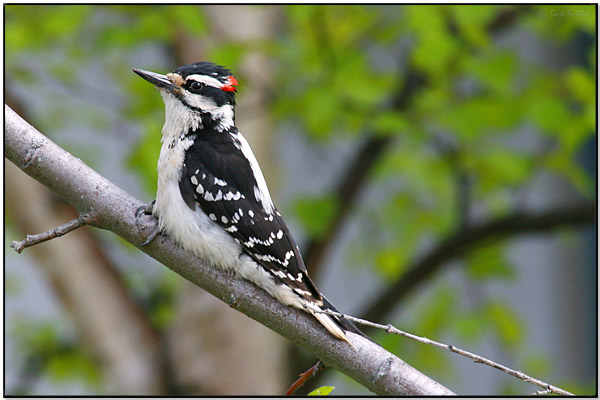
Hairy Woodpecker (Picoides villosus) by Daves BirdingPix

Hairy Woodpecker (Picoides villosus) by Daves BirdingPix

Look at the birds of the air; they neither sow nor reap nor gather into barns, and yet your heavenly Father keeps feeding them. Are you not worth much more than they? (Matthew 6:26 AMP)


Chapter II

HOW THE WOODPECKER CATCHES A GRUB

Did you ever see a hairy woodpecker strolling about a tree for what he could pick up?

There is a whur-r-rp of gay black and white wings and the flash of a scarlet topknot as, with a sharp cry, he dashes past you, strikes the limb solidly with both feet, and instantly sidles behind it, from which safe retreat he keeps a sharp black eye fixed upon your motions. If you make friends with him by keeping quiet, he will presently forgive you for being there and hop to your side of the limb, pursuing his ordinary work in the usual way, turning his head from side to side, inspecting every crevice, and picking up whatever looks appetizing. Any knot or little seam in the bark is twice scanned; in such places moths and beetles lay their eggs. Little cocoons are always dainty morsels, and large cocoons contain a feast. The butterfly-hunter who is hoping to hatch out some fine cecropia moths knows well that a large proportion of all the cocoons he discovers will be empty. The hairy woodpecker has been there before him, and has torn the chrysalis out of its silken cradle. For this the farmer should thank him heartily, even if the butterfly-hunter does not, for the cecropia caterpillar is destructive.

But sometimes, on the fair bark of a smooth limb, the woodpecker stops, listens, taps, and begins to drill. He works with haste and energy, laying open a deep hole. For what? An apple-tree borer was there cutting out the life of the tree. The farmer could see no sign of him; neither could the woodpecker, but he could hear the strong grub down in his little chamber gnawing to make it longer, or, frightened by the heavy footsteps on his roof, scrambling out of the way.

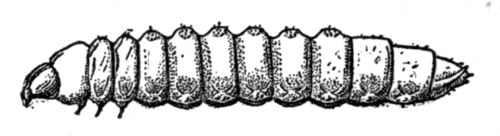
The Woodpeckers - Boring Lava

Boring Lava

Boring larva

It is easy to hear the borer at work in the tree. When a pine forest has been burned and the trees are dead but still standing, there will be such a crunching and grinding of borers eating the dead wood that it can be heard on all sides many yards away. Even a single borer can sometimes be heard distinctly by putting the ear to the tree. Sound travels much farther through solids than it does through air; notice how much farther you can hear a railroad train by the click of the rails than by the noise that comes on the air. Even our dull ears can detect the wood worm, but we cannot locate him. How, then, is the woodpecker to do what we cannot do?

Doubtless experience teaches him much, but one observer suggests that the woodpecker places the grub by the sense of touch. He says he has seen the red-headed woodpecker drop his wings till they trailed along the branch, as if to determine where the vibrations in the wood were strongest, and thus to decide where the grub was boring. But no one else appears to have noticed that woodpeckers are in the habit of trailing their wings as they drill for grubs. It would be a capital study for one to attempt to discover whether the woodpecker locates his grub by feeling, or whether he does it by hearing alone. Only one should be sure he is looking for grubs and not for beetles’ eggs, nor for ants, nor for caterpillars. By the energy with which he drills, and the size of the hole left after he has found his tidbit, one can decide whether he was working for a borer.

But when the borer has been located, he has yet to be captured. There are many kinds of borers. Some channel a groove just beneath the bark and are easily taken; but others tunnel deep into the wood. I measured such a hole the other day, and found it was more than eight inches long and larger than a lead-pencil, bored through solid rock-maple wood. The woodpecker must sink a hole at right angles to this channel and draw the big grub out through his small, rough-sided hole. You would be surprised, if you tried to do the same with a pair of nippers the size of the woodpecker’s bill, to find how strong the borer is, how he can buckle and twist, how he braces himself against the walls of his house. Were your strength no greater than the woodpecker’s, the task would be much harder. Indeed, a large grub would stand a good chance of getting away but for one thing, the woodpecker spears him, and thereby saves many a dinner for himself.

Woodpeckers - Indian Spear

Indian Spear

Indian spear

Here is a primitive Indian fish-spear, such as the Penobscots used. To the end of a long pole two wooden jaws are tied loosely enough to spring apart a little under pressure, and midway between them, firmly driven into the end of the pole, is a point of iron. When a fish was struck, the jaws sprung apart under the force of the blow, guiding the iron through the body of the fish, which was held securely in the hollow above, that just fitted around his sides, and by the point itself.

Solomon Islander's Spear

Solomon Islander’s Spear

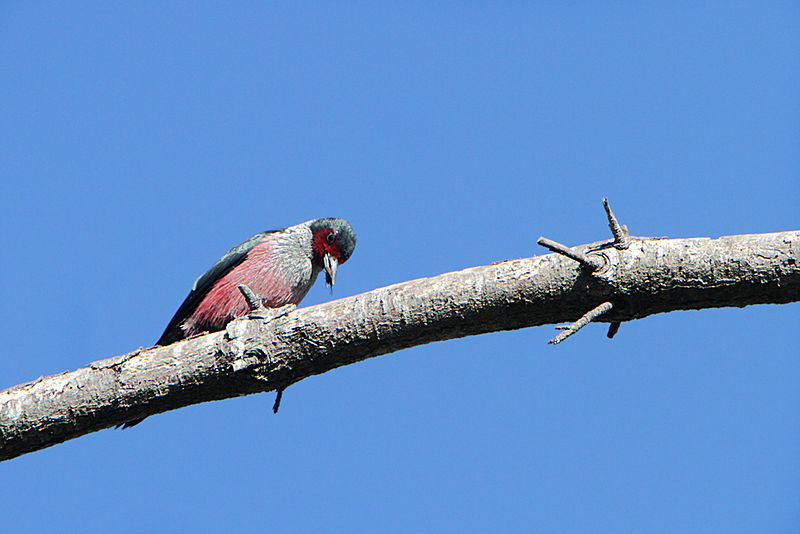
The tool with which the woodpecker fishes for a grub is very much the same. His mandibles correspond to the two movable jaws. They are knife-edged, and the lower fits exactly inside the upper, so that they give a very firm grip. In addition, the upper one is movable. All birds can move the upper mandible, because it is hinged to the skull. (Watch a parrot some day, if you do not believe it.) A medium-sized woodpecker, like the Lewis’s, can elevate his upper mandible at least a quarter of an inch without opening his mouth at all. This enables him to draw his prey through a smaller hole than would be needed if he must open his jaws along their whole length. Between the mandibles is the sharp-pointed tongue, which can be thrust entirely through a grub, holding him impaled. Unlike the Indian’s spear-point, the woodpecker’s tongue is barbed heavily on both sides, and it is extensile. As a tool it resembles the Solomon Islander’s spear. A medium-sized woodpecker can dart his tongue out two inches or more beyond the tip of his bill. A New Bedford boy might tell us, and very correctly, that the woodpecker harpoons his grub, just as a whaleman harpoons a whale. If the grub tries to back off into his burrow, out darts the long, barbed tongue and spears him. Then it drags him along the crooked tunnel and into the narrow shaft picked by the woodpecker, where the strong jaws seize and hold him firmly.


Lee’s Addition:

Lewis's Woodpecker (Melanerpes lewis) With Bug In Its Beak ©WikiC

Lewis’s Woodpecker (Melanerpes lewis) With Bug In Its Beak ©WikiC

I know and am acquainted with all the birds of the mountains, and the wild animals of the field are Mine and are with Me, in My mind. (Psalms 50:11 AMP)

This is Chapter II from The Woodpeckers book. Our writer, Fannie Hardy Eckstorm, wrote this in 1901. There are 16 chapters, plus the Forward, which are about the Woodpecker Family here in America. All the chapters can be found on The Woodpeckers page. I added photos to help enhance the article. In 1901, photography was not like today.

Woodpeckers belong to the Picidae – Woodpeckers Family.

The diet of woodpeckers consists mainly of insects and their grubs taken from living and dead trees, and other arthropods, along with fruit, nuts and sap from live trees. Ecologically, they help to keep trees healthy by keeping them from suffering mass infestations. The family is noted for its ability to acquire wood-boring grubs using their bills for hammering, but overall the family is characterized by its dietary flexibility, with many species being both highly omnivorous and opportunistic. The insect prey most commonly taken are those found inside tree trunks, whether they are alive or rotten, and in crevices in the bark. These include beetles and their grubs, ants, termites, spiders, and caterpillars. These may be obtained either by gleaning or, more famously, by excavating wood. Having hammered a hole into the wood, the prey is excavated by a long barbed tongue.

The ability to excavate allows woodpeckers to obtain tree sap, an important source of food for some species. Most famously, the sapsuckers (genus Sphyrapicus) feed in this fashion, but the technique is not restricted to these and others, such as the Acorn Woodpecker and White-headed Woodpecker, also feed in this way. It was once thought that the technique was restricted to the New World, but Old World species, such as the Arabian Woodpecker and Great Spotted Woodpecker, also feed in this way. (Wikipedia)

The tongue is mentioned on a video on The Woodpeckers page. This video will be referred to again and will be on The Woodpeckers page. It is being introduced here.

See:

Picidae – Woodpeckers Family

The Woodpeckers by Fannie Hardy Eckstorm

Gideon

*

Birds of the Bible – Strutting Rooster

Rooster Portrait ©WikiC

Rooster Portrait ©WikiC

While working on a future Birds of the Bible article, I came across these verses and decided to share them.

the strutting rooster, the he-goat, and a king whose army is with him. (Proverbs 30:31 ESV)

The strutting rooster, the male goat also, And a king when his army is with him. (Proverbs 30:31 NASB)

a strutting rooster, a male goat, and a king with his army around him. (Proverbs 30:31 NET)

the strutting rooster, the he-goat, and a king striding before his people. (Proverbs 30:31 NRSV)

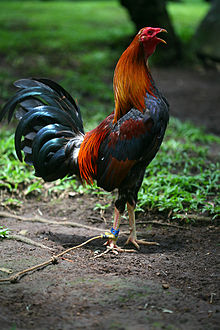
Rooster from the Philippines ©WikiC

Rooster from the Philippines ©WikiC

There are three things which are stately in their march, Even four which are stately when they walk: The lion which is mighty among beasts And does not retreat before any, The strutting rooster, the male goat also, And a king when his army is with him. (Proverbs 30:29-31 NASB)

The Roosters referred to in this article are from the Phasianidae – Pheasants, Fowl & Allies Family. The term “rooster” can used other in ways. The Pheasants and Fowls are known to strut or display to try to win the eye of the female. The male is called a “rooster,” especially within the Domesticated Fowls.

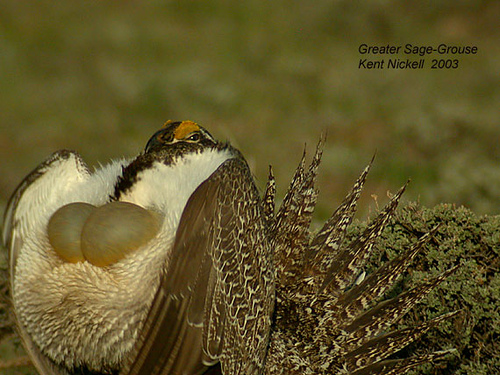
Sage Grouse (Centrocercus urophasianus) by Kent Nickel

Sage Grouse (Centrocercus urophasianus) by Kent Nickel in Phasianidae Family

Have you ever seen a parade with the King or a Captain marching in front of his troops? He sure doesn’t slouch or just walk nonchalantly. No, especially if a band is playing, they almost “strut.”

The Lion and a Goat can also be known to walk stately, or “strut.” These verses are not referring to a false pride, but something that is good. There are times to present a stately presence, David was rejoicing when he brought the Ark back to Jerusalem.

I like what Harry Ironside wrote in his Notes on Selected Books:

“30:29-31

It is quite proper to speak of the first three creatures as excelling in their movement, though it would hardly apply to a king. Majestic and glorious, he moves with stately bearing and therefore comes under the second head.

The lion is characterized by unflinching boldness; it represents that holy courage which should mark the Christian soldier as he contends earnestly for the faith once delivered to the saints. In his faith, he is to have virtue, true courage, to withstand in the evil day and remain true to his course. It is not mere dogged determination that is contemplated, but “the irresistible might of weakness” that leans on God; this is what led Paul to write, “when I am weak, then am I strong” (2 Corinthians 12:10).

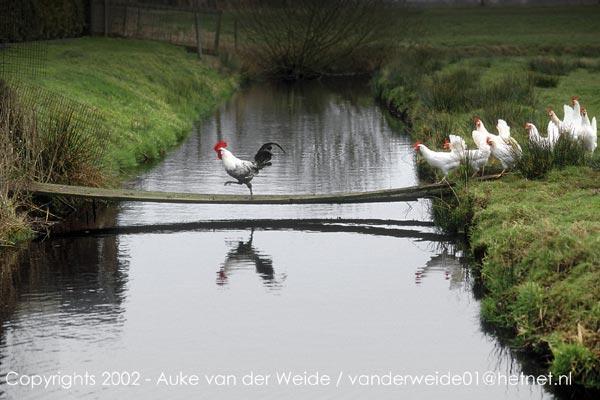
Rooster by ©Flickr-one woman's hands

Rooster by ©Flickr-one woman’s hands

The second in this series has been variously translated as “a greyhound,” “a girded horse,” “a zebra,” and “a strutting rooster.” The latter is preferred in the Septuagint, Syriac, Vulgate, and Chaldee versions. But according to the best authorities the word simply means girded as to the loins. It may therefore be applied to any slender creature characterized by swiftness. The translators of the King James version preferred “greyhound” as most fully expressing the idea of an animal adapted to running. It matters little what beast is signified. The lesson for us is clear enough. As a girded animal does not rest until it reaches its prey or the goal to which it is running, so the saint is to press swiftly on, refusing to be turned aside by the attractions of this world. He is viewed as a racer in Philippians 3:13-14:

Brethren, I count not myself to have apprehended: but this one thing I do, forgetting those things which are behind, and reaching forth unto those things which are before, I press toward the mark for the prize of the high calling of God in Christ Jesus.

This should always be the Christian’s attitude. Having no city here, he does not halt to dally with the insignificant things of earth. With girded loins and eyes fixed on Christ, he hastens on to the judgment seat where the prize is to be awarded.

Wherefore seeing we also are compassed about with so great a cloud of witnesses, let us lay aside every weight, and the sin which doth so easily beset us, and let us run with patience the race that is set before us, Looking unto Jesus the author and finisher of our faith; who for the joy that was set before him endured the cross, despising the shame, and is set down at the right hand of the throne of God (Hebrews 12:1-2).

Christ was the great pattern-pilgrim, passing through this world as a stranger; He found only sorrow and grief here, but His joy is now full in glory!

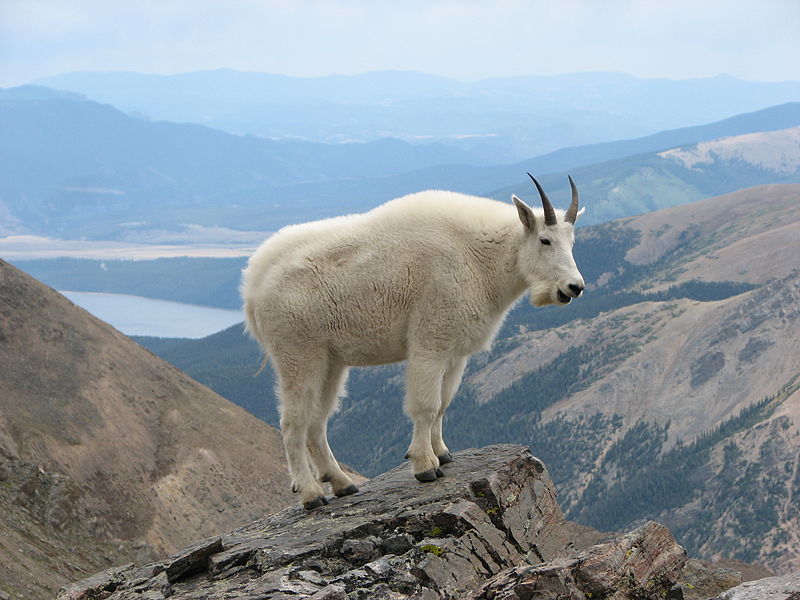
Mountain Goat at Mount Massive ©WikiC

Mountain Goat at Mount Massive ©WikiC

The male goat is the climber. Refusing the low and often un-healthful valleys, he mounts up higher and higher to the rocky hills and the peaks of the mountains. (See Psalm 104:18). Breathing the exhilarating air of the top of the rocks, he finds both pleasure and safety in his retreat. The lesson is simple. The Christian must walk on the high places; then like Habakkuk, he will be able to rejoice in the day of trouble and joy in the God of his salvation when everything of earth seems to fail (Habakkuk 3:17-19). From the soul of the climbing saint there will ever be melody.

A heavenly-minded soul is lifted above all the mists of this poor world and enabled to view all from God’s standpoint.

If ye then be risen with Christ, seek those things which are above, where Christ sitteth on the right hand of God. Set your affection on things above, not on things on the earth. For ye are dead, and your life is hid with Christ in God (Colossians 3:1-3).

This is the lesson of the male goat. Would that every believer could enter into it!

The last in the list of these pleasant things is the king going forth in undisputed, majestic strength. It is the overcomer, the man of faith, made a king unto God; his dignity is never greater than when he walks in lowliness and meekness through this world, drawing his supplies from above not from below. Great is the honor conferred on all who have been redeemed. No longer children of the night, but of the day, they are called to overcome the world in the power of the truth revealed to them by faith. Abraham was such a “king” as he went from Melchizedek’s presence to meet Sodom’s fawning monarch. He vanquished this ruler in a different way from that in which he had defeated the confederacy headed by Chedorlaomer (Genesis 14). God would have every Christian defeat his enemy in stately majesty, joining forces with Him, and counting the richest treasures of earth as dung and dross. “This is the victory that overcometh the world, even our faith” (1 John 5:4). Strong in faith, the man of God views his present situation in the light of his future reward. Then, even though accounted as sheep for the slaughter, he can exclaim, “Nay, in all these things we are more than conquerors through him that loved us” (Romans 8:37).”

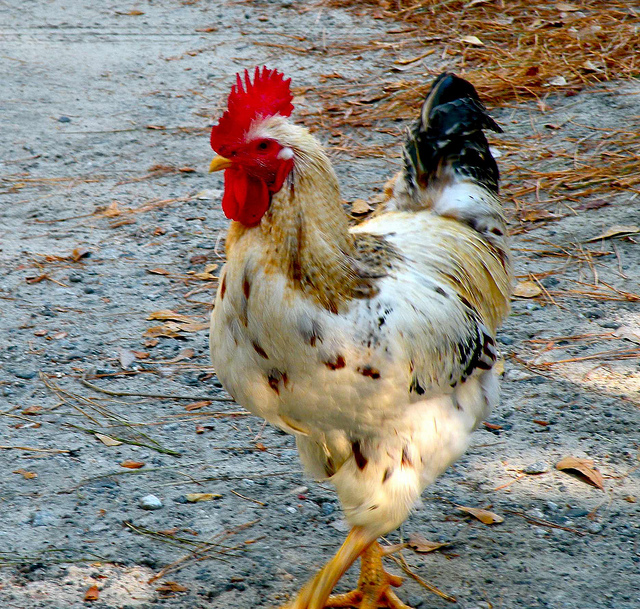
Rooster by ©Flickr GypsyStepf

Rooster by ©Flickr GypsyStepf

See:

*

Woodpeckers – Appendix – Explanation of Terms

The Woodpeckers, by Fannie Hardy Eckstorm – Updated

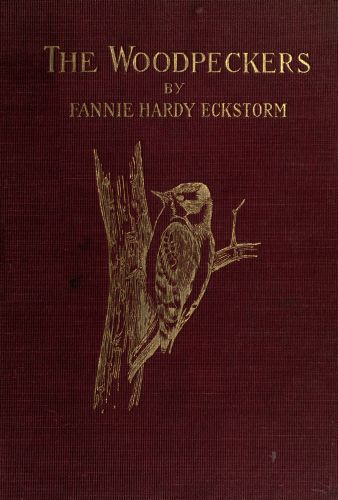
The Woodpeckers by Fannie Hardy Eckstorm - cover


APPENDIX

Explanation of Terms.

Head of a Flicker

Head of a Flicker

Head of a Flicker.

*

Occipital means “on the occiput.”

a. Forehead; b. crown; c. occiput; d. nape; e. chin; f. throat; g. jaw-patch, or mustache.

Nuchal means “on the nape.”

Primaries are the nine or ten wing-quills borne upon the last joint of the wing.

Secondaries are the wing-quills attached to the fore-arm bones.

Tertiaries are the wing-quills springing from the upper arm bones.

Wing coverts are the shorter lines of feathers overlapping these long quills.

Tail coverts are the lengthened feathers that overlap the root of the tail both above and below, called respectively upper and under tail coverts.

Ear coverts are the feathers that over-lie the ear, often specially modified or colored.

Rump, the space between the middle of the back and the root of the tail.

is the sign used to indicate the male sex.

is the sign used to indicate the female sex.

Wing Coverts ©WikiC

Wing Coverts ©WikiC – (Click on photo to see it better)

A subspecies is a geographical race, modified in size, color, or proportions chiefly by the influence of climate. These variations are especially marked in non-migratory birds of wide distribution, subject, therefore, to climatic extremes. The Downy and the Hairy Woodpeckers, for example, are split up into numerous races. It should be remembered that when a species has been separated into races, or subspecies, all the subspecies are of equal rank, even though they are differently designated. The one originally discovered and first described bears the old Latin name which consisted of two words, while the new ones are designated by triple Latin names—the old binomial and a new name in addition. The binomial indicates the form first described. The forms designated by trinomials may be equally well known, abundant, and widely distributed. For example, among the woodpeckers, the northern form of the Hairy Woodpecker was first discovered and bears the name Dryobates villosus; but the first Downy Woodpecker described was a southern bird, and the northern form was not separated until a few years ago, so that the southern bird is the type, and the northern one bears the trinomial, Dryobates pubescens medianus.

North America, by the decision of the American Ornithologists’ Union, is held to include the continent north of the present boundary between Mexico and the United States, with Greenland, the peninsula of Lower California, and the islands adjacent naturally belonging to the same.


Lee’s Addition:

Hairy Woodpecker (Picoides villosus) by Daves BirdingPix

Hairy Woodpecker (Picoides villosus) by Daves BirdingPix

And there are also many other things that Jesus did, which if they were written one by one, I suppose that even the world itself could not contain the books that would be written. Amen. (John 21:25 NKJV)

Picidae – Woodpeckers Family

The Woodpeckers by Fannie Hardy Eckstorm

Gideon

How To Know A Woodpecker – The Woodpeckers

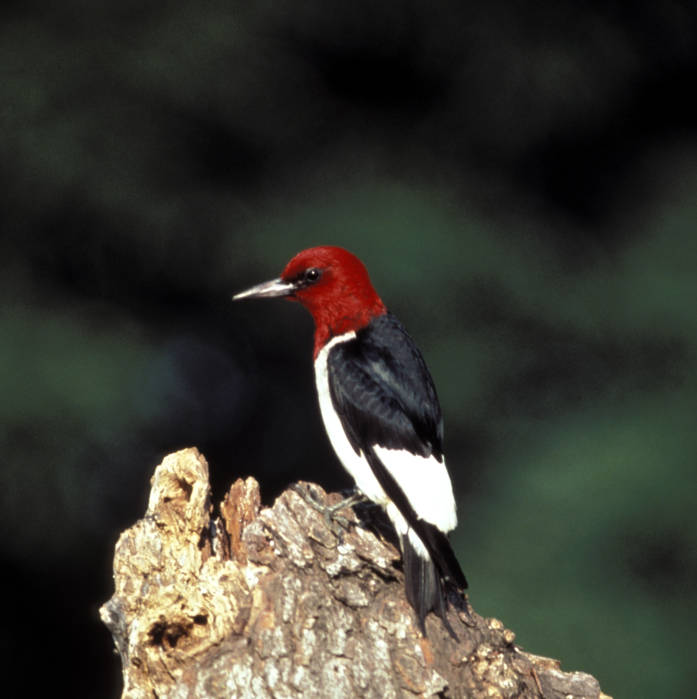
Red-headed Woodpecker (Melanerpes erythrocephalus) ©USFWS

Red-headed Woodpecker (Melanerpes erythrocephalus) ©USFWS


Chapter I

HOW TO KNOW A WOODPECKER

The woodpecker is the easiest of all birds to recognize. Even if entirely new to you, you may readily decide whether a bird is a woodpecker or not.

The woodpecker is always striking and is often gay in color. He is usually noisy, and his note is clear and characteristic. His shape and habits are peculiar, so that whenever you see a bird clinging to the side of a tree “as if he had been thrown at it and stuck,” you may safely call him a woodpecker. Not that all birds which cling to the bark of trees are woodpeckers,—for the chickadees, the crested titmice, the nuthatches, the brown creepers, and a few others like the kinglets and some wrens and wood-warblers more or less habitually climb up and down the tree-trunks; but these do it with a pretty grace wholly unlike the woodpecker’s awkward, cling-fast way of holding on. As the largest of these is smaller than the smallest woodpecker, and as none of them (excepting only the tiny kinglets) ever shows the patch of yellow or scarlet which always marks the head of the male woodpecker, and which sometimes adorns his mate, there is no danger of making mistakes.

Blue Nuthatch (Sitta azurea) by Ian

Blue Nuthatch (Sitta azurea) by Ian

The nuthatches are the only birds likely to be confused with woodpeckers, and these have the peculiar habit of traveling down a tree-trunk with their heads pointing to the ground. A woodpecker never does this; he may move down the trunk of the tree he is working on, but he will do it by hopping backward. A still surer sign of the woodpecker is the way he sits upon his tail, using it to brace him. No other birds except the chimney swift and the little brown creeper ever do this. A sure mark, also, is his feet, which have two toes turned forward and two turned backward. We find this arrangement in no other North American birds except the cuckoos and our one native parroquet. However, there is one small group of woodpeckers which have but three toes, and these are the only North American land-birds that do not have four well-developed toes.

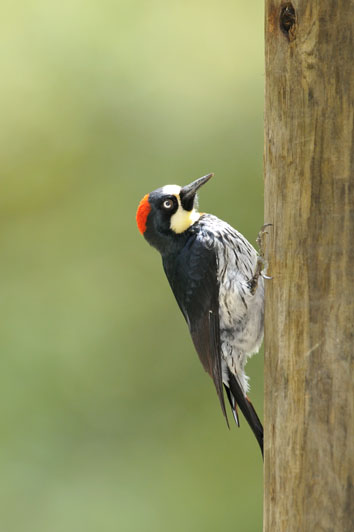
Acorn Woodpecker (Melanerpes formicivorus) by Reinier Munguia

Acorn Woodpecker (Melanerpes formicivorus) by Reinier Munguia

In coloration the woodpeckers show a strong family likeness. Except in some young birds, the color is always brilliant and often is gaudy. Usually it shows much clear black and white, with dashes of scarlet or yellow about the head. Sometimes the colors are “solid,” as in the red-headed woodpecker; sometimes they lie in close bars, as in the red-bellied species; sometimes in spots and stripes, as in the downy and hairy; but there is always a contrast, never any blending of hues. The red or yellow is laid on in well-defined patches—square, oblong, or crescentic—upon the crown, the nape, the jaws, or the throat; or else in stripes or streaks down the sides of the head and neck, as in the logcock, or pileated woodpecker.

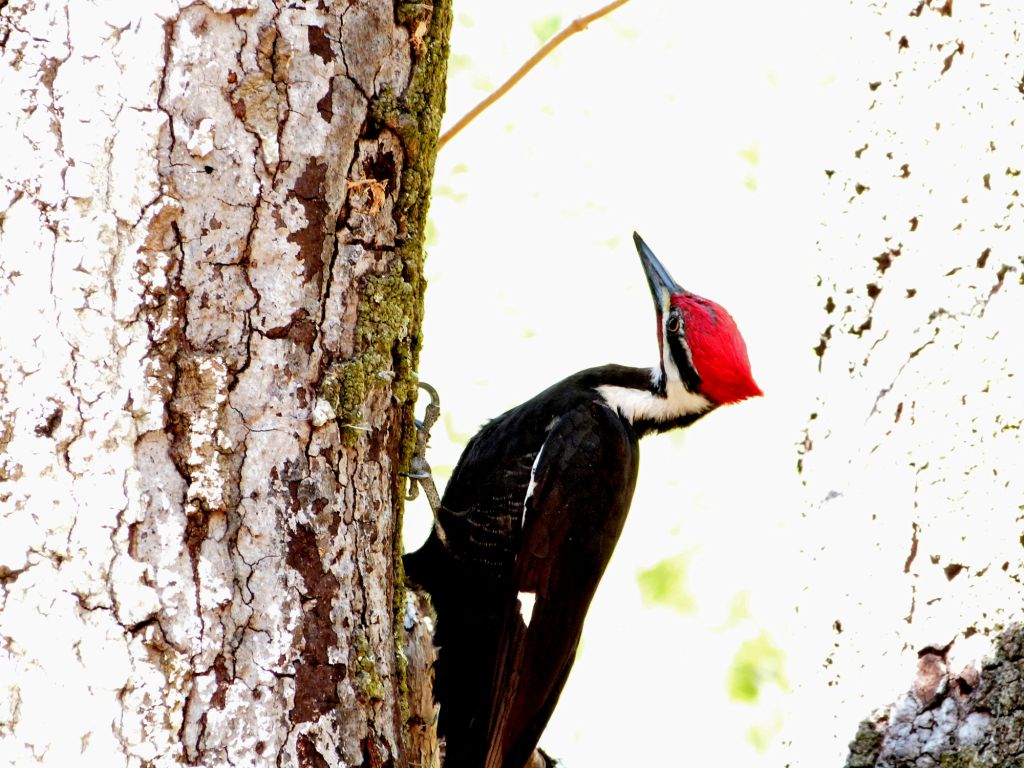
Pileated Woodpecker by Lee

Pileated Woodpecker by Lee

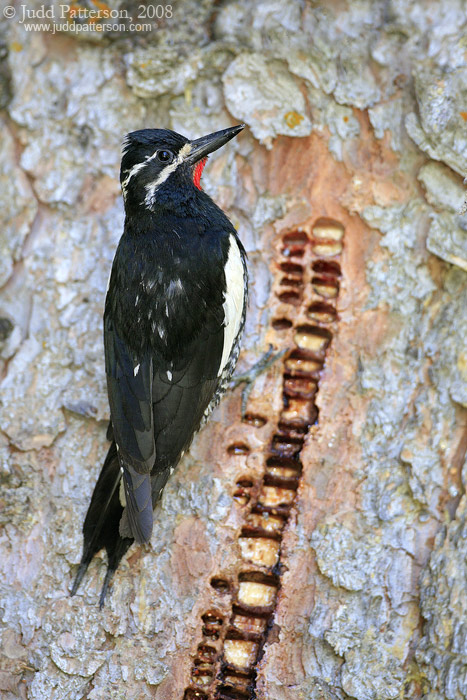
There is no rule about the color markings of the sexes, as in some families of birds. Usually the female lacks all the bright markings of the male; sometimes, as in the logcock, she has them but in more restricted areas; sometimes, as in the flickers, she has all but one of the male’s color patches; and in a few species, as the red-headed and Lewis’s woodpeckers, the two sexes are precisely alike in color. In the black-breasted woodpecker, sometimes called Williamson’s sapsucker, the male and female are so totally different that they were long described and named as different birds. It sometimes happens that a young female will show the color marks of the male, but will retain them only the first year.

Williamson's Sapsucker (Sphyrapicus thyroideus) by Judd Patterson

Williamson’s Sapsucker (Sphyrapicus thyroideus) by Judd Patterson

Though the woodpeckers cling to the trunks of trees, they are not exclusively climbing birds. Some kinds, like the flickers, are quite as frequently found on the ground, wading in the grass like meadowlarks. Often we may frighten them from the tangled vines of the frost grape and the branches of wild cherry trees, or from clumps of poison-ivy, whither they come to eat the fruit. The red-headed woodpecker is fond of sitting on fence posts and telegraph poles; and both he and the flicker frequently alight on the roofs of barns and houses and go pecking and pattering over the shingles. The sapsuckers and several other kinds will perch on dead limbs, like a flycatcher, on the watch for insects; the flickers, and more rarely other kinds, will sit crosswise of a limb instead of crouching lengthwise of it, as is the custom with woodpeckers.

Northern Flicker (Colaptes auratus) Red-shafted ©WikiC

Northern Flicker (Colaptes auratus) Red-shafted ©WikiC

All these points you will soon learn. You will become familiar with the form, the flight, and the calls of the different woodpeckers; you will learn not only to know them by name, but to understand their characters; they will become your acquaintances, and later on your friends.

This heavy bird, with straight, chisel bill and sharp-pointed tail-feathers; with his short legs and wide, flapping wings, his unmusical but not disagreeable voice, and his heavy, undulating, business-like flight, is distinctly bourgeois, the type of a bird devoted to business and enjoying it. No other bird has so much work to do all the year round, and none performs his task with more energy and sense. The woodpecker makes no aristocratic pretensions, puts on none of the coy graces and affectations of the professional singer; even his gay clothes fit him less jauntily than they would another bird. He is artisan to the backbone,—a plain, hard-working, useful citizen, spending his life in hammering holes in anything that appears to need a hole in it. Yet he is neither morose nor unsocial. There is a vein of humor in him, a large reserve of mirth and jollity. We see little of it except in the spring, and then for a time all the laughter in him bubbles up; he becomes uproarious in his glee, and the melody which he cannot vent in song he works out in the channels of his trade, filling the woodland with loud and harmonious rappings. Above all other birds he is the friend of man, and deserves to have the freedom of the fields.


Lee’s Addition:

Red-bellied Woodpecker (Melanerpes carolinus) by J Fenton

Red-bellied Woodpecker (Melanerpes carolinus) by J Fenton

For by him were all things created, that are in heaven, and that are in earth, visible and invisible, whether they be thrones, or dominions, or principalities, or powers: all things were created by him, and for him: (Colossians 1:16 KJV)

This is Chapter I from The Woodpeckers book. Our writer, Fannie Hardy Eckstorm, wrote this in 1901. There are 16 chapters, plus the Forward, which are about the Woodpecker Family here in America. All the chapters can be found on The Woodpeckers page. I added photos to help enhance the article. In 1901, photography was not like today.

Woodpeckers belong to the Picidae – Woodpeckers Family.

“Most species possess predominantly white, black, brown, green, and red plumage, although many piculets show a certain amount of grey and olive green. In woodpeckers, many species exhibit patches of red and yellow on their heads and bellies, and these bright areas are important in signaling. The dark areas of plumage are often iridescent. Although the sexes of Picidae species tend to look alike, many woodpecker species have more prominent red or yellow head markings in males than in females.”

“Members of the family Picidae have strong bills for drilling and drumming on trees and long sticky tongues for extracting food. Woodpecker bills are typically longer, sharper and stronger than the bills of piculets and wrynecks; however their morphology is very similar. The bill’s chisel-like tip is kept sharp by the pecking action in birds that regularly use it on wood. Species of woodpecker and flicker that use their bills in soil or for probing as opposed to regular hammering tend to have longer and more decurved bills. Due to their smaller bill size, many piculets and wrynecks will forage in decaying wood more often than woodpeckers. The long sticky tongues, which possess bristles, aid these birds in grabbing and extracting insects deep within a hole of a tree. It had been reported that the tongue was used to spear grubs, but more detailed studies published in 2004 have shown that the tongue instead wraps around the prey before being pulled out.”

“Woodpeckers, piculets and wrynecks all possess zygodactyl feet. Zygodactyl feet consist of four toes, the first (hallux) and the fourth facing backward and the second and third facing forward. This foot arrangement is good for grasping the limbs and trunks of trees. Members of this family can walk vertically up a tree trunk, which is beneficial for activities such as foraging for food or nest excavation. In addition to the strong claws and feet, woodpeckers have short strong legs. This is typical of birds that regularly forage on trunks. The tails of all woodpeckers except the piculets and wrynecks are stiffened, and when the bird perches on vertical surfaces, the tail and feet work together to support it.” (Wikipedia)

See:

Picidae – Woodpeckers Family

The Woodpeckers by Fannie Hardy Eckstorm

Falling Plates

*