Ian’s Bird of the Week – Tropical Scrubwren

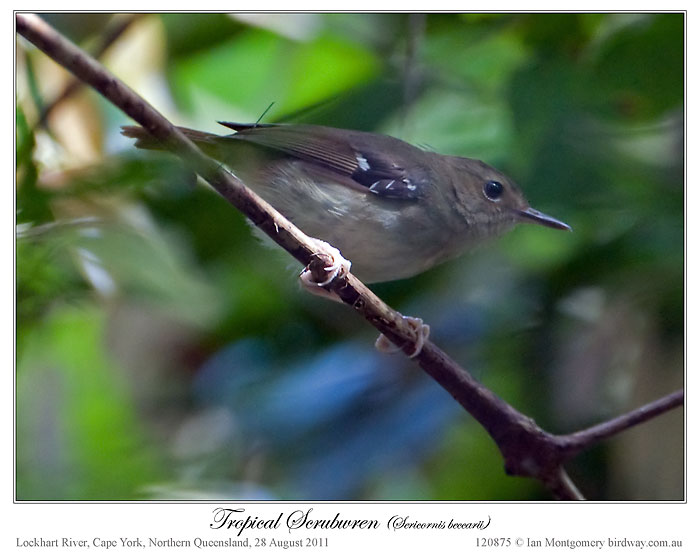
Tropical Scrubwren (Sericornis beccarii) Female by Ian

Tropical Scrubwren (Sericornis beccarii) Female by Ian

Ian’s Bird of the Week – Tropical Scrubwren ~ by Ian Montgomery

Newsletter – 9/30/11

Here’s another of my target species on the Cape York trip. It comes from the less spectacular end of the spectrum, far away from the Birds of Paradise, but I’m fond of Scrubwrens in general. They are plucky, vocal little birds with lots of character, so colourful plumage isn’t everything.

The one in the first photo is a female, distinguishable from the male by a plainer face pattern with lores – the bit between the eye and the bill – much the same colour as the rest of the head. The second photo shows a male and you can see the patterning on the face with dark lores with pale highlights above and below them.
Tropical Scrubwren (Sericornis beccarii) Male by Ian

Tropical Scrubwren (Sericornis beccarii) Male by Ian

The Tropical Scrubwren look like a cross between the Large-billed Scrubwren and the White-browed. It has a long, slightly-upwards pointing bill like the Large-billed but the wing pattern with dark, white-tipped wing-coverts look much more like those of the White-browed (the Large-billed has very plain plumage overall including the wings). In fact, there has been some doubt whether it’s a separate species from the Large-billed, but most authorities now accept that it is.

In Australia it occurs only on Cape York Peninsula from Cooktown northwards. Within its restricted range, it’s quite common and I found several pairs without much difficulty as they are quite vocal. The birds do, however, flit incessantly and almost invisibly through the dense undergrowth and foliage of the rainforest and are not easy to see well or photograph. They have reddish irises, but in the poor light of the rainforest, their pupils are very dilated and look black in most of the photos that I took. This species is widespread in PNG, where it is called Beccari’s Scrubwren.
Best wishes
Ian
Links:


Ian Montgomery, Birdway Pty Ltd,
454 Forestry Road, Bluewater, Qld 4818
Phone: 0411 602 737 +61-411 602 737
Preferred Email: ian@birdway.com.au
Website: http://birdway.com.au


Lee’s Addition:

There are 13 Scrubwrens that make up the Sericornis Genus of the Acanthizidae – Australasian Warblers Family. The Passeriformes Order has the perching birds, of which this family belongs. I think they are cute, even if they are not very colorful. The video at the bottom of the Family link is of a very active Atherton Scrubwren (Sericornis keri) by Keith Blomerley. Those birds sound like the ones that give photographers the fits trying to take their picture.

The birds of the air have their resting-places by them, and make their song among the branches. (Psalms 104:12 BBE)

To see all of the Ian’s Bird of the Week – Click Here

*

Introducing – Nuggets Plus

Nuggets Plus

Nuggets Plus

We are introducing “Nuggets Plus” to our articles by ajmithra. We were chatting the other day, via Yahoo, and decided to use some of aj’s short little Nuggets of Truth that he has already written. He said that they were not all about birds and I reminded him that the Last Word of this blog’s name is “PLUS.” It was named that way so that other articles of interest could be added like creation or other animals, flowers, sunsets, etc.

A J Mithra, ajmithra as he prefers, lives in India and has been a regular contributor for several years. He has about 150 of these already written and will start posting them regularly. They are short, but have a “nugget of God’s Truth” tucked away in each of them. We may have our other writers add to them. Who knows the future, other than our Lord?

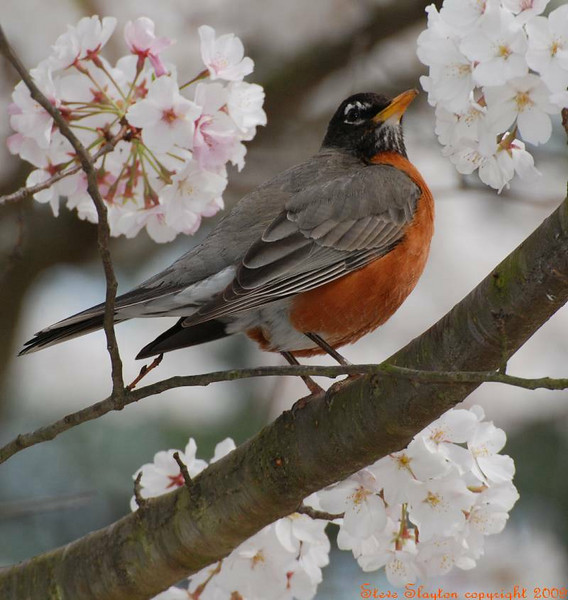
American Robin (Turdus migratorius) by S Slayton

American Robin (Turdus migratorius) by S Slayton

American Robin – Singing Slayer..

American Robin
is the first among birds
to sing at dawn
and
the last in the evening
and
they band together
to drive the predator away!
Wanna drive the devil?
Worship at dawn
and at dusk
and together in trouble…
Worship the LORD your God, and his blessing will be on your food and water. I will take away sickness from among you, (Exodus 23:25)

For more Nuggets Plus, Click Here

*

Egyptian Plover, Pit before Promotion…

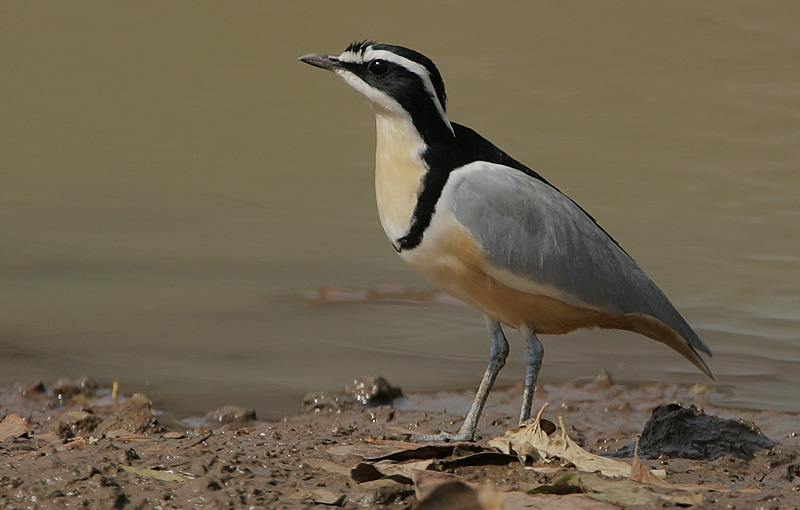
Egyptian Plover (Pluvianus aegyptius) ©WikiC

Egyptian Plover (Pluvianus aegyptius) ©WikiC

After I read Lee’s article on the Egyptian Plover, a few thoughts flashed by..

And here am I with them…

The Egyptian Plover is a localised resident in tropical sub-Saharan Africa. It breeds on sandbars in large rivers. Its two or three eggs are not incubated, but are buried in warm sand, temperature control being achieved by the adult sitting on the eggs with a water-soaked belly to cool them.

If the adult leaves the nest, it smoothes sand over the eggs, though if it is frightened the job may be hasty…

  • The adults cool the chicks in the same way as with the eggs.
  • Cool the chicks with their water-soaked belly?

Egyptian Plover on ground nest from ARK

When I read this, the three young men inside the furnace came to my mind..

When Shadrach, Meshach and Abednego were thrown into the furnace for no fault of theirs, down came the Pillar of cloud to stroll with them..

  • Is it to cool them from the heat?

When thou passest through the waters, I will be with thee; and through the rivers, they shall not overflow thee: when thou walkest through the fire, thou shalt not be burned; neither shall the flame kindle upon thee. (Isaiah 43:2)

Egyptian Plover (Pluvianus aegyptius) ©WikiC

Egyptian Plover (Pluvianus aegyptius) ©WikiC

And then I read that the adults bury the chicks in the sand temporarily if danger threatens..

  • This act of these birds reminded me of how Joseph was raised from the pit..
  • His brothers threw him into the pit to get rid of him..
  • But, I feel that God had buried him temporarily to save him from danger…

If you think or feel that you’ve been pushed into a pit by people around you, I just want to encourage you..

  • Remember there is always a pit before promotion..

He brought me up also out of an horrible pit, out of the miry clay, and set my feet upon a rock, and established my goings. Psalm 40:2)

Have a blessed day!

Your’s in YESHUA,
a j mithra

Please visit us at:

Crosstree

ajmithra21

*

Article in the Fountain – Our Church Blog

Lee at South Lake Howard watching Wood Storks

Lee at South Lake Howard watching Wood Storks

But now, O LORD, thou art our father; we are the clay, and thou our potter; and we all are the work of thy hand. (Isaiah 64:8 KJV)

Birdwatching is not the only thing taking up my time these days. If you read the following article about our upcoming Ladies Retreat, you will discover another of my “adventures.” Just when you think you have discovered all your gifts and talents, the Lord gives you a new challenge and then He helps you accomplish that new task.

I can do all things through Christ which strengtheneth me. (Philippians 4:13 KJV)

The Fountain’s article – God Gives Good Gifts – A Ladies Retreat was written by Jonita Barram, also a contributor to the blog.

The Fountain is our church blog, Faith Baptist Church in Winter Haven. That is where this whole adventure of doing The Birds of the Bible blogs got started. And then this site.

The Lord is gracious and is helping us get the retreat ready. I knew our church was loaded with ladies with various gifts and talents. Much more than mine. Many have stepped up and are presenting workshops and talks, plus doing the many behind the scene projects. I praise the Lord for everyone who is helping and for all the ladies who will be attending.

God does give good gifts through abilities and a desire to use those. To me also, one of the Lord’s Gift is His Creation of all these birds we get to watch and observe.

The LORD is my strength and my shield; my heart trusted in him, and I am helped: therefore my heart greatly rejoiceth; and with my song will I praise him. (Psalms 28:7 KJV)

Ian’s Bird of the Week – White-streaked Honeyeater

White-streaked Honeyeater (Trichodere cockerelli) by Ian #1

Ian’s Bird of the Week – White-streaked Honeyeater ~ by Ian Montgomery (Australia)

Newsletter ~ 09/23/11

Of the 4 species at the top of my wanted list on the trip to Iron Range, this one, the White-streaked Honeyeater, took the most effort to find and I found it only at the last possible location on the way home. Many Honeyeaters, including this one, are nomadic in search of flowering shrubs and trees so visiting a known site is no guarantee of success.

The White-streaked Honeyeater occurs only on Cape York Peninsula, north of about Cooktown. So, when I left Daintree village, rather than go the usual route via Julatten, I headed north through Cape Tribulation to Cooktown along the 4WD Bloomfield track, spent a couple of nights near Cooktown and then drove to Laura along Battlecamp Road to join the main Peninsula Development Road. Apart from the attraction of of a route I hadn’t travelled on before, both White-streaked Honeyeaters and Tropical Scrubwrens had been seen in July at a couple of river crossings along the way. Near Cooktown, I did a glimpse and an unflattering rear-view shot of the southern race (dubius) of the Tropical Scrubwren, but the Honeyeaters seemed to have moved on.

White-streaked Honeyeater (Trichodere cockerelli) by Ian #2

Their preferred habitats are heathland, open woodland and riverine forest so they don’t occur in the rainforest at Iron Range. A usually reliable site for them is the heathland at Tozer’s Gap on the way in but this time an orange grevillea was flowering everywhere in abundance, so the birds could have been anywhere. Happily, I caught up with some friends of mine who had just seen the honeyeater in paperbarks and bottlebrushes at the Wenlock River crossing on the same road. This is a 4 or 5 hour round trip from Iron Range, so I decided to risk waiting until my final departure and then I stopped for lunch at the crossing.

White-streaked Honeyeater (Trichodere cockerelli) by Ian #3

When I got there, the paperbarks had finished flowering but the bottlebrushes were still putting on a fine display. Even so, it took some diligent searching before I finally found a couple of White-streaked among the commoner Honeyeaters, mainly Dusky and Graceful. They seemed shy and preferred to remain hidden in the foliage, so I sat on a sandy bank in the river until they showed themselves. They are unusual honeyeaters with no close relatives and the sole member of the genus Trichodere (a ‘monotypic’ genus). ‘Trich’ comes from the Greek word for ‘hair’ and refers, as does ‘white-streaked’ to the bristle-like feathers on the breast (cf Trichoglossus – ‘hairy tongue’ – referring to the brush-like, nectar-licking tongues of Rainbow Lorikeets). Adults have yellow lines below the eye, a yellow ear tuft and a blue gape (photos 1 and 2). They also have yellow wings and tail: easier to see in the third photo of a juvenile which lacks the blue gape and has only a single yellow feather on the head but is beginning to develop the bristle-like breast feathers, also characteristic of adults.
In the second photo, the nest-like material below the bird is flood debris – a clear reminder that this part of the Cape York Peninsula is accessible by road only in the dry-season. The photo below shows the crossing at Wenlock River.
Crossing at Wenlock River by Ian #4

Crossing at Wenlock River by Ian #4

Misión completa, as my guide told me when we found the Resplendent Quetzals in Costa Rica.

Best wishes
Ian


Ian Montgomery, Birdway Pty Ltd,
454 Forestry Road, Bluewater, Qld 4818
Phone: 0411 602 737 +61-411 602 737
Preferred Email: ian@birdway.com.au
Website: http://birdway.com.au


Lee’s Addition:

My son, eat thou honey, because it is good; and the honeycomb, which is sweet to thy taste: (Proverbs 24:13 KJV)

Ian sure has persistence and patience. Ian, thanks again for sharing your birding trips with us.

As Ian mentioned, the Honeyeater is in a genus, Trichodere of the Meliphagidae – Honeyeaters Family. That family has 183 members at present. The family has not only Honeyeaters, but also Friarbirds, Wattlebirds, Bellbirds, Melidectes, Myzas, Myzomela, Straighbills, Spinebills, Chats, and a Gibberbird and others. Roughly half of the family live in Australia.

All 170 species of honeyeaters have a unique adaptation:  a long tongue with a brush-like tip that they use to get nectar from flowers. The tongue can be extended into the nectar about 10 times per second!

See also:
Formed By Him – Plants and Pollinator Birds
Ian’s bird of the Week:
Yellow-spotted Honeyeater
Striped Honeyeater
Banded Honeyeater
Eastern Spinebill
Silver-crowned Friarbird
Helmeted Friarbird
Bar-breasted Honeyeater
Rufous-banded Honeyeater
*

Interesting Things – Hummingbird Courtship Songs

Anna's Hummingbird (Calypte anna) by Ian

Anna's Hummingbird (Calypte anna) by Ian

Just received an interesting article from the Birdwatching Magazine Newsletter. Research has been going on about how the Hummingbird produces sound by the way they spread their tail. The vibrations send out sounds that they use for courtship. “As a diving bird spreads its tail, the motion exposes the tail feathers to air, causing it to flutter like a flag in the breeze and generate sound. This so-called aerodynamic flutter can be hazardous to airplanes, but in hummingbirds it produces a species-specific sound essential to courtship.”

To read the whole article, go to:

http://cs.birdwatchingdaily.com/BRDCS/blogs/field_of_view/archive/2011/09/08/Diving-hummingbirds-produce-species_2D00_specific-courtship-songs-_2D002D00_-with-their-tails.aspx

Hummingbirds are in the Trochilidae Family, which at present has 340 species. Their Order, the Apodiformes, has not only Hummers but also the Owlet-nightjars, Treeswifts, and regular Swift families.

*

Birdwatching – Lakes Hollingsworth and Morton in September

Ladies feed the birds at Lake Hollingsworth

Ladies feed the birds at Lake Hollingsworth

Dan and I finally found a little time to go birdwatching, and since I was sore from a fall, decided to just go to Lake Hollingsworth and Lake Morton in Lakeland, Florida. Neither require a lot of walking, but we can always find something worth looking at. Both lakes had some great finds.

Lake Hollingsworth had the usually Mallards, White Ibises, Boat-tailed Grackles, Common Moorhens, “Aflac” Ducks being fed by a couple of ladies. We heard several Blue Jays, Red-bellied Woodpecker, and a Red-shouldered Hawk. A flock of about 50 Fish Crows made their noisy flight over and around for several minutes. We also saw a Great Egret, Osprey, Wood Storks, Great Blue Herons, Cormorant, Limpkin and a Purple Gallinule.

The best find was to watch an Anhinga trying to stay cool. I video taped the bird vibrating its throat. Birds do not have sweat glands, so this is one of the ways they cool down. It actually wasn’t too hot, 79°, but the humidity was at 85%. We all were warm. Below is some of that video.

And he cried and said, Father Abraham, have mercy on me, and send Lazarus, that he may dip the tip of his finger in water, and cool my tongue; for I am tormented in this flame. (Luke 16:24 KJV)

After that we drove about a mile north to Lake Morton. Again, the birds were gathered around a family feeding them. (These are the only two places we go locally where they feed wildlife.) This time the Mallards, White Ibises, and Boat-tailed Grackles were joined by 8 Wood Storks, Gulls, and Common Grackles. Also spotted were Mute Swans, a Black Swan, Wood Ducks, Red-bellied Woodpecker, some sort of Tern and a Snowy Egret showing off his yellow feet.

The prize here was finding a family of Limpkins. The mom, dad, and 5 juveniles were in the tall grass by the lake. Tried to get photos through the grass, but as you know, that can be a challenge. I turned my camera on to video and took the following:

All in all, the Lord provided a great day for birdwatching and let His creation of birds be seen. What would life be like without the neat things the Lord has provided to make our journey so enjoyable. All we have to do is look around us and observe.

*

Interesting Things – The Egyptian “Crocodile Bird” Plover

Egyptian Plover (Pluvianus aegyptius) ©©patries71

Egyptian Plover (Pluvianus aegyptius) ©©patries71

 I am not worthy of the least of all the mercies, and of all the truth, which thou hast shewed unto thy servant…” (Genesis 32:10a)

SmileyCentral.comHow would you like to be a dental hygienist for a crocodile? That’s how the crocodile bird makes his living.

Of course, you do need to know that the crocodile bird doesn’t show up to do his work with any drills or needles. He and the crocodile are on good terms with each other. After eating, the crocodile climbs the river bank and relaxes with his mouth open. The little crocodile bird enters the crocodile’s mouth to clean up the scraps that are left. While the crocodile bird makes most of his living as sort of a crocodile dental hygienist, he also helps keep the crocodile free of pesky insects that lodge in his skin.

The crocodile also receives one other service from the crocodile bird. Whenever the bird senses approaching danger, he gives his sharp warning call and flies off. The crocodile, now warned, can quickly roll over into the water where virtually no animal can get the best of him.

This is but one of many unlikely cooperative arrangements that we find in the plant and animal kingdoms. Every one of these relationships speaks for a Creator and against the idea that either these creatures, or their cooperation, evolved naturally. Evolutionists have written whole books on the subject. Yet they don’t seem satisfied that they have explained how these relationships could develop through evolution. We agree that they have no explanation. Nor are they likely to find one as long as they deny a Creator who cares for His creation.

Prayer:
Father, because of the innocent suffering and death of Your Son, Jesus Christ, I know that Your love for me is certain and sure. I thank You for this. In Jesus’ Name. Amen.

From Creation Moments ©2011 (With Permission) – The Crocodile Bird


Lee’s Addition:

Egyptian Plover (Pluvianus aegyptius) ©WikiC

Egyptian Plover (Pluvianus aegyptius) ©WikiC

The “Crocodile Bird” is actually the “Egyptian PloverPluvianus aegyptius, is a wader, the only member of the genus Pluvianus. Formerly placed in the pratincole and courser family, Glareolidae, it is now regarded as the sole member of its own monotypic family”, Pluvianidae – Egyptian Plover. This Plover is in the Charadriiformes – Shorebirds & Allies  Order that has 19 families including other Plovers, Painted Snipes, Jacanas, Oystercatchers, Sanderpiper, Snipes and related birds.

It is also sometimes referred to as the Crocodile Bird because it is famous for its symbiotic relationship with crocodiles (National Geographic 1986). According to a story dating to Herodotus, the crocodiles lie on the shore with their mouths open, and the plovers fly into the crocodiles’ mouths so as to feed on bits of decaying meat that are lodged between the crocodiles’ teeth. This is questioned by some. One from Harvard talks about Symbiosis as a fact.

The Egyptian Plover is a localised resident in tropical sub-Saharan Africa. It breeds on sandbars in large rivers. Its two or three eggs are not incubated, but are buried in warm sand, temperature control being achieved by the adult sitting on the eggs with a water-soaked belly to cool them. If the adult leaves the nest, it smooths sand over the eggs, though if it is frightened the job may be hasty.

The chicks are precocial, and can run as soon as they are hatched and feed themselves shortly afterwards. The adults cool the chicks in the same way as with the eggs. The chicks may drink water from the adult’s belly feathers. The adults bury the chicks in the sand temporarily if danger threatens.

Egyptian Plover (Pluvianus aegyptius) ©WikiC

Egyptian Plover (Pluvianus aegyptius) ©WikiC

Egyptian Plover is a striking and unmistakable species. The 19-21 cm long adult has a black crown, back, eye-mask and breast band. The rest of the head is white. The remaining upperpart plumage is blue-grey, and the underparts are orange. The longish legs are blue-grey.

In flight, it is even more spectacular, with the black crown and back contrasting with the grey of the upperparts and wings. The flight feathers are brilliant white crossed by a black bar. From below, the flying bird is entirely white, apart from the orange belly and black wing bar. After landing, members of a pair greet each other by raising their wings in an elaborate ceremony that shows off the black and white markings. The sexes are similar, but juveniles are duller and the black marking are intermixed with brown.

Just for fun, watch these two videos about the “crocodile bird.”

*
http://www.youtube.com/watch?v=UIDdCihh5hU&feature=player_embedded

Resources from Creation Moments, Wikipedia and YouTube.

*

Bird of the Bible – Eagle-Owl – Video in Slow Motion

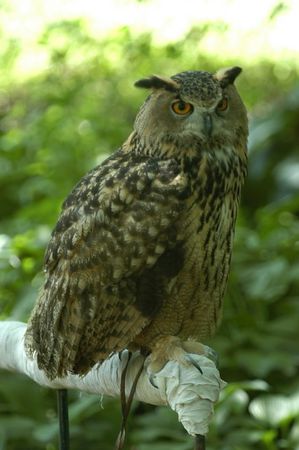
Eurasian Eagle-Owl (Bubo bubo) by Bob-Nan

Eurasian Eagle-Owl (Bubo bubo) by Bob-Nan

The video below was to me as a link in an e-mail. It was posted by vurtrunner in Full HD High Speed. It is worth showing again here and especially since it is a Bird of the Bible. What an awesome shot. The way the feet open up at the last seconds amazed me. Another interesting thing is the way he is so steadfast and aims right for his target. Thanks, Pastor Pete, for sending the link.

Therefore, my beloved brethren, be ye stedfast, unmoveable, always abounding in the work of the Lord, forasmuch as ye know that your labour is not in vain in the Lord. (1 Corinthians 15:58 KJV)

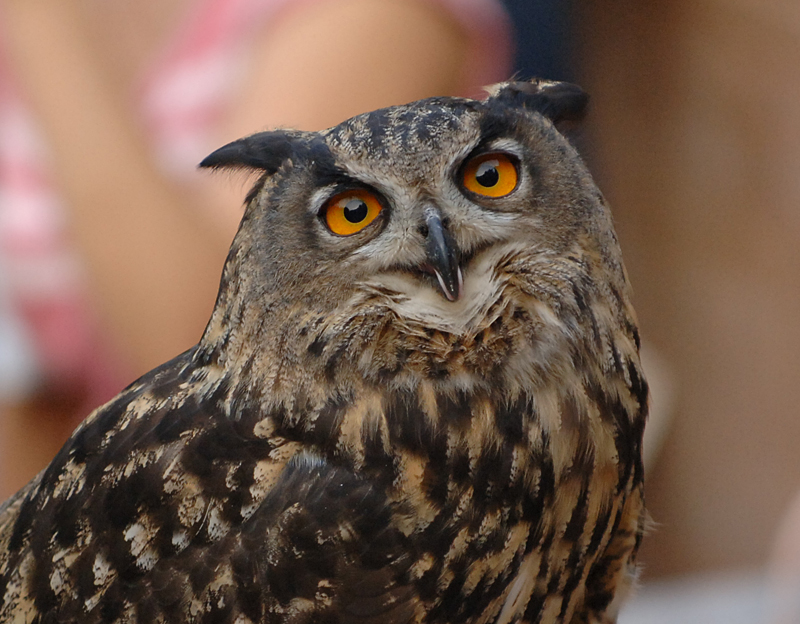
There are actually 15 Eagle-Owl in the world and the video did not say which one this one is. Looking at the photos I can find, most likely this is an Eurasian Eagle-Owl. The Eagle-Owls are the Eurasian Eagle-Owl, Indian, Pharaoh, Cape, Spotted, Greyish, Fraser’s, Usambara, Spot-bellied, Barred, Shelley’s, Verreaux’s, Dusky, Akun, and Philippine Eagle-Owl. They are in the Stringidae Family of the Strigiformes Order. Also, the Eagle-Owls are in the genus Bubo, which also included the horned owls (Snowy Owl, Great Horned Owl, Lesser Horned Owl) and one fish owl (Blakiston’s Fish Owl). “This genus, depending on definition, contains about one or two dozen species of typical owls (family Strigidae) and is found in many parts of the world. Some of the largest living Strigiformes are in Bubo. Traditionally, only owls with ear-tufts were included here, but that is no longer the case.” (Wikipedia)

The beast of the field shall honour me, the dragons and the owls: because I give waters in the wilderness, and rivers in the desert, to give drink to my people, my chosen. (Isaiah 43:20 KJV)

*

See More:

Birds of the Bible

Birds of the Bible – Owls

Ian’s Bird of the Week – Magnificent Riflebird

Magnificent Riflebird (Ptiloris magnificus) by Ian

Magnificent Riflebird (Ptiloris magnificus) by Ian

Ian’s Bird of the Week – Magnificent Riflebird ~ by Ian Montgomery

Newsletter – 9/12/11

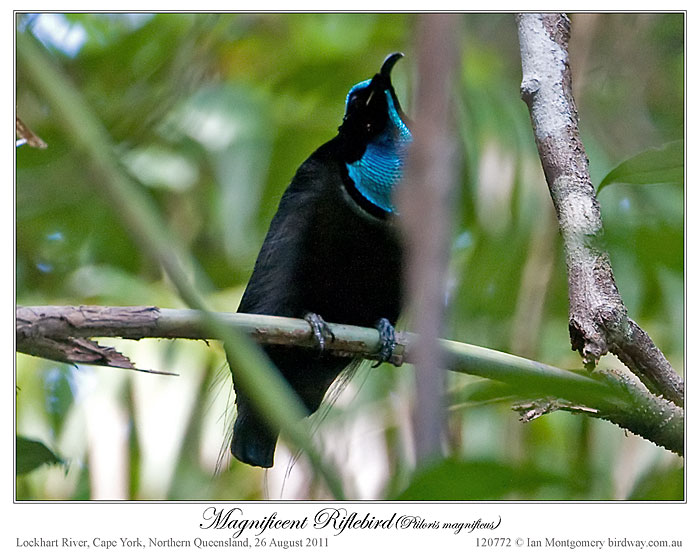
We’ve been dealing with Birds of Paradise for the last couple of birds of the week, so here’s another one from Iron Range, the Magnificent Riflebird. This, like the Trumpet Manucode is easier to hear than see as it spends most of its time in the tall trees of the rainforest and on my previous two visits to this part of Cape York I’d seen only a few females. This time, the males were very vocal and actively courting females and I had more success, as in the first photo.

The ‘magnificent’ is appropriate as, with a length of 28-33cm/11-13in, it is the largest of the three Australian Riflebirds. (There is a fourth species of Riflebird, the Eastern or Growling Riflebird, in eastern PNG – recently split from the Magnificent Riflebird and distinguishable mainly by its call.) As you can see from the first photo, the blue shield on the throat and upper breast of the male is much larger than that of the other two Australian ones. It is also the only one of the three to have plumes along the flanks. These are hard to see on the first photo (except as a fuzzy area below the right wing) but are visible in the second photo both as a fuzzy line along the right side and as longer wiry plumes on either side of the tail.

Magnificent Riflebird (Ptiloris magnificus) by Ian

Magnificent Riflebird (Ptiloris magnificus) by Ian

Like Victoria’s Riflebird the heavy plumage of the males make a swishing noise in flight as they sweep regally around in the canopy of the forest. Their usual call is like a wolf whistle and carries a long way, though I found that locating a male in this way was no guarantee of being able to see it. The male in the first photo was actively wooing an unimpressed or ambivalent female who flew away from him and landed on a branch in the open directly above me. She quickly realised that she was attracting my interest too, as in the third photo, and flew off again in renewed search of peace.

Magnificent Riflebird (Ptiloris magnificus) by Ian

Magnificent Riflebird (Ptiloris magnificus) by Ian

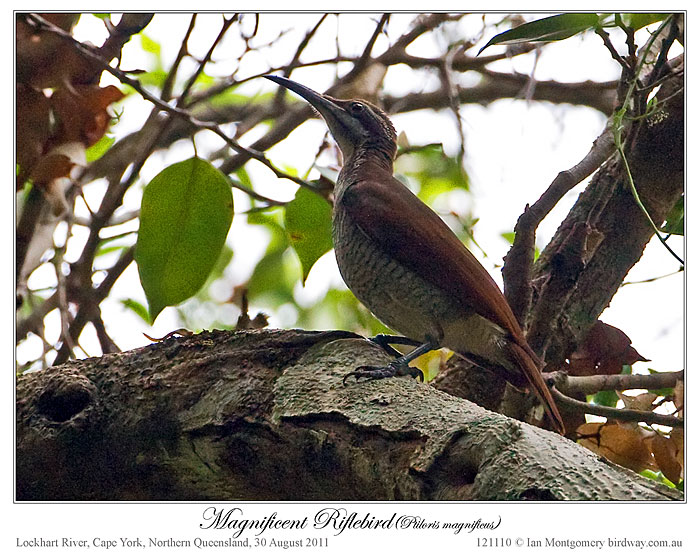
The females are fairly different in appearance from the females of Victoria’s Riflebird with rufous upperparts and heavily barred underparts. (You may remember that the female Victoria’s has much greyer upper parts with less marked buff underparts). The fourth photo shows a female in a more typical pose, looking for grubs, Woodpecker-like, along the limbs and trunks of trees, though Riflebirds also eat fruit.

Magnificent Riflebird (Ptiloris magnificus) by Ian

Magnificent Riflebird (Ptiloris magnificus) by Ian

Another spectacular bird in Iron Range was the Yellow-billed Kingfisher. It has featured as bird of the week before, so here is the link to the new Yellow-billed Kingfisher and on the Daintree we encountered plenty of Azure Kingfishers and Little Kingfishers .

The website, incidentally, had a record month in August with more than 9,300 visits, substantially up from previous records in July of 7,700 and in June of 7,200, with total downloads of about 4.5GB, also a record.

Best wishes
Ian

Ian Montgomery, Birdway Pty Ltd,
454 Forestry Road, Bluewater, Qld 4818
Phone: 0411 602 737 +61-411 602 737
Preferred Email: ian@birdway.com.au
Website: http://birdway.com.au


Lee’s Addition:

The Paradisaeidae Family is again presented by Ian. If you missed Ian’s other birds from this family, see:
Ian’s Bird of the Week – Trumpet Manucode
Ian’s Bird of the Week – Victoria’s Riflebird

Oh, magnify the LORD with me, and let us exalt his name together! (Psalms 34:3 ESV)

*

Some Very Unusual Birds

The following photos are from an e-mail I received. It has arrived many times from various friends. I don’t know who the photographers are and trust that they do not mind them being presented here.

What I do know is that these very unusual birds have a very Imaginative Creator. For His pleasure He created these kinds of birds and for our enjoyment also. The titles are from the e-mail and maybe #12 is some sort of Bird of Paradise or in that family (I think). Enjoy the photos and God’s Creative Hand at work.

Praise ye the LORD. I will praise the LORD with my whole heart, in the assembly of the upright, and in the congregation. The works of the LORD are great, sought out of all them that have pleasure therein. His work is honourable and glorious: and his righteousness endureth for ever. He hath made his wonderful works to be remembered: the LORD is gracious and full of compassion. (Psalms 111:1-4 KJV)

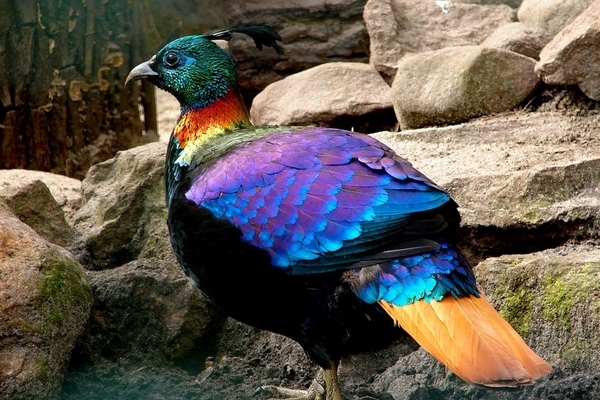
1. Himalayan Monal

1. Himalayan Monal

************

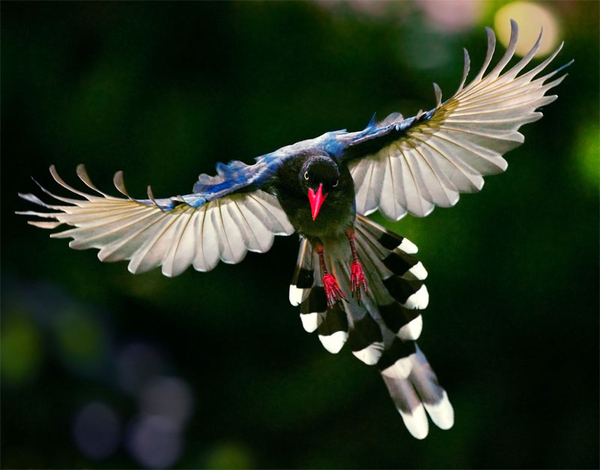
2. Formosan Magpie

2. Formosan Magpie

************

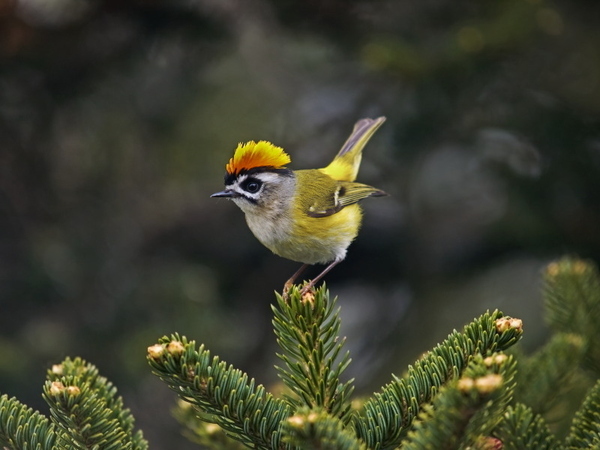
3. Flamecrest

3. Flamecrest

************

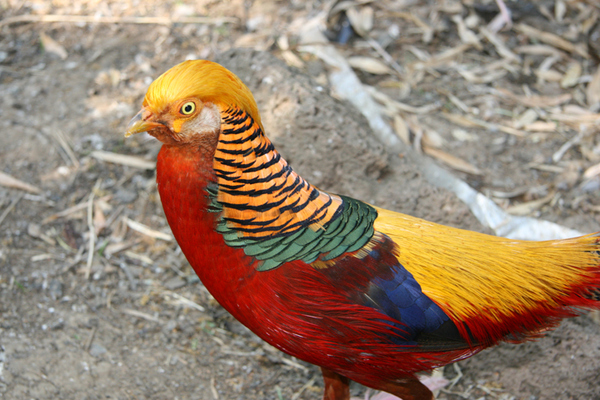
4. Golden Pheasant

4. Golden Pheasant

************

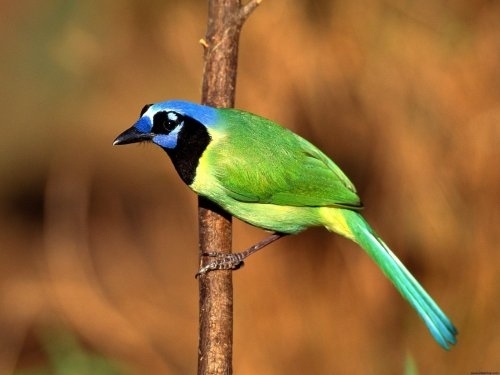
5. Green Jay

5. Green Jay

************

6. Kingfisher

6. Kingfisher

************

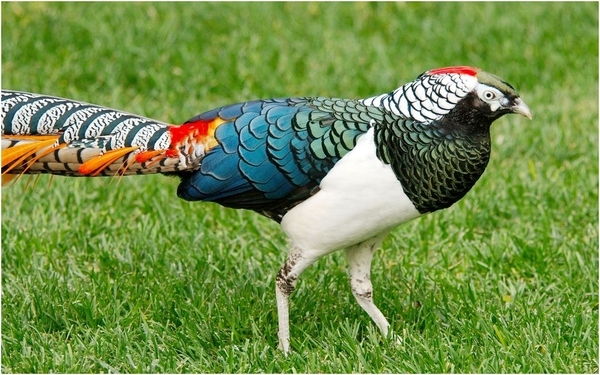
7. Lady Amherst's Pheasant

7. Lady Amherst's Pheasant

************

8. Bleeding Heart Pigeons

8. Bleeding Heart Pigeons

************

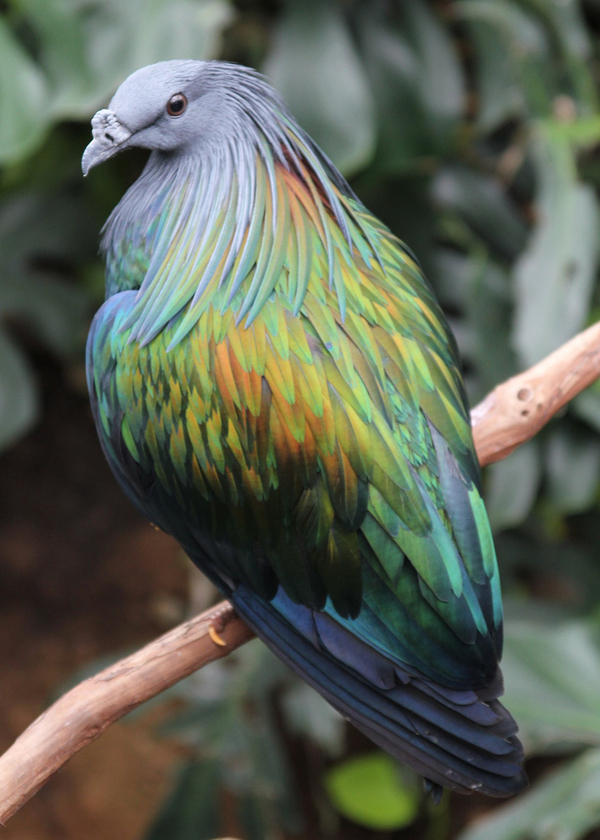
9. Nicobar Pigeon

9. Nicobar Pigeon

************

10. Quetzal

10. Quetzal

************

11. Winson's Bird Of Paradise

11. Winson's Bird Of Paradise

************

12. No Idea What Bird This Is, But It's Totally Rad

12. No Idea What Bird This Is, But It's Totally Rad

************

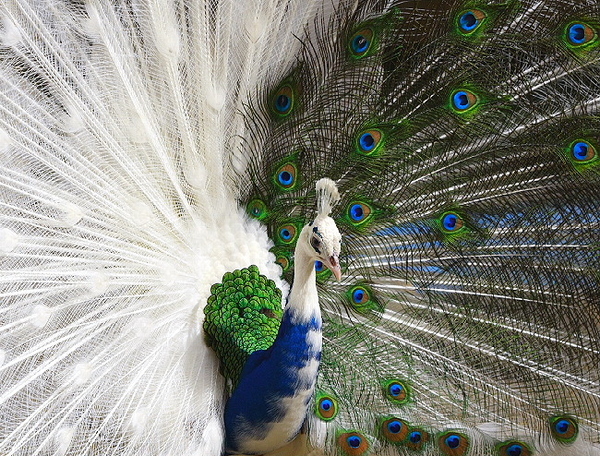
13. Peacock

13. Peacock

************

14. Sup, Polish Chicken

14. Sup, Polish Chicken

************

When I have time, I will update the names, if I can find them. My time is short and these names will have to suffice for now. If you know the exact names or who the photographers might be so they get proper credit, please leave a comment. Thanks, Lee
*

Birds of the Bible – Created Kinds

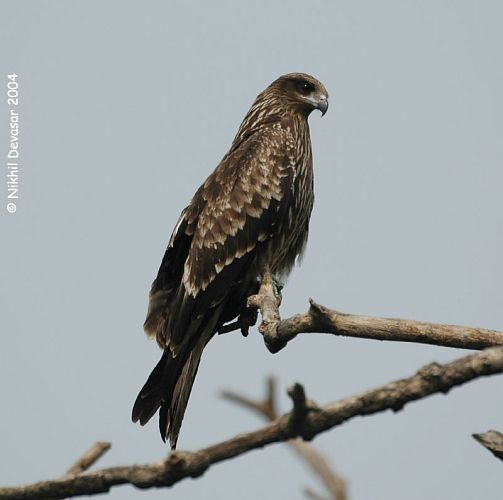
Black Kite (Milvus migrans) by Nikhil Devasar

Black Kite (Milvus migrans) by Nikhil Devasar

An interesting “News To Note” from Answers in Genesis reported on an article from BBC: “Species count put at 8.7 million” The following paragraphs are what prompted this blog.

Created kinds are organisms representing or descended from those originally created by God about 6,000 years ago. Organisms within a created kind generally interbreed and produce only more organisms of their own kind “within the limits of preprogrammed information, but with great variation.”15 Organisms that can interbreed are of the same created kind, since God designed organisms to reproduce “after their kind.” Due to loss of information and other factors, however, some organisms lose the ability to interbreed. Created kinds correspond roughly to the family level of the current classification taxons but may vary from order to genus level.
Although evolutionists imbue taxonomic classification with evolutionary implications—believing that the taxonomic groupings roughly depict common ancestry— taxonomy is really nothing more than a useful bookkeeping system to sort and group organisms according to their shared characteristics.

I know there is research going on by the Creationist to try to find out what were the original “kinds”, but I am just going to show the different passages in Scripture that talk about “kinds” and specifically those that refer to the “birds or fowls

The first mention of the “Kinds” is in Genesis, of course. We start of with Genesis 1:21:

And God created great whales, and every living creature that moveth, which the waters brought forth abundantly, after their kind, and every winged fowl after his kind: and God saw that it was good. (Genesis 1:21 KJV)

This  took place on the fifth day of creation. Believer’s Bible Commentary says this:
“1:20-23 The fifth day saw the waters stocked with fish and the earth stocked with bird-life and insects. The word translated birds means “flying ones” and includes bats and probably flying insects.”

The kinds are again mentioned when Noah was told to keep alive the birds after their kind during the global flood, they board in Genesis 7:14, and then again these kinds are mentioned as they come off the Ark.

Of the birds after their kind, of animals after their kind, and of every creeping thing of the earth after its kind, two of every kind will come to you to keep them alive. And you shall take for yourself of all food that is eaten, and you shall gather it to yourself; and it shall be food for you and for them.” Thus Noah did; according to all that God commanded him, so he did. (Genesis 6:20-22 NKJV)

they and every beast after its kind, all cattle after their kind, every creeping thing that creeps on the earth after its kind, and every bird after its kind, every bird of every sort. And they went into the ark to Noah, two by two, of all flesh in which is the breath of life. (Genesis 7:14-15 NKJV)

So Noah went out, and his sons and his wife and his sons’ wives with him. Every animal, every creeping thing, every bird, and whatever creeps on the earth, according to their families, went out of the ark. (Genesis 8:18-19 NKJV)

Most of the versions use “kind or families” and “birds or fowls.” As we continue through Scripture we arrive at the “eat or do not eat” list of birds in Leviticus 11 and Deuteronomy 14. Let’s see what is here:

Leviticus 11:14 has the Kite and Falcon after its kind (ACV) and these are in two different Orders and two different Families today:  Accipitriformes (order) – Accipitridae (family) and Falconiiformes (order) – Falconidae (family). Other versions have the Vulture which is in the Accipitriformes, but the Catharidae family. The Buzzard is mentioned in the GW version, but again, it is Accipitridae family. These are today’s divisions, but yet they are all placed next to each other and could have come from the same original kind. Leviticus 11:16 does the same with the terms for “kind”, but this time with the Hawk. It again is in the Accipitriformes (order) – Accipitridae (family).

The different versions use the terms; after its or his kind, likened to it, the like to it, of that sort, all types.
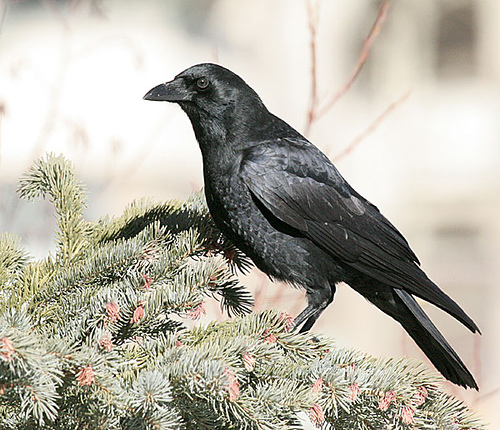
Chihuahuan Raven (Corvus cryptoleucus)Raven (Corvus corax) by Kent Nickell

Chihuahuan Raven (Corvus cryptoleucus)Raven (Corvus corax) by Kent Nickell

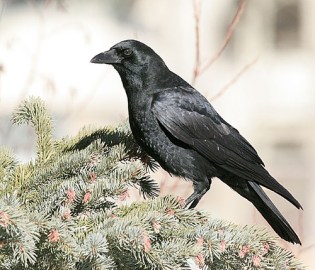
Levitcus 11:15 mentions the Raven after its kind. These are the Corvidae Family of birds which are in the Passeriformes (Songbirds) Order. This family includes the Crows, Jays, Treepies, etc., and the Ravens way down at the bottom of the list. (Which has nothing to do with importance)

Leviticus 11:19 does the same, but has the “Heron after his, her  or its kind” (depending on the version) Egrets, Herons, and Bitterns make up the Ardeidae Family of the Pelicaniformes Order.

The list in Deuteronomy 14:13-18, covers the same birds and basically says the same things.

There is one interesting reference in the DRB (1899 Douay-Rheims) in Leviticus 11:19 and Deut. 14:18. Look at the verse:

The heron, and the charadroin according to its kind, the houp also, and the bat. (Leviticus 11:19 DRB)
The bittern, and the charadrion, every one in their kind: the houp also and the bat. (Deuteronomy 14:18 DRB)

Northern Lapwing (Vanellus vanellus) by Nik

Northern Lapwing (Vanellus vanellus) by Nikhil Devasar

Some of the other versions mention the Lapwing and the Hoopoe, but not with “their kinds.” What caught my interest here is that there is an Order and a Family with a name similar to “charadrion.” The Charadriiformes Order has a Family called Charadriidae and guess what bird is in that family? The Lapwing! I loaded the Vulgate into my e-Sword, not because I know Latin, but all the birds are given a Common Name and a Scientific Name, which most times is Latin or similar. For instant the – Northern Lapwing (Vanellus vanellus) or a Black-headed Lapwing (Vanellus tectus). Here is Lev 11:19 and Deut 14:18:

erodionem et charadrion iuxta genus suum opupam quoque et vespertilionem
(Leviticus 11:19 Vulgate)
onocrotalum et charadrium singula in genere suo upupam quoque et vespertilionem (Deuteronomy 14:18 Vulgate)

I also see the word “genus” and “genere” which could refer to what we call today a genus or genera. (Told you I don’t know Latin.)

James is the only New Testament place where “every kind of” birds is again listed. In this reference all birds no matter what Family or Order are included. See Birds of the World.

For every kind of beasts, and of birds, and of serpents, and of things in the sea, is tamed, and hath been tamed of mankind: (James 3:7 KJV)

I know parts of this blog has been somewhat technical as far as the Taxonomy of birds, but the birds are mentioned in the Bible and I enjoy trying to find out about them. The Bible also says:

All scripture is given by inspiration of God, and is profitable for doctrine, for reproof, for correction, for instruction in righteousness: (2 Timothy 3:16 KJV)

Previous articles here include:
Birds of Bible – Foundation #2
Birds of Bible – Foundation #3
Birds of Bible – Foundation #5

*