Created to Fly

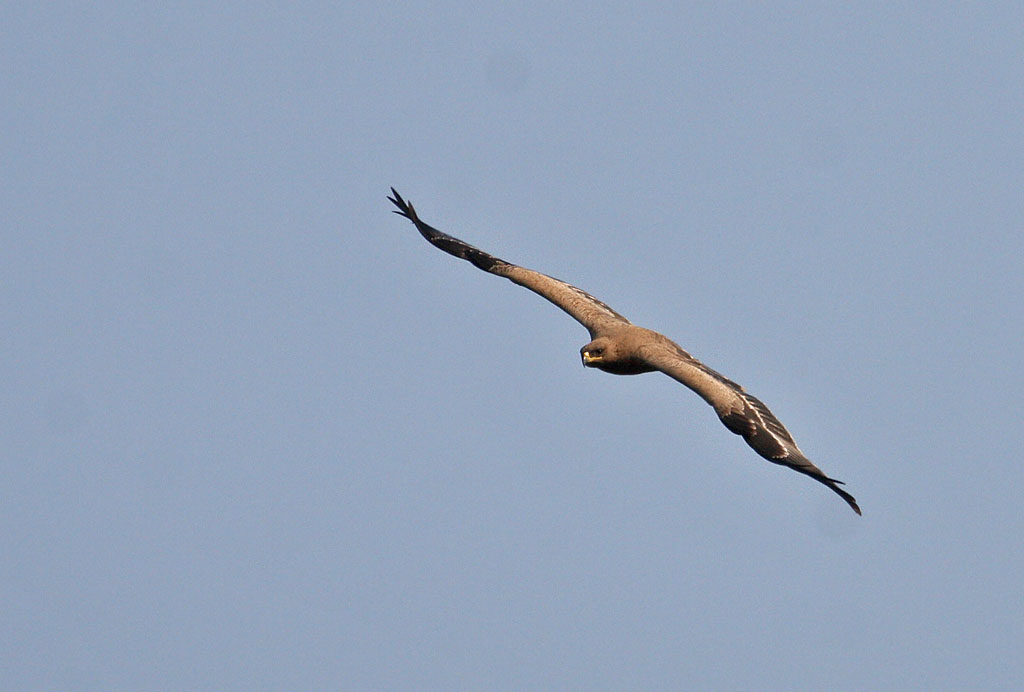
Steppe Eagle (Aquila nipalensis) by Peter Ericsson

Steppe Eagle (Aquila nipalensis) by Peter Ericsson

But ask now the beasts, and they shall teach thee; and the fowls of the air, and they shall tell thee:…Who knoweth not in all these that the hand of the Lord hath wrought this? (Job 12:7, 9)

Here are some excerpts from the Fit for Flight article by Brian Thomas, at the Institute for Creation Research. It is in the August Acts and Facts. To see the whole article, Click Here.

“Birds, for example, were clearly designed for flight and were not formed by any purposeless natural process. The ancient book of Job stated as much: Job 12:7, 9 – above)

  • Some of the required parts for flying birds are visible from the outside, such as wings and an aerodynamic body shape. Other characteristics are less obvious, but equally important.
  • Anything that flies must have a specific power-to-weight ratio.
  • A bird’s center of mass is toward the front, in between its wings.
  • A small but crucial feature on many birds is the alula feather.
  • There are many more specific, required features, like retractable landing gear and horizontal stabilizers, not to mention damage repair mechanisms.”
“And this does not even take into account the beauty of bird flight, bird songs, or their various colorful feathers, which constitute art that demands an Artist who can blend high flights of imagination with the most intricate engineering quality.Surely the great Creator deserves credit for His fantastic handiwork!”

Please check out the article, “Fit for Flight” and also check out the other Acts and Facts articles.

*

Birds of the Bible – Ibises

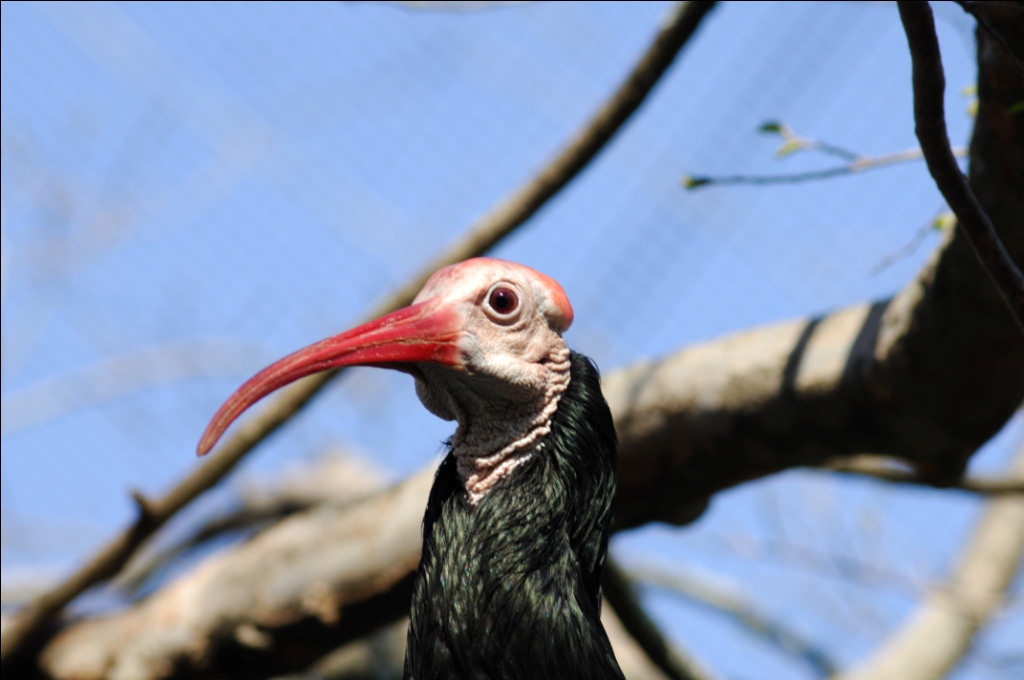
Southern Bald Ibis (Geronticus calvus) by Dan at LPZoo

Southern Bald Ibis (Geronticus calvus) by Dan at LPZoo

and for a long time birds and hedgehogs, and ibises and ravens shall dwell in it: and the measuring line of desolation shall be cast over it, and satyrs shall dwell in it. (Isaiah 34:11 Brenton)

While working on Birds of the Bible – Isaiah 34:11, I was pointing out how the different versions of the Bible translated that verse. One of the birds that appeared in those verses was the Ibis. After searching through e-Sword, “Ibis/Ibises” showed up in four different Scriptures. The Ibis is being added as a Bird of the Bible and will have it’s own page, Ibises.

Of course the Isaiah 34:11 verse, quoted above, has “ibises” in the Brenton and the ABP+ (Apostolic Bible Polyglot w/Strongs Numbers).
(ABP+) Birds, and hedgehogs, and ibises, and crows shall dwell in her; and [shall be put upon her cord a surveying of desolation]; and satyrs shall live in her.
(Brenton) and for a long time birds and hedgehogs, and ibises and ravens shall dwell in it: and the measuring line of desolation shall be cast over it, and satyrs shall dwell in it.

Leviticus 11 and Deuteronomy 14 both have the list of clean and unclean birds that the Israelites were to observe.

Leviticus 11:17
(ABP+) And long-eared owl, and cormorant, and ibis,
(Darby) and the owl, and the gannet, and the ibis,
(DRB) The screech owl, and the cormorant, and the ibis.
(ISV) owl, cormorant, ibis,

Deuteronomy 14:16
(ABP+) and heron, and swan, and ibis,
(Darby) the owl, and the ibis and the swan,

There is one other reference to an “ibis” and that is in the GNB (Good News Bible) which I totally disagree with its translation.
(GNB) Who tells the ibis when the Nile will flood, or who tells the rooster that rain will fall?

Here is what the verse says in several other translations:
(KJV) Who hath put wisdom in the inward parts? or who hath given understanding to the heart?
(NASB) “Who has put wisdom in the innermost being Or given understanding to the mind?
(ESV) Who has put wisdom in the inward parts or given understanding to the mind?

The way it reads, there is no mention of a any kind of a bird or an ibis.

Wikipedia has this to say about the Ibis (edited) “The ibises (collective plural ibis; classical plurals ibides and ibes) are a group of long-legged wading birds in the family Threskiornithidae of the Pelicaniformes Order.
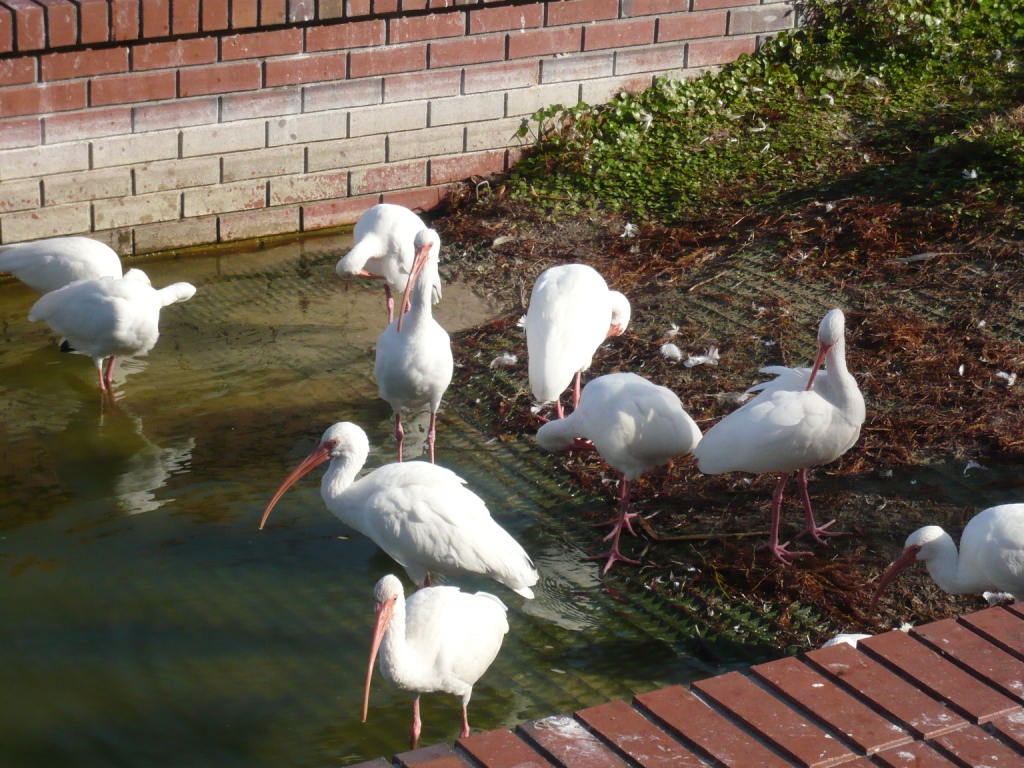
They all have long down curved bills, and usually feed as a group, probing mud for food items, usually crustaceans. In Florida, they probe around in yards looking for insects or whatever. Most species nest in trees, often with spoonbills or herons.
The word ibis comes from Greek and Latin, and probably from the Ancient Egyptian. According to Josephus, Moses employed ibes against serpents during a desert campaign into Ethiopia in his early life. Pliny the Elder also recounted, “The Egyptians invoked [ibes] against the serpents.”

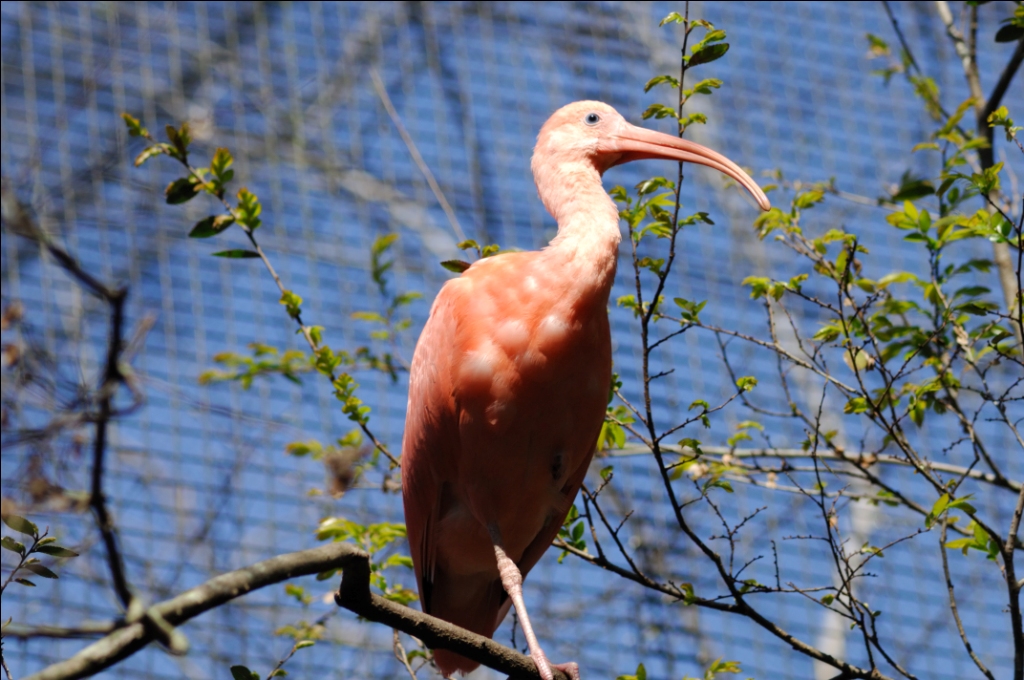
Scarlet Ibis (Eudocimus ruber) by Dan at LPZoo

Scarlet Ibis (Eudocimus ruber) by Dan at LPZoo

In culture

The Sacred Ibis was an object of religious veneration in ancient Egypt, particularly associated with the god, Thoth. At the town of Hermopolis, ibises were reared specifically for sacrificial purposes and in the Serapeum at Saqqara, archaeologists found the mummies of one and a half million ibises and hundreds of thousands of falcons.
According to local legend in the Birecik area, the Northern Bald Ibis was one of the first birds that Noah released from the Ark as a symbol of fertility, and a lingering religious sentiment in Turkey helped the colonies there to survive long after the demise of the species in Europe. (Not found in Scripture)
The mascot of the University of Miami is an American White Ibis. The ibis was selected as the school mascot because of its legendary bravery during hurricanes. The ibis is the last sign of wildlife to take shelter before a hurricane hits and the first to reappear once the storm has passed.  By the same token, the short story The Scarlet Ibis used the hearty bird’s appearance and untimely demise inland to foreshadow one of the central character’s death.
The Sacred Ibis is the unit symbol of the Israeli Special Forces unit known as Unit 212 or Maglan in Hebrew: מגלן.”

Bare-faced Ibis (Phimosus infuscatus) by Robert Scanlon

Bare-faced Ibis (Phimosus infuscatus) by Robert Scanlon

Here is a list of the Ibises, by their genera

Threskiornis
African Sacred Ibis (Threskiornis aethiopicus) by Lee at Lowry Park Zoo
Malagasy Sacred Ibis (Threskiornis bernieri)
Black-headed Ibis (Threskiornis melanocephalus) – by Nikhil Devasar
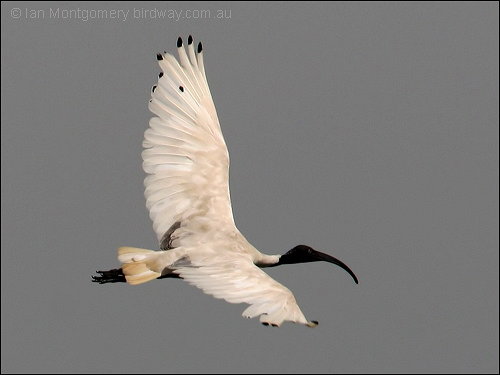
Australian White Ibis (Threskiornis molucca) by Ian
Straw-necked Ibis (Threskiornis spinicollis)
Pseudibis
Red-naped Ibis (Pseudibis papillosa)
White-shouldered Ibis (Pseudibis davisoni) ARK
Giant Ibis (Pseudibis gigantea) ARK
Geronticus
Northern Bald Ibis (Geronticus eremita)
Southern Bald Ibis (Geronticus calvus) by Dan at L P Zoo
Nipponia
Crested Ibis (Nipponia nippon)
Bostrychia
Olive Ibis (Bostrychia olivacea) IBC
Sao Tome Ibis (Bostrychia bocagei)
Spot-breasted Ibis (Bostrychia rara)
Hadada Ibis (Bostrychia hagedash)
Wattled Ibis (Bostrychia carunculata)
Theristicus
Plumbeous Ibis (Theristicus caerulescens)
Buff-necked Ibis (Theristicus caudatus) by Dario Sanches
Black-faced Ibis (Theristicus melanopis) b
Cercibis
Sharp-tailed Ibis (Cercibis oxycerca) IBC
Mesembrinibis
Green Ibis (Mesembrinibis cayennensis)
Phimosus
Bare-faced Ibis (Phimosus infuscatus) by Robert Scanlon
Eudocimus
American White Ibis (Eudocimus albus) by Dan at Lake Morton
Scarlet Ibis (Eudocimus ruber) by Dan at L P Zoo
Plegadis
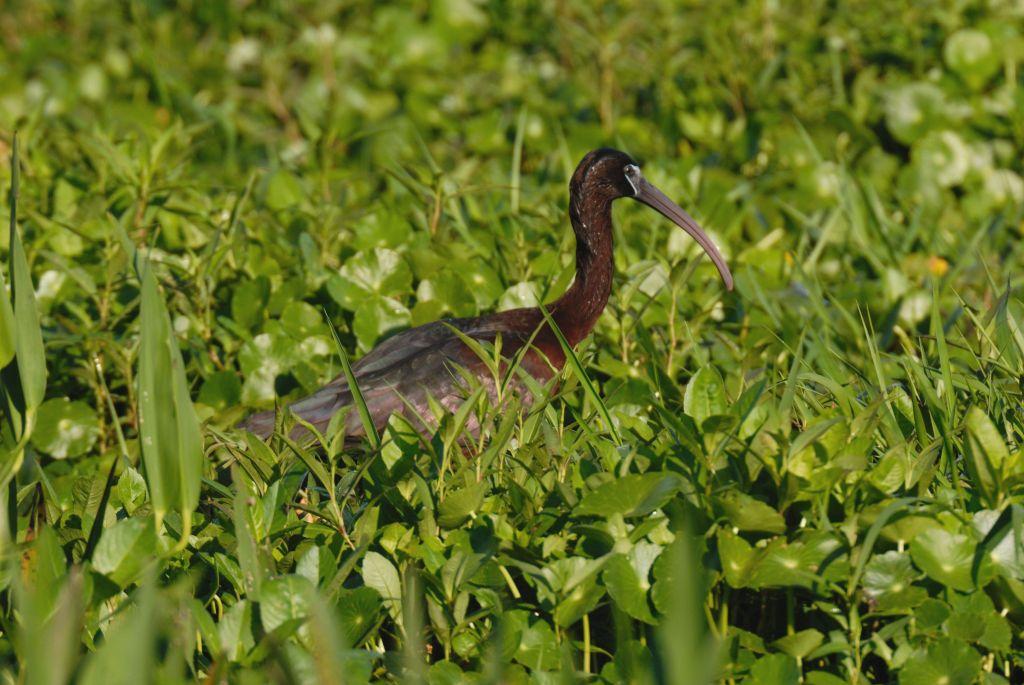
Glossy Ibis (Plegadis falcinellus) by Dan at Circle B
White-faced Ibis (Plegadis chihi) ©USFWS
Puna Ibis (Plegadis ridgwayi)
Lophotibis
Madagascar Ibis (Lophotibis cristata)

Birdwatching at Circle B Bar Reserve – 7/22/11

Where the birds make their nests: as for the stork, the fir trees are her house. (Psalms 104:17 KJV)

I was making a video of a Tricoloered Heron out at Circle B  when I caught this interesting sight. I zoomed out to get a view of the pond and as I zoomed back in on the bird, he and I both were surprised to see what was heading toward us. The Heron decided to get his feet out of the water, go stand on a rock, and I decided to stop the video when the alligator started out of the water in my direction.

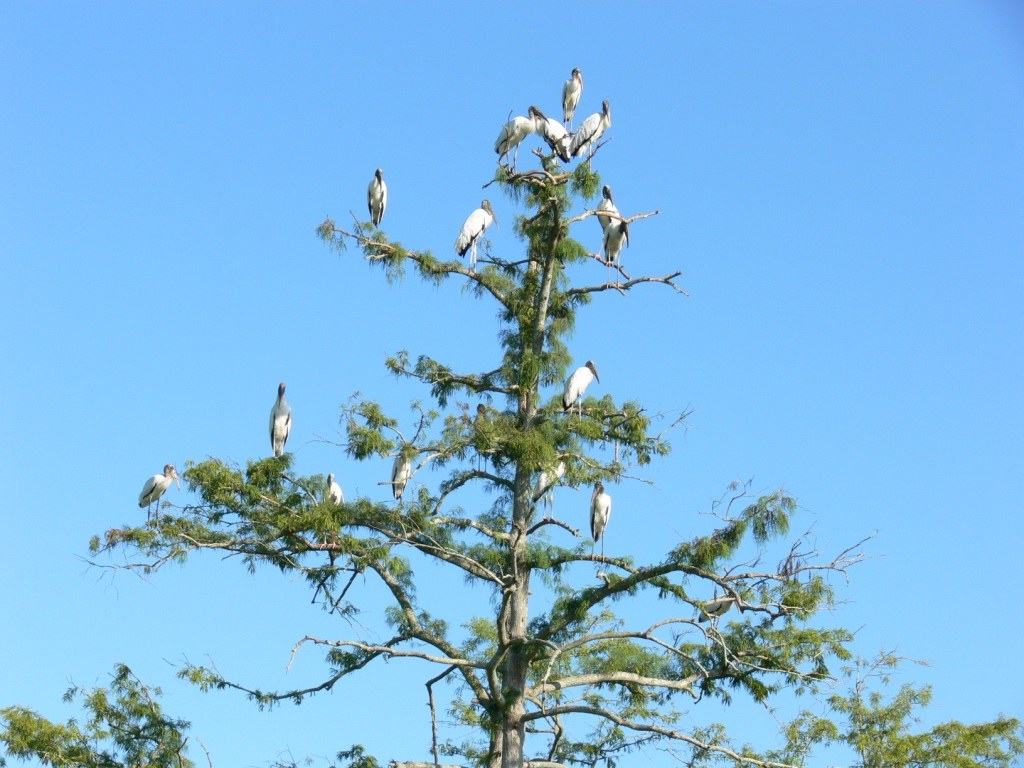
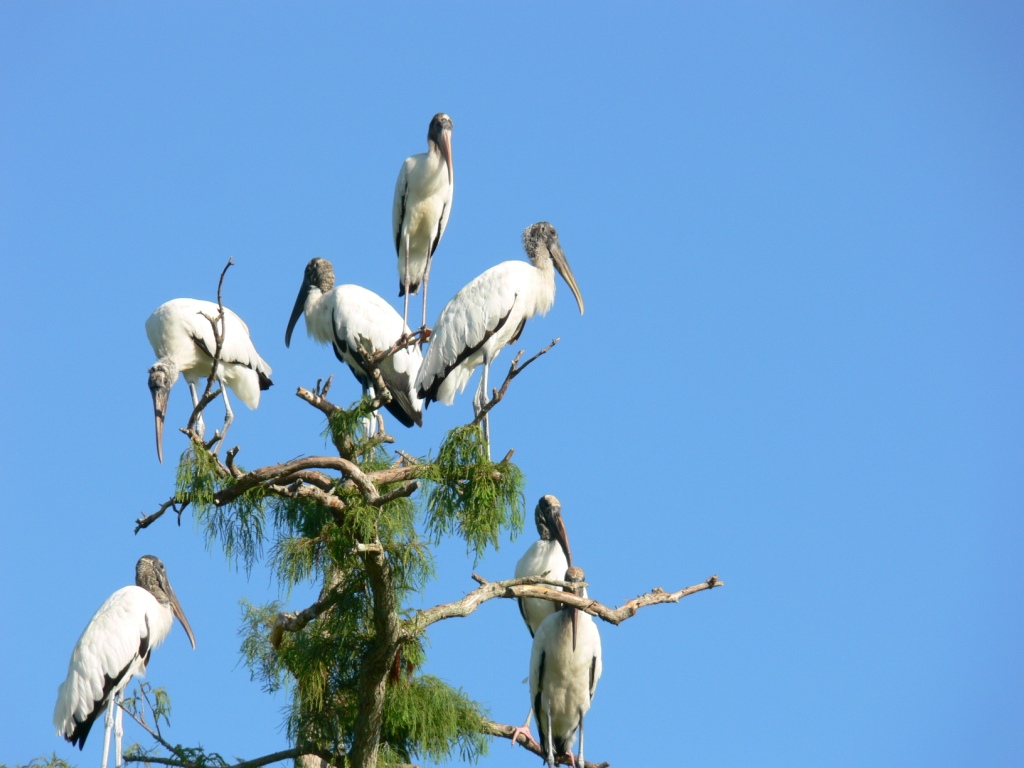
Wood Stork Tree at Circle B - 7-22-11

Wood Stork Tree at Circle B - 7-22-11 by Lee

Where the birds make their nests: as for the stork, the fir trees are her house. (Psalms 104:17 KJV)

Circle B Bar Reserve is always fun to bird watch. You never know what might be there. We had been somewhat disappointed in the number of birds and were heading back when I spotted the Heron. The most numerous birds out there were all the Wood Storks up in the trees. We still managed to see 21 birds on a clear, 79 degree morning. Here is a list of the birds spotted or heard.

Black-bellied Whistling Ducks – 9
Great Egrets – 25+
Cattle Egrets – 5
Tricolored Heron – 3
Great Blue Herons – 3
Limpkin – 1
Double-crested Cormorants – 5
Anhingas – 2
Wood Storks – 100+
Moorhens -15+
Red-shouldered Hawk – 1
Black Vultures and Turkey Vultures, mixed – 50+
Mourning Doves – 2
Red-bellied Woodpecker – 1
Red-headed Woodpecker – 1
Boat-tailed Grackles – 10
Common Grackles – 5
Blue Jays 2
Uncertain Wren – heard -1
Cardinal – 2

Black-bellied Whistling Duck in Tree at Circle B by Lee

Black-bellied Whistling Duck in Tree at Circle B by Lee

When we left there, we decided to check out Saddle Creek Park since we already had our cameras and binoculars. We got there around 9:40 and it was already 86 degrees by then. Seventeen species of birds decided to let us count them. Most of the birds were the same kind we had seen at the Circle B, but we did pick up some White Ibises, a Fish Crow, Little Blue Heron and Tufted Titmouse.

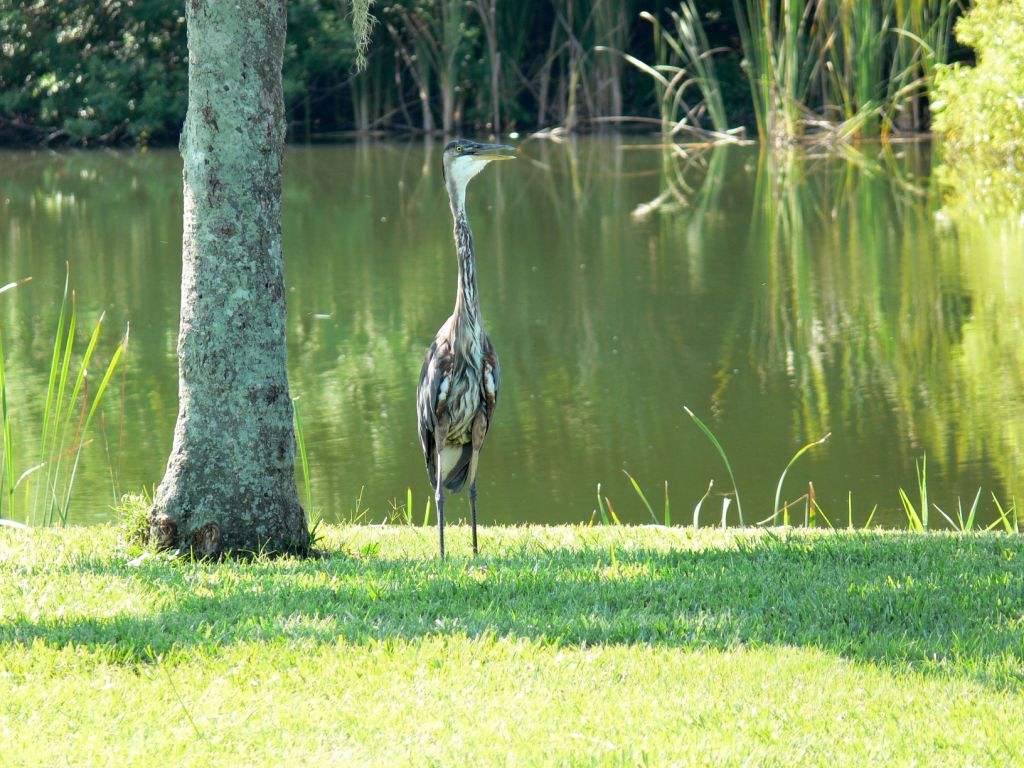
Great Blue Heron Juvenile at Saddle Creek by Lee

Great Blue Heron Juvenile at Saddle Creek by Lee

That list was (in the order they were spotted); Cattle Egrets, Blue Jays, Boat-tailed Grackles, Anhinga-female, Moorhens, Great Egret, Fish Crow, Common Grackles, Great Blue Herons, White Ibises, Tricolored Heron, Great Blue Heron-juvenile, Ospreys, Little Blue Heron, Anhinga, Double-crested Cormorants, Black Vultures and the Tufted Titmouse.

Always enjoy watching God’s Creation even when they are the same ones we see often. Then again, we have lots of human friends that we enjoy visiting with over and over also.

*

White-fronted Bee-eater – The Community Developer

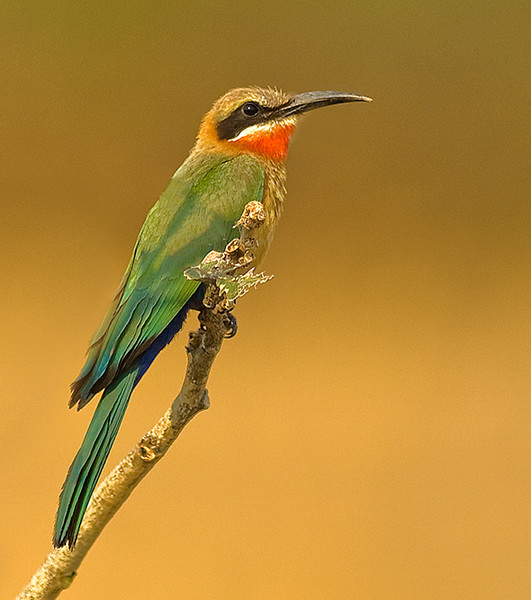
White-fronted Bee-eater (Merops bullockoides) by Bob-Nan

White-fronted Bee-eater (Merops bullockoides) by Bob-Nan

White-fronted Bee-eater – The Community Developer ~ by ajmithra

The White-fronted Bee-eater, Merops bullockoides, is a species of bee-eater widely distributed in sub-equatorial Africa. They have a distinctive white forehead, a square tail and a bright red patch on their throat. They nest in small colonies, digging holes in cliffs or earthen banks but can usually be seen in low trees waiting for passing insects from which they hunt either by making quick hawking flights or gliding down before hoveringbriefly to catch insects.

This species, like other bee-eaters, is a richly coloured, slender bird, but with a distinctive black mask, white forehead, square tail and a bright red throat. The upperparts are green, with cinnamon underparts. The call is a deep squeak. White-fronted Bee-eaters are found in the vast savannah regions of sub-equatorial Africa. The habitat commonly consists of open country, often near gullies, because this is the region that their food (bees) lives.

Where there are bees, there these bee-eaters are..

  • We are the inheritors of the kingdom of God, and the working partners of God in building His kingdom…
  • But, where are we found?
  • Martha knew this that’s why she chose to sit at the feet of Jesus instead of cooking in the kitchen like Mary….
  • Look how Mary got frustrated cos of Martha!
  • She in fact would’ve turned jealous of her and that maybe the reason why she started complaining to Jesus..
  • When our live revolves around Jesus, we become new..
  • We will not be jealous and we will never complain..

Its when we start complaining, that we should know that we are in the kitchen like Mary and not sitting in His presence like Martha..

Therefore if any man be in Christ, he is a new creature: old things are passed away; behold, all things are become new. (2 Corinthians 5:17)

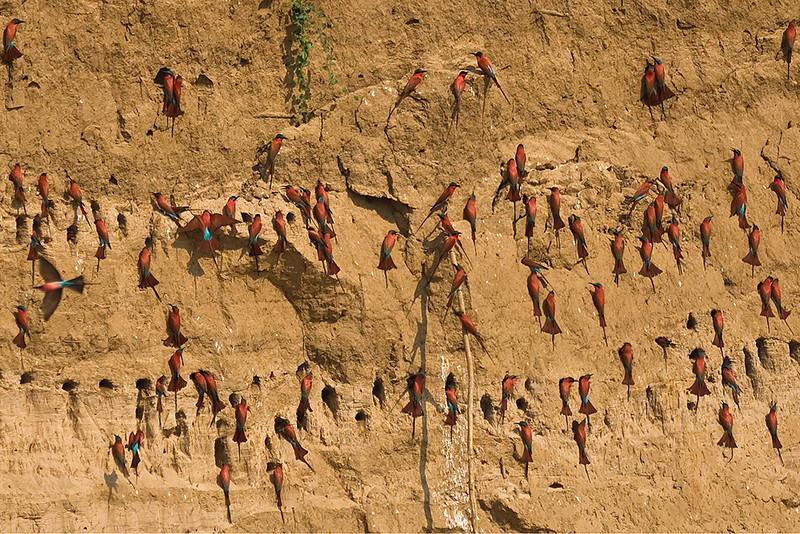
Southern Carmine Bee-eater (Merops nubicoides) by Africaaddict

Southern Carmine Bee-eaters (Merops nubicoides) on bank by Africaaddict

White-fronted bee-eaters nest in colonies averaging 200 individuals, digging roosting and nesting holes in cliffs or banks of earth. A population of bee-eaters may range across many square kilometres of savannah, but will come to the same colony to roost, socialize, and to breed. White-fronted bee-eaters have one of the most complex family-based social systems found in birds.

Their diet is made up primarily of bees, but they also take other flying insects depending on the season and availability of prey. Two hunting methods have been observed. They either make quick hawking flights from lower branches of shrubs and trees, or glide slowly down from their perch and hover briefly to catch insects.

Colonies comprise socially monogamous, extended family groups with overlapping generations, known as “clans” which exhibit cooperative breeding. Non-breeding individuals become helpers to relatives and assist to raise their brood. In white-fronted bee-eaters, this helping behavior is particularly well developed with helpers assisting in half of all nesting attempts. These helpers may contribute to all aspects of the reproductive attempt, from digging the roosting or nesting chamber, to feeding the female, incubating and feeding the young; and have a large effect on increasing the number of young produced. Only 50% of non-breeders in a colony typically become helpers, and whether or not an individual becomes a helper and to whom it provides aid is heavily dependent on the degree of kinship involved. Non-breeders are most likely to become helpers when breeding pairs are close genetic relatives.

When faced with a choice of potential recipient nests helpers preferential help the breeding pair to who they are most closely related, suggesting that this behaviour may serve to increase the helper’s inclusive fitness …. The life style of these birds reminds us of the early church where everyone shared all that they had among themselves and lived as one large extended family..

  • When did the church forget to share their blessings?
  • We say that we are the body of Christ and that Christ is the head of the family, but, We still live either as individuals or as little groups inside the church..
  • Is that the reason why the church is not able to extend the boundaries of the eternal Kingdom?
  • How many good Samaritans are still living among us?
  • Or in other words how many Annanias and Sapphiras are still inside the church?

Again, if two lie together, then they have heat: but how can one be warm alone? (Ecclesiastes 4:11)

White-fronted Bee-eater (Merops bullockoides) by Africaddict

White-fronted Bee-eater (Merops bullockoides) by Africaddict

Female White-fronted Bee-eaters leaving their nesting burrows must avoid pursuit by unmated males who may force them to the ground and rape them. Furthermore their unwelcome attentions are preferentially against females who are laying eggs and who thus might lay the eggs of their rapist rather than their mate.

  • This reminds us of Dinah, daughter of Jacob, who went out alone to have a look around the countryside and how she was defiled and how there was bloodshed among the Hivites..
  • This reminds the church to cling to the Bridegroom rather than to tradition and custom…
  • Tradition and custom can never take us further in our pursuit to holiness, but, it is the presence of God in our lives that makes the difference..
  • Sin was not found among Adam and Eve until they disobeyed and ate the fruit..
  • Is that why Eve gave birth to Cain who turned into a murderer?
  • The duty of the bride is to stay close to the bridegroom and that is where she would have protection…

If you have lost your way, find THE WAY and cling on to Him…

It was but a little that I passed from them, but I found him whom my soul loveth: I held him, and would not let him go, until I had brought him into my mother’s house, and into the chamber of her that conceived me. (Song of Solomon 3:4)

  • Jacob didn’t leave God until He blessed him…
  • Moses didn’t leave God’s presence till he got the answer from God..
  • Never leave God’s presence until something happens…

Have a blessed day!

Your’s in YESHUA,
a j mithra

Please visit us at:
Crosstree

ajmithra21

Bee-eaters are in the Meropidae Family.

White-fronted Bee-eater (Merops bullockoides) sitting on a branch, by Keith Blomerley.

*

Updated To The I.O.C. Version 2.9

Wood Stork Tree at Circle B - 7-22-11

Wood Stork Tree at Circle B – 7-22-11 by Lee

I just finished updating this site to the new I.O.C. Version 2.9 List of Birds. It seems to be a challenge around here to keep up with them, but this one wasn’t so bad. All the changes have been made and the Indexes are all corrected. I separated the Genera names from Species names. That meant making 26 new pages, but it should make it easier to find them.

The IOC now list 10,448 species of birds in the world with this version. Some names were changed and so were some taxonomic revisions made. That means in simple terms that they added 15 species, deleted 5, changed the English names of 16 and shuffled the taxonomy 34 times. Most of us would would not notice, but if you live where that bird is active, then it would concern you.

Actually, they are to be highly commended. There are numerous ornithologists and birding organizations all around the world who contribute to this lists. The IOC World Bird List can be found at Worldbirdnames.Org.

Some of the main pages here:

Birds of the World

Orders

Families

And further, by these, my son, be admonished: of making many books there is no end; and much study is a weariness of the flesh. (Ecclesiastes 12:12 KJV)

Rare Singing Bird Pistols

Woodstorks on top of tree at Circle B -7-22-11 by Lee

Woodstorks on top of tree at Circle B -7-22-11 by Lee

I received this link from a friend and thought I would share it with the blog. I was amazed at the intricacy of workmanship. Enjoy!

http://www.christies.com/features/singing-bird-pistols-en-1422-3.aspx

P. S. I am feeling somewhat better and appreciate those of you who have been praying for me.

I will give thee thanks in the great congregation: I will praise thee among much people. (Psalms 35:18 KJV)

In every thing give thanks: for this is the will of God in Christ Jesus concerning you. (1 Thessalonians 5:18 KJV)

(Felt good enough to go birdwatching yesterday.)
*

Birds of the Bible – Hovering Birds

White-tailed Tropicbird (Phaethon lepturus) by Ian

White-tailed Tropicbird (Phaethon lepturus) by Ian

Like birds hovering, so the LORD of hosts will protect Jerusalem;  he will protect and deliver it;he will spare and rescue it.” (Isaiah 31:5 ESV)

While searching for “bird” verses, I came across this verse and remembered the many birds that I have seen hovering. Go to the shore and feed Gulls and you will see them “hover over you” while they wait for another morsel to be tossed up to them. Many of the birds of prey (hawks, falcons, osprey, eagles, etc.) will “hover” while trying to catch a pray. Of course Hummingbirds will “hover” in front of flowers while sipping the nectar. We watched a Kingfisher “hover” out at Circle B, one of our favorite birding spots. Birds “hover” over their nest to protect their young. Genesis 1:2 is the only other verse using ‘hovering”, “moving”, or “fluttering.”

Using the “Compare” mode of e-Sword, here are some of the translations of this phrase:

As birds flying…he shall rescue and shall protect
As birds hovering…he will protect and deliver it, he will pass over and preserve it.
Just as birds fly over their nest to protect it…will defend Jerusalem. He will save her. He will “pass over” and save Jerusalem.
Like birds with outstretched wings…he will be a cover and salvation for it, going over it he will keep it from danger.
will protect like a mother bird circling over her nest
Like birds hovering overhead…he will shield and deliver it; and he will pass over and bring it to safety.

As you can see from these and the others not shown, this hovering or flying about is used in the protective mode, protecting their nest and their young. And of course, this verse is referring to the LORD of host defending and protecting Jerusalem. Hebrew H5774 עוּף – ‛ûph, pronounced “oof” is used for flying or hovering. “A primitive root; to cover (with wings or obscurity); hence (as denominative from H5775) to fly;…”

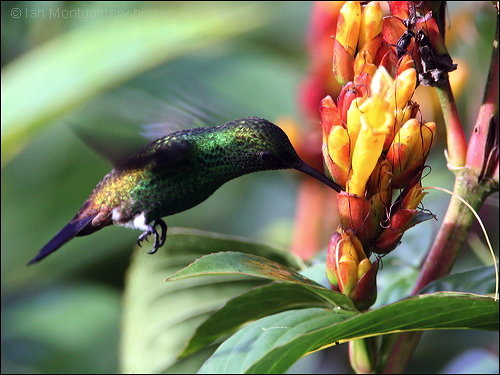
Copper-rumped Hummingbird (Amazilia tobaci) by Ian

Copper-rumped Hummingbird (Amazilia tobaci) by Ian

Here are what a few of the commentaries say about this passage. The bolding is mine.

BBC – 31:4-9 “God is like a lion which a multitude of shepherds (Assyria) tries to frighten away. Or, to change the figure, He is like a flock of birds, hovering over Jerusalem; He is ready to defend and deliver the city. When Israel turns back to the Lord, it will throw away its idols. The Assyrians will perish by a direct intervention of the Lord. The destruction of Sennacherib did not exhaust the meaning of these verses, so the prophecy has a future fulfillment as well, that is, in the Tribulation.”

MHCC – Isaiah 31:1-5 “God will oppose the help sought from workers of iniquity. Sinners may be convicted of folly by plain and self-evident truths, which they cannot deny, but will not believe. There is no escaping the judgments of God; and evil pursues sinners. The Lord of hosts will come down to fight for Mount Zion. The Lion of the tribe of Judah will appear for the defence of his church. And as birds hovering over their young ones to protect them, with such compassion and affection will the Lord of hosts defend Jerusalem. He will so defend it, as to secure its safety.”

Black-headed Ibis (Threskiornis melanocephalus) w chicks by Nikhil Devasar

Black-headed Ibis (Threskiornis melanocephalus) w chicks by Nikhil Devasar

Barnes – Isaiah 31:5 “As birds flying – This is another comparison indicating substantially the same thing as the former, that Yahweh would protect Jerusalem. The idea here is, that He would do it in the same manner as birds defend their young by hovering over them, securing them under their wings, and leaping forward, if they are suddenly attacked, to defend them. Our Saviour has used a similar figure to indicate his readiness to have defended and saved the same city Mat_23:27, and it is possible that he may have had this passage in his eye. The phrase ‘birds flying,’ may denote the “rapidity” with which birds fly to defend their young, and hence, the rapidity with which God would come to defend Jerusalem; or it may refer to the fact that birds, when their young are attacked, fly, or flutter around them to defend them; they will not leave them.
And passing over – פסוח pâsoach. Lowth renders this, ‘Leaping forward.’ This word, which is usually applied in some of its forms to the Passover Exo_12:13, Exo_12:23, Exo_12:27; Num_9:4; Jos_5:11; 2Ch_30:18, properly means, as a verb, “to pass over,” and hence, to preserve or spare. The idea in the passage is, that Yahweh would protect Jerusalem, as a bird defends its young.”

Bald Eagle (Haliaeetus leucocephalus) by Aesthetic Photos

Gill – Isaiah 31:5 “As birds flying, so will the Lord of hosts defend Jerusalem,…. As the preceding metaphor expresses the mighty power of God, this his tenderness and affection, as well as his speed and swiftness in the deliverance of his people. As birds in the air, at a distance, especially the eagle, have their eye upon their nests, and their young ones in them, and when in danger fly to their assistance, and hover over them, and about them, to keep off those that would hurt them, or carry them away; so the Lord, on high, sees his people when in distress, and hastens to help them, and does surround, protect, and defend them: thus the Lord did, when Sennacherib with his army besieged Jerusalem; who boasted, with respect to other nations, that he had “found as a nest the riches of the people”, and that “there was none that moved the wing against him”, Isa_10:14 to which it is thought the allusion is here:”

But God, who is rich in mercy, for his great love wherewith he loved us, Even when we were dead in sins, hath quickened us together with Christ, (by grace ye are saved;) And hath raised us up together, and made us sit together in heavenly places in Christ Jesus: That in the ages to come he might shew the exceeding riches of his grace in his kindness toward us through Christ Jesus. For by grace are ye saved through faith; and that not of yourselves: it is the gift of God: Not of works, lest any man should boast. For we are his workmanship, created in Christ Jesus unto good works, which God hath before ordained that we should walk in them. (Ephesians 2:4-10 KJV)

Ian’s Bird of the Week – Tiger Shrike

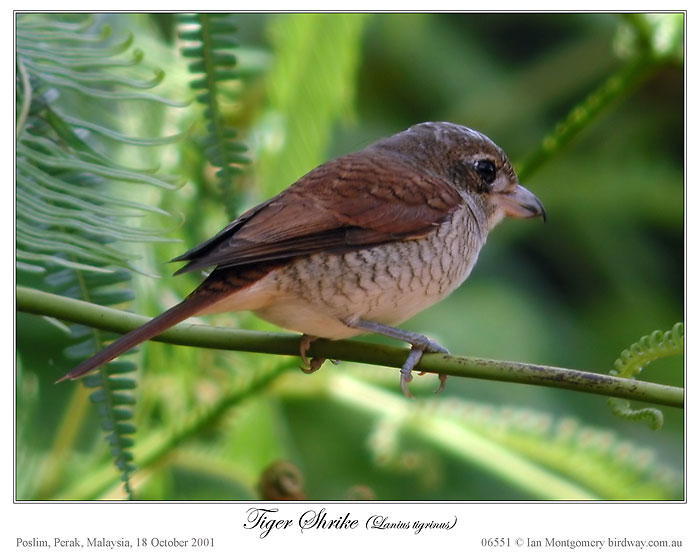
Tiger Shrike (Lanius tigrinus) by Ian

Tiger Shrike (Lanius tigrinus) by Ian

Newsletter – 7/21/11

The common names of many Australian birds reflect their apparent similarity to European birds, even if they are not closely related, for example Robins, Wrens of various sorts (Fairywrens, Scrubwrens) and Treecreepers. Some names are hybrid, such as Cuckoo-shrike, Shrike-thrush and Shrike-tit, meaning ‘looking like something between the two types’. That’s fine for Europeans and well-travelled birders who know what theses things look like, but some, particularly real shrikes, are almost complete unknown in Australia and the use of these names as qualifiers is of questionable value for the locals. So, I though it might be interesting to have a look at a real shrike and throw some light on the use of its name in Australian birds.

Shrikes, family Laniidae 33 species, are widespread through Eurasia and Africa; a couple of species occur in North America but they are unknown in South America. Two Asian Shrikes, the Tiger and the Brown , have made it to the Australian list as rare vagrants to Christmas Island, though the first Australian record of a Tiger Shrike was a road-killed one found near the port of Fremantle in Western Australia, raising the possibility of being ship-assisted (a black mark for a ‘real’ vagrant). The bird in the these two photographs was photographed in Malaysia.

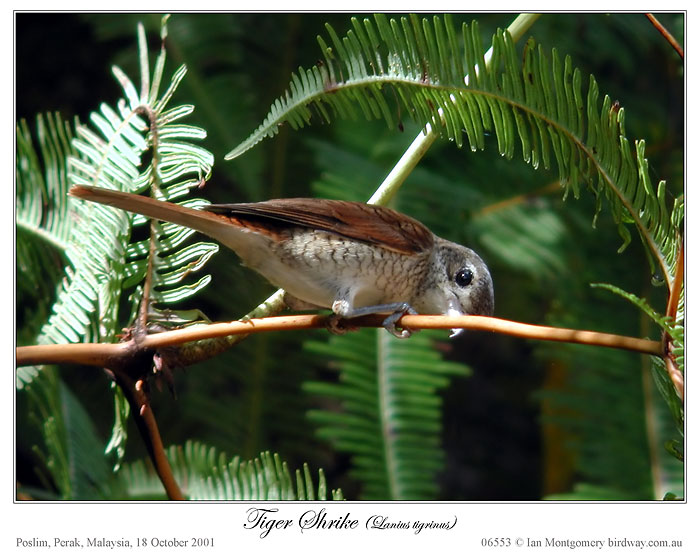
Tiger Shrike (Lanius tigrinus) by Ian

Tiger Shrike (Lanius tigrinus) by Ian

You’ll notice the hooked bill, characteristic of all Shrikes, and an adaption to their predatory way of life. Shrikes capture both invertebrates and – unusually for song-birds – small vertebrates up to the size of small mammals and birds by waiting on a conspicuous perch for something to come within striking distance. They often store their prey on shrubs or impale them on thorns. Shrikes are small for raptors: the Tiger Shrike is 18cm/7in in length and the larger ones such as the Great Grey/Northern and Long-tailed reach only 26cm/10in and 28cm/11in, and a lot of that is tail.

So, for Australian bird names, read ‘hook-billed’ for ‘shrike’. The resemblance is mainly physical: Cuckoo-shrikes and Shrike-thrushes forage for insects and other invertebrates in the foliage of trees and the bills of Shrike-tits are adapted to prising open the bark of trees in search of invertebrates. For behavioural similarities, the also hook-billed Butcherbirds fit the bill, pun unintended but appropriate, as they also prey on small vertebrates and use bushes as larders. It’s a wonder that they didn’t get called Magpie-shrikes. Now, ‘magpie’, there’s another over-used name . . .

Best wishes
Ian


Ian Montgomery, Birdway Pty Ltd,
454 Forestry Road, Bluewater, Qld 4818
Phone: 0411 602 737 +61-411 602 737
Preferred Email: ian@birdway.com.au
Website: http://birdway.com.au


Lee’s Addition:

Another nice lesson from Ian about the birds of Australia and beyond. Also, more neat photos, this time of the Tiger Shrike. Thanks again, Ian, for helping us see and know about your birds “down under.” As he said, the Tiger Shrike is part of the Laniidae Family of the Passeriformes Order.

And some fell among thorns, and the thorns grew up, and choked it, and it yielded no fruit. (Mark 4:7 KJV)

Birds of the Bible – Isaiah 34:11

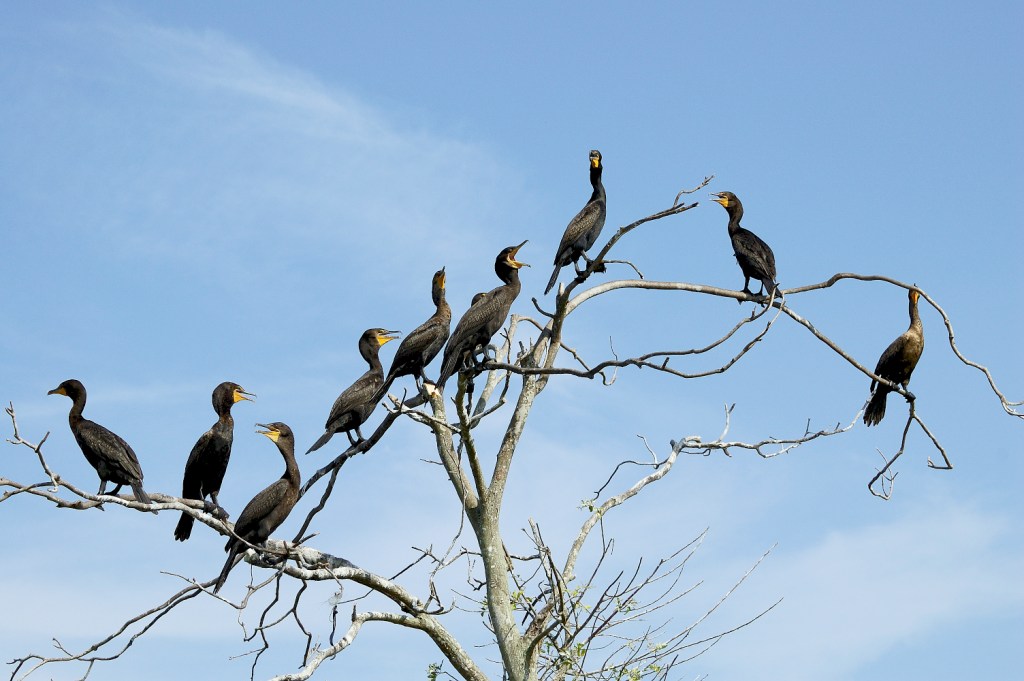
Double-crested Cormorant (Phalacrocorax auritus) at Lake John Rookery, Lakeland, FL By Dan

Double-crested Cormorant (Phalacrocorax auritus) at Lake John Rookery, Lakeland, FL By Dan

But the cormorant and the bittern shall possess it; the owl also and the raven shall dwell in it: and he shall stretch out upon it the line of confusion, and the stones of emptiness. (Isaiah 34:11 KJV)

This may seem like a simple verse in the middle of a passage telling about the day of the LORD’S vengeance in Isaiah 34:8-17.

Wesley says: “For – This is the time which God hath fixed, to avenge the cause of his persecuted people.”

John Wesley says: “Isaiah 34:11  Dwell – It shall be entirely possessed by those creatures which delight in deserts and waste places…”

Believer’s Bible Commentary: “(34:8) It is the day of the Lord’s vengeance. “The word ‘vengeance’ is of crucial importance. It does not mean getting even with someone, as we use it. It refers to God’s action in carrying out the sentence which He as Judge has justly imposed
(34:9-17) This passage describes Edom’s fate—a blazing inferno, an uninhabited waste, taken over by mysterious birds and wild beasts. God will not stop until it is without form and void. There will be no kingdom, no king, no princes worthy of the name. Its ruins will be overgrown with thorns and it will be a sanctuary for strange creatures (which cannot be identified with certainty). Every weird creature will have a mate, and thus will reproduce, and God has given them the ruins of Edom to possess . . . from generation to generation. Forever in this chapter (vv. 10, 17) means from generation to generation.”

American White Ibis (Eudocimus albus) by Dan at Lake Morton

White Ibises at Lake Morton by Dan

That is the “simple” explanation of what the verses are about. It becomes interesting when you compare these verses, again using e-Sword, as to which birds are being referenced. I like the quote about the “mysterious birds” because the translators are not even for sure which birds they are that are going to be inhabiting the place. Let’s investigate the verses.

APB+ – “Birds, and hedgehogs, and ibises, and crows shall dwell in her”
ASV – “The pelican and the porcupine shall possess it; and the owl and the raven shall dwell therein”
BBE – “birds of the waste land will have their place there; it will be a heritage for the bittern and the raven”
Brenton – “and for a long time birds and hedgehogs, and ibises and ravens shall dwell in it:
CEV – “Owls, hawks, and wild animals will make it their home. God will leave it in ruins, merely a pile of rocks.”
Darby – “And the pelican and the bittern shall possess it, and the great owl and the raven shall dwell in it.”
DRB – “The bittern and ericius shall possess it: and the ibis and the raven shall dwell in it:”
ERV – “Birds and small animals will own that land. It will be a home for owls and ravens. God will leave that land in ruins. People will call it “the empty desert.”
ESV – “But the hawk and the porcupine shall possess it, the owl and the raven shall dwell in it.”
GNB – “Owls and ravens will take over the land.”
GW – “Pelicans and herons will take possession of the land. Owls and crows will live there.”
ISV – “But hawks and hedgehogs will possess it; owls and ravens will nest in it.”
JPS – “But the pelican and the bittern shall possess it, and the owl and the raven shall dwell therein;”
KJV – “But the cormorant and the bittern shall possess it; the owl also and the raven shall dwell in it:”
KJV-1611 – “The cormorant and the bitterne shall possesse it, the owle also and the rauen shall dwell in it,”
LITV – “But the owl and the hedgehog shall possess it; and the eared owl and the raven shall live in it.”
MKJV – “But the pelican and the bittern shall possess it; the owl also, and the raven, shall dwell in it.”
NASB – “But pelican and hedgehog will possess it, And owl and raven will dwell in it;”
NKJV – “But the pelican and the porcupine shall possess it, Also the owl and the raven shall dwell in it.”
RV – “But the pelican and the porcupine shall possess it; and the owl and the raven shall dwell therein:”
Webster – “But the cormorant and the bittern shall possess it; the owl also and the raven shall dwell in it”
YLT – “And possess her do pelican and hedge-hog, And owl and raven dwell in her,”

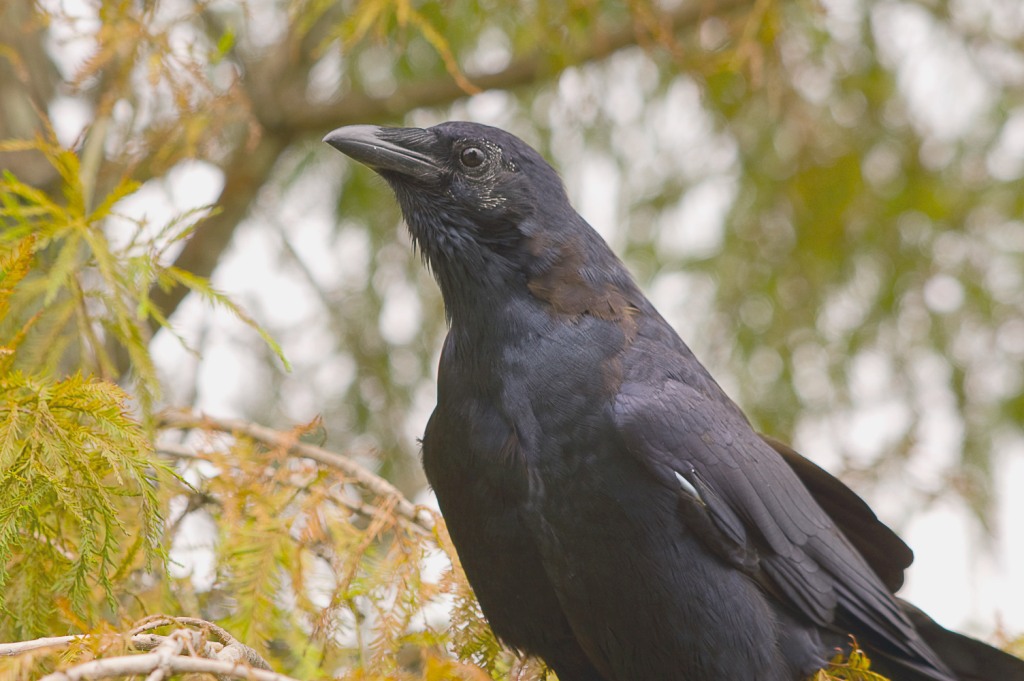
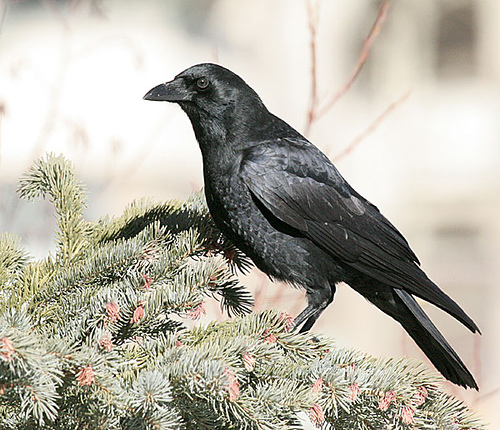
Fish Crow (Corvus ossifragus) at Lake Morton By Dan'sPix

Fish Crow (Corvus ossifragus) at Lake Morton By Dan’sPix

What caught my interest in this verse was that the Crow came up in a search for possibly some different Birds of the Bible to write about. Not only did I find the Crow, but also Ibises, which we see plenty of in this area. I always find it amazing how much they differ, but yet if you look at the birds and their families, many are related or closely related.

Most of the second half of the quotes mention the “Owl and the Raven.” The Darby uses “Great Owl”, the LITV uses “Eared Owl” and some use “owls.” No problem there. Some though use “Ibis/Ibises or Bittern” (APB, BBE, Brenton, DRB) instead of the “Owl.” The word “yanshûph or yanshôph” H3244- “an unclean (aquatic) bird; probably the heron (perhaps from its blowing cry, or because the night heron is meant (compare H5399)): – (great) owl.” Apparently the word is unclear and could go either way. Also, the Ibis is in the  Threskiornithidae – Ibises, Spoonbills Family and the Bitterns and Herons (GW) are in the Ardeidae Family, both of which are in the same Pelecaniformes Order. So they are close relatives. Also the Pelican and the Cormorant are mentioned in the first part of the verses. It is easy to figure out which Order the Pelican belongs to and it is in the Pelecanidae – Pelicans Family. The Cormorant is in the next Order which leaves it nearly related. The Suliformes Order has the Phalacrocoracidae – Cormorants, shags Family. As a note in passing, up until this year, the Cormorant was in the Pelecainformes Order. Not trying to be too detailed, but just showing that even though the translators used different birds, many are related and it doesn’t change my confidence in God’s Word. He promised to preserve it.

Chihuahuan Raven (Corvus cryptoleucus)Raven (Corvus corax) by Kent Nickell

Chihuahuan Raven (Corvus cryptoleucus)Raven (Corvus corax) by Kent Nickell

Another point to consider, since I am again working on the newest update to the I.O.C. list of Bird Names (Ver. 2.9), names change and the names we use today, were probably already changed once or twice and the ones we use today will probably be changed down the line. I still say, Adam had it a lot easier than what these organizations do today to keep the names figured out. They are to be commended for all the hard work they do.

Back to our verse. The Crow and the Raven are interchanged in these translations. Again, they are in the same family, the Corvidae Family. In fact, if you scroll down to the Ravens (after clicking link), you will see the Little Crow, then the Australian Raven, then the Pied Crow, the Brown-necked Raven, and the back to a Somali Crow. Again, don’t let the two translations, raven or crow, be a bother.

The only other birds mentioned are the Hawks (CEV, ESV, ISV). They are birds of prey and would “delight in the waste places.” They belong to the  Accipitridae – Family (Kites, Hawks & Eagles).

Studying the Bible and “birdwatching” through it keeps one on the alert for neat things in His Word. It works both ways; sometimes looking for a bird will turn up great truths about God’s Promises, in this case, a judgment, other times looking for a fact or promise, you find a bird. No matter which way, you are in the Bible studying His Word.

Study to shew thyself approved unto God, a workman that needeth not to be ashamed, rightly dividing the word of truth. (2 Timothy 2:15 KJV)

*

Summer 2011 Adventure Updates

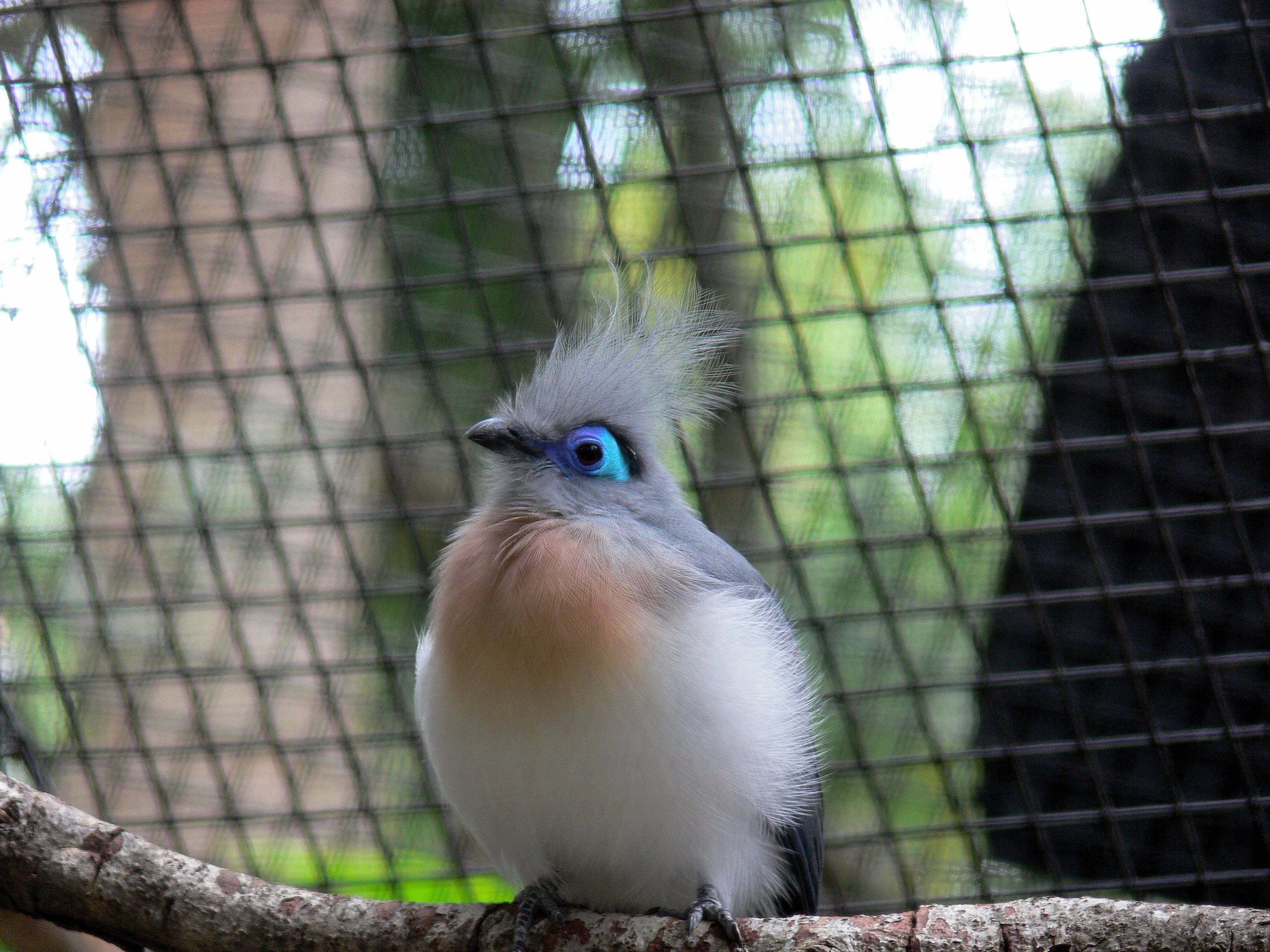
Crested Coua (Coua cristata) by Lee LPZ

Crested Coua (Coua cristata) by Lee LPZ

Just thought I would update you on varied adventures that we have been traveling through the last few months. I have been dealing with some medical issues that have kept me from doing many of my normal activities and posting here on the blog. Plus other things keep me busy also. Nothing unusual for most people. We all seem to be very involved these days. Then, we sent most of our birds back up north for the summer, so the birdwatching adventures have been limited. And it has been HOT at times. In other words, I have had lots of mini adventures, but not a lot of big ones.

During June we had our Vacation Bible School and Dan and I were involved with that for a week. That was also a blessing and challenge. We had, I think, over 130 children that attended. Our church workers and volunteers did a fantastic job. We were able to use our new building for VBS.
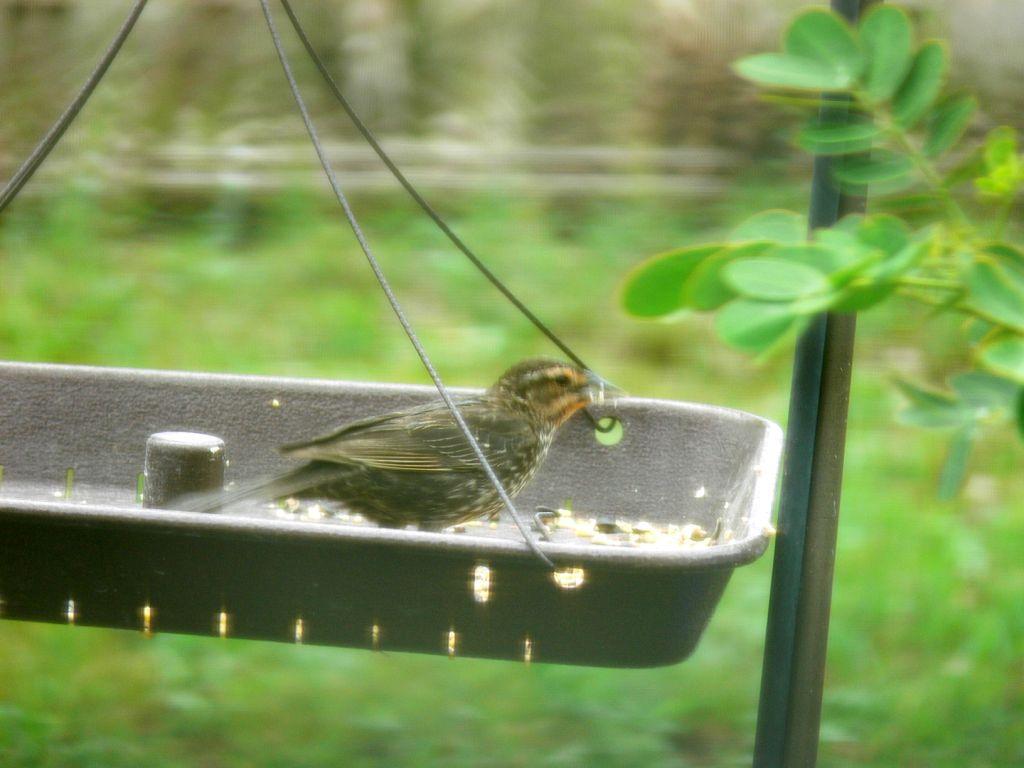
House Finch-Orange Variant

House Finch-Orange Variant thru screen

Most of my birdwatching adventures have been just observing birds flying overhead as we are about or watching them at our feeders. We also made a short trip to the Zoo, (Crested Coua). As I said, it has been HOT. We have spotted several Swallow-tailed Kites and an Eagle flying overhead. One delight has been some House Finches that have been coming to the feeders. Had not had any, but they have been here for over 2 months now. They must have forgot to fly north. There are two pairs of them. One is the normal House Finch and the other is what they call the “orange variant.” Also a family of Red-winged Blackbirds have been feeding here. The immature males were giving me an ID challenge until the 3 of them came in with their dad.

Red-winged Blackbird - Immature

Red-winged Blackbird - Immature - thru screen

Then for another challenge, a new computer has kept me busy getting things transferred. Decided to find the duplicates before moving data. Still do not have everything on the new computer yet. Especially the bird photos. We have also had summer storms and have to keep the computers off from time to time. (Always when I had time and felt like doing something.)

All in all, the Lord has been giving His Blessings as usual and continues to show His Love.

Blessed are the people who know the joyful sound! They walk, O LORD, in the light of Your countenance. (Psalms 89:15 NKJV)

*

Birds in Hymns – I Chronicles 16

Song Sparrow (Melospiza melodia) by Ray

Song Sparrow

Then on that day David delivered first this psalm to thank the LORD into the hand of Asaph and his brethren. (1 Chronicles 16:7 KJV)

Writer – David

Musicians –

And he appointed certain of the Levites to minister before the ark of the LORD, and to record, and to thank and praise the LORD God of Israel: Asaph the chief, and next to him Zechariah, Jeiel, and Shemiramoth, and Jehiel, and Mattithiah, and Eliab, and Benaiah, and Obededom: and Jeiel with psalteries and with harps; but Asaph made a sound with cymbals; Benaiah also and Jahaziel the priests with trumpets continually before the ark of the covenant of God. (1 Chronicles 16:4-6 KJV)

Tune – No idea

This psalm, written by David, was given to the singers under Asaph to thank and praise the Lord for all His Wondrous Works. Birds are not mentioned in the hymn or song, but these references to creation merit this song being included here in the Birds in Hymns:

  • make known his deeds among the people
  • talk ye of all his wondrous works
  • Remember his marvellous works that he hath done
  • his wonders
  • Sing unto the LORD, all the earth
  • Declare his glory among the heathen
  • his marvellous works among all nations
  • Give unto the LORD the glory due unto his name
  • let the fields rejoice, and all that is therein
  • Then shall the trees of the wood sing out at the presence of the LORD
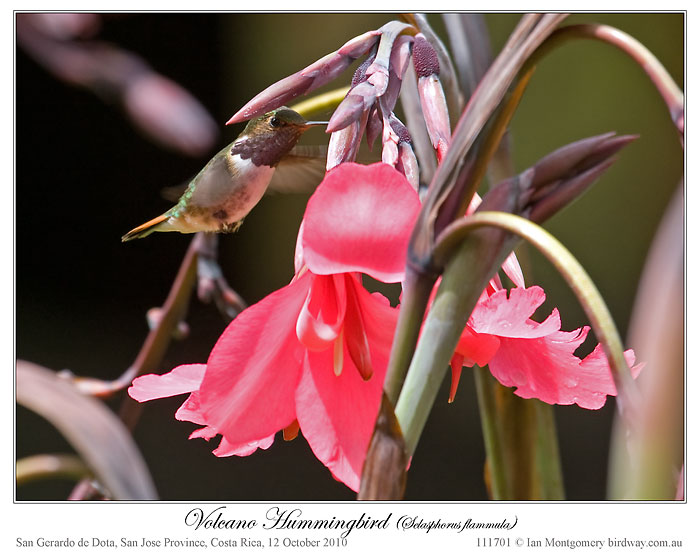
Volcano Hummingbird (Selasphorus flammula) by Ian

Volcano Hummingbird (Selasphorus flammula) by Ian

1 Chronicles 16:8-36 (KJV)

Give thanks unto the LORD, call upon his name, make known his deeds among the people.
Sing unto him, sing psalms unto him, talk ye of all his wondrous works.
Glory ye in his holy name: let the heart of them rejoice that seek the LORD.
Seek the LORD and his strength, seek his face continually.
Remember his marvellous works that he hath done, his wonders, and the judgments of his mouth;
O ye seed of Israel his servant, ye children of Jacob, his chosen ones.
He is the LORD our God; his judgments are in all the earth.
Be ye mindful always of his covenant; the word which he commanded to a thousand generations;
Even of the covenant which he made with Abraham, and of his oath unto Isaac;
And hath confirmed the same to Jacob for a law, and to Israel for an everlasting covenant,
Saying, Unto thee will I give the land of Canaan, the lot of your inheritance;
When ye were but few, even a few, and strangers in it.
And when they went from nation to nation, and from one kingdom to another people;
He suffered no man to do them wrong: yea, he reproved kings for their sakes,
Saying, Touch not mine anointed, and do my prophets no harm.
Sing unto the LORD, all the earth; shew forth from day to day his salvation.
Declare his glory among the heathen; his marvellous works among all nations.
For great is the LORD, and greatly to be praised: he also is to be feared above all gods.
For all the gods of the people are idols: but the LORD made the heavens.
Glory and honour are in his presence; strength and gladness are in his place.
Give unto the LORD, ye kindreds of the people, give unto the LORD glory and strength.
Give unto the LORD the glory due unto his name: bring an offering, and come before him: worship the LORD in the beauty of holiness.
Fear before him, all the earth: the world also shall be stable, that it be not moved.
Let the heavens be glad, and let the earth rejoice: and let men say among the nations, The LORD reigneth.
Let the sea roar, and the fulness thereof: let the fields rejoice, and all that is therein.
Then shall the trees of the wood sing out at the presence of the LORD, because he cometh to judge the earth.
O give thanks unto the LORD; for he is good; for his mercy endureth for ever.
And say ye, Save us, O God of our salvation, and gather us together, and deliver us from the heathen, that we may give thanks to thy holy name, and glory in thy praise.
Blessed be the LORD God of Israel for ever and ever. And all the people said, Amen, and praised the LORD.
(1 Chronicles 16:8-36 KJV)

American Yellow Warbler (Dendroica aestiva) singing by J Fenton

American Yellow Warbler (Dendroica aestiva) singing by J Fenton

The Gospel Message

More Birds in Hymns

*

Birds of the Bible – Timid Birds

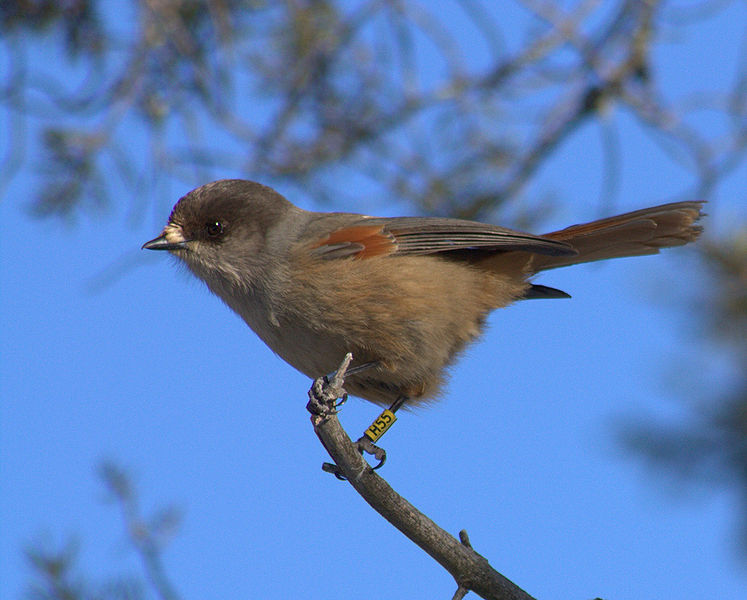
Siberian Jay (Perisoreus infaustus) ©WikiC

Siberian Jay (Perisoreus infaustus) ©WikiC

Easton’s Bible Dictionary says this about the verse: “Their (birds) timidity is alluded to in (Hosea 11:11)”

they shall come trembling like birds from Egypt, and like doves from the land of Assyria, and I will return them to their homes, declares the LORD. (Hosea 11:11 ESV)

Do birds tremble? Why? Interesting questions. Let’s see what we can find out about this passage and about “timid birds.

Instincts of: “Surely in vain the net is spread in the sight of any bird. (Proverbs 1:17 KJV)”

Nave’s Topical Bible says:

Man’s dominion over –

“Gen 1:26-28  Then God said, “Let Us make man in Our image, according to Our likeness; let them have dominion over the fish of the sea, over the birds of the air, and over the cattle, over all the earth and over every creeping thing that creeps on the earth. So God created man in His own image; in the image of God He created him; male and female He created them. Then God blessed them, and God said to them, “Be fruitful and multiply; fill the earth and subdue it; have dominion over the fish of the sea, over the birds of the air, and over every living thing that moves on the earth.”

And the fear of you and the dread of you shall be on every beast of the earth, on every bird of the air, on all that move on the earth, and on all the fish of the sea. They are given into your hand. Every moving thing that lives shall be food for you. I have given you all things, even as the green herbs. (Genesis 9:2-3 NKJV)

For You have made him a little lower than the angels, And You have crowned him with glory and honor. You have made him to have dominion over the works of Your hands; You have put all things under his feet, All sheep and oxen— Even the beasts of the field, The birds of the air, And the fish of the sea That pass through the paths of the seas. O LORD, our Lord, How excellent is Your name in all the earth! (Psalms 8:5-9 NKJV)

and wherever the children of men dwell, or the beasts of the field and the birds of the heaven, He has given them into your hand, and has made you ruler over them all—you are this head of gold. (Daniel 2:38 NKJV)

For every kind of beast and bird, of reptile and creature of the sea, is tamed and has been tamed by mankind. (James 3:7 NKJV)

Torrey’s New Topical Textbook also alludes to those verses quoted above:

Power over given to man – Genesis 1:26; Psalm 8:8;
Instinctively fear man – Genesis 9:2;
Can all be tamed – James 3:7;
Given as food to man – Genesis 9:2-3;
Taken in snares or nets – Proverbs 1:17;

Confinement of, in cages alluded to – “As a cage is full of birds, So their houses are full of deceit. Therefore they have become great and grown rich.” (Jeremiah 5:27 NKJV)
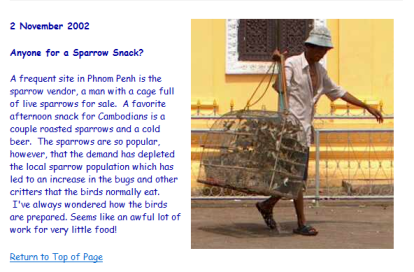
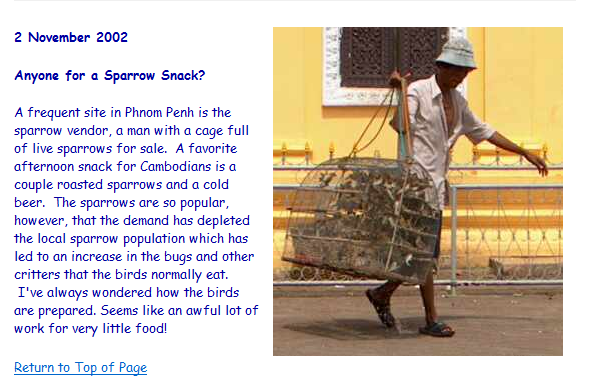
Sparrow Snack Anyone?

(From Birds of the Bible – Sparrow I)

There are many more commentary notes that could be quoted, but I think you get the idea that birds do have a reason to be timid. Just because man was given dominion over the birds doesn’t mean that he has to be cruel to them. Many birds are tamed, not by torture, but by love and patience. Forcing the birds definitely will cause them to be timid. Out in nature, many birds are shy or timid because of other birds attacking them and so they are cautious, and rightly so.

Reading some of the internet articles about timid birds, they even do research to find out about this timidity. Animal Planet produced an interesting article about research on 22 Goldfinches.

Back to our original passage of Scripture. For now we are concentrating on the timid or frightened bird, not necessarily about the dove.
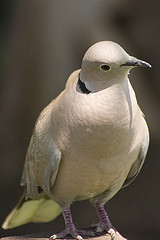
Eurasian-collared Dove in Israel

Eurasian-collared Dove in Israel

Barnes says, “Hosea 11:11
They shall tremble as a bird out of Egypt – The West denoted Europe; Egypt and Assyria stand, each for all the lands beyond them, and so for Africa and Asia; all together comprise the three quarters of the world, from where converts have chiefly come to Christ. These are likened to birds, chiefly for the swiftness with which they shall then haste to the call of God, who now turned away the more, the more they were called. The dove, especially, was a bird of Palestine, proverbial for the swiftness of its flight, easily aftrighted, and flying the more rapidly, the more it was frightened, and returning to its cot from any distance where it might be carried; from where Isaiah also says of the converts, “Who are these that fly as a cloud, and as the doves to their windows?” Isa_60:8. “The Hebrews,” says Jerome, “refer this to the coming of the Christ, who, they hope, will come; we shew that it hath taken place already. For both from Egypt and Aasyria, i. e., from East and West, from North and South, have they come, and daily do they come, who sit down with Abraham, Isaac and Jacob.”

Clarke says, “They shall tremble as a bird – Those of them that are in Egypt shall also be called thence, and shall speed hither as a bird. Those in Assyria shall also be called to return, and they shall flee as doves to their windows. All shall, in the fullness of time, return to their own land.”

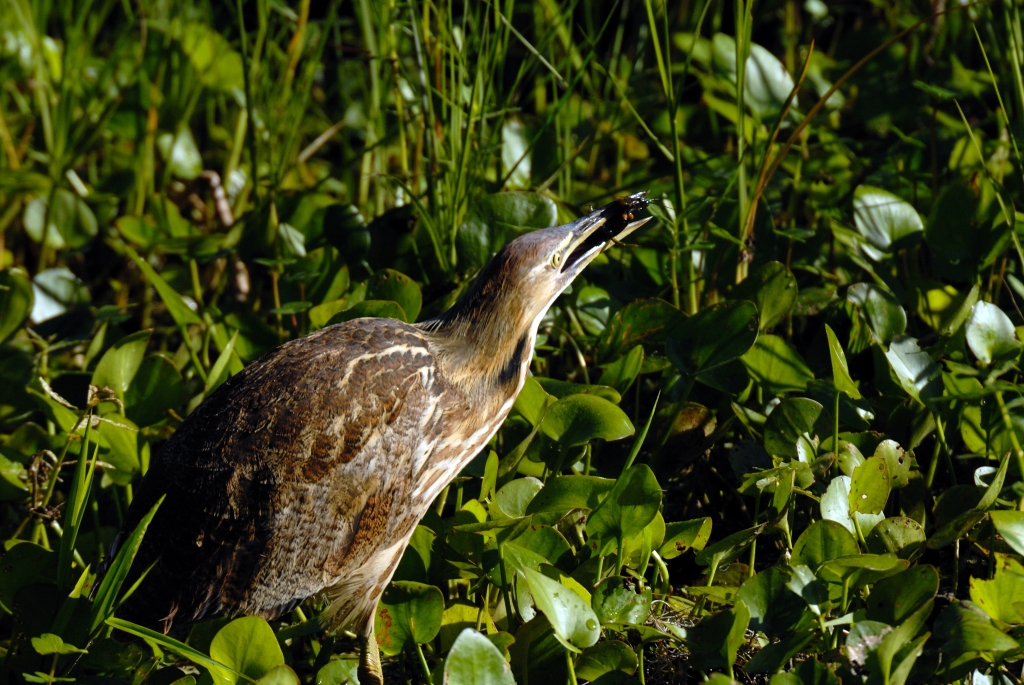
American Bittern (Botaurus lentiginosus) by Dans Pix

American Bittern (Botaurus lentiginosus) by Dans Pix

(A hard bird to capture on camera. They are very timid and evasive.)

Gill says, “Hosea 11:11  They shall tremble as a bird out of Egypt,…. They shall come from thence with fear and trembling; which may allude to the trembling of birds at the roaring of a lion, or to the trembling motion of their wings in flying; and denotes the swiftness of the motion of the Israelites and Jews to Christ, and to his church and people, and to their own land, under divine influence and direction: or “shall come with honour” (k); with all readiness and cheerfulness, in the obedience of faith: ”
“and as a dove out of the land of Assyria; which is expressive of the same things, the dove being both a timorous and swift creature. Birds in common are very timorous, and tremble at any noise, and fearful of everything that disturbs them, and therefore make all the haste and speed they can to get out of the way, and to do which they are naturally provided; and more especially the dove is always represented as very fearful and trembling, especially when pursued by the hawk, as the poet (l) observes. Though, it may be, these figures may only signify, as the weak and impotent state of the Jews, considered in themselves at this time, so the quick speed and haste they shall make to their own land.”
(So much for not concentrating on the dove.)

The next quote seems to wrap up what is being said here in Hosea 11. God is calling His trembling people home to Him because of His mercy, “Christ has purchased the pardon” for them.

Matthew Henry says, “Hosea 11:8-12
God is slow to anger, and is loth to abandon a people to utter ruin, who have been called by his name. When God was to give a sacrifice for sin, and a Saviour for sinners, he spared not his own Son, that he might spare us. This is the language of the day of his patience; but when men sin that away, then the great day of his wrath comes. Man’s compassions are nothing in comparison with the tender mercies of our God, whose thoughts and ways, in receiving returning sinners, are as much above ours as heaven is above the earth. God knows how to pardon poor sinners. He is faithful and just to forgive us our sins, and therein declares his righteousness, now Christ has purchased the pardon, and he has promised it. Holy trembling at the word of Christ will draw us to him, not drive us from him, the children tremble, and flee to him. And all that come at the gospel call, shall have a place and a name in the gospel church. The religious service of Israel were mere hypocrisy, but in Judah regard was had to God’s laws, and the people followed their pious forefathers. Let us be faithful: those who thus honour God, he will honour, but such us despise Him shall be lightly esteemed.”

Wordless Birds

More Birds of the Bible

(Commentary notes from e-Sword Bible program.)
*