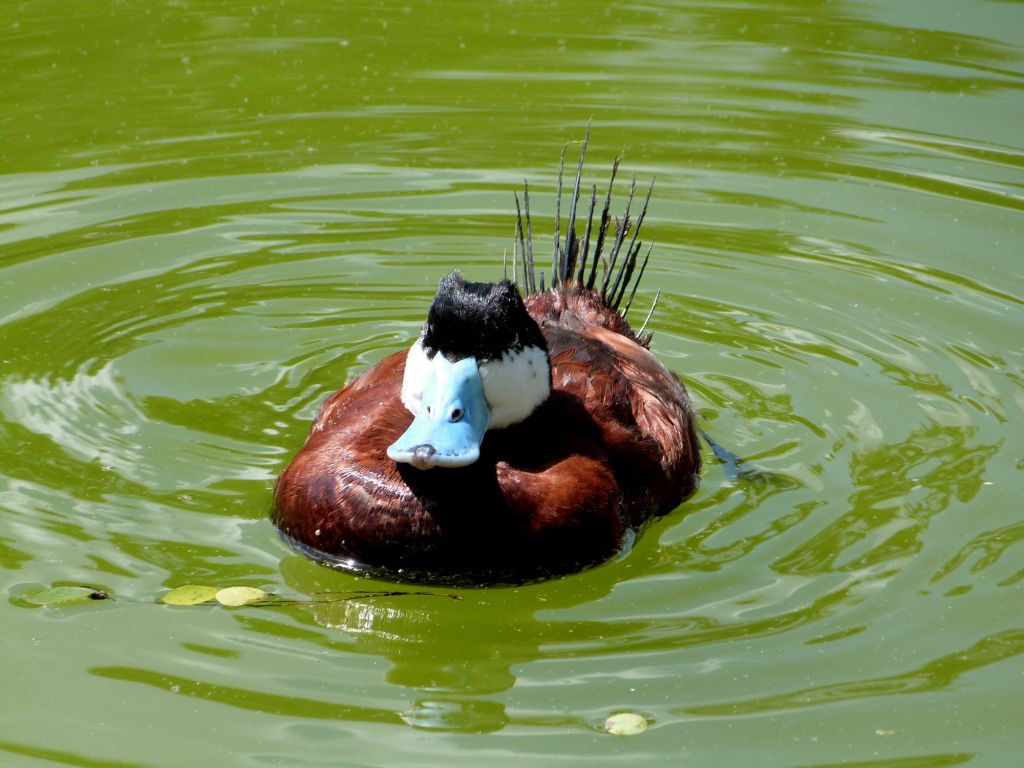
Ruddy Duck (Oxyura jamaicensis) Zoo Miami by Lee
“And she shall bring forth a son, and thou shalt call his name JESUS: for he shall save his people from their sins.” (Matthew 1:21 KJV)
Surprise! We are finally at the last of the Anatidae Family of Ducks, Geese, and Swans. There are 31 left, and today we will reveal the rest of them. There is a total of 173 species in this family. Trust you didn’t mind them being divided into different articles [in taxonomic order]. A list of the whole series of these avian wonders is at the end of the article.
Today, we start off with four Eiders that are in two genera. They are the Steller’s Eider (Polysticta stelleri), Spectacled Eider (Somateria fischeri), and the King Eider (Somateria spectabilis), Common Eider (Somateria mollissima).What are an interesting looking group.
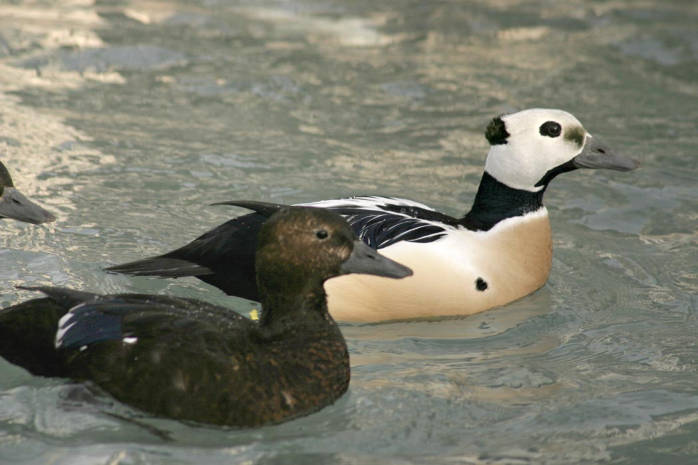
Steller’s Eider (Polysticta stelleri) Pair ©USFWS
Eiders (/ˈaɪ.dər/)
Steller’s Eider (Polysticta stelleri)is the smallest eider at 45 cm (18 in) long. The male is unmistakable with his white head marked by a thick black eye ring and greenish-black tufts of feathers on the forehead and the back of the head. Chin, throat and neck are also black, as are the back, tail, and rump. Wings are dark bluish-purple with white edging. When folded, they give a striped appearance across the back. The speculum is metallic blue bordered with white. The breast and flanks are cinnamon-buff marked with a black spot on each side just above the waterline. Legs, feet and bill are dark bluish-grey. The female is a dark brown bird, smaller with a more typically duck-shaped head and body than other eider species.

Spectacled Eider (Somateria fischeri) ©USFWS
The Eider genus, Somateria, are large seaducks . The scientific name is derived from Ancient Greek somatos “body” and erion “wool”, referring to eiderdown. They all breed in the cooler latitudes of the Northern Hemisphere. The down feathers of eider ducks, and some other ducks and geese, are used to fill pillows and quilts—they have given the name to the type of quilt known as an eiderdown.
I think that when the Lord God, the Creator of all these “duck family” critters, He was proving these verses we read in the Bible: “Wherein he hath abounded toward us in all wisdom and prudence; Having made known unto us the mystery of his will, according to his good pleasure which he hath purposed in himself:” (Ephesians 1:8-9 KJV) [emphasis mine]
As you will see as we continue through the rest of these swimming critters, the variety of design, color, shapes, and provisions for them. What a Creator!
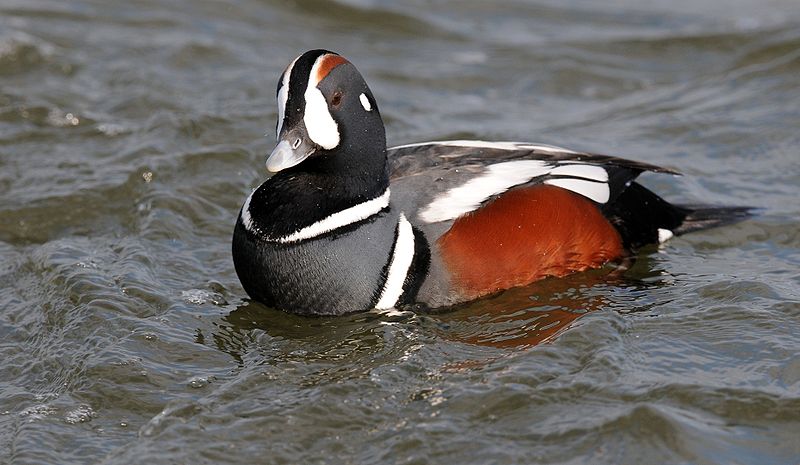
Harlequin Duck (Histrionicus histrionicus) ©WikiC
The Harlequin Duck (Histrionicus histrionicus) is a small sea duck. It takes its name from Harlequin (French Arlequin, Italian Arlecchino), a colourfully dressed character in Commedia dell’arte. The species name comes from the Latin word “histrio”, “actor”. In North America it is also known as lords and ladies. Other names include painted duck, totem pole duck, rock duck, glacier duck, mountain duck, white-eyed diver, squeaker and blue streak.
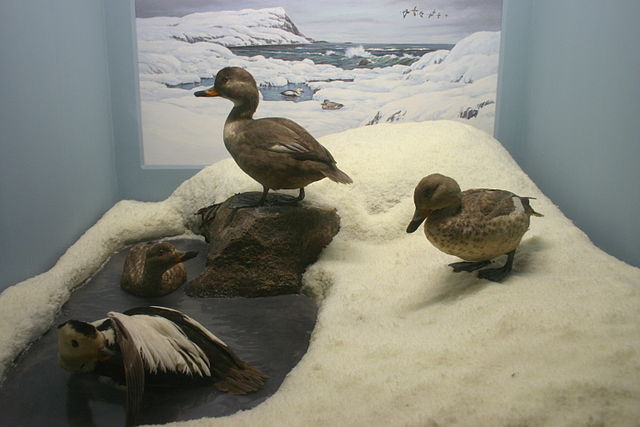
Labrador Duck (Camptorhynchus labradorius) Specimen ©WikiC
The Labrador Duck (Camptorhynchus labradorius) is an extinct North American bird; it has the dubious distinction of being the first endemic North American bird species to become extinct after the Columbian Exchange. It was already a rare duck before European settlers arrived, and became extinct shortly after. As a result of its rarity, information on the Labrador duck is not abundant, but some, such as its habitat, characteristics, dietary habits, and reasons behind extinction, are known. Specimens of the Labrador duck are preserved in museum collections worldwide.
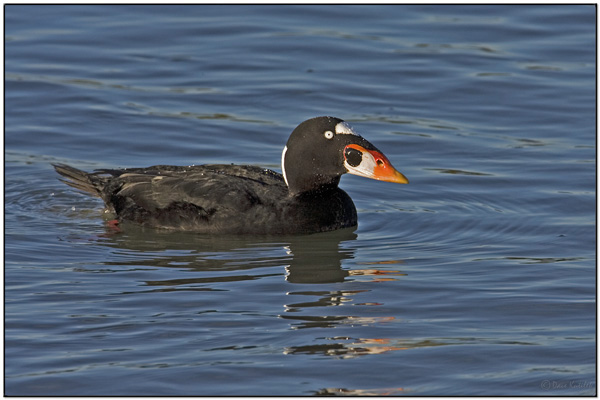
Surf Scoter (Melanitta perspicillata) by Daves BirdingPix
The Scoters of the Melanitta genus come next: The Surf Scoter (Melanitta perspicillata), Velvet Scoter (Melanitta fusca), White-winged Scoter (Melanitta deglandi), Common Scoter (Melanitta nigra), Black Scoter (Melanitta americana)
They are stocky seaducks. The drakes are mostly black and have swollen bills. Females are brown. The genus name is derived from Ancient Greek melas “black” and netta “duck”.
They breed in the far north of Europe, Asia, and North America, and winter farther south in temperate zones of those continents. They form large flocks on suitable coastal waters. These are tightly packed, and the birds tend to take off together. Their lined nests are built on the ground close to the sea, lakes or rivers, in woodland or tundra. These species dive for crustaceans and molluscs.
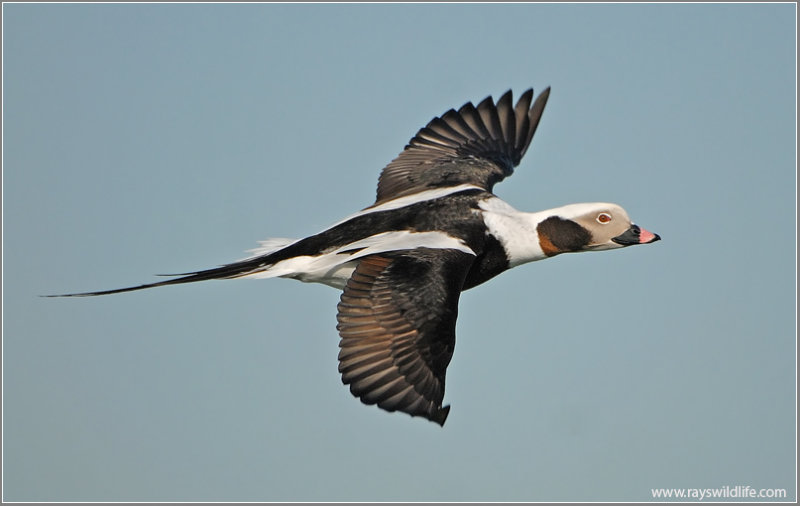
Long-tailed Duck (Clangula hyemalis) by Ray
Long-tailed Duck (Clangula hyemalis), once known as oldsquaw, is a medium-sized sea duck. Their breeding habitat is in tundra pools and marshes, but also along sea coasts and in large mountain lakes in the North Atlantic region, Alaska, northern Canada, northern Europe, and Russia. The nest is located on the ground near water; it is built using vegetation and lined with down. They are migratory and winter along the eastern and western coasts of North America, on the Great Lakes, coastal northern Europe and Asia, with stragglers to the Black Sea. The most important wintering area is the Baltic Sea, where a total of about 4.5 million gather.
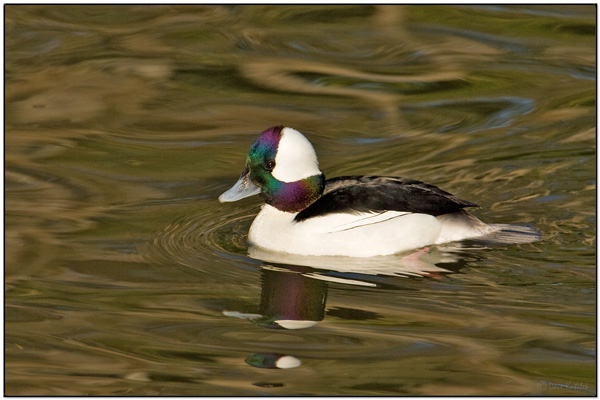
Bufflehead (Bucephala albeola) by Daves BirdingPix
Bucephala is a genus of ducks found in the Northern Hemisphere. The genus name is derived from Ancient Greek boukephalos, “bullheaded”, from bous “bull”, and kephale, “head”, a reference to the crest of the bufflehead making its head look large. They are the Bufflehead (Bucephala albeola), Common Goldeneye (Bucephala clangula), Barrow’s Goldeneye (Bucephala islandica)
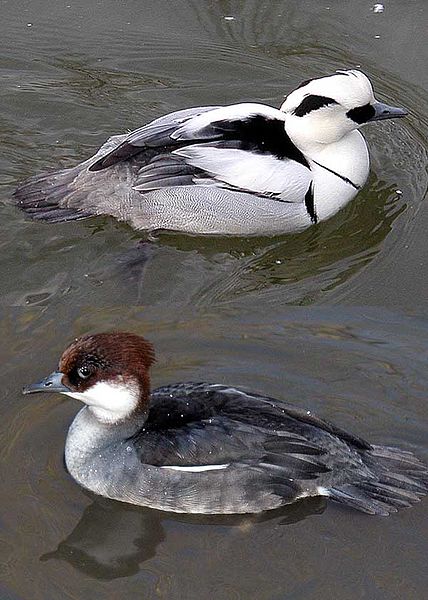
Smew (Mergellus albellus) ©WikiC
Smew (Mergellus albellus) – The drake smew, with its ‘cracked ice’ and ‘panda’ appearance, is unmistakable, and looks very black-and-white in flight. The females and immature males are grey birds with chestnut foreheads and crowns, and can be confused at a distance with the ruddy duck; they are often known as “redhead” smew. It has oval white wing-patches in flight. The smew’s bill has a hooked tip and serrated edges, which help it catch fish when it dives for them.

Hooded Merganser Viera Wetlands with hood down by Lee
Hooded Merganser (Lophodytes cucullatus) is a species of small duck. It is the only extant species in the genus Lophodytes. The bird is striking in appearance; both sexes have crests that they can raise or lower, and the breeding plumage of the male is handsomely patterned and coloured. The hooded merganser has a sawbill but is not classified as a typical merganser.
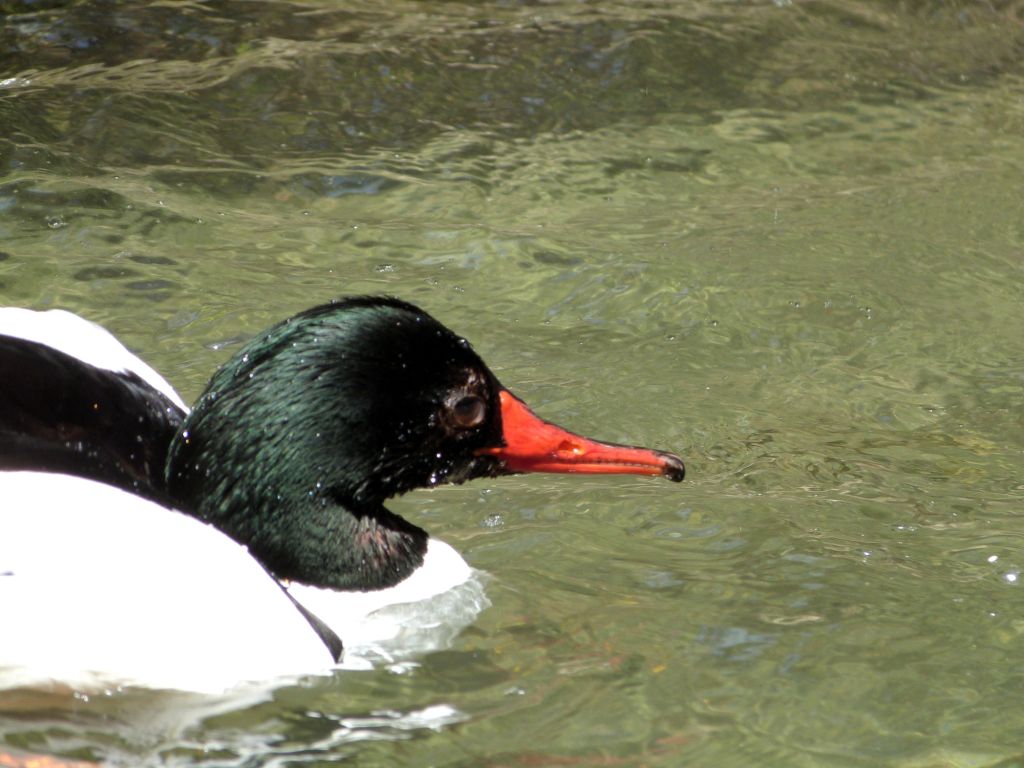
Common Merganser (Mergus merganser) Male Zoo Miami by Lee
The Merus genus of Typical Mergansers: New Zealand Merganser (Mergus australis) Extinct, Brazilian Merganser (Mergus octosetaceus), Common Merganser (Mergus merganser), Red-breasted Merganser (Mergus serrator), Scaly-sided Merganser (Mergus squamatus)
Although they are seaducks, most of the mergansers prefer riverine habitats, with only the red-breasted merganser being common at sea. These large fish-eaters typically have black-and-white, brown and/or green hues in their plumage, and most have somewhat shaggy crests. All have serrated edges to their long and thin bills that help them grip their prey. Along with the Smew and Hooded Merganser, they are therefore often known as “sawbills“.

Black-headed Duck (Heteronetta atricapilla) ©©Klaus Rudloff
The Black-headed Duck (Heteronetta atricapilla) is a South American duck allied to the stiff-tailed ducks in the subfamily Oxyurinae of the family Anatidae. It is the only member of the genus Heteronetta.
This is the most basal living member of its subfamily, and it lacks the stiff tail and swollen bill of its relatives.

Masked Duck (Nomonyx dominicus) ©WikiC
Masked Duck (Nomonyx dominicus) is a tiny stiff-tailed duck ranging through the tropical Americas. They are found from Mexico to South America and also in the Caribbean. Primarily not migratory, masked ducks are reported as very uncommon vagrants in the southernmost United States, along the Mexican border and in Florida.
These ducks mainly feed on seeds, roots, and leaves of aquatic plants. They also eat aquatic insects and crustaceans. They feed by diving.
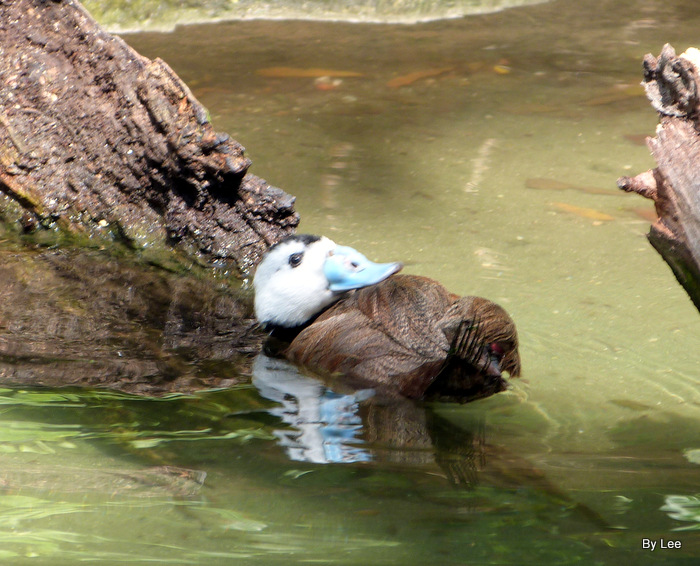
White-headed Duck (Oxyura leucocephala) Zoo Miami by Lee
The Oxyura genus has 6 Ducks, the Ruddy Duck (Oxyura jamaicensis), Andean Duck (Oxyura ferruginea), Lake Duck (Oxyura vittata), Blue-billed Duck (Oxyura australis), Maccoa Duck (Oxyura maccoa), and the White-headed Duck (Oxyura leucocephala).
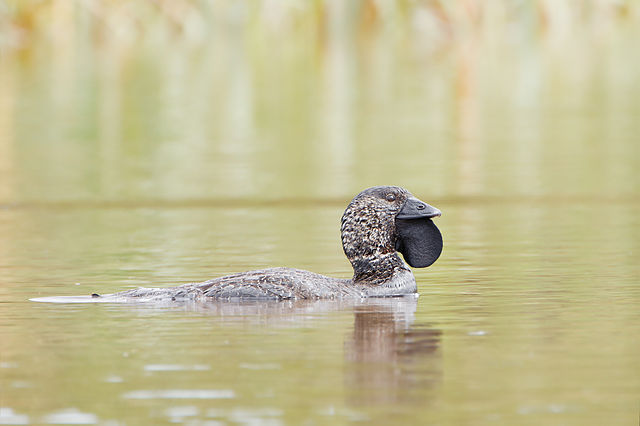
Musk Duck (Biziura lobata) Male ©WikiC
The Musk Duck (Biziura lobate) is a highly aquatic, stiff-tailed duck native to southern Australia. It is the only living member of the genus Biziura. This animal derives its common name from the peculiar musky odour it emanates during the breeding season. Musk ducks are moderately common through the Murray-Darling and Cooper Creek basins, and in the wetter, fertile areas in the south of the continent: the southwest corner of Western Australia, Victoria, and Tasmania.
[Information from Wikipedia with editing]
*
Saying, Where is he that is born King of the Jews? for we have seen his star in the east, and are come to worship him.” (Matthew 2:2 KJV)
“Birthday of the King” ~ Dr. Richard Gregory
*
Anatidae Family Sunday Inspirations:
- Sunday Inspiration – Diving Ducks and Allies
- Sunday Inspiration – Anas Genus
- Sunday Inspiration – More Anatidae Swimmers
- Sunday Inspiration – Ducks and Geese
- Sunday Inspiration – Geese and Swans
- Sunday Inspiration – Whistling, White-backed Ducks, and Geese
*


 Lee's Birdwatching Adventures Plus