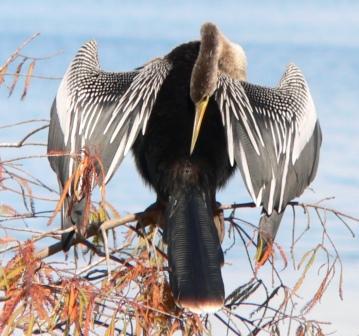
Cockatiel Bird Brain Wisdom – by April Lorier

Cockatiel Bird Brain Wisdom

cockatielsm1 It is pretty bad when God has to use Bird Brain Wisdom to get through to His daughter, but He did. I tried my best to avoid Dave at every church function. Most people did. His inordinate need for attention and his obvious emotional and spiritual immaturity embarrassed me. I went out of my way to not be associated with him. Intellectually, I understood people are often needy because they had been damaged in some way, so I would have moments of guilt for acting as I did. Then he would say something totally inappropriate and I’d be right back where I began – embarrassed for him.

At the same time I was hand feeding baby cockatiels every two hours, and one of them who I affectionately called Ernie, just couldn’t eat enough to make him grow. I tried everything, but to no avail.One night, still bleary-eyed from little sleep, I prayed, God, please help me! Ernie isn’t going to make it if You don’t help us out. He’s just too weak. And into my spirit, clear as a bell, came the thought, Ernie is the weakest of your birds, and yet you love him the most. Why doesn’t his weakness embarrass you?
Who are you to judge someone else’s servant? To his own master he stands or falls. And he will stand, for the Lord is able to make him stand. (Romans 14:4 NIV)

The comparison was too obvious, and I hung my head in shame. God loved Dave the same way I loved Ernie! His heart broke with tenderness over this man’s weakness the same way my heart broke over my baby bird. He would persist with Dave just as I had with Ernie, spending extra time with him. And God didn’t need a judgmental child getting in the way of Dave’s growth.

I went to bed that night wiser, but much sadder with the knowledge that I had, in my arrogance, dared to pass judgment on another human being that I really didn’t know. By judging Dave, I had positioned myself to be judged by God.I realized God wasn’t half as embarrassed by Dave’s spiritual and emotional immaturity as He was by my arrogance. And worse was my underestimation of God’s power to work in Dave’s life and make him stand strong. I had, with my attitude, questioned the sovereignty of Almighty God!

O Father, forgive my arrogance. Thank You for the wisdom You taught me through my precious little “bird brain!” Let me never lose sight of Your sovereignty and Your compassion towards Your weaker children. I, too, am one of your weak ones. (c)1996-2009 April Lorier

For since the creation of the world God’s invisible qualities—his eternal power and divine nature—have been clearly seen, being understood from what has been made, so that men are without excuse. Romans 1:20

Supplied by and reprinted with permission of April Lorier.


See more of April’s articles.

*

Eagles and The Atmosphere of Grace – by April Lorier

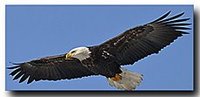
EagleFlySM1Today I am learning from the Eagle. This is appropriate since I have always been a bird watcher and even raised birds for several years. Eagles, in particular, have always fascinated me – especially the Bald Eagle. Did you know there are over a hundred species of eagles? But because our National Emblem has been the Bald Eagle since 1782, it has had more “face time” in the classroom. It is no longer on the endangered list since June of last year.

Every state in our Union has eagles except Hawaii, so people are constantly reporting “eagle sightings”. The Bald Eagle (Haliaeetus leucocephalus) is a member of the sea and fish eagle group, and once it mates, it mates for life! That’s right: no hanky panky in the bald eagle world!

Mama Eagle lays from one to three eggs and the pair share the 35 days of incubation. (No deadbeat fathers here!) The nesting cycle is about 20 weeks.

The female bald eagle is 35 to 37 inches, slightly larger than the male, and has a wingspan of 72 to 90 inches. She flies at altitudes of 10,000 feet, and during level flight, she can achieve speeds of about 30 to 35 mph. She weighs only 10-14 lbs, and her bones are light because they’re hollow. She is known for exceptional eyesight at far distances.

The most fascinating fact, I think, is that the eagle has the ability to adjust her body out of joint in order the ride the storm. Wow! What a lesson we humans can take away from that!

The eagle waits for a draft and rides it – no struggle, no wing-flapping! It’s sort of an “atmosphere of grace” similar to the Christian who “waits upon the Lord” and has less wing-flapping, less struggle. The eagle is definitely a “storm rider”!

As mothers go, the bald eagle is the best metaphor for human parenting and parenting by Father God that I can think of. Since the outside of the nest is made with sharp materials to withstand invasion from intruders, she and her mate lined the inside with fur from their prey. They made a big old feather bed!

When the time comes for those little ones to leave the nest and start fending for themselves – some where around 4 years of age — Mama Eagle starts pulling the soft material out of the nest to make it uncomfortable for them. Seems mean, but it is necessary to motivate the babies.

Then Mama Eagle starts pushing the babies towards the edge of the nest, ignoring their screams. As the babies flap their wings, they are strengthening them without knowing it. Eventually, she pushes them out of the nest, one by one. As each eaglet free-falls, screaming and squawking, Mama Eagle flies under him, spreading her massive 90-inch wingspan, and catches him before he hits ground.

Mama Eagle’s eyes are never off of her baby! She swoops up her baby and takes him back to that nest she and Daddy Eagle built out of touch from intruders. He’s safe for the time being. But tomorrow he’ll get another flight lesson from Mama Eagle. And finally, one day, he’ll figure out he can fly on his own! (Probably when there’s no more fur inside that thorn nest!)

God seems to parent me the same way. There are times when He allows this wounded child to feel safe in His feather bed. Then He knows it’s time for me to be forced out of my comfort zone. But always, His eye is on me and His protective wings are under me.

I actually felt Him lift me up on wings of eagles at my mother’s funeral after she had been killed. It was a visceral feeling, not just a spiritual one, and I floated through the day with total peace. So I know (experientially) the truth of this scripture.

They that wait upon the Lord shall renew their strength; they shall mount up with wings as eagles; they shall run, and not be weary; and they shall walk and not faint. Isaiah 40:31

(c) 2009 April Lorier

Genesis 1:1 says, “In the beginning, God created the heaven and the earth.” I have an obligation to God. I am twice His. First, I am His because of creation, and secondly, I am His because of redemption through Jesus Christ. He made me and He bought me.

Supplied by and reprinted with permission of April Lorier


See:
More of April’s Articles

Birds of the Bible – Partridge II

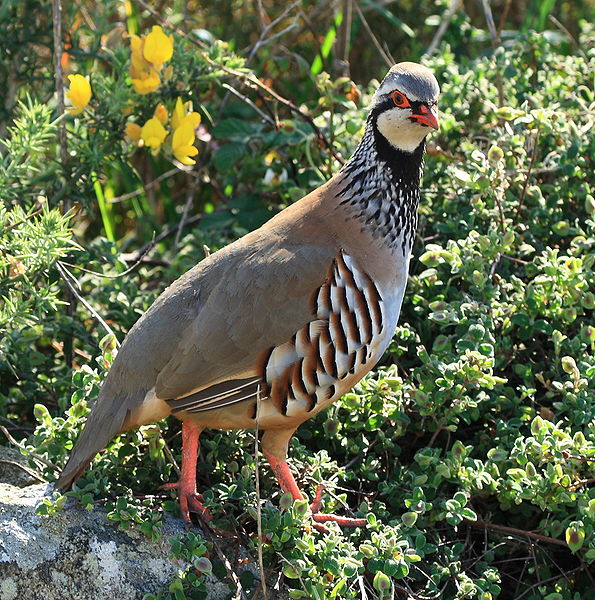
Red-legged Partridge

Red-legged Partridge

I made the following observation in the first Partridge article:
“The Partridge is only mentioned twice in Scripture. In Jeremiah, the fact is that other birds put their eggs in the nest of a partridge and then expect the nesting bird to do all the work, sitting, feeding, and fledging the chicks.”

I, the LORD, search the heart, I test the mind, Even to give every man according to his ways, According to the fruit of his doings. “As a partridge that broods but does not hatch, So is he who gets riches, but not by right; It will leave him in the midst of his days, And at his end he will be a fool.” (Jer 17:10-11)

Looking into this verse further, I would like to share some more information about it.

“3. RLP(Red-legged Partridge) will lay their own nest, but will also dump odd eggs in other species nests. Where this is a pheasant, the pheasant (as found in the UK), being probably the stupidest of all birds bar none, will hatch and “rear” the young quite happily. A grey partridge, on the other hand, will abandon the nest. Terminated. And … almost certainly does not attempt to lay again that season.”, A quote from a “Bird Forum

Curiosities: while brooding the female is very sensitive, and, if disturbed, may abandon the nest.”, about a Rock Partridge from Parco Nazionale…

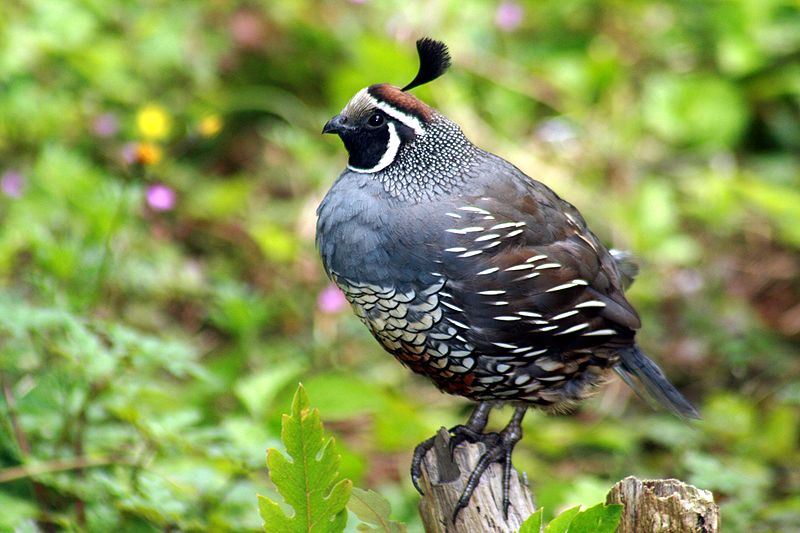
California Quail sometimes called California Partridge

California Quail sometimes called California Partridge

“In the deep woods where the California partridge nests, it is not unusual to find the eggs of that game bird in the nest of the Oregon Towhee. Mr. Cohen, of Ala- meda, records one Towhee nest four feet from the ground on a live-oak stub and containing four Towhee eggs and fifteen eggs of the partridge. Another recorded by him was on the ground, and contained three eggs of the Towhee and eighteen of the partridge. The Towhee abandoned the nest after six partridge eggs were laid, leaving the partridge to rear the brood. Inasmuch as the Towhee eggs hatch in two weeks, the young being very dark colored and naked, while the partridge eggs require three weeks and the young are lively little balls of down able to run about as soon as dry, the sacrifice of the Towhee’s brood is inevitable whenever the two are deposited in the same nest.” from Birds of California

I could give more examples, but it is obvious that the Partridges are leaving their eggs in other nests. “They are brooding but not hatching.” She is trying to raise her chicks, but not in the proper way. That is what the verse is saying, that the Lord searches the heart and tests a person’s thinking. It is then applied to making money the wrong way (crooked) and then having it disappear and then he is a “fool’ in the end.

The verses in Jeremiah 17:10-11 are in the middle of a great passage about trusting in the LORD.

(5) Thus says the LORD: “Cursed is the man who trusts in man And makes flesh his strength, Whose heart departs from the LORD.
(6) For he shall be like a shrub in the desert, And shall not see when good comes, But shall inhabit the parched places in the wilderness, In a salt land which is not inhabited.
(7) “Blessed is the man who trusts in the LORD, And whose hope is the LORD.
(8) For he shall be like a tree planted by the waters, Which spreads out its roots by the river, And will not fear when heat comes; But its leaf will be green, And will not be anxious in the year of drought, Nor will cease from yielding fruit.
(9) “The heart is deceitful above all things, And desperately wicked; Who can know it?
(10) I, the LORD, search the heart, I test the mind, Even to give every man according to his ways, According to the fruit of his doings.
(11) “As a partridge that broods but does not hatch, So is he who gets riches, but not by right; It will leave him in the midst of his days, And at his end he will be a fool.
(12) A glorious high throne from the beginning Is the place of our sanctuary.
(13) O LORD, the hope of Israel, All who forsake You shall be ashamed. “Those who depart from Me Shall be written in the earth, Because they have forsaken the LORD, The fountain of living waters.”
(14) Heal me, O LORD, and I shall be healed; Save me, and I shall be saved, For You are my praise. (Jeremiah 17:5-14 NKJV)


See:
Partridge

A Song Greater Than The Nightingale’s Song – by April Lorier

A Song Greater Than The Nightingale’s Song

Nightingale

Nightingale

Who hasn’t heard Manhattan Transfer sing A Nightingale Sang In Berkeley Square? And did you know it was a Nightingale that inspired Tchaikovsky when he was composing his Humoresque opus 10-2? Even my grandson knows about the beauty of the Nightingale’s Song from Hans Christian Andersen’s story The Nightingale. In short, the Nightingale’s Song is a sound of pure beauty with quite a reputation. Ever heard a greater song?

Nightingales are named so because they frequently sing at night as well as during the day. The name means ‘night songstress’. As is usual, it is the male who sings, not the female. He does so with ulterior motives: to attract a mate.

The male nightingale is known for his singing, to the extent that human singers are sometimes admiringly referred to as nightingales; the song is loud, with an impressive range of whistles, trills and gurgles. Its song is particularly noticeable at night because few other birds are singing. This is why its name (in several languages) includes “night”.

Singing at dawn, during the hour before sunrise, is assumed to be important in defending the bird’s territory. Nightingales sing even more loudly in urban or near-urban environments, in order to overcome the background noise.

I know an even more beautiful song that helps me overcome the background noise of life. It’s God’s Song! Did you know God sings? The Bible says so!

In Zephaniah 3:17 it says:

The Lord your God is with you,
He is mighty to save.
He will take great delight in you,
He will quiet you with His love,
He will rejoice over you with singing.

Oh! What an awesome thought! The Creator of all nature thinks I’m so special, and takes such delight in me that He sings lullabies to quiet me with His love! It is an intimacy that surpasses the mother-child intimacy, and I depend upon it many nights. I even sing back to Him and drift off to a peaceful, natural sleep. During the most troubled times of my life, it’s been the only way I could sleep.

Me singing to my Heavenly Father is one thing; but knowing He rejoices over me with singing is just too awesome to comprehend. No wonder I love Him so much!

(c) 2009 April Lorier

For since the creation of the world God’s invisible qualities—his eternal power and divine nature—have been clearly seen, being understood from what has been made, so that men are without excuse. Romans 1:20

Supplied by and reprinted with permission of April Lorier.

More of April’s Articles

*


Interesting Things – Dragonflies II

Thinking

Globe-Skimmer

Globe-Skimmer

Interesting Things – Dragonfly gave a lot of detail about the Dragonflies. Now the researchers have produced some very interesting details about their migration.  According to the “Mail Online”, they have longest migration by insects. They “fly 11,000 mile round-trip over ocean.” and the “BCC-Earth News” also has an article about their incredible journey.

From the BBC Earth News: “Every year, millions of dragonflies fly thousands of kilometres (11,000 miles) across the sea from southern India to Africa.

So says a biologist in the Maldives, who claims to have discovered the longest migration of any insect.

If confirmed, the mass exodus would be the first known insect migration across open ocean water.”

They go on to mention the Monarch Butterfly’s migration is much less lengthy, only traveling around 8,600 miles round-trip.

Round-trip of Dragonfly

Round-trip of Dragonfly from Mail Online

What an amazing feat these dragonflies perform. Below are the links to the articles, but what a fantastic Creator we have. As you read the articles, you cannot but be amazed by the way they were programmed to sense the weather patterns, knowing when the rains would be there, etc. There is no way this just happened without a designer.

O LORD, how many are Your works! In wisdom You have made them all; The earth is full of Your possessions. (Psalms 104:24 NASB)


Longest insect migration revealed by BBC Earth News”

Longest insect migration ever as dragonflies fly 11,000-mile round-trip over ocean” by Mail Online

Other Interesting Things

Birds of the Bible – Speckled Bird

Mine heritage is unto me as a speckled bird, the birds round about are against her; come ye, assemble all the beasts of the field, come to devour. (Jeremiah 12:9 KJV)

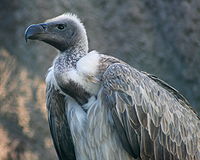
White-backed Vulture

White-backed Vulture

In Jeremiah chapter 12, the LORD was stating that because Israel had turned to other gods instead of the God of Israel (the LORD), that He was bringing  judgment. The people had bowed down to other gods and then brought some of that worship and intermingled it with the true worship of God. The House of God was “speckled” or of mixed beliefs.

John Wesley’s Explanatory Notes – “The birds round about – It is usual for other birds to flock about a strange coloured bird, such as they have not been used to see.”

Ruppell's Vulture

Ruppell's Vulture

Matthew Henry’s Concise Commentary – “God’s people had been the dearly-beloved of his soul, precious in his sight, but they acted so, that he gave them up to their enemies. Many professing churches become like speckled birds, presenting a mixture of religion and the world, with its vain fashions, pursuits, and pollutions. God’s people are as men wondered at, as a speckled bird; but this people had by their own folly made themselves so; and the beasts and birds are called to prey upon them. The whole land would be made desolate. But until the judgments were actually inflicted, none of the people would lay the warning to heart. When God’s hand is lifted up, and men will not see, they shall be made to feel. Silver and gold shall not profit in the day of the Lord’s anger. And the efforts of sinners to escape misery, without repentance and works answerable thereto, will end in confusion.”

Jamieson, Fausset, and Brown Commentary – “speckled bird — Many translate, “a ravenous beast, the hyena”; the corresponding Arabic word means hyena; so the Septuagint. But the Hebrew always elsewhere means “a bird of prey.” The Hebrew for “speckled” is from a root “to color”; answering to the Jewish blending together with paganism the altogether diverse Mosaic ritual. The neighboring nations, birds of prey like herself (for she had sinfully assimilated herself to them), were ready to pounce upon her.”

Hartlaub's Bustard

Hartlaub's Bustard

From Clarke -Dahler translates the whole verse thus: –
“Birds of prey! inundate with blood my heritage.
Birds of prey! come against her from all sides.
Run together in crowds, ye savage beasts!
Come to the carnage!”

According to those above, it seems that the bird must have been either spotted or multi-colored. The bird is a:
“speckled bird” in the KJV, MKJV, Webster
“speckled bird of prey” in the ASV, Darvy, NASB, RV
“speckled vulture” in the NKJV
“speckled fowl” in the YLT
“colorful bird of prey” in the GWV
“brightly colored bird” – BBE
“hawk” – CEV
“hyena’s lair” – ESV
All these variances make it hard to show a picture, but the ones shown are guesses.

Also, the application should give those today a stern warning about bringing the “worldly practices and beliefs” into our church services. I see it today in churches that do things that are clearly taught against in God’s Word, the Bible. Many things could be named, but one that disturbes this writer alot is the denial of God’s Creation of this world. More and more supposed Christian leaders are teaching different theories to “blend” the world’s theory of evolution with the Lord’s clear teaching in Genesis.

But there were also false prophets among the people, even as there will be false teachers among you, who will secretly bring in destructive heresies, even denying the Lord who bought them, and bring on themselves swift destruction. (2 Peter 2:1 NKJV)


See also:
Great Speckled Bird
The Great Speckled Bird (song) from Wikipedia

Maturing Cockatiels and Christians – by April Lorier

Maturing Cockatiels and Christians

Baby Cockatiels

Baby Cockatiels

There were years when I raised birds, hand-feeding them so they would grow up to be more easily trainable as pets. The fact that I was hand-feeding them meant they would be imprinted by me (a human being) instead of by the mother bird. They would bond to me, therefore, be easily trained by the human who purchased them. Imprinting is the key if birds or animals are to be sold as mature, trained birds.

I was reminiscing today about the clutches of eggs I incubated, then hand-fed after they were hatched. They looked like little aliens with almost no feathers, but soon they would grow into beautiful birds who were not afraid of humans, and it would be time to hand-train them.

Babies are born without a working immune system so they are more susceptible to getting bacterial or fungal infections from your hands, ordinary household objects and an environment that has been contaminated with disease causing organisms. And the job of feeding the formula to them is 24/7, so between the cleaning and the feeding, it’s more than a full-time job! Just making the formula (which must always be fresh) is a chore.

But there comes a time when I had to start weaning these babies from their mushy formula, throw away the syringe, and introduce them to seed/fruit mixtures. They had to switch from baby food to adult food incrementally.

Scripture teaches the same principle both through the mouth of the Apostle Paul, and of Peter. Peter said, in I Peter 2:1-3

1) Therefore, rid yourselves of all malice and all deceit, hypocrisy, envy, and slander of every kind. 2) Like newborn babies, crave pure spiritual milk, so that by it you may grow up in your salvation, 3) now that you have tasted that the Lord is good.

And then in Hebrews 5:11-14 we read:

Concerning him [Melchizedek, as a type of Christ] we have much to say, and it is hard to explain, since you have become dull of hearing.
12) For though by this time you ought to be teachers, you have need again for someone to teach you the elementary principles of the oracles of God, and you have come to need milk and not solid food.
13) For everyone who partakes only of milk is not accustomed to the word of righteousness, for he is a babe.
14) But solid food is for the mature, who because of practice have their senses trained to discern good and evil.

So what the message of my Bible Study, and also of my cockatiels is, baby food is for babies. And if I am growing in my faith, I need to be desiring the meat of the Word. Sometimes it feels ‘safe’ to run back to the milk, but it will stunt my spiritual growth. Just think how my body would look if I had never eaten anything but milk! Who knows if I would even be alive?

Once again, Father, You have used nature to teach me Your principles. Thank you for allowing my memories to make this Bible Study come to life! I want to be a mature Christian!

(c) 2009 April Lorier

Supplied by and reprinted with permission of April Lorier.


See:

More of April’s Articles

*

Sparrows and God Care – by April Lorier

April Lorier writes great articles on her “Christian Nature” blog and has agreed to be a guest author. She is allowing us to reproduce some of her very thoughtful and inspiring challenges about birds and the Creator. I trust you will be as blessed by her writings as I am. This is the first one.


Sparrows and God Care

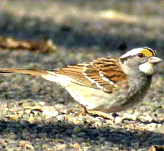
sparrow-whiteThroat1 I have written about sparrows before and feel a need to revisit the subject. There are just so many sparrows flying around!

Ethel Waters made “His Eye Is On The Sparrow” famous many years ago, and it’s still a master piece. It serves to remind us that if God values sparrows and cares for them, then certainly He does the same for us. He created human beings for companionship, and through Christ we can have that relationship.

One Sunday morning at church, we sang “His Eye Is on the Sparrow” as a congregational hymn. It was a rare opportunity to give voice to a song usually performed by a soloist.

During the first chorus, I noticed a friend who was weeping so hard that he couldn’t sing. Knowing a bit of what he had been through recently, I recognized his tears as ones of joy at realizing that, no matter what our situation, God sees, knows, and cares for us.

Jesus said, “Are not two sparrows sold for a copper coin? And not one of them falls to the ground apart from your Father’s will. But the very hairs of your head are all numbered. Do not fear therefore; you are of more value than many sparrows” (Matt. 10:29-31). The Lord spoke these words to His 12 disciples as He sent them out to teach, heal, and bear witness of Him to “the lost sheep of the house of Israel” (v.6). He told them that even though they would face persecution for His sake, they should not be afraid, even of death (vv.22-26).

When threatening circumstances press us to lose hope, we can find encouragement in the words of this song: “I sing because I’m happy, I sing because I’m free. For His eye is on the sparrow, and I know He watches me.” We are under His watchful care.

If God sees the sparrow’s fall,
Paints the lilies short and tall,
Gives the skies their azure hue,
Will He not then care for you? —Anon.

When you put your cares in God’s hands, He puts His peace in your heart.

2009 April Lorier

Ask the animals, and they will teach you, or the birds of the air, and they will tell you; or speak to the earth, and it will teach you, or let the fish of the sea inform you. Which of these does not know that the hand of the Lord has done this? –
Job 12

Supplied by and reprinted with permission of April Lorier.


See:
More of April’s Articles
*

When I Consider! – Only Two Possible Explanations For Life:

When I Consider!

When I Consider!

There are only two possible explanations for life:

  1. Evolution-which states that life has evolved from simple forms of plants and animals into the more complex forms we find today.
  2. Creation-Which states that God created the entire universe and all of the creatures on Earth fully formed and completely functional.

Paleontologists have found a greater variety of creatures in the fossil record than now exists, including soft-bodied creatures such as worms and jellyfish. However, even in the lowest rock layers, these worms and jellyfish are fully formed and easily categorized into the same kinds of animals alive today.

Maotianshania cylindrica found in China

Maotianshania cylindrica found in China

If evolution is the correct explanation, then there should be thousands of intermediate forms as one type of creature slowly turned into another type.  If creation is true, then the classifications of distinctly different types of animals, both living and in the fossil record, should remain essentially the same.

The fossil evidence clearly supports creation. True science progresses when all the evidence is presented.

Letting God Create Your Day, Vol.3, P.247

Casting down imaginations, and every high thing that exalteth itself against the knowledge of God, and bringing into captivity every thought to the obedience of Christ; (2Co 10:5 KJV)

“Evidence From The Fossil Record”, July 5, from A Closer Look at the Evidence, Richard and Tina Kleiss

Interesting related articles:

Fossil of Extinct Armored Worm Discovered from Live Science
Here is an interesting quote from the article:

It’s very rare to find the soft parts of the body preserved, Briggs said. “It has to be buried quickly,” he told LiveScience. “You have to get minerals forming and preserving the outline before the animal decays completely.”

That is exactly what a global flood would do.

Living Fossil, from Creation Wiki, has a great list of “Examples of Living Fossils.”

More When I Consider! Blogs

Birds of the Bible – For His Pleasure II

Oh, the depth of the riches both of the wisdom and knowledge of God! How unsearchable are His judgments and His ways past finding out!  (Romans 11:33 NKJV)

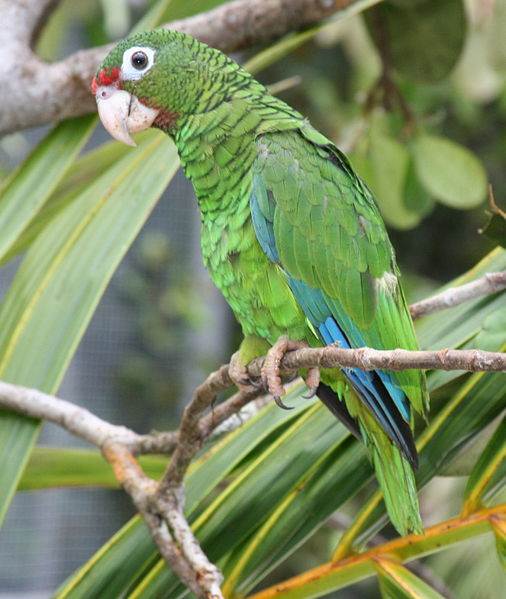
Puerto Rican Parrot

Puerto Rican Parrot

Last week the “Birds of the Bible – For His Pleasure”  that I wrote was about the Lord’s Handiwork with the colors and markings of the Birds. This time, how the Lord designed their bill or beak will be considered.

It is truly amazing to observe the birds around us. They come in all kinds of sizes, shapes and colors. Have you really noticed their bills or beaks. God has designed them with various shaped bills, different length, and uses for them. Depending on what niche they fill, they have just the perfect bill for that food that they need to partake of. Some times the food that they consume is not available and they either adapt to what is available, they move on to find that food, or they become endangered or extinct. Let’s look at some of the variety of bills and the birds attached to them.

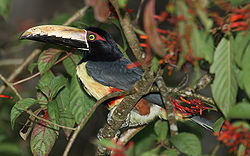
Collared Aracari

Collared Aracari

Toucan – “The colorful, giant bill, which in some large species measure more than half the length of the body, is the hallmark of toucans. Despite its size it is very light, being composed of bone struts with little solid material between them. The bill has forward-facing serrations resembling teeth,” which is used for eating fruit. “It does aid in their feeding behavior (as they sit in one spot and reach for all fruit in range, thereby reducing energy expenditure)…Also, the beak allows the bird to reach deep into treeholes to access food unavailable to other birds, and also to depredate suspended nests built by smaller birds.”

Hummingbird with beak in flower

Hummingbird with beak in flower

Hummingbirds – Their thin long bills are used for collecting nectar and to protect their split tongues.

Egrets and Herons – They have long pointed bills that can be used to spear the fish they catch. They also catch them by a quick closing of the beak.

Woodpeckers – Their beaks are use to peck and tear off the bark of trees to catch bugs hidden there.

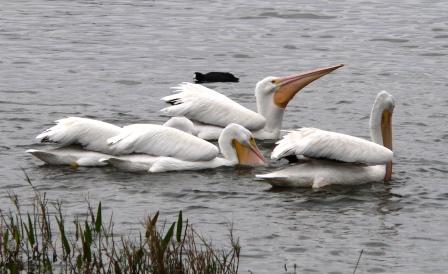
Pelican – They have a big beak with a pouch that they can hold the fish they catch.

Gnatcatcher – A very fine and small beak helps them catch gnat and other tiny insects.

American White Pelicans at Lake Hollingsworth

American White Pelicans at Lake Hollingsworth

Sparrows and similiar – They have a cone shape bill that allows them to crack open seeds.

Parrots – Have even a bigger cone like beak that can open larger seeds and nuts.

Spoonbills – Have what looks like a spoon for a bill. They use it to swing back and forth in the water and have a very sensitive touch that will snap the paddles together when something gets in between them. Video

Bird Beaks from Wikipedia

Bird Beaks from Wikipedia

The list goes on and on and you will find in each case, that the bill and the bird match-up shows the infinite wisdom of our God and the Lord Jesus Christ, the Creator of them all.

As Christians, we also each have some niche that the Lord wants us to fill. He has given us the talents, abilities, gifts, etc. to do that task or ministry. Our problem sometimes is the will to do His Will with what He has provided for us. Again, let us learn from watching the birds and how they use what was designed for them.

See also: Beak from Wikipedia

Eye of the Beholder – Anhinga

Anhinga Outstretched by Dan

Anhinga Just out of the Water by Dan

The Anhinga (Anhinga anhinga) is a interesting bird to watch here in Florida. They are very easy to spot with their outstretched wings. It is harder to spot them when they are in the water and swimming with only their heads stuck out. This is where the nickname, “Snake Bird,” comes from. We were watching them the other day when we visited Lake Hollingsworth and it reminded me of some verses.

1. The Anhinga must be tired after all that diving and is quite water-logged (heavy-laden) and needs to rest while its wings dry out. The Anhinga does not have an oil gland like most birds and must dry its feathers before it can get airborne again. The Lord designed it this way so that it can dive deep to catch fish, which is about 99% of its prey. If the feathers are oily, the bird has a tendancy to pop back up to the surface.
“Come to Me, all who are weary and heavy-laden, and I will give you rest. Take My yoke upon you and learn from Me, for I am gentle and humble in heart, and YOU WILL FIND REST FOR YOUR SOULS.” (Matthew 11:28-29 NASB)

Anhinga Dryed at Lake Hollingsworth

Anhinga Dryed at Lake Hollingsworth

For us, we can come to the Lord when things are “getting us down” and He will give us rest. When we pray and ask the Lord to help us and we leave the burden with Him, our souls are refreshed and we feel rested.

2. When the Anhinga first comes out of the water, they look all black and you do not see the white in its feathers. As the feathers dry, the color lightens up, and eventually the white shows up.
“Come now, and let us reason together, saith the LORD: though your sins be as scarlet, they shall be as white as snow; though they be red like crimson, they shall be as wool.” (Isaiah 1:18 KJV)
The Wordless Book song that Child Evangelism uses:

My heart was black with sin,
Until the Savior came in.
His Precious Blood I know,
Will wash me whiter than snow.
And in God’s Word I’m told
I’ll walk the streets of gold.
I’ll read my Bible and pray,
And Grow in Him every day!

Other Eye of the Beholder blogs