***

AND HANGETH
***
“He stretcheth out the north over the empty place, and hangeth the earth upon nothing.” (Job 26:7 KJV)
Juan Fernandez Firecrown (Sephanoides fernandensis) ©WikiC
*
*
“He stretcheth out the north over the empty place, and hangeth the earth upon nothing.” (Job 26:7 KJV)
Juan Fernandez Firecrown (Sephanoides fernandensis) ©WikiC
*
*

“And the following day they entered Caesarea. Now Cornelius was waiting for them, and had called together his relatives and close friends.” (Acts 10:24 NKJV)
Bee-eaters From Pinterest
*
*
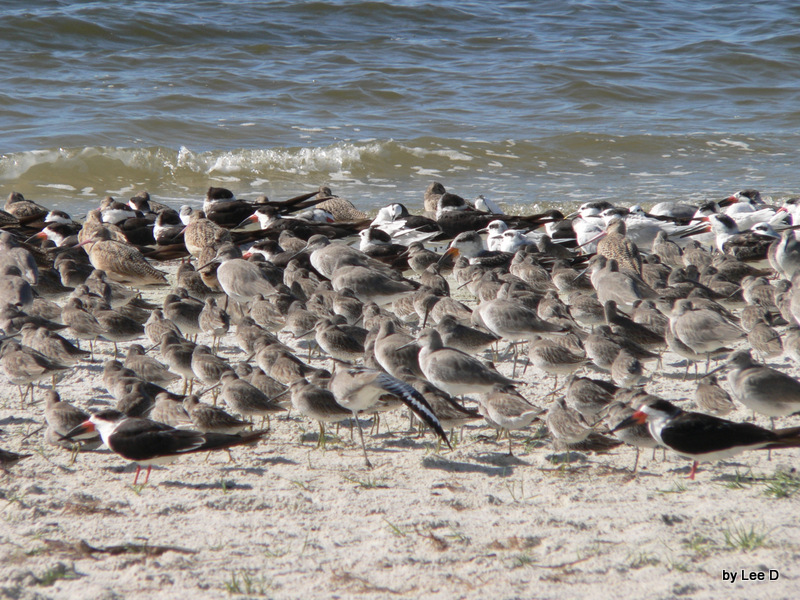
“How precious also are thy thoughts unto me, O God! how great is the sum of them! (Psalms 139:17 KJV)
Watching Birds at MacDill AFB Shore by Lee
*
*

Blackish-blue Seedeater (Amaurospiza moesta) ©WikiC
And when he sowed, some seeds fell by the way side, and the fowls came and devoured them up: (Matthew 13:4 KJV)
Last week, the first half of the Cardinalidae was presented, and now here is the rest of this beautiful family. Today we have Grosbeaks, Seedeaters, Saltators, a Dickcissel, and Buntings. You will see another display of the Lord’s Handiwork as you watch the slideshow.
The beginning genera have only a few species, the latter ones have more species per genus. Enjoy!

Black-headed Saltator (Saltator atriceps) ©WikiC
“Saltator is a genus of songbirds of the Americas. They are traditionally placed in the cardinal family (Cardinalidae) but now seem to be closer to tanagers (Thraupidae). Their English name is also saltator, except for two dark species known by the more general grosbeak.
Saltator is Latin for “leaper” or “dancer”. Louis Vieillot applied it to this genus because of the heavy way the birds hop on the ground.” (Wikipedia)

Dickcissels have a large pale bill, a yellow line over the eye, brownish upperparts with black streaks on the back, dark wings, a rust patch on the shoulder and light underparts. Adult males have a black throat patch, a yellow breast and grey cheeks and crown. This head and breast pattern is especially brilliant in the breeding plumage, making it resemble an eastern meadowlark. Females and juveniles are brownish on the cheeks and crown and are somewhat similar in appearance to house sparrows; they have streaked flanks.
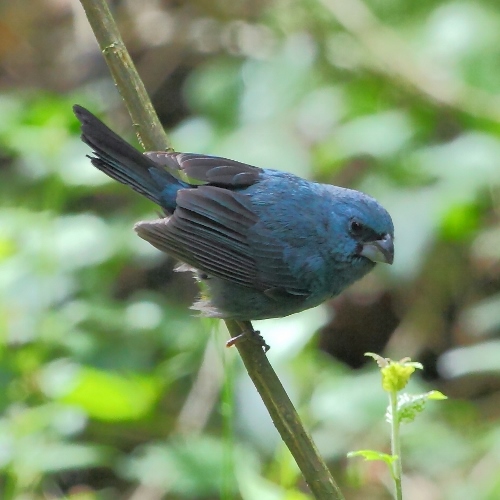
Glaucous-blue Grosbeak (Cyanoloxia glaucocaerulea) ©WikiC
The Glaucous-blue Grosbeak (Cyanoloxia glaucocaerulea), also known as the indigo grosbeak, is a species of bird in the Cardinalidae family. It is the only member of the genus Cyanoloxia. It is found in Argentina, Brazil, and Uruguay. Its natural habitats are subtropical or tropical moist lowland forests, subtropical or tropical moist shrubland, and heavily degraded former forest.

Painted Bunting Subspecies (Passerina ciris ciris) ©WikiC
The genus Passerina is a group of birds in the cardinal family (Cardinalidae). Although not directly related to buntings in the family Emberizidae, they are sometimes known as the North American buntings (the North American Emberizidae are colloquially called “sparrows” although they are also not related to these birds).
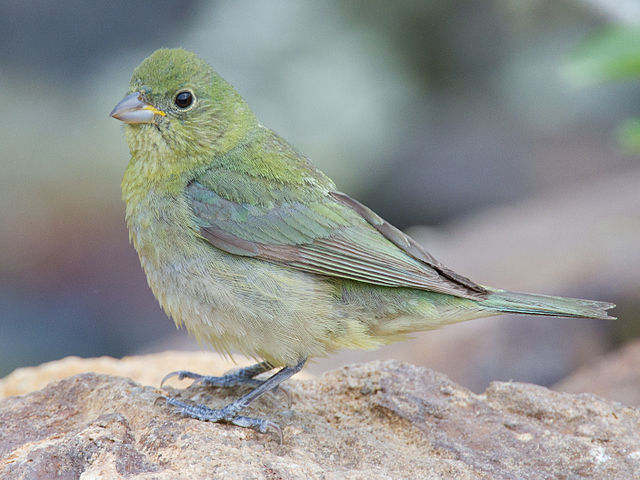
Painted Bunting (Passerina ciris) Female ©WikiC Dan_Pancamo
The males show vivid colors in the breeding season; the plumage of females and immature birds is duller. These birds go through two molts in a year; the males are generally less colorful in winter. They have short tails and short slim legs. They have smaller bills than other Cardinalidae; they mainly eat seeds in winter and insects in summer. (Wikipedia)
With this last group, we have now completed the PASSERIFORMES – Passerines Order. As mentioned last week, there are 131 families of song birds that you have been viewing since February of this year.
And he said unto me, It is done. I am Alpha and Omega, the beginning and the end. I will give unto him that is athirst of the fountain of the water of life freely. (Revelation 21:6 KJV)
“Come Thou Fount of Every Blessing” ~ Choir and Orchestra
*
Sunday Inspiration – Cardinalidae – Family of Cardinals Plus
Cardinalidae – Cardinals, Grosbeaks and allies
*

“And see if there be any wicked way in me, and lead me in the way everlasting.” (Psalms 139:24 KJV)
Mallard Ducks Being Lead ©WikiC
*
*

“Now also when I am old and grayheaded, O God, forsake me not; until I have shewed thy strength unto this generation, and thy power to every one that is to come.” (Psalms 71:18 KJV)
Wood Stork and Lee at Lake Morton by Dan
(P.S. Today is my 73rd Birthday)
*
*
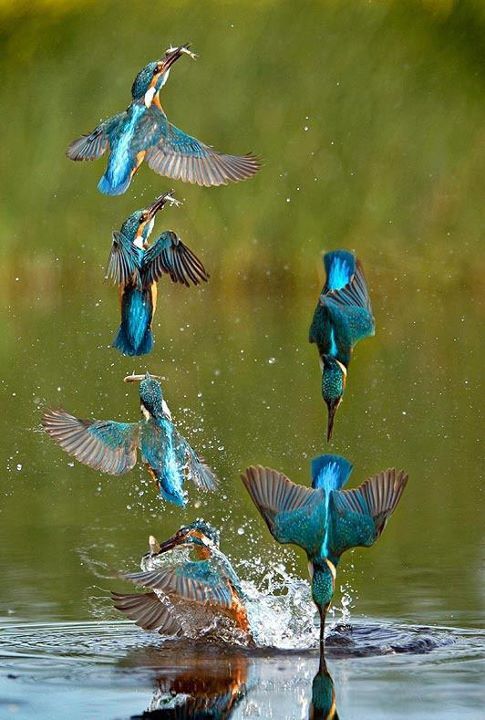
“Simon Peter saith unto them, I go a fishing. They say unto him, We also go with thee. They went forth, and entered into a ship immediately; and that night they caught nothing.” (John 21:3 KJV)
Kingfisher Diving Sequence ©SMedia-Cache
*
*

Grey-crowned Cranes ©©BigHDWalls
“Having many things to write unto you, I would not write with paper and ink: but I trust to come unto you, and speak face to face, that our joy may be full.” (2 John 1:12 KJV)
Grey-crowned Cranes Face to Face ©©BigHDWalls
*
*
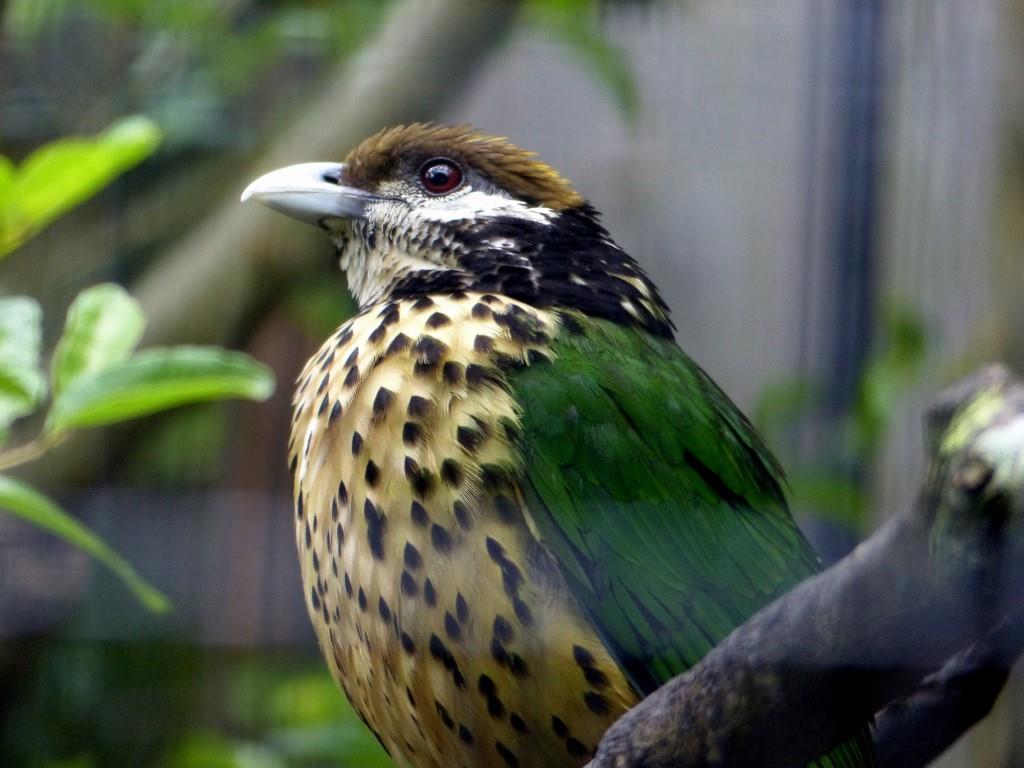
“Hear my prayer, O God; give ear to the words of my mouth.” (Psalms 54:2 KJV)
White-eared Catbird (Ailuroedus buccoides) Houston Zoo by Lee
*
*
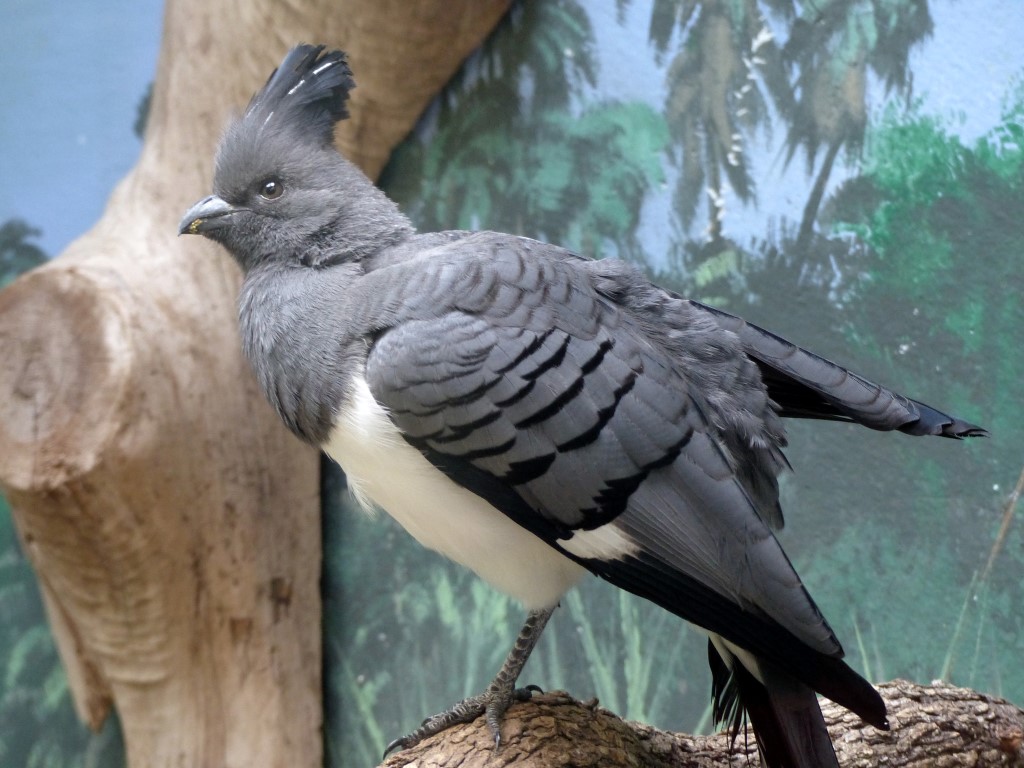
“How think ye? if a man have an hundred sheep, and one of them be gone astray, doth he not leave the ninety and nine, and goeth into the mountains, and seeketh that which is gone astray?” (Matthew 18:12 KJV)
White-bellied Go-away-bird (Corythaixoides leucogaster) Houston Zoo by Lee
*
*
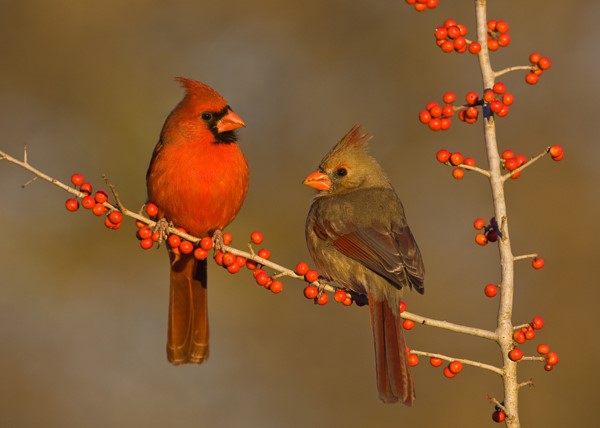
Northern Cardinal M-F ©BackyardBirdLover
Wherefore art thou red in thine apparel, and thy garments like him that treadeth in the winefat? (Isaiah 63:2 KJV)
Today, you are being introduced to the Cardinalidae Family, which is the last family, in taxonomy order, of the Passeriformes Order. Since February 1, 2016, we began the journey with the first four families in More Amazing Birds. Now we have arrived at the last of the 131 families of this order. I trust you have enjoyed the journey through these many Sundays. Hopefully you have been blessed by the great variety of Avian Wonders from our Lord, their Creator. The Passeriformes Order contains well over half of all the birds in the world; around 6,000 plus of the 10,659 species on the latest update. (6.3)
The Cardinalidae – Cardinals, Grosbeaks and allies has 69 species in the family. Because of that number, this family will be presented in two segments. Growing up in Indiana, the Northern Cardinal was a favorite of most of us. It is the “State Bird” of Indiana along with six other states. [Illinois, Kentucky, North Carolina, Ohio, Virginia, West Virginia] The family members are found in North and South America. The South America Cardinals of the genus Paroaria are placed in another family, the Thraupidae (previously placed in Emberizidae). Even though the family name is Cardinalidae, there are only two “cardinals” among the members.
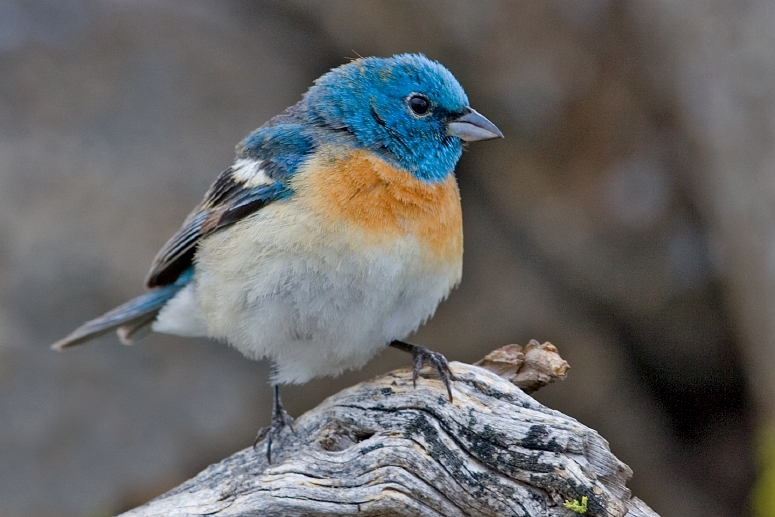
Lazuli Bunting (Passerina amoena) ©WikiC
Also known as cardinal-grosbeaks and cardinal-buntings, this family’s members “are robust, seed-eating birds with strong bills. The family ranges in size from the 12-cm (4.7-in), 11.5-g (0.40-oz) and up orange-breasted bunting to the 25-cm (9.8-in), 85-g (2.99-oz) black-headed saltator. They are typically associated with open woodland. The sexes usually have distinctive appearances. The northern cardinal type species was named by colonists for the male’s red crest, reminiscent of a Catholic cardinal’s biretta.
The ‘North American buntings’ are known as such to distinguish them from buntings. The name ‘cardinal-grosbeak’ can also apply to this family as a whole.”(Wikipedia)
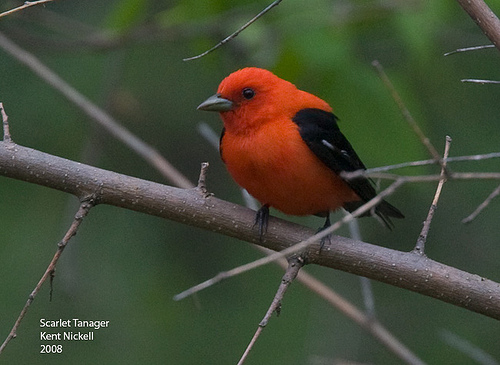
Scarlet Tanager (Piranga olivacea) by Kent Nickell
The family starts off with 11 Tanagers in the Piranga genus, which used to be in with the tanagers, but were relocated here recently. “They are essentially red, orange or yellow all over, except the tail and wings and in some species also the back. Such extensive lipochrome coloration (except on the belly) is very rare in true tanagers, but is widespread among the Cardinalidae in the Piranga genus.
These songbirds are found high in tree canopies, and are not very gregarious in their breeding areas. Piranga species pick insects from leaves, or sometimes in flight. They will also take some fruit. Several species are migratory, breeding in North America and wintering in the tropics.”
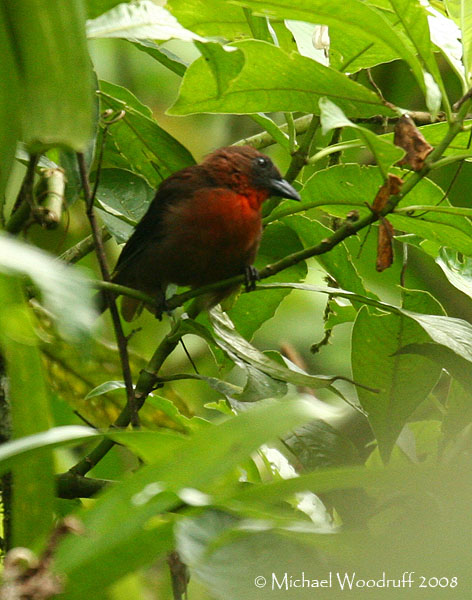
Red-throated Ant Tanager (Habia fuscicauda) by Michael Woodruff
Next are the Ant Tanagers in the Habia genus. “These are long-tailed and strong billed birds. The males have a red crest and plumage containing red, brown or sooty hues. Females may resemble the males or be largely yellowish or brown in colour.” Following these are four more tanagers in the Chlorothraupis genus. These are the last of the tanagers that were moved to this family.
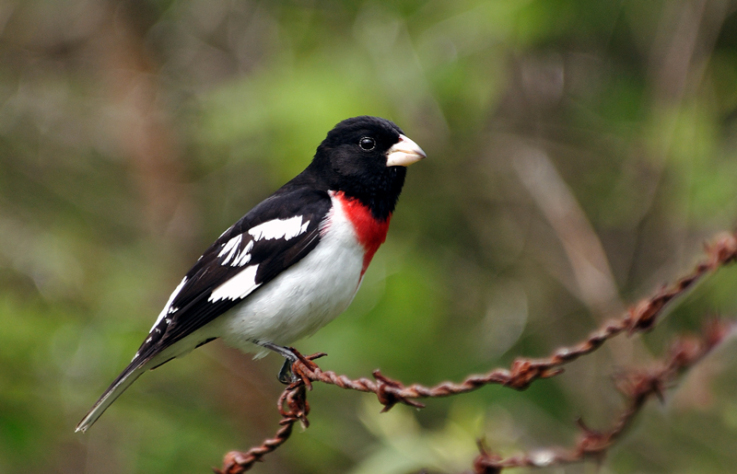
Rose-breasted Grosbeak (Pheucticus ludovicianus) by Rob Fry
The next genus, Pheucitcus has six Grosbeaks. Typical of the genus, they lay two to five pale bluish to greenish eggs with heavy brown and gray speckling. The cup nest is built at medium height in a bush or small tree.” (Wikipedia)

Red-breasted Chat (Granatellus venustus) ©WikiC
There are three Chats in the Granatellus genus; Red-breasted Chat, Grey-throated Chat, and the Rose-breasted Chat. They range from North America through Central America into northern South America. Their natural habitat is subtropical or tropical dry forests.

Pyrrhuloxia (Cardinalis sinuatus) ©Flickr Don Faulkner
We will finish this first half of the family with three of my favorites, the Cardinalis genus. Our Northern and Vermilion Cardinals and the Pyrrholixia (which I saw for the first time last year) are hard to miss with their bright set of feathers the Lord provided for them. These range across North America and into northern South America.
“He answered and said unto them, When it is evening, ye say, It will be fair weather: for the sky is red.” (Matthew 16:2 KJV)
“Come now, and let us reason together, saith the LORD: though your sins be as scarlet, they shall be as white as snow; though they be red like crimson, they shall be as wool.” (Isaiah 1:18 KJV)
“Written in Red” – Faith Baptist Choir and Orchestra
For God so loved the world, that he gave his only begotten Son, that whosoever believeth in him should not perish, but have everlasting life. For God sent not his Son into the world to condemn the world; but that the world through him might be saved. He that believeth on him is not condemned: but he that believeth not is condemned already, because he hath not believed in the name of the only begotten Son of God. And this is the condemnation, that light is come into the world, and men loved darkness rather than light, because their deeds were evil. (John 3:16-19 KJV)
*
Sunday Inspiration – More Amazing Birds
Cardinalidae – Cardinals, Grosbeaks and allies
*

 Lee's Birdwatching Adventures Plus
