Interesting Things – Dinosaur Blood

Dinosaur Blood by Creation Moments

Job 40:15
“Behold now behemoth, which I made with thee; he eateth grass as an ox.”

A short while ago, Creation Moments reported the case of blood cells being discovered in a fossilized T. rex bone. Today, we report on another case. While most fossil bones have lithified, or turned to stone, occasionally identifiable bones are found that are only partially lithified.

Scientists had been studying the fossilized upper leg bone of a T. rex they date at 68 million years. The study consisted of dissolving the minerals from the fossilized bone with slightly alkaline solutions. They were completely surprised, for what remained was a soft, pliable material that proved to be high in carbon. Closer study of the pliable material revealed what appeared to be a network of blood vessels. Researchers were then amazed to find that this network was very similar to the networks found in modern ostrich bones. What’s more, they found bone cells as well as red blood cells in this material. Such findings would never be expected in 68-million-year-old biological material, but the researchers could offer no other interpretation for what they saw. They are now hoping that the discovery might shed light on dinosaur physiology and metabolism.

Researchers are still puzzled at how 68-million-year-old biological material could be preserved for so long. Of course, the obvious answer is that the material is not nearly that old and that dinosaurs were even part of human history.

Prayer:
Father, I thank You for all the wonders of Your creation, including the great dinosaurs. Amen.
Notes:
Science News, 3/26/05, p. 195, S. Perkins, “Old Softy.”

To see more Interesting Things, check out the PLUS section.

Formed By Him – Dodo Bird

Dodo (Raphus cucullatus) Extinct by Wikipedia

Dodo (Raphus cucullatus) Extinct by Wikipedia

Which doeth great things past finding out; yea, and wonders without number. (Job 9:10 KJV)

“When Portuguese and early Dutch colonists began to inhabit the small tropical island of Mauritius in the Indian Ocean, from the early 1500s onwards, they found the island to be the home of a very unusual bird. This bird was as large as a turkey, of ungainly build, with short curly tail feathers and tiny wings. It had a strong black beak with a horny hook at the end. It was so unafraid of man that the Portuguese named it doudo, meaning ‘simpleton’, because it was so trusting they were easily able to hit it on the head and kill it for food. Hence the English name dodo.

Drawings of a dodo from the Journal of VOC ship Gelderland 1601-1603

Drawings of a dodo from the Journal of VOC ship Gelderland 1601-1603

Dodos were slaughtered in large numbers by sailors and settlers, and pigs which were introduced to the island voraciously ate the dodo eggs. The last dodo was killed in 1681—less than 180 years after it was first described.” (Creation 14(1):21 Dec, 1991, by Robert Doolan)

The Dodo was considered stupid or dull-witted because it would let the sailors and travelers walk up to it and club it. The bird had had no natural enemies and so was not afraid. They lived and nested on the ground. When it became extinct, they said it was the way of evolution (survival of fittest), but it has later shown that it was by the direct intervention of man and his introduced dogs and pigs. The bird was not a “dodo” but was a Dodo, a very useful bird. (A play on words) The bird was in the pigeon family they decided and would have placed them in the Columbiformes Order and in the Columbidae Family.

Nicobar Pigeon at Lowry Park Zoo by Dan

Nicobar Pigeon at Lowry Park Zoo by Dan

The Nicobar Pigeon is the only living member of the genus Caloenas. Based on cladistic analysis of mtDNA cytochrome b and 12S rRNA sequences, the Nicobar Pigeon is sometimes called the closest living relative of the extinct didines (Raphinae), which include the famous Dodo (Raphus cucullatus). Other pigeons in the Caloenas that were also hunted to extinction include the Kanaka Pigeon and the Liverpool Pigeon.

“Also on Mauritius at the time was a tree known as Calvaria major (Today know as the Tambalacoque (Sideroxylon grandiflorum) or Dodo Tree). At that time it was quite common on the island, but by the 1970s only 13 of these Calvaria trees were left. All 13 were more than 300 years old, and though they produced healthy looking seeds each year, none ever managed to germinate. The trees had puzzled botanists for centuries, for their numbers had strangely begun to decline and no new trees were taking root. Calvaria major seemed destined to go the way of the dodo, but the tree was dying out for no perceptible reason.

Tambalacoque or Calvaria Major Tree

Tambalacoque or Calvaria major Tree©

While studying the ecology of Mauritius in the mid-1970s, American ecologist Stanley Temple came up with an ingenious connection between the decline of the Calvaria major trees and the disappearance of the dodo. After considering many factors, Temple concluded that the tree’s large fruit had in times past been eaten by the dodo. The tree’s seeds are encased in a thick-walled protective coat, but the dodo’s stone-filled gizzard was able to exert a powerful crushing pressure on them. The bird’s gizzard (a second stomach for grinding food) would pound away at the seed’s coat, weakening it and cracking it a little, but not enough to damage the seed inside. When eventually deposited by the dodo, the seed was able to germinate.

Without the grinding of the dodo’s gizzard to weaken the thick protective wall, the seed was trapped inside its hard case. When the dodo became extinct just over 300 years ago, Calvaria major’s seeds had no way of germinating. So no new trees grew.
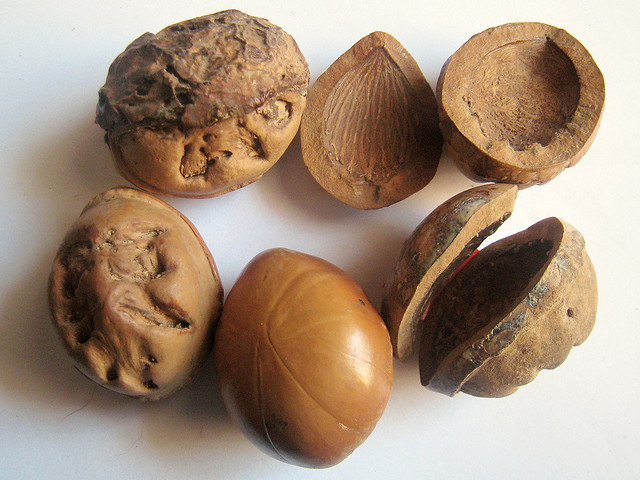
Tambalacoque (Calvaria Major) Seeds©©

Tambalacoque (Calvaria Major) Seeds©©

The dodo’s relationship with the Calvaria major is just one fascinating example of the wonderful balance between animals and plants in God’s creation.” (Creation 14(1):21 Dec, 1991, by Robert Doolan)

Today they have used Turkeys, which have a digestive system like the Dodo’s, to eat and help break up the the Calvaria major seeds which helps it to germinate. They have even used Gemstone Polishers to help break up the very hard shelled seeds. The result was quite convincing since many seeds germinated.

“If this theory of symbiosis between the tree and the dodo is nowadays contested, it is nevertheless widely discussed because it helps to understand how species are related, and the role played by humans in maintaining this balance.”

O the depth of the riches both of the wisdom and knowledge of God! how unsearchable are his judgments, and his ways past finding out! (Romans 11:33 KJV)

Our Creator God has so many more of these displays of His Glory in the things that have been “Formed by Him.”

(Various sources from the internet)

See Also:

Formed by Him Series

Dodo Bird – Not A Failure
Calvaria Tree
Dodo – Wikipedia

*

Formed by Him – Oxpeckers

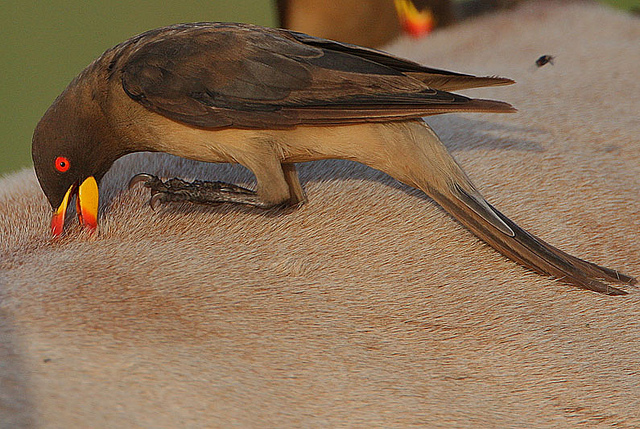
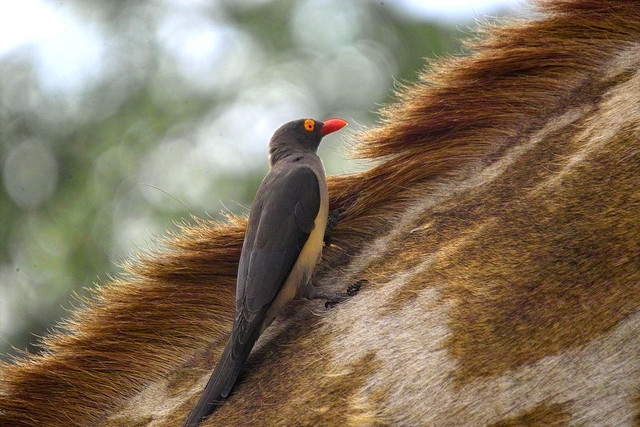
Red-billed Oxpecker (Buphagus erythrorhynchus) on Giraffe©©

Red-billed Oxpecker (Buphagus erythrorhynchus) on Giraffe©©

The oxpeckers are two species of bird which make up the family Buphagidae. Some ornithologists regard them as a subfamily Buphaginae within the starling family Sturnidae but they appear to be quite distinct. Oxpeckers are endemic to the savanna of Sub-Saharan Africa. Both the English and scientific names arise from their habit of perching on large mammals (both wild and domesticated) such as cattle or rhinoceroses, and eating ticks, botfly larvae, lice and other parasites.

Red-billed Oxpecker by Africaddict checking an impala ear

Red-billed Oxpecker by Africaddict checking an impala ear

The Egyptians had their run-in with lice when the LORD told Moses to – “Stretch out thy rod, and smite the dust of the land, that it may become lice throughout all the land of Egypt. And they did so; for Aaron stretched out his hand with his rod, and smote the dust of the earth, and it became lice in man, and in beast; all the dust of the land became lice throughout all the land of Egypt.” (Exodus 8:16-17 KJV)

Yellow-billed Oxpecker (Buphagus africanus) ©©

Yellow-billed Oxpecker (Buphagus africanus) ©©

Many large animals today have lice, ticks, and such and the Lord has provided them a bird that gets its meals from the things crawling around on animals backs, legs, necks, ears, and even their nostrils. Most of the animals do not mind the help they receive from these oxpeckers. The elephants aren’t always happy, but the oxpeckers find plenty of other animals. Also known as tickbirds, oxpeckers have very short legs and sharp claws, which aid them in perching on the backs of large mammals, both wild and domesticated. Oxpeckers were designed with broad, thick, laterally flattened beaks to pick at and feed on skin parasites such as ticks and embedded larvae. They also pick at scabs, often opening and enlarging wounds, and probably obtain their main nourishment from the blood from these wounds rather than from the ticks. Although these birds are valuable from the standpoint of ridding domesticated animals of parasites, they also feed on tick-free game and become debilitating parasites themselves.

Researchers are not sure why they pick the scabs, but they do know that the birds aid the host animals by providing alarm sounds when danger is lurking.

Job was asked by the LORD,

“Is it by your understanding that the hawk soars and spreads his wings toward the south? Is it at your command that the eagle mounts up and makes his nest on high? (Job 39:26-27 ESV)

We don’t always understand why the birds and critters do what they do, but they have a Creator who does. The Lord encourages us to study and learn, but we do not always find the exact answer.

Red-billed Oxpecker (Buphagus erythrorhynchus) by Africaddict

Red-billed Oxpecker (Buphagus erythrorhynchus) by Africaddict

The Oxpeckers are about 9 inches long with a brownish color on the upper parts, with a lighter underside. The two Oxpeckers are the Red-billed and the Yellow-billed. The Red-billed has a red bill and yellow eyes where as the Yellow-billed has a yellow bill with a red tip and it has red eyes. The bird spends most of its time on the animals and even court and mate while riding on their back.

Some Breeding Facts from Biodiversity Explorer:
* Monogamous, cooperative breeder, as the breeding pair are usually assisted by up to 7 helpers who are usually unmated adults and juveniles from the previous breeding season.
* It usually nests in a natural tree cavity or a hole in rock or a stone wall, lining the interior with hair from its mammal hosts, dung, grass and rootlets.
* Egg-laying season is from October-March.
* It lays 2-5 eggs, which are incubated by both sexes for about for about 12-13 days.
* The chicks are fed by all members of the group, leaving the nest after about 30 days and becoming fully independent roughly two months later.

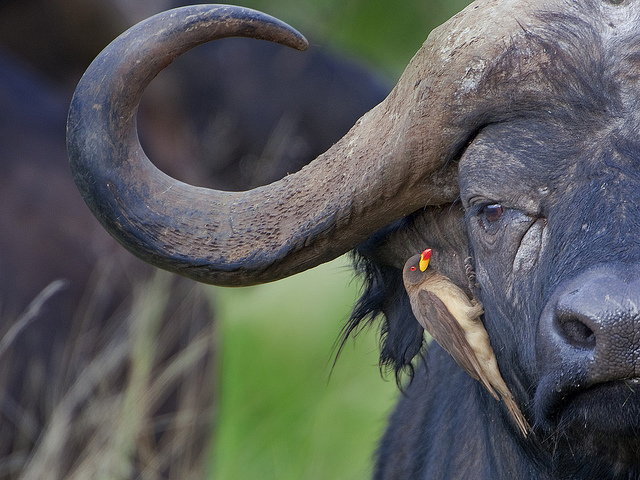
Yellow-billed Oxpecker with Water Buffalo ©©

Yellow-billed Oxpecker with Water Buffalo ©©

This behavior between the animals and the Oxpeckers is another example of cooperation (symbiosis) between species.

From Psalms we know that all creation is His,

For every beast of the forest is mine, the cattle on a thousand hills. I know all the birds of the hills, and all that moves in the field is mine. (Psalms 50:10-11 ESV)

Videos:
Red-billed Oxpecker by Joseph del Hoyo
Yellow-billed Oxpecker by Joseph del Hoyo

*

Bird Songs by God by Creation Moments

Bird Songs by God by Creation Moments was made into a video by BereanBeacon

By them the birds of the heavens have their home; They sing among the branches. (Psalms 104:12 NKJV)

BereanBeacon contacted me to obtain permission to use some of the photographers we have here. This video used some of the great photos from Ray (Raymond J. Barlow’s Wildlife Photography)

*

Formed By Him – New Series

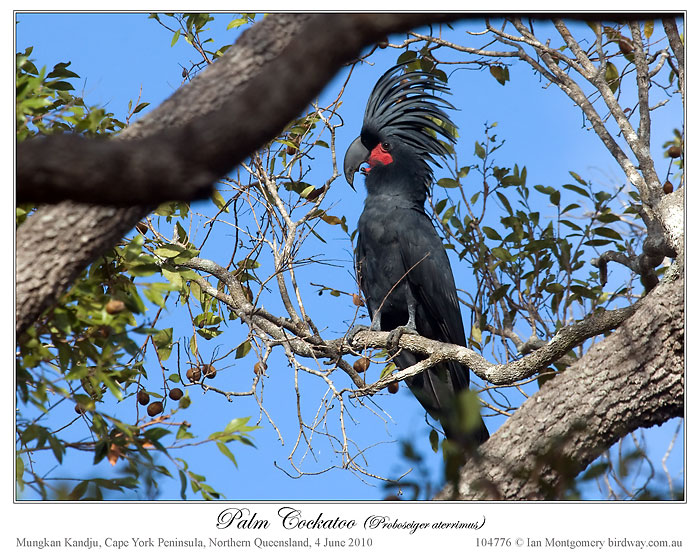
Thou art worthy, O Lord, to receive glory and honour and power: for thou hast created all things, and for thy pleasure they are and were created. Rev. 4:11 (Blue Jay by Dan)

Formed By Him

Now out of the ground the LORD God had formed every beast of the field and every bird of the heavens and brought them to the man to see what he would call them. And whatever the man called every living creature, that was its name. (Genesis 2:19 ESV)

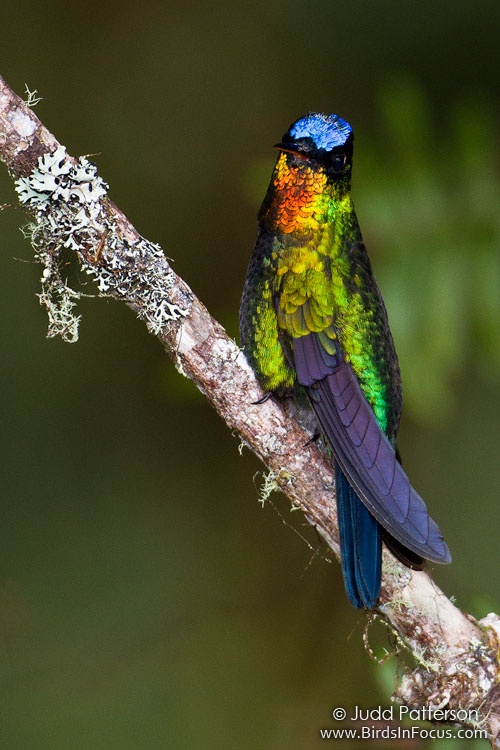
Fiery-throated Hummingbird by J Patterson

I have recently started a series of blog articles about different aspects of the Lord’s Creative Hand on the birds He has created. Some of the articles will be about a specific bird and some amazing characteristics or behavior it demonstrates. The different designs or colors of birds that have been painted with the Lord’s fantastic Paintbrush could be featured or whatever else that reveals God’s Design and His Intelligence in the creation of birds.

As I work on articles and am searching for photos of birds, other neat birds are discovered. With 10,000 plus birds flying around all over this world, the source for material should be way beyond us ever running out of things to write about. Hope you enjoy this new series, “Formed By Him.”

Thus says the LORD who made the earth, the LORD who formed it to establish it–the LORD is his name: (Jeremiah 33:2 ESV)

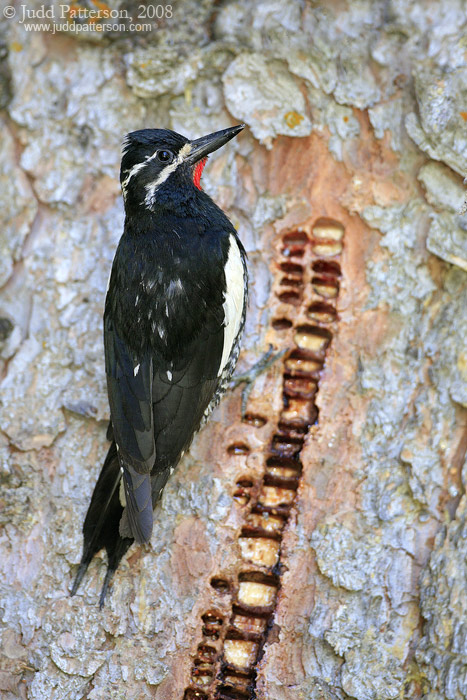
Red-cockaded Woodpeckers 2-day olds©USFWS

The following “Formed By Him” articles have already been published:
Sword-billed Hummingbird
Copper Birds
Bearded Barbet

Interesting Things – Butterfly Colors

White Peacock Butterfly by Herman1944

White Peacock Butterfly by Herman1944

One thing I have desired of the LORD, That will I seek; That I may dwell in the house of the LORD all the days of my life, to behold the beauty of the LORD, and to inquire in His temple. (Psalm 27:4)

More Butterfly Colors than You Can See – from Creation Moments

ThinkingThe Amazing Butterfly

The beautiful wing of the butterfly has a lesson to teach everyone who believes living things were created by chance. The design of the butterfly wing involves much more than just intricate complexity. In addition to showing a knowledge of flight, each wing design is the product of very precise specifications built around the specific wavelengths of visible light.

The iridescent colors you admire on a butterfly’s wing are created by the scales of the wings. Each square centimeter of wing has tens of thousands of these scales, each attached to the wing by tiny stems and overlapping each other like cedar shakes. Each one of these scales was a living cell until a day or two before the butterfly emerged from its pupa. Each tiny scale is made of a vertical and horizontal framing within which are found various sacks of pigment hanging from the framework.

Monarch Butterfly at the Butterfly World©©

Monarch Butterfly at the Butterfly World©©

Butterfly wings that seem to glow with iridescent blues and greens have scales with tiny lattices and ribbed walls that are designed to cause interference patterns in light waves within the 300 700 nanometer range – exactly the range humans see as color. That interference pattern is what our eyes interpret as iridescence.

It takes a good knowledge of physics as well as micro architecture to design and build an iridescent butterfly wing! Science clearly teaches us that such ability and knowledge does not come from chance. Let’s be bold to admit the truth – there is a Creator!

Prayer:

Father in heaven, a child can see the beauty of Your handiwork in the wing of the butterfly. Through my witness, help those who have been fooled by evolution to see You in Your creation and our salvation

From  More Butterfly Colors than You Can See ©Creation Moments 2010


See also:

Interesting Things

Interesting Things – The Amazing Butterfly

Butterflies – God’s Flying Flowers

The Creation of New Butterfly Species Before Our Eyes, Stephen Caesar

*

Formed By Him – Bearded Barbet

Bearded Barbet (Lybius dubius) ©WikiC Head

Bearded Barbet (Lybius dubius) ©WikiC Head

I know all the birds of the hills, and all that moves in the field is mine. (Psalms 50:11 ESV)

Formed By Him – Bearded Barbet

The Bearded Barbet (Lybius dubius) is an African barbet of the western and central parts. Barbets and toucans are a group of near passerine birds with a worldwide tropical distribution. The Bearded Barbets get their name from the bristles which fringe their heavy bills. All the barbets get their name from the bristles or tufts of feathers. The Bearded Barbet has the greatest beard.

Bearded Barbet (Lybius dubius) ©WikiC

Bearded Barbet (Lybius dubius) ©WikiC

I gave my back to those who strike, and my cheeks to those who pull out the beard; I hid not my face from disgrace and spitting. (Isaiah 50:6 ESV)

The Bearded Barbet is a common resident breeder in tropical west Africa. It is an arboreal species of gardens and wooded country which eats fruit, although the young are fed also insects. It’s sharp beak, not as hard as a woodpecker’s, is not only used for eating but also for pounding in stumps or dead trees to make nests.The have tooth-like grooves in their beaks.

The courtship of tail-flicking, food offerings and some special sounds precede. It nests in the tree hole, laying 2 white eggs. The birds are incubated for 16 days and “helper” birds also share in the incubation and care of the young birds.

Bearded Barbet (Lybius dubius) ©© Passing food

Bearded Barbet (Lybius dubius) ©© Passing food

This is a conspicuous, large barbet at 10.2 in (26 cm). It is fairly plump (2.8-3.8 oz/80-108 gm), with a short neck, large head and a shortish tail. The adult has a black crown, back, tail and breast band. The throat and belly are red and there is a yellow eye patch. The rump is white. The massive bill is very thick and yellow, and the well developed clump or tuft of bristles at its base give the species its name. Sexes are similar in appearance. The call is a growling scrawk.

The Bearded Barbet is found in well-wooded areas with plentiful fig trees. It will enter gardens for fruit and also capture insect for their young. It forms social groups of 4-5 birds and pairs or groups roost together in a tree cavity. They are known to drink nearly every chance they get, usually from a tree crevice.

The Lord has formed these birds so that they have their needs provided for by His Creative Hand. The beak appears to help in the excavation for nests and eating figs and other fruits. Not exactly sure about the beard, but some times those face bristles help keep wood chips out of their eyes or nostrils. Couldn’t get a definitive answer to that part, though it is no mystery to its Creator.

There are other Bearded birds around the world and one is mentioned in the Bible. There is the Bearded Bellbird, Guan, Helmetcrest, Mountaineer, Reedling, Screech Owl, Scrub Robin, Tachuri, Vulture, Wood Partridge, and Woodpecker, Manakin, Thornbill, 3 Bee-eaters, Hermit.

Bearded Vulture (Gypaetus barbatus) ©WikiC

Bearded Vulture (Gypaetus barbatus) ©WikiC

But these are the ones that you shall not eat: the eagle, the bearded vulture, the black vulture, (Deuteronomy 14:12 ESV)

The Bearded Barbet is in the African Barbet – Lybiidae Family and are in the Piciformes Order which is the Woodpeckers and their Allies.

Info from various internet sources including, Wikipedia, St. Louis Zoo, and others.

Wordless Birds

Formed By Him – Copper Birds

Copper-rumped Hummingbird (Amazilia tobaci) by Ian

Copper-rumped Hummingbird (Amazilia tobaci) by Ian

While working on my photos again, came across several pictures of these Copper-rumped Hummingbirds. What a fantastic color they show. These copper colored birds are not the only ones with that hue. Searching through the Birds of the World, I found that there are Copper Pheasants and Sunbirds. Then there is a Coppersmith Barbet, Copper-tailed Starling and a Copper-throated Sunbird. Not to be left out, there are the Coppery birds. Coppery Emerald, Coppery Metaltail, Coppery-bellied Puffleg, Coppery-chested Jacamar, Coppery-headed Emerald and a Coppery-tailed Coucal.

Many birding and ornithology groups work hard to name birds so that those of us who birdwatch can try to put a name on the bird. Since all of these have a common color, “Copper”, it makes it easier to try to figure out what we are seeing. Of course, Adam was the first to start naming the newly created birds, but it still continues today.

Out of the ground the LORD God formed every beast of the field and every bird of the air, and brought them to Adam to see what he would call them. And whatever Adam called each living creature, that was its name. (Genesis 2:19 NKJV)

Copper metal is known by most and so is it’s color. It is a valuable metal for many uses and has been used in coins for thousands of years. In Deuteronomy 8:9 they were told “out of whose hills you can dig copper.” Job 28:2 says, “copper is smelted from ore.” Christ told the disciples to, “Provide neither gold nor silver nor copper in your money belts” and also reminded them that, “Are not two sparrows sold for a copper coin? And not one of them falls to the ground apart from your Father’s will.”

Maybe the Lord wants us to see the copper color and remember that He not only made the copper, but if He cares about a little sparrow, then His concern is great toward us also.

Hope you enjoy seeing these great “Copper Birds”.

That in the ages to come he might shew the exceeding riches of his grace in his kindness toward us through Christ Jesus. (Ephesians 2:7)

*

This slideshow requires JavaScript.

*

Formed By Him – Sword-billed Hummingbird

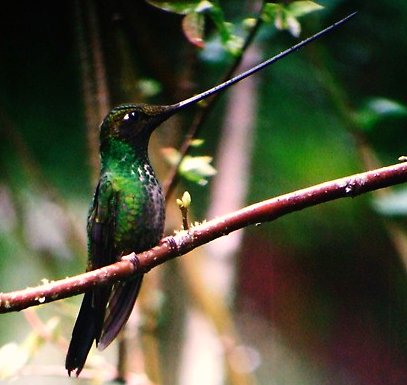
Sword-billed Hummingbird (Ensifera ensifera) by Michael Woodruff

Sword-billed Hummingbird (Ensifera ensifera) by Michael Woodruff

He loves righteousness and justice; The earth is full of the goodness of the LORD. (Psalms 33:5 NKJV)

The Lord has graciously outfitted a small, but unique hummingbird. The Sword-billed Hummingbird has an unusually long bill.

I came across this bird today while checking out photographs of our newest Photographer to give permission to use his fantastic photos. Michael Woodruff’s Photostream has some shots that have just taken my breath away today. Thanks, Michael, for the permission to use the great images that you have captured through your lenses.

When I first saw the Sword-billed Hummingbird, my first thought was why did God make it like that. There has to be a reason for that beak being so long. After investigating some, here are a few facts about this bird:

What is so unique about the Sword-billed Hummer is that it is noted as the only species of bird to have a bill longer than the rest of its body. This beak is used to feed on flowers with long corollas such as Passiflora mixta. The tongue is therefore also unusually long. God had a long flower that needed pollination and so He created a long billed hummingbird to get in that long tube. The bird gets the nectar, carries away pollen and the bird and flower both have their needs provided.

Passiflora mixta galupa - Suncrest Nurseries

Passiflora mixta galupa – Suncrest Nurseries

(From Suncrest Nurserises) “Passiflora mixta – A cool growing species with long tubed flowers that face outward and upward at a 45 degree angle. The color is a vibrant pink with white highlights. It is a large and vigorous grower and puts on an amazing show. The variety ‘Galupa’ has flowers that face outward and downward at a 45 degree angle and are a bit larger in overall aspect. A very beautiful species”

Because it’s beak is so long, it has to groom itself with it’s feet. The Sword-billed Hummingbird was created by an Omniscient Creator that knew it needed the long bill for the flowers, but also had to have a way to keep well groomed.

Keith Blomerley, one of our videographers, captured a Sword-billed Hummingbird perched on a tree and looking around. Another bird flies by.


Sword-billed Hummingbird (Ensifera ensifera)©WikiC

Sword-billed Hummingbird (Ensifera ensifera) is a species of hummingbird from South America and the sole member of the genus Ensifera. It is found in Bolivia, Colombia, Ecuador, Peru and Venezuela.

The total length can be 15 cm (6 in) and the bird can weigh 12 grams, making it one of the largest hummingbirds.

What an amazing hummingbird. The Hummingbirds are in the Apodiformes Order which includes not only the hummers (Trochilidae), but also Owlet-nightjars (Aegothelidae), Treeswifts (Hemiprocnidae) and Swifts (Apodidae).

For by Him all things were created that are in heaven and that are on earth, visible and invisible, whether thrones or dominions or principalities or powers. All things were created through Him and for Him. (Colossians 1:16 NKJV)

Updated 11/30/10:

Just received this note from Michael Woodruff about this article and thought I would attach it.

The Sword-billed Hummingbird is quite a bird. We saw two or three of them at the Yanacocha Reserve in the Andes of Ecuador. They were crazy to watch as they knew right where the end of their beak was, feeding out of the hummingbird feeders. It looked like quite a feat to balance that bill, but they were good at it!

Glad you’re enjoying the photos and it would be cool to hear which ones you end up using at some point. I think it’s great how you’re incorporating scripture verses on the pages. Awesome stuff.

Have a great week and hope you’re getting to feeling better.

Michael

*

Mrs. Mom…

Northern Wren by Peter Ericsson

Northern Wren by Peter Ericsson

Mrs. Mom… ~ by a j mithra

Scientists have found
that mother Wrens

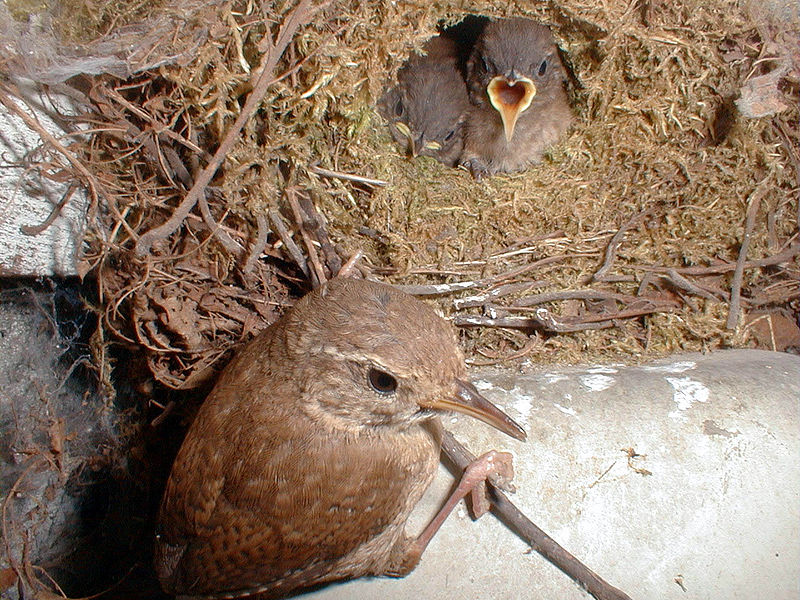
Winter Wren Female and chick ©Wikipedia

Winter Wren Female and chick ©Wikipedia

make at least 1200 visits
to its nest
to feed its chicks…
Amazing isn’t it?
If a small little bird
could take
so much care
of its chicks,
how much would
our LORD,
who gave HIS life
care for you and me?
If the creation is
so amazing,
what would you say
about the CREATOR?

When my father and my mother forsake me, then the LORD will take me up. (Psalm 27:10)

Have a Blessed day!

Thoughts from a j mithra

*

Interesting Things – Similar Features Show Design

Gilbert Sturart's Portrait of George Washington©WikiC

Gilbert Sturart's Portrait of George Washington©WikiC

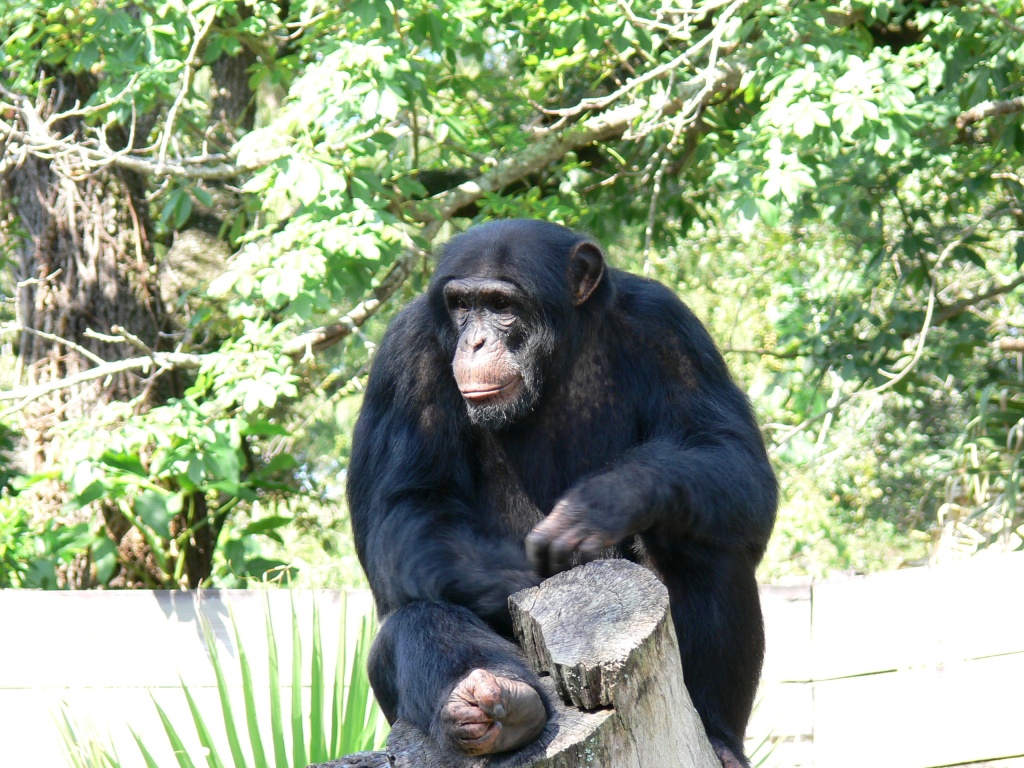
Chimpanzee at Lowry Park Zoo by Lee

Chimpanzee at Lowry Park Zoo

Similar Features Show Design, Not Universal Common Descent by Randy J. Guliuzza, P.E., M.D. is a very interesting article from the October issue of the Acts and Facts from Institute for Creation Research.

“I’m related to George Washington,” an acquaintance announced after searching his genealogical record. He also believes he is closely related to chimpanzees. Though he doesn’t really look like either, all three do share a lot of similar features.

So, are similar looks or features enough to establish whether these three are related closely, remotely, or not at all in regard to their ancestry? No. Similar looks and features can be very deceiving. A true relationship is actually a fact-based connection. A line of connected birth certificates is factual evidence that can be verified. Just comparing similar features—or even DNA—to determine related ancestry is always an inference with a probability of being right ranging from high to zero.

For the rest of the article – Click Here. It is a very good article.

*

Birdwatching – South Lake Howard Nature Park – 10/2/10

South Lake Howard Nature Park, Winter Haven, FL

South Lake Howard Nature Park, Winter Haven, FL

Saturday, Dan and I were back out birdwatching and enjoying God’s creation. This time we stopped by the South Lake Howard Nature Park in Winter Haven. It was another beautiful “cooler” day like Friday at Circle B.

He put another story before them, saying, The kingdom of heaven is like a grain of mustard seed which a man took and put in his field: Which is smaller than all seeds; but when it has come up it is greater than the plants, and becomes a tree, so that the birds of heaven come and make their resting-places in its branches. (Matthew 13:31-32 BBE)

Testing Camera on a White Ibis

Testing Camera on a White Ibis

We were only testing out my camera this time. After missing so many great photos at the Circle B and other outings, we stopped by Marshall’s Camera Shop in Auburndale that afternoon to discuss my camera’s problem. It had been acting up for some time and it wouldn’t auto-focus right. After some adjustments and an attempt to sell me a new Canon, I was satisfied to try some more with my faithful Panasonic Lumix point-and-shoot, always on “program” mode or “video” mode camera. (I’ll leave all those f-stops and ISO’s for the photographers who know what there doing, like Dan, Ian, and my great photographers.) I shoot “proof-shots” (I saw it) and “ID shots” (What was that bird?).

White Ibis on Rail at S. Lake Howard

White Ibis on Rail at S. Lake Howard

White Ibis on Rail up close

White Ibis on Rail up close

With the camera in hand, we checked out the park and managed to see 18 different species and the camera was behaving much better. The birds we observed were small in number again, like Friday. Not sure why the birds haven’t gotten back down here yet. Hope that big storm that went up the East Coast lately didn’t mess up their migration trips down here.

Tricolored Heron at South Lake Howard

Tricolored Heron

South Lake Howard - Bunny

Bunny at South Lake Howard

Here is a list of what we saw and reported to e-Bird. I didn’t report the bunny rabbit to them.

Number of species:     18
Anhinga     1
Great Blue Heron     2
Great Egret     1
Little Blue Heron     1
Tricolored Heron     2
White Ibis     10
Wood Stork     2
Osprey     2
Purple Gallinule     3
Common Moorhen     9
Mourning Dove     1
Monk Parakeet     5
Belted Kingfisher     1
Blue Jay     3
Blue-gray Gnatcatcher     1
Northern Mockingbird     2
Red-winged Blackbird     2
Boat-tailed Grackle     3

For more visits to South Lake Howard Nature Park.

*