Birdwatching 09-18-09 at Circle B Bar Reserve

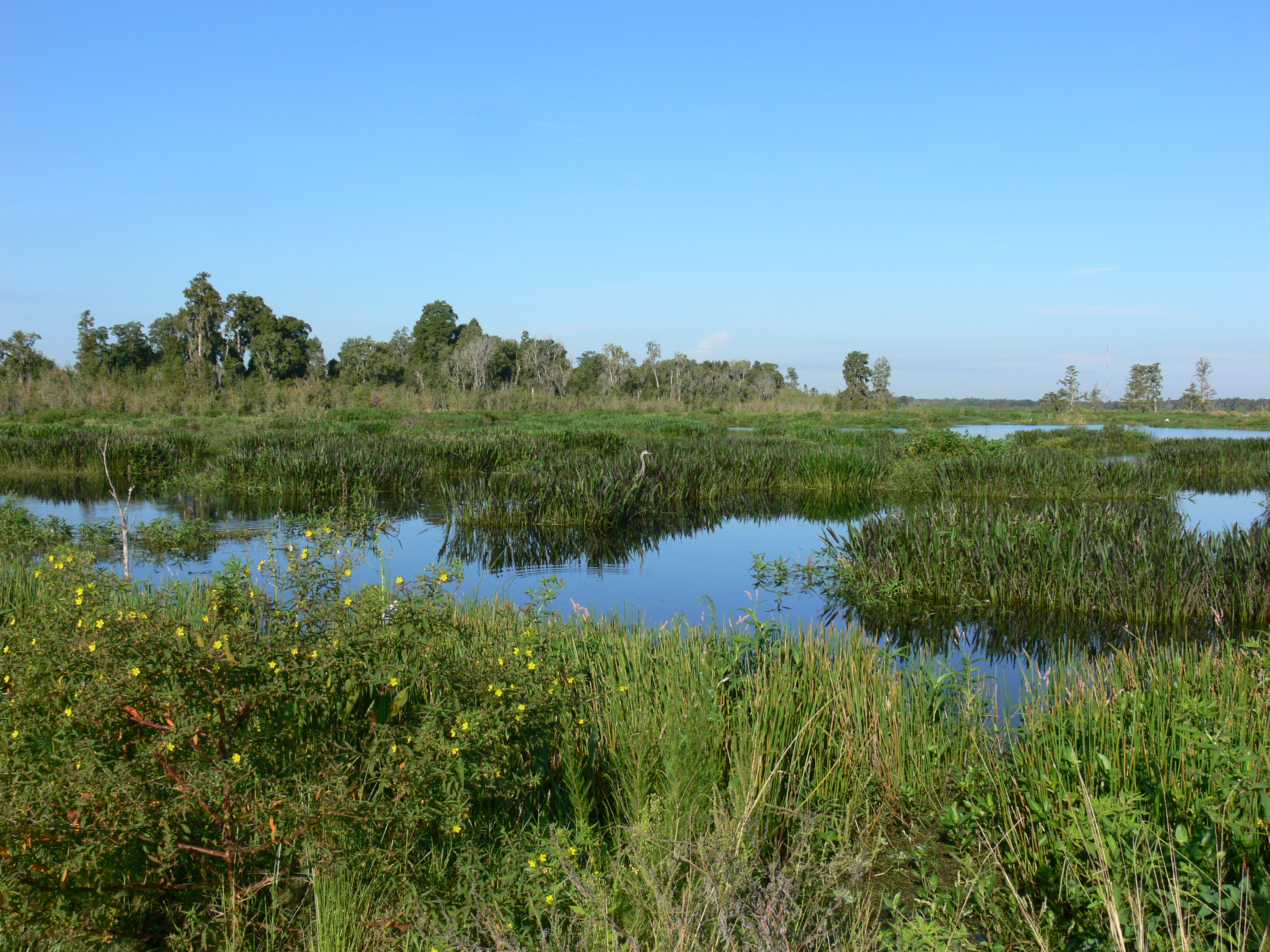
Looking out across part of Circle B  by Lee

Looking out across part of Circle B by Lee

Yesterday, Dan and I went out to the Circle B Bar Reserve again. As you can see it was a nice clear day. We had not been there for awhile due to the summer heat and many birds leave and head north for the summer. There were plenty of birds to see, but most have not arrived back yet. The Black-bellied Whistling-ducks were back (at least I didn’t see any last time we were there). One of the resident Bald Eagles made several low passes over the area and stirred many of the birds into the air. As they scattered, they passed right over us, whistling as they passed. There were many young Common Moorhens and at least one batch of very young ones with a parent. All in all, we saw 35 species and a few unknowns that were mostly heard.
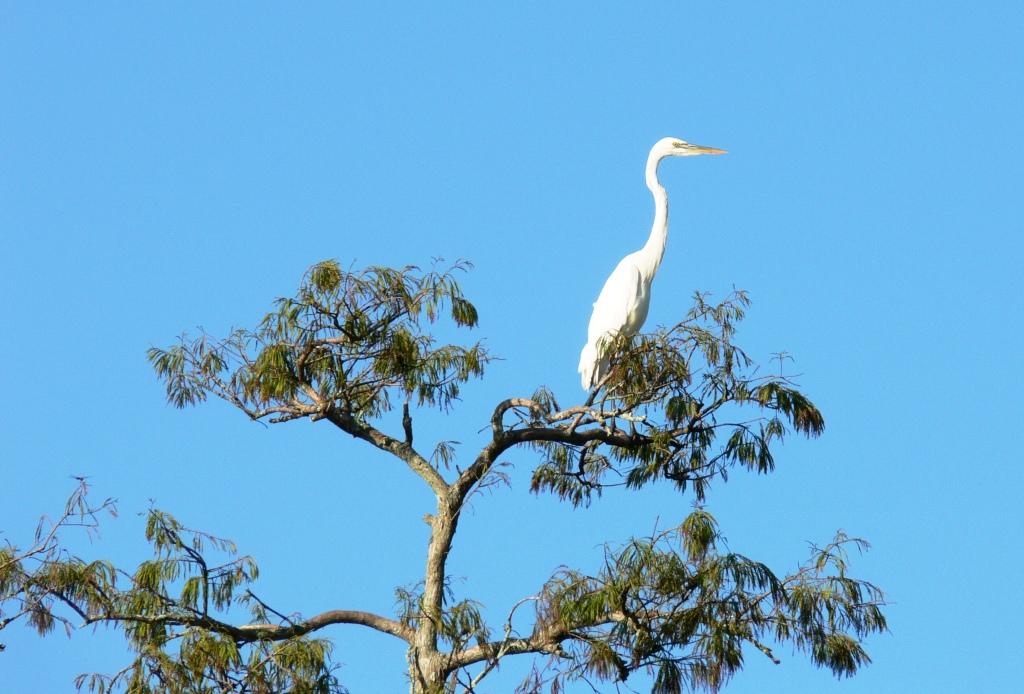
Western Great Egret (Ardea alba) Circle B by Lee

Western Great Egret (Ardea alba) Circle B by Lee

Here is a list of what we saw or heard in the order they were found:
Muscovy Ducks (just outside the park), 3 Sandhill Cranes, Mourning Doves, Black Vultures, Turkey Vultures, Ospreys, Carolina Wren, Pileated Woodpeckers, Tufted Titmouse, Great Blue Herons, Great Egrets, Red-Bellied Woodpecker, 2 Bald Eagles, Black-Bellied Whistling Ducks, Cattle Egrets, Pied-billed Grebe, Common Moorhens, Purple Gallinules, 2 Northern Harrier, 2 Red-shouldered Hawks, Little Blue Herons, Red-winged Blackbirds, Killdeer, Glossy Ibises, White Ibises, Snowy Egret, Fish Crows, Anhingas, 1 Double-crested Cormorant, Green Heron, Belted Kingfishers, Blue Jays, 2 Cardinals (M/F), Blue-grey Gnatcatcher, 5 or 6 Northern Bob-Whites. I also spotted a warbler with yellow and black, but it was too quick to get a good ID.

*

This slideshow requires JavaScript.

*

All Slide shows can be clicked on for a larger view.

For other birdwatching trips to the Circle B Bar Reserve

*
Birdwatching at Lake Hollingsworth 05-28-09

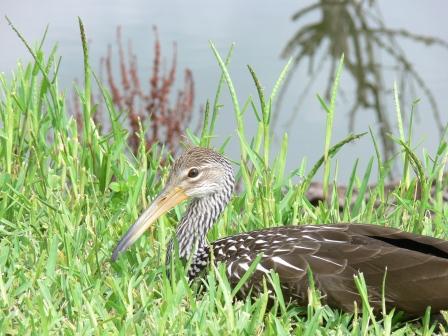
Immature Limpkin

Immature Limpkin

Instruct those who are rich in this present world not to be conceited or to fix their hope on the uncertainty of riches, but on God, who richly supplies us with all things to enjoy. (1 Timothy 6:17 NASB)

Well, today we finally got to go birdwatching for the first time in almost two months. With me being sick for almost a month and having rain for the last two weeks, we made a short visit today to Lake Hollingsworth in Lakeland. I am definitely not complaining about the rain. We have been in drought conditions here in central Florida. We have had 9 1/2 inches in our yard in the last two weeks. Our grass is finally green. The rain has refilled the lakes around here also. The picture I use at the top of the blog was taken at South Lake Howard Nature Park. Until the rains began, that stream was about 2 feet wide. It now looks like the picture again. Praise the Lord for the rain.

Here is a list of the birds we spotted today. On the drive to the lake we saw Ospreys, Cattle Egrets, 4 Wood Storks, a duck (mallard I think) with at least 10 babies in tow, a Great Egret, 10 Rock Pigeons and some Starlings.

Baby Geese by Dan

Baby Geese by Dan

At the lake, I had to feed the local beggars, which I enjoy doing. And then I checked out the local birds which included – White Ibises, Osprey, Wood Ducks, Great Egret, Great Blue Heron, Anhingas, 5 Limpkins, Boat-tailed Grackles, Geese and their babies, Mallards and their babies, Common Moorhens and their babies, Fish Crow, Muscovys, Purple Gallinule and a Pied-billed Grebe. As we knew, all our winter visiting birds have all gone back north to raise their young and enjoy their summer. Lord willing, I’ll be awaiting them in the fall.

This video is of an Anhinga and then I zoomed in on the Limpkin. Just testing out the video part of my camera.


Birdwatching Trips – Circle B Bar Reserve

Roseate Spoonbill

Roseate Spoonbill by Dan

Time gets away from me and I realized that two trips were made to the Circle B Bar that were never written about. So I am going to combine the two. On February 24th and the on March 10th we made our way to one of the neatest places to bird here in central Florida. Both days were cloudless and cool but nice. The biggest problem out there right now is that we are in draught conditions and some of the water holes are drying. It seems the birds that like shallower water are finding  it great, but some have moved on.

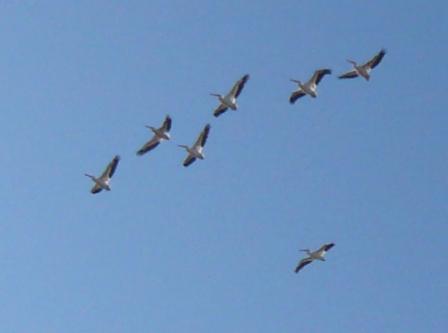
White Pelicans at distance with friends

One group of White Pelicans at distance with friends

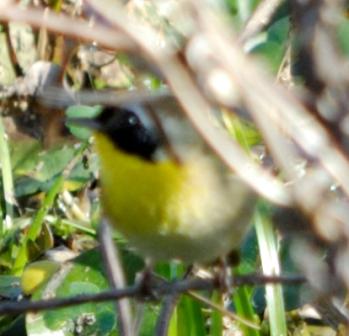
The highlight of both trips were the White Pelicans. There numbers were in the 1000’s. I gave up counting after 1,000 and found out that a week earlier over 5,000 had been counted. It was neat to watch them lift up in groups and circle abit until they got in their V-formations and then head off. It was awesome to watch. My other joy was watching my first Common Yellowthroat that I had seen up close. He looks like a “yellow bandito” with a black mask (The picture is blurry, but you can see him). We also spot a “huge” alligator and an otter. Below is a list of what was spotted on those two trips. We were with some home schoolers on one of those trips, so we were training as well as looking. There are many more birds to see out there. My life list is up to 73 out there, plus the ones I couldn’t ID.

White Pelicans by Lee

White Pelicans by Lee

Mottled Duck
Blue-winged Teal
Northern Bobwhite
Pied-billed Grebe
American White Pelican
Double-crested Cormorant
Anhinga
Great Blue Heron
Great Egret
Snowy Egret
Little Blue Heron
Tricolored Heron
White Ibis
Glossy Ibis

Common Yellowthroat

Common Yellowthroat

Roseate Spoonbill
Wood Stork
Black Vulture
Turkey Vulture
Osprey
Bald Eagle
Northern Harrier
Red-shouldered Hawk
Purple Gallinule
Common Moorhen
American Coot
Sandhill Crane
Killdeer
Lesser Yellowlegs
Wilson’s Snipe
Mourning Dove

Red-shouldered Hawk

Red-shouldered Hawk by Dan

Red-bellied Woodpecker
Downy Woodpecker
Pileated Woodpecker
Eastern Phoebe
Blue-headed Vireo
Blue Jay
Tree Swallow
Tufted Titmouse
Sedge Wren
Blue-gray Gnatcatcher
Northern Mockingbird
Palm Warbler
Common Yellowthroat
Northern Cardinal
Red-winged Blackbird
Boat-tailed Grackle

For more visits to Circle B Bar Reserve

God’s Amazing Pileated Woodpecker

Thou art worthy, O Lord, to receive glory and honor and power: for thou hast created all things, and for thy pleasure they are and were created. (Revelation 4:11 KJV)

This first video is a good introduction to the Pileated Woodpeckers. This was produced by Lauri Shubert of SmellLikeDirt on YouTube.

Pileated Woodpeckers use their beaks to:

  • “drum” on hollow trees to let others know that this is their area
  • tear the bark away from the tree to find insects
  • make up to 16 holes in trees for escape in case a predator enters their tree
  • peck at bark to make sap run

A Pileated Woodpecker drumming away on a tree. (by billr444)

With all this use of the Pileated Woodpecker’s beak, it is more amazing that he doesn’t end up with a headache and what’s so unique about its tongue. Watch the following video.

This video is about how the Woodpecker defies Creation, by ExplorationFilms.com.

More audios, from Creation Moments, about the Woodpeckers and how God has created them.

  • The Amazing Woodpecker
  • The Woodpecker’s Amazing Tongue
  • The Woodpecker’s Pantry (Red-cockated Woodpecker)
  • One Smart Woodpecker (Red-cockated Woodpecker)
  • Explaining Too Much (Acorn Woodpeckers)

All Creation Moments are Copyright ©2009 by Creation Moments, Inc., P.O. Box 839, Foley, MN 56329 and used with permission.

Birdwatching – South Lake Howard Nature Park

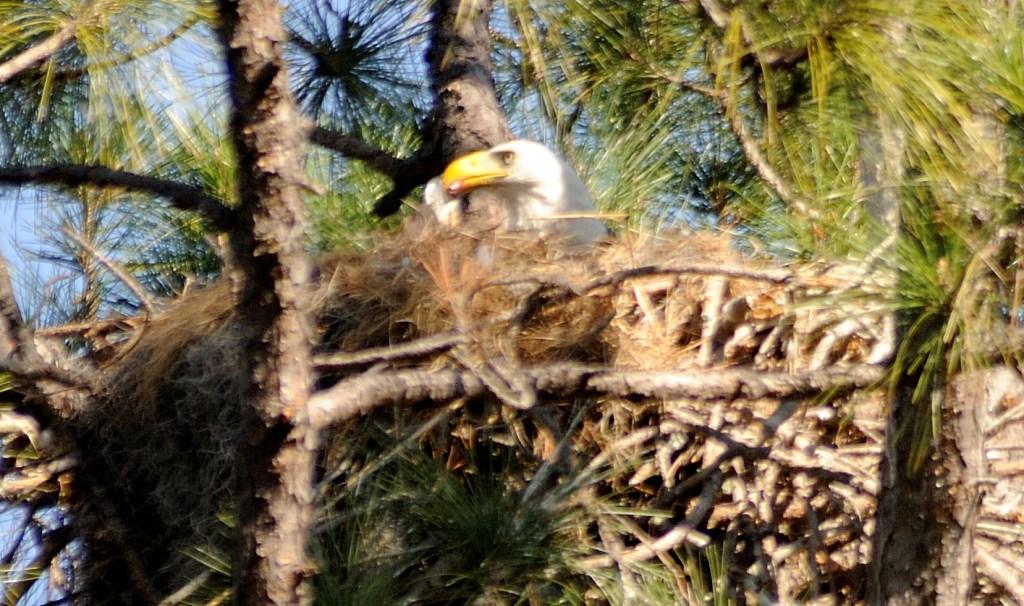
Eagle in Tree on a windy day

Eagle in Tree on a windy day

Today we were back at South Lake Howard Nature Park checking out the progress of the Bald Eagles and their two babies. When we got there, one of the eaglets was stretching its wings and looking over the side of the nest. By the time I got my scope set up, it decided to hide most of the time. What is there about getting out scopes or cameras that make birds “skedaddle?” I did get to see it several times through the scope and binoculars. I never saw two at once, but when I let someone else look through it, of course, the two popped up.

One of the adults eagles was sitting in a nearby tree watching. Some Turkey and Black Vultures flew too close for their comfort and the eagle let out its warning cry. My interpretation was, “okay, that’s close enough, now back off!” The vultures were coming by one or two at a time. When a flock of about 20 Boat-tailed Grackles decided to land in the tree where the nest was, that was a different story. The eagle let out several loud calls in rapid succession and then flew over to the nest tree. Needless to say, the Grackles decided to go elsewhere. Later, the other Eagle came to the nest with food and we could see it feeding the eaglets.

Wilt thou set thine eyes upon that which is not? for riches certainly make themselves wings; they fly away as an eagle toward heaven. (Proverbs 23:5 KJV)

Eagle in nest feeding eaglets by Dan

Eagle in nest feeding eaglets by Dan

It was quite windy this morning and we did not get real clear photos of the birds. Not allowed to get too close either, but some are included. We saw the following birds today:  Mockingbird, Cattle Egrets, Great Egret, 25 Robins, 2 Adult and 2 baby Bald Eagles, Black and Turkey Vultures, American Coots, Common Moorhens, Little Blue Heron adults and 1 immature Little Blue Heron that was still white, White Ibises, Boat-tailed Grackles, Blue Jays, Great Blue Heron, Snowy Egret, Yellow-rumped Warblers, Mourning Doves, Monk Parakeets, and Anhingas. We also saw an alligator up on the bank sunning itself.

We were there about a week ago with four homeschoolers we are helping learn about birds. On that day we saw the following:  2 Eagles, Boat-tail Grackles, Black and Turkey Vultures, Blue Jays, Ospreys, Ring-billed Gulls, Anhinga, Fish Crows, Cormorant, Common Grackles, American Kestrel, Cattle Egrets, Mockingbird, Common Moorhens, Yellow-rumped and Palm Warblers, Limkin, Tricolored Heron, Great Blue Heron, White Ibises, Great Egret, Rock Pigeons, Red-winged Blackbirds, Snowy Egret, Pied-billed Grebe, 4 Hairy Woodpeckers, Downy Woodpecker, Blue-gray Gnatchatchers, 2 Wood Ducks, Belted Kingfisher, (31)

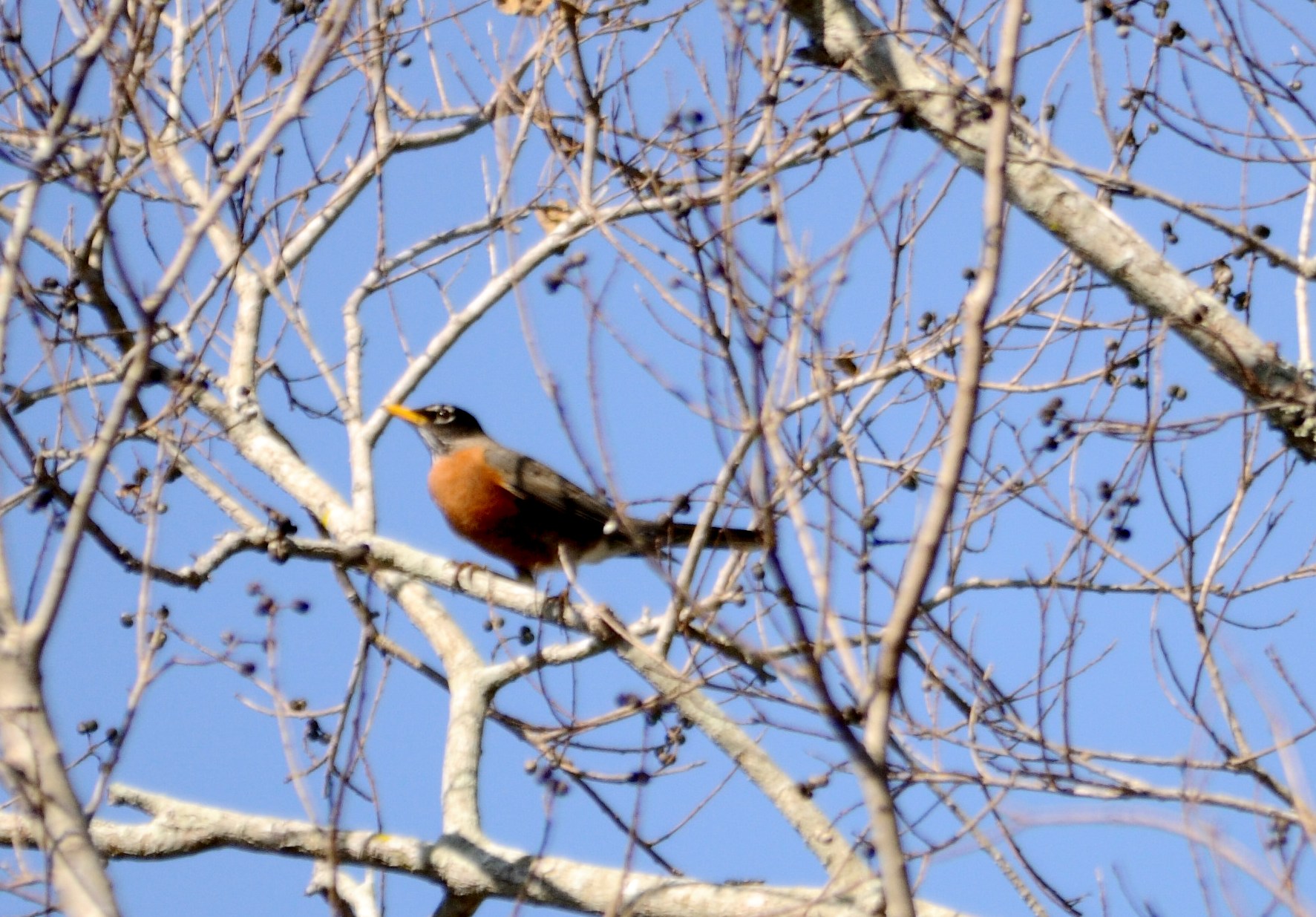
American Robin by Dan

American Robin by Dan

For being a small nature park, we always seem to find a fair number of birds to observe. The water is really getting low in the pond. About as low as I have seen it. We are in a draught condition here in Polk County. In 2004, when the 3 hurricanes (Charlie, Frances and Jeanne) visited, there was too much water. We need rain, but not that way.

Day Five at the Space Coast Birding Festival

We had another great day at the Space Coast Birding Festival which ends tomorrow, Jan 26th. We are home now, but they continue on without us.

Dawn, Jeff and Me

Dawn, Jeff and Me

Met up with Dawn and Jeff several times again today. She does Dawn’s Bloggy Blog. Then off to some more workshops. First off was Reinier Munguia’s, “Bird ID for Kids” to help with some upcoming lessons with kids. Reinier was still not up to normal, so he let his daughter do the presentation. She is a 9th grader and did a  fantastic job. She has been in the field with her dad since she was 3 months old, straped on her father’s back.

In the afternoon it was “Taking the Fear Out of Identifying Gulls” by Alvaro Jaramillo of Field Guides, Inc. He did another great presentation and again I picked up some great information.

By the time that ended, I was in “information overload.” With all the workshops and seminars, birding, plus walking around the exhibits and chatting for the past few days, I was ready for “home.” So was Dan. When we did get home, a 90 mile drive, we found that the cold weather we have been having did “a number” on a few of the plants in the yard. Checked the outdoor temperature and it had gotten down to 26 degrees. We weren’t here to cover the plants. The ones in pots were okay because we had set them in the carport before leaving. Would I go again, You Bet!!!

Day Four at the Space Coast Birding Festival

Today was another interesting day at the Birding Festival. I started the day off with Reinier Munguia’s (of Wildstock Photos) seminar on the “Life of Birds.” He did a very good job even though he still isn’t feeling all that well yet. He made it entertaining as well as informative.

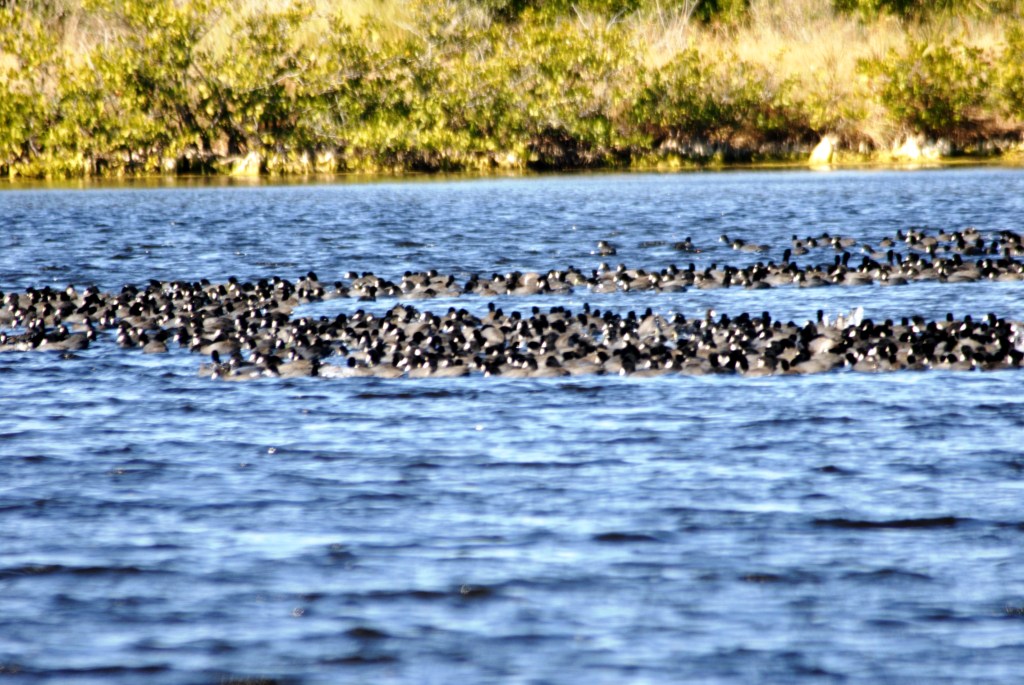
Hundreds of Coots at Merritt Is NWR

Hundreds of Coots at Merritt Is NWR

Then, I attended the two seminars by Sharon Stiteler of the BirdChick Blog. She did one on “City Bird, Country Bird Housing and Feeding,” which helped clear up some questions I had about using meal worms and some other feeding questions. Her other seminar was, “BirdChick Blog: The New Nature Journal.” She did an excellent presentation and I learned many things that will help me with this blog. She is a very enthusiastic person. Thanks, Sharon. It was nice meeting you.

I finished up the day with the “Great Florida Birding Trail“, by Mark Kiser.  He showed many of the great places around the state to bird and what birds to expect there. He also introduced their new birding trip planning website which will be a great help. Poor Dan, he is going to have to take us on some more birding trips. He has been learning all those photography tips, so I doubt he won’t mind too much.

A new thing is in the mail for me to use, but that information will just have to wait to be told later. Needless to say, this Birding Festival has been very well run and it has been right enjoyable. I have seen some mighty great pictures and learned more facinating facts about the great birds the Lord has created. His creative Hand is so evident.

Day Three at the Space Coast Birding and Wildlife Festival

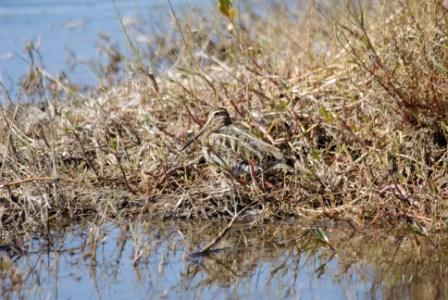
Wilson's Snipe - Merritt Is. NWR by Dan

Wilson's Snipe - Merritt Is. NWR by Dan

Off we went again to the festival in 28 degree weather. Sure be glad when this cold front departs. Today’s seminars and workshops were very good. First, Dan and I attended “Bird Photography” by Joel Rosenthal, who gave a very good presentation on some ins and outs of photographing birds. Later, it was “Wading Birds” by Dr. Eric Stolen from Kennedy Space Center who studies the environment for the Wading Birds there on the Center.
Then I attended Alvaro Jaramillo’s “Field Marks We Haven’t Met Yet – Birding Outside the Box.” His idea of learning to ID birds is to observe and study them to where you just “know them”, like you would “just know” a person’s face. It was a very interesting lecture.
Then one of the highlights of the day was when I met up with Dawn, from Dawn’s Bloggy Blog. We enjoyed meeting each other and I hope to spend some more time chatting with her and Jeff. We were also concerned about Reinier Munguia, who was very sick yesterday and today. He does photography workshops here and is our friend who’s photos I use on the blog. He was a little better this afternoon.

So far, the Festival has been going very well, minus a small power outage this afternoon.

Day Two at the Space Coast Birding and Wildlife Festival

We are enjoying our time here at the Space Coast Birding and Wildlife Festival in Titusville, Florida. We left home yesterday (48 degrees) and drove the 90 miles and saw 23 species of birds on the way over including: 11 Wild Turkeys, American Kestrel, and 5 Robins. After arriving we spent 2 1/2 hours driving through the Black Point drive at Merritt Island National Wildlife Refuge. We were chilled to the bones with it still being only 48 degrees with 20-25 mph winds. But, it was worth it. Among the 36 species spotted were 5 new “life birds.”

Clappper Rail at Merritt Is. NWR

Clappper Rail at Merritt Is. NWR

Here is what we saw: 50 American Wigeons (Life), 40 Mottled Ducks, 50 Blue-winged Teal, 50 Northern Shoveler, 50 Northern Pintail, 15 Pied-billed Grebe, 5 Brown Pelican, 25 Double-crested Cormorants, 5 Anhinga, 7 Great Blue Heron, 8 Great Egret, 15 Little Blue Heron, 10 Tricolored Heron, 1 Green Heron, 30 White Ibis, 10 Glossy Ibis, 16 Roseate Spoonbill, 3 Wood Stork, 15 Black Vulture, 15 Turkey Vulture, 5 Osprey, 1 Bald Eagle, 1 Clapper Rail (Life), 5 Common Moorhen, 1000 American Coot (never seen so many), 2 Sandhill Crane, 1 Killdeer, 50 Avocet (Life), 1 Spotted Sandpiper (Life), 20 Greater Yellowlegs, 25 Lesser Yellowlegs, 10 Short-billed Dowitcher (Life), 3 Wilson’s Snipe, 5 Ring-billed Gull, and 2 Belted Kingfisher.

Snowy Egret at Merritt Is. NWR

Snowy Egret at Merritt Is. NWR

We were fortunate to keep running into Peter, from Massachusetts, who was a big help with some of the IDs. He is here for the Birding Festival also. He had his telescope which was a big help.
Today, they really started the seminars, workshops, trips, and other activities. The festival runs until Sunday. This morning I attended an informative “Beginning Photography” seminar, by Milton Heiberg Photography, and then this afternoon, I went to a great workshop about “Kingfishers” by Jeffrey A. Gordon from Leica. Today I had the privilege of having conversations with Bill Thompson III (Bird Watcher’s Digest, editor) and Pete Dunn at Cape May Bird Observatory who has written many bird books and both are well known in the “birding world.”

Bird Watcher Passes Goal – from The Ledger

The following is an article in today’s The Ledger, our local newspaper: (the bold type is mine)

THE NATURE OF THINGS
Bird Watcher Hits Goal, Finding 216 Species in Polk

By Tom Palmer, Published: Monday, January 12, 2009 at 9:50 p.m.

Roy Morris‘ quest to see how many species of birds a person could find in Polk County in a year is over.
The total was 216 species, one species more than the minimum of 215 species he said was his goal a year ago.
His total would have been a little higher if he hadn’t been out of town when a couple of species showed up at Saddle Creek Park one fall weekend.
Nevertheless, his list includes some surprises.
This is the first time I know of that anyone has set out intentionally to see how many species they could check off in a year in Polk County. In bird-watching parlance, this is what is known as a “Big Year.”
Morris said the way he looks at it, he has now set a benchmark for others to try to top.
He said his quest revealed a few things about bird-watching opportunities in Polk County. For one, there’s no one place where there are mass gatherings of waterfowl or shorebirds that compare with some of the coastal areas of Florida.
Some local birdwatchers have broached the idea of building “scrapes” in section of wetlands areas of local parks. These are areas that are open, wet and sparsely vegetated, which would attract more shorebirds.
The advantage to something like that is that uncommon species sometimes join the masses of common species in this kind of area.
Although other sites looked promising, Saddle Creek Park near Lakeland remained the best and most dependable place to see songbirds during the fall migration.
Circle B Bar Reserve, one of the better local bird-watching parks, was closed during most of 2008 because of construction.
During the spring migration, songbirds are more commonly seen in coastal parks.
Morris said his quest reinforced the idea that Polk County is a good place to see Florida specialties, such as snail kites, caracaras and burrowing owls.
Morris said he had fun tackling the project and it did get him out of his normal bird-watching haunts to explore new areas of Polk County. He had hoped to reach 220 species or so and that could have been possible if he had found birds that he knows were present in the county because other people saw them.
So what did Morris see?
The list is long and varied. His first bird of the year was a pied-bill grebe, which he saw on Jan. 1, along with 91 other species.
The last bird of the year was an American woodcock he found on Dec. 2.
The most unexpected bird he saw was a magnificent frigatebird, which he spotted among a large group of vultures soaring over Saddle Creek Park on Oct. 25.
Frigatebirds are seabirds. I’ve seen several in Polk, but only after they were pushed inland by a hurricane or tropical storm. This bird’s appearance didn’t appear to be weather-related, which makes the sighting particularly notable.
Some other notable finds included a peregrine falcon, a black-throated green warbler, Canada warbler, red-cockaded woodpecker, dunlin (a kind of shorebird), lark sparrow and scissor-tailed flycatcher.
In case you’re wondering, the official Polk County bird list contains 306 species, but many of them were one-time wonders that showed up years ago, never to be seen again locally.
There is a Web site on Polk County birds that’s maintained by local birdwatcher Chuck Geanangel.
To learn more go to www.polkcountybirds.com.


First Bird and Birding Trip of 2009

Here we are in 2009 and it’s time to start listing the birds we see this year. I hope last year was very

1st photo of 2009 - Female Ring-necked Duck 1st photo of 2009

1st photo of 2009 - Female Ring-necked Duck

productive in the bird listing area. I am still checking my counts, due to a software glitch that knocked some of the lists out. With the year only three days old, I trust you have been spotting birds already. On “BRDBRAIN”, a listing service here in Florida, they have all been listing the first bird they saw this year.

The first birds all saw when I looked out at my feeders on New Year’s Day were two Mourning Doves. What was the first bird you saw? Post a comment to this blog and let’s find out what everyone saw.

Today, we took our first Birding Trip for the year and went to Lakes Morton and Hollingsworth in Lakeland, FL. That is about a 20 minute ride from our home. We were not disappointed. On the way we counted a Blue Jay, Boat-tailed Grackles, a Wood Stork flying by, 11 Cattle Egrets, Great Egret, 15 Fish Crows, Mourning Doves and Eurasian-collared Dove, Mallards and a Great Blue Heron.

When we got to Lake Morton we were overwhelmed by the number of Ring-necked Ducks (150+) that are down for their winter vacation. There was also 27 Ruddy Ducks, Ring-billed Gulls (lots), 15 White Pelicans with Double-crested Cormorants swimming right along with them, Mallards, 2 Great Blue Herons, Great Egret, White Swans and Black Swans, Geese, Pied-bill Grebe, Muscovy Ducks, Coots (lots), and 2 Rock Doves, and an Anhinga or two.

Then off to Lake Hollingsworth, but this time we were on the north side of the lake at a walkway they have at a small wetlands. Here is what we saw there: 50+ Fish Crows, 7 Double-crested Cormorants, Mallards, White Ibises, Anhinga, Yellow-rumped Warbler, Palm Warbler, 2 Limpkins, Great Blue Heron, 2 Coots, Boat-tailed Grackles, Common Grackles, 2 Common Moorhens, White Pelican, Ospreys, 2 Red-bellied Woodpecker, Eastern Phoebe and some unknowns that we are trying to ID from photos.

All in all, it was a gorgeous day and the Lord provided lots to look at and enjoy. I trust your year will be loaded with much viewing of the beautiful birds and critters that have been created for ours and the Lords pleasure. Don’t forget to leave a comment as to what was the first bird you saw this year and where.

The photos have not really been touch up yet. Just wanted to get some posted to show what we saw today.

*

This slideshow requires JavaScript.

*

Birdwatching on 12/18/08

We went birdwatching last Thursday, the 18th of December, on a very foggy morning. We were at Circle B Bar Reserve at 7:10am. When we started it was 59 degrees F. We parked up by the new Nature Center and walked out to the “Heron Hideout” path. Here is a list of the birds observed there in the order we spotted them:
White Ibis 6+, Great Blue Herons, Killdeer, Carolina Wren, Wood Storks 75+, Palm Warblers, Yellow-rumped Warbler, Cormorants 15+, Kingfisher, Great Egrets 10+, Glossy Ibis 4+, Tricolored Herons, Eastern Phoebe, Sandhill Cranes 2, Limpkin, Pileated Woodpecker, (an Otter), Coots 10+, Pied-billed Grebe 2, Northern Harrier 1, Common Moorhens 10+, Blue-gray Gnatchatcher, Osprey 3, Roseate Spoonbills 4, Downy Woodpecker, Little Blue Herons, Tree Swallow, Green-Winged Teal, Black-bellied Whistling-Ducks, Muscovy, Red-shoulder Hawk, (what I think is a Hooded Warbler), Red-bellied Woodpecker, Redwing Blackbirds, Boat-tailed Grackles, Blue Jay, Morning Doves 5, (36 species) plus several unknowns. Not a bad 2 hours of birding.

Me, feeding the beggars!

Me, feeding the beggars!

We left there at 9:00 am and drove over to Lake Hollingsworth in Lakeland. At 9:10 most of the fog had cleared and it was up to 66 already. With bread in hand, I was attacked again by the local beggars (see photo). After the Geese, Mallards, White Ibises, Ring-billed Gulls, Boat-tailed Grackles, Common Moorhens and Purple Gallinules got my offerings, I proceeded to go see what else was around. The rest of the adventure turned up Anhingas, Cormorants, Great Blue Herons, Mottled Ducks, Great Egrets, Muscovy, Limpkins 4, Osprey 10+, Tricolored Heron 2, Pied-billed Grebes, Coots, American White Pelicans 11, Brown Pelicans 5, Little Blue Heron, Wood Storks, Black-crowned Night-Heron, Eastern Phoebe, Common Grackles, Caspian Tern. (26) Not bad for an hour of viewing.
Putting the 36 plus the 8 different ones together, gives 44 bird species and a one Otter morning. Again, I am thankful for the opportunity to view and enjoy God’s critters and see His handiwork.

Here are a few photos:

*

This slideshow requires JavaScript.

*

For other birdwatching trips to the Circle B Bar Reserve

*