“But those who wait on the LORD Shall renew their strength; They shall mount up with wings like eagles, They shall run and not be weary, They shall walk and not faint.” (Isaiah 40:31 NKJV)
Bald Eagle (Haliaeetus leucocephalus) Flying by Aesthetic Photos
But they that wait upon the LORD shall renew their strength; they shall mount up with wings as eagles; they shall run, and not be weary; and they shall walk, and not faint.
( Isaiah 40:31)
Therefore, seeing we also are compassed about with so great a cloud of testifying-witnesses [μαρτυρων ], let us lay aside every weight, and the sin which doth so easily beset us, and let us run with patience the race that is set before us.
Seeing a Greater Roadrunner (Geococcyx californianus, a/k/a Chaparral Bird) scampering about in the grass, near the east side of my lawn, last Friday (12 May, A.D.2023), reminded me of the hidden-in-plain-view miracle of running. Roadrunners are cuckoo-like birds, capable of flight yet more famous for on-the-ground running (including chasing and catching insects and reptilian prey), easily recognizable by their skinny-chicken-looking bodies, sporting long tails, scissors-like beak, and prominent crest feathers.
GREATER ROADRUNNER in Mojave Desert, California ( photo credit: Wikipedia / Jessie Eastland )
Running is an astounding activity, although we rarely think of running that way. (And chasing is even more amazing, because it involves 2 creatures running at the same time, with one trying to catch while the other tries to escape!). However, if we only saw an animal–or a human–running once in a lifetime we might recognize the physiology of running as the God-given miracle that is. But, because we see creatures run about, frequently, we lose sight of how astonishing the action of running really is.
Running requires coordinated and energetic movement, integrating purpose, distance, and body parts and systems working together with teamwork (see 1st Corinthians chapter 12), so the bioengineering needed to enable running is an energetic and ongoing exhibit of the Lord Jesus Christ’s empowering genius and wisdom. (See, accord, Randy J. Guliuzza, “Made in His Image: Beauty in Motion”, posted at http://www.icr.org/article/beauty-motion# .)
Children assume that running is normal; grandparents watch runners with nostalgia, remembering when sprinting felt effortless. Running, if and when it is accomplished with ease, is a blessing–the ability to run is a marvelous gift from our God Who invented the ability to run. In fact, the Lord gave the gift of running to more than just human children, and athletes who are older than children–He gave the gift of running to many of the animal He created.
CHEETAH running (Answers in Genesis photo credit)
Among mammal s, notable runners include feline family (such as cheetah, jaguar, and cougar, sprinting at speeds near 70 mph!), antelope-like beasts (such as pronghorn, springbok antelope, and Indian blackbuck antelope, reaching speeds of 50 to 60 mph), wildebeest (running at 50 mph), and even bats (such as free-tailed bat, flying at 60 mph!). Other fast-footed mammals include the African lion and the hare (both climaxing at almost 50 mph, and running longer distances at lesser speeds), as well as the African wild dog and Australia’s kangaroo (both climaxing at almost 45 mph).
But, what about birds? Many birds move at speeds that are mind-boggling, such as the figure-eight wing-beating of hummingbirds, which appear as blurs to the watching eyes of human spectators–some capable of speeds above 40 mph!)..
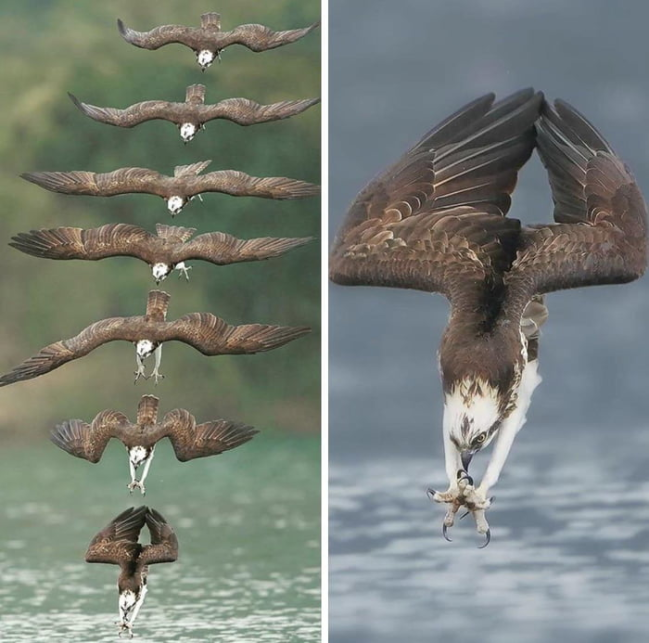
Likewise, birds can fly at high speeds, both horizontally and especially when “dive-bombing” (a/k/a stoop diving) downward—think of falcons (e.g., Peregrine Falcon, with horizontal speeds up to almost 70 mph, and diving speed above 240 mph!). Likewise, eagles are famous for their speed (e.g., Golden eagle, with horizontal speed near 30 mph, and diving speed near 200 mph).
EAGLE diving down! ( photo credit: 9gag.com )
Indeed, the Holy Bible refers to the eagle’s speedy flight more than once.
Saul and Jonathan were lovely and pleasant in their lives, and in their death they were not divided: they were swifter than eagles, they were stronger than lions.
( 2nd Samuel 1:23 )
Our persecutors are swifter than the eagles of the heaven: they pursued us upon the mountains, they laid wait for us in the wilderness.
( Lamentations 4:19 )
Yet birds can be rapid runners on ground, too–with the Roadrunner being the classic example of a bird famous for running.
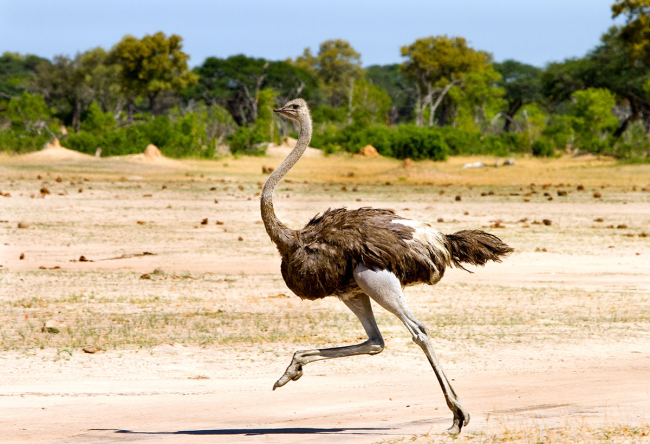
OSTRICH running ( photo credit: Thomson Safaris )
Actually, Africa’s Ostrich runs faster, achieving speeds up to 43 mph (with some reports of quick sprint-bursts up to 60 mph!), qualifying the Ostrich as the fleetest terrestrial runner among birds! Ostriches have stamina, too, so they can sustain speeds above 30 mph for a half-hour or even longer–no human can do that! Behind the Ostrich, Australia’s Emu (a smaller ratite) zooms by, racing at speeds above 30 mph.
ROADRUNNER with prey (photo credit: Nature Picture Library)
Yet the Greater Roadrunner, a much smaller bird, can dart about at speeds above 25 mph–faster than even fleet-footed children.
So, you get the picture–running is a big deal! On that note I’ll quit–i.e., rest–because I ‘got tired” just thinking about all of those creatures running to and fro. Actually, to be frank, I NEVER GET TIRED! Why? I don’t “get tired” because I stay tired.
:)
GREATER ROADRUNNER at Caprock Canyons State Park in West Texas ( photo credit: Wikipedia / drumguy8800 xvisionx.com )
Having arrived at this blogpost’s “finish line”, I’ll contribute this limerick:
STARTLED BY A ROADRUNNER ZIGZAGGING IN THE GRASS
After filling my mower with gas,
I was cutting my east lawn’s grass;
Whoa! — it gave me a start!
‘Twas a bird that did dart!
Wow! Texas roadrunners run fast!
ROADRUNNER, on the run! (photo credit: Wikipedia / El Brujo+ )
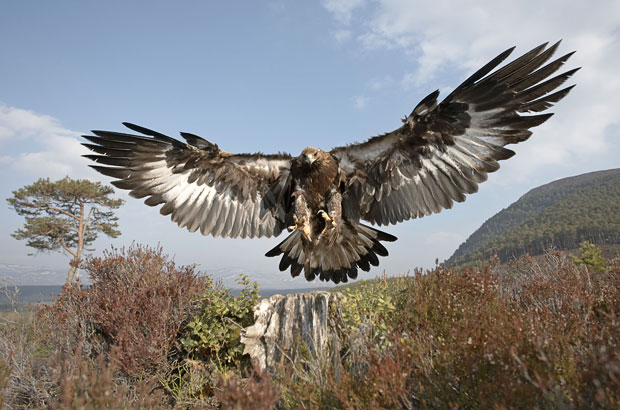
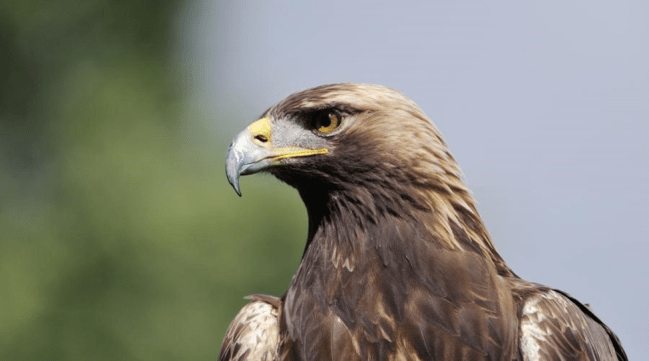
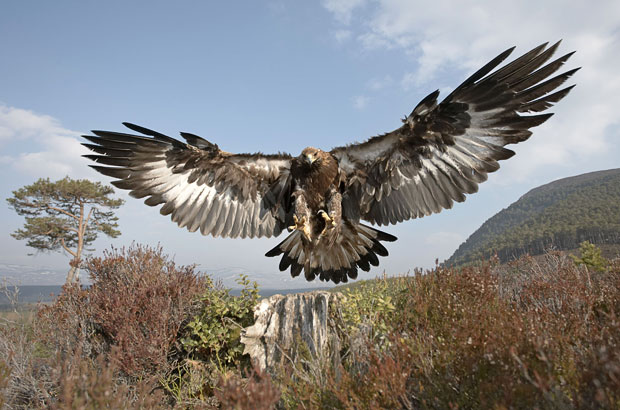
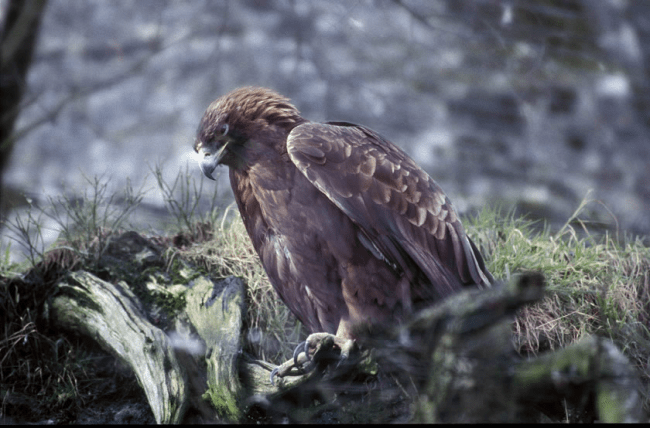
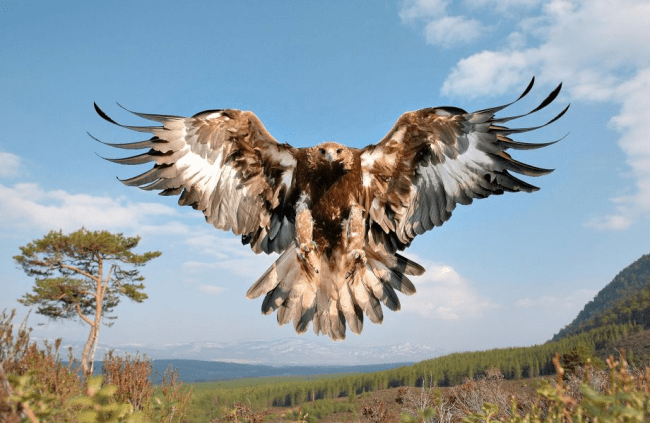
GOLDEN EAGLE [photo credit: THE SCOTTISH BANNER, November AD2022]
“Does the hawk fly by your wisdom, and spread its wings toward the south? Does the eagle mount up at your command, and make its nest on high? On the rock it dwells and resides, on the crag of the rock and the stronghold. From there it spies out the prey; its eyes observe from afar.”
JOB 39:26-29
It’s time for some good news—Golden eagles, thanks to some successfully relocated from the Outer Hebrides, are making a comeback in southern Scotland! Consider this happy report from the online November (AD2022) issue of THE SCOTTISH BANNER:
The pioneering South of Scotland Golden Eagle Project has become the first in the UK to successfully translocate free-flying young golden eagles (aged between 6 months and 3 years) to boost a low population of this iconic bird. These new additions bring the total number of golden eagles in the south of Scotland to around 33 – the highest number recorded here in the last three centuries. Taking a new research approach, under licence from NatureScot, the team leading the ground-breaking charity project revealed that they had successfully caught, transported and released seven golden eagles from the Outer Hebrides. . . .
The Outer Hebrides were selected as the source to boost the south of Scotland population because these Islands host one of the highest densities of golden eagles in Europe. The birds were released almost immediately on arrival in a secret location in the southern uplands of Scotland. The project team is continuing to monitor the birds’ progress to see if they settle and breed in the area. If they do, this could be a ground-breaking for the project.
Francesca Osowska, NatureScot’s Chief Executive, said: “This ground-breaking project has accomplished so much over just a few years, bringing a viable population of golden eagles back to south Scotland . . . it’s wonderful to see a success like this. Golden eagles are a vital part of Scotland’s wildlife, and we’re passionate about returning them to places where they used to thrive. . . .”
[Quoting Staff writer, “South of Scotland Golden Eagle Population Reaches New Heights Thanks to Novel Research Technique”, THE SCOTTISH BANNER, November AD2022.]
For another photograph of this magnificent raptor, see ornithologist Lee Dusing’s post “Golden Eagles in Scotland”, posted November 28th of AD2018, at https://leesbird.com/2018/11/28/golden-eagles-in-scotland-youtube/ — wherein Lee cites the very relevant Scripture, Job 39:27.
GOLDEN EAGLE (Wilderness Scotland photo credit)
For extra explanation about how eagles fly—thanks to God’s bioengineering design and construction of these heavy-bodied (and often-soaring) birds—review my online article titled “Hawks and eagles Launching Skyward”, ACTS & FACTS, 47(4):21 (April 2018), posted at www.icr.org/article/hawks-eagles-launching-skyward — noting that the same Hebrew verb [paras], which is used to describe raptor birds’ wing-spread in Job 39:26, is likewise used in Isaiah 33:23 to describe how boat-sails are spread out to catch (and thus harness the power of) the wind.
God taught the patriarch Job a lot about His creation in the “nature sermon” (filled with rhetorical questions) in Job 38–41. God used examples of wildlife to illustrate His wise and caring providence. In particular, He challenged Job to appreciate how and why hawks and eagles fly high in the skies above, looking far and wide for earthbound food. . . .
Some who read Job 39:26 assume hawk migration is the question’s topic. But because God compares the hawk’s aerial behavior to eagle flight, the context suggests otherwise. Both raptors require special aerodynamics to lift their heavy bodies into the air. God designed these raptors to utilize weather-powered “elevators” to ascend into air currents. . . .
Rising hot-air currents routinely blow in from south of Israel, so hawks can “catch a ride” simply by stretching out their wings southward, just as sailors harness wind to power boats at sea. Gliding and soaring on extended wings reduces air resistance as well as the hawk’s need to burn energy by flapping.
Likewise, when God commands wind to blow, eagles can “mount up” (literally, “cause to fly”) upon rising thermal air currents—as if they were elevators—and glide almost effortlessly until they spy food far below with their super-powerful distance vision.
GOLDEN EAGLE in Cairngorms Park, Scotland (Peter Cairns / NATUREPL.COM photo credit)
Eagles are majestic birds famous for nesting in high places (Obadiah 1:4), moving through the air in marvelous maneuvering movements (Proverbs 30:19), energized and powered by God’s sustaining enablements (Isaiah 40:31).
When I think of eagles—both golden eagles and bald eagles, or any other kind of eagles—and contemplate what God has put into these magnificent birds, I think of the old doxological hymn HOW GREAT THOU ART!
“But those who wait upon the LORD shall renew their strength; they shall mount up with wings as eagles; they shall run, and not be weary; and they shall walk, and not faint.” (Isaiah 40:31)
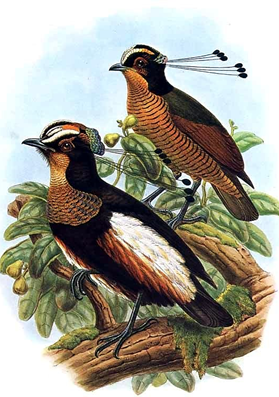
QUEEN CAROLA’S PAROTIA [Wikipedia image]
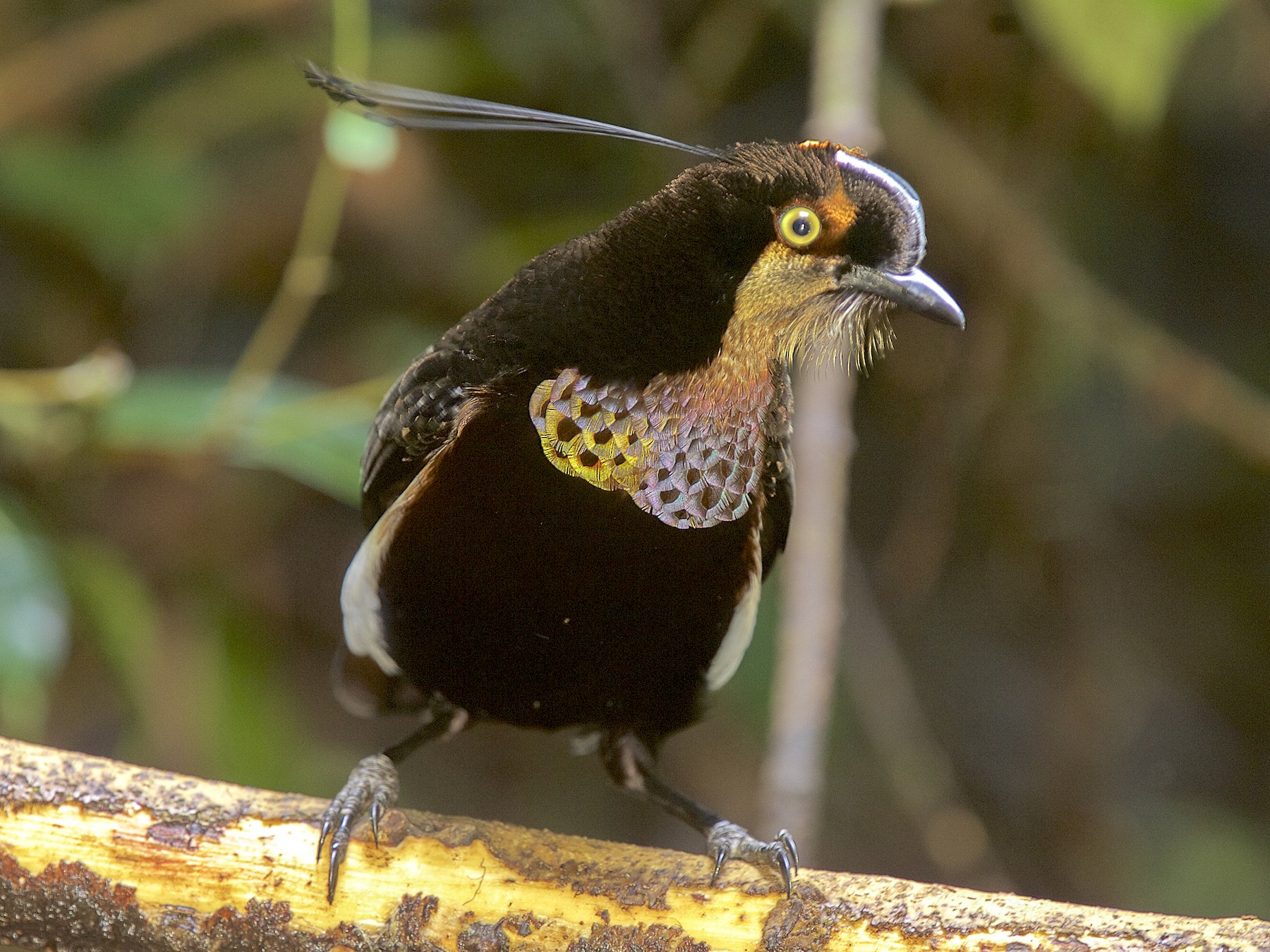
Learning to wait is a virtue, called patience (Romans 8:25; Galatians 6:9; 1st Corinthians 13:4), and waiting in line is often called “queueing up”. So here are 3 birds to “Q up” our appreciation for avian variety.
QUEEN CAROLA’S PAROTIA [ eBird.org photo credit ]
QUEEN CAROLA’S PAROTIA, also called “Queen Carola’s 6-wired Bird-of-Paradise”, are endemic (natively populated) only to New Guinea, the largest island in the Indonesian archipelago. Parotias are part of the bird-of-paradise family, and like their cousins, they perform histrionic ballet-like dances (called “leks”) upon forest dance-floors (flat areas of forest floor swept clean of loose vegetation and debris). In such dances the male hops around and bobs his crest-feathered head, like a bobble-head toy, puffing his chest plumage, fluttering his wings, fanning his kilt-like feathers, and other enthusiastic displays of “showing off for the girls”.
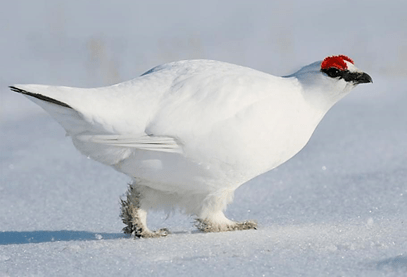
ROCK PTARMIGAN [Cornell Lab of Ornithology photo credit ]
QUAIL are various “galliform” ground-fowl (chicken-like birds), such as bobwhite quail, California quail, partridges, ptarmigans, and red grouse. Willow ptarmigans and rock ptarmigans have feather-covered feet and toes, resembling snowshoe rabbits. Like snowshoe rabbits (with winter “snow” coats and brown summer coats), the Rock Ptarmigan’s white winter plumage camouflages with snow, and its brown summer plumage with wooded areas.
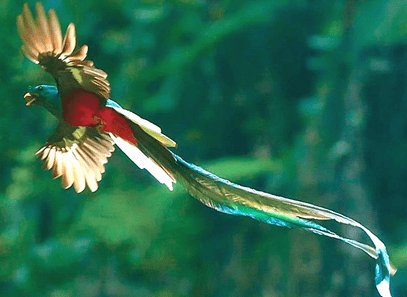
QUETZAL [Mexico Daily News photo]
QUETZALS are fancy trogon-birds, sporting flamboyant colors and long streamer-tails. Latin American jungles and subtropical wet forests are habitats of Pavonine Quetzals, Crested Quetzals, Resplendent Quetzals, Golden-headed Quetzals, and White-tipped Quetzals. Eared Quetzals live near streams in Mexico’s pine-oak forests and canyons.
I found it to be very interest how so abundantly birds, wildlife and plants revive after a forest fire. This article was about the Rice Ridge Fire burn in the Swan Mountains of Montana. They show many of the birds that are now coming back and abounding.
“You send forth Your Spirit, they are created; And You renew the face of the earth. May the glory of the LORD endure forever; May the LORD rejoice in His works. He looks on the earth, and it trembles; He touches the hills, and they smoke.” (Psalms 104:30-32 NKJV)
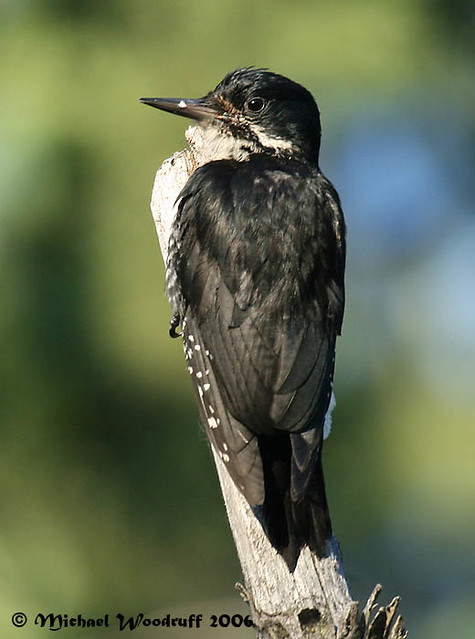
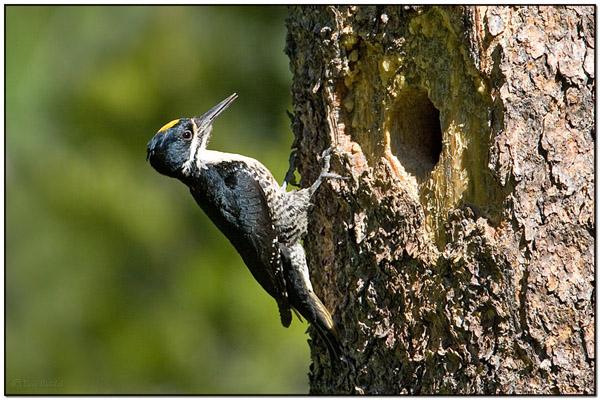
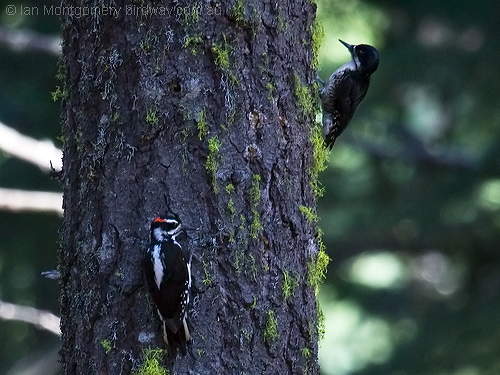
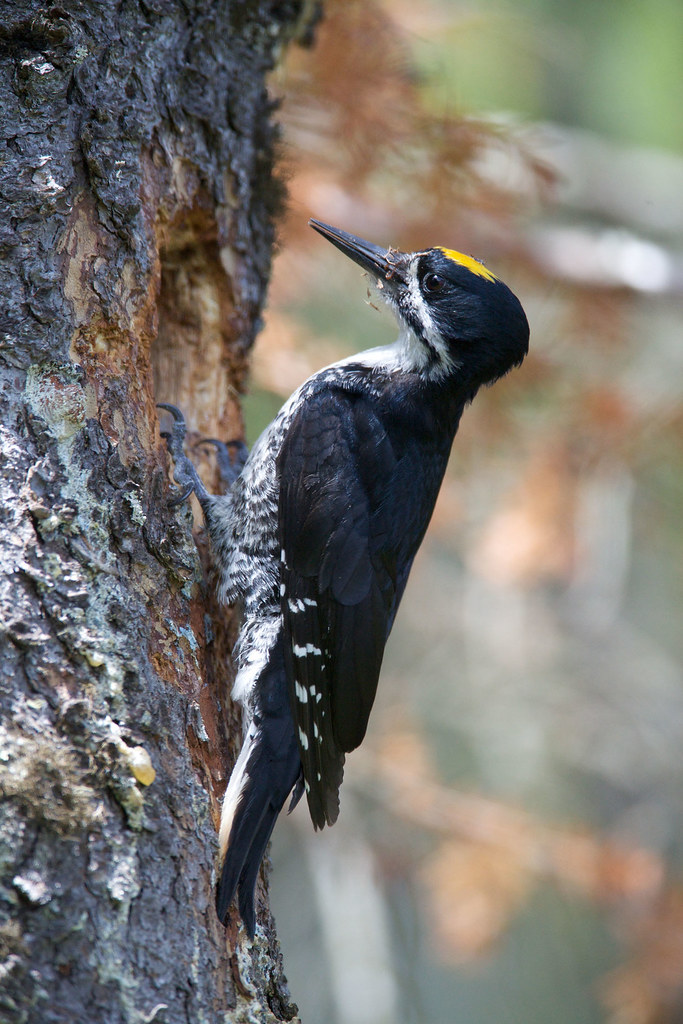
One avian wonder especially pointed out is the Black-backed Woodpecker.
Black-backed Woodpecker (Picoides arcticus) by Daves BirdingPix
“The black-backed woodpecker (Picoides arcticus) also known as the Arctic three-toed woodpecker is a medium-sized woodpecker (23 cm (9.1 in) long) inhabiting the forests of North America.
Their breeding range is boreal forest across Canada, Alaska, the north-western United States, as well as northern Wisconsin, Minnesota, and Upper Michigan. In particular the species is a burnt-forest specialist, feeding on the outbreaks of wood-boring beetles that feed on recently burnt trees. The most important wood boring beetles taken are in the families Cerambycidae and Buprestidae, along with engraver beetles and Mountain pine beetle. Most food is obtained by pecking, a smaller proportion is obtained by gleaning off branches. Black-backed woodpeckers are generally non-migratory but historically have undertaken intermittent irruptions.
Black-backed Woodpecker (Picoides arcticus) by Ian
Nest excavation occurs in April and May; a fresh nest is drilled each year into the sapwood of dead trees. Abandoned nests are used by other species of bird to nest in. The female lays three or four eggs, and incubation duties are shared between both parents, although the male alone incubates during the night. Upon hatching the altricial chicks are brooded until the nestling phase. Both parents feed the chicks, which take about 24 days to fledge.
Nest excavation occurs in April and May; a fresh nest is drilled each year into the sapwood of dead trees. Abandoned nests are used by other species of bird to nest in. The female lays three or four eggs, and incubation duties are shared between both parents, although the male alone incubates during the night. Upon hatching the altricial chicks are brooded until the nestling phase. Both parents feed the chicks, which take about 24 days to fledge.
Black Backed Woodpecker
There are times when it is good to have things “renewed.”
“But those who wait on the LORD Shall renew their strength; They shall mount up with wings like eagles, They shall run and not be weary, They shall walk and not faint.” (Isaiah 40:31 NKJV)
Information about the Black-backed Woodpecker from [Wikipedia]
But they that wait upon the LORD shall renew their strength; they shall mount up with wings as eagles; they shall run, and not be weary; and they shall walk, and not faint. (Isaiah 40:31 KJV)
*
This slideshow requires JavaScript.
Listen to music as the slideshow presents some of the Lord’s beautifully created birds.





 Lee's Birdwatching Adventures Plus