Birds Vol 1 #5 – Screech Owl

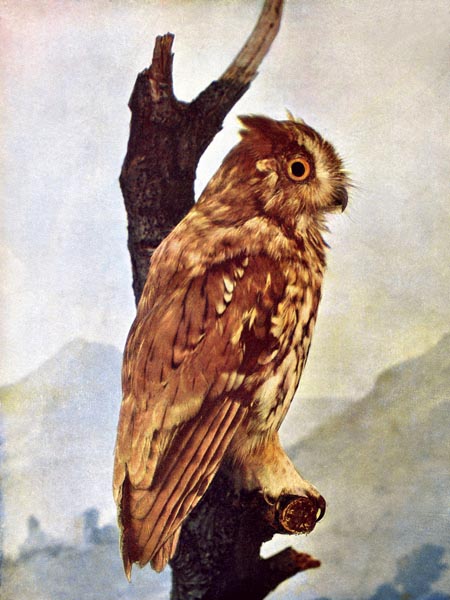
Screech Owl for Birds Illustrated by Color Photography, 1897

Screech Owl for Birds Illustrated by Color Photography, 1897

Birds Illustrated by Color Photography – Revisited

Vol 1. May, 1897 No. 5

*

THE MOTTLED OR “SCREECH” OWL.

imgn

IGHT WANDERER,” as this species of Owl has been appropriately called, appears to be peculiar to America. They are quite scarce in the south, but above the Falls of the Ohio they increase in number, and are numerous in Virginia, Maryland, and all the eastern districts. Its flight, like that of all the owl family, is smooth and noiseless. He may be sometimes seen above the topmost branches of the highest trees in pursuit of large beetles, and at other times he sails low and swiftly over the fields or through the woods, in search of small birds, field mice, moles, or wood rats, on which he chiefly subsists.

The Screech Owl’s nest is built in the bottom of a hollow trunk of a tree, from six to forty feet from the ground. A few grasses and feathers are put together and four or five eggs are laid, of nearly globular form and pure white color. This species is a native of the northern regions, arriving here about the beginning of cold weather and frequenting the uplands and mountain districts in preference to the lower parts of the country.

In the daytime the Screech Owl sits with his eyelids half closed, or slowly and alternately opening and shutting, as if suffering from the glare of day; but no sooner is the sun set than his whole appearance changes; he becomes lively and animated, his full and globular eyes shine like those of a cat, and he often lowers his head like a cock when preparing to fight, moving it from side to side, and also vertically, as if watching you sharply. In flying, it shifts from place to place “with the silence of a spirit,” the plumage of its wings being so extremely fine and soft as to occasion little or no vibration of the air.

The Owl swallows its food hastily, in large mouthfuls. When the retreat of a Screech Owl, generally a hollow tree or an evergreen in a retired situation, is discovered by the Blue Jay and some other birds, an alarm is instantly raised, and the feathered neighbors soon collect and by insults and noisy demonstration compel his owlship to seek a lodging elsewhere. It is surmised that this may account for the circumstance of sometimes finding them abroad during the day on fences and other exposed places.

Both red and gray young are often found in the same nest, while the parents may be both red or both gray, the male red and the female gray, or vice versa.

The vast numbers of mice, beetles, and vermin which they destroy render the owl a public benefactor, much as he has been spoken against for gratifying his appetite for small birds. It would be as reasonable to criticise men for indulging in the finer foods provided for us by the Creator. They have been everywhere hunted down without mercy or justice.

During the night the Screech Owl utters a very peculiar wailing cry, not unlike the whining of a puppy, intermingled with gutteral notes. The doleful sounds are in great contrast with the lively and excited air of the bird as he utters them. The hooting sound, so fruitful of “shudders” in childhood, haunts the memory of many an adult whose earlier years, like those of the writer, were passed amidst rural scenery.
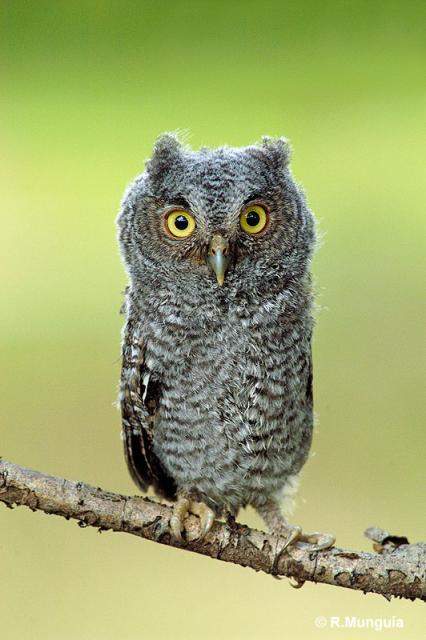
Eastern Screech Owl (Megascops asio) baby Reinier Munguia

Eastern Screech Owl (Megascops asio) baby Reinier Munguia


THE SCREECH OWL.

I wouldn’t let them put my picture last in the book as they did my cousin’s picture in March “Birds.” I told them I would screech if they did.

You don’t see me as often as you do the Blue-bird, Robin, Thrush and most other birds, but it is because you don’t look for me. Like all other owls I keep quiet during the day, but when night comes on, then my day begins. I would just as soon do as the other birds—be busy during the day and sleep during the night—but really I can’t. The sun is too bright for my eyes and at night I can see very well. You must have your folks tell you why this is.

I like to make my nest in a hollow orchard tree, or in a thick evergreen. Sometimes I make it in a hay loft. Boys and girls who live in the country know what a hay loft is.

People who know me like to have me around, for I catch a good many mice, and rats that kill small chickens. All night long I fly about so quietly that you could not hear me. I search woods, fields, meadows, orchards, and even around houses and barns to get food for my baby owls and their mamma. Baby owls are queer children. They never get enough to eat, it seems. They are quiet all day, but just as soon as the sun sets and twilight gathers, you should see what a wide awake family a nest full of hungry little screech owls can be.

Did you ever hear your mamma say when she couldn’t get baby to sleep at night, that he is like a little owl? You know now what she means. I think I hear my little folks calling for me so I’ll be off. Good night to you, and good morning for me.
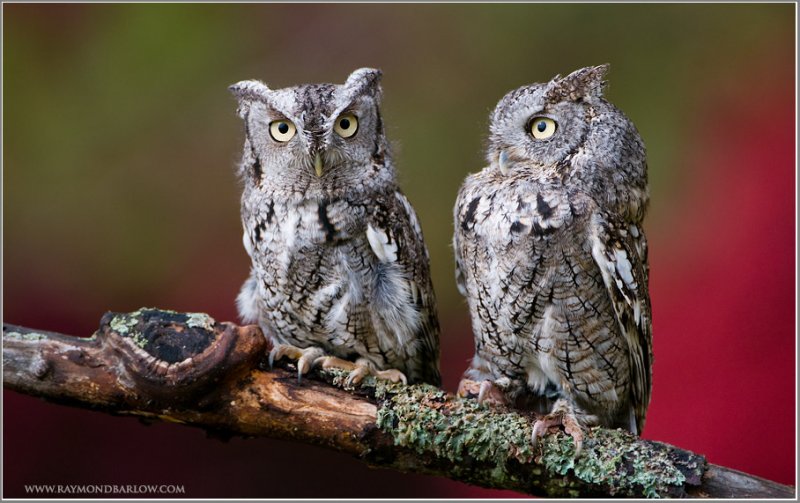
Eastern Screech Owl (Megascops asio) (captive) by Raymond Barlow

Eastern Screech Owl (Megascops asio) (captive) by Raymond Barlow


Lee’s Addition:

Owls belong to the Strigidae – Owls Family which has 207 members. Like most Owls, the females are larger than the males and both are small and agile. They stand about 7-10 in. tall and wings are 18-24 inches across. “They have prominent, wide-set feather tufts with bright yellow eyes. They have different brownish hues with whitish, patterned underside. This coloration helps them get camouflage against the tree bark. They have well-developed raptorial claws and curved bill. They use them as a tool to tear their prey into pieces that are small enough for them to swallow. They tend to carry their prey to the nest and then eat it.”

The Lord has wonderfully created them for just the roll they play, as mentioned above. He has given them special feathers on the fronts of their wings, like most owls, that give them their stealthy quite approach. They are a Bible Bird, as Scripture says, have helped teach man. Our Stealth bombers, I understand, used some of these ideas to help keep the planes “stealthy.”

But now ask the beasts, and they will teach you; And the birds of the air, and they will tell you; Or speak to the earth, and it will teach you; And the fish of the sea will explain to you. Who among all these does not know That the hand of the LORD has done this, In whose hand is the life of every living thing, And the breath of all mankind? (Job 12:7-10 NKJV)

Thought you might enjoy hearing the sound of a Screech Owl

There actually 25 Owls in the Megascops genera, 25 of them named Screech Owls. This article is leaned toward the Eastern Screech Owl.
Eastern Screech Owl (Megascops asio)
Western Screech Owl (Megascops kennicottii)
Balsas Screech Owl (Megascops seductus)
Pacific Screech Owl (Megascops cooperi)
Whiskered Screech Owl (Megascops trichopsis)
Tropical Screech Owl (Megascops choliba)
West Peruvian Screech Owl (Megascops roboratus)
Koepcke’s Screech Owl (Megascops koepckeae)
Bare-shanked Screech Owl (Megascops clarkii)
Bearded Screech Owl (Megascops barbarus)
Rufescent Screech Owl (Megascops ingens)
Colombian Screech Owl (Megascops colombianus)
Cinnamon Screech Owl (Megascops petersoni)
Cloud-forest Screech Owl (Megascops marshalli)
Tawny-bellied Screech Owl (Megascops watsonii)
Middle American Screech Owl (Megascops guatemalae)
Vermiculated Screech Owl (Megascops vermiculatus)
Roraiman Screech Owl (Megascops roraimae)
Napo Screech Owl (Megascops napensis)
Choco Screech Owl (Megascops centralis)
Yungas Screech Owl (Megascops hoyi)
Black-capped Screech Owl (Megascops atricapilla)
Long-tufted Screech Owl (Megascops sanctaecatarinae)
Puerto Rican Screech Owl (Megascops nudipes)
White-throated Screech Owl (Megascops albogularis)
Palau Owl (Pyrroglaux podargina)
Bare-legged Owl (Margarobyas lawrencii)
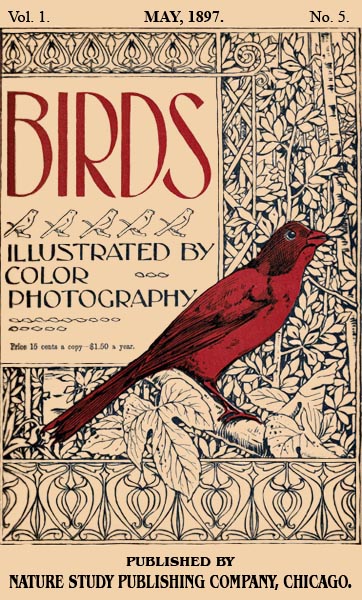
Birds Illustrated by Color Photograhy Vol 1 May, 1897 No 5 - Cover

Birds Illustrated by Color Photograhy Vol 1 May, 1897 No 5 – Cover

Birds Illustrated by Color Photography – Revisited – Introduction

The above article is the first article in the monthly serial that was started in January 1897 “designed to promote Knowledge of Bird-Live.” These include Color Photography, as they call them, today they are drawings. There are at least three Volumes that have been digitized by Project Gutenberg.

To see the whole series of – Birds Illustrated by Color Photography – Revisited

*

(Information from Wikipedia and other internet sources)

Next Article – The Orchard Oriole

Previous Article – National Council of Women

ABC’s Of The Gospel

Links:

Eastern Screech Owl All About Birds

Western Screech Owl – All About Birds

*
 

Start Birdwatching Today: What is that Sound?

Birds are very vocal at times and they give us a great clue as to what bird it is. Eventually as you become better in your birdwatching adventures, it will help to learn some of their sounds and noises.

As you are observing birds that are singing or calling, you can learn to associate that sound to that bird. That is the beginning and it is almost automatic. When you hear a bird, but do not see it, then you will either recall one you have seen and be able to ID it, or you can start studying the sounds so the next time you can know what the unseen bird is.

There are several methods that birders use. Audio CDs and computer programs have Bird sounds along with photos of the bird to assist your learning.

The Internet has places like the WhatBird, All About Birds, Birding by Ear Basics,

Here is an interesting video about blind people birding by ear. Very interesting.

Here are some of the birds you may already know. These are local birds here, but also seen around other parts of the country. Also a very nice verse to remember while “birding by sound.” I used this verse when taking my General Amateur License test that was all Morse Code. It helped calm my heart even though it refers to the Lord hearing us, but it helped me to hear those dots and dashes. (Only 8 of 115 of us passed the test that day.)

LORD, thou hast heard the desire of the humble: thou wilt prepare their heart, thou wilt cause thine ear to hear: (Psalms 10:17 KJV)

All of these sounds are coming from the Xeno-canto.org website.

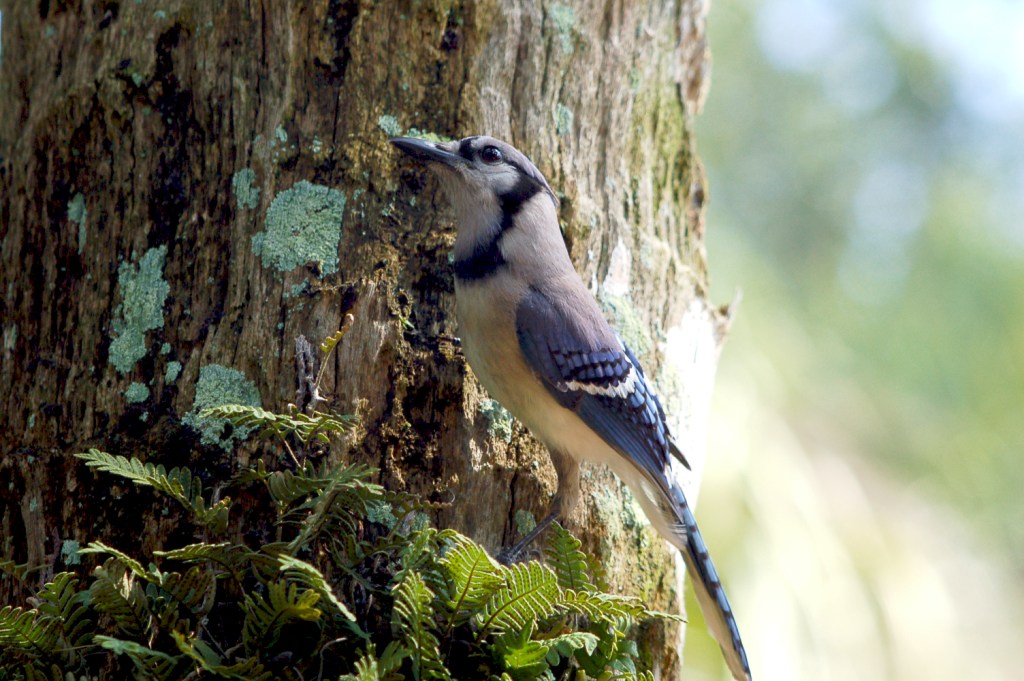
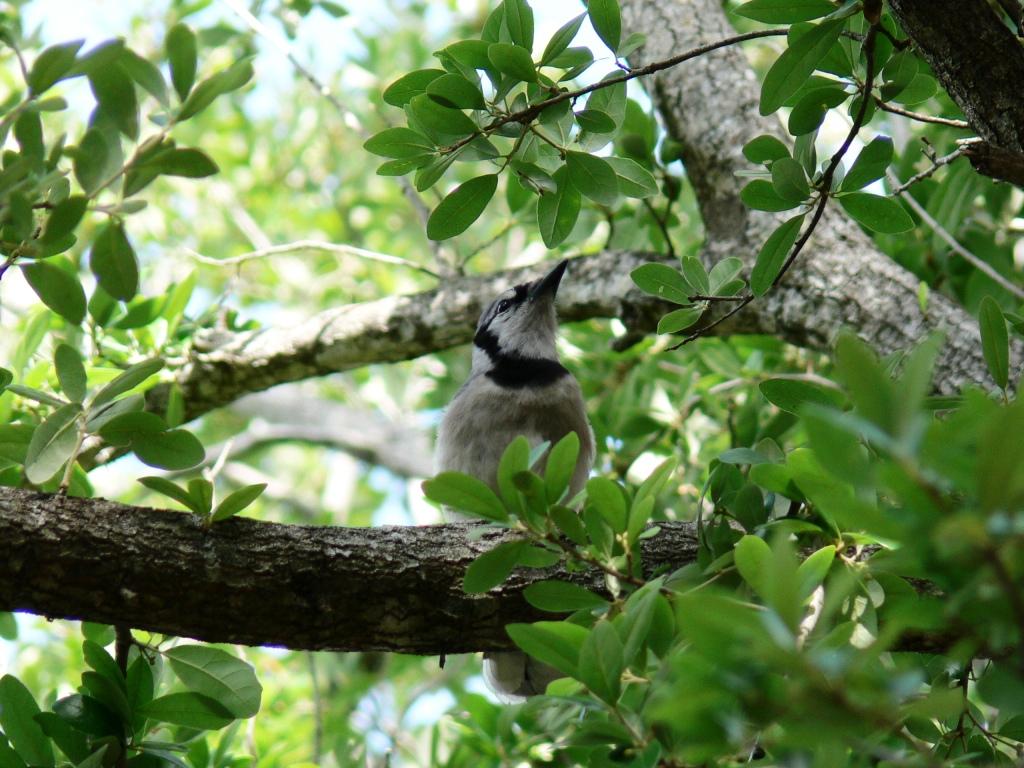
Blue Jay in tree at Hampton Pines

Blue Jay in tree at Hampton Pines

Blue Jay

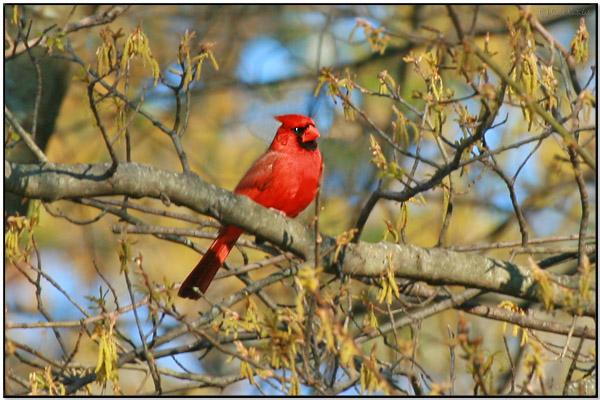
Northern Cardinal (Cardinalis cardinalis) by Daves BirdingPix

Northern Cardinal

Boat-tailed Grackle (Quiscalus major) at Lake Howard, Winter Haven, Florida By Dan’sPix

Boat-tailed Grackle

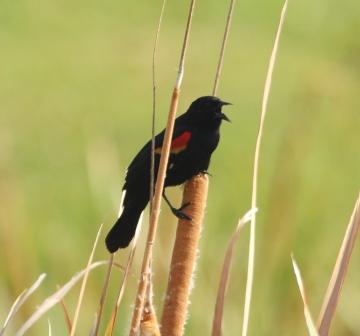
Red-winged Blackbird at Bok Sanctuary

Red-winged Blackbird at Bok Sanctuary

Red-winged Blackbird

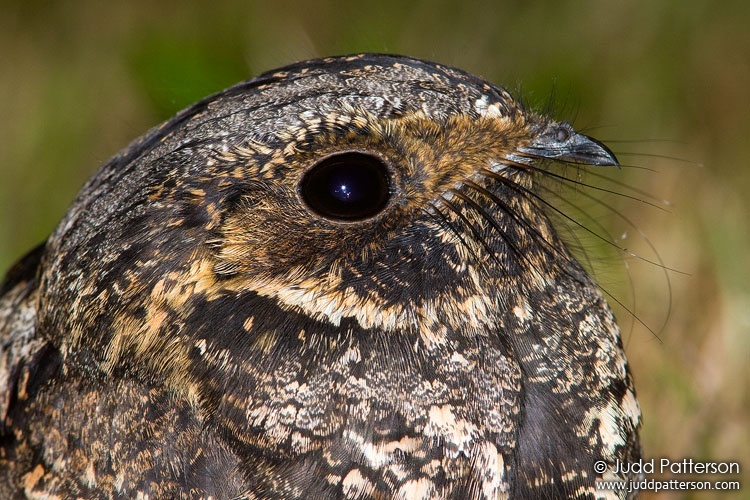
Whip-poor-will (Caprimulgus vociferus) by BirdsInFocus

Whip-poor-will (Caprimulgus vociferus) by BirdsInFocus

Eastern Whip-poor-will

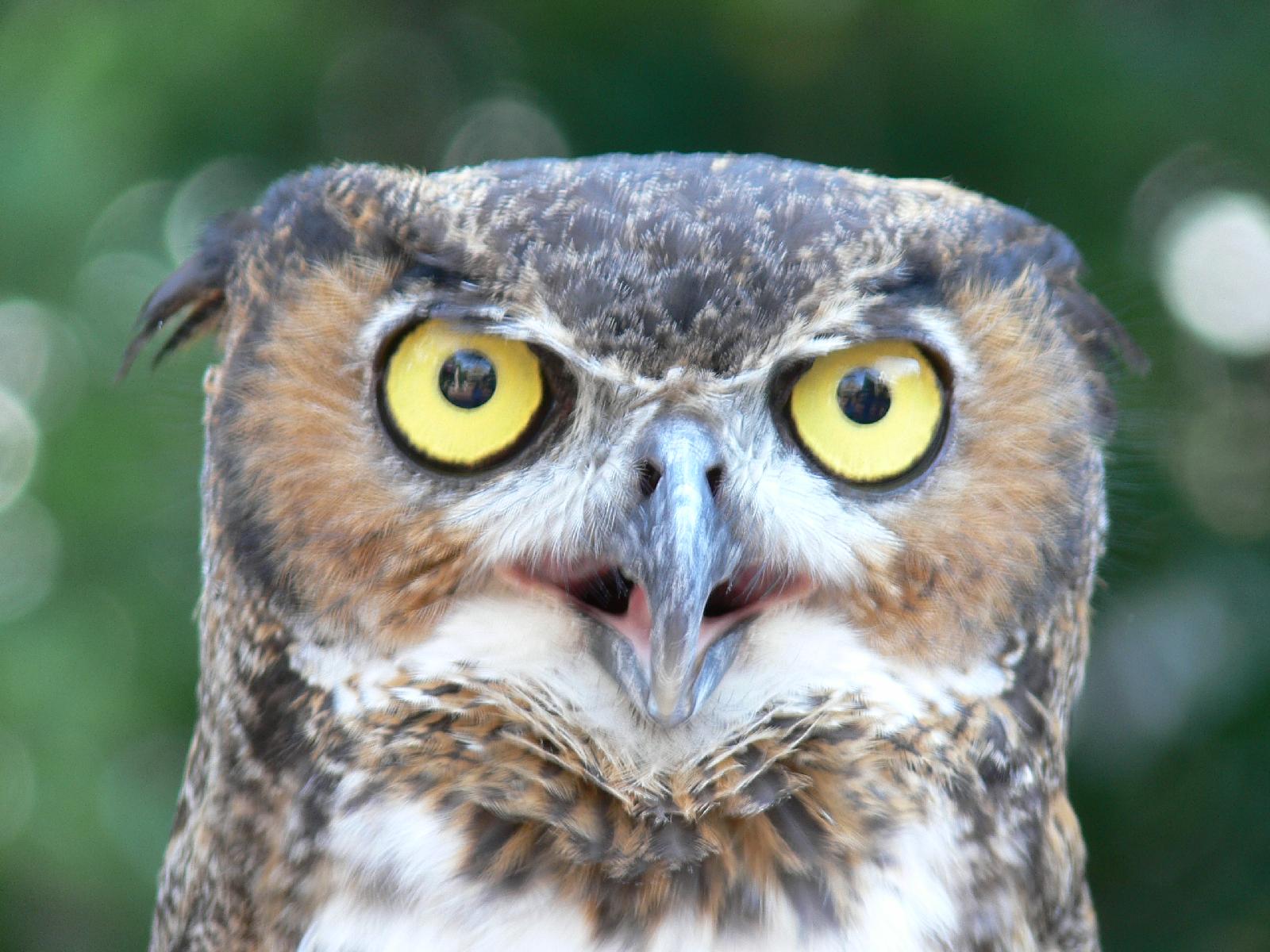
Great Horned Owl – Lowry Pk Zoo by Lee

Great Horned Owl

How many did you all ready know?

Some like to put words to their sounds like these from Birding By Ear — Bird Song Identification

Listen here to a few bird songs and calls that have good mnemonic phrases:
Eastern Towhee — “Drink your tea-ea-ea”
Whip-poor-will — The name says it all.
Black-capped chickadee — Some music and talk first, then the “Chick-a-dee-dee-dee”
White throated sparrow — “Poor Sam Peabody, Peabody, Peabody”
Black-throated green warbler — “Zee zee zee zoo zee”
Barred Owl — “Who cooks for you, who cooks for you all”

Links:
WhatBird
All About Birds
Birding by Ear Basics
*

Start Birdwatching Today Series

*

Ian’s Bird of the Week – (Norfolk Island) Golden Whistler

Ian’s Bird of the Week – (Norfolk Island) Golden Whistler ~ by Ian Montgomery

Newsletter: 5-4-12

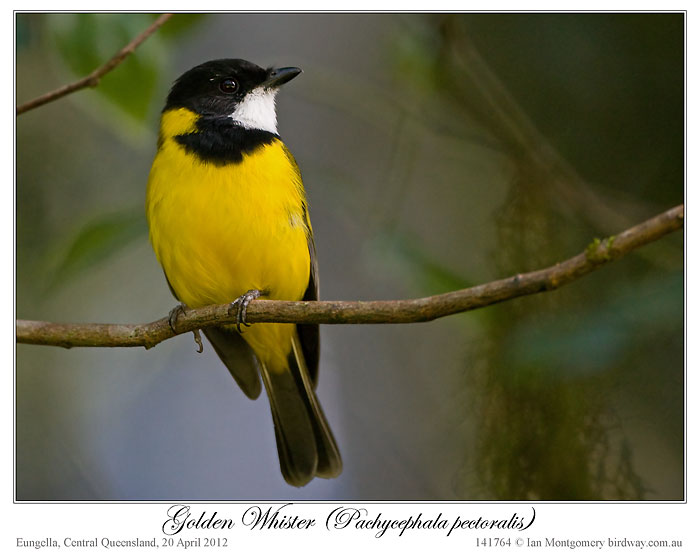
My apologies for a belated bird of the week. When I was in Eungella recently chasing the so-named Honeyeater, I encountered a very obliging male Golden Whistler, below, so I’ve chosen it to introduce this week’s subject.

Australian Golden Whistler (Pachycephala pectoralis) by Ian

It’s one of the most gorgeous of the woodland birds of eastern and southern Australia and one of those unusual birds that, unlike Rainbow Lorikeets for example, both look and sound strikingly beautiful. It featured as bird of the week in January 2005, but I don’t suppose you’ll mind me repeating it and I want to share with you the interestingly different Norfolk Island equivalent.

Australian Golden Whistler (Norfolk Island) (Pachycephala pectoralis xanthoprocta) by Ian

Australian Golden Whistler (Norfolk Island) (Pachycephala pectoralis xanthoprocta) by Ian

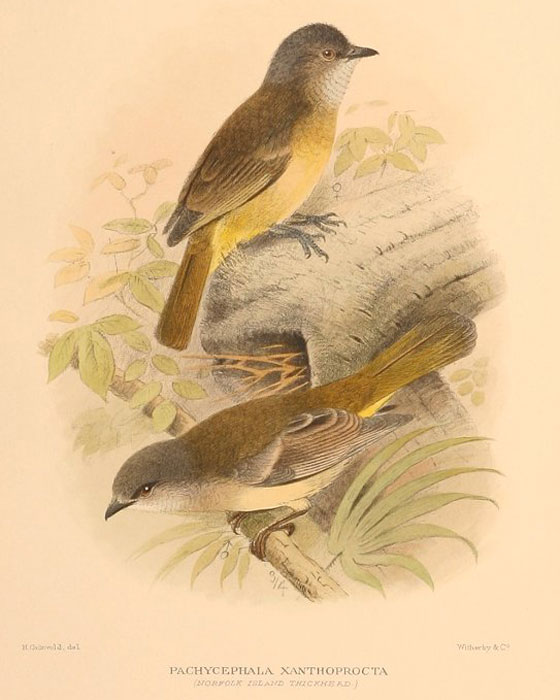
The bird in the second photo, one of a pair we encountered, is, or could be, an adult male Norfolk Island Golden Whistler. I say ‘could be’ because there, the adult males do not develop the striking yellow and black plumage of the mainland races and remain ‘hen-plumaged’, to quote Schodde and Mason. This was recognised early on in the settlement of the island and it was original described as a separate species, the Norfolk Island Thickhead (Pachycephala means ‘thick-head’) P. xanthoprocta, where xanthoprocta refers to the yellow vent. Here is a painting of a pair by John Gould.

Australian Golden Whistler (Norfolk Island) (Pachycephala pectoralis xanthoprocta) by Ian Drawing

Australian Golden Whistler (Norfolk Island) (Pachycephala pectoralis xanthoprocta) by Ian Drawing

He has labelled the bird in the foreground as a male, and the one in the background as a female. There are subtle differences in plumage, with the female being more lemon-yellow underneath and the male being more buffish yellow and. having darker dark lores. I haven’t been able to find whether these differences are consistent, but it seemed to me that the bird in photo above (141464) looks more like the Gouldian male than its partner below (141440).

 Australian Golden Whistler (Norfolk Island) (Pachycephala pectoralis xanthoprocta) by Ian

Australian Golden Whistler (Norfolk Island) (Pachycephala pectoralis xanthoprocta) by Ian

Mainland juvenile Golden Whistlers have rusty margins on the wing feathers and this is the case with the Norfolk Island birds, as shown in the next photo taken on a different occasion when we were hanging around waiting for the Norfolk Island Parakeets to show up.

Australian Golden Whistler (Norfolk Island) (Pachycephala pectoralis xanthoprocta) Juv by Ian

Australian Golden Whistler (Norfolk Island) (Pachycephala pectoralis xanthoprocta) Juv by Ian

To this day, the taxonomic status of the Golden Whistler ‘complex’ remains unresolved. There are different races on the mainland and in neighbouring locations such as New Guinea, New Britain and Fiji. The mangrove-inhabiting Golden Whistler of northern and western Australia has been elevated to specific status but the others have remained in the too-hard basket and are still lumped together as a single species. It seems to me unusual for avian taxonomists to be stumped by a problem like this, but maybe they’ve met their match.

Best wishes

Ian

**************************************************
Ian Montgomery, Birdway Pty Ltd,
454 Forestry Road, Bluewater, Qld 4818
Tel 0411 602 737 ian@birdway.com.au
Check the latest website updates:
http://www.birdway.com.au/#updates
**************************************************
*


Lee’s Addition:

Very interesting and a beautiful bird. I couldn’t resist finding out what this “whistler” sounds like. It is very pretty sounding. Take a listen.

Sound of Golden Whistler

In that day the LORD will whistle for the fly that is at the end of the streams of Egypt, and for the bee that is in the land of Assyria. (Isaiah 7:18 ESV)

The Whistlers are found in the Pachycephalidae – Whistlers and Allies. There are 58 members of the family. This Australian Golden Whistler (Pachycephala pectoralis xanthoprocta) is one of those subspecies; there are at least 7 subspecies. The “Norfolks” are found on the Norfolk Island, as Ian mentioned.

The Norfolk Golden Whistler (P. p. xanthoprocta) declined for many years due to habitat loss and fragmentation and possible due to introduced predators such as the Black Rat. Most of the population is now restricted to the Norfolk Island National Park. This has resulted in it being listed as vulnerable by the Australian Government.

Links:

Check out Ian’s other Whistlers

Australian Golden Whistler – Wikipedia

Pachycephalidae – Whistlers and Allies

*

Birdwatching at MacDill AFB, May 2012

Dan and Black Skimmers

Dan and Black Skimmers

Today, Dan and I had to run over to Tampa for a couple of errands. We stopped by the MacDill AF Base to see how the birds were faring out on their beach on Tampa Bay. When we were there a month or so ago, there were lots of shorebirds. Since there have been many of reports lately from the Listing Service of migrants passing through the state, we thought we would take a look. Tampa is about 45 miles to the west of us and closer to the Gulf of Mexico. We didn’t have the time to go on over to the gulf.

Yellow-crowned Night Heron

Yellow-crowned Night Heron

Our biggest surprise, and the only one, was a pair of Yellow-crowned Night Herons along one of the canals. Down at the beach, we only found the usual Skimmers, Laughing and Ring-billed Gulls, two kinds of Terns; Royal and Sandwich, Turnstones, Willet, White Ibises, and the proverbial Brown Pelicans flying by in formation. A little disappointing, but enjoyable none the less. Even when I only see one bird, I enjoy my birdwatching adventures. I assume most of the birds have already passed by or they were not in much of a beach mood today.

Ruddy Turnstone

Ruddy Turnstone

Even though few species seen today, aren’t they all amazing to watch? I am always amazed at the variety of birds that we get the pleasures of watching.

Which doeth great things past finding out; yea, and wonders without number. (Job 9:10 KJV)

White Ibis

White Ibis

And

Some of the birds at the beach

Some of the birds at the beach Laughing Gulls, Royal Terns and Black Skimmers

I also shot a video of some of the birds at the shore. There are Black Skimmers, which I think are cute walking around, Royal Terns, Sandwich Tern and Laughing Gulls relaxing together.

*

*

One other bird spotted out my back window a few days ago was this House Finch. All winter the normal House Finches and some orange variant ones visited the feeders. This one seems to have combined the two together. Thought it was rather different and wanted to share it. It was shot through the window and screen, so not the best shot.

Interesting House Finch at feeder

Interesting House Finch at feeder

*

Birds Vol 1 #5 – Nesting Time

Mute Swan on Nest at Lake Morton

Mute Swan on Nest at Lake Morton

Birds Illustrated by Color Photography – Revisited

Vol 1. May, 1897 No. 5

*

NESTING TIME

“There swims no goose so gray, but soon or late, She takes some honest gander for a mate;” There live no birds, however bright or plain, But rear a brood to take their place again. —C. C. M.

imgq

UITE the jolliest season of the year, with the birds, is when they begin to require a home, either as a shelter from the weather, a defence against their enemies, or a place to rear and protect their young. May is not the only month in which they build their nests, some of our favorites, indeed, waiting till June, and even July; but as it is the time of the year when a general awakening to life and activity is felt in all nature, and the early migrants have come back, not to re-visit, but to re-establish their temporarily deserted homes, we naturally fix upon the first real spring month as the one in which their little hearts are filled with titillations of joy and anticipation. In May, when the trees have put on their fullest dress of green, and the little nests are hidden from all curious eyes, if we could look quite through the waving branches and rustling leaves, we should behold the little mothers sitting upon their tiny eggs in patient happiness, or feeding their young broods, not yet able to flutter away; while in the leafy month of June, when Nature is perfect in mature beauty, the young may everywhere be seen gracefully imitating the parent birds, whose sole purpose in life seems to be the fulfillment of the admonition to care well for one’s own.

Iceland Gull (Larus glaucoides) chick-egg nest ©USFWS

Iceland Gull (Larus glaucoides) chick-egg nest ©USFWS

There can hardly be a higher pleasure than to watch the nest-building of birds. See the Wren looking for a convenient cavity in ivy-covered walls, under eaves, or among the thickly growing branches of fir trees, the tiny creature singing with cheerful voice all day long. Observe the Woodpecker tunneling his nest in the limb of a lofty tree, his pickax-like beak finding no difficulty in making its way through the decayed wood, the sound of his pounding, however, accompanied by his shrill whistle, echoing through the grove. But the nest of the Jay: Who can find it? Although a constant prowler about the nests of other birds, he is so wary and secretive that his little home is usually found only by accident. And the Swallow: “He is the bird of return,” Michelet prettily says of him. If you will only treat him kindly, says Ruskin, year after year, he comes back to the same niche, and to the same hearth, for his nest. To the same niche! Think of this a little, as if you heard of it for the first time. But nesting-time with the birds is one of sentiment as well as of industry The amount of affectation in lovemaking they are capable of is simply ludicrous.

The British Sparrow which, like the poor, we have with us always, is a much more interesting bird in this and other respects than we commonly give him credit for. It is because we see him every day, at the back door, under the eaves, in the street, in the parks, that we are indifferent to him. Were he of brighter plumage, brilliant as the Bobolink or the Oriole, he would be a welcome, though a perpetual, guest, and we would not, perhaps, seek legislative action for his extermination. If he did not drive away Bluebirds, whose nesting-time and nesting-place are quite the same as his own, we might not discourage his nesting proclivity, although we cannot help recognizing his cheerful chirp with generous crumbs when the snow has covered all the earth and left him desolate. C. C. Marble.

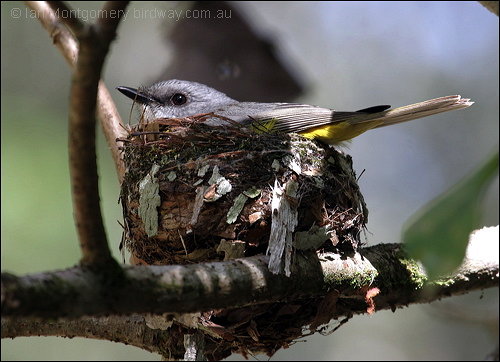
Eastern Yellow Robin (Eopsaltria australis) on nest by Ian

Eastern Yellow Robin (Eopsaltria australis) on nest by Ian


Lee’s Addition:

I think I will just let the Scriptures tell about the nests.

If a bird’s nest happens to be before you along the way, in any tree or on the ground, with young ones or eggs, with the mother sitting on the young or on the eggs, you shall not take the mother with the young; you shall surely let the mother go, and take the young for yourself, that it may be well with you and that you may prolong your days. (Deuteronomy 22:6-7 NKJV)

All the birds of the heavens made their nests in its boughs; Under its branches all the beasts of the field brought forth their young; And in its shadow all great nations made their home. (Ezekiel 31:6 NKJV)

Even the sparrow has found a home, And the swallow a nest for herself, Where she may lay her young— Even Your altars, O LORD of hosts, My King and my God. Blessed are those who dwell in Your house; They will still be praising You. Selah (Psalms 84:3-4 NKJV)

As an eagle stirs up its nest, Hovers over its young, Spreading out its wings, taking them up, Carrying them on its wings, (Deuteronomy 32:11 NKJV)

You who dwell in Moab, Leave the cities and dwell in the rock, And be like the dove which makes her nest In the sides of the cave’s mouth. (Jeremiah 48:28 NKJV)

Another parable He put forth to them, saying: “The kingdom of heaven is like a mustard seed, which a man took and sowed in his field, which indeed is the least of all the seeds; but when it is grown it is greater than the herbs and becomes a tree, so that the birds of the air come and nest in its branches.” (Matthew 13:31-32 NKJV)

Where the birds make their nests; The stork has her home in the fir trees. (Psalms 104:17 NKJV)

And Jesus said to him, “Foxes have holes and birds of the air have nests, but the Son of Man has nowhere to lay His head.” (Luke 9:58 NKJV)

See also – Birds of the Bible – Bird Egg Facts

Birds Illustrated by Color Photograhy Vol 1 May, 1897 No 5 - Cover

Birds Illustrated by Color Photograhy Vol 1 May, 1897 No 5 – Cover

Birds Illustrated by Color Photography – Revisited – Introduction

The above article is the first article in the monthly serial that was started in January 1897 “designed to promote Knowledge of Bird-Live.” These include Color Photography, as they call them, today they are drawings. There are at least three Volumes that have been digitized by Project Gutenberg.

To see the whole series of – Birds Illustrated by Color Photography – Revisited

*

(Information from Wikipedia and other internet sources)

Next Article – National Council of Women

Previous Article – Amateur Photography

*

Ad for Birds Illustrated by Color Photography, 1897

Ad for Birds Illustrated by Color Photography, 1897

Start Birdwatching Today: When Should I Go?

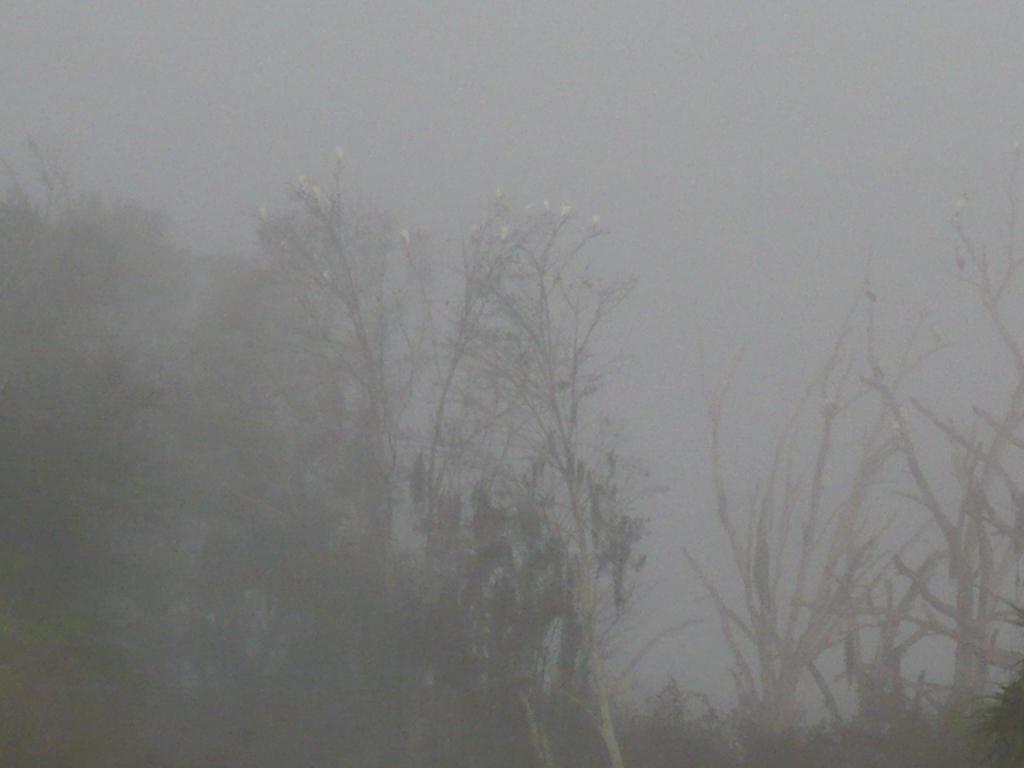
Wood Storks in Trees in Fog at Circle B

Wood Storks in Trees in Fog at Circle B

Start Birdwatching Today: When Should I Go?

You can go birdwatching anytime, but you may or may not find many birds. There are benefits of finding out when the birds you are looking for is out and about. In the beginning stages of birding, you just want to find birds, right?

The flowers appear on the earth; The time of singing has come, And the voice of the turtledove Is heard in our land. (Song of Solomon 2:12 NKJV)

To start, most birds are active in the morning. Many around sunrise are getting up and are hungry from resting all night. Just like us, they need some “breakfast.” They start stretching, singing, searching for a meal. Give or take around 11:00 am they are resting or starting to settle down for most of the afternoon. Then around 3 or 4, depending on the time of the year, they start looking for a snack or meal before they again settle in for the night.

If you have feeders in your yard, the same is true. The morning and for a few hours before dark will be your most active times to see the birds.

Birds that roost together as a flock start heading to their night-time hangout. For instance, locally at Circle B Bar Reserve, the Herons, Egrets, Wood Storks, Ibises and White Pelicans (during winter) come back in to rest for the night. One of my neatest experiences was when the White Pelicans started arriving at Circle B around 4:45 pm for the night. (Ignore my crazy talk, I was just flabbergasted!)

*

*

If you like to see Owls, Nighthawks, Whip-poor-wills, and the other night birds, then, they are quiet in the daytime, but come out to “hoot” and “holler” right around dark and throughout the night. They start settling down around dawn.

Weather is a big factor also in when to go. Fog makes it hard. Windy days will cause the many birds to stay low. It is as if they are “grounded.” Rain of course makes it rough on you to go out and watch and they are seeking shelter which can make them harder to observe. They are out there and they still get hungry. Also, down here in the winter, we get lots of visiting birds and that is a good time of the year to watch our feathered friends.

Mom and Baby at Lake Hollingsworth

Mom and Baby at Lake Hollingsworth

“Many birdwatchers occupy themselves with observing local species (birding in their “local patch”, but may also make specific trips to observe birds in other locales. The most active times of the year for birding in temperate zones are during the spring or fall migrations when the greatest variety of birds may be seen. On these occasions, large numbers of birds travel north or south to wintering or nesting locations. Early mornings are typically better as the birds are more active and vocal making them easier to spot.

Weather plays an important role in the occurrence of rare birds. In Britain, suitable wind conditions may lead to drift migration, and an influx of birds from the east. In North America, birds caught in the tail-end of a hurricane may be blown inland.” (Wikipedia)

This is not an in-depth study, just some of my tips to get you started in your birdwatching adventure. Trust you are enjoying our series, Start Birdwatching Today.

*

Links:


Best time of day to watch birds ? – Bird Forum

Bird Watching Tips – All About Birds


*

Birds Vol 1 #4 – The Arizona Green Jay

Arizona Jay -Chicago Colortype Co - For Birds Illustrated by Color Photography, 1897 (Green Jay)

Arizona Jay -Chicago Colortype Co – For Birds Illustrated by Color Photography, 1897 (Green Jay)

Birds Illustrated by Color Photography – Revisited

Vol 1. April, 1897 No. 4

*
THE ARIZONA GREEN JAY.

imgt

HE geographical range of the Arizona Jay is in southern New Mexico and Arizona and south into Sonora and Chihuahua, Mexico. It is a common resident throughout the oak belt which generally fringes the foothills of the mountains and ranges well up among the pines. In suitable localities it is very abundant. It is rarely seen at any distance out of the arid plains; but after the breeding season is over, small flocks are sometimes met with among the shrubbery of the few water courses, several miles away from their regular habitat. They are seen in the early Spring, evidently on a raid for eggs and the young of smaller birds. On such occasions they are very silent, and their presence is only betrayed by the scoldings they receive from other birds. On their own heath they are as noisy as any of our Jays, and apparently far more sociable, a number of pairs frequently nesting close to each other in a small oak grove. They move about in small family parties of from half a dozen to twenty or thirty, being rarely seen alone. They are restless, constantly on the move, prying into this or that, spending a good portion of their time on the ground, now hopping on a low limb, and the next minute down again, twitching their tails almost constantly. Their call notes are harsh and far reaching, and are somewhat similar to those of the California Jay.

The voices of animals have a family character not easily mistaken, and this similarity is especially observable in birds. As Agassiz says, “Compare all the sweet warbles of the songster family—the nightingales, the thrushes, the mocking birds, the robins; they differ in the greater or lesser perfection of their note, but the same kind of voice runs through the whole group. Does not every member of the Crow family caw, whether it be a Jackdaw, the Jay, or the Magpie, the Rook in some green rookery of the Old World, or the Crow of our woods, with its long melancholy caw that seems to make the silence and solitude deeper?”

The habits of the Arizona Jay are similar to those of its brethren. Its food consists of grasshoppers, insects, animal matter, wild fruits, seeds, and especially acorns. It flies by partly closing its wings, darting suddenly down, then up again, and repeating these movements for some time. It mates about the end of February. The nest, composed of dry rootlets laid very closely in rings, is usually found in an oak sapling about ten feet from the ground. The inside diameter is five inches, and depth one and three-fourths inches. It is like a deep saucer.

The Arizona Jay is considered a foothill bird, not going far into the pines and not appearing on the plains. But one brood appears to be raised in a season, and nesting lasts about sixteen days. The eggs vary from four to seven, and differ from all the known eggs of this family found within the United States, being unspotted. They are glaucous green in color, and the majority are much more glossy than Jays’ eggs generally are. In one hundred and thirty-six specimens examined, all were perfectly immaculate.

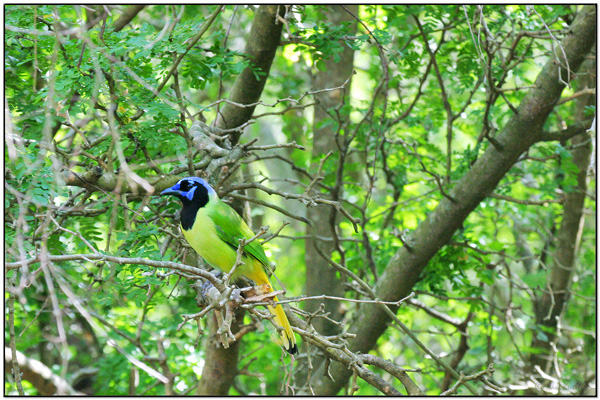
Green Jay (Cyanocorax luxuosus) by Daves BirdingPix

Green Jay (Cyanocorax luxuosus) by Daves BirdingPix


Lee’s Addition:

The articles calls this bird the Arizona Jay. There is no bird by that name and the copiers of these articles added the Green. According to the “Color Photograph” this is a Green Jay (Cyanocorax luxuosus) which belongs to the Crows, Jays – Corvidae family. Not sure if this is the bird intended, because Wikipedia and others do not show the Green Jay in Arizona these days.

Assuming that it is the Green Jay, we were able to see them “down in the valley” of Texas. We saw them at the Santa Ana NWR and around the valley.

Green Jay at Santa Ana NWR

Green Jay at Santa Ana NWR

Its area stretches from southern Texas south into Mexico and Central America, with a break before the species reappears in a broad sweep across the highlands (primarily the Andes) of South America in Colombia, Venezuela, Ecuador, Peru, and Bolivia. It has been suggested that the North American taxa should be considered separate species, Cyanocorax luxuosus. If following this taxonomy, the northern species retains the common name Green Jay, while the South American population, which retains the scientific name C. yncas, is renamed the Inca Jay. Northern Greens are smaller than there southern family and some of the color varies between the two groups.

“Green Jays feed on a wide range of insects and other invertebrates and various cereal grains. They take ebony (Ebenopsis spp.) seeds where these occur, and also any oak species’ acorns, which they will cache. Meat and human scraps add to the diet when opportunity arises. Green Jays have been observed using sticks as tools to extract insects from tree bark. Their basic diet consists of arthropods, vertebrates, seeds, and fruit.

Green Jays usually build a nest in a tree or in a thorny bush or thicket, and the female lays three to five eggs. Only the female incubates, but both parents take care of the young. In Colombia, the Green Jay is recorded as retaining offspring for several years, and those young help the parents raise more chicks.

As with most of the typical jays, this species has a very extensive voice repertoire. The bird’s most common call makes a rassh-rassh-rassh sound, but many other unusual notes also occur. One of the most distinctive calls sounds like an alarm bell.” (Wikipedia)

The Lord has created another beautiful bird for us to enjoy and learn about.

Give instruction to a wise man, and he will be still wiser; teach a righteous man, and he will increase in learning. The fear of the LORD is the beginning of wisdom, and the knowledge of the Holy One is insight. (Proverbs 9:9-10 ESV)

*

Birds Illustrated by Color Photograhy Vol 1 April 1897 No 4 – Cover

Birds Illustrated by Color Photography – Revisited – Introduction

The above article is the first article in the monthly serial for February 1897 “designed to promote Knowledge of Bird-Live.” These include Color Photography, as they call them, today they are drawings. There are at least three Volumes that have been digitized by Project Gutenberg.

To see the whole series of – Birds Illustrated by Color Photography – Revisited

*

(Information from Wikipedia and other internet sources)

Next Article – Amateur Photography

Previous Article – The Marsh Wren

ABC’s Of The Gospel

Links:

Green Jay – Wikipedia

Crows, Jays – Corvidae Family

Green Jays – IBC

*

Birds Vol 1 #4 – The Marsh Wren

Long-billed Marsh Wren by Birds Illustrated by Color Photography, 1897

Long-billed Marsh Wren by Birds Illustrated by Color Photography, 1897

Birds Illustrated by Color Photography – Revisited

Vol 1. April, 1897 No. 4

*

THE MARSH WREN.

With tail up, and head up,
The Wren begins to sing;
He fills the air with melody,
And makes the alders ring;
We listen to his cadences,
We watch his frisky motions,
We think—his mate attending him—
He’s got some nesting notions.—C. C. M.

imgt

HESE Wrens inhabit marshy and weedy bottom lands along river courses, and have all the brisk manners and habits of the family. This species, however, has a peculiar habit of building several nests every season, and it is suggested that these are built to procure protection for the female, in order that when search is made for the nest where she is sitting, the male may lure the hunter to an empty nest.

Its song is not unlike that of the House Wren, though less agreeable. It is a summer resident, arriving in May and departing in September. Its nest, which is found along borders of rivers, is made of sedge and grasses suspended near tall reeds. It has been found hanging over a small stream, suspended from the drooping bough of an alder tree, swayed to and fro by every breath of air. A careful observer states that a Wren will forsake her nest when building it, sooner than any other bird known to him. Disturb her repeatedly when building and she leaves it apparently without cause; insert your fingers in her tenement and she will leave it forever. But when the eggs are laid, the Wren will seldom abandon her treasure, and when her tender brood are depending on her for food, she will never forsake them, even though the young be handled, or the female bird be caught on the nest while feeding them. The food of the Wren is insects, their larvae and eggs, and fruit in season.

This Wren has justly been called a perennial songster. “In Spring the love-song of the Wren sounds through the forest glades and hedges, as the buds are expanding into foliage and his mate is seeking a site for a cave-like home. And what a series of jerks it is composed of, and how abruptly he finishes his song, as if suddenly alarmed; but this is his peculiar habit and common to him alone. In summer we hear his song morning, noon, and night, go forth for very joyfulness, as he wanders hither and thither in his leafy bower.” It is only in the moulting season that he does not sing.

A lady who used to attract a great number of birds to her garden with crumbs, seeds, and other dainties, said that when the weather became cold the Wrens used to gather upon a large branch of a tree, about four inches beneath another branch. They assembled there in the evening and packed themselves very comfortably for the night, three or four deep, apparently for the sake of warmth, the topmost Wren always having his back pressed against the outer branch as if to keep all steady. Pitying their forlorn condition, she provided a bedroom for them—a square box lined with flannel, and with a very small round hole for a door. This was fastened to the branch, and the birds promptly took possession of it, their numbers increasing nightly, until at least forty Wrens crowded into the box which did not seem to afford room for half the number. When thus assembled they became so drowsy as to permit themselves to be gently handled.

Marsh Wren (Cistothorus palustris) by Ray

Marsh Wren (Cistothorus palustris) by Ray


THE MARSH WRENS.

A happier pair of birds than these little Wrens it would be hard to find.

They have just come up from taking their morning bath and are going to sing a while before going to work on their nests.

You see I say nests. That is a strange thing about the Wrens, they build several nests. I wonder if you can tell why they do this. If you can’t, ask your teacher about it.

It is a little too early in the season or I would have one of the nests in the picture for you to look at.

I will try to describe it to you, so that you will know it when you see it. These little Wrens make their nests of coarse grasses, reed stalks, and such things, lined with fine grasses. It is round like a ball, or nearly so, and has the opening in the side. They fasten them to the reeds and bushes.

If you wish to get acquainted with these birds, you must visit the tall grasses and cat-tails along rivers and creeks and in marshes.

You won’t have to let them know that you are coming; they will see you long before you see them, and from their little nests they will begin to scold you, for fear that you mean to do them harm.

When they see that you mean them no harm, they will begin to entertain you with their songs. Oh, how they do sing! It just seems as though they would burst with song.

You can see how happy the one is in the picture. The other little fellow will soon take his turn. See how straight he holds his tail up. Find out all you can about these Wrens. You notice they have long bills. We call them Long-billed Marsh Wrens. There are several other kinds. You surely must have seen their cousins, the House Wrens. I will show you their pictures some day.

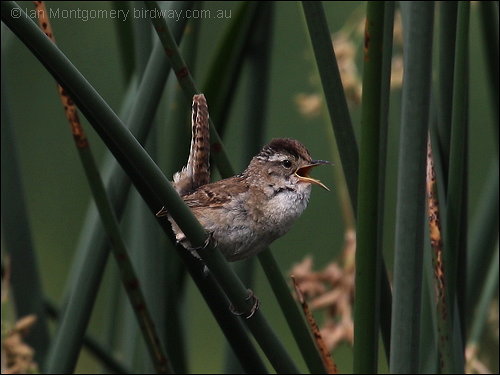
Marsh Wren (Cistothorus palustris) by Ian

Marsh Wren (Cistothorus palustris) by Ian


Lee’s Addition:

This Wren, the Marsh Wren, belongs to the Troglodytidae – Wrens Family. There are actually three families that Wrens show up in: the Troglodytidae – Wrens; New Zealand Wrens – Acanthisittidae; Australasian Wrens – Maluridae (Fairywrens, Emu-Wrens, Grasswren). There are other birds with Wren in the names like; Wrenthrush, Wren-babblers, Wren-Spinetail, Wren-Warblers. “There are approximately 80 species of true wrens in approximately 20 genera.” There is a slight difference in the Eastern and western populations of the Marsh Wren. Their songs are the biggest difference. The eastern wrens are more musical than the western ones.

The Marsh Wren (Cistothorus palustris) is a small North American songbird of the wren family. It is sometimes called Long-billed Marsh Wren to distinguish it from the Sedge Wren, also known as Short-billed Marsh Wren.

Adults have brown upperparts with a light brown belly and flanks and a white throat and breast. The back is black with white stripes. They have a dark cap with a white line over the eyes and a short thin bill.

The male’s song is a loud gurgle used to declare ownership of territory; western males have a more varied repertoire.

Beside them the birds of the heavens dwell; they sing among the branches. (Psalms 104:12 ESV)

Their breeding habitat is marshes with tall vegetation such as cattails across North America. In the western United States, some birds are permanent residents. Other birds migrate to marshes and salt marshes in the southern United States and Mexico. These birds forage actively in vegetation, sometimes flying up to catch insects in flight. They mainly eat insects, also spiders and snails.

The nest is an oval lump attached to marsh vegetation, entered from the side. The clutch is normally 4–6 eggs, though the number can range from 3–10. The male builds many unused nests in his territory; he may puncture the eggs of other birds nesting nearby.

Marsh Wren (Cistothorus palustris) by Daves BirdingPix

Marsh Wren (Cistothorus palustris) by Daves BirdingPix

*

Birds Illustrated by Color Photograhy Vol 1 April 1897 No 4 – Cover


Birds Illustrated by Color Photography – Revisited – Introduction

The above article is the first article in the monthly serial for February 1897 “designed to promote Knowledge of Bird-Live.” These include Color Photography, as they call them, today they are drawings. There are at least three Volumes that have been digitized by Project Gutenberg.

To see the whole series of – Birds Illustrated by Color Photography – Revisited

*

(Information from Wikipedia and other internet sources)

Next Article – The Arizona Green Jay

Previous Article – The Bohemian Wax-Wing

Wordless Birds

Links:

Marsh Wrens – All About Birds

Marsh Wren – Birdweb

*

Ad for Birds Illustrated, 1897

Ad for Birds Illustrated, 1897

*

Birds Vol 1 #4 – The Bohemian Wax-Wing

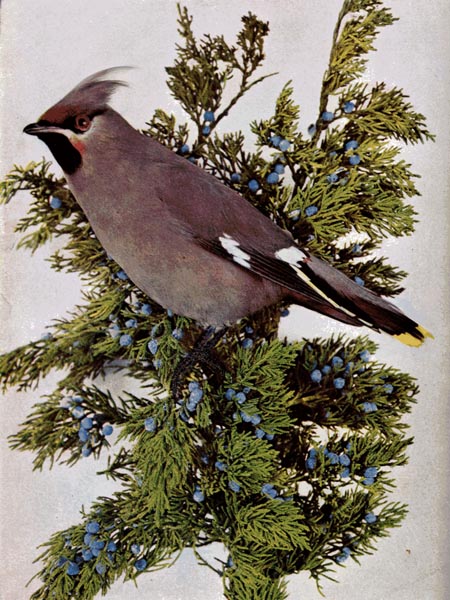
Bohemian Waxwing by Bird Illustrated by Color Photography, 1897

Bohemian Waxwing by Bird Illustrated by Color Photography, 1897

Birds Illustrated by Color Photography – Revisited

Vol 1. April, 1897 No. 4

*

THE BOHEMIAN WAX-WING.

imgt

HE Bohemian Wax-wing is interesting for its gipsy-like wanderings, one winter visiting one country, next season another, often in enormous flocks, and usually with intervals of many years, so that in former times their appearance was regarded as sure forebodings of war and pestilence, their arrival being dreaded as much as that of a comet. Another interesting feature of its history is the fact that for a long time this familiar bird eluded the search of the zoologist. Its breeding habits, and even the place where it breeds, were unknown thirty years ago, until finally discovered by Mr. Wolley in Lapland, after a diligent search during four summers. It is also called the European or Common Silk-tail, and is an inhabitant both of northern Europe and of North America, though in America the Cedar Bird is more often met with. In the northern portions of Europe, birch and pine forests constitute its favorite retreats, and these it seldom quits, except when driven by unusual severity of weather, or by heavy falls of snow, to seek refuge in more southern provinces. It is said that even in Russia, Poland, and southern Scandinavia it is constantly to be seen throughout the entire winter; that indeed, so rarely does it wander to more southern latitudes, that in Germany it is popularly supposed to make its appearance once in seven years. On the occasion of these rare migrations, the Silk-tails keep together in large flocks, and remain in any place that affords them suitable food until the supply is exhausted.

These birds are heavy and indolent, exerting themselves rarely except to satisfy hunger. They live in perfect harmony, and during their migrations indicate no fear of man, seeking their food in the streets of the villages and towns. They frequently settle in the trees, remaining almost motionless for hours together. Their flight is light and graceful, but on the ground they move with difficulty. Their call note is a hissing, twittering sound. In summer, insects are their chief food, while in winter they live principally on berries. The Wax-wing will devour in the course of twenty-four hours an amount of food equal to the weight of its own body. In Lapland is the favorite nesting ground of the Bohemian Wax-wing. The nests are deeply hidden among the boughs of pine trees, at no great height from the ground; their walls are formed of dry twigs and scraps from the surrounding branches, and the cavities are wide, deep, and lined with blades of grass and feathers. There are five eggs, laid about the middle of June; the shell is bluish or purplish white, sprinkled with brown, black, or violet spots and streaks, some of which take the form of a wreath at the broad end. The exquisite daintiness and softness of the Wax-wing’s coat can be compared only to floss silk.

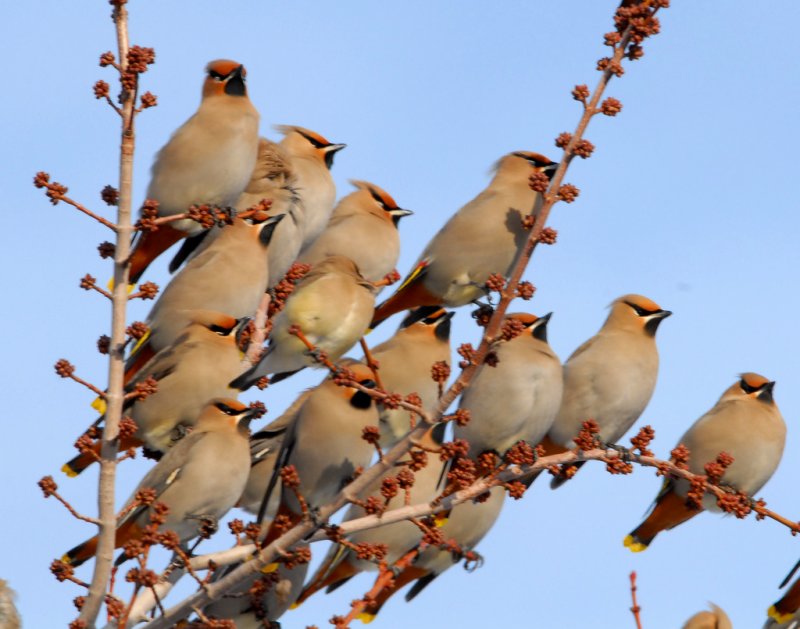
Bohemian Waxwing (Bombycilla garrulus) © by Paul Higgins

Bohemian Waxwing (Bombycilla garrulus) © by Paul Higgins


Lee’s Addition:

Its leaves were beautiful and its fruit abundant, and in it was food for all. The beasts of the field found shade under it, and the birds of the heavens lived in its branches, and all flesh was fed from it. (Daniel 4:12 ESV)

Bohemian Waxwings are in the Waxwings – Bombycillidae family. There are only three members; the Bohemian, Japanese and the Cedar Waxwings.

Wikipedia says, The Bohemian Waxwing (Bombycilla garrulus) is a member of the waxwing family of passerines. A sleek bird, 18–21 cm long with a pointed crest, it travels in large, nomadic groups with a strong, direct flight. It breeds in coniferous forests throughout the most northern parts of Europe, Asia and western North America. As the Cedar Waxwing inhabits only North America and the Japanese Waxwing only Asia, the Bohemian Waxwing is the only member of this family whose range circumnavigates all the continents just below the sub-Arctic latitudes.

Bohemian Waxwing (Bombycilla garrulus) ©WikiC

Bohemian Waxwing (Bombycilla garrulus) ©WikiC

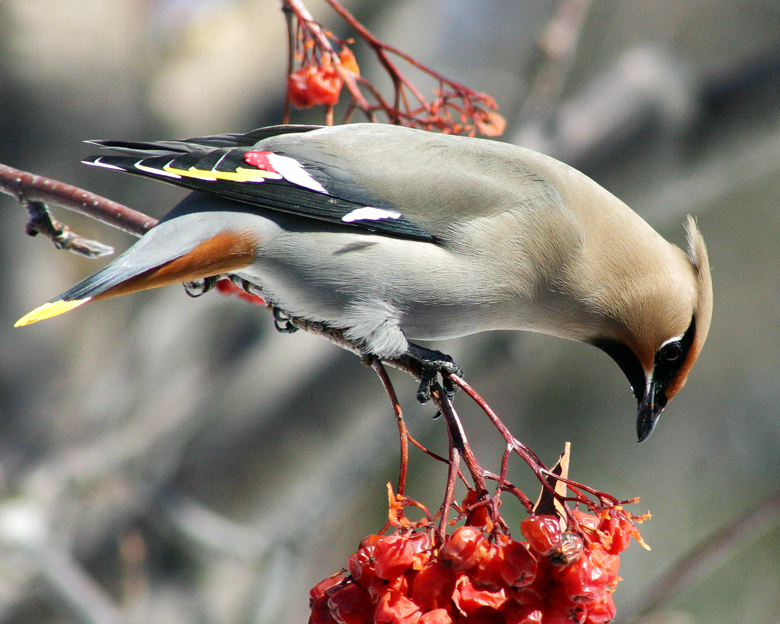
Are larger, fatter and greyer than the Cedar Waxwing and has bright yellow, black or rusty orange color on its tail feather tips and a yellow, white, red or black stripe along the wing feathers. Under tail coverts are a deep rust color. Both beak and feet are dark and the brown eyes are set in a narrow black mask underlined with white. The call is a pleasant ringing sound, similar to that of the Cedar Waxwing but lower-pitched.

The preferred nest location is usually high in a pine tree but feeding opportunities determine the location chosen. Each bird or pair may have more than one nest in the same general area. The nests have an outer diameter of 15 cm to 18 cm and are lined with fine grass, moss, and down. On average, 4 to 6 eggs are laid, the egg shells having a pale bluish color with a heavy sprinkling of blackish spots and some dark, irregular lines. Incubation is around 14 days and the young leave the nest about 13 to 15 days after hatching.

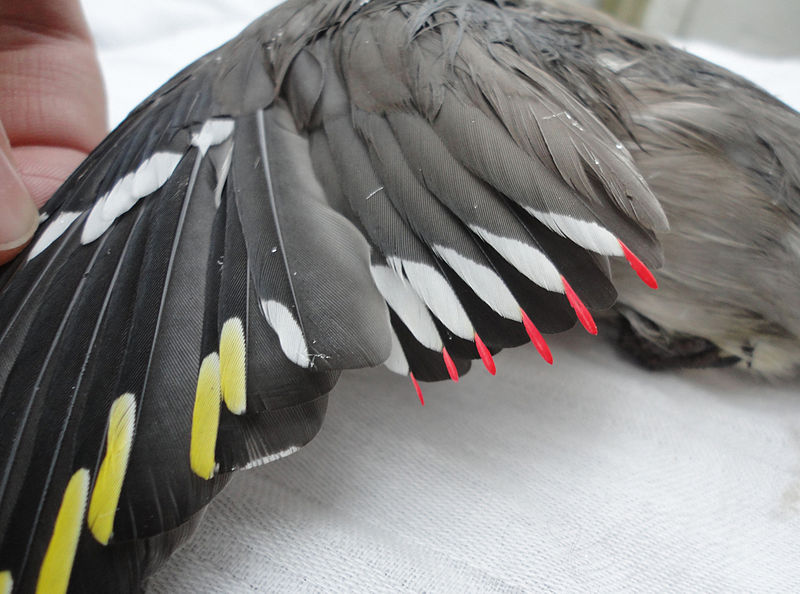
Bohemian Waxwing (Bombycilla garrulus) ©WikiC - distinctive wing spots

Bohemian Waxwing (Bombycilla garrulus) ©WikiC – distinctive wing spots

Like other waxwings, its diet consists primarily of berries supplemented by insects, especially during the breeding season. Its English name refers to the bright red bead-like tips of the secondary feathers on its wings, which look like drops of sealing wax, while ‘Bohemian’ refers to the Romani (gypsies), with a comparison to this bird’s wandering, or to its (presumed) origin from Bohemia (at the time, a relatively unknown “distant, eastern” place to most English speakers).

The generic name Bombycilla, from Latin Bombyx (silk / silk moth) + Scientific Latin cilla (tail), is a direct translation of the Swedish name ‘Sidensvans’, silk-tail, and refers to the silky-soft plumage of the bird; the species name garrulus means ‘talkative’ and refers to a resemblance to the European Jay, Glandularius garrulus.

Birds Illustrated by Color Photograhy Vol 1 April 1897 No 4 – Cover

Birds Illustrated by Color Photography – Revisited – Introduction

The above article is the first article in the monthly serial for February 1897 “designed to promote Knowledge of Bird-Live.” These include Color Photography, as they call them, today they are drawings. There are at least three Volumes that have been digitized by Project Gutenberg.

To see the whole series of – Birds Illustrated by Color Photography – Revisited

*

(Information from Wikipedia and other internet sources)

Next Article – The Marsh Wren

Previous Article – The Piedbill Grebe

ABC’s Of The Gospel

Links:

Ad for Bird Illustrated by Color Photography, 1897

Ad for Bird Illustrated by Color Photography, 1897

Start Birdwatching Today: What Kind of Bird is This?

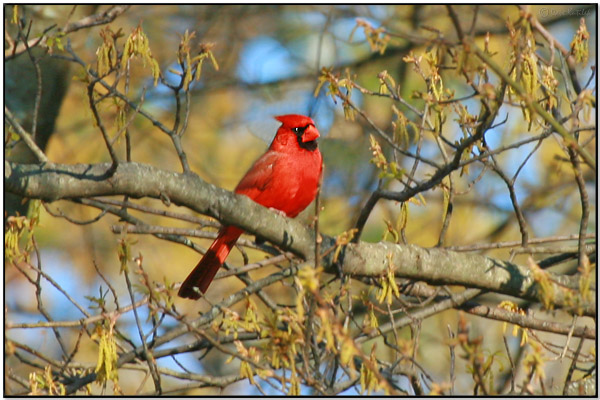
Northern Cardinal (Cardinalis cardinalis) by Daves BirdingPix

Northern Cardinal (Cardinalis cardinalis) by Daves BirdingPix

What kind of birds is this? Are you kidding, Stephen, that is a wide open question? If you have been following this “Start Birdwatching Today” series you know that Stephen, our Assistant to the Pastor, asked me to do some new articles about birding for our church blog, The Fountain. He came up with the titles and I am writing the articles. This one can go so many directions and involves more effort than our previous blogs, for me and the readers. Now we are getting into the “heart” of birding or birdwatching.

I have been encouraging you to become aware of the birds around you and to take notes about them. This is where all birders begin to learn about the birds. When you go out birdwatching it is nice to go with someone who has been birding for awhile. They can tell you the bird’s name and something about it. Even those of us who have been doing it awhile don’t know every bird. Being by yourself or just seeing one out your window brings you to this question, “What kind of bird is this? So, what do you do?

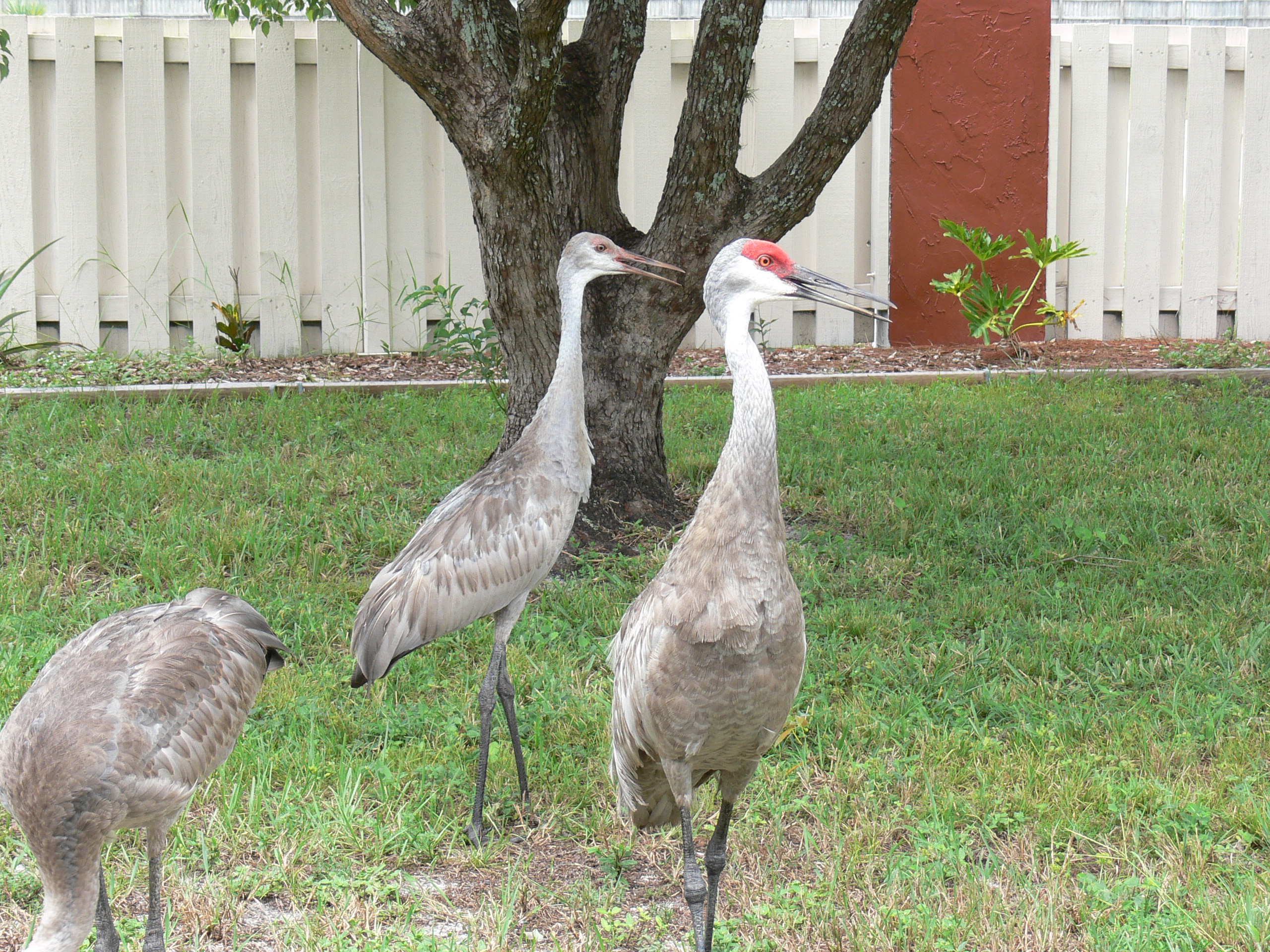
Sandhill Cranes – Adult and Juvenile in yard 8/27/10

Then God said, “Let the waters abound with an abundance of living creatures, and let birds fly above the earth across the face of the firmament of the heavens.” So God created great sea creatures and every living thing that moves, with which the waters abounded, according to their kind, and every winged bird according to its kind. And God saw that it was good. And God blessed them, saying, “Be fruitful and multiply, and fill the waters in the seas, and let birds multiply on the earth.” So the evening and the morning were the fifth day. (Genesis 1:20-23 NKJV)

This is where Bird Guides come in handy, but here in America there are over 900 species. Now begins the process of elimination. When the Lord created the birds, He did not put name tags on them, but in a way, He did. You will discover that each family of birds differs from other families, yet within families, there are different colors, markings, and subtle differences. If your bird is small and you have seen our local Sandhill Cranes, you can eliminate that whole Crane family. Most have seen a sparrow at one time. Was your bird about that size? Now you can eliminate almost the front half of your Guide. In other words, size is very important as a clue.

Blue Jay at Bok Tower by Dan's Pix

Blue Jay II at Bok Tower by Dan’s Pix

What color was it? Another clue. Most guides don’t list the birds by color, but there are some that do (The Easy Bird Guide), also on the Internet, there are places to find the bird by color. WhatBird is a great example of this. If you go to the Attributes Page you will see what are the main things to ask about the bird. Notice the list of birds above the buttons, it starts with all 924 birds. As you make selections, the number decreases and you eventually end up with just a few choices to make your selection from.

Location – Where did you see it? Florida, Georgia, etc.

Shape – Chicken like, Duck, Gull, Hawk, Hummingbird, etc.

Size – Very small, small, medium, large, very large

ColorPrimary and Secondary colors

Habitat – Was it at the coast, mountains, desert, lake, etc.

Bill Shape – All purpose, cone, curved, dagger, etc.

Bill Length – Same as head, longer or shorter than head

Wing Shape – Broad, long, pointed, rounded, tapered, very long

Backyard Feeder – Frequently or rare

Others – Order, Family, Song pattern or call.

I think for now, that is enough. We will need to cover more in another article. I have put several photos on the page which you probably already know. Try using the What Bird tools and see if you can get to the right bird. Start with the Northern Cardinal. Put in Florida for Location (924 to 362), Shape=Perching-like (362 to 165), Color Primary=Red  (165 to 8), Bill Shape=Cone (8 to 4). You now only have 4 choices to look at. Try it. As you click on the name you will see lots of information about that bird.

Links:

What Bird Tools
How to ID Birds – All About Birds
How to Identify Birds – Audubon
Bird Identification Tips – About.Com Birding/Wild Birds
How-to Videos:
How to Identify Birds
Topography (Parts of the Bird)

*

Ian’s Bird of the Week – Eungella Honeyeater

Ian’s Bird of the Week – Eungella Honeyeater ~ by Ian Montgomery

Newsletter – 4/22/12

Well, team, many thanks, your moral and spiritual support have done it again: here is the Eungella Honeyeater, photographed last Friday after some diligent searching. The field guides say: ‘noisy, wary, elusive’ and that I would agree is a good description. I heard several at the first location (Chelmans Road, Upper Dalrymple) but got only a brief glimpse of one in the rather dense rainforest regrowth. The second location, Digging’s Road near Eungella, proved more productive and, as I walked back to the car, I eventually encountered a flock of ten or so crossing the road and got photos of a couple of them.

Were it not for its distinctive song, rather scratchy like a very loud gerygone I thought, it would be easy to overlook, given its rainforest habitat, and, dare one say, rather drab colours even if tastefully highlighted by blue eyes.

And overlooked it was until 1976. Or more accurately, any earlier records, such as one collected in 1959, of this bird from the little studied Eungella/Clarke Range area were mistakenly assumed to be the closely related wet-tropics endemic, the Bridled Honeyeater, see the third photo.
The Bridled Honeyeater is much larger – 20-22cm/8-8.7in versus 16-18cm/6.3-7.1in – has a yellow base to the bill and rather different head markings. Their songs are quite different, sufficiently so for someone rather deaf like me to distinguish them easily. Early field guides, such as the 1974 Slater’s, shows the range of the Bridled Honeyeater extending the 300km or so from the wet tropics down to the Clarke Range west of Mackay.
In 1975, during a survey by the Australian and Queensland Museums, another specimen was collected and labelled as a Bridled Honeyeater. The following year, Wayne Longmore was working on the Honeyeater collection at the Australian Museum and realised that not only was this bird not a Bridled Honeyeater – based on the colour of the bill – but that it didn’t correspond to any known species. He organised further field trips to the Clarke Range in 1978 and 1980 in search of the mystery bird and found that the species was relatively common in a restricted area of upland rainforest. It was described in 1983 by him and Walter Boles and named Meliphaga hindwoodi (now Lichenstomus hindwoodi) in honour of  Keith Hindwood, ornithologist and Wayne’s mentor. You can read the full story here. The fourth image shows the records from the BirdLife Australia Atlas Project.
So you don’t have to go to the wilds of Irian Jaya to discover new species of birds! What would you like next week?
Best wishes
Ian
**************************************************
Ian Montgomery, Birdway Pty Ltd,
454 Forestry Road, Bluewater, Qld 4818
Tel 0411 602 737 ian@birdway.com.au
Check the latest website updates:
http://www.birdway.com.au/#updates
**************************************************

Lee’s Addition:

I decided to produce this addition of Ian’s Bird of the Week in the exact format that I receive it. I am also happy that our collective prayers were answered for Ian’s latest adventure. The two Honeyeaters do look similar, but there is a difference. Thanks again, Ian, for letting us share in your birdwatching trips.

Then you will call upon Me and go and pray to Me, and I will listen to you. And you will seek Me and find Me, when you search for Me with all your heart. (Jeremiah 29:12-13 NKJV)

See Ian’s other Birds of the Week

*

Birds Vol 1 #4 – Bird Day In The Schools

Birds Illustrated by Color Photography – Revisited

Vol 1. April, 1897 No. 4

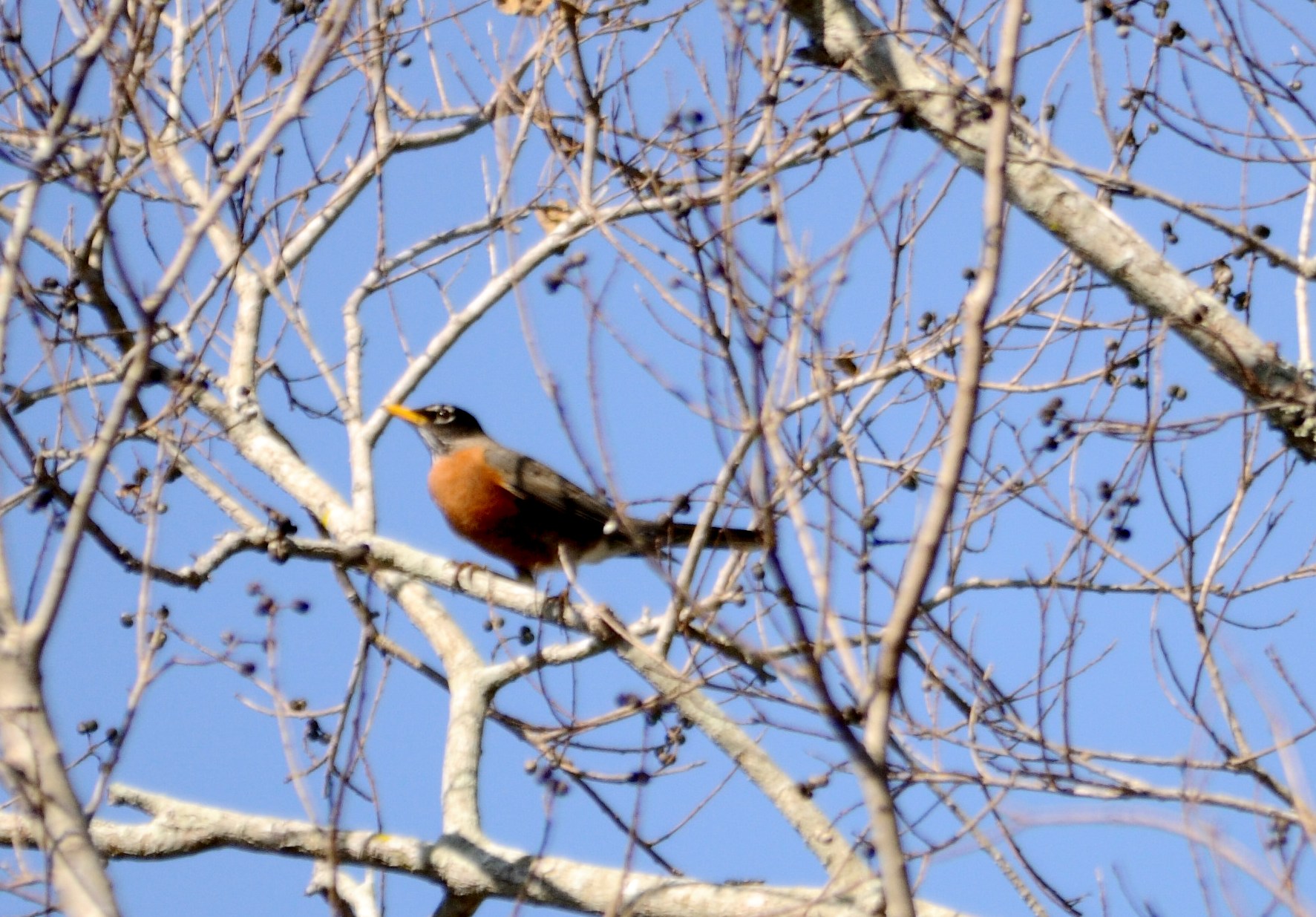
American Robin by Dan

American Robin by Dan

Train up a child in the way he should go, And when he is old he will not depart from it. (Proverbs 22:6 NKJV)

*

BIRD DAY IN THE SCHOOLS.

imgb

IRD DAY! Have you heard of it? Whether you have or not, we wish to assure you that it is worthy the thoughtful consideration of all teachers, and of all others interested in protecting and preserving our sweet birds.

Bird day has already proved a great success in two cities of the United States, both in the enthusiasm shown by the children in their friendly study of birds and in the result of such study.

In 1894, Oil City, Pa., observed the day, and in 1896 it was celebrated in the schools of Fort Madison, Iowa.

Of the results in his schools, Supt. Babcock, of Oil City, says, “There has been a complete change in the relations existing between the small boy and the birds.”

Although we in Fort Madison have been engaged in bird study less than a year, and have observed but one BIRD DAY, results similar to those secured by Supt. Babcock are becoming manifest. Only a few days ago a boy said to his teacher, “I used to take pleasure in killing all kinds of birds. Now I don’t wish to harm even an English Sparrow.”

The object of BIRD DAY and the study that leads to it, is to diffuse a true knowledge of the aesthetic and practical value of birds and to arouse an interest in bird protection.

And it is high time that something be done. From all over the country come reports of a decrease in native birds. In many places some of our sweetest songsters and most useful insect destroyers have become very scarce or have disappeared entirely. The causes are many, but the greatest is an inexcusable thoughtlessness on the part of young and old of both sexes. Johnny teases for a gun. His fond parents get it for him. Result—Johnny shows his marksmanship by shooting several birds in his vicinity. Or, perhaps, the ladies need new hats. Nothing except birds for trimming will do, though ten thousand sweet songs be hushed forever.

The study of bird life is one of especial interest to children and if properly pursued will develop in them sympathetic characters that should make them kinder towards their playmates now and towards their fellow-men in the coming years.

Impress upon a child that

“He liveth best who loveth best
All things, both great and small,”

and you have built into his life something that shall shine forth in good deeds through countless ages.

And how go about this work? The limit of space allotted this article forbids a full answer. Briefly,—study the birds themselves. Get a boy aroused to a friendly, protective interest in one bird and you have probably made that boy a friend of all birds. If you are a teacher, take your little flock out early some bright, Spring morning and let them listen to the singing of their feathered brothers of the air. Call attention to their beauty and grace of form, plumage and movement. Watch them care for their little ones. Notice their nests—their happy little homes—those “halfway houses on the road to heaven,” and as you and your flock wander, watch and listen and call to mind that,

“’Tis always morning somewhere, and above
The awakening continents, from shore to shore,
Somewhere the birds are singing evermore.”

Let us, fellow teachers and fellow citizens of America, take up this work of bird study and bird protection. Let the schools teach it, the press print it, and the pulpit preach it, till from thousands of happy throats shall be proclaimed the glad tidings of good will of man towards the birds.

C. H. Morrill,
Supt. of Schools.
Fort Madison, Iowa.

Homeschoolers at South Lake Howard Field Trip by Lee

Homeschoolers at South Lake Howard Field Trip by Lee

We are in receipt almost daily of letter inquiries for good literature on birds, and suitable exercises for Bird Day Programs.

It will be our purpose from time to time to suggest good works by the best authors.

We give below a list of publications that are especially fine, and shall be pleased to supply them at the list price, as indicated, or as premiums for subscribers to “BIRDS.”

“Birds Through an Opera Glass,” 75 cents, or two subscriptions.
“Bird Ways,” 60 cents, or two subscriptions.
“In Nesting Time,” $1.25, or three subscriptions.
“A Bird Lover of the West,” $1.25, or three subscriptions.
“Upon the Tree Tops,” $1.25, or three subscriptions.
“Wake Robin,” $1.00, or three subscriptions.
“Birds in the Bush,” $1.25, or three subscriptions.
“A-Birding on a Bronco,” $1.25, or three subscriptions.
“Land Birds and Game Birds of New England,” $3.50, or eight subscriptions.
“Birds and Poets,” $1.25, or three subscriptions.
“Bird Craft.”
“The Story of Birds,” 75 cents, or two subscriptions.
“Hand Book of Birds of Eastern North America,” $3.00, or seven subscriptions.

In numbers 70, 63, 4, 28 and 54 of the Riverside Series, published by Houghton, Mifflin & Co, may be found selections appropriate for Bird Day Programs, and in the “Intelligence,” of April 1, published by E. O. Vaile, Oak Park, Illinois, may be found some interesting exercises for Bird Day Programs. Copies of the paper may be obtained at eight cents.

Homeschoolers at South Lake Howard Field Trip by Lee 2009

Homeschoolers at South Lake Howard Field Trip by Lee 2009


Lee’s Addition:

Try getting subscriptions, magazines or books for those prices today. We all need to learn more about the birds and helping young children and youth to appreciate and care for the birds is very beneficial. As we know, we can learn from the birds, care about them and help preserve them. The photos of the kids were taken on a birdwatching trip in conjunction with a Bird Unit they were studying. I have a trip to the Zoo and 2 classroom lessons coming up in May and June about birds with young people. Don’t be afraid to share your hobby with our next generations.

“But now ask the beasts, and they will teach you; And the birds of the air, and they will tell you; (Job 12:7 NKJV)

Who teaches us more than the beasts of the earth, And makes us wiser than the birds of heaven?’ (Job 35:11 NKJV)

According to Wikipedia, “Bird Day is the name of several holidays celebrating birds. The first such holiday was established by Charles Babcock, the Oil City superintendent of schools, in 1894.” From Holiday Insights,Bird Day is the oldest of the days set aside to recognize birds. According to the U.S. Library of Congress, Bird Day was first observed  on May 4, 1894. It was started by Charles Almanzo Babcock, superintendent of schools in Oil City, Pennsylvania. By 1910, Bird Day was widely celebrated, often in conjunction with Arbor Day. Bird Day and Arbor Day events are focused upon conservation training and awareness.”

National Bird Day is an annual holiday with half a million adherents who celebrate through birdwatching, studying birds, bird drinking games including ‘bird date’ and other bird-related activities. Bird adoption is a particularly important National Bird Day activity.[5] According to the newspaper Atlanta Journal Constitution, many bird enthusiasts celebrate by adopting birds and by educating future bird owners about the special issues involved with taking care of birds, including their “screaming, biting, constant cleanups, the need for daily interaction and a varied diet”. National Bird Day takes place every year on the fifth day of the first month. (January 5th)

International Migratory Bird Day is a holiday dedicated to the celebration of migratory birds, and to conservation awareness. Originated by the Smithsonian Migratory Bird Center, it is celebrated annually on the second Saturday of May in the United States and Canada. In most Latin American countries it is celebrated on the second Saturday in October; in Colombia it is celebrated in October, and Costa Rica celebrates in April.

There is also a proud tradition of Bird Day in the United Kingdom. For example, Scots celebrate their version of National Bird Day on January 22.

Birds Illustrated by Color Photograhy Vol 1 April 1897 No 4 – Cover


Birds Illustrated by Color Photography – Revisited – Introduction

The above article is the first article in the monthly serial for February 1897 “designed to promote Knowledge of Bird-Live.” These include Color Photography, as they call them, today they are drawings. There are at least three Volumes that have been digitized by Project Gutenberg.

To see the whole series of – Birds Illustrated by Color Photography – Revisited

*

(Information from Wikipedia and other internet sources)

Next Article – The California Woodpecker

Previous Article – The American Cross Bill and The Legend 

Wordless Birds

Links:

Bird Day – Wikipedia

National Bird Day – Born Free

Bird Day, National Bird Day and Migratory Bird Day – Holiday Insights

Bird Day Activities for Kids

An Ad for Birds Illustrated, 1897

An Ad for Birds Illustrated, 1897