Sunday Inspiration – Passeriformes Review I

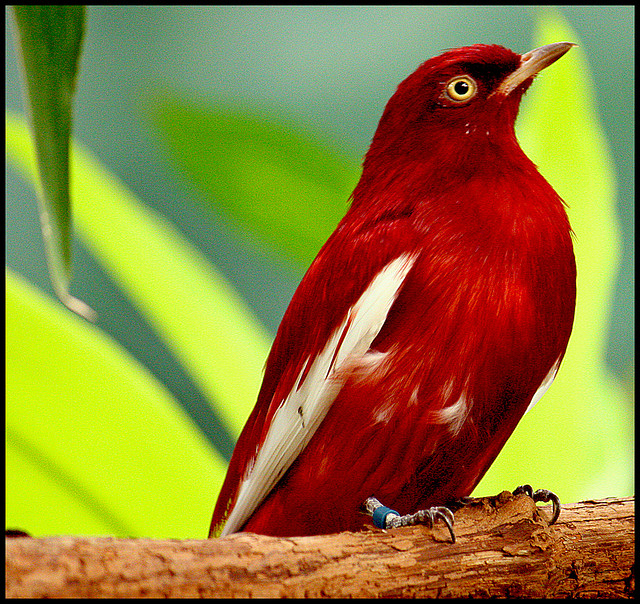
Pompadour Cotinga (Xipholena punicea) ©©holyknight33 Flickr

Pompadour Cotinga (Xipholena punicea) ©©holyknight33 Flickr

“Remember his marvellous works that he hath done, his wonders, and the judgments of his mouth;” (1Ch 16:12)

Now that the Passeriformes – Songbird families were all presented weekly, let’s review these families. The slide show will show one photo from each family. These will be in taxonomic order.

Also, the links to these families will be listed and the article associated with them. This will be a several week review. There are 131 families. All total, there are over 6,000 birds in these families and thankfully, most of them we were able to show. Some photos are protected by copyright and it was not possible to find a photo. Yet, there were more show than we would ever be able to see individually, in person.

Acanthisittidae – New Zealand Wrens
Eurylaimidae – Broadbills
Pittidae – Pittas
Furnariidae – Ovenbirds
Thamnophilidae – Antbirds
Formicariidae – Antthrushes
Grallariidae – Antpittas
Conopophagidae – Gnateaters
Rhinocryptidae – Tapaculos
Melanopareiidae – Crescentchests
Tyrannidae – Tyrant Flycatchers
Cotingidae – Cotingas
Pipridae – Manakins
Tityridae – Tityras, Becards
Menuridae – Lyrebirds
Atrichornithidae – Scrubbirds
Ptilonorhynchidae – Bowerbirds
Climacteridae – Australasian Treecreepers
Maluridae – Australasian Wrens
Meliphagidae – Honeyeaters
Dasyornithidae – Bristlebirds
Pardalotidae – Pardalotes
Acanthizidae – Australasian Warblers
Pomatostomidae – Australasian Babblers
Orthonychidae – Logrunners
Cnemophilidae – Satinbirds
Melanocharitidae – Berrypeckers, Longbills
Paramythiidae – Painted Berrypeckers
Callaeidae – New Zealand Wattlebirds
Notiomystidae – Stitchbird
Psophodidae – Whipbirds, Jewel-babblers and Quail-thrushes
Platysteiridae – Wattle-eyes, Batises
Tephrodornithidae – Woodshrikes and allies
Prionopidae – Helmetshrikes
Malaconotidae – Bushshrikes
Machaerirhynchidae – Boatbills
Vangidae – Vangas
Pityriaseidae – Bristlehead
Artamidae – Woodswallows,butcherbirds and allies
Rhagologidae – Mottled Berryhunter

Black-necked Wattle-eye (Platysteira chalybea) ©TimBoucher

Black-necked Wattle-eye (Platysteira chalybea) ©TimBoucher

“I remember the days of old; I meditate on all thy works; I muse on the work of thy hands.” (Psa 143:5)

Beginning of Passeriformes Order (Songbirds) For The Sunday Inspiration

More Amazing Birds ~ “Jesus What A Might Name” – Pastor Jerry w/Choir and Orchestra

Ant Birds ~ “He Looked Beyond My Fault” ~ ©The Hyssongs

Everlasting God ~”Everlasting God” – Pastor Jerry, Reagan Osborne, Caleb & Jessie Padgett

Flycatchers ~ “Amazing Grace” – Orchestra and “I Love You, Written in Red” – Choir (Faith Baptist Church)

Give Thanks ~ “Give Thanks” ~ sung by Mark Quijano, his YouTube Channel

There is a Redeemer ~ “There is a Redeemer,” played by Nell Reese at Faith Baptist Church

Australian Birds ~ “How Can I Keep From Singing” – Pastor Jerry Smith, Jessie and Caleb Padgett and Reagan Osborne

Honeyeaters ~ “Blood of Jesus Medley” ~ Faith Baptist Church Choir

Worthy ~ “Worthy” ~ Faith Baptist Choir and Orchestra

Variety II ~ “Just A Little Talk With Jesus” – Vegter Six

Whipbirds, Wattle-eyes and Allies – ” Be Thou My Vision and Battle Hymn of the Republic” ~ played by Sean Fielder

Woodshrikes and Helmetshrikes ~ ” I’ve Got Joy” ~ by the Faith Baptist Orchestra

Bushshrikes and Boatbills ~ “We Shall See Jesus” ~ Margaret Hiebert, Pastor and Jill Osborne and Pastor Jerry Smith

Vangas and Friends ~ “I Still Believe” – ©The Hyssongs

*


This slideshow requires JavaScript.

“Bless the LORD, O my soul. O LORD my God, thou art very great; thou art clothed with honour and majesty.” (Psa 104:1)

“To Win My Soul” – Sung by Jessie Padgett”

Sunday Inspirations

Passeriformes

Sharing The Gospel

*

Sunday Inspiration – Chats and Old World Flycatchers II

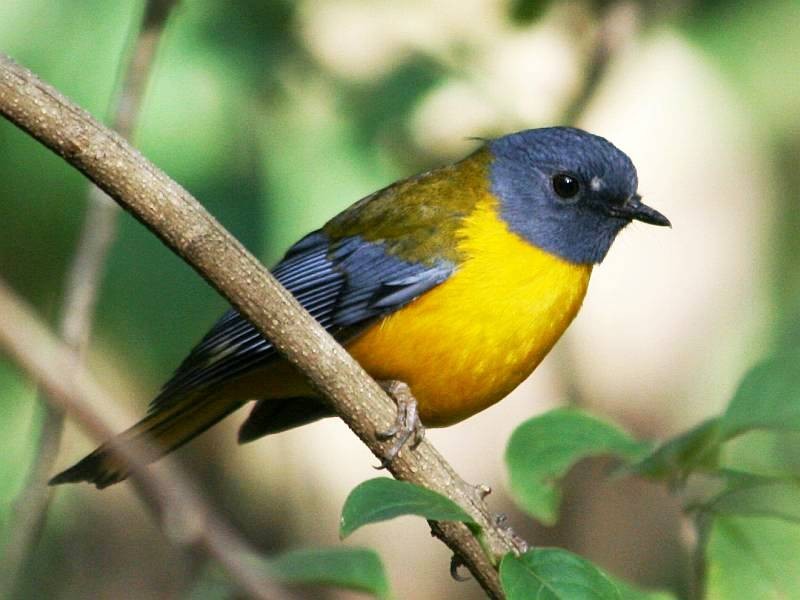
Rufous-bellied Niltava (Niltava sundara) by Nikhil Devasar

Rufous-bellied Niltava (Niltava sundara) by Nikhil Devasar

Out of the ground the LORD God formed every beast of the field and every bird of the sky, and brought them to the man to see what he would call them; and whatever the man called a living creature, that was its name. (Genesis 2:19 NASB)

Last week’s Sunday Inspiration – Chats and Old World Flycatchers covered the first part of the Muscicapidae Family. This week, we will show the some more of the Family. There are 321 Members that make up the Muscicapidae Family. What great looking birds from their Creator.

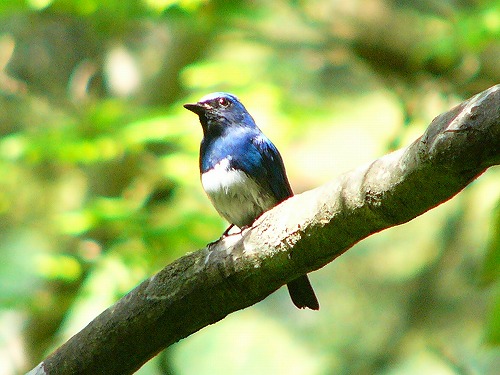
Blue-and-white Flycatcher (Cyanoptila cyanomelana) ©WikiC

Blue-and-white Flycatcher (Cyanoptila cyanomelana) ©WikiC

Chats (formerly sometimes known as “chat-thrushes”) are a group of small Old World insectivorous birds formerly classified as members of the thrush family Turdidae, but now are considered Old World flycatchers. The name is normally applied to the more robust ground-feeding flycatchers found in Europe and Asia and most northern species are strong migrants.

The Old World flycatchers, the Muscicapidae, are small passerine birds mostly restricted to the Old World (Europe, Africa and Asia). These are mainly small arboreal insectivores, many of which, as the name implies, take their prey on the wing.

White-starred Robin (Pogonocichla stellata) WikiC

White-starred Robin (Pogonocichla stellata) ©WikiC

The appearance of these birds is very varied, but they mostly have weak songs and harsh calls. They are small to medium birds, ranging from 9 to 22 cm in length. Many species are dull brown in colour, but the plumage of some can be much brighter, especially in the males. Most have broad, flattened bills suited to catching insects in flight, although the few ground-foraging species typically have finer bills.

Old World flycatchers live in almost every environment with a suitable supply of trees, from dense forest to open scrub, and even the montane woodland of the Himalayas. The more northerly species migrate south in winter, ensuring a continuous diet of insects.

Depending on the species, their nests are either well-constructed cups placed in a tree or cliff ledge, or simply lining in a pre-existing tree hole. The hole-nesting species tend to lay larger clutches, with an average of eight eggs, rather than just two to five.

White-browed Robin-Chat (Cossypha heuglini) by Daves BirdingPix

White-browed Robin-Chat (Cossypha heuglini) by Daves BirdingPix

Because this Muscicapidae family is so large, this week’s Sunday Inspiration and last week’s were divided. The reason for this is so the slideshow will not be too long. This divides them in taxonomic order in to several groups. I was going to divide this family in half, but there are so many photos available that I would have to find a symphony to provide enough music to show them all at once. ☺♪♫☺

Last week, the first 97-98 members were shown from these genera: Alethe, Cercotrichas, Copsychus, Fraseria, Myioparus, Melaenornis, Empidornis, Muscicapa, Anthipes, Cyornis.

This Slideshow of Muscicapidae in taxonomic order – Second Part (includes the genera- Niltava, Cyanoptila, Eumyias, Erithacus, Pseudalethe, Cossyphicula, Cossypha, Swynnertonia, Pogonocichla, Stiphrornis, Sheppardia, Cichladusa, Heinrichia, Leonardina, Heteroxenicus, Brachypteryx , Vauriella, Larvivora, Luscinia, Irania and Calliope.) 75 Species

Start with Niltava 

This slideshow requires JavaScript.

Let this mind be in you which was also in Christ Jesus, who, being in the form of God, did not consider it robbery to be equal with God, but made Himself of no reputation, taking the form of a bondservant, and coming in the likeness of men. And being found in appearance as a man, He humbled Himself and became obedient to the point of death, even the death of the cross. Therefore God also has highly exalted Him and given Him the name which is above every name, that at the name of Jesus every knee should bow, of those in heaven, and of those on earth, and of those under the earth, and that every tongue should confess that Jesus Christ is Lord, to the glory of God the Father. (Philippians 2:5-11 NKJV)

“The Birthday of a King” ~ by Dr. Richard Gregory, now in Glory.

*

Sunday Inspiration – Chats and Old World Flycatchers I

More Sunday Inspirations

Muscicapidae – Chats and Old World Flycatchers

Faith Baptist Church

Gospel Presentation

*