Sunday Inspiration – Austral Storm Petrels and Albatrosses

Grey-backed Storm Petrel (Garrodia nereis) ©WikiC

“And God said, Let the waters bring forth abundantly the moving creature that hath life, and fowl that may fly above the earth in the open firmament of heaven.” (Genesis 1:20 KJV)

Our new Order, the Procellariiformes has four Families. Today, the Oceanitidae – Austral Storm Petrels and the Diomedeidae – Albatrosses are presented. There are 30 species in these two families. The next two families have a combined 117 members so we will be in this Procellariiformes Order for several weeks.

Oceanitidae – Austral Storm Petrels

Austral storm petrels, or southern storm petrels, are seabirds in the family Oceanitidae, part of the order Procellariiformes. These smallest of seabirds feed on planktonic crustaceans and small fish picked from the surface, typically while hovering. Their flight is fluttering and sometimes bat-like.

Austral storm petrels have a cosmopolitan distribution, being found in all oceans, although only Wilson’s storm-petrels are found in the northern hemisphere. They are almost all strictly pelagic, coming to land only when breeding.
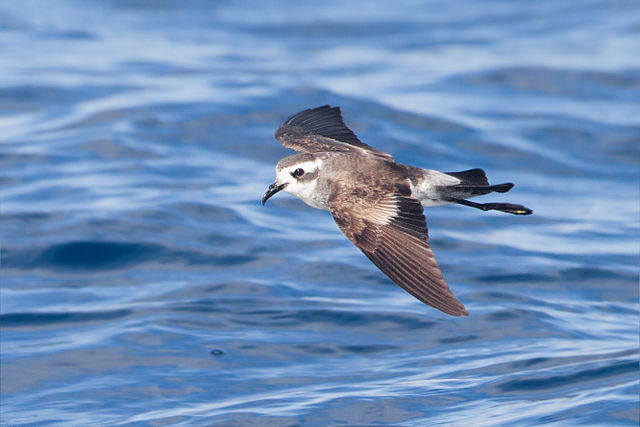
White-faced Storm Petrel (Pelagodroma marina) ©WikiC

Austral Storm Petrels are the smallest of all the seabirds, ranging in size from 15–26 cm in length. There are two body shapes in the family; the austral storm petrels have short wings, square tails, elongated skulls, and long legs. The legs of all storm petrels are proportionally longer than those of other Procellariiformes, but they are very weak and unable to support the bird’s weight for more than a few steps.

Like many seabirds, storm petrels will associate with other species of seabird and marine mammal species in order to help obtain food. It is theorized that they benefit from the actions of diving predators such as seals and penguins which push prey up towards the surface while hunting, allowing the surface feeding storm petrels to reach them.
Diomedeidae – Albatrosses

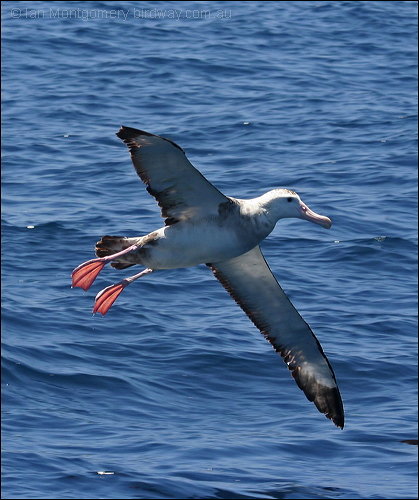
Wandering Albatross (Diomedea exulans) by Ian

Albatrosses, of the biological family Diomedeidae, are large seabirds allied to the procellariids, storm petrels and diving petrels in the order Procellariiformes (the tubenoses). They range widely in the Southern Ocean and the North Pacific. They are absent from the North Atlantic, although fossil remains show they once occurred there and occasional vagrants are found. Albatrosses are among the largest of flying birds, and the great albatrosses (genus Diomedea) have the largest wingspans of any extant birds, reaching up to 3.7 metres (12 feet). The albatrosses are usually regarded as falling into four genera, but there is disagreement over the number of species.

Laysan Albatross (Phoebastria immutabilis) Oldest Albartos named Wisdom ©EarthSky

Albatrosses are highly efficient in the air, using dynamic soaring and slope soaring to cover great distances with little exertion. They feed on squid, fish and krill by either scavenging, surface seizing or diving. Albatrosses are colonial, nesting for the most part on remote oceanic islands, often with several species nesting together. Pair bonds between males and females form over several years, with the use of “ritualised dances”, and will last for the life of the pair. A breeding season can take over a year from laying to fledging, with a single egg laid in each breeding attempt. A Laysan albatross, named Wisdom, on Midway Island is recognised as the oldest wild bird in the world; she was first banded in 1956 by Chandler Robbins.

[Information from Wikipedia, with editing]

This slideshow requires JavaScript.

*

“As birds flying, so will the LORD of hosts defend Jerusalem; defending also he will deliver it; and passing over he will preserve it.” (Isaiah 31:5 KJV)


“I Am Determined to Live for the King” ~ Three-Plus-One Quartet – Faith Baptist

*

More Sunday Inspirations

Oceanitidae – Austral Storm Petrels

Diomedeidae – Albatrosses

Laysan albatross, named Wisdom

*
Lee’s Six Word Saturday – 4/1/17

***

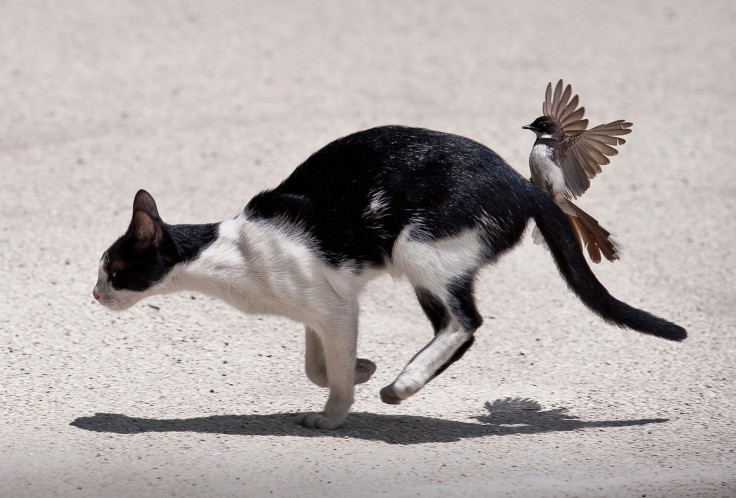
Cats Angry Bird ©Animalwall.xyz

WAY OF A FOOL IS RIGHT

***


“The way of a fool is right in his own eyes: but he that hearkeneth unto counsel is wise.” (Proverbs 12:15 KJV)

Cat’s Angry Bird ©Animalwall.xyz

*

HAPPY APRIL FOOL’S DAY!

More Daily Devotionals

*

Lee’s Five Word Friday – 3/31/17

***

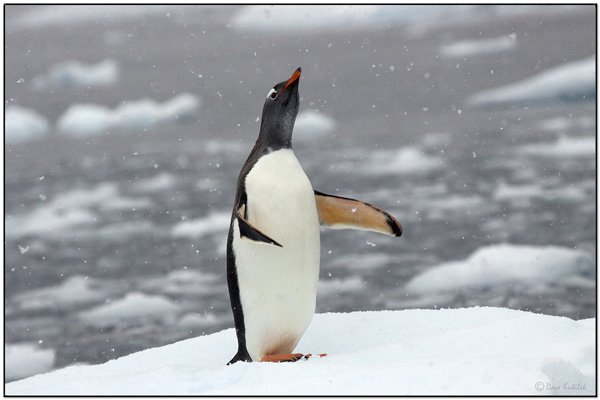
Gentoo Penguin - Paradise Bay

AND SHALL SING UNTO THEE

***


All the earth shall worship thee, and shall sing unto thee; they shall sing to thy name. Selah.” (Psalms 66:4 KJV)

Gentoo Penguin – Paradise Bay

*

More Daily Devotionals

*

Lee’s Four Word Thursday – 3/30/17

***

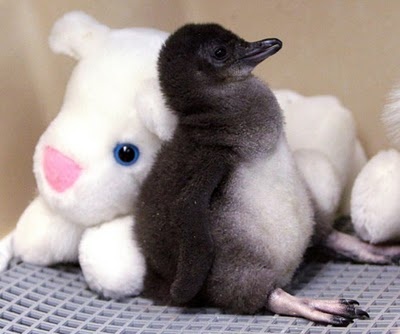
A two-week-old Little Penguin rests against a stuffed animal in an incubator at the Cincinnati Zoo

***


“For every one that useth milk is unskilful in the word of righteousness: for he is a babe.” (Hebrews 5:13 KJV)

A two-week-old Little Penguin rests against a stuffed animal in an incubator at the Cincinnati Zoo

*

More Daily Devotionals

*

Lee’s Three Word Wednesday – 3/29/17

***

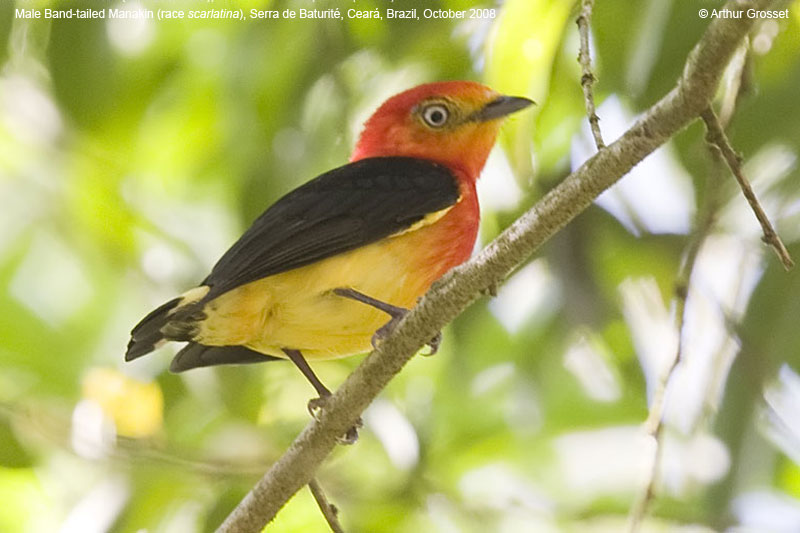
Band-tailed Manakin (Pipra fasciicauda) by ©AGrosset

I AM ASHAMED

***


“And said, O my God, I am ashamed and blush to lift up my face to thee, my God: for our iniquities are increased over our head, and our trespass is grown up unto the heavens.” (Ezra 9:6 KJV)

Band-tailed Manakin (Pipra fasciicauda) by ©AGrosset

*

More Daily Devotionals

*

Lee’s Two Word Tuesday – 3/28/17

***

I Been Bad - Time Out - Photo by Lee at LPZ

CORRECT ME

***


O LORD, correct me, but with judgment; not in thine anger, lest thou bring me to nothing.” (Jeremiah 10:24 KJV)

“I Been Bad” – Time Out – Photo by Lee at LPZoo

*

More Daily Devotionals

*

Lee’s One Word Monday – 3/27/17

***

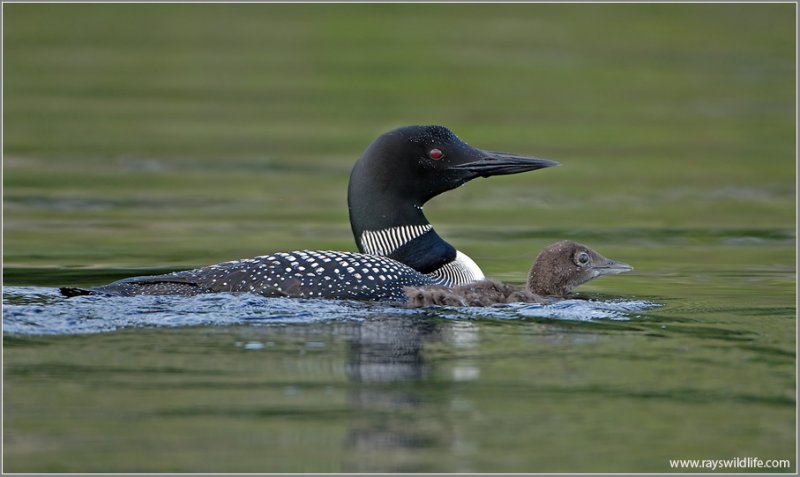
Common Loon (Gavia immer) with young by Raymond Barlow

RIGHTEOUS

***


“I have been young, and now am old; yet have I not seen the righteous forsaken, nor his seed begging bread.” (Psalms 37:25 KJV)

Common Loon (Gavia immer) with young by Raymond Barlow

*

More Daily Devotionals

*

Lee’s Seven Word Sunday – 3/26/17

***

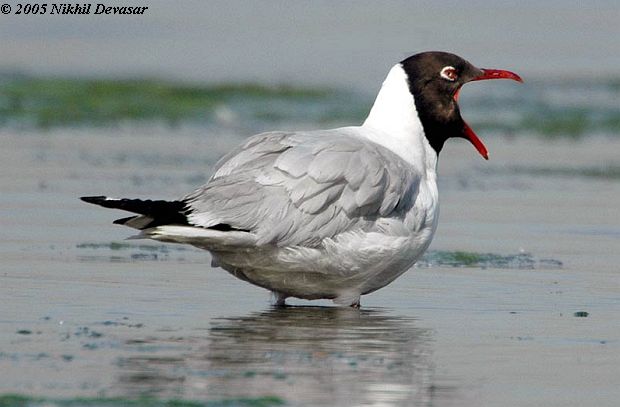
Brown-headed Gull (Chroicocephalus brunnicephalus) by Nikhil Devasar

DO ALL THINGS WITHOUT

MURMURINGS AND DISPUTINGS

***


Do all things without murmurings and disputings:” (Philippians 2:14 KJV)

Brown-headed Gull (Chroicocephalus brunnicephalus) by Nikhil Devasar

*

More Daily Devotionals

*

Sunday Inspiration – Loons and Penguins

Now here’s a combination for you. We finished up that large five family Galliformes Order last Sunday, and today we have two Orders with only one family each. Both of those families are small in number. The Loons and Penguins are not related, but they do both have the same Great Creator. They just happen to be next to each other in the Taxonomy List. I mentioned that they are not related, but looking at these two photos, you can see why their Orders are next to one another.

Common (Gavia immer) face ©USFWS

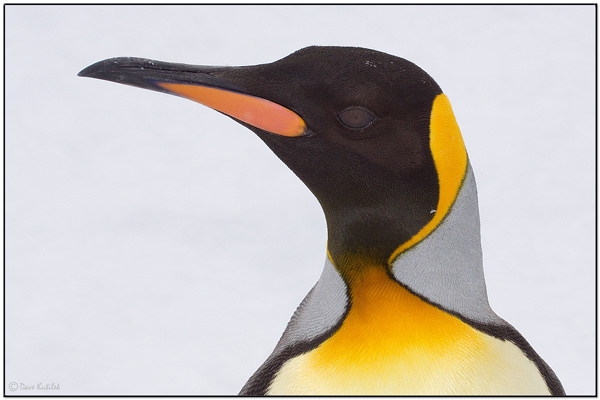
King Penguins head close-up

King Penguins head close-up

Loons are in the Gaviiformes Order which only has one family, the Gaviidae, containing only five members of that family.

The loon, the size of a large duck or small goose, resembles these birds in shape when swimming. Like ducks and geese but unlike coots (which are Rallidae) and grebes (Podicipedidae), the loon’s toes are connected by webbing. The bird may be confused with cormorants (Phalacrocoracidae), which are not too distant relatives of divers and like them are heavy set birds whose bellies – unlike those of ducks and geese – are submerged when swimming. Flying loons resemble plump geese with seagulls’ wings that are relatively small in proportion to the bulky body. The bird points its head slightly upwards during swimming, but less so than cormorants. In flight the head droops more than in similar aquatic birds.

Common Loon (Gavia immer) by J Fenton

Male and female loons have identical plumage. Plumage is largely patterned black-and-white in summer, with grey on the head and neck in some species. All have a white belly. This resembles many sea-ducks (Merginae) – notably the smaller goldeneyes (Bucephala) – but is distinct from most cormorants which rarely have white feathers, and if so usually as large rounded patches rather than delicate patterns. All species of divers have a spear-shaped bill.

Males are larger on average, but relative size is only apparent when the male and female are together.

Pacific Loon(Gavia pacifica) ©USFWS

In winter plumage is dark grey above, with some indistinct lighter mottling on the wings, and a white chin, throat and underside. The species can then be distinguished by certain features, such as size and colour of head, neck, back and bill, but often reliable identification of wintering divers is difficult even for experts – particularly as the smaller immature birds look similar to winter-plumage adults, making size an unreliable means of identification.

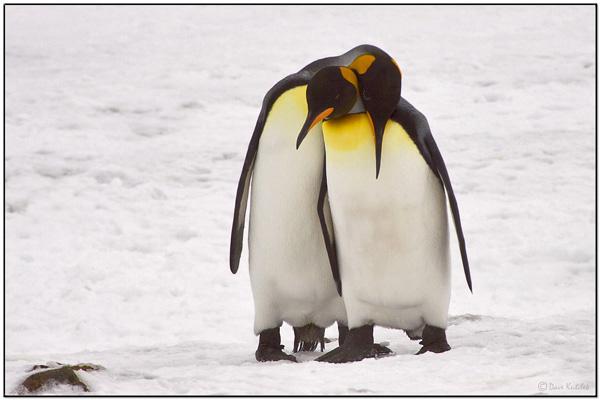
King Penguins – head on her shoulder

Penguins, which belong to the Spheniscidae Family and Sphenisciformes. Their family has eighteen (18) species to adore. We, Dan and I, have been able to see penguins at various zoo, but many of those have them displayed in a way that is difficult to get good photos. Ian and these other photographer are able to travel to where penguins live and are able to see and take their pictures in the wild.

Penguins are a group of aquatic, flightless birds. They live almost exclusively in the Southern Hemisphere, with only one species, the Galapagos penguin, found north of the equator. Highly adapted for life in the water, penguins have countershaded dark and white plumage, and their wings function as flippers. Most penguins feed on krill, fish, squid and other forms of sealife caught while swimming underwater. They spend about half of their lives on land and half in the oceans.

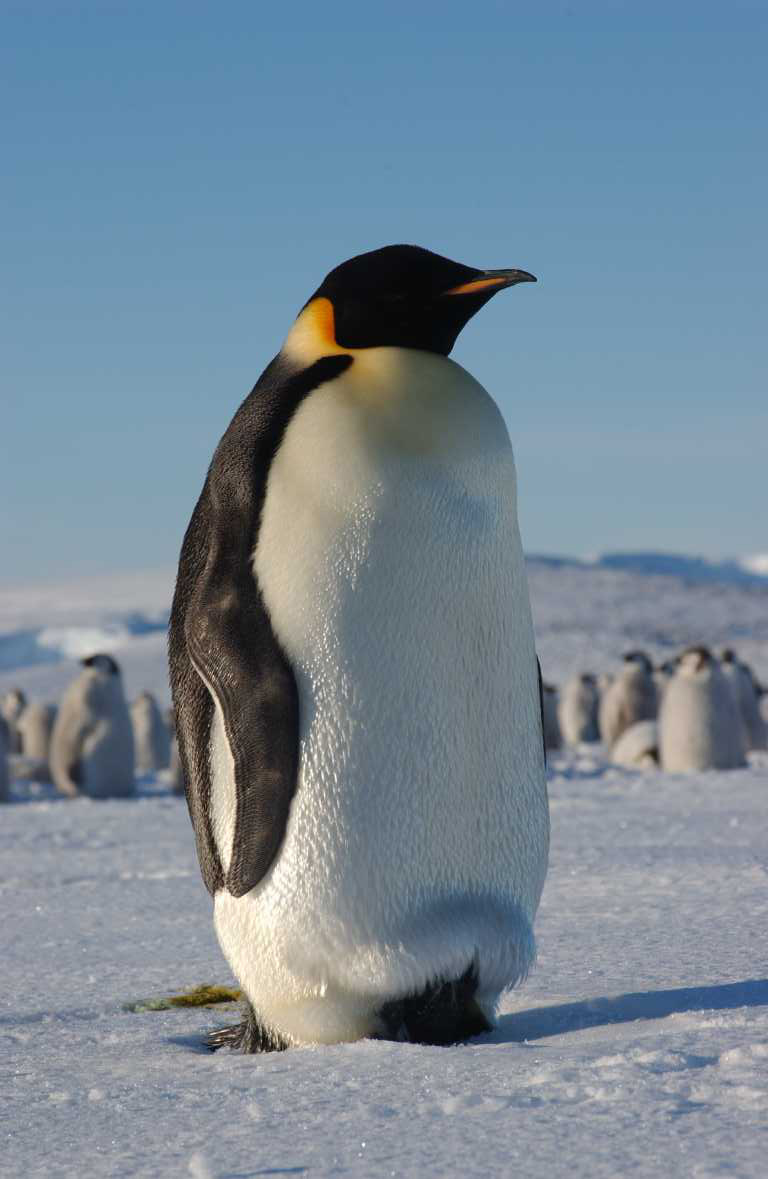
Emperor with egg on feet ©WikiC

Emperor with egg on feet ©WikiC

Although almost all penguin species are native to the Southern Hemisphere, they are not found only in cold climates, such as Antarctica. In fact, only a few species of penguin live so far south. Several species are found in the temperate zone, and one species, the Galápagos penguin, lives near the equator.

The largest living species is the emperor penguin (Aptenodytes forsteri): on average adults are about 1.1 m (3 ft 7 in) tall and weigh 35 kg (77 lb) or more. The smallest penguin species is the little blue penguin (Eudyptula minor), also known as the fairy penguin, which stands around 40 cm (16 in) tall and weighs 1 kg (2.2 lb). Among extant penguins, larger penguins inhabit colder regions, while smaller penguins are generally found in temperate or even tropical climates (see also Bergmann’s rule). Some prehistoric species attained enormous sizes, becoming as tall or as heavy as an adult human. These were not restricted to Antarctic regions; on the contrary, subantarctic regions harboured high diversity, and at least one giant penguin occurred in a region around 2,000 km south of the equator, in a climate decidedly warmer than today. [Wikipedia, with editing]

This slideshow requires JavaScript.

*
We have also a more sure word of prophecy; whereunto ye do well that ye take heed, as unto a light that shineth in a dark place, until the day dawn, and the day star arise in your hearts:” (2 Peter 1:19 KJV)


“Day Star” – With Pastor Smith and Reagan Osborne
*
More Sunday Inspirations

SPHENISCIFORMES – Penguins Order

Spheniscidae – Penguins Family

GAVIIFORMES – Loons Order

Gaviidae – Loons Family

Wordless Birds

*


Lee’s Six Word Saturday – 3/25/17

***

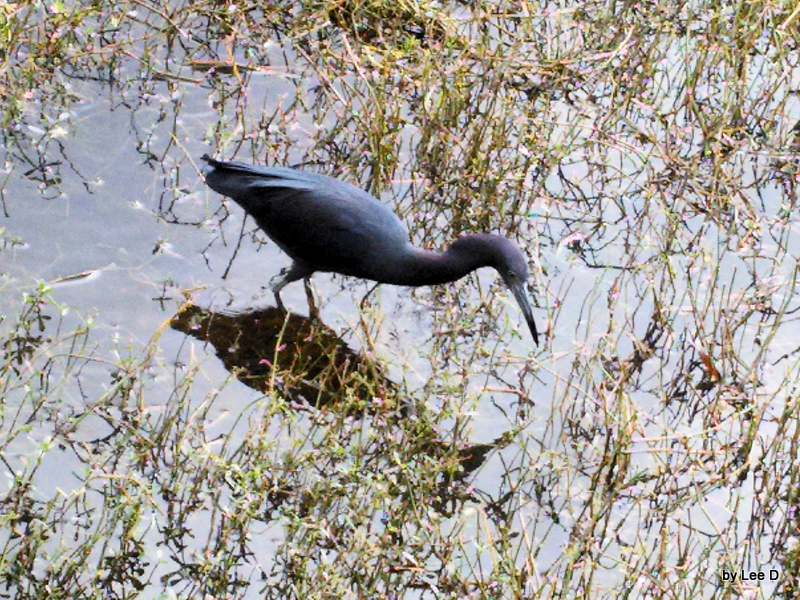
Little Blue Heron searching at S Lake Howard Park by Lee

WHEN YE SHALL SEARCH FOR ME

***


“And ye shall seek me, and find me, when ye shall search for me with all your heart.” (Jeremiah 29:13 KJV)

Little Blue Heron searching at S Lake Howard Park by Lee

*

More Daily Devotionals

*

Lee’s Five Word Friday – 3/24/17

***

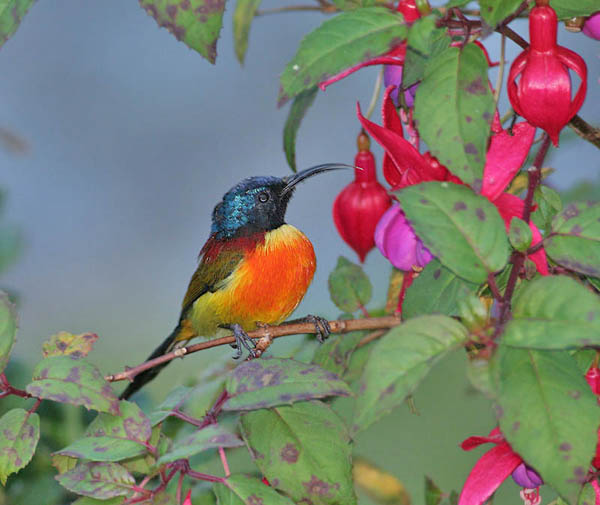
Green-tailed Sunbird (Aethopyga nipalensis) by Peter Ericsson

WHOM YE SHINE AS LIGHTS

***


That ye may be blameless and harmless, the sons of God, without rebuke, in the midst of a crooked and perverse nation, among whom ye shine as lights in the world; (Philippians 2:15 KJV)

Green-tailed Sunbird (Aethopyga nipalensis) by Peter Ericsson

*

More Daily Devotionals

*

Lee’s Four Word Thursday – 3/23/17

***

Siamese Fireback (Lophura diardi) at Wings of Asia by Lee

WITH MOST INTENSE EARNESTNESS

***


“[And we] continue to pray especially and with most intense earnestness night and day that we may see you face to face and mend and make good whatever may be imperfect and lacking in your faith.” (1 Thessalonians 3:10 AMP)

Night and day praying exceedingly that we might see your face, and might perfect that which is lacking in your faith?” (1 Thessalonians 3:10 KJV)

Siamese Fireback (Lophura diardi) at Wings of Asia by Lee

*

More Daily Devotionals

*