***
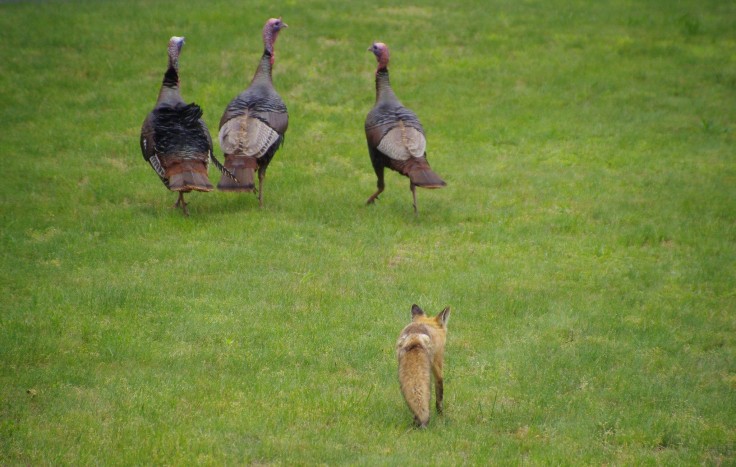
THEY SHALL BE A PORTION FOR FOXES
***
“They shall fall by the sword; they shall be a portion for foxes.” (Psalm 63:10)
Fox Following, Stalking, Turkeys. ©AnimalWallXYZ
*
*
“They shall fall by the sword; they shall be a portion for foxes.” (Psalm 63:10)
Fox Following, Stalking, Turkeys. ©AnimalWallXYZ
*
*
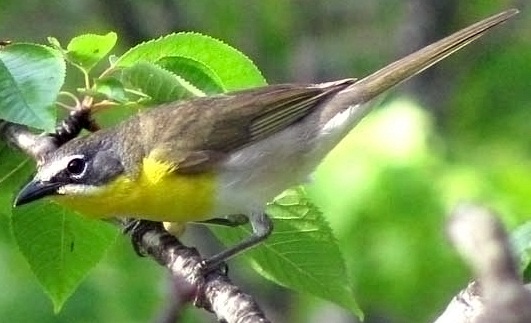
Yellow-Breasted Chat (Icteria virens) WikiC
I know all the birds of the mountains, And the wild beasts of the field are Mine. (Psalms 50:11 NKJV)
After all these months of doing the Sunday Inspirations that have featured the Passerformes Order of birds, we are getting near the end of the list. Known as Passerines or Song Birds, there has been 125 families to tell about and show their pictures. There are seven families left, of which, three of them are small in number, so they are being grouped together in this Sunday Inspiration.
First we have group of birds in an Incertae Sedis or Uncertain Family. “Incertae sedis (Latin for ‘of uncertain placement’) is a term used for a taxonomic group where its broader relationships are unknown or undefined.” (Wikipedia) That means they don’t know into which families to place these birds.
The six birds in this family currently are the Green-tailed Warbler, Yellow-headed Warbler, Oriente Warbler, Wrenthrush, Yellow-breasted Chat, and the White-winged Warbler.
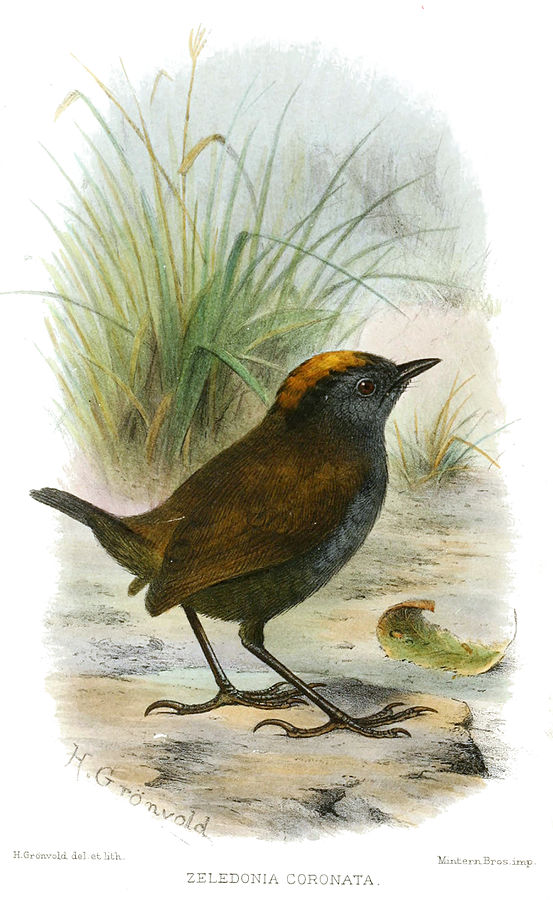
Wrenthrush (Zeledonia coronata) ©Drawing WikiC
For instance the Wrenthrush (Zeledonia coronata) is neither a wren or a thrush (and unrelated to both). No copyright free photos are available to use other than this drawing. You can see a few photos here.
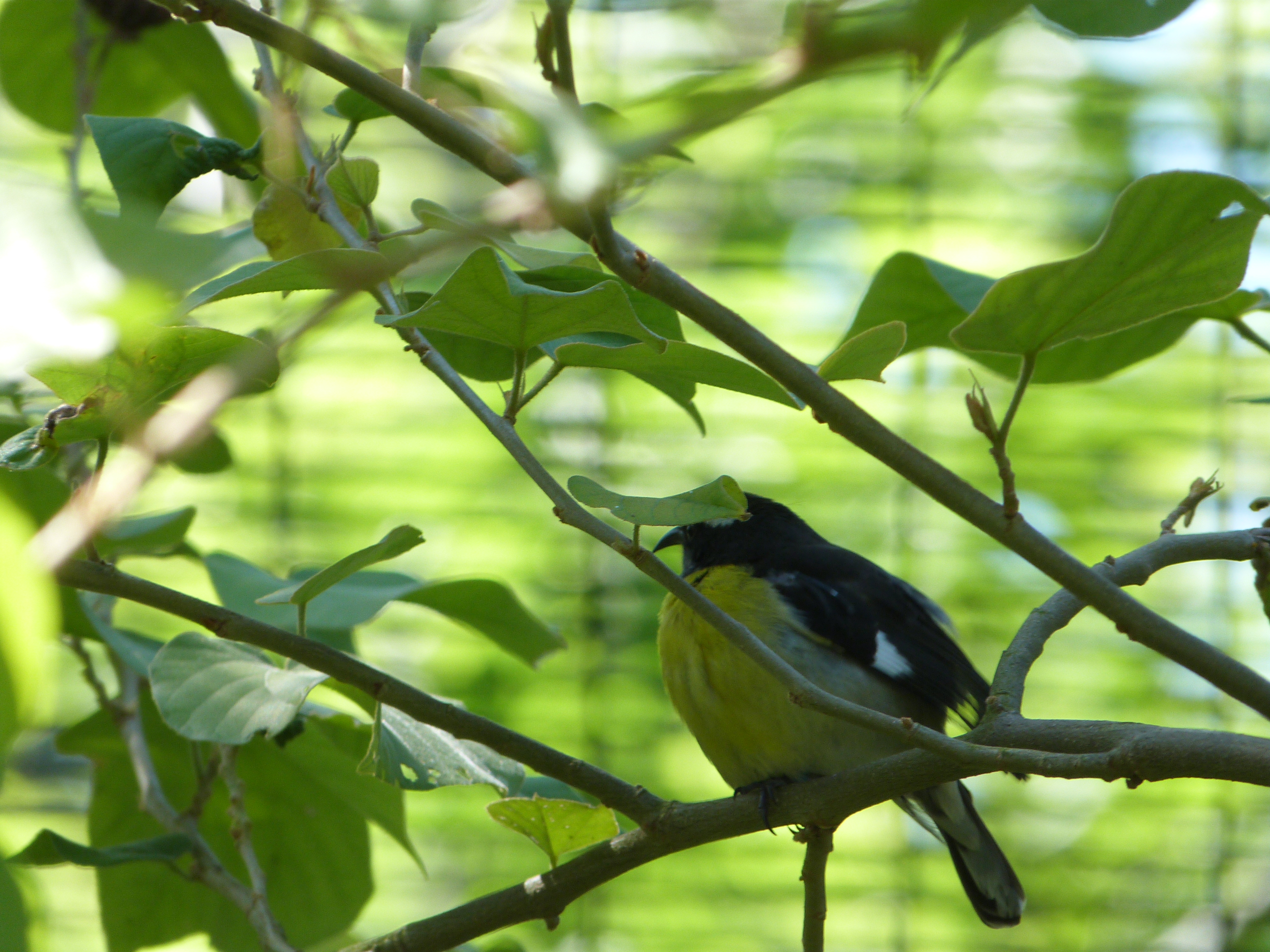
Bananaquit (Coereba flaveola) Cloud Forest by Lee
The Bananaquit belongs to the Coerebidae family. It is the only member, but there are numerous subspecies. I suspect one day they will split some of them off into separate species in the family. In fact they are suggesting three species already. We saw one down at Zoo Miami’s Cloud Forest.
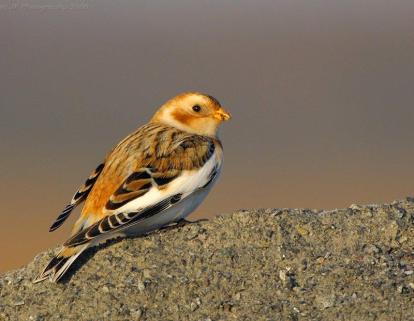
Snow Bunting (Plectrophenax nivalis) by J Fenton
Our last small family this week is the Calcariidae. There are six members here also. The four Longspurs; Mccown’s, Lapland, Smith’s and Chestnut-collared; and two Buntings, the Snow and McKay’s Bunting.
These are chunky ground-feeding birds with long wings which are usually seen in open areas. Males declare ownership of a territory by singing during short flights over it. The male’s breeding plumage is much brighter than his winter plumage. These birds gather in large flocks in winter. The longspurs are all found in North America; the Lapland Longspur, or Lapland Bunting, is also found in Europe and Asia. (Wikipedia)
And the scripture was fulfilled which saith, Abraham believed God, and it was imputed unto him for righteousness: and he was called the Friend of God.” (James 2:23 KJV)
“I’ll Be A Friend To Jesus” – Faith Baptist Quartet
*
Incertae Sedis – Uncertain – Wrenthrush and Chat Family
Calcariidae – Longspurs, Snow Buntings Family
*
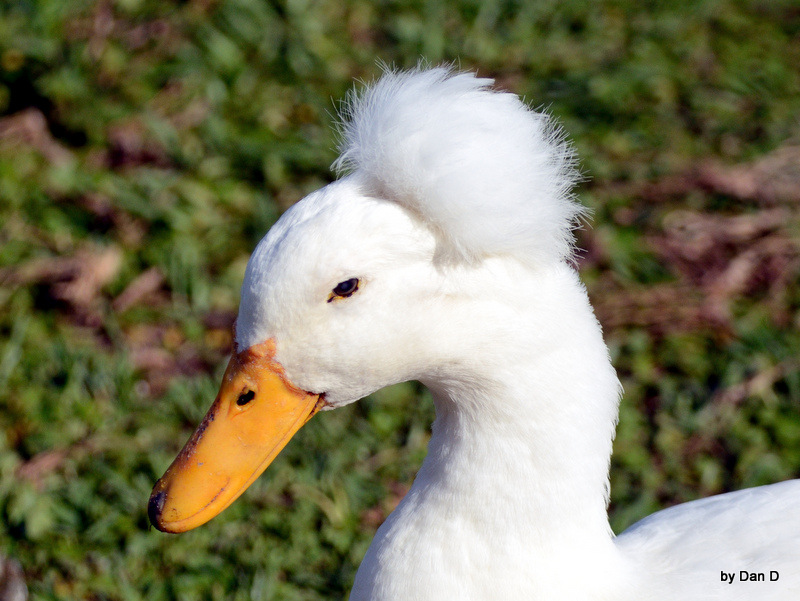
Now as touching things offered unto idols, we know that we all have knowledge. Knowledge puffeth up, but charity edifieth. (1 Corinthians 8:1 KJV)
Aflac (Mallard hybrid) Duck Puffed Up – by Dan at Lake Morton
*
*

“I have heard a rumor from the Lord, and an ambassador is sent unto the heathen, saying, Gather ye together, and come against her, and rise up to the battle.” {Jeremiah 49:14)
Mandarin Ducks Together ©Elenarts
*
*

Ye have heard that it hath been said, An eye for an eye, and a tooth for a tooth: Matthew 5:38
Birds Eyes Basic ©Van zyl
*
*
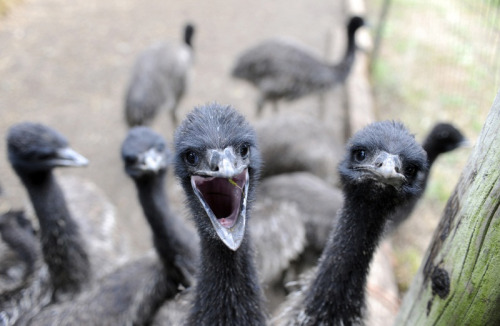
For we cannot but speak the things which we have seen and heard. Acts 4:20
Speaking Out ©Tumblr
*
*

Ian’s Bird of the Week – Red-wattled Lapwing ~ by Ian Montgomery
Newsletter – 4/19/16
While we’re on the subject of Lapwings, here is a rather smart Asian one, the Red-wattled Lapwing, which bears more than a passing resemblance to its close relative the Banded Lapwing of Australia. The Banded Lapwing differs in having a yellow eye-ring and yellow base to the bill, pink legs, and the black and white pattern on the head and neck is different too.
It’s usually found near water, like this one on the Yamuna River which flows through Delhi but is otherwise fairly catholic in its habitat preferences, which include cultivated land and it is quite common in some densely populated areas. Both House Crows and humans like its eggs but in India it has taken to nesting on pebbled roofs and walls instead of on the ground. This probably doesn’t inconvenience the crows too much, but studies have shows that this leads to a spectacular increase in hatching and fledging success. Like all plovers, the chicks are mobile at an early age but don’t fly till much later, so you’d wonder how well they fare running around on rooftops. Maybe they bounce well.
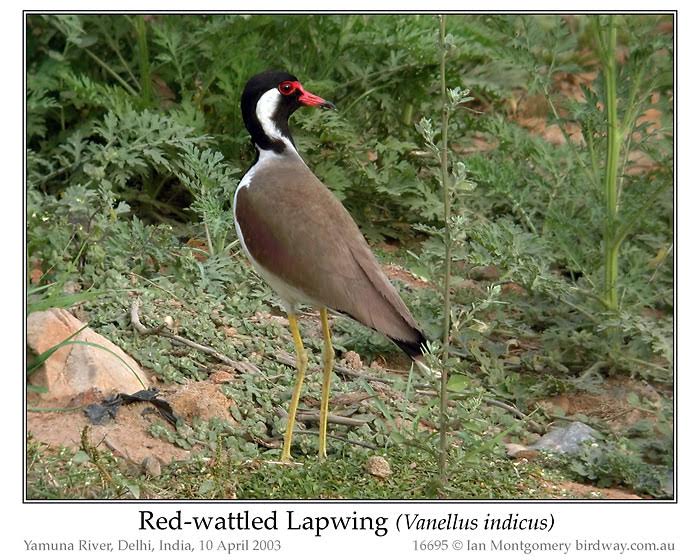
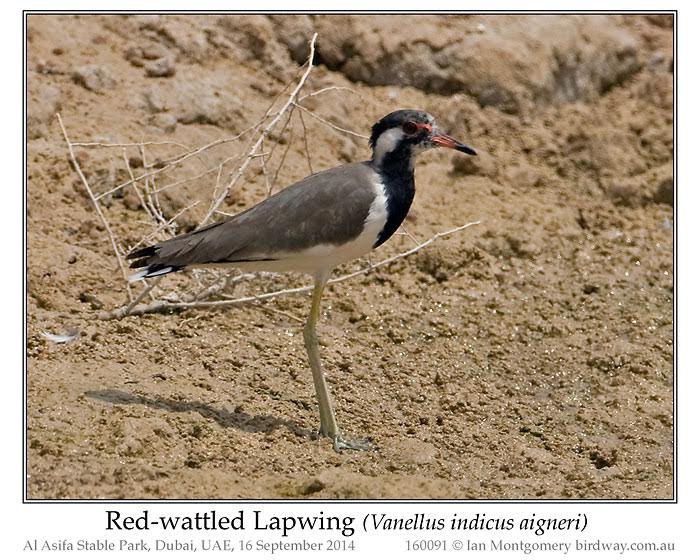
It was originally described from Indian specimens, hence the specific name indicus. In fact it ranges quite widely from Turkey in the west through the southern part of the Middle East to all of southern and southeast Asia. The original type found in India is the nominate race, but three other sub-species are described. I came across the western race aigneri in Dubai a couple of years ago, third photo, when visiting an equestrian park where the main attraction was – no not horses – the Cream-coloured Courser This race has larger and paler than the Indian one, but otherwise rather similar. There is a third race in Sri Lanka and a fourth in southeast Asia which has a white cheek above a completely black collar and is also called the Black-necked Lapwing.
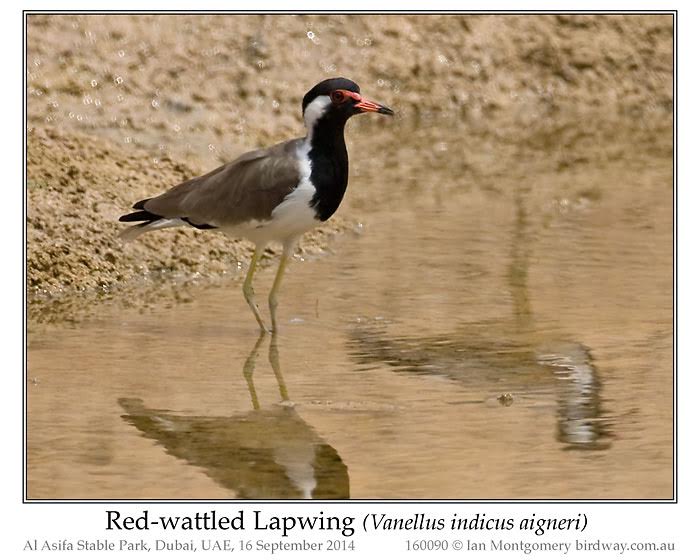
The fourth photo shows a juvenile bird of the western race at the same place. The red wattle is incompletely developed, the crown is brownish and there are pale streaks on the throat. Otherwise, it is quite like the adult.
Many thanks for those of you who responded to my successful call for house-sitters. I’m sorry to have disappointed some suitable applicants, but I’ll keep you in mind for future opportunities.
Greetings
Ian
**************************************************
Ian Montgomery, Birdway Pty Ltd,
454 Forestry Road, Bluewater, Qld 4818
Lee’s Addition:
“And the stork, the heron after her kind, and the lapwing, and the bat.” (Leviticus 11:19 KJV)
What a great looking bird. I like the clean lines on them and the stately look of that first photo especially. Thanks, Ian, for sharing this beautiful Lapwing with us.
Lapwings are one of the birds in the Bible listed not to eat. These are too pretty and their legs are too skinny. :)
*
*
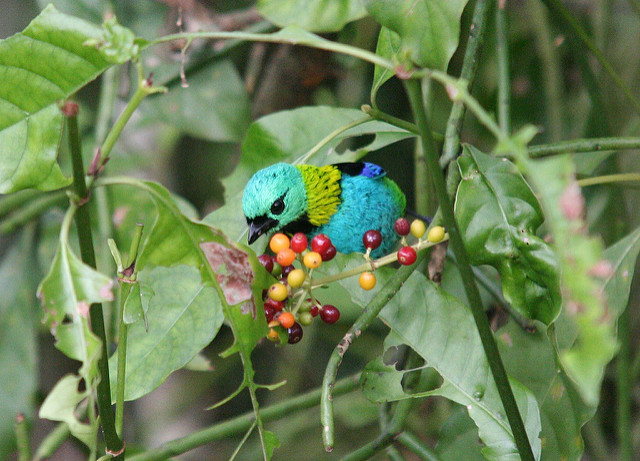
“But the wisdom that is from above is first pure, then peaceable, gentle, and easy to be entreated, full of mercy and good fruits, without partiality, and without hypocrisy. (James 3:17)
Green-headed Tanager (Tangara seledon) ©Flickr Meghan Hess
*
*
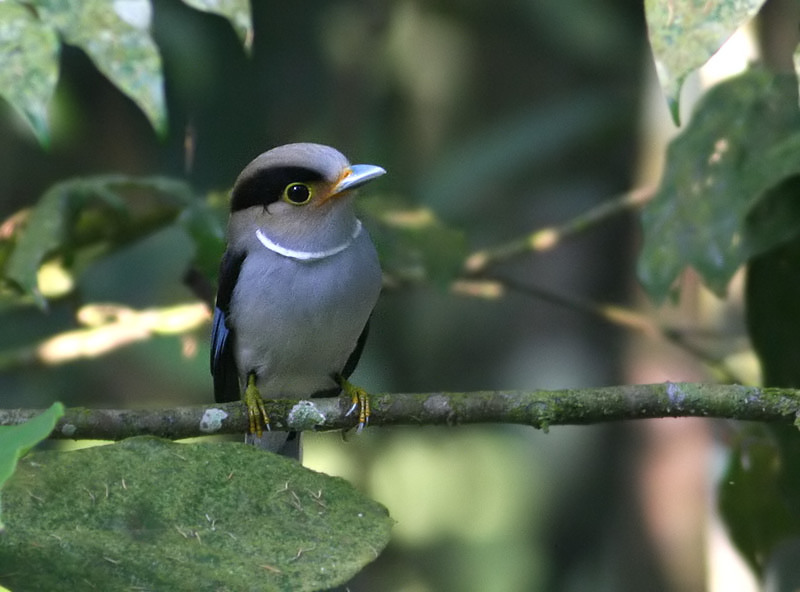
“But the fruit of the Spirit is love, joy, peace, longsuffering, gentleness, goodness, faith, Meekness, temperance: against such there is no law.” (Galatians 5:22-23 KJV)
Silver-breasted Broadbill (Serilophus lunatus) by Peter Ericsson
*
Longsuffering
Gentleness
Faith
Meekness
Temperance
*
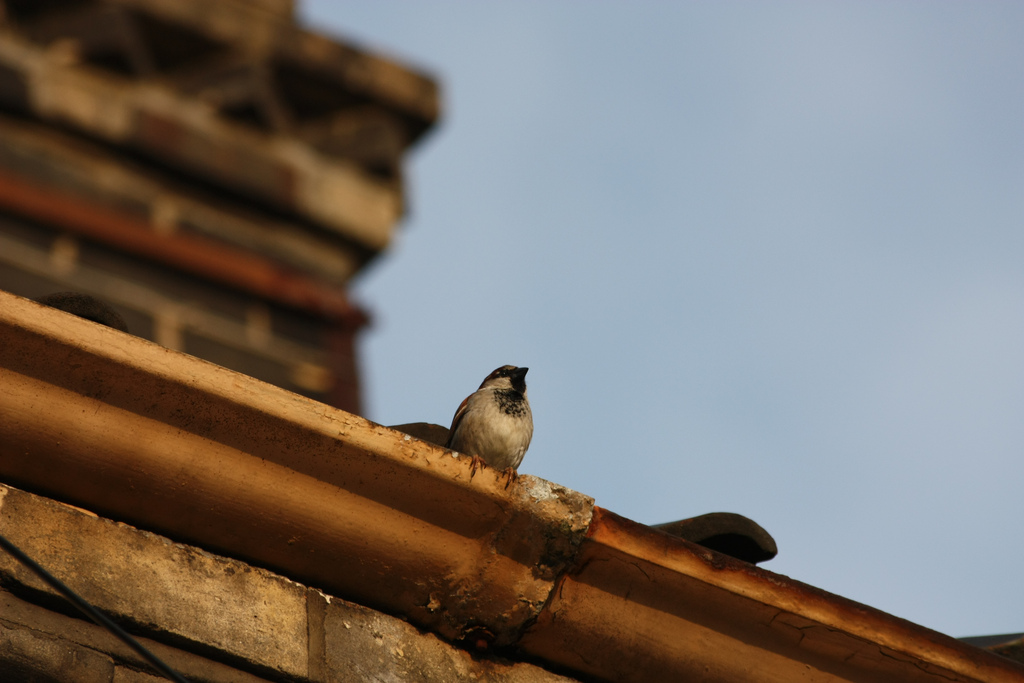
“I watch, and am as a sparrow alone upon the house top. (Psalm 102:7)
House Sparrow (Passer domesticus) on a house ©WikiC
*
*
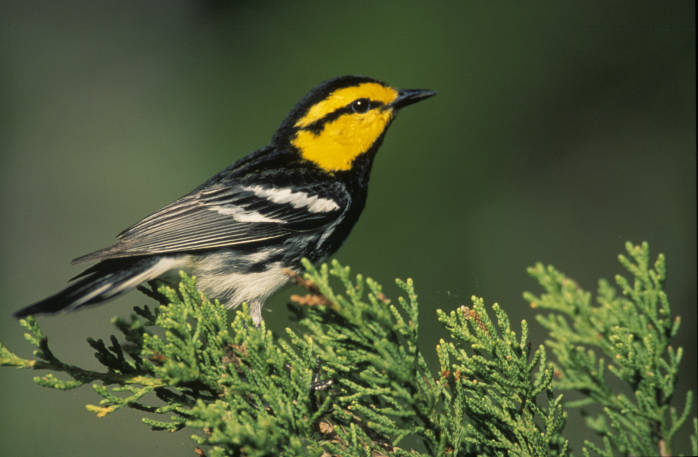
Golden-cheeked Warbler (Setophaga chrysoparia) ©USFWS
“But He knows the way that I take; When He has tested me, I shall come forth as gold.” (Job 23:10 NKJV)
Now for the last half of the New World Warbler Family. See the first half at Sunday Inspiration – New World Warblers I. The Parulidae family has 119 members presently. The Setophage genus is numerous with 37 species which are seen by many of here in the United States. Many of these had their genus changed from Dendroica to Setophage and some may still refer to them with the older genus name. Sibleyguides has a nice chart showing how they rearranged the taxonomy.
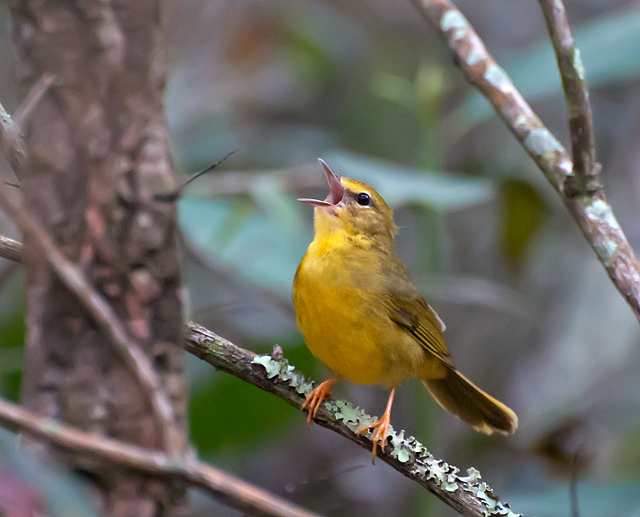
Flavescent Warbler (Myiothlypis flaveolus) by Dario Sanches
The next genus is the Myiothlopis group. The 14 here are best represented in Central and South America. This is one of only two warbler genera that are well represented in the latter continent. All of these species were formerly placed in the genus Basileuterus.

Collared Whitestart (Myioborus torquatus) by Reinier Munguia
The Basileuterus genus still has nine species. Again, they are mainly in the Central and South America areas. These are mainly robust warblers with a stout bill. The majority of species have olive or grey upperparts and yellow underparts. The head is often strikingly marked with a long broad supercilium, a coloured crown or crown stripes, and often other striking head markings.
Many species are not well-studied, but those for which the breeding habits are known all build a domed nest on a bank or on the ground, so this is presumably typical of the genus as a whole.
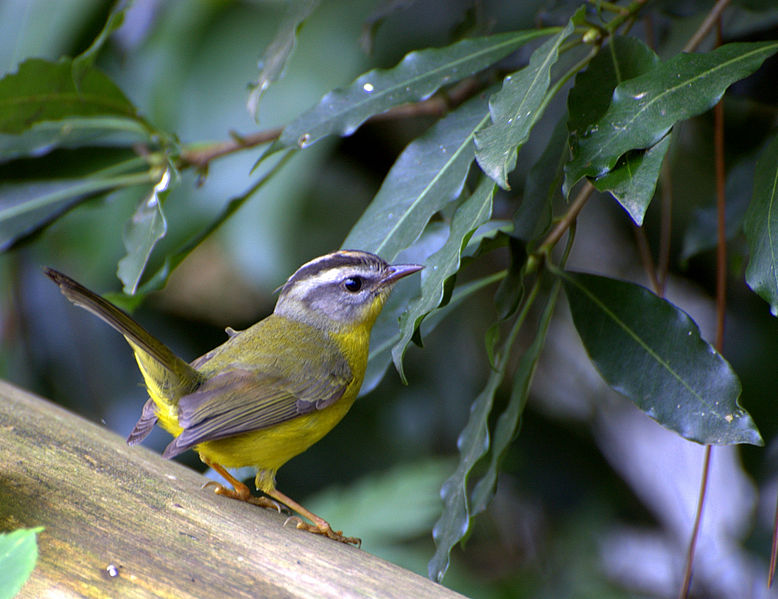
Golden-crowned Warbler (Basileuterus culicivorus) ©WikiC
The Cardellina and the Myioborus (Whitestarts) round out the rest of the family. They have 5 and 12 species respectively. The 12 whitestarts are New World warblers in the genus Myioborus. The English name refers to the white outer tail feathers which are a prominent feature of the members of this genus (“start” is an archaic word for “tail”). They are from mainly northern South America and are spreading north to Central America and the USA. The five Cardellina are from South America. (Info from Wikipedia)
A word fitly spoken is like apples of gold In settings of silver. (Proverbs 25:11 NKJV)
“Heavenly Sunlight” ~ by Artisans in Brass ©Used With Permission
Artisans in Brass (Website) – Artisans in Brass (Facebook)
*
Sunday Inspiration – New World Warblers I
Parulidae – New World Warblers
New World Warbler – Wikipedia
New World (Wood) Warblers – Ian’s Birdway
“And the harp, and the viol, the tabret, and pipe, and wine, are in their feasts: but they regard not the work of the Lord, neither consider the operation of his hands. (Isaiah 5:12)
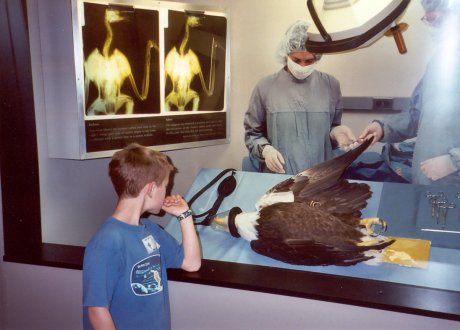
Eye Surgery on an Eagle ©phillipdthomas
*
*
 Lee's Birdwatching Adventures Plus