Walter the Directionally Challenged Goose, Part 2

Walter the Directionally Challenged Goose, Part 2

by Emma Foster

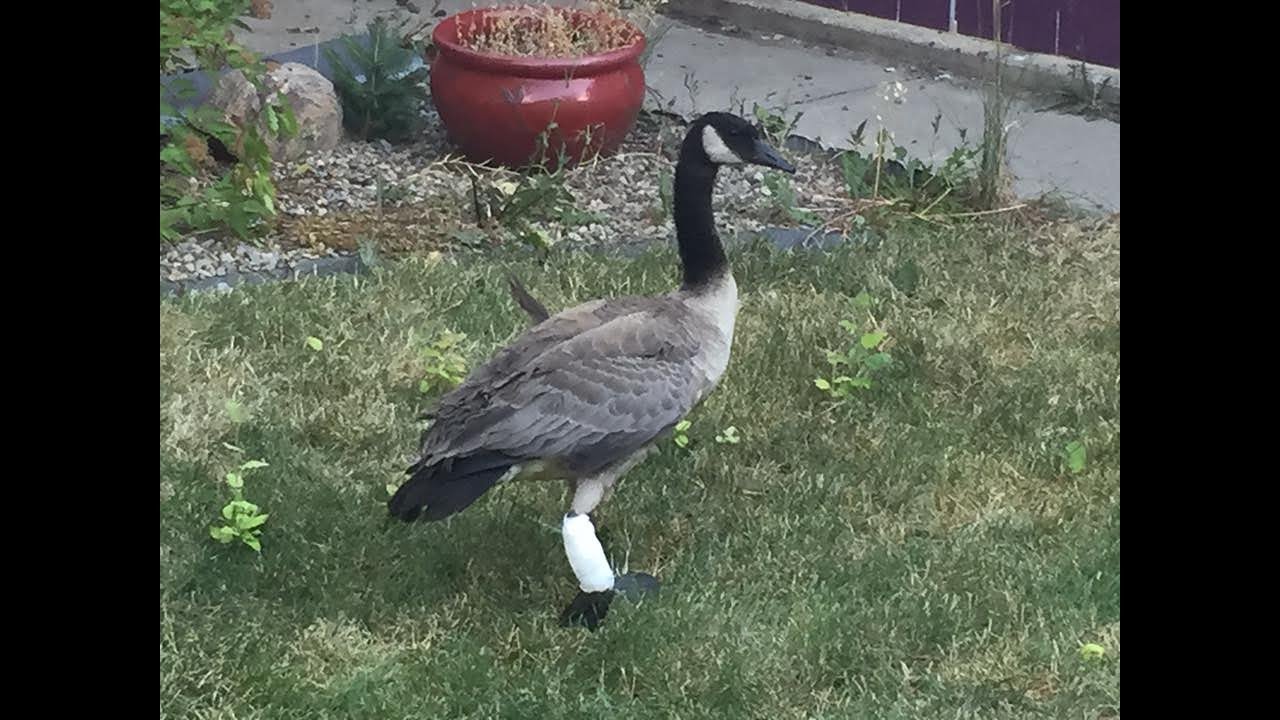
Walter with injured foot, in Part 1

Walter the goose didn’t have to worry about flying south for the winter now that he lived at the veterinary clinic. Whenever winter returned, Walter was safe and warm inside the clinic, and during the summer he could walk outside and explore. However, Walter made sure to stay close to the clinic so he wouldn’t get lost. He was still directionally challenged.

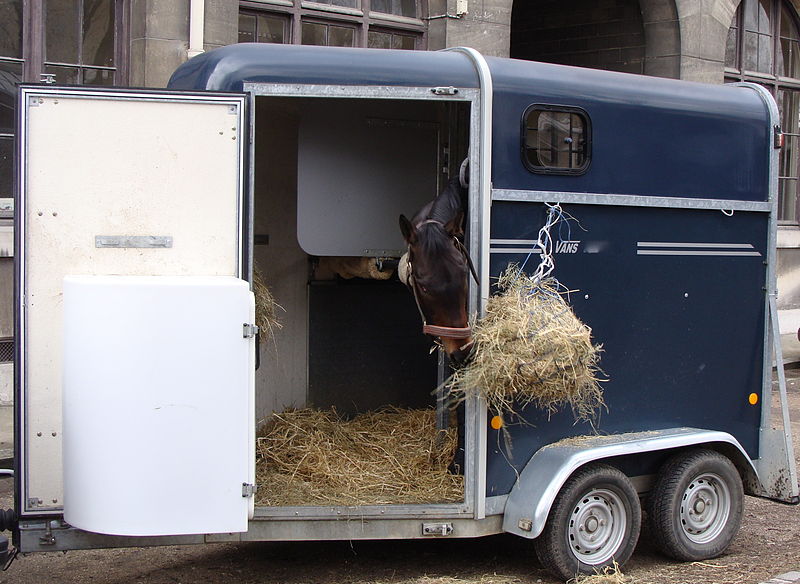
One summer day Walter was walking around by the garage at the veterinary clinic. A truck drove up and parked in front of the garage. Walter had to quickly waddle out of the way to avoid getting run over, but when he was a good distance away he noticed a trailer attached to the back end of the truck. Inside the trailer was a small horse.

Horse in Trailer ©WikiC

The horse looked out the window when Walter approached the trailer. Walter had seen many different kinds of animals during his short time at the vet, but he had never seen a horse before. When Walter craned his neck to see inside, he could tell that the horse was nervous. Every now and then, Walter needed to come into the rooms to calm the other animals down, since they were nervous about being at the vet. Walter asked the horse his name to help him not feel so nervous. The horse said that his name was Angus. He also mentioned that he didn’t know why he was there, but this was his first time at the vet without his mother.

Walter sat by the trailer while the vets came out and Angus was brought out of the trailer. Angus became so nervous that he bolted, jumping a fence and running into the fields. Walter flapped after him, determined that his new friend would overcome his fear.

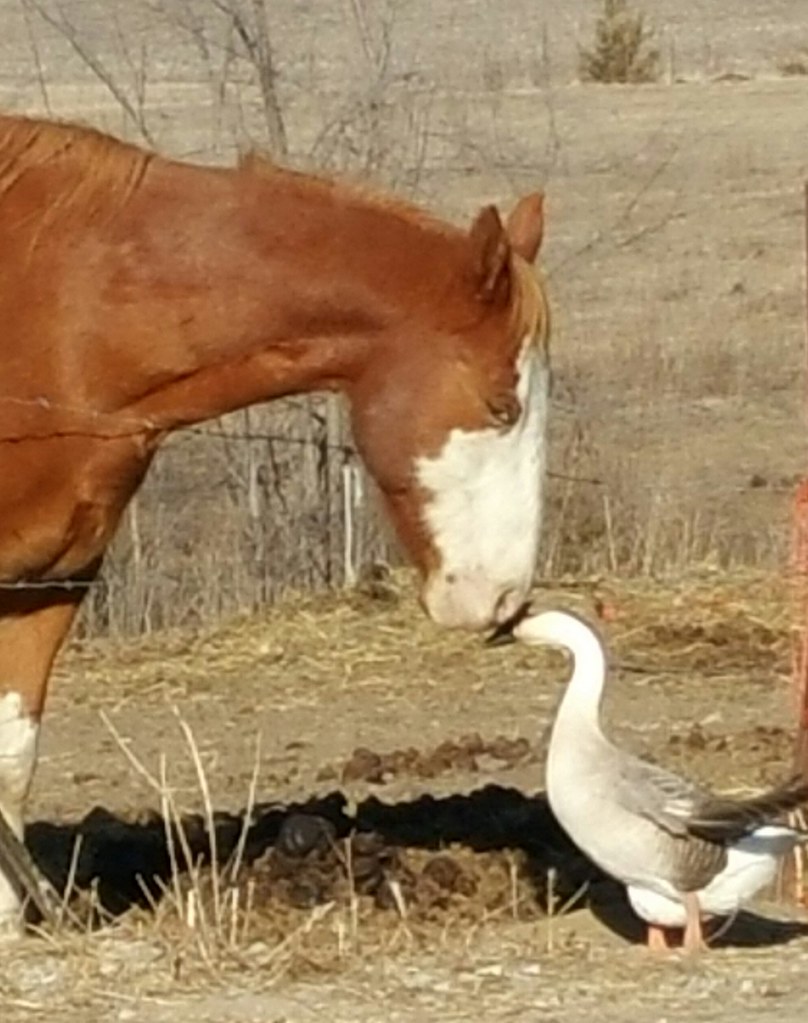
A Goose and her horse ©Flickr Lisa Donahoo

A Goose and her horse ©Flickr Lisa Donahoo

Walter flew over a small field and a patch of trees. By then, the vets and Angus’s owner were far behind. Walter searched for a long time, turning in different directions before resting on a tree stump to see where he was. To his surprise, when he looked ahead, he noticed the veterinary clinic! He had gone in circles, since he was so directionally challenged.

Deciding to go back the other way, Walter flew in the opposite direction, took a right, then landed in another field that he had never been in before. Walter sat in the brush and thought, but he did not give up. Suddenly he realized that the tall grass around him was moving a little. Walter crouched down, but Angus pulled his head over the grass and looked down at him. Angus had seen him land in the field. Walter explained that he had been looking for Angus, but he had gotten lost. Angus decided that, if Walter could fly around looking for him and not give up or become afraid, he didn’t have to be afraid about being at the vet for a checkup. He knew Walter would be right there with him.

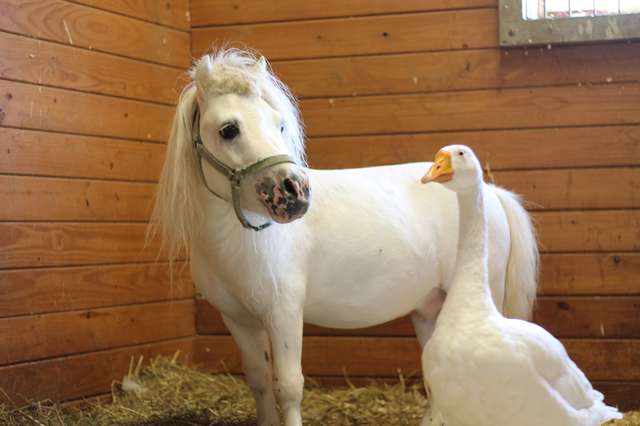
Mini Horse and Friend

Walter flapped up onto Angus’s back, and Angus trotted back to the clinic, where Angus’s owner and the vets had been waiting for them. They were all extremely glad that they had both returned. Walter stood by Angus the entire time he received his checkup. Angus was very healthy. He did have to receive a few shots, but Walter assured him they weren’t that bad. When Angus’s checkup was over, Angus had to say goodbye to Walter. Walter hoped that he would see Angus again soon, but only for a checkup.


Lee’s Addition:

“Therefore encourage one another and build up one another, just as you also are doing.” (1 Thessalonians 5:11 NASB)

We met Walter in Walter the Directionally Challenged Goose.  Walter seems to have found his permanent home and a mission to be a encourager. I love Emma’s stories, but it becomes challenging to illustrate these adventures. So forgive the different types of geese and horses.

What I did find is a very interesting story about a real horse and goose. This is not to take away from Emma’s Story, but to show that it could be more true than she thought.

“A man who has friends must himself be friendly, But there is a friend who sticks closer than a brother.” (Proverbs 18:24 NKJV)

See All of Emma’s Stories

Clyde and Benny by Emma Foster

Clyde and Benny by Emma Foster

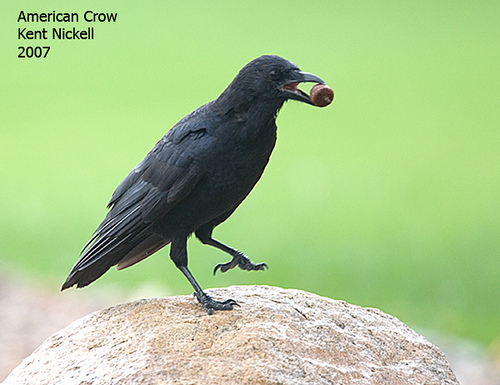
American Crow (Corvus brachyrhynchos) by Kent Nickell

American Crow (Corvus brachyrhynchos) by Kent Nickell

Clyde was an old crow who lived in a tall pine tree in the darkest part of the woods. Because preferred to spend time away from all the other birds and forest animals, he didn’t have any friends. Many of the other birds avoided him because they were afraid of him.

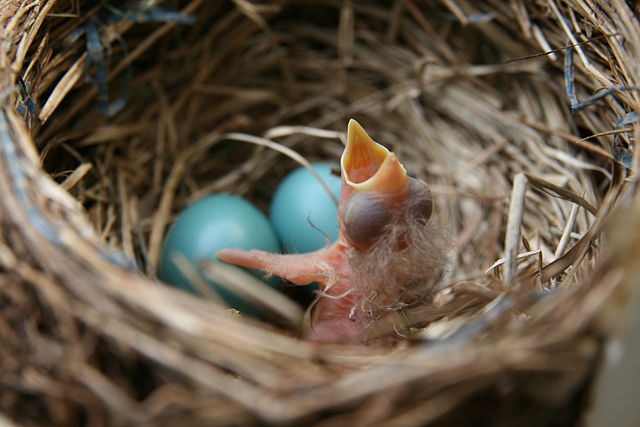
But one day Clyde returned with a large worm in his mouth to his nest to find something in his nest. That something was a little white egg. Clyde had no idea where the egg had come from or how it had gotten there, but he knew he did not want the egg in his nest. While he was thinking about what to do with it, the egg started shaking. A few moments later, a tiny robin chick popped out, peeping loudly.

American Robin (Turdus migratorius) Hatching ©WikiC

Now Clyde really didn’t know what to do. He wanted to be left alone, but the tiny robin flopped out of the egg and stared at him, thinking that Clyde was his mother. Clyde thought for a long time, thinking that he should find another nest somewhere else, but the chick looked too helpless for him to leave. Instead, he reluctantly gave the chick the worm he found and went to look for its mother.

Clyde searched all through the forest, but he couldn’t find any other family of robins. Many of the birds were surprised at seeing Clyde, and most of them hid in the trees to keep away from him. Clyde returned to his nest, back to the chick, and he decided that he would have to keep him. Eventually Clyde decided to call him Benny.

Even though Clyde gave Benny his name, he still did not want Benny around. Clyde begrudgingly found extra worms for Benny and himself. However, once Benny was old enough to fly out of the nest, Clyde showed him how to find the worms for himself so he wouldn’t bother him so much.

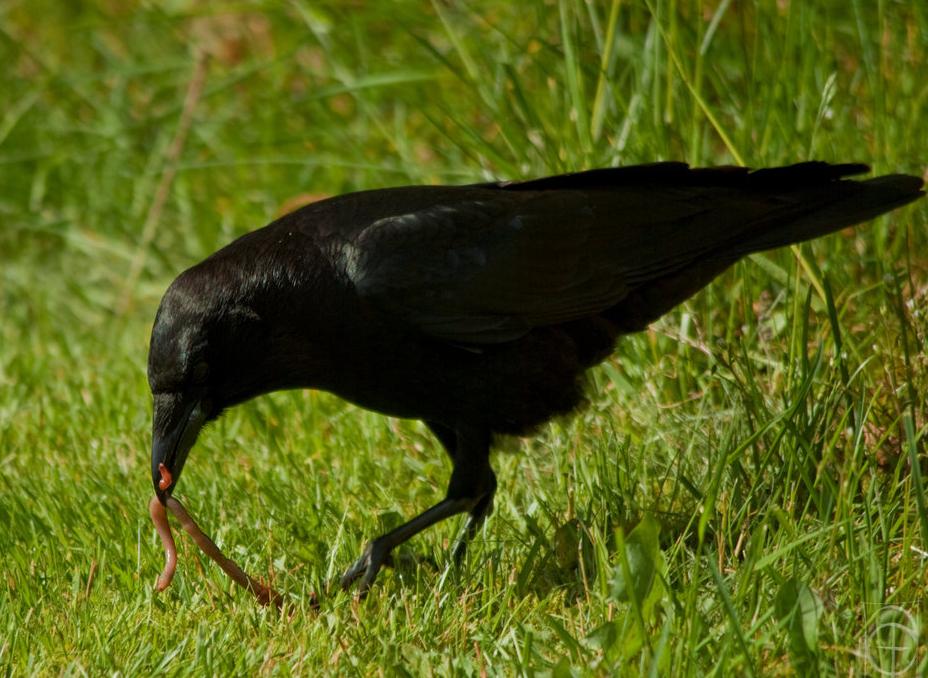
Crow Getting Worm ©PxHere

Crow Getting Worm ©PxHere

Unfortunately, teaching Benny how to fly took what felt like hours to Clyde. Benny was a very clumsy little robin. The first time, Benny fluttered out of the nest, dropped, and flopped onto the branch below them. Clyde had to set Benny on his back, take him back up to the nest, then start all over again. Finally, Benny was able to fly a few feet to the next branch, which was a great relief to Clyde.

Once Benny, learned how to fly, however, Benny would not leave Clyde alone. He followed Clyde wherever he went, even after Clyde showed Benny where to actually find food. Whenever Clyde passed other birds or animals, they wondered who the tiny robin was because they had no idea where he came from.

Clyde became so tired of Benny following him around that one day, he took Benny to an unfamiliar part of the forest. Now that he thought Benny could take care of himself, he figured he could lose Benny somewhere in the woods. When they reached a small river, Clyde waited for Benny to start searching for food like he had been told. Once Benny was distracted, Clyde flew off, not looking back until he was far away from the river.

Clyde returned to his nest, but he realized it felt empty and quiet. It was just like before Benny arrived, when all the other birds were afraid of him and he had no one to talk to. Clyde started to feel very lonely, and he realized he shouldn’t have left Benny all by himself. Clyde immediately wanted to fly back to the river.

As Clyde made his way back, he realized he had taken a wrong turn. All of the trees looked unfamiliar. Clyde sat down on a branch and thought for a long time on where to go. He worried abut Benny, since he was lost as well. He cawed for Benny for a long time, but he never received an answer. Finally, Clyde heard a rustling of branches a little way off.

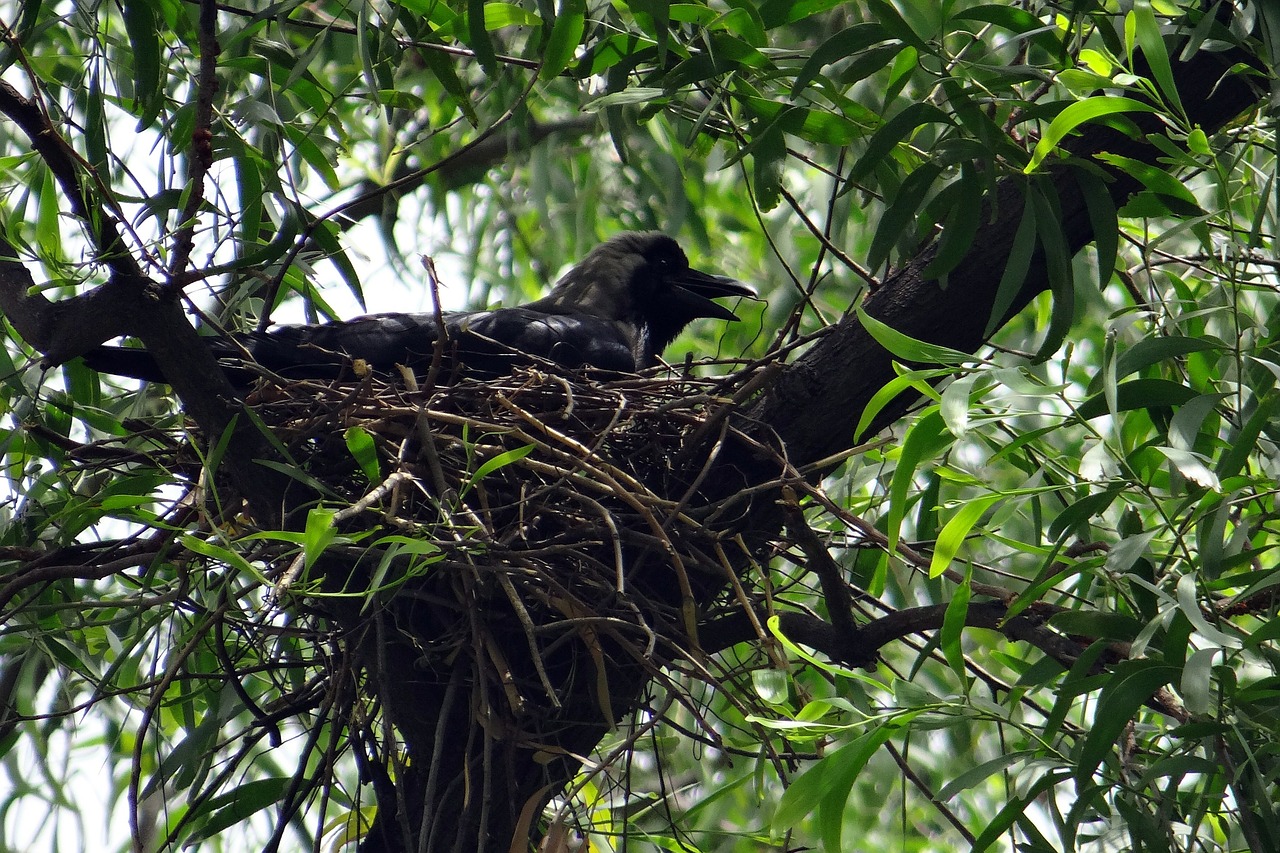
Crow in Nest ©NeedPix

Clyde the Crow in Nest ©NeedPix

When Clyde rounded the corner he saw something flapping from branch to branch, shaking the leaves. Clyde realized that the bird was Benny, and that he couldn’t fly well because he had found the largest worm Clyde had ever seen.

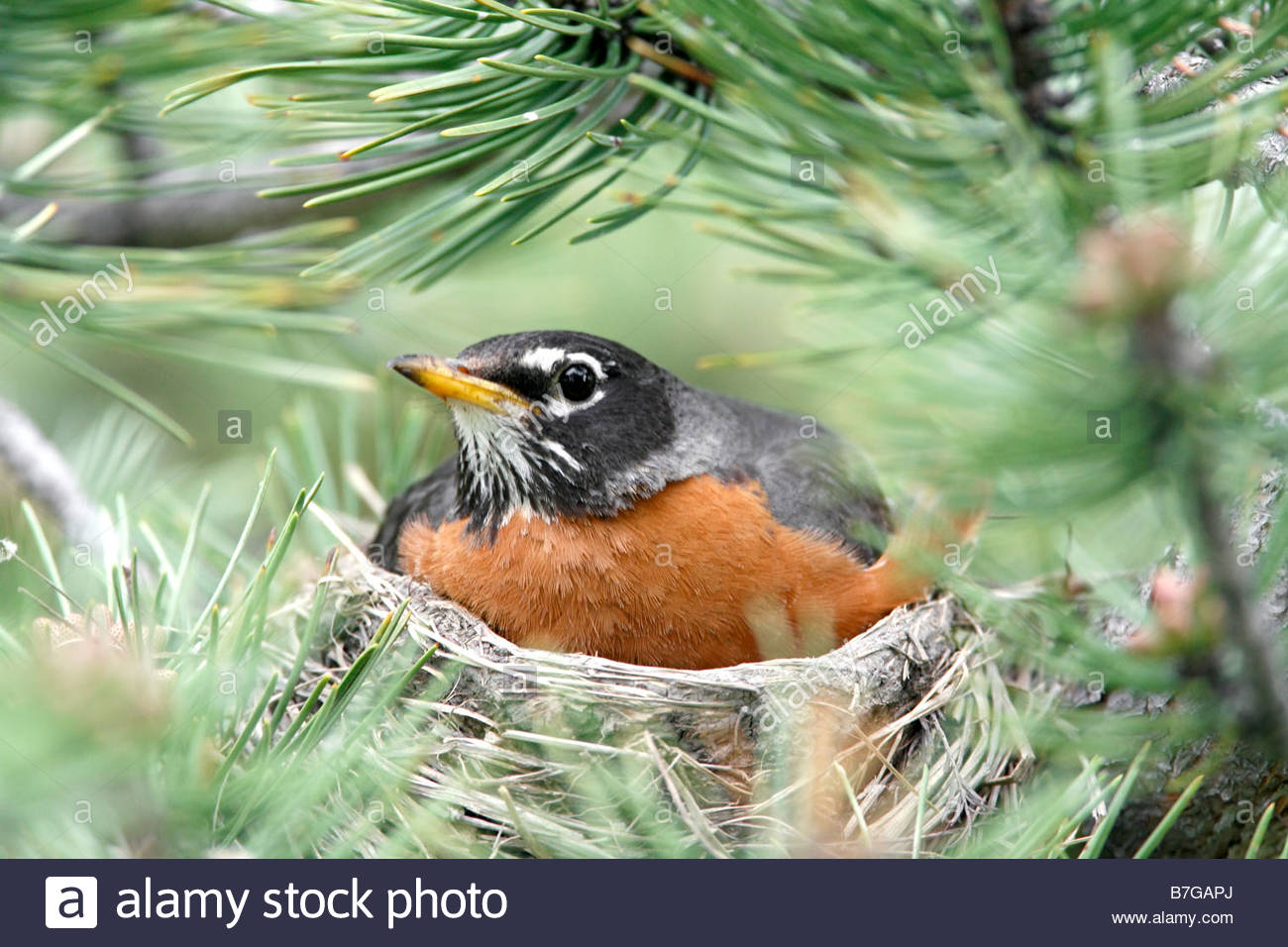
American Robin on Nest ©Alarmy

Benny the American Robin inn Nest ©Alarmy

Clyde returned to Benny, who dropped the worm, surprised that Clyde was so frantic. Benny hadn’t even known that Clyde had gone, but Clyde still apologized. He helped Benny take the worm back to the nest. Every day after that, Clyde and Benny spent all their time together. Even after Benny grew up. Benny placed his nest directly in the tree beside Clyde’s.


“Here’s my concern: that you care for God’s flock with all the diligence of a shepherd. Not because you have to, but because you want to please God. Not calculating what you can get out of it, but acting spontaneously.” (1 Peter 5:2 MSG)

Lee’s Addition:

Emma sent this delightful story to me recently. I trust you will enjoy it as much as I have putting the photos in. She, like many students, college or younger, has been finishing her classes at home.

The verse above has to do with pastors, but the principles apply to this story. Not so sure Clyde was so willing at first, but he came around. Thanks again,Emma, for another tale for us.

See All Of Emma’s Stories Here


Reginald the Turkey Commander: The Spring Party

Turkey by the River ©(Photo Kelly Preheim) FWS-GOV

Turkey by the River ©(Photo Kelly Preheim) FWS-GOV

Reginald the Turkey Commander: The Spring Party

by Emma Foster

   It was nearly springtime, and the turkeys were able to leave their fortresses in the woods to search for food without worrying about hunters or too much snow. There hadn’t been a lot of snow that year, which meant that the closest river to the turkeys wasn’t usually covered in ice.

One day, when it was almost March and the air was cool, the turkeys decided that it would be a good idea to head to the closest lake to celebrate another winter soon over. Reginald, the leader of the turkeys, decided that it would be best to build boats out of the bark of the wood from the trees in order to float down the river to the nearest lake.

The turkeys set to work, finding different trees around the forest where they could easily peel off the bark or branches to make boats and rafts for the river. Oliver followed Reginald around as Reginald looked for something he could use. Reginald found some trees where the bark had been torn off from a storm. He gave several pieces to Oliver to take back to the camp, though Oliver had a difficult time carrying all of them at once. He started kicking a few pieces ahead until Reginald picked up the last pieces and helped him back to the camp.

Some of the smaller turkeys floated on the large pieces of bark they had found, while Reginald and a few others tied the thinner pieces together with moss. When all the boats were finished, Reginald and the turkeys cast off down the river. Reginald knew where the closest lake was, and he knew that the river would split off in two different directions at one point. He knew that the turkeys needed to head east.

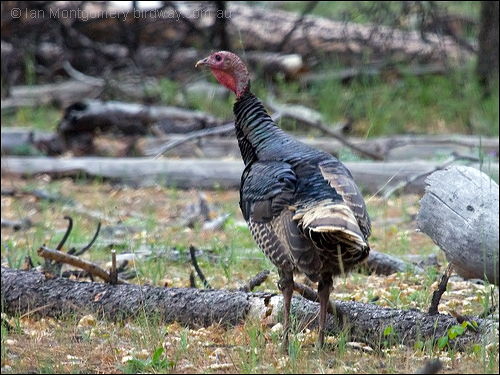
Wild Turkey (Meleagris gallopavo) by Ian

Reginald, Oliver, and the other turkeys started floating down the lake, steering and rowing with branches. The sun was shining through the trees, and the water was cool and shallow. Reginald made sure that Oliver didn’t float to far away or that he was steering too far ahead.

But when they came to the place where the river went in two different directions, Oliver got caught up in the rapids and drifted the other way, toward the west. Reginald changed course and followed, letting the other turkeys go ahead to the lake.

The water seemed rougher on the side Oliver and Reginald were on. Oliver looked behind him as Reginald tried to catch up and flapped his wings violently. Because he wasn’t paying attention, his boat hit a rock and started to break apart. When Reginald got close enough, Oliver panicked and jumped onto Reginald’s boat. Reginald did his best to keep Oliver from sinking his boat by paddling to the side of the river. He pulled Oliver out of the boat and made his way back to the other river so they could follow it down to the lake.

After walking for what felt like hours, Reginald figured that they were lost and started following the direction of the sun because he knew that the lake had to be north. Oliver trailed after him the entire time, completely forgetting where they were even going. Reginald just shook his head and kept walking.

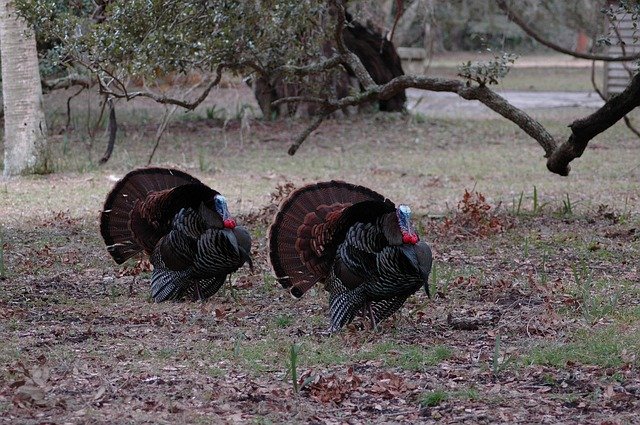
Turkeys ©Pixabay

Reginald eventually realized that they had been going around in circles. He decided to go straight ahead, and eventually he and Oliver came through the bushes and found the other half of the river. They followed it down stream for a long time before they came to a tree trunk that had fallen across the river. The turkeys had left the boats there because it was too low for them to row under it. Reginald guessed they had walked the rest of the way, which shouldn’t be that far.

Oliver immediately hopped onto the tree, took a few steps to cross the river, and fell in, flapping his wings in terror. Reginald ran after him, urging Oliver to keep his head above water. Suddenly, Oliver disappeared. Reginald reached the edge and realized Oliver had fallen down a small waterfall and had landed in the lake all the other turkeys had reached. Many of the turkeys sat by the side of the lake, enjoying the sun, and they were not surprised to see Oliver flailing about in the water. Reginald finally decided to just jump in after Oliver, leaving his army helmet by the shore. The rest of the day, Reginald, Oliver and the other turkeys sat by the lake in the sun, happy that winter was slowly fading and that they had another year to spend where it was warm before they needed to go back to the fortresses.


Lee’s Addition:

They are abundantly satisfied with the fullness of Your house, And You give them drink from the river of Your pleasures.” (Psalms 36:8 NKJV)

I will seek what was lost and bring back what was driven away, bind up the broken and strengthen what was sick; but I will destroy the fat and the strong, and feed them in judgment.” (Ezekiel 34:16 NKJV)
“that the saying might be fulfilled which He spoke, “Of those whom You gave Me I have lost none.” (John 18:9 NKJV)

These verses seem to me to sort of apply. Jesus applies these to us, but the turkey definitely enjoyed the time at the river. Our hero, Reginald, made sure all the turkeys arrived safely. Our Lord wants to make sure that we all arrive safely in Heaven with Him.

Another great story, Emma. Thanks for keeping us up to date on the latest adventures of Reginald and this flock.

See More of Emma’s Tales of Reginald and others at:

Emma’s Stories

Birds of the Bible – Better Than The Birds IV

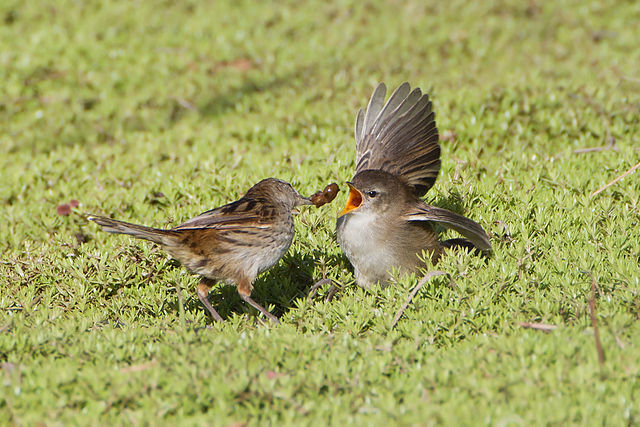
Little Grassbird (Megalurus gramineus) Adult Feeding Juvenile©WikiC

While listening to Wisdom For The Heart on BBN (Bible Broadcasting Network), I heard this message by Pastor Stephen Davey and wanted to share it. His message was “Better than the Birds” and of course it caught my attention. There are four parts, but I am only sharing the introduction and part four here.

Better than the Birds

Luke 12:6-31

Birds of the Bible – Better Than The Birds was the introduction to the “Better Than The Birds” message by Pastor Stephen Harvey.

We were told that “1. Worry denies the gracious care of God.”

We were told, “2. Secondly, worry depreciates the higher value of mankind” In  Better Than The Birds II

We were told, “3. Thirdly, worry distorts our perspective in life” In Better Than The Birds III

Now for Part IV

4. Worry diminishes our distinctiveness as believers

Look at verse 29. “And do not seek what you will eat and what you will drink, and do not keep worrying [about it]. 30. For all these things the nations of the world eagerly seek.”

Even as Christians we can get caught up in the world’s idea that we live because of our bodies. And since we think we live because of our bodies, we start living for our bodies.
That’s the way the world lives . . . it’s literally all about your body – your body – what you do with it, what you do for it, what you do to it – what you put on it, what you put in it.
That’s the passion of the world – the body.

Further, one author wrote it this way, “it is characteristic of the secular world to be obsessed with economic questions, to be almost entirely engrossed by consumer concerns, to be preoccupied with finding and getting better and better things.”xi

Jesus says, effectively, all these things are the things the nations of earth are after.

But maybe you’re thinking, well, somebody’s got to worry about my stuff!

So be careful here . . . let’s be balanced. Jesus isn’t advocating that we just stick our heads in the sand and everything will be alright.

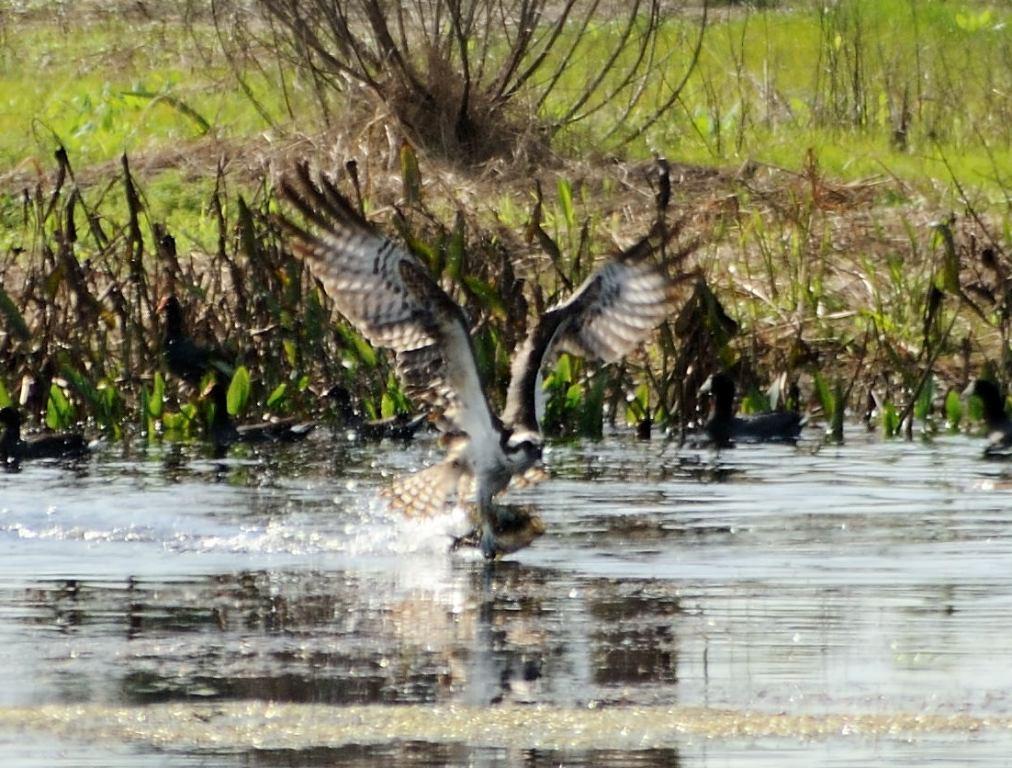
Osprey Catching Fish - Viera Wetlands

Osprey Catching Fish – Viera Wetlands by Dan

The truth is, the animal kingdom is busy. Those little birds work hard . . . just watch them sometime. I doubt any of them get 2 weeks of vacation.

The question is, are you actively stewarding or managing what God has given you or are really at heart worrying about what God hasn’t given you or what He might not let you keep?

One author reviewed statistical percentages and summarized that:

 40% of our worries are about the future
 20% of our worries are about the past
 22% of our worries are about our health
 And 8% of our worries are about petty things we can’t do anything about; which means, 90% of what we worry about are things we can’t change.

Which is why one man wrote, “Worry is like a rocking chair – it gives you something to do but it never takes you anywhere.”

But what do we do about stuff we worry about?

I read about one man’s solution. He told his friend, “I have a mountain of debt; I’ve lost my job, my car was repossessed, our house is in foreclosure and I’m not even worried about it!”

“You’re not?” his friend said, “why not?”

“Well, I’ve hired a professional worrier. He does all the worrying for me, and that way I don’t have to think about it.”

“That’s fantastic. How much does your professional worrier charge you for his services?”

“Fifty thousand dollars a year.”

“Fifty thousand dollars a year – where are you going to get that kind of money?”

“I don’t know . . . that’s his worry!”xii

There’s got to be a better solution than that.

Jesus effectively challenges us with two solutions. They’re not easy . . . but they’re right.
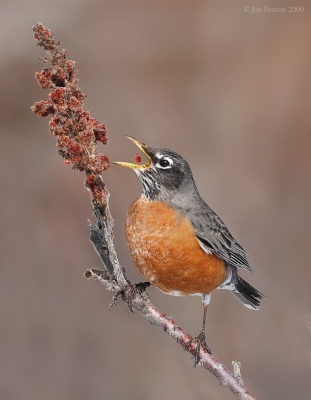
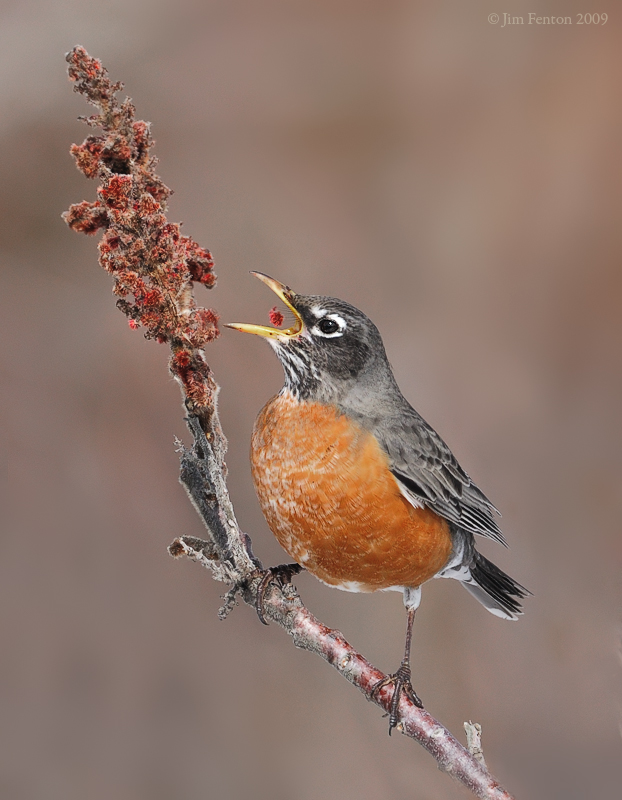
Robin Eating by Jim Fenton

Robin Eating by Jim Fenton

1. Make sure God and His kingdom stays first!

Verse 31, Jesus says, ‘But seek His kingdom and these things will be added to you.
In other words, He’s promised to give you the Kingdom – vs. 32 – now live with the Kingdom of God in mind.
Imagine it this way. Imagine that after this service, I showed you a will that my uncle left – he was a multimillionaire and he just died and showed you where he left all his money to you – all 25 million dollars. He didn’t leave it to me – his nephew – he left it to you – my former friend. You used to go to church here.

Now all you have to do is go to the bank tomorrow morning, sign the papers and deposit that 25 million dollars into your personal bank account.

Now tell me. How would you feel about your car on the way home? Would you pull up at a red light and be embarrassed that it’s so old? What about the interest rate on your home?

Would you worry about that? What about the stock market forecasts on the evening news tonight? Would you be worried about the meeting your boss has asked for tomorrow afternoon . . . would you lose any sleep over any of that?

No . . . why not? Because you are even now a multimillionaire, even though you don’t have one nickel of that money in your account.

But it is effectively already yours.

Jesus says, “You’re going to be given the kingdom – you are a king and queen in the coming spectacular reign of Christ on earth.

Between now and then, how are you going to live? You don’t have the crown or the robe or the throne – but it’s already yours. So keep that in mind live for that . . . pursue that . . . seek first that kingdom . . . keep your future in mind.

Grey Fantail (Rhipidura albiscapa) ©WikiC Feeding Young

2. Make sure God and His kingdom stays first!

Matthew’s account adds another phrase to Luke’s account that provides the second solution.

Matthew records in 6:34; So do not worry about tomorrow; for tomorrow will care for itself. Each day has enough trouble of its own.

Can you believe Jesus said that? Don’t worry about tomorrow – it has enough trouble just waiting for you.

Is He being pessimistic?

No . . . He’s also handing out another pearl of wisdom.

Here it is . . . not only should we make sure we put God first; secondly, we should make sure tomorrow stays put!

I’m not sure about the grammar, but you get my point. Make sure tomorrow stays put.

Now, Jesus isn’t saying don’t plan for tomorrow; He’s saying, don’t pull tomorrow’s problems and challenges into today.

God gives grace for today – and He doles out His grace one day at a time; which means Satan will try to crush our spiritual shoulders by trying to make us carry tomorrow’s burdens with only today’s grace.

So, overcoming worry means you develop the art of living one day at a time.xiii

Hudson Taylor often said, “When you are walking with God [today], the responsibilities [of tomorrow] rest with Him.xiv

In the meantime, make sure you put God first;
make sure tomorrow stays put.
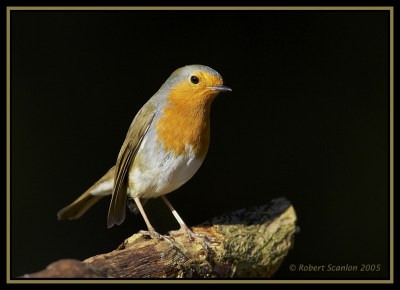
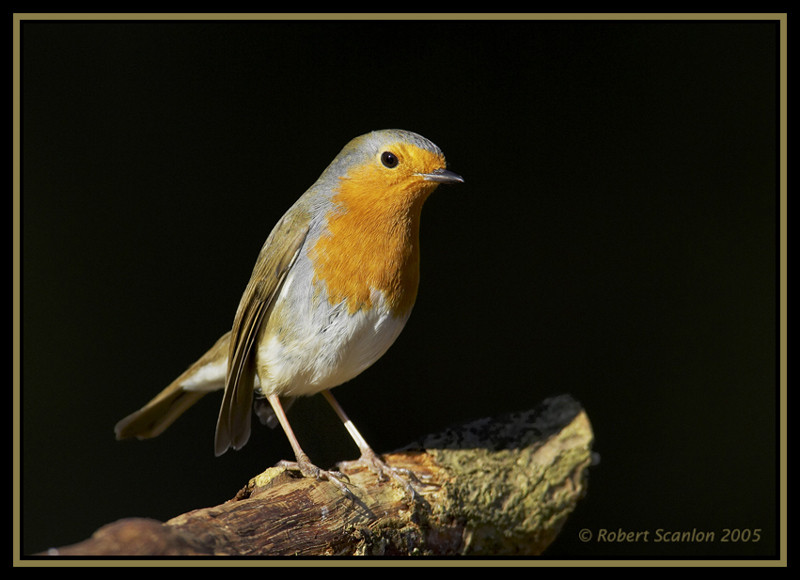
European Robin (Erithacus rubecula) by Robert Scanlon

European Robin (Erithacus rubecula) by Robert Scanlon

The truth is, and the convicting challenge in these final questions we’ve explored, is that you are better than the birds – now live like it . . . live up to your value as you trust your sovereign Lord – who cares about every detail of your life now – and He’s even preparing a kingdom with you in mind.

Martin Luther, that reformer centuries ago once described his favorite preacher. He wrote, I have one preacher I love better than any other; it is my little tame robin who preaches to me daily. I put his crumbs upon my window sill, especially at night. He hops onto the sill when he wants his supply, and takes as much as he desires to satisfy his need. From thence he always hops to a little tree close by, and lifts up his voice to God, and sings his carol of praise and gratitude, then tucks his little head under his wings, and goes fast to sleep, leaving tomorrow to look after itself.xv

That’s quite a preacher . . . quite a sermon to begin living up to – let’s live up to it, today.

This manuscript is from a sermon preached on 4/28/2013 by Stephen Davey.
© Copyright 2013 Stephen Davey All rights reserved.

(Copied with permission from Wisdom for the Heart and Pastor Stephen Davey.)

i John MacArthur, Matthew 1-7 (Moody Publishers, 1985), p. 419
ii Ibid
iii William Barclay, The Gospel of Luke (Westminster, 1975), p. p. 160
iv Bruce B. Barton, Life Application Bible: Luke (Tyndale, 1997), p. 314
v Barclay, p. 161
vi MacArthur, p. 119
vii MacArthur, p. 140
viii William Barclay, The Gospel of Matthew: Volume 1 (Westminster, 1975), p. 257
ix R. Kent Hughes, Luke: Volume 2 (Crossway, 1998), p. 54
x MacArthur, Matthew, p. 421
xi Grant R. Osborne, Exegetical Commentary on the New Testament: Luke (Zondervan, 2010), p. 252
xii Robert J. Morgan, Stories, Illustrations and Quotes (Thomas Nelson, 2000), p. 804
xiii Barclay, Matthew, p. 258
xiv Dr. and Mrs. Howard Taylor, Hudson Taylor: Volume 2 (OMF International, 1996), p. 31
xv Morgan, p. 804


Lee’s Addition:

What a great series of messages from Pastor Stephen Davey. Wisdom For The Heart

We heard this originally on our local Bible Broadcasting Network station. It is now on the internet at:

BBN (Bible Broadcasting Network),

See:
Birds of the Bible – Better Than The Birds III

White-crowned Sparrow (Zonotrichia leucophrys) 3©USFWS

While listening to Wisdom For The Heart on BBN (Bible Broadcasting Network), I heard this message by Pastor Stephen Davey and wanted to share it. His message was “Better than the Birds” and of course it caught my attention. There are four parts, but I am only sharing the introduction and part three here.

Better than the Birds

Luke 12:6-31

Birds of the Bible – Better Than The Birds was the introduction to the “Better Than The Birds” message by Pastor Stephen Harvey.

We were told that “1. Worry denies the gracious care of God.”

We were told, “2. Secondly, worry depreciates the higher value of mankind” In  Better Than The Birds II,

Now for Part III

3. Thirdly, worry distorts our perspective in life
In other words, worry makes you start living only for the here and now!

Go back to verse 22. And He said to His disciples, “For this reason I say to you, do not worry about your life, as to what you will eat, nor for your body, as to what you will put on. For life is more than food, and the body more than clothing.”

In other words, life is really about more what we’re going to eat and what we’re going to wear?

Jesus delivers encouragement to those in his day who could honestly be worried about the lack of water and food. In His culture, workers were paid daily, they bought their food daily – which is why they were taught to pray for daily bread – which we don’t worry so much about because our loaves of bread will last a couple of weeks.
In Jesus’ day, nobody was praying for bread next week – that was simply too far ahead.

Add to that the fact that their government offered no security; there wasn’t insurance, workman’s comp or benefit packages.

But there were taxes to be paid. New Testament scholars estimate that as much as 40% of their income went to taxes.

All that to say, this challenge by Jesus was staggering to them – and a great challenge to their faith in God’s provision.

In our generation, this isn’t so much an encouragement as much as it is an indictment.

While the average person has food in the fridge, clothes in the closet and a car in the driveway, what you eat and what you drink and what you dress in and what you drive have become national obsessions.

We are effectively worried that our clothes aren’t costly enough; our cars aren’t new enough; our food isn’t gourmet enough; our bank accounts aren’t big enough.

Jesus says, to that generation and this one – your life is about much more than that . . . don’t live for stuff that runs out or wears out – or goes out of style.

He promises here, not that He’ll meet our greeds, but our needs.

Slaty Flowerpiercer (Diglossa plumbea) ©©ornitholoco

Slaty Flowerpiercer (Diglossa plumbea) ©©ornitholoco

Oh, and by the way, if you want to talk about really splendid clothing – verse 27 – Consider the lilies, how they grow, they neither toil nor spin; but I tell you, not even Solomon in all his glory, clothed himself like one of these. (now here’s the pearl of wisdom) 28. But if God so clothes the grass in the field, which is alive today and tomorrow is thrown into the furnace, how much more will He clothe you? You men of little faith!

Jesus probably had his audience look around on that hillside – perhaps He gestured at the irises, the Turk’s cap lilies, the gladioli and scarlet poppies along with a smattering of wild flowers that bloomed for a day or two on the hillsides of Palestine.viii

He clothed them brilliantly and they don’t eve last that long!

The word for furnace here is a reference to the ordinary clay oven of this day – used primarily to bake bread. When the cook wanted to raise the temperature of the oven quickly, they would have handfuls of these same field flowers and dried grasses bundled nearby and they would grab a handful and throw it into the oven.

Something destined for the oven was still designed by God with brilliant colors and creative genius.

And all these wildflowers didn’t necessarily make it to the oven.

Martin Luther the converted monk and church reformer in the 16th century said that there were lessons of God’s glory in such beautiful flowers destined for such short life spans – he wrote “it seems that the flowers stand there and make us blush and become our teachers. Thank you flowers, you who are to be devoured by the cows!”ix

In other words, birds and flowers and nature around us teaches us the glory of God’s creative ability and His care and delight to have designed animals and flowers that live only briefly.

Twenty Hummingbirds at Feeder

Twenty Hummingbirds at Feeder

My wife has added birds to our backyard – strategically hanging feeders so that our back yard sounds like a constant aviary.
Yellow finches, hummingbirds, the elusive blue bird, the brilliant cardinal, sparrows, finches by the dozens, chic-a-dees, wrens, mourning doves, the unwanted mockingbird who thinks he owns the backyard and our deck and our house too.

Marsha and I often talk about the marvel of God’s hidden designs – noticed by so few. God created so much variety – to take the time to design splashes of white underneath large black eyes; to stripe transparent wings with burgundy and brown – to design symmetrical patterns of blue and gray.

Why? To declare His glory and to bring such sights for us to enjoy and marvel over His creation . . . and another reason – to remind us not to worry.

National Aviary – Outside feeder

For if God so cares about the details and designs of little birds and wild flowers – how much more does He care about us – His chief design, made in His image to talk with Him and walk with Him and worship Him and fellowship with and one day reign with Him.

In fact, notice verse 32. Do not worry – don’t be anxious or afraid – little flock, for your Father has chosen gladly to give you the kingdom.

In other words, we haven’t seen anything yet.

Don’t worry! Why?

Worry denies the gracious care of God

Worry depreciates the higher value of mankind

Worry distorts your perspective in life to the present –the here and now

One more:

(Copied with permission from Wisdom for the Heart and Pastor Stephen Davey.)

i John MacArthur, Matthew 1-7 (Moody Publishers, 1985), p. 419
ii Ibid
iii William Barclay, The Gospel of Luke (Westminster, 1975), p. p. 160
iv Bruce B. Barton, Life Application Bible: Luke (Tyndale, 1997), p. 314
v Barclay, p. 161
vi MacArthur, p. 119


Lee’s Addition:

See:
Birds of the Bible – Better Than The Birds II

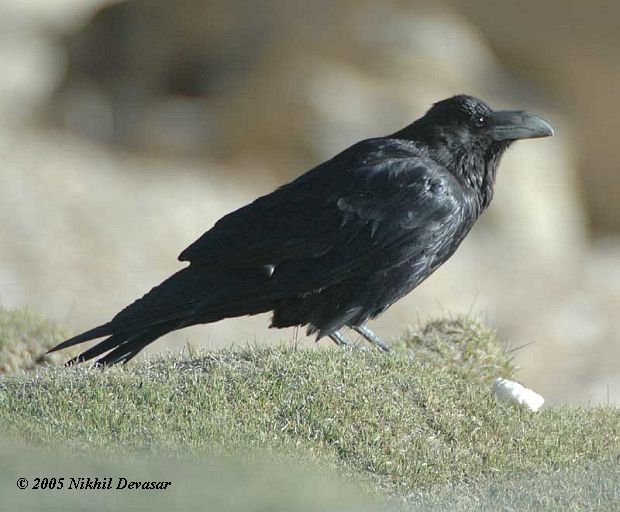
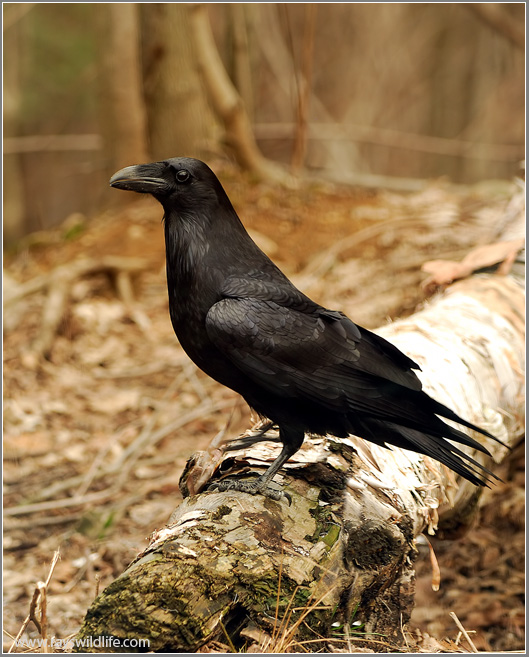
Northern Raven (Corvus corax) by Nikhil Devasar

Northern Raven (Corvus corax) by Nikhil Devasar

Better than the Birds

Luke 12:6-31

Birds of the Bible – Better Than The Birds was the introduction to the “Better Than The Birds” message by Pastor Stephen Harvey. We were told that “1. Worry denies the gracious care of God.”

Now for part II:

2. Secondly, worry depreciates the higher value of mankind

He’s not finished with the birds yet – notice verse 7 again – the last part – Do not fear; you are more valuable than many sparrows.

Matthews account says, “Are you not worth much more than they?

In case we didn’t pick up on the lesson – in case we’re a little slow – God’s care of the lesser creation ensures His care of His highest creation.

Evidently Jesus thinks we just might be a little slow on the uptake here – or maybe find it hard to believe – so He circles back around to this subject again and adds another pearl to the string – look over at verse 24. Consider the ravens, for they neither sow nor reap, they have no store room nor barn, and yet God feeds them; how much more valuable you are than the birds!

Maybe Jesus repeated this lesson simply because He knew that billions of people one day would struggle with believing they were less valuable than animals.

Was God peering into the 21st century or what?

You sit through the average Animal Planet program or read the latest evolutionary textbook taught to middle schoolers and you’ll get the message loud and clear that human beings have messed up the circle of life; humans have interrupted the food chain; humans are in the way and if we’d only get out of the way, the animals who evidently have the right to be on the planet – because they evolved first – would get what they deserve; if we’d just go back to living in caves, the animals would be able to enjoy their lives so much better.

That message is coming across loud and clear! Whenever you remove the glory of God’s created order, Genesis 1 and 2, where mankind was made in the image of God and given the right to rule earth – to train and subjugate and benefit from the animal kingdom – you end up with a culture where animals ultimately matter more.

You now exist to serve them; you now live to make their lives more comfortable.

Now I’m not defending animal abuse, by the way. We’re to be good stewards of earth and the animal kingdom.

But go visit India today, and watch, as I did, sacred cows which have been given superior rights within their culture – watch them meander across busy roadways and down streets cluttered with starving children – and begging mothers with babies on their hips; where a child starving to death is less important than a cow having something to eat.

How do we know that human beings are more valuable than animals? How do we know that?

Apart from God, we don’t.

Apart from the words of Jesus Christ, the creator of all things (Colossians 1), we might be confused – look again at verse 24 – you are more valuable than the birds.

Is that radical news or what?

Raven; Grand Canyon National Park, by William Wise

Raven; Grand Canyon National Park, by William Wise

And this really got the attention of Jesus’ Jewish audience, by the way, because Jesus used ravens as an example here – ravens were considered unclean according to Mosaic Law (Leviticus 11:13-15).vii

The ravens were unclean birds.

I’m sorry for how that makes you Baltimore Ravens fans feel – I’m sorry you had to find that out – you’ve been cheering all along for unclean animals . . . you already knew that.

Here’s why this was so stunning an analogy for Christ to make: It’s one thing to be insignificant like a sparrow and be cared for by God – it’s another thing to be unclean and despised and be cared for by God.

And you know why I’m so glad Jesus added this illustration?

Because the enemy of our heart and spirit and joy will more than likely come and whisper in our ear – sparrows might be cheap, but at least they’re clean animals – no wonder God cares about them; but you’re more like an unclean bird . . . despised and unclean according to God’s holy law . . . you don’t deserve God’s attention.

You have very reason to worry about your life.

But notice – verse 24. God has managed to care for them too – He effectively feeds them too – and get this – “How much more valuable you are than the animal kingdom!”

Worry denies the gracious care of God

Worry depreciates the higher value of mankind.

Brown-necked Raven of Israel

Brown-necked Raven, Israel ©WikiC

(Copied with permission from Wisdom for the Heart and Pastor Stephen Davey.)

vii MacArthur, p. 140


See:
Birds of the Bible – Better Than The Birds

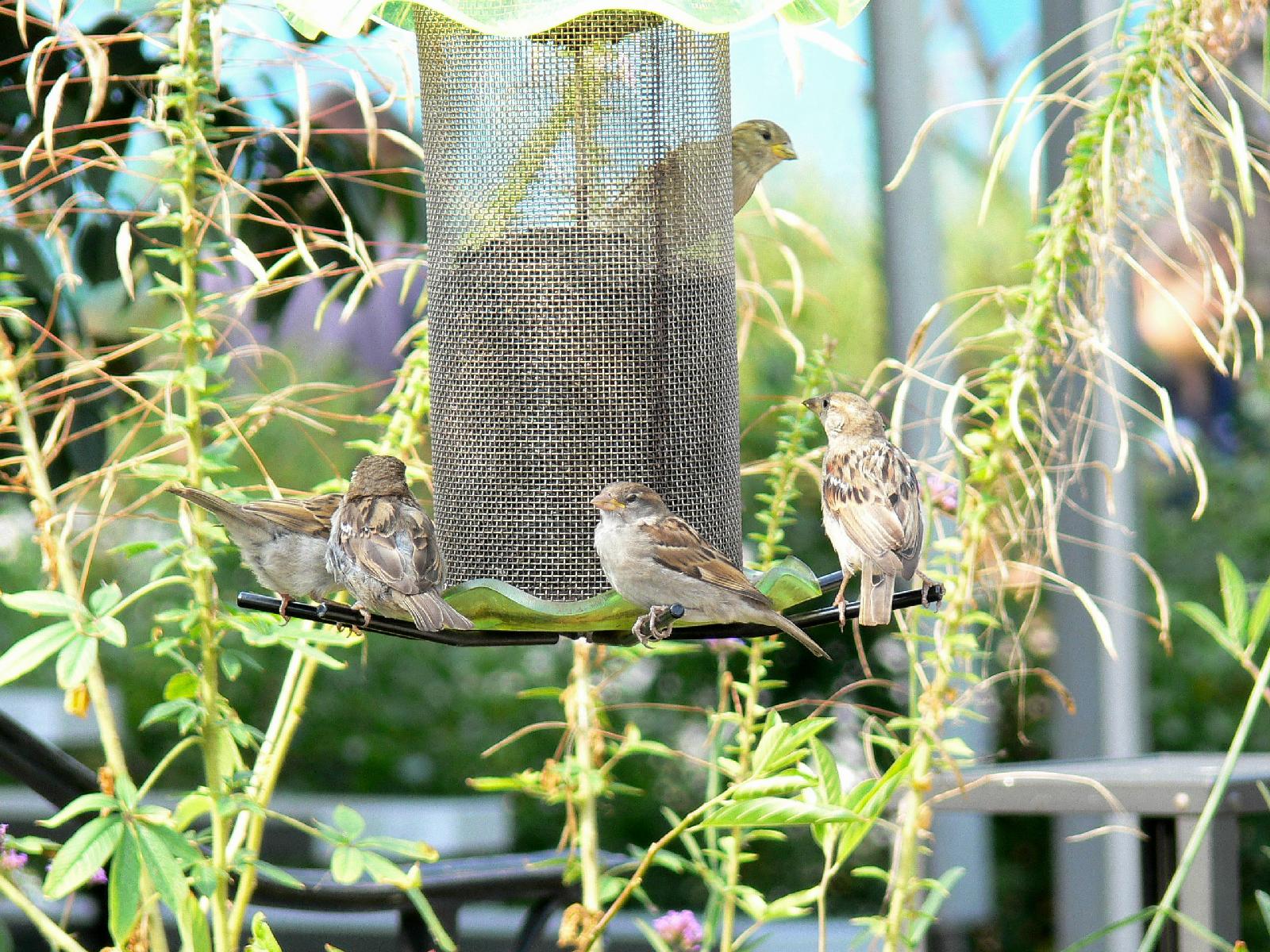
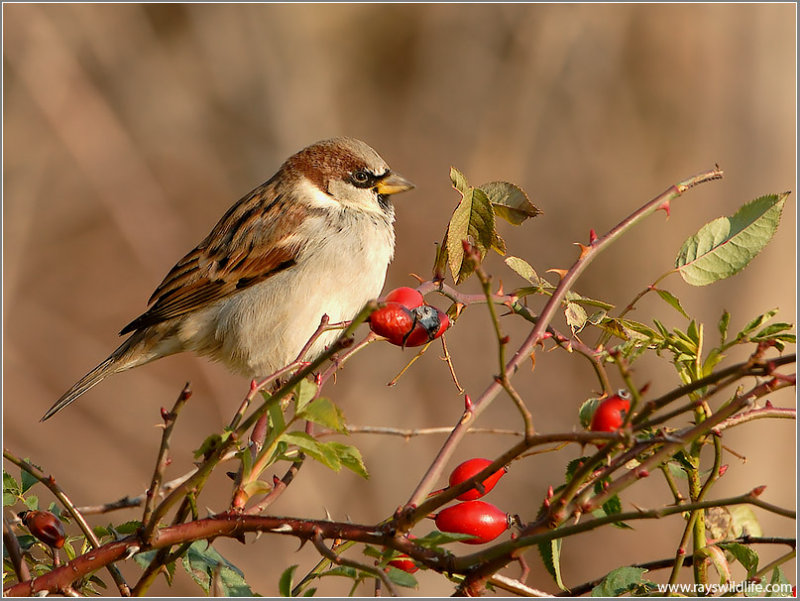
House Sparrow by Ray

In 2013, the Birds of the Bible – Worry and Sparrows articles were posted for part I and II. It’s 2020 now, and I’d like to repost these, plus add III and IV, which were never posted. They were overlooked by me. If your memory is like mine, you need a refresher. This time I will add the last 2 articles.


While listening to Wisdom For The Heart on BBN (Bible Broadcasting Network), I heard this message by Pastor Stephen Davey and wanted to share it. His message was “Better than the Birds” and of course it caught my attention. There are four parts, this is the introduction and part one.

Better than the Birds

Luke 12:6-31

I have read that a dense fog – so extensive that it covers seven city blocks a hundred feet deep is actually composed of no more than one glass of water; water, of course that’s divided into more than 60 billion droplets of water.i

Just a couple gallons of water can cripple an entire city.

In many ways, this perfectly illustrates the substance of worry. Just a little bit of it can spread and deepen and ultimately cripple the mind and the heart of even believers.

One author put it this way when he wrote, “Worry is a thin stream of fear that trickles through the mind, which, if encouraged, will cut a channel so wide that all other thoughts will be drained out.”ii

I find it extremely gracious of our Lord that whenever He addressed the subject of worry, and He did on several occasions, He went much further than simply saying, “You know better than that . . . worrying isn’t good for you . . . it’ll mess up your mind . . . isn’t right . . . stop worrying right now!”

Instead, Jesus graciously causes us to think through this vaporous substance of worry; He gives us several reasons to stop worrying and He even condescends in His patience to give us illustrations – effectively – giving us principles to teach us why we really don’t ever need to worry.

And several of His key principles are the form of questions.

Let me invite you to Luke chapter 12 where Jesus asks some profound questions.

He’s teaching His disciples – this chapter in Luke corresponds to His sermon in Matthew’s Gospel.

Now if you’ve ever read His sermon, you’ll notice that He goes from one subject to the next – almost randomly touching on a series of different topics.

Jesus is actually employing a Jewish teaching style called Charaz – which means, stringing pearls.iii

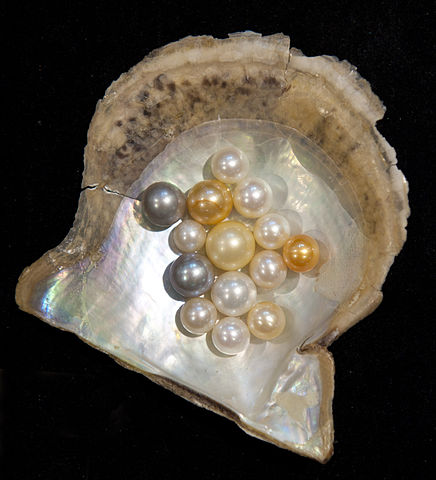
In other words, Jesus will string pearls of wisdom on a number of subjects, like someone might string together a rare necklace of pearls.

And one of the pearls He adds to his string of pearls is this subject of worry.

Let me give you four principles in this regard as we work through His comments on overcoming worry.

The first principle to understand is that:

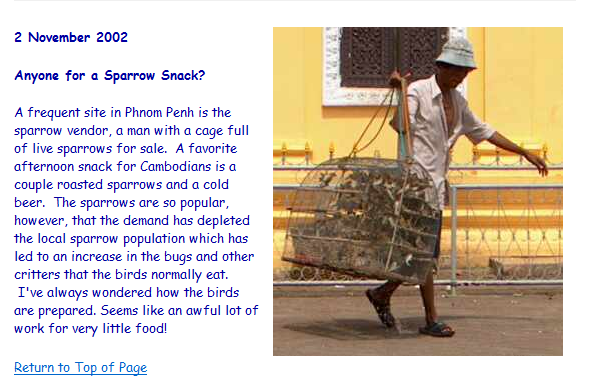
Anyone for a Sparrow Snack?

Anyone for a Sparrow Snack?

   1. Worry denies the gracious care of God

And He proves His point by asking two questions – notice His first question at verse 6. Are not five sparrows sold for two cents? Yet not one of them is forgotten before God.

Now if you compared this account with Matthews account, we’re told that 2 sparrows were sold for 1 penny.

The Greek term for this coin refers to a small brass coin worth about 1/10th of a day’s wage for a working laborer.

Which is a long way of saying, sparrows were the cheapest meat sold in the marketplace.iv

They were the food of the poorest of the poor. You barely got a mouthful of meat from a little sparrow.

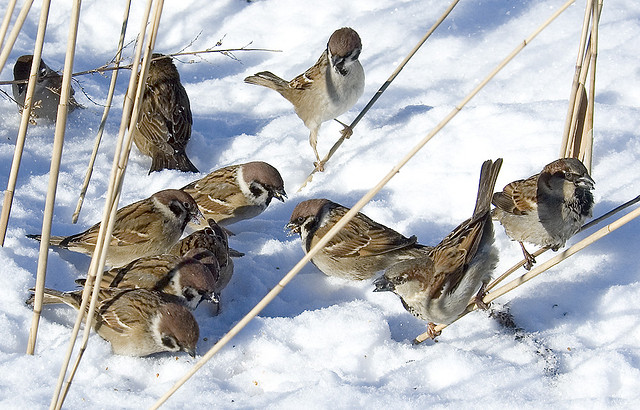
Sparrows in snow ©©Bing

Sparrows in snow ©©Bing

In fact, Matthew’s Gospel tells us that you can buy 2 sparrows for a penny and Luke here tells us that you can get 5 sparrows for 2 penny’s; how’s that add up?

Well, we know from history that during the days of Christ, sparrows were so abundant and so cheaply sold to the poor that if you bought 4, you got one thrown in for nothing.

And that’s what Luke alludes to here – are not five sparrows sold for two cents? Yet not one of them is forgotten before God.

Now watch this – Luke is effectively saying, even the free sparrow is not forgotten by God. Even the sparrow that got thrown in for nothing matters to God.

You want to know why you never need to worry? Because to God you are never lost in the crowd.v

Not only does God not lose track of even one sparrow – he doesn’t even lose track of one single hair from your head.

Notice further in verse 7. Indeed the very hairs of your head are all numbered.

I’ve read that the average person’s head holds more than 100,000 hairs. Some of us are down to a few hundred.vi

A few dozen . . .

Now some commentators don’t think Jesus is being serious here – that He’s just exaggerating to make a point.

I mean, come on . . . He counts the number of the hairs on our heads? That number changes daily. Surely God doesn’t bother with that kind of detail. Gary Hallquist – 60,000; Dr. Burggraff – 12 . . . hundred.

No, I think that’s exactly His point. The glory of God revealed here is that He actually does know!

Jesus is effectively asking us, “Look, do you really think you can slip out of your Heavenly Father’s care – that you can somehow slip out from underneath the radar of His divine omniscience? Do you think He’s forgotten about you or that your problems are too numerous to keep up with?

I mean if He can keep track of 100,000 hairs on somebody’s head of hair, do you think He’ll get frustrated with you coming to Him over and over again to give Him your worries?

Do you think He’s going to say, “Look, there’s only so much room on my ledger and you’ve already been here a dozen times today . . . I just can’t keep track.”

Listen, if God is actually such a gracious, omniscient God – that He doesn’t overlook a single sparrow – even the one that gets thrown in for free – He will never overlook you either.

Worry denies the gracious care of God

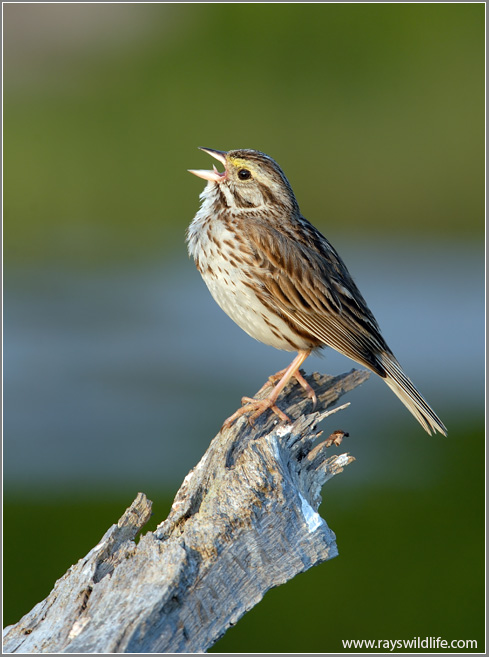
Savannah Sparrow singing by Ray

Savannah Sparrow singing by Ray

(Copied with permission from Wisdom for the Heart and Pastor Stephen Davey.)

i John MacArthur, Matthew 1-7 (Moody Publishers, 1985), p. 419
ii Ibid
iii William Barclay, The Gospel of Luke (Westminster, 1975), p. p. 160
iv Bruce B. Barton, Life Application Bible: Luke (Tyndale, 1997), p. 314
v Barclay, p. 161
vi MacArthur, p. 119


Lee’s Addition:

Are not five sparrows sold for two farthings, and not one of them is forgotten before God? But even the very hairs of your head are all numbered. Fear not therefore: ye are of more value than many sparrows. (Luke 12:6-7 KJV)

What a great encouragement not to worry. Thanks, Pastor Davey for a great message.

See:
*

Tilly’s Pumpkin House – by Emma Foster

Tilly’s Pumpkin House

by Emma Foster

Tilly the raven normally lived in a tree, but as winter came closer, the weather felt colder, and Tilly knew she needed to find a warmer place to live.

Her tree was near a small pumpkin farm, and several pumpkins had been left behind, going unused for Halloween. Tilly observed the different kinds of pumpkins that were still in the field. Many of them looked old, with green and yellow splotches on them. One of the pumpkins, however, looked perfect.

The pumpkin was large and perfectly round. When Tilly pecked at it with her beak, she noticed that it was soft enough for her to make a little door in it. She pecked her way into the pumpkin and surveyed the inside.

For a while, Tilly pulled out the seeds and guts from the inside of the pumpkin, until she had enough room to sit comfortably. Tilly felt protected from the wind and cold. Eventually, she fell asleep.

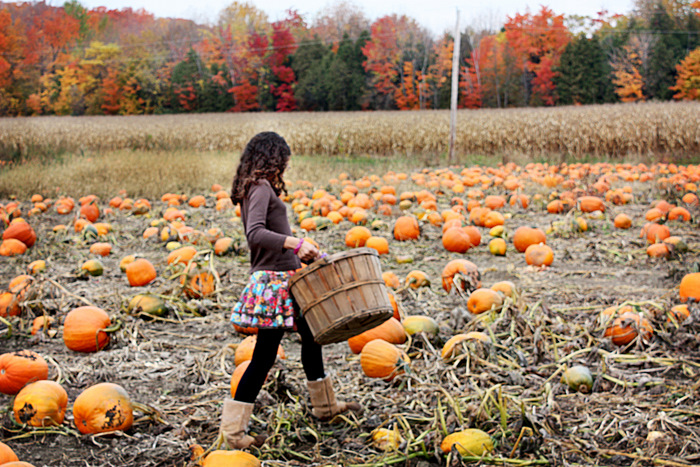
Gathering Pumpkins ©casienserio.blogspot.com

The next morning, Tilly woke up to her pumpkin house shaking. Someone had picked up her house and was taking it somewhere. Tilly peeked her head out of the door of her house. She noticed groups of people taking the old pumpkins and placing them to a pickup truck.

Pickup Truck With Pumpkins

Someone placed Tilly’s house in a pile beside other pumpkins. A second later, she rolled around and around and around as her house fell down a hill.

Splash! Tilly landed in the river. Fortunately, her house floated to the top, and the door she had made pointed up to the sky. Tilly carefully climbed out and flew back to land, sad that her house was floating away.

Northern Raven (Corvus corax) by Ray

Northern Raven (Corvus corax) by Ray

Snow started to fall to the ground. Tilly needed to come up with another plan. She decided to leave the pumpkin field and find somewhere else to live. Flying through the air as the snow fell, Tilly searched and found another pumpkin field. She searched for the next perfect pumpkin she could use. One of the pumpkins was soft and round just like the other one, and by the time she settled down inside, night had fallen and Tilly fell asleep instantly.

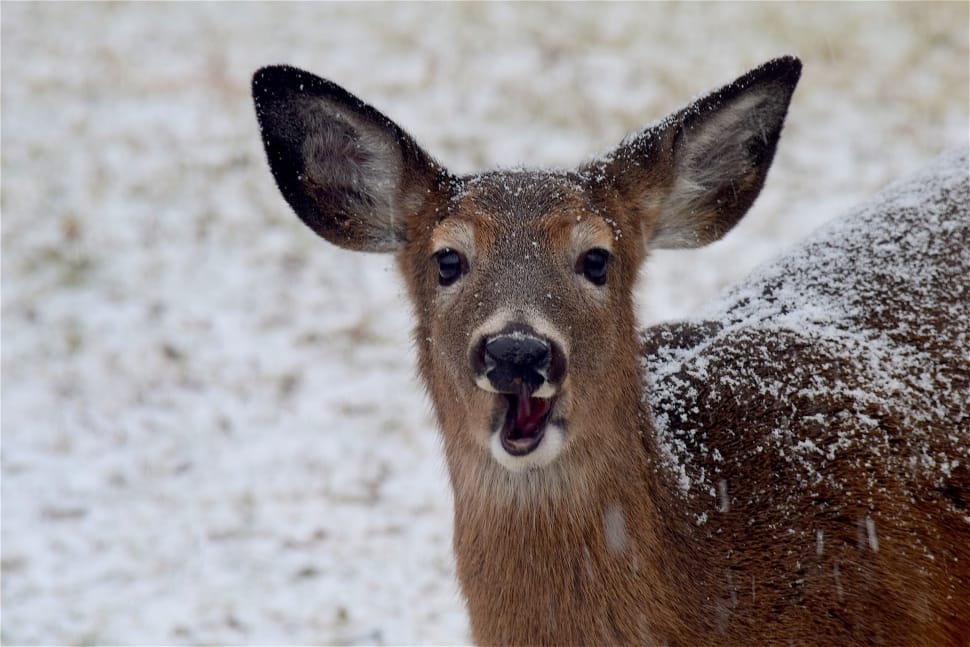
The next morning, Tilly woke up to something knocking against her new house. A deer she didn’t recognize was sniffing at her pumpkin and then took a giant chunk out of the top. Tilly looked up at the deer and the deer stared back at her. She flew out of her house, forced to watch the deer eat the rest of her pumpkin.

Deer Looking at Tilly ©CC

Deer Looking at Tilly ©CC

The snow made everything colder until Tilly could barely fly. She flew into some woods, hoping to find a tree in which to get warm. Eventually, she found a tree with a small hole in it. Tilly flew inside only to discover a small owl in the hole in the tree.

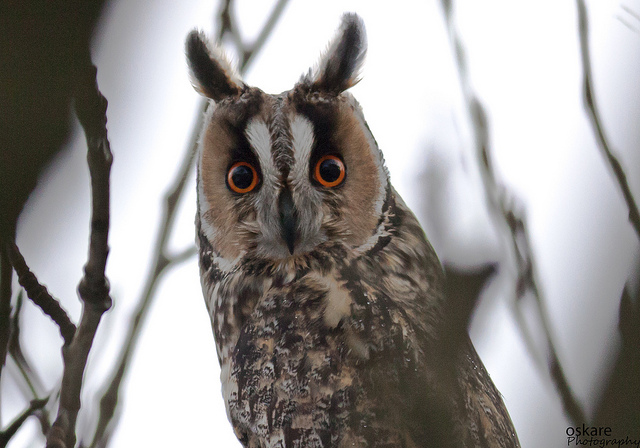
The owl introduced herself as Milly the long-eared owl. Tilly offered to leave since this was Milly’s home, but Milly explained that she was only stopping there for a minute. She said that she had found a nest in a tree a few miles away that had belonged to a raven. She also explained that long-eared owls liked to live in nests that belonged to ravens.

“Milly” – Long-eared Owl (Asio otus) ©Flickr Slgurossom

Tilly grew excited, believing that the nest Milly was talking about was hers, which meant she had to explain the pumpkin houses she had had, and how she had ended up there. Milly offered to let Tilly keep the tree to stay warm. Tilly also said that it was perfectly all right if Milly kept her nest.

All throughout the winter, Tilly stayed in the tree where she had met Milly, while Milly lived in Tilly’s nest next to the pumpkin field. When spring came around, Tilly and Milly remained friends, and Tilly even showed Milly how to make her own pumpkin house, though she didn’t recommend living there.

*

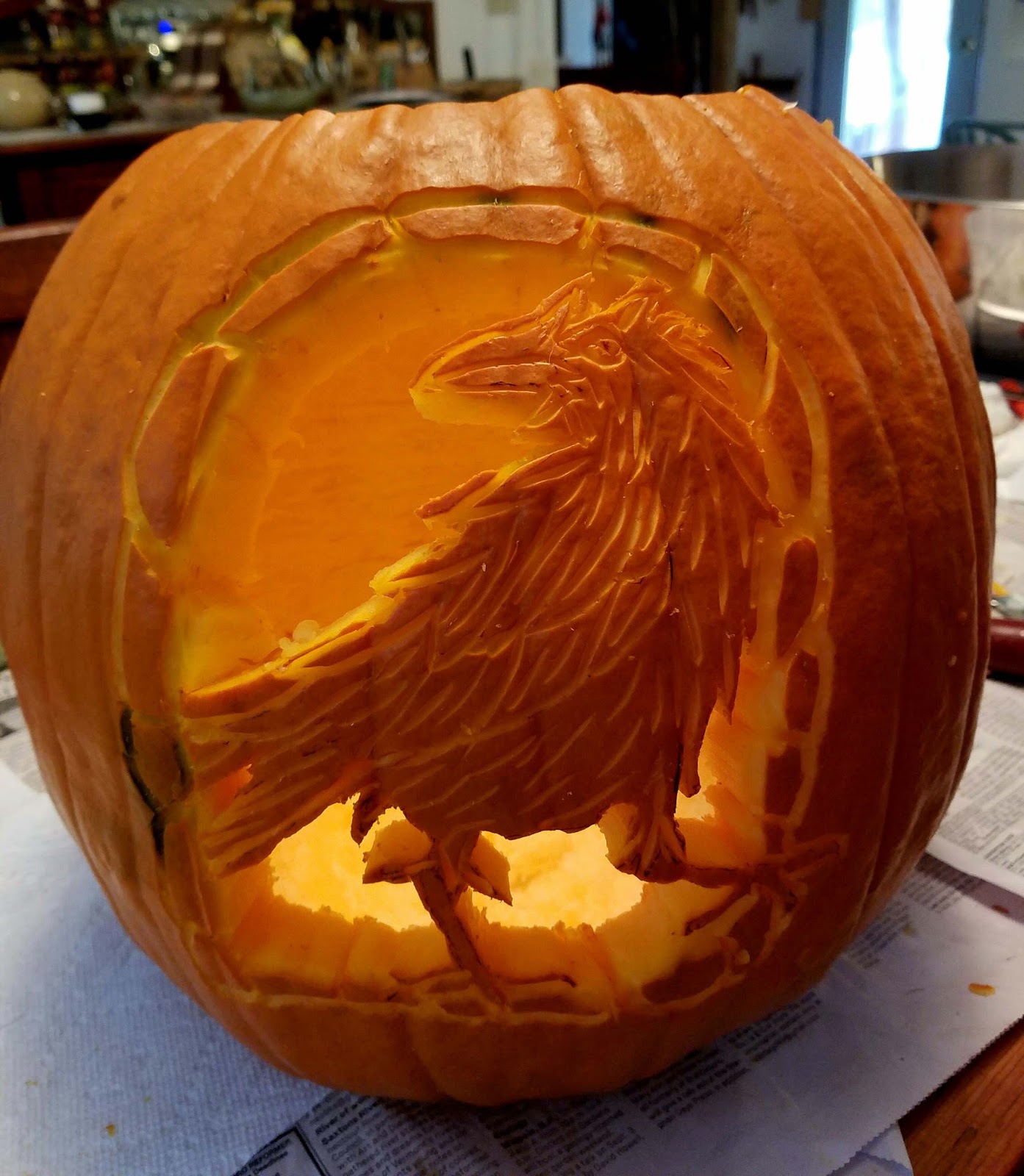
Linda Marcille carved the Raven in pumpkin.


“Now it came to pass, as they went, that he entered into a certain village: and a certain woman named Martha received him into her house.” (Luke 10:38 KJV)
“Be careful for nothing; but in every thing by prayer and supplication with thanksgiving let your requests be made known unto God.” Philippians 4:6 KJV)

What a great story from Emma. It is enjoyable to watch her talent developing. Also, it is good to see Tilly and Milly being so hospitable. This is only fiction, but how did the animals interact with each other before the fall and the curse affected all of nature? Maybe this story is just a glimpse of how they got along so well.

Emma’s Stories

Good News

Ted and Red – By Emma Foster

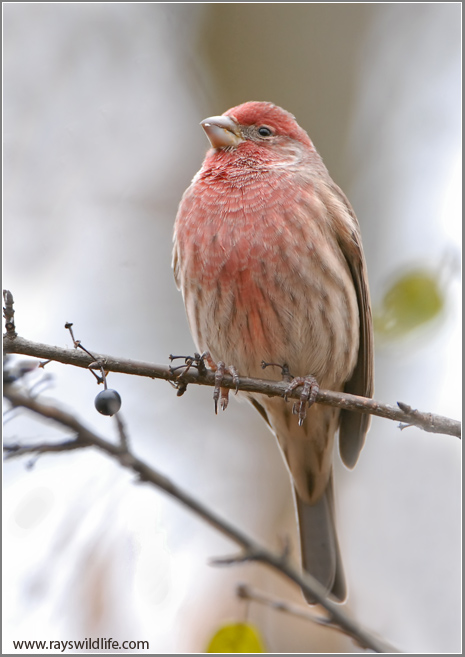
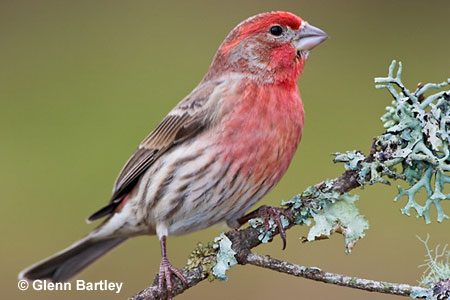
House Finch male ©Glenn Bartley-Wichita StateU

Ted and Red

by Emma Foster

Once there were two finches named Ted and Red who were brothers. They lived in two trees that had been planted next to each other. Their trees were in a courtyard by a museum, which provided them with plenty of shade because Florida was almost always hot. Both birds had many friends in the courtyard.

The birds spent most of their time flying around the beaches and hectic streets searching for food or just having fun watching the different tourists around the coast. Many times, people on the dock would feed them breadcrumbs.

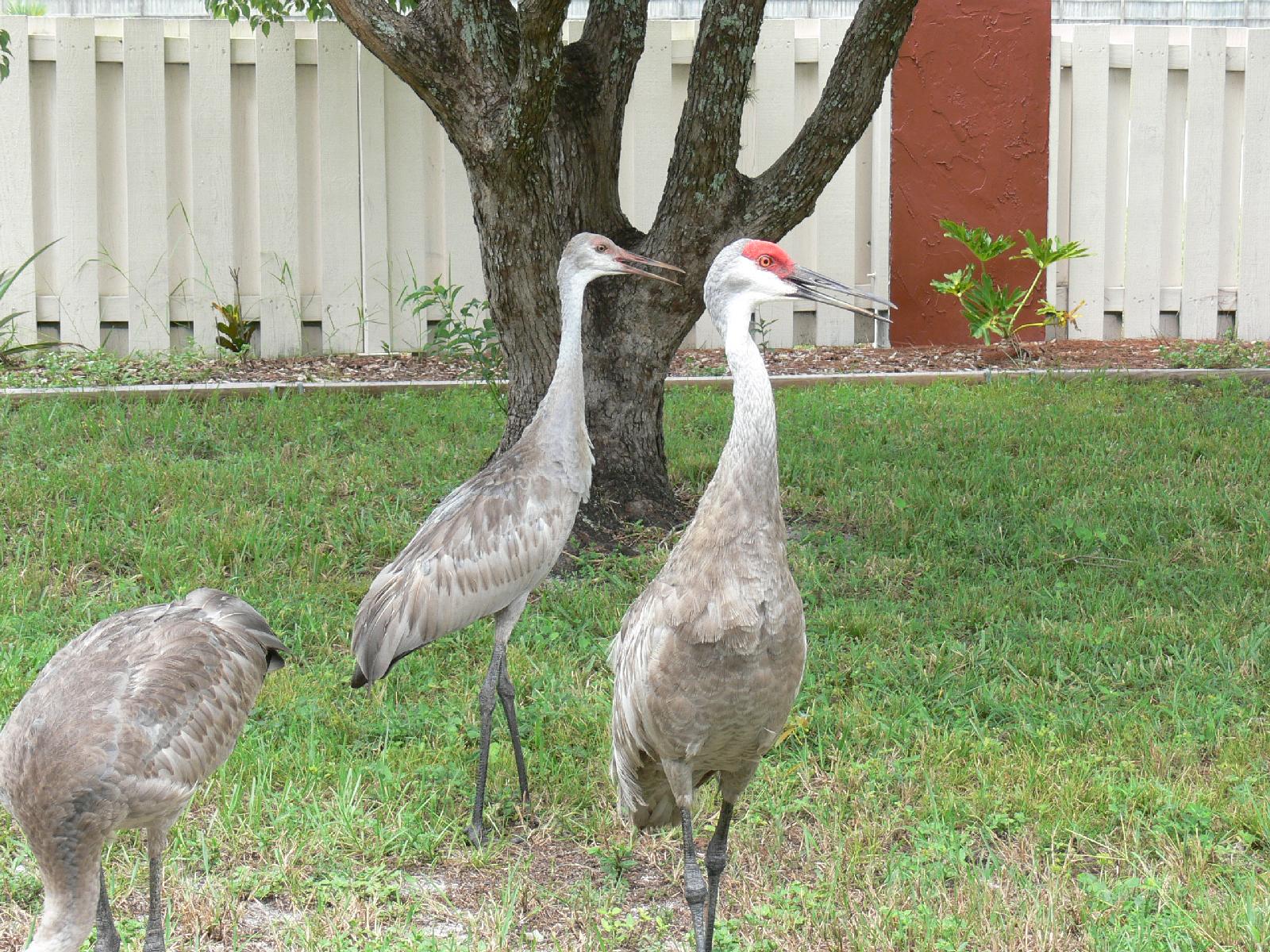
Sandhill Cranes

Sandhill Cranes

But as summer came, the days grew hotter and longer, and there were many rainy days. Ted and Red stayed in their nests most of the time under the protection of their large shady trees. Their friends stayed in their little homes too: the fish remained comfortable in their pond, the two cranes who lived nearby nestled in their nests in the bushes, and the black snake stayed in his small hole in the grass.

House Finch Resting

One day when there wasn’t much rain, Red went out to search for some food. While he was gone, the clouds grew black, and Red knew he needed to hurry home. However, when he reached the courtyard, the rain poured down harder, and Red couldn’t see very well. He flew toward a light that he saw up ahead and accidentally flew into the museum, sliding across the slippery floor. Red knocked against a small object, sending it crashing to the ground. An alarm went off somewhere, and Red quickly flew back outside and into his nest, where he told Ted what had happened. The rain slowly lessened, and the alarm stopped. Several museum employees had to clean up the mess. Red felt terrible for breaking the vase, but Ted and their friends told him it was an accident and it wasn’t his fault.

House Finch (Carpodacus mexicanus) by Raymond Barlow

Just then, another alarm went off, and someone ran out of one of the entrances, holding a large vase. Ted, Red, and their friends thought fast. The fish quickly pointed to the machine that visitors inserted quarters into to obtain fish food to throw to the fish. Ted and Red flew against it and beat on it with their feet as hard as they could, while the two cranes beat their wings against it. The black snake followed behind the man in case he turned around, hoping that the man would be too scared to step over him. The fish food spilled across the walkway, and the man stealing the vase fell over, while the security guards ran after him and caught him. The security guards were afraid to step over the black snake too. Ted and Red flew back into their nests. Red felt much better afterwards, knowing that he made up for his earlier mistake.

House Finch (Haemorhous mexicanus) by Ian

House Finch (Haemorhous mexicanus) by Ian

Ted and Red spent the rest of their summer with their friends in the courtyard. From then on, whenever it rained Ted and Red were careful to stay in their comfortable nests. To their friends, they were now considered honorary security guards.


What an interesting story, Emma. I trust our readers enjoy it as much as I do. The teamwork of this mixture of critters reminds us of how, as Christians, we work together, even though we have different gifts. The seems to blend us together to accomplish His Will.

“Now there are varieties of gifts, but the same Spirit; and there are varieties of service, but the same Lord; and there are varieties of activities, but it is the same God who empowers them all in everyone. To each is given the manifestation of the Spirit for the common good.” (1 Corinthians 12:4-7 ESV)

See More of Emma’s Stories

The Locket in the Woods by Emma Foster

The Locket in the Woods

By Emma Foster

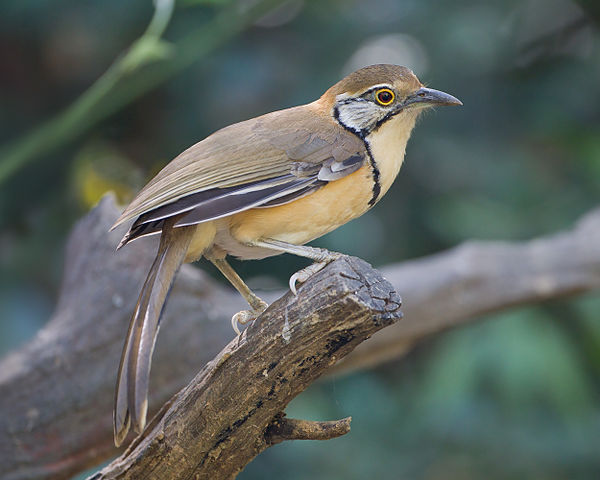
Greater Necklaced Laughingthrush (Garrulax pectoralis) ©WikiC

Nora lived in the middle of a sunny wood beside a river that flowed under a small bridge. She spent most of her time building her nest, searching for food, and watching people walk across the bridge. Because Nora lived on a forest preserve, she didn’t have to worry about having to find a new home in case people chopped down her tree. Throughout the day, Nora watched groups of people walk along the many trails that were strewn along the forest preserve.

One day Nora was busy collecting some worms near the river as it rushed by. She looked up at the bridge to see a group of girls walking across and taking pictures of the trees. Nora hopped closer and watched them pass by, but when they left, she spotted something shiny in the bushes near her.

Nora rifled through the bushes and eventually found a small necklace with a heart-shaped locket on the end. Picking it up in her beak, Nora immediately started searching for the group of girls.

Locket

Unfortunately, Nora couldn’t find them anywhere. She followed the path, but it became a fork in the road, and she wasn’t sure which way she should go. It would be difficult to fly ahead because so many trees blocked her view. Nora finally decided to go left, hoping she would eventually find them.

Along the path she found an elderly couple who were biking along the trail and a couple of alligators sleeping in the water, but she didn’t find the girls. Nora decided to cut through the trees and head out to the other path.

After flying for a few minutes with the heavy locket in her beak, Nora rested on a tree in the middle of the woods. A small creek flowed near the tree she sat on. The sun shone down on Nora, making her very hot. Because of the heat and the weight, Nora accidentally dropped the locket into the small creek!

Nora raced after the locket, but the locket tumbled away down the river. Eventually, the bushes surrounding the creek became too thick for her to fly through them. Just as she was about to give up, however, a fish swam upstream with the locket in his mouth, and when Nora told him who the locket was for, he explained that he had seen the girls pass by on the other path. Nora thanked him then flew away with the locket.

When Nora finally caught up with the girls, she placed the locket on the path where they could easily see it. The girl who had lost it was glad to have found it, though she had no idea how it had gotten there. Nora, happy that she had accomplished her mission, flew back to her nest and took a well-deserved nap in the shade of her tree by the river.


“For He will deliver the needy when he cries, The poor also, and him who has no helper.” (Psalms 72:12 NKJV)

“…For your Father knows the things you have need of before you ask Him.” (Matthew 6:8b NKJV)

Lee’s Addition:

Since Emma didn’t indicate what type of bird the story is about, I am using my imagination. Besides, this bird wears a Necklace. :)

Greater Necklaced Laughingthrush (Garrulax pectoralis) ©WikiC

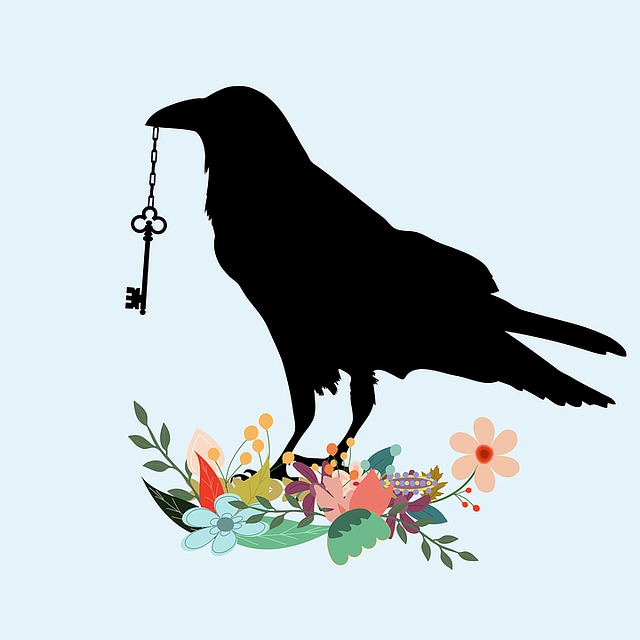
Or, it could be a Raven. They like to collect things.

Raven holding key on chain ©Pixabay

Thanks, Emma, for another interesting tale about the birds. Now, we even have a talking fish. I love your stories. Keep on writing them for us.


More of Emma Foster’s Stories

Wordless Birds

Longing For Robins by Dorothy Belle Malcolm

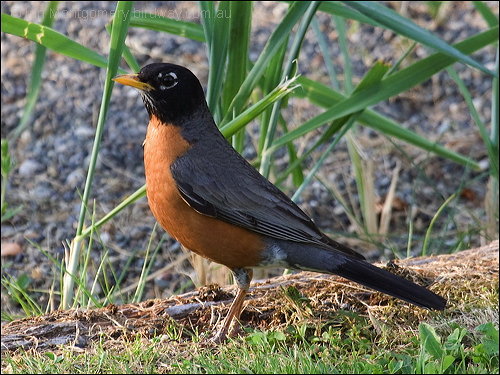
American Robin (Turdus migratorius) by Ian

American Robin (Turdus migratorius) by Ian

It has been 10 years since I’ve seen a robin in my yard. When they came then, it was an amazing sight which I have cherished. Once there was a Baltimore Oriole, however, that was many years ago. In the meantime, there are a variety that come to my feeder and the neighborhood for which I am happy about and keep food out for them.

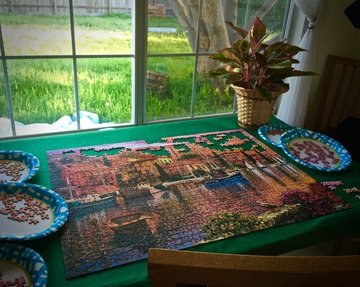
Puzzle by a window ©Pxhere

I sit at a table which always has a puzzle on it, and if I don’t make sudden moves, I enjoy watching them. Of course the Sandhill Cranes walk around the neighborhood, The Cooper’s Hawks and Crows don’t come to my yard, but I see them in the trees as I walk.

The regular visitors are Blue Jays, Red-winged Blackbirds, Red-headed Woodpecker, Turtle Doves, Titmice, and Sparrows.

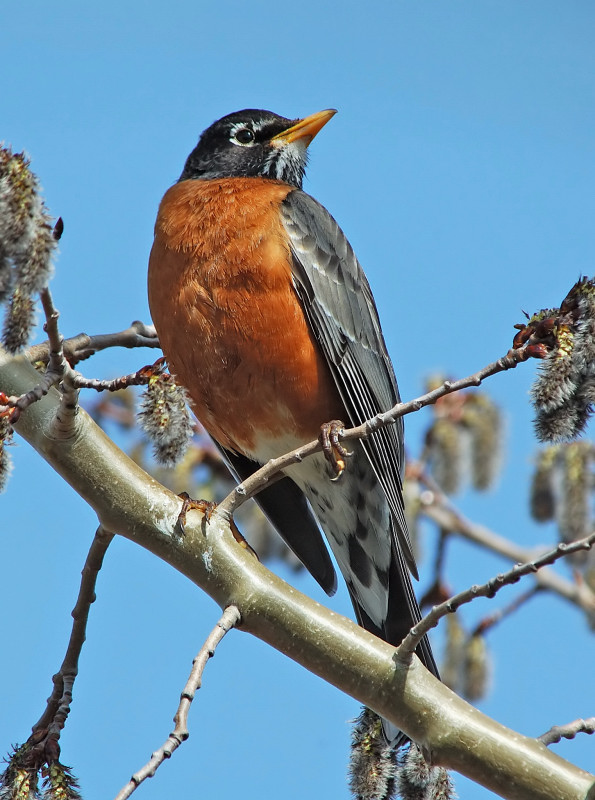
American Robin (Turdus migratorius)by Raymond Barlow

American Robin)by Raymond Barlow

In my heart I’m longing for the joy of seeing just one Robin. Maybe it will happen this spring.

2/22/19 Dorothy Malcolm


“But I know, that even now, whatsoever thou wilt ask of God, God will give it thee.” (John 11:22 KJV)

Lee’s Addition:

It has been awhile since Dottie (Dorothy) has written an article for us. I asked her if she would like to write another one. Here is her latest birdwatching desire. The verse is one I have used while birdwatching. I have asked the Lord to please have the bird in that bush come out where I can see it better. Maybe even take a photo. Not surprising, some have appeared to my delight. I think the Lord cares about our desires, especially when observing His Creation. Dottie, we are praying that the Lord will let some Robins land in your yard when they start migrating back north this spring. Stay Tuned!

If you have missed some of Dottie (Dorothy’s) stories, they are listed below. She is also Emma Foster’s grandmother. Humm! Wonder if that is where Emma started her interest in her birdwatching tales? Emma’s Stories

Dorothy (Dottie) Belle Malcolm’s:

Reginald’s Happy New Year by Emma Foster

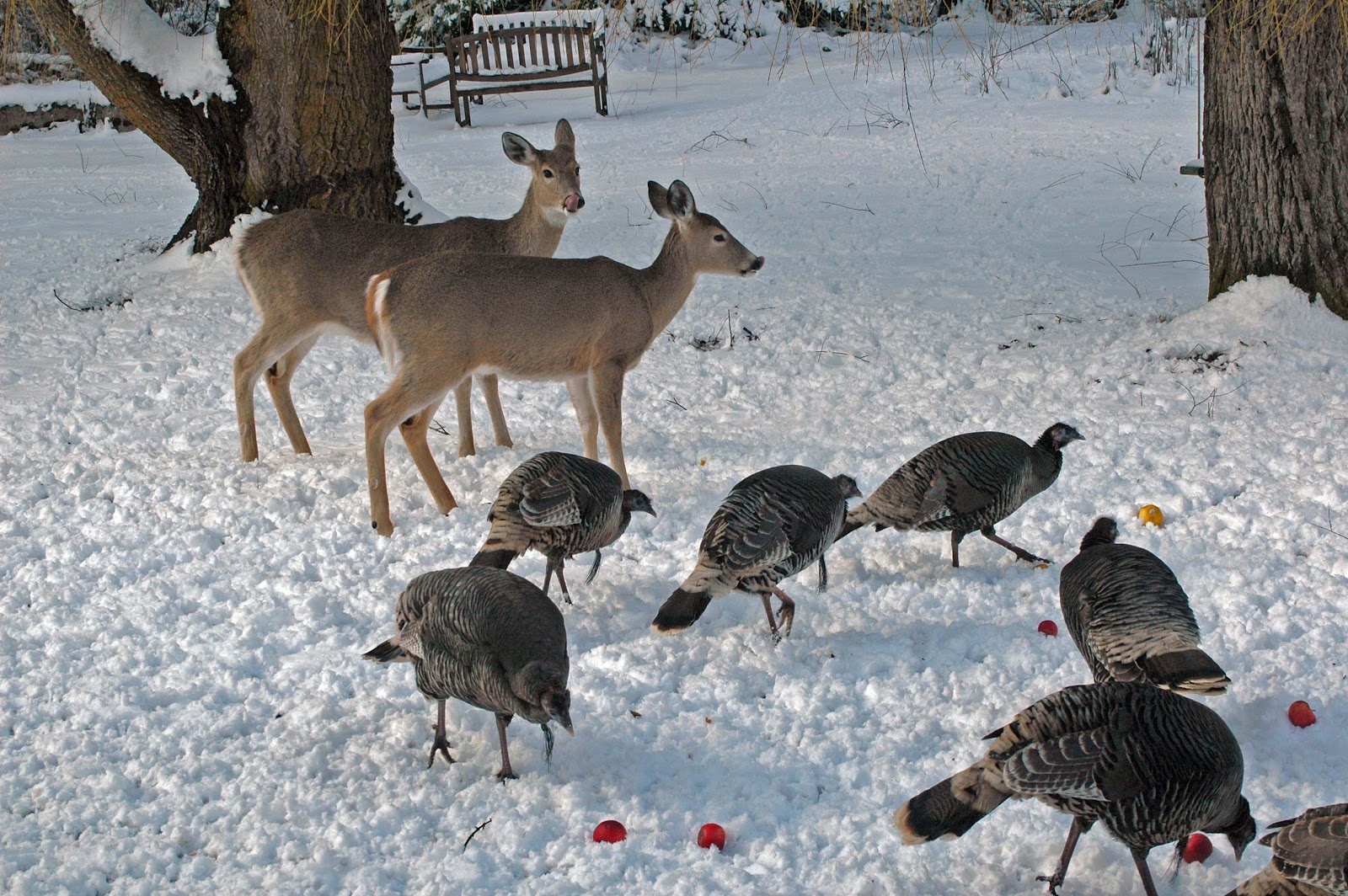
Deer and Turkeys in Snow

Reginald’s Happy New Year by Emma Foster

Turkeys in Snow ©Bryant Olsen Flickr

Turkeys in Snow ©Bryant Olsen Flickr

Reginald, Oliver, and the turkeys had sufficiently prepared for the winter, and now that they were safe in the fort they were able to celebrate Christmas in comfort. When Christmas was over, the turkeys spent their time building snow-turkeys and having snowball fights, knowing that they were safe from the hunters. Reginald watched over Oliver so that he didn’t get into any trouble, while he also made sure that the preparations for the New Year’s party were properly handled. On the day before New Year’s Day, however, everyone discovered that Oliver was missing.

Reginald and the turkeys searched for Oliver, and they eventually discovered him close by near a frozen river, where he was searching for berries. The turkeys stepped onto the river and realized that the ice was thick, and they all decided to skate across the ice. While they were skating, Reginald watched, making sure there wasn’t anyone nearby who could see them.

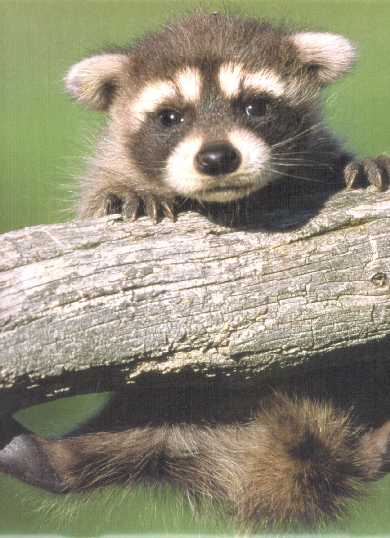
Baby Raccoon ©Flickr Chief Trent

Suddenly, a small creature emerged from the bushes, looking for food. It was a tiny baby racoon, who appeared to be lost. She was cold, tired, and hungry, and the turkeys decided to take her back to the fort so she could get warm and eat some food.

The baby raccoon said that her name was Ruby, and that she had lost her way yesterday and couldn’t find her mom. Reginald and the turkeys immediately set out to search for Ruby’s mom. Ruby pointed out the direction she had come from and where she had last seen her mom, and Reginald, Oliver, and a few other turkeys began marching that way.

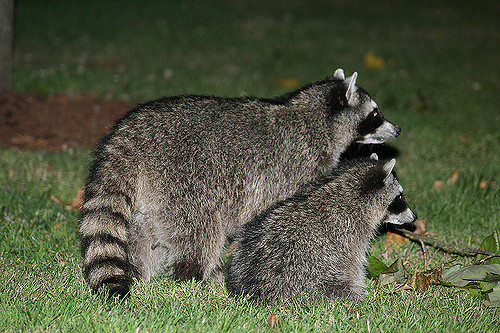
Momma and Baby Raccoon ©Flickr Debbie

After about an hour, they heard a raccoon calling Ruby’s name. Ruby ran toward the voice excitedly, reuniting with her mother in the bushes. Ruby’s mother thanked the turkeys, and in turn the turkeys invited her and Ruby to their New Year’s party. Every year the turkeys celebrated the New Year by staying up all night and waiting for the first sunrise in the forest.

Reginald, Oliver, and the others returned to the fort. The sun was already beginning to set, and Reginald began to oversee the preparations for the New Year’s party. Reginald and the other turkeys made party hats by sticking leaves onto their army helmets, and Oliver made special hats for Ruby and her mom out of leaves all by himself.

Alaska Wild Berries ©WikiC

Throughout the night, the turkeys celebrated by skating on the ice and eating the berries that they had stored for the winter. Oliver placed some berries on a small piece of bark that served as a tray and waited on the turkeys in order to be kept out of trouble.

Later that night, the turkeys and the raccoons sat down and gazed at the stars just as the sun was beginning to peek out. When the sun rose on New Year’s Day, the turkeys and the raccoons celebrated, happy to know that they were safe from the hunters and that a new year had begun.


Lee’s Addition:

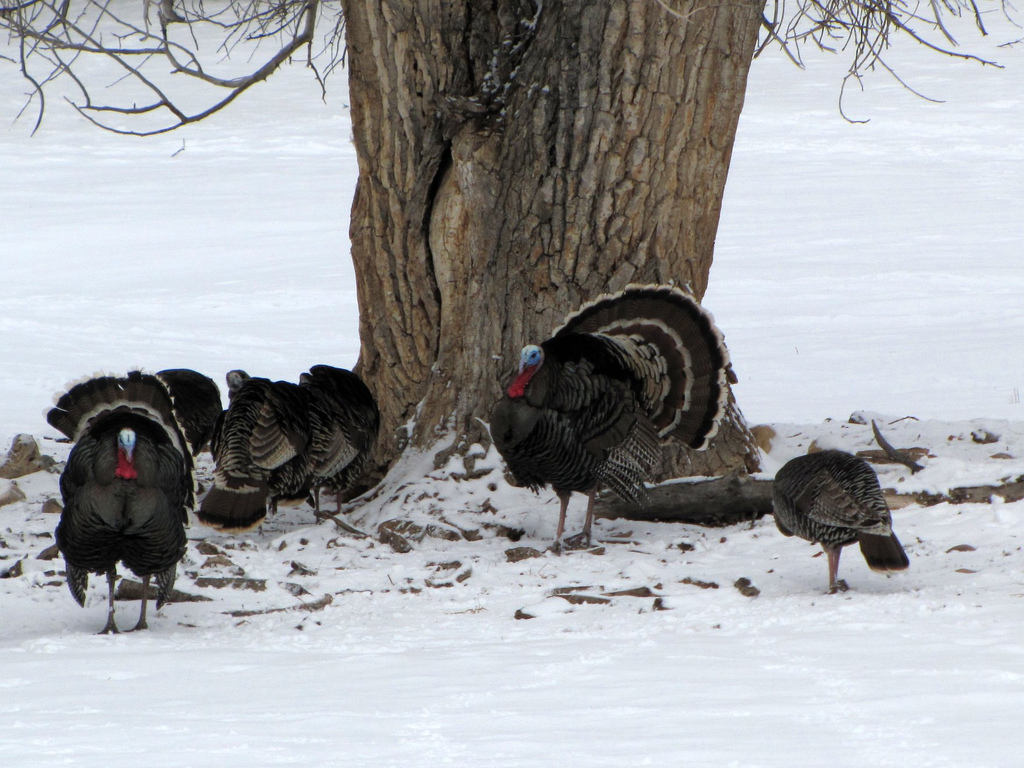
I am glad the turkeys befriended the young raccoon and helped find its mother. Not sure if the turkeys had this much trouble walking on the snow and ice as these turkeys:

It was nice of the turkeys to let the raccoons join in their New Year’s Eve Celebration.

We all trust you have a very Happy New Year in 2019.

“For the Son of man is come to seek and to save that which was lost.” (Luke 19:10 KJV)

See more of Emma’s Stories:

Emma’s Stories