Birds of the Bible – Birds and Names?

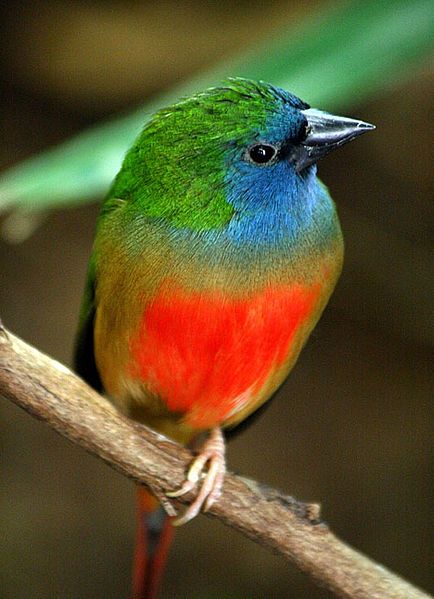
Pin-tailed Parrotfinch (Erythrura prasina) ©WikiC

Pin-tailed Parrotfinch (Erythrura prasina) ©WikiC

The devotional a few days ago from Days of Praise had one called The Names of Men. They were referring to the many list of names of people in the Bible and how many of them are unknowns. Why are they listed? The article gives a good answer to that, but here is the main point of it:

And these are the names of the men that shall stand with you: of the tribe of Reuben; Elizur the son of Shedeur. (Numbers 1:5 KJV)

“He wants to assure us that He is interested not only in the Abrahams, Daniels, Pauls, and other great men in His kingdom, but also in the Elizurs and Shedeurs and Bills and Kates in His spiritual family.

There are many millions of names “written in the Lamb’s book of life” and the heavenly Lamb–the Lord Jesus Christ–is also the Good Shepherd that “calleth his own sheep by name” The names in His book here on earth are an assurance that He knows and calls us by each of our names in His book in heaven. ”

Saffron-billed Sparrow (Arremon flavirostris) by Dario Sanches

Saffron-billed Sparrow (Arremon flavirostris) by Dario Sanches

How does this tie in with birds? We know that the Lord knows the birds because the Word tells us that not a one falls without His knowledge.

I know all the birds of the mountains, And the wild beasts of the field are Mine. (Psalms 50:11 NKJV)

Consider the ravens, for they neither sow nor reap, which have neither storehouse nor barn; and God feeds them. Of how much more value are you than the birds? (Luke 12:24 NKJV)

Who teaches us more than the beasts of the earth, And makes us wiser than the birds of heaven?’ (Job 35:11 NKJV)

Are not two little sparrows sold for a penny? And yet not one of them will fall to the ground without your Father’s leave (consent) and notice. (Matthew 10:29 AMP)

If the Lord knows every birds need, cares about them and knows when they fall, do you not think we are noticed? He knows all of our names and if you know Him as your personal Saviour, your name has been written in the Book of Life.

Gospel Message

More Birds of the Bible

*

Happy Thanksgiving – Turkey

The Fountain re-published this article I wrote back in 2009 and decided to re-post it here also. (with editing) Happy Thanksgiving, 2012!

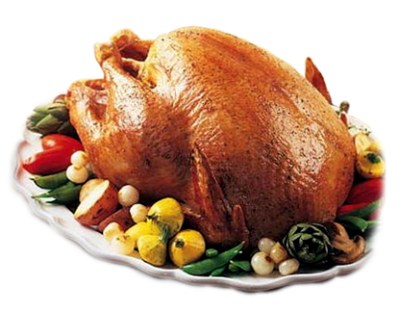
Today, many of us here in the United States ate turkey on Thanksgiving Day. Luckily, many turkeys will survive our holiday and continue to roam around. Here locally in Polk County, Florida, I see a “rafter” of turkeys (name for a group of turkeys – incorrectly called a “gobble” or “flock”) from time to time. Near Bartow I have seen them many times in rafters up to 11 turkeys. Near Circle B Bar Reserve, I have seen other groups up to 8 turkeys.

Wild Turkey (Meleagris gallopavo) by Daves BirdingPix

Wild Turkey (Meleagris gallopavo) by Daves BirdingPix

The domestic turkey is a descendant of the Wild Turkey and features prominently in the menu of the Canadian and U.S. holidays of Thanksgiving and that of Christmas in many countries.

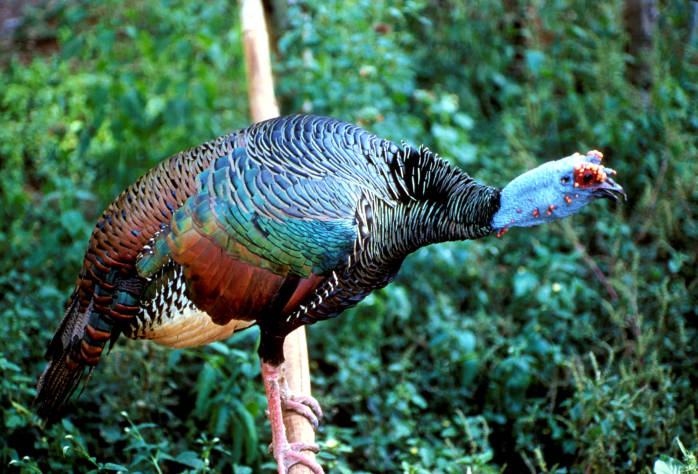
The Turkey is in the Galliformes Order and in the Phasianidae (Pheasants, Fowl & Allies) Family. There are two turkeys – Wild Turkey – Meleagris gallopavo and the Ocellated Turkey – Meleagris ocellata. The Wild is native to North American forrests and the Ocellated is native to the Yucatan Peninsula forrests. They are relatives of the Grouse family. Both Turkeys have a “distinctive fleshy wattle that hangs from the underside of the beak and a fleshy protuberance (flap of skin) that hangs from the top of its beak called a snood.” Turkeys are the heaviest member of the Galliformes order. The females are smaller and duller than the males. The male weighs from 11-24 lbs (5-11 kg) [record=38lbs] and measures 39-49 in (100-125 cm). They also have from 20,000-30,000 feathers.

 Ocellated Turkey (Meleagris ocellata) ©USFWS

Ocellated Turkey (Meleagris ocellata) ©USFWS

Congressional Proclamations from CreationWiki.
“The United States Congress set December 18, 1777, as a day of thanksgiving on which the American people “may express the grateful feelings of their hearts and consecrate themselves to the service of their divine benefactor” and on which they might “join the penitent confession of their manifold sins . . . that it may please God, through the merits of Jesus Christ, mercifully to forgive and blot them out of remembrance.” Congress also recommends that Americans petition God “to prosper the means of religion for the promotion and enlargement of that kingdom which consisteth in righteousness, peace and joy in the Holy Ghost.'”[1]
Congress set November 28, 1782, as a day of thanksgiving on which Americans were “to testify their gratitude to God for his goodness, by a cheerful obedience to his laws, and by promoting, each in his station, and by his influence, the practice of true and undefiled religion, which is the great foundation of public prosperity and national happiness.”

Giving thanks always for all things unto God and the Father in the name of our Lord Jesus Christ; (Ephesians 5:20 KJV)

See:
WhatBird’s Wild Turkey
Wikipedia’s Wild Turkey and Ocellated Turkey
Video of an Ocellated Turkey and a Wild Turkey displaying on Internet Bird Collection

Updating to IOC Version 3.2 Underway

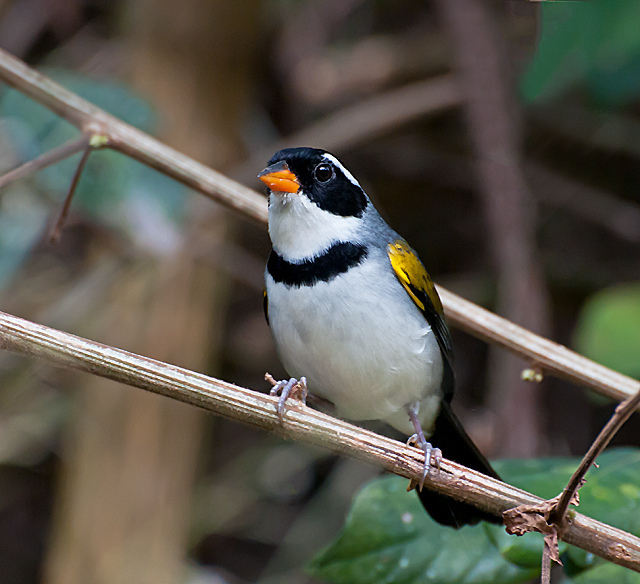
Orange-billed Sparrow (Arremon aurantiirostris) by Michael Woodruff

Orange-billed Sparrow (Arremon aurantiirostris) by Michael Woodruff – Emberizidae Family

I deleted this info because it was out of date and causing 404 errors. See

Birds of the World Families

for most up to date links.

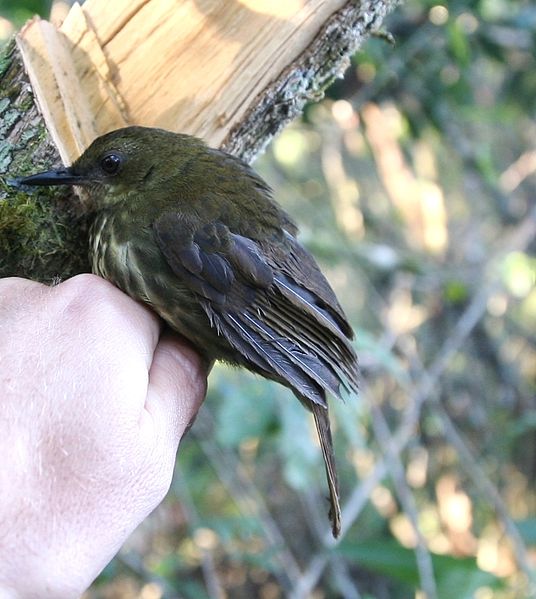
Dapple-throat (Arcanator orostruthus) ©WikiC

Dapple-throat (Arcanator orostruthus) ©WikiC

I was adding new photos to it and here is a neat one I came across. Isn’t he cool? Looks like he has glasses on.

He does great things past finding out, Yes, wonders without number. (Job 9:10 NKJV)

“Can you search out the deep things of God? Can you find out the limits of the Almighty? (Job 11:7 NKJV)

He has made everything beautiful in its time. Also He has put eternity in their hearts, except that no one can find out the work that God does from beginning to end. (Ecclesiastes 3:11 NKJV)

Oh, the depth of the riches both of the wisdom and knowledge of God! How unsearchable are His judgments and His ways past finding out! (Romans 11:33 NKJV)

White-rimmed Brush-finch ©Dusan M Brinkhuizen

White-rimmed Brush-finch ©Dusan M Brinkhuizen


Wordless Birds

*

Birds of the Bible – God Blessed Them

Osprey Family by Phillip Simmons

And God blessed them, saying, “Be fruitful and multiply, and fill the waters in the seas, and let birds multiply on the earth.”
(Genesis 1:22 NKJV)

And God H430 blessed H1288 them, saying, H559 Be fruitful, H6509 and multiply, H7235 and fill H4390 (H853) the waters H4325 in the seas, H3220 and let fowl H5775 multiply H7235 in the earth. H776 (Genesis 1:22 KJV+)

I have written before on this verse, but really never looked into this aspect of it. I knew He had told them to multiply and be fruitful, but I missed the “blessing” part. The Lord didn’t just create the birds and then leave them on their own. He cared about them and “blessed” them. Below is the definition of Strong’s Hebrew word and then Thayer’s Greek word for Blessing or Blessed.

Strong – H1288

בּרך
bârak
baw-rak’
A primitive root; to kneel; by implication to bless God (as an act of adoration), and (vice-versa) man (as a benefit); also (by euphemism) to curse (God or the king, as treason): – X abundantly, X altogether, X at all, blaspheme, bless, congratulate, curse, X greatly, X indeed, kneel (down), praise, salute, X still, thank.

Thayer – G2127

εὐλογέω
eulogeō
Thayer Definition:
1) to praise, celebrate with praises
2) to invoke blessings
3) to consecrate a thing with solemn prayers
3a) to ask God’s blessing on a thing
3b) pray God to bless it to one’s use
3c) pronounce a consecratory blessing on
4) of God
4a) to cause to prosper, to make happy, to bestow blessings on
4b) favoured of God, blessed
Part of Speech: verb

Let’s see what some of the commentaries have to say about the birds being blessed by God:

(Chuck Smith) – “But we get the more complex life forms that sort of are a little independent. They’re not rooted, they’re not grounded, they are mobile, and the various cycles that God has created, the whole process is just so marvelous indeed. The water, teeming with life, and then the air, and the many, many kinds of birds and the variety of birds that God has created. And those instinctive abilities in the birds!
American Golden Plover (Pluvialis dominica) at National Aviary by Lee

American Golden Plover (Pluvialis dominica) at National Aviary by Lee

I’m always fascinated by that little bird in Hawaii that goes up into the Aleutian chain in order to mate. During the summer, they take off from Hawaii and they fly all the way up into Alaska where they mate. They build their nests, they lay the eggs, they hatch their young. And then with the coming of winter, they don’t want to spend winter in Alaska — and who can blame them. And you have to almost envy them, spending their winters in Hawaii. They take off over the thousands of miles without suitcases, without spare gas tanks, without compasses or navigational equipment. And they come and fly right into Hawaii, sometimes they get into severe storms, one-hundred, two-hundred mile an hour winds that blow them off course, but somehow they find their way right in. You say, “oh, they remember the way they flew out.”

How do they reckon? Some think they have some kind of device that tunes on the magnetic field of the earth. I don’t know. But, really, they’re not following the same path, so that argument’s sort of shot down, because, really, the parents decide to leave for Hawaii before the kids are able to fly that far. So, the parents fly off to Hawaii, leaving their kids in Alaska! But, it doesn’t seem to matter, cause a couple of weeks later, their kids take off and they fly right to Hawaii. Never been there before, yet somehow, God has built into this little bird that kind of instinct; and that’s a bird brain. And it’s not a very big kind of a computer. Talk about microsystems!

Oh, the wisdom of God, the wisdom of God. How thrilling to be able to see the design in nature, all testifying of the wisdom of the God that I serve. I’m so glad that I serve Him. I’m so glad that I know Him. Such a glorious God, so wise; all of these created life forms. Now, He created also the mammals, the great whales. He created the animals, the domesticated-type animals, all after their own kind.

And the evening and the morning were the fifth day.”
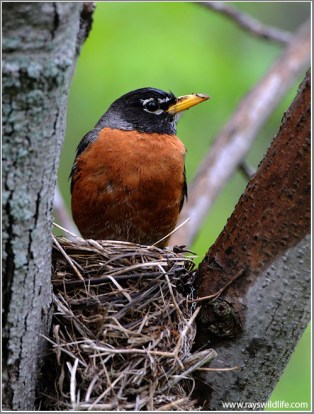
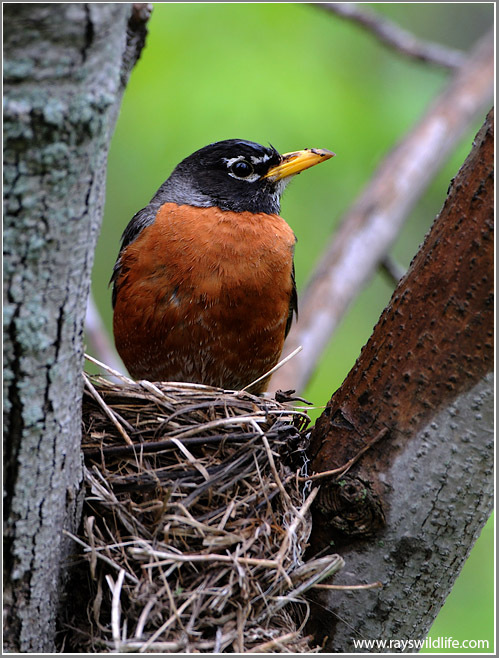
American Robin (Turdus migratorius) in nest by Ray

American Robin (Turdus migratorius) in nest by Ray

(John Gill) – “Genesis 1:22

And God blessed them,…. With a power to procreate their kind, and continue their species, as it is interpreted in the next clause, saying, be fruitful, and multiply, and fill the waters in the seas: and these creatures do multiply exceedingly, and vast quantities there are of them in the mighty waters, though the consumption of some sorts of them is very great. Our English word “fish” is derived from the Hebrew word פוש, “fush”, which signifies to multiply and increase:

and let fowl multiply in the earth; as they did, and continue to do to this day.”

(Matthew Henry) – “2. The blessing of them, in order to their continuance. Life is a wasting thing. Its strength is not the strength of stones. It is a candle that will burn out, if it be not first blown out; and therefore the wise Creator not only made the individuals, but provided for the propagation of the several kinds; God blessed them, saying, Be fruitful and multiply, Gen_1:22. God will bless his own works, and not forsake them; and what he does shall be for a perpetuity, Ecc_3:14. The power of God’s providence preserves all things, as at first his creating power produced them. Fruitfulness is the effect of God’s blessing and must be ascribed to it; the multiplying of the fish and fowl, from year to year, is still the fruit of this blessing. Well, let us give to God the glory of the continuance of these creatures to this day for the benefit of man. See Job_12:7, Job_12:9. It is a pity that fishing and fowling, recreations innocent in themselves, should ever be abused to divert any from God and their duty, while they are capable of being improved to lead us to the contemplation of the wisdom, power, and goodness, of him that made all these things, and to engage us to stand in awe of him, as the fish and fowl do of us.”

(Haydock Commentary) – “Genesis 1:22

Blessed them, or enabled them to produce others. — Multiply: the immense numbers and variety of fishes and fowls is truly astonishing.”

(K & D) – “As animated beings, the water animals and fowls are endowed, through the divine blessing, with the power to be fruitful and multiply. The word of blessing was the actual communication of the capacity to propagate and increase in numbers.”

(John Wesley) – “Observe, 2, The blessing of them in order to their continuance. Life is a wasting thing, its strength is not the strength of stones; therefore the wise Creator not only made the individuals, but provided for the propagating of the several species, Gen_1:22. God blessed them, saying, Be fruitful, and multiply – Fruitfullness is the effect of God’s blessing, and must be ascribed to it; the multiplying of the fish and fowl from year to year, is still the fruit of this blessing here.”
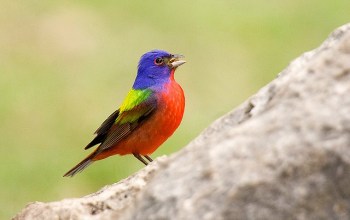
Painted Bunting (Passerina ciris) ©©Flickr

Painted Bunting (Passerina ciris) ©©Flickr

Oh that men would praise the LORD for his goodness, and for his wonderful works to the children of men! (Psalms 107:31 KJV)

The Lord not only blessed the birds, but provided them with the instinct and DNA to be able to reproduce and adapt to the changing conditions. Those that have not been able or suffered disasters be they natural or man-made have become extinct. The “kinds” have produced great varieties (over 10,400 species) that we enjoy as we study and view the different families. While He blessed the birds, in turn, we are blessed because we are able to enjoy the vast variety of these avian creations. Praise the Lord!

Birds of the Bible

Birds of the World

Bird of the Week

*
Ian’s Bird of the Week – Common Redshank

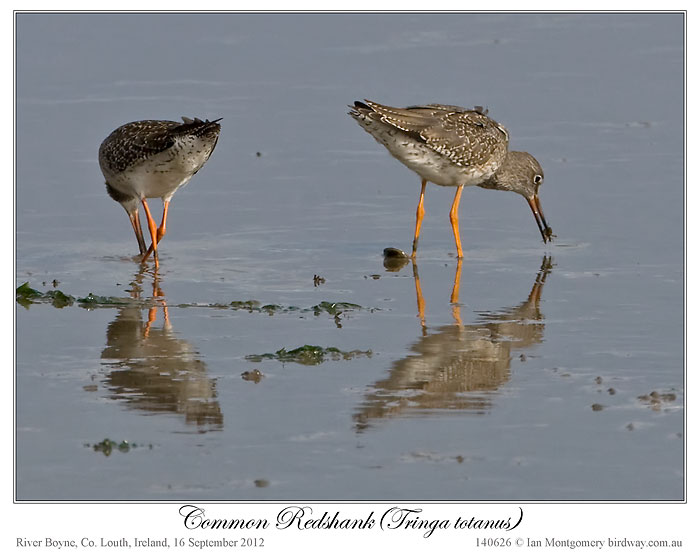
Common Redshank (Tringa totanus) by Ian 1

Common Redshank (Tringa totanus) by Ian 1

Ian’s Bird of the Week – Common Redshank ~ by Ian Montgomery

Newsletter – 11-1-12

Here’s one for the wader enthusiasts: the Common Redshank, well ‘common’ in Eurasia and rather rare in Australia. It occurred to me when I was photographing these birds in Ireland in September, that, for birders, the appeal of a particular species is very dependent on location. Common Redshanks are noteworthy in Australia (I remember looking quite hard before finding one in Broome) but perhaps a nuisance in Ireland because they’re ubiquitous, nervous and noisy and often put more unusual waders to flight when you least want them to.

The one in the first photo is foraging at low tide in the harbour at Carlingford Lough, an attractive bay between the Republic and Northern Ireland on the east coast and overlooked on the northern side by the Mourne Mountains. The two in the second photo are feeding in the mudflats in the estuary of the River Boyne some distance downstream from where the famous Battle of the Boyne took place in 1690. The bird on the right has just taken a tiny crab.

Common Redshank (Tringa totanus) by Ian 2

Common Redshank (Tringa totanus) by Ian 2

The birds in the first two photos are in non-breeding plumage. Some wader species undergo spectacular colour changes when breeding, but in the Common Redshank the markings just become more pronounced, as in the third photo, taken in Portugal in the month of June some years ago.

Common Redshank (Tringa totanus) by Ian 3

Common Redshank (Tringa totanus) by Ian 3

The bright red legs, or shanks, make this a relatively easy wader to identify. It’s ringing call is also distinctive and it shows a characteristic wing pattern in flight with white panels on the rear edge of the wing, as in the fourth photo, quite different from the wing bar or plain wing of most waders.

Common Redshank (Tringa totanus) by Ian 4

Common Redshank (Tringa totanus) by Ian 4

The generic name Tringa is from the ancient Greek trungas ‘a thrush-sized bird mentioned by Aristotle, not further identified, but taken by later authors to be a sandpiper, a wagtail or a dipper‘. That’s equivalent to saying that this fruit is either an orange, a pineapple or a banana. And totanus comes from the Italian name totano for a Redshank. Sometimes the derivation of scientific names is informative, sometimes less so.

Best wishes
Ian

**************************************************
Ian Montgomery, Birdway Pty Ltd,
454 Forestry Road, Bluewater, Qld 4818
Tel 0411 602 737 ian@birdway.com.au
Check the latest website updates:
http://www.birdway.com.au/#updates


Lee’s Addition:

The birds of the air, And the fish of the sea That pass through the paths of the seas. (Psalms 8:8 NKJV)

What a neat little bird. I especially like the 3rd photo showing the red, hence, Redshank. Thanks again, Ian.

Redshanks do belong to the Scolopacidae – Sandpipers, Snipes Family. See his Scolopacidae family photos also.

Common Redshanks in breeding plumage are a marbled brown color, slightly lighter below. In winter plumage they become somewhat lighter-toned and less patterned, being rather plain greyish-brown above and whitish below. They have red legs and a black-tipped red bill, and show white up the back and on the wings in flight.

(Sound from xeno-canto.org)

See Also:

Ian’s Bird of the Week Newsletters

Common RedshankTringa – ARKive

Common Redshank – Naturia

Common Redshank (Tringa totanus) – Ocean Wanderers Guide

Scolopacidae – Sandpipers, Snipes Family

Scolopacidae – Birdway (Ian’s)

Birds of the Bible – Shelter in the Storm

Under His Wings - ( Male Pink-necked Green Pigeon by Rik Seet)

Under His Wings – ( Male Pink-necked Green Pigeon by Rik Seet)

Be merciful to me, O God, be merciful to me! For my soul trusts in You; And in the shadow of Your wings I will make my refuge, Until these calamities have passed by. (Psalms 57:1 NKJV)

In our devotions this morning, we read Psalm 57. The first verse caught my attention because of the shelter from the wings of a bird. Also, I just received again the above picture in an e-mail. Only about the 30th time I have received it. Apparently it is as precious to others as it is to me.

With the Hurricane – Superstorm Sandy just passing by the last few days, this is a good time to remember to put and keep our trust in the Lord.

The beginning of that verse has this title attached: “To the Chief Musician. Set to “Do Not Destroy.” a Michtam of David When He Fled from Saul into the Cave.” David was trying to hide from Saul, just as those up north have been trying to hide from that storm.

“David took refuge under the shelter of God’s wings. He stood “steadfast,” a term indicating firmness, certainty, and determination (v.7). His faith was not blown about by the wind. He clung tenaciously to God. That is why today’s psalm spends more time on the character off God than on the writer’s circumstances.’ (Today in the Word, Day 16, Psalms)

My heart is steadfast, O God, my heart is steadfast; I will sing and give praise. (Psalms 57:7 NKJV)

Another quote, “the prayer (vv 1-4) emphasizes God’s character. He is merciful, protecting, caring, just, and faithful. The enemy may be “ravenous beasts,” but the psalmist can hide beneath His wings as a chick hides beneath a mother bird.”

Be merciful to me, O God, be merciful to me! For my soul trusts in You; And in the shadow of Your wings I will make my refuge, Until these calamities have passed by. I will cry out to God Most High, To God who performs all things for me. He shall send from heaven and save me; He reproaches the one who would swallow me up. Selah. God shall send forth His mercy and His truth. My soul is among lions; I lie among the sons of men Who are set on fire, Whose teeth are spears and arrows, And their tongue a sharp sword.  (Psalms 57:1-4 NKJV)

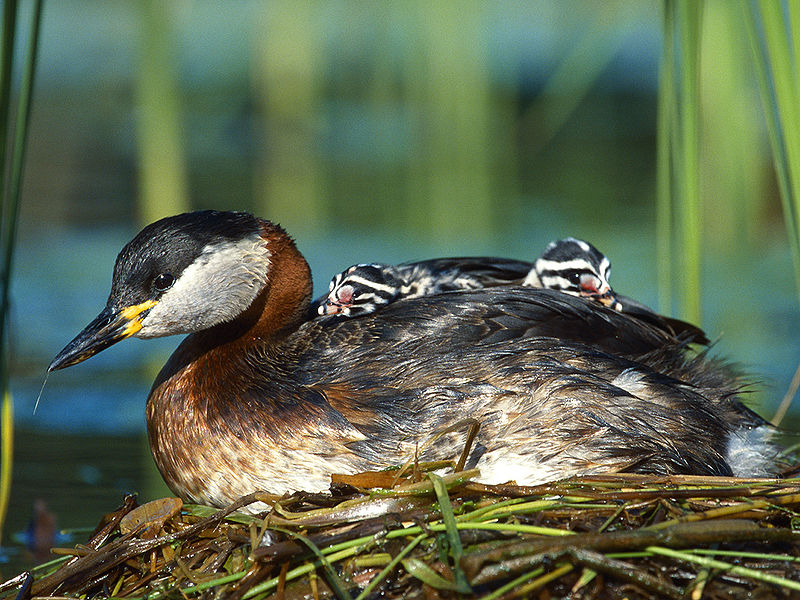
Great Crested Grebe (Podiceps cristatus) babies ©WikiC (Lukasz_Lukasik)

Great Crested Grebe (Podiceps cristatus) babies ©WikiC (Lukasz_Lukasik)

Verses 5 and 11 “focuses our attention on God’s chief attribute–His glory and worthiness to be worshiped”

Be exalted, O God, above the heavens; Let Your glory be above all the earth. (Psalms 57:5 NKJV)

Our prayers and thoughts are with those going through this storm. We have been there in the midst of hurricanes before (Andrew, Charlie, Jean, Frances and those that passed near) and we know it is hard, but there is always a peace that only the Lord can give to get you through. Look to Him.

Wordless Birds

Birds of the Bible

*