Birds of the Bible – Sorry For Their Creation?

Rose-Crowned Fruit-Dove by Birdway

Rose-Crowned Fruit-Dove by Birdway

Then the LORD saw that the wickedness of man was great in the earth, and that every intent of the thoughts of his heart was only evil continually. And the LORD was sorry that He had made man on the earth, and He was grieved in His heart. So the LORD said, “I will destroy man whom I have created from the face of the earth, both man and beast, creeping thing and birds of the air, for I am sorry that I have made them.” But Noah found grace in the eyes of the LORD. (Genesis 6:5-8 NKJV)

Now that is an interesting passage from Scripture. Does God change His Mind? I don’t believe He does, but let’s look see what some of the Commentary writers have to say. The bolding mine.

White-fronted Bee-eater (Merops bullockoides) by Africaddict

White-fronted Bee-eater (Merops bullockoides) by Africaddict

(Believer’s Bible Commentary) – “6:6, 7 The Lord’s sorrow does not indicate an arbitrary change of mind, though it seems that way to man. Rather, it indicates a different attitude on God’s part in response to some change in man’s behavior. Because He is holy, He must react against sin.”

(Barnes – this is long but interesting) – Gen_6:7 – I will wipe away man from the face of the soil. – The resolve is made to sweep away the existing race of man. Heretofore, individuals had departed this life. Adam himself had long since paid the debt of nature. These solemn testimonies to the universal doom had not made any salutary or lasting impression on the survivors. But now a general and violent destruction is to overtake the whole race – a standing monument of the divine wrath against sin, to all future generations of the only family saved.
From man to cattle, creeper and fowl of the sky. – These classes of animated nature being mingled up with man are involved in the same ruin with him. This is of a piece with the curse laid upon the serpent, which was the unconscious organ of the tempter. It is an instance of a law which runs through the whole course of nature, as we observe that it is the method of the divine government to allow for the time the suffering inflicted on an inferior animal, or even on a fellow-creature, by selfish passion. It has an appearance to some minds of harshness and unfairness. But we must remember that these animated creatures are not moral, and, therefore, the violent termination of their organic life is not a punishment; that the pain incidental to this, being apart from guilt, is in itself a beneficial provision for the conservation of life; and that it was not intended that the life of animals should be perpetual. The return of the land to a state of desolation by the destruction of animal and vegetable life, however, has its lesson for man, for whom ultimately all of this beauty and fertility were designed, and from whom it is now withdrawn, along with all the glories it foreshadows, as part of the punishment of his guilt. The tenant has become unworthy of the tabernacle, and accordingly he is dispossessed, and it is taken down and removed.

Anna's Hummingbird (Calypte anna) by S Slayton

Anna’s Hummingbird (Calypte anna) by S Slayton

(Jamieson, Fausset, & Brown) – Genesis 6:5-6 – God saw it … repented … grieved — God cannot change (Malachi_3:6; James_1:17); but, by language suited to our nature and experience, He is described as about to alter His visible procedure towards mankind – from being merciful and long-suffering, He was about to show Himself a God of judgment; and, as that impious race had filled up the measure of their iniquities, He was about to introduce a terrible display of His justice (Ecc_8:11).

(Matthew Henry) – 4. Even the brute-creatures were to be involved in this destruction – Beasts, and creeping things, and the fowls of the air. These were made for man, and therefore must be destroyed with man; for it follows: It repenteth me that I have made them; for the end of their creation also was frustrated. They were made that man might serve and honour God with them; and therefore were destroyed because he had served his lusts with them, and made them subject to vanity. 5. God took up this resolution concerning man after his Spirit had been long striving with him in vain. None are ruined by the justice of God but those that hate to be reformed by the grace of God.

Lilac-breasted Roller (Coracias caudatus) by Africaddict

Lilac-breasted Roller (Coracias caudatus) by Africaddict

(Guzik) – “b. The Lord was sorry that He had made man . . . He was grieved in His heart: God’s sorrow at man, and the grief in His heart, are striking. This does not mean that creation was out of control, nor does it mean that God hoped for something better but was unable to achieve it. God knew all along that this was how things would turn out, but our text tells us loud and clear that as God sees His plan for the ages unfold, it affects Him. God is not unfeeling in the face of human sin and rebellion.”

(Wesley) – “Genesis 6:7 – I will destroy man – The original word is very significant. I will wipe off man from off the earth; as dirt is wiped off from a place which should be clean, and thrown to the dunghill. Or, I will blot out man from the earth, as those lines are blotted out of a book which displease the author, or as the name of a citizen is blotted out of the rolls of the freemen when he is disfranchised. Both man and beast the creeping thing, and the fowls of the air – These were made for man, and therefore must be destroyed with man. It repenteth me that I have made them – For the end of their creation also was frustrated: they were made that man might serve and honour God with them and therefore were destroyed, because he had served his lusts with them, and made them subject to vanity.

Horned Grebe (Podiceps auritus) w young ©USFWS

Horned Grebe (Podiceps auritus) w young ©USFWS

These are just some of the remarks from the Commentaries that I have on my e-Sword program, which I use often. My understanding is that God had created both man and beasts/birds. They were suppose to serve Him and use the birds in His service also. After the fall, (Genesis 3) that is when things changed. Man continued sinned more and more until it was continually night and day – “24/7”. Apparently, they even used the creatures and birds in evil ways. Enough was enough and God had reached the end of his long suffering and had to use justice. Because of His Love, he could not let things continue. Gospel Presentation

Now we see such beautiful birds and wonder how much impressive were they like in their unfallen state. I am so thankful that God saved Noah’s family and at least 2 of each animal and 7 pairs of each of the birds. We see some glimpse of what they must have been like. We also, unfortunately, see the results of the curse on many of our avian friends.

More Birds of the Bible

*

Bluebird Fathers – Protective and Teachers

Bluebird Fathers – Protective and Teachers ~ From Creation Moments (Re-post)

Eastern Bluebird (Sialia sialis) by S Slayton

Eastern Bluebird (Sialia sialis) by S Slayton

PROTECTIVE, TEACHING FATHERS

And, ye fathers, provoke not your children to wrath: but bring them up in the nurture and admonition of the Lord.  (Ephesians 6:4)

The first scientific studies that showed essential differences between males and females were not well received by some. Many Christians have resisted the teachings that men and women are by nature the same. Christians have traditionally understood the Bible to teach that males and females each have essential, honorable, but different roles to play.

Unfortunately, many Christians have been unsure how to describe those roles. As we study the scriptural portrayal of the family, especially in Ephesians chapter 5, a picture begins to emerge. All the scriptural examples of motherhood and fatherhood can be distilled into one basic idea. What we call a healthy maternal instinct and a healthy desire on the part of the male to protect and prevent danger are only two sides of the same coin.

An example of what this means was recently discovered in bluebirds. Scientists have found that bluebird fathers offer their nestling daughters twice as much food as their sons. Of course, the sons are never allowed to go hungry. Scientists were puzzled by this until someone suggested that by doing this, father bluebird was teaching his daughters, by example, how to select a mate. Female bluebirds are very fussy about selecting a mate. One of the most important things they look for in a mate is the ability to provide plenty of food for the next generation.

In an age of declining parenting skills, it’s good to be reminded that our Creator has given human parents instruction in His Word.

Prayer:
Dear Father, I thank You that You are a perfect Father. Fill Christian parents among us with love and patience. Most of all, fill them with the instruction of Your Word so that they may teach their children about You in both word and deed. In Jesus’ Name. Amen.

Notes:
K.A. Facklemann. 1992. “Bluebird Fathers Favor Pink Over Blue.” Science News, Jan. 4, p. 7.

*

Birds of the Bible – The Common Ostrich


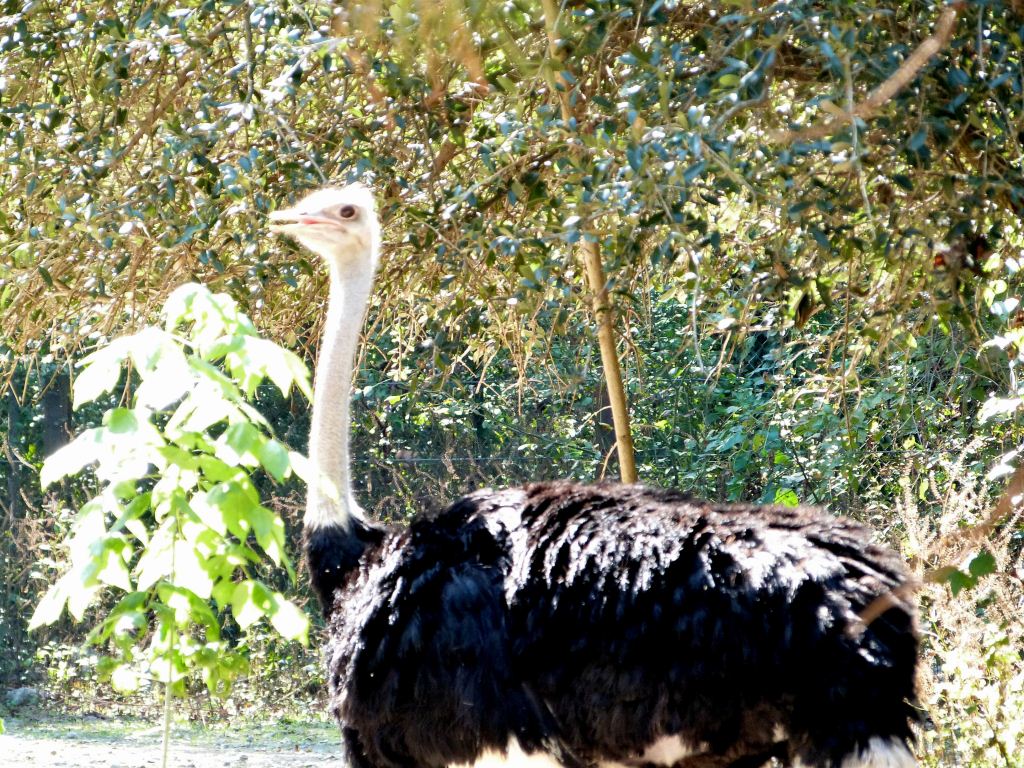
Common Ostrich (Struthio camelus) at Riverbanks Zoo SC by Lee

Common Ostrich (Struthio camelus) at Riverbanks Zoo SC by Lee

Dan and I just recently were on vacation and stopped by the Riverbanks Zoo and Gardens in Columbia, SC. I have see Ostriches before, but it has been awhile. We see the Emus at Zoo Tampa often, but they are not nearly as tall as the Ostrich. I had forgotten that the Lord had created such a huge bird.

The wings of the ostrich wave proudly, But are her wings and pinions like the kindly stork’s? For she leaves her eggs on the ground, And warms them in the dust; She forgets that a foot may crush them, Or that a wild beast may break them. She treats her young harshly, as though they were not hers; Her labor is in vain, without concern, Because God deprived her of wisdom, And did not endow her with understanding. When she lifts herself on high, She scorns the horse and its rider. (Job 39:13-18 NKJV)

The Ostrich does belong to the Struthionidae Family. Currently there are two; the Common Ostrich (Struthio camelus) and the Somali Ostrich (Struthio molybdophanes). The one we saw was the Common. The Ostrich is the largest bird in the world! They are omnivorous flightless birds but make up for their inability to fly with the powerful legs they possess. These birds were built for speed. That is why the reference to the horse and rider. Ostriches can give a horse competition for at least a burst of speed.

Common Ostrich (Struthio camelus) Foot at Riverbanks Zoo SC by Lee

Common Ostrich (Struthio camelus) Foot back at Riverbanks Zoo SC by Lee

“Ostriches usually weigh from 140–320 lb (63 to 145 kilograms), Ostriches of the East African race (S. c. massaicus) averaged 250 lb (115 kg) in males and 220 lb (100 kg) in females, while the nominate subspecies was found to average 240 lb (111 kg) in unsexed adults. At sexual maturity (two to four years), male ostriches can be from 6 ft 11 in to 9 ft 2 in (2.1 to 2.8 m) in height, while female ostriches range from 5 ft 7 in to 6 ft 7 in (1.7 to 2 m) tall. New chicks are fawn with dark brown spots. During the first year of life, chicks grow about 10 in (25 cm) per month. At one year of age, ostriches weigh around 100 lb (45 kilograms). Their lifespan is up to 40 or 45 years.” (Wikipedia with editing)

Common Ostrich (Struthio camelus) Foot at Riverbanks Zoo SC by Lee

Common Ostrich (Struthio camelus) Foot front at Riverbanks Zoo SC by Lee

I am not sure how tall these were, but they had to be close to 8 feet. As I was observing them, I was trying to remember all that the verses said about them. That is one reason I took pictures of their feet. I knew that their feet and legs helped  them run, but also that those same feet were a danger to their young ones. They do have big feet and with an interesting shape as you can see from the photos.

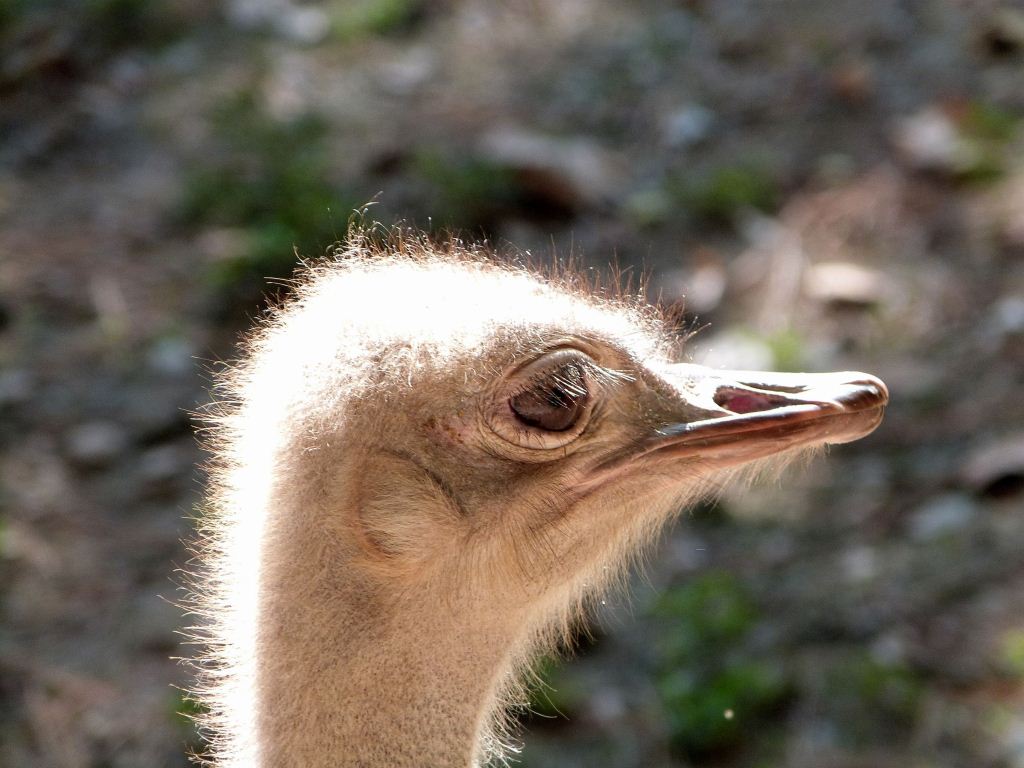
If you notice the size of their head to their body, maybe that is how the Lord “did not endow her with understanding.” The head is interesting though because they are one of the few birds that have eyelashes. They have acute eyesight and hearing, the long neck and legs keep their head up to 9 ft (2.8 m) above the ground, and their eyes are said to be the largest of any land vertebrate – 2.0 in (50 mm) in diameter; they can therefore perceive predators at a great distance. The eyes are shaded from sun light falling from above. However, the head and bill are relatively small for the birds’ huge size”

Common Ostrich (Struthio camelus) Head at Riverbanks Zoo SC by Lee

Common Ostrich (Struthio camelus) Head at Riverbanks Zoo SC by Lee

Oh, sing to the LORD a new song! Sing to the LORD, all the earth. Sing to the LORD, bless His name; Proclaim the good news of His salvation from day to day. Declare His glory among the nations, His wonders among all peoples. For the LORD is great and greatly to be praised; He is to be feared above all gods. (Psalms 96:1-4 NKJV)

Links:

Birds of the Bible – Ostrich

Bible Birds – Ostrich

Struthionidae – Ostriches

Ostrich – Creation Wiki

Ostrich – Wikipedia

Ostrich – The Largest Bird with the Biggest Eyes

*

Jacksonville Zoo’s Cape Thick-knee

Dan and I have been off on a trip to the mountains of Tennessee and made some interesting stops along the way. Haven’t always had an internet connection to be able to post new articles. Put the blog on “auto-pilot” before we left. (PS – We just got home and I thought I released this 2 days ago.)

We stopped at the Jacksonville Zoo in Florida to do some birdwatching. Have lots of photos to go through, but thought I would share a video I took of the Cape Thick-knee, as they call it. One reason I enjoyed these birds is because of the size of their eyes to their heads.  They were so friendly and quite vocal. This is just one of the times they were “sounding off.”

Checked with Wikipedia to see what they say about the Thick-knee. It is actually the Double-striped Thick-knee (Burhinus bistriatus). They are related to the stone-curlews. They are in the Burhinidae Family which has ten species of Thick-knees and Stone-curlews. According to the Chicago Zoo, their Cape Thick-knee is the Double-striped and Wikipedia says it is the Striped Thick-knee. I am not sure if what we saw is the one or two striped bird, so we will call it the Cape.

It is a resident breeder in Central and South America from southern Mexico south to Colombia, Venezuela and northern Brazil. It also occurs on Hispaniola and some of the Venezuelan islands, and is a very rare vagrant to Trinidad, Curaçao and the USA.

This is a largely nocturnal and crepuscular species of arid grassland, savanna, and other dry, open habitats. The nest is a bare scrape into which two olive-brown eggs are laid and incubated by both adults for 25–27 days to hatching. The downy young are precocial and soon leave the nest.

The Double-striped Thick-knee is a medium-large wader with a strong black and yellow bill, large yellow eyes, which give it a reptilian appearance, and cryptic plumage. The scientific genus name refers to the prominent joints in the long greenish-grey legs, and bistriatus to the two stripes of the head pattern.

The adult is about 46–50 cm long and weighs about 780-785 g. It has finely streaked grey-brown upperparts, and a paler brown neck and breast merging into the white belly. The head has a strong white supercilium bordered above by a black stripe. Juveniles are similar to adults, but have slightly darker brown upperparts and a whitish nape.

Double-striped Thick-knee is striking in flight, with a white patch on the dark upperwing, and a white underwing with a black rear edge. However, it avoids flying, relying on crouching and camouflage for concealment. The song, given at night, is a loud kee-kee-kee.

There are four subspecies, differing in size and plumage tone, but individual variation makes identification of races difficult.

The Double-striped Thick-knee eats large insects and other small vertebrate and invertebrate prey. It is sometimes semi-domestcated because of its useful function in controlling insects, and has benefited from the clearing of woodlands to create pasture.

See also:

Burhinidae – Stone-curlews, Thick-knees

Spotted Thick-knee – Wikipedia

Double-striped Thick-knee – Wikipedia

Cape Thick-knee – Chicago’s Brookfield Zoo

Wordless Birds

*

Vol 2 #2 – Gambel’s Partridge

Gambel's Quail (Callipepla gambelii)

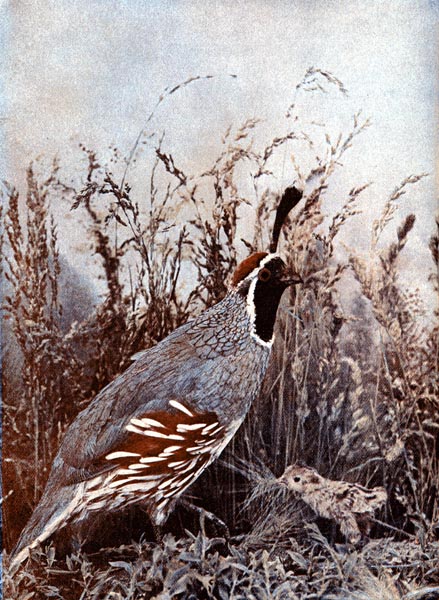
Gambel’s Partridge by Birds Illustrated by Color Photography

From col. F. M. Woodruff.

GAMBEL’S PARTRIDGE.

imgg

AMBEL’S PARTRIDGE, of which comparatively little is known, is a characteristic game bird of Arizona and New Mexico, of rare beauty, and with habits similar to others of the species of which there are about two hundred. Mr. W. E. D. Scott found the species distributed throughout the entire Catalina region in Arizona below an altitude of 5,000 feet. The bird is also known as the Arizona Quail.

The nest is made in a depression in the ground sometimes without any lining. From eight to sixteen eggs are laid. They are most beautifully marked on a creamy-white ground with scattered spots and blotches of old gold, and sometimes light drab and chestnut red. In some specimens the gold coloring is so pronounced that it strongly suggests to the imagination that this quail feeds upon the grains of the precious metal which characterizes its home, and that the pigment is imparted to the eggs.

After the nesting season these birds commonly gather in “coveys” or bevies, usually composed of the members of but one family. As a rule they are terrestrial, but may take to trees when flushed. They are game birds par excellence, and, says Chapman, trusting to the concealment afforded by their dull colors, attempt to avoid detection by hiding rather than by flying. The flight is rapid and accompanied by a startling whirr, caused by the quick strokes of their small, concave, stiff-feathered wings. They roost on the ground, tail to tail, with heads pointing outward; “a bunch of closely huddled forms—a living bomb whose explosion is scarcely less startling than that of dynamite manufacture.”

The Partridge is on all hands admitted to be wholly harmless, and at times beneficial to the agriculturist. It is an undoubted fact that it thrives with the highest system of cultivation, and the lands that are the most carefully tilled, and bear the greatest quantity of grain and green crops, generally produce the greatest number of Partridges.

Summary:

GAMBEL’S PARTRIDGE.Callipepla gambeli.

Range—Northwestern Mexico, Arizona, New Mexico, southern Utah, and western Utah and western Texas.

Nest—Placed on the ground, sometimes without any lining.

Eggs—From eight to sixteen.


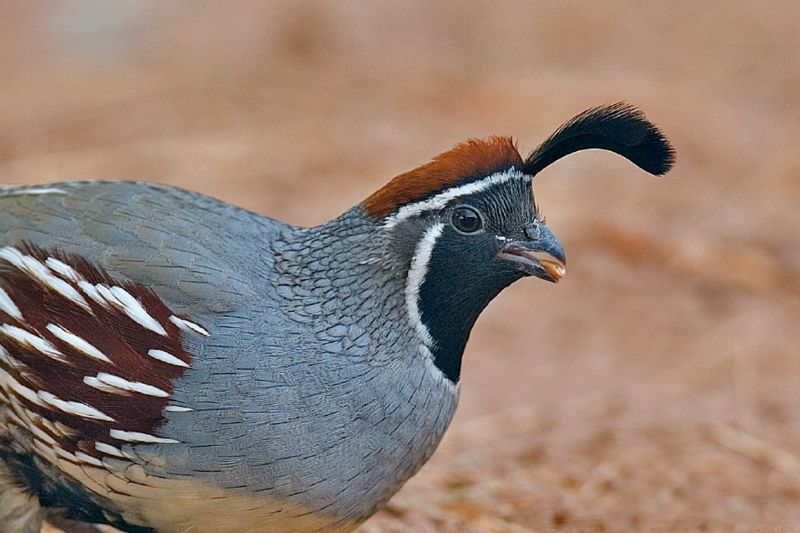
Gambel's Quail (Callipepla gambelii) by S Slayton

Gambel’s Quail (Callipepla gambelii) by S Slayton

Lee’s Addition:

Partridges are mentioned in two verses, thus making it a Bible Bird. Of course, the Gambel’s is not mentioned, only his family. They belong to the Galliformes order and are now called the Gambel’s Quail. They are in the Odontophoridae – New World Quail Family along with 33 other species (3.1 IOC).

Now therefore, let not my blood fall to the earth away from the presence of the LORD, for the king of Israel has come out to seek a single flea like one who hunts a partridge in the mountains. (1 Samuel 26:20 ESV)

Like the partridge that gathers a brood that she did not hatch, so is he who gets riches but not by justice; in the midst of his days they will leave him, and at his end he will be a fool. (Jeremiah 17:11 ESV)

Since they are now known as Quails, that species also appears in Scripture four times. Exodus 16:13, Numbers 11:31-32, and Psalms 105:40 all mention quail as a provision for His people. We were privileged to see the Gambel’s Quail in California in 1999. They are so neat walking around with that top knot bobbing along.

In the evening quail came up and covered the camp, and in the morning dew lay around the camp. (Exodus 16:13 ESV)

Then a wind from the LORD sprang up, and it brought quail from the sea and let them fall beside the camp, about a day’s journey on this side and a day’s journey on the other side, around the camp, and about two cubits above the ground. And the people rose all that day and all night and all the next day, and gathered the quail. Those who gathered least gathered ten homers. And they spread them out for themselves all around the camp. (Numbers 11:31-32 ESV)

They asked, and he brought quail, and gave them bread from heaven in abundance. (Psalms 105:40 ESV)

Gambel's Quail (Callipepla gambelii) ©WikiC

Gambel’s Quail (Callipepla gambelii) ©WikiC

“The Gambel’s Quail, Callipepla gambelii, is a small ground-dwelling bird in the New World quail family. It inhabits the desert regions of Arizona, California, Colorado, New Mexico, Nevada, Utah, Texas, and Sonora; also New Mexico-border Chihuahua and the Colorado River region of Baja California. The Gambel’s quail is named in honor of William Gambel, a 19th century naturalist and explorer of the Southwestern United States.” (Wikipedia)

*

Birds Illustrated by Color Photography – Revisited – Introduction

The above article is the first article in the monthly serial that was started in January 1897 “designed to promote Knowledge of Bird-Live.” These include Color Photography, as they call them, today they are drawings. There are at least three Volumes that have been digitized by Project Gutenberg.

To see the whole series of – Birds Illustrated by Color Photography – Revisited

*

(Information from Wikipedia and other internet sources)

Next Article – The Yellow Warbler

The Previous Article – To A Water-Fowl

ABC’s Of The Gospel

Links:

Odontophoridae – New World Quail Family

GALLIFORMES – Fowl, Quail, Guans, Currasows, Megapodes Order

Gambel’s Quail – Wikipedia

Gambel’s Quail – All About Birds

*


Vol 2 #2 – To A Water-Fowl

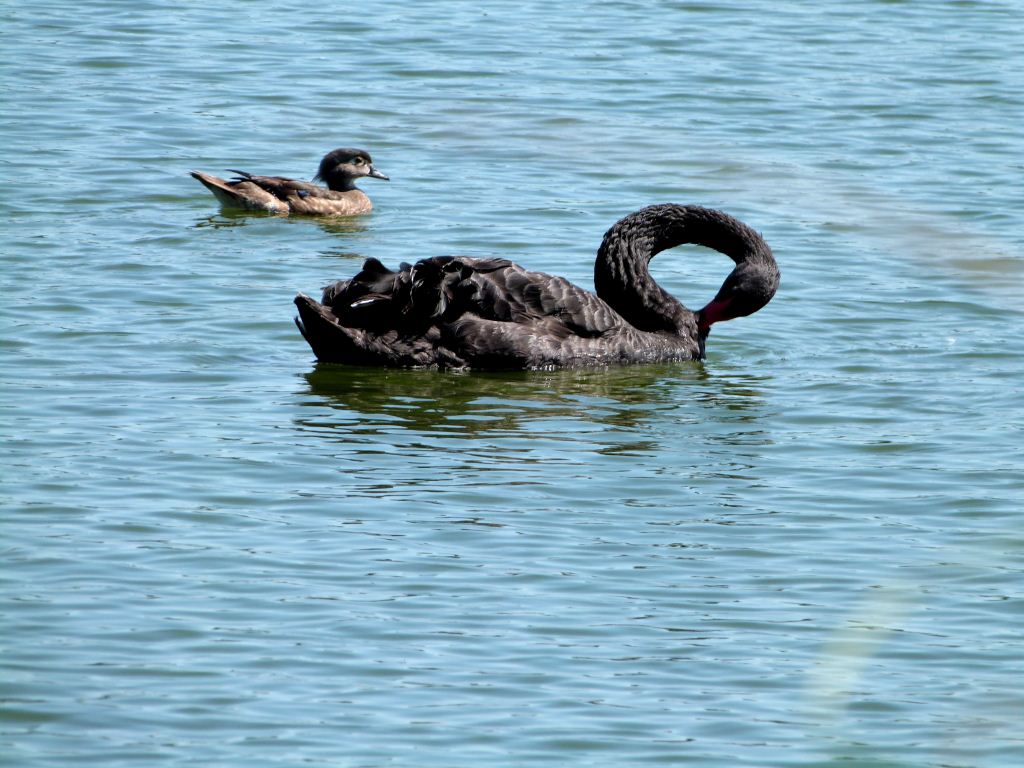
Black Swan and Wood Duck female - Lake Morton 6-28-12 by Lee

Black Swan and Wood Duck female

TO A WATER-FOWL

Whither, ’midst falling dew
While glow the heavens with the last steps of day,
Far through their rosy depths dost thou pursue
Thy solitary way?

Vainly the fowler’s eye
Might mark thy distant flight to do thee wrong,
As, darkly painted on the crimson sky,
Thy figure floats along.

Seek’st thou the plashy brink
Of weedy lake, or marge of river wide,
Or where the rocky billows rise and sink
On the chafed ocean side.

There is a Power whose care
Teaches thy way along that pathless coast—
The desert and illimitable air—
Lone wandering, but not lost.

All day thy wings have fanned,
At that far height, the cold thin atmosphere,
Yet stoop not, weary, to the welcome land
Though the dark night is near.

And soon that toil shall end;
Soon shalt thou find a summer home, and nest,
And scream among thy fellows; reeds shall bend,
Soon o’er thy sheltered nest.

Thou’rt gone, the abyss of heaven
Hath swallowed up thy form; yet on my heart
Deeply has sunk the lesson thou hast given,
And shall not soon depart.

He who from zone to zone,
Guides through the boundless sky thy certain flight,
In the long way that I must tread alone,
Will lead my steps aright.

William Cullen Bryant.


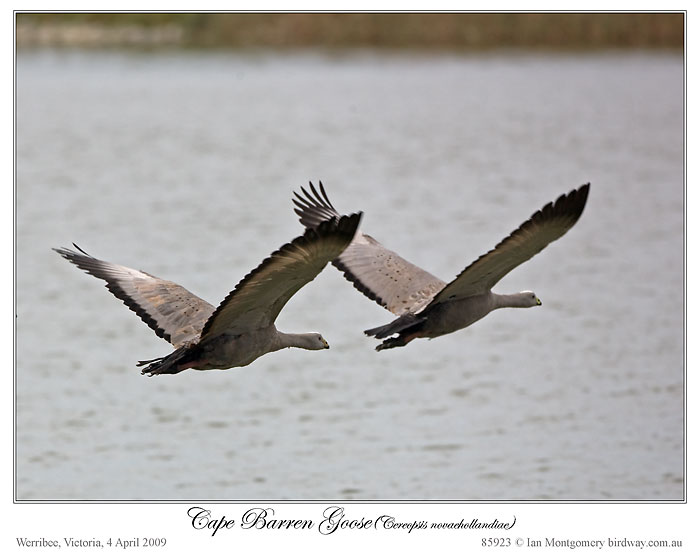
Cape Barren Goose (Cereopsis novaehollandiae) by Ian

Cape Barren Goose (Cereopsis novaehollandiae) by Ian

Lee’s Addition:

Storks know when to fly south. So do doves, swifts and thrushes. But my people do not know what I require them to do. (Jeremiah 8:7 NIrV)

“But now ask the beasts, and they will teach you; And the birds of the air, and they will tell you; (Job 12:7 NKJV)

Wikipedia say this of Waterfowl They “are certain wildfowl of the order Anseriformes, especially members of the family Anatidae, which includes ducks, geese, and swans.
They are strong swimmers with medium to large bodies. They have historically been an important food source, and continue to be hunted as game, or raised as poultry for meat and eggs. The domestic duck is sometimes kept as a pet.

Some definitions of the term ‘waterfowl’ include the saltwater shorebirds or waders, gulls, pelicans, and herons, as well as seabirds such as the albatross, but ‘fowl’ especially refers to birds used by humans for game.

*

Birds Illustrated by Color Photography – Revisited – Introduction

The above article is the first article in the monthly serial that was started in January 1897 “designed to promote Knowledge of Bird-Live.” These include Color Photography, as they call them, today they are drawings. There are at least three Volumes that have been digitized by Project Gutenberg.

To see the whole series of – Birds Illustrated by Color Photography – Revisited

*

(Information from Wikipedia and other internet sources)

Next Article –  Gambel’s Partridge

The Previous Article – The Turkey Vulture

Wordless Birds

Links:

Anseriformes Order

Anatidae Family

*

Birds of the Bible – Trees and Birds

Eagle in Tree on a windy day by Dan

These were the visions of my head while on my bed: I was looking, and behold, A tree in the midst of the earth, And its height was great. The tree grew and became strong; Its height reached to the heavens, And it could be seen to the ends of all the earth. Its leaves were lovely, Its fruit abundant, And in it was food for all. The beasts of the field found shade under it, The birds of the heavens dwelt in its branches, And all flesh was fed from it. (Daniel 4:10-12 NKJV)

What an interesting passage. Actually, this was part of the vision or dream that Nebuchadnezzar had and he is revealing it to Daniel. He is looking for an explanation for it. (See Daniel 4:19 + for the interpretation)

Daniel gives him the interpretation in the rest of the Chapter 4, but I want to concentrate on the tree and the birds. I have seen so many photos and witnessed birds enjoying themselves in the trees. The Lord created them all and provides for the tree, the beast, the birds, and us.

The trees provide food (fruit and seeds), leaves give shade for the animals and birds, the limbs provide a resting place, especially for birds, but I have seen a few leopards and koalas resting on them also.

Verse like:

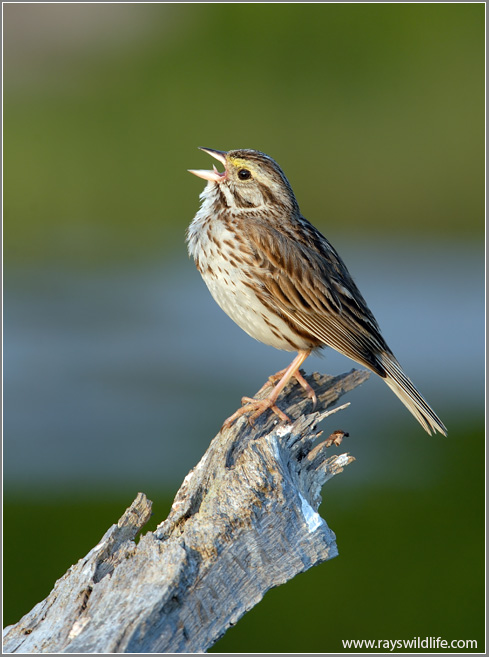
Savannah Sparrow singing by Ray

Savannah Sparrow singing by Ray

By them the birds of the heavens have their home; They sing among the branches. (Psalms 104:12 NKJV)

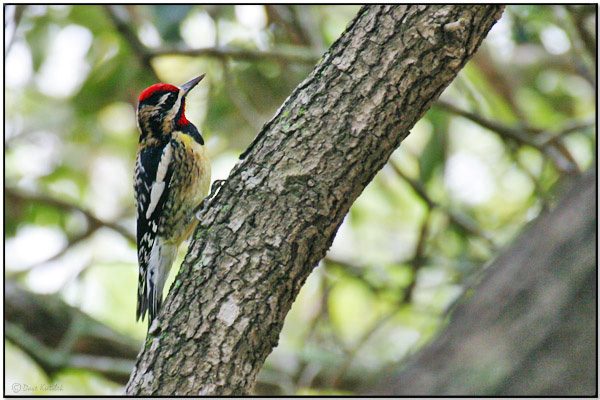
Yellow-bellied Sapsucker (Sphyrapicus varius) by Daves BirdingPix

Yellow-bellied Sapsucker (Sphyrapicus varius) by Daves BirdingPix

The trees of the LORD are full of sap, The cedars of Lebanon which He planted, (Psalms 104:16 NKJV) (Many birds like the sap – Sapsuckers for one)

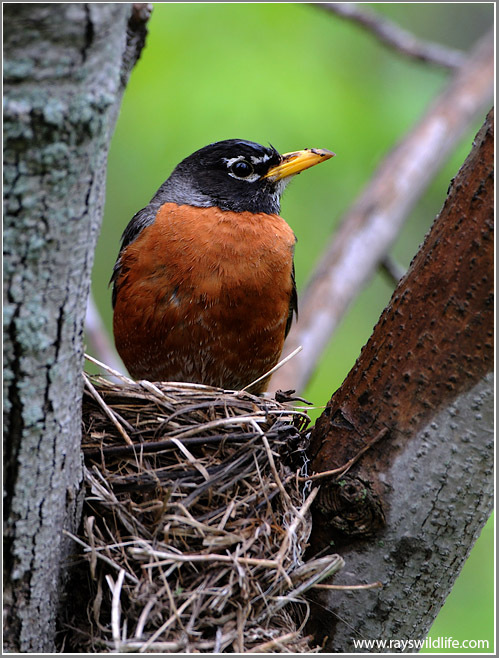
American Robin (Turdus migratorius) in nest by Ray

American Robin (Turdus migratorius) in nest by Ray

Where the birds make their nests; The stork has her home in the fir trees. (Psalms 104:17 NKJV)

And Jesus said to him, “Foxes have holes and birds of the air have nests, but the Son of Man has nowhere to lay His head.” (Matthew 8:20 NKJV)

Another parable He put forth to them, saying: “The kingdom of heaven is like a mustard seed, which a man took and sowed in his field, which indeed is the least of all the seeds; but when it is grown it is greater than the herbs and becomes a tree, so that the birds of the air come and nest in its branches.” (Matthew 13:31-32 NKJV)

Cedar Waxwing on Cedar Tree at Birdwatchers Digest.

Also he spoke of trees, from the cedar tree of Lebanon even to the hyssop that springs out of the wall; he spoke also of animals, of birds, of creeping things, and of fish. (1 Kings 4:33 NKJV)

*

Our Great Creator has wonderfully designed so many things to work together to provide for each other. Birds need trees and trees need birds. He is worthy of our praise and thanksgiving. And don’t you just enjoy watching the birds in the trees?

For His merciful kindness is great toward us, And the truth of the LORD endures forever. Praise the LORD! (Psalms 117:2 NKJV)

Yes, they shall sing of the ways of the LORD, For great is the glory of the LORD. (Psalms 138:5 NKJV)

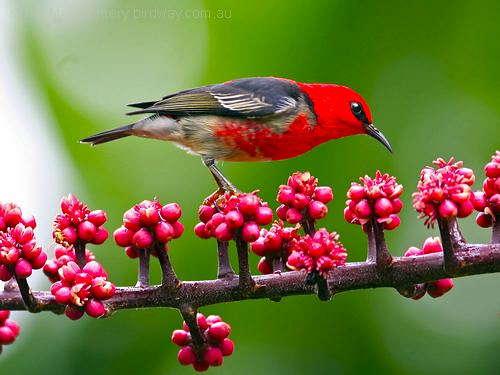
Scarlet Myzomela (Myzomela sanguinolenta) by Ian

Scarlet Myzomela (Myzomela sanguinolenta) by Ian

Great is our Lord, and mighty in power; His understanding is infinite. (Psalms 147:5 NKJV)

For the LORD your God is God of gods and Lord of lords, the great God, mighty and awesome, who shows no partiality nor takes a bribe. (Deuteronomy 10:17 NKJV)

*

Vol 2 #2 – The Turkey Vulture

Turkey Vulture Tree at Saddle Creek by Lee

Turkey Vulture Tree at Saddle Creek by Lee

THE TURKEY VULTURE.

This bird is found mostly in the southern states. Here he is known by the more common name of Turkey Buzzard.

He looks like a noble bird but he isn’t. While he is well fitted for flying, and might, if he tried, catch his prey, he prefers to eat dead animals.

The people down south never think of burying a dead horse or cow. They just drag it out away from their homes and leave it to the Vultures who are sure to dispose of it.

It is very seldom that they attack a live animal.

They will even visit the streets of the cities in search of dead animals for food, and do not show much fear of man. Oftentimes they are found among the chickens and ducks in the barn-yard, but have never been known to kill any.

One gentleman who has studied the habits of the Vulture says that it has been known to suck the eggs of Herons. This is not common, though. As I said they prefer dead animals for their food and even eat their own dead.

The Vulture is very graceful while on the wing. He sails along and you can hardly see his wings move as he circles about looking for food on the ground below.

Many people think the Vulture looks much like our tame turkey.

If you know of a turkey near by, just compare this picture with it and you won’t think so.

See how chalk-white his bill is. No feathers on his head, but a bright red skin.

What do you think of the young chick? It doesn’t seem as though he could ever be the large, heavy bird his parent seems to be.

Now turn back to the first page of July “Birds” and see how he differs from the Eagle.

THE TURKEY VULTURE

THE TURKEY VULTURE

From col. F. M. Woodruff.


THE TURKEY VULTURE.

imgt

URKEY BUZZARD is the familiar name applied to this bird, on account of his remarkable resemblance to our common Turkey. This is the only respect however, in which they are alike. It inhabits the United States and British Provinces from the Atlantic to the Pacific, south through Central and most of South America. Every farmer knows it to be an industrious scavenger, devouring at all times the putrid or decomposing flesh of carcasses. They are found in flocks, not only flying and feeding in company, but resorting to the same spot to roost; nesting also in communities; depositing their eggs on the ground, on rocks, or in hollow logs and stumps, usually in thick woods or in a sycamore grove, in the bend or fork of a stream. The nest is frequently built in a tree, or in the cavity of a sycamore stump, though a favorite place for depositing the eggs is a little depression under a small bush or overhanging rock on a steep hillside.

Renowned naturalists have long argued that the Vulture does not have an extraordinary power of smell, but, according to Mr. Davie, an excellent authority, it has been proven by the most satisfactory experiments that the Turkey Buzzard does possess a keen sense of smell by which it can distinguish the odor of flesh at a great distance.

The flight of the Turkey Vulture is truly beautiful, and no landscape with its patches of green woods and grassy fields, is perfect without its dignified figure high in the air, moving round in circles, steady, graceful and easy, and apparently without effort. “It sails,” says Dr. Brewer, “with a steady, even motion, with wings just above the horizontal position, with their tips slightly raised, rises from the ground with a single bound, gives a few flaps of the wings, and then proceeds with its peculiar soaring flight, rising very high in the air.”

The Vulture pictured in the accompanying plate was obtained between the Brazos river and Matagorda bay. With it was found the Black Vulture, both nesting upon the ground. As the nearest trees were thirty or forty miles distant these Vultures were always found in this situation. The birds selected an open spot beneath a heavy growth of bushes, placing the eggs upon the bare ground. The old bird when approached would not attempt to leave the nest, and in the case of the young bird in the plate, the female to protect it from harm, promptly disgorged the putrid contents of her stomach, which was so offensive that the intruder had to close his nostrils with one hand while he reached for the young bird with the other.

The Turkey Vulture is a very silent bird, only uttering a hiss of defiance or warning to its neighbors when feeding, or a low gutteral croak of alarm when flying low overhead.

The services of the Vultures as scavengers in removing offal render them valuable, and almost a necessity in southern cities. If an animal is killed and left exposed to view, the bird is sure to find out the spot in a very short time, and to make its appearance as if called by some magic spell from the empty air.

“Never stoops the soaring Vulture
On his quarry in the desert,
On the sick or wounded bison,
But another Vulture, watching,
From his high aerial lookout,
Sees the downward plunge and follows;
And a third pursues the second,
Coming from the invisible ether,
First a speck, and then a Vulture,
Till the air is dark with pinions.”

Summary:

TURKEY VULTURE.Catharista Atrata.

Range—Temperate America, from New Jersey southward to Patagonia.

Nest—In hollow stump or log, or on ground beneath bushes or palmettos.

Eggs—One to three; dull white, spotted and blotched with chocolate marking.


Turkey Vulture flying by - LPP

Turkey Vulture flying by – LPP

Lee’s Addition:

There is a path which no fowl knoweth, and which the vulture’s eye hath not seen: (Job 28:7 KJV)

We see Turkey and Black Vulture quite frequently here. I only disagree with one part of the article. “The Vulture is very graceful while on the wing. He sails along and you can hardly see his wings move as he circles about looking for food on the ground below.”

The way I distinguish the Turkey and Black Vultures apart is that the Black (BV) is steady on the wing, but the Turkey TV) is wobbly on the wing. They have a rocking motion, even when it is not windy. Another way to tell the two apart is the V of the Turkey and the flatter wings of the Black, who also has white on the tips of their wings.

They belong to the Cathartidae – New World Vultures Family. There are 7 Vultures and 2 Condors in that family.

*

Birds Illustrated by Color Photography – Revisited – Introduction

The above article is the first article in the monthly serial that was started in January 1897 “designed to promote Knowledge of Bird-Live.” These include Color Photography, as they call them, today they are drawings. There are at least three Volumes that have been digitized by Project Gutenberg.

To see the whole series of – Birds Illustrated by Color Photography – Revisited

*

(Information from Wikipedia and other internet sources)

Next Article – To A Water-Fowl

The Previous Article – The Evening Grosbeak

ABC’s Of The Gospel

Links:

Birds of the Bible – Vulture

Birds of the Bible – Gathering of Vultures or Eagles

Birds of the Bible – Griffon Vulture

Scripture Alphabet of Animals: The Vulture

Birds of the Bible – Vulture Eyesight

When I Consider! – Turkey Vulture

Turkey Vulture – Wikipedia

*

Birds of the Bible – Where Did They Go?

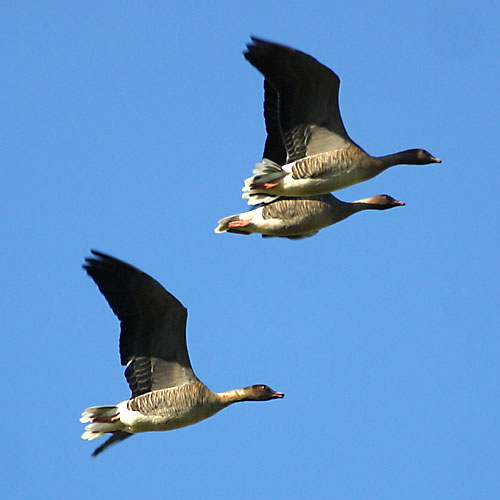
Pink-footed Goose (Anser brachyrhynchus) ©Arthur Grosset

Pink-footed Goose (Anser brachyrhynchus) ©Arthur Grosset

Where did they go? I was wondering that a little over a week ago when we drove 50 miles to Orlando. I keep a small notebook and write down the birds we see as Dan drives. As cross into each county, I start my list for that county by drawing a line, putting the time, temperature if I know it, and what the sky looks like. Other than a Turkey Vulture or Black Vulture in each county, nothing was flying. We saw a few grackles, a Mockingbird, and a few Fish Crows. Coming back, one county I wrote “none” on my notebook. Normally here in Central Florida, we see birds around the ponds and lake. Nothing that day.

The next day, we drove 50 the other direction to Tampa to go to the Lowry Park Zoo. I knew those birds would be there. They are captive. I had the same results. One or two birds, but nothing flying. When I attended church the next day, I had several people tell me that they hadn’t seen any birds at their feeders and wondered if I knew why. I didn’t and don’t have a clue.

I am curious if it is that way up north when the birds start their migrations. You see them one day and then not the next. Our summer birds seem to be here year-round, or at least I thought so.

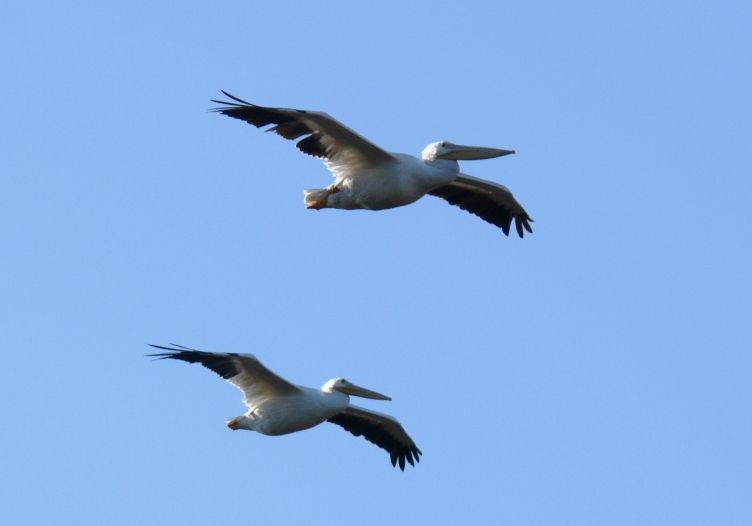
American White Pelican (Pelecanus erythrorhynchos) by Lee

American White Pelican (Pelecanus erythrorhynchos) by Lee

All of that reminded me of the verses in Jeremiah:

I beheld, and indeed there was no man, And all the birds of the heavens had fled. (Jeremiah 4:25 NKJV)

I will take up a weeping and wailing for the mountains, And for the dwelling places of the wilderness a lamentation, Because they are burned up, So that no one can pass through; Nor can men hear the voice of the cattle. Both the birds of the heavens and the beasts have fled; They are gone. (Jeremiah 9:10 NKJV)

That also caused me to think about this past summer. Where did it go? Where did those days and hours go that I had so many plans for. I especially thought I would work on this blog while the birds were gone north for the summer. Well, guess what? Here it is Autumn and it didn’t happen. In fact I am busier now than before they left. I was putting out about one article a day and now struggle to get one out every few days.

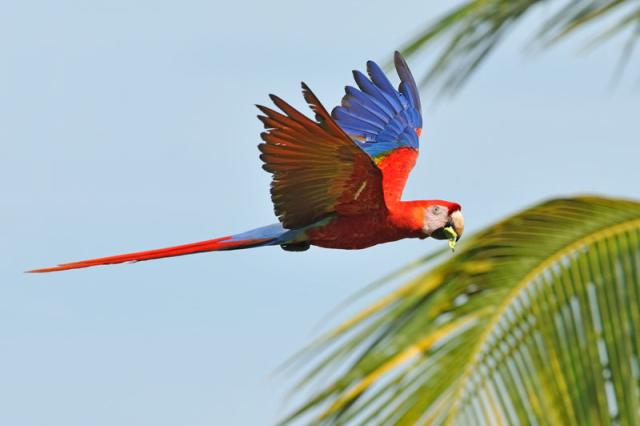
Scarlet Macaw (Ara macao) Reinier Munguia

Scarlet Macaw (Ara macao) Reinier Munguia

Do these verses cause you also to consider where time goes?

Indeed, You have made my days as handbreadths, And my age is as nothing before You; Certainly every man at his best state is but vapor. Selah (Psalms 39:5 NKJV)

Come now, you who say, “Today or tomorrow we will go to such and such a city, spend a year there, buy and sell, and make a profit”; whereas you do not know what will happen tomorrow. For what is your life? It is even a vapor that appears for a little time and then vanishes away. Instead you ought to say, “If the Lord wills, we shall live and do this or that.” (James 4:13-15 NKJV)

This post is just a “rambling” post, but I’m sure most of those who visit here that have blogs have felt the same way at times. I don’t want to just put a post up just for the sake of putting one up. I prefer for it to mean, instill or teach something.

ActiveLink

ActiveLink for today

Seems like lately, everything vies for my time. I have been on Weight Watchers since January (lost 30 lbs so far) and now even they are after my time. They recently released “ActiveLink” which monitors our movements. Sitting at a computer for hours, does not movement make. So now I have to get up and, ugh, exercise every so often or at least walk around. It will be worth it, but it takes “TIME.” That isn’t the only thing I have added lately. I am in new Ladies Bible Study and now I have “homework.” Time, time, time, where does it go?

Can you relate to any of this? I would venture to say many of you can. Oh, but isn’t the Lord great? When we do get time to see his fantastic creation, especially His birds, don’t they bring joy to you?

See also:

Birds of the Bible

Birds of the Bible – Birds of the Air

Wordless Birds

*