Birds In Hymns – Flee As A Bird

Birds In Hymns – Flee As A Bird ~ by Mary S. Shindler

A Psalm of David. In the LORD I put my trust; How can you say to my soul, “Flee as a bird to your mountain”? (Psalms 11:1 NKJV)

Words & Music ~ by Mary S. Shindler, 1842

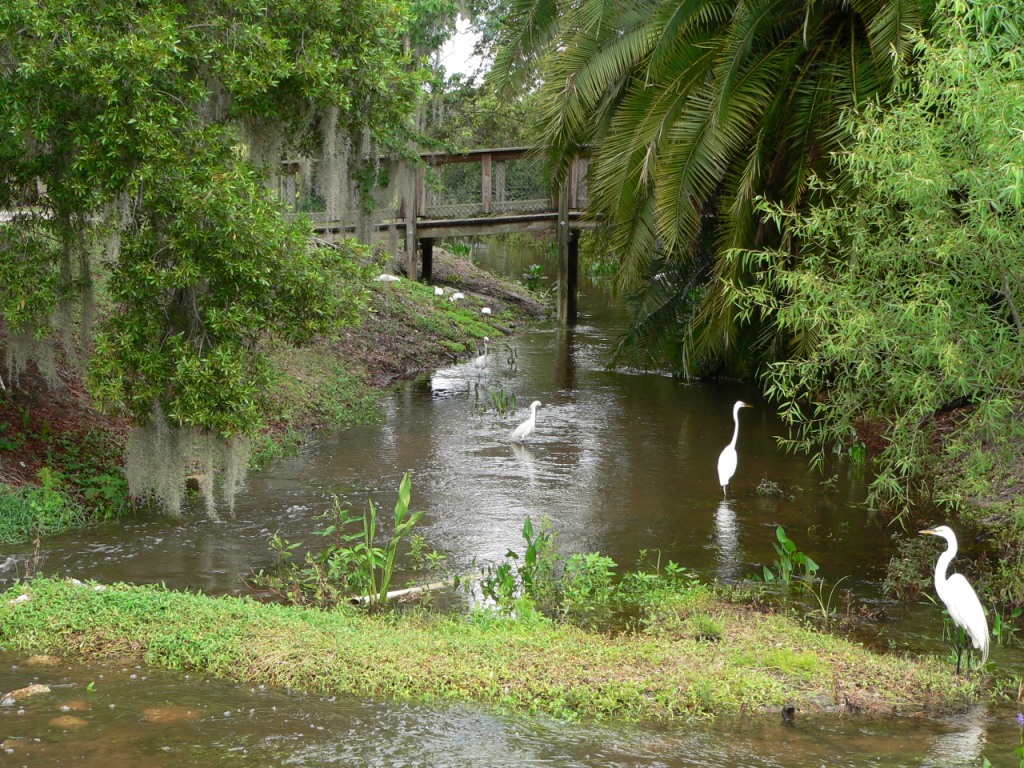
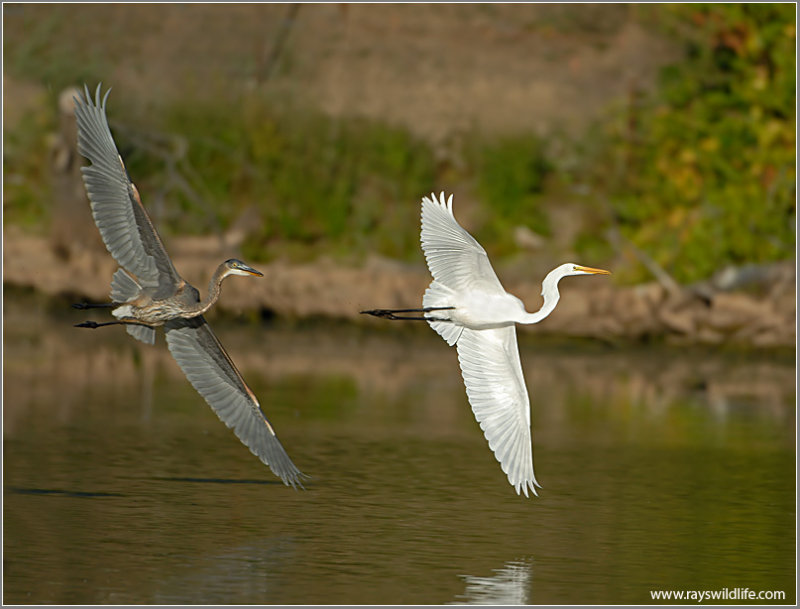
Great Blue Heron (Ardea herodias) chasing Western Great Egret (Ardea alba) by Ray

Great Blue Heron (Ardea herodias) chasing Western Great Egret (Ardea alba) by Ray

Flee As A Bird


Flee as a bird to your mountain, thou who art weary of sin;
Go to the clear flowing fountain where you may wash and be clean.
Haste, then, th’Avenger is near thee; call, and the Savior will hear thee;
He on His bosom will bear thee; O thou who art weary of sin,
O thou who art weary of sin.

He will protect thee forever, wipe every falling tear;
He will forsake thee, O never, sheltered so tenderly there.
Haste, then, the hours are flying, spend not the moments in sighing,
Cease from your sorrow and crying: The Savior will wipe every tear,
The Savior will wipe every tear.

*************

He will swallow up death forever, And the Lord GOD will wipe away tears from all faces; The rebuke of His people He will take away from all the earth; For the LORD has spoken. (Isaiah 25:8 NKJV)

for the Lamb who is in the midst of the throne will shepherd them and lead them to living fountains of waters. And God will wipe away every tear from their eyes.” (Revelation 7:17 NKJV)

And God will wipe away every tear from their eyes; there shall be no more death, nor sorrow, nor crying. There shall be no more pain, for the former things have passed away. (Revelation 21:4 NKJV)

Most information from The Cyber Hymnal

See ~ Wordless Birds

More ~ Birds in Hymns

*

Miami University Professors Essentially Admit Evolution Has Connections to Dismal Science and Math Scores

Here is an interesting article from Ken Ham at Answers in Genesis. Thought it was very interesting and worth reading. – Lee

Miami University Professors Essentially Admit Evolution Has Connections to Dismal Science and Math Scores.

Birds In Hymns – With Songs and Honors Sounding Loud

Birds In Hymns – With Songs and Honors Sounding Loud – Isaac Watts

Praise the LORD! For it is good to sing praises to our God; For it is pleasant, and praise is beautiful. (Psalms 147:1 NKJV)

Words – By Isaac Watts, The Psalms of David, 1719
Music – By Bedford, William Wheale, 1729
Alternate Tune Belfield by William Gilchrist, 1895

With Songs and Honors Sounding Loud


With songs and honors sounding loud,
Address the Lord on high;
Over the heav’ns He spreads His cloud,
And waters veil the sky.

He sends His showers of blessing down
To cheer the plains below;
He makes the grass the mountains crown,
And corn in valleys grow.

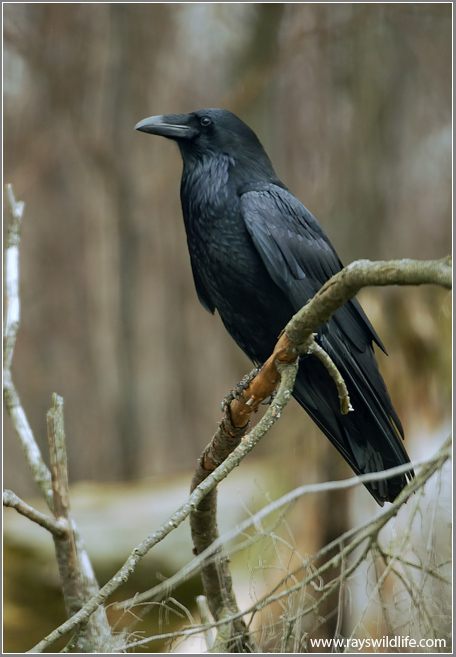
Northern Raven (Corvus corax) by Ray

Northern Raven (Corvus corax) by Ray

He gives the grazing ox his meat,
He hears the raven’s cry;
But man, who tastes His finest wheat,
Should raise His honors high.

His steady counsels change the face
Of the declining year;
He bids the sun cut short his race,
And wintry days appear.

His hoary frost, His fleecy snow,
Descend and clothe the ground;
The liquid streams forbear to flow,
In icy fetters bound.

When from the dreadful stores on high
He pours the rattling hail,
The wretch that dares this God defy
Shall find his courage fail.

He sends His Word, and melts the snow,
The fields no longer mourn;
He calls the warmer gales to blow,
And bids the spring return.

The changing wind, the flying cloud,
Obey His mighty Word:
With songs and honors sounding loud,
Praise ye the sovereign Lord.

*************

a Psalm of David. I will praise You, O LORD, with my whole heart; I will tell of all Your marvelous works. I will be glad and rejoice in You; I will sing praise to Your name, O Most High. (Psalms 9:1-2 NKJV)

Be exalted, O LORD, in Your own strength! We will sing and praise Your power. (Psalms 21:13 NKJV)

Be exalted, O LORD, in Your own strength! We will sing and praise Your power. (Psalms 21:13 NKJV)

Most information from The Cyber Hymnal

See ~ Wordless Birds

More ~ Birds in Hymns

*

Formed By Him – Music Making Birds

Do Birds Truly Make Music? (from Creation Moments)

The flowers appear on the earth; the time of singing has come, and the voice of the turtledove is heard in our land. (Song of Solomon 2:12)

The Bible speaks of bird calls as songs, as most of us do. However, evolutionary theory has led some scientists to say that we are merely assigning human meanings to the calls of birds. They say that the bird calls have nothing to do with real music.

Common Blackbird (Turdus merula) by Ian

Common Blackbird (Turdus merula) by Ian

Ornithologists have known for some time that bird songs use the same musical scales as our music. Decades ago it was noted that some of Beethoven’s work could be heard from the European blackbird. The music was the same as the opening rondo of Beethoven’s “Violin Concert in D, Opus 61.” Since these birds pass their songs from generation to generation, Beethoven could have gotten the lilting music from the forefathers of today’s European blackbird!

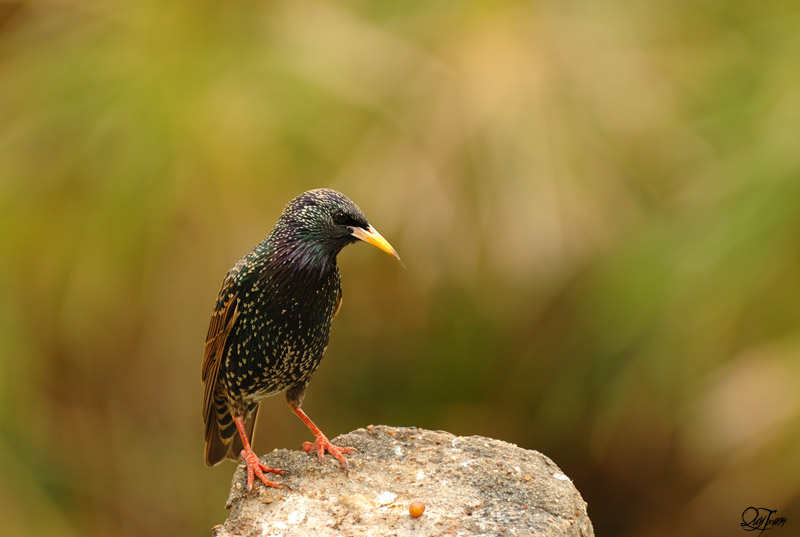
Common Starling (Sturnus vulgaris) by Quy Tran

Common Starling (Sturnus vulgaris) by Quy Tran

The songs of some species, like the song sparrow, follow the form of a sonata, beginning with a strong theme, then the theme is musically played with, and for a finish, the original theme is then repeated. Mozart had a starling as a pet. Once, having heard Mozart play his “Piano Concerto in C Major,” the starling not only imitated it, but changed the sharps to flats! Mozart exclaimed, “That was beautiful!” When the starling died, Mozart held an elaborate funeral for it. Eight days later he wrote, “A Musical Joke” which contains the same elaborate structure found in starling song.

Do birds make true music, as the Bible says? Contrary to what some evolutionists say, Beethoven and Mozart certainly thought they did.
Prayer:
Lord, I thank You for the gift of music and I await the music of heaven. Amen.
Notes:
Science News, 4/15/00, pp. 252-254, “Music without Borders.”

©2010 Creation Moments


Lee’s Addition:

From – A Musical Joke?

“Mozart was not alone in incorporating bird sounds in music. According to Baptista:

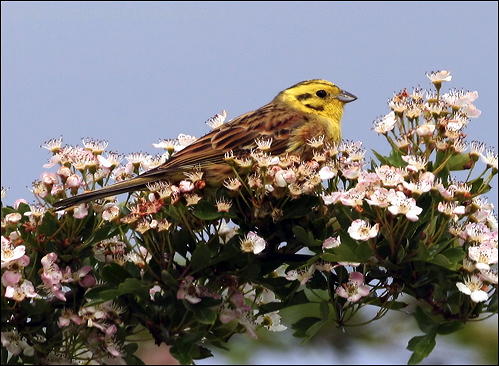
Yellowhammer (Emberiza citrinella) by Ian

Yellowhammer (Emberiza citrinella) by Ian

  • In Beethoven’s sixth symphony, the song of a Yellowhammer is followed by those of a quail, then a cuckoo.
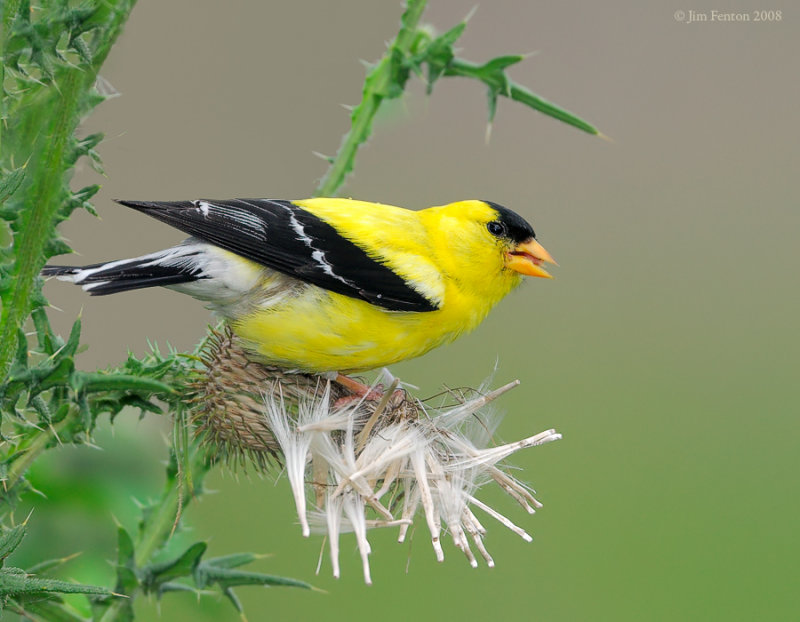
American Goldfinch (Carduelis tristis) on Thistle by Fenton

American Goldfinch (Carduelis tristis) on Thistle by Fenton

  • A Goldfinch inspired Vivaldi’s flute concerto “Il gardellino.”
  • Bela Bartok’s third piano concerto was inspired by birds in North Carolina, where Bartok was living during the composition.

Blue-eyed Cockatoo (Cacatua ophthalmica) ©Wikipedia

  • The Cuckoo, BTW, is the most popular bird in Western music, said Baptista, and even appears in a Johann Sebastian Bach fugue — in counterpoint with a chicken!
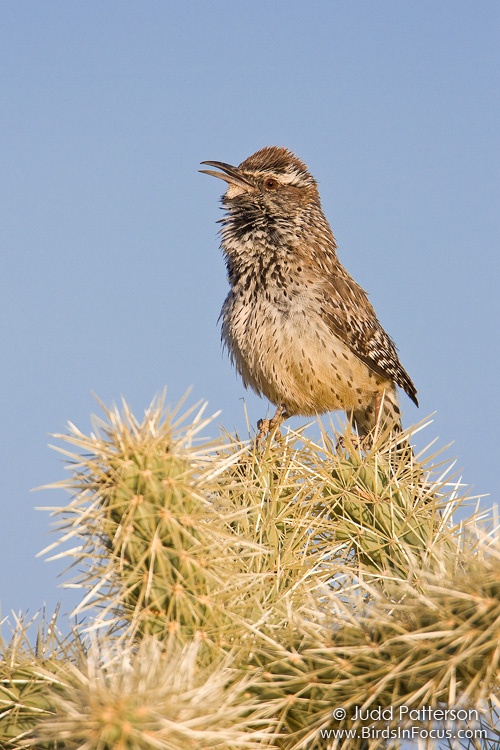
Cactus Wren (Campylorhynchus brunneicapillus) by Judd Patterson

Cactus Wren (Campylorhynchus brunneicapillus) by Judd Patterson

  • The Canyon Wren in the Ansaborego desert of California sounds so much like Chopin that you could consider it “a student of Chopin,” Baptista said.

The rest of the avian orchestra
Beyond that two-part voice box, birds also use their bodies to make sound in other ways. Some even make instruments!

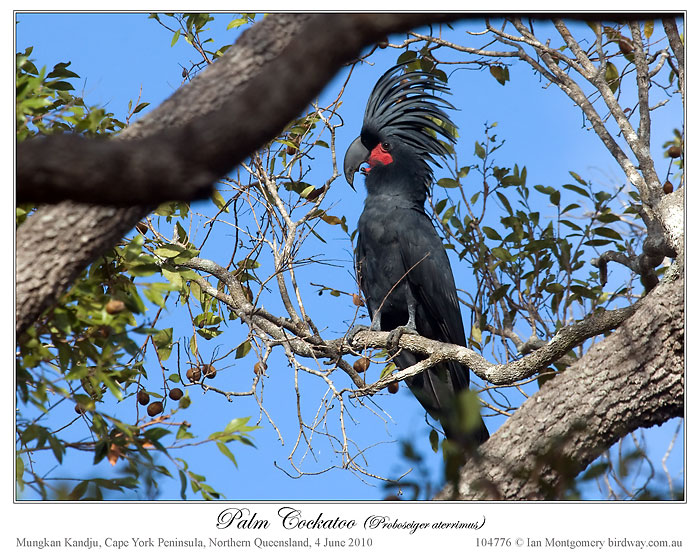
Palm Cockatoo (Probosciger aterrimus) by Ian

Palm Cockatoo (Probosciger aterrimus) by Ian Montgomery

  • While courting, the Palm Pockatoo, for example, breaks a branch, carves it into a drumstick, and bangs a hollow log as a signal to females that he’s on the prowl. Providentially, he stores the stick to use it again, said Baptista.
  • The European Snipe, on the other hand, dives to force wind through its feathers, which act as reeds.
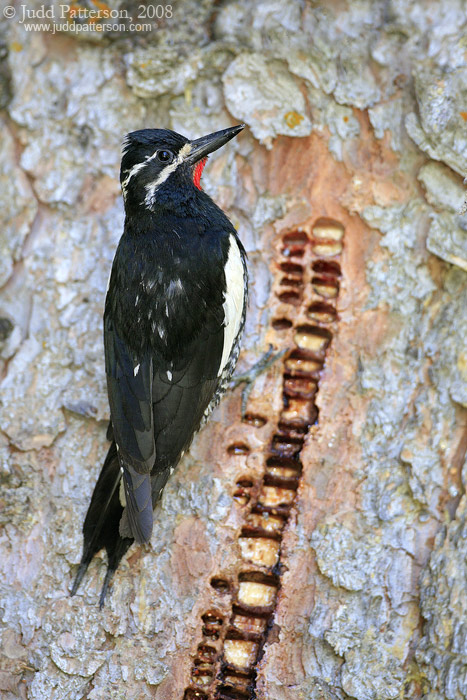
Williamson's Sapsucker (Sphyrapicus thyroideus) by Judd Patterson

Williamson’s Sapsucker (Sphyrapicus thyroideus) by Judd Patterson

  • Williamson’s Sapsucker in the Sierra Nevada drums on tree trunks in specific rhythms that vary in what Baptista called “local dialects.”

The Lord has created beautiful birds and has given each their own songs and sounds. Many have listened and learned from those sounds. As you have read above, some have turned those lessons learned into beautiful music.

But now ask the beasts, and they will teach you; And the birds of the air, and they will tell you; Or speak to the earth, and it will teach you; And the fish of the sea will explain to you. Who among all these does not know That the hand of the LORD has done this, In whose hand is the life of every living thing, And the breath of all mankind? (Job 12:7-10 NKJV)

He sends the springs into the valleys; They flow among the hills. They give drink to every beast of the field; The wild donkeys quench their thirst. By them the birds of the heavens have their home; They sing among the branches. (Psalms 104:10-12 NKJV)

Song Sparrow (Melospiza melodia) by Ray

Song Sparrow (Melospiza melodia) by Ray

The LORD is my strength and my shield; My heart trusted in Him, and I am helped; Therefore my heart greatly rejoices, And with my song I will praise Him. (Psalms 28:7 NKJV)

Oh, sing to the LORD a new song! Sing to the LORD, all the earth. Sing to the LORD, bless His name; Proclaim the good news of His salvation from day to day. Declare His glory among the nations, His wonders among all peoples. For the LORD is great and greatly to be praised; He is to be feared above all gods. (Psalms 96:1-4 NKJV)

See Also:

See Mozart ‘borrowed tunes from his versatile starling’

More Formed By Him articles

Wordless Birds

*

Formed By Him – Silver Birds

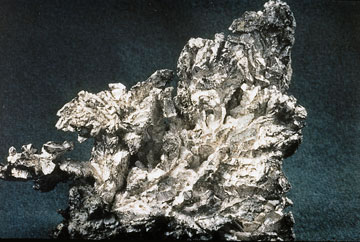
Silver ©USGOV

Silver ©USGOV

Silver is a metallic chemical element with the chemical symbol Ag (Latin: argentum, from the Indo-European root *arg- for “grey” or “shining”) and atomic number 47. A soft, white, lustrous transition metal, it has the highest electrical conductivity of any element and the highest thermal conductivity of any metal.

Silver has long been valued as a precious metal, and it is used to make ornaments, jewelry, high-value tableware, utensils (hence the term silverware), and currency coins. Today, silver metal is also used in electrical contacts and conductors, in mirrors and in catalysis of chemical reactions.

Silver, in the form of electrum (a gold-silver alloy), was coined to produce money in around 700 BC by the Lydians. Later, silver was refined and coined in its pure form. Many nations used silver as the basic unit of monetary value. In the modern world, silver bullion has the ISO currency code XAG. The name of the United Kingdom monetary unit “pound” (£) reflects the fact that it originally represented the value of one troy pound of sterling silver.

Jewelry and silverware are traditionally made from sterling silver (standard silver), an alloy of 92.5% silver with 7.5% copper. In the US, only an alloy consisting of at least 90.0% fine silver can be marketed as “silver” (thus frequently stamped 900). Sterling silver (stamped 925) is harder than pure silver, and has a lower melting point (893 °C) than either pure silver or pure copper.

We know that Adam named the animals and birds starting in Genesis and people are still naming them. Silver has been known about for centuries and it is no wonder that critters and birds have their silver color described with “silver” in their names. Checking out the latest I.O.C. list of birds (Ver 2.6) you will find 32 birds with “silver” eyes, beaks, bills, backed, breasted, capped, crowned, eared, rumped, throated, and tipped. Also found are “silvery” cheeked, flanked, fronted, and throated birds. Below is a list of the 32 “Silver Birds”, plus a slideshow of the photos of them that I could obtain.
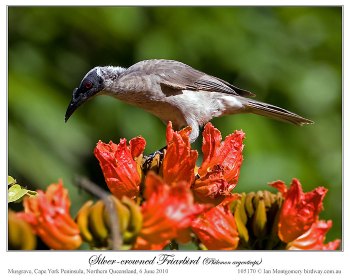
Silver-crowned Friarbird (Philemon argenticeps) by Ian

Silver-crowned Friarbird (Philemon argenticeps) by Ian

In the King James Version of the Bible, there are 282 verses that have silver mentioned 320 times. (per e-Sword). Abraham and Sarah are the first mentioned to be rich in silver and jewels of silver (Gen 23), Joseph was sold for 20 pieces of silver (Gen 37:28), and it was a silver cup that was in found in Benjamin’s bag when he had been taken to Joseph in Egypt many years later (Gen 44:2).

In Exodus, they were warned not to make gods of silver or of gold (Ex. 20:23), they used silver to make sockets and fillets for the tabernacle (Ex. 26, 27), they made cunning works in gold and silver (Ex. 31) and they were to give it with willing heart.

Take ye from among you an offering unto the LORD: whosoever is of a willing heart, let him bring it, an offering of the LORD; gold, and silver, and brass, (Exodus 35:5 KJV)

Many other articles were made of silver in the service of the LORD throughout the Bible. King Solomon had the navy bring gold, silver, ivory, apes, and peacocks to him (1 King 10:22). Even the mining of silver is mentioned in Job 28:1.

Maybe because silver is used and referred to so often that the Lord, when He Created the birds, wanted us to see Silver Birds and think of Him, His Word, His Creation, His Son, and the price of His betrayal. Verses like:

The words of the LORD are pure words: as silver tried in a furnace of earth, purified seven times. (Psalms 12:6 KJV)

The law of thy mouth is better unto me than thousands of gold and silver. (Psalms 119:72 KJV)

If thou seekest her as silver, and searchest for her as for hid treasures; Then shalt thou understand the fear of the LORD, and find the knowledge of God. (Proverbs 2:4-5 KJV)

Receive my instruction, and not silver; and knowledge rather than choice gold. For wisdom is better than rubies; and all the things that may be desired are not to be compared to it. (Proverbs 8:10-11 KJV)

Receive my instruction, and not silver; and knowledge rather than choice gold. For wisdom is better than rubies; and all the things that may be desired are not to be compared to it. (Proverbs 8:10-11 KJV)

A word fitly spoken is like apples of gold in pictures of silver. (Proverbs 25:11 KJV)

Silver-eared Leiothrix (Leiothrix argentauris) by Ian

Silver-eared Leiothrix (Leiothrix argentauris) brightly colored-by Ian

And I said unto them, If ye think good, give me my price; and if not, forbear. So they weighed for my price thirty pieces of silver. And the LORD said unto me, Cast it unto the potter: a goodly price that I was prised at of them. And I took the thirty pieces of silver, and cast them to the potter in the house of the LORD. (Zechariah 11:12-13 KJV)

Fullfilled: And said unto them, What will ye give me, and I will deliver him unto you? And they covenanted with him for thirty pieces of silver. (Matthew 26:15 KJV)
Then Judas, which had betrayed him, when he saw that he was condemned, repented himself, and brought again the thirty pieces of silver to the chief priests and elders, Saying, I have sinned in that I have betrayed the innocent blood. And they said, What is that to us? see thou to that. And he cast down the pieces of silver in the temple, and departed, and went and hanged himself. And the chief priests took the silver pieces, and said, It is not lawful for to put them into the treasury, because it is the price of blood. And they took counsel, and bought with them the potter’s field, to bury strangers in. Wherefore that field was called, The field of blood, unto this day. (Matthew 27:3-8 KJV)

Then Peter said, Silver and gold have I none; but such as I have give I thee: In the name of Jesus Christ of Nazareth rise up and walk. (Acts 3:6 KJV)

For other foundation can no man lay than that is laid, which is Jesus Christ. Now if any man build upon this foundation gold, silver, precious stones, wood, hay, stubble; (1 Corinthians 3:11-12 KJV)

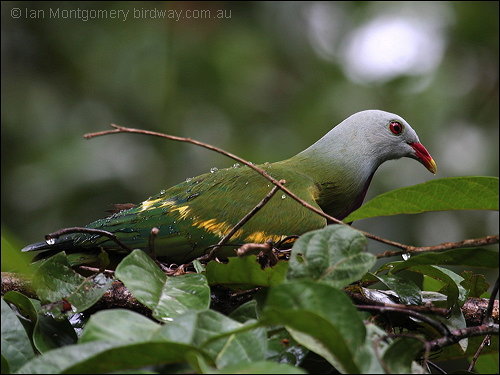
Wompoo Fruit-Dove (Ptilinopus magnificus) by Ian

Wompoo Fruit-Dove (Ptilinopus magnificus) by Ian

In Doves and Pigeon Updated this verse was mentioned: “Though ye have lien among the pots, yet shall ye be as the wings of a dove covered with silver, and her feathers with yellow gold.” (Psalms 68:13 KJV) Even though today this bird, the Wompoo Fruit-Dove, doesn’t have “Silver” in it’s name, maybe the Lord gave them their colors so we would remember the following verses and truth.

Forasmuch as ye know that ye were not redeemed with corruptible things, as silver and gold, from your vain conversation received by tradition from your fathers; But with the precious blood of Christ, as of a lamb without blemish and without spot: Who verily was foreordained before the foundation of the world, but was manifest in these last times for you, Who by him do believe in God, that raised him up from the dead, and gave him glory; that your faith and hope might be in God. (1 Peter 1:18-21 KJV)

This slideshow requires JavaScript.

Silver Gull Chroicocephalus novaehollandiae
Silver Oriole Oriolus mellianus
Silver Pheasant Lophura nycthemera
Silver Teal Anas versicolor
Silver-backed Needletail Hirundapus cochinchinensis
Silver-backed Tanager Tangara viridicollis
Silver-beaked Tanager Ramphocelus carbo
Silverbird Empidornis semipartitus
Silver-breasted Broadbill Serilophus lunatus
Silver-capped Fruit Dove Ptilinopus richardsii
Silver-crowned Friarbird Philemon argenticeps
Silver-eared Honeyeater Lichmera alboauricularis
Silver-eared Laughingthrush Trochalopteron melanostigma
Silver-eared Leiothrix Leiothrix argentauris
Silvered Antbird Sclateria naevia
Silvereye Zosterops lateralis
Silver-rumped Spinetail Rhaphidura leucopygialis
Silver-throated Bushtit Aegithalos glaucogularis
Silver-throated Tanager Tangara icterocephala
Silver-tipped Imperial Pigeon Ducula luctuosa
Silvery Grebe Podiceps occipitalis
Silvery Kingfisher Ceyx argentatus
Silvery Pigeon Columba argentina
Silvery-cheeked Antshrike Sakesphorus cristatus
Silvery-cheeked Hornbill Bycanistes brevis
Silvery-flanked Antwren Myrmotherula luctuosa
Silvery-fronted Tapaculo Scytalopus argentifrons
Silvery-throated Jay Cyanolyca argentigula
Silvery-throated Spinetail Synallaxis subpudica
African Silverbill Euodice cantans
Grey-headed Silverbill Odontospiza griseicapilla
Indian Silverbill Euodice malabarica

Best I can do for the Silver-capped Fruit Dove is a video by del Hoyo on Internet Bird Collection.

Wordless Birds

More Formed By Him Articles

*
Interesting Things – Dinosaur Blood

Dinosaur Blood by Creation Moments

Job 40:15
“Behold now behemoth, which I made with thee; he eateth grass as an ox.”

A short while ago, Creation Moments reported the case of blood cells being discovered in a fossilized T. rex bone. Today, we report on another case. While most fossil bones have lithified, or turned to stone, occasionally identifiable bones are found that are only partially lithified.

Scientists had been studying the fossilized upper leg bone of a T. rex they date at 68 million years. The study consisted of dissolving the minerals from the fossilized bone with slightly alkaline solutions. They were completely surprised, for what remained was a soft, pliable material that proved to be high in carbon. Closer study of the pliable material revealed what appeared to be a network of blood vessels. Researchers were then amazed to find that this network was very similar to the networks found in modern ostrich bones. What’s more, they found bone cells as well as red blood cells in this material. Such findings would never be expected in 68-million-year-old biological material, but the researchers could offer no other interpretation for what they saw. They are now hoping that the discovery might shed light on dinosaur physiology and metabolism.

Researchers are still puzzled at how 68-million-year-old biological material could be preserved for so long. Of course, the obvious answer is that the material is not nearly that old and that dinosaurs were even part of human history.

Prayer:
Father, I thank You for all the wonders of Your creation, including the great dinosaurs. Amen.
Notes:
Science News, 3/26/05, p. 195, S. Perkins, “Old Softy.”

To see more Interesting Things, check out the PLUS section.

Birds of the Bible – Falcon – Caracara

Northern Crested Caracara (Caracara cheriway) by Dan at Viera Wetland

Northern Crested Caracara (Caracara cheriway) by Dan at Viera Wetlands

The first Birds of the Bible – Falcons blog introduced the North American members of the Falcon – Falconidae Family. Then the next article, Birds of the Bible – Falcons II, introduced more of the 65 Falcon family members, mainly just the falcons, and provided links to videos of them.

The Caracaras are a part of the Falcon – Falconidae family and these would also be included in the references given in the Bible. The Falcons and their kind are on the “do not eat” list in Leviticus and Deuteronomy and again mentioned in Job.

And these you shall detest among the birds; they shall not be eaten; they are detestable: the eagle, the bearded vulture, the black vulture, the kite, the falcon of any kind, (Leviticus 11:13-14 ESV)

the kite, the falcon of any kind; (Deuteronomy 14:13 ESV)

That path no bird knows, Nor has the falcon’s eye seen it. (Job 28:7 NKJV)

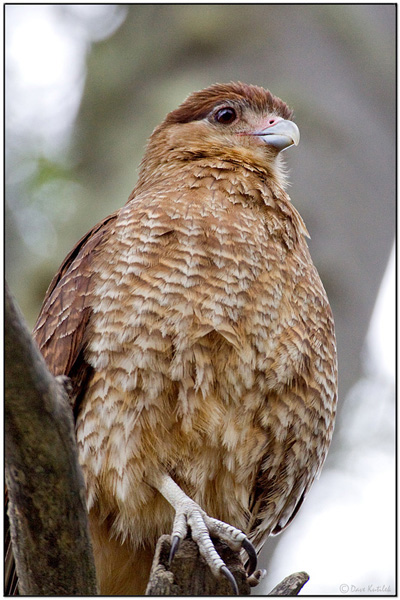
Chimango Caracara by Daves Birding Pix

Chimango Caracara by Daves Birding Pix

Caracaras, there are 10 of them, are also included  in the birds of prey category. We saw our first Northern Crested Caracara along the interstate in Texas, not far from the well-known King Ranch. The Northern Crested Caracara is 23 inches long and has a 50 inch wingspan. The wings are broad and it has a long tail. They have long necks and long legs. They spend much of their time perched or walking on the ground, but can run swiftly. They hang out with vultures at carcasses and many times steal their food.

Male and females are similar. We have these here in central Florida. They are seen on the ground or perching on fence posts and tops of trees. Often seen walking along roadsides. Scratches like chicken for insects. The AOU split this species in July, 2000 from the South American species, Caracara plancus.

The Caracaras are:

Black Caracara (Daptrius ater) – S. America
Red-throated Caracara (Ibycter americanus) – C. & S. America
Carunculated Caracara (Phalcoboenus carunculatus) – Ecuador & Colombia
Mountain Caracara (Phalcoboenus megalopterus) ©WikiC – S. America
White-throated Caracara (Phalcoboenus albogularis) – S. America
Striated Caracara (Phalcoboenus australis) – S. America
Northern Crested Caracara (Caracara cheriway) by Dan – N. America
Southern Crested Caracara (Caracara plancus) – S. America
Yellow-headed Caracara (Milvago chimachima) – C. & S. America
Chimango Caracara (Milvago chimango) – S. America

***

As you can see above, they are only in the Western Hemisphere

***

Some information from Thayer Birding Software

Falcon Page

Caracara – Wikipedia

Gospel Message

*

Raining Red-winged Blackbirds

Red-winged Blackbird at Bok Sanctuary

Red-winged Blackbird at Bok Sanctuary

Many have heard the news today about the many (4,000-5,000 at last count) Red-winged Blackbirds that they found in Arkansas. They fell from the sky on New Year’s Eve.

“The Arkansas Game and Fish Commission spokesman Keith Stephens says the birds fell in an area about a mile long and a half-mile wide (1 1/2 kilometers long and 800 meters wide). The Commission said Saturday that it began receiving reports about the dead birds about 11:30 p.m. the previous night.

The birds fell over a 1-mile (2-kilometer) area, and an aerial survey indicated that no other dead birds were found outside of that area. Laboratories in Arkansas, Georgia and Wisconsin will examine some carcasses starting Monday.” (Foxnews.com)

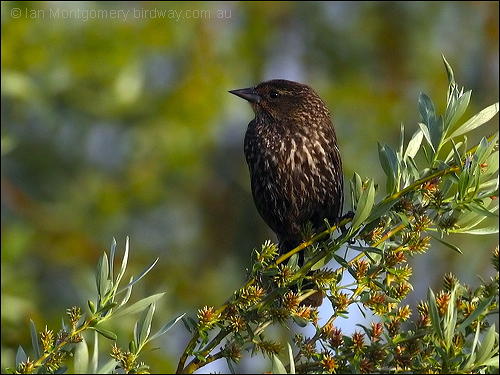
Red-winged Blackbird (Agelaius phoeniceus) female by Ian

Red-winged Blackbird (Agelaius phoeniceus) female by Ian

The ornithologists are debating whether it was lightning or hail that hit the flock. At this time of the year they are in migration or gathered in flocks. I know here in Central Florida, the Red-winged Blackbirds have just begun coming back to my feeders after their summer in the north.

It is very sad and seems quite devastating to think about. I really enjoy watching them and especially have been challenged by trying to identify the female red-wing. One thing is for certain:

Are not two sparrows sold for a farthing? and one of them shall not fall on the ground without your Father. But the very hairs of your head are all numbered. Fear ye not therefore, ye are of more value than many sparrows. (Matthew 10:29-31 KJV)

I know they were not sparrows, but those verses apply to all the birds.

Red-winged Blackbirds (Agelaius phoeniceus) are in the Icteridae Family which includes Oropendolas, Orioles and Blackbirds. There are 108 members and they are perching birds (Passeriformes Order)

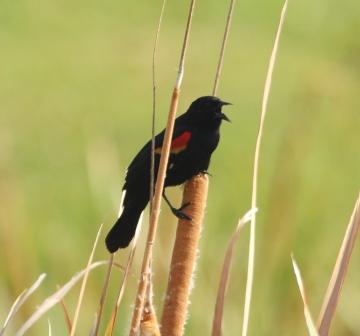
Red-winged Blackbird (Agelaius phoeniceus) by Ray

Red-winged Blackbird (Agelaius phoeniceus) by Ray

The male Red-winged Blackbird has a red shoulder patch bordered by yellow or white and has black plumage. The female is brownish overall with heavy streaked underparts. The juveniles are similar to the female. They have sharply-pointed bills. They are about 8.75 inches (22 cm) long.

As I thought about them today, I imagined their summer up north with having the young and flying here and there gathering worms and insects to feed them. Then watched their young learn to fly and grow. Now, they may have been migrating down here to enjoy the winter. The Creator of them knew all about that and also knew this was going to happen.

Sad, yes, but what about us? Do we get busy with all of our activities, but forget that our lives are also in the Hands of the Creator, the Lord Jesus Christ?

Come now, you who say, “Today or tomorrow we will go to such and such a city, spend a year there, buy and sell, and make a profit”; whereas you do not know what will happen tomorrow. For what is your life? It is even a vapor that appears for a little time and then vanishes away. Instead you ought to say, “If the Lord wills, we shall live and do this or that.” (James 4:13-15 NKJV)

Quoted in yesterday’s sermon at Faith Baptist ~ “It is curious that people who are filled with horrified indignation whenever a cat kills a sparrow can hear that story of the killing of God told Sunday after Sunday and not experience any shock at all.” –Dorothy Sayers

*

2010 in review

The stats helper monkeys at WordPress.com mulled over how this blog did in 2010, and here’s a high level summary of its overall blog health:

Healthy blog!

The Blog-Health-o-Meter™ reads Wow.

Crunchy numbers

Featured image

The Louvre Museum has 8.5 million visitors per year. This blog was viewed about 130,000 times in 2010. If it were an exhibit at The Louvre Museum, it would take 6 days for that many people to see it.

In 2010, there were 357 new posts, growing the total archive of this blog to 787 posts.

The busiest day of the year was September 28th with 617 views. The most popular post that day was South Lake Howard Nature Park.

Where did they come from?

The top referring sites in 2010 were wiki.answers.com, birdsofthebible.wordpress.com, search.aol.com, mail.yahoo.com, and facebook.com.

Some visitors came searching, mostly for nature, elephant ear plant, dragonfly, parrot, and nature pictures.

Attractions in 2010

These are the posts and pages that got the most views in 2010.

1

South Lake Howard Nature Park July 2008

2 comments

2

When I Consider! – Elephant Ears and Scarab Beetles September 2009

1 comment

3

Interesting Things – Dragonflies January 2009

2 comments

4

Birds of the Bible July 2008

0 comments

5

Life List of All Birds We Have Seen March 2009

0 comments


This was produced by WordPress.Com and used with my permission. WordPress is a great place to have a blog. They have treated me very well and they work hard to keep their system running.

Thanks again to the Lord for His blessings on this blog. Thanks to all of you for stopping by to view this blog.

Happy New Year – First Bird for 2011?

Mourning Dove by Reinier Munguia

"And I said, Oh that I had wings like a dove! for then would I fly away, and be at rest." (Psalms 55:6 KJV) Mourning Dove by Reinier Munguia

Then said he unto them, Therefore every scribe which is instructed unto the kingdom of heaven is like unto a man that is an householder, which bringeth forth out of his treasure things new and old. (Matthew 13:52 KJV)

Happy 2011 to all of you. As we start the New Year, lets keep the old things which were good and look forward to finding and doing new things. Like improving our walk with the Lord, but maintaining the good habits of Bible Study and serving the Lord. Also, improving our knowledge about God’s Creative Hand and not forgetting the things already learned. (At this stage of my life, that is becoming a challenge :o) ) Two of my goals for this year is to continue to improve this blog and most of all to serve my Lord better than before.

Turkey Vulture at Circle B by Lee

Turkey Vulture at Circle B 2010 by Lee

There is a path which no fowl knoweth, and which the vulture’s eye hath not seen: (Job 28:7 KJV)

When I got up this morning I started watching my bird feeder outside the bedroom window to see what the first bird of 2011 would be. Two Mourning Doves and then a Eurasian Collared Dove landed right behind them. Looks like the Doves have it for me. We then drove to Bartow, FL, 7 miles away, and started my birdwatching list for the year.

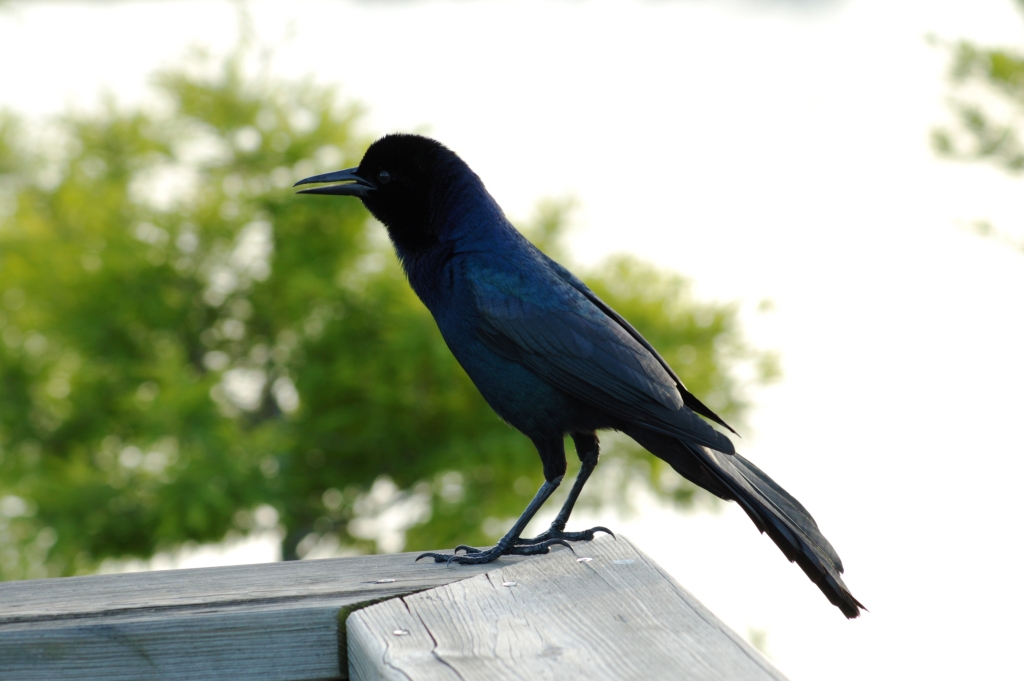
Boat-tailed Grackle at S. Lk Howard 2008 by Lee

Boat-tailed Grackle at S. Lk Howard 2008 by Lee

I think most of the birds either had a party or were sleeping in after all the fireworks and racket kept them awake during the night. We only spotted another Mourning Dove, a Boat-tailed Grackle and 2 Black Vultures on the way to town. On the way back, they had started waking up. We saw lots of Cattle Egrets, a Great Egret, a Mockingbird, two unknown Hawks and 300-400 Turkey and Black Vultures heading in a SE direction.

Would love to hear what your first birds of the new year are. How about leaving a comment and telling us about your first birds of 2011. Waiting to hear, Lee

Click Here to leave a comment if the Comment section is not showing.

*

Thank You – 200,000

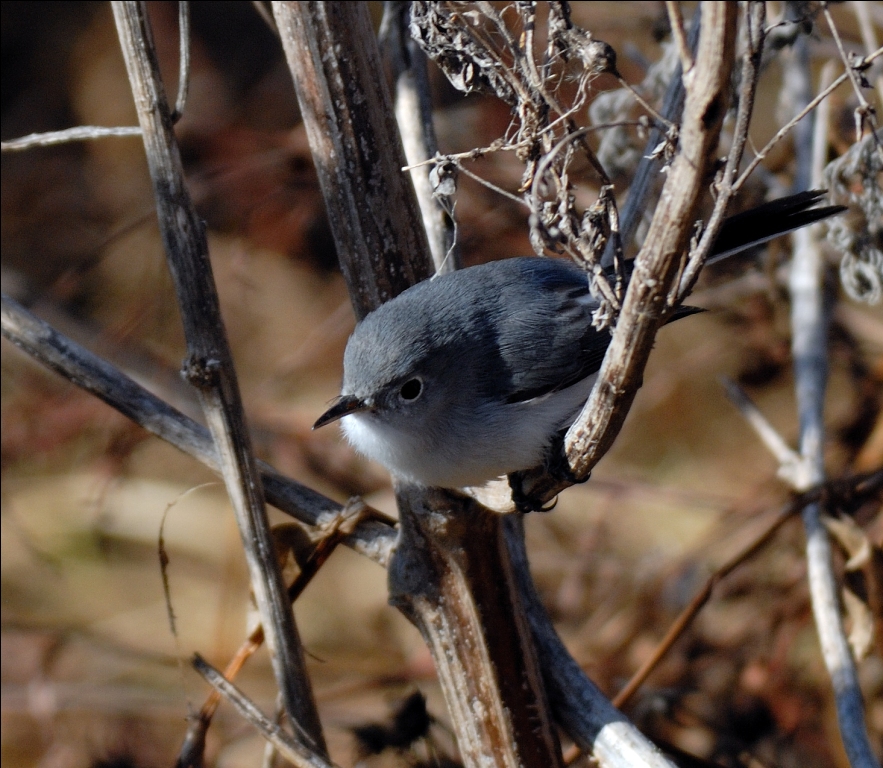
Blue-gray Gnatcatcher by Dan at Circle B Bar Reserve

Blue-gray Gnatcatcher by Dan at Circle B Bar Reserve

During the wee hours this morning, the pages visited counter passed the 200,000 mark. I want thank all of our readers who have come to this blog. Hopefully you have found the information you have sought and maybe even found other articles of interest.

The count was started when the blog was moved here to WordPress in July of 2008. Lee’s Birdwatching Adventures was about 6 months old at that time. That 6 month count is unknown. We are not in this for the counts, but it does let us know that our blog is being found and read.

For by him were all things created, that are in heaven, and that are in earth, visible and invisible, whether they be thrones, or dominions, or principalities, or powers: all things were created by him, and for him: (Colossians 1:16 KJV)

As 2011 approaches in two days, our goal is to continue producing interesting articles about birds and critters that honor the Lord’s Creative Hand. Trust you have enjoyed the many birds that we have already introduced.

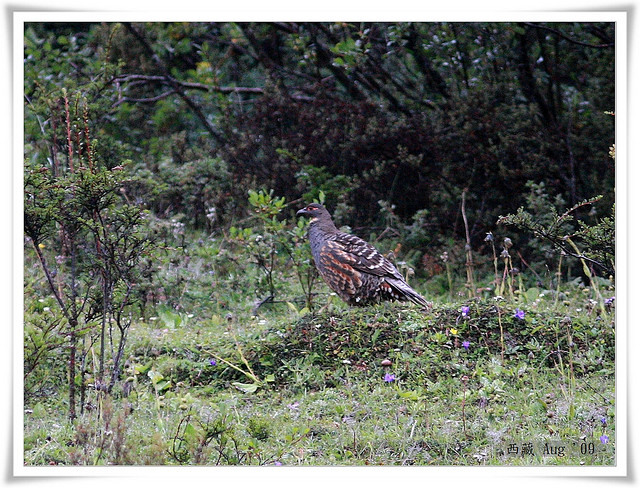
Szechenyi's Monal-Partridge (Tetraophasis szechenyii) ©Ross-Flickr

Szechenyi's Monal-Partridge (200th Bird in IOC List) ©Ross-Flickr

My personal thanks to Ian Montgomery, a j mithra, April Lorier and other writers who contribute to the blog. To all our many photographers and videographers who have given permission to use their superb photos, thank you. To Dan, my husband, photographer, birdwatching partner, etc., thanks for putting up with the many hours I spend on the computer to produce this. My most thanks goes to the Lord who created all the birds and the rest of our world, saved my soul and has given me a chance to honor Him through this blog.

Thou art worthy, O Lord, to receive glory and honour and power: for thou hast created all things, and for thy pleasure they are and were created. (Revelation 4:11 KJV)

*

Formed By Him – Dodo Bird

Dodo (Raphus cucullatus) Extinct by Wikipedia

Dodo (Raphus cucullatus) Extinct by Wikipedia

Which doeth great things past finding out; yea, and wonders without number. (Job 9:10 KJV)

“When Portuguese and early Dutch colonists began to inhabit the small tropical island of Mauritius in the Indian Ocean, from the early 1500s onwards, they found the island to be the home of a very unusual bird. This bird was as large as a turkey, of ungainly build, with short curly tail feathers and tiny wings. It had a strong black beak with a horny hook at the end. It was so unafraid of man that the Portuguese named it doudo, meaning ‘simpleton’, because it was so trusting they were easily able to hit it on the head and kill it for food. Hence the English name dodo.

Drawings of a dodo from the Journal of VOC ship Gelderland 1601-1603

Drawings of a dodo from the Journal of VOC ship Gelderland 1601-1603

Dodos were slaughtered in large numbers by sailors and settlers, and pigs which were introduced to the island voraciously ate the dodo eggs. The last dodo was killed in 1681—less than 180 years after it was first described.” (Creation 14(1):21 Dec, 1991, by Robert Doolan)

The Dodo was considered stupid or dull-witted because it would let the sailors and travelers walk up to it and club it. The bird had had no natural enemies and so was not afraid. They lived and nested on the ground. When it became extinct, they said it was the way of evolution (survival of fittest), but it has later shown that it was by the direct intervention of man and his introduced dogs and pigs. The bird was not a “dodo” but was a Dodo, a very useful bird. (A play on words) The bird was in the pigeon family they decided and would have placed them in the Columbiformes Order and in the Columbidae Family.

Nicobar Pigeon at Lowry Park Zoo by Dan

Nicobar Pigeon at Lowry Park Zoo by Dan

The Nicobar Pigeon is the only living member of the genus Caloenas. Based on cladistic analysis of mtDNA cytochrome b and 12S rRNA sequences, the Nicobar Pigeon is sometimes called the closest living relative of the extinct didines (Raphinae), which include the famous Dodo (Raphus cucullatus). Other pigeons in the Caloenas that were also hunted to extinction include the Kanaka Pigeon and the Liverpool Pigeon.

“Also on Mauritius at the time was a tree known as Calvaria major (Today know as the Tambalacoque (Sideroxylon grandiflorum) or Dodo Tree). At that time it was quite common on the island, but by the 1970s only 13 of these Calvaria trees were left. All 13 were more than 300 years old, and though they produced healthy looking seeds each year, none ever managed to germinate. The trees had puzzled botanists for centuries, for their numbers had strangely begun to decline and no new trees were taking root. Calvaria major seemed destined to go the way of the dodo, but the tree was dying out for no perceptible reason.

Tambalacoque or Calvaria Major Tree

Tambalacoque or Calvaria major Tree©

While studying the ecology of Mauritius in the mid-1970s, American ecologist Stanley Temple came up with an ingenious connection between the decline of the Calvaria major trees and the disappearance of the dodo. After considering many factors, Temple concluded that the tree’s large fruit had in times past been eaten by the dodo. The tree’s seeds are encased in a thick-walled protective coat, but the dodo’s stone-filled gizzard was able to exert a powerful crushing pressure on them. The bird’s gizzard (a second stomach for grinding food) would pound away at the seed’s coat, weakening it and cracking it a little, but not enough to damage the seed inside. When eventually deposited by the dodo, the seed was able to germinate.

Without the grinding of the dodo’s gizzard to weaken the thick protective wall, the seed was trapped inside its hard case. When the dodo became extinct just over 300 years ago, Calvaria major’s seeds had no way of germinating. So no new trees grew.
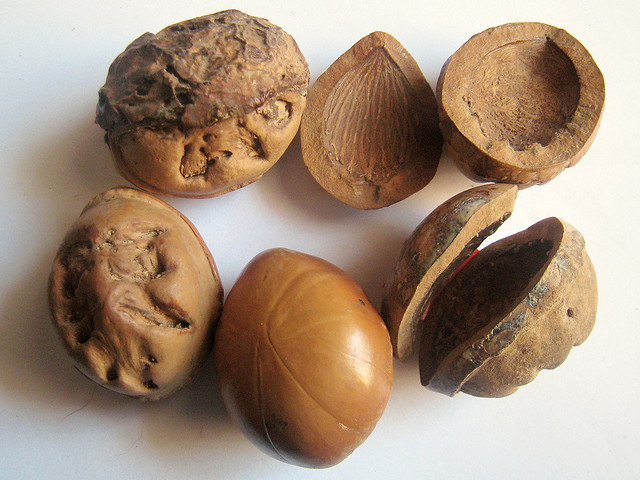
Tambalacoque (Calvaria Major) Seeds©©

Tambalacoque (Calvaria Major) Seeds©©

The dodo’s relationship with the Calvaria major is just one fascinating example of the wonderful balance between animals and plants in God’s creation.” (Creation 14(1):21 Dec, 1991, by Robert Doolan)

Today they have used Turkeys, which have a digestive system like the Dodo’s, to eat and help break up the the Calvaria major seeds which helps it to germinate. They have even used Gemstone Polishers to help break up the very hard shelled seeds. The result was quite convincing since many seeds germinated.

“If this theory of symbiosis between the tree and the dodo is nowadays contested, it is nevertheless widely discussed because it helps to understand how species are related, and the role played by humans in maintaining this balance.”

O the depth of the riches both of the wisdom and knowledge of God! how unsearchable are his judgments, and his ways past finding out! (Romans 11:33 KJV)

Our Creator God has so many more of these displays of His Glory in the things that have been “Formed by Him.”

(Various sources from the internet)

See Also:

Formed by Him Series

Dodo Bird – Not A Failure
Calvaria Tree
Dodo – Wikipedia

*