Raining Red-winged Blackbirds

Red-winged Blackbird at Bok Sanctuary

Red-winged Blackbird at Bok Sanctuary

Many have heard the news today about the many (4,000-5,000 at last count) Red-winged Blackbirds that they found in Arkansas. They fell from the sky on New Year’s Eve.

“The Arkansas Game and Fish Commission spokesman Keith Stephens says the birds fell in an area about a mile long and a half-mile wide (1 1/2 kilometers long and 800 meters wide). The Commission said Saturday that it began receiving reports about the dead birds about 11:30 p.m. the previous night.

The birds fell over a 1-mile (2-kilometer) area, and an aerial survey indicated that no other dead birds were found outside of that area. Laboratories in Arkansas, Georgia and Wisconsin will examine some carcasses starting Monday.” (Foxnews.com)
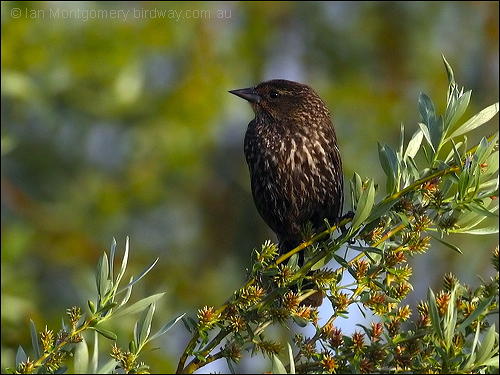
Red-winged Blackbird (Agelaius phoeniceus) female by Ian

Red-winged Blackbird (Agelaius phoeniceus) female by Ian

The ornithologists are debating whether it was lightning or hail that hit the flock. At this time of the year they are in migration or gathered in flocks. I know here in Central Florida, the Red-winged Blackbirds have just begun coming back to my feeders after their summer in the north.

It is very sad and seems quite devastating to think about. I really enjoy watching them and especially have been challenged by trying to identify the female red-wing. One thing is for certain:

Are not two sparrows sold for a farthing? and one of them shall not fall on the ground without your Father. But the very hairs of your head are all numbered. Fear ye not therefore, ye are of more value than many sparrows. (Matthew 10:29-31 KJV)

I know they were not sparrows, but those verses apply to all the birds.

Red-winged Blackbirds (Agelaius phoeniceus) are in the Icteridae Family which includes Oropendolas, Orioles and Blackbirds. There are 108 members and they are perching birds (Passeriformes Order)

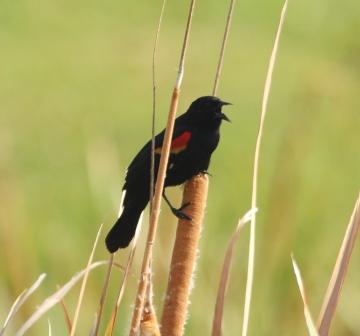
Red-winged Blackbird (Agelaius phoeniceus) by Ray

Red-winged Blackbird (Agelaius phoeniceus) by Ray

The male Red-winged Blackbird has a red shoulder patch bordered by yellow or white and has black plumage. The female is brownish overall with heavy streaked underparts. The juveniles are similar to the female. They have sharply-pointed bills. They are about 8.75 inches (22 cm) long.

As I thought about them today, I imagined their summer up north with having the young and flying here and there gathering worms and insects to feed them. Then watched their young learn to fly and grow. Now, they may have been migrating down here to enjoy the winter. The Creator of them knew all about that and also knew this was going to happen.

Sad, yes, but what about us? Do we get busy with all of our activities, but forget that our lives are also in the Hands of the Creator, the Lord Jesus Christ?

Come now, you who say, “Today or tomorrow we will go to such and such a city, spend a year there, buy and sell, and make a profit”; whereas you do not know what will happen tomorrow. For what is your life? It is even a vapor that appears for a little time and then vanishes away. Instead you ought to say, “If the Lord wills, we shall live and do this or that.” (James 4:13-15 NKJV)

Quoted in yesterday’s sermon at Faith Baptist ~ “It is curious that people who are filled with horrified indignation whenever a cat kills a sparrow can hear that story of the killing of God told Sunday after Sunday and not experience any shock at all.” –Dorothy Sayers

*

2010 in review

The stats helper monkeys at WordPress.com mulled over how this blog did in 2010, and here’s a high level summary of its overall blog health:

Healthy blog!

The Blog-Health-o-Meter™ reads Wow.

Crunchy numbers

Featured image

The Louvre Museum has 8.5 million visitors per year. This blog was viewed about 130,000 times in 2010. If it were an exhibit at The Louvre Museum, it would take 6 days for that many people to see it.

In 2010, there were 357 new posts, growing the total archive of this blog to 787 posts.

The busiest day of the year was September 28th with 617 views. The most popular post that day was South Lake Howard Nature Park.

Where did they come from?

The top referring sites in 2010 were wiki.answers.com, birdsofthebible.wordpress.com, search.aol.com, mail.yahoo.com, and facebook.com.

Some visitors came searching, mostly for nature, elephant ear plant, dragonfly, parrot, and nature pictures.

Attractions in 2010

These are the posts and pages that got the most views in 2010.

1

South Lake Howard Nature Park July 2008

2 comments

2

When I Consider! – Elephant Ears and Scarab Beetles September 2009

1 comment

3

Interesting Things – Dragonflies January 2009

2 comments

4

Birds of the Bible July 2008

0 comments

5

Life List of All Birds We Have Seen March 2009

0 comments


This was produced by WordPress.Com and used with my permission. WordPress is a great place to have a blog. They have treated me very well and they work hard to keep their system running.

Thanks again to the Lord for His blessings on this blog. Thanks to all of you for stopping by to view this blog.

Happy New Year – First Bird for 2011?

Mourning Dove by Reinier Munguia

"And I said, Oh that I had wings like a dove! for then would I fly away, and be at rest." (Psalms 55:6 KJV) Mourning Dove by Reinier Munguia

Then said he unto them, Therefore every scribe which is instructed unto the kingdom of heaven is like unto a man that is an householder, which bringeth forth out of his treasure things new and old. (Matthew 13:52 KJV)

Happy 2011 to all of you. As we start the New Year, lets keep the old things which were good and look forward to finding and doing new things. Like improving our walk with the Lord, but maintaining the good habits of Bible Study and serving the Lord. Also, improving our knowledge about God’s Creative Hand and not forgetting the things already learned. (At this stage of my life, that is becoming a challenge :o) ) Two of my goals for this year is to continue to improve this blog and most of all to serve my Lord better than before.

Turkey Vulture at Circle B by Lee

Turkey Vulture at Circle B 2010 by Lee

There is a path which no fowl knoweth, and which the vulture’s eye hath not seen: (Job 28:7 KJV)

When I got up this morning I started watching my bird feeder outside the bedroom window to see what the first bird of 2011 would be. Two Mourning Doves and then a Eurasian Collared Dove landed right behind them. Looks like the Doves have it for me. We then drove to Bartow, FL, 7 miles away, and started my birdwatching list for the year.

Boat-tailed Grackle at S. Lk Howard 2008 by Lee

Boat-tailed Grackle at S. Lk Howard 2008 by Lee

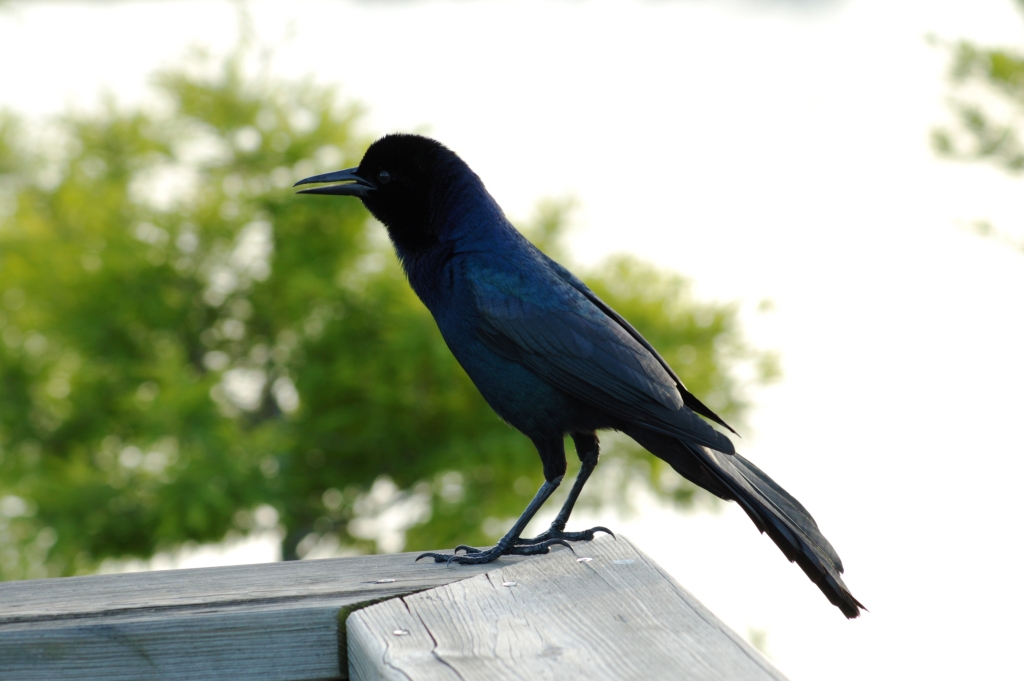
I think most of the birds either had a party or were sleeping in after all the fireworks and racket kept them awake during the night. We only spotted another Mourning Dove, a Boat-tailed Grackle and 2 Black Vultures on the way to town. On the way back, they had started waking up. We saw lots of Cattle Egrets, a Great Egret, a Mockingbird, two unknown Hawks and 300-400 Turkey and Black Vultures heading in a SE direction.

Would love to hear what your first birds of the new year are. How about leaving a comment and telling us about your first birds of 2011. Waiting to hear, Lee

Click Here to leave a comment if the Comment section is not showing.

*

Thank You – 200,000

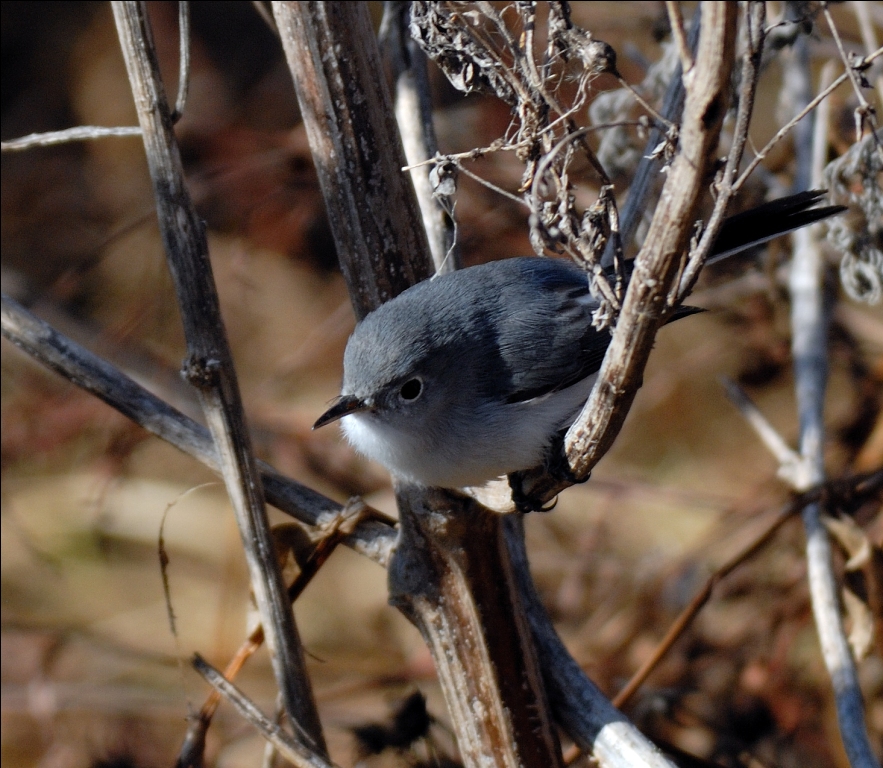
Blue-gray Gnatcatcher by Dan at Circle B Bar Reserve

Blue-gray Gnatcatcher by Dan at Circle B Bar Reserve

During the wee hours this morning, the pages visited counter passed the 200,000 mark. I want thank all of our readers who have come to this blog. Hopefully you have found the information you have sought and maybe even found other articles of interest.

The count was started when the blog was moved here to WordPress in July of 2008. Lee’s Birdwatching Adventures was about 6 months old at that time. That 6 month count is unknown. We are not in this for the counts, but it does let us know that our blog is being found and read.

For by him were all things created, that are in heaven, and that are in earth, visible and invisible, whether they be thrones, or dominions, or principalities, or powers: all things were created by him, and for him: (Colossians 1:16 KJV)

As 2011 approaches in two days, our goal is to continue producing interesting articles about birds and critters that honor the Lord’s Creative Hand. Trust you have enjoyed the many birds that we have already introduced.

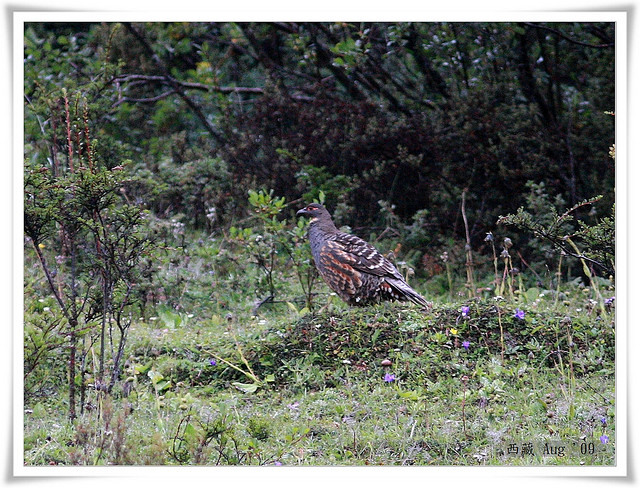
Szechenyi's Monal-Partridge (Tetraophasis szechenyii) ©Ross-Flickr

Szechenyi's Monal-Partridge (200th Bird in IOC List) ©Ross-Flickr

My personal thanks to Ian Montgomery, a j mithra, April Lorier and other writers who contribute to the blog. To all our many photographers and videographers who have given permission to use their superb photos, thank you. To Dan, my husband, photographer, birdwatching partner, etc., thanks for putting up with the many hours I spend on the computer to produce this. My most thanks goes to the Lord who created all the birds and the rest of our world, saved my soul and has given me a chance to honor Him through this blog.

Thou art worthy, O Lord, to receive glory and honour and power: for thou hast created all things, and for thy pleasure they are and were created. (Revelation 4:11 KJV)

*

Formed By Him – Dodo Bird

Dodo (Raphus cucullatus) Extinct by Wikipedia

Dodo (Raphus cucullatus) Extinct by Wikipedia

Which doeth great things past finding out; yea, and wonders without number. (Job 9:10 KJV)

“When Portuguese and early Dutch colonists began to inhabit the small tropical island of Mauritius in the Indian Ocean, from the early 1500s onwards, they found the island to be the home of a very unusual bird. This bird was as large as a turkey, of ungainly build, with short curly tail feathers and tiny wings. It had a strong black beak with a horny hook at the end. It was so unafraid of man that the Portuguese named it doudo, meaning ‘simpleton’, because it was so trusting they were easily able to hit it on the head and kill it for food. Hence the English name dodo.

Drawings of a dodo from the Journal of VOC ship Gelderland 1601-1603

Drawings of a dodo from the Journal of VOC ship Gelderland 1601-1603

Dodos were slaughtered in large numbers by sailors and settlers, and pigs which were introduced to the island voraciously ate the dodo eggs. The last dodo was killed in 1681—less than 180 years after it was first described.” (Creation 14(1):21 Dec, 1991, by Robert Doolan)

The Dodo was considered stupid or dull-witted because it would let the sailors and travelers walk up to it and club it. The bird had had no natural enemies and so was not afraid. They lived and nested on the ground. When it became extinct, they said it was the way of evolution (survival of fittest), but it has later shown that it was by the direct intervention of man and his introduced dogs and pigs. The bird was not a “dodo” but was a Dodo, a very useful bird. (A play on words) The bird was in the pigeon family they decided and would have placed them in the Columbiformes Order and in the Columbidae Family.

Nicobar Pigeon at Lowry Park Zoo by Dan

Nicobar Pigeon at Lowry Park Zoo by Dan

The Nicobar Pigeon is the only living member of the genus Caloenas. Based on cladistic analysis of mtDNA cytochrome b and 12S rRNA sequences, the Nicobar Pigeon is sometimes called the closest living relative of the extinct didines (Raphinae), which include the famous Dodo (Raphus cucullatus). Other pigeons in the Caloenas that were also hunted to extinction include the Kanaka Pigeon and the Liverpool Pigeon.

“Also on Mauritius at the time was a tree known as Calvaria major (Today know as the Tambalacoque (Sideroxylon grandiflorum) or Dodo Tree). At that time it was quite common on the island, but by the 1970s only 13 of these Calvaria trees were left. All 13 were more than 300 years old, and though they produced healthy looking seeds each year, none ever managed to germinate. The trees had puzzled botanists for centuries, for their numbers had strangely begun to decline and no new trees were taking root. Calvaria major seemed destined to go the way of the dodo, but the tree was dying out for no perceptible reason.

Tambalacoque or Calvaria Major Tree

Tambalacoque or Calvaria major Tree©

While studying the ecology of Mauritius in the mid-1970s, American ecologist Stanley Temple came up with an ingenious connection between the decline of the Calvaria major trees and the disappearance of the dodo. After considering many factors, Temple concluded that the tree’s large fruit had in times past been eaten by the dodo. The tree’s seeds are encased in a thick-walled protective coat, but the dodo’s stone-filled gizzard was able to exert a powerful crushing pressure on them. The bird’s gizzard (a second stomach for grinding food) would pound away at the seed’s coat, weakening it and cracking it a little, but not enough to damage the seed inside. When eventually deposited by the dodo, the seed was able to germinate.

Without the grinding of the dodo’s gizzard to weaken the thick protective wall, the seed was trapped inside its hard case. When the dodo became extinct just over 300 years ago, Calvaria major’s seeds had no way of germinating. So no new trees grew.
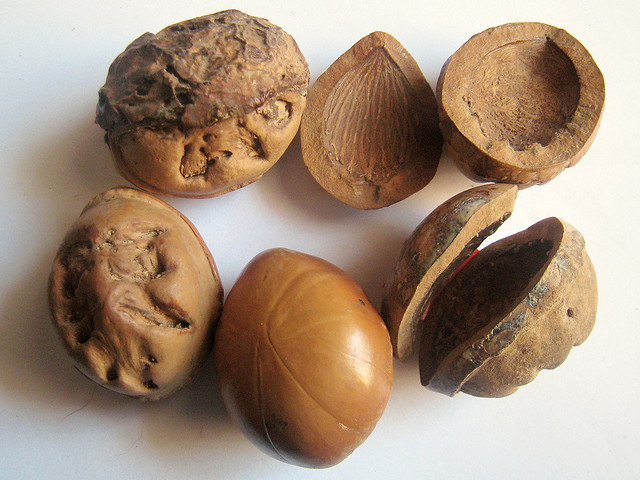
Tambalacoque (Calvaria Major) Seeds©©

Tambalacoque (Calvaria Major) Seeds©©

The dodo’s relationship with the Calvaria major is just one fascinating example of the wonderful balance between animals and plants in God’s creation.” (Creation 14(1):21 Dec, 1991, by Robert Doolan)

Today they have used Turkeys, which have a digestive system like the Dodo’s, to eat and help break up the the Calvaria major seeds which helps it to germinate. They have even used Gemstone Polishers to help break up the very hard shelled seeds. The result was quite convincing since many seeds germinated.

“If this theory of symbiosis between the tree and the dodo is nowadays contested, it is nevertheless widely discussed because it helps to understand how species are related, and the role played by humans in maintaining this balance.”

O the depth of the riches both of the wisdom and knowledge of God! how unsearchable are his judgments, and his ways past finding out! (Romans 11:33 KJV)

Our Creator God has so many more of these displays of His Glory in the things that have been “Formed by Him.”

(Various sources from the internet)

See Also:

Formed by Him Series

Dodo Bird – Not A Failure
Calvaria Tree
Dodo – Wikipedia

*

Formed by Him – Oxpeckers

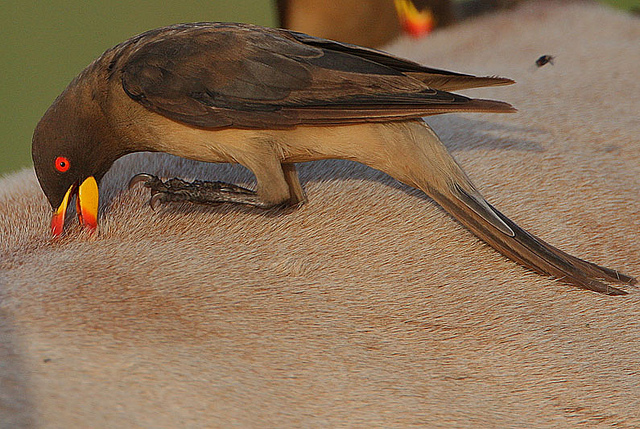
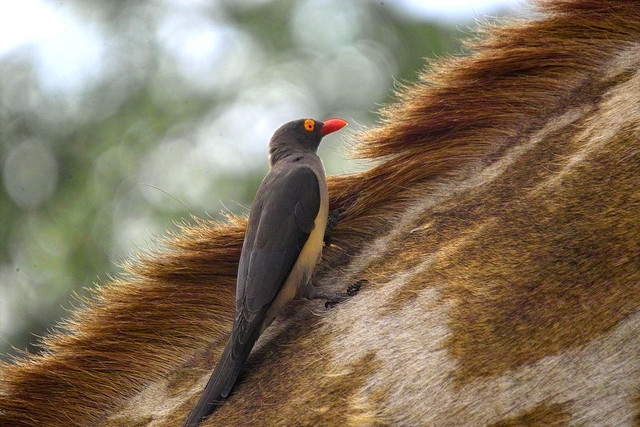
Red-billed Oxpecker (Buphagus erythrorhynchus) on Giraffe©©

Red-billed Oxpecker (Buphagus erythrorhynchus) on Giraffe©©

The oxpeckers are two species of bird which make up the family Buphagidae. Some ornithologists regard them as a subfamily Buphaginae within the starling family Sturnidae but they appear to be quite distinct. Oxpeckers are endemic to the savanna of Sub-Saharan Africa. Both the English and scientific names arise from their habit of perching on large mammals (both wild and domesticated) such as cattle or rhinoceroses, and eating ticks, botfly larvae, lice and other parasites.

Red-billed Oxpecker by Africaddict checking an impala ear

Red-billed Oxpecker by Africaddict checking an impala ear

The Egyptians had their run-in with lice when the LORD told Moses to – “Stretch out thy rod, and smite the dust of the land, that it may become lice throughout all the land of Egypt. And they did so; for Aaron stretched out his hand with his rod, and smote the dust of the earth, and it became lice in man, and in beast; all the dust of the land became lice throughout all the land of Egypt.” (Exodus 8:16-17 KJV)

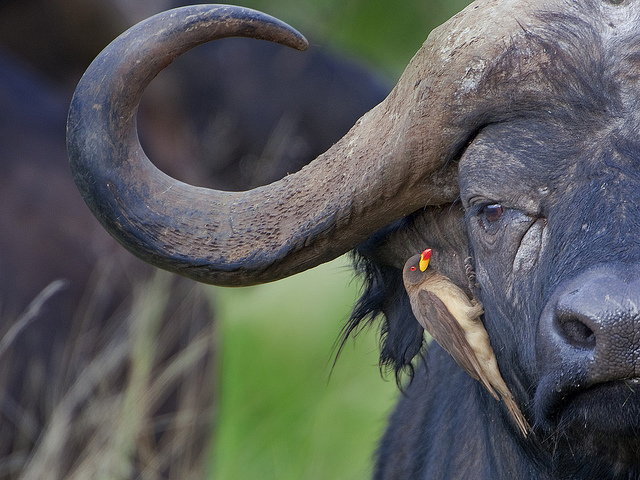
Yellow-billed Oxpecker (Buphagus africanus) ©©

Yellow-billed Oxpecker (Buphagus africanus) ©©

Many large animals today have lice, ticks, and such and the Lord has provided them a bird that gets its meals from the things crawling around on animals backs, legs, necks, ears, and even their nostrils. Most of the animals do not mind the help they receive from these oxpeckers. The elephants aren’t always happy, but the oxpeckers find plenty of other animals. Also known as tickbirds, oxpeckers have very short legs and sharp claws, which aid them in perching on the backs of large mammals, both wild and domesticated. Oxpeckers were designed with broad, thick, laterally flattened beaks to pick at and feed on skin parasites such as ticks and embedded larvae. They also pick at scabs, often opening and enlarging wounds, and probably obtain their main nourishment from the blood from these wounds rather than from the ticks. Although these birds are valuable from the standpoint of ridding domesticated animals of parasites, they also feed on tick-free game and become debilitating parasites themselves.

Researchers are not sure why they pick the scabs, but they do know that the birds aid the host animals by providing alarm sounds when danger is lurking.

Job was asked by the LORD,

“Is it by your understanding that the hawk soars and spreads his wings toward the south? Is it at your command that the eagle mounts up and makes his nest on high? (Job 39:26-27 ESV)

We don’t always understand why the birds and critters do what they do, but they have a Creator who does. The Lord encourages us to study and learn, but we do not always find the exact answer.

Red-billed Oxpecker (Buphagus erythrorhynchus) by Africaddict

Red-billed Oxpecker (Buphagus erythrorhynchus) by Africaddict

The Oxpeckers are about 9 inches long with a brownish color on the upper parts, with a lighter underside. The two Oxpeckers are the Red-billed and the Yellow-billed. The Red-billed has a red bill and yellow eyes where as the Yellow-billed has a yellow bill with a red tip and it has red eyes. The bird spends most of its time on the animals and even court and mate while riding on their back.

Some Breeding Facts from Biodiversity Explorer:
* Monogamous, cooperative breeder, as the breeding pair are usually assisted by up to 7 helpers who are usually unmated adults and juveniles from the previous breeding season.
* It usually nests in a natural tree cavity or a hole in rock or a stone wall, lining the interior with hair from its mammal hosts, dung, grass and rootlets.
* Egg-laying season is from October-March.
* It lays 2-5 eggs, which are incubated by both sexes for about for about 12-13 days.
* The chicks are fed by all members of the group, leaving the nest after about 30 days and becoming fully independent roughly two months later.

Yellow-billed Oxpecker with Water Buffalo ©©

Yellow-billed Oxpecker with Water Buffalo ©©

This behavior between the animals and the Oxpeckers is another example of cooperation (symbiosis) between species.

From Psalms we know that all creation is His,

For every beast of the forest is mine, the cattle on a thousand hills. I know all the birds of the hills, and all that moves in the field is mine. (Psalms 50:10-11 ESV)

Videos:
Red-billed Oxpecker by Joseph del Hoyo
Yellow-billed Oxpecker by Joseph del Hoyo

*

Merry Christmas 2010

For unto you is born this day in the city of David a Saviour, which is Christ the Lord. (Luke 2:11 KJV)

We had our Christmas concert Sunday night at Faith Baptist and the final song was “Listen to the Hammer Ring.” Below is the video of that song.

Christmas is the celebration of the Birth of Christ, but the ultimate reason He was born of a virgin was so He could be Our Perfect Sinless Savior. Christmas and Easter both go “hand-in-hand” because they are about the Lord Jesus Christ, the Creator of the world and all that is in it (including our beautiful birds). The world is doing everything it can to remove Christ from both of those holidays. But:

For God so loved the world, that he gave his only begotten Son, that whosoever believeth in him should not perish, but have everlasting life. (John 3:16 KJV)

Wordless Birds and the Gospel Message

*

Silent Night by Andrea Bocelli

Merry Christmas to all of you, from us here at the Birdwatching Adventures.

A friend sent me a link to Andrea Bocelli singing Silent Night and want to share it with all our readers. Andrea is blind.

They’re Back – White Pelicans

American White Pelican (Pelecanus erythrorhynchos) by Lee

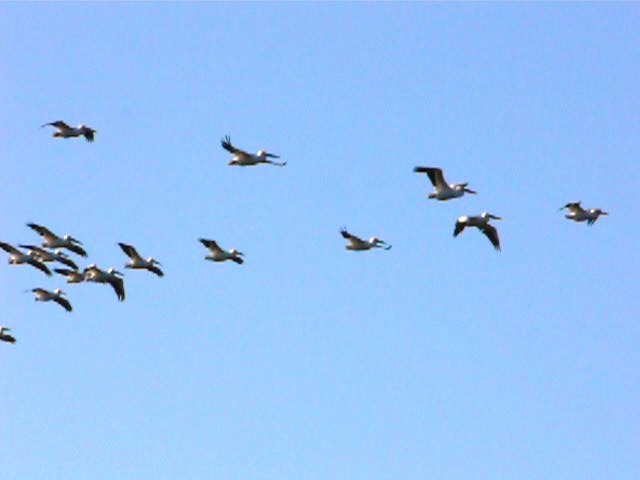
White Pelicans on the Wing at Circle B Bar Reserve

Yesterday morning, while looking out the door at church, I noticed a flock of birds flying toward the west. They were heading in the Circle B Bar Reserve direction. One squadron after another went by and it dawned on me that it was most likely the White Pelicans. I watched them for over 15 minutes and they just kept coming.

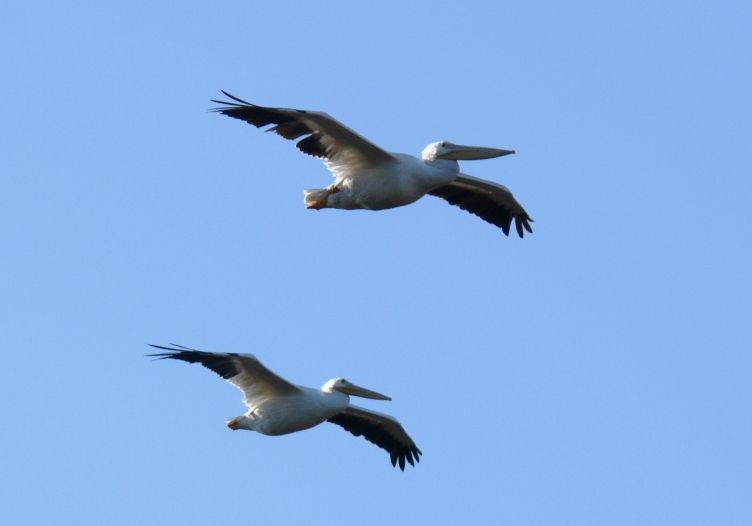
American White Pelican (Pelecanus erythrorhynchos) by Lee

American White Pelican (Pelecanus erythrorhynchos) by Lee

I am like a pelican of the wilderness: I am like an owl of the desert. (Psalms 102:6 KJV)

So, today, Dec. 21, 2010, we went to the Circle B to see if they really were the White Pelicans. Last year there were around 7,000 of them that spent part of their winter here with us in Florida. See – Birdwatching at Circle B Bar Reserve – 12/23/09 in which I made a video of the numerous Pelicans that we saw then. Yep! They are back! I am sure more than 1000 of them flew over my head today as they prepared to land about a half mile from my location.

Wood Stork (Mycteria americana) by Lee

Woodstork Tree at Circle B by Lee

Where the birds make their nests: as for the stork, the fir trees are her house. (Psalms 104:17 KJV)

I took lots of photos of them and some more video, but won’t bore you with them. We have had two hard freezes in the last few weeks that has killed or severely damaged much of the vegetation out at the Circle B. That and a lack of rain makes the place look quite drab right now. Many areas where we photograph and watch birds were sparse on numbers. Still had a great birdwatching adventure today even if it was about 40 degrees when we got there.

Wilson's Snipe at Circle B by Lee

Wilson's Snipe at Circle B

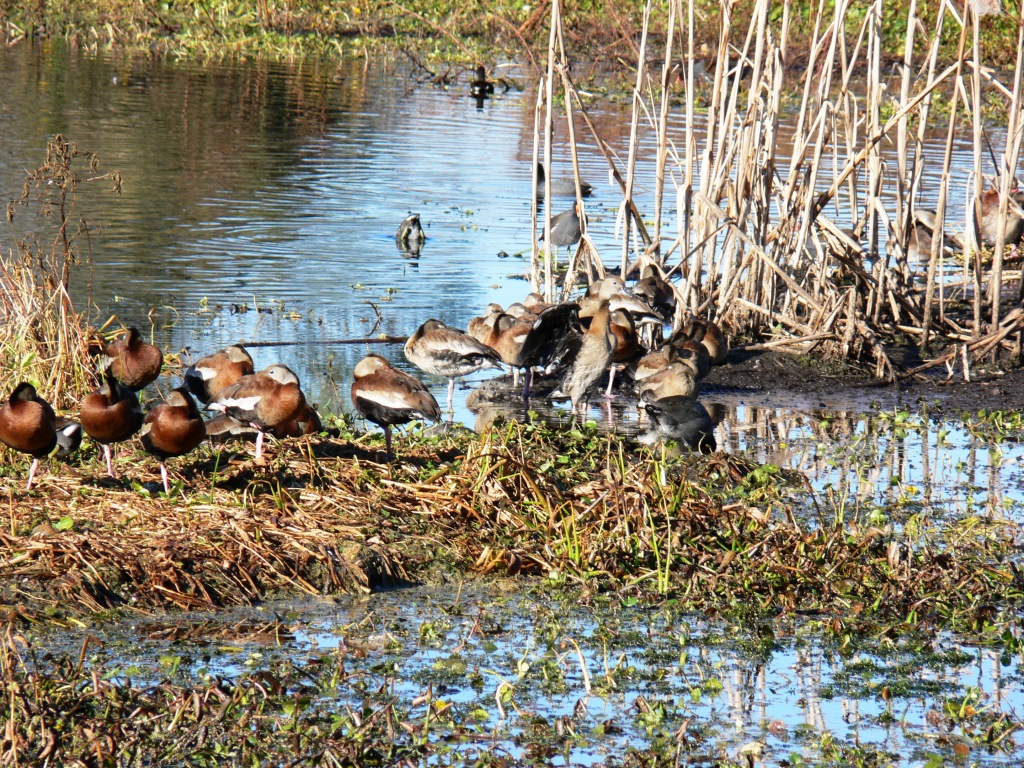
Some of the highlights were the White Pelicans, of course, but also finding a Wilson’s Snipe right beside the road and not spooking while being photographed by several people, “Wood Stork trees” (trees lined with the storks), watching a Snowy Egret working the water with its feet in search of breakfast, getting close to the Black-bellied Whistling Ducks and finding a White-eyed Vireo.

Black-bellied Whistling Duck (Dendrocygna autumnalis) by Lee

Black-bellied Whistling Duck (Dendrocygna autumnalis) by Lee

Here is a list of the 36 species of birds that we spotted today: (in order they were spotted)

Great Blue Heron 2

Morning Doves 7

Red-bellied Woodpecker 4

Blue Jay 1

American White Pelicans 1,000+

Wood Storks 100+

Eastern Kingbird

Sandhill Cranes 21

Tufted Titmouse 1

Northern Cardinal – female

Boat-tailed Grackles 15+

Wilson’s Snipe 1

Killdeer 15+

White Ibises 20+

Glossy Ibises 10+

Little Blue Heron adults and immature (white)

American Coots 100’s

Anhingas 10

Mockingbird 3

Red-shouldered Hawk 2

Tricolored Heron 1

Black-bellied Whistling Ducks 75+

Common Moorhen (or Gallinule) 20+

Blue-winged Teal 10

Mottled Duck 4

Pied-billed Grebe 2

Green Heron 1

House Wren 1

Blue-grey Gnatcatchers 5

White-eyed Vireo 1 (new catch for me)

Osprey 5

Turkey Vultures 10+

Pileated Woodpecker 1

Cattle Egret 3

Pine Warbler 1 Yellow

Myrtle Warbler 1

Here is the shorter video of the Snowy Egret stirring up breakfast. He catches something and then keeps trying for more.

Other birdwatching trips to the Circle B Bar Reserve

*

Bird Songs by God by Creation Moments

Bird Songs by God by Creation Moments was made into a video by BereanBeacon

By them the birds of the heavens have their home; They sing among the branches. (Psalms 104:12 NKJV)

BereanBeacon contacted me to obtain permission to use some of the photographers we have here. This video used some of the great photos from Ray (Raymond J. Barlow’s Wildlife Photography)

*

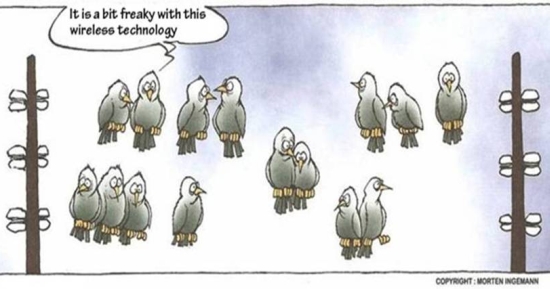
Wireless Birds

Neat cartoon I received today.

WirelessTechnology

WirelessTechnology

A man has joy by the answer of his mouth, And a word spoken in due season, how good it is! (Proverbs 15:23 NKJV)

My brethren, count it all joy when you fall into various trials, (James 1:2 NKJV)

Birds in Hymns – Joy To The World

American Yellow Warbler (Dendroica aestiva) singing by J Fenton

American Yellow Warbler (Dendroica aestiva) singing by J Fenton

And the angel said unto them, Fear not: for, behold, I bring you good tidings of great joy, which shall be to all people. (Luke 2:10 KJV)

Joy To The World

Words by Isaac Watts, The Psalms of Da­vid, 1719.

Music: An­ti­och, ar­ranged by Low­ell Ma­son, 1792-1872 – The ci­ty of An­ti­och, Syr­ia, is where be­liev­ers were first called “Christ­ians” (Acts 11:26). Al­ter­nate tune:

Northern Parula (Parula americana) Reinier Munguia

Northern Parula (Parula americana) Reinier Munguia

“Joy to the World” is a popular Christmas carol.

The words are by English hymn writer Isaac Watts, based on Psalm 98 in the Bible. The song was first published in 1719 in Watts’ collection; The Psalms of David: Imitated in the language of the New Testament, and applied to the Christian state and worship. Watts wrote the words of “Joy to the World” as a hymn glorifying Christ’s triumphant return at the end of the age, rather than a Christmas song celebrating his first coming as a babe born in a stable. Only the second half of Watts’ lyrics are still used today.

The music was adapted and arranged to Watts’ lyrics by Lowell Mason in 1839 from an older melody which was then believed to have originated from Handel, not least because the theme of the refrain (And heaven and nature sing…) appears in the orchestra opening and accompaniment of the recitative Comfort Ye from Handel’s Messiah, and the first four notes match the beginning of the choruses Lift up your heads and Glory to God from the same oratorio. However, Handel did not compose the entire tune.”

As of the late 20th century, “Joy to the World” was the most-published Christmas hymn in North America.” (From Wikipedia)

Joy To The World

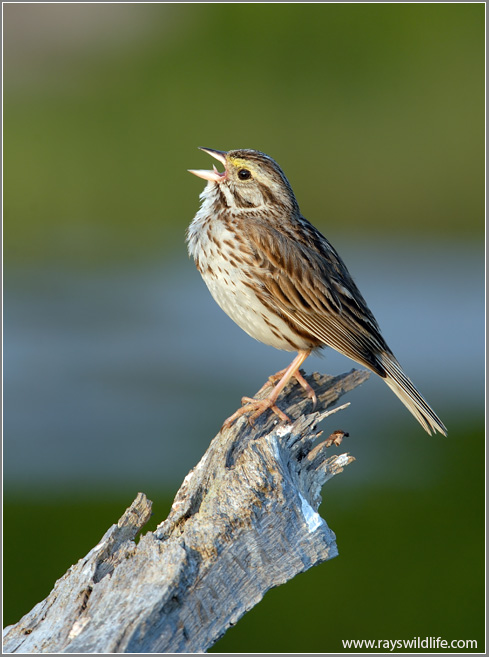
Savannah Sparrow singing by Ray

Savannah Sparrow singing by Ray

Joy to the world, the Lord is come!
Let earth receive her King;
Let every heart prepare Him room,
And Heaven and nature sing,
And Heaven, and Heaven, and nature sing.

Joy to the earth, the Savior reigns!
Let men their songs employ;
While fields and floods, rocks, hills and plains
Repeat the sounding joy,
Repeat, repeat, the sounding joy.

No more let sins and sorrows grow,
Nor thorns infest the ground;
He comes to make His blessings flow
Far as the curse is found,
Far as, far as, the curse is found.

He rules the world with truth and grace,
And makes the nations prove
The glories of His righteousness,
And wonders of His love,
And wonders, wonders, of His love.

Most information from The Cyber Hymnal

See ~ Wordless Birds

More ~ Birds in Hymns

*