To him that rideth upon the heavens of heavens, which were of old; lo, he doth send out his voice, and that a mighty voice. (Psalms 68:33 KJV)
Words: Joseph Johnson, Dibs: A Story of Young London Life (at the beginning of chapter 4: ‘Promoted to the Choir’), 1888. The hymn was published in School Hymns in 1891.
Music:Childhood – by Henry W. Davies (1869-1941)
God Speaks to us in Bird and Song
Crested Bunting (Emberiza lathami) by Nikhi lDevasar
God speaks to us in bird and song,
In winds that drift the clouds along,
Above the din and toil of wrong,
A melody of love.
God speaks to us in far and near,
In peace of home and friends most dear,
From the dim past and present clear,
A melody of love.
God speaks to us in darkest night,
By quiet ways through mornings bright,
When shadows fall with evening light,
A melody of love.
O Voice divine, speak Thou to me,
Beyond the earth, beyond the sea,
First let me hear, then sing to Thee,
A melody of love.
He sendeth the springs into the valleys, which run among the hills. They give drink to every beast of the field: the wild asses quench their thirst. (Psalm 104:10-11)
Johann M. Haydn (1737-1806)
Words: From The Psalter (Pittsburgh, Pennsylvania: The United Presbyterian Board of Publication, 1912), number 286.
Music: Lyons, attributed to Johann M. Haydn (1737-1806); arranged by William Gardiner, Sacred Melodies (London: 1815)
HE WATERS THE HILLS
Pileated and Red-bellied on same tree - turkey point by Ray
He waters the hills with rain from the skies,
And plentiful grass and herbs He supplies,
Supplying the cattle, and blessing man’s toil
With bread in abundance, with wine and with oil.
The trees which the Lord has planted are fed,
And over the earth their branches are spread; They keep in their shelter the birds of the air,
The life of each creature the Lord makes His care.
The seasons are fixed by wisdom divine,
The slow changing moon show forth God’s design;
The sun in his circuit his Maker obeys,
And running his journey hastes not nor delays.
The Lord makes the night, when leaving their lair,
The lions creep forth, God’s bounty to share;
The Lord makes the morning, when beasts steal away
And men are beginning the work of the day.
How many and wise Thy works are, O Lord!
The earth with the wealth of wisdom is stored;
The sea bears in safety the ships to and fro,
And creatures unnumbered it shelters below.
The creatures all look to Thee for their food;
Thy hands open wide, they gather the good;
Thy face Thou concealest, in anguish they yearn;
Their breath Thou withholdest, to dust they return.
Another parable put he forth unto them, saying, The kingdom of heaven is like to a grain of mustard seed, which a man took, and sowed in his field: Which indeed is the least of all seeds: but when it is grown, it is the greatest among herbs, and becometh a tree, so that the birds of the air come and lodge in the branches thereof. (Matthew 13:31-32 KJV)
Sing to the LORD with thanksgiving; Sing praises on the harp to our God, Who covers the heavens with clouds, Who prepares rain for the earth, Who makes grass to grow on the mountains. He gives to the beast its food, And to the young ravens that cry. (Psalms 147:7-9 NKJV)
Blessed be God, even the Father of our Lord Jesus Christ, the Father of mercies, and the God of all comfort; Who comforteth us in all our tribulation, that we may be able to comfort them which are in any trouble, by the comfort wherewith we ourselves are comforted of God. For as the sufferings of Christ abound in us, so our consolation also aboundeth by Christ. (2 Corinthians 1:3-5 KJV)
Words: Charles Wesley, Hymns and Sacred Poems, 1740. Some have called this the finest hymn in the English language.
Music: Aberystwyth (Parry), Joseph Parry, in Stephens’ Ail Lyfr Tonau ac Emynau, 1879
“The circumstance of the writing of this hymn is interesting. The story goes that Charles Wesley was roused from his sleep one night by a terrible storm. Being unable to rest he got up, put on his dressing-gown, and, opening his casement window stood looking out upon the stormy scene. Suddenly a bird, exhausted by the wind, and hotly pursued by a hawk, flew through the open window right into Charles Wesley’s breast for protection. Having saved the bird and placed it in security, he turned to his desk and wrote this immortal hymn, so realistic and descriptive of the fear and intense longing of the anxious soul to find safety and rest.
For our soul needs shelter; and the Only One Who can be a refuge for the soul is Jesus. He is our Hiding-place, our Haven of Rest. Listen to these words of the prophet Isaiah (32:2):
“A man shall be as an hiding place from the wind, and a covert from the tempest . . . as the shadow of a great rock in a weary land.”
We have no time to say anything about this wonderful hymn in detail, but I would have you notice one point about it. I have spoken of this in the case of other hymns, but the thought will bear repeating. Notice in it the personal and persistent use of me, and my, and I, in it:
“Let me to Thy bosom fly.”
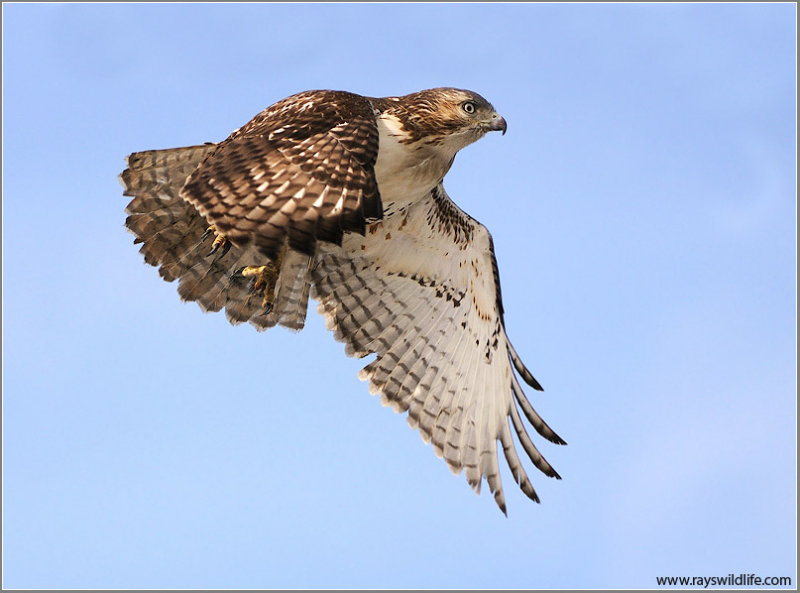
Red-Tailed Hawk by Ray
It is the prayer of the individual soul for succour, to the Saviour Himself; the call, as of a drowning man, that insists on being heard, and that can take no refusal; the cry of the terrified, and frail, and helpless bird, pursued by the cruel hawk, that is eager for its life.
Dear friends, are you “Safe in the arms of Jesus”? Have you “hidden” yourselves in Him?
Oh that these questions may go straight home to your hearts. If you are not in Christ, Oh, may God the Holy Spirit awaken you to see your danger. I will read the hymn to you, and then we will sing it together, on our knees, as our closing prayer.”
Jesus, Lover Of My Soul by Charles Wesley
Jesus, lover of my soul, let me to Thy bosom fly,
While the nearer waters roll, while the tempest still is high.
Hide me, O my Savior, hide, till the storm of life is past;
Safe into the haven guide; O receive my soul at last.
Other refuge have I none, hangs my helpless soul on Thee;
Leave, ah! leave me not alone, still support and comfort me.
All my trust on Thee is stayed, all my help from Thee I bring;
Cover my defenseless head with the shadow of Thy wing.
Wilt Thou not regard my call? Wilt Thou not accept my prayer?
Lo! I sink, I faint, I fall—Lo! on Thee I cast my care;
Reach me out Thy gracious hand! While I of Thy strength receive,
Hoping against hope I stand, dying, and behold, I live.
Thou, O Christ, art all I want, more than all in Thee I find;
Raise the fallen, cheer the faint, heal the sick, and lead the blind.
Just and holy is Thy Name, I am all unrighteousness;
False and full of sin I am; Thou art full of truth and grace.
Plenteous grace with Thee is found, grace to cover all my sin;
Let the healing streams abound; make and keep me pure within.
Thou of life the fountain art, freely let me take of Thee;
Spring Thou up within my heart; rise to all eternity.
the little owl, the cormorant, the short-eared owl, the barn owl, the tawny owl, the carrion vulture, (Leviticus 11:17-18 ESV)
and the little owl, and the cormorant, and the eared owl; and the barn owl, and the pelican, and the owl-vulture; (Leviticus 11:17-18 MKJV)
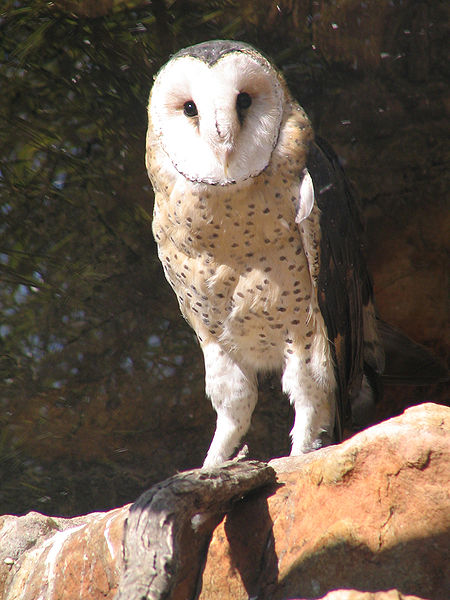
Australian Masked Owl (Tyto novaehollandiae) by Wiki
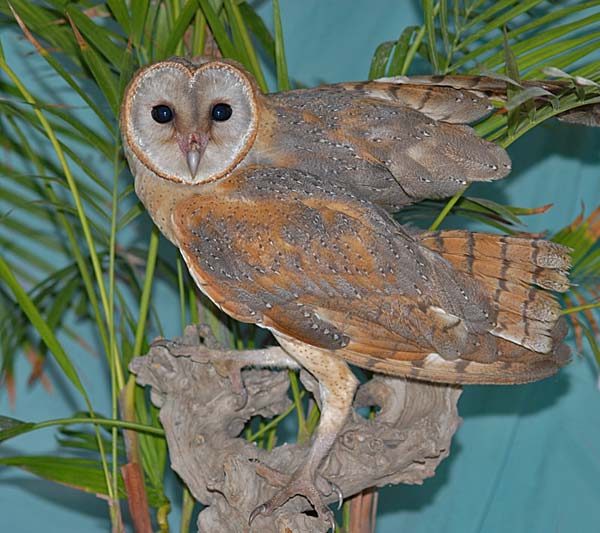
The Lord has created another interesting and fantastic bird, the Barn Owl. The Owls are mentioned in the list of unclean birds the Israelites were not to eat. The Bible mentions several different kinds of owls and that is possibly why the taxonomists today divide them at least into two different families. Within those families, especially the larger one, Strigidae, the are different groupings. The Barn Owl family, Tytonidae, all seem to have this heart-shaped face you will read about and see. Some of the other Bible versions call it the “white owl.” Most of the ones I found photos of do have a white face or almost white face.
Barn-owls (family Tytonidae) are one of the two families of owls, the other being the true owls, Strigidae. Barn Owls are medium to large sized owls with large heads and characteristic heart-shaped faces. They have long, strong legs with powerful talons. They also differ from Strigidae in structural details relating in particular to the sternum and feet.
Sulawesi Masked Owl (Tyto rosenbergii) by Wiki
The Barn Owl is a pale, long-winged, long-legged owl with a short squarish tail. Depending on subspecies, it measures about 25–45 cm (9.8–18 in) in overall length, with a wingspan of some 75–110 cm (30–43 in). Tail shape is a way of distinguishing the Barn Owl from true owls when seen in flight, as are the wavering motions and the open dangling feathered legs. The light face with its heart shape and the black eyes give the flying bird an odd and startling appearance, like a flat mask with oversized oblique black eyeslits, the ridge of feathers above the bill somewhat resembling a nose.[Wikipedia]
The barn-owls’ main characteristic is the heart-shaped facial disc, formed by stiff feathers which serve to amplify and locate the source of sounds when hunting. (See Calculating Owls below) Further adaptations in the wing feathers eliminate sound caused by flying, aiding both the hearing of the owl listening for hidden prey and keeping the prey unaware of the owl. Barn-owls overall are darker on the back than the front, usually an orange-brown colour, the front being a paler version of the back or mottled, although there is considerable variation even amongst species. The bay-owls closely resemble the Tyto owls but have a divided facial disc, ear tufts, and tend to be smaller.
On average, within any one population males tend to be less spotted on the underside than females. The latter are also larger, as is common for owls. A strong female Western Barn Owl of a large subspecies may weigh over 550 g (19.4 oz), while males are typically about 10% lighter. Nestlings are covered in white down all over, but the heart-shaped facial disk is visible soon after hatching.
the little owl and the short-eared owl, the barn owl (Deuteronomy 14:16 ESV)
Western Barn Owl (Tyto alba) by Nikhil Devassar
Its head and upperparts are a mixture of buff and grey (especially on the forehead and back) feathers in most subspecies. Some are purer richer brown instead, and all have fine black-and-white speckles except on the remiges and rectrices, which are light brown with darker bands. The heart-shaped face is usually bright white, but in some subspecies it is browner. The underparts vary from white to reddish buff among the subspecies, and are either mostly unpatterned or bear a varying amount of tiny blackish-brown speckles. It was found that at least in the continental European populations, females with more spotting are healthier on average. This does not hold true for European males by contrast, where the spotting varies according to subspecies. The bill varies from pale horn to dark buff, corresponding to the general plumage hue. The iris is blackish brown. The toes, as the bill, vary in color; their color ranges from pinkish to dark pinkish-grey. The talons are black.
African Grass Owl (Tyto capensis) by Wiki
The barn owls are a wide ranging family, absent only from northern North America, Saharan Africa and large areas of Asia. They live in a wide range of habitats from deserts to forests, and from temperate latitudes to the tropics. The majority of the 16 living species of barn owls are poorly known. Some, like the (Madagascar) Red Owl, have barely been seen or studied since their discovery, in contrast to the Common Barn Owl, which is one of the best known owl species in the world. However, some sub-species of the Common Barn Owl possibly deserve to be a separate species, but are very poorly known.
Contrary to popular belief, it does not hoot (such calls are made by typical owls, like the Tawny Owl or other Strix). It instead produces the characteristic shree scream, ear-shattering at close range. Males in courtship give a shrill twitter. It can hiss like a snake to scare away intruders, and when captured or cornered, it throws itself on its back and flails with sharp-taloned feet, making for an effective defence. Also given in such situations is a rasp and a clicking snap, produced by the bill or possibly the tongue.
Barn Owl clicks and call from xeno.canto.org
Couldn’t pass up the opportunity for some verse of the “heart.”
I will praise thee, O LORD, with my whole heart; I will shew forth all thy marvellous works. (Psalms 9:1 KJV)
LORD, thou hast heard the desire of the humble: thou wilt prepare their heart, thou wilt cause thine ear to hear: (Psalms 10:17 KJV)
Let the words of my mouth, and the meditation of my heart, be acceptable in thy sight, O LORD, my strength, and my redeemer. (Psalms 19:14 KJV)
Wait on the LORD: be of good courage, and he shall strengthen thine heart: wait, I say, on the LORD.
(Psalms 27:14 KJV)
It took me awhile, but I finally got all the links up for the newest version (2.5) of the I.O.C. Now you should be able to find any bird on the lists.
Anhinga (Anhinga anhinga) scrawny by Lee
Dan and I managed to get in a little birdwatching Friday at Lake Morton. We saw several weird things take place. At least I hadn’ t seen it before. Watched a Great Egret with what I thought was a fish, a scrawy Anhinga, and a one footed White Ibis.
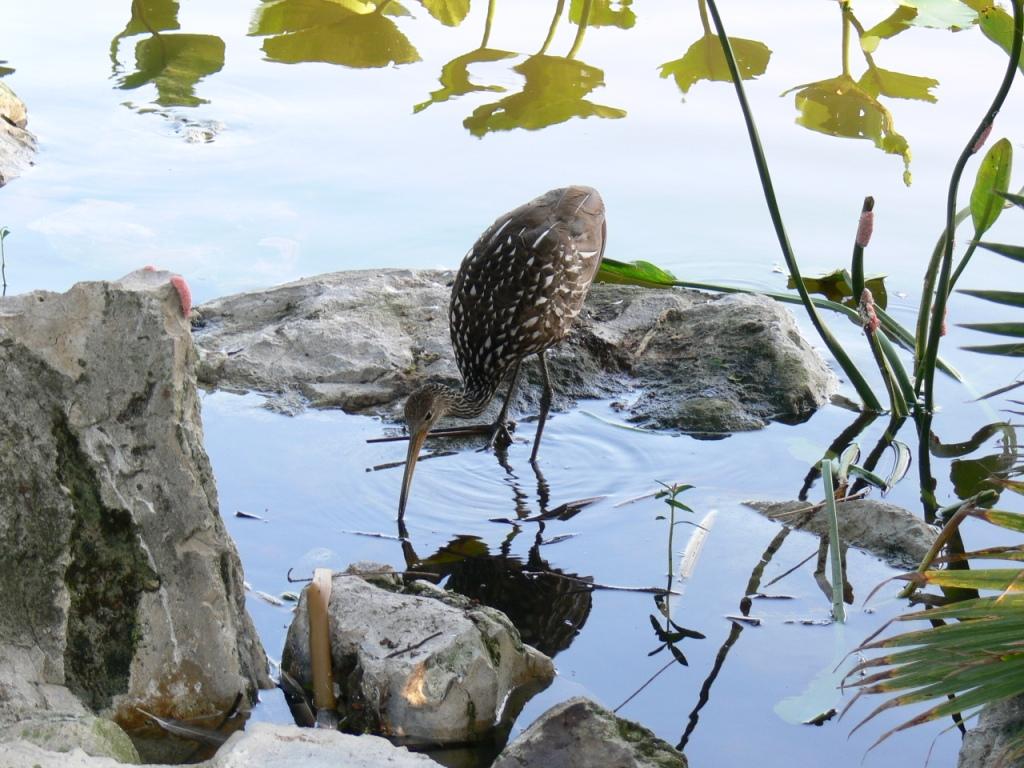
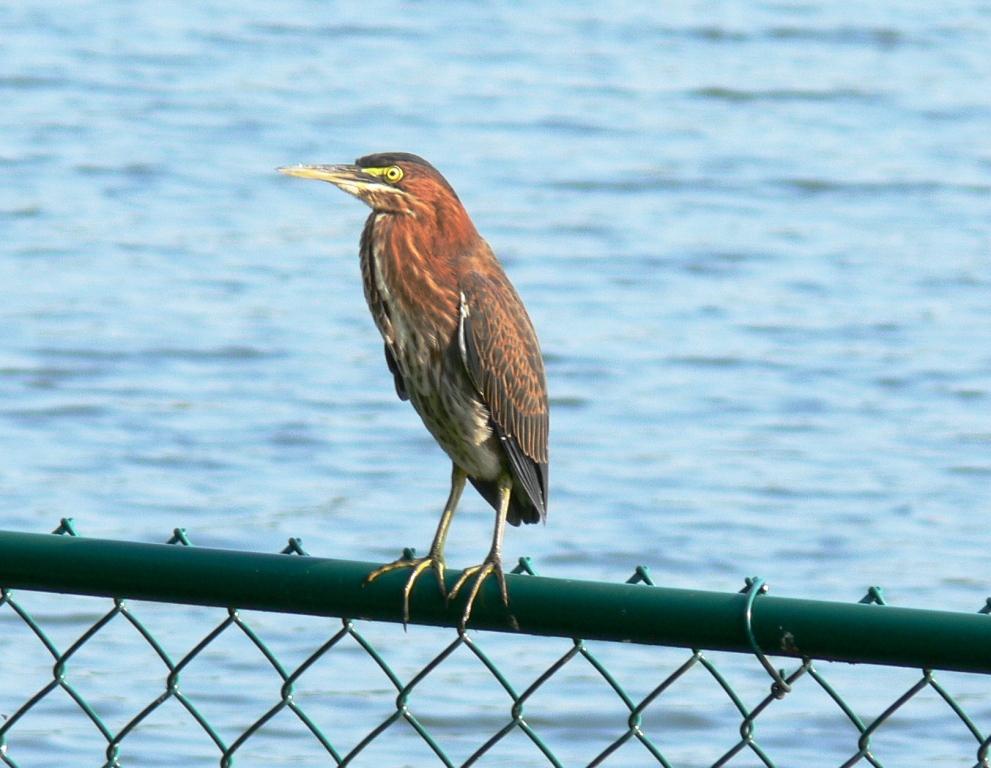
The Anhinga that we saw was “scrawny.” It must have been in a molting stage, because it sure didn’t have many complete feathers. Also fed a one-footed White Ibis. Did manage to get some nice photos of a Limpkin and a Green Heron. There were some gulls around and I think it is a Laughing Gull I photographed. Haven’t seen one there before, at least not with that black hood.
Great Egret at Lake Morton
The Great Egret that was eating something, well, trying to, turned out to be a baby Mallard. I was photographing it from a distance and didn’t realize what it had until we got home and viewed the photos. Never did see it swallow it. The Egret flew off with it and when I spotted it later, there was no baby Mallard around. Hope he dropped it when he flew off. I was sad when I realized what had been going on.
Sunday, at church, our pastor was preaching on the death of Christ on the cross. He gave the following quote by Dorothy Sayers and it reminded me of what I had seen on Friday.
It is a curious fact that people who are filled with horror when a cat kills a sparrow can hear the true story of how people killed the Lord Jesus Christ told Sunday after Sunday and not experience any Shock whatsoever! Dorothy L. Sayers
The Lord loved us so much He was willing to lay His life down and pay for our sins. He has “finished” the payment and has raised Himself up and is in heaven with the Father. Do we hear that week after week and not acknowledge the truth? I trust you know the Savior.
For God so loved the world, that he gave his only begotten Son, that whosoever believeth in him should not perish, but have everlasting life. For God sent not his Son into the world to condemn the world; but that the world through him might be saved. (John 3:16-17 KJV)
It has been almost two years since the Quail have been written about. Birds of the Bible – Quail was early in this blogs history, so decided to write more about them.
The Bible has four references to quail and they are all found in the Old Testament. They refer to the time that the Israelites were in the desert after they had left Egypt by way of the Red Sea. They had been complaining about their lack of food, so the LORD answered them with:
And the LORD spake unto Moses, saying, I have heard the murmurings of the children of Israel: speak unto them, saying, At even ye shall eat flesh, and in the morning ye shall be filled with bread; and ye shall know that I am the LORD your God. And it came to pass, that at even the quails came up, and covered the camp: and in the morning the dew lay round about the host. (Exodus 16:11-13 KJV)
So, their request was taken care of every morning and evening. Just as today, we have a promise:
But my God shall supply all your need according to his riches in glory by Christ Jesus. (Philippians 4:19 KJV)
That incident took place on the 15th day of the second month after coming out of Egypt. Then right around the 20th day of the second month of the second year, they started complaining again about not having flesh to eat.
We remember the fish, which we did eat in Egypt freely; the cucumbers, and the melons, and the leeks, and the onions, and the garlick: But now our soul is dried away: there is nothing at all, beside this manna, before our eyes. (Numbers 11:5-6 KJV)
“Poor me! All we have to eat is manna, manna, manna.” Can you hear them? God wanted them to trust Him. God promises to meet our needs, not necessarily our wants. This is where the incident written about in the first article came about. They were well taken care of, even their shoes did not wear out in the 40 years they spent in the wilderness. Read Psalm 105 where it tells about all the LORD did for them. In Psalm 105:40 it says, “The people asked, and he brought quails, and satisfied them with the bread of heaven.”
Are we satisfied with what the Lord has provided or do we go around with a protruding lower lip saying, “Poor me!” I trust your lip is normal and that you can say along with Paul:
Not that I speak in respect of want: for I have learned, in whatsoever state I am, therewith to be content. (Philippians 4:11 KJV)
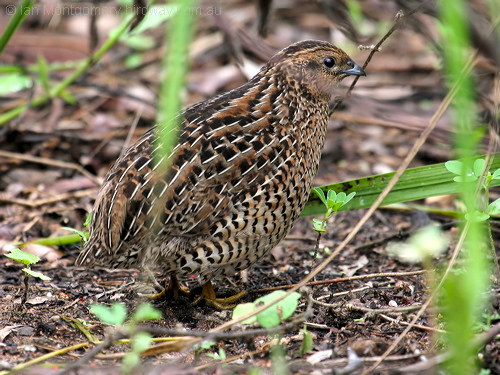
King Quail (Excalfactoria chinensis) by Kent Nickell
The Quail are numerous around the world and they are found in several families of birds. The Odontophoridae – New World Quail Family (34 members) includes not only Quails, but also 4 Bobwhites, 1 Francolin, and 4 Partridges. The Phasianidae – Pheasants, Fowl & Allies Family has 181 members. That is probably where the Quails mentioned in the wilderness came from because they are of the Old World area. That family has 13 Quail and a mix of other related birds including Turkeys, Pheasants and Peacocks. Both of these families are in the Galliformes Order.
Old World quail are the smallest birds in their family and are about 5 in (12-13 cm). The New World ones are 7-15 in (17-37 cm) long. They are very similar but are placed in the two families by ornithologists. They have short thick beaks with chunky bodies. Most do not make long flights and mainly fly when flushed. They are mostly seed and vegetation eaters, but some do eat insects.
Here in the U.S., the Northern Bobwhite’s call is very familiar.
California Scrub Jay (Aphelocoma californica ) was Western by Daves BirdingPix
The IOC World Bird List Version 2.5 was just released on July 4th. I have been busy updating the Family pages and just finished.
They have made 19 changes to the English Names, added 13 new birds and deleted 1. They also made 93 changes to the Taxonomy, and made 12 changes to the Ranges. Now they will get busy and start planning the changes to the 2.6 list, but that will give me a 3-4 month rest before they release that one.
With all the DNA studies going on and other proposals, the number of birds and where they come from, stay in a constant flux. Here, we know where they came from, the Lord created them, but as to how they have “multiplied and plenished the earth” is what keeps the ornithologists busy. All this changing gives me something to do every few months.
So God created great sea creatures and every living thing that moves, with which the waters abounded, according to their kind, and every winged bird according to its kind. And God saw that it was good. (Genesis 1:21 NKJV)
I still have to update the indexes, but for now the Family pages are up to date.
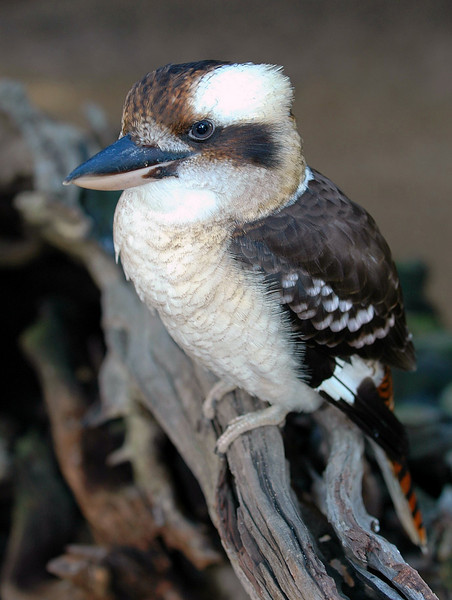
Laughing Kookaburra (Dacelo novaeguineae) by Africaddict
A merry heart maketh a cheerful countenance: but by sorrow of the heart the spirit is broken. (Proverbs 15:13 KJV)
Blue-winged Kookaburra (Dacelo leachii) by Ian
While updating the Kingfisher pages, I came across these videos about the Kookaburras that are in the same Alcedinidae Family. Thought you might enjoy watching them.
There are five Kookaburras. The Laughing Kookaburra (Dacelo novaeguineae) is probably the most well known, but there is also a Shovel-billed Kookaburra (Clytoceyx rex), Blue-winged Kookaburra (Dacelo leachii), Spangled Kookaburra (Dacelo tyro), Rufous-bellied Kookaburra (Dacelo gaudichaud).
Kookaburras are best known for their unmistakable call, which sounds uncannily like loud, echoing human laughter — good-natured, but rather hysterical, merriment in the case of the renowned Laughing Kookaburra (Dacelo novaeguineae); and maniacal cackling in the case of the slightly smaller Blue-winged Kookaburra (D. leachii). They are generally not closely associated with water, and can be found in habitats ranging from humid forest to arid savanna, but also in suburban and residential areas near running water and where food can be searched for easily.
This video is about the Laughing Kookaburra from the Blank Park Zoo
Kookaburra calls from the Cincinnati Zoo
A merry heart doeth good like a medicine: but a broken spirit drieth the bones. (Proverbs 17:22 KJV)
While having the privilege of obtaining some photos for future blogs from Peter Ericsson’s Galleries, I obtained a few photos of the Pied Kingfisher. I thought this Kingfisher was very pretty. Then I found this amazing video from BBC Worldwide and decided to share these. Another reason, my attempts to photograph our Belted Kingfishers is never very successful. Thankfully Peter and the videographers had better success.
When the Lord created the birds, He gave them so many amazing abilities. The way the Kingfisher keeps his head so steady is absolutely fantastic.
O the depth of the riches both of the wisdom and knowledge of God! how unsearchable are his judgments, and his ways past finding out! For who hath known the mind of the Lord? or who hath been his counsellor? (Romans 11:33-34 KJV)
The Pied Kingfisher is about 7 – 10 in or 17-25 cm long with a white with a black mask, a white supercilium and black breast bands. The female has only one breast band. The crest is neat and the upperparts are barred in black. There are several subspecies. It is common throughout sub-Saharan Africa and southern Asia from Turkey to India to China. It is resident, and most birds do not migrate, other than short-distance seasonal movements. In India it is distributed mainly on the plains. It is thought to be the world’s 3rd most common kingfisher and a noisy bird.
Fish is its main diet, though it will eat other aquatic invertebrates. It usually hunts by hovering over the water to detect prey and diving vertically down bill-first to capture fish. When not foraging, they have a straight rapid flight and have been observed flying at nearly 32 mph.
Pied Kingfisher from BBC Worldwide – Shows this diving ability
In the beginning God created the heavens and the earth. The earth was without form, and void; and darkness was on the face of the deep. And the Spirit of God was hovering over the face of the waters. (Genesis 1:1-2 NKJV)
During breeding season (February to April), they make its nest in a hole excavated in a vertical mud bank about five feet above water. The nest tunnel is 4 to 5 feet long and ends in a chamber. Several birds may nest in the same vicinity. The usual clutch is 3-6 white eggs. The pied kingfisher sometimes reproduces co-operatively, with young non-breeding birds from an earlier brood assisting parents (helpers) or even unrelated older birds.
And Jesus said to him, “Foxes have holes and birds of the air have nests, but the Son of Man has nowhere to lay His head. (Matthew 8:20 NKJV)
Kingfishers “are monogamous, teritorial, and sometimes colonial.” Courtship displays are noisy and the displays are in duet as they raise their wings or spiral in flight. Recent suggestion is that the Pied Kingfisher and the American green kingfishers are derived from an Old World species (kind), with the Pied Kingfisher or its ancestor losing the metallic colouration afterwards. The Alcedinidae Family is where the Kingfishers and Kookaburras are found. At present there are 95 of them. They belong to the Coraciiformes Order. The Order includes Rollers, Ground Rollers, Kingfishers, Todies, Motmots, and Bee-eaters.
Pied Piper up close by IndiaVideo.org
Which doeth great things past finding out; yea, and wonders without number. (Job 9:10 KJV)
Peter Ericsson is in Thailand and is a Christian photographer. His two sites are Peter Ericsson’s Photo Galleries and his blog Thaibirder . Please visit his sites for some fantastic photagraphy.
Information taken from Wikipedia, Complete Birds of the World, and Bird
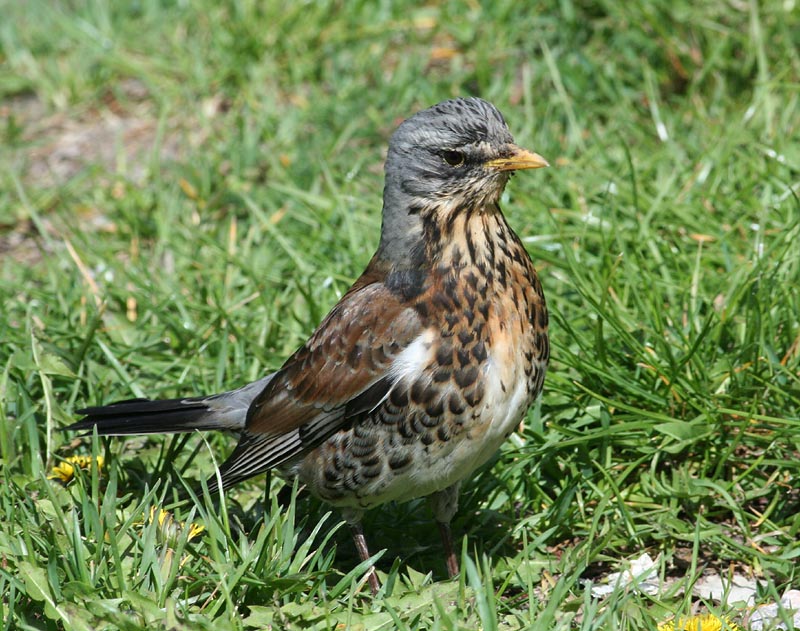
When birds have babies, they do all they can to protect them from predators. The birds spend time building and then filling their nest with eggs. The nest is protected almost constantly from the time the bird lays the eggs until the fledglings depart. That is normal behavior and the video below of the Fieldfare shows one way they do it. The video is by BBC Worldwide.
And my hand hath found as a nest the riches of the people: and as one gathereth eggs that are left, have I gathered all the earth; and there was none that moved the wing, or opened the mouth, or peeped. (Isaiah 10:14 KJV)
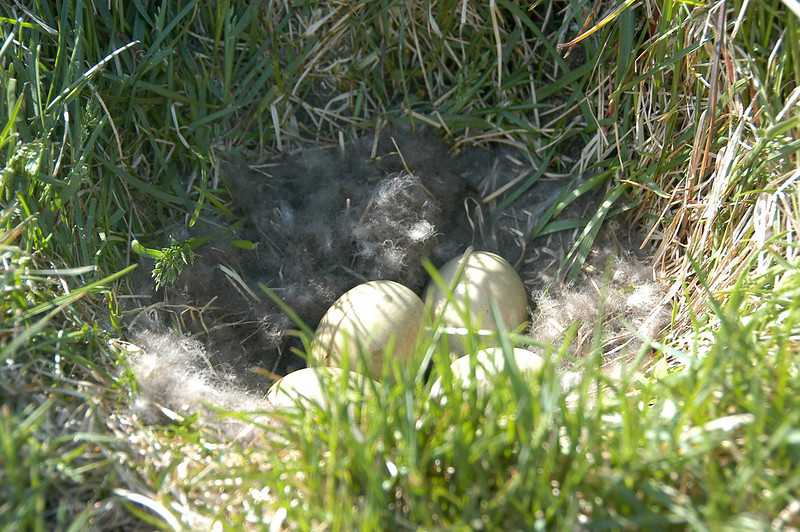
In the verse above, the nest has not been protected, nor has a wing been flapped to chase the aggressor away, nor did they open their mouth in peeps or chirping alarm calls. If the nest is abandoned; whether by desertion, having been chased off, or other reason, it is easy to take the eggs or chicks.
This verse is found in the book of Isaiah and is referring to the King of Assyria. The kings pride, arrogant heart, and boastful look in his eyes cause him to state:
For he says: By the strength of my hand I have done it, and by my wisdom, for I have understanding; I remove the boundaries of peoples, and plunder their treasures; like a bull I bring down those who sit on thrones. My hand has found like a nest the wealth of the peoples; and as one gathers eggs that have been forsaken, so I have gathered all the earth; and there was none that moved a wing or opened the mouth or chirped. (Isaiah 10:13-14 ESV)
Common Eider (Somateria mollissima) nest by Bob-Nan
I like what Albert Barnes Notes On The Bible says, “Isa 10:14
And my hand hath found, as a nest – By a beautiful and striking figure here, the Assyrian monarch is represented as describing the ease with which he had subdued kingdoms, and rifled them of their treasures. No resistance had been offered. He had taken them with as little opposition as a rustic takes possession of a nest, with its eggs or young, when the parent bird is away. Eggs that are left – That is, eggs that are left of the parent bird; when the bird from fright, or any other cause, has gone, and when no resistance is offered. Have I gathered all the earth – That is, I have subdued and plundered it. This shows the height of his self-confidence and his arrogant assumptions. That moved the wing – Keeping up the figure of the nest. There was none that offered resistance; as an angry bird does when her nest is about to be robbed. Or opened the mouth – To make a noise in alarm. The dread of him produced perfect silence and submission. Or peeped – Or that chirped – the noise made by young birds; the note at Isa_8:19. The idea is, that such was the dread of his name and power that there was universal silence. None dared to resist the terror of his arms.”
Shall the axe boast over him who hews with it, or the saw magnify itself against him who wields it? As if a rod should wield him who lifts it, or as if a staff should lift him who is not wood! (Isaiah 10:15 ESV)
Living Application Study Bible – “The ax – How absurd is it, for thee, who art but an instrument in God’s hand, to blaspheme thy Lord and master, who has as great power over thee, as a man hath over the ax wherewith he heweth?”
Fieldfare (Turdus pilaris) by Peter Ericsson
Gill’s Exposition – “Shall the axe boast itself against him that heweth therewith?…. Hitherto are the words of the Assyrian monarch; and here begin the words of the prophet, rebuking him for his pride, and deriding his vain boasting, in attributing that to himself, to his wisdom and power, who was but an instrument, which belonged to God, the sole Governor and wise orderer of all things; which was all one as if an axe should ascribe the cutting down of trees to itself, and insist on it that the man that cut with it had no share in the action, nor was it to be ascribed to him; than which nothing is more absurd. The sense is, that the king of Assyria, in taking cities, and conquering kingdoms, and adding them to his own, was only an instrument in the hand of God, like an axe in the hand of one that hews down trees; and therefore it was vain and ridiculous to take that to himself which belonged to the Lord, on whom he depended as an instrument, as to motion, operation, and effect; from whom he had all power to act, all fitness for it, and efficacy in it, as the axe has from the person that makes and uses it, or any other instrument”
It is interesting to try to find out what is behind the verses we read about the birds in the Bible. God uses many illustrations of things around us to teach us His Truth. In these verses, self-pride, arrogance and denying Who is in control of our lives.
Hear ye, and give ear; be not proud: for the LORD hath spoken. (Jeremiah 13:15 KJV)
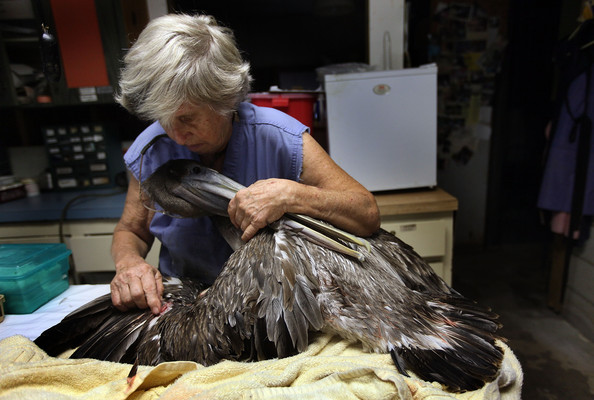
Broken Wing of Pelican-Florida Keys Wild Bird Rehab Center
I walked in the woodland meadows,
Where sweet the thrushes sing,
And found on a bed of mosses, A bird with a broken wing;
I healed its wing, and each morning
It sang its old sweet strain,
But the bird with the broken pinion,
Never soared as high again,
Never soared as high again.
I found a young life broken
By sin’s seductive art,
And, touched with a Christlike pity,
I took him to my heart;
He lived with a nobler purpose,
And struggled not in vain,
But the life that sin had stricken,
Never soared as high again,
Never soared as high again.
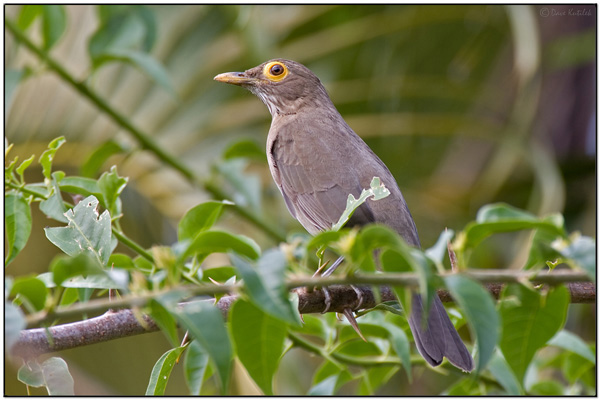
Bare-eyed Thrush (Turdus tephronotus) by Daves BirdingPix
But the bird with the broken pinion
Kept another from the snare,
The life that sin had stricken,
Raised another from despair;
Each loss has its own compensation,
There’s healing for each pain, But the bird with the broken pinion
Never soared as high again,
Never soared as high again.
Now I rejoice, not that you were made sorry, but that your sorrow led to repentance. For you were made sorry in a godly manner, that you might suffer loss from us in nothing. For godly sorrow produces repentance leading to salvation, not to be regretted; but the sorrow of the world produces death.
(2 Corinthians 7:9-10 NKJV)
This hymn reminds me of a story I have heard numerous times about the effects of sin in our lives. We may repent, but the scars are still there. I found a copy, it’s a little long, but I hope you’ll read it.
“That was a significant, story of the man who gave his little son a hammer and some nails, and told him that whenever he did anything that was wrong he might drive one of the nails into the barn door. The boy was honest and diligent too, and in a few days he came to his father saying that the last nail was in its place well driven down. ” And now,” said the father, “whenever you do any specially good deed, you may draw out one of the nails.” This pleased the son. He was as diligent in goodness now as he had been in badness before. He carried his little sister over the rough places, and then went and drew a nail. He sawed some wood for a poor widow and drew another nail. He ran on willing errands for his mother that he might have a chance to draw more nails. In a few days the last one was removed, and he came with pride to tell his father.
“What, all drawn so soon?” said the father.
” Every one,” responded the son.
” Let us go and see,” said the father.
” Come, then,” said the son, and he led the way. ” See, see,” said the eager boy, ” there is not a nail left in the door, and I assure you that I did something good for every nail I drew.”
” I am glad, my dear son,” said the father, ” that the task of removing them is so quickly done, but then,” continued he sadly, ” don’t you see how you have marred and injured the door? The nails are gone, but the scars remain.” (A. J. Paterson)
Savior, like a bird to Thee,
Weary and wounded my soul would flee;
O let me fold my wings and rest
Peacefully, trustingly, on Thy breast.
Refrain
Like a bird let me fly to Thee,
In Thine arms kindly shelter me;
Then my soul no more shall roam
Far, far away from home.
Savior, Thou my grief hast borne,
Thou hast a balm for the hearts that mourn;
One gentle word, and I shall rest
Hopefully, lovingly, on Thy breast.
Refrain
Like a bird let me fly to Thee,
In Thine arms kindly shelter me;
Then my soul no more shall roam
Far, far away from home.
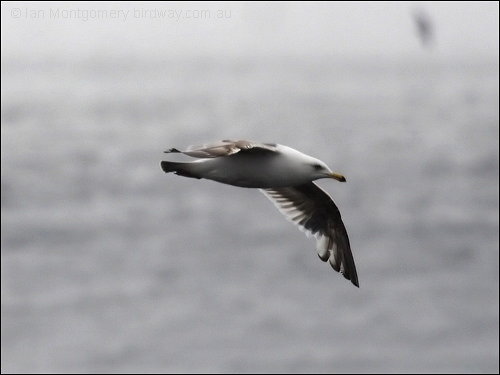
Slender-billed Gull (Chroicocephalus genei) by Nikhil Devasar
I was lost till found by Thee;
Thine, blessèd Savior, the glory be;
Gladly I fold my wings and rest,
Lovingly, tenderly, on Thy breast.
Refrain
Like a bird let me fly to Thee,
In Thine arms kindly shelter me;
Then my soul no more shall roam
Far, far away from home.
What a great hymn. As you read or sing the words, think about the words. What a comfort and rest we receive as we settle down, rest and lean on our Loving Savior.











 Lee's Birdwatching Adventures Plus