Scotch Crow: Birdwatching in the Scottish Hebrides, Part 2

Dr. James J. S. Johnson

Let them give glory unto the LORD, and declare [lit., “cause to be clarified”] His praise in the islands.  

(Isaiah 42:12)
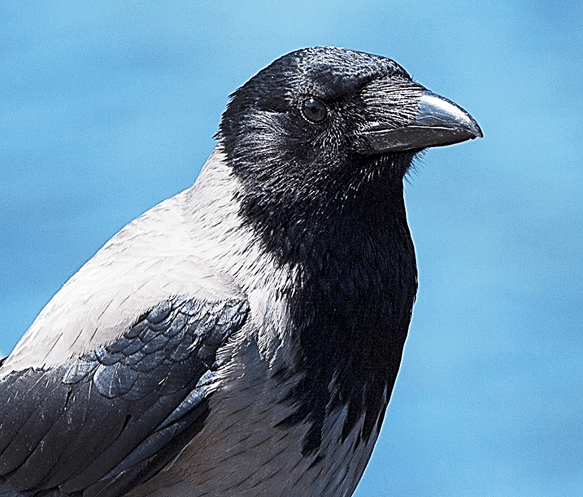
HOODED CROW (Corvus cornix) over water, Wikipedia photo credit

What could be more Scottish than “Scotch Crow” (Corvus cornix)?  The Scotch Crow is better known, especially on the Eurasian landmass, as the Hooded Crow (a/k/a “Hoodie Crow” by some Britons, and “Grey Crow” by some Scandinavians and Irish).  As the following paragraphs will document, the opportunity-grabbing Scotch Crow (a/k/a Hooded Crow) is as resourceful as a Scotsman (or Scotswoman).

Yet we need not be surprised at the wisdom of crows, because Proverbs 30:24-28 teaches us that God has caringly chosen to give wisdom to many of His creatures.  For more explanation on this, with more corvid illustrations, see “Clever Creatures: ‘Wise from Receiving Wisdom’”, Acts & Facts, 46(3):21 (March 2017), posted at www.icr.org/article/clever-creatures-wise-from-receiving  —  as well as “Jackdaws Identify ‘Dangerous’ from ‘Safe’ Humans”, Creation Science Update (May 4, 2020), posted at www.icr.org/article/jackdaws-identify-dangerous-from-safe-humans .

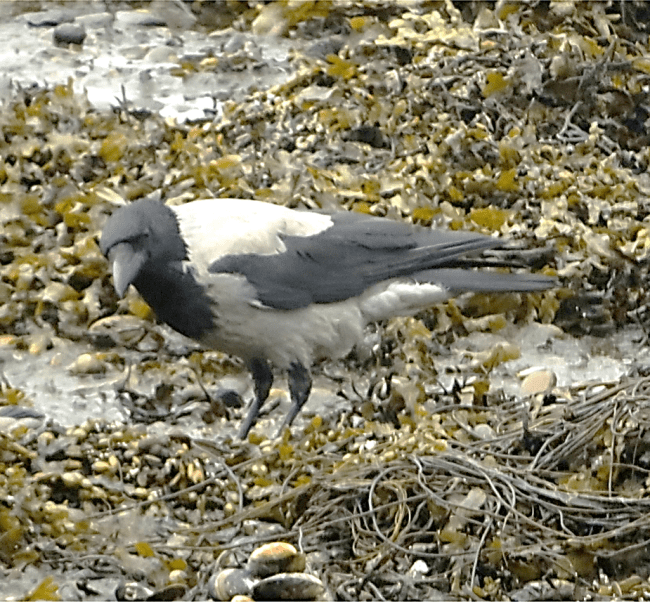
Hooded Crow, Isle of Lewis (Outer Hebrides)
A.D.2019 photo by Marnix Roels, “Hooded Crows from Scotland”
MarnixBirdGallery.WordPress.com

The black-and-grey Hooded Crow, like other corvids (i.e., members of the raven/crow superfamily), is a generalist—like the scavenging Carrion Crow (Corvus corone, its “southern cousin”, with which Hoodies sometimes hybridize), it eats almost anything available, dead or alive—carrion (which includes a huge variety of remains form other predators’ hunting successes, as well as roadkill), seeds, nuts, food scraps discarded by humans (esp. junk food), insects gathered on pieces of meat, grains (including corn), other plant materials (including fruits), small birds, bird eggs (such as eggs of seagulls or cormorants), crustaceans (such as Green Crabs, gooseneck barnacles), gastropod mollusks (such as European limpet, Blue-rayed Limpet, European periwinkle, rough periwinkle, Atlantic dogwinkle rock snail, thick-lipped dogwhelk mudsnail, European mudsnail, top snail), bivalve mollusks (such as Blue Mussel, Warty Venus hard-shell clam, Palourde clam, cockles), purple sea urchins, small mammals (such as Norwegian rat, mice, frogs, Eurasian pygmy shrew, juvenile rabbit), spiders, insects (e.g., fly larvae and adults), fish, snakes, etc.

In sum, Hooded Crows—such as those who make a living on coasts of the British Isles—are resourceful generalists.  These coast-living crows are not picky eaters!

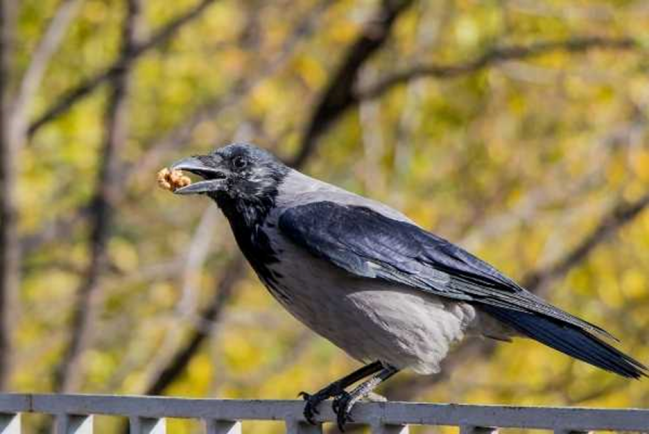
Hooded Crow perching with food   (BirdsAcademy.com photo credit)

In fact, Hooded Crows who habituate coastal territories, such as beaches of the British Isles, have been studied to see what their diet looks like. 

In one such research investigation, the diet of Hooded Crows was scrutinized (and quantified) near Lough Hyne Marine Reserve, a saltwater-fed coastal lake of West Cork (County Cork, Ireland).  With informative details and quantified data, these corvid diet research results were reported in a Copenhagen-based  science journal (“The Diet of Coastal Breeding Hooded Crows Corvus cornix cornix”, ECOGRAPHY, 15:337-346 (Oct.-Dec. 1992), by Simon D. Berrow, Tom C. Kelly, & Alan A. Myers).

The regular collection of prey items from these [coastal food-acquisition] sites … was integrated with pellet and stomach analysis to determine diet.  Intertidal organisms [e.g., beach shellfish] occurred in over 80% of pellets and 43% of stomachs and occupied over 77% of the total weight of foods identified in pellets.  All prey items recovered from drop sites originated from the intertidal habitat, involved either large-sized species or larger individuals of smaller-sized species, and were only dropped during October to February.  Twenty-five intertidal species were identified but only a few of these species contributed to the bulk of the diet.  Hooded crows were shown to consume a wide range of intertidal species throughout the year, though the species composition in the diet was seasonally influenced.  Depletion and weight loss of intertidal molluscs through the winter was shown to have a minimal effect on selection suggesting that prey switching was driven by the bird’s nutritional requirements. 

[Quoting Simon Berrow, Tom Kelly, & Alan Myers, at page 337]
Hooded Crow eating a beached fish   (OutOfSamsara photo credit)

Interestingly, the Hooded Crows somehow know that they need protein rich foods for their nestling young, plus they need calcium-rich food when their bodies are preparing for the breeding season.  These reproductive-linked-to-phenological requirements of corvids is alluded to by Dr. Simon Berrow’s research team.

Vertebrate remains and insects were the most frequently occurring prey items in six food boluses fed by crows to their nestling [young] and together accounted for 90% by volume.  Dipteran [i.e., fly] larvae and adults occurred in half of the boluses with Lepidopteran [i.e., moth/butterfly] larvae and Araneae [spiders] also present. 

[Quoting Berrow, Kelly, & Myers, at page 340] 

. . .

The nutritional requirements of a predator [such as Hooded Crow] have been shown to influence prey selection.  Ravens in Scotland tended to feed only on prey items obtained from the seashore during the breeding season which was attributed to their requirement for calcium. ….  In the winter, crows tend to have an energy rich diet, but during the breeding season more protein is requiredfor provisioning the nestlings.  Insects are considered a good source of protein for crows with dependent young and calcium for bone development may be obtained from crabs.  Although small gastropod molluscs are abundant at Lough Hyne they are only consumed by crows during the spring and summer, which may also be a reflection of the birds’ calcium requirement. 

[Quoting Berrow, Kelly, & Myers, at page 345]

Now that’s something to crow about!

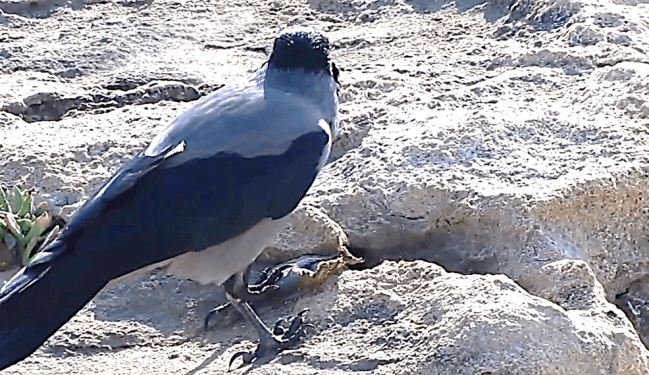
Hooded Crow at the beach   (Freepik.com photo credit)

Like all corvids, the crow is also extremely intelligent. Specimens of Corvus cornix [hooded crow] living on European coasts have developed a simple yet surprising nutrition strategy. To feed on molluscs, they drop the shells from heights … [so] that they shatter on the first attempt, so that they can feed on the animal hidden inside. Furthermore, they deliberately ignore smaller shells and focus on those that guarantee a larger meal. 

[Quoting Federico Fiorillo, “The Hooded Crow—Not So Pretty, But Very Smart”, AviBirds.com (accessed AD2021-12-29)]

In other words, Scotch Crows—like the Scotch people—are opportunistic, versatile, adaptable, flexible, resourceful.  Whatever is available will be used to achieve whatever is needed.  Very Scottish! And the Scotch Crows (a/k/a Hooded Crows) of the Western Isles are no exception—they will find and eat what they need! 😊

Scotch Crow (aka Hooded Crow), Outer Hebrides   (Mister T / Hebridean Imaging photo)

So, what could be more Scottish than a “Scotch Crow”?   Wonderful birds are there to be seen, in the Outer Hebrides (“Western Isles”).  If you get the opportunity, go see them!  Meanwhile, appreciate that they are there, living their daily lives—filling their part of the earth—glorifying their Creator. As Isaiah (42:12) said, these birds cause God’s glory, especially in the islands, to be clearly seen (Romans 1:20).

><> JJSJ     profjjsj@aol.com 

White-tailed Eagle and Corncrake: Birdwatching in the Scottish Hebrides, Part 1

Dr. James J. S. Johnson

Let them give glory unto the LORD, and declare his praise in the islands. 

Isaiah 42:12
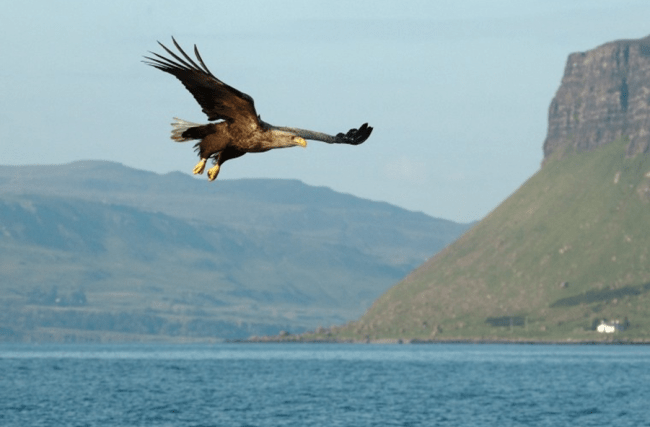
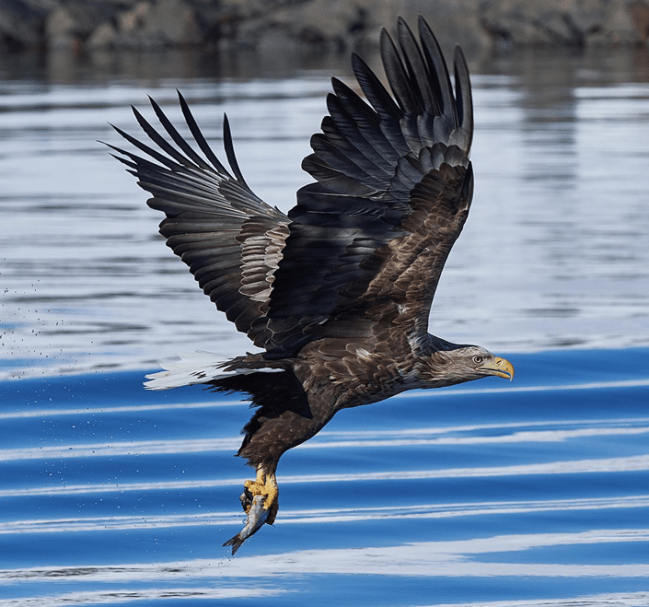
White-tailed Eagle aloft in the Outer Hebrides   (LHH Scotland photo credit)

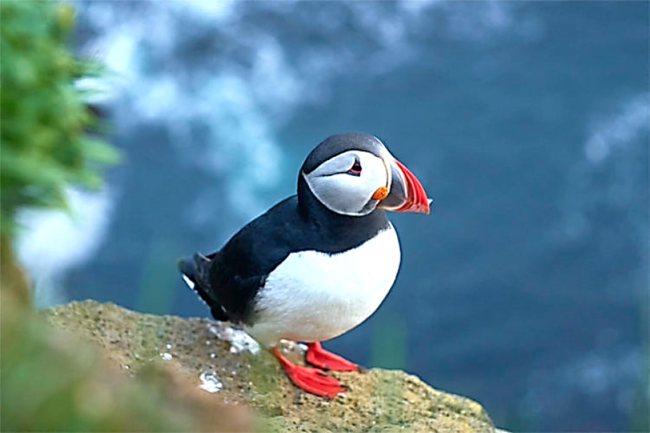
Watching coastal birds is a favorite pastime in the Outer Hebrides, according to Outer Hebrides Tourism.  Having visited some of the Inner Hebrides, with marvelous birdwatching opportunities (including puffins!), I am not surprised.

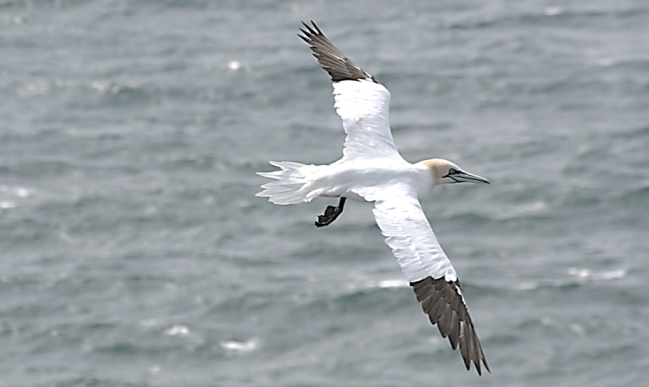
The Outer Hebrides archipelago is a unique island chain perched on the North Western edge of Europe. Here the landscape ranges from white sand beaches and flower covered machair grasslands to barren hilltops, fjord like sea lochs and vast peatlands. Wildlife is abundant and birds of prey are a particularly visible feature of the open landscapes . . . Spring and autumn are the best times to spot migrating birds in the Outer Hebrides with large numbers of seabirds passing up and down the coasts of our islands on their way to and from northern breeding grounds and wintering grounds to the south.  These are both exciting birding seasons in the Outer Hebrides when almost anything can turn-up but the highlights of spring and autumn birding in the Western Isles include the passage of Skuas offshore and the flocks of geese and whooper swans passing overhead. Visit in the spring and summer to see the Outer Hebrides seabird breeding colonies of terns and gulls, which be found scattered along the coastline on headlands, beaches, islands and sand dunes.  Although most breeding colonies are found offshore they will travel long distances to feed and birdwatchers can often see seabirds in the Western Isles from the shore.  Spot Gannets in the Outer Hebrides as they make their spectacular dives after fish and keep eyes open for Black Guillemot, Guillemot, [Atlantic] Puffin, Razorbill and Fulmars, as all are common island birds.

Quoting from “Bird of Prey Trail Locations” and “Wildlife: Coastal Birds”, VisitOuterHebrides.co.UK  —  emphasis added by JJSJ
Northern Gannet, aloft in the Outer Hebrides  (Islandeering photo credit)

Some of the coastal birds that frequent the Outer Hebrides include shorebirds (such as Black-tailed Godwit, Curlew Sandpiper, Dotterel, Dunlin, Jack Snipe, Little Stint, Oystercatcher, Pectoral Sandpiper, Purple Sandpiper, Redshank, Ringed Plover, Ruff, Sanderling, Turnstone, Heron), seagulls (such as Glaucous Gull, Iceland Gull, Lesser Black-backed Gull, Greater Black-backed Gull), as well as various ducks (such as Eider, Goldeneye, Black-throated Diver, Great-northern Diver, Red-throated Diver, Red-breasted Merganser, Shelduck, Shoveler, Long-tailed Duck), plus Shag and Cormorant, Atlantic puffin, Northern Gannet, geese (Dark-bellied Brent Goose, Greylag Goose), Mute Swan, plus a mix of passerine songbirds (such as Barred Warbler, Blackcap, Bluethroat, Brambling, Chiffchaff, Common Crossbill, Common Whitethroat Warbler, Corn Bunting, Dunnock, Hawfinch, House Martin, House Sparrow, Meadow Pipit, Pechora Pipit, Pied Flycatcher, Redwing, Rose-colored Starling, Stonechat, Yellow-browed Warbler), the Ring Ouzel, the ever-versatile Woodpigeon, and more!

Atlantic Puffin, ashore in the Outer Hebrides  (Sykes Cottages photo credit)

The Hebrides, formerly known as the “Western Isles”, are wildlife-watching venues.

With the islands enjoying one of the last untouched natural landscapes in Europe, wildlife in the Western Isles is some of the finest in the world, with Outer Hebrides animals and plants all at home in their surrounding without fear of poaching, pollution or disturbance.  Wildlife watching in the Outer Hebrides offers a glimpse into a time almost forgotten by the rest of the world, where the white -tailed eagle soars over the rugged coastline as red deer roam proudly over the peaty moorlands and [river] otters swim in many sea lochs.  Much of the wildlife in the Western Isles is unique and protected, meaning that visitors enjoying Scottish island nature breaks here can enjoy pursuits as diverse as spotting minke whale in the sea around the Outer Hebrides and eagle watching in the sky. 

[The Outer Hebrides] are a popular destination for birdwatching in Scotland, as birding in the Western Isles offers opportunities to see everything from birds of prey to seabirds and waders. Look out for the Bird of Prey Trail which spans the Outer Hebrides with location markers for the best places to see birds of prey. As well as this, the Western Isles are the summer home to two thirds of the elusive British corncrake population from April to September. 

[Quoting VisitOuterHebrides.co.UK, “Closer to Wildlife” — emphasis added by JJSJ
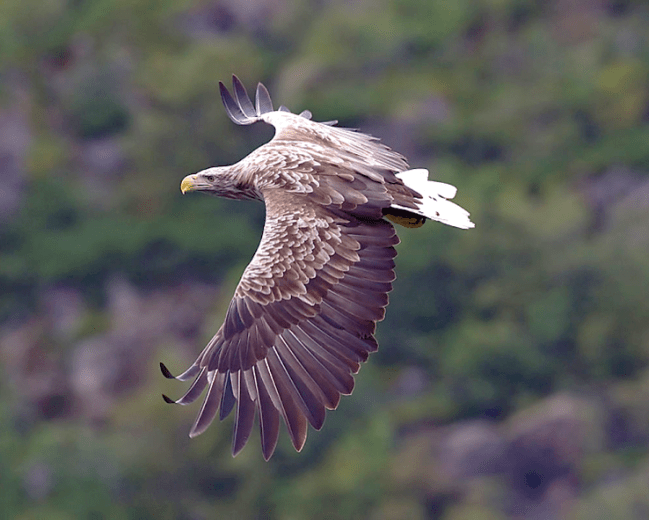
White-tailed Eagle   [ photo credit: Animalia.bio ]

In the above quotation the White-tailed Eagle (a/k/a “Sea Eagle”) is mentioned; this raptor is Great Britain’s (and thus also Scotland’s) largest bird of prey.  It habituates almost all of Scotland, including the Inner and Outer Hebrides.

The White-tailed eagle is one of the largest living birds of prey. It is sometimes considered the fourth largest eagle in the world and is on average the fourth heaviest eagle in the world. White-tailed eagles usually live most of the year near large bodies of open water and require an abundant food supply and old-growth trees or ample sea cliffs for nesting. They are considered a close cousin of the Bald eagle, which occupies a similar niche in North America. The adult White-tailed eagle is a greyish mid-brown color overall. Contrasting with the rest of the plumage in the adult are a clearly paler looking head, neck and upper breast which is most often a buffy hue. The brownish hue of the adult overall makes the somewhat wedge-shaped white tail stand out in contrast. All the bare parts of their body on adults are yellow in color, including the bill, cere [nose-like part of upper bill], feet, and eyes.

[Quoting “White-tailed Eagle”, Animalia, https://animalia.bio/white-tailed-eagle .]
White-tailed Eagle with caught fish   ( Wikipedia photo credit )

Watching these sea eagles catch fish in their talons, as they wing to, near, and then away from the seawater surface, is much like watching Bald Eagles catch fish in the coastal seawaters of Southeastern Alaska.  [See video clip of a Sea Eagle catching fish, at rspb.org.UK – website of the Royal Society for the Protection of Birds.]

White-tailed eagles are powerful predators and hunt mostly from perches, in a “sit-and-wait” style, usually from a prominent tree perch. Fish is usually grabbed in a shallow dive after a short distance flight from a perch, usually with the eagles only getting their feet wet. At times they will also fish by wading into shallows, often from shores or gravel islands. When it comes to non-fish prey, White-tailed eagles often hunt by flying low over sea coast or lake shore and attempt to surprise victims. [emphasis added]

[Quoting “White-tailed Eagle”, Animalia, https://animalia.bio/white-tailed-eagle .] 

These coastal raptors mostly eat fish.  However, they also eat waterfowl and small mammals (such as rodents).  During winter they eat lots of carrion.

In previous centuries the White-tailed eagle populated the coasts of Scotland, but it was hunted to extirpation in the A.D.1920s.  However, it was conservationally re-established on Rhum in A.D.1975, and (thankfully) it has since re-colonized (beyond 25 breeding pairs, apparently) many of the indented inlets of the coastal strands of Outer Hebrides islands, including Harris, Lewis, and South Uist. 

White-tailed Eagles are large birds (2-to-3 feet, from bill-tip to tail-tip; 6-to-8 feet wingspan; 9-to-16 pounds), famous for eating fish (such as salmon, trout), yet they also prey on rabbits and hares, geese, available seabirds (such as fulmars and petrels), and lamb carrion.  Like their Golden Eagle cousins—which reside in the Hebrides—these eagles establish and defend territories for their families.

Other birds of prey, habituating the Outer Hebrides, include two types of owls, the Short-eared Owl and the Long-eared Owl.  Other birds of prey include hawks (such as harriers, sparrow hawks, and ospreys) and falcons (such as kestrels, peregrines, and hobbies), which routinely find and consume rodents (such as voles).  Other birds of prey, sometimes observed, include Buzzards, Snowy Owl, and Gyrfalcon. 

However, in contrast to such carnivorous raptors, consider the common Corncrake.

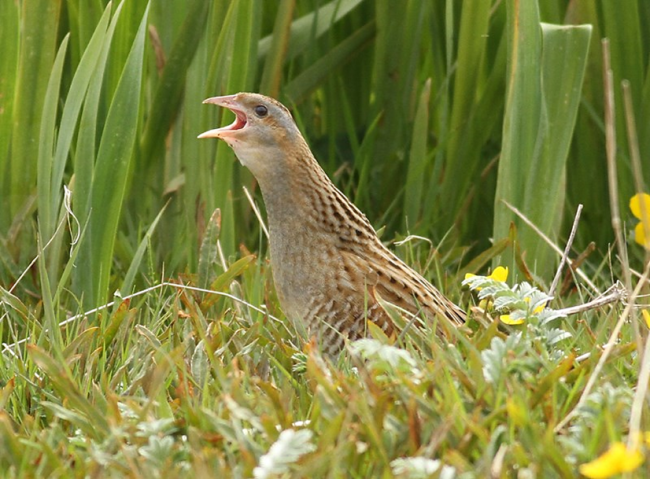
Corncrake in grass      (Wikipedia photo credit)

The chicken-like Corncrake is a migratory rail that frequents grassy parts of Hebridean islands, as well as Scotland’s semi-marshy floodplain grasslands (dominated by grasses or sedges) and coastal wetlands (such as nettle beds, iris beds, and reed beds), yet the Corncrake prefers the tall plant-cover of farmed crop-fields (such as hayfields, fields of wheat and other cereals, and clover meadows).  This rail arrives from mid-April and stays for breeding and beyond, till August or September.  After that the Corncrake migrates to North Africa, for over-wintering.

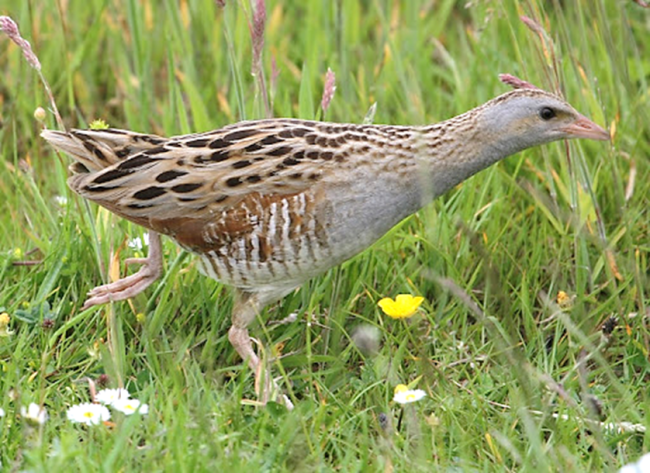
Corncrake in camouflage       (IBTimes UK photo credit)

The Corncrake’s appearance somewhat resembles a young Grey Partridge (or somewhat like a moorhen or coot), yet it is almost as small as a blackbird.

Plumage softly but richly coloured, with pale grey face, fore-neck and breast, yellowish-buff upper parts, lined with cream and spotted or streaked blackish-brown, chestnut wings ‘catch fire’ in flight, barred white flanks.  Bill and legs dull pink.  Flight typical of [rail] family, loose-winged and clumsy; usually escapes by running into dense cover. 

[Quoting Roger Tory Peterson, Guy Mountfort, et al., A Field Guide to Birds of Britain and Europe (Houghton Mifflin, 1993), page 93.]
“Singing” male Corncrake, Hebrides (Steven Fryer/BirdGuides.com photo credit)

Because Corncrakes (a/k/a Land Rails) routinely reside in grassy fields, where photosynthetic biomass productivity is high, they have a smörgåsbord of seeds – as well as other foods, available just for the taking. 

Corncrake, hunting food, Hebrides (Alan Lewis/Surfbirds.com photo credit)

Besides seeds these rails eat bugs (especially cockroaches and beetles, including dung beetles), fly larvae, termites, ticks, spiders, dragonflies, earthworms, grasshoppers, slugs, snails, weevils, and even small frogs. [Regarding the diet of Corncrakes, see further Suzanne Arbeiter, Heiner Flinks, et al., “Diet of Corncrakes Crex crex and Prey Availability in Relation to Meadow Management”, ARDEA, 108(1):55-64 (April 24, 2020), posted at https://doi.org/10.5253/arde.v108i1,a7 . ]

Corncrake, on the island of Iona, Inner Hebrides (Flickr photo credit)

Corncrakes themselves must be careful—they serve as prey to other animals, including mustelids (mink, ferrets, and river otters), foxes, larger birds (such as white stork, harrier hawks, seagulls, and corvids, especially hooded crows).

Wonderful birds are there to be seen, in the Outer Hebrides (Scotland’s “Western Isles”).  If you get the opportunity, go see them! 

Meanwhile, appreciate that they are there, living their daily lives—filling their part of the earth—glorifying their Creator (Isaiah 42:12).

><> JJSJ     profjjsj@aol.com  

———————————–

Christ’s Providence Is Clearly Seen in Bird Migrations

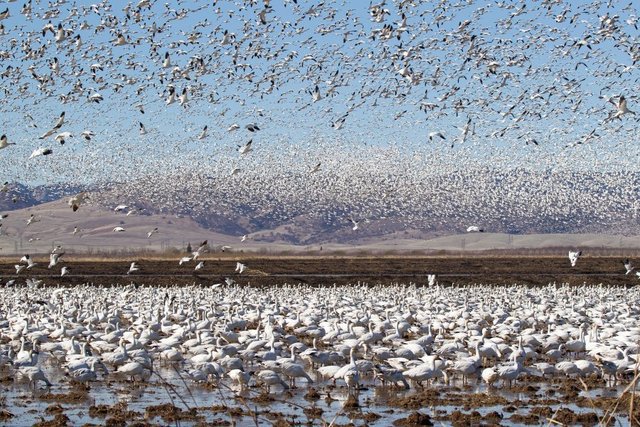
Snow Geese Migrating

Click to watch – Intro Video

Christ’s Providence Is Clearly Seen in Bird Migrations

Just as monkeys can’t accidently type Shakespeare texts, birds can’t migrate by evolutionary luck, despite imagined eons of time for “lucky” accidents.1 Why? Because the challenging mix of birds’ metabolic needs for long-distance travel, synchronized to seasonal and diurnal weather conditions, are exacerbated by unyielding entropy. This all-or-nothing complexity prohibits “lucky” bird migrations. In short, to seasonally migrate, birds need the Lord Jesus Christ’s providential bioengineering care.2,3

Flight failures are tragic when malfunctioning airplanes or spacecraft fall out of the sky.3 Likewise, if bird traits malfunctioned while trying to evolve migratory flight features, there would be no second chances.1 So, either birds are aptly fitted by their Creator with migration traits or they can’t migrate.4,5

Consider the air speeds that birds need to maintain over long distances before their flying fuel (i.e., metabolic assets dedicated to long-distance flight needs) is depleted.

The birds’ flight speed in relation to the air varies in general between approximately 30 km per hour, for the smallest birds, and 80 km per hour, for larger birds.…When the bird’s mass increases 100 times, then 200 times as much flight power is required.4

Yet, powering heavier-than-air flight requires adequate bird muscle strength and endurance.

The muscle power cannot, however, increase much more than the weight. Provided that the proportions are the same, the wing area is only 20 times as great in a bird that weighs 100 times more than another. The limited muscle power and wing area of heavy birds, in combination with the very high flight power that is required [for long-distance migrations], sets a size limit above which flying is no longer possible. This limit is estimated to be around 15 kg. This corresponds well with the weight of the largest animals in the world that can actively fly—swans, bustards, albatrosses and condors.4

Thus, interplay between flight speed and muscle power balances the complicated physics required for non-fixed-wing flying against long-distance migration.2-5

Moreover, the unforgiving biochemistry and physiology of each migratory bird’s metabolism (food acquisition, fuel utilization, respiration, etc.) must aptly fit the ongoing needs of seasonal migrations or else avian biochemical logistics fail.4,5 Thankfully, for all migratory birds—and all birdwatchers—the phenological phenomena of bird migrations is not dependent upon “luck,” as imagined by evolutionists.3,5 Rather, none less than the Lord Jesus Christ deserves all credit and acclaim for these winged wonders of biogeographic beauty.

“But now ask…the birds of the air, and they will tell [literally “explain to,” or “clarify to”] you…that the hand of the LORD has done this, in Whose hand is the life of every living thing.” (Job 12:7-10)

References

  1. “Thus, eons of time guarantee that the simian keypunchers can never type out Hamlet—the imagined luck is ‘not to be.’ Time plus entropy prevents the spontaneous generation of life and any hope of evolution.” Johnson, J. J. S. 2018. Infinite Time Won’t Rescue EvolutionActs & Facts. 47 (6): 21. Complex bird anatomies cannot spontaneously self-assemble, apart from Christ’s bioengineering providence, because ubiquitous entropy (i.e., the 2nd Law of Thermodynamics) absolutely prevents any mix of biochemicals from magically combining into purpose-working “all-or-nothing-unity” systems, regardless of how much time is allowed, because infinite time guarantees that (our fallen universe’s) entropy bars any such luck.
  2. Egevang, C. et al. 2010. Tracking of Arctic terns Sterna paradisaea reveals longest animal migrationProceedings of the National Academy of Sciences. 107 (5): 2078-2081, quoted in Johnson, J. J. S. 2010. Survival of the Fittest: God’s Providential ProgrammingActs & Facts. 39 (10): 17-18. See also, regarding phenological migrations, Johnson, J. J. S. 2013. God Fitted Habitats for BiodiversityActs & Facts. 42 (3): 10-12.
  3. Guliuzza, R. J. 2011. Darwin’s Sacred Imposter: The Illusion That Natural Selection Operates on OrganismsActs & Facts. 40 (9): 12-15; Guliuzza, R. J. 2017. Engineered Adaptability: Engineering Causality Studies Unmask Evolutionary ExternalismActs & Facts. 46 (11): 17-19. See also Sherwin, F. A ‘One-Hundred-Million-Year-Old Bird’ Is Still a BirdCreation Science Update. Posted on ICR.org June 20, 2006, accessed October 1, 2021.
  4. “The rule of thumb is that the speed roughly doubles when the mass of the bird increases 100 times. If a 10-g Willow Warbler flies at 30 km per hour, then a Raven of 1 kg [1,000 grams] flies, in round figures, at 60 km per hour. …The capacity of the flight muscles sets a ‘ceiling’ to how much flight power a bird can cope with—a lower ceiling for continuous power outtake and a somewhat higher ceiling for temporary all-out bursts. After this sort of brief ‘muscle spurt’ the muscles have to wind down while the lactic acid which is formed in the muscle tissue when energy is produced without sufficient oxygen supply is carried away.” Alerstam, T. 1993. Bird Migration. New York: Cambridge University Press, 252.
  5. Johnson, J. J. S. 2016. High-Altitude Flying Is for the BirdsActs & Facts. 45 (3): 20-21.

* Dr. Johnson is Associate Professor of Apologetics and Chief Academic Officer at the Institute for Creation Research.

Cite this article: James J. S. Johnson, J.D., Th.D. 2021. Christ’s Providence Is Clearly Seen in Bird MigrationsActs & Facts. 50 (12).

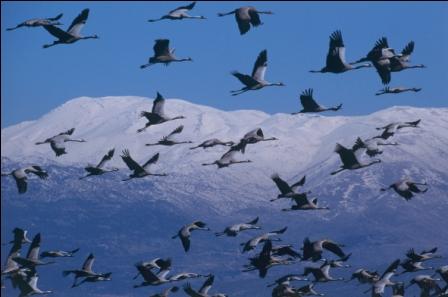
Crane Migration over Israel

Crane Migration over Israel

(Dr. Jim asked me to post this for him. Trust you will enjoy this. Copied directly from the website with his permission.)

“Q” Up for 3 Birds

“But those who wait upon the LORD shall renew their strength; they shall mount up with wings as eagles; they shall run, and not be weary; and they shall walk, and not faint.” (Isaiah 40:31)

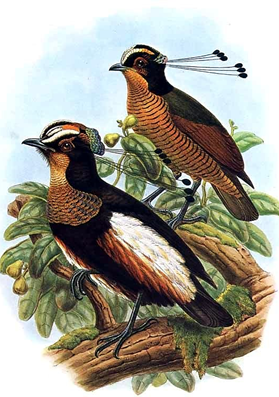
QUEEN CAROLA’S PAROTIA [Wikipedia image]

Learning to wait is a virtue, called patience (Romans 8:25; Galatians 6:9; 1st Corinthians 13:4), and waiting in line is often called “queueing up”. So here are 3 birds to “Q up” our appreciation for avian variety.

Carola's Parotia - eBird
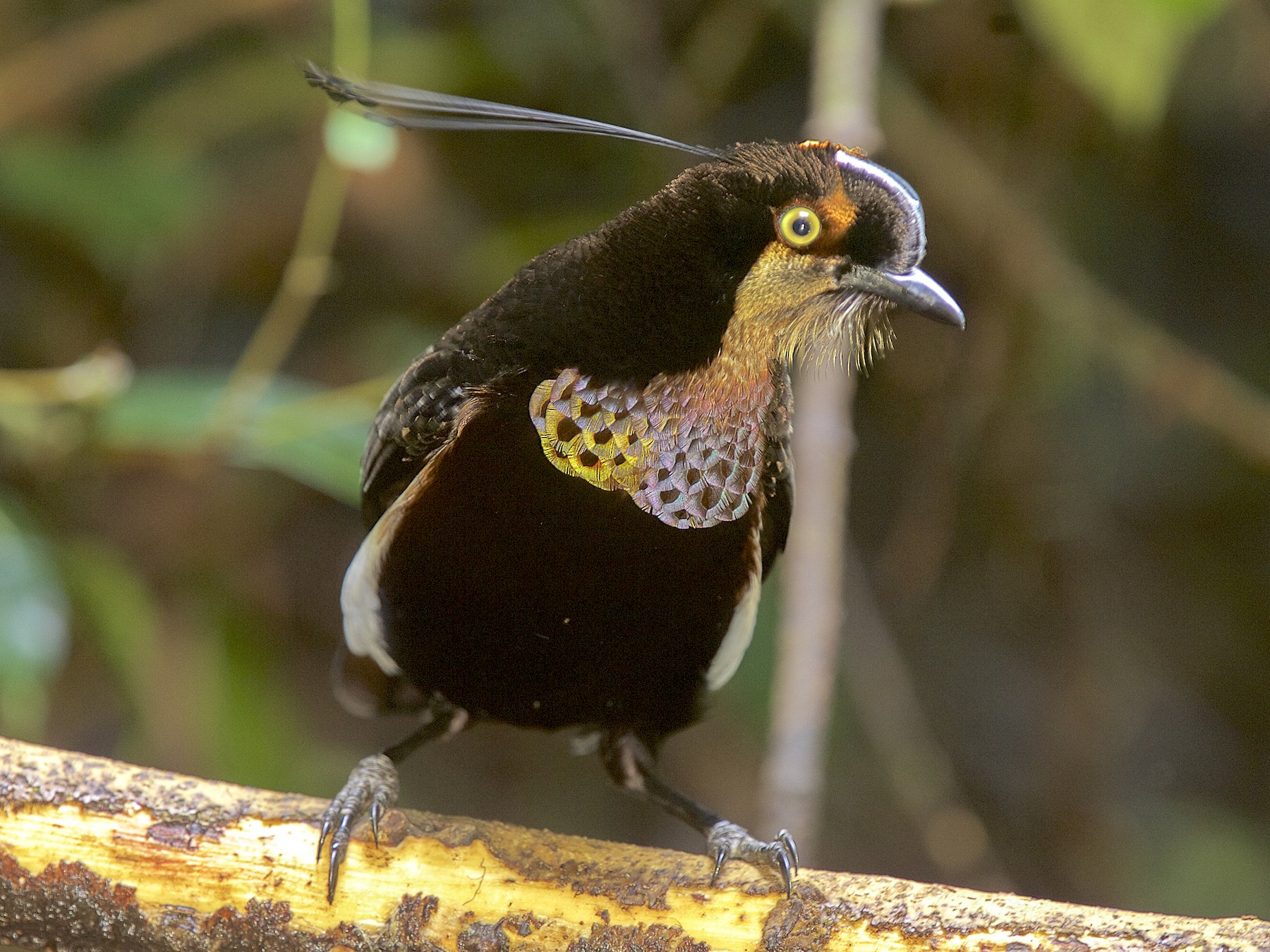
QUEEN  CAROLA’S  PAROTIA [ eBird.org photo credit ]

QUEEN  CAROLA’S  PAROTIA, also called “Queen Carola’s 6-wired  Bird-of-Paradise”, are endemic (natively populated) only to New Guinea, the largest island in the Indonesian  archipelago.  Parotias are part of the bird-of-paradise family, and like their cousins, they perform histrionic ballet-like dances (called “leks”) upon forest dance-floors (flat areas of forest floor swept clean of loose vegetation and debris).   In such dances the male hops around and bobs his crest-feathered head, like a bobble-head toy, puffing his chest plumage, fluttering his wings, fanning his kilt-like feathers, and other enthusiastic displays of “showing off for the girls”.   

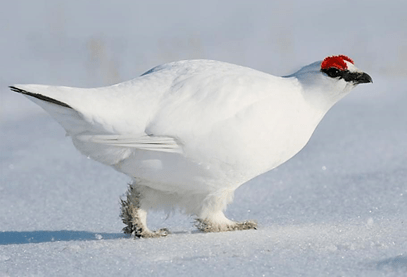
ROCK PTARMIGAN [Cornell Lab of Ornithology photo credit ]

QUAIL are various “galliform” ground-fowl (chicken-like birds), such as bobwhite quail, California quail,  partridges, ptarmigans, and red grouse.   Willow ptarmigans and rock ptarmigans have feather-covered feet and toes, resembling snowshoe rabbits.  Like snowshoe rabbits (with winter “snow” coats and brown summer coats), the Rock Ptarmigan’s white winter plumage camouflages with snow, and its brown summer plumage with wooded areas.

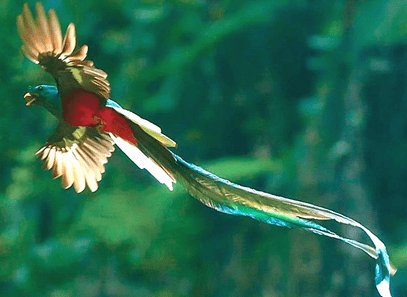
QUETZAL [Mexico Daily News photo]

QUETZALS are fancy trogon-birds, sporting flamboyant colors and long streamer-tails.  Latin American jungles and subtropical wet forests are habitats of Pavonine Quetzals, Crested Quetzals, Resplendent Quetzals,  Golden-headed Quetzals, and White-tipped Quetzals. Eared Quetzals live near streams in Mexico’s pine-oak forests and canyons.

17 cheers for “Q”!

><> JJSJ


ARE BIRDS ‘COUSINS’ TO REPTILES? NO.

Q:  Are today’s birds genealogical ‘cousins’ to today’s reptiles, due to a shared (evolutionary) ancestry?

A:  No.  However, birds and reptiles share the same Creator, the Lord Jesus Christ, Who created them to share the same earth.

All flesh is not the same flesh: but there is one kind of flesh of men, another flesh of beasts, another of fishes, and another of birds.

1st Corinthians 15:39

According to the evolutionary sequence of [imagined] events, birds are supposed to have evolved from reptiles.3

If that had occurred in the past, which it did not, it would mean that today’s birds—such as robins and roadrunners—would be distant ‘cousins’ of reptiles—such as cobras and crocodiles.

The Darwinian tale portrays today’s birds as winged dinosaurs who supposedly survived a global ‘extinction event’ that supposedly occurred about 66,000,000 years ago.1,2

Is there any eyewitness report supporting this magical scenario, or even evidence of any such timeframe? No and no.4,5

Although there are myriads of errors in this sensational speculation, only a few of which are mentioned here.

In particular, this pseudoscience scenario requires swallowing at least three invalid and drastic premises:

(1) the assumption that reptiles are not fundamentally different from birds;3 and

(2) the assumption that a secret agent (oxymoronically named “Natural Selection”, as if “its” naturalistic outcomes were intended) can accidently invent—and then successfully secure (i.e., genetically “lock down”)—such traumatic transitional transmogrifications;5 and

(3) the assumption that any such transitions’ biochemical and genetic details, in defiance of entropy’s universal destructiveness, repeatedly escaped thermodynamic reality.5

For starters, just imagine the first-listed problem, i.e., the complicated anatomical and physiological differences between birds and reptiles:

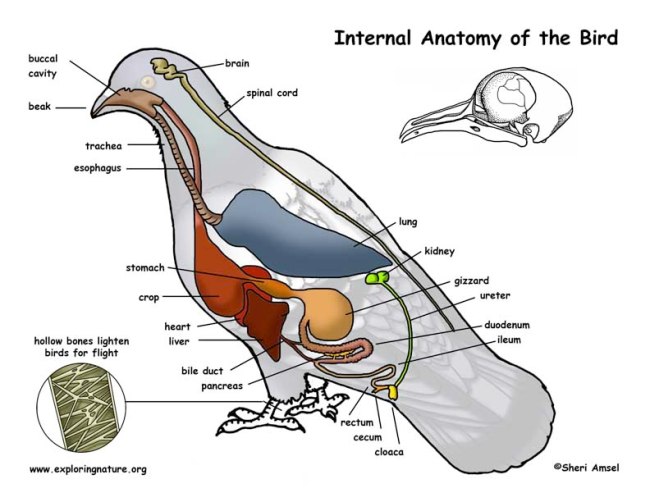
  • birds have hollow bones; reptiles, except for marrow cavities, have solid bones.
  • birds use air sacs for non-stop unidirectional (one-way) airflow through their lungs; most reptiles have two-way breathing systems.
  • birds are endothermic (warm-blooded), actively controlling their body “thermostats”; reptiles are mostly ectothermic (cold-blooded).
  • birds have muscle-controlled feathers; reptiles have dry skins or scales.
  • birds have four-chambered hearts; reptiles usually have three-chambered hearts.

So don’t expect reptiles to accidentally change their genes to produce birds as descendants!

As Australian creation scientist Fiona Smith once said:

In other words, you don’t just put feathers on a reptile and then it can fly. There are a multitude of [essential] attributes, all working together, that make a bird fly.2

There is much more proof—to borrow Dr. Frank Sherwin’s observations—that birds have always (and only) been birds, and that reptiles have always (and only) been reptiles.

References

1 For centuries evolutionists have proposed the notion that birds somehow evolved from reptiles, imagining “feathered dinosaurs” or dinosaur-like flying reptiles (like pterodactyls) as speculative ‘transitional’ animals. Burnett, R. W., H. I, Fisher, and H. S. Zim. 1958. Zoology: An Introduction to the Animal Kingdom. New York, NY: Simon and Schuster, 5-7, 13-17, 72-75; Zim, H. S., and I N. Gabrielson. 1964. Birds: A Guide to the Most Familiar American Birds. New York, NY: Golden Press, 12-13.

2 “Birds are incredible flying (and occasionally non-flying) machines. The Creator has designed these creatures with specialized flight apparatus, an amazing respiratory system, not to mention unbelievable migration and navigation abilities.” Sherwin, F. 2006. A ‘One-Hundred-Million-Year-Old Bird’ Is Still a Bird. Creation Science Update (June 20, 2006). See also Johnson, J. J. S. 2020. Wandering Albatross: Wide Wings on the Winds. Creation Science Update (July 2, 2020), citing Job 39:26-27 as illustrating God’s bioengineering that enables heavy birds to efficiently use wind current for launching their heavier-than-air bodies into the sky.

3 Smith, F. 2015. Evidence for Creation: A Tour through Some East-Australian Zoos. Fremantle, Western Australia: Vivid Publishing, 164-165 (quotation), 251. Fiona Smith, an Australian professional geoscientist and science educator, graduated ICR’s School of Biblical Apologetics, during 2015 with a Master of Christian Education degree (joint major in Biblical Education & Apologetics).

4 Regarding the need for reliable eyewitnesses, to learn the truth about unique events of the no-longer-observable past, see Johnson, J. J. S. 2016. There’s Nothing Like an Eyewitness. Acts & Facts. 45(12):20.

5 Regarding the ubiquitous and inescapable destructiveness of biochemical entropy, see Johnson, J. J. S. 2018. Infinite Time Won’t Rescue Evolution. Acts & Facts. 47(6):21. Regarding the animistic role that selectionists imagine “nature” as playing, in order to “favor” or “select” a series of genetic mutations for producing phenotypically survivability-“fit” outcomes, see Guliuzza, R. 2011. Darwin’s Sacred Imposter: The Illusion that Natural Selection Operates on Organisms. Acts & Facts. 50 (12).

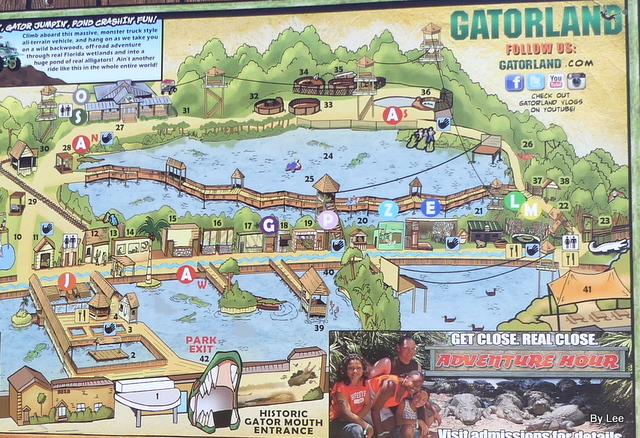
Map of Gatorland Showing Boardwalk

Are Birds “Cousins” to Reptiles – (Updated 12/04/21)

BIRDS DIDN’T EVOLVE FROM REPTILES

NO: BIRDS DID NOT ‘EVOLVE’ FROM REPTILES

All flesh is not the same flesh; but there is one kind of flesh of men [ανθρωπων], another flesh of beasts [κτηνων], another of fishes [ιχθυων], and another of birds [τηνων]. (1st Corinthians 15:39)

Q:  Are today’s birds genealogical ‘cousins’ to reptiles, due to shared (evolutionary) ancestry?

A:  No.  (Not even close!) However, today’s birds and reptiles do share the same Creator, the Lord Jesus Christ, Who created them (and their ancestors) to share the same earth, with us.


According to the evolutionary sequence of [imagined] events, birds are supposed to have evolved from reptiles.3

If that had occurred in the past, which it did not, it would mean that today’s birds—such as robins and roadrunners—would be distant ‘cousins’ of reptiles—such as cobras and crocodiles.

The Darwinian tale portrays today’s birds as winged dinosaurs who supposedly survived a global ‘extinction event’ that supposedly occurred about 66,000,000 years ago.1,2

Is there any eyewitness report supporting this magical scenario, or even evidence of any such timeframe? No and no.4,5

Although there are myriads of errors in this sensational speculation, only a few of which are mentioned here.

In particular, this pseudoscience scenario requires swallowing at least three invalid and drastic premises:

(1) the assumption that reptiles are not fundamentally different from birds;3 and

(2) the assumption that a secret agent (oxymoronically named “Natural Selection”, as if “its” naturalistic outcomes were intended) can accidently invent—and then successfully secure (i.e., genetically “lock down”)—such traumatic transitional transmogrifications;5 and

(3) the assumption that any such transitions’ biochemical and genetic details, in defiance of entropy’s universal destructiveness, repeatedly escaped thermodynamic reality.5

For starters, just imagine the first-listed problem, i.e., the complicated anatomical and physiological differences between birds and reptiles:

  • birds have hollow bones; reptiles, except for marrow cavities, have solid bones;
  • birds use air sacs for non-stop unidirectional (one-way) airflow through their lungs; most reptiles have two-way breathing systems;
  • birds are endothermic (warm-blooded), actively controlling their body “thermostats”; reptiles are mostly ectothermic (cold-blooded);
  • birds have muscle-controlled feathers; reptiles have dry skins or scales;
  • birds have four-chambered hearts; reptiles usually have three-chambered hearts;
  • most birds have major muscles anchored to their front, attached to a keeled sternum (breastbone), facilitating perching; reptiles’ main muscles anchor to their vertebral column (backbone), attached in arrangements conducive for standing, walking, and running.2

Don’t expect reptiles to accidentally change their genes to produce birds as descendants. As Fiona Smith says:

In other words, you don’t just put feathers on a reptile and then it can fly. There are a multitude of [essential] attributes, all working together, that make a bird fly.2

There is much more proof—to borrow Dr. Frank Sherwin’s observations—that birds have always (and only) been birds, and that reptiles have always (and only) been reptiles.

God created each bird, and each reptile, to be whatever He chose that creature to be–and it’s our privilege to see God’s magnificent creation and to learn about His magnificent majesty in the process (Revelation 4:11)!


References

1 For centuries evolutionists have proposed the notion that birds somehow evolved from reptiles, imagining “feathered dinosaurs” or dinosaur-like flying reptiles (like pterodactyls) as speculative ‘transitional’ animals. See, accord, R. Will Burnett, Harvey L. Fisher, & Herbert S. Zim, Zoology: An Introduction to the Animal Kingdom (New York, NY: Simon and Schuster, 1958), pages 5-7, 13-17, 72-75; Herbert S. Zim & Ira N. Gabrielson, Birds: A Guide to the Most Familiar American Birds (New York, NY: Golden Press, 1964), pages 12-13.

2 “Birds are incredible flying (and occasionally non-flying) machines. The Creator has designed these creatures with specialized flight apparatus, an amazing respiratory system, not to mention unbelievable migration and navigation abilities.” Sherwin, Frank J., “A ‘One-Hundred-Million-Year-Old Bird’ Is Still a Bird”, Creation Science Update (posted June 20, 2006). See also James J. S. Johnson, “Wandering Albatross: Wide Wings on the Winds”, Creation Science Update (July 2, 2020), citing Job 39:26-27 as illustrating God’s bioengineering that enables heavy birds to efficiently use wind current for launching their heavier-than-air bodies into the sky.

3 Smith, Fiona. 2015. Evidence for Creation: A Tour through Some East-Australian Zoos (Fremantle, Western Australia: Vivid Publishing), pages 164-165 (quotation), 251. The late Fiona Smith (now in Heaven with her Redeemer, the Lord Jesus Christ), an Australian professional geoscientist and science educator, graduated ICR’s School of Biblical Apologetics, during 2015 with a Master of Christian Education degree (joint major in Biblical Education & Apologetics).

4 Regarding the need for reliable eyewitnesses, to learn the real truth about unique events of the no-longer-observable past, see James J. S. Johnson, “There’s Nothing Like an Eyewitness”, Acts & Facts, 45(12):20 (December 2016).

5 Regarding the ubiquitous and inescapable destructiveness of biochemical entropy, see James J. S. Johnson, “Infinite Time Won’t Rescue Evolution”, Acts & Facts. 47(6):21 (June 2018). The phrase “natural selectin” is a misleading bait-and-switch term, because the action of “selection” necessarily requires a selector who can think (i.e., utilize information while exercising intelligence), prefer/favor one outcome as more valuable than another (i.e., make value judgments), and make/implement action-oriented decisions (i.e., make volitional choices). Regarding the mystical-animistic role that Darwinian selectionists imagine inanimate “nature” as playing, in order to “favor” or “select” a series of genetic mutations for producing phenotypically survivability-“fit” outcomes, see Randy J. Guliuzza, “Darwin’s Sacred Imposter: The Illusion that Natural Selection Operates on Organisms”, Acts & Facts, 40(9):121-15 (September 2011).

ABOUT THE AUTHOR: Dr. Jim Johnson (“JJSJ”), shown here with a Roger Tory Peterson bird-book (in St. Petersburg, Florida, birdwatching in the backyard of Chaplain Bob & Marcia Webel), was first taught this post’s main facts by Mrs. Thelma Bumgardner, his 2nd grade teacher (a true creation science educator), at Damascus Elementary School in Maryland. During the half-century thereafter Jim has enjoyed learning about birds–and, more importantly, about the Lord Jesus Christ (the Creator or birds and everything else, including us!)–and have acquired some relevant formal education (including college degrees with concentrations on the ecology and zoology of birds)–and a lot of birding adventures (including one that almost cost him his life). Due to the kind patience, WordPress-savvy knowledge/skills and accomplishments, and ever-ready technical expertise of Professor Lee Dusing (who owns, operates, and prolifically posts on Leesbird.com, as she indefatigably role-models what Christian ornithologists should be like), Jim has been able to occasionally post articles, for the past few years, on this Christian birdwatching blog. To God be the glory!

BIRDS DIDN’T EVOLVE FROM REPTILES

A Time for Joy: Remembering Wigeons and Celebrating Resurrection Day

Dr. James J. S. Johnson

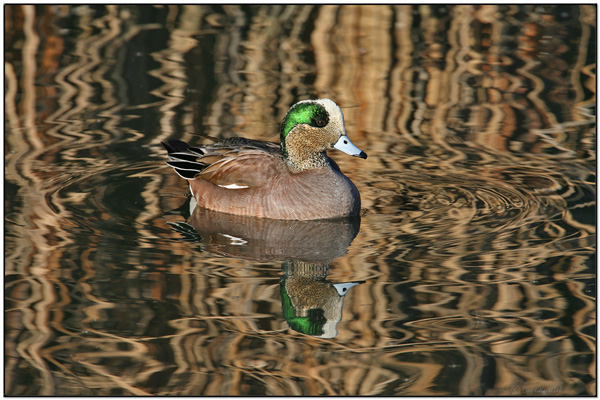
American Wigeon – Male by Ray

As we reflect on this year’s celebration of Resurrection Day (i.e., Easter), Luke 10:20 reminds us of the best reason for rejoicing.

Notwithstanding in this rejoice not, that the spirits are subject unto you; but rather rejoice, because your names are written in heaven.

And the unending joy that is noted in Luke 10:20 is built upon the forever-firm fact of Christ’s historic prophecy-fulfilling resurrection, which we can analyze in 1st Corinthians 15.

However, as many birdwatchers (even unbelievers) know, viewing birds can be an earthly joy, too, albeit a much lesser and temporal one  –  yet good enow to put a joint replacement surgery (such as a hip replacement or a knee replacement) into a more satisfactory perspective.  This is demonstrated by Mike Burt’s “American Wigeon Remind Us to Look for Joy, Even in Storms”, published in Chesapeake Bay Journal, 30(10):47 (January-February 2021), posted at American Wigeon Remind Us To Look For Joy Even In Storms .  After some birdwatching at the Blackwater National Wildlife Refuge (near Cambridge, Maryland),  birdwatcher Mike Burke chose to visit the Choptank River (the Delmarva Peninsula’s largest riverine tributary of the Chesapeake Bay), in order to see the wintering waterfowl there.

American Wigeon (Anas americana) by Daves BirdingPix

American Wigeon (Anas americana) by Daves BirdingPix

The snow was quickening as we got out, binoculars in gloved hands. Before us were rafts of gorgeous ducks bobbing on the windswept waters. I glanced up. The opposite shore, more than a mile away, was lost in the snow. We could still see the ducks in the middle of the broad, tidal river. . . [including the] big white spots on the black heads of the buffleheads and the picturesque black-and-white patterns of a few long-tailed ducks. Just a few feet away, though, sloshing alongside the jersey barrier, was the real object of our pursuit: scores of winter ducks. The raft included plenty of canvasbacks, a handful of redheads and scaup, and a good number of American wigeon. . . .

Wigeon are often called “bald pates” for the white forehead and crown that gives the male the look of a bald man. A dramatic green eye patch reaches toward the back of the head, just like a green-winged teal. The male wigeon has a gray face and neck and a pale blue bill that is rather short and narrow and ends in black. The wigeon is a dabbler, like a mallard, feeding on duckweed, milfoil and especially widgeon grass. But they also feed alongside geese in fields as they use that short, tough bill to rip vegetation free. The back and sides of wigeon are a sinuous rosy brown down to the waterline. In males, a white spot occurs right in front of the black tail. Elegant, elongated black feathers lined in white lay on his rear when he’s at rest. I had a big smile as I admired this handsome drake.

American Wigeon (Anas americana) by Ray

The female is a beauty in her own right. There’s no arresting green eye swoosh or bald pate. Instead, her head is a series of wavy brown and white feathers, except for black smudges around her eyes. The hen is a bit browner overall than the drake, but she has the same lovely lines. In flight, the birds show mostly white underneath. The male also has a big white panel on its upper wing, just above a bright green speculum (wing feathers that are close to the body). The female has a simple white line above her speculum, which is black.

While most birds enter their breeding plumage in the spring and raise their broods in the summer, ducks put on their breeding feathers in the winter. Here in the Chesapeake region, we get to see the birds at their most colorful. This is also when pair bonds are established. By early spring, wigeon will have left the Bay heading toward their breeding territory. Most will go all the way to the boreal forests of Alaska and western Canada. A moderate number will stop in the upper Midwest “prairie pothole” region. Nests are built near ponds and lakes. The hen lays a single clutch of three to 13 eggs. The eggs need to incubate for almost a month, but when they hatch, the chicks are quick to leave the nest, heading to water to evade land predators. Even on water, though, they will face mortal danger from hungry fish and turtles. The bird’s first year of life is full of peril. As winter approaches, these ducks disperse down both coasts. On the Pacific Coast, American wigeon winter from Alaska south to Central America. On the Atlantic, you’ll find them from Massachusetts south through the Caribbean and into northern South America. Wigeon can also be found in all of the Eastern states south of Pennsylvania, especially throughout the Chesapeake [Bay region].

American Wigeon (Anas americana) brood ©USFWS

[Quoting Mike Burke, posted at American Wigeon Remind Us To Look For Joy Even In Storms.]   Watching American Wigeons (and other ducks, such as Mallards, Lesser Scaups, and Northern Shovelers), wintering at Furneaux Creek (in Carrollton, part of Denton County, Texas) during the A.D.1990s, are happy memories  —  form years gone by, back when I taught Ornithology and Avian Conservation for Dallas Christian College (in Farmers Branch, Texas).  God gives us so many richer-than-money blessings over the years, including privileged opportunities to observe His avian wonders —  in bushes and woods, at ponds and creeks, etc.

Of course, compared to the truth of 1st Corinthians 15 – the completed redemptive work of our Lord Jesus Christ – the transitory joys of this life, even birding, pale and disappear.

Turn your eyes upon Jesus;
Look full in His wonderful face,
And the things of earth will grow strangely dim,
In the light of His glory and grace.

[Quoting song-writer Helen Howarth Lemmel, “Turn Your Eyes Upon Jesus”.]

Even so, come Lord Jesus, our risen-from-the-dead Redeemer!

 CHRIST IS RISEN!  HE IS RISEN INDEED!


Other Articles by Dr. James J. S. Johnson (JJSJ)

James J. S. Johnson

What Will You Do With Jesus?

Hummingbirds See Colors Over (Beyond) the Rainbow

Hummingbirds See Colors Over (Beyond) the Rainbow

Dr. James J. S. Johnson

The hearing ear, and the seeing eye, the LORD hath made even both of them.  [ Proverbs 20:12 ]

God has equipped hummingbirds with a range of color vision that exceeds that of humans, so it’s fair to say that hummingbirds see over—or beyond—the rainbow.

This “beyond-the-rainbow” vision helps birds to see food, predators, nectar-producing plants, potential mates, and 3D objects within their physical environment. Recent research corroborates this amazing fact.(1),(2)

Humans have three types of color-sensitive cones in their eyes—attuned to red, green and blue light—but birds have a fourth type, sensitive to ultraviolet light. “Not only does having a fourth color cone type extend the range of bird-visible colors into the UV, it potentially allows birds to perceive combination colors like ultraviolet+green and ultraviolet+red—but this has been hard to test,” said [Dr. Mary Caswell] Stoddard. …  Stoddard and her colleagues designed a series of experiments to test whether hummingbirds can see these nonspectral colors. Their results appear June 15 [2020] in the Proceedings of the National Academy of Sciences.(1)

[ see Princeton University citation below ]

Nonspectral colors are perceived when nonadjacent cone types (sensitive to widely separated parts of the light spectrum) are predominantly stimulated. For humans, purple (stimulation of blue- and red-sensitive cones) is a nonspectral color; birds’ fourth color cone type creates many more possibilities.(2)

[ see Stoddard , Eyster, et al. citation below ]

For years, literally, Dr. Stoddard and her team tested and quantified how wild hummingbirds see colors beyond the spectrum of white light that humans see.

To investigate how birds perceive their colorful world, Stoddard and her research team established a new field system for exploring bird color vision in a natural setting. Working at the Rocky Mountain Biological Laboratory (RMBL) in Gothic, Colorado, the researchers trained wild broad-tailed hummingbirds (Selasphorus platycercus) to participate in color vision experiments. … [using] a pair of custom “bird vision” LED tubes programmed to display a broad range of colors, including nonspectral colors like ultraviolet+green. Next they performed experiments in an alpine meadow frequently visited by local broad-tailed hummingbirds, which breed at the high-altitude site.(1)

[ see Princeton University citation below ]

The experiment was sweet, as one would expect with hummingbirds.(3)

Each morning, the researchers rose before dawn and set up two feeders: one containing sugar water and the other plain water. Beside each feeder, they placed an LED tube. The tube beside the sugar water emitted one color, while the one next to the plain water emitted a different color. The researchers periodically swapped the positions of the rewarding and unrewarding tubes, so the birds could not simply use location to pinpoint a sweet treat. … Over the course of several hours, wild hummingbirds learned to visit the rewarding color. Using this setup, the researchers recorded over 6,000 feeder visits in a series of 19 experiments.(1)

[ see Princeton University citation below ]
See the source image
The results were—one might say—colorful. Unlike human eyes that can see one “nonspectral” color, purple, hummingbird eyes apparently see five “nonspectral” colors.

Stoddard’s team was particularly interested in “nonspectral” color combinations, which involve hues from widely separated parts of the color spectrum, as opposed to blends of neighboring colors like teal (blue-green) or yellow (green-red). For humans, purple is the clearest example of a nonspectral color. Technically, purple is not in the rainbow: it arises when our blue (short-wave) and red (long-wave) cones are stimulated, but not green (medium-wave) cones. While humans have just one nonspectral color—purple, birds can theoretically see up to five: purple, ultraviolet+red, ultraviolet+green, ultraviolet+yellow and ultraviolet+purple.(1)

[ see Princeton University citation below ]

Birds have four color cone types in their eyes, compared to three in humans. In theory, this enables birds to discriminate a broad range of colors, including many nonspectral colors. … We trained wild hummingbirds to participate in color vision tests, which revealed that they can discriminate a variety of nonspectral colors, including UV+red, UV+green, purple, and UV+yellow. Additionally, based on an analysis of ∼3,300 plumage and plant colors, we estimate that birds perceive many natural colors as nonspectral.(2)

[ see Stoddard, Eyster, et al. citation below ]

Also, the research team studied minute differences in color, as they are featured in plant material and bird feathers—there is a lot more to color that is appreciated by most human eyes!

Finally, the research team analyzed a data set of 3,315 feather and plant colors. They discovered that birds likely perceive many of these colors as nonspectral, while humans do not … [due to the birds’] four color-cone visual system.(1)

[ see Princeton University citation below ]

How colorful the world must be to hummingbirds!

Dr. Stoddard’s team were not the first to study the beyond-the-rainbow vision of birds. Previous studies have been reported, using finches and sparrows, indicating that diet is important for avian eyesight.

The ability of finches, sparrows, and many other birds to see a visual world hidden to us is explained in a study published in the journal eLife. Birds can be divided into those that can see ultraviolet (UV) light and those that cannot. Those that can live in a sensory world apart, able to transmit and receive signals between each other in a way that is invisible to many other species. … The study reveals two essential adaptions that enable birds to expand their vision into the UV range: chemical changes in light-filtering pigments called carotenoids and the tuning of light-sensitive proteins called opsins. Birds acquire carotenoids through their diets and process them in a variety of ways to shift their light absorption toward longer or shorter wavelengths.(4)

[ see PhysOrg citation below ]

If that seems complicated and mathematically challenging, it is!(4),(5)

The researchers characterized the carotenoid pigments from birds with violet vision and from those with UV vision and used computational models to see how the pigments affect the number of colors they can see. … The study also revealed that sensitivity of the violet/UV cone and the blue cone in birds must move in sync to allow for optimum vision. Among bird species, there is a strong relationship between the light sensitivity of opsins within the violet/UV cone and mechanisms within the blue cone, which coordinate to ensure even UV vision.(4)

[ see PhysOrg citation below ]

The more-technical description of the research is even more challenging, to read, but the implications are “clearly seen”—God has given birds amazing eyesight.

Color vision in birds is mediated by four types of cone photoreceptors whose maximal sensitivities (λmax) are evenly spaced across the light spectrum. … SWS1 [shortwave-sensitive cone] opsin is accompanied by a corresponding short-wavelength shift in the spectrally adjacent SWS2 cone.(5)

[ see Toomey, Lind, et al. citation below ]

Hummingbird eyesight is facilitated by some really technical details!

Here, we show that SWS2 cone spectral tuning is mediated by modulating the ratio of two apocarotenoids, galloxanthin and 11’,12’-dihydrogalloxanthin, which act as intracellular spectral filters in this cell type. We propose an enzymatic pathway that mediates the differential production of these apocarotenoids in the avian retina, and we use color vision modeling to demonstrate how …  spectral tuning is necessary to achieve even sampling of the light spectrum and thereby maintain near-optimal color discrimination.(5)

[ see Toomey, Lind, et al. citation below ]

At the practical level, how can Christians benefit from knowing about avian eyesight? Or, what about other features—like wings, feathers, and motion-regulating software—that God has designed and installed into the world’s hummingbirds? Are we missing an opportunity to appreciate God if we ignore what He has done to enable hummingbirds to live as they do?

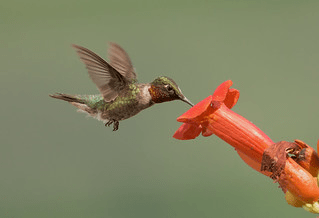
Hummingbird beaks, bones, and feathers differ from those of all other living or extinct bird kinds. Their wings don’t fold in the middle. Instead, they have a unique swivel joint where the wing attaches to the body so that the wings rotate in a figure-eight pattern. And they move fast! They have to beat their wings rapidly to hover, levitating with level heads as they extract nectar from flowers for hours per day. Scientists still need to discover the bird’s mental software that coordinates information about the location of a flower’s center with muscle motion that expertly stabilizes the hummingbird’s little head as it drinks.(6)

[ see Thomas citation below ]

Astonishing! What a stupendous and beauty-broadcasting imagination our God has—how can we see His busy, busy hummingbirds without admiring His technical genius and His bioengineering power?(7)

[ see Sherwin citation below ]

Yet every hummingbird alive today is a descendant from the originals made by God on Day 5 of Creation Week.

Their size, flight characteristics and patterns, metabolism, all point to our magnificent Creator who designed these amazing animals and created them on Day Five.(8)

References

  1. Staff writer, Princeton University. 2020. Spectacular bird’s-eye view? Hummingbirds see diverse colors humans can only imagine. PhysOrg (June 15, 2020), posted athttps://phys.org/news/2020-06-spectacular-bird-eye-view-hummingbirds-diverse.html .
  2. Stoddard, M. C., H. N. Eyster, et al. 2020. Wild Hummingbirds Discriminate Nonspectral Colors. Proceedings of the National Academy of Sciences (June 15, 2020), posted at  https://doi.org/10.1073/pnas.1919377117 .  
  3. Mitchell, E. 2014. Our Creator’s Sweet Design for Hummingbird Taste (Answers in Genesis: News to Know, September 6, 2014), posted https://answersingenesis.org/birds/our-creators-sweet-design-hummingbird-taste/ (with a link, in Footnote #1, to video footage of hummingbird sugar consumption).
  4. Staff writer, eLife. 2016. How Birds Unlock their Super-Sense, Ultraviolet Vision.PhysOrg (July 12, 2016), posted at https://phys.org/news/2016-07-birds-super-sense-ultraviolet-vision.html?utm_source=TrendMD&utm_medium=cpc&utm_campaign=Phys.org_TrendMD_1 .
  5. Toomey, M. B., O. Lind, et al. 2016. Complementary shifts in photoreceptor spectral tuning unlock the full adaptive potential of ultraviolet vision in birds. eLife Sciences / Biochemistry, Chemical Biology, Neuroscience (July 12, 2016), posted at https://elifesciences.org/articles/15675 ; doi: 10.7554/eLife.15675
  6. Thomas, B. 2016. Hummingbirds! Acts & Facts. 45(4), posted at https://www.icr.org/article/hummingbirds .
  7. Sherwin, F. 2006. Hummingbirds at ICR. Acts & Facts. 35(9), posted at https://www.icr.org/article/hummingbirds-at-icr .  
  8. Dreves, D. 1991. The Hummingbird: God’s Tiny Miracle. Creation Ex Nihilo Technical Journal. 14(1):10-12.  

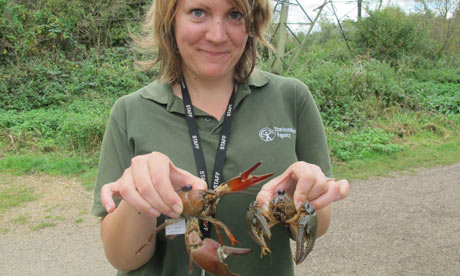
Catching Crayfish, a Lesson in Over-Reacting

Originally posted Nov 13, 2015 on Bibleworld Adventures:

by James J. S. Johnson

Large Tropical Blue Crayfish - Captive ©Dave Wilson

Tropical Blue Crayfish – Captive ©Dave Wilson

During my junior high years, living in a rural part of Maryland, I learned and enjoyed the art of catching crayfish.   (Nowadays I just eat them at restaurants!)   As a teenager, I was neither an astacologist (crayfish scientist) nor a serious catcher of crayfish (which is the same crustacean known to some as “mudbug” and in Louisiana as “crawfish”), so I did not use a “crayfish trap”.  Rather, as described below, I used a homemade dipping net, to catch those greenish critters that looked like lobsters.

Crayfish like drainage ditches and slow-moving streams, especially those with banks that are shaped in ways that provide hiding places for crayfish (and habitat for what crayfish eat), including underwater rocks or logs or roots.

After a heavy rainfall the velocity of stream currents may increase, as it drains, but crayfish can act to maintain their position at the edge of such drainage:  “Crayfish … help maintain position [in face of faster current flow] by altering body posture to counteract the effect of drag when exposed to an increase in current velocity.”  [Quoting from Paul S. Giller & Björn Malmqvist, THE BIOLOGY OF STREAMS AND RIVERS (Oxford University Press, 2008), page 122.]  Crayfish care about staying and defending their “home turf”  –  i.e., they are territorial, and some will fight to defend a favorite streambank crevice.  [Giller & Malmqvist, pages 131-132.]

Crayfish

Crayfish

Crayfish are omnivores – they emerge from their hiding places, especially when it is dark (from “dusk to dawn”, to borrow an old TNT expression from Chaplain Bob Webel – or on days when it is cloudy), to find and feed on freshwater snails, fish eggs, tadpoles, worms, algae, grains, and other plant material. The dominating influence of crayfish, as “keystone predators” in the food webs of drainage ditches and sluggish stream-waters (where they live), is produced directly, as predators, and indirectly, by eating riparian plant cover used by aquatic invertebrates.  [Giller & Malmqvist, page 204.]

Drainage ditches are a favorite habitat of crayfish, not just in Maryland.  “Ditches are of course just man-made sloughs [pooled streamwater that only moves slowly], but they are important to the survival of many species of life in the state.  Ditches are necessary for allowing rain runoff much of the year, and wherever water is present for half the year or more there are likely to be populations of crawfishes  and other invertebrates, as well as their predators such as frogs, snakes, and turtles.  Even shallow ditches may be home to several species of crawfish, some quite uncommon and localized in distribution.”  [Quoting Jerry G. Walls, CRAWFISH OF LOUISIANA (Louisiana State University Press, 2009), pages 35-36.]

Where I (then) lived, in rural Baltimore County,  there was a bridge with a huge drainage pipe that allowed streamwater to flow in irregular patterns, around large and small rocks, so that the stream bank had indentations and crevices where the waterflow was somewhat shielded, providing places for small creatures (like baby fish and insect larvae) to avoid being swept downstream, though crayfish lurked nearby, always hungry for something small to eat, whether it be plant material or aquatic invertebrates.

When moving on land crayfish crawl, using their legs.  But, when underwater, they  “swim” or “paddle”, using their legs and when needed, the tail fan.  Rapid flipping of the crayfish tail enables the crayfish to suddenly propel itself backward  — it appears to “jump backwards” in the water.  This can provide a quick exit from anything facially threatening the crayfish.

Of course, the crayfish themselves were shy about large disturbances in the water, so wading into the stream (which might be ankle-deep to knee-deep) would scare crayfish into hiding places, some of which were located under the bridge or in underwater burrows nearby.

If you splash a stone into the water directly in front of a crayfish it would jet backwards to escape.  The escape maneuver was so reflexive and quick that the crayfish never looked before it “jumped” backward in the water, to escape whatever the perceived danger was in front of it.  After learning this crayfish habit it became apparent that crayfish could be easily caught, by taking advantage of this “knee-jerk” reaction, with a home-made “net”.  So how did we catch crayfish, down by the drainage pipe that conveyed streamwater under the bridge?

Shasta Crayfish

Shasta Crayfish

First, make a “net” to catch the crayfish with.  Reshape (by bending) a coat hanger into the shape of a lollipop profile, i.e., a straight line (for a handle) that is curved into a circle.  The resulting shape of the coat hanger resembles a somewhat small version of the frame of a tennis racquet (or badminton racquet), with the “loop” (circle or oval) part being about the size (circumference) of a soccer ball, easily enough room for catching a large or small crayfish.  The largest crayfishes that I caught were about the size of lobsters that you can eat at a Red Lobster restaurant.   But the metal frame needs a net  –  so you tear apart an expendable T-shirt, then you thread it onto the circular “loop” part of the reshaped coat hanger.  Ideally the result is somewhat like a dipping net for an aquarium.

The coat-hanger “dipping net” is the tool to be used for catching (netting) the crayfish, but keep in mind that a crayfish will try to exit if caught, so you need a bucket of water to “land” your catch if and when you catch one.  So you need to bring a bucket (or a pail will do!) that is half-filled with water, and it must be positioned near the spot where you expect to net your crayfish.

The next trick is to get a crayfish to “jump” into your net, in the streamwater, just before you jerk the net up and out of the water (so the crayfish can’t exit your net, upon realizing that he or she is caught!).

But how do you entice a shy crayfish to “jump” into your net?  Actually, it’s not very difficult, although it requires sequenced (and quick) timing as you perform two rapid movements.  With your net ready to “stab” the water just behind the crayfish (i.e., where his or her tail is located), drop a clod of dirt (or a small rock) about 6 inches in front of the crayfish’s head and front claws.  Instantly plunge your net behind the crayfish – which is now “jumping” backward to avoid whatever you dropped into the water.  Then quickly jerk the net up out of the water – you should have the crayfish secured inside your net, for a moment at least, so now you quickly dump the net into your bucket of water, and shake the crayfish loose from the net.

Catching in a Net

Catching in a Net

[ Fair Use image credit: https://i.ytimg.com/vi/fHaQJN4LmGM/hqdefault.jpg ]

If your bucket is deep enough the crayfish is now covered in water, yet the water level needs to be low enough that the crayfish cannot swim to the top and then crawl out over the brim, to escape involuntary confinement.  Ironically, it was the crayfish’s reflex habit  —  the automatic “jump-back” reaction  —  that got the crayfish captured!

Captured!

Captured!

[ Fair Use image credit: http://static.guim.co.uk/sys-images/Guardian/About/General/2011/12/29/1325169553221/A-virile-right-and-a-sign-007.jpg ]

Now that you have a captive crayfish you need to feed it, to keep it alive, or else eat it (!) as you might a lobster, or just release it.  “Catch and release” is what I recommend.

But what does catching a crayfish have to do with the adventure of living the Christian life? 

The crayfish illustrates the danger of carelessly over-reacting to a perceived danger.  Because the crayfish is startled by the rock dropped (into water facing the crayfish), it automatically reacts by “jumping” backward  –  without checking to see if a net is waiting there, to capture it! Since the Christian life involves a lot of balancing, we need to be careful about over-reacting to this or that.  Regarding the need to avoid over-reacting, as a Christian who strives to honor God in this life, see Charles C. Ryrie’s indispensable guidebook, BALANCING THE CHRISTIAN LIFE (Chicago: Moody Press, 1994), 252 pages.  [Thankfully, this book was provided to me, when I was a teenager, by my youth/college pastor, Chaplain Bob Webel.]

Over-reacting involves moving recklessly from one extreme to its opposite.  For an example of such over-reacting  —  “jumping” from one imbalanced extreme to another — consider how to teach children to inculcate a responsible “work ethic”.

In one Christian family, that I know, the parents were very concerned about raising children who might be lazy, unfocused, and/ or unresourceful.  (So far, so good.)   In other words, the parents wanted their children to have a “good work ethic”  –  self-initiative, goal-oriented diligence, and an entrepreneurial spirit,   —  to learn and practice practical life skills, so that they could be self-starters, as adults, who economically support themselves.

Of course, who would oppose teaching children a “good work ethic”?  Shouldn’t children learn to take the initiative, to recognize (and acquire) useful opportunities, to have productive ambitions, to focus on practical successes?

Yet promoting an entrepreneurial spirit, with an inner drive to ambitiously succeed in profitable work, can swing to an extreme that neglects altruistic service.  Without the balance of some commitment to altruistic service, however, the profit-motive-based ethic selfishly degrades to:  “If I don’t get paid money to do it, I won’t do it.”  That refusal to blend altruistic service (which the apostle Paul role-modeled in Acts 20:33-35) with a for-profit “work ethic” quickly uglifies into ordinary greed.  Is selfish greed better than selfish laziness?  Neither habit honors the Lord.  Both are wickedly sinful.  Both sins are ugly to look at  –  and, sad to say, we have many examples of both of those vices, lived out in front of us.

The Holy Bible provides a proper balance:  yes, we should work for profit and self-sustenance (2nd Thessalonians 3:10-12); however, some of the profit acquired should be used non-selfishly, to further the Lord’s work on earth (Matthew 6:19-21) and to compassionately “support the weak” (Acts 20:35).

Cooked Crayfish

Crayfish served at IKEA

So next time you catch a crayfish, or eat a plateful at a Swedish crayfish party, or eat one at a Cajun restaurant, remember this lesson: don’t carelessly over-react!   —   review the big picture, and maintain a Biblical balance in whatever you are doing (1st Corinthians 10:31).

><> JJSJ

Don’t Under-estimate Young Boys!

[Originally published May 31, 2020, by Dr. James J. S. Johnson on Bibleworld Adventures]

Don’t Under-estimate Young Boys!

(Boy 5 Years Old, Driving to California, to Buy a Lamborghini … etc.!)

Dr. James J. S. Johnson

Don’t under-estimate the big ideas of young boys—whether those boys are from Israel, Utah, or Oklahoma.

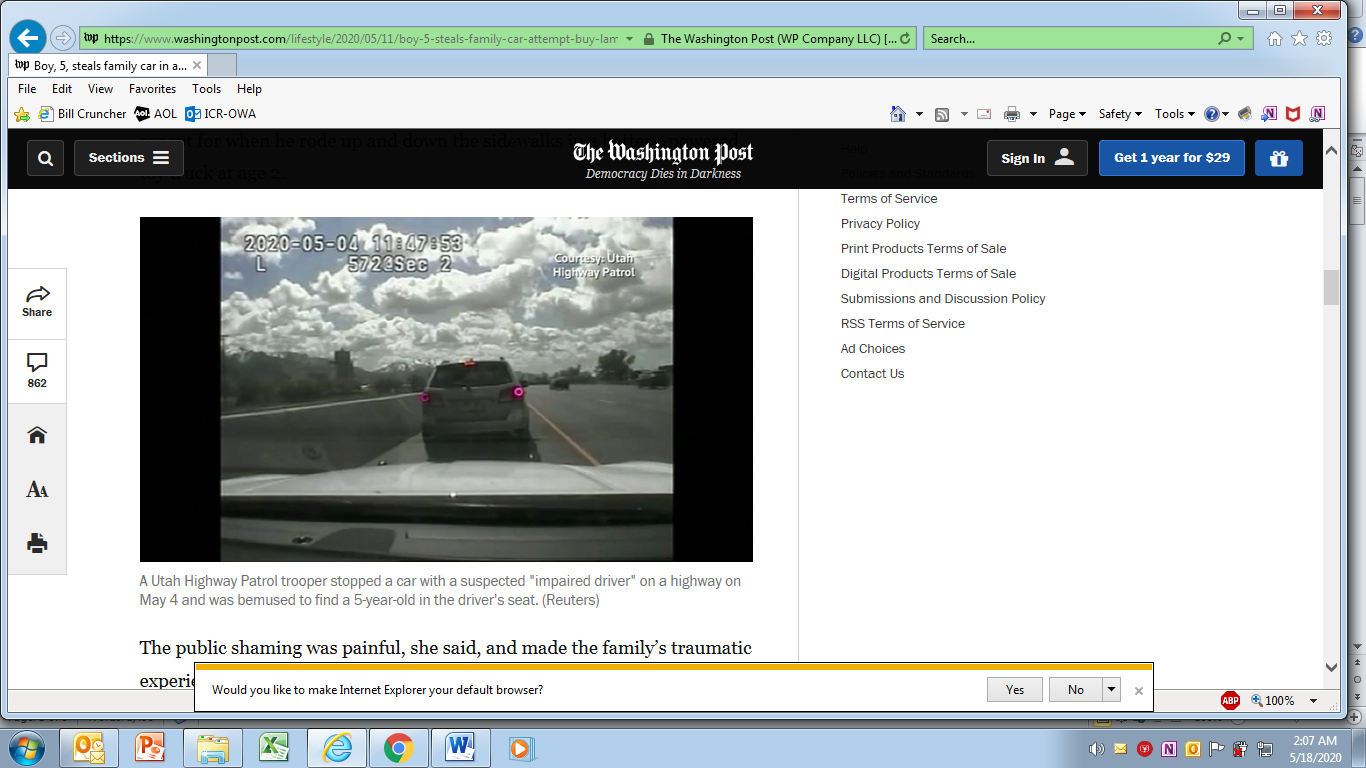
For example, Israel’s David, when young enough that some considered him as just a boy, successfully challenged and killed Goliath the gigantic Gittite.(1) And more recently, there’s kindergartner Adrian Zamarripa, who tried to drive from Ogden (Utah) to California, to buy himself a Lamborghini.(2),(3)

Lamborghini-Miura.on-dirt-road

For the Utah state trooper who made a “traffic stop”, the incident was not what he originally expected.

Trooper Rick Morgan … saw the car swerving so badly on Interstate 15 in Odgen, Utah, that he thought the driver was impaired or needed medical attention. He was driving 32 mph in an area with a speed limit of 70 mph. Morgan told the Associated Press that [the car’s driver] did not respond to his [flashing] lights but pulled over when he hit his siren. “I approached the vehicle and I was expecting to find somebody who needed an ambulance or paramedics,” Morgan said.(3)

But the driver was a 5-year-old kindergartener, Adrian Zamarippa.

Last week [May 4, 2020], 5-year-old Adrian Zamarripa took $3 out of his piggy bank, stole the keys to his parents’ SUV in Ogden, Utah, and went for a joyride on the freeway, following the signs that pointed south to Los Angeles. When the kindergartner was pulled over on Interstate 15 … he told the shocked highway patrol officer that he was on his way to California to buy a Lamborghini sports car.(2)

boy-age-5-wants-Lamborghini.dashcam-traffic-stop-AD2020

How did that happen?

Adrian’s 16-year-old sister, Sidney Flores, who was babysitting, had taken a nap about 11 a.m. while her mom and stepfather were away at work, and that’s when her little brother decided to take the keys from a hook near the door and go after his dream. “We thought he’d been kidnapped and we were all panicked,” said Sidney, speaking on behalf of her family because her parents understand limited English. “I called my mom at work and she came rushing home, crying,” she said. “It never occurred to any of us that he would take off in the car by himself. How would he know how to do that?” Nobody in the family had ever encouraged Adrian to drive, said Sidney, except for when he rode up and down the sidewalks in a battery-powered toy truck at age 2.(2)

Officer Morgan’s dash-cam video recording shows the vehicle pull over onto the multi-lane highway’s left shoulder, and stop, in response to Morgan’s flashing lights. Morgan then approached the driver’s window, to speak to the driver. The recording provides video and audio of this unusual encounter.

But when the window came down, Morgan said it was pretty clear that it was “a very under-aged driver who was behind the wheel.”(3)

Behind the wheel, in this case, meant sitting on the driver’s seat edge, so that his short legs could reach the brake pedal—it took both feet to brake the car to a full stop.  The dash-cam footage records audio of Officer Morgan questioning the young driver.(4)

“How old are you? You’re 5 years old?” Morgan says in the video. “Wow, OK. Where did you learn how to drive a car?” The boy told the trooper he was planning to drive to California to buy himself an Italian luxury sports car [specifically, a Lamborghini]. “He might have been short on the purchase amount, as he only had $3 dollars in his wallet,” the Utah Highway Patrol said in a statement on Twitter. The boy’s parents were contacted and they took custody of their son and the vehicle.(3)

Lamborghini-Miura.on-dirt-road

But Adrian is not the first precocious youngster to do what many would not imagine possible for someone so young, nor will he be the last.

More than a century ago, a 6-year-old boy named Jack played the piano, as his older brother fiddled, at a Texas saloon, earning big money for hours till midnight. But this opportunity was cut short by gunfire—and Jack’s saloon piano playing career was terminated by his mother, when she learned about the shooting.(5)

Jack Abernathy: Catching Live Wolves Bare-Handed - America Comes Alive

That little boy grew up to be “Catch-‘em-alive” Jack Abernathy, the youngest man to be appointed a U.S. Marshal—appointed by none other than Teddy Roosevelt.(5)  Jack was already famous for catching wild wolves alive, with his bare hands, so he could sell them to zoos. Later (as U.S. Marshal), he caught violent criminals, though his hands usually then held firearms.(5),(6)

How The Abernathy Boys Became The Most Adventurous Kids In History ...

If you think Catch-‘em-Alive Jack’s two precocious sons—Louis (“Bud”) and Temple (“Temp”—“I’m not a little boy; I’m a little man!”)—followed in their father’s footsteps, as daring adventurers, you’d be right.(6),(7)

The Astounding Adventures of the Abernathy Boys - 405 Magazine

Bud and Temp Abernathy took their first cowboy adventure in 1909, at ages 9 and 5 –traveling horseback (with a shotgun) from their home in Oklahoma to the Governor’s Mansion in New Mexico and back.(6),(7) One night they lodged with men who identified themselves as being “in the cattle business”; their hosts were cattle rustlers, who hospitably respected them, yet one of the rustlers had recently been in a gunfight where he tried to kill their father (Jack), who was then U.S. Marshal.(6),(7)

Buster Welch | RFD-TV :: Rural America's Most Important Network

On returning to a hometown welcome in Oklahoma, one lady emotionally questioned why their mother had permitted this reckless adventure—to which 5-year-old Temp replied that she was dead.(6)

The Abernathy Boys | Redtree Times

The next adventure Bud and Temp took in 1910, at ages 10 and 6, was to ride horses from their home in Oklahoma to New York City, unsupervised—more than 1500 miles.(6),(7) Bud sent telegrams to their father, on arrival in different cities along the way—including visiting Comanche Chief Quanah Parker (in Oklahoma’s Indian Territory) and, at the White House, President Taft, plus they briefly addressed both House of Congress.(6),(7)

The trip’s main goal was timely reached—rendezvousing with their dad (Jack, who arrived in New York City by train) at the port where Teddy Roosevelt would arrive, returning from his exploits in Africa.(6),(7) Teddy’s arrival was celebrated by a huge ticker-tape parade, with Bud and Temp (on horseback) immediately behind the former president’s car; the equestrian lads were followed by Teddy’s mounted Rough Riders.(6)

Abernathy-boys-NY-parade-with-Teddy.painting

Other adventures followed, including the boys (mostly Bud, as Temp could hardly reach the pedals) driving a small car from New York back to Oklahoma, while their horses rode the train.(6),(7)

The Abernathy Boys | Redtree Times

Soon afterward, in 1911, the two boys rode horses from the Atlantic Ocean (at New York) to the Pacific Ocean (at San Francisco), including a calamity where they almost died, after temporarily losing their horses.(6),(7)

Then there was a motorcycle trip in 1913, with stepbrother Anton.(6)

To recount details of just the highlights of the Abernathy boys’ adventures would require a book—in fact, more than one book, plus a museum.(6),(7),(8)

BUD & ME THE TRUE ADVENTURES OF THE ABERNATHY BOYS - Kindle ...

But there is at least one take-away lesson—for all of us—that we should never under-estimate the young. Children are capable of a whole lot more than most imagine!(9)

No wonder big-picture-thinking Christians invest resources and messaging efforts for reaching children (and more such outreach to come, God willing)—even very young kids are ripe for learning about their wonderful Creator.  Let us help, not hinder, them as they are learning about and coming toward the Lord Jesus Christ.(9)

Abernathy Boys Statue & Exhibit - Visit Frederick, OK    

References
  1. 1st Samuel 17:1-58.
  2. Free, C. 2020. Boy, 5, Steals Family Car in Attempt to Buy a Lamborghini. Posted on WashingtonPost.com (May 11, 2020) at https://www.washingtonpost.com/lifestyle/2020/05/11/boy-5-steals-family-car-attempt-buy-lamborghini-then-man-with-lamborghini-shows-up-his-house/ .
  3. Yancey-Bragg, N. 2020. 5-year-old Boy Caught Driving on Utah Highway was Heading to California for a Lamborghini. USA Today. Posted (May 5, 2020) at https://www.usatoday.com/story/news/nation/2020/05/05/5-year-old-boy-utah-driving-california-buy-lamborghini/3083410001/ .
  4. Morgan, R. 2020. Utah Highway Patrol (dash-camera recording of Utah trooper conducting traffic stop of 5-year-old driver on Utah highway), May 4, 2020. Posted at https://www.youtube.com/watch?v=C-W-ySng2t8 .
  5. Abernathy, J. R. 2006. Catch ‘em Alive Jack, The Life and Adventures of an American Pioneer. Lincoln, NE: Bison Books/ University of Nebraska Press. See also Marshal Jack Abernathy’s biographic highlights, posted at http://www.budandme.com/catch-em-alive-jack.php .
  6. Abernathy, A, with T. Abernathy. 1998. Bud & Me: The True Adventures of the Abernathy Boys. Irving, TX: Dove Creek Press. See especially pages 13-19 (Jack Abernathy’s wolf-catching adventure with Teddy Roosevelt), pages 20-45 (OK è NM è OK horseback trip), pages 46-89 (OK è NY horseback trip), pages 90-108 (NY è OK roadster car trip); pages 116-150 (NY è CA horseback trip), pages 151-159 (motorcycle trip).  See also the online photo gallery of Bud and Temp, posted at http://www.budandme.com/photo-gallery.php .
  7. Abernathy, M. 2004. Ride the Wind: The Amazing True Story of the Abernathy Boys. Long Riders’ Guild Press (reprint of 1911 book then titled The Rides of the Abernathy Boys). See especially pages 1-65 (OK è NM è OK horseback trip), pages 66-111 (OK è NY horseback trip), pages 112-116 (NY è OK roadster car trip); page 116 (NY è CA horseback trip).
  8. The museum is located in Frederick, Oklahoma, near Wichita Falls, Texas.
  9. Matthew 19:14; Luke 18:16. See also Johnson, J. J. S. 2015. Attracted to Genesis by Magnets and a Bird Book. Acts & Facts. 44(8):19, posted at https://www.icr.org/article/attracted-genesis-by-magnets-bird-book .
    Exploring Oklahoma History - The Adventure of the Abernathy Boys

Seabirds and Cetaceans Both Love Ocean-catch Fish! (Plus Some Information on Cetaceans’ Submarine Songfests)

SEABIRDS AND CETACEANS BOTH LOVE OCEAN-CATCH FISH!  

(With Extra Information about How Norwegians and Americans Scrutinize Saltwater Serenades)

Dr. James J. S. Johnson

Blue Whale in Red Sea (Novinite.com image)

HUMPBACK WHALE (The Bermudian Magazine)

 And God created great whales [tannînim], and every living creature that moveth, which the waters brought forth abundantly, after their kind, and every winged fowl after his kind; and God saw that it was good.   (Genesis 1:21)

SEABIRDS AND CETACEANS BOTH LOVE OCEAN-CATCH FISH!  

 Ocean-catch fish is enjoyed, daily at sea, by both whales and seabirds.  Accordingly, it is not surprising to find seabirds hovering over places where whales are feeding on oceanic fish.

Seabirds and whales share a special bond; they both love fish. Seabirds are often found at the top of the food web and can also function as indicators of ecosystem health. Seeing seabirds on the surface is a possible sign that whales are also feeding underneath. This is especially the case for humpback and North Atlantic Right whales, which are the baleen whales at the most risk in the Northern Atlantic. 

Researchers wanted to know how often seeing a specific kind of seabird known as great shearwaters  coincided with the presence of whales. To do this, they spent five years surveying both the Gulf of Maine and the Stellwagen Bank National Marine Sanctuary near Boston.

[Quoting Ashley Mickens, “Where There Are Birds … There Are Whales?”, OCEANBITES (September 30, 2022), posted at  https://oceanbites.org/where-there-are-birds-there-are-whales/#:~:text=Seabirds%20are%20often%20found%20at%20the%20top%20of,at%20the%20most%20risk%20in%20the%20Northern%20Atlantic  —  citing Tammy L. Silva, et al., “Exploring the Use of Seabirds as a Dynamic Ocean Management Tool to Mitigate Anthropogenic Risk to Large Whales”, FRONTIERS IN MARINE SCIENCE, 9:861 (2022).
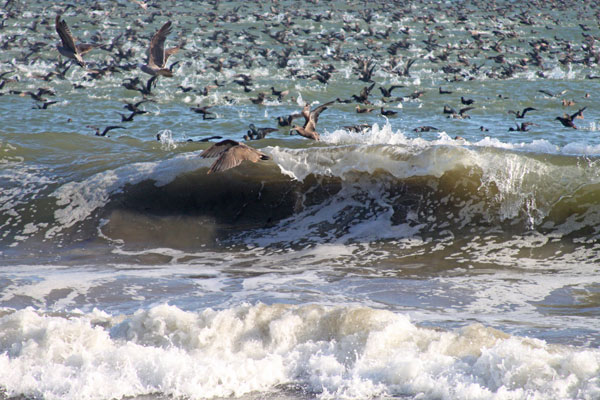
Sooty shearwaters feeding in the surf (everything eats) | Life in a ... 

SOOTY SHEARWATERS feeding on fish near shore (LifeinaSkillet.com photo credit)

In short, shearwaters tagged with GPS tags can be used to locate large whales feeding on fish, with such location information being useful for reducing the risks of collisions at sea between those whales and human-driven watercraft.

Based on their unique life-history characteristics, seabirds equipped with satellite tags could serve as valuable tools for implementing dynamic management. Procellariid seabirds are highly mobile, enabling them to respond quickly to changing environmental conditions over large spatial scales and their top position in food webs means their location may indicate areas of high forage fish abundance. Their role as ecological indicators (Velarde et al., 2019) position seabirds as attractive sentinels for monitoring changes in marine ecosystems, fluctuations in abundance and distribution of forage fishes, and for identifying areas of high productivity where top predators, including whales and ocean users may congregate. Further, tags applied to seabirds are less expensive, less invasive, and can last longer than tags on large whales.

Great shearwaters (Ardenna gravis; hereafter shearwaters) are one of the most common pelagic seabirds in the Gulf of Maine (GOM) (Powers, 1983), including in Stellwagen Bank National Marine Sanctuary (SBNMS), a 2180 km2 federal marine protected area (MPA) (SBNMS unpublished data). In the sanctuary, shearwaters overlap with humpback whales. Both species consistently overlap with sand lance (Ammodytes dubius), their preferred prey in this region (Payne et al., 1986Powers et al., 2020Silva et al., 2020) and shearwaters are often seen foraging with surface-feeding humpback whales. Sand lance are also found in specific, sandy substrates and previous work also shows that humpbacks and shearwaters use many of the same habitats throughout the GOM (Robbins, 2007Powers et al., 2017Powers et al., 2020). This suggests that satellite-tagged great shearwaters could indicate humpback whale locations at wider scales, and that some of these static locations may lend themselves to dynamic management. While the idea of investigating the use of tagged shearwaters to locate humpback whale aggregations is supported by previous work, considering tagged shearwaters as indicators of right whales is also of interest for two reasons:  (1) they are critically endangered and management tools to drastically reduce vessel strikes and entanglements is desperately needed; and ( 2) right whales and sand lance in the GOM feed primarily on copepods, including Calanus finmarchicus (Wishner et al., 1995Murison and Gaskin, 1989Mayo and Marx, 1990Suca et al., 2021), making it plausible that shearwaters feeding on sand lance may overlap with right whales.

[Quoting Tammy L. Silva, et al., “Exploring the Use of Seabirds as a Dynamic Ocean Management Tool to Mitigate Anthropogenic Risk to Large Whales”, FRONTIERS IN MARINE SCIENCE, 9:861 (2022).] 

This research buttresses earlier reports from the National Marine Sanctuaries, as noted during A.D.2020 by Anne Smrcina.


New Research Provides Insight Into Shearwaters, Humpbacks, Their Prey ...

NEW INSIGHTS ON SHEARWATERS’ WINTER RANGE

Humpback whales, great shearwaters (foreground), and gulls feasting on school of sand lance in Stellwagen Bank Nat’l Marine Sanctuary.

Photo: SBNMS/WCNE under NOAA Fisheries Permit #981-1707

In spring months, humpback whale mothers bring their calves to Stellwagen Bank to wean them as they teach them to hunt schools of fish. Stellwagen Bank National Marine Sanctuary serves as their summer nursery. Researchers now believe that the bank, as well as the greater Gulf of Maine, serves as a nursery for another important but very different species – the great shearwater, an abundant seabird locally, and a global traveler.

A sanctuary-led research team found that this seabird species, which “summers” on islands in the southern South Atlantic and along the Patagonian shelf off Argentina December-February, uses the Gulf of Maine as a “winter” nursery during the months of approximately July-November. More mature birds extend their range to the Scotian Shelf off Nova Scotia and the Grand Banks off Newfoundland.

[Quoting Anne Smrcina, “New Research Provides Insight into Shearwaters, Humpbacks, their Prey, and Future Management Implications”, NATIONAL MARINES SANCTUARIES NEWS (NOAA, November 2020), posted at  https://sanctuaries.noaa.gov/news/nov20/shearwaters-winter-range.html .]  Anne Smrcina’s research report, for NOAA (National Oceanic and Atmospheric Administration), cited the findings published in the MARINE ORNITHOLOGY journal, specifically K. D. Powers, et al., “Spatiotemporal Characterization of Non-breeding Great Shearwaters (Ardenna gravis) within their Wintering Range”, MARINE ORNITHOLOGY, 48:215-229 (2020).

shearwater preying on small fish

SHEARWATER tagged with GPS tracker (photo by Peter Flood / NOAA)

================================================================ 

Now that’s something to sing about!

(Extra Information about How Norwegians and Americans Scrutinize Saltwater Serenades)

Songs of the Humpback Whale - Digital Download – Ocean Alliance

What is “whale-song”?  Music-like whale talk!  Whales are cetaceans, a category of whales and whale-like marine mammals, e.g., porpoises and dolphins. Our English word “cetacean” derives from the Greek noun kêtos (κητος) which appears in Matthew 12:40 (as “whale”), so “whales” are mentioned in Scripture.

Consider Genesis 1:21, quoted above.  Consider also Job 7:12, Ezekiel 32:2, and Matthew 12:40, as well as the reference in Lamentations 4:3a (“Even the sea monsters draw out the breast, they give suck to their young ones:”).

For a short YouTube on humpback “songs” (by Oceania iWhales), check out https://www.bing.com/videos/search?q=whale+song&view=detail&mid=080AA0FA37A93E87AB44080AA0FA37A93E87AB44&FORM=VIRE (about 3 minutes long).

For a video (by NatGeoOceans) on researching Blue Whales, review this YouTube:  https://www.bing.com/videos/search?q=Blue+Whale+Sounds&&view=detail&mid=FA613CEC5B6570EB96A8FA613CEC5B6570EB96A8&&FORM=VRDGAR  (video is about 6 minutes, with information on how Blue Whales are observed and recorded).

How can you describe the variety of whale-song sounds?  Screeching, shrieking, grunting, wailing, moaning, groaning, rumbling, buzzing, rattling, sqeaking, squealing, clicking, whistling, whining, rumbling, sputtering, and some low-noted sounds that might be embarrassing if emitted by humans.
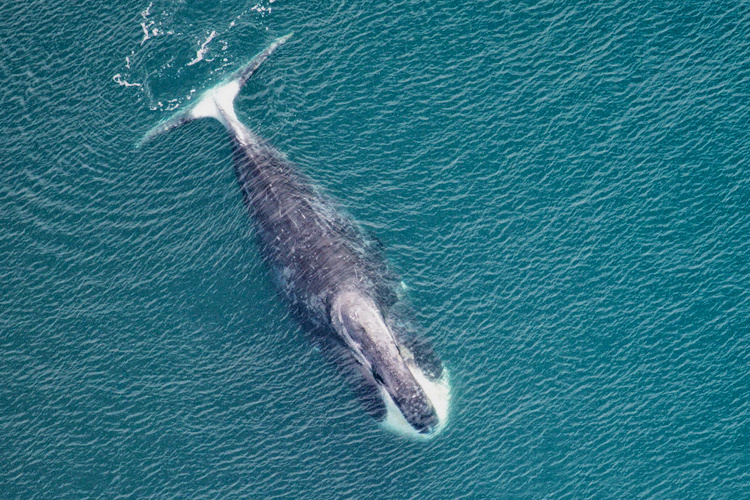
Bowhead-whale.NOAA-photo

BOWHEAD WHALE (NOAA Fisheries photo)

BOWHEAD WHALES

Three Norwegian biologists (Dr. Øystein Wiig, Dr. Kit M. Kovacs, and Dr. Christian Lydersen), with an American oceanographer (Dr. Kate M. Stafford), have been studying whale-song—specifically, the songs sung by Bowhead whales from the polar waters of Svalbard, an island territory of Norway.

Almost all mammals communicate using sound, but few species produce complex songs. Two baleen whales sing complex songs that change annually, though only the humpback whale (Megaptera novaeangliae) has received much research attention. This study focuses on the other baleen whale singer, the bowhead whale (Balaena mysticetus). Members of the Spitsbergen bowhead whale population produced 184 different song types over a 3-year period, based on duty-cycled recordings from a site in Fram Strait in the northeast Atlantic. Distinct song types were recorded over short periods, lasting at most some months. …

Complex ‘song’ in mammals is rare. While many mammalian taxa produce repetitive ‘calls’, sometimes called advertisement songs, few mammals produce vocal displays akin to bird song, which is defined by multiple frequencies and amplitude-modulated elements combined into phrases and organized in long bouts. Such songs have been documented in only a few mammalian species, including some bats (Chiroptera), gibbons (Hylobatidae), mice (Scotinomys spp.), rock hyraxes (Procavia capensis), and two great whales, humpback (Megaptera novaeangliae) and bowhead (Balaena mysticetus) whales [BLUE WHALES sing simplistic loud-and-rhythmic “rap music”, so they are excluded from this listing of “complex song” vocalists!]. With the exception of gibbons, in which males and females duet, complex songs in mammals are thought to be produced only by males. Male mammals are thought to sing to defend territories, advertise their quality, attract mates or some combination of these functions.

The song in baleen whales has been studied extensively only in humpback whales, which sing similar songs within a season across a whole population. The structure of that song gradually evolves [sic – erroneous terminology in original] over the season in unison and transfer of song types has been documented to occur directionally from one population to another over a period of years. Humpback whale songs are composed of a hierarchy from units to sub-phrases to phrases to themes.

Less is known about the songs of bowhead whales compared with humpback whales, but bowhead whale songs generally consist of a single phrase that includes amplitude- and frequency-modulated elements repeated in bouts, with two different sounds often produced simultaneously.

A pilot study from the Fram Strait in 2008 – 2009 provided the first indication that tens of song types were produced by bowhead whales in this region within a single overwinter period. No year-round studies of song diversity exist for other bowhead whale populations although multiple song types in a single year have been documented for two other populations. …

The diversity and interannual variability in songs of bowhead whales in this 3-year study are rivalled only by a few species of songbirds.

Among other mammalian singers, mice and gibbons tend to produce highly stereotyped and repetitive songs with few elements. Variation in rock hyrax and bat songs is primarily through changes in the arrangement of units.

Humpback whales produce complex songs that are similar within a year. Although the repertoire of any one individual bowhead whale in this study cannot be determined, the catalogue of song types (184) is remarkably varied.

It is not known whether individual bowhead whales sing multiple song types in a season, but some are known to share the same song type in the same period in the Bering– Chukchi–Beaufort (BCB) population. Nor is it known if individual bowhead whales maintain the same song throughout their lifetime or if they switch within and/or between years.

One explanation for the very high song diversity in the Spitsbergen bowhead whale population could be that the animals occupying this area in modern times include immigrants from both the BCB and the eastern Canada–western Greenland bowhead populations.

Until recently, these populations have been assumed to be isolated from each other due to extensive, impenetrable sea ice cover in the High Arctic.

However, in the past few decades, extreme declines in sea ice extent and thickness may have facilitated contact between these populations. However, even if this region contains bowhead whales from multiple populations, this does not fully explain the high numbers of different song types recorded in this study or the lack of recurrence of song types from year to year.

It is plausible that the bowhead whales in the Fram Strait are simply a remnant of the original Spitsbergen [Svalbard] population that survived the extreme historical levels of exploitation. The influence of small population size on song diversity is conflicted; some studies suggest song diversity increases in smaller populations, although others have found that reduced or isolated populations exhibit a reduction in song diversity and produce simpler songs.

In some species, females appear to prefer a diverse song repertoire, suggesting that increased complexity of singing might confer reproductive advantages. A recent study of howler monkeys (Alouatta spp.) documented tradeoffs in male reproductive characteristics based on (temporary) social structure: in groups with fewer males, or smaller social groups, males invested more in vocal displays as a reproductive tactic.  …

Bowhead whales are the only High Arctic resident baleen whale. Thus, interspecific identification via song may not confer the same selective [sic – should say “reproductive success”] advantage for bowheads that it might for other cetacean species. This could reduce selection pressure [sic mystical-magic jargon in original] on song stereotypy, allowing for greater variation in song types as a result of a long-term cultural mutation in songs, or song novelty itself might confer an advantage.

Because bowhead whales sing underwater, in heavy ice during the polar night, a nuanced understanding of the variable syntax of this species will be difficult to obtain.

Nevertheless, the singing behaviour of Spitsbergen bowhead whales, in which tens of distinct song types are produced annually, makes them remarkable among mammals.

[Quoting from Kate M. Stafford, Christian Lydersen, Øystein Wiig, & Kit M. Kovacs, “Extreme Diversity in the Songs of Spitsbergen’s Bowhead Whales”, BIOLOGY LETTERS, 14:20180056 (April 2018).]

But, before Bowhead Whale songs were scrutinized, it was the singing of Humpback Whales that was reported — surprisingly revealing a submarine world of sound communications that most folks would never have imagined.

Humpback-Whale.NWF

HUMPBACK WHALE (Nat’l Wildlife Federation photo)

HUMPBACK WHALES

One of the most unusual music recordings to sell into the “multi-platinum” sales level was an LP album produced in AD1970, called “Songs of the Humpback Whale”, recorded by bio-acoustician Dr. Roger Payne, who had (with Scott McVay) discovered humpback “whale-song” (i.e., complex sonic arrangements of sound, sent for communicative purposes) during the AD1967 breeding season.

Prior to AD1970 Dr. Payne had studied echolocation (i.e., “sonar”) in bats, as well as auditory localization in owls, so (biologically speaking) he had “ears to hear” how animals use vocalized sounds to send and receive information to others of their own kind. Some of Dr. Payne’s work was shared with his wife (married AD1960; divorced AD1985), Katharine Boynton Payne, who noticed the predictable patterns of humpback whale-song, such as “rhymes”.  Acoustical research included spectrograms of whale vocalizations, portraying sound peaks, valleys, and gaps—somewhat (according to her) like musical “melodies” and “rhythms”.

To this day, apparently, “Songs of the Humpback Whale” is the best-selling nature sound recording, commercially speaking. The sensation-causing album (“Songs of the Humpback Whale”) presented diverse whale vocalizations (i.e., “whale songs”) that surprised many, promptly selling more than 100,000 copies.

Some of Dr. Payne’s research on whale-song appeared early, published in SCIENCE magazine, as follows:

(1) Humpback whales ( Megaptera novaeangliae ) produce a series of beautiful and varied sounds for a period of 7 to 30 minutes and then repeat the same series with considerable precision. We call such a performance “singing” and each repeated series of sounds a “song.”

(2) All prolonged sound patterns (recorded so far) of this species are in song form, and each individual adheres to its own song type.

(3) There seem to be several song types around which whales construct their songs, but individual variations are pronounced (there is only a very rough species-specific song pattern).

(4) Songs are repeated without any obvious pause between them; thus song sessions may continue for several hours.

(5) The sequence of themes in successive songs by the same individual is the same. Although the number of phrases per theme varies, no theme is ever completely omitted in our sample.

(6) Loud sounds in the ocean, for example dynamite blasts, do not seem to affect the whale’s songs.

(7) The sex of the performer of any of the songs we have studied is unknown.

(8) The function of the songs is unknown.

[Quoting from Roger S. Payne & Scott McVay, “Songs of Humpback Whales”, SCIENCE, 173(3997):585-597 (August 13th 1971).]

humpback whales.ScienceAlert-photo

HUMPBACK WHALES (ScienceAlert photo)

Dr. Payne eventually suggested that both Blue Whales and “fin whales” (a category of baleen whales also called “finback whales” or “rorqual whales”, which include the Common Rorqual, a/k/a “herring whale” and “razorback whale”) could send communicative sounds, underwater, across an entire ocean, and this phenomenon has been since confirmed by research.

Payne later collaborated with IMAX to produce a unique movie, “Whales:  An Unforgettable Journey”.

Others, of course, have joined in the research, studying humpback whale-song in the Atlantic Ocean.

For example, Howard E. Winn and Lois King K. Winn, both at the University of Rhode Island, summarized some of their research as follows:

Songs of the humpback whale Megaptera novaeangliae were recorded and analyzed from Grand Turks in the Bahamas to Venezuela. …  The [humpback whale] song is produced only in the winter tropical calving grounds, just before the whales arrive on the banks.  Redundancy is high in that syllables, motifs, phrases and the entire song are repeated. Low, intermediate, and high-frequency sounds are scattered throughout the song. One sound is associated with blowing. The song appears to be partially different each year and there are some differences within a year between banks which may indicate that dialects are present. It is suggested that songs from other populations are quite different. The apparent yearly changes do not occur at one point in time. Only single individuals produce the song and they are hypothesized to be young, sexually mature males.  …

It has been known for 25 years that the humpback whale Megaptera novaeangliae produces a variety of sounds. However, it was not until 1971 that Payne and McVay (1971), using recordings of humpbacks from Bermuda, demonstrated that the sounds are produced in an ordered sequence. In 1970, Winnet al. verified their findings by showing that humpbacks in Mona Passage, Puerto Rico, also produce a highly patterned song which lasts from 6 to 35 min and is repeated after surfacing.

Variation in the song’s organization has been explained by a number of hypotheses. Winn (1974, 1975) hypothesized that various song types might rep resent geographic herd dialects. Recently, Payne and Payne (in press) studied additional songs from Bermuda and concluded that the song changes each year. The song’s social and behavioral context has also been studied.

Apparently the song is produced only by single, isolated individuals, primarily while they are in the tropics during the winter (Winn et al., 1970; and this paper). They calve and mate during this period, but generally do not feed (Tomilin, 1967).

The song of [humpback patterns include] … “moans and cries”; to “yups or ups and snores”; to “whos or wos and yups”; to “ees and oos”; to “cries and groans”; and finally to varied “snores and cries”. Snores, cries and other sounds can be found in different themes from year to year; yet, invariably one finds a set pattern of changing themes, in a fixed order. Several times humpbacks have breached in the middle of their song and then restarted the song from the beginning or at some different part of the song.

[Quoting from H. E. Winn & L. K. Winn, “The song of the humpback whale Megaptera novaeangliae in the West Indies”, MARINE BIOLOGY, 47(2):97-114 (January 1st 1978).]

Many years after their earliest research together, Dr. Roger Payne joined with his ex-wife (Katharine Payne) to describe their 19 years of studies of humpback whale-song, especially as observed in the Atlantic Ocean near Bermuda:

163 songs of humpback whales (Megaptera novaeangliae) recorded near Bermuda during April and May of 13 years between 1957 and 1975 have been analysed as continuous sound spectrograms and compared. In each year’s sample, all whales were singing basically the same song. However, the song was changing conspicuously and progressively with time so that songs separated by a number of years were very different in content. All the songs showed basic structural similarities so that it is possible to define a song form which characterizes songs from many years.  …

An analysis, of the songs sung by groups of whales, shows that normal singing continues even when whales are close enough, presumably, to hear each other. Such analysis demonstrates inter– and intra– individual variability, none of which is as great as the variation between songs of consecutive years. We do not understand the significance of changing songs.

We know of no other non-human animal for which such dramatic non-reversing changes appear in the display pattern of an entire population as part of their normal behavior.

[Quoting from Katharine Payne & Roger Payne, “Large Scale Changes over 19 Years in Songs of Humpback Whales in Bermuda”, ETHOLOGY, 68(2):89-114 (April 26th 2010).]

Blue-whale-vs.-elephant-Britannica-pic

BLUE WHALES

Recently Dr. Ana Širović, a Croatian-born oceanographer at University of California—San Diego’s Scripps Institution of Oceanography (based in La Jolla), reported observations of the Blue Whale—and its habit of underwater singing.  Some of these observations were published by Craig Welch, in NATIONAL GEOGRAPHIC, as follows:

By analyzing thousands of calls from more than 100 whales over 14 years, scientists are learning how these secretive beasts spend their time.

Blue-Whale.NaturalWorldSafaris-photo

BLUE WHALE (Natural World Safaris photo)

The biggest animal to ever live is also the loudest, and it likes to sing at sunset, babble into the night, talk quietly with those nearby, and shout to colleagues 60 miles away.

The blue whale, which can grow to 100 feet long and weigh more than a house, is a veritable chatterbox, especially males, vocalizing several different low-frequency sounds. And for years scientists had only the vaguest notion of when and why these giants of the sea make all those sounds. … In the first effort of its kind, Ana Širović, an oceanographer at Scripps Institution of Oceanography in La Jolla, California, and her team scoured a collection of more than 4,500 recordings of blue whale sounds taken from underwater microphones at over a dozen locations over 14 years, from 2002 to 2016, in southern California. The researchers then sync[h]ed the recordings with the movements of 121 whales that had been tagged with suction-cup trackers. What they learned challenged many assumptions about these noisy beasts.

Singing Males

Blue whales of both sexes produce several types of single-note calls, but only males sing. Males are also far noisier, and make different sounds for different reasons, but scientists aren’t always sure what those reasons are. For example, scientists had long assumed that one type of short call was used at meal time. But, instead, males and females frequently produced these vocalizations during dives that didn’t involve foraging at all. “It’s like the two behaviors are entirely separate,” says Širović.

The calls also change with the seasons and with time of day. Some single-note calls seem to occur more often when whales are returning from deep dives. Those may help with pair-bonding, scientists say. Much like birds, which often break into sound as day fades, male blue whales also tend to sing at the end of the day. In some species, such as European robins and nightingales, singing is often adjusted as a means of conserving energy, and energy may be a factor with blue whales as well. But unlike birds, Širović says, “blue whale songs propagate over tens of kilometers or even 100 kilometers.” And when they’re singing, male blues dive deeper. “I think what they are doing by regulating depth is changing the distance over which they’re calling, Širović says. “Individual calls are probably to animals nearby. They may be trying to reach much farther with singing. That’s kind of cool.” She assumes the singing—especially since it’s limited to just males—may somehow be linked to searching for mates. But no one has ever witnessed blue whale reproduction, so she can’t say for certain.

Songs of the Species

Širović has found there are similarities across many species, especially whales in the same family, such as blues, brydes, and sei whales. Males are the predominant singers and there seem to be peak calling seasons. But there are differences, too. Unlike blues, with their deep melodic songs, fin whales don’t really change notes. Their songs, instead, are produced using a single note, but with a rhythmic beat.

And unlike some dolphin species, such as killer whale, it’s not clear whether blues have distinctive voices. So far it appears they do not. “We can’t always tell whether there are 10 calls from 10 whales or one whale calling 10 times,” Širović says. “So far, we can’t really tell Joe Blue Whale from Betty Blue Whale.”

Quoting Craig Welch, “Elusive Blue Whale Behavior Revealed by Their Songs”, NATIONAL GEOGRAPHIC (February 15th, 2018), posted at https://news.nationalgeographic.com/2018/02/blue-whale-songs-behavior-decoded-spd/ .
Blue-Whale-breaching.ourmarinespecies.com-photo

BLUE WHALE breaching surface (oumarinespecies.com photo)

This Blue Whale vocalization research, by Dr. Širović, was summarized recently by creation scientist David Coppedge, as follows:

Blue whales—the largest animals in the ocean—are talented singers, too, but little has been known about the music of these secretive beasts.

NATIONAL GEOGRAPHIC reported on a 14-year effort by Scripps Institute in California to decode the vocalizations of 100 blue whales.

Since the sound travels for miles, they could pick up the sounds remotely with underwater microphones, but they also sync[h]ed the sounds with individual whales by outfitting them with suction-cup trackers.

The results were surprising, changing assumptions about blue whale behavior . . .  Both sexes vocalize, but only the males ‘sing’, the researchers found.  They’re also the loudest.  The reasons for all the noise are not well known, but the males seem to begin their ‘deep melodic songs’ around sunset, serenading into the night, probably to attract mates.  …  The more details you learn about living things, the less excuse you have to chalk it up to evolution.

[Quoting from David Coppedge, “Underwater Troubadours”, CREATION MATTERS, 23(2):8-11 (March-April 2018).]

===================================================================  


Dr. James J. S. Johnson has taught courses in biology, ecology, geography, limnology, and related topics (since the mid-AD1990s) for Dallas Christian College and other Texas colleges. A student (and traveler) of oceans and seashores, Jim has lectured as the onboard naturalist-historian (since the late AD1990s) aboard 9 different international cruise ships, including 4 visiting Alaska and the Inside Passage, with opportunities to see humpback whales, usually (but not always) from a safe distance.  Jim is also a certified specialist in Nordic History & Geography (CNHG), and also in Nordic Wildlife Ecology (CNWE), who frequently gives presentations to the Norwegian Society of Texas (and similar groups).  ><> JJSJ      profjjsj@aol.com


Move upMove downToggalyzing thousands of calls from more than 100 whales over 14 years, scientists are learning how these secretive beasts spend their time.
  •  
 

Not Deer or Bovine, So It Must Be An ‘Antelope’

Bibleworld Adventures has chosen to close down his website, due to a very busy schedule with work and his church ministries. We have decided to move his articles here. Baron has written articles here as Golden Eagle. This will preserve his and Dr. Johnson’s articles for us to enjoy. They are not about birds, but are all very interesting. Most are about a variety of our Creator’s amazing animals. [Will have a link to these pages in the sidebar as Bible World Adventures.]

Originally posted 2017/12/19

NOT DEER OR BOVINE, SO IT MUST BE AN ‘ANTELOPE’

Dr. James J. S. Johnson

The hart, and the roebuck, and the fallow deer, and the wild goat, and the pygarg [dîshōn], and the wild ox, and the chamois.   (Deuteronomy 14:5)

Addax-Morocco.Haytem93-photo

ADDAX male [photo credit: Haytem93]

Most likely the “Pygarg” [dîshōn] is what today is called an ADDAX.  An ADDAX is a desert-dwelling member of the ANTELOPE family.  [See George Cansdale, ALL THE ANIMALS OF THE BIBLE LANDS (Zondervan, 1976), page 85, saying “Among several quaint animal names found only in the AV [i.e., KJV] is the Pygarg, from Heb. dishon; this is merely a transliteration of the [LXX] Gr. Word meaning ‘white-rumped’, by which [Greeks] had long ago described an antelope. … [The reference in Deuteronomy 14:5] between two animals that are probably desert species, coupled with a long-standing tradition, suggests that this is the Addax, Addax nasomaculatus, a desert antelope classified between the oryx and hartebeests”.]antelope-family.jjsj-PPTslide

But, what is an antelope?

Antelope, and antelope-like animals, live in many different parts of the world—except not in Australia or Antarctica. For examples, pronghorns live mostly in America’s Western prairie states. The oryx live in Israel and many of the Arabian deserts.  The Dorcas gazelle lives in the top half of Africa.  Impalas live in eastern and southern Africa.

Serengeti-migraton-wildebeest-zebra.ZambesiSafari-photo

Wildebeests and Zebras migrate through Serengeti  /  Zambesi Safari photo

The blue wildebeest (also called “gnu”) are famous for their huge migratory herds, that often mix with zebras, that seasonally travel through Tanzania’s Serengeti.  Tibetan antelope, of course, live in Tibet, as well as in neighboring parts of Asia.  The Indian antelope (also called “blackbuck”) lives in India, Pakistan, and Nepal.

GreatMigration-Serengeti.Pinterest

Great Migration (Serengeti & Masai Mara)  image credit: Pinterest

These plant-eating mammals (animals that give mother’s milk to their babies) are different from other four-legged mammals – such as deer, cattle, horses, camels, sheep, goats, pigs, cats, and dogs.

In many ways antelope (and antelope-like animals, like the pronghorns of America’s prairies) are like deer. But unlike deer, which have antlers (that grow and shed each year, then regrow the next year, and are later shed, etc.), antelopes have horns (like cattle, bison, sheep, and goats), which continue to slowly grow out from their heads, anchored to bony roots.

Impala-w-oxpecker.jjsj-PPTslide

Antelopes often live in flat grasslands (such as the grassy prairies of America’s West), where their plant-food is plentiful. However, in grasslands there are usually very few trees, so antelopes cannot hide in forests from other animals (such as mountain lions or wolves), so it is good that God made them to have great speed for running across flat land.  And that is what antelopes (and pronghorns, which are antelope-like animals) often do–with great speed!–when they run away from predators at high speeds—sometimes as fast as 55 miles/hour for a mile, or 42 miles/hour for 2 miles, or 35 miles/hour for 3 miles.Gazelle-foraging.jjsj-PPTslide

Dorcas is the Greek word for a gazelle, which is a member of the antelope family. Because gazelles are graceful and beautiful animals it is unsurprising that girl babies have been named Dorcas, including one who is mentioned in Scripture, in Acts chapter 9.Dorcas-philology.jjsj-PPTslide

Dorcas-Acts-chapter9.jjsj-PPTslide

In North America the primary antelope-like mammal is the PRONGHORN. To learn about this beautiful, graceful, and extremely speedy animals, see “Geography Matters, Illustrated by Pronghorns, Mountain Goats, and Old Testament Warfare”, posted at https://bibleworldadventures.com/2016/08/17/geography-matters-illustrated-by-pronghorns-mountain-goats-and-old-testament-warfare/ .

pronghorn-coming-fast.closeup-turning

When we see beauty, grace, strength, and speed — displayed in antelope (and antelope-like pronghorns) — we are reminded, by these living exhibits of God’s making, that God Himself is amazingly beautiful, graceful, strong, and quick, beyond our comprehension.