Bearded Vulture Visits England’s Oldest National Park

Bearded Vulture Visits England’s Oldest National Park

The only other British sighting of a Bearded Vulture occurred back in 2016 in Monmouthshire.2

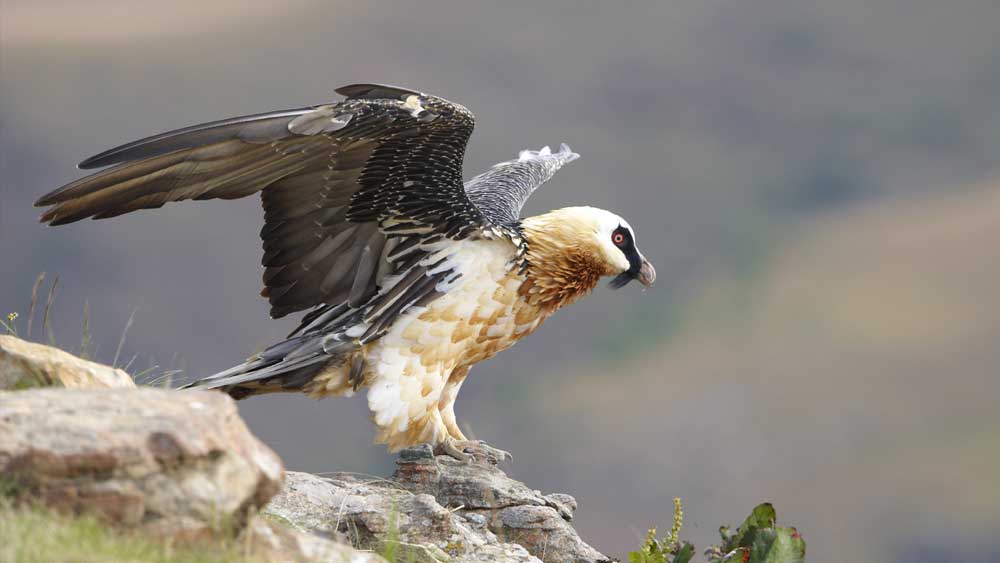
This bird of prey has a commanding presence—it’s huge and hairy-looking! The bearded vulture is large: 3-4 feet long with a wingspan of 7-9 feet. It can weigh 10-17 pounds, with females being slightly larger than males. Unlike other vultures, the bearded vulture is not “bald-headed.” In fact, bristles under its chin look like a raggedly “beard,” hence the bird’s name.3

Birdwatchers have flocked to the moors to see the bearded vulture, which has only been seen once before in the UK, the Derbyshire Wildlife Trust said. But the trust’s Tim Birch said it “couldn’t have come to a worse spot in terms of bird of prey persecution”. … Mr Birch said as it was coming up to grouse shooting season, there were fears the rare raptor could be intentionally poisoned or shot. … However Richard Bailey, gamekeeper and co-ordinator of the Peak District Moorland Group, said “suggestions that this vulture is at risk from attack by gamekeepers” were wrong.1

Admittedly, the bearded vulture has a rough, if not thuggish, reputation. In Germany it is called lammergeier, meaning “lamb-hawk,” due to its habit of preying on lambs—not a positive reputation in agricultural communities. Also called “ossifrage” (meaning bone-breaker), about 80% of the bearded vulture’s diet is animal bone marrow, mostly from mammal bones, but also from bird bones.3,4

[Derbyshire Wildlife Trust’s] Birch said the bearded vulture fed mainly on bones from carcasses, very rarely on live prey, and could swallow bones whole, which were dissolved in its stomach.1

Although scavenging can provide needed food, especially during the breeding season, these vultures often attack live prey, such as hares, rock hyraxes, marmots, and even monitor lizards. More so than predatory hawks or eagles, bearded vultures often attack larger mammals, such as sheep or goats, which are dropped from heights onto rocky surfaces to break their bones. Bearded vultures also grab turtles and drop them from heights to crack open their shells.3,5

Meanwhile, to say this mountain-dwelling bird is rare—only the second time ever observed in Great Britain—is an understatement.

Birdwatcher Indy Kiemel Greene, 15, who photographed the bearded vulture on Sunday, shared the trust’s fears for its safety. He said: “Unfortunately this bird is at great risk because the location that it’s at in the Derbyshire Peaks is well-known for raptor persecution….”1

Its preferred habitat is a high-altitude mix of rocky crags, cliffs, canyons, and montane gorges. So what is it now doing in England’s Peak District anyway?

[Tim Birch] said it was thought the raptor had come from the French or Swiss Alps, where the endangered species is being reintroduced. About 500 birdwatchers have come to catch a glimpse of the bird from all over the UK, as well as France, Spain and the Netherlands. … It is thought the bird could stay in the area for a couple of weeks if it has found food before eventually returning to the Alps.1

For birdwatchers (and videographers) who can visit the Peak District National Park, this could be the opportunity of a lifetime. But if you visit the park with a pet poodle, keep your pet leashed and very close to you. No need to take a chance.

References
1. Burman, H. Fears for Bearded Vulture Spotted in the Peak DistrictBBC News. Posted on bbc.com July 14, 2020, accessed July 16, 2020.
2. Staff writer. Bearded Vulture Spotted Near Severn BridgeBBC News. Posted on bbc.com May 17, 2016, accessed July 16, 2020.
3. Jonsson, L. 1993. Birds of Europe, with North Africa and the Middle East. Princeton, NJ: Princeton University Press (transl. by David Christie), page 124. See also Clark, W. S. 1999. A Field Guide to the Raptors of Europe, the Middle east, and North Africa. Oxford, UK: Oxford University Pres, pages 56-60 & 302-303, plus Plate 12.
4. Obviously, bearded vultures are not the only predators adept at cracking and crushing bones of their prey—lions have earned a similar reputation (Daniel 6:24).
5. Other large-winged birds of prey are noted for dropping their victims in order to prepare them for ingestion. For example, near Jerusalem, eagles soar while scouting for mammals or reptiles; these same eagles are known to snatch tortoises, and to “kill [them] by dropping and smashing [the tortoises] on rocks from high in the air” (Quoting Noel and Helen Snyder. 1991. Birds of Prey. Stillwater, MN: Voyageur Press, 164).

*Dr. Johnson is Associate Professor of Apologetics and Chief Academic Officer at the Institute for Creation Research.

JAMES J. S. JOHNSON, J.D., TH.D. *  |

[Re-posted from ICR article at https://www.icr.org/article/bearded-vulture-visit-england-oldest-national-park ]

Reposted here with Dr. Jim’s permission and at his request. (Lee)


See Also:

James J. S. Johnson’s other articles here

Birds of the Bible – Name Study ~ Ossifrage

Birds of the Bible – Gathering of Vultures or Eagles

Gannet Blown Off-Course, by Strong Winds

Gannet Blown Off-Course, by Strong Winds

Dr. James J. S. Johnson

For Thou hast been a strength to the poor, a strength to the needy in his distress, a refuge from the storm, a shadow from the heat, when the blast of the terrible ones is as a storm against the wall. (Isaiah 25:4)

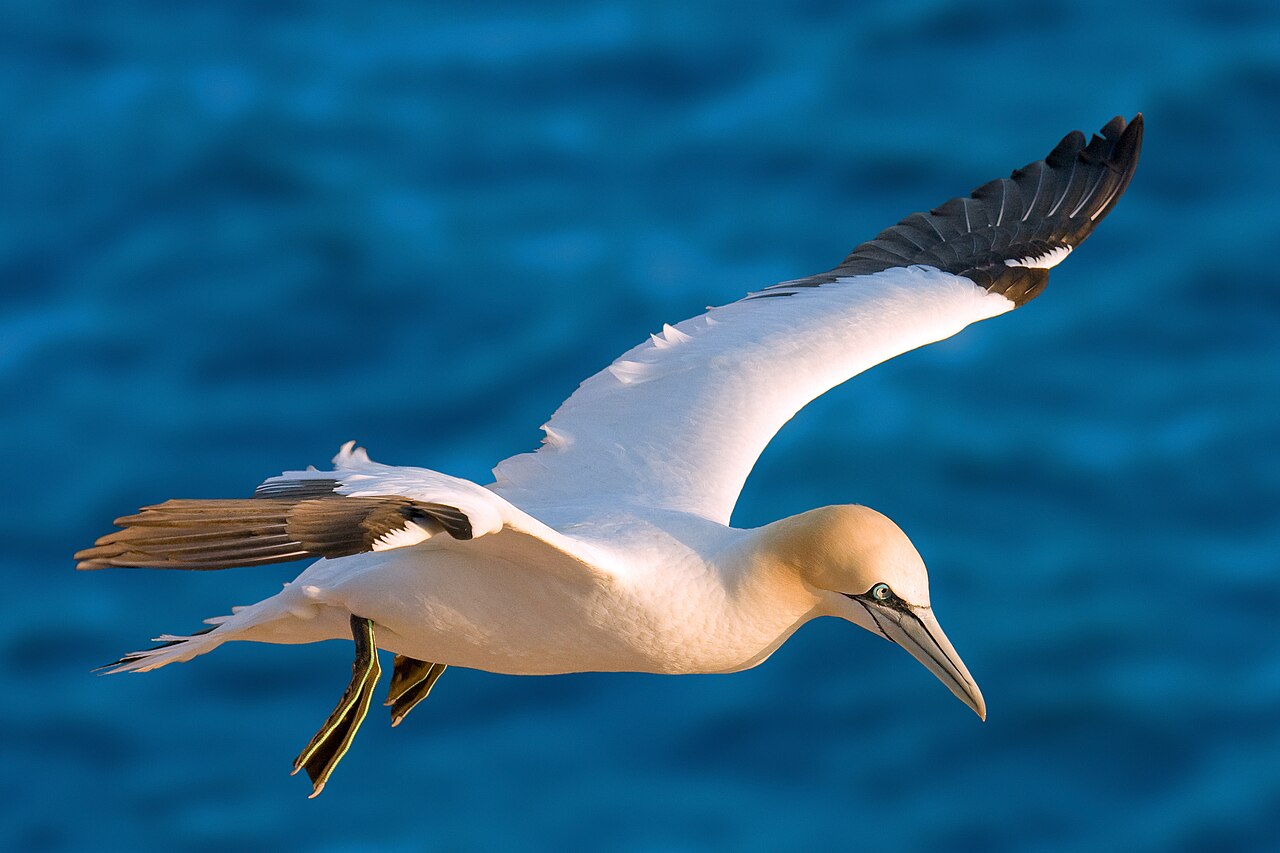
Gannet at Bempton Cliffs, Yorkshire England (Wikipedia photo credit)

What is an oceanic fish-eating seabird doing atop an inland trampoline in England? That was the question, recently, when a North Atlantic Gannet was seen resting on a British trampoline.(1)

Later, the weary-looking gannet moved to a garden, before it was gently captured by a resident (using a towel), who turned the poor seabird over to animal carers, who should return the bird to the wild after its health is aptly rehabilitated.

A seabird native to the North Atlantic has been rescued by the RSPCA after it took up residence in a Norfolk garden. Dawn Austin discovered the gannet resting on a trampoline in her North Wootton garden on Tuesday [June 2, 2020] and contacted vets when it did not fly away. … [Someone with] the RSPCA [Royal Society for Prevention of Cruelty to Animals] said there were no “obvious injuries” but the gannet was “very weak” and vets were doing all they could to help him. … feeding him three times a day as he was unable to feed himself, but they hoped that “having a chance to rest and recover” would help him “find the strength to pull through”.(1)

But gannets are seabirds—they belong at sea, not on trampolines! Gannets are gregarious seagulls that go far offshore to scoop up North Atlantic fish.

Gannets are a protected species under the Wildlife and Countryside Act 1981 and can dive at speeds of 60mph (96.5kmh) to catch fish.(1)

The largest seabirds in the North Atlantic can travel hundreds of miles from their homes just to catch food. … by following their elders. Scientists recorded thousands of [these] seabirds commuting to and from the Bass Rock, in the outer part of the Firth of Forth in the east of Scotland.(2)

So how did the ocean-faring gannet end up resting on an inland trampoline? The animal protection charity guessed that the bird “was blown off course”.(1)

This is understandable, since the British Isles (and their coastal waters) have been experiencing some weird weather lately.(3)

Gannet flying over the Celtic Sea, near Ireland (Wikipedia photo credit)

Meanwhile, being blown off-course can change an individual’s destiny, and thus also he destinies of progeny who descend from that individual.(4)

And, in some cases, a ship being blown off-course can lead to world-changing consequences.(5),(6)

Consider how the apostle Paul, and those traveling with him in a boat, were blown off-course—and eventually shipwrecked off the coast of Malta, in the Mediterranean Sea.(5) Paul’s ministry unto Maltese individuals would not have occurred had it not been for the “accidental” shipwreck that providentially occurred there.(6)

Likewise, the Mayflower Separatists (“Pilgrims”) who sailed west in A.D.1620—400 years ago—were blown off-course, reaching (and settling in) what is now part of Massachusetts, rather than territory farther south (in “Virginia”, which then stretched up to the Hudson River) as planned.(5)

Yet God’s providence, seen in hindsight, makes sense of the Pilgrims landing at Plymouth—and thus the Pilgrims were forced to establish their own Scripture-based form of colonial self-government, rather than the Pilgrims arriving in “Virginia” territory, to merely join a preexisting colony south of Plymouth.(5)

Being blown off-course can be scary, to be sure—losing control (or, or put more accurately), losing the feeling of being in control) is usually a nerve-wracking experience. Yet God is in control—even in the storms of life.(7)

Morus bassanus adu.jpg
Gannet aloft (photo credit: Andreas Trepte / Wikipedia)

References

And, providentially speaking, sometimes an unexpected destination includes some unexpected help from strangers, such as Squanto and Hobomok, if you are a Mayflower Pilgrim. Or, if you are a wind-tossed seabird like a North Atlantic gannet, the help might come from Dawn Austin and some RSPCA vets.(8)

  1. Staff writer. 2020. North Atlantic Gannet Found on Norfolk Trampoline. BBC News – England (June 5, 2020), posted at https://www.bbc.com/news/uk-england-norfolk-52938253 .  
  2. “By demonstrating that young gannets follow more experienced adults, we have shown that knowledge about the best feeding grounds may be being passed down from generation to generation.” Staff writer. 2019. Scientists Solve Mystery Behind How Gannets Hunt for Fish. BBC News – Scotland (November 1, 2019), posted athttps://www.bbc.com/news/uk-scotland-edinburgh-east-fife-50267180 . See also Wakefield, E. W., R. W. Furness, et al. 2019. Immature Gannets Follow Adults in Commuting Flocks Providing a Potential Mechanism for Social Learning. Journal of Avian Biology. Posted (September 18, 2019) at  https://doi.org/10.1111/jav.02164
  3. “A top climate scientist has called for more investment in climate computing to explain the UK’s recent topsy-turvy weather.” Harrabin, R. 2020. Weird weather: Can computers solve UK puzzle? BBC News – England (June 5, 2020), posted at https://www.bbc.com/news/science-environment-52921479 .
  4. Johnson, J. S. S. 2014. People Yet to Be Created. Acts & Facts. 43(11):20, posted at https://www.icr.org/article/people-yet-be-created .
  5. It was 400 years ago that the Mayflower providentially sailed for America, arriving at Plymouth (Massachusetts). See James J. S. Johnson, Mechanical Multi-tasking on the Mayflower. Acts & Facts. 46(11):21 (November 2017), posted at https://www.icr.org/article/mechanical-multitasking-mayflower .  See also James J. S. Johnson, Maple Syrup, Gold Nanoparticles, and Gratitude. Creation Science Update (May 25, 2020), posted at https://www.icr.org/article/maple-syrup-gold-nanoparticles-and-gratitude . The Spanish Armada’s disastrous experiences with “freak” storms during 1588 would be another example of sea-storms with historic consequences.
  6. Regarding the apostle Paul’s providential visit to and ministry at Malta, via shipwreck, see Acts 27:6-28:11.
  7. God is our personal refuge in all of the storms of life. Isaiah 25:4.
  8. God cares for birds at the individual level. Matthew 6:26; Luke 12:6-7.

How Much Are You Being Monitored? A Hummingbird Lesson

How Much Are You Being Monitored? A Hummingbird Lesson

Dr. James J. S. Johnson

Ye are the light of the world. A city that is set on an hill cannot be hid.  Neither do men light a candle, and put it under a bushel, but on a candlestick; and it giveth light unto all that are in the house.  Let your light so shine before men, that they may see your good works, and glorify your Father which is in heaven.  (Matthew 5:14-16)
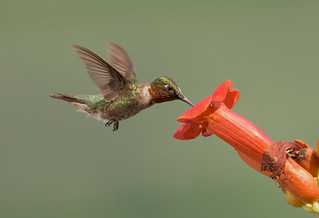
hummingbird-trumpetvine.HaroldADavis

Hummingbird at Trumpet Vine blossom (Harold A. Davis photo)

Beware! – you are being watched, more than you know!

In some neighborhoods surveillance is all around—neighbors watching neighbors, using cell-phones to document questionable (“non-essential”) activities, to see if pet dogs are on leashes, and to see if people are six feet apart when talking to others who are out and about. Neighbors are calling the local police on neighbors, to enforce social distancing, travel restrictions, and other disaster protocols.(1)

In short, if you are outside, you are being monitored! But is this really new?

Actually, we are being watched all the time, by neighbors, by family members, by co-workers, at the grocery store, at church, and in many other places.(2)

A birdwatching friend’s recent email reminded me of that fact, when he (Thomas Lane) reported on his home’s avian visitors.

Good to hear from you.  I am working from home … I’m also enjoying watching the bluebirds in the backyard – they are raising young and busy gathering food for them.  We built several bluebird boxes a few years ago and always have at least one couple nesting here.  We also have a couple of hummingbirds that have returned to the feeder, and we are waiting for the rest.  We typically have 5 feeders out in various places.(3)
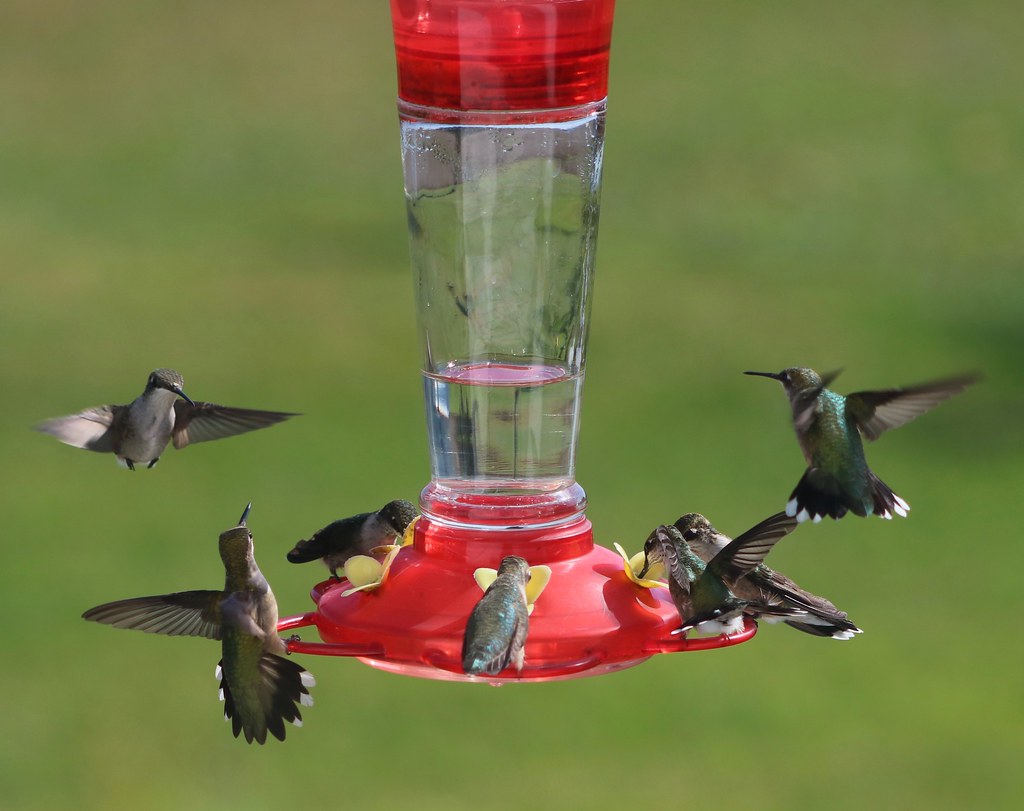
Hummingbirds-at-feeder.Flickr

Hummingbirds at feeder (Flickr photo)

As spring blossoms into April (and May), the nectar pantries of bright-hued flowers are “open for business”, ready to feed the voracious appetites of neighborhood hummingbirds  —  those petite, iridescence-sparkled, blurry-winged wonders with super-sized metabolic fuel needs.  Floral nectar is a sweet resource!

Yet, as flowers bloom in spring, such fly-by “fast-food” opportunities cannot be taken for granted, especially if one is an energy-craving hummingbird.

Hummingbirds are famous for their (males’) jewel-like throats, their hovering and multi-directional flying, and their ability to change directions   —  stop, go, up, down, left, right, backward, forward, — using high-speed wings that whip figure-eight patterns faster than human eyes can follow, producing a humming sound (that explains their name) that almost sounds like a contented cat purring.

Hummingbirds, due to their speedy, darting movements, and their iridescent green colors, attract the eye.  So you see them  –  zip!  –  then you don’t.  Zip!  –  then you see them again.

Spring always flows into summer.(4) The summer range of hummingbirds (such as the Ruby-throated Hummingbird, Archilochus colubris) is broad enough that most of us have seen hummingbirds. But, as time goes by, there is no time for hummingbirds to relax  —  their needle-like bills must sip up nectar wherever and whenever it is available! The business of a hummingbird’s life is so intense, so metabolically demanding, that slurping up available nectar is a lifestyle priority, requiring dietary focus and persistence:  “Get nectar, get more nectar, get even more nectar!  Hurry, hurry, hurry!”  Sugar substitutes are unacceptable for hummingbirds – they must have real sugar to thrive.(5)

What an enormous appetite for such a miniature bird!  The calories consumed and burned by hummingbirds, on a boy weight ratio, are comparable to a human eating more than a 1000 hamburgers every day, as body fuel needed for a day’s normal activities!(6) That is high-maintenance metabolism!

Reading my friend’s email (quoted above) reminded me of when I saw, in my own backyard, a hungry hummingbird hovering by brilliant vermillion flowers, as he (or she) slurped up nectar from one flower, then another flower, then another, — without any (apparent) concern for my physical presence or proximity, only a few steps from him (or her).
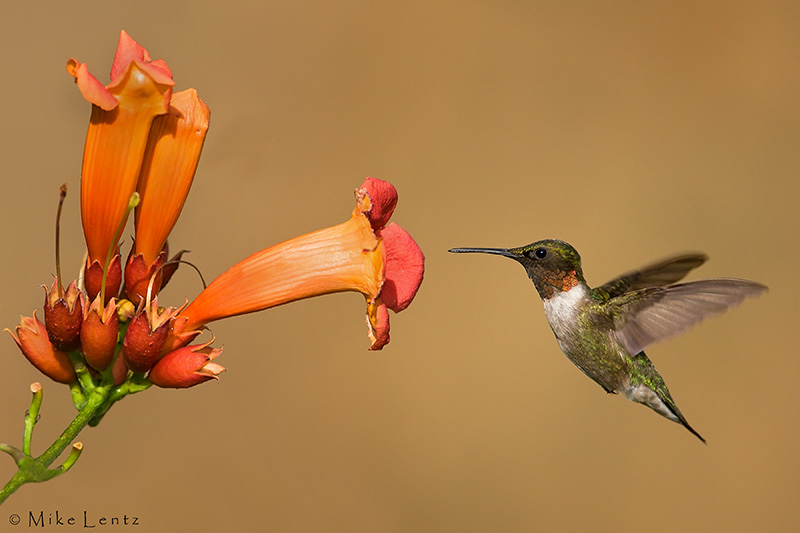
Hummingbird-at-TrumpetVine-MikeLentz

Hummingbird at Trumpet Vine blossom (Mike Lentz photo)

Why was the buzzing hummer oblivious of me, the birdwatcher so close by?

The hungry hummer was too preoccupied with the pressing business of life, to notice me, a quiet spectator.  What a privilege it was, to watch – for a long time, actually – this sparkling-in-the-sunlight hummingbird, darting among the bright flowers.

Yet are not our own lives, at least somewhat, like that busy hummingbird?

Are we not – day by day, hour by hour, minute by minute, moment by moment – preoccupied with the ever-pressing business of life (especially when daily routines are altered by changed circumstances—such as pandemic disaster restrictions), darting here-and-there, from this task to the next one, such that we often ignore the spectators, those watching eyes who observe and appreciate our lives – those who (hopefully) see God’s beauty and wisdom imaged in our own attitudes and actions?

Yes, we have audiences we should not be oblivious of.  As we live the moments of our fast-paced lives we should not forget three audiences, who watch us much more than we consciously realize.

First, there are many curious humans who watch our busy lives, especially those who are younger than us.  What kind of role-models are we?  Hopefully our Christian lives are like the Thessalonian believers whom Paul commended as examples to all of the believers in Macedonia and Greece.(7)

Who is monitoring us? Who is listening?  Who is evaluating the message(s) of our lives, comparing our “walk” to our “talk”?  Do our lives “shine” as God’s testifying “lights”, such that our good deeds prompt spectators to glorify God our Heavenly Father?(8)

Second, there are non-human spectators surveilling our lives:  angels!   Angels learn from watching the “spectacle” of human lives.(9) Indeed, the effect of God’s gospel of grace, in the earthly lives of redeemed humans, is something that angels can only learn about as spectators, since redemption is never experienced by angels.(10)

Yet the most important audience we have, always, is the Lord Himself  (Jehovah-jireh, the God Who is and sees), our omniscient and omnipresent Creator-God.  It is our wonderful Maker Who watches every sparrow’s (and every hummingbird’s) avian lifespan, and we are of much greater value to God than the lives of many sparrows.(11)

As the Lord Jesus Christ’s vicarious death and resurrection has peremptorily proved, for all time and eternity, we humans are God’s favorite creatures.  God is caringly concerned with every detail of our busy lives (from creation to ultimate redemption), so let us not be oblivious to our most important Audience.

Do we live our earthly lives as ingrates, ignoring Him and His Word?  Or do we live life appreciative of Him and His Word, grateful that He created us and provided us with redemption in Christ?

Accordingly, with these three audiences in mind, as spectators of our busy lives, let us consider the prophet Ezekiel’s serious question: “How should we then live?”(12)

Let your light so shine before men, that they may see your good works and glorify your Father in heaven.(8)
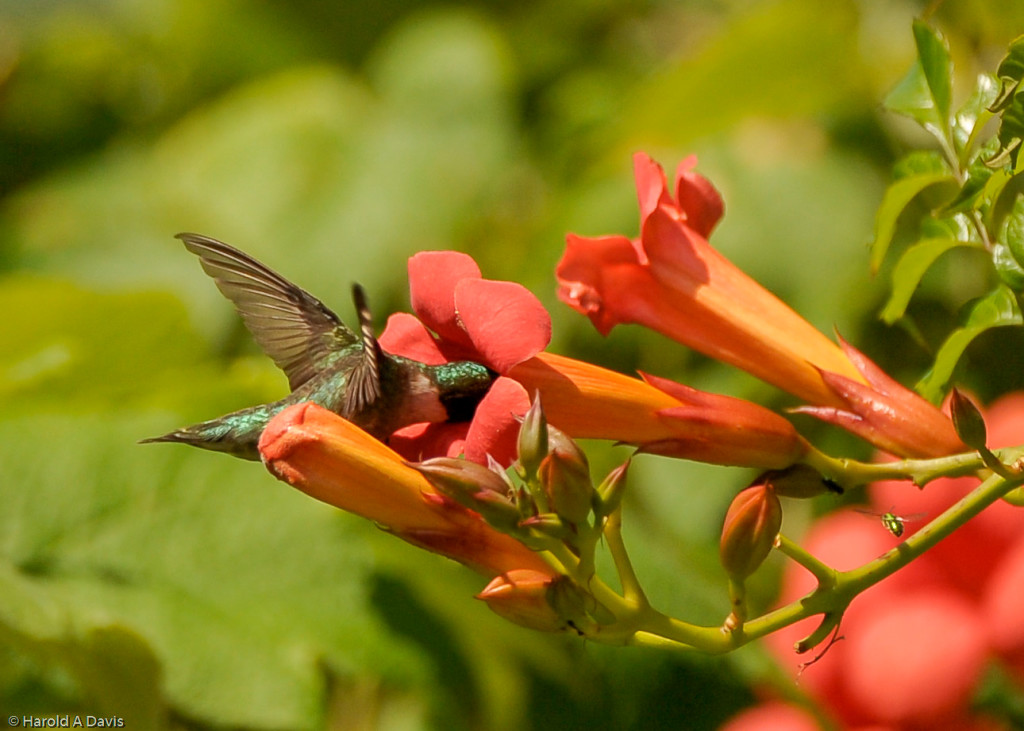
Hummingbird-TrumpetVine-HaroldADavis

Hummingbird getting nectar at Trumpet Vine (Harold A. Davis photo)

REFERENCES

(1) Declarations of “disaster”, from Wuhan (China) spreading to South Korea, then to dozens of European nations, plus many parts of America and other nations (excluding Singapore), have led to many government-promulgated “stay-at-home” mandates, being enforced by a combination of government and private sector actions. Johnson, James J. S. 2020. Turtles, Birdwatching, and Living through Tough Times. ICR News: Creation Science Update (March 30, 2020), posted at https://www.icr.org/article/turtles-birdwatching-living-through-tough-times . See also Johnson, James J. S. 2020. “Getting Crabby Over Labor Shortage”. ICR News: Creation Science Update  (March 24, 2020), posted at https://www.icr.org/article/getting-crabby-over-labor-shortages .

(2) 2nd Corinthians 3:2-3 (“living epistles”).

(3) Email correspondence from Thomas Lane, April 1, 2020.

(4) Genesis 8:22.

(5) Mitchell, Elizabeth. 2014. Our Creator’s Sweet Design for Hummingbird Taste (Answers in Genesis: News to Know, September 6, 2014), posted https://answersingenesis.org/birds/our-creators-sweet-design-hummingbird-taste/ (with a link, in Footnote #1, to video footage of hummingbird sugar consumption). See also Sherwin, F. 2006. Hummingbirds at ICR. Acts & Facts. 35(9), posted at https://www.icr.org/article/hummingbirds-at-icr/ .

(6) Dreves, Denis. 1991. H Creation Ex Nihilo Technical Journal. 14(1):10-12.

(7) 1st Thessalonians 1:7.

(8) Matthew 5:16.

(9) 1st Corinthians 4:9(Paul is referring to the apostles, yet the indirect implication is that the righteous angels learn from observing the lives of ordinary Christians.)

(10) 1st Peter 1:12.

(11) Matthew 10:29-31; Luke 12:7.

(12) Ezekiel 33:10.
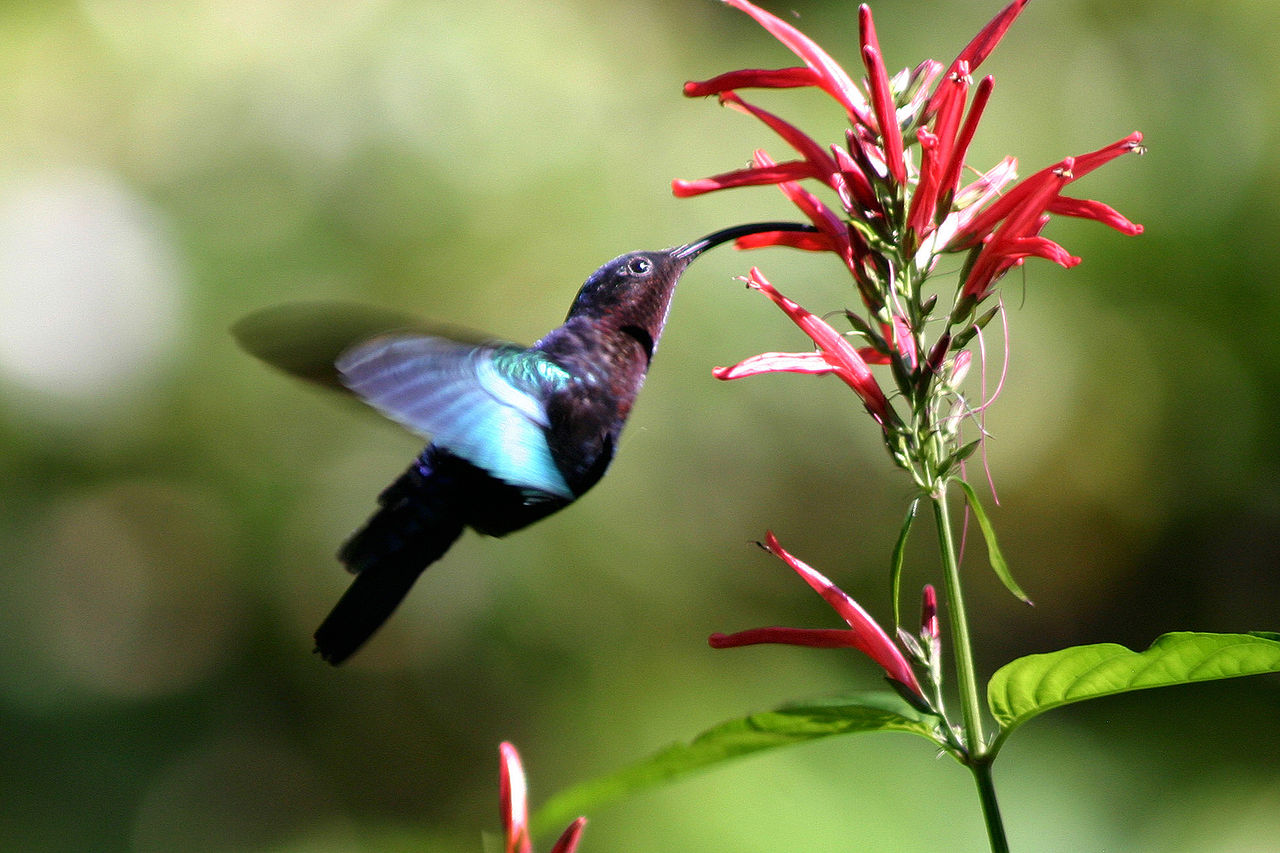
Hummingbird.Purple-throated-Carib-Wikipedia

Purple-throated Hummingbird of the Caribbean (Wikipedia photo)
Watch Out! We Need Sentinels in Perilous Times

Watch Out! We Need Sentinels in Perilous Times

Dr. James J. S. Johnson

“This know also, that in the last days perilous times shall come.” (2nd Timothy 3:1)

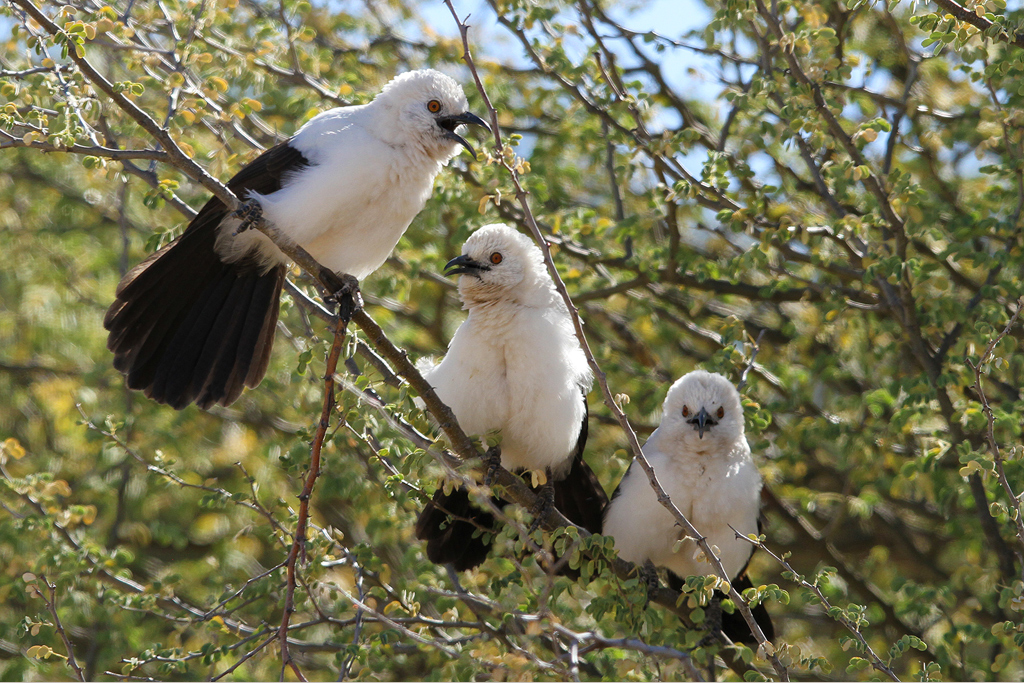
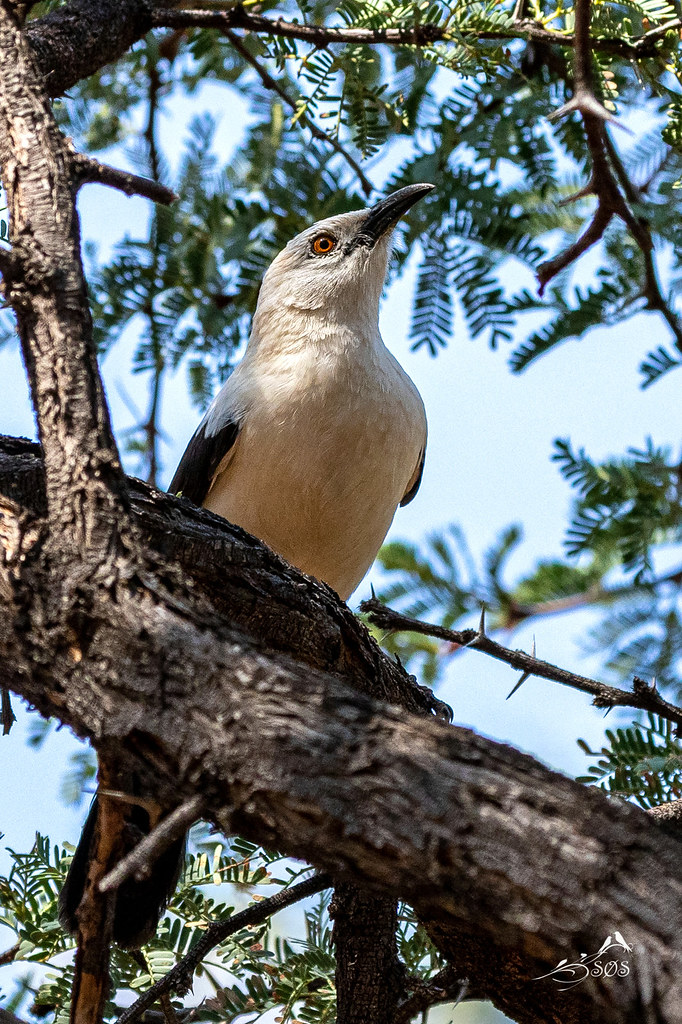
Southern-Pied-Babbler.TheFlacks

Southern Pied Babbler (The Flacks)

Watch out! Dangers lurk everywhere—these are surely perilous times.(1)

One of the apologetics-exhorting themes in Jude’s epistle is the need to beware of—and to forewarn others about—irreverent scoffers who try to distort and resist God’s truth, as we contend earnestly for the truth that God has given.(2)

Yet, even bird populations must watch out for lurking hazards and airborne threats in their nesting neighborhoods and while visiting migratory stopovers—predators on foot, like wolves, or in air, like hawks!(3),(4)

One habit that prey populations often exhibit, to careful observers, is the practice of appointing a “sentinel”—a “watchman on the wall”, so to speak.(5),(6)

One bird—sometimes more—of the flock is assigned the role of warning (called “alarming”) the others who are foraging (i.e., eating) or otherwise occupied with nest-building or other activities. In some groups sentinel duty is rotated—taking turns at “guard duty”—while in other groups the responsibility is sorted as a division-of-labor assignment, such as male birds more often serving as sentinels.(6),(7),(8)

This is quite puzzling to evolutionists, who assume that, ultimately, there needs to be a selfish advantage for every activity, as opposed to some creatures behaving altruistically, because that is what they do (or are programmed to do).(7),(8)

Sentinel behaviour, where individuals take turns to watch for danger and give alarm calls to approaching predators, has been observed in a number of animal societies. However, the evolutionary causes of this behaviour remain unclear. There are two main, competing hypotheses regarding the evolution of sentinel behaviour. The first hypothesis is that it is a cooperative behaviour, where group members benefit from the detection of danger but share the workload of acting as a sentinel. The second is that it is a safe, selfish behaviour. Under the second hypothesis, once an individual is satiated, being a sentinel is safer because sentinels can detect threats more readily and can therefore escape from predators faster. (7)

But what are the observable facts about sentinels? Is their service somehow a selfish benefit to themselves, when they serve as their group’s watchmen?

Or, are some sentinel creatures actually behaving in altruistic ways, protecting the group they belong to, at greater risk (or other cost) to themselves?

We examined whether sentinels are safer than foragers in a wild, free-living cooperative bird (the pied babbler, Turdoides bicolor) with a well-described sentinel system. We found that sentinel behaviour was costly because (a) sentinels were targeted by predators more often, (b) they were further from cover than foragers, and (c) they took longer to reach the safety of cover following a predator alarm.(7)

In fact, animals exhibit some behaviors that—if practiced by humans—would be called “selfish” and “cruel”, as well as other behaviors that we call “altruistic” and “self-sacrificing”.

These results suggest that individuals do not become sentinels because it is safer. This is the first study to demonstrate that sentinels are at greater risk of predator attack than foraging group members and suggests sentinel activity may have evolved [sic] as a form of cooperative behaviour.(7)

However, moral accountability is unique to human behavior, because only we humans—being uniquely made in God’s image—are Earth-dwelling creatures that have true moral accountability for our activities.(9)

It is important to sound the alarm, early, when doing so can prevent—or at least mitigate—an approaching disaster. Sometimes the messenger of bad news pays a price (for delivering an unwelcome message), but it’s better to sound the alarm early—hopefully early enough to prevent harm—than to delay a warning that leads to damage-control problems that grow costlier with time.(1),(2),(5),(6)

Of course, caringly sharing the Gospel of redemption in Christ is the best warning of all, even if it involves costly risks.(5)

SouthernPiedBabbler.SoesNature-n-Art

Southern Pied Babbler (Soes Nature & Art)

References

  1. Matthew 8:28; 2nd Timothy 3:1.
  2. Jude 1:3-4. See also Psalm 119, Acts 20:28-31, and 2nd Peter 2:12-19. See also Footnote 6 within Johnson, J. J. S. 2020. Maple Syrup, Gold Nanoparticles, and Gratitude. Creation Science Update (May 25, 2020), posted at https://www.icr.org/article/maple-syrup-gold-nanoparticles-and-gratitude.
  3. Johnson, J. J. S. 2017. Securing Nests and Nestlings from Parasites and Predators, in Norway and Beyond. Nordic Legacy Series (Norwegian Society of Texas, Fort Worth, Texas, November 26, 2017), 9 pages.
  4. Prey-predator relationships can be both complicated and detailed. See Sherwin, F. 2016. Smart and Stealthy Cuttlefish. Creation Science Update (January 11, 2016), at https://www.icr.org/article/smart-stealthy-cuttlefish . See also Sherwin, F. 2005. All Out War in the Cornfield. Acts & Facts. 34(8), posted at https://www.icr.org/article/all-out-war-cornfield . For one of the most unusual illustrations of defense against predators, listen to Frank Sherwin’s podcast titled “Bombardier Beetle” (July 17, 2017), posted at https://www.icr.org/article/bombardier-beetle .
  5. Ezekiel 33:2-10, especially 33:7. Compare also 2 Corinthians 2:14-17 with John 3:14-21.
  6. Johnson, J. J. S. 2020. Jackdaws Identify ‘Dangerous’ from ‘Safe’ Humans. Creation Science Update (May 4, 2020), posted at https://www.icr.org/article/jackdaws-identify-dangerous-from-safe-humans .
  7. Ridley, A. R., M. J. Nelson-Flower, et al. 2013. Is Sentinel Behaviour Safe? An Experimental Investigation. Animal Behaviour. 85(1):137-142, posted at https://www.sciencedirect.com/science/article/abs/pii/S0003347212004770 .
  8. Wright, J., E. Berg, et al. 2001. Safe Selfish Sentinels in a Cooperative Bird. Journal of Animal Ecology. 70:1070-1079.
  9. Genesis 1:26-27. See also Acts 20:35 and Philippians 2:5-11.


Alaskans Alcids, Designed by God for Flowing through Both ‘Oceans’

Alaskan Alcids:  Efficiently Designed by God for Flowing through Both ‘Oceans’

Dr. James J. S. Johnson

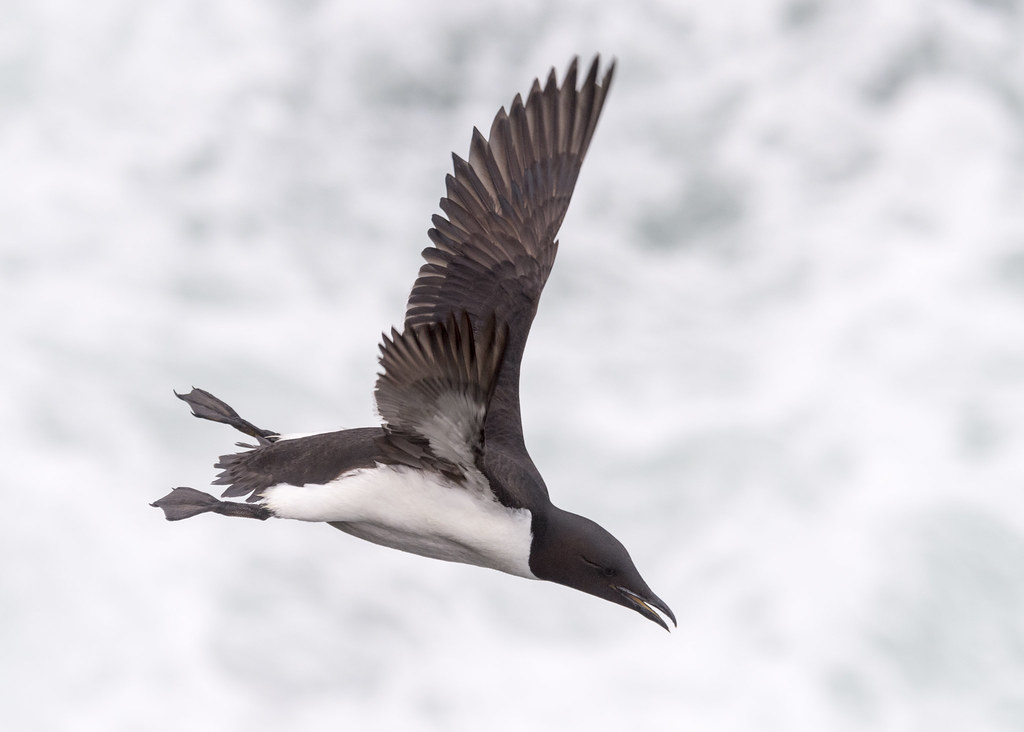
CommonMurre-aloft-Alaska.TomIngram-photo

COMMON MURRE Tom Ingram photo

And God said, Let the waters bring forth abundantly the moving creature that hath life, and fowl that may fly above the earth in the open firmament of heaven.  And God created great whales, and every living creature that moveth, which the waters brought forth abundantly, after their kind, and every winged fowl after his kind: and God saw that it was good.  And God blessed them, saying, Be fruitful, and multiply, and fill the waters in the seas, and let fowl multiply in the earth.  (Genesis 1:20-22)

About a year ago (specifically, July 19th AD2019), this writer saw–for the first time–Atlantic puffins in the wild.  These cute clown-faced alcids were flying near (and sometimes resting upon) the cliff-dominated isle of Staffa, often plunging into coastal waters for fish.  That privileged birdwatching experience is reported on this blogsite at  “Birdwatching at Staffa, Near Iona:  Puffins, Shags, and Herring Gulls” [posted at https://leesbird.com/2019/07/22/birdwatching-at-staffa-puffins-shags-more/ ].

In this blogpost, however, it is alcids near the coastal waters of Alaska (and thus the northern Pacific Ocean) that are the subject of our attention.

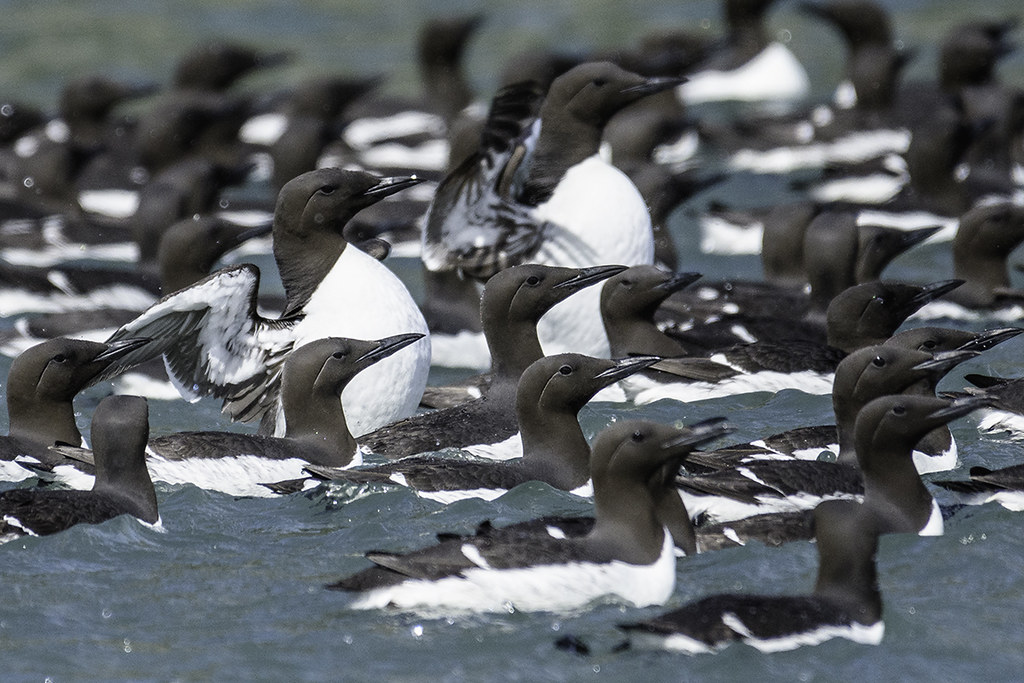
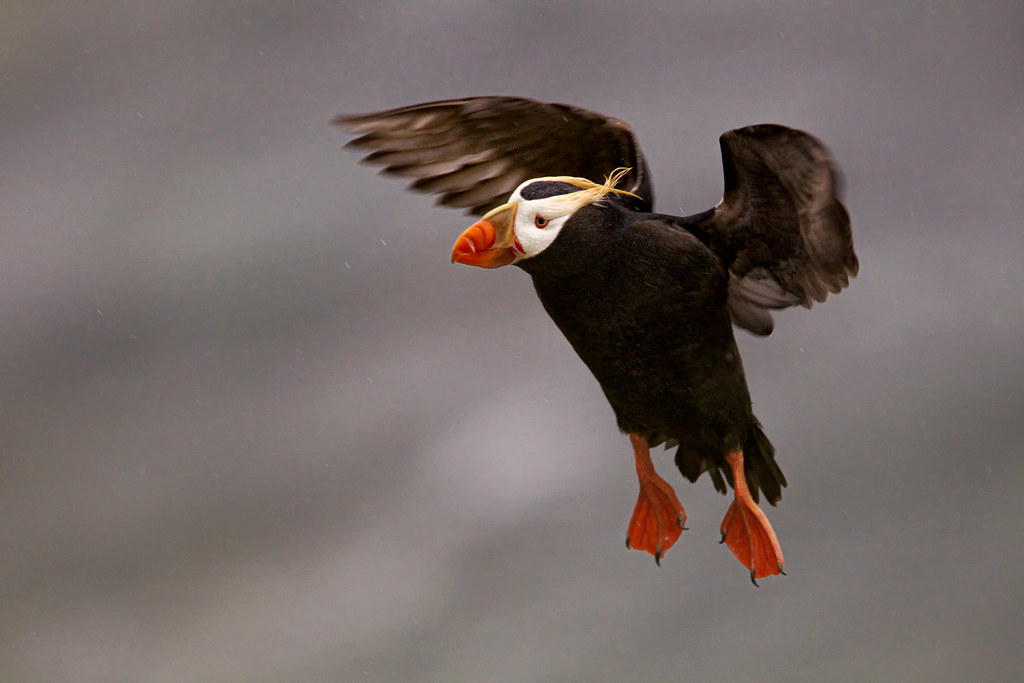
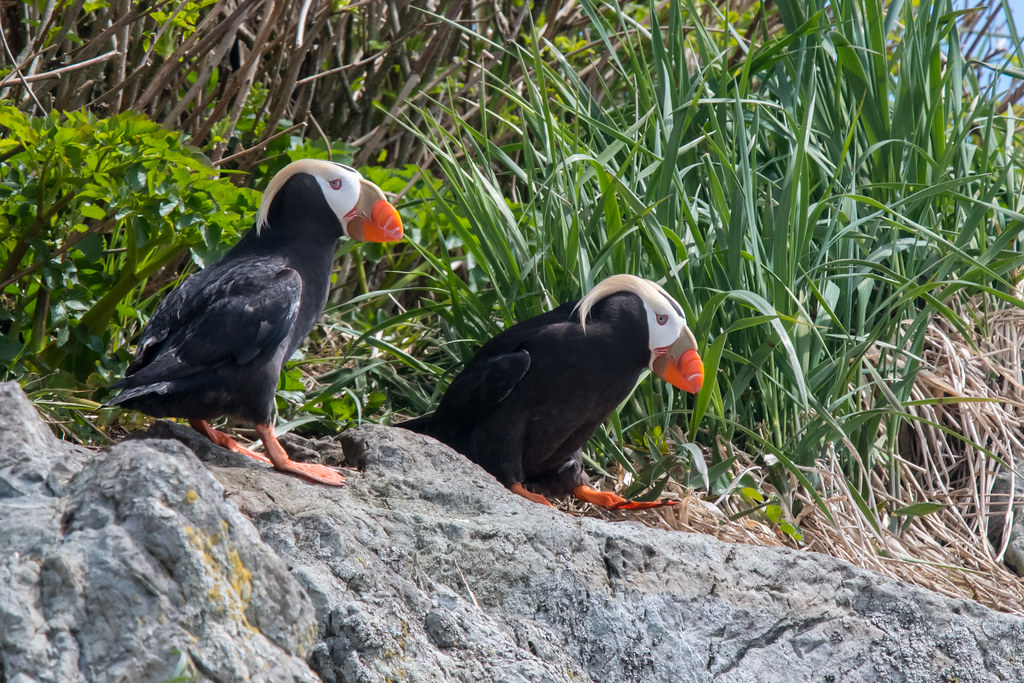
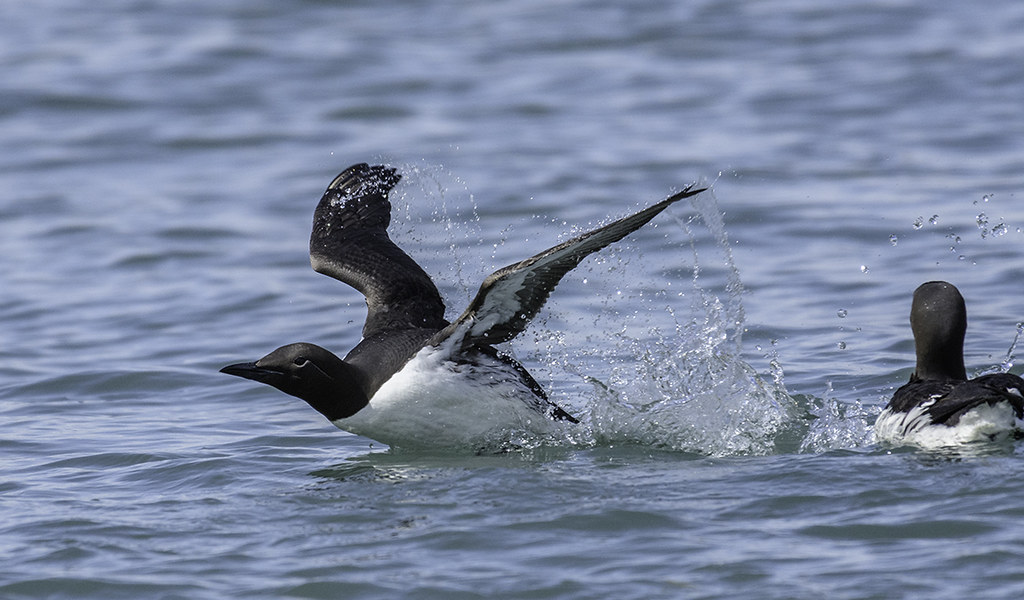
Recent research, on the flying behavior of Alaskan alcids—auk-like birds (such as murres, guillemots, and puffins)—shows how Earth has two kinds of fluid-filled “oceans”, the liquid ocean of sea-water and the gaseous “ocean” of air.(1),(2),(3)

The study reveals that these birds, from the Alcidae family which includes puffins, murres and their relatives, produce efficient propulsive wakes while flying and swimming. This means that the animals likely spend relatively low amounts of metabolic energy when creating the force [that] they need to move in both air and water.(1)

Common-Murre-raft-Alaska.TikiJoe-photo

COMMON MURRE Tiki Joe photo

Maybe you don’t think of Earth’s atmosphere as an “ocean” of air, but a creation science pioneer, Matthew Maury, did. In fact, Maury is famous for his scientific breakthroughs in oceanography, which analyzes ocean sea-water dynamics—and also in meteorology, which analyzes atmospheric dynamics.(3)

The two oceans of air and water. Our planet is invested with two great oceans; one visible, the other invisible; one underfoot, the other overhead; one entirely envelopes it, the other covers about two-thirds of its surface. All the water of the one weighs about 400 times as much as all the air of the other.(3)

It’s all about fluid mechanics, including avian applications for efficient motions inside both “oceans”. The study included videographic documentation of flying, diving, and swimming by murres, guillemots, and puffins.

Puffin-sailing-aloft-Alaska.PeterStahl-photo

PUFFIN catching wind like a sailboat (Peter Stahl photo)

Study animals were common murres (Uria aalge, Pontoppidan 1763), pigeon guillemots (Cepphus Columba, Pallas 1811), horned puffins (Fratercula corniculata, Naumann 1821), and tufted puffins (Fratercula corniculate, Pallas 1769). Filming of aquatic flight was performed at the Alaska SeaLife Center in Seward, Alaska. … At the time of this study, the exhibit contained 12 horned puffins, 10 tufted puffins, 4 pigeon guillemots, and 6 common murres. Individuals of each species of alcid regularly swam past the viewing window. … Given the clear contrasts between these two behaviors, we differentiate between horizontal (trajectory <10 deg) and descending aquatic flight (trajectory >20 deg). The birds swam on their own volition and selected their own swimming speeds and descent angles. Videos of aquatic flight of all four species were taken ….(2)

But would evolution predict that alcids are fitted for such efficiency?

Birds that use their wings for ‘flight’ in both air and water are expected to fly poorly in each fluid relative to single-fluid specialists; that is, these jacks-of-all-trades should be the masters of none.(2)

But the evolutionists guessed wrong when they suspected that these Alsakan alcids would be inefficient when moving in both fluid “oceans”.

Alcids exhibit exceptional dive performance while retaining aerial flight. We hypothesized that alcids maintain efficient Strouhal numbers and stroke velocities across air and water, allowing them to mitigate the costs of their ‘fluid generalism’. We show that alcids cruise at Strouhal numbers between 0.10 and 0.40 – on par with single-fluid specialists – in both air and water but flap their wings ~ 50% slower in water. Thus, these species either contract their muscles at inefficient velocities or maintain a two-geared muscle system, highlighting a clear cost to using the same morphology for locomotion in two fluids. Additionally, alcids varied stroke-plane angle between air and water and chord angle during aquatic flight, expanding their performance envelope.(2)

Tufted-Puffins-Alaska.TimMelling-photo

TUFTED PUFFINS Tim Melling photo

Thus, because God designed alcids to move in both fluids—liquid sea-water and gaseous air currents—God brilliantly programmed how they move in those two fluid environments.(4)

This mobile efficiency surprises evolutionists, but not Biblical creationists.

Interestingly, birds in the family Alcidae (puffins, murres, and their relatives) seem to contradict the notion of a trade-off between aerial and aquatic flight performance.(2)

Biomechanics is the field of biology that studies the action of internal and external forces on the living body, especially the skeletal system. Also called bioengineering, this fascinating area analyzes biological design and the physical forces associated with humans and animals. If ever there was evidence for creation on a macroscopic scale (Romans 1:20), it would be the vast array of creatures all over the world marvelously designed to move in and fill their environments based on these amazing design features.(8)

In fact, long ago, the Scriptures mentioned the magnificent ability of birds to fly, taking advantage of flowing air currents according to their availability.(5)

It should never surprise Christians to learn that God has carefully and caringly designed and bioengineered birds (including cute little alcids like puffins, murres, adn guillemots!)—all over the world—to fit and to fill their respective habitats, even in this fallen world.

Also it should not surprise Christians when evolutionists fail to give God credit for His handiwork—because not having “eyes to see” God’s Creatorship, evolutionists routinely imagine optimized biological behaviors (like alcids swimming, diving, and flying) as accidental products of “evolution”—as if merely using the word “evolution” somehow justifies believing that blind mindless luck did it all.(6),(7)

Common-Murre-liftoff-from-sea.TkiJoe-photo

COMMON MURRE liftoff form sea (Tiki Joe photo)

References

  1. Staff writer. 2020. Scientists Shed New Light on How Seabirds Cruise through Air and Water. Science Daily (June 30, 2020), posted at https://www.sciencedaily.com/releases/2020/06/200630193211.htm .
  2. Lapsansky, A., D. Zatz, and B. W. Tobalske. 2020. Alcids ‘Fly’ at Efficient Strouhal Numbers in Both Air and Water, But Vary Stroke Velocity and Angle. Posted on eLife (June 30, 2020), posted https://elifesciences.org/articles/55774 .
  3. Maury, M. F. 1855. The Physical Geography of the Sea and its Meteorology. Mineola, NY: Dover Publications, Inc. (2003 reprint of Harvard University Press’s Belknap Press 1963 edition, including some revisions from Maury’s 8th edition published in 1861), 23-37, with quotations from page 23.
  4. Enticott, J., and D. Tipling. 1997. Seabirds of the World. Mechanicsburg, PA: Stackpole Books, 213-227, especially pages 214-217 (murres and guillemots) & 226-227 (puffins). See also Kikuchi, D. M., Y. Watanuki, N. Sato, et al. 2015. Strouhal Number in Flying and Swimming in Rhinocerous Auklets Cerorhinca monocerata. Journal of Avian Biology. 46:406-411. Penguins, like alcids, “fly” underwater. Watanuki, Y., S. Wanless, M. Harris, et al. 2006. Swim Speeds and Stroke Patterns in Wing-propelled Divers: A Comparison among Alcids and Penguins. Journal of Experimental Biology. 209:12117-1230.
  5. The Hebrew verb paras used in Job 39:26, for the hawk’s wind-harnessing flight, is also used in Isaiah 33:23, to describe wind-harnessing of boat-sails in sea-water. See Johnson, J. J. S. 2018. Hawks and Eagles Launching Skyward. Acts & Facts. 47(4):21, posted at https://www.icr.org/article/hawks-eagles-launching-skyward , especially at Footnote # 5. Eagles can fly, like dive-bombing airplanes, at great speeds (see 2 Samuel 1:23 and Lamentations 4:19). See also Johnson, J. J. S. 2008. Alaska’s Coastal Rainforests and Two of its Rangers, the Bald Eagle and the Alaska Moose. (Dallas: NWD Press/RCCL’s Radiance of the Seas), pages 10-11.
  6. 1 Timothy 6:
  7. Johnson, J. S. 2010. Survival of the Fitted: God’s Providential Programming. Acts & Facts. 39(10):17-18, posted at https://www.icr.org/article/survival-fitted-gods-providential-programming .
  8. Sherwin, F. 2017. Architecture and Engineering in Created Creatures. Acts & Facts. 46(10):10-12, posted at https://www.icr.org/article/architecture-engineering-created-creatures .

Scotland-jjsj.Signet-LawLibrary

Pyrrhuloxia-Cardinal Hybrid’s Plumage Matches 4th of July’s Fireworks Theme

Pyrrhuloxia-Cardinal Hybrid’s Plumage Matches 4th of July’s Fireworks Theme

Dr. James J. S. Johnson

And if it seem evil unto you to serve the LORD, choose you this day whom ye will serve; whether the gods which your fathers served that were on the other side of the flood, or the gods of the Amorites, in whose land ye dwell: but as for me and my house, we will serve the LORD. (Joshua 24:15)

The Star Spangled Banner has been celebrated for many generations as America’s national anthem. Especially on the 4th of July we expect to sing (or hear) the Star-Spangled Banner, the lyrics of which were penned by a godly Christian lawyer, Francis Scott Key, while he was detained aboard a British ship during the bombardment of Fort McHenry, during the War of 1812.

StarSpangled-Banner.singing-PresidentTrump

So, it seems fitting that red, the color of military fireworks (i.e., “the rockets red glare”), and black, the color of the night sky (i.e., “gave proof through the night”) would be associated with the 4th of July. And, in a birdwatching-associated way, black and red did help me to appreciate America’s independence, last weekend, when I watched a special bird eating seeds from a birdfeeder.

Pyrrhuloxia-Cardinal-hybrid.TroyCorman-photo

Cardinal X Pyrrhuloxia hybrid

Photo credit: Troy Corman AD2012 (Maricopa County, Arizona)

With a black facemask, it looked like a cardinal—yet it had a lot of black and grey, like a Pyrrhuloxia (a/k/a “Black Cardinal” or “Desert Cardinal”). Yet this bird’s plumage was highlighted with cardinal scarlet, plus it had a mostly orange-hued beak, not the yellow beak of a Pyrrhuloxia. It was not a female cardinal—female cardinals have tannish-brown plumage, sometimes with yellowish tones, highlighted by scarlet accenting. In other words, what I saw was a HYBRID, offspring of a Northern Cardinal (Cardinalis cardinalis) and a Pyrrhuloxia (Cardinalis sinuatus). Such hybrids have been seen before in Arizona, Texas (including one visiting ICR’s Dallas campus), and apparently also in Oklahoma.

Pyrrhuloxia-Cardinal-hybrid.JanetJohnson-BrenhamTX

Pyrrhuloxia-Cardinal Hybrid photo credit: Janet Johnson (Brenham, TX) / Cornell Lab

For example, the Cornell Lab posts the following report by Janet Johnson (of Brenham, Texas), with a photograph of a hybrid that looks very much like what I saw last weekend (except what I saw was more blackish and less light-grey):

“I believe this bird is a Cardinal/Pyrrhuloxia hybrid. He is a beautiful, clear gray color like the Pyrrhuloxia with red on his tail, wings, and crest, but with a black mask like the Northern Cardinal. His bill is more like the Cardinal, being more orange than yellow. He also has red mottling down his breast like the Pyrrhuloxia.”

What a beautiful, fireworks-feathered, patriotic, dignified, crested seed-eater!

This patriotic post now concludes with a link to a video clip providing a 2nd Amendment-oriented variation of the Star-Spangled Banner, by the Black Rifle Coffee Company (which employs U.S. veterans, and makes several varieties of bold, strong coffee!):

https://www.youtube.com/watch?v=DHLlwiLebkc

(Make sure the audio volume is up enow.)

FortMcHenry-aerial-photo.MDgovernor's-office

Fort McHenry (public domain; aerial photo)


Another Miracle: Norway’s Bird who Walks Underwater

Another Miracle: Norway’s Bird who Walks Underwater

Dr. James J. S. Johnson

European-Dipper.TheEcologist.Org-photo

EUROPEAN DIPPER credit: TheEcologist.org

For a quick study on Norway’s official bird, check out “The Bird that Flies and Walks Underwater”, posted by ICR at this link: https://www.icr.org/article/the-bird-that-walks-and-flies-under-water .

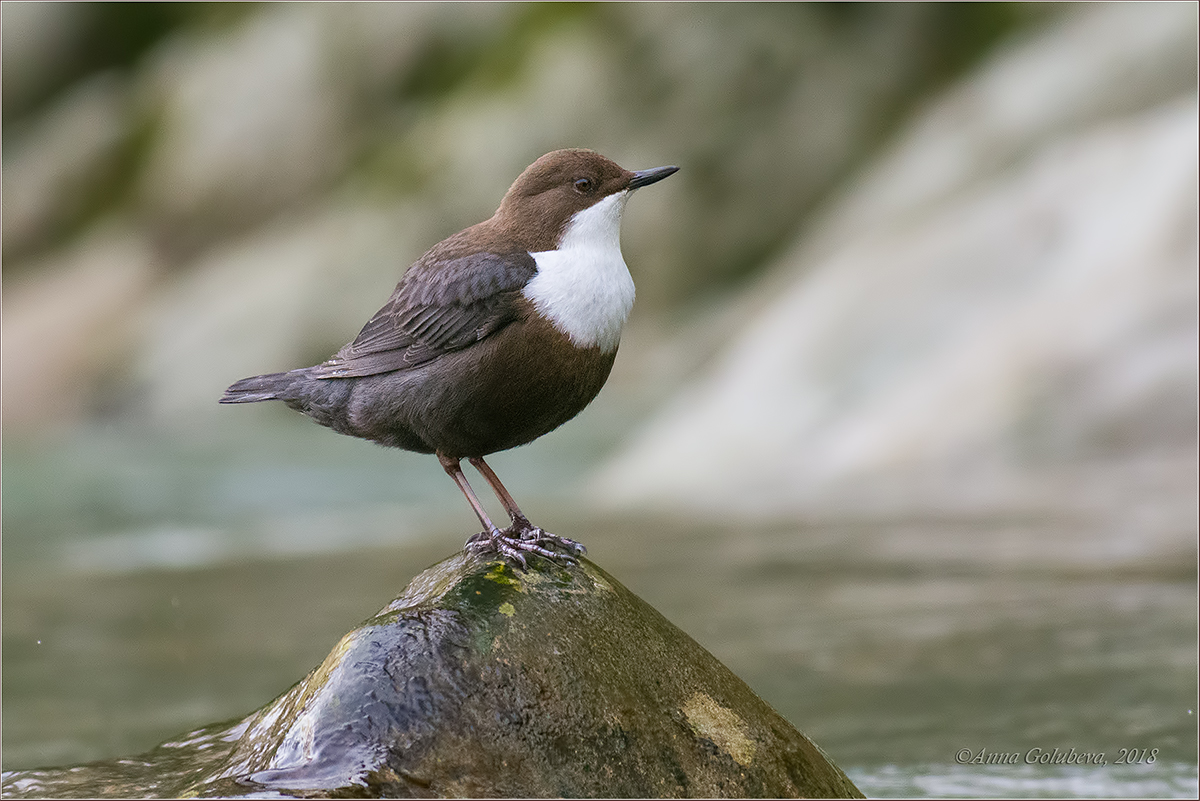
The European Dipper (Cinclus cinclus), also called the White-throated Dipper (and Eurasian Dipper), is truly a miracle of God’s creation!

European-Dipper.Birds-of-European-Russia

EUROPEAN DIPPER credit: Birds of European Russia

India’s Shrimp ‘Ranching’ Needs Re-set

India’s Shrimp ‘Ranching’ Needs Re-set

Dr. James J. S. Johnson

And God created great whales, and every living creature that moves, which the waters brought forth abundantly, after their kind … and God saw that it was good. (Genesis 1:21)

The Aquaculturists: 20/10/2017: Shrimp farming in India

India may be looking to America for a jump-start to revitalize its shrimp aquaculture industry, according to recent report (May 11, 2020) in the Hindu Business Line.

The report, which was issued by the Confederation of Indian Industry (CII) looks into a range of measures to improve the export potential of the aquaculture sector. Around 90 % of India’s aquaculture production is generally exported. And, although exports have plummeted since the COVID-19 pandemic, the report warns that producers may struggle to meet demand once the movement of goods and people returns to normal . . . (1)

India’s shrimp-farming operations have two major vulnerabilities—dependence on outside (i.e., outside of India, which now includes lockdown/shutdown facts not previously present in the global marketplace) sources for breeding shrimp and for the kind of food that shrimp larva need to eat, so that they can grow into mature shrimp of marketable size.

The Confederation of Indian Industry has recommended measures to improve the export potential of the aquaculture sector in order to capture a major share of the global market. …  The lion’s share of Indian aquaculture comprises shrimp, for which both broodstocks and larval feeds are imported. With the global lockdown situation, the supply of these has been stalled, which will have a significant impact on production, CII said in its report.(2)

But for restarting India’s shrimp-farming operations, some adjustments to “business-as-usual” will be necessary, both logistically and legally.

To reduce the lag time in the supply of broodstock, CII has recommended re-establishing import of broodstock by expediting air transportation from the US by arranging special cargo flights. It is pointed out that the RGCA [Rajiv Gandhi Centre for Aquaculture] quarantine facility in Chennai is shut and its holding capacity is not sufficient for large consignments. Hence, the imported broodstock should be allowed to be taken to hatcheries directly and thereafter sampling can be done by RGCA. On approval, hatchery owners can be allowed to use the broodstock.(2)

India-freshwater-shrimp-farming

What a huge undertaking—revitalizing this part of India’s fisheries/aquaculture industry is truly a “big deal”, in the global marketplace. As a fish/seafood exporter India has very serious competition—for almost 20 years China has been the world’s #1 producer of fish and seafood exports.(3)

India is the world’s second-largest [sic] fish producer with a total production of 13.7 million tonnes in 2018-19 of which 65 % was from inland fishing. Almost 50 % of inland fish production is from culture fisheries, which constitutes 6.5 % of global fish production. Shrimp accounts for a majority share of India’s aquaculture, which is growing at a CAGR [compound annual growth rate] of 17.4 % over the past 3 years.(2)

Providing affordable (and available) protein-rich food is a worldwide need.  Harvesting oceanic fish and shellfish—including shrimp—can contribute much to feeding peoples of the world.(4),(5)  Aquaculture (which is comparable to “ranching” sea creatures–like shrimp–as livestock), however, can supplement oceanic finfish and shellfish, for the benefit of many hungry humans.(6),(7)

May God bless America to recover its own economic health—and to do so with such strength that it can once again bless India, and other nations of the world, such as by helping India to jump-start their own now-vulnerable aquaculture industry.(8)

Farmers making a fortune in shrimp farming

References

  1. Staff writer. 2020. Why India’s Shrimp Sector Must Become More Self-Sufficient. The Fish Site. Posted (May 12, 2020) at https://thefishsite.com/articles/why-indias-shrimp-sector-must-become-more-self-sufficient – accessed may 15, 2020.
  2. Kumar, V. S. 2020. CII Chalks Out Steps to Boost Aquaculture Exports. Hindu Business Line. Posted (May 11, 2020) at https://www.thehindubusinessline.com/economy/agri-business/cii-chalks-out-steps-to-boost-aquaculture-exports/article31555206.ece# — accessed May 15, 2020.
  3. Nag, O. S. 2017. Top Fish and Seafood Exporting Countries. Posted (April 25, 2017) at https://www.worldatlas.com/articles/top-fish-and-seafood-exporting-countries.html —  accessed May 15, 2020.
  4. According to the Lord Jesus, fish are good food. Matthew 7:9-11; Luke 11:11-13..
  5. Incorporating actuarial biology insights (pioneered by marine biologist Johan Hjort) has enabled the world’s shrimp industry, including shrimp-farming, to economically maximize productivity. See Johnson, J. J. S. 2019. Northern Prawns, Baltic Prawns, and Brown Shrimp, Illustrating Genesis 1:22 (including Johan Hjort’s Actuarial Biology Research on Pandalus borealis). Nordic Legacy Series (Norwegian Society of Texas, Fort Worth, Texas, February 24, 2019), 15 pages.
  6. Aquaculture now faces new challenges from pandemic politics. See Johnson, J. J. S. 2020. Fish Farming Feeds Scots, But It’s Not Getting Easier.  COVID-19 News. Posted April 21, 2020) at https://www.icr.org/article/fish-farming-feeds-scots-but-not-getting-easier .
  7. Fish-farming, using managed coast water net-pens is one aquaculture method useful in fulfilling the Genesis Mandate. See Johnson, J. J. S. 2013. Fulfilling the Genesis Mandate while Helping the Poor. Acts & Facts. 42(12):19, posted at https://www.icr.org/article/fulfilling-genesis-mandate-while-helping .
  8. Acts 20:35.


The Eagle has Landed, in Fact Many of Them!

The Eagle has Landed, in Fact Many of Them!

Eagles have Repopulated the Chesapeake Bay Watershed Range

Dr. James J. S. Johnson

Who satisfieth thy mouth with good [things; so that] thy youth is renewed like the eagle’s. (Psalm 103:5)

BaldEagle-SanDiegoZoo

Bald Eagle – San Diego Zoo

God satisfies our real needs, from time to time, from season to season, just as He sustains the ongoing needs of the eagle. Recovering strength is good for an individual–and also for a population, including eagle populations.

Recovering from a “ghost town” shutdown is worth the effort.  Ask a Bald Eagle.

Whitney Pipkin recently reported, in the Chesapeake Bay Journal , that Bald Eagles have made a comeback along Virginia’s James River.(1),(2)

This avian population illustrates how a pessimistic situation can, if the right actions are taken, be reversed—eventually producing a happier result.

First, the bad news:

In the late 1970s, the treetops of the James River looked like a ghost town. Despite plenty of suitable habitat where bald eagles could have been nesting and had before, the waterway was the only major tributary in the Chesapeake Bay whose nesting population of the iconic American predator had plummeted to zero.(1)

Now, the good news:

Imagine biologists’ surprise when, four decades later, that same river became the staging ground for the eagles’ astonishing comeback. Aerial surveys tallied more than 300 breeding pairs of [bald] eagles along the James River for the first time in 2019—a number that had been the species’ recovery goal for the entire Chesapeake Bay watershed.(1)

When it comes to the Chesapeake Bay, the majestic bald eagle has come back from the dead. Driven from historic nesting strongholds like the James River by pesticides in the 1970s, the national bird has become a success story.(2)

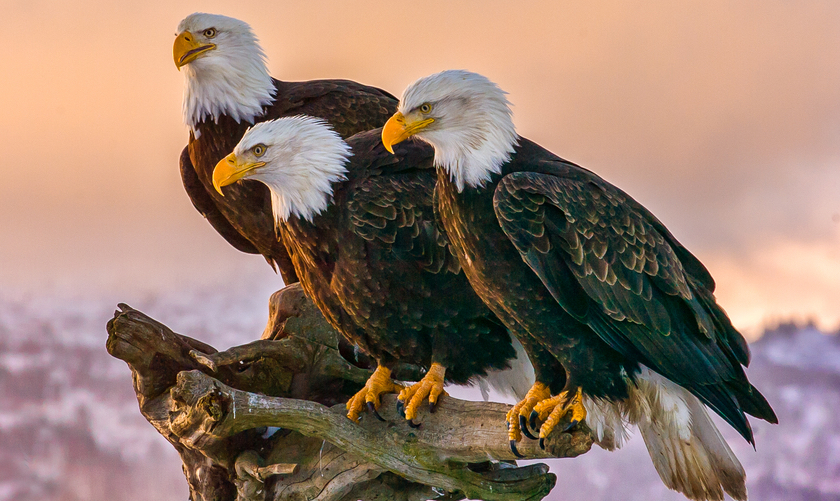
BaldEagles-BirdWatchingHQ

3 Bald Eagles – Bird Watching HQ

Furthermore, the big-picture news is even better:

Biologists estimate there are now close to 3,000 nesting pairs Baywide [i.e., in the Chesapeake Bay watershed], but surveys of the entire region no longer occur annually. Maryland stopped surveying bald eagles in 2004 when they hit nearly 400 breeding pairs statewide, surpassing population goals.(1)

Moreover, it’s not just eagles that are flourishing in the Chesapeake Bay area:

“We are just in an amazing time right now,” said Bryan Watts, co-founder and director of the Center for Conservation Biology at the College of William and Mary. … Not just bald eagles, but fish-eaters like osprey and blue heron also once died out on the James.

Today, [these riparian fish-eating birds—like eagles, ospreys, and herons—have ] swelled to numbers Watts believes are well above what even Capt. John Smith encountered on the cusp of the 17th century. “In terms of eagles,” said Watts, “we are protecting them. We’re not shooting them like we did in the late 1800s and early 1900s. We don’t consider them competitors for muskrats or for fish, and so we’re not killing them.”(2)

For conservationists, birdwatchers, and other wildlife enthusiasts, these large-scale recoveries are very good news. After all, eagles are America’s official bird.

Beyond that, eagles are amazing creatures that display God’s genius in bioengineering.(3)

One example of highness being compared to the nesting habits of eagles is found in the Bible, in the Book of Obadiah 1:3-4, where the eagle is described as a creature that lives in high places, much closer to the stars than do most other animals (or people). Another Old Testament book in the Bible, the Book of Job, refers (at 39:13) to the eagle as mounting up into the air by God’s command (because God programs eagles to fly up into the air the way that they do), and as nesting in high places (because God programs eagles to do this also).

Eagles are good parents, training their sons and daughters to live like eagles (see Deuteronomy 32:11). Eagles can fly, like dive-bombing airplanes, at great speeds (see 2nd Samuel 1:23 and Lamentations 4:19). Their strength is renewed from time to time, as their feather-cover adjusts to their growing bodies (see Isaiah 40:31 and Psalms 103:5). Eagles are known for their gracefulness and dignity (see Proverbs 30:19). In fact, eagles fly very high in the air as a matter of habit – above most other birds (see Proverbs 23:5).(4)

Meanwhile, the Bald Eagles’ recovery—in the Chesapeake Bay area–illustrates how a bad situation can be overcome, with the prioritized concern and problem-solving management practices, plus patience.

But this is not the first time that an endangered or threatened wild bird (or other wildlife category) has been rescued from the brink of population failure. Consider the amazing recovery of the Trumpeter Swan, which nearly sang its own swan song.(5)

Likewise, Tri-colored Herons (also called “Louisiana Herons”) have recently reclaimed (and repopulated) ranges that previously they had lost.(6)

It’s not just the birds. American bison have made a comeback.(7) The list goes on, but the list could be longer than what it is.

Wildlife populations often face critical perils, sometimes facing population failure, range contraction, or habitat loss. Sometimes they recover.(1),(2),(5),(6)

The same is true for humans. For example, it is well worth praying for America to recover from its many political (socialism-pushing) problems in the wake of pandemic perils and propaganda.(8)

Problematic situations, including disasters, don’t fix themselves—real solutions (to real problems) don’t accidentally “evolve”. There is much good work needed, to recover lost ground in America. Human responsibility is the key to much of what is needed; yet God’s providential blessings are needed even more, much more.(8)

So we need to pray fervently for God’s blessings, daily—not just on the National Day of Prayer.(8)

References   

  1. Pipkin, W. 2020. Bald Eagles’ Recovery Along James River Soars to New Heights: Area’s 300 Breeding Pairs Surpass Goal for Entire Chesapeake Watershed. Chesapeake Bay Journal. 30(3):17-18.
  2. Dietrich, T. 2019. Bald Eagles Enter ‘Golden Age’ in Chesapeake Bay. Daily Press. Posted (July 9, 2019) on DailyPress.com at http://www.dailypress.com/news/dp-nws-bald-eagles-recovery-20190709-story.html (accessed May 9, 2020).
  3. Eggleton, M. 2016. The American Bald Eagle: On Eagle’s Wings. 38(2):34-37, posted at https://creation.com/on-eagles-wings . See also Johnson, J. J. S. 2018. Hawks and Eagles Launching Skyward. Acts & Facts, 47(4):21, posted at https://www.icr.org/article/hawks-eagles-launching-skyward .
  4. Johnson, J. J. S. 2008. Alaska’s Coastal Rainforests and Two of its Rangers, the Bald Eagle and the Alaska Moose. Dallas: NWD Press/RCCL’s Radiance of the Seas (July 2008), pages 10-11.
  5. Johnson, J. J. S. 2020. Post-Coronavirus Comeback or Swan’s Song? Creation Science Update. Posted (April 23, 2020) at https://www.icr.org/article/post-coronavirus-comeback-or-swans-song .
  6. Johnson, J. J. S. 2019. Does Global Warming Threaten Bird Habitats? Acts & Facts. 48(6):21, posted at https://www.icr.org/article/does-global-warming-threaten-bird-habitats .
  7. Whitaker Jr., J. O. 1998. National Audubon Society Field Guide to North American Mammals, revised edition. New York, NY: Alfred A. Knopf, 850-854, Plates # 329-333.
  8. James 5:16; 1 Timothy 2:1-3. See also Johnson, J. J. S. 2020. Prayers for America and our Divine Editor. ICR News. Posted (May 7, 2020) at https://www.icr.org/article/prayers-for-america-and-our-divine-editor .

Chicken, Magpie, and Easter Greetings

*

“Christ is risen! He is risen indeed!” For centuries, Christians have used this greeting to celebrate Resurrection Day, better known as Easter.1 Ironically, there are two birds that can remind us of the historicity and importance of Christ’s rising from the dead, three days after His death and burial.

CHICKENS

Amazingly, the Lord Jesus once compared His own willingness and ability to care and protect humans to that of a chicken—specifically, a mother hen—who uses her own body to protectively care for her own hatchling baby chicks.2 How good it is to belong to the Lord Jesus Christ forever! When He offers to take us in and protect us, we should be eager and grateful to accept His care and security.

But we more closely associate a male chicken (rooster) with the arrest, trials, torture, and sacrificial death of Jesus Christ.

Readers might have already guessed that male chickens are associated with Christ’s death, burial, and resurrection because of the rooster who crowed after Peter ignominiously denied the Lord Jesus, thrice, in fulfillment of Christ’s prophecy.3 In fact, this incident is so important that it is reported by all four gospel writers.3

For example, Mark reports this disappointing failure of Peter, involving the tattletale fowl, a sad chapter in the life of the usually bold apostle: Peter’s triple failure to stand up for Christ, as predicted by Christ Himself. This display of Peter’s imperfect courage and loyalty (even though his inward belief never failed) is linked to the twice-crowing of a rooster.

A second time the rooster crowed. Then Peter called to mind the word that Jesus had said to him, “Before the rooster crows twice, you will deny Me three times.” And when he thought about it, he wept.4

What a sad note to end with! Except, as proven three days later, that wasn’t really the end.5

MAGPIES

Most people are unlikely to guess that magpies—such as the Australian magpie (Cracticus tibicen6)—can be associated with Christ’s death, burial, and resurrection. How so?

The most famous variety of this “butcherbird,” formerly called the “piping shrike” or “white-backed crow shrike,” is now called the white-backed magpie (Cracticus tibicen telonocua). But many call it the Australian magpie because it appears on the official state flag of South Australia.

Whatever you want to call it, it is famous for its flute-like call, entertaining with a complex repertoire of vocalizations. The black-and-white opportunist has habituated to human-dominated habitats, such as the agricultural fields of farms, gardens, and even wooded parklands.6

The Australian magpie is not timid. It will defend its territory against raptors trespassing therein, such as brown goshawks. The Australian magpie is not a picky eater. Its diet includes both plants and animals. Its preferred diet, however, is dominated by a variety of larval and adult invertebrates, such as insects (like ants, moths, beetles, bees, wasps, cockroaches) and arachnids (like spiders and stinger-wielding scorpions!), as well as earthworms and millipedes. The Australian magpie is also known to eat some small vertebrates, such as mice, skinks, frogs, and toads.6

Some compare the problem-solving resourcefulness and the brash cockiness of this bird to the national reputation displayed by many Aussie ex-patriots.

The Australian magpie is quite a clever problem-solver. It has been observed breaking off the stingers of bees and wasps before swallowing such dangerous bugs!7

By now you’ve likely guessed why this bird reminds us of Resurrection Day—the Australian magpie’s power to neutralize a dangerous stinger.

But insect or arachnid stingers are nothing compared to the powerful sting of death. Yet, Christ’s bodily resurrection on the third day defeated death’s “stinger.”

For this corruptible must put on incorruption, and this mortal must put on immortality. So when this corruptible has put on incorruption, and this mortal has put on immortality, then shall be brought to pass the saying that is written: “Death is swallowed up in victory.” “O Death, where is your sting? O Hades, where is your victory?” The sting of death is sin, and the strength of sin is the law. But thanks be to God, who gives us the victory through our Lord Jesus Christ.8

Hallelujah! Christ is risen! He is risen indeed!

References
1. Morris, H. M. 2006. Christ Is RisenDays of Praise. Posted on ICR.org April 16, 2006, accessed April 7, 2020.
2. Matthew 23:37; Luke 13:34. Cansdale, G. S. 1976. All the Animals of the Bible Lands. Grand Rapids, MI: Zondervan Publishing House, 163-165.
3. Matthew 26:34, 26:74-75; Mark 14:30, 14:68-72; Luke 22:34, 22:60-61; John 13:38, 18:27.
4. Mark 14:72.
5. Matthew 12:39-40; 1 Corinthians 15:1-4Romans 10:9Psalm 16:9-10.
6. Taxonomists have also labeled the Australian Magpie as the Australian Magpie Gymnorhina tibicen (meaning “trumpeting bare-nose”). Regarding the physical and behavioral traits of the Australian Magpie, see Veltman, C. J., and R. E. Hickson. 1989. Predation by Australian Magpies (Gymnorhina tibicen) on Pasture Invertebrates: Are Non-territorial Birds Less Successful? Australian Journal of Ecology. 14(3): 319-326; Cake, M., A. Black, L. Joseph. 2018. The Generic Taxonomy of the Australian Magpie and Australo-Papuan Butcherbirds Is Not All Black and White. Bulletin of the British Ornithologists’ Club. 138(4): 346-359; Brown, E. D., and C. J. Veltman. 1987. Ethnogram of the Australian Magpie (Gymnorhina tibicen) in Comparison to Other Cracticidae and Corvus Species. Ethology (International Journal of Behavioural Biology). 76(4): 309-333. This author also appreciatively thanks Fiona Smith, M.C.Ed.—ICR SOBA graduate and Australian creation science educator/author—for her help with research and perspectives on Australian magpies.
7. Dr. Amy L. Adams notes: “Magpies will walk along the ground searching for food by overturning debris or probing their bills into the dirt. They eat insects, larvae and other invertebrates. Magpies are known to remove the stingers of wasps and bees before eating them.” Adams, A. 2016. Gymnorhina tibicen Australian MagpieMuseums Victoria Collections. Posted on collections.museumvictoria.com, accessed April 7, 2020.
8. 1 Corinthians 15:53-57, quoting Messianic prophecy in Hosea 13:14.

*Dr. Johnson is Associate Professor of Apologetics and Chief Academic Officer at the Institute for Creation Research.


James J. S. Johnson Articles Here

Article at I.C.R. https://www.icr.org/article/chicken-magpie-and-easter-greetings/

We Watch Birds, Yet We Too Are Being Watched!

We watch birds,  yet we too are being watched!

Dr. James J. S. Johnson

BAW-1stCorinthians4.9

This is a blog-site about birdwatching.  Yet don’t forget that we ourselves are being watched, so be on your best behavior!  (Consider 1st Corinthians 4:9, quoted above.)

Once I watched a hummingbird, displaying its marvelous metabolism, that busily slurped nectar from trumpet vines that grow upon my backyard’s fence.  The hovering, buzzing, flitting, iridescent-sparkling hummingbird was too busy to notice me!

Yet, come to think of it, there are times when I am so busy that I don’t notice others watching me — and sometimes (according to 1st Corinthians 4:9) even angels are watching.   All the more reason to be on my best behavior.

However, even if only God is watching, that’s the best reason for doing what is right, to honor Him  (1st Corinthians 10:31).

BAW-hummingbirds-are-watched

Meanwhile, enjoy watching the birds!  May God bless your new year:  the year of our Lord 2020.  This year is God’s gift  —  let’s walk through it reverently and appreciatively.

BAW-birds-are-fun-to-watch


Birds Are Wonderful: Y and Z !

BIRDS  ARE  WONDERFUL  . . .  Y  and  Z !

Dr. James J. S. Johnson

Jesus said: “Therefore I say to you, do not worry about your life, what you will eat or what you will drink . . . Is not life more than food, and the body more than clothing? Look at the birds of the air, . . . your heavenly Father feeds them. Are you not of more value than they?”   (Matthew 6:25-26)

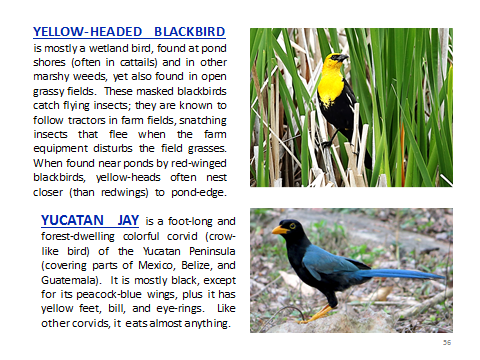
For ushering in the year of our Lord 2020,  below follows the ninth (and last) installment of alphabet-illustrating birds of the world, as part of this new series (“Birds Are Wonderful  —  and Some Are a Little Weird*).  The letter Y is illustrated by Yellow-headed Blackbird, Yucatan Jay, and Yellow-eyed Penguin.  The letter Z  illustrated by Zino’s Petrel, Zigzag Heron, and Zone-tailed Hawk. Since this series is not using the Norwegian alphabet, this is the end of this series!

“Y” BIRDS:   Yellow-headed Blackbird, Yucatan Jay, and Yellow-eyed Penguin.

BAW-Yellowhead-YucatanJayBAW-YelloweyedPenguin

“Z” BIRDS:  Zino’s Petrel, Zigzag Heron, and Zone-tailed Hawk.

BAW-ZinosPetrel-ZigzagHeronBAW-ZonetailedHawk

Birds are truly wonderful — and some, like the , are exquisitely beautiful, while others, like the are fascinatingly unusual, if not also a bit weird!  (That concludes this series; however, there are thousands of birds that could have been included, so this series only introduced the biodiversity of birds, D.v.)


* Quoting “Birds Are Wonderful, and Some Are a Little Weird”, © AD2019—AD 2020 James J. S. Johnson   [used here by permission].

BAW-Zino'sPetrel.Wikipedia

Zino’s Petrel (Wikipedia sketch)