Birds of the Bible – Names of Birds Study Introduction

Bald Eagle (Haliaeetus leucocephalus)  by AestheticPhotos

Bald Eagle (Haliaeetus leucocephalus) by AestheticPhotos

There have been several articles here about the Names of the Birds. See:

Now we are going to look at the Names of the Birds from another angle. I received this comment on the Clean vs Unclean blog.

Lee, my search on the topic of clean and unclean birds led met to a Wikipedia article and I discovered that when you look at the Hebrew words (found in the Masoretic text) for the names of various unclean birds, they sound like descriptions, ex. “bone breaker”, “plunger”, “one who darts”, and even “vomiting”. So perhaps the reason we don’t have “clear rules” listed (something I’ve wondered for a long time) is because the traits and characteristics were there all along, but not knowing Hebrew, we had no idea. Anyway, check it out   http://en.wikipedia.org/wiki/Kosher_animals#Birds

It is a very interesting article and will take some digging to discover some more insight into these birds and how they are named. If you have been following this blog, you know that it has been curious to me how the different versions of the Bible have given different names for the birds. Maybe we can solve some of those mysteries. It won’t be done in one article. That is for sure.

First let’s look at some highlights from the Wikipedia article (with editing).

*********************

Great Horned Owl - Lowry Pk Zoo by Lee

Great Horned Owl – Lowry Pk Zoo by Lee

Birds

In regard to birds, no general rule is given, and instead Leviticus 11:13-19 and Deuteronomy 14:11-18 explicitly list the prohibited birds: The masoretic text lists the birds as:

  • nesher
  • peres (bone breaker)
  • ozniyah (feminine form of oz, meaning strong)
  • ra’ah ([that which] darts, in the sense of rapid)
  • ayyah
  • oreb
  • bat yaanah (daughter of howling)
  • tahmas ([one who] scratches the face)
  • shahaf ([one which] atrophies)
  • netz
  • kos (cup)
  • shalak (plunger)
  • yanshuf (twilight)
  • tinshemet (blower/breather)
  • qa’at (vomiting)
  • racham (tenderness/affection)
  • hasidah (devoted)
  • anafah ([one which] sniffs sharply, in the sense of anger)
  • dukifat
  • atalef

The list in Deuteronomy has an additional bird, the dayyah, which seems to be a combination of da’ah and ayyah, and may be a scribal error; the Talmud regards it as a duplication of ayyah. This, and the other terms are vague and difficult to translate, but there are a few further descriptions, of some of these birds, elsewhere in the Bible:

  • The ayyah is mentioned again in the Book of Job, where it is used to describe a bird distinguished by its particularly good sight.
  • The bat yaanah is described by the Book of Isaiah as living in desolate places, and the Book of Micah states that it emits a mournful cry
  • The qa’at appears in the Book of Zephaniah, where it is portrayed as nesting on the columns of a ruined city; the Book of Isaiah identifies it as possessing a marshy and desolate kingdom.
  • The septuagint versions of the lists are more helpful, as in almost all cases the bird is clearly identifiable:
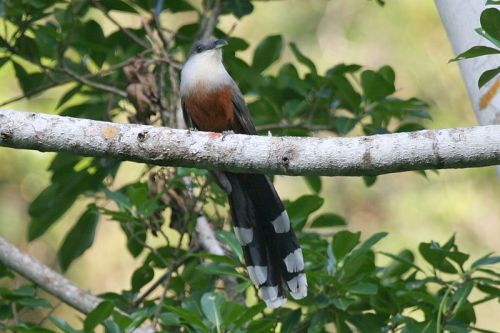
Chestnut-bellied Cuckoo (Coccyzus pluvialis) ©WikiC

Chestnut-bellied Cuckoo (Coccyzus pluvialis) ©WikiC

  • aeton (eagle)
  • grypa (ossifrage)
  • haliaetos (sea-eagle)
  • gyps (vulture)
  • ictinia (kite)
  • corax (raven)
  • stouthios (ostrich)
  • glaux (owl)
  • laros (gull)
  • hierax (hawk)
  • nycticorax (night raven)
  • cataractes (cormorant)
  • porphyrion (“purple [thing]”)
  • cycnos (swan)
  • ibis
  • pelican
  • charadrios (plover)
  • herodios (heron)
  • epops (hoopoe)
  • nycturia (bat)
  • meleagris (guineafowl)

Although the first ten of the birds identified by the Septuagint seem to fit the descriptions of the masoretic text, the ossifrage (Latin for bone breaker) being a good example, the correspondence is less clear for most of the remaining birds; it is also obvious that the list in Leviticus, or the list in Deuteronomy, or both, are in a different order in the Septuagint, compared to the masoretic text. Attempting to determine the correspondence is problematic; for example, the pelican may correspond to qa’at (vomiting), in reference to the pelican’s characteristic behaviour, but it may also correspond to kos (cup), as a reference to the pelican’s jaw pouch. An additional complexity arises from the fact that the porphyrion has not yet been identified, and classical Greek literature merely identifies a number of species that are not the porphyrion, including the peacock, grouse, and robin, and implies that the porphyrion is the cousin of the kingfisher; from these meagre clarifications, the porphyrion can only be identified as anything from the Lilac-breasted Roller, Indian Roller, or Northern Carmine Bee-eater, to the flamingo.

During the Middle Ages, classical descriptions of the hoopoe were mistaken for descriptions of the lapwing, on account of the lapwing’s prominent crest, and the hoopoe’s rarity in England, resulting in lapwing being listed in certain bible translations instead of hoopoe; similarly the sea eagle has historically been confused with the osprey, and translations have often used the latter bird in place of the former. Because strouthos (ostrich) was also used in Greek for the sparrow, a few translations have placed the sparrow among the list. In Arabic, the Egyptian Vulture is often referred to as rachami, and therefore a number of translations render racham as gier eagle, the old name for the Egyptian Vulture.

Variations arise when translations follow other ancient versions of the Bible, rather than the Septuagint, where they differ. Rather than vulture (gyps), the Vulgate has milvus, meaning Red Kite, which historically has been called the glede, on account of its gliding flight; similarly, the Syriac Peshitta has owl rather than ibis. Other variations arise from attempting to base translations primarily on the masoretic text; these translations generally interpret some of the more ambiguous birds as being various different kinds of vulture and owl. All of these variations mean that most translations arrive at a list of 20 birds from among the following (links are to articles already written here):

Lilac-breasted Roller (Coracias caudatus) by Bob-Nan

Lilac-breasted Roller (Coracias caudatus) by Bob-Nan

The fruit bat, a frugivorous vegetarian species of bat, eating some fruit

Despite being listed among the birds by the bible, bats are not birds, and are in fact mammals. Most of the remaining animals on the list are either birds of prey or birds living on water, and the majority of the latter in the list also eat fish or other seafood. The Septuagint’s version of the list comprehensively lists most of the birds of Canaan that fall into these categories. The conclusion of modern scholars is that, generally, ritually unclean birds were those clearly observed to eat other animals.

Although it does regard all birds of prey as being forbidden, the Talmud is uncertain of there being a general rule, and instead gives detailed descriptions of the features that distinguish a bird as being ritually clean. The Talmud argues that clean birds would have craws, an easily separated double-skin, and would eat food by placing it on the ground (rather than holding it on the ground) and tearing it with their bills before eating it; however, the Talmud also argues that only the birds in the biblical list are actually forbidden – these distinguishing features were only for cases when there was any uncertainty in the bird’s identity

Origin

The earliest rationalistic explanations of the laws against eating certain birds focused on symbolic interpretations; the first indication of this view can be found in the 1st century BC Letter of Aristeas, which argues that this prohibition is a lesson to teach justice, and is also about not injuring others. Such allegorical explanations were abandoned by most Jewish and Christian theologians after a few centuries, and later writers instead sought to find medical explanations for the rules; Nachmanides, for example, claimed that the black and thickened blood of birds of prey would cause psychological damage, making people much more inclined to cruelty.

However, other cultures treated the meat of certain carnivorous birds as having medical benefits, the Romans viewing Owl meat as being able to ease the pain of insect bites, for example; conversely, modern scientific studies have discovered very toxic birds such as the Pitohui, which are neither birds of prey nor water birds, and therefore the biblical regulations allow them to be eaten. Laws against eating any carnivorous birds also existed in Vedic India and Harran, and the Egyptian priests also refused to eat carnivorous birds.

Modern practical considerations

Due to the difficulty of identification, religious authorities have restricted consumption to specific birds for which Jews have passed down a tradition or permissibility from generation to generation. Birds for whom there has been a tradition of their being kosher include: the sparrow, pigeon, turtle dove, quail, the European and Middle Eastern partridges, the pheasant, ducks, geese, chickens, guineafowl among others. As a general principle, scavenging birds such as vultures and birds of prey such as hawks and eagles (which eat carrion when they find it) are not kosher. Turkey does not have a tradition, but because so many Orthodox Jews have come to eat it and it possesses the simanim (signs) required to render it a kosher bird, an exception is made, but with all other birds a Mesorah (tradition) is required.

Birds such as songbirds, which are consumed as delicacies in many societies, may be kosher in theory, but are not eaten in kosher homes as there is no tradition of them being eaten as such. Pigeons and doves are known to be kosher based on their permissible status as sacrificial offerings in the Temple. Likewise, though swans are kosher in theory if kosher-slaughtered, there is no Jewish tradition of eating them. (from Wikipedia)

***********

Second,  Study is not necessarily a weariness as Ecclesiastes 12:12 says,

And further, by these, my son, be admonished: of making many books there is no end; and much study is a weariness of the flesh. (KJV)

but we should study and even enjoy digging into God’s Word.

Study to shew thyself approved unto God, a workman that needeth not to be ashamed, rightly dividing the word of truth. (2 Timothy 2:15 KJV)

I am going to use my e-Sword program. If you have not used it, it is free and very useful. It has the KJV+ as part of it and it list the Greek and Hebrew words with their definitions. Will you join me in studying about the bird names in the languages of the Bible. Join me as we look at these words and compare them to the birds. Don’t let those weird-looking words scare you. You might find that learning to study about birds, might help you carry the method into studying more of God Word.

Look for future articles in this series.

P.S. A Lilac-breasted Roller is new to me. I can’t wait to find out the connection there.
*

Birds of the Bible

*

Birds of the Bible – Trusting Under The Wing

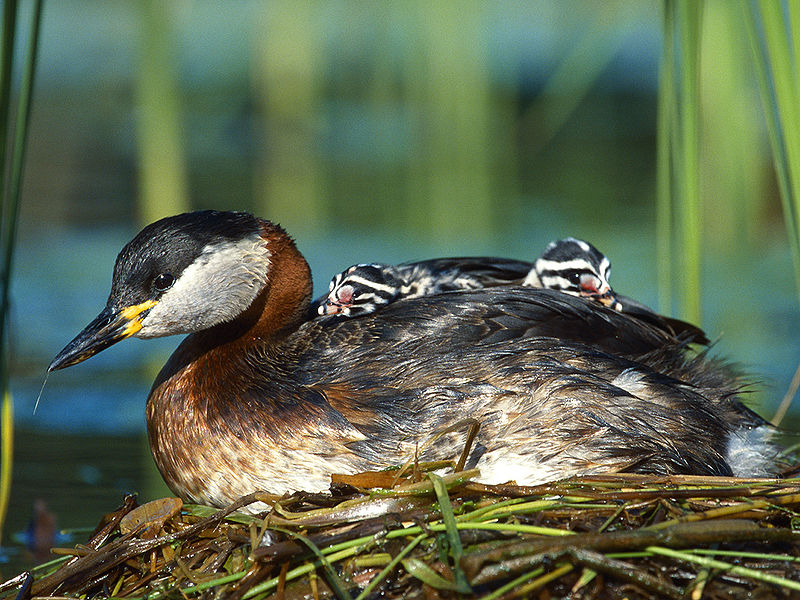
Red-necked Grebe (Podiceps grisegena) young on her wing ©USFWS

Red-necked Grebe (Podiceps grisegena) young on her wing ©USFWS

The LORD recompense thy work, and a full reward be given thee of the LORD God of Israel, under whose wings thou art come to trust. (Ruth 2:12 KJV)

While searching for “wing” or “wings” in my e-Sword, I discovered this really great verse. Let’s dig into it.

Searching further using “under” and “wing” here are a few more verses that sort of relate to the verse above:

Keep me as the apple of the eye, hide me under the shadow of thy wings, (Psalms 17:8 KJV)

How excellent is thy lovingkindness, O God! therefore the children of men put their trust under the shadow of thy wings. (Psalms 36:7 KJV)

He shall cover thee with his feathers, and under his wings shalt thou trust: his truth shall be thy shield and buckler. (Psalms 91:4 KJV)

Matthew 23:37 and Luke 13:34 mention being gathered under the wing, but they were not willing. Also, in  we covered. no pun intended, how birds protect their young under their wings and how God protects us. But the verse above seem to imply our trust.

What is being trusted? Boaz is implying that Ruth is trusting in the “LORD God of Israel.” She is from another country, another culture and religious way of life, but has turned her trust over to the LORD. That is something I did personally way back in 1960. I put my trust in the Lord to be my personal Savior. It was the best decision of my life.

Storks Shadowing Baby in Lakeland by Dan

Storks Shadowing Baby in Lakeland by Dan

In the Psalms verses, we can know that the Lord keeps His Eye on His own and we should desire to be the “apple of the eye.” Notice in the other verses that while we are under the wings we are trusting. Who? The Lord or LORD. Why do we trust? Wow! Look around at all the Lord has done just in creation and care of the birds. How about our care? We know through promises all through the Word of God that He cares for us. We know He doesn’t lie or do things for our harm. We also know that He is just and will give judgment when needed.  We could go on and on, but you can also see that the Lord Jesus Christ is “trustworthy.”

Baby Chick Peeping Out From Under His Mom's Wing - ©©

Baby Chick Peeping Out From Under His Mom’s Wing – ©©

We know the birds trust their parents to protect them while they are under their wings. Should we not trust the Savior while we are under His wings?

Here is a quote from the Believer’s Bible Commentary:

“2:4-12 When Boaz arrived from Bethlehem, he asked the identity of the young woman. Learning that she was Naomi’s daughter-in-law, he cordially invited her to continue gleaning in his fields and to share the water provided for his workers. In praising her for the loyal and selfless step that she had taken, Boaz concluded with a little prayer for her:
The LORD repay your work, and a full reward be given you by the LORD God of Israel, under whose wings you have come for refuge (v. 12).
Leon Morris comments:

In due course, the prayer was answered through him who uttered it. He recognizes the religious aspect of Ruth’s change of country by saying that she has come to trust (AV) under Yahweh’s wings. The imagery is probably that of a tiny bird struggling under the wings of a foster-mother. It gives a vivid picture of trust and security. . . .

From J. Vernon McGee:

“She had come to trust the Lord God. This is the reason she had left the land of Moab and made that radical decision. She had said that the God of Naomi would be her God. She had turned from idolatry to the living and true God. This woman has come to trust God; she was one of His children. Therefore this is the wonderful testimony that she had there in the land of Israel. And Boaz says, “May a full reward be given to you. May you be recompensed for this decision.”

From Matthew Henry:

“(5.) He (Boaz) prayed for her (Ruth_2:12): The Lord recompense thy work. Her strong affection to the commonwealth of Israel, to which she was by birth an alien, was such a work of the divine grace in her as would certainly be crowned with a full reward by him under whose wings she had come to trust. Note, Those that by faith come under the wings of the divine grace, and have a full complacency and confidence in that grace, may be sure of a full recompense of reward for their so doing. From this expression, the Jews describe a proselyte to be one that is gathered under the wings of the divine majesty.”

From John Gill’s Exposition:

“under whose wings thou art come to trust; whom she professed to be her God, and whom she determined to serve and worship; whose grace and favour she expected, and to whose care and protection she committed herself: the allusion is either to fowls, which cover their young with their wings, and thereby keep them warm and comfortable, and shelter and protect them, see Psa_36:7 or to the wings of the cherubim overshadowing the mercy seat, Exo_25:20 and the phrase is now adopted by the Jews to express proselytism; and so the Targum here,”thou art come to be proselyted, and to be hid under the wings of the Shechinah of his glory,”or his glorious Shechinah.”

My all time favorite photo showing this:

Under His Wings - (Dove - photographer unknown)

Under His Wings – by Ric Seet

Other Articles to check out:

*

Birds of the Bible – Cuckoo III

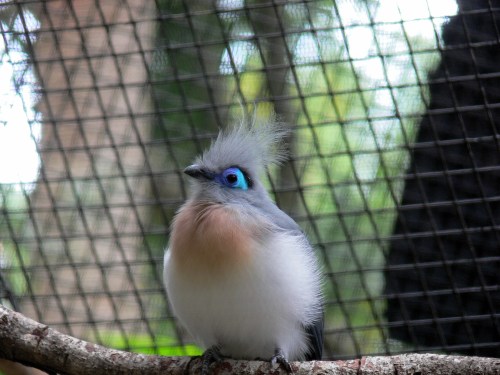
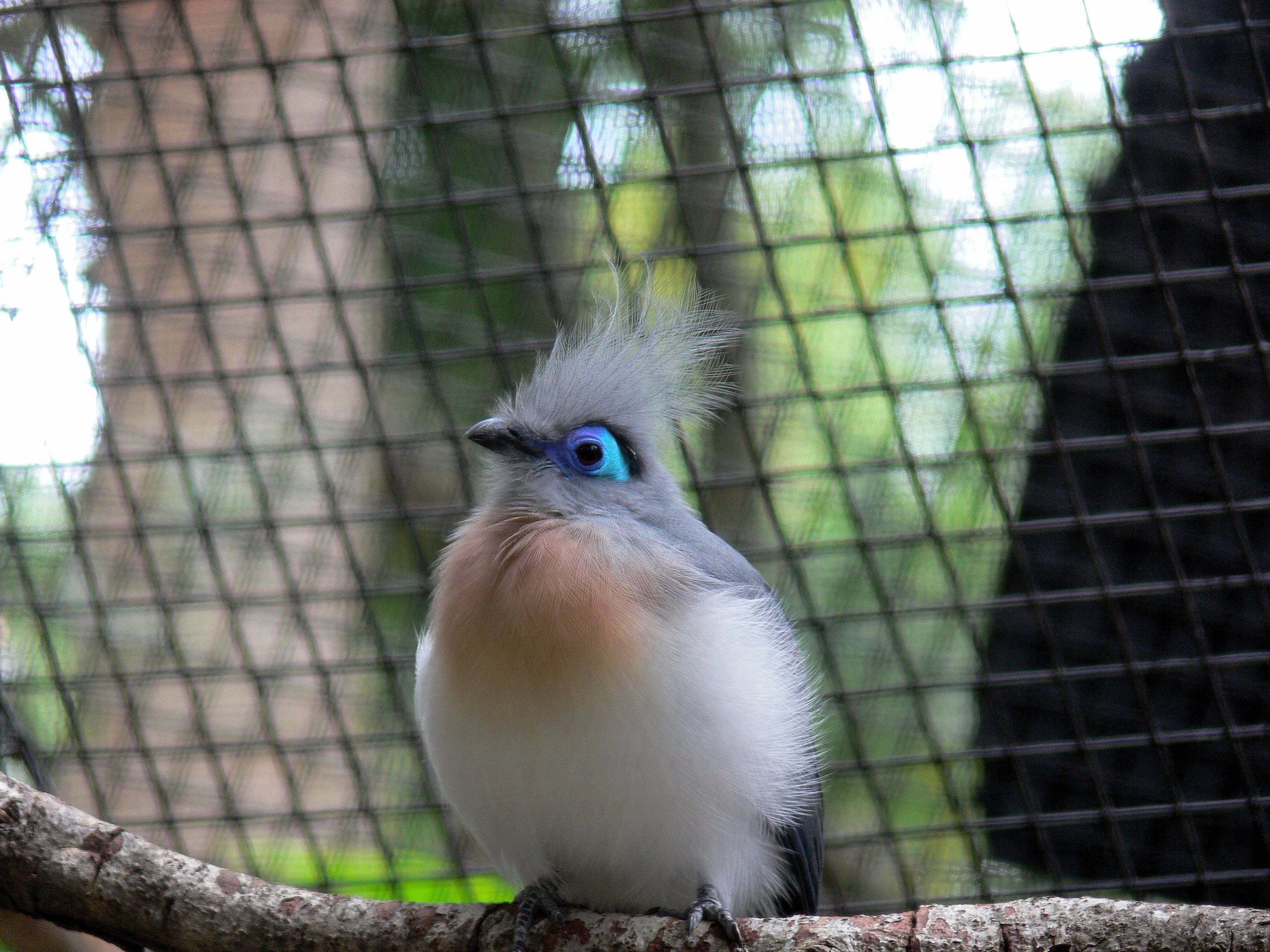
Crested Coua (Coua cristata) by Lee LPZ

Crested Coua (Coua cristata) by Lee Lowry Park Zoo

And the owl, and the night hawk, and the cuckow, and the hawk after his kind, (Leviticus 11:16 KJV)

What an interesting Family to which the Cuckoo belongs. Having posted Ian’s Bird of the Week – Little Bronze Cuckoo yesterday, I worked on the Cuckoo – Cuculidae Family to find some more photos. There are a few missing photos, but some of them are of endangered or rarely seen birds. There are some interesting species and some beautiful one also. The Coua genus have the most beautiful eyes. They remind me of the Egyptian Eyes on statues and paintings. We get to see the Crested Coua every time we go over to the Lowry Park Zoo in Tampa. We have to photograph through the mesh, but this one of my better attempts. (See Above) Click through these links and you will see some of the Lord’s Creative Hand at work.

Crested Coua (Coua cristata) by Lee at LowryPkZoo – *LLABS*
Verreaux’s Coua (Coua verreauxi) IBC
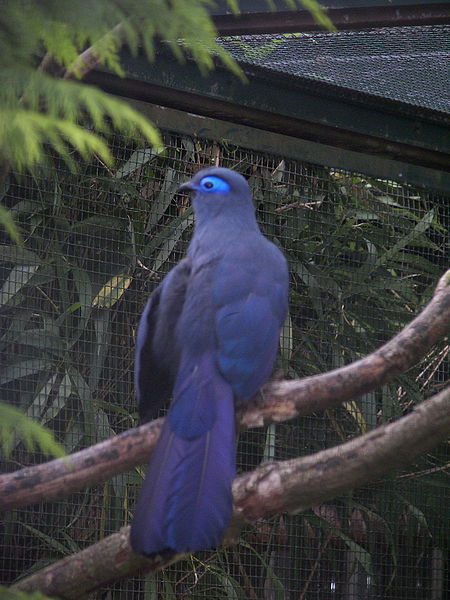
Blue Coua (Coua caerulea) ©WikiC
Red-capped Coua (Coua ruficeps) IBC
Red-fronted Coua (Coua reynaudii) IBC
Coquerel’s Coua (Coua coquereli) IBC
Running Coua (Coua cursor) IBC
Giant Coua (Coua gigas) WikiC
Red-breasted Coua (Coua serriana) IBC

Aren’t they amazing? Wow! At least I think they are.

In Birds of the Bible – Cuckoo II it was explained how Leviticus 11:16 and Deuteronomy 14:15 uses Cuckow, Cuckoo, Sea-gull, Sea-hawk in the different versions. I have since added several more Bible Translations to my e-Sword program, so lets see if anything new shows up. The “cuckow” is in the AKJV, “sea gull” in the AMP, the “coockowe” in the Bishops, CJB calls it the “seagull”, Geneva has “seameaw”, the Tyndale calls it a “cocow” and UKJV the “cuckoo.” Seems that it is still split between the same birds. Thus they get to be one of our Birds of the Bible to study.

As mentioned before, it gives us a chance to learn about the many birds that we are blessed with and a reason to concentrate on this family. Notice that both references mention after their kind:

And the owl, and the night hawk, and the cuckow, and the hawk after his kind, (Deuteronomy 14:15 KJV)

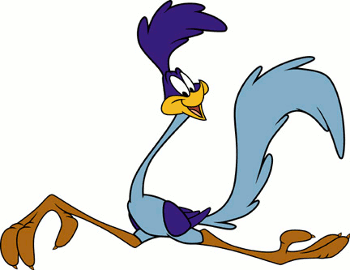
The whole family of the Cuculidae includes not only the Cuckoo, but also the Ani, Roadrunner, Ground, Bronze, Coucal, Coua, Malkoha, Koel, Bronze Cuckoo, Long-tailed Cuckoo, Hawk-Cuckoo, Drongo-Cuckoo, and Lizard Cuckoos. Most in America are familiar with the Roadrunner if by no other way than by Wile E Coyote who is always chasing the Roadrunner in the Looney Tune Cartoons.

Wile E Coyote  - Looney Tunes ”©WikiC

Wile E Coyote – Looney Tunes ”©WikiC

Roadrunner - Looney Tunes ”©WikiC

Roadrunner – Looney Tunes ”©WikiC

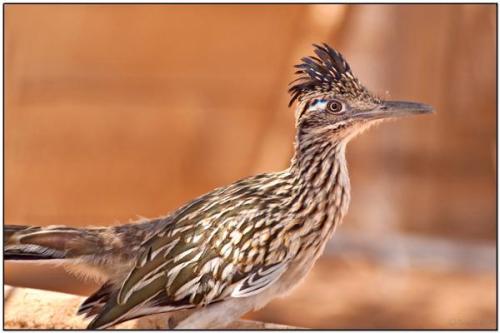
Here is a real Roadrunner:

Greater Roadrunner (Geococcyx californianus) by Daves BirdingPix

Greater Roadrunner (Geococcyx californianus) by Daves BirdingPix

Notice the Eyes even on a Roadrunner. Roadrunners are fast-running birds that have  long tails and a crests. The birds are found in southwestern United States and Mexico. They range from 18-22 in. (46-56 cm) from the beak to the tail. Speeds of up to 20 miles per hour (32 km/h) have been reported. They can fly, but prefer to sprint instead.

More about this family later. Thought you might enjoy seeing some more of our Birds of the Bible that are here to enjoy and be blessed by from the Hand of the Lord.

See also:

Sharing The Gospel

*

2012 in Review – Lee’s Birdwatching Adventures Plus

The WordPress.com stats helper monkeys prepared a 2012 annual report for this blog. (Lee’s Birdwatching Adventures Plus)

Here’s an excerpt:

About 55,000 tourists visit Liechtenstein every year. This blog was viewed about 380,000 times in 2012. If it were Liechtenstein, it would take about 7 years for that many people to see it. Your blog had more visits than a small country in Europe!

Click here to see the complete report.

Wow! Thank you all for coming to visit the blog this year!

Birds of the Bible – Roseate Spoonbill

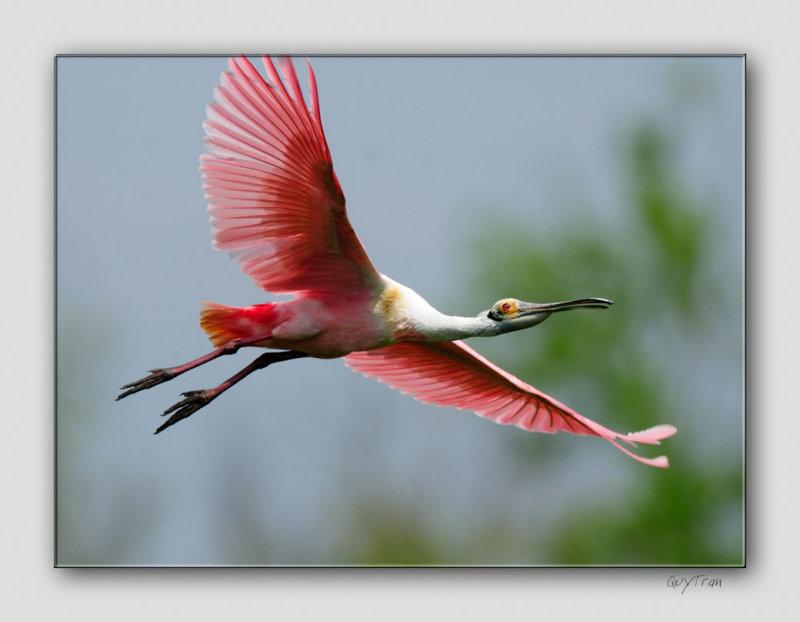
Roseate Spoonbill (Platalea ajaja) by Quy Tran

Roseate Spoonbill (Platalea ajaja) by Quy Tran

Birds of the Bible – Roseate Spoonbill

The Roseate Spoonbill is a member of the Threskiornithidae – Ibises, Spoonbills Family. We see them quite often in this area, especially in the Fall and Winter time.  I am always thrilled when we come upon them in our birdwatching adventures. Their cousins, Ibises, are a Bird of the Bible.

Then God said, “Let the waters abound with an abundance of living creatures, and let birds fly above the earth across the face of the firmament of the heavens.” So God created great sea creatures and every living thing that moves, with which the waters abounded, according to their kind, and every winged bird according to its kind. And God saw that it was good. And God blessed them, saying, “Be fruitful and multiply, and fill the waters in the seas, and let birds multiply on the earth.” So the evening and the morning were the fifth day. (Genesis 1:20-23 NKJV)

Since the Lord created all the birds, this is one of His neater creations, at least in my opinion. Their spoon-shaped bill is sort of unique to the birds. There are actually five other Spoonbills besides the Roseate.

The Roseate Spoonbill is 28–34 in (71–86 cm) long, with a  47–52 in (120–133 cm) wingspan and a weigh 2.6–4.0 lb (1.2–1.8 kg). The legs, bill, neck and spatulate bill all appear elongated. Adults have a bare greenish head (“golden buff” when breeding) and a white neck, back, and breast (with a tuft of pink feathers in the center when breeding), and are otherwise a deep pink. The bill is grey. There is no significant sexual dimorphism.

Like the American Flamingo, their pink color is diet-derived, consisting of the carotenoid pigment canthaxanthin. Another carotenoid, astaxanthin, can also be found deposited in flight and body feathers. The colors can range from pale pink to bright magenta, depending on age and location. Captive Spoonbill are fed their normal diets, plus some include juices made from carrots.

Unlike herons, spoonbills fly with their necks outstretched. They alternate groups of stiff, shallow wingbeats with glides.

Spoonbills feeding in a pond by the school. Cloudy day. Not the best, but you can see their eating behavior. Taken by me.

This species feeds in shallow fresh or coastal waters by swinging its bill from side to side as it steadily walks through the water, often in groups. The spoon-shaped bill allows it to sift easily through mud. It feeds on crustaceans, aquatic insects, frogs, newts and very small fish ignored by larger waders. In the United States a popular place to observe Roseate Spoonbills is “Ding” Darling National Wildlife Refuge in Florida. (Also at Circle B Bar Reserve as you can see by the list below of some of my sighting on e-Bird) Roseate Spoonbills must compete for food with Snowy Egrets, Great Egrets, Tricolored Herons, and American White Pelicans.

We came upon a group of them roosting at Ding” Darling National Wildlife Refuge. It was the first time I had seen that many in one place and so close to us.

Enlarge - Count at least 20 Spoonbills

Roseate Spoonbills at Ding Darling NWR – Dan at work.

The Roseate Spoonbill nests in shrubs or trees, often mangroves, laying 2 to 5 eggs, which are whitish with brown markings. Immature birds have white, feathered heads, and the pink of the plumage is paler. The bill is yellowish or pinkish.

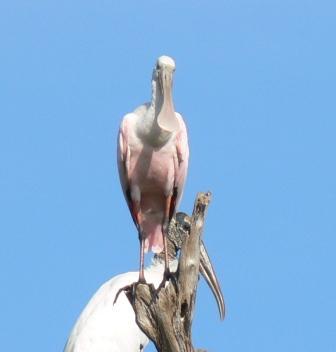
Here is one I caught in a tree at Circle B Bar Reserve:

Roseate Spoonbill and Wood Stork by Lee

Roseate Spoonbill and Wood Stork by Lee

What prompted writing about one of the bird friends I always enjoy seeing, is an article about the Roseate Spoonbill in one of my latest additions of BirdWatching. It’s a great magazine and I am not condemning it. I am used to “reading around the evolutionary influences” in articles about birds. But I was offended by this remark, “It’s hard not to look at the Roseate Spoonbill in the Everglades and think, ‘What happened here:’ Amid the herons and cormorants, the spoonbill seems like an evolutionary hiccup, a failed experiment.

One, the Roseate Spoonbill is far from an “evolutionary hiccup!” It hasn’t evolved, it was created by a loving all knowing Creator, that knew exactly what He was doing. Two, it definitely was not a “failed experiment.” The way the bill is designed and the sensitivity of its touch is amazing. The Lord promised to provide for all His creatures as well as His own people. Nor are we “hiccups.” We are all created by him, but there are differences and varieties in the birds just as there is in our talents and abilities.

I know all the birds of the mountains, And the wild beasts of the field are Mine. (Psalms 50:11 NKJV)

Look at the birds of the air, for they neither sow nor reap nor gather into barns; yet your heavenly Father feeds them. Are you not of more value than they? (Matthew 6:26 NKJV)

All the birds of the heavens made their nests in its boughs; Under its branches all the beasts of the field brought forth their young; And in its shadow all great nations made their home. (Ezekiel 31:6 NKJV)

(Wikipedia and other internet resources consulted)

See:

Birds of the Bible

Birds of the Bible – Ibises

Bible Birds – Ibises

Birds of the Bible – Isaiah 34:11

Birds of the World – Threskiornithidae – Ibises, Spoonbills

World – Life Observations – Roseate Spoonbill

  Location Date
1 Roseate Spoonbill Corpus Christi 8-Nov-01
2 Roseate Spoonbill Circle B Bar Reserve 9-Feb-07
3 Roseate Spoonbill Viera Wetlands 20-Nov-07
4 Roseate Spoonbill Merritt Island NWR–Black Point Wildlife Dr. 22-Nov-07
5 Roseate Spoonbill Circle B Bar Reserve 10-May-08
6 Roseate Spoonbill Lake John Rookery 15-May-08
7 Roseate Spoonbill J. N. Ding Darling NWR 15-Jul-08
8 Roseate Spoonbill Circle B Bar Reserve 1-Nov-08
9 Roseate Spoonbill 6 Circle B Bar Reserve 28-Nov-08
10 Roseate Spoonbill 16 Merritt Island NWR–Black Point Wildlife Dr. 20-Jan-09
11 Roseate Spoonbill 3 Circle B Bar Reserve 24-Feb-09
12 Roseate Spoonbill 4 Circle B Bar Reserve 10-Mar-09
13 Roseate Spoonbill 15 Circle B Bar Reserve 24-Oct-09
14 Roseate Spoonbill 15 Circle B Bar Reserve 23-Dec-09
15 Roseate Spoonbill 5 Hillsborough 4-Feb-10
16 Roseate Spoonbill 1 MacDill AFB 31-Jan-11
17 Roseate Spoonbill 1 Lake Parker Park 7-Jan-12
18 Roseate Spoonbill 3 Circle B Bar Reserve 16-Jan-12
19 Roseate Spoonbill 2 Picnic Island Beach 24-Jan-12
20 Roseate Spoonbill 1 Lake Hollingsworth 26-Jan-12
21 Roseate Spoonbill 3 MacDill AFB 16-Aug-12
22 Roseate Spoonbill 3 Circle B Bar Reserve 10-Nov-12

*

Fair Fowl, Foul Fowl or Some of These Laws Are For The Birds!

Fair Fowl, Foul Fowl

Some of These Laws Are For The Birds!

Deuteronomy 14:12-20 by Francois Maurice

I love drawing birds, so illustrating this passage from Deuteronomy was a natural. I could have chosen the passage from Leviticus 11:13-19. They are identical. The same birds, in the same order with the same sentence structure. What are the odds? This got me scratching my head in quizzical puzzlement. (Wow, four z’s in two words! What are the odds?) Well, it turns out these two books were written by Moses. I didn’t know that then, but I do now! I knew that Moses spent forty days on Mt. Sinai talking to God. What I didn’t know was that, when he climbed down off that obscure, smoking, lightning-illuminated mountain; besides bringing us the Ten Commandments, he also brought the Oral Torah and six hundred thirteen specific and detailed laws meant for the people of Israel.  I want to delve briefly into these laws and to look at kosher laws, what they mean and how they apply to this illustration.

Known as the Mitzvot , these laws address all aspects of human life. There are three hundred sixty five negative and two hundred forty eight positive commandments. The negative ones are the ‘thou shalt nots…” and the positive ones are the ‘thou shalts…’

They are meant to preserve the sanctity of Jewish observance and the holiness of religious practices. They are also meant to encourage a serious perspective and importance to the business of living a meaningful and humble life.  A life that honors God and, as much as an individual is capable of adhering to the Mitzvot, keeps His commandments. This is the subjective part of the intent of Mitzvot . A couple of these laws are, for example, ‘ Know that God’ exists and ‘Do not put the word of God to the test’.

The objective intent of Mitzvot is based on the preservation, purification and health of the Jewish race. The commandments concerning dietary laws are a form of ancient health regulations! For example, the slaughtering of permitted animals is to be done rapidly, by cutting the throat of the animal with an extremely sharp knife with no serrations in the blade. This is considered the most humane way of dispatch. The goal of this type of slaughter is to get rid of as much blood as possible. Ingesting blood is forbidden. The animal is then hung to permit the evacuation of blood. It is then washed,  salted with kosher salt and cooked well. The USDA has determined that this ritual method of slaughter is so sanitary that kosher slaughterhouses are exempt from USDA regulations.

The Mizvot is divided into many categories i.e., Business practices, Clothing, Marriage, Divorce and Family, Treatment of Gentiles, Court and Judicial etc. There are many more but you get the idea.

Most of these worthy commandments have stood the test of time.  Consider the following ones, ‘Not to sell a Hebrew servant as a slave.,  ‘Not to pass a child through the fire to Molech’.,  (referring to child sacrifice),   ‘Not to wear garments made of wool and linen mixed together’.,  ‘To make a parapet for your roof’.?? And my favorite, ‘Not to put olive oil in the meal offering of a woman suspected of adultery’.!!! I presume it’s perfectly acceptable to drizzle olive oil on her matzos if you know she is an adulteress!?

Back to the birds. The forbidden birds in Deuteronomy 14:11-20 are either birds of prey or scavengers. As such, they are indiscriminate in their diet, hunt carrion and  cannibalize. They have sharp talons with strong feet for transporting their prey. Their beaks are sharp and hooked for tearing flesh.  God describes, to Ezekiel, a scene of Gog’s slain army.  Hordes of soldiers are scattered about on the mountains of Israel being devoured by (Ezekiel 39:4) “…the ravenous birds of every sort.” Quite a graphic scene made more dramatic by the presence of birds of prey.Bird of Prey by Francois Maurice

In Isaiah 46:11 God curiously refers to Cyrus the Great as a bird of prey “…a ravenous bird from the east”. It seems an incongruous reference to a man who is revered for his benevolence and justice. Cyrus tolerated and respected the culture and religion of the lands he conquered. Ah, you say! ‘Conquered’ implies blood and cruelty. Well, not in his case as when, in October of 539 BC, he annexed Babylonia without spilling a drop of blood. He then freed the Jews of whom 40,000 returned to their homeland. He then financed the rebuilding of the destroyed Temple in Jerusalem. He doesn’t seem to exhibit the tendencies of birds of prey. Was God implying that Cyrus had the tenacity and single minded intent of a predatory raptor?

Ostrich by Francois Maurice

Ostrich by Francois Maurice

Ostriches are in for some harsh treatment in Job 39:13-18. In a chapter that praises the freedom of the wild ass, the strength of the bull, the fearlessness and strength of the war-horse, the eyesight and flight of the eagle, we see the ostrich laying her eggs out in the open soil.  She is unconcerned that passing beasts will trod on them. She hopes the sun is warm enough to sustain and nurture them. “She is hardened against her young ones, as though they were not hers: her labour is in vain without fear; because God hath deprived her of wisdom, neither hath He imparted to her understanding.” The best that can be said about the ostrich in this passage is that they have wings and feathers to which I ask, “Why?” They can’t fly! Lamentations 4:3 equates the ostrich to a breast feeding sea monster! How weird is that? So- we have a strange looking, eight foot tall, three hundred pound bird who can’t fly but who can outrun a horse and kick a pursuer to death. It’s  eye is bigger that it’s brain, it makes great feather dusters and lives in a commune and hates its kids. God is humorous.

Doves are special in the Bible. They are used metaphorically to describe everything from the Spirit of God descending upon Jesus at His baptism (Mark 1:10), “And straightaway coming up out of the water, He saw the heavens opened, and the Spirit like a dove descending upon Him”, to the sorrowful murmurings of Queen Huzzab’s handmaidens. (Nahum 2:7), “And Huzzab shall be led away captive, she shall be brought up, and her maids shall lead her as with the voice of doves, tabering upon their breasts.” This magnificent run-on sentence uses a word that poignantly transforms this scene. Used but a single time in the entire Bible, the word tabering, (to beat on a small drum, tabour), infuses the scene with the pathos of the handmaidens who beat their breasts and mourn the captivity of their beloved queen. Doves, who mate for life, are used here to underscore the loyalty shown by the hand maidens. Notice also, that the phrase “the voice of doves” effectively adds another dimension to this passage. Imagine the queen following the handmaidens as naturally as one’s head turns upon hearing the nearby cooing of a pair of doves.

Doves by Francois Maurice

Doves by Francois Maurice

Francois Maurice

*


Lee’s Addition:

Francois is the author of It’s In The Bible! which was illustrations only. He is currently working of Volume Two. When asked to tell me more about himself so I could introduce him, here are parts of that information:

The article above is “one of 15 or so chapters. They are short-two to four pages- of commentary about a particular Bible passage passage. I illustrate it then analyze the theological message. My first book was It’s In The Bible!! and it was illustrations only. Volume two will have the same name since I own it. I also have ItsInTheBible.org and a Facebook page which is being developed to advertise my book. There will be some church related cartoons and some general commentaries on theological subjects along with study questions. Humor is included.”

“I am a committed Christian, on the vestry and many committees of St. John’s Episcopal in Chula Vista, CA.(Sad Diego area). I run a Bible study group there….I write and draw full time.”

“The article I sent you is not “typical” since it is “theme oriented” rather than Bible passage “in depth” study of what is going on in a particular scene. I am very curious and love to do research.”

“I am not an ornithologist however, so themes explored would be more “general” in nature. As you know there is a lot of bird influence throughout the Bible and a lot of material to be explored.”

I am looking forward to reading more articles from him and I trust you will also. Welcome, Francois.

*

Birds of the Bible – Eyes and Birds

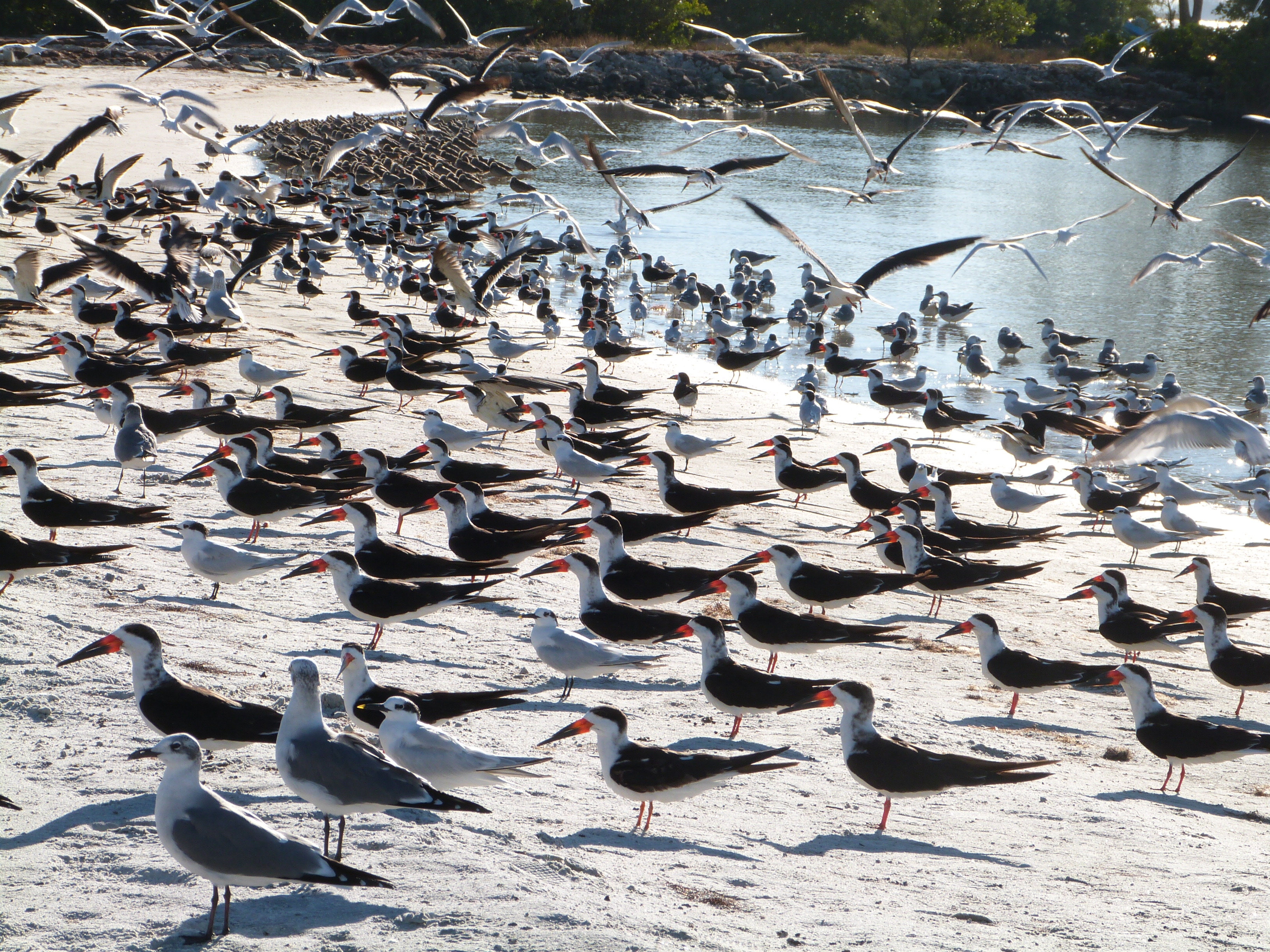
Birds on Shore of Tampa Bay

Birds on Shore of Tampa Bay – 11/23/12 by Lee

As many of you know I have just gone through eye surgery this last Thursday. (Prayer for Eye Surgery) Today, Monday, I am getting clearer vision daily, but my activities are still limited. I was able to attend church last evening and even went out afterwards with our friends. The Doctor said it was “his easiest surgery of the day and every thing went just like it should.” (I was his last patient) also told me I was his “best patient of the day.” When he walk out I told the nurses that were with me that he probably tell all his patients that. They told me that they had never heard him say that to anyone.

I told you all of that to thank you for your prayers for my Doctor and for my nervousness. Both were answered mightily. The Lord helped direct his hand and since I had to be awake, helped me stay still. They can’t put you out because you must have your eyes open. My eye was numbed, but I saw part of what was going on.

Well, guess where my mind went yesterday? I started wondering how many times “eye” and some “bird” showed up in the same verse. With enlarged type, my search found around 20 verses. Some of my upcoming Birds of the Bible blogs will investigate these verses. In fact, some have already been written. (These are just a few of them)

Birds of the Bible – Vulture Eyesight – Job 28:7

When I Consider! – Turkey Vulture – Job 28:7

Birds of the Bible – Hawks – Job 28:7 and 39:26-30

Birds of the Bible – God’s Providence To His Creatures

The eyes of all wait upon thee; and thou givest them their meat in due season. (Psalms 145:15 KJV)

Birds of the Bible – Eagles and Riches 

Wilt thou set thine eyes upon that which is not? for riches certainly make themselves wings; they fly away as an eagle toward heaven. (Proverbs 23:5 KJV)

There are more and will be covered later.

Keep me as the apple of the eye, hide me under the shadow of thy wings, (Psalms 17:8 KJV)

Interesting verses, but not directly related to birds:

He that planted the ear, shall he not hear? he that formed the eye, shall he not see? (Psalms 94:9 KJV) (Our Creator)

The hearing ear, and the seeing eye, the LORD hath made even both of them. (Proverbs 20:12 KJV)

Open thou mine eyes, that I may behold wondrous things out of thy law. (Psalms 119:18 KJV)

I will instruct thee and teach thee in the way which thou shalt go: I will guide thee with mine eye. (Psalms 32:8 KJV) (How?)

This is just a sampling. There are over 600 verses which have “Eye” in it. I enjoy using my “e-Sword” search and compare modes. Makes for some interesting topics to study from God’s Word.

Again, thank you for your prayers. I still have several weeks of recovery ahead of me, so please remember me in your prayers as you think about it. Prayer is felt when it is being answered.

*

Birds of the Bible – Birds and Names?

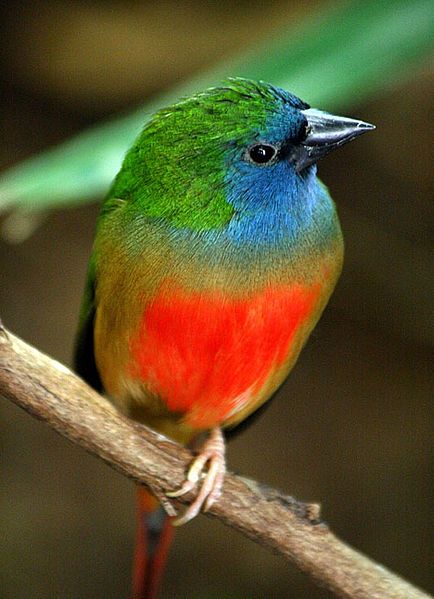
Pin-tailed Parrotfinch (Erythrura prasina) ©WikiC

Pin-tailed Parrotfinch (Erythrura prasina) ©WikiC

The devotional a few days ago from Days of Praise had one called The Names of Men. They were referring to the many list of names of people in the Bible and how many of them are unknowns. Why are they listed? The article gives a good answer to that, but here is the main point of it:

And these are the names of the men that shall stand with you: of the tribe of Reuben; Elizur the son of Shedeur. (Numbers 1:5 KJV)

“He wants to assure us that He is interested not only in the Abrahams, Daniels, Pauls, and other great men in His kingdom, but also in the Elizurs and Shedeurs and Bills and Kates in His spiritual family.

There are many millions of names “written in the Lamb’s book of life” and the heavenly Lamb–the Lord Jesus Christ–is also the Good Shepherd that “calleth his own sheep by name” The names in His book here on earth are an assurance that He knows and calls us by each of our names in His book in heaven. ”

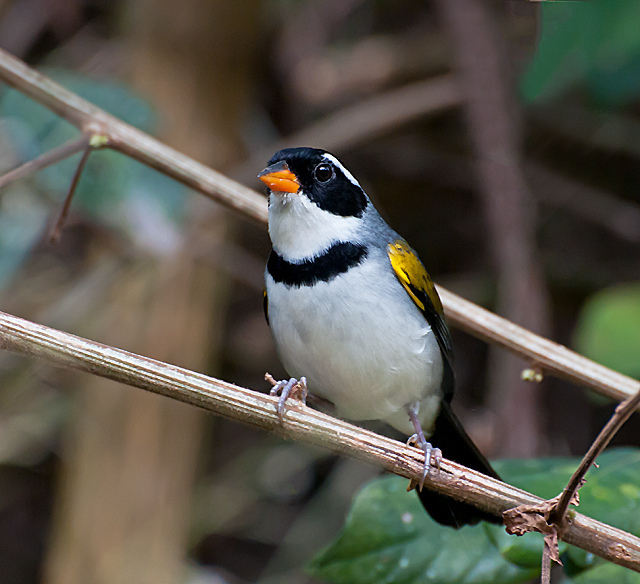
Saffron-billed Sparrow (Arremon flavirostris) by Dario Sanches

Saffron-billed Sparrow (Arremon flavirostris) by Dario Sanches

How does this tie in with birds? We know that the Lord knows the birds because the Word tells us that not a one falls without His knowledge.

I know all the birds of the mountains, And the wild beasts of the field are Mine. (Psalms 50:11 NKJV)

Consider the ravens, for they neither sow nor reap, which have neither storehouse nor barn; and God feeds them. Of how much more value are you than the birds? (Luke 12:24 NKJV)

Who teaches us more than the beasts of the earth, And makes us wiser than the birds of heaven?’ (Job 35:11 NKJV)

Are not two little sparrows sold for a penny? And yet not one of them will fall to the ground without your Father’s leave (consent) and notice. (Matthew 10:29 AMP)

If the Lord knows every birds need, cares about them and knows when they fall, do you not think we are noticed? He knows all of our names and if you know Him as your personal Saviour, your name has been written in the Book of Life.

Gospel Message

More Birds of the Bible

*

Birds of the Bible – God Blessed Them

Osprey Family by Phillip Simmons

And God blessed them, saying, “Be fruitful and multiply, and fill the waters in the seas, and let birds multiply on the earth.”
(Genesis 1:22 NKJV)

And God H430 blessed H1288 them, saying, H559 Be fruitful, H6509 and multiply, H7235 and fill H4390 (H853) the waters H4325 in the seas, H3220 and let fowl H5775 multiply H7235 in the earth. H776 (Genesis 1:22 KJV+)

I have written before on this verse, but really never looked into this aspect of it. I knew He had told them to multiply and be fruitful, but I missed the “blessing” part. The Lord didn’t just create the birds and then leave them on their own. He cared about them and “blessed” them. Below is the definition of Strong’s Hebrew word and then Thayer’s Greek word for Blessing or Blessed.

Strong – H1288

בּרך
bârak
baw-rak’
A primitive root; to kneel; by implication to bless God (as an act of adoration), and (vice-versa) man (as a benefit); also (by euphemism) to curse (God or the king, as treason): – X abundantly, X altogether, X at all, blaspheme, bless, congratulate, curse, X greatly, X indeed, kneel (down), praise, salute, X still, thank.

Thayer – G2127

εὐλογέω
eulogeō
Thayer Definition:
1) to praise, celebrate with praises
2) to invoke blessings
3) to consecrate a thing with solemn prayers
3a) to ask God’s blessing on a thing
3b) pray God to bless it to one’s use
3c) pronounce a consecratory blessing on
4) of God
4a) to cause to prosper, to make happy, to bestow blessings on
4b) favoured of God, blessed
Part of Speech: verb

Let’s see what some of the commentaries have to say about the birds being blessed by God:

(Chuck Smith) – “But we get the more complex life forms that sort of are a little independent. They’re not rooted, they’re not grounded, they are mobile, and the various cycles that God has created, the whole process is just so marvelous indeed. The water, teeming with life, and then the air, and the many, many kinds of birds and the variety of birds that God has created. And those instinctive abilities in the birds!

American Golden Plover (Pluvialis dominica) at National Aviary by Lee

American Golden Plover (Pluvialis dominica) at National Aviary by Lee

I’m always fascinated by that little bird in Hawaii that goes up into the Aleutian chain in order to mate. During the summer, they take off from Hawaii and they fly all the way up into Alaska where they mate. They build their nests, they lay the eggs, they hatch their young. And then with the coming of winter, they don’t want to spend winter in Alaska — and who can blame them. And you have to almost envy them, spending their winters in Hawaii. They take off over the thousands of miles without suitcases, without spare gas tanks, without compasses or navigational equipment. And they come and fly right into Hawaii, sometimes they get into severe storms, one-hundred, two-hundred mile an hour winds that blow them off course, but somehow they find their way right in. You say, “oh, they remember the way they flew out.”

How do they reckon? Some think they have some kind of device that tunes on the magnetic field of the earth. I don’t know. But, really, they’re not following the same path, so that argument’s sort of shot down, because, really, the parents decide to leave for Hawaii before the kids are able to fly that far. So, the parents fly off to Hawaii, leaving their kids in Alaska! But, it doesn’t seem to matter, cause a couple of weeks later, their kids take off and they fly right to Hawaii. Never been there before, yet somehow, God has built into this little bird that kind of instinct; and that’s a bird brain. And it’s not a very big kind of a computer. Talk about microsystems!

Oh, the wisdom of God, the wisdom of God. How thrilling to be able to see the design in nature, all testifying of the wisdom of the God that I serve. I’m so glad that I serve Him. I’m so glad that I know Him. Such a glorious God, so wise; all of these created life forms. Now, He created also the mammals, the great whales. He created the animals, the domesticated-type animals, all after their own kind.

And the evening and the morning were the fifth day.”

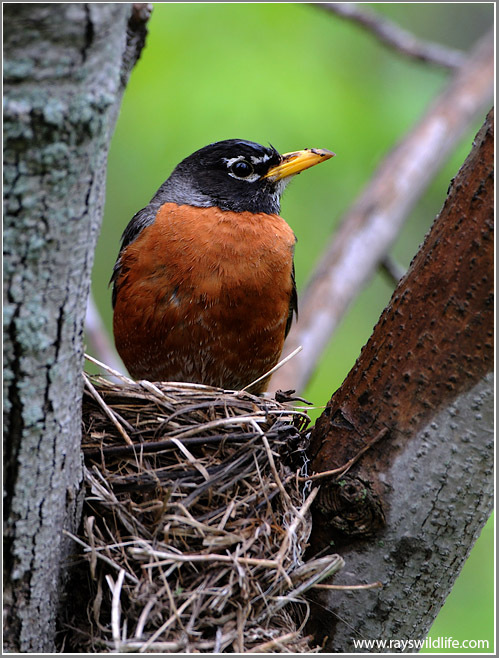
American Robin (Turdus migratorius) in nest by Ray

American Robin (Turdus migratorius) in nest by Ray

(John Gill) – “Genesis 1:22

And God blessed them,…. With a power to procreate their kind, and continue their species, as it is interpreted in the next clause, saying, be fruitful, and multiply, and fill the waters in the seas: and these creatures do multiply exceedingly, and vast quantities there are of them in the mighty waters, though the consumption of some sorts of them is very great. Our English word “fish” is derived from the Hebrew word פוש, “fush”, which signifies to multiply and increase:

and let fowl multiply in the earth; as they did, and continue to do to this day.”

(Matthew Henry) – “2. The blessing of them, in order to their continuance. Life is a wasting thing. Its strength is not the strength of stones. It is a candle that will burn out, if it be not first blown out; and therefore the wise Creator not only made the individuals, but provided for the propagation of the several kinds; God blessed them, saying, Be fruitful and multiply, Gen_1:22. God will bless his own works, and not forsake them; and what he does shall be for a perpetuity, Ecc_3:14. The power of God’s providence preserves all things, as at first his creating power produced them. Fruitfulness is the effect of God’s blessing and must be ascribed to it; the multiplying of the fish and fowl, from year to year, is still the fruit of this blessing. Well, let us give to God the glory of the continuance of these creatures to this day for the benefit of man. See Job_12:7, Job_12:9. It is a pity that fishing and fowling, recreations innocent in themselves, should ever be abused to divert any from God and their duty, while they are capable of being improved to lead us to the contemplation of the wisdom, power, and goodness, of him that made all these things, and to engage us to stand in awe of him, as the fish and fowl do of us.”

(Haydock Commentary) – “Genesis 1:22

Blessed them, or enabled them to produce others. — Multiply: the immense numbers and variety of fishes and fowls is truly astonishing.”

(K & D) – “As animated beings, the water animals and fowls are endowed, through the divine blessing, with the power to be fruitful and multiply. The word of blessing was the actual communication of the capacity to propagate and increase in numbers.”

(John Wesley) – “Observe, 2, The blessing of them in order to their continuance. Life is a wasting thing, its strength is not the strength of stones; therefore the wise Creator not only made the individuals, but provided for the propagating of the several species, Gen_1:22. God blessed them, saying, Be fruitful, and multiply – Fruitfullness is the effect of God’s blessing, and must be ascribed to it; the multiplying of the fish and fowl from year to year, is still the fruit of this blessing here.”

Painted Bunting (Passerina ciris) ©©Flickr

Painted Bunting (Passerina ciris) ©©Flickr

Oh that men would praise the LORD for his goodness, and for his wonderful works to the children of men! (Psalms 107:31 KJV)

The Lord not only blessed the birds, but provided them with the instinct and DNA to be able to reproduce and adapt to the changing conditions. Those that have not been able or suffered disasters be they natural or man-made have become extinct. The “kinds” have produced great varieties (over 10,400 species) that we enjoy as we study and view the different families. While He blessed the birds, in turn, we are blessed because we are able to enjoy the vast variety of these avian creations. Praise the Lord!

Birds of the Bible

Birds of the World

Bird of the Week

*

Birds of the Bible – Shelter in the Storm

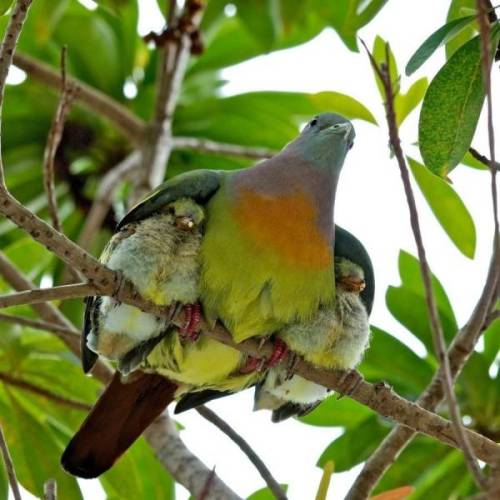
Under His Wings - ( Male Pink-necked Green Pigeon by Rik Seet)

Under His Wings – ( Male Pink-necked Green Pigeon by Rik Seet)

Be merciful to me, O God, be merciful to me! For my soul trusts in You; And in the shadow of Your wings I will make my refuge, Until these calamities have passed by. (Psalms 57:1 NKJV)

In our devotions this morning, we read Psalm 57. The first verse caught my attention because of the shelter from the wings of a bird. Also, I just received again the above picture in an e-mail. Only about the 30th time I have received it. Apparently it is as precious to others as it is to me.

With the Hurricane – Superstorm Sandy just passing by the last few days, this is a good time to remember to put and keep our trust in the Lord.

The beginning of that verse has this title attached: “To the Chief Musician. Set to “Do Not Destroy.” a Michtam of David When He Fled from Saul into the Cave.” David was trying to hide from Saul, just as those up north have been trying to hide from that storm.

“David took refuge under the shelter of God’s wings. He stood “steadfast,” a term indicating firmness, certainty, and determination (v.7). His faith was not blown about by the wind. He clung tenaciously to God. That is why today’s psalm spends more time on the character off God than on the writer’s circumstances.’ (Today in the Word, Day 16, Psalms)

My heart is steadfast, O God, my heart is steadfast; I will sing and give praise. (Psalms 57:7 NKJV)

Another quote, “the prayer (vv 1-4) emphasizes God’s character. He is merciful, protecting, caring, just, and faithful. The enemy may be “ravenous beasts,” but the psalmist can hide beneath His wings as a chick hides beneath a mother bird.”

Be merciful to me, O God, be merciful to me! For my soul trusts in You; And in the shadow of Your wings I will make my refuge, Until these calamities have passed by. I will cry out to God Most High, To God who performs all things for me. He shall send from heaven and save me; He reproaches the one who would swallow me up. Selah. God shall send forth His mercy and His truth. My soul is among lions; I lie among the sons of men Who are set on fire, Whose teeth are spears and arrows, And their tongue a sharp sword.  (Psalms 57:1-4 NKJV)

Great Crested Grebe (Podiceps cristatus) babies ©WikiC (Lukasz_Lukasik)

Great Crested Grebe (Podiceps cristatus) babies ©WikiC (Lukasz_Lukasik)

Verses 5 and 11 “focuses our attention on God’s chief attribute–His glory and worthiness to be worshiped”

Be exalted, O God, above the heavens; Let Your glory be above all the earth. (Psalms 57:5 NKJV)

Our prayers and thoughts are with those going through this storm. We have been there in the midst of hurricanes before (Andrew, Charlie, Jean, Frances and those that passed near) and we know it is hard, but there is always a peace that only the Lord can give to get you through. Look to Him.

Wordless Birds

Birds of the Bible

*

Birds of the Bible – Sorry For Their Creation?

Rose-Crowned Fruit-Dove by Birdway

Rose-Crowned Fruit-Dove by Birdway

Then the LORD saw that the wickedness of man was great in the earth, and that every intent of the thoughts of his heart was only evil continually. And the LORD was sorry that He had made man on the earth, and He was grieved in His heart. So the LORD said, “I will destroy man whom I have created from the face of the earth, both man and beast, creeping thing and birds of the air, for I am sorry that I have made them.” But Noah found grace in the eyes of the LORD. (Genesis 6:5-8 NKJV)

Now that is an interesting passage from Scripture. Does God change His Mind? I don’t believe He does, but let’s look see what some of the Commentary writers have to say. The bolding mine.

White-fronted Bee-eater (Merops bullockoides) by Africaddict

White-fronted Bee-eater (Merops bullockoides) by Africaddict

(Believer’s Bible Commentary) – “6:6, 7 The Lord’s sorrow does not indicate an arbitrary change of mind, though it seems that way to man. Rather, it indicates a different attitude on God’s part in response to some change in man’s behavior. Because He is holy, He must react against sin.”

(Barnes – this is long but interesting) – Gen_6:7 – I will wipe away man from the face of the soil. – The resolve is made to sweep away the existing race of man. Heretofore, individuals had departed this life. Adam himself had long since paid the debt of nature. These solemn testimonies to the universal doom had not made any salutary or lasting impression on the survivors. But now a general and violent destruction is to overtake the whole race – a standing monument of the divine wrath against sin, to all future generations of the only family saved.
From man to cattle, creeper and fowl of the sky. – These classes of animated nature being mingled up with man are involved in the same ruin with him. This is of a piece with the curse laid upon the serpent, which was the unconscious organ of the tempter. It is an instance of a law which runs through the whole course of nature, as we observe that it is the method of the divine government to allow for the time the suffering inflicted on an inferior animal, or even on a fellow-creature, by selfish passion. It has an appearance to some minds of harshness and unfairness. But we must remember that these animated creatures are not moral, and, therefore, the violent termination of their organic life is not a punishment; that the pain incidental to this, being apart from guilt, is in itself a beneficial provision for the conservation of life; and that it was not intended that the life of animals should be perpetual. The return of the land to a state of desolation by the destruction of animal and vegetable life, however, has its lesson for man, for whom ultimately all of this beauty and fertility were designed, and from whom it is now withdrawn, along with all the glories it foreshadows, as part of the punishment of his guilt. The tenant has become unworthy of the tabernacle, and accordingly he is dispossessed, and it is taken down and removed.

Anna's Hummingbird (Calypte anna) by S Slayton

Anna’s Hummingbird (Calypte anna) by S Slayton

(Jamieson, Fausset, & Brown) – Genesis 6:5-6 – God saw it … repented … grieved — God cannot change (Malachi_3:6; James_1:17); but, by language suited to our nature and experience, He is described as about to alter His visible procedure towards mankind – from being merciful and long-suffering, He was about to show Himself a God of judgment; and, as that impious race had filled up the measure of their iniquities, He was about to introduce a terrible display of His justice (Ecc_8:11).

(Matthew Henry) – 4. Even the brute-creatures were to be involved in this destruction – Beasts, and creeping things, and the fowls of the air. These were made for man, and therefore must be destroyed with man; for it follows: It repenteth me that I have made them; for the end of their creation also was frustrated. They were made that man might serve and honour God with them; and therefore were destroyed because he had served his lusts with them, and made them subject to vanity. 5. God took up this resolution concerning man after his Spirit had been long striving with him in vain. None are ruined by the justice of God but those that hate to be reformed by the grace of God.

Lilac-breasted Roller (Coracias caudatus) by Africaddict

Lilac-breasted Roller (Coracias caudatus) by Africaddict

(Guzik) – “b. The Lord was sorry that He had made man . . . He was grieved in His heart: God’s sorrow at man, and the grief in His heart, are striking. This does not mean that creation was out of control, nor does it mean that God hoped for something better but was unable to achieve it. God knew all along that this was how things would turn out, but our text tells us loud and clear that as God sees His plan for the ages unfold, it affects Him. God is not unfeeling in the face of human sin and rebellion.”

(Wesley) – “Genesis 6:7 – I will destroy man – The original word is very significant. I will wipe off man from off the earth; as dirt is wiped off from a place which should be clean, and thrown to the dunghill. Or, I will blot out man from the earth, as those lines are blotted out of a book which displease the author, or as the name of a citizen is blotted out of the rolls of the freemen when he is disfranchised. Both man and beast the creeping thing, and the fowls of the air – These were made for man, and therefore must be destroyed with man. It repenteth me that I have made them – For the end of their creation also was frustrated: they were made that man might serve and honour God with them and therefore were destroyed, because he had served his lusts with them, and made them subject to vanity.

Horned Grebe (Podiceps auritus) w young ©USFWS

Horned Grebe (Podiceps auritus) w young ©USFWS

These are just some of the remarks from the Commentaries that I have on my e-Sword program, which I use often. My understanding is that God had created both man and beasts/birds. They were suppose to serve Him and use the birds in His service also. After the fall, (Genesis 3) that is when things changed. Man continued sinned more and more until it was continually night and day – “24/7”. Apparently, they even used the creatures and birds in evil ways. Enough was enough and God had reached the end of his long suffering and had to use justice. Because of His Love, he could not let things continue. Gospel Presentation

Now we see such beautiful birds and wonder how much impressive were they like in their unfallen state. I am so thankful that God saved Noah’s family and at least 2 of each animal and 7 pairs of each of the birds. We see some glimpse of what they must have been like. We also, unfortunately, see the results of the curse on many of our avian friends.

More Birds of the Bible

*

Birds of the Bible – The Common Ostrich


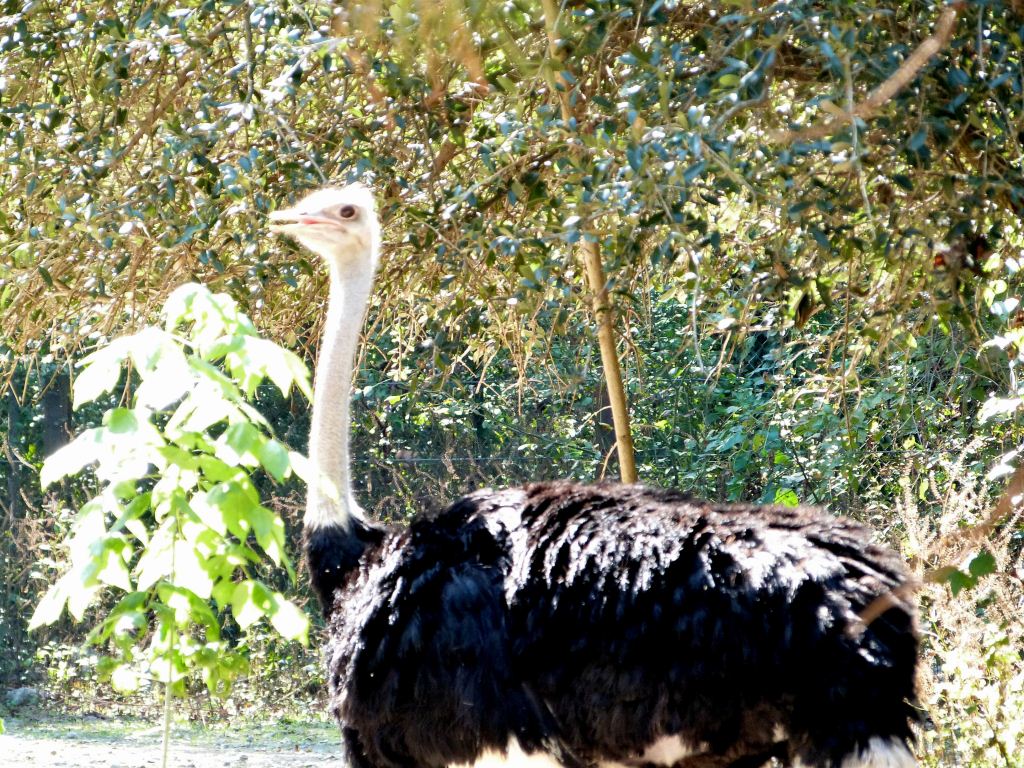
Common Ostrich (Struthio camelus) at Riverbanks Zoo SC by Lee

Common Ostrich (Struthio camelus) at Riverbanks Zoo SC by Lee

Dan and I just recently were on vacation and stopped by the Riverbanks Zoo and Gardens in Columbia, SC. I have see Ostriches before, but it has been awhile. We see the Emus at Zoo Tampa often, but they are not nearly as tall as the Ostrich. I had forgotten that the Lord had created such a huge bird.

The wings of the ostrich wave proudly, But are her wings and pinions like the kindly stork’s? For she leaves her eggs on the ground, And warms them in the dust; She forgets that a foot may crush them, Or that a wild beast may break them. She treats her young harshly, as though they were not hers; Her labor is in vain, without concern, Because God deprived her of wisdom, And did not endow her with understanding. When she lifts herself on high, She scorns the horse and its rider. (Job 39:13-18 NKJV)

The Ostrich does belong to the Struthionidae Family. Currently there are two; the Common Ostrich (Struthio camelus) and the Somali Ostrich (Struthio molybdophanes). The one we saw was the Common. The Ostrich is the largest bird in the world! They are omnivorous flightless birds but make up for their inability to fly with the powerful legs they possess. These birds were built for speed. That is why the reference to the horse and rider. Ostriches can give a horse competition for at least a burst of speed.

Common Ostrich (Struthio camelus) Foot at Riverbanks Zoo SC by Lee

Common Ostrich (Struthio camelus) Foot back at Riverbanks Zoo SC by Lee

“Ostriches usually weigh from 140–320 lb (63 to 145 kilograms), Ostriches of the East African race (S. c. massaicus) averaged 250 lb (115 kg) in males and 220 lb (100 kg) in females, while the nominate subspecies was found to average 240 lb (111 kg) in unsexed adults. At sexual maturity (two to four years), male ostriches can be from 6 ft 11 in to 9 ft 2 in (2.1 to 2.8 m) in height, while female ostriches range from 5 ft 7 in to 6 ft 7 in (1.7 to 2 m) tall. New chicks are fawn with dark brown spots. During the first year of life, chicks grow about 10 in (25 cm) per month. At one year of age, ostriches weigh around 100 lb (45 kilograms). Their lifespan is up to 40 or 45 years.” (Wikipedia with editing)

Common Ostrich (Struthio camelus) Foot at Riverbanks Zoo SC by Lee

Common Ostrich (Struthio camelus) Foot front at Riverbanks Zoo SC by Lee

I am not sure how tall these were, but they had to be close to 8 feet. As I was observing them, I was trying to remember all that the verses said about them. That is one reason I took pictures of their feet. I knew that their feet and legs helped  them run, but also that those same feet were a danger to their young ones. They do have big feet and with an interesting shape as you can see from the photos.

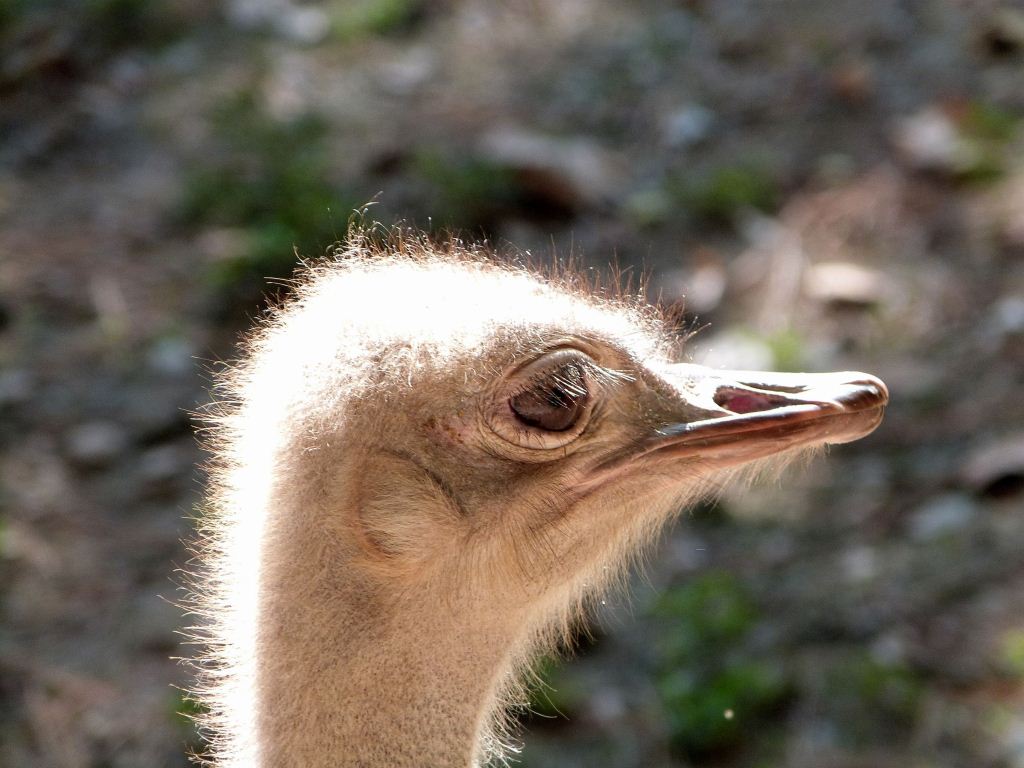
If you notice the size of their head to their body, maybe that is how the Lord “did not endow her with understanding.” The head is interesting though because they are one of the few birds that have eyelashes. They have acute eyesight and hearing, the long neck and legs keep their head up to 9 ft (2.8 m) above the ground, and their eyes are said to be the largest of any land vertebrate – 2.0 in (50 mm) in diameter; they can therefore perceive predators at a great distance. The eyes are shaded from sun light falling from above. However, the head and bill are relatively small for the birds’ huge size”

Common Ostrich (Struthio camelus) Head at Riverbanks Zoo SC by Lee

Common Ostrich (Struthio camelus) Head at Riverbanks Zoo SC by Lee

Oh, sing to the LORD a new song! Sing to the LORD, all the earth. Sing to the LORD, bless His name; Proclaim the good news of His salvation from day to day. Declare His glory among the nations, His wonders among all peoples. For the LORD is great and greatly to be praised; He is to be feared above all gods. (Psalms 96:1-4 NKJV)

Links:

Birds of the Bible – Ostrich

Bible Birds – Ostrich

Struthionidae – Ostriches

Ostrich – Creation Wiki

Ostrich – Wikipedia

Ostrich – The Largest Bird with the Biggest Eyes

*