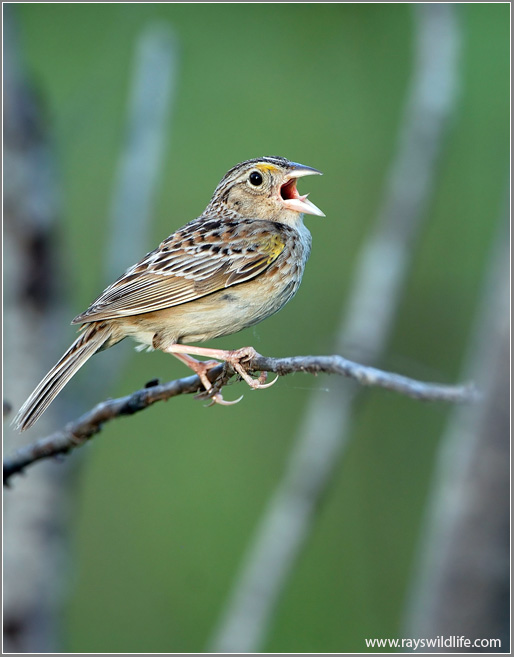
Now therefore, if ye will obey my voice indeed, and keep my covenant, then ye shall be a peculiar treasure unto me above all people: for all the earth is mine: (Exodus 19:5 KJV)
Words by Neil Barham, 2005. (1962-)
Music – Protection – from A Compilation of Genuine Church Music, by Joseph Funk (Winchester, Virginia: J. W. Hollis, 1832)
Alternate Tune – St. Denio, by John Roberts, 1839
Being His
His oceans all rumble and batter His shore,
But He will be new when its waves are no more.
His mountains reach skyward to touch His sweet face;
His forests burst forth as He showers their place.
The mighty Leviathan leaps in His seas,
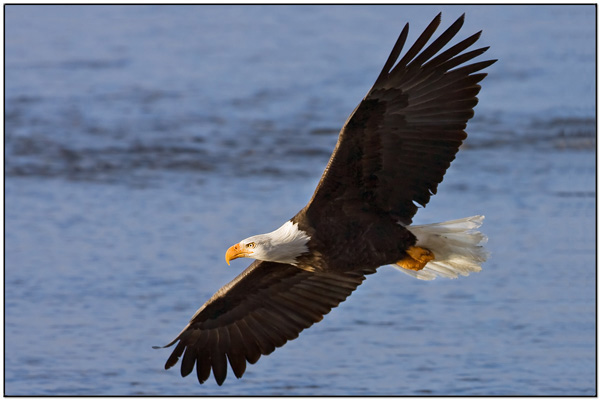
The eagle mounts up on the joy of His breeze.
The creatures of earth borrow life from His hand,
Their days are all numbered by His firm command.
Eternity springs from His Infinite Mind—
All time and all space from His fingers unwind,
His intricate, limitless, unbounded skill
Spins threads of His sovereign, inscrutable will.
The thunder of Sinai resounds in our ears,
The judgment of God stirs the deepest of fears!
But, awesome and wondrous—more staggering still—
The flashes of lightning from Calvary’s hill!
But O! How mighty, how perfect, how free,
How blessèd, how precious, how lovely is He!
And O! How grand, and how sweet to behold
The trophies of grace He has won from of old!
A radiant triumph illumines His face!
He strides to His throne, the Colossus of Grace!
He sits, and His Father proclaims Him True Son!
His strife is now over; His battle is done.
We bow, we adore, we fall down at His throne,
He gathers us into His arms as His own!
He seats us in glory beside Him above,
To crown His achievement with splendors of love!
_____
What a great old hymn that tells of the Lord’s grace to us and the Worship that is due Him.
Neil Barham grew up in Louisiana and has lived all over the southern United States. He was trained as a Presbyterian pastor and served as a teacher in Christian schools in Georgia, Tennessee, and Louisiana. As of 2005, he lived in Miami, Florida, where he, his wife Julie, and his children Hannah, Seth, and Leah are members of the Kendall Presbyterian Church.
Inspired by the example of William Cowper, Neil began writing hymns to combat spiritual depression. He has 19 hymns on Cyber Hymnal.
All scripture is given by inspiration of God, and is profitable for doctrine, for reproof, for correction, for instruction in righteousness: (2Ti 3:16)
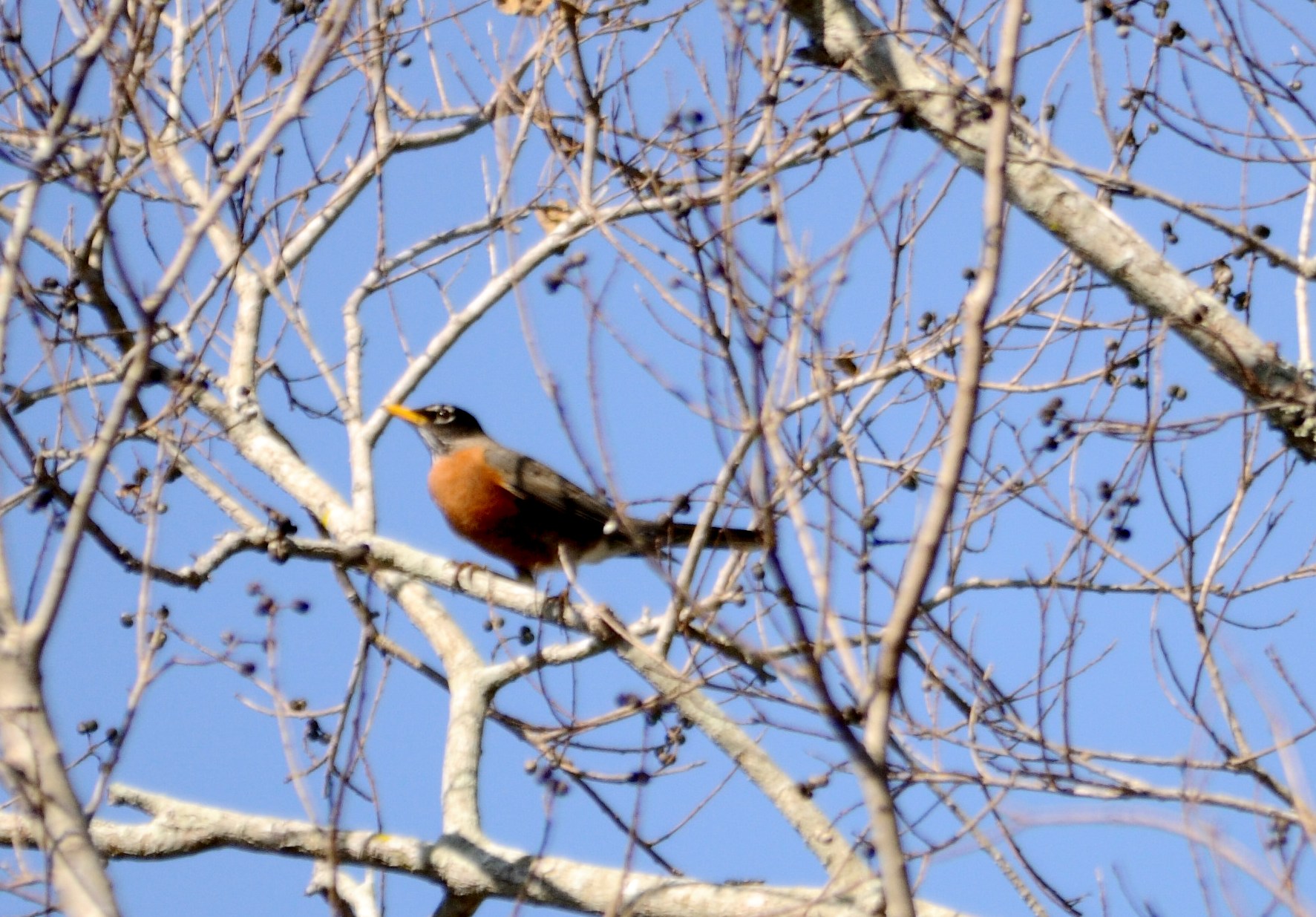
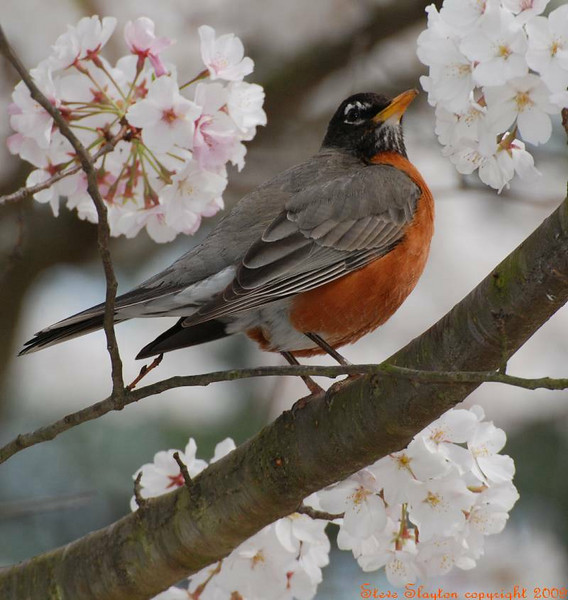
An American Robin, two Cardinals and a Mockingbird greeted us here in South Carolina. We also saw a Red-tailed Hawk circling over the campus of Bob Jones University (our Alma mater) and a Red-shouldered Hawk sitting in a tree. Spring is blooming out all around.
We came up here for the Bible Conference and have thoroughly enjoyed and received blessings from all five messages we were able to attend. We are now headed home and will arrive back in Florida soon.
Dr. Sam Horn, from Wisconsin, challenged us to “cast all our cares on the Lord” and to remember that, “we have a Father that knows our need.” His other message was to challenge us to “right living” through the “Divine enablement from God.”
Dr. David Innes, from California, taught on the “Greatness of God.” Two quotes I liked were; “All genuine ministry of life is the overflow of our walk with Christ.” and “God is uniquely Uncreated, Infinite, Triune, and Holy.” His second message was about the “Greatness of God’s Word.”
Dr. Bruce Compton, from Michigan, spoke on the “Relationship between a living faith and God’s Word.
It is good to sit under the ministry of Godly men who teach the Word of God in a concentrated time period, like a Bible Conference. Sometimes it is hard to get away to one, but it is worth the effort. Your soul will be refreshed and challenged.
It was also good to travel to a different state to try to get a glimpse of the birds that they have there. Didn’t see too many, but it was a very profitable trip. The Lord is always gracious.
This trip is why there has not been many articles from me lately. I will soon be back at the keyboard after I get the binoculars out to spot some more birds to write about.
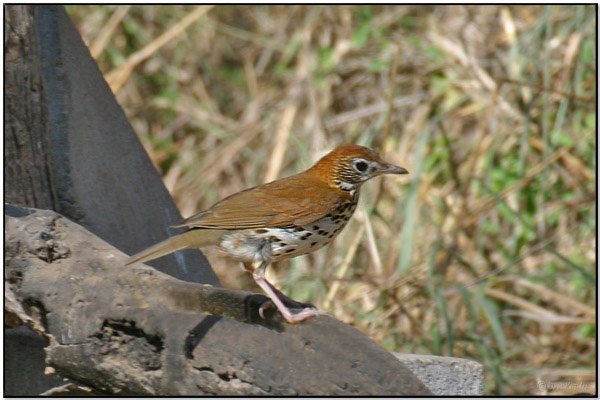
Wood Thrush (Hylocichla mustelina) by Daves BirdingPix
Storks, doves, swallows, and thrushes all know when it’s time to fly away for the winter and when to come back. But you, my people, don’t know what I demand. (Jeremiah 8:7 CEV)
I recently added the Birds of the Bible – Thrushes page. It now appears in the Sidebar and in the Birds of the Bible List. While comparing the Scripture on Jeremiah 8:7, I decided that the Thrushes deserved to be a Bird of the Bible on this blog. As you know, all birds are “Birds of the Bible,” because the Lord created them all. Mainly the ones named in particular have been given their own page. Since Jeremiah 8:7 is translated “thrush” in six Bible versions, it now has its own page.
So God created great sea creatures and every living thing that moves, with which the waters abounded, according to their kind, and every winged bird according to its kind. And God saw that it was good. (Genesis 1:21 NKJV)
Not all versions of the Bible list the Thrush in this verse, but because so many versions do, the Thrush is being added to the Birds of the Bible. The following versions and the verse are listed below:
(CEV) Storks, doves, swallows, and thrushes all know when it’s time to fly away for the winter and when to come back. But you, my people, don’t know what I demand.
(ERV) Even the birds in the sky know the right time to do things. The storks, doves, swifts, and thrushes know when it is time to fly to a new home. But my people don’t know what the LORD wants them to do.
(GNB) Even storks know when it is time to return; doves, swallows, and thrushes know when it is time to migrate. But, my people, you do not know the laws by which I rule you.
(LITV) Also the stork in the heavens knows her seasons, and the turtledove and the swallow and the thrush observe the time of their coming. But My people do not know the judgment of Jehovah.
(NAS77) “Even the stork in the sky Knows her seasons; And the turtledove and the swift and the thrush Observe the time of their migration; But My people do not know The ordinance of the LORD.
(NASB) “Even the stork in the sky Knows her seasons; And the turtledove and the swift and the thrush Observe the time of their migration; But My people do not know The ordinance of the LORD.
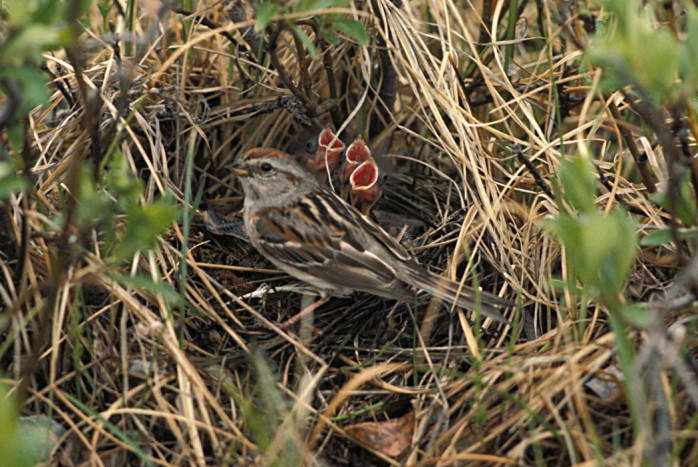
Chipping Sparrow (Spizella passerina) shot thru window with screen by Lee
You will show me the path of life; In Your presence is fullness of joy; At Your right hand are pleasures forevermore. (Psalms 16:11 NKJV)
Some birdwatching has been going on around the yard and neighborhood. Every once in a while, I do get away from the computer and look around, though only nearby. Yet, I have been seeing some interesting birds, especially some I have never seen in the yard. I was watering a new tree when I heard a sound I didn’t recognize at first. After searching and praying that it would come into view, I spotted a Pileated Woodpecker on a power pole. Been here 5 years and it is the first one spotted from the yard. Then I spotted 2 Chipping Sparrows yesterday and 3 today. (also a yard first) Today an American Goldfinch showed up on my feeder. All 3 of those species were new to the yard. They were kept company by 2 Cardinals, Boat-tailed Grackles, Brown-headed Cowbirds, Eurasian Collarded Doves, Mourning Doves and Red-winged Blackbirds.
Blue-winged Teal by Dan at Circle B
Dan took some photos today out at Circle B Bar Reserve while I was busy. He said there was lots of activity and many photographers taking advantage of that activity. One photo in particular caught my interest and I have included it. He also had some neat photos of an immature Black-crowned Night-Heron, but they aren’t available yet.
I am still working on updating the Birds of the World section to the IOC World Bird List, ver. 2.7. I have over 91 Families updated and started working on the Index also. The Species List of the First Name of the Birds and Genus is updated “A” through” Z”. So at least you can find the birds.
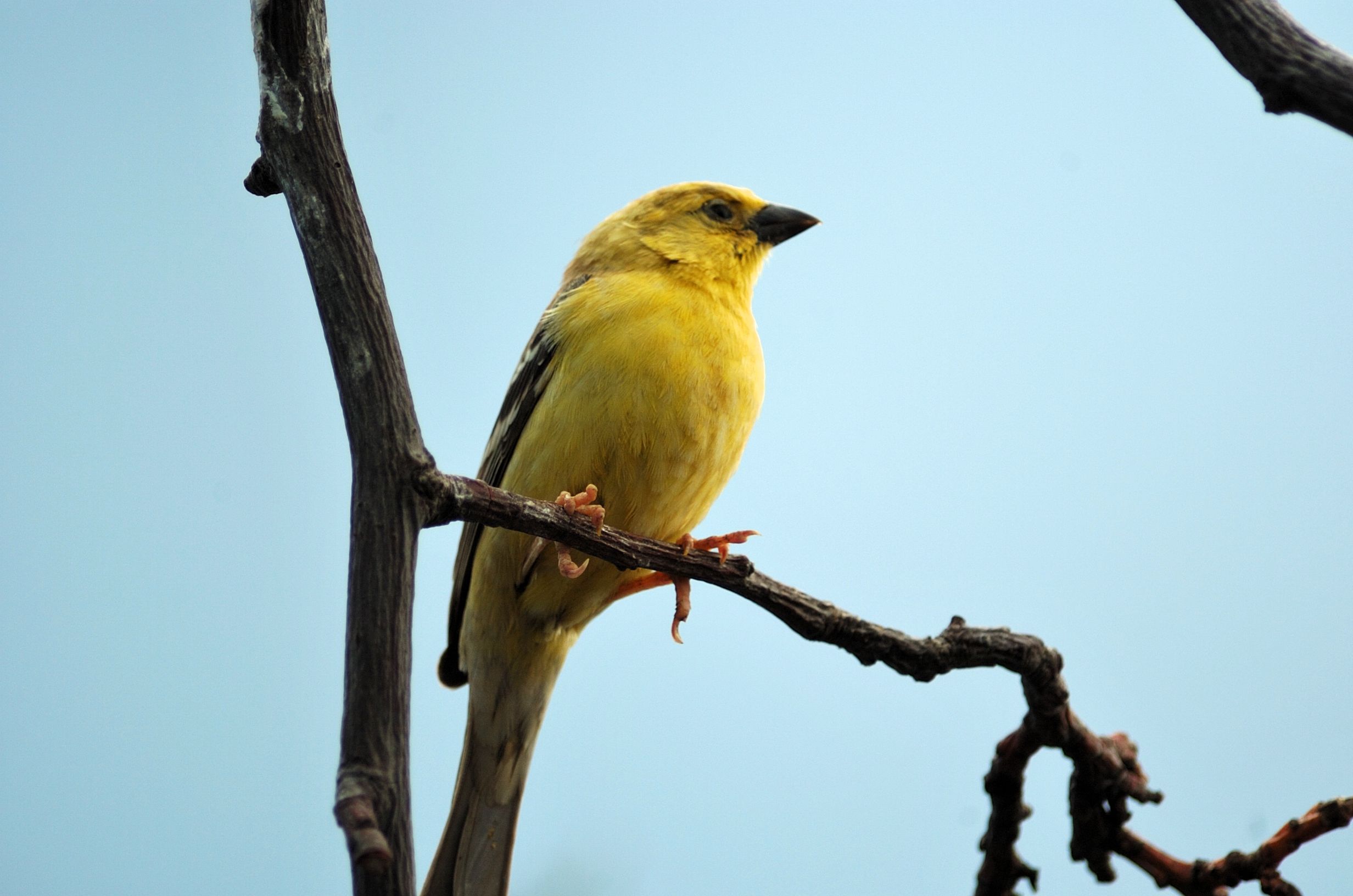
American Goldfinch (Carduelis tristis) by Lee thru window
As I have been updating, I have been adding photos to some of the families. Some of the Families that we have written about lately have also been updated even though they are beyond the 91 completed.
New Finch Species Shows Conservation, Not Macroevolution
by Brian Thomas, M.S. *
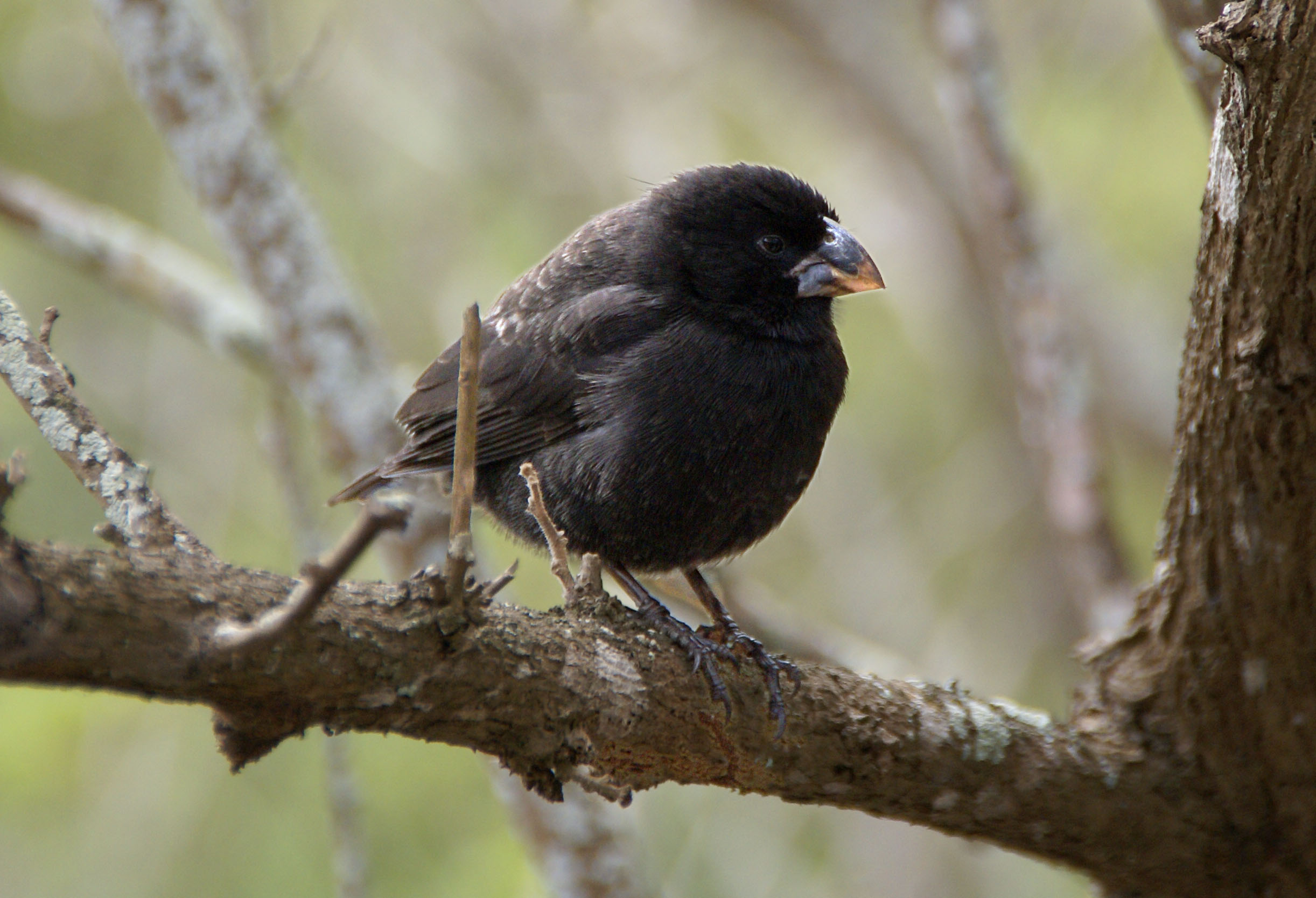
“Darwin’s finches” are a variety of small black birds that were observed and collected by British naturalist Charles Darwin during his famous voyage on the H.M.S. Beagle in the early 1800s. Years later, Darwin argued that subtle variations in their beak sizes supported his concept that all organisms share a common ancestor (a theory known as macroevolution). The finches, whose technical name is Geospiza, have since become classic evolutionary icons.
…..
In the fourth generation, “after a severe drought, the lineage was reduced to a single brother and sister, who bred with each other.”1 Their descendants have carried on the family traits. The Grants reported in a study on the birds published in Proceedings of the National Academy of Sciences that “our observations provide new insight into speciation and hence, into the origin of a new species.”2 But the details show that this new “species” is just a variation within the finch kind, and is therefore irrelevant to big-picture evolution.
Genus Geospiza contains six species, and these are usually distinguished by the songs that the males sing primarily to attract breeding partners. However, if a father bird dies while his chicks are young, and all they hear is the neighboring song of a different species, for example, young birds can learn the wrong songs. When these mature, they sing the song of, and breed with, the foster father’s species. Other scenarios result in crossbreeding between Geospiza species. ……”
Cedar Waxwing (Bombycilla cedrorum) by Daves BirdingPix
Do Migratory Birds Practice Preventative Medicine?
by Brian Thomas, M.S. *
“Before a long migration, certain birds shift from an insect diet to eating fruits such as berries. Researchers once thought that this added carbohydrate reserves as fuel for the journey. But a new study out of the University of Rhode Island suggests that the birds are interested in the fruits’ antioxidants, not their sugars.
Antioxidants are chemicals that are packed within richly colored fruit skins and are known to stabilize cellular processes. Based on research presented at the March 24th American Chemical Society meeting in San Francisco, it appears that the birds fill up on berry antioxidants for the medicinal benefits they provide to tissues that will undergo stress during the upcoming flight.
But this implies that birds use preventative medicine by instinct,….”
To read the rest of the article – CLICK HERE
Return Of The Robins by Dorothy (Dot) Belle Malcolm – on February 27, 2011
On the way to church I thought I saw them; however, they flew so fast back and forth I wasn’t sure. The next day I was sure! The Robins had returned. Only a few were in my trees. At first I was disappointed, but at least I could hear lots of them in my neighborhood. I sent them many invitations in my thoughts as I worked in the yard, but they did not come.
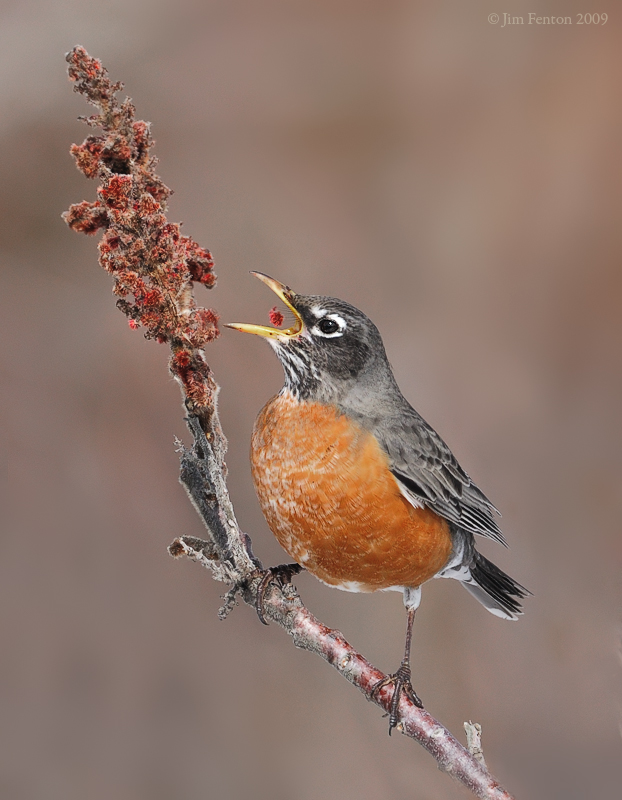
Robin Eating by Jim Fenton
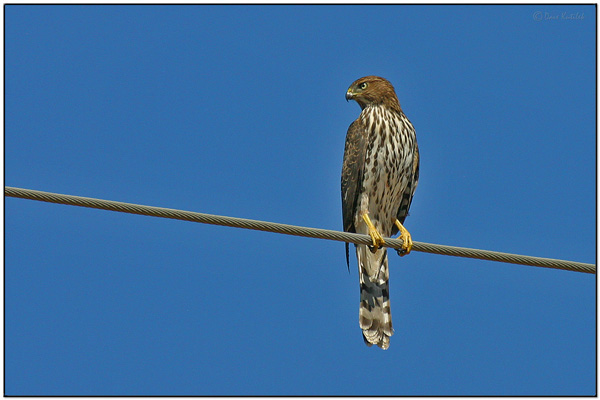
As I worked, I began to hear very high sweet sounds coming from some medium sized black birds. How thankful I was for their “music.” Then it ceased and I realized why when I saw the shadow of the Cooper’s Hawk come across the yard. He frequents our area almost daily, and I now realize why I have fewer birds come to my feeders. He is a beautiful specimen but my heart does not welcome him.
Cooper’s Hawk (Accipiter cooperii) by Daves BirdingPix
Well I promised last year I would not speak again of the Robin’s bad manners, so this year I shall not fault them for a lack of a good showing. They had a very good reason. I shall remain satisfied they were around and be thankful for that.
Even the stork in the sky Knows her seasons; And the turtledove and the swift and the thrush Observe the time of their migration; But My people do not know The ordinance of the LORD. (Jeremiah 8:7 NASB)
The American Robin (Turdus migratorius) is a member of the Thrush – Turdidae Family. As Dorothy (“Dottie” to me) knows, they only pass through on their migration journey. This time of the year, they are on their way north.
“The American Robin is widely distributed throughout North America, wintering south of Canada from Florida to central Mexico and along the Pacific Coast. The American Robin is active mostly during the day, and on its winter grounds it assembles in large flocks at night to roost in trees in secluded swamps or dense vegetation. The flocks break up during the day when the birds feed on fruits and berries in smaller groups. During the summer, the American Robin defends a breeding territory and is less social. It is the state bird of Connecticut, Michigan, and Wisconsin.” (Wikipedia)
*
And wild animals shall meet with hyenas; the wild goat shall cry to his fellow; indeed, there the night bird settles and finds for herself a resting place. (Isaiah 34:14 ESV)
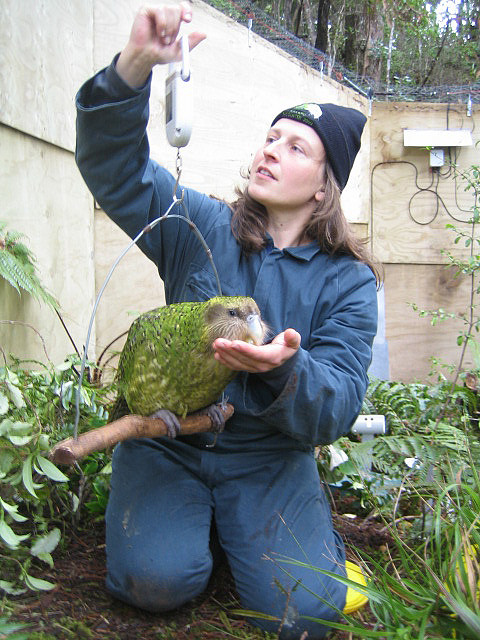
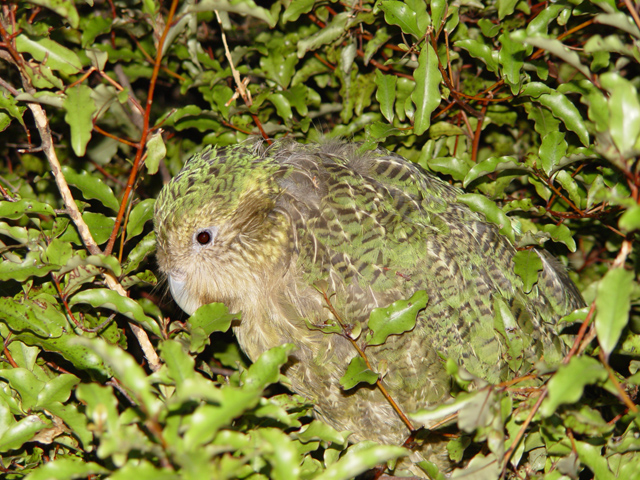
The Kakapo (Strigops habroptila) is another unique bird Formed by the Creator. The following articles will introduce you to a New Zealand bird that is extremely endangered with only about 90-120 left in the world (depending on sources). They belong to the Strigopidae Family, of which it is the only bird in the Strigops genus and keeps company with the Kea and New Zealand Kaka of the Nestor genus. The three are classified as New Zealand Parrots and belong to the Psittaciformes Order of Parrots and Cockatoos.
From Creation Moments: A Truly Strange Bird
Many, O LORD my God, are thy wonderful works which thou hast done, and thy thoughts which are to us-ward: they cannot be reckoned up in order unto thee: if I would declare and speak of them, they are more than can be numbered. (Psalms 40:5 KJV)
Though God created the entire living kingdom in only a few days, the variety and creativity of what He made seems nearly unlimited by our standards. One of the more unusual creatures He made was thought extinct until it was rediscovered in 1958.
The kakapo parrot lives in New Zealand. The most unusual parrot on Earth, it is one of only a few known parrots that prefers to sleep during the day and becomes active at night. Weighing in at five pounds, it is also the world’s heaviest parrot. It is, perhaps not surprisingly, the world’s only non-flying parrot.
The Creator’s unusual expression of inventive creativity in designing the kakapo did not end here. The mating habits of the kakapo are especially peculiar for birds. In mating season, the males gather in locations that are used year after year for mate selection. Female parrots come to these places to inspect the males to select a mate. However, in most un-bird-like fashion, the males provide absolutely no help building the nest or rearing the young.
This is what Wikipedia (with editing) has to say about the Kakapo:
“The Kakapo (Māori: kākāpō, meaning night parrot), Strigops habroptila, also called owl parrot, is a species of large (60 cm, 24 in), flightless nocturnal parrot endemic to New Zealand. It has finely blotched yellow-green plumage, a distinct facial disc of sensory, vibrissa-like feathers, a large grey beak, short legs, large feet, and wings and a tail of relatively short length. A certain combination of traits makes it unique among its kind—it is the world’s only flightless parrot, the heaviest parrot (2-4 kg, 4.5-9 lb), nocturnal, herbivorous, visibly sexually dimorphic in body size, has a low basal metabolic rate, no male parental care, and is the only parrot to have a polygynous lek breeding system. It is also possibly one of the world’s longest-living birds. Its anatomy typifies the tendency of bird evolution on oceanic islands, with few predators and abundant food: a generally robust physique, with accretion of thermodynamic efficiency at the expense of flight abilities, reduced wing muscles, and a diminished keel on the sternum.
The Kakapo is critically endangered; as of February 2010, only 120 living individuals are known, most of which have been given names.
The Kakapo has a well-developed sense of smell, which complements its nocturnal lifestyle. It can discriminate among odours while foraging; a behaviour reported for only one other parrot species. One of the most striking characteristics of the Kakapo is its pleasant and powerful odour, which has been described as musty. Given the Kakapo’s well-developed sense of smell, this scent may be a social chemosignal.”
Facts about the Kakapo from New Zealand’s Dept of Conservation:
* It is the heaviest parrot in the world. Males can weigh over two kilograms. Unique among land birds, it can store large amounts of energy as body fat.
* It is the only parrot to have a ‘lek’ mating system: males compete for ‘calling posts’ specially dug-out bowls in the earth and call (“boom”) each night in summer months for a female. The male’s low-frequency mating boom travels over several kilometres. It is the only parrot to have an inflatable thoracic air sac.
* Kākāpō breed every three to four years.
* A bird can range several kilometres in one night.
* Although it cannot fly, it is good at climbing trees.
* The birds are herbivores and eat variety of foods such as roots, leaves and fruit
* Kākāpō once ranged from near sea level to high in the mountains.
* Possibly as defence against its ancient predator – the giant eagle – the kākāpō became nocturnal and learned to remain still (‘freeze’) at times of danger.
Incline your ear, and come unto me: hear, and your soul shall live; and I will make an everlasting covenant with you, even the sure mercies of David. (Isaiah 55:3 KJV)
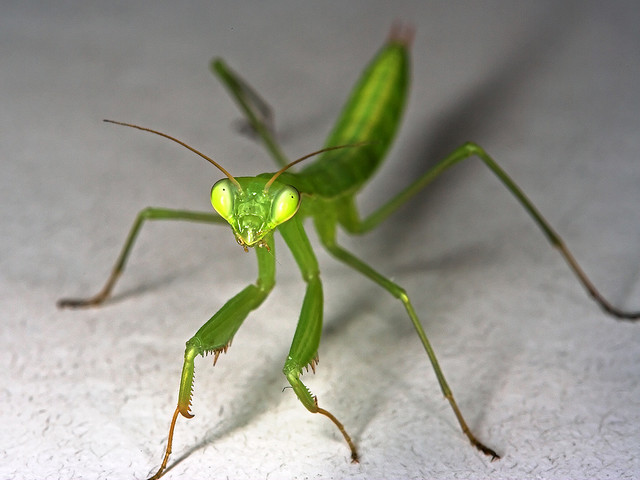
All insects that hear, except one, have two ears. Some insects have ears on their legs, thorax or abdomen. However, they all follow the same principle. Their ears are separated so that they can locate the source of the sound – except in one insect.
Scientists always thought the praying mantis was deaf. The 1,700 species of mantises have no structure that looks like an ear. Only after a long process of detailed study and testing did scientists finally discover that the mantis can hear. Further investigation finally led to the discovery of one of the most bizarre methods of hearing anywhere in the animal kingdom.
The mantis’s hearing organ is difficult to call an ear. Unlike any other insect, the mantis has only one hearing organ, located in a groove underneath its thorax. The teardrop shaped groove has a thinner cuticle than other parts of the body. Beneath the cuticle there is a relatively large air sac on each side of the groove. These sacs are connected to the insect’s respiratory system. Near the top of the sac are the nerves that carry the sensation of sound to the nervous system. Scientists say that this hearing organ senses ultrasonic frequencies. When researchers played a bat like sound to a mantis in flight, it immediately took an evasive flight path to escape the bat it thought it heard.
There is no limit to God’s creativity or His ability to make whatever He can imagine. We should keep this in mind, especially when some human authority tells us the Bible has made a mistake.
Prayer:
I marvel and praise You, dear Lord, as I consider the creation around me. Even as some would use the creation to deny Your existence, help me to more clearly see the excellence of all that You do, both materially and spiritually. Amen.
Notes:
Miller, Julie Ann. 1986. “Sensory surprises in platypus, mantis.” Science News, v. 129. p. 104.
Teaching them to observe all things whatsoever I have commanded you: and, lo, I am with you alway, even unto the end of the world. Amen. (Matthew 28:20 KJV)
Birds in Hymns – Get Close To Jesus
Words by Alice Larry Woodcock
Music by Alice Larry Woodcock
Get Close To Jesus
Whene’er your trials are too hard for you,
Burdens are heavy, and your friends seem few,
Go to your Savior, kneel to Him in prayer,
He’ll hear you, for He’s always there.
Refrain
Get close to Jesus, He’s your best friend; Get close to Jesus, He’ll comfort send; In times of trial, in times of fear, Get close to Jesus, He’s always near.
He is the friend above all others rare;
Even the sparrow is within His care;
Much more to you will He His love bestow
If to Him you will only go.
Refrain
Get close to Jesus, He’s your best friend; Get close to Jesus, He’ll comfort send; In times of trial, in times of fear, Get close to Jesus, He’s always near.
So for tomorrow and its needs ne’er fear;
Leave all to Him, have faith, be of good cheer;
Then go and help some others’ cross to bear,
And tell them of His wondrous care.
Refrain
Get close to Jesus, He’s your best friend; Get close to Jesus, He’ll comfort send; In times of trial, in times of fear, Get close to Jesus, He’s always near.
Are not five sparrows sold for two farthings, and not one of them is forgotten before God? But even the very hairs of your head are all numbered. Fear not therefore: ye are of more value than many sparrows. (Luke 12:6-7 KJV)
Birds in Hymns – God Sees The Little Sparrow Fall
Words by Maria Straub, 1874 (1838-1898)
Music – Providence, by Solomon W. Straub
God Sees The Little Sparrow Fall
God sees the little sparrow fall,
It meets His tender view;
If God so loves the little birds,
I know He loves me, too.
Refrain
He loves me, too, He loves me, too, I know He loves me, too; Because He loves the little things, I know He loves me, too.
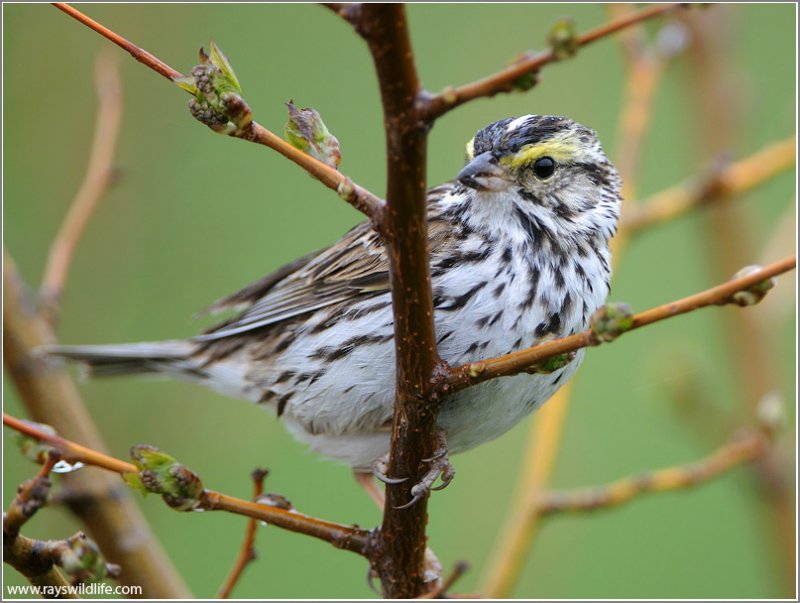
Savannah Sparrow (Passerculus sandwichensis) by Ray
He paints the lily of the field,
Perfumes each lily bell;
If He so loves the little flow’rs,
I know He loves me well.
Refrain
He loves me, too, He loves me, too, I know He loves me, too; Because He loves the little things, I know He loves me, too.
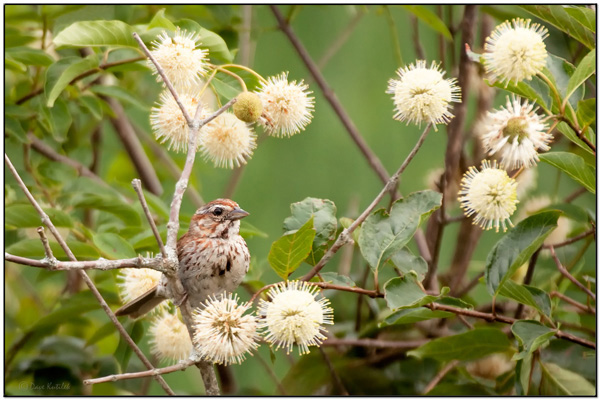
Song Sparrow in white flowers by Daves BirdingPix
God made the little birds and flow’rs,
And all things large and small;
He’ll not forget his little ones,
I know He loves them all.
Refrain
He loves me, too, He loves me, too, I know He loves me, too; Because He loves the little things, I know He loves me, too.