Avian And Attributes – Majestic

Avian And Attributes – Majestic

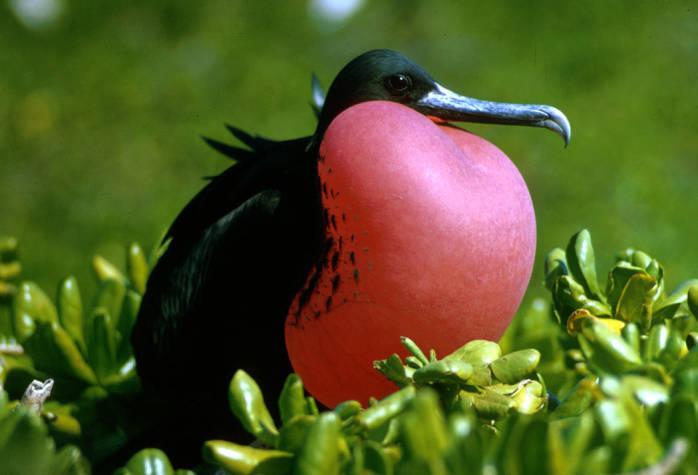
Magnificent Frigatebird (Fregata magnificens) ©USFWS
Magnificent Frigatebird (Fregata magnificens) ©USFWS

“But there the majestic LORD will be for us A place of broad rivers and streams, In which no galley with oars will sail, Nor majestic ships pass by” (Isaiah 33:21 NKJV)

“After it a voice roars; He thunders with His majestic voice, And He does not restrain them when His voice is heard. God thunders marvelously with His voice; He does great things which we cannot comprehend.” (Job 37:4-5 NKJV)


Avian and Attributes – Majestic

MAJES’TIC, a. [from majesty.] August; having dignity of person or appearance; grand; princely. The prince was majestic in person and appearance.
1. Splendid; grand.
2. Elevated; lofty.
3. Stately; becoming majesty; as a majestic air or walk.


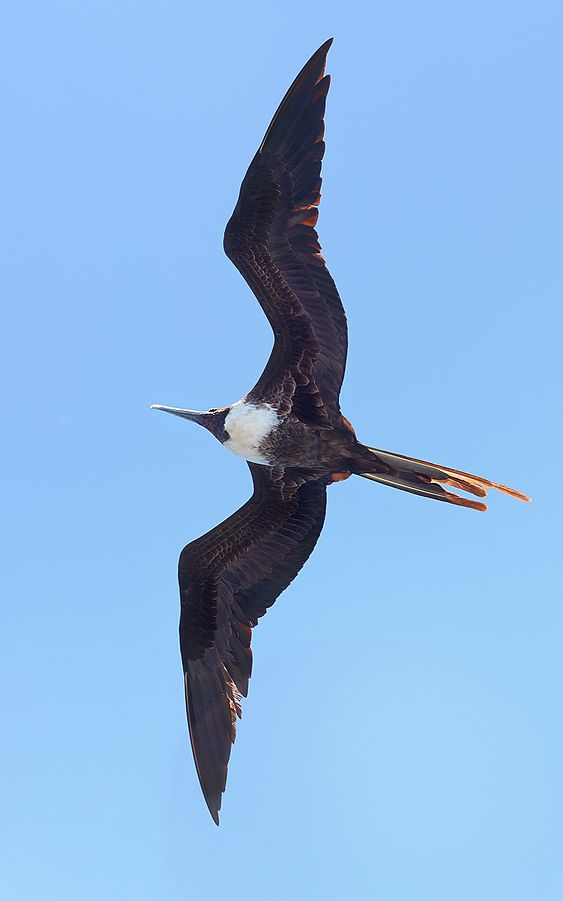
Magnificent Frigatebird (Fregata magnificens) Female ©WikiC

Magnificent Frigatebird (Fregata magnificens) Female ©WikiC

Magnificent Frigatebird (Fregata magnificens)

The Magnificent Frigatebird (Fregata magnificens) is a seabird of the frigatebird family Fregatidae. With a length of 89–114 centimetres (35–45 in) it is the largest species of frigatebird. It occurs over tropical and subtropical waters off America, between northern Mexico and Ecuador on the Pacific coast and between Florida and southern Brazil along the Atlantic coast. There are also populations on the Galápagos Islands in the Pacific and the Cape Verde islands in the Atlantic.

The magnificent frigatebird is a large, lightly built seabird with brownish-black plumage, long narrow wings and a deeply forked tail. The male has a striking red gular sac which it inflates to attract a mate. The female is slightly larger than the male and has a white breast and belly. Frigatebirds feed on fish taken in flight from the ocean’s surface (often flying fish), and sometimes indulge in kleptoparasitism, harassing other birds to force them to regurgitate their food.


More Avian and Attributes

Birds whose first name starts with “M”

Good News

*
[Definitions from Webster’s Dictionary of American English (1828), unless noted. Bird info from Wikipedia plus.]

Avian And Attributes – Light

Avian And Attributes – Light

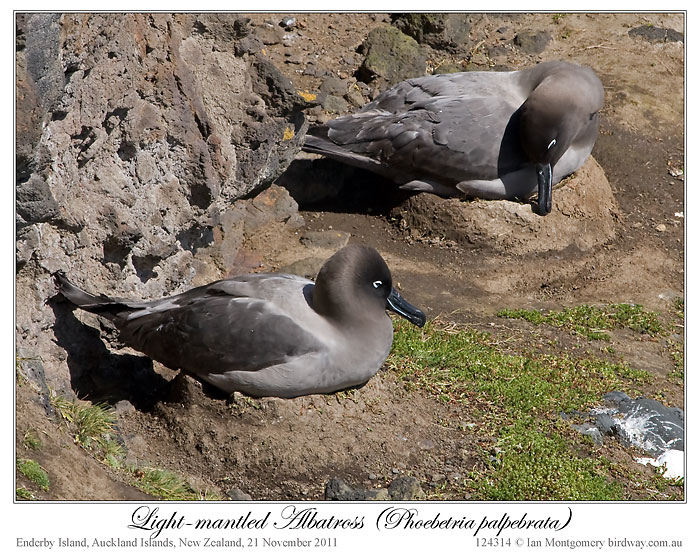
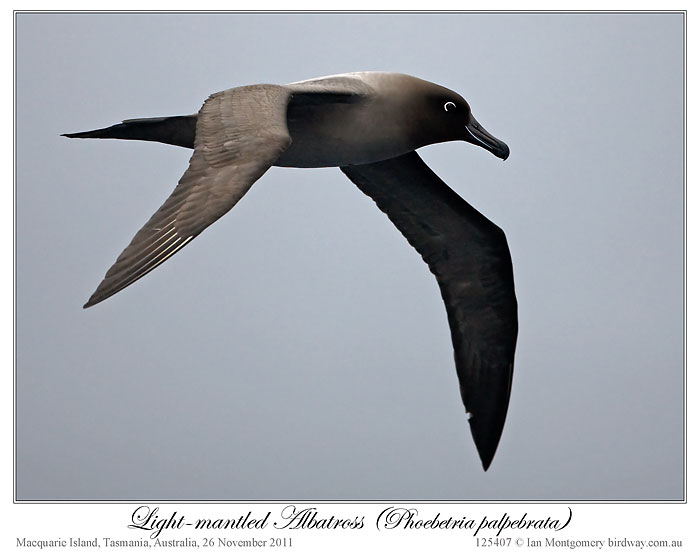
Light-mantled Albatross (Phoebetria palpebrata) by Ian

Light-mantled Albatross (Phoebetria palpebrata) by Ian

INSERT PHOTO

“The same came for a witness, to bear witness of the Light, that all men through him might believe. He was not that Light, but was sent to bear witness of that Light. That was the true Light, which lighteth every man that cometh into the world. He was in the world, and the world was made by him, and the world knew him not. He came unto his own, and his own received him not. But as many as received him, to them gave he power to become the sons of God, even to them that believe on his name:” (John 1:7-12 KJV)


Avian and Attributes – Light

LIGHT, n. lite. [L. lux, light and luceo, to shine. Eng. luck, both in elements and radical sense.]

1. That ethereal agent or matter which makes objects perceptible to the sense of seeing, but the particles of which are separately invisible. It is now generally believed that light is a fluid, or real matter, existing independent of other substances, with properties peculiar to itself. Its velocity is astonishing, as it passes through a space of nearly twelve millions of miles in a minute. Light, when decomposed, is found to consist of rays differently colored; as red, orange, yellow, green, blue, indigo, and violet. The sun is the principal source of light in the solar system; but light is also emitted from bodies ignited, or in combustion, and is reflected from enlightened bodies, as the moon. Light is also emitted from certain putrefying substances. It is usually united with heat, but it exists also independent of it.
2. That flood of luminous rays which flows from the sun and constitutes day. – God called the light day, and the darkness he called night. Gen 1.
3. Day; the dawn of day.
4. Life.
5. Any thing that gives light; as a lamp, candle, taper, lighted tower, star, &c.
I have set thee to be a light to the Gentiles. Acts 13.
And God made two great lights. Gen 1.
7. Illumination of mind; instruction; knowledge.
Light, understanding and wisdom – was found in him. Dan 5.
8. Means of knowing.
11. Explanation; illustration; means of understanding. One part of Scripture throws light on another.
12. Point of view; situation to be seen or viewed; a use of the word taken from painting. It is useful to exhibit a subject in a variety of lights. Let every thought be presented in a strong light. In whatever light we view this event, it must be considered an evil.
15. In Scripture, God, the source of knowledge.
God is light. 1 John 1.
16. Christ.
That was the true light, that lighteth every man that cometh into the world. John 1.
17. Joy; comfort; felicity. – Light is sown for the righteous. Psa 97.
18. Saving knowledge. – It is because there is no light in them. Isa 8.
19. Prosperity; happiness. – Then shall thy light break forth as the morning. Isa 58.
20. Support; comfort; deliverance. Micah 7.
21. The gospel. Mat 4.
22. The understanding or judgment. Mat 6.
23. The gifts and graces of christians. Mat 5.
24. A moral instructor, as John the Baptist. John 5.
25. A true christian, a person enlightened. Eph 5.
26. A good king, the guide of his people. Sam. 21.
The light of the countenance, favor; smiles. Psa 4.
To come to light, to be detected; to be discovered or found.

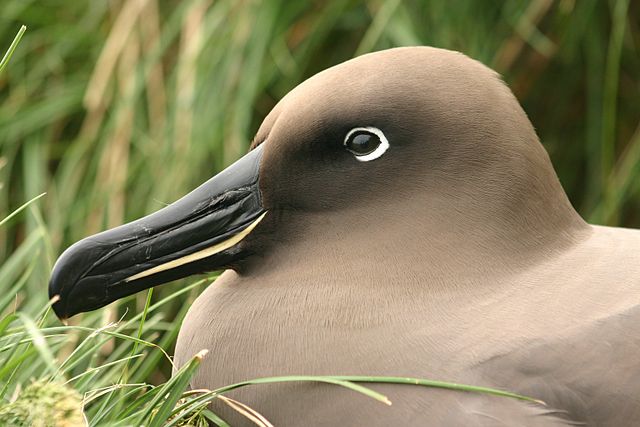
Light-mantled Albatross (Phoebetria palpebrata) ©WikiC

LIGHT, a. lite.
1. Having little weight; not tending to the center of gravity with force; not heavy. A feather is light, compared with lead or silver; but a thing is light only comparatively. That which is light to a man, may be heavy to a child. A light burden for a camel, may be insupportable to a horse.

LIGHT, v.t. lite.
1. To kindle; to inflame; to set fire to; as, to light a candle or lamp; sometimes with up; as, to light up an inextinguishable flame. We often hear lit used for lighted as, he lit a candle; but this is inelegant.
2. To give light to.

LIGHT, v.i. lite.
1. To fall on; to come to by chance; to happen to find; with on. [Edited]


Light-mantled Albatross (Phoebetria palpebrata) by Ian 5

Light-mantled Albatross (Phoebetria palpebrata) by Ian 5

Light-mantled Albatross
The Light-mantled Albatross (Phoebetria palpebrata) also known as the grey-mantled albatross or the light-mantled sooty albatross, is a small albatross in the genus Phoebetria, which it shares with the sooty albatross. The light-mantled albatross was first described as Phoebetria palpebrata by Johann Reinhold Forster, in 1785, based on a specimen from south of the Cape of Good Hope.

Light-mantled albatrosses share some identifying features with other Procellariiformes. They have nasal tubes on the upper bill called naricorns, though with albatrosses these are on the sides of the upper mandible rather than the top. They also have a salt gland above the nasal passage which excretes a concentrated saline solution to maintain osmotic balance, due to the amount of seawater imbibed. The bills of the Procellariiformes are unique in that they are covered with from seven to nine horny plates. These birds produce a stomach oil made up of wax esters and triglycerides that is stored in the proventriculus. This can be sprayed out of their mouths as a defence against predators as well as an energy rich food source for chicks and for the adults during their long flights.

The light-mantled albatross is largely sooty-brown or blackish, darker on the head, with paler upperparts from the nape to the upper tail-coverts which are grey to light grey, the palest on the mantle and back. The plumage has been described as being similar in appearance to the colouring of a Siamese cat. The eyes are partly encircled with thin post-orbital crescents of very short grey feathers. The bill is black with a blue sulcus and a greyish-yellow line along the lower mandible, and is about 105 mm (4.1 in). Measurements show that males and females are similar in size, with average length of 79 to 89 cm (31–35 in), wing-span of 183 to 218 cm (72–86 in), and weight of 2.5 to 3.7 kg (5.5–8.2 lb).

(Diomedeidae – Albatrosses Family) (Light-Mantled Albatross – Wikipedia)

Light-mantled Albatross (Phoebetria palpebrata) by Ian 2

Light-mantled Albatross (Phoebetria palpebrata) by Ian


More Avian and Attributes

Birds whose first name starts with L”

Good News

*
[Definitions from Webster’s Dictionary of American English (1828), unless noted. Bird info from Wikipedia plus.]

Avian And Attributes – Kind

Avian And Attributes – Kind

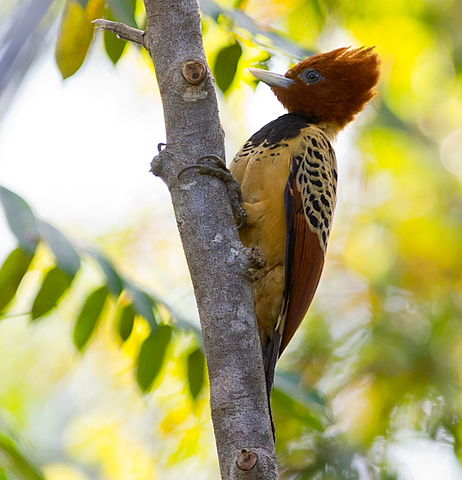
Kaempfer’s Woodpecker (Celeus obrieni) ©WikiC


Avian and Attributes – KIND

“But love ye your enemies, and do good, and lend, hoping for nothing again; and your reward shall be great, and ye shall be the children of the Highest: for he is kind unto the unthankful and to the evil.” (Luke 6:35 KJV)

KIND, a.

1. Disposed to do good to others, and to make them happy by granting their requests, supplying their wants or assisting them in distress; having tenderness or goodness of nature; benevolent; benignant.
God is kind to the unthankful, and to the evil. Luke 6:35
Be ye kind one to another, tender-hearted. Eph 4:32

And be ye kind one to another, tenderhearted, forgiving one another, even as God for Christ’s sake hath forgiven you.” (Ephesians 4:32 KJV)

2. Proceeding from tenderness or goodness of heart; benevolent; as a kind act; a kind return of favors.


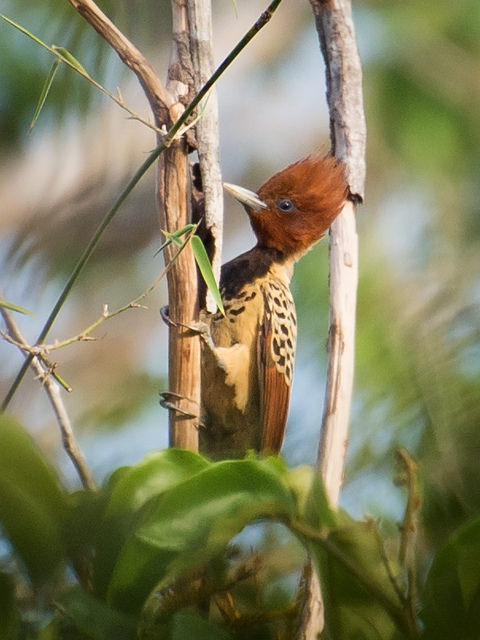
aempfer_s Woodpecker (Celeus obrieni) ©Flickr Claudlo Dlas Timm

Kaempfer’s Woodpecker

The Kaempfer’s Woodpecker (Celeus obrieni), also known as Piauí woodpecker, is a species of woodpecker from Brazil.

It has a total length of about 24 centimeters (9½ in). The head and remiges are mainly rufous-chestnut, the underparts and back are buff, the wing-coverts are barred in black and buff and the chest and tail are uniform black. The male has a red malar and mottling on its crest. For comparison, the rufous-headed woodpecker is larger and has extensive black barring on the back and underparts.

Little is known about its habitat preference, but it appears to be associated with bamboo (specifically Guadua paniculata) growing in Cerrado and babassu palm forest; very unlike the humid forest and woodland where the related rufous-headed woodpecker is found. There is no evidence to suggest that it occurs in Caatinga. Rather, the authors who proposed the common name Caatinga woodpecker and association it with the caatinga habitat mistook a place in the caatinga called Uruçuí-Una for the type locality Uruçuí, some 180 km. NNW in cerrado habitat. (Wikipedia) (Picidae – Woodpecker Family)


More Avian and Attributes

Birds whose first name starts with “K”

Good News

*
[Definitions from Webster’s Dictionary of American English (1828), unless noted. Bird info from Wikipedia plus.]

Avian And Attributes – Judge

Avian And Attributes – Judge

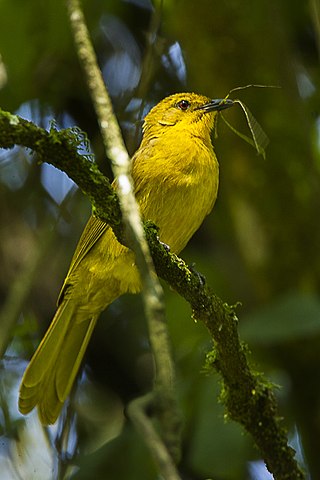
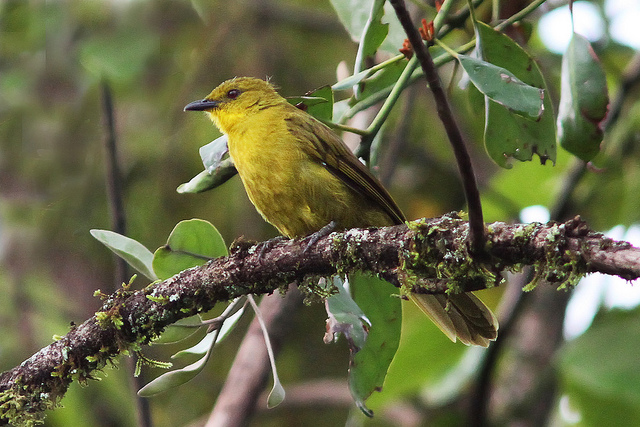
Joyful Greenbul (Chlorocichla laetissima) WikiC

“A Psalm of David. Judge me, O LORD; for I have walked in mine integrity: I have trusted also in the LORD; therefore I shall not slide.” (Psalms 26:1 KJV)


Avian and Attributes – Judge

JUDGE, n. [L. judex, supposed to be compounded of jus, law or right, and dico, to pronounce.]

1. A civil officer who is invested with authority to hear and determine causes, civil or criminal, between parties, according to his commission; as the judges of the king’s bench, or of the common pleas; judges of the supreme court, of district courts, or of a county court. The judge of a court of equity is called a chancellor.

2. The Supreme Being.

Shall not the judge of all the earth do right? Gen 18.

That be far from thee to do after this manner, to slay the righteous with the wicked: and that the righteous should be as the wicked, that be far from thee: Shall not the Judge of all the earth do right?” (Genesis 18:25 KJV)

3. One who presides in a court of judicature.

4. One who has skill to decide on the merits of a question, or on the value of any thing; one who can discern truth and propriety.

5. In the history of Israel, a chief magistrate, with civil and military powers. The Israelites were governed by judges more than three hundred years, and the history of their transactions is called the book of Judges.

JUDGE, v.i. [L. judico.]

1. To compare facts or ideas, and perceive their agreement or disagreement, and thus to distinguish truth from falsehood.

Judge not according to the appearance John 7.

3. To hear and determine, as in causes on trial; to pass sentence. He was present on the bench, but could not judge in the case.

The Lord judge between thee and me. Gen 16:5.

JUDGE, v.t. To hear and determine a case; to examine and decide.

1. To try; to examine and pass sentence on.

Take ye him and judge him according to your law. John 18.

God shall judge the righteous and the wicked. Eccl 3.

I said in mine heart, God shall judge the righteous and the wicked: for there is a time there for every purpose and for every work.” (Ecclesiastes 3:17 KJV)

2. Rightly to understand and discern.

3. To censure rashly; to pass severe sentence.

Judge not, that ye be not judged. Mat 7.

5. To rule or govern.

The Lord shall judge his people. Heb 10.

For we know him that hath said, Vengeance belongeth unto me, I will recompense, saith the Lord. And again, The Lord shall judge his people. It is a fearful thing to fall into the hands of the living God.” (Hebrews 10:30-31 KJV)

6. To doom to punishment; to punish.

I will judge thee according to thy ways. Ezek 7.


Joyful Greenbul (Chlorocichla laetissima) Flickr Dave Curtis

Joyful Greenbul

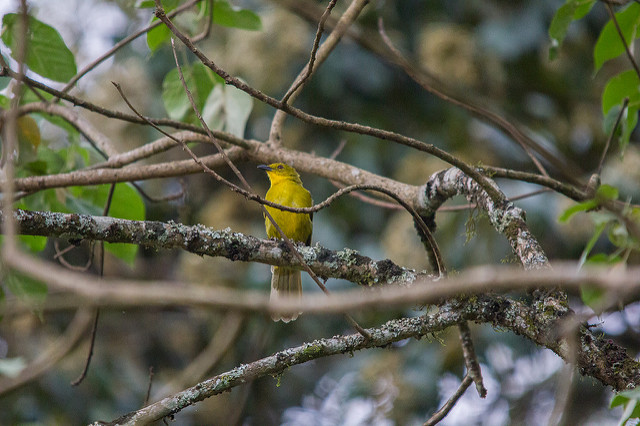
The Joyful Greenbul (Chlorocichla laetissima), or joyful bulbul, is a species of songbird in the bulbul family, Pycnonotidae. It is found in east-central Africa. Its natural habitats are boreal forests and subtropical or tropical moist montane forests. 

The bulbuls are a family, Pycnonotidae, of medium-sized passerine songbirds. Many forest species are known as greenbuls, brownbuls, leafloves, or bristlebills. The family is distributed across most of Africa and into the Middle East, tropical Asia to Indonesia, and north as far as Japan. A few insular species occur on the tropical islands of the Indian Ocean There are over 150 species in 27 genera. While some species are found in most habitats, the African species are predominantly found in rainforest whilst rainforest species are rare in Asia, instead preferring more open areas.  (Pycnonotidae – Bulbul Family)  (Wikipedia)

Joyful Greenbul (Chlorocichla laetissima) Flickr Peter Steward


More Avian and Attributes

Birds whose first name starts with “J”

Good News

*
[Definitions from Webster’s Dictionary of American English (1828), unless noted. Bird info from Wikipedia plus.]

Avian And Attributes – Invisible

Avian And Attributes – Invisible

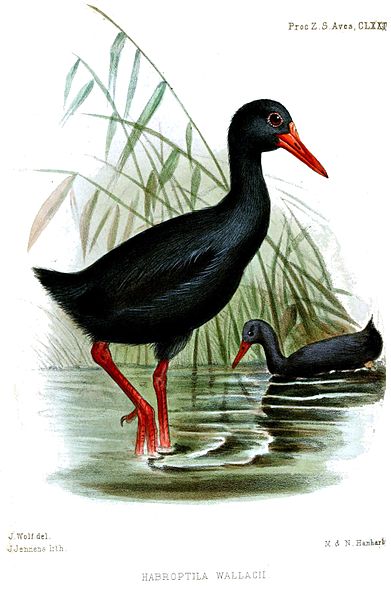
Invisible Rail (Habroptila wallacii) ©Rob Hutchinson-Birdtour Asia

“For the invisible things of him from the creation of the world are clearly seen, being understood by the things that are made, even his eternal power and Godhead; so that they are without excuse:” (Romans 1:20 KJV)

“Who is the image of the invisible God, the firstborn of every creature: For by him were all things created, that are in heaven, and that are in earth, visible and invisible, whether they be thrones, or dominions, or principalities, or powers: all things were created by him, and for him: And he is before all things, and by him all things consist.” (Colossians 1:15-17 KJV)

“Now unto the King eternal, immortal, invisible, the only wise God, be honour and glory for ever and ever. Amen.” (1 Timothy 1:17 KJV)


Avian and Attributes – Invisible

INVIS’IBLE, a. s as z. [L. invisibilis; in and visibilis, viso, to see.] That cannot be seen; imperceptible by the sight. Millions of stars, invisible to the naked eye, may be seen by the telescope.

He endured, as seeing him who is invisible. Heb 11.

“By faith he forsook Egypt, not fearing the wrath of the king: for he endured, as seeing him who is invisible.” (Hebrews 11:27 KJV)


Invisible Rail (Habroptila wallacii) ©Stamp WikiC

The Invisible Rail, Wallace’s Rail, or Drummer Rail (Habroptila wallacii) is a large flightless rail that is endemic to the island of Halmahera in North Maluku, Indonesia, where it inhabits impenetrable sago swamps adjacent to forests. Its plumage is predominantly dark slate-grey, and the bare skin around its eyes, the long, thick bill, and the legs are all bright red. Its call is a low drumming sound which is accompanied by wing-beating. The difficulty of seeing this shy bird in its dense habitat means that information on its behaviour is limited.

Recorded dietary items include sago shoots and insects, and it also swallows small stones to help break up its food. It is apparently monogamous, but little else is known of its courtship behaviour. The only known nest was a shallow bowl in the top of a rotting tree stump that was lined with wood chips and dry leaves. The two young chicks were entirely covered in black down typical of precocial newly hatched rails. The estimated population of 3,500–15,000 birds and the restricted range mean that the invisible rail is classified as vulnerable

Invisible Rail (Habroptila wallacii) ©Drawing WikiC


More Avian and Attributes

Birds whose first name starts with “I”

Good News

*
[Definitions from Webster’s Dictionary of American English (1828), unless noted. Bird info from Wikipedia plus.]

Avian And Attributes – Helper

Avian And Attributes – Helper

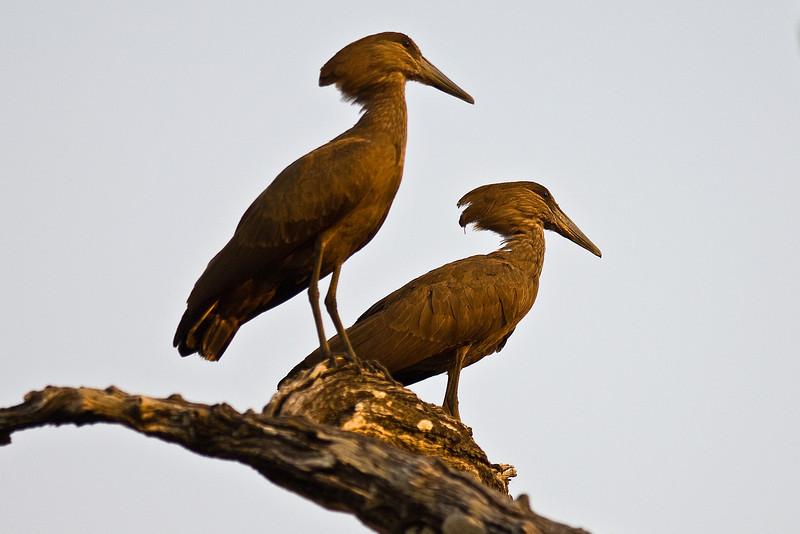
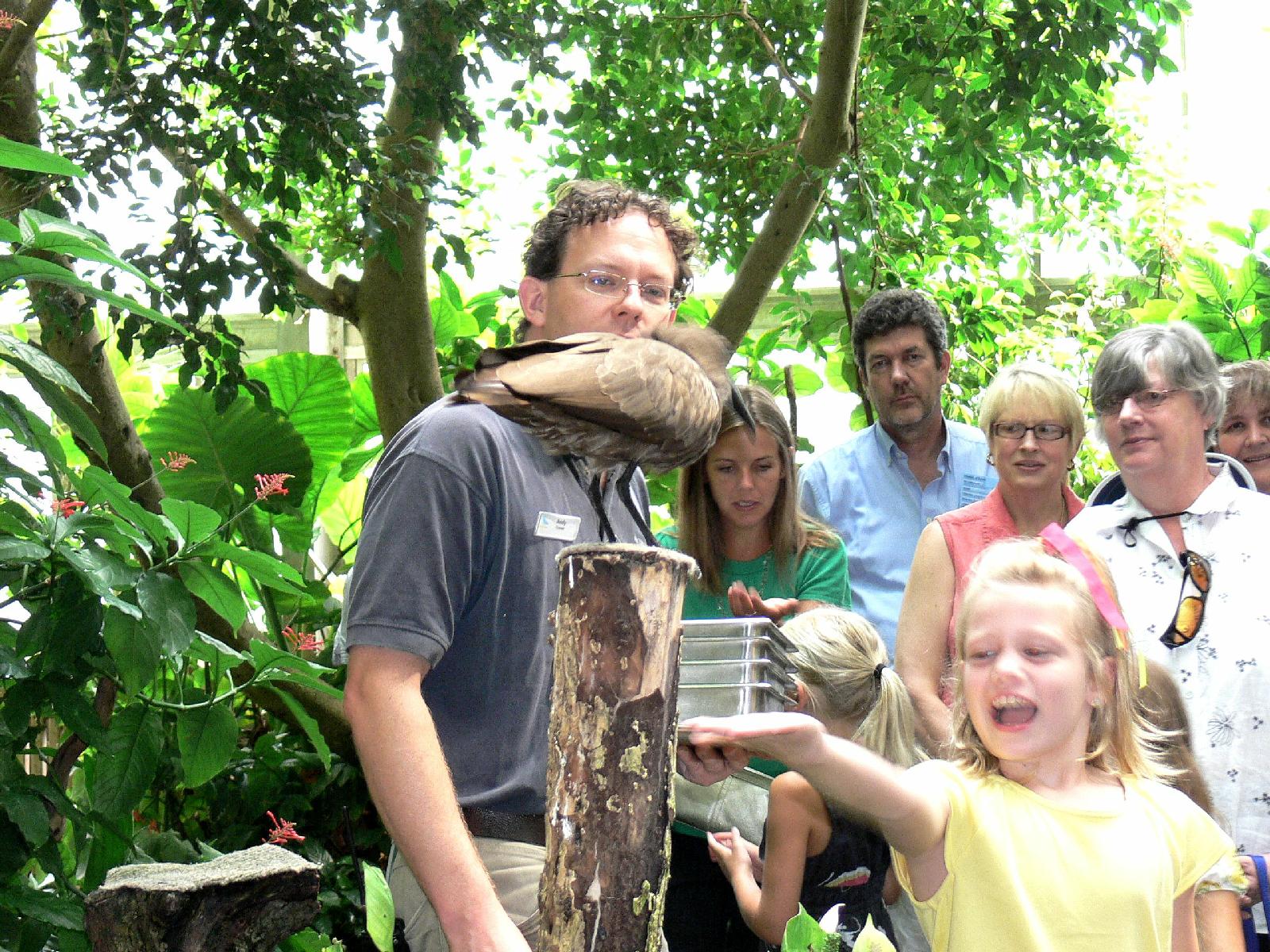
Hamerkop at National Aviary by Dan

“So that we may boldly say, The Lord is my helper, and I will not fear what man shall do unto me.” (Hebrews 13:6 KJV)

“Behold, God is mine helper: the Lord is with them that uphold my soul.” (Psalms 54:4 KJV)


Avian and Attributes – Helper

HELP’ER, n. One that helps, aids or assists; an assistant; an auxiliary.

1. One that furnishes or administers a remedy.
Compassion–is oftentimes a helper of evils.

“For he shall deliver the needy when he crieth; the poor also, and him that hath no helper.” (Psalms 72:12 KJV)

2. One that supplies with any thing wanted; with to.
“Hear, O LORD, and have mercy upon me: LORD, be thou my helper.” (Psalms 30:10 KJV)

3. A supernumerary servant.


Hamerkop (Scopus umbretta) by Africaddict

Hamerkop (Scopus umbretta)

The Hamerkop (Scopus umbretta), is a medium-sized wading bird. It is the only living species in the genus Scopus and the family Scopidae. The shape of its head with a long bill and crest at the back is reminiscent of a hammer, which has given this species its name. It ranges from Africa, Madagascar to Arabia, in wetlands of a wide variety, including estuaries, lakesides, fish ponds, riverbanks and rocky coasts in Tanzania. The Hamerkop, which is a sedentary bird that often show local movements, is not globally threatened and is locally abundant in Africa and Madagascar. (Scopidae – Hamerkop Family)

Hamerkop (Scopus umbretta) at National Aviary by Lee


More Avian and Attributes

Birds whose first name starts with “H”

Good News

*
[Definitions from Webster’s Dictionary of American English (1828), unless noted. Bird info from Wikipedia plus.]

Avian And Attributes – Gracious

Avian And Attributes – Gracious

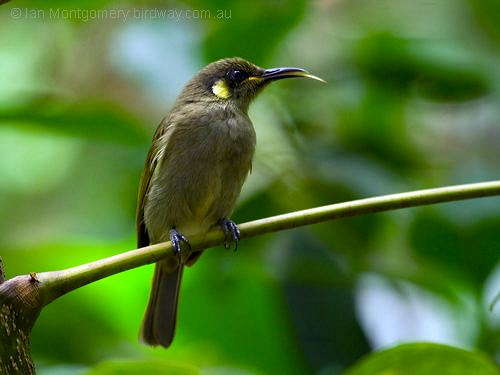
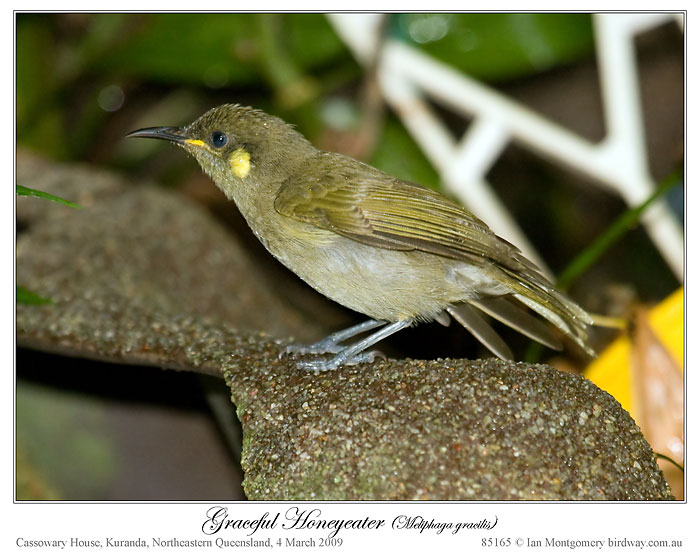
Graceful Honeyeater (Meliphaga gracilis) by Ian at Birdway

Graceful Honeyeater (Meliphaga gracilis) by Ian at Birdway

“And the LORD descended in the cloud, and stood with him there, and proclaimed the name of the LORD. And the LORD passed by before him, and proclaimed, The LORD, The LORD God, merciful and gracious, longsuffering, and abundant in goodness and truth,
(Exodus 34:5-6 KJV)


Avian and Attributes – Gracious

GRA’CIOUS, a. [L. gratiosus.]

1. Favorable; kind; friendly; as, the envoy met with a gracious reception.

2. Favorable; kind; benevolent; merciful; disposed to forgive offenses and impart unmerited blessings.
Thou art a God ready to pardon, gracious and merciful. Neh 9.

“And refused to obey, neither were mindful of thy wonders that thou didst among them; but hardened their necks, and in their rebellion appointed a captain to return to their bondage: but thou art a God ready to pardon, gracious and merciful, slow to anger, and of great kindness, and forsookest them not.” (Nehemiah 9:17 KJV)

3. Favorable; expressing kindness and favor.
All bore him witness, and wondered at the gracious words which proceeded from his mouth. Luke 4.

“And he said, Verily I say unto you, No prophet is accepted in his own country.” (Luke 4:24 KJV)

4. Proceeding from divine grace; as a person in a gracious state.

5. Acceptable; favored.
He made us gracious before the kings of Persia. [Little used.] 1 Esdras.

6. Renewed or implanted by grace; as gracious affections.

7. Virtuous; good.

8. Excellent; graceful; becoming


Graceful Honeyeater (Meliphaga gracilis) by Ian

Graceful Honeyeater

“The Graceful Honeyeater (Meliphaga gracilis) is a species of bird in the family Meliphagidae. It is found in the Aru Islands, southern New Guinea and Cape York Peninsula. Its natural habitats are subtropical or tropical moist lowland forests and subtropical or tropical mangrove forests.” (Wikipedia)

“It feeds on nectar, fruit and insects. Forages in canopy, mid-canopy (including in crowns of substage trees) and understorey shrubs.” (HBW)

(Meliphagidae – Honeyeaters Family)

Graceful Honeyeater (Meliphaga gracilis) ©WikiC


More Avian and Attributes

Birds whose first name starts with “G”

Good News

*
[Definitions from Webster’s Dictionary of American English (1828), unless noted. Bird info from Wikipedia plus.]

Avian And Attributes – Fortress

Avian and Attributes – Fortress

Flame Robin (Petroica phoenicea) by Ian

Flame Robin (Petroica phoenicea) by Ian

“The LORD is my rock, and my fortress, and my deliverer; my God, my strength, in whom I will trust; my buckler, and the horn of my salvation, and my high tower.” (Psalms 18:2 KJV)

“I will say of the LORD, He is my refuge and my fortress: my God; in him will I trust.” (Psalms 91:2 KJV)


Avian and Attributes – Fortress

FOR’TRESS, n.

1. Any fortified place; a fort; a castle; a strong hold; a place of defense or security. The English have a strong fortress on the rock of Gibraltar, or that rock is a fortress.

2. Defense; safety; security;

The Lord is my rock, and my fortress. Psa 18.

FOR’TRESS, v.t. To furnish with fortresses; to guard; to fortify.


Flame Robin (Petroica phoenicea) ©WikiC

Flame Robin

“His eyes were as a flame of fire, and on his head were many crowns; and he had a name written, that no man knew, but he himself.” (Revelation 19:12 KJV)

The Fflame Robin (Petroica phoenicea) is a small passerine bird native to Australia. It is a moderately common resident of the coolest parts of south-eastern Australia, including Tasmania. Like the other two red-breasted Petroica robins—the scarlet robin and the red-capped robin—it is often simply called the robin redbreast. Like many brightly coloured robins of the Petroicidae Family. Measuring 12–14 cm (4.7–5.5 in) long, the flame robin has dark brown eyes and a small thin black bill. The male has a brilliant orange-red chest and throat, and a white patch on the forehead above the bill. Its upper parts are iron-grey with white bars, and its tail black with white tips. The female is a nondescript grey-brown. Its song has been described as the most musical of its genus. (Petroicidae – Australian Robin Family)

Flame Robin (Petroica phoenicea) ©WikiC


More Avian and Attributes

Birds whose first name starts with “F”

Good News

*
[Definitions from Webster’s Dictionary of American English (1828), unless noted. Bird info from Wikipedia plus.]

Avian And Attributes – Ensign (to the Nations)

Emperor Bird-of-paradise (Paradisaea guilielmi) ©WikiC

“And he will lift up an ensign to the nations from far, and will hiss unto them from the end of the earth: and, behold, they shall come with speed swiftly:” (Isaiah 5:26 KJV)

“One thousand shall flee at the rebuke of one; at the rebuke of five shall ye flee: till ye be left as a beacon upon the top of a mountain, and as an ensign on an hill.” (Isaiah 30:17 KJV)

Ensign

EN’SIGN, n. en’sine. [L. insigne, insignia, from signum, a mark impressed, a sign.]

1. The flag or banner of a military band; a banner of colors; a standard; a figured cloth or piece of silk, attached to a staff, and usually with figures, colors or arms thereon, borne by an officer at the head of a company, troop or other band.

2. Any signal to assemble or to give notice.

He will lift up an ensign to the nations. Isa 5.
Ye shall be left as an ensign on a hill. Isa 30.

3. A badge; a mark of distinction, rank or office; as ensigns of power or virtue.

4. The officer who carries the flag or colors, being the lowest commissioned officer in a company of infantry.

5. Naval ensign, is a large banner hoisted on a staff and carried over the poop or stern of a ship; used to distinguish ships of different nations, or to characterize different equadrons of the same navy.


Emperor Bird-of-paradise (Paradisaea guilielmi) ©©World Life Expectancy

Avian and Attributes – Emperor Bird-of-paradise

The Emperor Bird-of-paradise

The Emperor Bird-of-paradise (Paradisaea guilielmi), also known as Emperor of Germany’s bird-of-paradise is a species of bird-of-paradise.

The Emperor bird-of-paradise is endemic to Papua New Guinea. It is distributed in hill forests of the Huon Peninsula. The diet consists mainly of fruits, figs and arthropods.

The name commemorates the last German Emperor and King of Prussia, Wilhelm II of Germany. In January 1888, the emperor bird-of-paradise was the last bird-of-paradise discovered by Carl Hunstein, who also found the blue bird-of-paradise on his journeys. These two species, along with the red bird-of-paradise, are the only Paradisaea that perform inverted display. (Paradisaeidae – Birds-of-paradise Family)


More Avian and Attributes

Birds whose first name starts with “E”

Good News

*
[Definitions from Webster’s Dictionary of American English (1828), unless noted. Bird info from Wikipedia plus.]

Avian And Attributes – Diadem

Diademed Tanager (Stephanophorus diadematus) ©WikiC

“In that day shall the LORD of hosts be for a crown of glory, and for a diadem of beauty, unto the residue of his people,” (Isaiah 28:5 KJV)


Avian and Attributes – Diadem

DIADEM, n. [Gr., to gird; to bind. L.]

1. Anciently, a head-band or fillet worn by kings as a badge or royalty. It was made of silk, linen or wool, and tied round the temples and forehead, the ends being tied behind and let fall on the neck. It was usually white and plain; sometimes embroidered with gold, or set with pearls and precious stones.

2. In modern usage, the mark or badge of royalty, worn on the head; a crown; and figuratively, empire; supreme power.

3. A distinguished or principal ornament.

A diadem of beauty. Isa 28.


Diademed Tanager (Stephanophorus diadematus) ©BirdPhotos.com

Diademed Tanager

Stephanophorus is a monotypic genus of tanager, containing only the Diademed TanagerStephanophorus diadematus .

It is purple-blue with a white crown characterised by a small red patch, and it is found mostly in open areas in southern Brazil, northeast Argentina, and Uruguay. (Thraupidae – Tanagers and Allies Family)

There are actually four birds named Diademed. Here are links to their families.

Diademed Amazon (Amazona diadema)
Diademed Sandpiper-Plover (Phegornis mitchellii)
Diademed Tanager (Stephanophorus diadematus)
Diademed Tapaculo (Scytalopus schulenbergi)

Diademed Amazon (Amazona diadema) ©WikiC

Diademed Sandpiper-Plover (Phegornis mitchellii) ©WikiC

Diademed Tapaculo (Scytalopus schulenbergi) ©Pinterest

More Avian and Attributes

Birds whose first name starts with “D”

Good News

*
[Definitions from Webster’s Dictionary of American English (1828), unless noted. Bird info from Wikipedia plus.]


Avian And Attributes – Captain

Celestial Monarch (Hypothymis coelestis) ©Leif Gabrielsen

“For it became him, for whom are all things, and by whom are all things, in bringing many sons unto glory, to make the captain of their salvation perfect through sufferings.” (Hebrews 2:10 KJV)

“Neither is there salvation in any other: for there is none other name under heaven given among men, whereby we must be saved.” (Acts 4:12 KJV)


Avian and Attributes – Captain

“We meet this title in one passage of the word of God, and but one, as far as my memory chargeth me, applied to the Lord Jesus Christ; and that is in the second chapter of Hebrews, and the tenth verse. And very sweetly and eminently so, must we consider the name in reference to him. For he it was, most probably, that Joshua saw in vision, long before his incarnation, before the walls of Jericho, as captain of the Lord’s host, and before whom Joshua fell on his face. (Joshua 5:13-15) It is very blessed to see and know the Lord Jesus under this character, and to fight under his banner.” (Poor Man’s Concordance – Robert Hawker)


Celestial Monarch (Hypothymis coelestis)  Male and Female ©Drawing WikiC

Celestial Monarch

The Celestial Monarch (Hypothymis coelestis) is a species of bird in the family Monarchidae, and one of the most attractive of all the monarch flycatchers, with its spectacular blue crest and large yellow eye-ring (neither of which are illustrated in the facing painting). It is endemic to the Philippines. (Wikipedia)

“This striking inhabitant of the forest is unmistakable with its electric-blue plumage. Males are even more arresting in appearance due to the presence of a crest of long, slender feathers on top of the head, which generally droop down and are raised only in excitement. The back, throat and breast are bright cobalt-blue, while the lower back, tail and upperwing are a lighter blue, and the belly is white, washed with light blue . Female celestial monarchs differ slightly in appearance, being generally slightly smaller and slightly duller than males and having a shorter crest. The dark brown eyes are surrounded by a little circle of greenish-yellow skin, and the vivid blue beak is tipped with black (2). Celestial monarchs call with a loud, high-pitched ‘pwee pwee pwee’ ” (ARKive) (Monarchidae – Monarchs Family)


More Avian and Attributes

Birds whose first name starts with “C”

Good News

*
[Definitions from Webster’s Dictionary of American English (1828), unless noted. Bird info from Wikipedia plus.]

Happy Memories, Accented by Black Skimmers at Madeira Beach

BlackSkimmer-Florida-migrant.Wikipedia

BLACK SKIMMER in Florida   (photo credit: Don Faulkner / Wikipedia)

Remember His marvelous works that He hath done, His wonders, and the judgments of His mouth.   (1st Chronicles 16:12)

Madeira Beach, near St. Petersburg (Florida), is a nice place to see white beach-sand, gentle surf tidewaters, and some of the most splendid seagulls, such as gulls, terns, and skimmers.  On Labor Day (earlier this month), I was providentially privileged to visit there with my 2 good friends, Chaplain Bob and Marcia Webel, who have encouraged and strengthened my Christian faith for 40+ years.  (Bob is the best Bible teacher I have ever known.)   During our treks up and down the beach, amidst the happy noise of seagulls at sea and ashore, we saw on the beach a few Black Skimmers.  It had been quite a while — perhaps more than a year or two — since I had seen Black Skimmers, so it reminded me of earlier years, and “auld lang syne” (i.e., old long times ago) — times of friendship and fellowship, accented by birdwatching, a continuing reminder of God’s sovereignty and watch care (Luke 12:4-7).

BlackSkimmer-in-Texas.DanPancamo

BLACK SKIMMER near Freeport, Texas  (photo by Dan Pancamo / Flickr)

Black Skimmers have an easy-to-remember bill; the bottom half (i.e., lower mandible) sticks out farther than the top half (i.e., upper mandible), enabling the tern-like seabird to skim the water’s surface, using its unusually long wings, to catch little fish (like anchovies and silversides) and other prey located at sea, also feeding in tidal pools, in saltmarsh drainage channels, or at seashores.  Apparently more than 90% of a skimmer’s diet is fish.  The skimmer’s prominent red-blending-into-black bill is also used to occasionally catch small shellfish, such as crustaceans (like decapods or amphipods) and mollusks (like cephalopods or gastropods), as well as available insects (mostly coleoptera).  Parent skimmers feed their young by regurgitation.

BlackSkimmer-feeding-youngJimGray-Audubon

BLACK  SKIMMER  feeding  young  (photo by Jim Gray / Audubon)

These seabirds prefer oceanic and estuarial beaches, as well as salt bays, saltmarshes, lagoons, inlets, sandy islands, and other coastal wetlands.

America’s southeast coastlines (especially all of Florida’s coastline) provide year-round habitat for Black Skimmers, from southernmost Texas to midway up the North Carolina coast.  Also, many migrating Black Skimmers winter in the bottom part of Florida’s peninsula, afterwards returning to Mid-Atlantic state coasts (from North Carolina to Connecticut) for summer breeding.  [See, accord, Roger Tory Peterson, EASTERN BIRDS (Houghton Mifflin / Peterson Field Guides, 4th edition, 1980), pages 98-99 & Range Map 87.  See also “Black Skimmer” at http://www.audubon.org/field-guide/bird/black-skimmer .]

BlackSkimmer-on-beach.AndreasTrepte

BLACK SKIMMER on beach   (photo credit:  Andreas Trepte)

Viewing Black Skimmers is fun enough, but it is more fun to view them with friends.

One of the most pleasant forms of outdoor recreation and fellowship, when visiting old or new friends (especially Christian friends), is to take a walk — whether hiking in a forest, or ambling up a mountainside, or trudging through new-fallen snow, or strolling in beach-sand, or splashing in coastal tidewaters — all the while noticing nearby birds who busily fly or swim or strut about, tweeting or chirping out their various songs.

So I recalled the nostalgic old song (usually sung on New Year’s Eve, AULD LANG SYNE, but I changed the lyrics to fit the memories, redubbing it “Auld Lang Birdwatching”.

(Sing to the tune of AULD LANG SYNE.)

Should old birdwatching be forgot

    And lifers go unseen?

The fowl so fair, in air we spot

    Or perching as they preen.

 While drinking coffee, birds we gaze

    On earth, at sea, in sky;

God made them all, us to amaze,

    Birds run and swim and fly!

God has given us many blessings in life, for which we must ever be grateful.  Godly friends are one of the greatest blessings that a man or woman can ever have.

(Having a godly spouse, as one’s best friend, is the ultimate example of such blessing, of course — and I am one of the few men who can honestly say that my wife is my best friend;  and, although I have many faults, I think that I am likewise my wife’s best friend.)

But, furthermore, there is one friend to be loved and treasured, above all human friends, the One of Whom we sing, in the song “WHAT A FRIEND WE HAVE IN JESUS“.

Accordingly, as much as we esteem and treasure our earthly blessings  —  and we should  —  we must always exceed those appreciations with our love for and devotion to God Himself, because a loss of one’s “first love” (for God) constitutes a tragic (and treacherous) loss indeed.

Nevertheless I have somewhat against thee, because thou hast left thy first love.  Remember therefore from whence thou art fallen, and repent….  (Revelation 2:4-5a)

Spiritual decline soon follows whenever one’s devotion to God slips or erodes, unless a clean correction is quickly made.  (The exhortation in Revelation 2:4-5 is for each of us!)

May God help us to appreciate our blessings —  both friendships and fowl-watching opportunities — yet may He nudge us, daily, to remind us that our most precious blessing in life (and thereafter) is God Himself, for He is truly (as Paul says in 1st Corinthians 15:28) our “all in all”, and it is a wonderful privilege to belong to Him (Psalm 100).

BlackSkimmer-with-young.MichaelStubblefield.jpg

BLACK  SKIMMER  with  young   (photo by Michael Stubblefield)