Avian and Attributes – Mercy

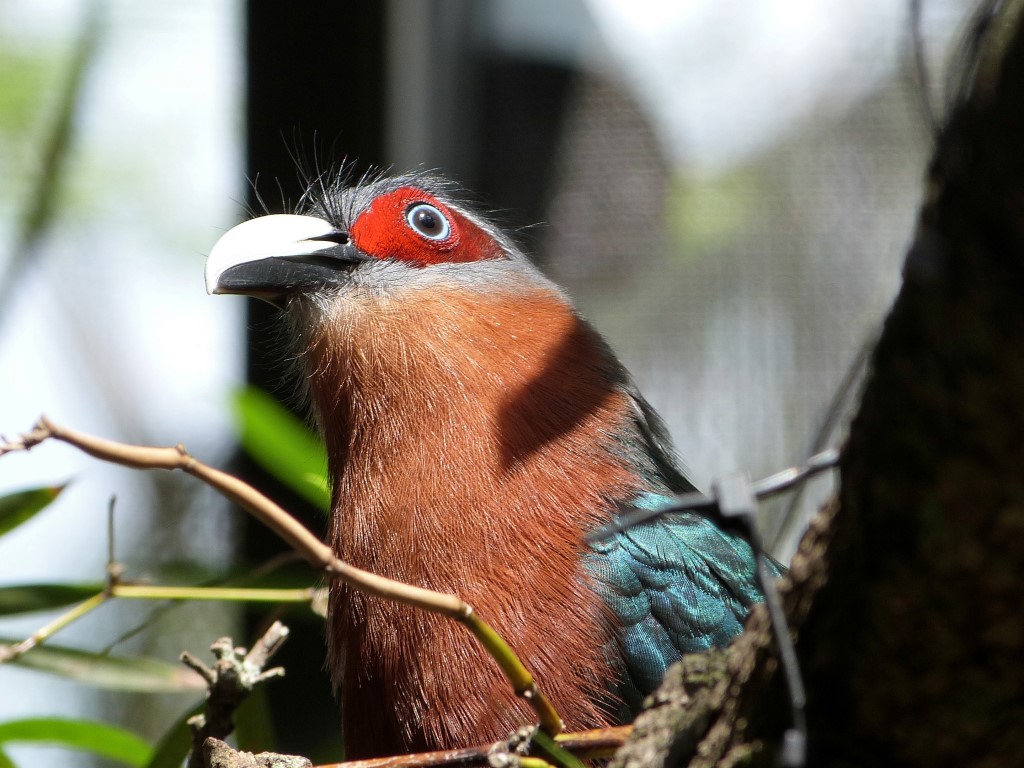
Chestnut-breasted Malkoha (Phaenicophaeus curvirostris) Palm Beach Zoo by Lee

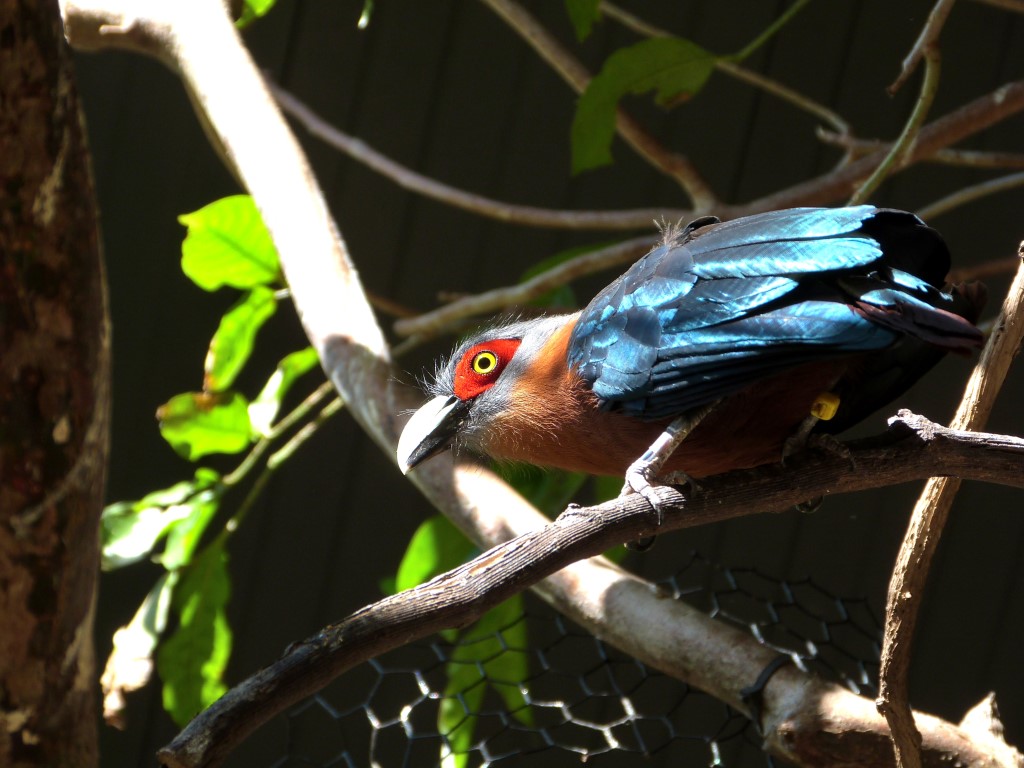
Chestnut-breasted Malkoha (Phaenicophaeus curvirostris) Palm Beach Zoo by Lee

“For as the heaven is high above the earth, so great is his mercy toward them that fear him. As far as the east is from the west, so far hath he removed our transgressions from us.” (Psalms 103:11-12 KJV)

“But God, who is rich in mercy, for his great love wherewith he loved us,” (Ephesians 2:4 KJV)


Avian and Attributes – Mercy

MER’CY, n. [L. misericordia.]
1. That benevolence, mildness or tenderness of heart which disposes a person to overlook injuries, or to treat an offender better than he deserves; the disposition that tempers justice, and induces an injured person to forgive trespasses and injuries, and to forbear punishment, or inflict less than law or justice will warrant. In this sense, there is perhaps no word in our language precisely synonymous with mercy. That which comes nearest to it is grace. It implies benevolence, tenderness, mildness, pity or compassion, and clemency, but exercised only towards offenders. Mercy is a distinguishing attribute of the Supreme Being.
The Lord is long-suffering and of great mercy, forgiving iniquity and transgression, and by no means clearing the guilty. Num 14.

2. An act or exercise of mercy or favor. It is a mercy that they escaped.
I am not worthy of the least of all thy mercies. Gen 32.

3. Pity; compassion manifested towards a person in distress.
And he said, he that showed mercy on him. Luke 10.

4. Clemency and bounty.
Mercy and truth preserve the king; and his throne is upheld by mercy. Prov 28.

5. Charity, or the duties of charity and benevolence.
I will have mercy and not sacrifice. Mat 9.

6. Grace; favor. 1 Cor 7. Jude 2.

7. Eternal life, the fruit of mercy. 2 Tim 1.

8. Pardon.
I cry thee mercy with all my heart.

9. The act of sparing, or the forbearance of a violent act expected. The prisoner cried for mercy.
To be or to lie at the mercy of, to have no means of self-defense, but to be dependent for safety on the mercy or compassion of another, or in the power of that which is irresistible; as, to be at the mercy of a foe, or of the waves.

***

“If we could remember that the divine mercy is not a temporary mood but an attribute of God’s eternal being, we would no longer fear that it will someday cease to be. Mercy never began to be, but from eternity was; so it will never cease to be. It will never be more since it is itself infinite; and it will never be less because the infinite cannot suffer diminution.” A. W. Tozer, (Knowledge of the Holy, p.91)


Chestnut-breasted Malkoha (Phaenicophaeus curvirostris) by Lee at PB Zoo

Chestnut-breasted Malkoha (Phaenicophaeus curvirostris) by Lee at PB Zoo

Chestnut-breasted Malkoha

The Chestnut-breasted Malkoha (Phaenicophaeus curvirostris) is a species of cuckoo in the family Cuculidae. Found in Southeast Asia from Myanmar through to eastern Java, the Philippines and Borneo, it is a large cuckoo measuring up to 49 cm (19 in) with grey and dark green upperparts and chestnut underparts, and a large curved pale upper mandible. The male and female are similar in plumage. Unlike many cuckoos, it builds its nest and raises its own young.

It eats small vertebrates, such as small lizards, frogs, and baby birds, and insects, including caterpillars, grasshoppers, cicadas, stick insects, mantises, cockroaches, beetles, and bugs, as well as spiders and small crabs.  Cuculidae – Cuckoos Family


More Avian and Attributes

Birds whose last name start with “M”

Birds of the Bible – Chestnut-breasted Malkoha

Good News

*
[Definitions from Webster’s Dictionary of American English (1828), unless noted. Bird info from Wikipedia plus.]
Avian and Attributes – Love

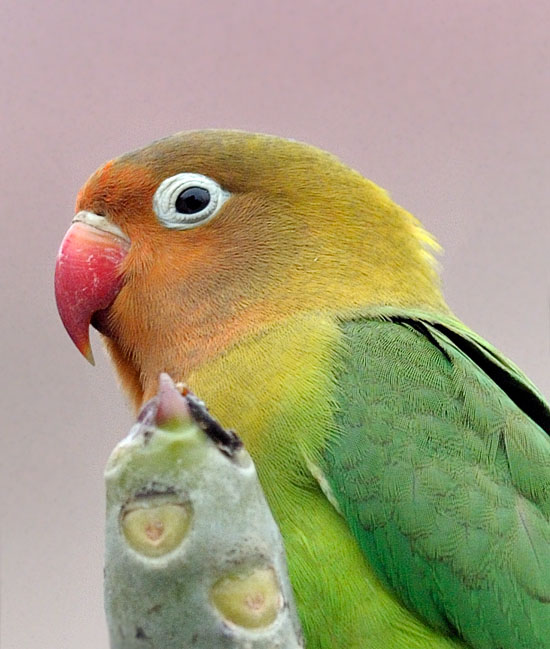
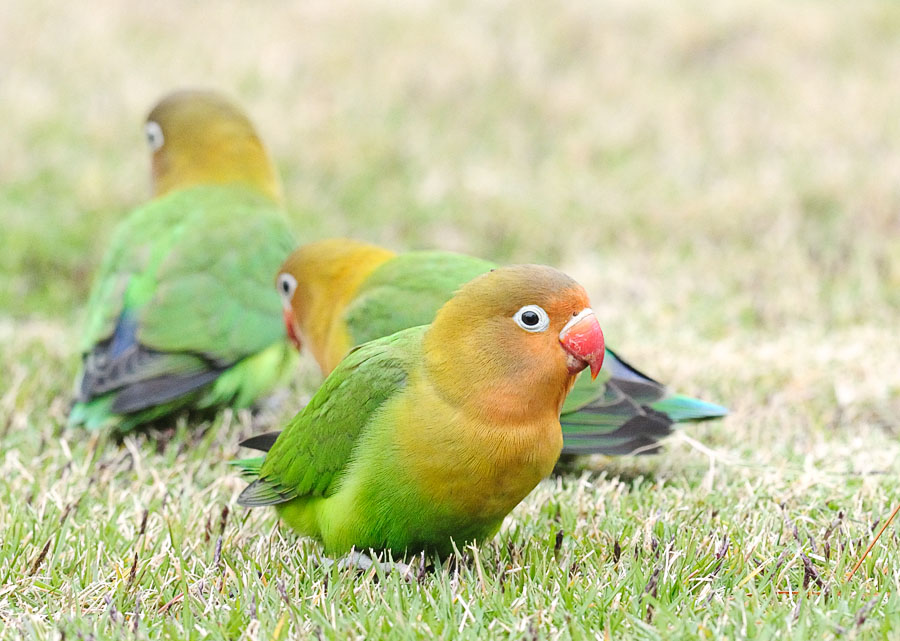
Fischer’s Lovebird (Agapornis fischeri) by W Kwong

“He that loveth not knoweth not God; for God is love.” (1 John 4:8 KJV)

“For God so loved the world, that he gave his only begotten Son, that whosoever believeth in him should not perish, but have everlasting life.” (John 3:16 KJV)


Divine Love

The love that God has for the sinful human race originates solely in his sovereign will. He loves people because he chooses to love them, not because they in any way deserve his love (Deu_7:7-8; Jer_31:3; Rom_5:8; Eph_1:4; Eph_2:4-5; 1Jn_3:1; 1Jn_4:10).

This was seen clearly in Jesus Christ, who throughout his life helped those in need and by his death saved helpless sinners. Salvation originates in the love of God, and that love found its fullest expression in the cross of Jesus Christ (Mat_14:14; Mar_10:21; Luk_7:13; Joh_3:16; Joh_15:13; Gal_2:20; Eph_2:4-7; Eph_5:25; 1Jn_4:9; see also MERCY). Jesus Christ could perfectly express God’s love, because he and the Father are bound together in a perfect unity in which each loves the other (Joh_3:35; Joh_10:30; Joh_14:31; Joh_15:9; Joh_17:24).

So much is love the dominating characteristic of the divine nature that the Bible declares that God is love. Everything that God says or does is in some way an expression of his love (1Jn_4:8; 1Jn_4:16). (Bridgeway Bible Dictionary)


Fischer’s Lovebird (Agapornis fischeri) by W Kwong

Fischer’s Lovebird

The Fischer’s Lovebird (Agapornis fischeri) is a small parrot species of the Agapornis genus. They were originally discovered in the late 19th century. They are named after German explorer Gustav Fischer.

Fischer’s Lovebird are native to a small area of east-central Africa, south and southeast of Lake Victoria in northern Tanzania. In drought years, some birds move west into Rwanda and Burundi seeking moister conditions. They live at elevations of 1,100-2,200m in small flocks. They live in isolated clumps of trees with grass plains between them.

Lovebirds are 13 to 17 cm (5 to 7 in) in length and 40 to 60 g (1 12 to 2 oz) in weight. They are among the smallest parrots, characterized by a stocky build, a short blunt tail, and a relatively large, sharp beak. Wildtype lovebirds are mostly green with a variety of colors on their upper body, depending on the species. The Fischer’s Lovebird, Black-cheeked Lovebird, and the Masked Lovebird have a prominent white ring around their eyes.  – Family Psittaculidae


More Avian and Attributes

Birds whose last name start with “L”

Fischer’s Lovebird – Wikipedia

Good News

*
[Definitions from Webster’s Dictionary of American English (1828), unless noted. Bird info from Wikipedia plus.]
Avian and Attributes – King

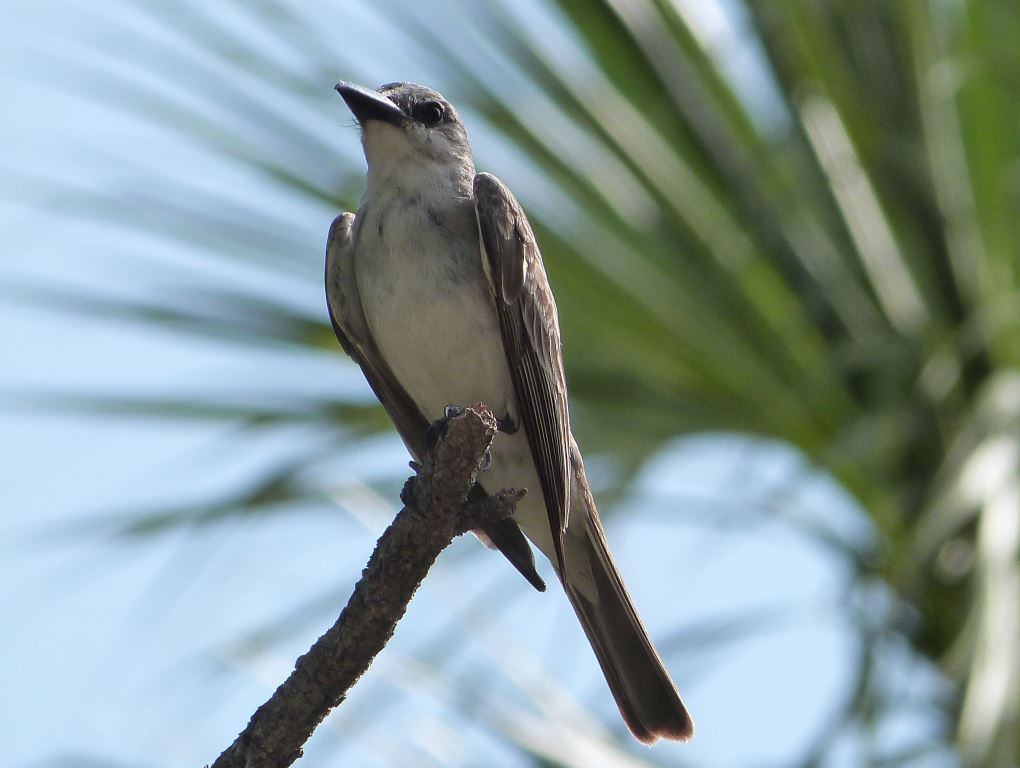
Grey Kingbird (Tyrannus dominicensis) by Lee at Honeymoon Is land State Park

“For God is the King of all the earth: sing ye praises with understanding.” (Psalms 47:7 KJV)

“For God is my King of old, working salvation in the midst of the earth.” (Psalms 74:12 KJV)

“Thou, O king, art a king of kings: for the God of heaven hath given thee a kingdom, power, and strength, and glory.” (Daniel 2:37 KJV)


King

KING, n.
1. The chief or sovereign of a nation; a man invested with supreme authority over a nation, tribe or country; a monarch. Kings are absolute monarchs, when they possess the powers of government without control, or the entire sovereignty over a nation;…

2. A sovereign; a prince; a ruler. Christ is called the king of his church. Psa 2


Grey Kingbird

The Gray Kingbird or Grey Kingbird, also known as pitirre, petchary, or White-breasted Kingbird (Tyrannus dominicensis) is a passerine bird. It breeds from the extreme southeast of the United States, mainly in Florida, through Central America, from Cuba to Puerto Rico as well as eastward towards all across the Lesser West Indies, south to Venezuela, Trinidad, Tobago, the Guiana, and Colombia. Northern populations are migratory, wintering on the Caribbean coast of Central America and northern South America. Several vagrant populations are known to exist in the American Northeast.

This tyrant flycatcher is found in tall trees and shrubs, including the edges of savanna and marshes. It makes a flimsy cup nest in a tree. The female incubates the typical clutch of two cream eggs, which are marked with reddish brown. Tyrannidae – Tyrant Flycatchers Family


More Avian and Attributes

Birds whose last name start with “K”

Grey Kingbird at Honeymoon Island SP

Vol. 2. No. 4, The Kingbird

Good News

*
[Definitions from Webster’s Dictionary of American English (1828), unless noted. Bird info from Wikipedia plus.]
Avian and Attributes – Justifier

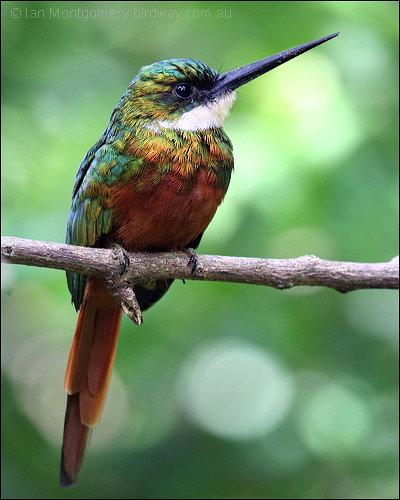
Rufous-tailed Jacamar (Galbula ruficauda) Male by Ian

“To declare, I say, at this time his righteousness: that he might be just, and the justifier of him which believeth in Jesus.” (Romans 3:26 KJV)


Justifier

JUST’IFIER, n. One who justifies; one who vindicates, supports or defends.

1. He who pardons and absolves from guilt and punishment.

That he might be just, and the justifier of him who believeth in Jesus. Rom 3.


Rufous-tailed Jacamar

The Rufous-tailed Jacamar (Galbula ruficauda) is a near-passerine bird which breeds in the tropical New World in southern Mexico, Central America and South America as far south as southern Brazil and Ecuador.

The jacamars are elegant brightly coloured birds with long bills and tails. The Rufous-tailed Jacamar is typically 25 centimetres (10 in) long with a 5 centimetres (2 in) long black bill. This bird is metallic green above, and the underparts are mainly orange, including the undertail, but there is a green breast band.

This insectivore hunts from a perch, sitting with its bill tilted up, then flying out to catch flying insects.


More Avian and Attributes

Birds whose last name start with “J”

Galbulidae – Jacamars

Good News

*
[Definitions from Webster’s Dictionary of American English (1828), unless noted. Bird info from Wikipedia plus.]
Time For A New Update – I.O.C. Version 7.3

Northern Shoverler (now Spatula clypeata)

Therefore we will not fear, though the earth should change and though the mountains be shaken into the midst of the seas,” (Psalms 46:2 AMP)

The end of July, the I.O.C. released its newest update for the birds. This website is updated. The official number of extant (living) bird species is now 10,694, and there are 158 extinct species. There are 20,074 subspecies. There are also still 40 Orders of Avian wonders. An Order is a scientific way to categorize related birds. Orders are divided into the 238 Families of birds and 2 Incertae Sedis, with also contain all those subspecies. The two Incertae Sedis groups contain birds that they do not know how to classify.

Emu 20101021 Lowry Pk Zoo

Emu Lowry Pk Zoo by Lee

All the Family pages are up to date, plus all the First and Last Name indexes. Several challenges were to discard a Family page and make a new page. The Emu (Dromaius novaehollandiae) was by itself in the Dromaiidae family. The Cassowaries, also part of the Casuariiformes Order, are in the Casuariidae family. The Emu is now part of the Casuariidae family.

Sapayoa (Sapayoa aenigma) ©WikiC

The Sapayoa (Sapayoa aenigma) is now in its own Sapayoidae Family. It was previously in with the Broadbills of the Eurylaimidae family. This Sapayoa is now all by itself and the Emu now has company. :)

Another major time-consuming challenge was the resequencing of the Scolopacidae Family. That is the Sandpiper, Snipes and allies group. It appears they again tossed all the names in the air and let them settle where ever. It took considerable time to rearrange this family. With all the DNA studies, there will be other air tosses in the future.

Baikal Teal (Sibirionetta formosa) Zoo Miami by Lee

Baikal Teal (Sibirionetta formosa) Zoo Miami by Lee

The Duck Family also had a bit of scrambling and genus names changed. They split some of the Anas genus away. The Shovelers and Teals are now in the Spatula genus, and the Baikal Teal is Sibirionetta formosa.

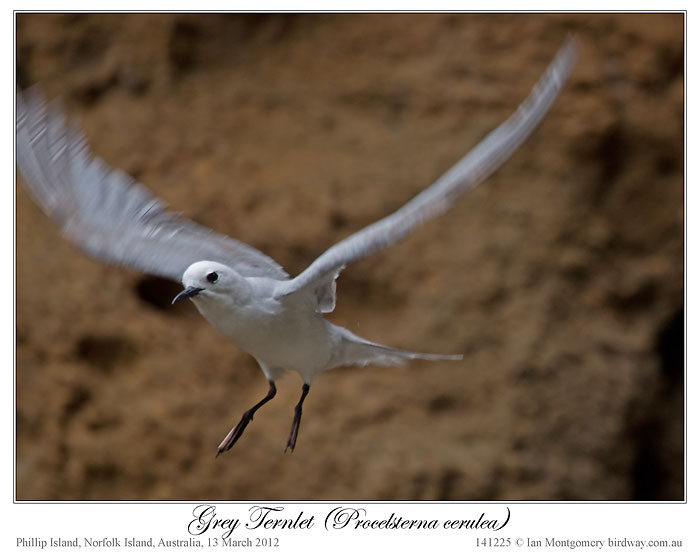
Grey Noddy (Procelsterna albivitta) by Ian 5

Grey Noddy (Procelsterna albivitta) by Ian

The Blue Noddy is now (Anous ceruleus) and the Grey Noddy is (Anous albivittus). They were Procelsterna.

There were other changes which will be mentioned in Part 2 of this update. There were 14 new birds added and 2 deleted. Several other groups of birds were moved to other families.

*

I.O.C. World Bird List

Birds of the World

Last Names of Birds

First Names of Birds

Bird Families

Avian and Attributes – Immutable

Marshall's Iora (Aegithina nigrolutea) by Nikhil Devasar

Marshall’s Iora (Aegithina nigrolutea) by Nikhil Devasar

“That by two immutable things, in which it was impossible for God to lie, we might have a strong consolation, who have fled for refuge to lay hold upon the hope set before us:” (Hebrews 6:18 KJV)

Immutable

IMMU’TABLE, a. [L.immutabilis; in and mutabilis.] invariable; unalterable; not capable or susceptible of change.
That by two immutable things, in which it was impossible for God to lie, we might have strong consolation. Heb 6.


Marshall’s Iora

The White-tailed Iora or Marshall’s Iora (Aegithina nigrolutea), is a songbird in the genus Aegithina found in parts of India and Sri Lanka. Calls are strident whistles; songs are musical to human ears. The Ioras are small to medium-small sized passerines, ranging from 11.5 to 15.5 cm (4.5–6.1 in) in length. Ioras have thin legs, and their bills are proportionately longer.

Ioras eat insects and spiders, which they find by nimbly gleaning the leaves of the slenderest outer twigs.  Aegithinidae Family


More Avian and Attributes Articles

Birds of the World – Common Iora and Allies

Sunday Inspiration –  Vangas and Friends

Birds whose last name start with “I”

*
[Definitions from Webster’s Dictionary of American English (1828), unless noted. Bird info from Wikipedia plus.]
Avian and Attributes – Holy

Lewin's Honeyeater (Meliphaga lewinii) by W Kwong

    Lewin’s Honeyeater (Meliphaga lewinii) by W Kwong

“But as he which hath called you is holy, so be ye holy in all manner of conversation; Because it is written, Be ye holy; for I am holy.” (1 Peter 1:15-16 KJV)


Holy

HO’LY, a.
1. Properly, whole, entire or perfect, in a moral sense. Hence, pure in heart, temper or dispositions; free from sin and sinful affections. Applied to the Supreme Being, holy signifies perfectly pure, immaculate and complete in moral character; and man is more or less holy, as his heart is more or less sanctified, or purified from evil dispositions. We call a man holy, when his heart is conformed in some degree to the image of God, and his life is regulated by the divine precepts. Hence, holy is used as nearly synonymous with good, pious, godly.
Be ye holy; for I am holy. 1 Pet 1.

2. Hallowed; consecrated or set apart to a sacred use, or to the service or worship of God; a sense frequent in Scripture; as the holy sabbath; holy oil; holy vessels; a holy nation; the holy temple; a holy priesthood.

3. Proceeding from pious principles, or directed to pious purposes; as holy zeal.

4. Perfectly just and good; as the holy law of God.

5. Sacred; as a holy witness.

Holy of holies, in Scripture, the innermost apartment of the Jewish tabernacle or temple, where the ark was kept, and where no person entered, except the high priest, once a year.

Holy Ghost, or Holy Spirit, the Divine Spirit; the third person in the Trinity; the sanctifier of souls.

Holy war, a war undertaken to rescue the holy land, the ancient Judea, from the infidels; a crusade; an expedition carried on by Christians against the Saracens in the eleventh, twelfth and thirteenth centuries; a war carried on in a most unholy manner.


Lewin’s Honeyeater

The Lewin’s Honeyeater (Meliphaga lewinii) is a bird that inhabits the ranges along the east coast of Australia. It has a semicircular ear patch, pale yellow in color. The name of this bird commemorates the Australian artist John Lewin.

Lewin’s honeyeaters feed mostly on fruits, favoring berries and small fruits, but also eat insects and nectar. Birds are normally seen alone, but may form loose groups of up to 10 birds. They feed in the upper branches and on the trunks of trees. Some insects are caught in flight. Meliphagidae Family


More Avian and Attributes Articles

Sunday Inspiration – Honeyeaters

Birds whose last name start with “H”

Good News

*
[Definitions from Webster’s Dictionary of American English (1828), unless noted. Bird info from Wikipedia plus.]

Avian and Attributes – Glorious

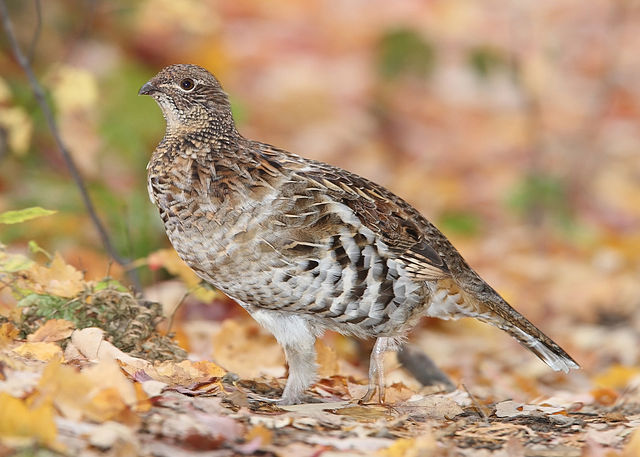
Ruffed Grouse (Bonasa umbellus) ©WikiC

“Who is like unto thee, O LORD, among the gods? who is like thee, glorious in holiness, fearful in praises, doing wonders?” (Exodus 15:11 KJV)


Glorious

GLO’RIOUS, a. [L. gloriosus. See Glory.]
1. Illustrious; of exalted excellence and splendor; resplendent in majesty and divine attributes; applied to God. Exo 15:11.
2. Noble; excellent; renowned; celebrated; illustrious; very honorable; applied to men, their achievements, titles, &c.
Let us remember we are Cato’s friends,
And act like men who claim that glorious title.
3. Boastful; self-exulting; haughty; ostentatious.


Ruffed Grouse

The ruffed grouse differs from other grouse species in its courtship display. Unlike other grouse species, the ruffed grouse relies entirely on a non-vocal acoustic display, known as drumming. The drumming itself is a rapid, wing-beating display that creates a low-frequency sound, starting slow and speeding up (thump…thump…thump..thump-thump-thump-thump). Even in thick woods, this can be heard for a quarter-mile or more (~1/2 km).

The ruffed grouse spends most of its time quietly on the ground, and when surprised, may explode into flight, beating their wings very loudly. In the winter, they will burrow into the snow for warmth, and may suddenly burst out of the snow when approached too closely.

Phasianidae Family

Watch video of Ruffed Grouse Druming


More Avian and Attributes Articles

Birds whose last name start with “G”

Good News

*
[Definitions from Webster’s Dictionary of American English (1828), unless noted. Bird info from Wikipedia plus.]
Avian and Attributes – Faithful

Peregrine Falcon In Flight by Raymond Barlow

Peregrine Falcon In Flight by Raymond Barlow

“Know therefore that the LORD thy God, he is God, the faithful God, which keepeth covenant and mercy with them that love him and keep his commandments to a thousand generations;” (Deuteronomy 7:9 KJV)


Faithful

FA’ITHFUL, a.
1. Firm in adherence to the truth and to the duties of religion.
Be thou faithful unto death, and I will give thee a crown of life. Rev 2.
2. Firmly adhering to duty; of true fidelity; loyal; true to allegiance; as a faithful subject.
3. constant in the performance of duties or services; exact in attending to commands; as a faithful servant.
4. Observant of compact, treaties, contracts, vows or other engagements; true to one’s word. A government should be faithful to its treaties; individuals, to their word.
5. True; exact; in conformity to the letter and spirit; as a faithful execution of a will.
6. True to the marriage covenant; as a faithful wife or husband.
7. Conformable to truth; as a faithful narrative or representation.
8. Constant; not fickle; as a faithful lover or friend.
9. True; worthy of belief. 2 Tim 2.


Peregrine Falcon

While its diet consists almost exclusively of medium-sized birds, the peregrine will occasionally hunt small mammals, small reptiles, or even insects. Reaching sexual maturity at one year, it mates for life and nests in a scrape, normally on cliff edges or, in recent times, on tall human-made structures. [italics added for emphasis]


More Avian and Attributes Articles

Birds whose last name start with “F”

Northern Raven and Peregrine Falcon: Two Birds Supporting the Manx Coat of Arms

Birds of the Bible – Peregrine Falcon and Goshawk

Peregrine Falcon

Good News

*
[Definitions from Webster’s Dictionary of American English (1828), unless noted. Bird info from Wikipedia plus.]

Avian and Attributes – Everlasting

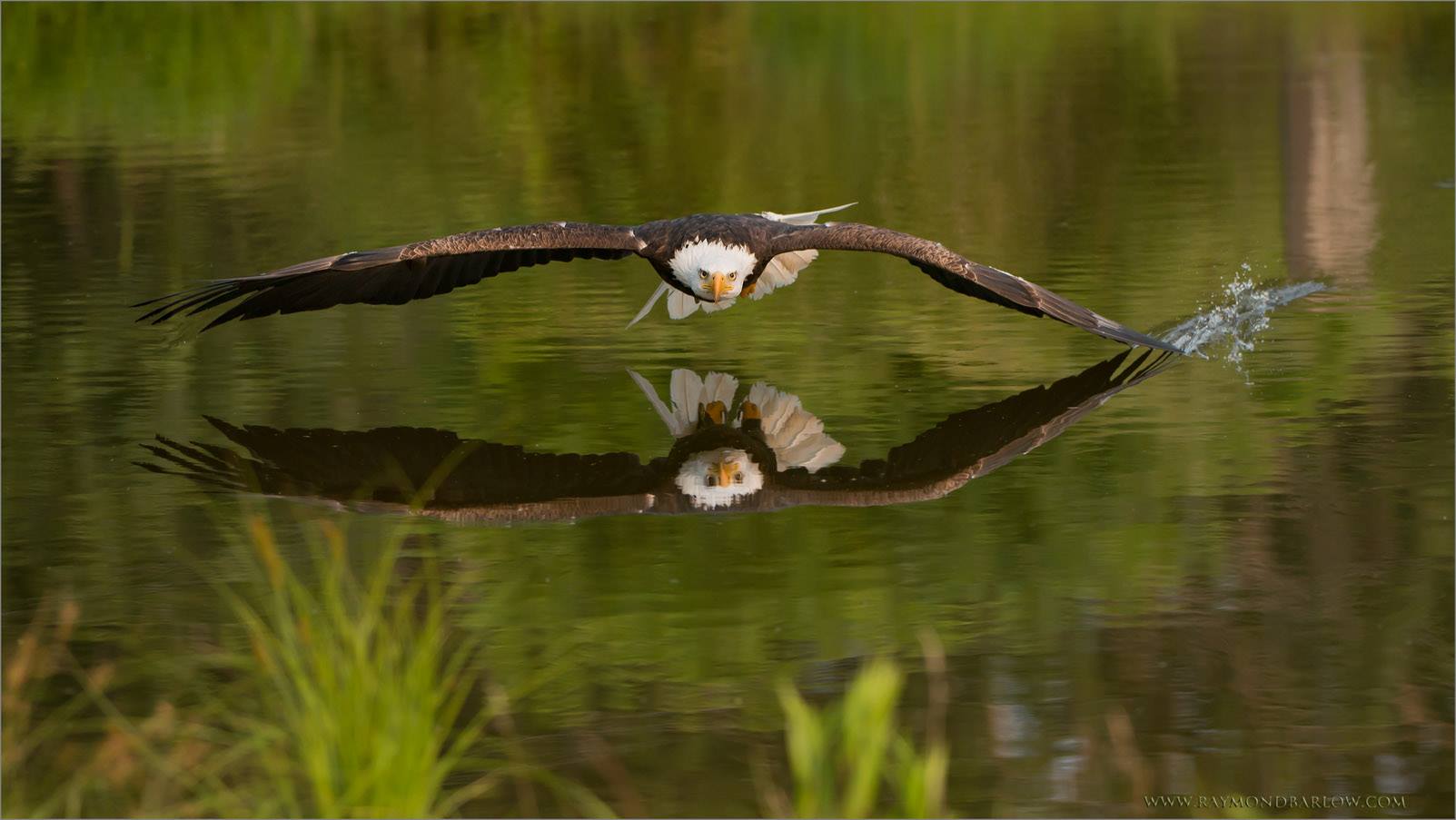
Bald Eagle (Haliaeetus leucocephalus) by Ray Barlow

“Thy throne is established of old: thou art from everlasting.” (Psalms 93:2 KJV)


Everlasting

EVERL`ASTING, a. [ever and lasting.] Lasting or enduring for ever; eternal; existing or continuing without end; immortal.
The everlasting God, or Jehovah. Gen 21.
Everlasting fire; everlasting punishment. Mat 18:25.
1. Perpetual; continuing indefinitely, or during the present state of things.
I will give thee, and thy seed after thee, the land of Canaan, for an everlasting possession. Gen 17.
The everlasting hills or mountains. Genesis. Habakkuk.
2. In popular usage, endless; continual; unintermitted; as, the family is disturbed with everlasting disputes.
EVERL`ASTING, n. Eternity; eternal duration, past and future.
From everlasting to everlasting, thou art God. Psa 90.


Eagle is a common name for many large birds of prey of the family Accipitridae; it belongs to several groups of genera that are not necessarily closely related to each other.

Most of the 60 species of eagles are from Eurasia and Africa. Outside this area, just 14 species can be found – two in North America, nine in Central and South America, and three in Australia. Accipitridae Family


More Avian and Attributes Articles

Birds whose last name start with “E”

Good News

*
[Definitions from Webster’s Dictionary of American English (1828), unless noted. Bird info from Wikipedia plus.]

Avian and Attributes – Deliverer

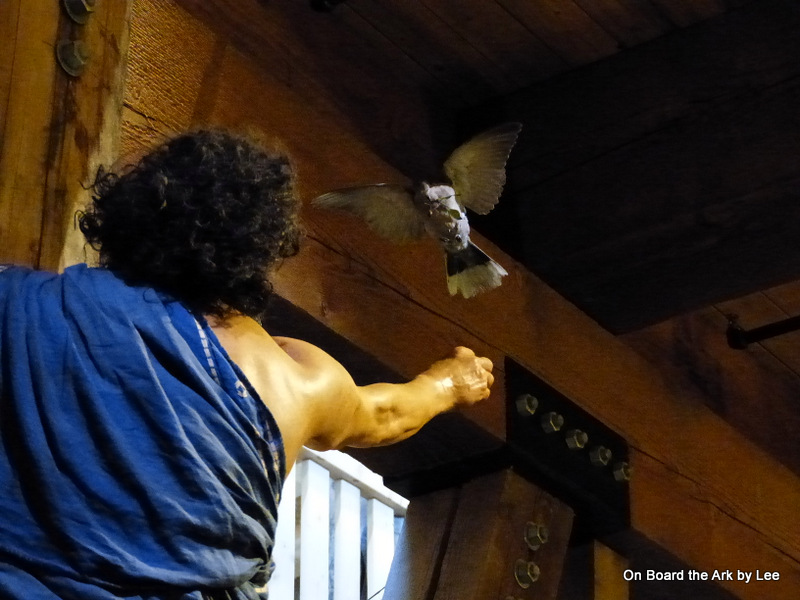
Noah taking the Dove back on board the Ark. (Ark Encounter by Lee)

“And he said, The LORD is my rock, and my fortress, and my deliverer;” (2 Samuel 22:2 KJV)


Deliverer

DELIVERER, n.
1. One who delivers; one who releases or rescues; a preserver.
The Lord raised up a deliverer to Israel. Judges 30.
2. One who relates, or communicates.


The Dove are perching birds, which along with the pigeons belong to the taxonomic family Columbidae. They are perhaps best known as birds of gentle nature, but are also popular game birds. The symbolism of a white dove (though most “white doves” are actually white homing pigeons), has been used for peace, purity, and innocent love. Columbidae Family


More Avian and Attributes Articles

Birds whose last name start with “D”

(Dove – Creation Wiki)

Good News

*
[Definitions from Webster’s Dictionary of American English (1828), unless noted.]

Mockingbirds: Versatile Voices in Plain Plumage

NorthernMockingbird-atop-pine.JimWedge-Audubon

NORTHERN  MOCKINGBIRD     ( photo: Jim Wedge / Audubon.org )

Mockingbirds: Versatile Voices in Plain Plumage

Dr. James J. S. Johnson

Curse not the king, no not in thy thought; and curse not the rich in thy bedchamber: for a bird of the air shall carry the voice, and that which hath wings shall tell the matter.   (Ecclesiastes 10:20)

King Solomon warned us!  Some birds are like winged tape recorders, capable of imitating the speech of human voices, vocal calls of other birds, diverse sounds of construction equipment, and even the beeping noise of a clock alarm.  Parrots are so famous for repeating human speech that we use the word “parrot” as a metaphoric verb, for repeating what someone else says.

Mockingbird.RyanHagerty-USFWS
Northern Mockingbird   (photo credit: Ryan Hagerty / USF&WS)

The official state bird of Texas is a famous mimic, as its name suggests: MOCKINGBIRD.  (And, besides the special dignity of being the Lone Star State’s official songbird, the Northern Mockingbird is a special of Professor Ernie Carrasco!)

Despite its prosaic plumage, which combines only black, grey, and white (and thus misses out on all of the rainbow hues), the mundanely feathered Northern Mockingbird (Mimus polyglottus) is nonetheless spectacular in its mimicry range of vocal versatility.  To illustrate, consider this report from Beth Clark, a Nevada resident, writing for BIRD & BLOOMS magazine:

‘BEEP, BEEP, BEEP, BEEP.’ My husband and I were participating in the Nevada Bird Count for the Great Basin Bird Observatory, when he started having problems with his new wristwatch timer. It kept beeping ahead of its programmed time.  I assumed [as many wives would have assumed, that] he just needed to read the instructions.  But after several frenzied attempts to fix the device, it turned out that a northern mockingbird was in the area.  The bird was perfectly imitating the sound and volume of the timer.

[Quoting Beth Clark, “Expert impersonators:  Sounds Aren’t Always What They Seem”, BIRDS & BLOOMS, April-May 2006 issue, page 49.]  Surely no one should be shocked to learn that a mockingbird is apt to “mock” sounds, as if it was a winged tape recorder.

Mockingbird-feeding-young.AmericanArtifacts

Mockingbird feeding nestling young  /  photo credit:  American Artifacts

Interestingly, it is only the male mockingbird that you should expect to hear during springtime or summer, as busy mockingbirds go about the business of nest-building, breeding, and taking care of their nestling young.  During autumn, however, both males and females sing their mimicking “songs” and sounds.  [See, accord, Donald Stokes, “Mockingbird”, A GUIDE TO BIRD BEHAVIOR, Volume I (Little, Brown & Company, 1979), page 187.]  Interestingly, mockingbird singing is influenced by the lunar cycle.

Northern Mockingbirds sing all through the day, and often into the night. Most nocturnal singers are unmated males, which sing more than mated males during the day, too. Nighttime singing is more common during the full moon. Northern Mockingbirds typically sing from February through August, and again from September to early November. A male may have two distinct repertoires of songs: one for spring and another for fall. The female Northern Mockingbird sings too, although usually more quietly than the male does. She rarely sings in the summer, and usually only when the male is away from the territory. She sings more in the fall, perhaps to establish a winter territory.

[Quoting Cornell Lab of Ornithology’s “All About Birds” article on mockingbirds.

Of course, other birds have the same ability.

Northern mockingbirds, gray catbirds and the thrasher family are the most common mimics in North America. The mockingbird is the most accomplished mimic of the group [called Mimidae].  Its imitations are executed so precisely that scientific analysis often can’t distinguish between the imitation and the original.

Mockingbirds can replicate the calls of up to 32 bird species as well as the sounds of [large] animals and insects, and a wide array of human noises. You might even hear mimics imitating birds you’ve never heard of.  Once mimics learn a phrase, they’ll use it throughout the year.  So they easily pick up new bird songs from their wintering grounds [JJSJ note: some mockingbirds migrate, while other are year-round residents  — see range map below].  In New Jersey, someone once heard a gray catbird mimicking a brown-crested flycatcher [vocalization] that it likely picked up in Central America.

[Quoting Beth Clark, “Expert impersonators”, BIRDS & BLOOMS, April-May 2006 issue, page 49.]

Mockingbird-Rangemap.Wikipedia

Northern Mockingbird range map   (image credit: Wikipedia)
YELLOW:  breeding range;   GREEN:  year-round residence range
[NOTE CONTRA:  Cornell Lab of Ornithology indicates a year-round range for all the lower 48!]

Of course, it’s not just mockingbirds that mock the sounds of other creatures and non-living noises.

Brown thrashers … can learn human words and phrases, and sage thrashers imitate a variety of natural sounds. The European starling is a phenomenal mimic.  In addition to the human voice and other man-made sounds, it will reproduce the sound of a woodpecker drumming.  I once heard a caged European starling that spoke clearly and sang several radio jingles with perfect pitch.  Jays, crows, Carolina wrens, shrikes and vireos also mimic other bird species.

[Quoting Beth Clark, “Expert impersonators”, BIRDS & BLOOMS, April-May 2006 issue, page 49.]

BrownThrasher-GarlandTX-ManjithKainickara

Brown Thrasher in Texas   (photo credit; Manjith Kainickara)

But how do these avian mimics replicate the sounds of others? They have a special vocal organ called a “syrinx”, a word derived from the Greek word σύριγξ – referring to musical reeds (i.e., “pan pipes”), which is the same root for our English word “syringe” (a reed/straw-like tube, used in medicine).

Birds make sounds in a different way than humans do. People vocalize by passing air across the vocal chords.  Birds, however, make sounds using their syrinx.  Birds are the only animals that have a syrinx, which is located in the windpipe, close to the lungs.  The muscles surrounding the syrinx allow the birds to control the sounds, much the way changing tension on a violin string alters the pitch.  They control the volume by changing the air pressure in their lungs.  Generally, the birds with the most muscles around their syrinx are the most varied [i.e., most versatile] vocalists.  For instance, while pigeons have a single pair of muscles [around the syrinx], catbirds and crows have seven to nine pairs.  Most songbirds have about five pairs.  That explains how a northern mockingbird tricked my husband into thinking his timer was broken, but the bird’s amazing array of impersonations remains mind-boggling.

[Quoting Beth Clark, “Expert impersonators”, BIRDS & BLOOMS, April-May 2006 issue, page 49.]

Syrinx-BirdAnatomy.Wikipedia-diagram

Schematic drawing of an avian syrinx

from Wikipedia’s “Syrinx (bird anatomy)” article.

  1. last free cartilaginous tracheal ring
  2. tympanum
  3. first group of syringeal rings
  4. pessulus
  5. membrane tympaniformis lateralis
  6. membrane tympaniformis medialis
  7. second group of syringeal rings
  8. main bronchus
  9. bronchial cartilage

Mockingbird-eating-winterberries.JonesNaturePreserve

Mockingbird eating winterberries    (photo credit: Jones Nature Preserve)

How can you attract hungry mockingbirds?  Don’t worry; northern mockingbirds aren’t “fussy” eaters. As omnivores, they will eat what is available:  insects (especially during summer, when beetles, ants, wasps, bees, butterflies, and moths are the mockingbirds’ main diet), earthworms, berries and other fruits (especially apples), tomatoes, seeds, and even lizards.  Some have even reported mockingbirds sipping sap from trees recently pruned.   [See Cornell Lab of Ornithology’s “All About Birds” article on mockingbirds, posted at https://www.allaboutbirds.org/guide/Northern_Mockingbird/lifehistory .]

Mockingbird-harasses-RedShoulderedHawk-Floridaform.AllCreationSings

Mockingbird harasses Red-shouldered Hawk (Florida form)  /  photo credit:  All Creation Sings

Once a mockingbird established its home territory, watch out! Mockingbirds will guard their claimed turf with vim and vigor.

It is hard for a behavior-watcher to think of mockingbirds and not also think of territoriality, for this is undoubtedly the most prominent aspect of this bird’s behavior. Not only are its territories small, sharply defined, and aggressively defended, but they are also formed twice a year – once in spring for breeding and again in fall to protect a winter food source.  Add to this the fact that [mockingbirds] are partial to living in urban [and suburban] areas, and you undoubtedly have the best of our common birds in which to observe territorial behavior.

[Quoting Donald Stokes, “Mockingbird”, A GUIDE TO BIRD BEHAVIOR, Volume I (Little, Brown & Company, 1979), page 187.]

So, enjoy the varied vocalizations of your neighborhood’s mockingbirds, but respect their territorial “turf”, because they are seriously committed to homeland security!

Mockingbird-attacks-RedTailedHawk-flickr.com-photo

Mockingbird attacks Red-tailed Hawk   (photo credit: flickr.com)