Tiny Birdwatching and Back Doctor Visit

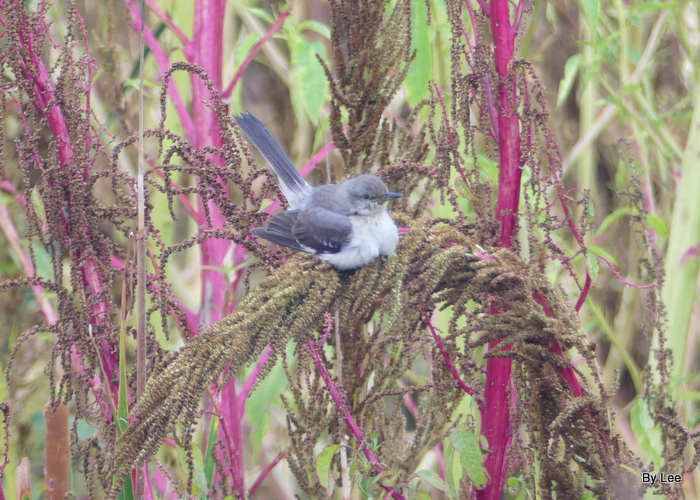
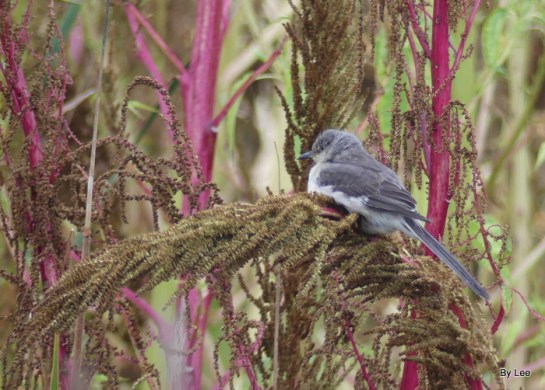
Young Northern Mockingbird at Click Ponds

“Bless the LORD, all his works in all places of his dominion: bless the LORD, O my soul.” (Psalms 103:22 KJV)

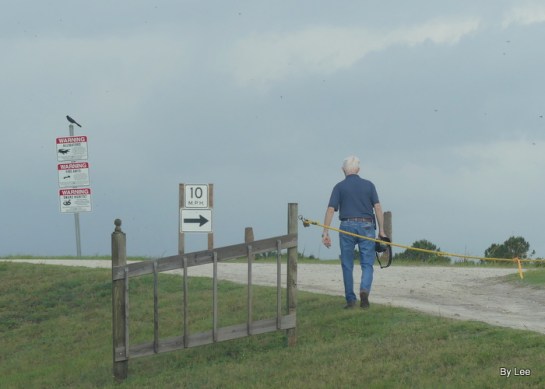
On Thursday, we were in Melbourne, Florida to see a back Doctor to see if he could do my very much needed surgery. After driving over on Wednesday, we went to Vierra Wetlands in the morning, to do a little birdwatching while waiting for the appointment. When we arrived, they had a rope across the gate for cars, so I stayed by the car while Dan walked up to see what birds he could find. [It was open to walkers and joggers]
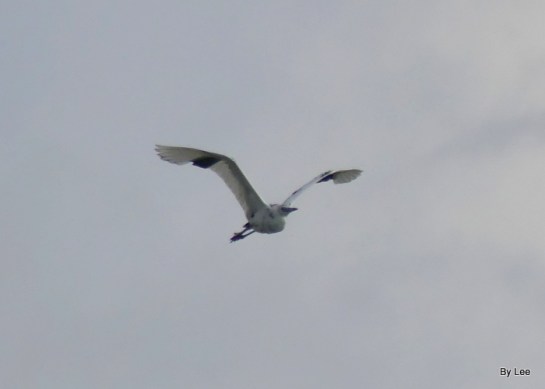
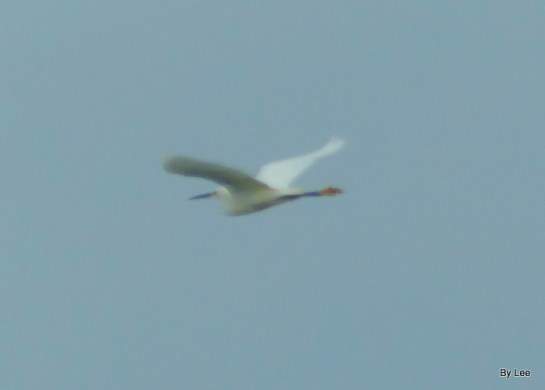
Immature Little Blue Heron

With camera in hand, I just had to catch what flew by, but the Lord always sends some of His avian wonders near for me to see. Three prize photos were this bird that gave me a fit trying to figure out what it is. After scanning my Birding Guides and then Google photos for about 20 minutes, I found out that it is a juvenile Little Blue Heron. Yes!

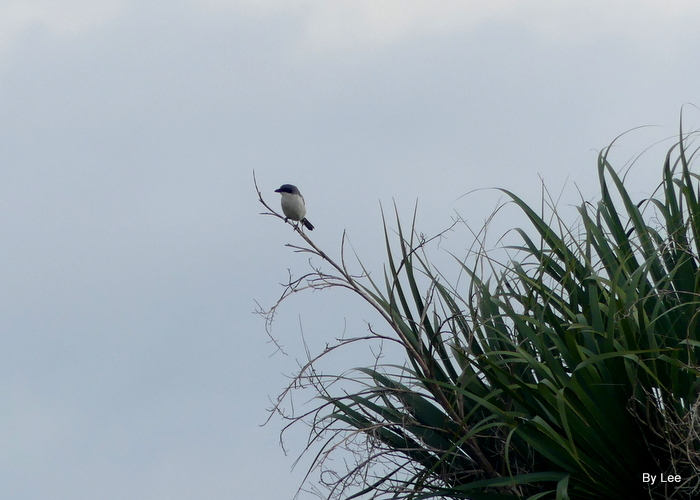
Another prize was a Loggerhead Shrike who decided to sit on a palm tree nearby. My 600 mm zoom sure comes in handy when you can hardly stand, let alone walk closer.

Loggerhead Shrike

After our sort of disappointing birdwatching, we drove to the Click Ponds, across the street, and it was totally dry. Nothing found other than this young Northern Mockingbird. My third prize. They are as dry in Melbourne, as we are in the central Florida. We are in severe drought conditions throughout most of the state.

Young Northern Mockingbird at Click Ponds

Well, after lunch with friends, we went to the Doctor. PRAISE THE LORD! SURGERY IS GOING TO BE SCHEDULED A.S.A.P. THANK YOU FOR ALL WHO HAVE BEEN PRAYING WITH ME ABOUT THIS!

When the Doctor saw my MRI, he said, “WOW!” It is the worst slipped disc he has seen in a long time. Said it hurt to even look at it. Wondered how I lasted this long. [My local doctor no longer does this kind of surgery that I need, so, I have been searching for a doctor to do the surgery. One could see me, but not until July 17th. This doctor was scheduled for June 9th, but, Praise the Lord, they had a cancellation while I was chatting with them, and I saw him Thursday. He was very positive about fixing it. I had soft bones when I had the last surgery and they only put in one rod. Technology has changed in the last few years and if they are too soft, they insert something like concrete to strengthen the pedicles.

Slipped L4 Disc Image cropped

I’ve said all this for several reasons. One is to ask for prayer for the upcoming surgery and that it is set up SOON! Also, that all goes well and the recovery goes well. Also, if the blog gets a little off, not to be concerned. I plan on scheduling the devotions ahead of time but will try to keep you informed.

I am so thankful for all the Lord has been doing in this situation. He is so Faithful! Also, the new medicine I was given is easing my nerve pains. YES! I was getting to where I could hardly walk. That is why there have not been many birding adventures to write about. There hasn’t been any. :(

“And let the peace of God rule in your hearts, to the which also ye are called in one body; and be ye thankful. Let the word of Christ dwell in you richly in all wisdom; teaching and admonishing one another in psalms and hymns and spiritual songs, singing with grace in your hearts to the Lord. And whatsoever ye do in word or deed, do all in the name of the Lord Jesus, giving thanks to God and the Father by him.” (Colossians 3:15-17 KJV)

Most of these photos are cropped obviously.

Lee’s Six Word Saturday – 5/27/17

***

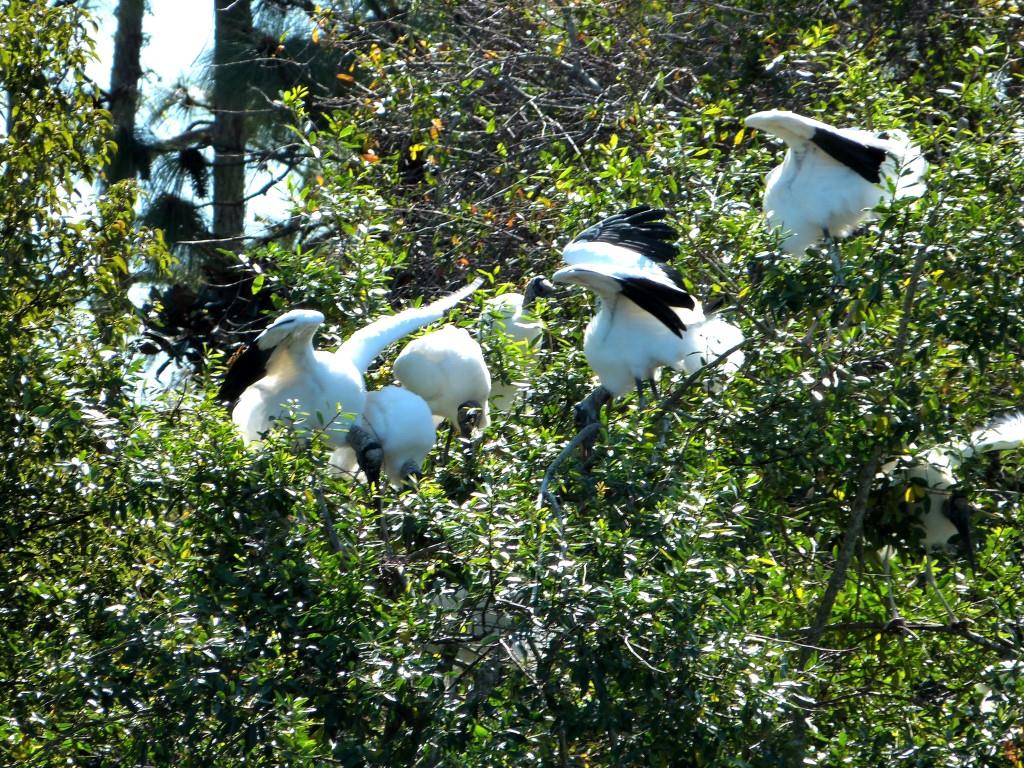
Wood Storks in the Rookery at Gatorland by Lee

BIRDS OF THE AIR HAVE NESTS

***


“And Jesus saith unto him, The foxes have holes, and the birds of the air have nests; but the Son of man hath not where to lay his head.” (Matthew 8:20 KJV)
Wood Storks in the Rookery at Gatorland by Lee

*

More Daily Devotionals

Lee’s Five Word Friday – 5/26/17

***

Fan-tailed Raven (Corvus rhipidurus) ©WikiC

THE RAVENS BROUGHT HIM BREAD

***


“And the ravens brought him bread and flesh in the morning, and bread and flesh in the evening; and he drank of the brook.” [Elijah] (1 Kings 17:6 KJV)

Fan-tailed Raven (Corvus rhipidurus) ©WikiC

*

More Daily Devotionals

Lee’s Four Word Thursday – 5/25/17

***

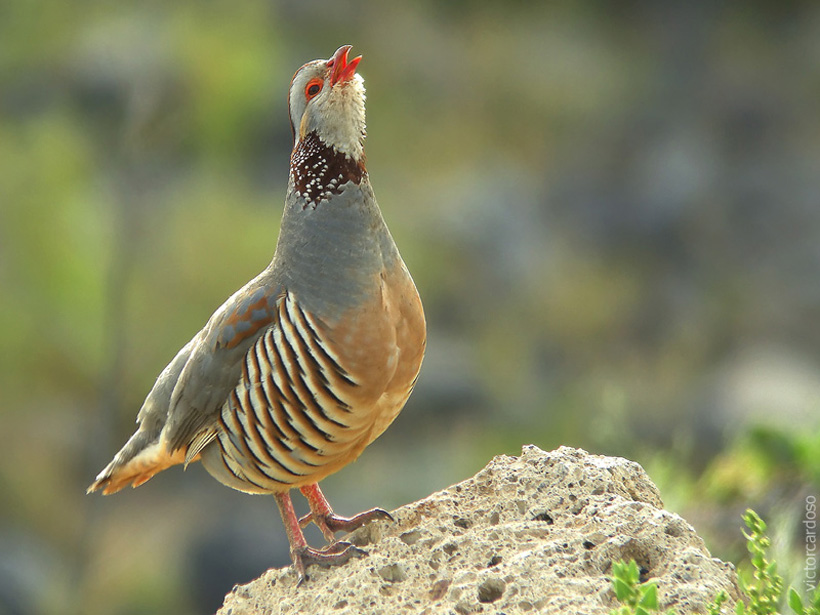
Barbary Partridge (Alectoris barbara koenigi) Pixdaus

THEY SHALL TELL THEE

***


“But ask now the beasts, and they shall teach thee; and the fowls of the air, and they shall tell thee:” (Job 12:7 KJV)

Barbary Partridge (Alectoris barbara koenigi) Pixdaus

*

More Daily Devotionals

Lee’s Three Word Wednesday – 5/24/17

***

Geese Flying Early in the Morning ©©

NEW EVERY MORNING

***


“This I recall to my mind, therefore have I hope. It is of the LORD’S mercies that we are not consumed, because his compassions fail not. They are new every morning: great is thy faithfulness.” (Lamentations 3:21-23 KJV)

Geese Flying Early in the Morning ©©

*

More Daily Devotionals

Dueling with a Diamondback in the Desert: Roadrunner vs. Rattlesnake!

DUELING  WITH   A  DIAMONDBACK  IN  THE  DESERT:  ROADRUNNER  vs.  RATTLESNAKE!  

Dr. James J. S. Johnson

Let their table become a snare before them; and that which should have been for their welfare, let it become a trap.   (Psalm 69:22)

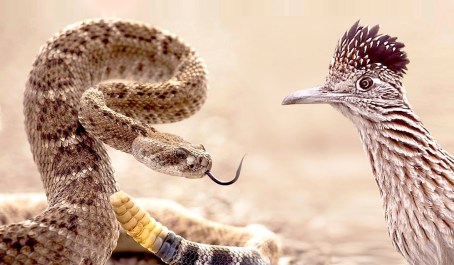
Roadrunner-approaches-coiled-Rattlesnake-in-desert

Sometimes hunting backfires: the hunter becomes the hunted!

Recall how Haman, in the Book of Esther, plotted to persecuted the Jews, to death, during his heyday in the Persian Empire?  The result was the opposite of his diabolical scheme, however – and it was the Jews who deftly ended as victors (over their persecutors), with Haman himself being hanged to death, on the very gallows that he had constructed for hanging his Jewish rival, Mordecai!(1)

Amazingly, the animal kingdom sometimes sees something comparable happen – such as the scrubland showdown that sometimes occurs when a rattlesnake decides to prey upon a roadrunner. For an action-packed documentation of such a do-or-die duel, see the National Geographic video footage (“Roadrunner vs. Rattlesnake”) posted at  http://video.nationalgeographic.com/tv/roadrunner-vs-rattlesnake  (slightly longer than 2 minutes).

Rattlesnake-attacks-Roadrunner.Natl-Geo-youtube-pic

Hence, here is a poetic tribute (in limerick format) to the roadrunner, whom God caringly designed to “hold its own”, and then some (!), when dueling with a diamondback in the desert!

RATTLESNAKE  ATTACKS  MAMA  ROADRUNNER!

(JJSJ’s poetic review of predator-prey turnabout)

A rattlesnake, hunting for prey,

Met Mama Roadrunner that day;

The coiled snake grinned with glee,

But the fowl did not flee —

Thus, a bird, the snake aimed to slay.


The roadrunner brave, the snake brash;

Twin fangs lunged – but no gash!

The bird’s flesh he had missed —

The bird jumped, the snake hissed;

Again, the snake struck in a flash!

Rattler-fangs-ready2bite.Pinterest

Missed again! – the bird jumped aside!

Once again, snake-fangs were denied;

So the shrewd snake re-set,

As the bird watched the threat —

Then a target the roadrunner eyed.


The roadrunner now used her skill,

To bite the snake hard, with her bill!

Between the fangs, she had bit —

Vise-clamped bite! – she won’t quit!

Fangs dangling, the snake couldn’t kill!

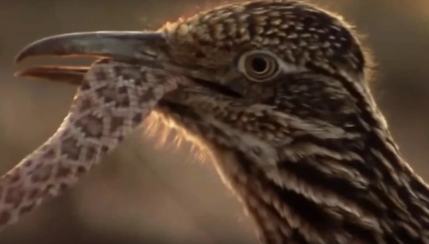
Roadrunner-bites-Rattlesnake.Pinterest

Struggle, wiggle, — the trapped snake did strain,

To loose the bird’s grip, but in vain!

The bird’s bite, firm and fierce —

The snake’s fangs, naught could pierce;

The snake’s plight, now dire, with pain!

Roadrunner-biting-smashing-Rattlesnake-head

The bird aims – the snake’s head now bashed

On rocks, the snake’s head, thrashed and smashed.

Hammering the snake’s head,

Till it’s broken and dead —

The snake’s crown is thus cracked and crashed.

Roadrunner-biting-crushing-Rattlesnake-head

This showdown, so furious and fast,

Ends with the rattler breathing his last;

The snake thought he found prey,

But on that fateful day,

‘Twas the snake as roadrunner’s repast!

Roadrunner-eats-Rattlesnake.closeup

Of this duel, the moral is clear

(If, your own life, you would hold dear):

A predator, one day,

On the next, may be prey!

And Mama Roadrunner, you’d best fear!

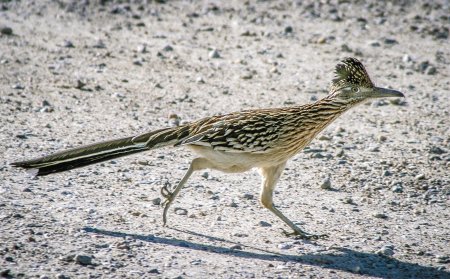
Roadrunner-in-desert.SanDiegoUnionTribune.jpg

Roadrunners are fast. These chaparral birds live in deserts and xeric scrub (such as sage-dominated scrublands), and in other rural and semi-rural regions of America’s Southwest, feeding on bugs, scorpions, lizards, and snakes.

But can roadrunners survive showdowns with diamondback rattlesnakes? Yes! Although roadrunners are famous for running from danger, they aggressively attack rattlesnakes, face to face—i.e., bill to fangs!  Amazingly, God has so designed the roadrunner that it can speedily aim at the face and fangs of a striking rattle, using its pointed bill to bite (and clamp) onto the rattler’s open mouth, between the upper fangs, rapidly lock-biting the snake in a death-grip. Then the bird repeatedly thrashes and crushes the serpent’s head against rocks—killing the rattlesnake. The victorious roadrunner then eats the dead diamondback!(2)

The arid, torrid wastelands that we call deserts are relatively inhospitable, for most creatures, yet God has providentially fitted some animals to fill desert habitats—such as desert rats, rabbits, roadrunners, and rattlesnakes.(3)

God loves variety!   (For some Bible-based analysis regarding this timeless truth, see “Valuing God’s Variety”, posted at http://www.icr.org/article/valuing-gods-variety/ .)

Desert-dwelling creatures — like Roadrunners (or Diamondback Rattlesnakes!)  —  daily demonstrate that fact, for those who have eyes to see.  And sometimes, if you happen to live in the America’s Southwest,  you need not journey all the way out to a desert, to see such God-created marvels as the resilient roadrunner.    (Meep, meep!)

Roadrunner-on-table

References

 (1)  Esther 7:10.

(2)  “Roadrunner vs. Rattlesnake”, National Geographic video clip, posted at http://video.nationalgeographic.com/tv/roadrunner-vs-rattlesnake .

(3)  Many creatures are providentially fitted to fill hot or cold desert (and similar xeric scrub) habitats, e.g., the Sage Grouse, named for its sagebrush-nesting habits and for eating sagebrush buds and leaves. See James A. MacMahon, Deserts (Alfred A. Knopf, 1986), especially page 583 & plate 545. See also, generally, Knut Schmidt-Nielsen, Desert Animals: Physiological Problems of Heat and Water (Dover Publications, 1979), especially pages 204-224 (desert birds) & pages 225-251 (desert reptiles).


PHOTO CREDITS:

Rattlesnake showdown with Roadrunner:  National Geographic video

Roadrunner approaching Rattlesnake: Viral Portal

Roadrunner bites Rattlesnake: Pinterest

Roadrunner biting/smashing Rattler: Viral Portal

Roadrunner thrashing/crushing Rattler’s head: National Geographic video

Roadrunner running in desert: San Diego Union Tribune

Roadrunner eating Rattle:  Kami.com

Roadrunner on patio table:  original source unknown / RockDoveBlog


Lee’s Two Word Tuesday – 5/23/17

***

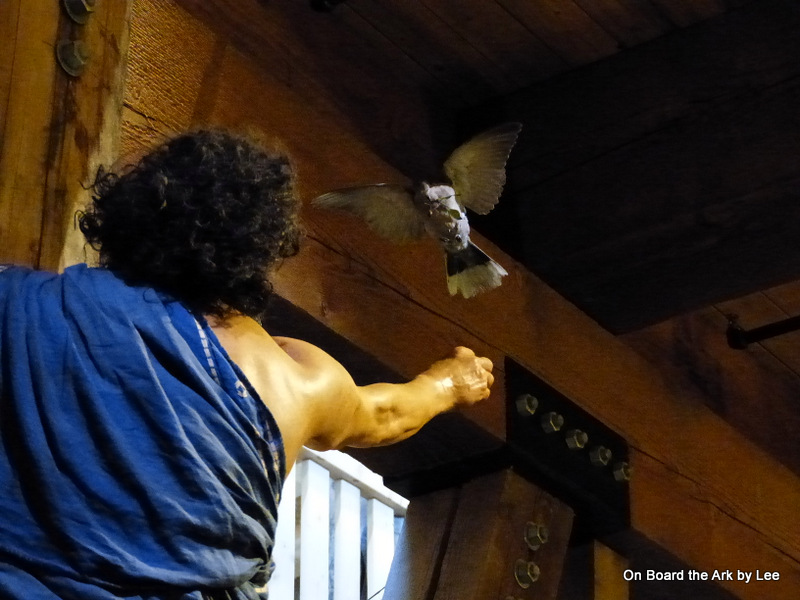
Dove Returned to Adam with Olive Leaf - by Lee at the Ark Encounter

DOVE CAME

***


“And the dove came in to him in the evening; and, lo, in her mouth was an olive leaf pluckt off: so Noah knew that the waters were abated from off the earth.” (Genesis 8:11 KJV)

Dove Returned to Adam with Olive Leaf – by Lee at the Ark Encounter

*

More Daily Devotionals

Lee’s One Word Monday – 5/22/17

***

Hornbill at Brevard Zoo by Dan Aug-2014

CREATED

***


“Let them praise the name of the LORD: for he commanded, and they were created.” (Psalms 148:5 KJV)

Hornbill at Brevard Zoo by Dan Aug-2014

*

More Daily Devotionals

Lee’s Seven Word Sunday – 5/21/17

***

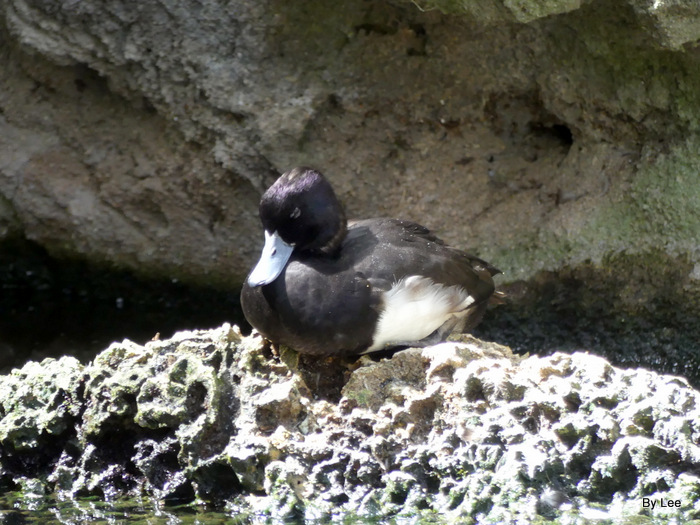
Tufted Duck Zoo Miami by Lee

REST IN THE LORD,

AND WAIT PATIENTLY

***


Rest in the LORD, and wait patiently for him: fret not thyself because of him who prospereth in his way, because of the man who bringeth wicked devices to pass.” (Psalms 37:7 KJV)

Tufted Duck Zoo Miami by Lee

*

More Daily Devotionals

Great Spotted Woodpecker – Buntspecht

A blog I enjoy following by Alois Absenger from Germany, had a gorgeous Woodpecker photo a few day ago. It is titled, Buntspecht. When I asked Alois what was the name of the woodpecker, he answered that it was a “Buntspecht”. With a chuckle, I decided to find out the English name of this beautiful avian wonder.

Here is a link to Alois’ blog: CLICK HERE

Searching the internet, this video was discovered and needs to be shared.

What is so amazing, is the way the Great Spotted Woodpecker [Buntspecht] supports himself with his tail. Our Creator never ceases to provide beneficial support for us and His Creation.

“The works of the LORD are great, sought out of all them that have pleasure therein.” (Psalms 111:2 KJV)

Woodpecker Family

Great Spotted Woodpecker – Wikipedia

Lee’s Six Word Saturday – 5/20/17

***

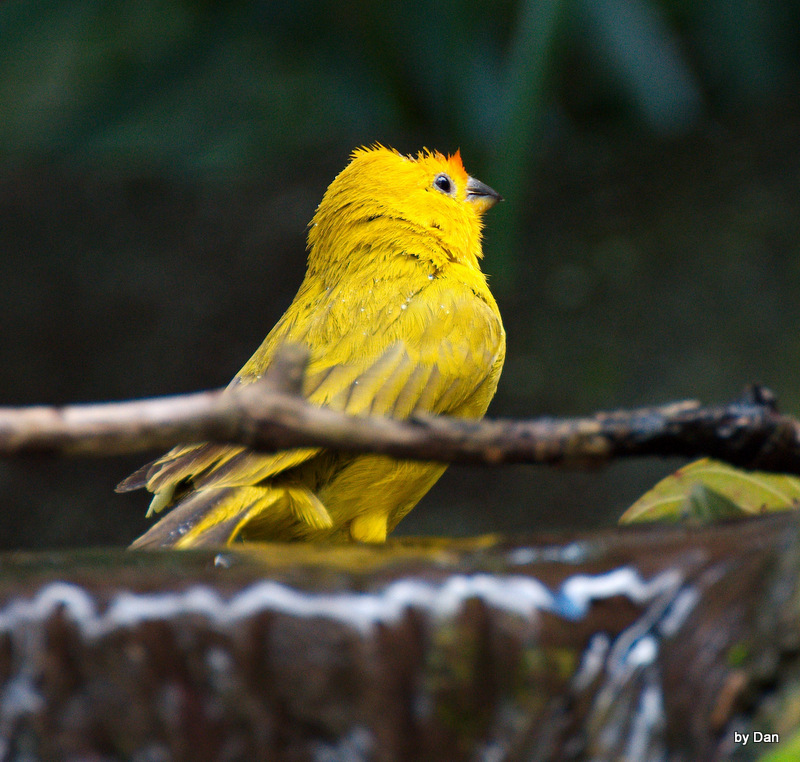
Saffron Finch Zoo Miami by Dan (Cropped by Lee)

WASH YOUR FEET,

AND REST YOURSELVES

***


“Let a little water, I pray you, be fetched, and wash your feet, and rest yourselves under the tree:” (Genesis 18:4 KJV)

Saffron Finch Zoo Miami by Dan (Cropped by Lee)

*

More Daily Devotionals

Common Icterid, with Uncommon Beauty

Common Icterid, with Uncommon Beauty

Dr. James J. S. Johnson

Deck thyself now with majesty and excellency; and array thyself with glory and beauty.    (Job 40:10).

CommonGrackle-bronze-morph.RhodeIslandBirdHunter.jpg

One of the most spectacular icterids, known for its iridescent shine, is the Common Grackle. As I observed years ago, it is a sobering thought to realize that God could have – if He had chosen to – made me (or you) a grackle!  [See “Of Grackles and Gratitude”]

One birdwatcher in Maryland describes the Common Grackle as follows:

The common grackle (Quiscalus quiscula) is a widespread, common bird in the eastern United States.  Bigger than most other blackbirds [and robins], it stretches to about 12 inches from its long, tapered tail to its bill.  The black beak is prominent, more long than heavy.  Grackles stand on tall, stout black legs.  They prefer to forage on the ground but they will perch precariously if necessary to reach food.  The diet of the common grackle centers on grain, especially corn [i.e., maize].  Common grackles will descend upon a corn field from the moment it’s planted until it’s harvested.  Walking boldly behind planting equipment [!], they peck at newly sown seeds or unearthed grubs.  As the corn begins to tassel, they tear at maturing ears to eat growing cobs.  After the harvest, they descend [in a mob] like a dark cloud, eating any remaining kernels.  Common grackles do millions of dollars of damage [“robbing” cornfields] annually.  …  Though they prefer grains, grackles readily eat thistle, suet or sunflower seeds.  If those foods are not available, grackles will eat just about anything else on hand, including insects, frogs, mice, worms, other birds and even fish.  (Grackles wade into shallow water to nab schooling minnows.)  Discarded garbage [including fast-food litter] is another food source for these omnivores.

[Quoting Mike Burke, “Grackles’ Aggressive Behavior Not Helping its Survival – A Lesson?”, in CHESAPEAKE BAY JOURNAL, 27(3):39 (May 2017).

Ranging from the Midwest to the Eastern coastlands of America (plus some summer breeding ranges northward into central Canada), with most of their wintering range limited to the lands from the East Coast to the sates that straddle the Mississippi River Valley, the Common Grackle is known throughout most of America’s Lower 48 states.

But the Common Grackle’s iridescent plumage is its most conspicuous glory:

Common grackles display an odd geographic variation in color. Those south and east of the Appalachian Mountains [i.e., the so-called “Purple Grackle” variety] have an iridescent purple-blue head, purple belly, and blue-green tail.  Those north and west of the Eastern continental divide [i.e., the so-called “Bronze Grackle” variety of New England and west of the Appalachians] have blue-green heads and brassy bronze bodies.  From afar, all of the birds look black, but at closer distances the iridescent head is easily distinguishable from the glossy body.  Of course, there are exceptions, but generally the grackles in the Chesapeake [Bay] watershed have purple-blue heads.

[Quoting again from Mike Burke, “Grackles’ Aggressive Behavior Not Helping its Survival – A Lesson?”, in CHESAPEAKE BAY JOURNAL, 27(3):39 (May 2017).  Of course, these grackles are similar to the Boat-tailed Grackles that I’ve observed in Florida, and the Great-tailed Grackles that dominate Texas, but the tails of Common Grackles are not as conspicuously lengthy as those of its cousins in Florida and Texas.

CommonGrackle.BillHubick-photo

Like most grackles, the Common Grackle is noisy, gregarious (often congregating on power lines, or in trees near shopping centers), and confident (strutting about in parking lots, hunting for edibles discarded by humans).  Grackles are routinely bold, sometimes to the point of being aggressive.

But is this temperament-like habit a guarantee of the Common Grackle’s success?  Apparently not, according to the Breeding Bird Survey.

The North American Breeding Bird Survey is a joint venture of the U.S. Geological Survey and the Canadian Wildlife Service, for monitoring avian populations, provided time-indexed data that is relied upon for bird conservation policy and programs.  Because these voracious blackbirds are an expensive nuisance to crop farmers, their recent population decline is unlikely to evoke lamentations by crop farmers.

Common grackles are in serious decline. Although they seem to be expanding farther westward and they are still [very much] abundant, the population has fallen nearly 60 percent since 1966, according to the [often-relied-upon] Breeding Bird Survey.  Ornithologists are thus far stumped about why the bird’s abundance has fallen so significantly.

[Quoting again from Mike Burke, “Grackles’ Aggressive Behavior Not Helping its Survival – A Lesson?”, in CHESAPEAKE BAY JOURNAL, 27(3):39 (May 2017).

Could it be habitat loss?  Of course, the Eastern half of the United States continues to convert its croplands to urban and suburban development —  the farmlands of America continue to disappear all too quickly (and the Common Grackle’s “robberies” are not the main cause!).  The cornfields that I knew as a boy (and sometimes worked in), growing up in different parts of Maryland, have substituted housing complexes and shopping centers for what were cornfields (and other crop fields).   If the habitat shrinks, and the readily available food supply shrink, is it any wonder that the population shrinks too?

Another possibility should be considered, too, the empirical science may be less than accurate –  i.e., it may be that the grackle population measurements are not as reliable as the “authoritative” data that they are advertised to be.  To illustrate this possibility, consider how the Atlantic Sturgeon was lamented for years – by Chesapeake Bay bioscientists who opined that it was nearly extirpated, only to be embarrassed to learn that they were looking for the anadromous fish at the wrong season of the year, phenologically speaking, and the fish was actually thriving in some of the Chesapeake Bay’s tributary waters!  [For details on that empirical science foible, see “Anadromous Fish ‘that Swam with Dinosaurs’ Neither Extinct Nor Extirpated,” Creation Research Society Quarterly, 51 (3): 207-208 (winter 2015).]

But to close on a simpler note: the Common Grackle may be common in many parts of America, yet its beautiful shimmering and glossy iridescent colors are anything but common.   Only God’s artistry could design and build a blackbird that reflects sunlight with such majestic magnificence.


FAIR USE PHOTO CREDITS:

Bill Hubick, Maryland: Common Grackle (bold pose & hungry pose)

Jason Major, Rhode Island:  Common Grackle perching (bronze variety)