Lee’s Seven Word Sunday – 7/17/16

***

Birds flying to their home during the sunset - Chitwan National Park ©WikiC

TILL THE GOING DOWN OF THE SUN

***


“Then the king, when he heard these words, was sore displeased with himself, and set his heart on Daniel to deliver him: and he laboured till the going down of the sun to deliver him. (Daniel 6:14 KJV)

Birds flying to their home during the sunset – Chitwan National Park ©WikiC

*

More Daily Devotionals

*

Sunday Inspiration – Thraupidae – Dacnis, Honeycreepers, Conebills

Continuing through the Tanagers of the Thraupidae, we have some more beautiful birds to let you enjoy. Our Lord must have loved creating this kind of bird. He sure created enough of them through their interbreeding. We are about half way through the Traupidae family. This is the fifth installment. Not sure how many more it will take to finish up this family. Trust you are enjoying them.

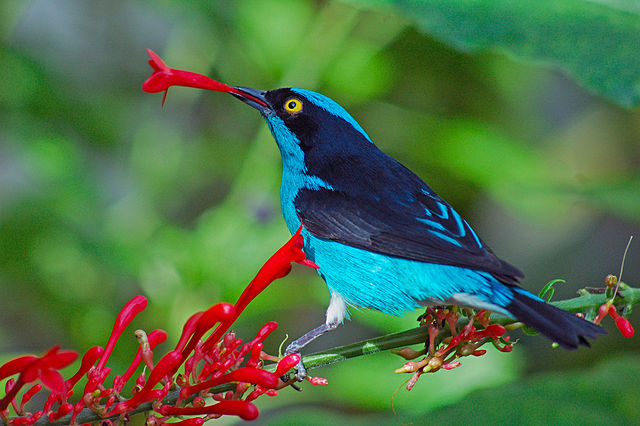
Black-faced Dacnis (Dacnis lineata) ©WikiC

Black-faced Dacnis (Dacnis lineata) ©WikiC

The Dacnis genus are from the Columbia and other nearby countries in South America. Some I could not find photos of that gave permission to use, so enjoy the ones that could be shown. The most common Dacnis seems to be the Blue Dacnis. Typical of this genus, they “occur in forests and other woodlands, including gardens and parks. The bulky cup nest is built in a tree and the normal clutch is of two to three grey-blotched whitish eggs. The female incubates the eggs, but is fed by the male. These are social birds which eat mainly insects gleaned from foliage, flowers or bromeliads. Fruit is often taken and usually swallowed whole, but nectar is rarely consumed.” (Wikipedia) There is one more Dacnis that is in the Xenodacnis genus.

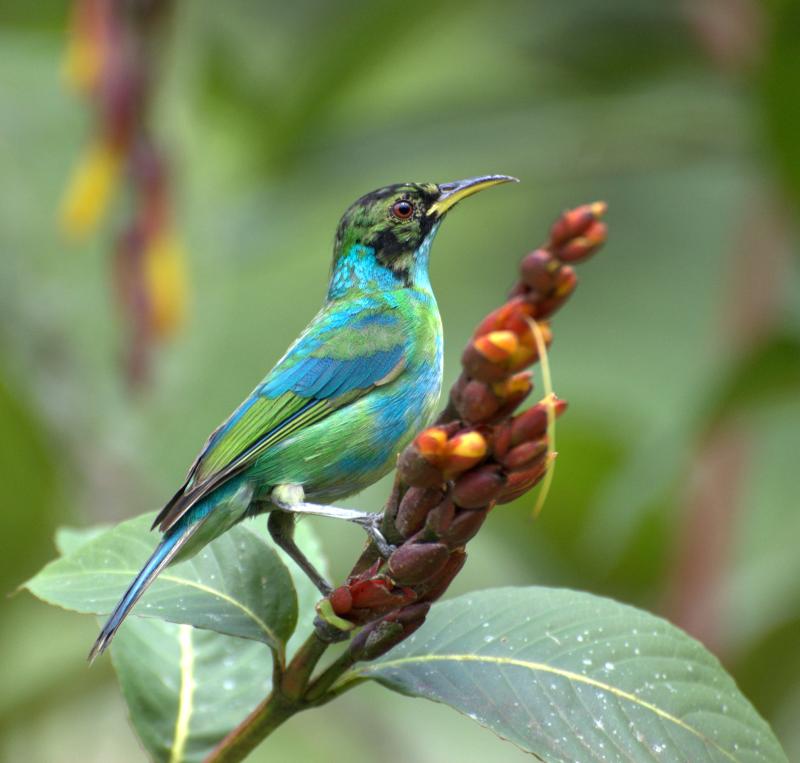
Green Honeycreeper (Chlorophanes spiza) Male Immature ©BirdPhotos.com

Green Honeycreeper (Chlorophanes spiza) Male Immature ©BirdPhotos.com

The next three genera, Cyanerpes, Chlorophanes, and Iridophanes are Honeycreepers. They have longer tails than the Dacnis and you will notice a little more down curve on their bills. The four Cyanerpes species have colourful legs, long wings and a short tail. The males are typically glossy purple-blue and the females greenish.

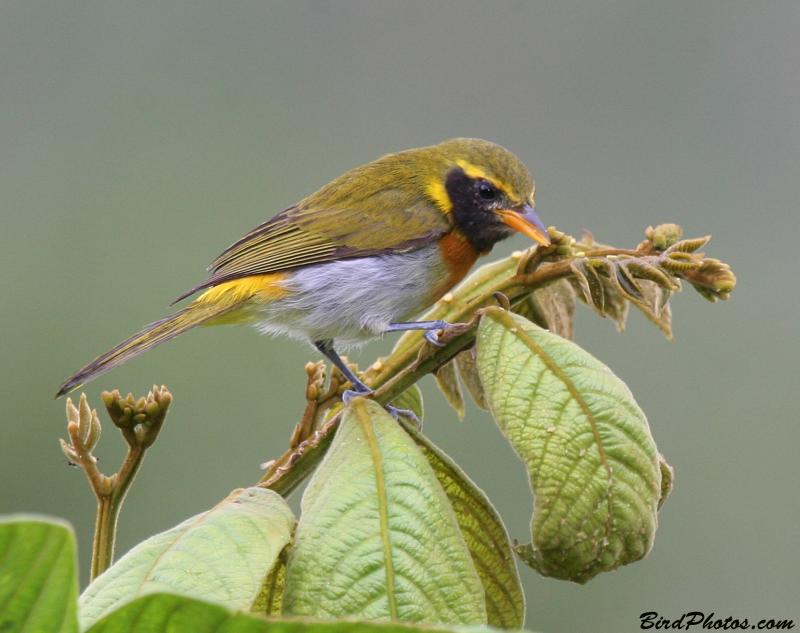
Guira Tanager (Hemithraupis guira) Male ©BirdPhotos.com

Guira Tanager (Hemithraupis guira) Male ©BirdPhotos.com

“Yellow-rumped” clade of Tanagers include the Heerospingus, Chrysothlpis, and Hemithraupis genera. These small to medium tanagers are found in the moist forests of Central and South America.  The females are duller than the males.

White-browed Conebill (Conirostrum ferrugineiventre) ©WikiC

White-browed Conebill (Conirostrum ferrugineiventre) ©WikiC

The Conebills from the Conirostrum genus, finish our group of beautiful birds from the Tanager Family for this week. “They are small tanagers (9–14 cm) found in the forests of South America. They feed in pairs or small flocks by gleaning insects from foliage.” Following these here is a Giant Conebill (Oreomanes fraseri) in its own genus.

“The genus consists of two rather distinct subgenera: The first, Ateleodacnis, possibly deserving full generic status, is confined to lowland areas. They are mostly grey in colour and inhabit deciduous woodlands, mangroves or riverbank habitats. The second group, the nominate Conirostrum subgenus, inhabits the forests of the Andes. They are somewhat more colourful combining grey or blue backs with rufous underparts. Their thin bills led to them being formerly classified as wood-warblers or honeycreepers but genetic data places them firmly in the tanager family and they are now generally considered to belong in the Thraupidae.” (Wikipedia)

Enjoy the Slideshow and the music below.

This slideshow requires JavaScript.

That in the ages to come he might shew the exceeding riches of his grace in his kindness toward us through Christ Jesus. For by grace are ye saved through faith; and that not of yourselves: it is the gift of God: Not of works, lest any man should boast. For we are his workmanship, created in Christ Jesus unto good works, which God hath before ordained that we should walk in them. (Ephesians 2:7-10 KJV)

“Amazing Grace & I Love You Written In Red” – Choir and Orchestra at Faith Baptist

*

More Sunday Inspirations

Sunday Inspiration – Thraupidae – Tanagers and Allies I

Sunday Inspiration – Thraupidae – Tanagers and Allies II

Sunday Inspiration – Thraupidae – Tanagers and Allies III

Sunday Inspiration – Thraupidae – Tanagers and Allies IV

Traupidae Family – Tanagers and Allies

10 Reasons Jesus Came to Die

*


Lee’s Six Word Saturday – 7/16/16

***

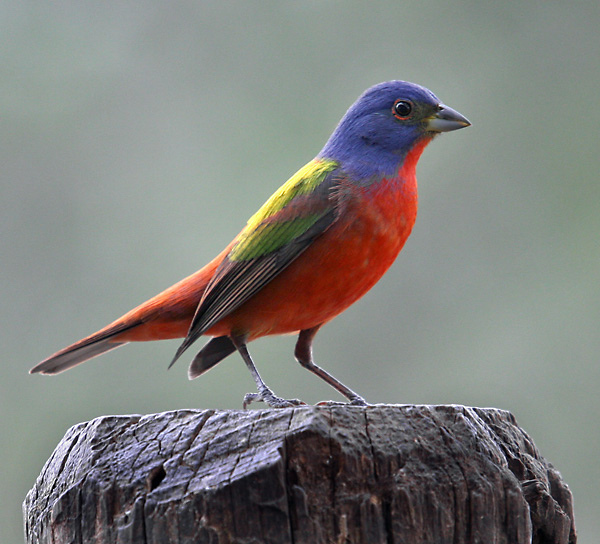
Painted Bunting (Passerina ciris) ©Flickr Ralph Arvesen

TURN NOT TO RIGHT

Painted Bunting (Passerina ciris) ©Flickr Ralph Arvesen

NOR LEFT

***


Turn not to the right hand nor to the left: remove thy foot from evil.” (Proverbs 4:27 KJV)

Painted Bunting (Passerina ciris) Both Photos ©Flickr Ralph Arvesen

*

More Daily Devotionals

*

Lee’s Five Word Friday – 7/15/16

***

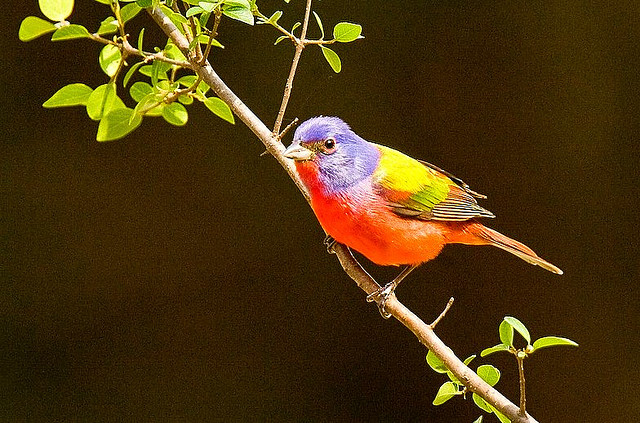
Painted Bunting (Passerina ciris) ©©Flickr

RAINBOW ROUND ABOUT THE THRONE

***


“And he that sat was to look upon like a jasper and a sardine stone: and there was a rainbow round about the throne, in sight like unto an emerald.” (Revelation 4:3 KJV)

Painted Bunting (Passerina ciris) ©©Flickr

*

More Daily Devotionals

*

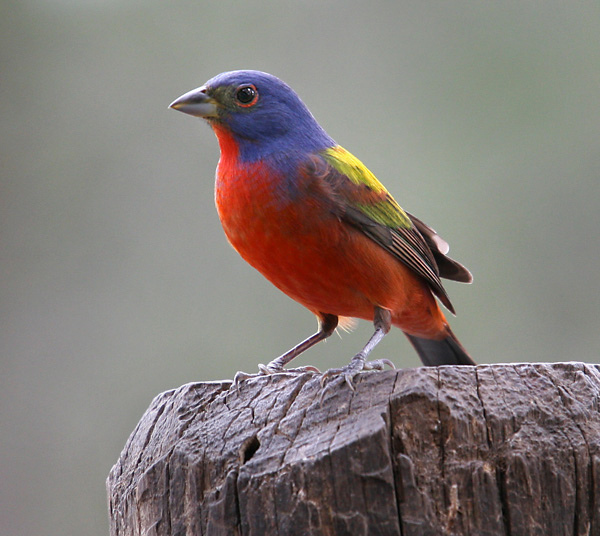
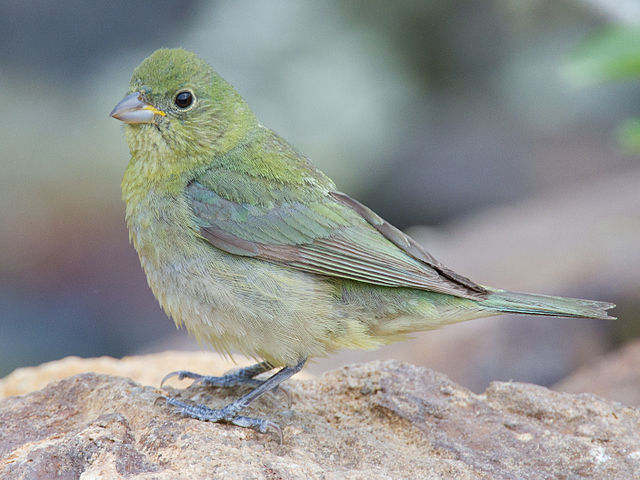
Painted Bunting – About’s Bird of the Week

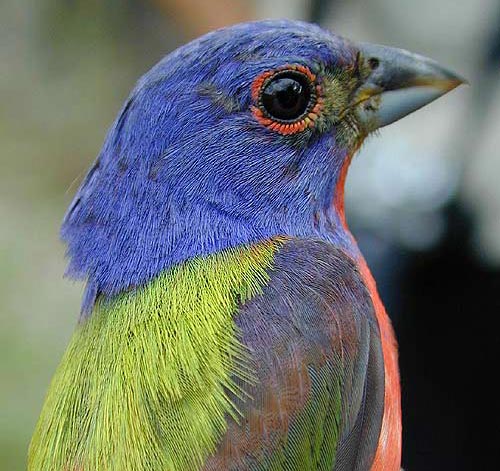
Painted Bunting (Passerina ciris) ©©Flickr3

Painted Bunting (Passerina ciris) ©©Flickr3

“And he that sat was to look upon like a jasper and a sardine stone: and there was a rainbow round about the throne, in sight like unto an emerald.” (Revelation 4:3 KJV)

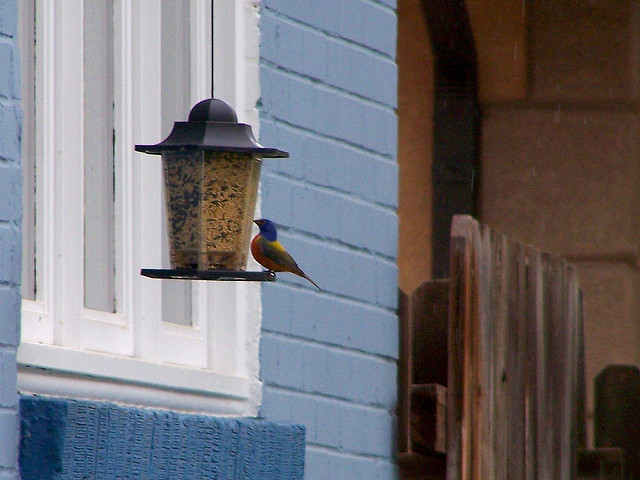
I am on the email list for About Home/Birding/Wild Birds. The articles are written mainly by Melissa Mayntz  Her bird of the week is one of my favorite beauties. My first encounter with a Painted Bunting was when we lived in south Florida. I was sitting at my computer and glanced out the window to the flat feeder hanging under my awning. When I saw, my neck jerked around and stared at this beautiful rainbow-colored bird. I had never seen one and didn’t even know what it was. I learned real quick.

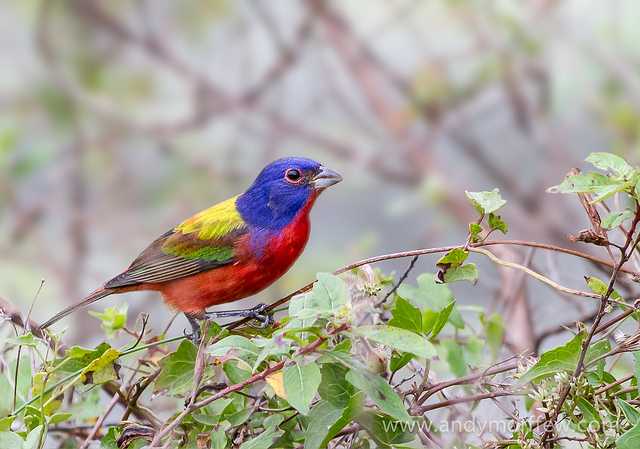
Painted Bunting Subspecies (Passerina ciris ciris) ©WikiC

Painted Bunting Subspecies (Passerina ciris ciris) ©WikiC

I would like to share part of her article, trust I am not copying too much. You can read the rest of her article HERE.

Common Name: Painted Bunting, Rainbow Bunting

Scientific Name: Passerina ciris

Scientific Family: Cardinalidae

Appearance:

  • Bill: Thick and conical, lower mandible slightly thicker, gray
  • Size: 5-6 inches long with 9-inch wingspan, short neck, rounded wings
  • Colors: Green, blue, red, yellow, gray, black, orange
  • Markings: Birds are dimorphic. Males have brilliant coloration with a rich blue head, red eye ring, bright green mantle, red chest, red or orange-red abdomen and gray tail. Females are green overall, with brighter green on the back and a duller olive wash on the wings. Females’ throat and abdomen may be yellow-green, and they may show a yellow gape. For both genders, the eyes are black and the legs and feet are gray-black.Juveniles are similar to adult females but show less coloration overall and can appear a monotone gray-brown with a faint pale wing bar.Species is monotypic.”

See the rest of her article HERE. I have put together a slideshow to show off this bird for you. Trust you will enjoy the lovely created rainbow-colored beauty. Like she said, this is a SHOWSTOPPER BIRD.

“Thou art worthy, O Lord, to receive glory and honour and power: for thou hast created all things, and for thy pleasure they are and were created.” (Revelation 4:11 KJV)

Cardinalidae – Cardinals, Grosbeaks and allies

Wordless Birds With Hummingbirds
*

Lee’s Four Word Thursday – 7/14/16

***

Blue-necked Tanager (Tangara cyanicollis) ©Flickr Andres Cuervo

THINE EYE BE SINGLE

***


“The light of the body is the eye: if therefore thine eye be single, thy whole body shall be full of light.” (Matthew 6:22 KJV)

Blue-necked Tanager (Tangara cyanicollis) ©Flickr Andres Cuervo

*

More Daily Devotionals

*

Magellanic Penguin Swims 5,000 Miles For Reunion

Magellanic Penguin Swims 5,000 Miles For Reunion With Man Who Saved His Live

Magellanic Penguin (Spheniscus magellanicus) ©Globo TV

Magellanic Penguin (Spheniscus magellanicus) ©Globo TV

Best Buds

Dr. Jim sent this article to me today and I thought we would work it up. After checking online, there were quite a few news articles about Dindim the Magellanic Penguin and his rescuer. Here is the article:

Interesting Things from Smiley CentralToday’s most heartwarming story is brought to you from a beach in Brazil.

It’s the story of a South American Magellanic penguin who swims 5,000 miles each year to be reunited with the man who saved his life.

Retired bricklayer and part time fisherman Joao Pereira de Souza, 71, who lives in an island village just outside Rio de Janeiro, Brazil, found the tiny penguin, covered in oil and close to death,
lying on rocks on his local beach in 2011. Joao cleaned the oil off the penguin’s feathers and fed him a daily diet of fish to build his strength. He named him Dindim.

After a week, he tried to release the penguin back into the sea. But, the bird wouldn’t leave. ‘He stayed with me for 11 months and then, just after he changed his coat with new feathers, he disappeared,’ Joao recalls.

And, just a few months later, Dindim was back. He spotted the fisherman on the beach one day and followed him home.

The prodigal penguin returns. Magellanic Penguin (Spheniscus magellanicus) ©Globo TV

The prodigal penguin returns. Magellanic Penguin (Spheniscus magellanicus) ©Globo TV

Look who’s back

For the past five years, Dindim has spent eight months of the year with Joao and is believed to spend the rest of the time breeding off the coast of Argentina and Chile. It’s thought he swims up to 5,000 miles each year to be reunited with the man who saved his life.

Magellanic Penguin (Spheniscus magellanicus) ©Globo TV

Dindim the Magellanic Penguin ©Globo TV

‘I love the penguin like it’s my own child and I believe the penguin loves me,’ Joao told Globo TV. ‘No one else is allowed to touch him. He pecks them if they do. He lays on my lap, lets me give him showers, and allows me to feed him sardines and to pick him up. It’s thought Dindim believes the fisherman is also a penguin ‘Everyone said he wouldn’t return but he has been coming back to visit me for the past four years. He arrives in June and leaves to go home in February and every year he becomes more affectionate as he appears even happier to see me.’

Magellanic Penguin (Spheniscus magellanicus) ©Globo TV

Magellanic Penguin (Spheniscus magellanicus) ©Globo TV

But I trust I shall shortly see thee, and we shall speak face to face. Peace be to thee. Our friends salute thee. Greet the friends by name. (3 John 1:14 KJV)

Biologist Professor Krajewski, who interviewed the fisherman for Globo TV, told The Independent: ‘I have never seen anything like this before. I think the penguin believes Joao is part of his family and probably a penguin as well. ‘When he sees him he wags his tail like a dog and honks with delight. And, just like that, the world seems a kinder place again.

*

You might want to check out these articles as some of them have videos of these two.

Penguins belong to the SPHENISCIFORMES Order, the Penguins – Spheniscidae Family.

Wordless Birds

*

Lee’s Three Word Wednesday – 7/13/16

***

ACC-Acci Philippine Hawk-Eagle (Nisaetus philippensis) ©Flickr Billy Lopue

BEHOLD, THE FACE

***


“And it came to pass in the six hundredth and first year, in the first month, the first day of the month, the waters were dried up from off the earth: and Noah removed the covering of the ark, and looked, and, behold, the face of the ground was dry.” (Genesis 8:13 KJV)

Philippine Hawk-Eagle (Nisaetus philippensis) ©Flickr Billy Lopue

*

More Daily Devotionals

*

Lee’s Two Word Tuesday – 7/12/16

***

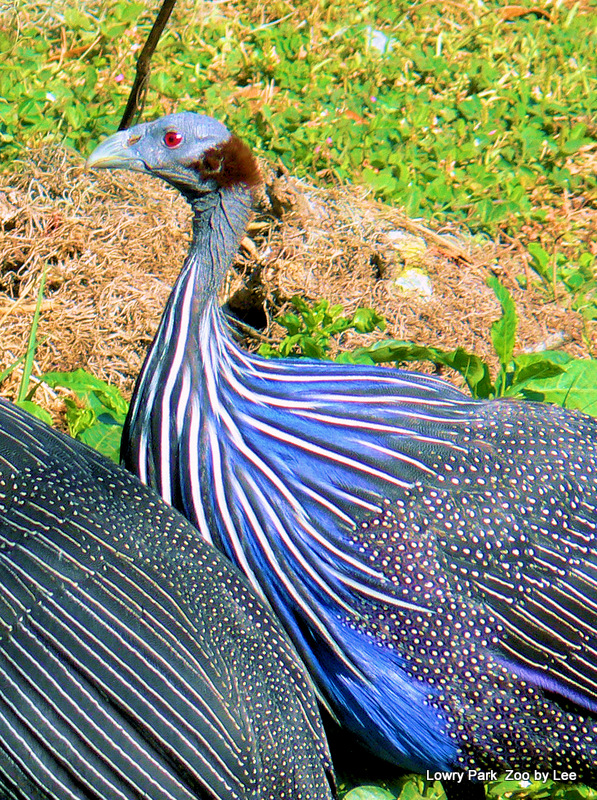
Vulturine Guineafowl (Acryllium vulturinum) by Lee

BRIGHT CLOTHING

***


“And Cornelius said, Four days ago I was fasting until this hour; and at the ninth hour I prayed in my house, and, behold, a man stood before me in bright clothing,” (Acts 10:30 KJV)

Vulturine Guineafowl (Acryllium vulturinum) by Lee

*

More Daily Devotionals

*

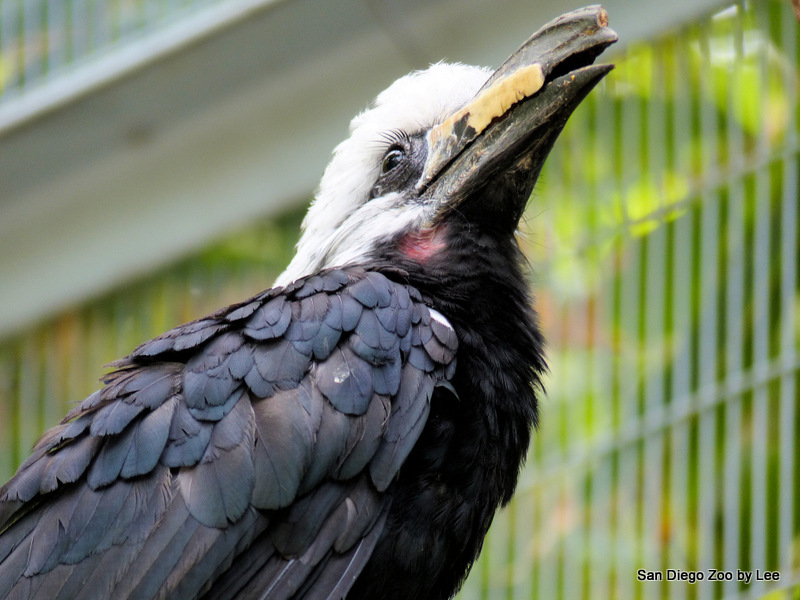
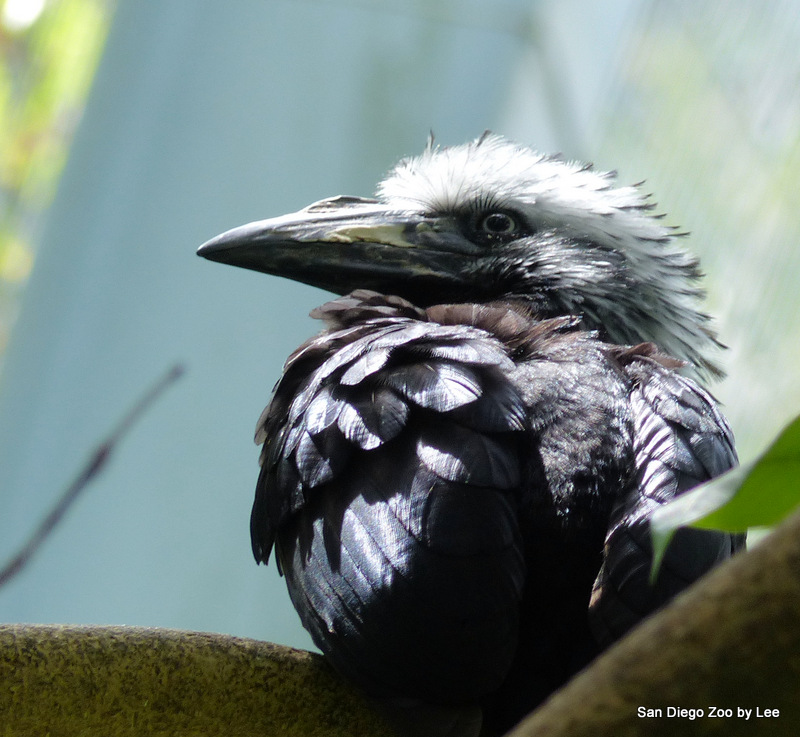
San Diego Zoo’s White-crested Hornbill

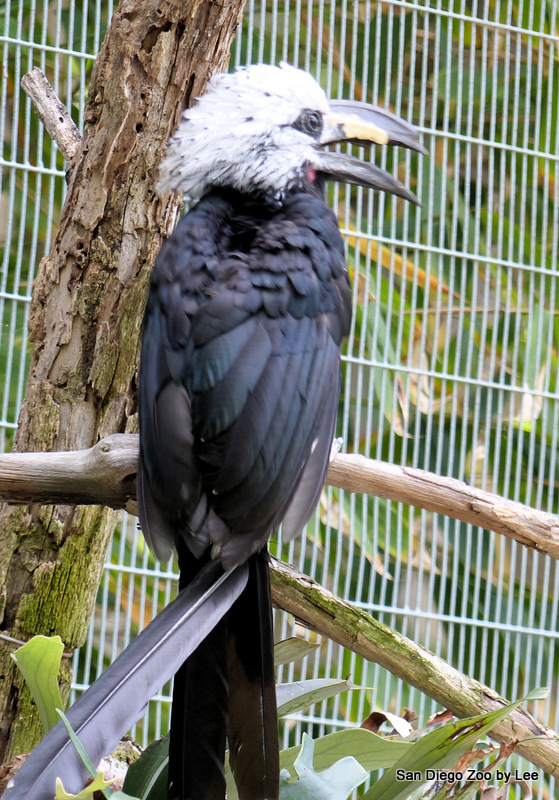
White-crested Hornbill (Horizocerus albocristatus albocristatus) SD Zoo

White-crested Hornbill (Horizocerus albocristatus albocristatus ) SD Zoo

The LORD is my rock, and my fortress, and my deliverer; my God, my strength, in whom I will trust; my buckler, and the horn of my salvation, and my high tower. (Psalms 18:2 KJV)

Last year Dan and I made our coast to coast trip. Our five-week trip enabled us to go to the San Diego Zoo for two days. That was definitely on my “Bucket List” for that trip. Since we haven’t been able to do much birdwatching this year, I thought I would finally get around to doing some more articles about that fantastic trip.

Actually, I got discouraged with my pictures and sort of “gave up.” It wasn’t the pictures fault, it was mine. I had recently updated my photography software to an improved one. (Dan’s hand me down copy) As I have stated many times before, I am a birdwatcher, not a photographer. Dan is our great photographer with the nice camera and fancy lenses. Me, I shoot in “program” mode, but, I shoot 5-10 times more photos than Dan. Dan waits for the perfect shot or the right angle. Me? If it’s a bird, I shoot it before it can get away. Anyway, the software frustrated me and at the same time, a program I have been using for years to “shrink” my photos for the blog, was no longer available.

Thus, these photos have been sitting on my hard drive waiting for me to do something with them. Now that I understand the software better, and I now know how to “shrink” them, it’s time to bring them out of hiding.

White-crested Hornbill (Horizocerus albocristatus albocristatus) SD Zoo Day 1

White-crested Hornbill (Horizocerus albocristatus albocristatus) SD Zoo Day 1

Another big encouragement I received lately was a series of tips from a photographer whose site I follow. He is at Victor Rakmil Photography. My favorite one, that encouraged me, was the one about a squirrel. It had to do with “cropping.” I always cropped my photos at the end, but he said to start there first. Simple, but it made sense. The photos in this article were cropped and then fixed up a bit.

Buco White-crested Hornbill (Horizocerus albocristatus albocristatus) SD Zoo

Buco White-crested Hornbill (Horizocerus albocristatus albocristatus) SD Zoo

The White-crested Hornbill was my first attempt at this and I threw a few other photos in. Trust you enjoy them.

Back to this West African Long-tailed Hornbill. This is what the San Diego Zoo calls it, but it is actually a White-crested Hornbill subspecies (Tropicranus albocristatus albocristatus). They are from Guinea to the Ivory Coast. Length “70cm. Elongate, slender hornbill with a very long graduated tail. Predominately black but with bushy white crest extending from forecrown to nape, and white face. The relatively slender black bill with cream upper mandible has a casque that extends for most of its length.” (Birdlife.org) To see a really great photo of this bird, CLICK HERE. They live primarily in forest with dense tangles. Also in tall gallery and secondary forest.

Here is a recording of a White-crested Hornbill by xeno-canto.org

White-crested Hornbill (Tropicranus albocristatus albocristatus) is from the Bucerotidae (The Hornbill kind) See Avian Kinds on the Ark – What Is A Kind?

“Feeds mainly on insects but takes also spiders, slugs, lizards, snakes, nestlings and shrews and also fruit which is taken from the ground. Often follows driver-ants, bird groups or monkeys to hawk for insects disturbed by them. Little known about breeding. The nest is placed in a natural cavity in a tree or palm stump. The female seals the entrance with its own droppings. Lays 2 eggs.” (BirdForum.net)

He hath dispersed, he hath given to the poor; his righteousness endureth for ever; his horn shall be exalted with honour. (Psalms 112:9 KJV)

*

Sea To Sea In 2015

Birds of the World

Bucerotidae – Hornbills

Victor Rakmil Photography

Lee’s One Word Monday – 7/11/16

***

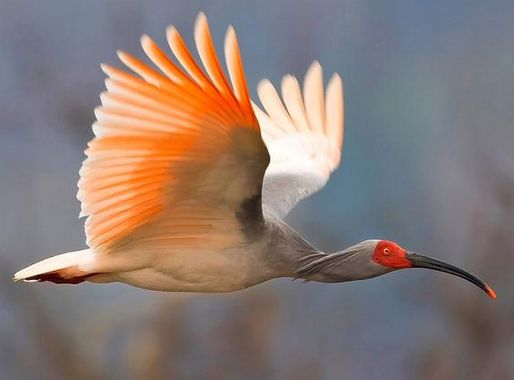
Crested Ibis (Asian) (Nipponia nippon) One of Rarest Birds ©©Pinterest

RARE

***


“And it is a rare thing that the king requireth, and there is none other that can shew it before the king, except the gods, whose dwelling is not with flesh.” (Daniel 2:11 KJV)

Crested Ibis (Asian) (Nipponia nippon) One of Rarest Birds ©©Pinterest

*

More Daily Devotionals

*

Ian’s Bird of the Week – Common Buzzard

Ian’s Bird of the Week – Common  Buzzard

~ By Ian Montgomery

Newsletter – 7/09/16

More like bird of the month at the moment, I regret. Slovakia is famous for its raptors so they, along with owls and woodpeckers, were my primary target there with my sister Gillian in June. We did get to see the most interesting ones: Eastern Imperial Eagle, Golden Eagle, Lesser Spotted Eagle, and Saker and Peregrine Falcon, but they were very shy and I had little success with their photography. I suspect it was because deer hunting is popular there – we saw many hides used by hunters – but perhaps also because it was the breeding season.
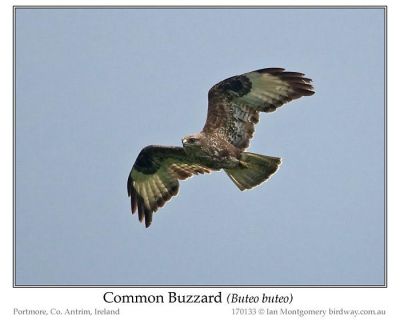
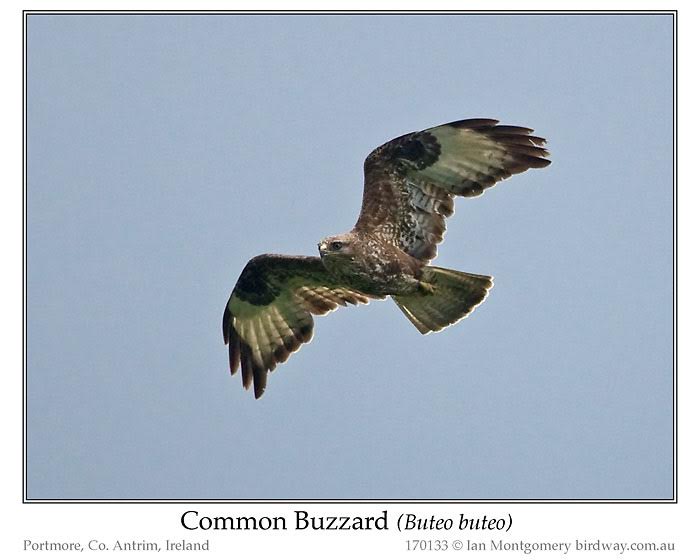
Common Buzzard (Buteo buteo) by Ian

Ironically, I had more luck with raptors when we returned to Ireland. When I was a teenager there in the 1960s, Ireland was probably one of the worst countries in the world for raptors. All the larger and mid-size ones (Eagles, Buzzards, Harriers, etc) had been exterminated in the 19th and early 20th century, and some of the smaller ones like Peregrines and Sparrowhawks were rare as result of widespread use of pesticides such as DDT, the Silent Spring phenomenon. So the Common Kestrel was the only species that one saw regularly.
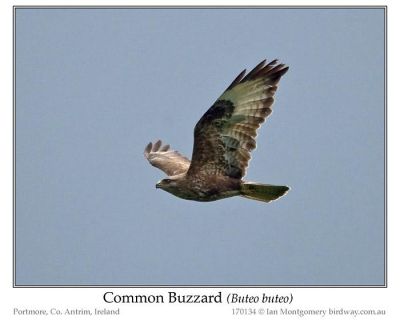
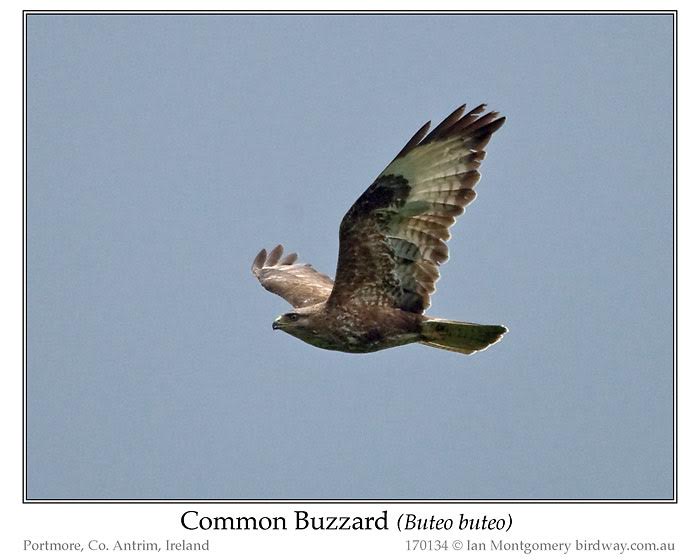
Common Buzzard (Buteo buteo) by Ian
Things have improved since as a result of the banning of the most persistent pesticides, the re-introduction of some species and natural recolonisation by one species. I’ll deal with a re-introduction next time, but here is the recoloniser, the Common Buzzard which became extinct in Ireland in 1891. It recolonised Rathlin Island on the far north coast of Ireland twice, once in the 1930s and again after it became extinct a second time as the result of the myxomitosis rabbit-killing epidemic in the 1950s. Rathlin Island is a mere 30km/20miles from the Mull of Kintyre in Scotland, no distance for able-bodied young Buzzards in search of a territory.
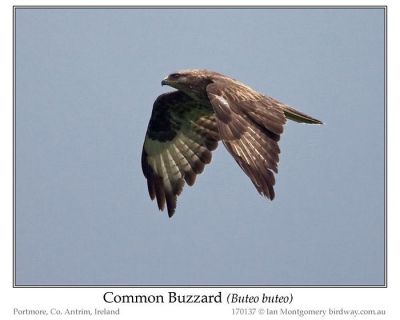
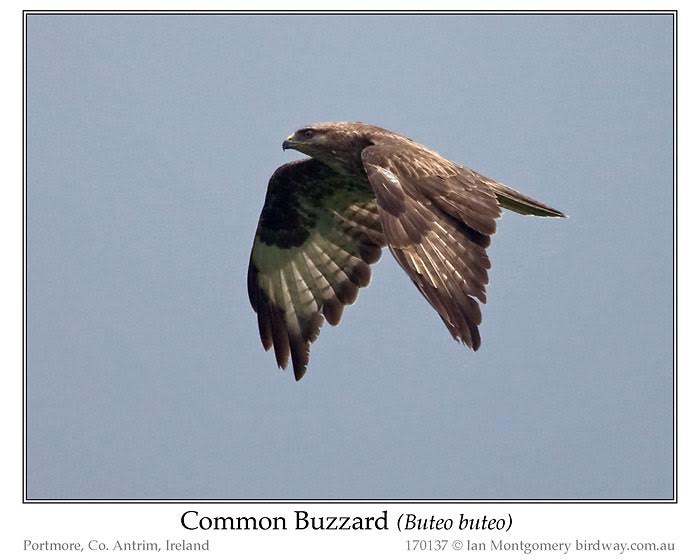
Common Buzzard (Buteo buteo) by Ian

Rathlin Island is also about as far as you can get in Northern Ireland from the Irish Republic, where strychnine was legally used to poison ‘pests’ by sheep farmers until it was outlawed in 1991. Far be it from me to jump to conclusions, but it seems a huge coincidence that the subsequent spread of the Common Buzzard to almost the whole of Ireland didn’t start until the 1990s and continues to this day. I saw my first Irish one in 1994 in Co. Louth just south of the border with Northern Ireland. Since then, its range extension has been spectacular. It is now, if not the commonest, certainly the easiest raptor to see in Ireland either soaring over fields or perched on light poles near Motorways. In 2015 it bred in at least 18 of the 32 counties. It is still uncommon in the west of Ireland, west of a line from about Sligo to Cork, though I did see one in Bantry, West Cork on this trip.

The bird in the photos did, unlike its Slovakian counterparts, an obliging fly-past when we visited the RSPB reserve at Portmore Lough. This was on the day after our return to Ireland, when we were staying with cousins at nearby rural Ballinderry in Northern Ireland. Portmore Lough, better known for its wildfowl and nesting Common Terns and Black-headed Gulls (they nest on the floating platform provided for their benefit, just visible behind the reeds in the photo), is an interesting place in its own right. It’s a shallow, almost circular lake perhaps 2km across and about the same distance from Lough Neagh, the largest lake in Ireland. Rumour has it that it was formed by an air-burst meteor or a meteorite about 1500 years ago.

Hunting Castle

Actually, the real reason for my trip to Europe was not raptors or Slovakia but the marriage of my sister Gillian’s son Ian at Huntington Castle in Co. Carlow to his fiancée Sinéad. Huntington Castle was ‘rebuilt’ in 1625, captured by Oliver Cromwell in 1650. It is, presumably, the subject of an ancient tune by the same name (I have a copy of a Scottish version dating from 1795) that I knew already from as a duet that we play on recorders in Townsville. The photo shows me playing it on a tenor recorder during the signing of the register and being watched very intently by my one year old great-nephew Loïc sitting on the lap of his mother Jeannine, one of nephew Ian’s two sisters. His other sister Elyena took the photo and my sister Gillian is holding the sheet music in the form of my iPad, a great family occasion.

What has Huntington Castle to do with Buzzards? Well, just as the celebrant was starting the ceremony and saying that the wedding date was the sixth anniversary of the couple’s meeting, a pair of Common Buzzards circled very deliberately just overhead. I, naturally, took that as a sign of a natural blessing on the wedding and like to think of the pair of birds as a totem of the married couple. Birds are frequently totems in Aboriginal Culture and, as I write, it is currently NAIDOC week in Australia, a time to celebrate Aboriginal and Torres Strait Islander history, culture and achievements.

Greetings (from back home in North Queensland)
Ian


Lee’s Addition”

“And these you shall regard as an abomination among the birds; they shall not be eaten, they are an abomination: the eagle, the vulture, the buzzard,” (Leviticus 11:13 NKJV)

Not exactly sure why Ian added the third picture twice in his newsletter, but I deleted it. If he later updates it, I’ll correct this one. Anyway, seems as if Ian has been having too much fun lately. As he said, his Bird of the “Week” is turning into the Bird of the “Month.” I totally understand, so, he is off the hook, as far as I’m concerned.

Nice article and glad you got to attend the wedding. Thanks for the photo of you playing your recorder. The Common Buzzards were of course great as usual.
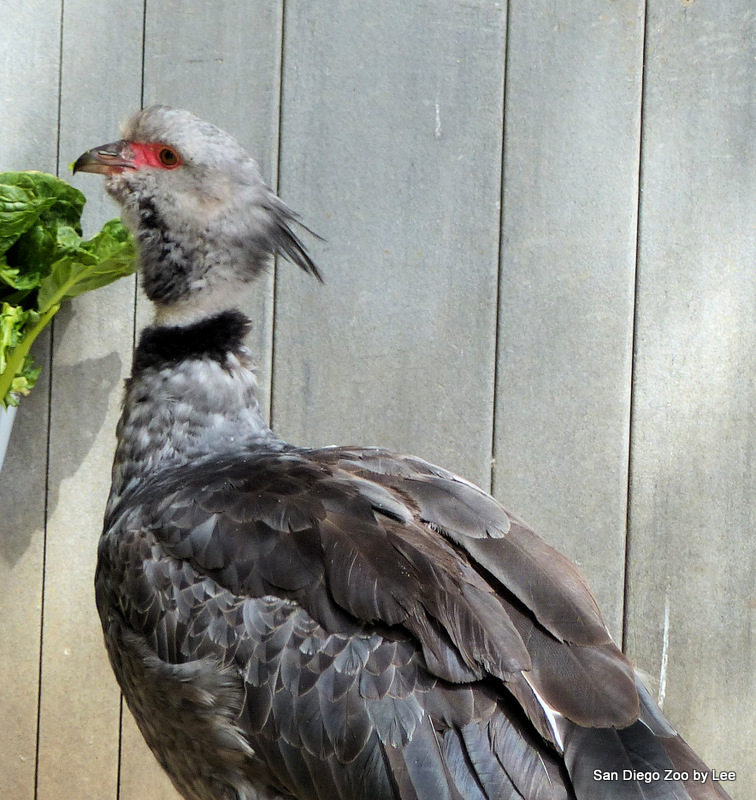
Ian’s Bird of the Week Newsletters

Ian’s Birdway Site

Accipitridae – Kites, Hawks and Eagles Family

Wordless Birds